Get 20% OFF All Premium 3D & STL Models!

In the dynamic realm of digital content creation, the demand for exceptionally detailed and versatile 3D assets continues to surge. From groundbreaking video games to cinematic automotive advertisements and immersive virtual reality experiences, high-quality 3D car models form the backbone of visually compelling projects. These assets aren’t just pretty pictures; they are complex digital constructions engineered to perform flawlessly across various platforms and applications. Today, we’ll take a deep dive into what makes a 3D car model truly stand out, using a prime example: the Opel Corsa E 2019 3D Model available on 88cars3d.com.
The Opel Corsa E 2019, a popular compact hatchback, represents a segment that is both iconic and universally relatable. Its distinctive European styling and urban practicality make it an excellent subject for digital artists seeking realism and versatility. When translated into a 3D model, it requires meticulous attention to detail, optimized topology, and robust file format support to meet the rigorous demands of professional workflows. This comprehensive article will explore the technical nuances behind creating and utilizing such assets, highlighting how the Opel Corsa E 2019 model embodies the ideal blend of aesthetic fidelity and functional efficiency for any project.
Creating a compelling 3D car model is a sophisticated blend of artistic vision and technical precision. It involves meticulously translating a real-world vehicle’s complex curves, intricate mechanical components, and nuanced material finishes into a digital format that is both visually stunning and computationally efficient. The challenge lies in balancing extreme realism, which often demands high polygon counts and detailed textures, with the practical performance requirements of real-time applications like video games or AR/VR.
Every vehicle possesses a unique character, defined by its design language, aerodynamic contours, and even the subtle interplay of light across its surfaces. Replicating this essence in a 3D model requires an acute understanding of automotive design principles. Artists must pay close attention to the vehicle’s proportions, the accuracy of its panel gaps, the subtle curvatures of its body, and the intricate details of its various components – from the intricate grille patterns to the precise tread on its tires. This isn’t merely about copying; it’s about interpreting and reconstructing the vehicle’s form in a way that resonates with viewers and maintains authenticity.
Professional projects often have conflicting requirements. For cinematic rendering, such as in high-end advertisements or feature films, the goal is often absolute photorealism, where every scratch, reflection, and imperfection contributes to the believability of the scene. This typically allows for extremely high polygon counts and large texture maps. Conversely, game development and AR/VR applications prioritize real-time performance. Here, models must be highly optimized, meaning lower polygon counts, efficient UV layouts, and streamlined materials, all while striving to maintain visual fidelity. The true mark of a superior 3D car model, like the Opel Corsa E 2019 model from 88cars3d.com, is its ability to seamlessly bridge this gap, offering enough detail for stunning renders while remaining efficient enough for interactive environments. This balance is achieved through careful topology, PBR (Physically Based Rendering) material setups, and strategic LOD (Level of Detail) implementation, ensuring versatility across the entire spectrum of digital media production.
The choice of a 3D model file format is far from arbitrary; it’s a critical decision that dictates compatibility, data retention, and optimal use across different software and pipelines. High-quality 3D car models, especially those from reputable sources like 88cars3d.com, are often provided in multiple formats to ensure maximum flexibility for artists and developers. Let’s delve into the specifics of the formats offered with the Opel Corsa E 2019 3D model.
The .blend format is native to Blender, a powerful open-source 3D creation suite. A .blend file typically encapsulates an entire Blender project, including mesh data, materials, textures, lighting, cameras, animation data, and even modifiers. For users working within the Blender ecosystem, this format is invaluable as it provides a fully editable scene, allowing for comprehensive customization, modification of topology, adjustments to UVs, material tweaks, and even animation setup directly within the software. It’s ideal for artists who want to delve deep into the model’s construction, adapt it to unique project requirements, or leverage Blender’s extensive toolkit for rendering with Cycles or Eevee.
.fbx (Filmbox) is a proprietary file format developed by Autodesk, widely recognized as the industry standard for interoperability between various 3D applications, especially in game development. It excels at transferring 3D model data, including meshes, textures, animation, skeletal data, and PBR materials, with high fidelity. The .fbx format is the go-to choice for importing assets into real-time engines like Unreal Engine and Unity due to its robust support for game-ready features and its ability to maintain crucial data like pivot points, UV maps, and material assignments. For the Opel Corsa E 2019, an .fbx file ensures a smooth transition into any game development pipeline, ready for immediate integration.
The .obj (Wavefront OBJ) format is one of the most widely supported and simplest 3D file formats. It’s an excellent choice for basic mesh data transfer between almost any 3D software. An .obj file primarily stores geometric information (vertices, normals, texture coordinates, and faces) and references to external material files (.mtl). While it doesn’t carry complex animation or scene data, its universal compatibility makes it a reliable fallback for cross-platform projects. For the Opel Corsa E 2019, the .obj format ensures that users of less common 3D packages can still access the core mesh data and apply their own materials.
.glb (GLB, a binary version of glTF) is an increasingly popular format, particularly in the burgeoning fields of Augmented Reality (AR), Virtual Reality (VR), and web-based 3D applications. It’s designed to be a “transmission format” for 3D models, meaning it’s highly efficient for delivery and rendering. A .glb file packs all necessary assets—geometry, materials, textures, and even animations—into a single, self-contained binary file, making it incredibly easy to load and display in browsers or mobile AR/VR viewers. This format is perfect for showcasing the Opel Corsa E 2019 in interactive web configurators, mobile AR experiences, or light VR scenes due to its optimized size and performance.
.stl (STereoLithography) is the de facto standard file format for 3D printing. It represents a 3D model as a series of connected triangles, describing only the surface geometry of an object without color, texture, or other CAD attributes. While simple, its ubiquity in the 3D printing world is undeniable. For hobbyists or professionals looking to physically manifest the Opel Corsa E 2019 as a display model, the .stl format is essential. The model’s optimized topology makes it an excellent candidate for conversion to .stl, allowing for accurate physical replication after proper slicing and print preparation.
The .ply (Polygon File Format, or Stanford Triangle Format) is another common file format for 3D scan data and point clouds. It can store a variety of properties including color, transparency, normals, texture coordinates, and confidence values. While less common than .obj for general 3D assets, .ply is particularly useful in applications requiring precision mesh data, such as scientific visualization, CAD conversion, or reverse engineering workflows. It offers a robust alternative for storing intricate geometric details, which can be beneficial for the highly accurate Opel Corsa E 2019 model in certain niche applications.
The .unreal format isn’t a standalone file type but rather signifies an asset that has been specifically prepared and configured for direct import and optimal performance within Unreal Engine. This often implies that the .fbx (or similar) source file has undergone specific material setups, collision mesh generation, LOD creation, and potentially Blueprint scripting within Unreal Engine itself. An “.unreal” tag often means less setup time for developers, as the asset is already PBR-ready, scaled correctly, and optimized to leverage Unreal’s rendering capabilities. For the Opel Corsa E 2019, this designation indicates that it’s primed for immediate integration into an Unreal project, offering a plug-and-play experience for game developers.
Finally, the .max format is native to Autodesk 3ds Max, a leading 3D modeling, animation, rendering, and visualization software. Like .blend for Blender, a .max file contains a complete 3ds Max scene, including geometry, materials, lighting, cameras, animation, and any modifiers or procedural effects applied. This format is crucial for users who rely on 3ds Max for high-end automotive rendering, architectural visualization, or complex animation sequences. The Opel Corsa E 2019 in .max format provides the ultimate level of control for professional studios utilizing this software, allowing full access to the model’s hierarchy, material stacks, and setup for advanced rendering engines like V-Ray or Corona Renderer.
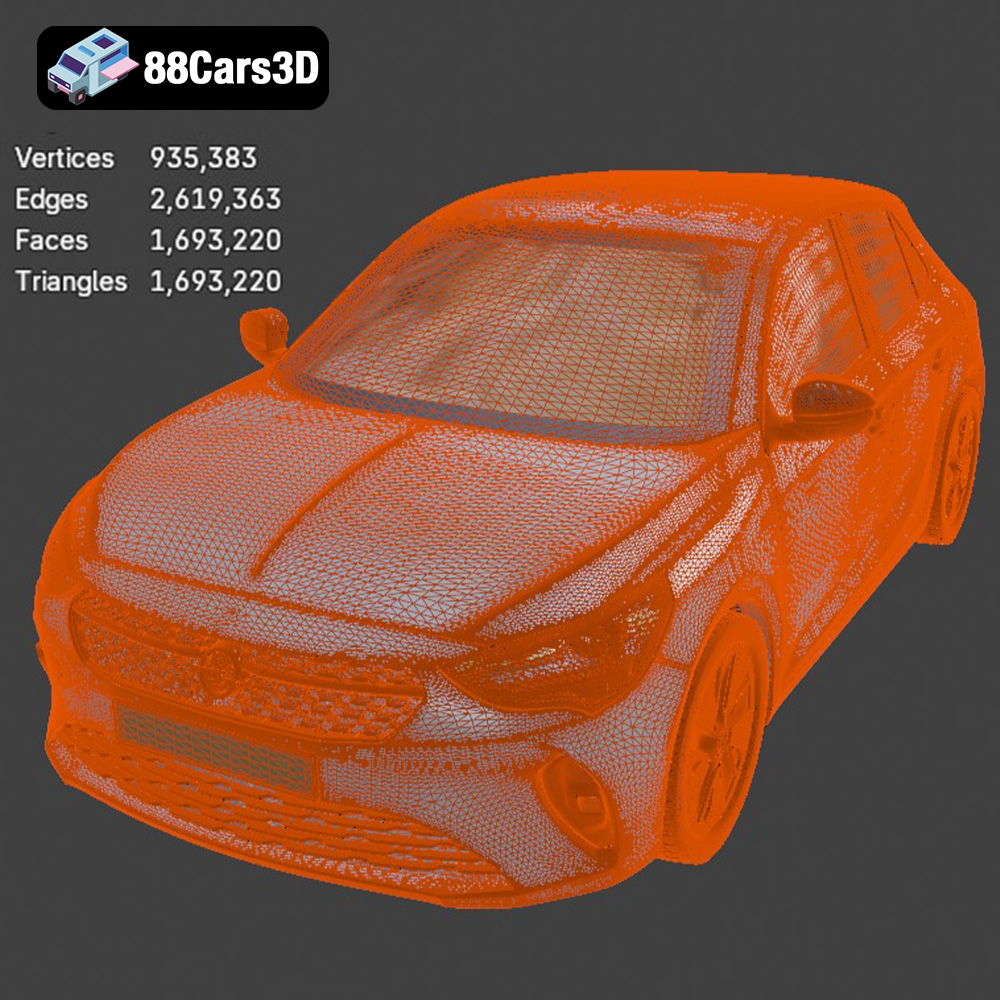
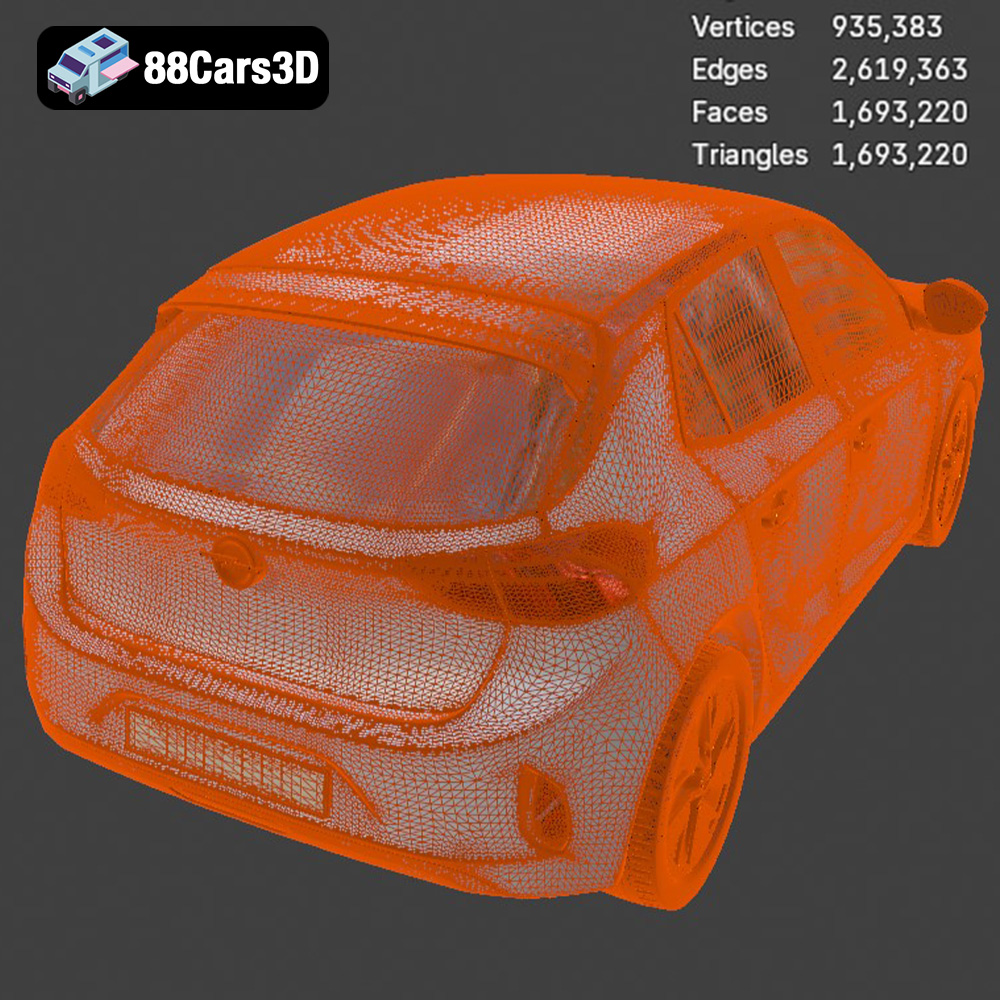
The Opel Corsa E 2019 3D model from 88cars3d.com stands as a testament to what high-fidelity automotive assets can achieve. With an exact triangle count of 1,693,220, this model strikes an exceptional balance between detailed visual realism and optimized performance, making it suitable for both cinematic rendering and demanding real-time applications.
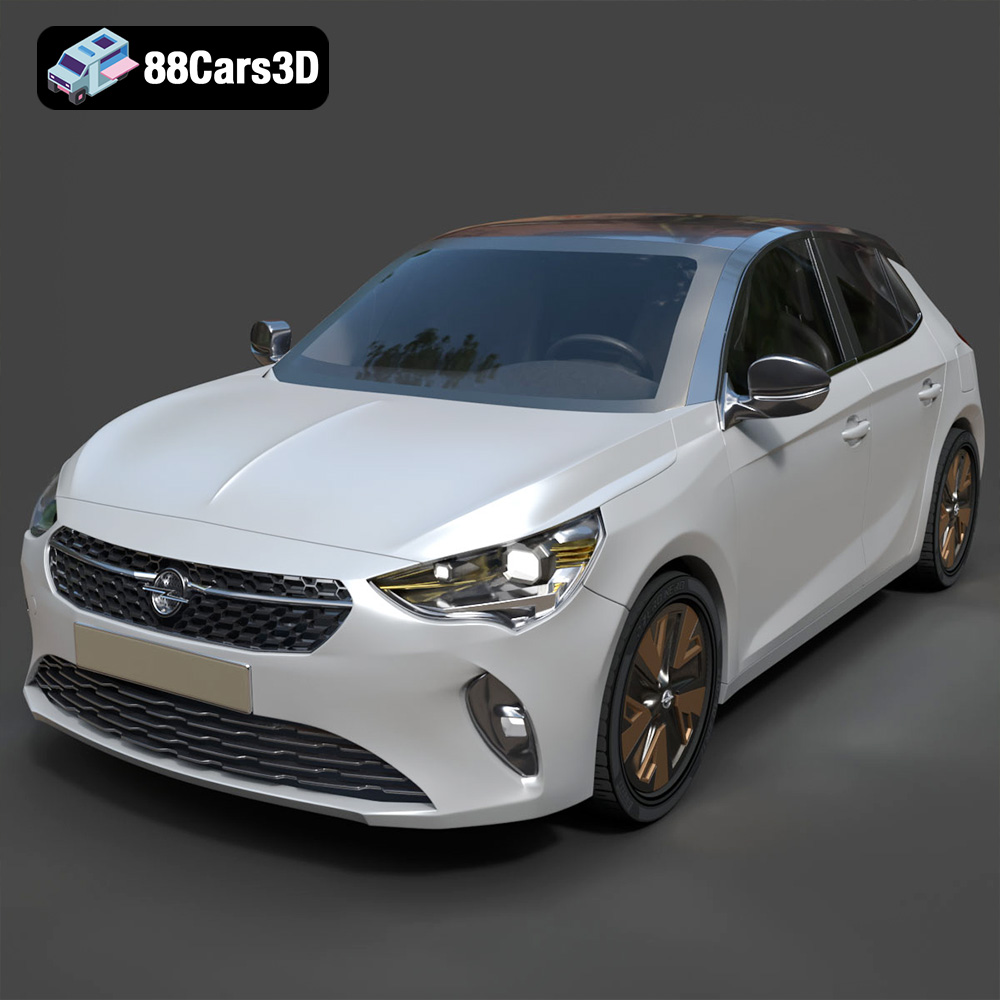
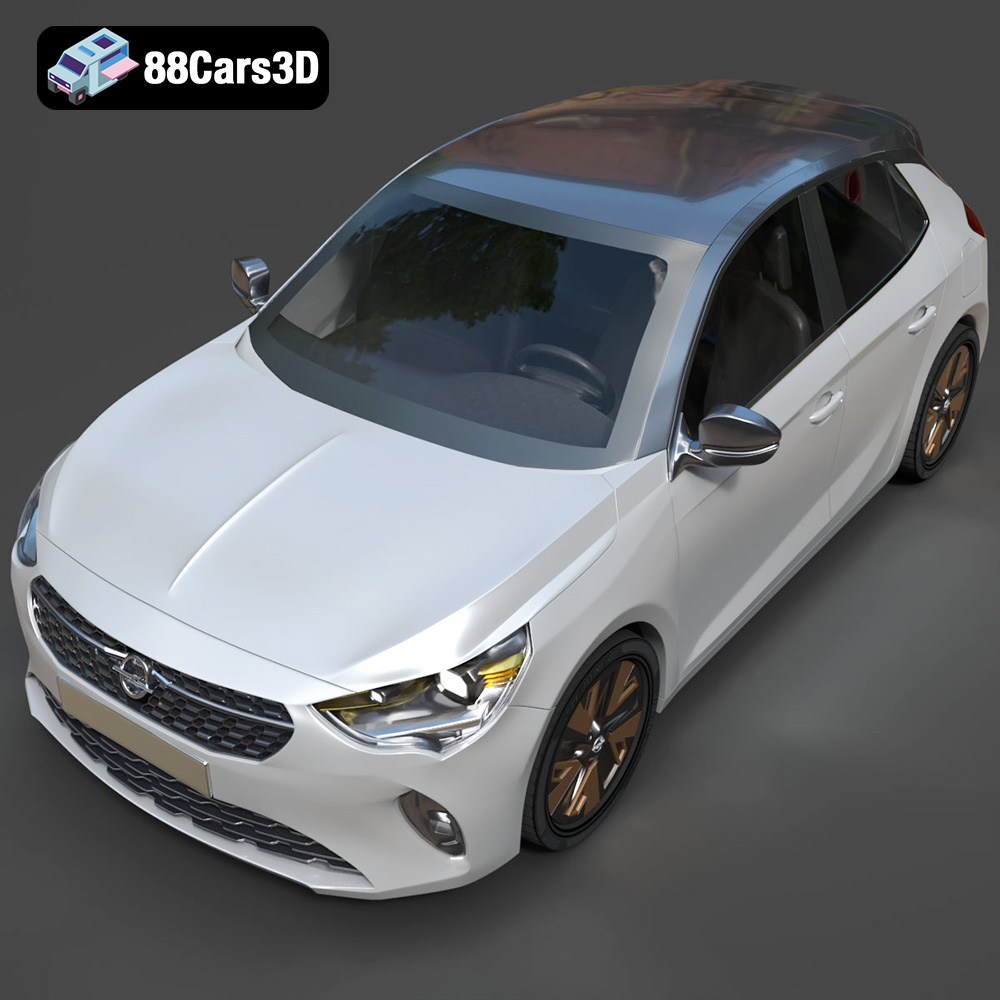
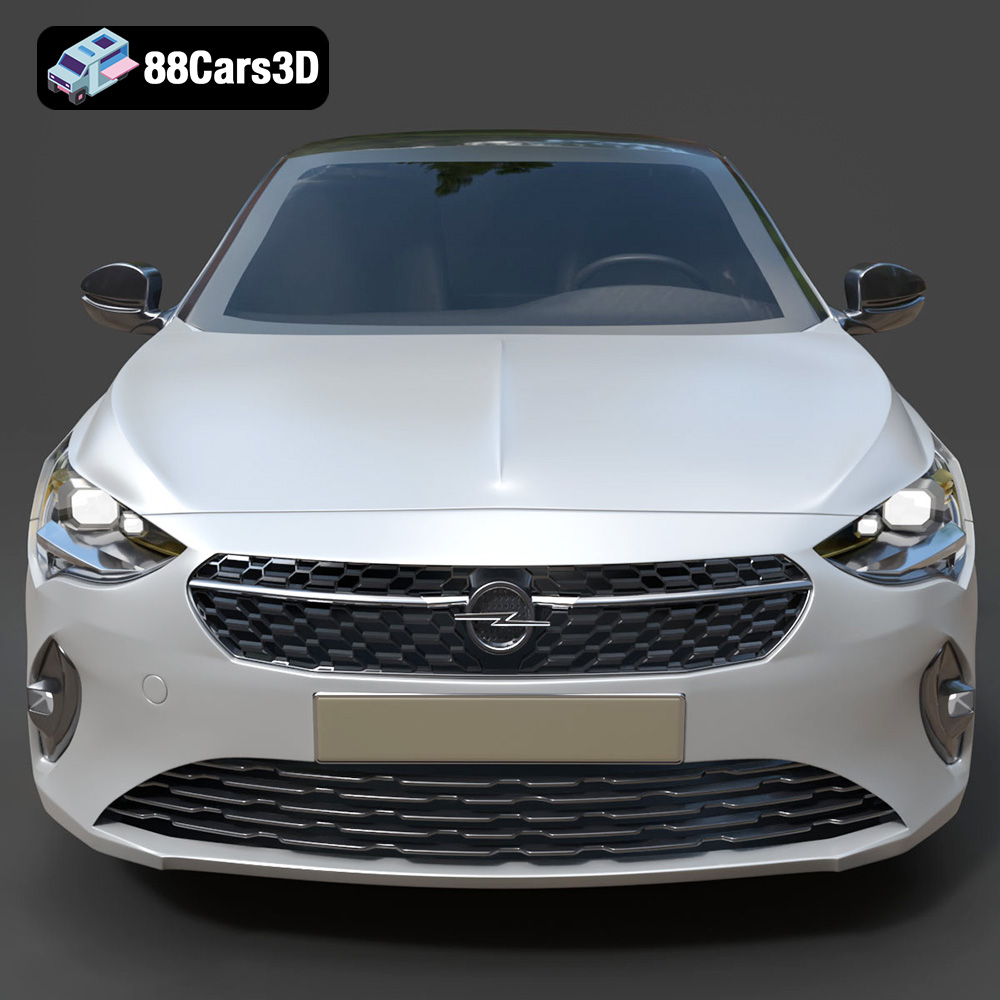
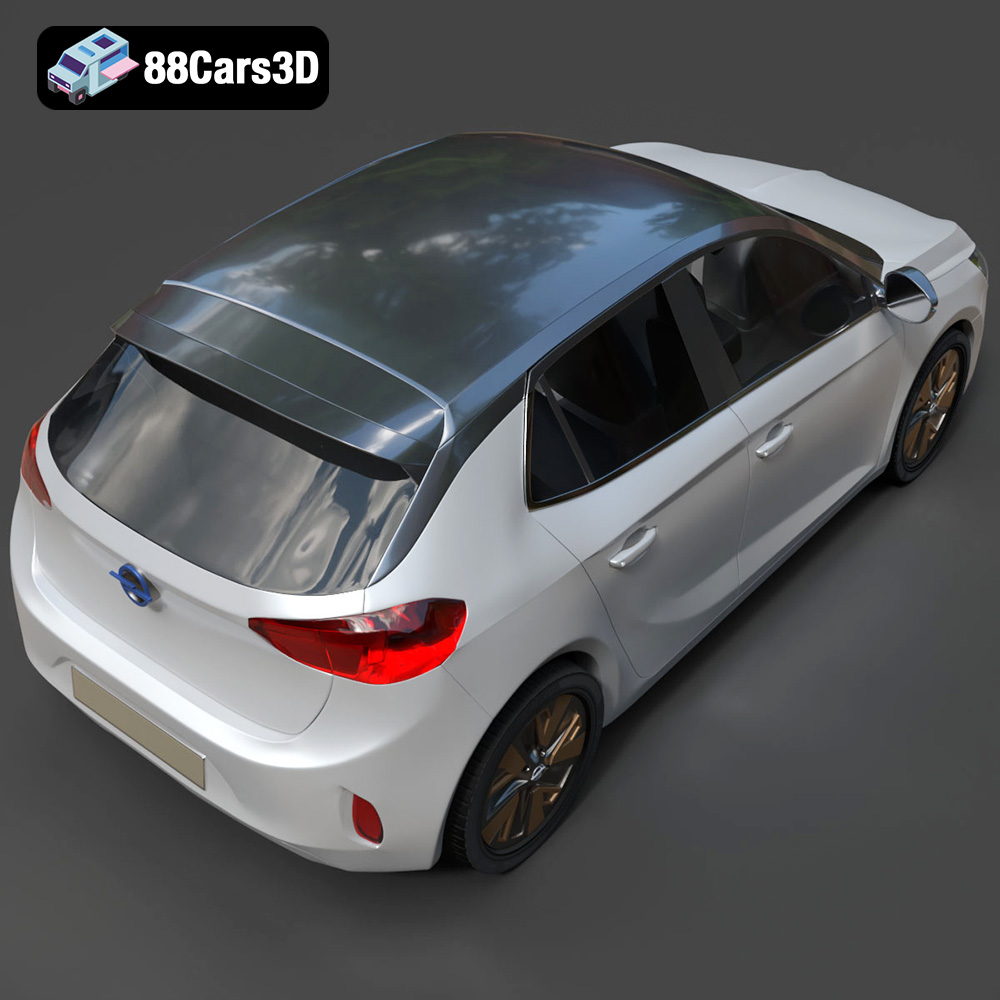
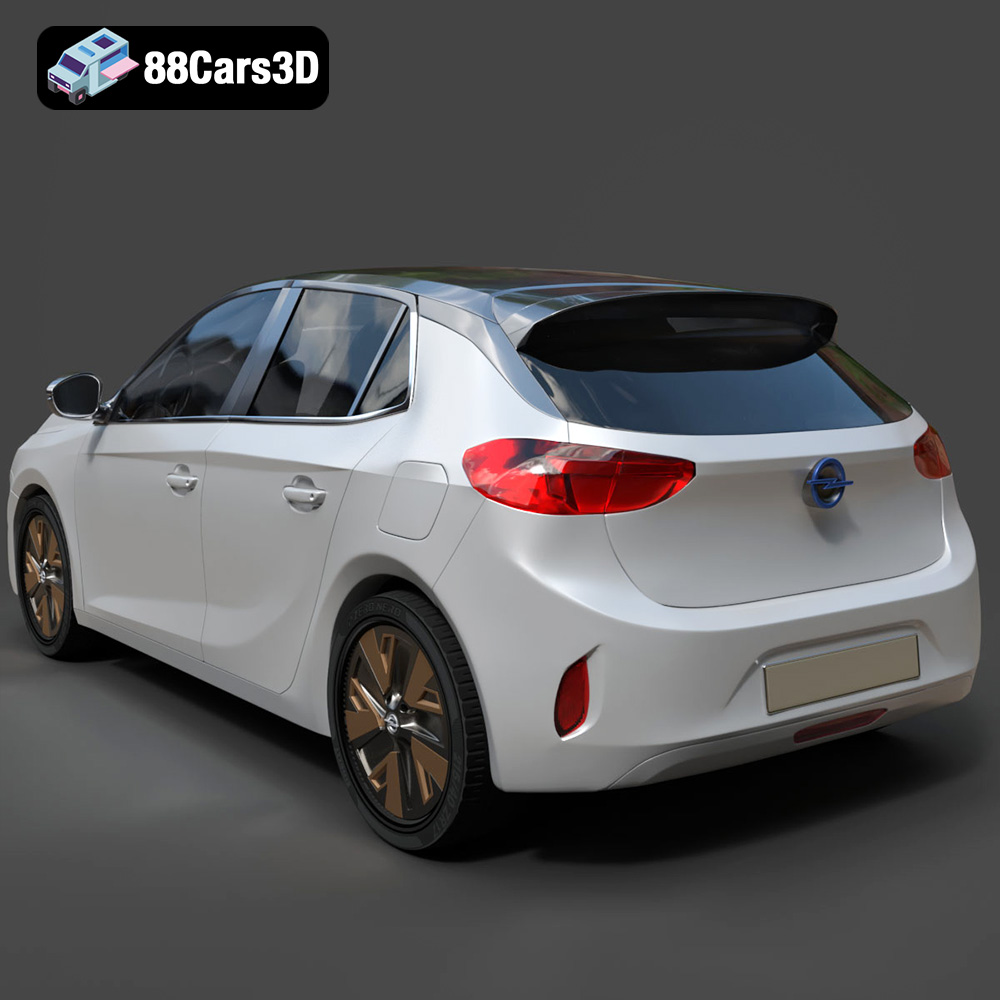
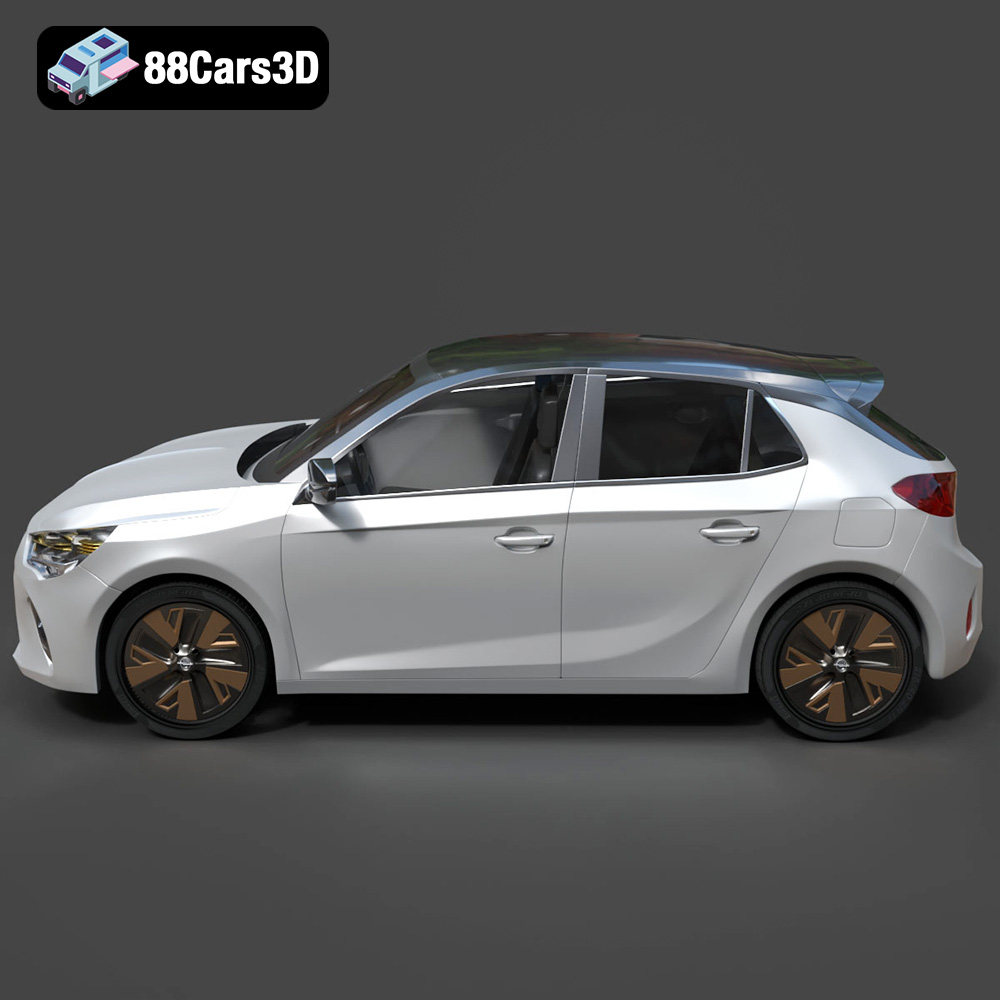
The exterior of this Opel Corsa E 2019 model is a masterclass in accurate digital reproduction. Every curve and panel line reflects the distinctive front fascia and aerodynamic contours of the real vehicle. Critical elements like the sleek headlamps and taillight assemblies feature highly detailed inner reflector geometry, ensuring realistic light refraction and emission in any rendering setup. The authentic factory alloy wheels are meticulously modeled, complete with realistic tire tread patterns and sidewall details, which are crucial for close-up shots and accurate ground interaction in simulations. Even the exhaust system boasts a detailed tailpipe finish, adding to the overall authenticity. This level of granular detail, especially in components often overlooked, is what elevates a good 3D model to an excellent one.
Beyond the impressive exterior, the Opel Corsa E 2019 model offers a fully realized interior, essential for projects requiring an immersive cockpit experience. Accurate fabric and leather-textured bucket seats are meticulously modeled, inviting the viewer into a believable space. The multifunction steering wheel, complete with integrated controls, the high-resolution digital/analog instrument cluster geometry, and the realistic center console, infotainment screen, and climate control dials all contribute to an authentic environment. This detailed interior is specifically optimized for first-person POV in gaming, ensuring that players or virtual passengers feel truly present within the vehicle, a critical factor for racing simulators and open-world titles.
Technical advantages are paramount for professional 3D assets. This Opel Corsa E 2019 model is built with game-ready optimization in mind. Its 1,693,220 triangles represent a sweet spot, providing enough geometric detail for stunning renders while remaining efficient for real-time engines like Unreal and Unity. Real-world scale accuracy is maintained, based on actual vehicle chassis dimensions, which is vital for physics simulations and integration into existing digital environments. Crucially, the model features proper pivot setup for steering, wheel rotation, and suspension travel. This means animators and game developers can easily rig and animate the car’s dynamic components without complex re-engineering, saving valuable production time and ensuring realistic motion.
High-quality 3D car models are not just assets; they are foundational elements that power diverse professional workflows across various industries. The Opel Corsa E 2019 3D model exemplifies how a versatile asset can seamlessly integrate into demanding pipelines, reducing development time and enhancing visual fidelity.
In the realm of game development, the need for optimized yet visually rich assets is constant. The Opel Corsa E 2019 model, with its game-ready polycount and PBR-ready materials, is an ideal candidate for titles ranging from open-world exploration to high-octane racing simulators. Developers can leverage the provided .fbx and .unreal formats for direct integration into engines like Unreal Engine and Unity. The accurate pivot setups for wheels and suspension mean that realistic physics and animation can be implemented quickly, saving countless hours of manual rigging. The optimized geometry ensures smooth frame rates even in complex scenes, while the detailed interior supports immersive first-person perspectives, crucial for player engagement. Finding such meticulously prepared 3D car models readily available on platforms like 88cars3d.com streamlines the asset acquisition process for studios of all sizes.
For automotive rendering and visualization, where every detail can impact brand perception, the Opel Corsa E 2019 model excels. Using formats like .blend or .max, artists in Blender or 3ds Max can harness the model’s high-fidelity topology and PBR materials for stunning photorealistic outputs. Whether it’s for brand campaigns, lifestyle scenes, or studio lighting setups, the model’s accurate geometry and detailed features (like LED headlight assemblies and realistic tire treads) provide a perfect foundation. Artists can manipulate material finishes, adjust lighting for dramatic effect, and create compelling animations for advertising, product showcases, or architectural visualizations where a realistic car adds significant context and realism.
The burgeoning fields of Augmented Reality (AR) and Virtual Reality (VR) demand models that are both engaging and performant. The Opel Corsa E 2019 model, particularly in its .glb format, is perfectly suited for immersive virtual showrooms, interactive configurators, and mobile AR experiences. Its optimized geometry ensures smooth performance on a range of devices, from high-end VR headsets to mobile phones. Imagine a potential buyer exploring the Corsa E in their driveway via AR, or taking a virtual test drive in a VR environment – the model’s detailed interior and exterior provide a believable and interactive experience. This capability allows businesses to create engaging pre-sales experiences and innovative marketing campaigns.
The versatility of a well-crafted 3D model extends far beyond digital screens. The Opel Corsa E 2019 3D model is also engineered for physical manifestation through 3D printing, opening up exciting possibilities for hobbyists, educators, and product designers alike.
To transition from a digital asset to a tangible object, the .stl format becomes paramount. The Opel Corsa E 2019 model, with its clean topology, is ideal for conversion into this 3D print-ready format. When preparing for printing, critical considerations include scale, layer height, and print technology. Recommended scales like 1:12, 1:18, or 1:24 allow for detailed desktop models. For optimal fidelity, especially for fine details such as the grille, headlight geometry, or wheel spokes, resin printing (SLA/DLP) is highly recommended over FDM (Fused Deposition Modeling). A layer height between 0.04–0.12 mm for resin ensures a smooth finish and captures intricate forms accurately. Attention to wall thickness (1.2–2.0 mm) is also crucial to ensure structural integrity of the printed parts.
Successful 3D printing of complex automotive models like the Opel Corsa E 2019 requires careful planning. Supports will be necessary for overhangs and delicate parts such as the exhaust system, mirrors, and potentially intricate interior components. Strategic print orientation is also key; printing the main frame angled can improve structural integrity and reduce visible layer lines. Wheels are typically best printed separately to preserve their circular shape and allow for individual detailing. Once printed, post-processing is essential to achieve a professional finish. This involves careful removal of supports, sanding to smooth surfaces, applying primer to prepare for paint, and finally, painting with authentic factory colors, potentially with metallic finishes to replicate the real vehicle’s aesthetic. This process transforms a digital blueprint into a beautiful, physical display piece.
The value of a high-quality 3D asset is not just in its initial detail, but in its adaptability. The Opel Corsa E 2019 3D model is built with customization in mind, ensuring it remains relevant and useful across a multitude of projects and evolving industry standards.
Flexibility is a key advantage of professionally built 3D car models. With the Opel Corsa E 2019, artists can easily change body colors, experimenting with various factory colors or custom finishes to match specific branding or artistic visions. Modifying tire textures, for instance, from street variants to off-road options, can instantly repurpose the vehicle for different environments or scenarios. Adjusting material finishes—switching between matte, gloss, or metallic—allows for precise control over the car’s visual impact and mood. Furthermore, adapting lighting setups can dramatically alter how the car appears in different environments, from a sun-drenched urban street to a dramatic studio spotlight. This level of customization ensures the asset can be endlessly repurposed, offering immense value to its users. Such flexibility is a hallmark of the high-quality 3D car models available at 88cars3d.com.
The digital landscape is constantly evolving, with new rendering techniques and real-time demands emerging regularly. Assets built with robust technical specifications, such as the PBR-ready materials and optimized topology of the Opel Corsa E 2019, are inherently future-proof. PBR workflows ensure consistent and realistic material behavior under various lighting conditions, a standard across modern game engines and rendering software. The balanced polycount allows the model to scale efficiently, whether for high-fidelity renders or downscaled versions for mobile platforms. Investing in well-structured, technically sound 3D car models like this Opel Corsa E 2019 means acquiring assets that will continue to serve professional needs for years to come, adapting to new technologies and demands without requiring a complete overhaul.
The journey of a 3D car model, from concept to digital realization and beyond, is a complex yet fascinating one. The Opel Corsa E 2019 3D Model exemplifies the pinnacle of high-fidelity automotive asset creation, demonstrating how precision engineering, artistic detail, and multi-format support converge to create an indispensable tool for digital artists and developers. Whether your project demands photorealistic renders for advertising, optimized game assets for interactive experiences, or a physical replica through 3D printing, this model stands ready to deliver.
Its meticulously modeled exterior and interior, game-ready optimization, and comprehensive file format support ensure seamless integration into virtually any professional workflow. From the granular detail of its LED headlights to the functional pivot points for animation, every aspect has been considered to provide a versatile and robust asset. By understanding the technical specifications and the strategic use of formats like .blend, .fbx, .obj, .glb, .stl, .ply, .unreal, and .max, creators can unlock the full potential of such a sophisticated 3D model. For those seeking top-tier 3D car models that push the boundaries of digital realism and efficiency, the Opel Corsa E 2019, along with a wide array of other exceptional assets, is readily available on 88cars3d.com, empowering your next innovative project.
The Opel Corsa E 2019 is a prominent figure in the compact hatchback segment, blending modern European styling with everyday practicality. This iconic city car boasts a distinctive front fascia with sleek headlamps, aerodynamic body contours, and an efficient powertrain layout that makes it a favorite among urban drivers. Its well-proportioned exterior features crisp character lines and a modern grille, perfectly capturing the essence of contemporary automotive design.
With an exact triangle count of 1,693,220, this high-fidelity 3D model offers exceptional topology and visual realism. Meticulously optimized for game-ready performance and stunning high-end rendering, the model seamlessly bridges the gap between cinematic detail and real-time efficiency. Its precise geometry and PBR-ready materials make it the ultimate asset for game development, AR/VR applications, animation, and professional visualization.
Perfect for urban street environments, modern showroom renderings, virtual test drive simulators, and mobile AR experiences.
.blend, .fbx, .obj, .glb, .stl, .ply, .unreal, .max
Tags:
opel, corsa-e, 2019, hatchback, compact-car, game-ready, optimized, car-3d-model, game-asset, rendering, vr-ar, blend, fbx, obj, glb, stl, ply, unreal, max
$80.99
.2019
.blend
.fbx
.glb
.hatchback
.max
.obj
.opel
.ply
.rendering
.stl
.unreal
car-3d-model
compact-car
corsa-e
game asset
game-ready
optimized
VR/AR