Get 20% OFF All Premium 3D & STL Models!

The digital landscape of design and entertainment continually pushes the boundaries of realism, demanding assets that are not only visually stunning but also technically robust. From high-octane racing games to immersive virtual reality experiences and photorealistic architectural visualizations, the demand for meticulously crafted 3D car models has never been higher. These aren’t just decorative elements; they are complex engineering marvels translated into polygons and textures, serving as the foundation for diverse professional applications.
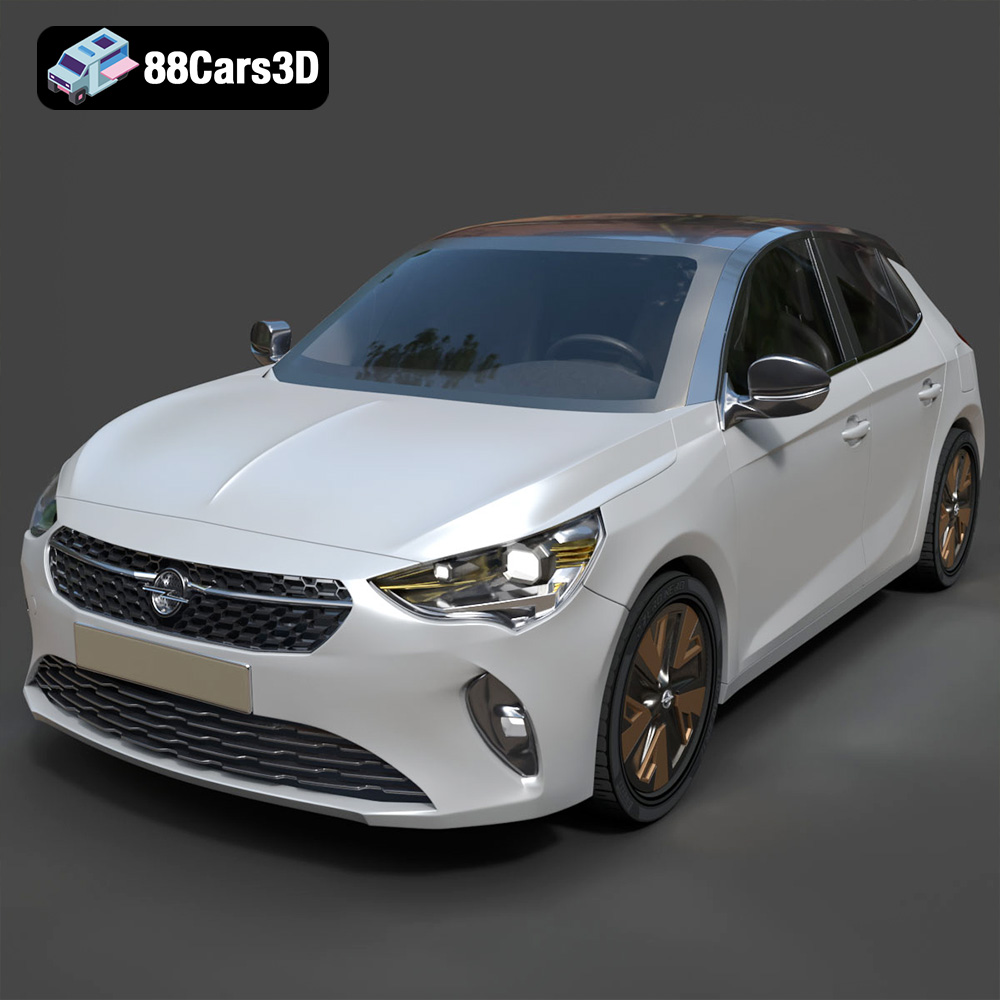
At the heart of this evolving industry lies the commitment to detail and optimization. Every curve, every reflection, and every material nuance contributes to an asset’s utility and impact. Whether you’re a game developer striving for uncompromised performance, an automotive designer presenting a new concept, or an architect populating a scene with lifelike vehicles, the quality of your 3D assets is paramount. This commitment to excellence is perfectly exemplified by assets like the Opel Corsa E 2019 3D model, a meticulously engineered digital representation that bridges the gap between cinematic rendering and real-time game performance. This particular model, available on 88cars3d.com, encapsulates what modern 3D automotive assets should offer: versatility, precision, and broad compatibility.
In the vast ecosystem of 3D modeling, choosing the correct file format is a critical decision that impacts workflow, compatibility, and ultimately, the success of your project. Each format serves a specific purpose, optimized for different stages of the production pipeline, from initial design to real-time deployment and even physical manufacturing. Understanding these distinctions is crucial for anyone working with 3D car models and other complex assets.
The .blend format is native to Blender, the powerful open-source 3D creation suite. A .blend file typically contains a complete Blender scene, including the 3D mesh, materials, textures, lighting setups, animation data, cameras, and even custom scripts. This makes it an ideal choice for users who wish to have full editability and access to all the original project components. When you download a .blend file for an asset like the Opel Corsa E 2019, you gain the ability to dissect, modify, and render the model within Blender’s comprehensive environment, making it perfect for custom animations, shader adjustments, or even topology refinement.
.fbx (Filmbox) is arguably the most widely adopted proprietary file format for 3D content exchange, developed by Autodesk. It excels in transferring complex 3D models, complete with animation, rigging, textures, and material assignments, between different 3D software packages like 3ds Max, Maya, Blender, and crucially, game engines such as Unreal Engine and Unity. Its strength lies in its robustness and ability to maintain data integrity across platforms, making it the go-to format for game assets and real-time pipelines where consistent performance and appearance are critical.
The .obj (Object) format is a fundamental, universally supported standard for geometric data. It’s a simpler format compared to FBX, primarily storing vertex positions, UV coordinates, normals, and polygonal faces. While it can reference external material files (.mtl) for basic color and texture information, it doesn’t typically embed animations or advanced scene data. Its universality makes it excellent for cross-software compatibility, often used as a fallback when other formats fail or when only basic mesh data transfer is required. It’s a reliable choice for the base geometry of 3D car models.
.glb is the binary version of the glTF (GL Transmission Format), an open-standard 3D file format developed by the Khronos Group. Designed for efficient transmission and loading of 3D scenes and models by applications, it’s quickly becoming the standard for AR, VR, and browser-based 3D experiences. A .glb file encapsulates the model, textures, and animations into a single file, making it incredibly easy to share and embed. For visualizing 3D car models in virtual showrooms or augmented reality apps, .glb offers optimized performance and streamlined delivery.
.stl (Stereolithography) is the de facto standard format for 3D printing. It represents a 3D model as a series of connected triangles, describing only the surface geometry of an object without color, texture, or other CAD attributes. Its simplicity makes it universally compatible with 3D printers and slicing software. When preparing a 3D car model like the Opel Corsa E 2019 for physical production, converting it to .stl is the essential first step, ensuring that the printer can accurately interpret the object’s form.
.ply (Polygon File Format or Stanford Triangle Format) is a versatile format used to store 3D data, particularly from 3D scanners. It can store a variety of properties including color, transparency, surface normals, and texture coordinates. While less common for general asset exchange than FBX or OBJ, it’s valued in applications requiring high precision mesh data, such as reverse engineering, CAD, scientific visualization, and 3D scanning. For highly detailed and precise 3D car models, .ply can be beneficial for specific analytical workflows.
While not a universal standalone format in the same vein as FBX or OBJ, .unreal refers to an asset that has been specifically prepared, optimized, and often packaged within an Unreal Engine project structure. This means the model, its materials, textures, and collision meshes are already configured to leverage Unreal Engine’s rendering pipeline and physics system. An engine-ready asset significantly streamlines the integration process for game developers, reducing setup time and ensuring optimal performance within the engine.
The .max format is the native file type for Autodesk 3ds Max, a powerful 3D modeling, animation, rendering, and compositing software. Similar to .blend, a .max file contains the entire scene data, including all objects, lights, cameras, animations, and render settings. It provides full editability within 3ds Max, making it invaluable for professionals who use this software for high-end rendering, complex animation sequences, or detailed architectural visualizations involving 3D car models.
The Opel Corsa E 2019 3D model stands as a testament to the meticulous craftsmanship required for truly outstanding automotive assets. It’s not merely a surface representation; it’s a deeply considered digital twin, engineered for versatility across a spectrum of professional applications. This level of detail elevates it beyond a simple mesh to a professional-grade solution for a multitude of industries.
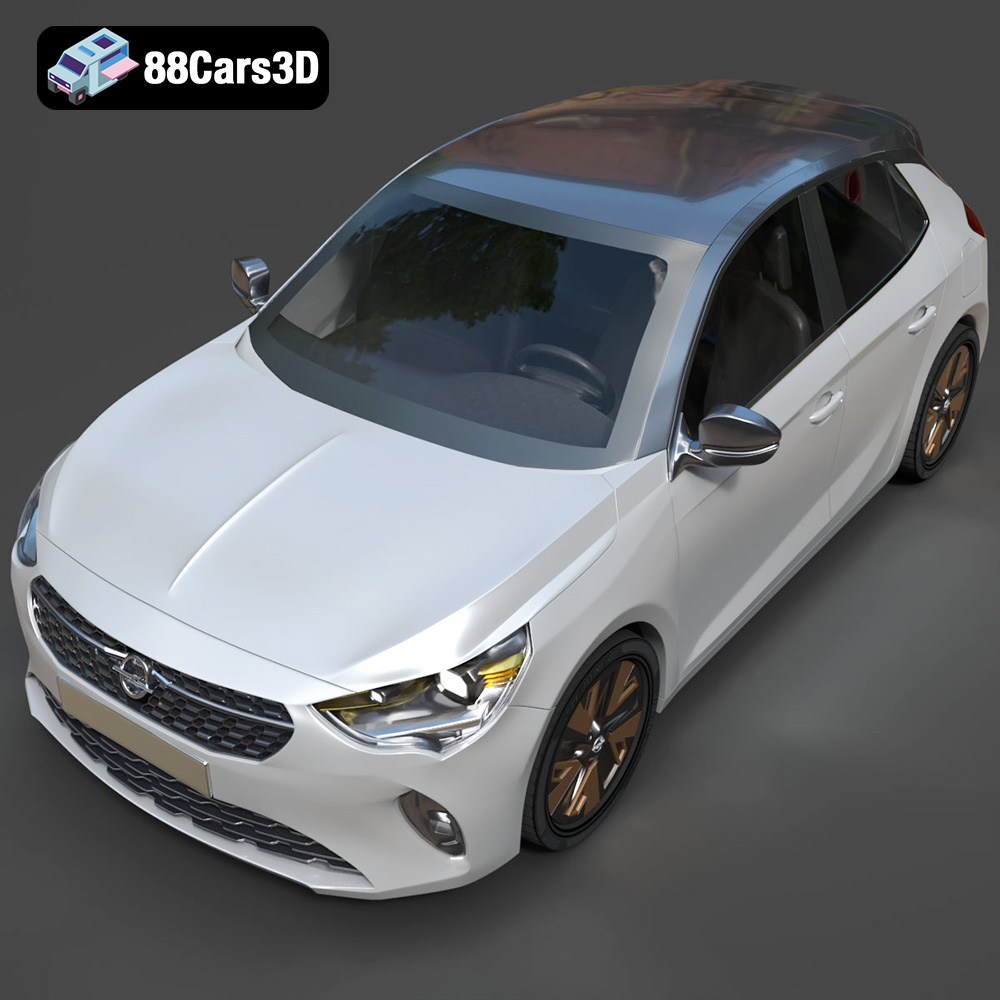
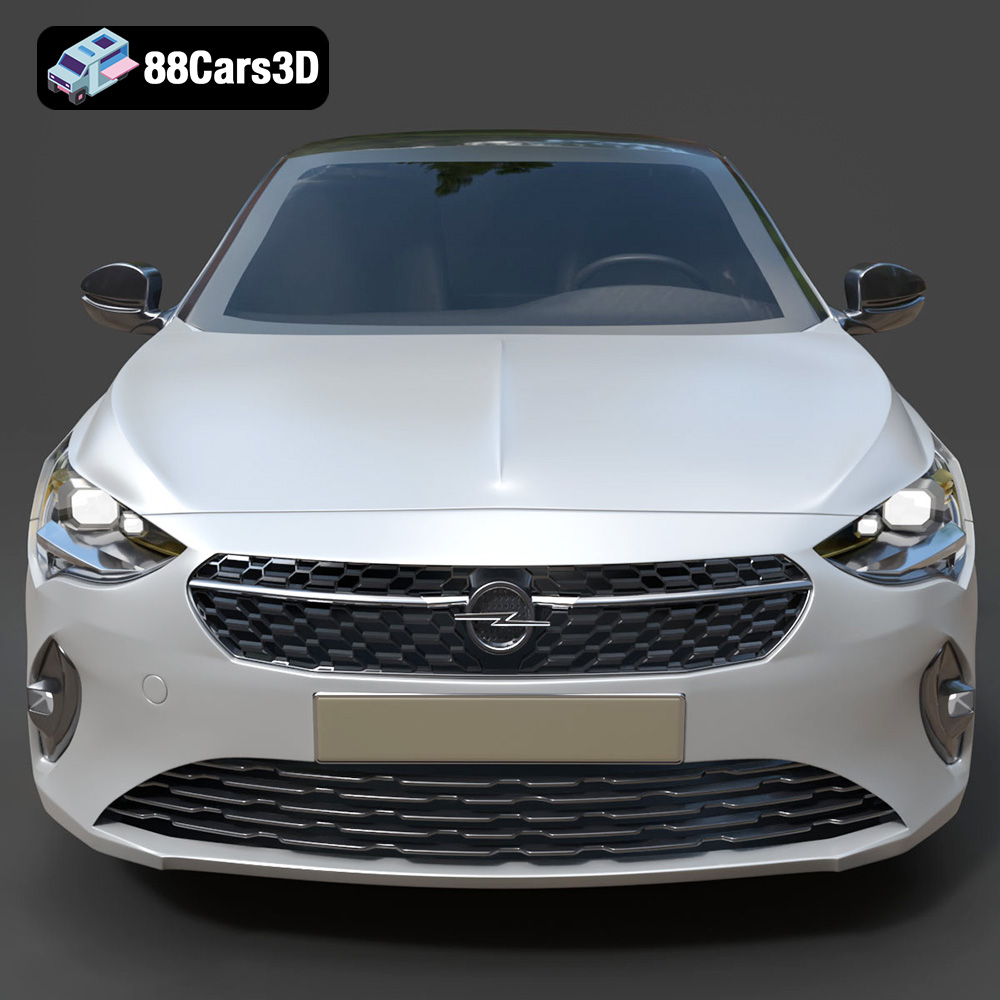
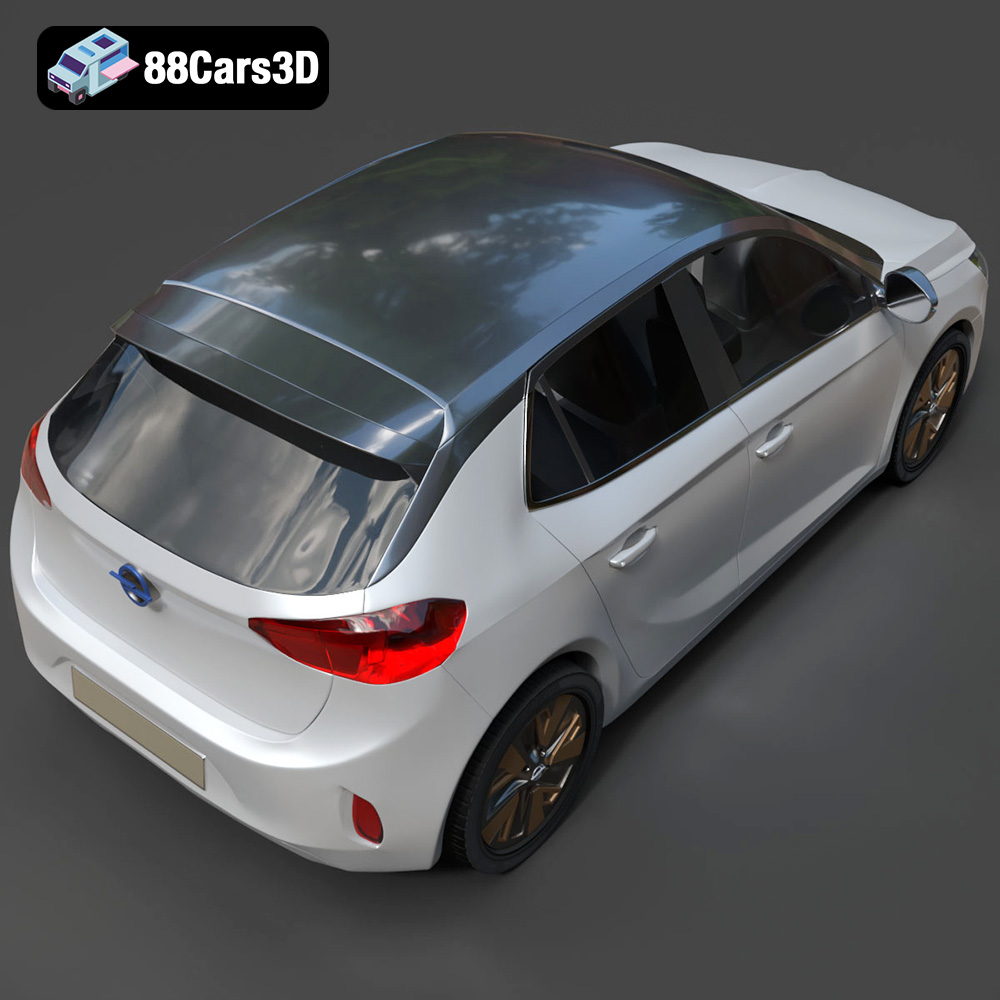
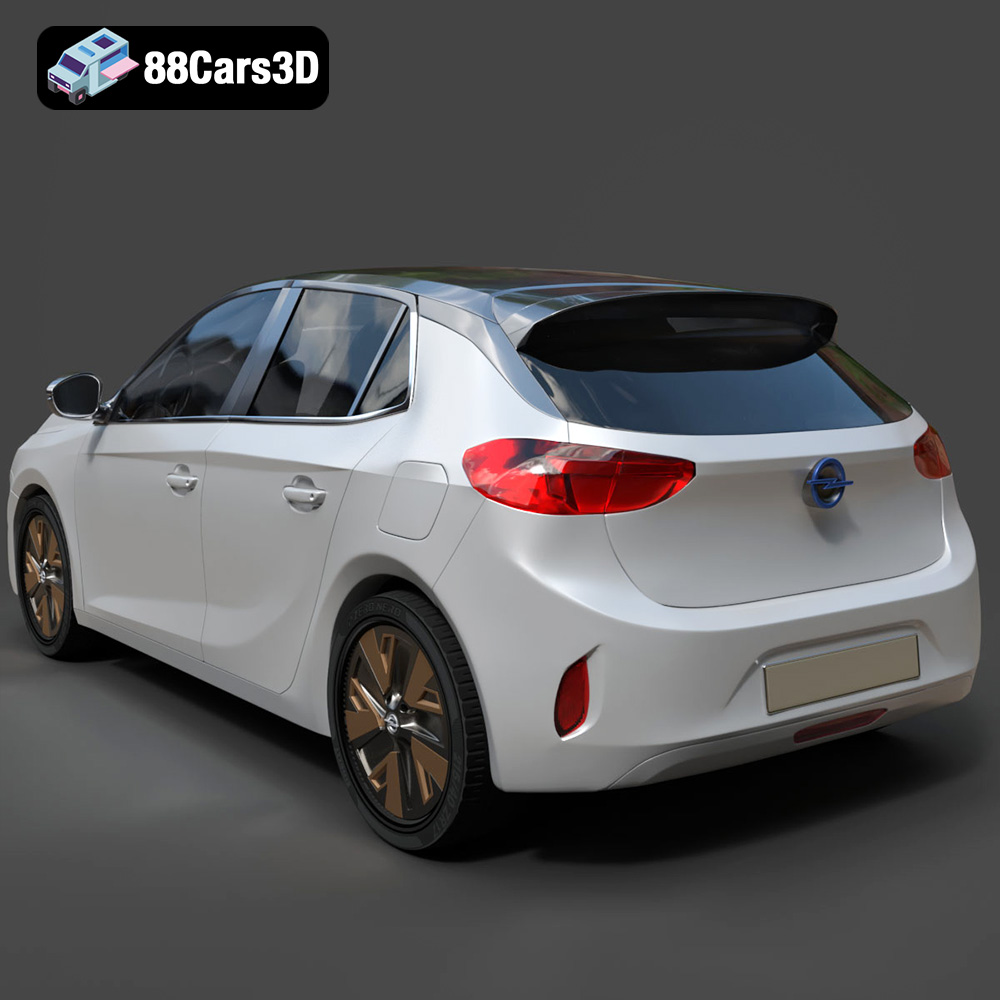
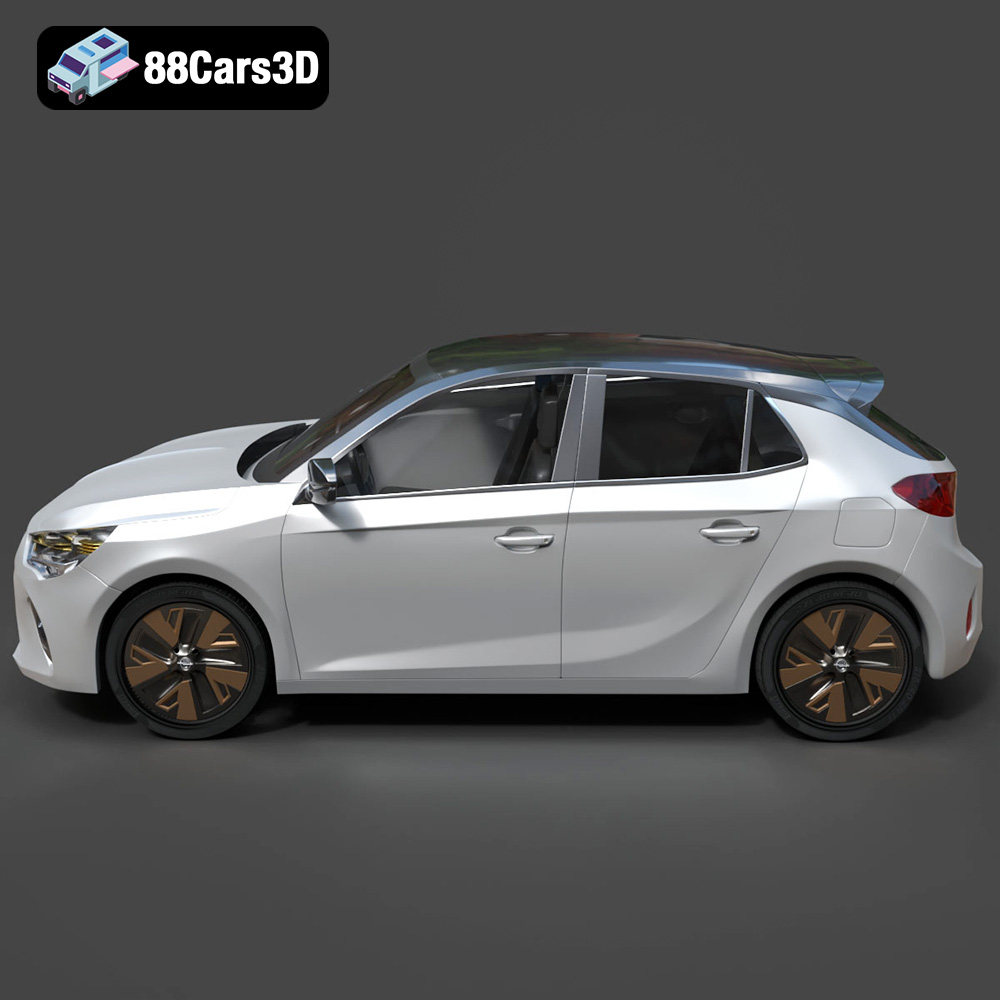
At first glance, the Corsa E 2019 model impresses with its accurate frame geometry and authentic proportions, faithfully recreating the distinctive European styling of the compact hatchback. Every subtle curve and crisp character line from the real vehicle has been meticulously replicated. The model features highly detailed LED headlight and taillight assemblies, complete with inner reflector geometry that truly catches the light, mimicking real-world optical behavior. The authentic factory alloy wheels are not just textures, but fully modeled components with realistic tire tread patterns and sidewall details, ensuring that even close-up shots reveal no compromise in quality. Furthermore, the detailed engine bay layout and realistic exhaust system, including the tailpipe finish, add layers of authenticity crucial for cinematic renders or detailed simulations.
Stepping inside the virtual cabin reveals an equally impressive level of detail. The cockpit features accurate fabric and leather-textured bucket seats, a detailed multifunction steering wheel with integrated controls, and a high-resolution digital/analog instrument cluster geometry. The center console, infotainment screen, and climate control dials are all precisely modeled, providing an immersive experience. This attention to interior fidelity is especially critical for applications requiring first-person perspectives, such as driving simulators or virtual reality experiences, where the user directly interacts with the vehicle’s interior.
A static model, however detailed, has limited utility in dynamic environments. The Opel Corsa E 2019 3D model is designed with animation in mind. Its components, such as the wheels, suspension, and steering, are separate entities with proper pivot setups. This thoughtful segmentation allows for realistic animations of steering input, wheel rotation, and suspension travel, making it an invaluable asset for racing games, virtual test drives, or cinematic sequences depicting the car in motion. This level of preparation saves countless hours for animators and riggers, allowing them to focus on creative execution rather than foundational setup.
The true measure of a high-quality 3D automotive asset lies in its ability to perform across demanding platforms, from real-time game engines to high-fidelity rendering software. The Opel Corsa E 2019 3D model excels in this regard, striking a delicate balance between visual richness and computational efficiency.
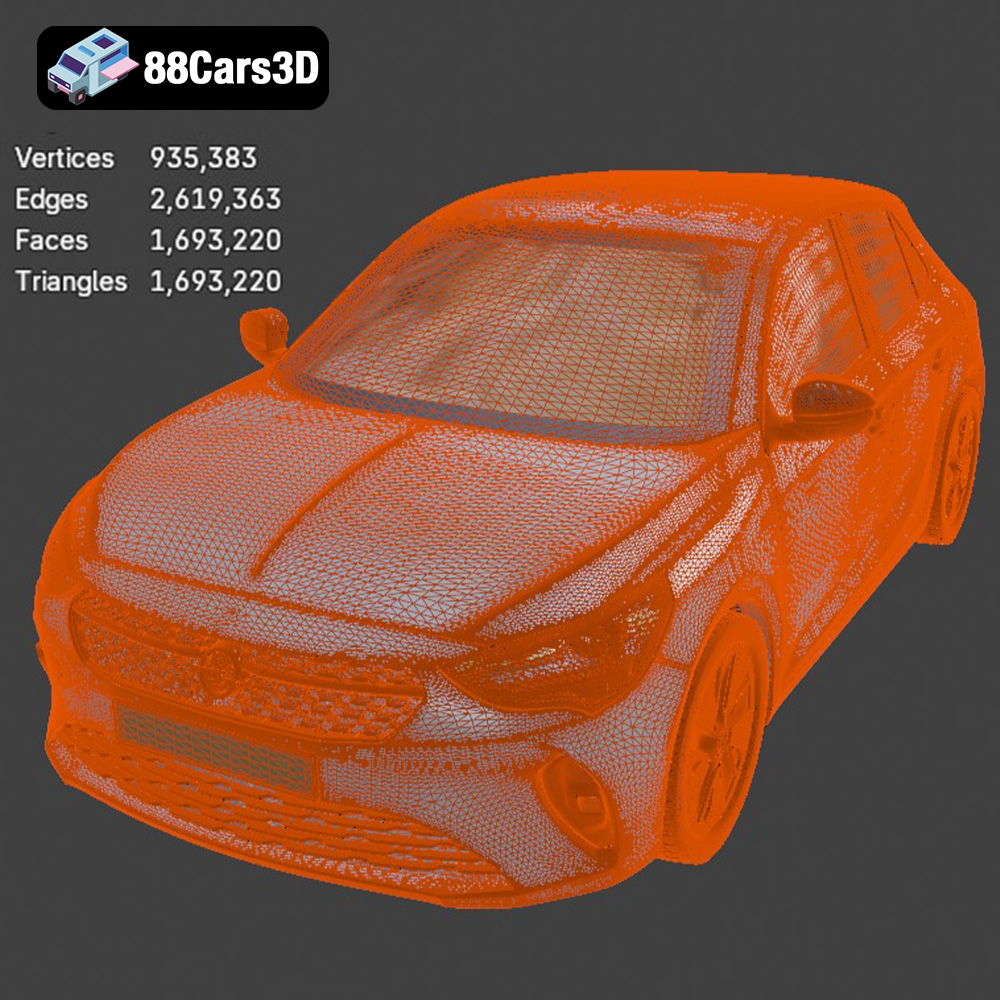
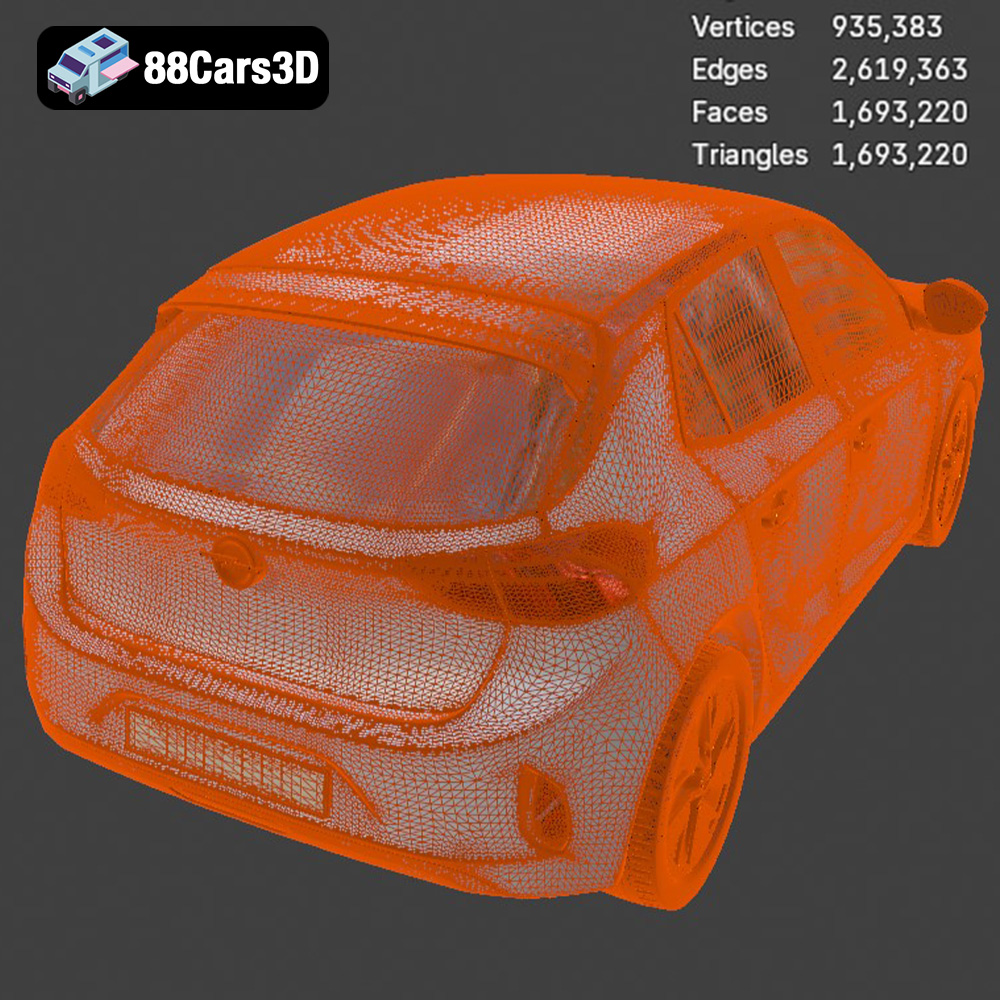
With an exact triangle count of 1,693,220, this model represents a masterclass in optimization. This polycount is sufficiently high to maintain exceptional visual realism, capturing intricate details and smooth curves without visible faceting, yet it remains optimized for game-ready performance. It allows for seamless integration into real-time engines like Unreal Engine and Unity without causing significant performance bottlenecks. Complementing this optimized geometry are PBR-ready materials, which utilize physically based rendering workflows to ensure that surfaces react to light in a realistic manner, delivering stunning visual fidelity whether in a studio render or a bustling virtual city environment.
Accuracy in 3D modeling extends beyond visual appeal to include precise measurements and functional geometry. The Opel Corsa E 2019 3D model adheres to real-world scale based on actual vehicle chassis dimensions. This is critical for maintaining realism in simulations, architectural visualizations, and game environments where interaction with other objects needs to be precise. Furthermore, the model incorporates proper pivot setups for key elements like steering, wheel rotation, and suspension travel. This foundational preparation is essential for game developers and animators, as it ensures that vehicle physics and dynamics behave realistically without the need for extensive post-integration adjustments.
A truly versatile 3D asset must be compatible with a wide array of professional tools. The Opel Corsa E 2019 model includes a comprehensive suite of file formats: .blend, .fbx, .obj, .glb, .stl, .ply, .unreal, and .max. This broad compatibility ensures that designers, artists, and developers can integrate the model into their preferred software environments with minimal friction. Whether you’re working in Blender for custom animations, 3ds Max for architectural rendering, or directly importing into Unreal Engine for a game project, the asset is ready. This seamless integration streamlines workflows and accelerates production timelines, making it a valuable investment for any professional pipeline.
High-quality 3D car models like the Opel Corsa E 2019 are not just digital art; they are versatile tools that power innovation across numerous industries. Their precise geometry, optimized performance, and broad compatibility unlock a myriad of real-world applications, from entertainment to engineering.
For game developers, the Opel Corsa E 2019 model is an ideal asset for populating virtual worlds. Its optimized polycount and PBR-ready materials make it perfect for open-world games, where dozens or hundreds of vehicles need to be rendered simultaneously without compromising frame rates. In racing titles, the model’s accurate proportions and animation-ready components allow for realistic driving physics and captivating visual feedback. Urban-themed games can seamlessly integrate the Corsa E into their environments, adding a layer of authenticity to cityscapes. Imagine a bustling street scene in a Grand Theft Auto-style game, or a realistic traffic simulation, all enhanced by the inclusion of highly detailed yet performance-friendly 3D car models available on 88cars3d.com.
The rise of augmented and virtual reality has opened new frontiers for automotive visualization. The Corsa E 2019 3D model, especially in formats like .glb, is perfectly suited for creating immersive virtual showrooms where customers can explore a vehicle from every angle, customize its features, and even take a virtual test drive. Mobile AR experiences, allowing users to place a digital car in their real-world environment via a smartphone, are becoming increasingly popular for marketing and sales. For VR training simulations, such as teaching new drivers or mechanics, the highly detailed interior and exterior provide an invaluable tool for realistic engagement and learning. The model’s real-world scale accuracy is paramount for believable AR/VR interactions.
In the realm of professional visualization and marketing, photorealistic rendering is king. The Opel Corsa E 2019 3D model provides an excellent foundation for brand campaigns, lifestyle scenes, and studio lighting setups. Automotive manufacturers and advertising agencies can use such high-fidelity 3D car models to create stunning visuals for brochures, websites, and commercials long before a physical prototype exists. Architects use these models to populate urban scenes in their renderings, adding realism and context to new building designs. The ability to change body colors, adjust material finishes, and adapt lighting within powerful rendering engines like V-Ray, Corona, or Cycles, allows for limitless creative possibilities, ensuring the car always looks its best in any scenario.
The utility of a high-quality 3D model extends far beyond digital rendering and interactive applications. For hobbyists, collectors, and even professional prototypers, the ability to transform a digital asset into a physical object via 3D printing offers an exciting new dimension of engagement and utility.
The Opel Corsa E 2019 3D model’s inclusion of the .stl format is a direct nod to the burgeoning world of 3D printing. The .stl format is the universal language of 3D printers, translating the model’s complex geometry into a series of triangular facets that the printer can understand. For those looking to create a physical replica, the recommended scales of 1:12, 1:18, or 1:24 offer a balance between detail preservation and manageable print size. These scales are common for display models and dioramas, allowing for significant detail retention while remaining practical for home 3D printers.
Achieving a high-quality 3D print of an automotive model requires careful attention to print settings. A layer height of 0.04–0.12 mm is recommended, with resin printing often preferred over FDM for its ability to capture the fine details of the Corsa E’s body lines, grilles, and intricate interior components. Wall thickness should be maintained between 1.2–2.0 mm to ensure structural integrity without excessive material usage. Infill settings of 20–30% provide a good balance of strength and material efficiency. Supports will be crucial for overhangs and delicate parts like the exhaust system, mirrors, and specific interior elements. Printing the frame angled and wheels separately is a common strategy to maximize structural integrity and surface quality. Post-processing, including sanding, priming, and painting with authentic factory colors, can elevate the printed model to a showroom-ready display piece, perhaps even with metallic finishes to truly capture the essence of the real vehicle. This provides a tangible link between the digital asset and a physical representation, adding immense value to the 3D model from 88cars3d.com.
One of the most powerful advantages of working with high-quality 3D car models is the inherent flexibility and creative control they offer. Unlike working with photographs or pre-rendered images, a 3D asset provides endless possibilities for customization and adaptation to specific project needs.
The Opel Corsa E 2019 3D model is built with customization in mind. Artists and designers can easily change the body color to any desired hue, whether it’s an authentic factory color or a custom finish tailored to a brand’s aesthetic. This is invaluable for showcasing different trim levels or special editions. Furthermore, the ability to modify tire textures allows for variations like off-road, street, or even racing slicks, drastically altering the car’s perceived context. Adjusting material finishes from matte to gloss, or introducing metallic flake, can profoundly impact the vehicle’s visual presence, allowing for stylistic iterations without the need for entirely new models. This dynamic control over aesthetics ensures the car always fits the scene perfectly.
Beyond the car itself, the 3D model offers flexibility in how it interacts with its environment. Artists can adapt the lighting to simulate different times of day, weather conditions, or studio setups. From a sun-drenched street scene to a moody, rain-slicked night shot, the PBR-ready materials on the Corsa E will react realistically to various lighting conditions, enhancing the overall realism of the render. This environmental adaptability allows the model to be seamlessly integrated into diverse projects, from architectural visualizations depicting an urban street to game levels requiring dynamic weather systems. The comprehensive nature of the model ensures it is a versatile foundation for any creative vision.
The world of 3D automotive design and visualization is a demanding one, requiring assets that are both technically sophisticated and aesthetically impeccable. The Opel Corsa E 2019 3D model exemplifies this pinnacle of quality, offering a high-fidelity, meticulously optimized asset for a broad spectrum of professional applications. Its balanced polycount, PBR-ready materials, and accurate real-world detailing make it an ideal choice for game development, AR/VR experiences, and photorealistic rendering. The comprehensive suite of included file formats—from .blend and .max for full editability to .fbx and .unreal for game engines, and even .stl for 3D printing—ensures unparalleled flexibility and integration into any workflow. Whether you’re crafting a new racing title, visualizing an urban environment, or producing a stunning product showcase, this 3D model provides the foundational excellence needed to elevate your project. Explore this and many other high-quality 3D car models to unlock new creative possibilities for your next project at 88cars3d.com.
The Opel Corsa E 2019 is a prominent figure in the compact hatchback segment, blending modern European styling with everyday practicality. This iconic city car boasts a distinctive front fascia with sleek headlamps, aerodynamic body contours, and an efficient powertrain layout that makes it a favorite among urban drivers. Its well-proportioned exterior features crisp character lines and a modern grille, perfectly capturing the essence of contemporary automotive design. With an exact triangle count of 1,693,220, this high-fidelity 3D model offers exceptional topology and visual realism. Meticulously optimized for game-ready performance and stunning high-end rendering, the model seamlessly bridges the gap between cinematic detail and real-time efficiency. Its precise geometry and PBR-ready materials make it the ultimate asset for game development, AR/VR applications, animation, and professional visualization.
$80.99
.2019
.blend
.fbx
.glb
.hatchback
.max
.obj
.opel
.ply
.rendering
.stl
.unreal
car-3d-model
compact-car
corsa-e
game asset
game-ready
optimized
VR/AR