Get 20% OFF All Premium 3D & STL Models!

The Mercedes Benz 300 SL, with its iconic gullwing doors and timeless design, stands as a monument to automotive engineering and aesthetic brilliance. For enthusiasts, designers, and developers alike, the allure of this classic sports car transcends mere steel and leather, extending into the digital domain. In the world of 3D modeling, capturing the essence of such a legend is not just about recreating shapes; it’s about meticulously preserving history, enabling new forms of interaction, and pushing the boundaries of visual fidelity. Whether for high-octane racing games, immersive AR/VR experiences, or breathtaking cinematic renders, a perfectly crafted 3D model of the 300 SL serves as the ultimate foundation. This article delves into the technical intricacies and creative potential unlocked by premium 3D car models, using the exceptional Mercedes Benz 300 SL 3D Model available at 88cars3d.com as our prime example.
When embarking on a project involving 3D car models, one of the first critical decisions involves selecting the appropriate file format. Each format is designed with specific use cases, software compatibility, and technical characteristics in mind. A comprehensive marketplace like 88cars3d.com often provides a range of formats to ensure maximum flexibility for professionals across various industries. Understanding these distinctions is paramount for an efficient workflow and optimal results.
The .blend format is the native file type for Blender, the popular open-source 3D creation suite. A .blend file typically encapsulates an entire Blender scene, including the mesh geometry, materials, textures, lighting, cameras, animations, and even physics simulations. This makes it an incredibly powerful format for users working primarily within Blender, offering full editability and access to all the original scene data. For complex automotive models like the Mercedes Benz 300 SL, having the .blend file allows artists to delve deep into the material setup, modify lighting, adjust the camera, or even re-rig components for custom animations, all within the familiar Blender environment.
The .fbx (Filmbox) format, originally developed by Kaydara and now owned by Autodesk, has become one of the most widely adopted interchange formats in the 3D industry. Its strength lies in its ability to store a vast array of 3D data, including geometry, materials, textures (though often referenced externally), animations, skinning, and camera information, in a way that is highly compatible across different 3D applications and game engines. For pipelines involving Unreal Engine, Unity, 3ds Max, Maya, or Cinema 4D, .fbx is often the go-to format for exporting animated characters, vehicles, or complex scene elements. It’s particularly ideal for real-time applications due to its robust support for skeletal animations and efficient data transfer.
The .obj (Wavefront OBJ) format is a widely supported, plain-text format for representing 3D geometry. It primarily stores vertex positions, UV coordinates, normals, and polygon faces, often accompanied by a separate .mtl (material library) file that defines basic material properties and texture references. While it doesn’t support advanced features like animations or rigging, its universal compatibility makes it an excellent choice for cross-software transfers of static meshes. If you need a reliable way to get your Mercedes Benz 300 SL model into virtually any 3D software for further modeling, texturing, or rendering, .obj is a dependable choice.
.glb (GLB format, derived from glTF) is an increasingly popular format, especially for web-based 3D, augmented reality (AR), and virtual reality (VR) applications. It’s a self-contained, binary format that bundles 3D model data (geometry, materials, textures, animations) into a single file, making it incredibly efficient for streaming and rapid loading. Its optimization for real-time environments and strong support across browsers and AR/VR platforms make it perfect for interactive product viewers, virtual showrooms, or mobile AR experiences showcasing the 300 SL.
The .stl (STereoLithography) format is the standard for 3D printing. It represents 3D surfaces as a series of connected triangles, describing only the surface geometry of an object without color, texture, or other CAD attributes. While it lacks visual detail, its simplicity and widespread adoption by slicing software and 3D printers make it indispensable for manufacturing physical objects from digital models. Converting the Mercedes Benz 300 SL 3D model into .stl enables hobbyists and professionals to bring this classic car to life as a tangible display piece.
The .ply (Polygon File Format or Stanford Triangle Format) is another popular format for storing 3D data, particularly from 3D scanners or for scientific applications. It can store various properties for vertices (color, normals, transparency) and faces (color), and supports both ASCII and binary representations. While less common for general interchange compared to .fbx or .obj, it’s often used in CAD, reverse engineering, and applications requiring precise mesh data for analysis or reconstruction, offering a robust way to represent the detailed geometry of a vehicle like the 300 SL.
The .unreal format signifies an asset specifically optimized and often pre-configured for direct use within Unreal Engine. This typically means the mesh, materials, textures, and even collisions have been correctly set up, imported, and saved within an Unreal Engine project structure. For developers working on games or simulations, having a .unreal file or a complete Unreal Engine project package streamlines the integration process, saving significant time on asset preparation and ensuring optimal performance within the engine’s rendering pipeline. The Mercedes Benz 300 SL model’s availability in this format immediately makes it a plug-and-play solution for Unreal Engine projects.
The .max format is the native file type for Autodesk 3ds Max, one of the industry-leading 3D modeling, animation, and rendering software packages. Similar to .blend, a .max file contains the entire scene data, including geometry, modifiers, materials, textures, lighting, cameras, and animation keyframes. For professionals whose primary workflow revolves around 3ds Max, having the original .max file for the 300 SL offers unparalleled flexibility for customization, animation, and integration into existing 3ds Max scenes, leveraging the software’s powerful rendering capabilities like V-Ray or Corona Renderer.
Recreating a vehicle as iconic as the Mercedes Benz 300 SL in 3D demands an extraordinary level of detail and a deep understanding of automotive design principles. It’s not just about polygons; it’s about conveying the car’s soul, its history, and its engineering marvels through digital artistry. The 300 SL 3D model from 88cars3d.com exemplifies this dedication, offering a highly accurate and versatile asset.
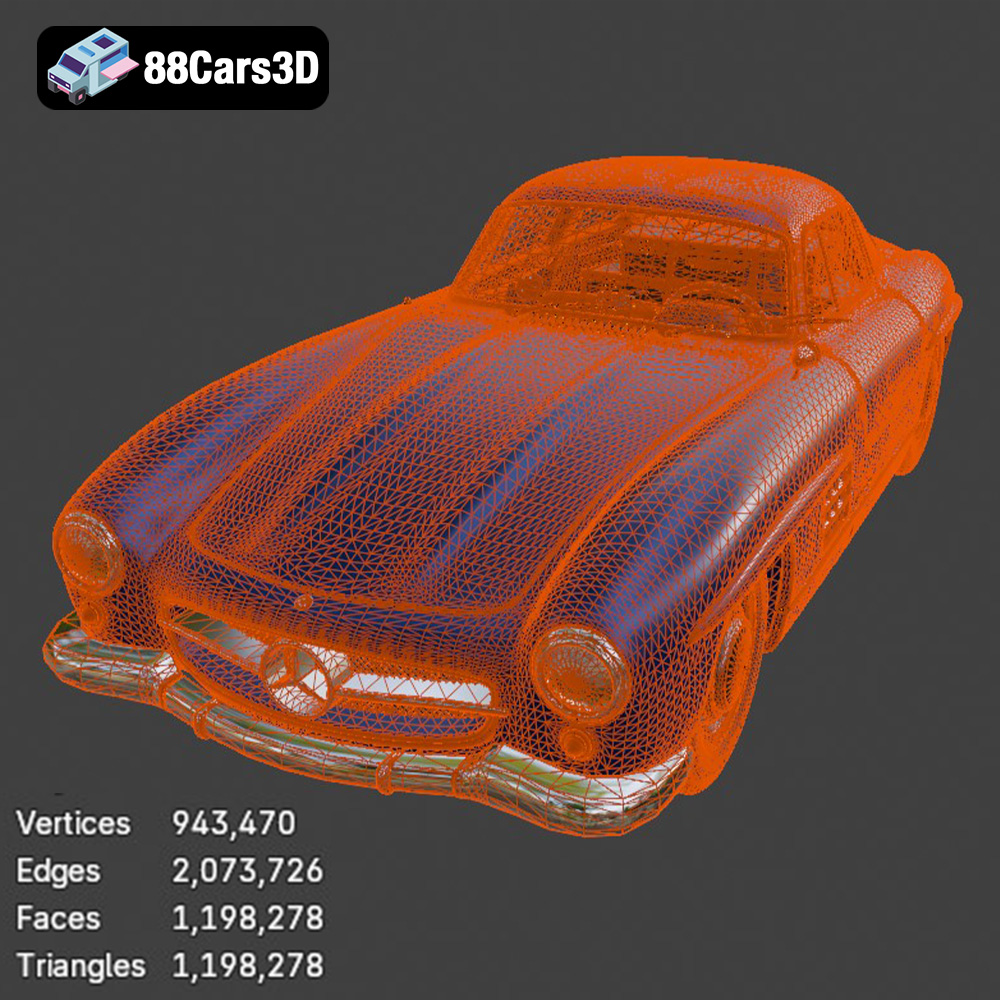
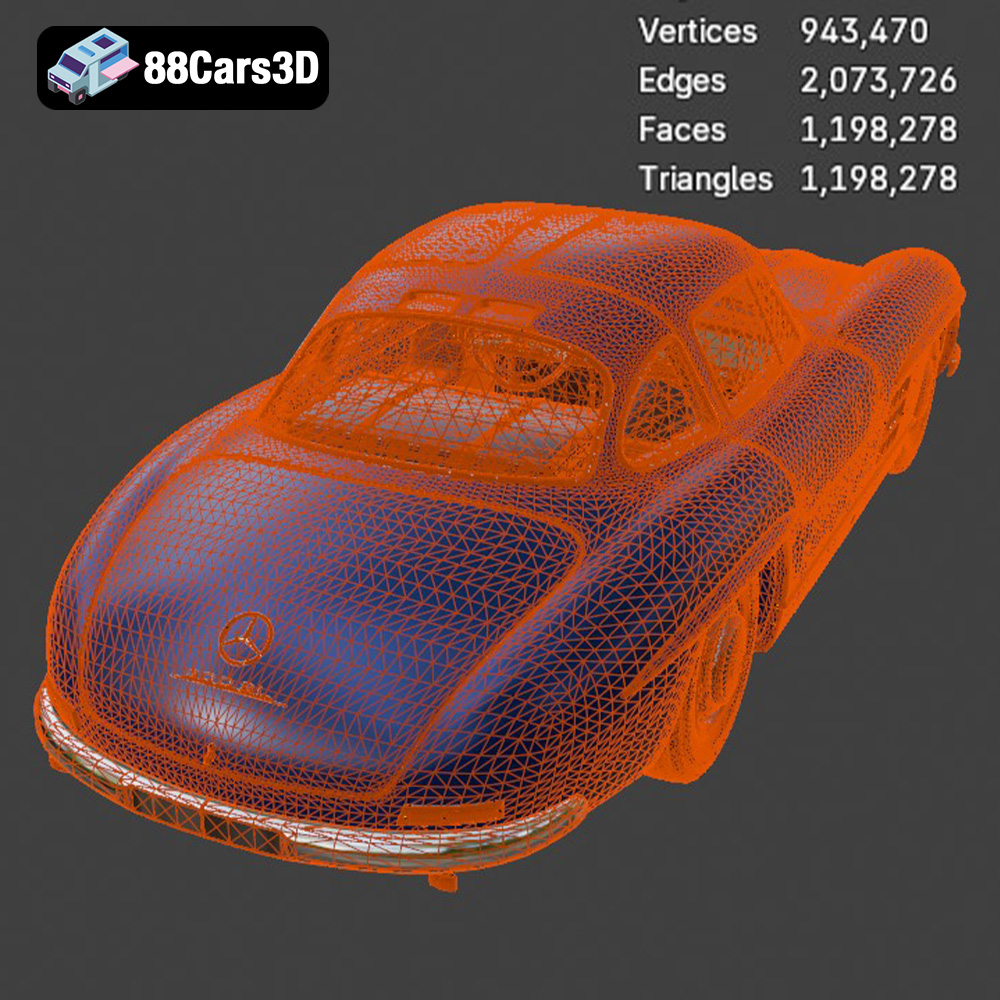
At the heart of any high-quality 3D model lies its geometry and topology. For the Mercedes Benz 300 SL, this means capturing the elegant, flowing lines and complex curves with absolute precision. The model boasts a high-fidelity topology with a triangle count of 1,198,278. This figure represents a crucial balance: it’s high enough to deliver exceptional visual realism, allowing for smooth surfaces and intricate details to hold up under close-up renders and dynamic lighting, yet it remains optimized for efficient processing in real-time engines. Clean, quad-based topology (even if ultimately triangulated for game engines) is essential for proper subdivision, deformation during animation, and seamless UV unwrapping, which in turn ensures textures are applied without distortion. Every panel, vent, and chrome trim piece is meticulously crafted to reflect the authentic proportions and subtle nuances of the original vehicle.
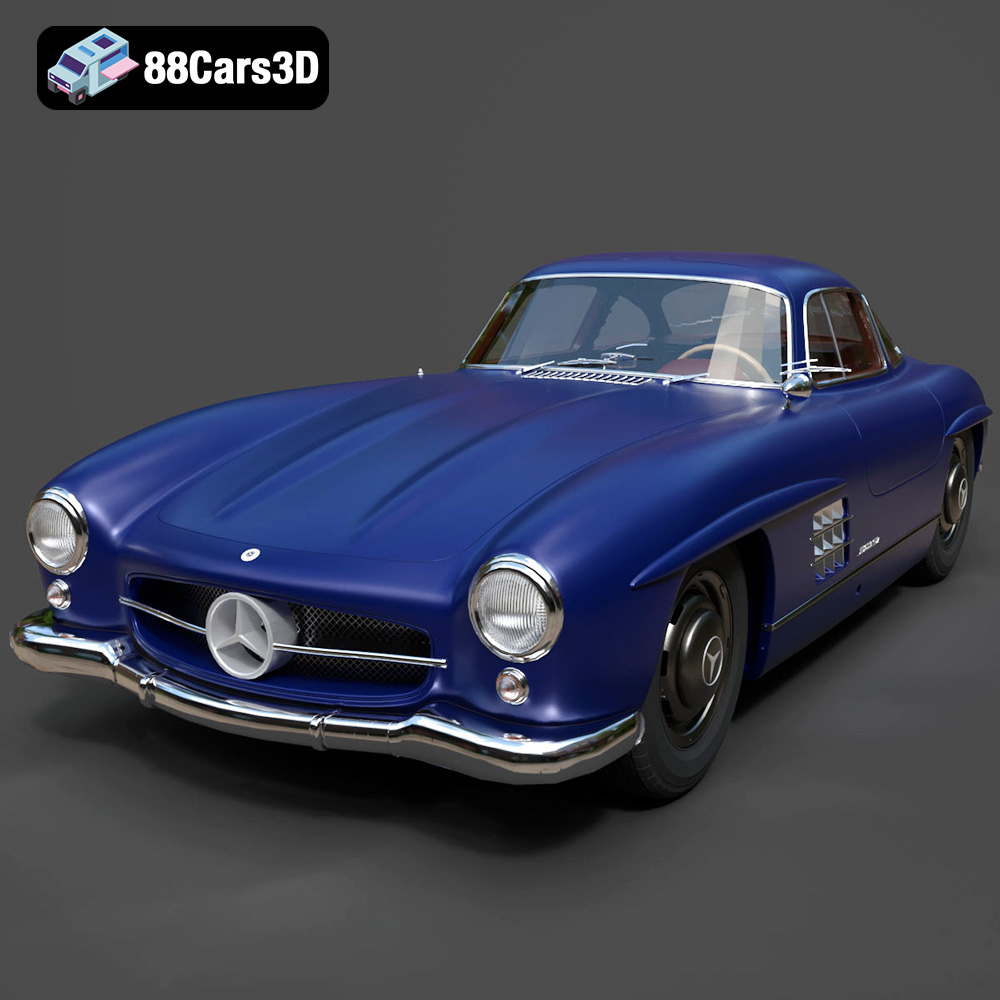
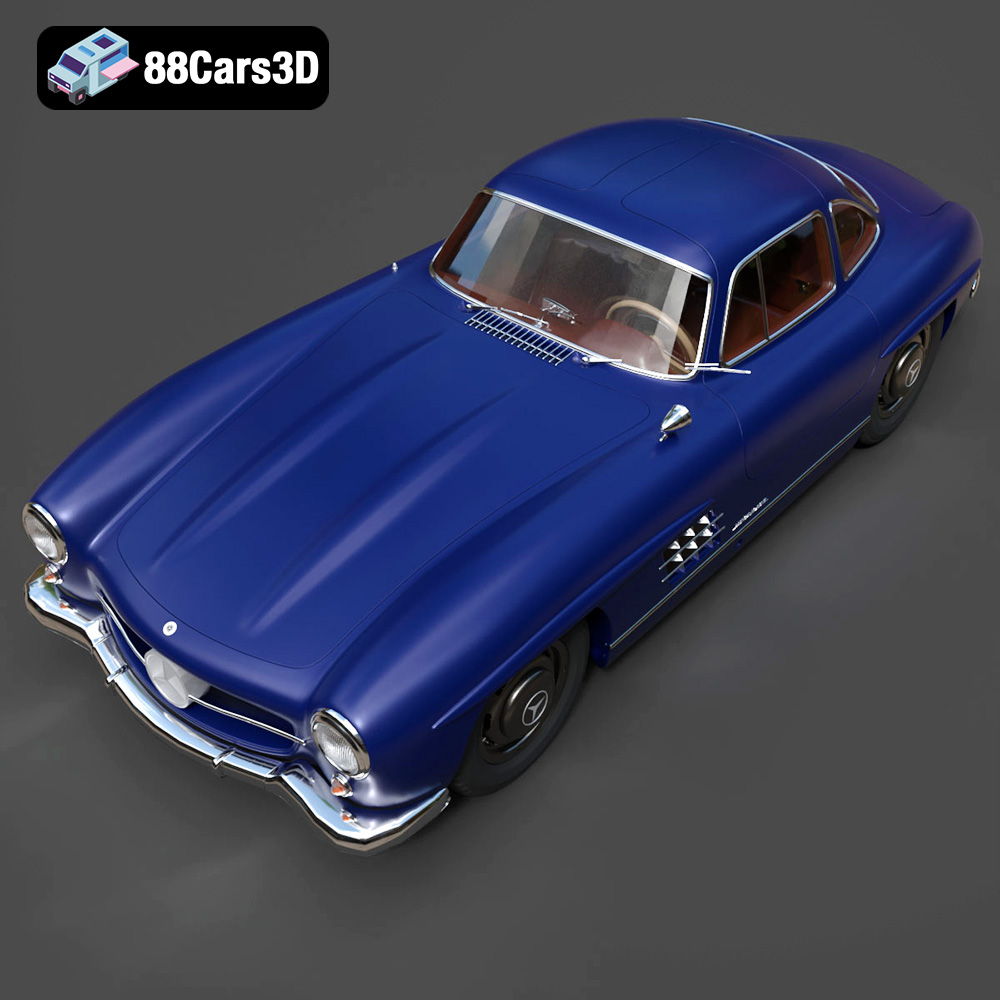
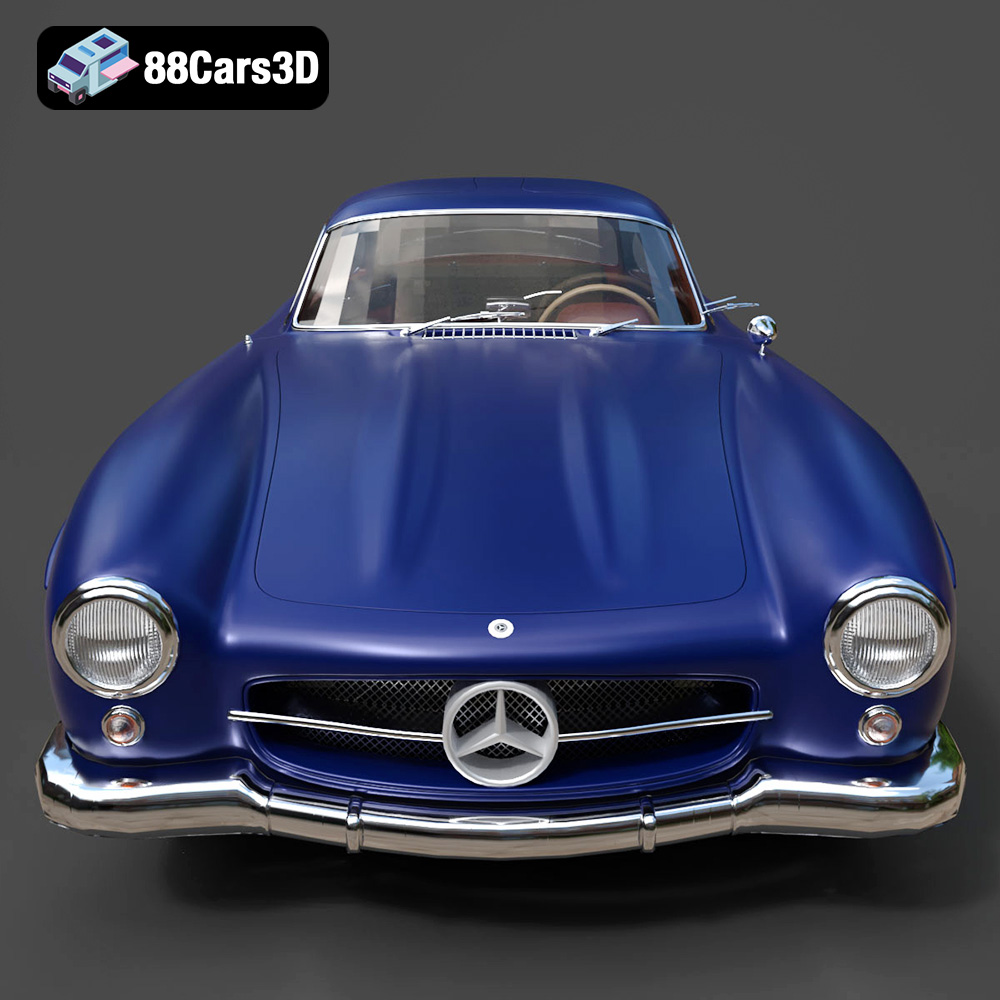
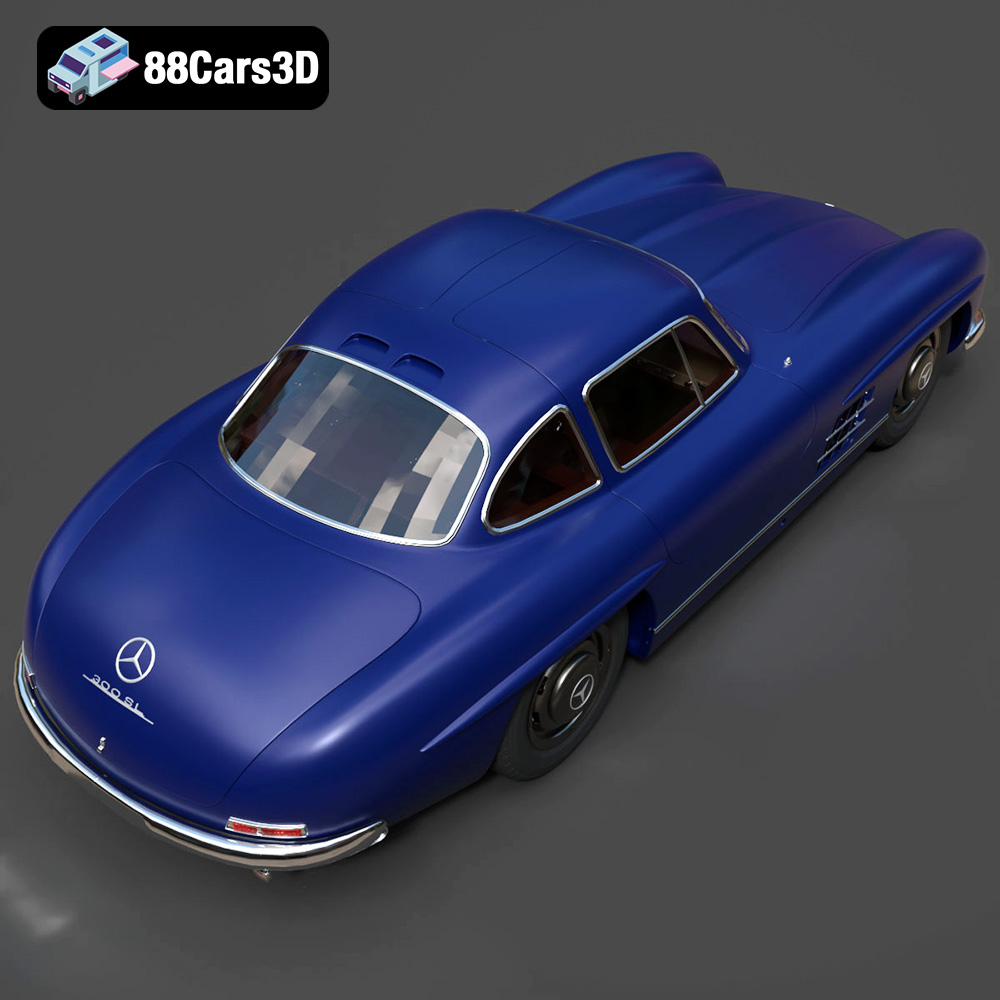
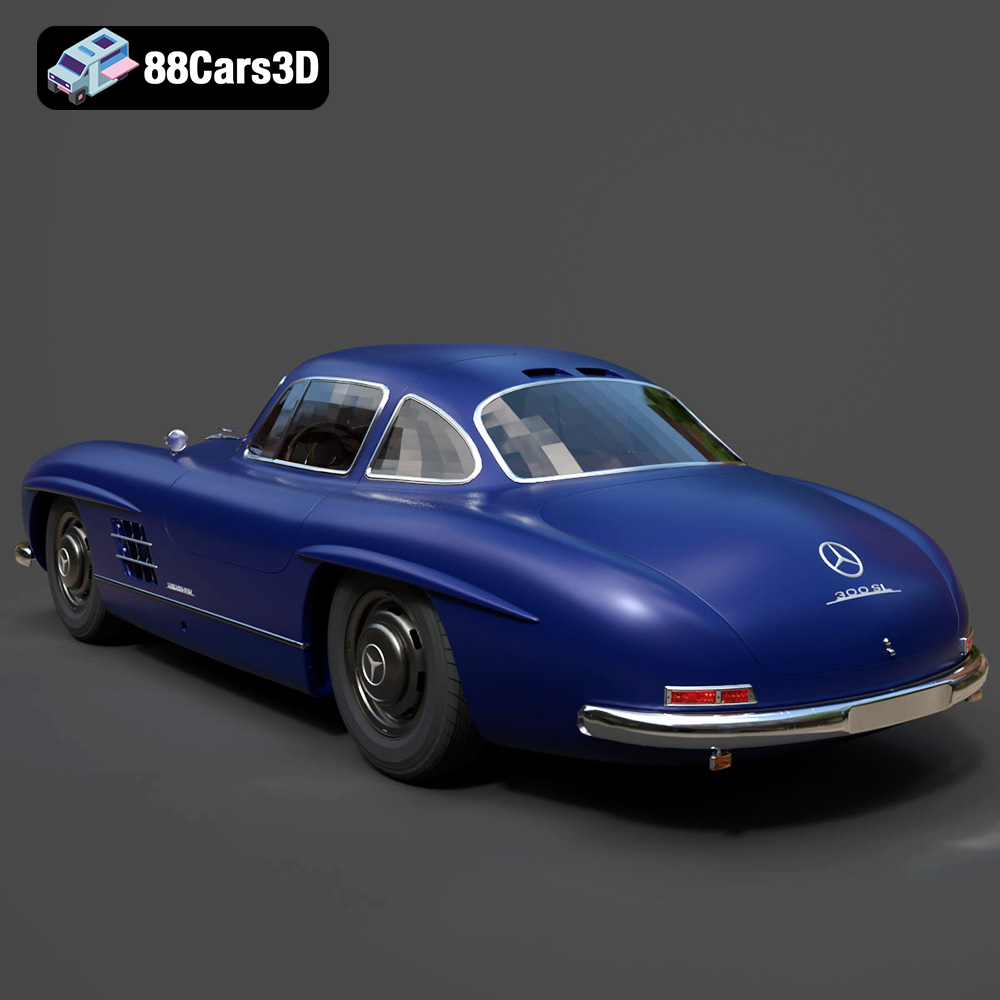
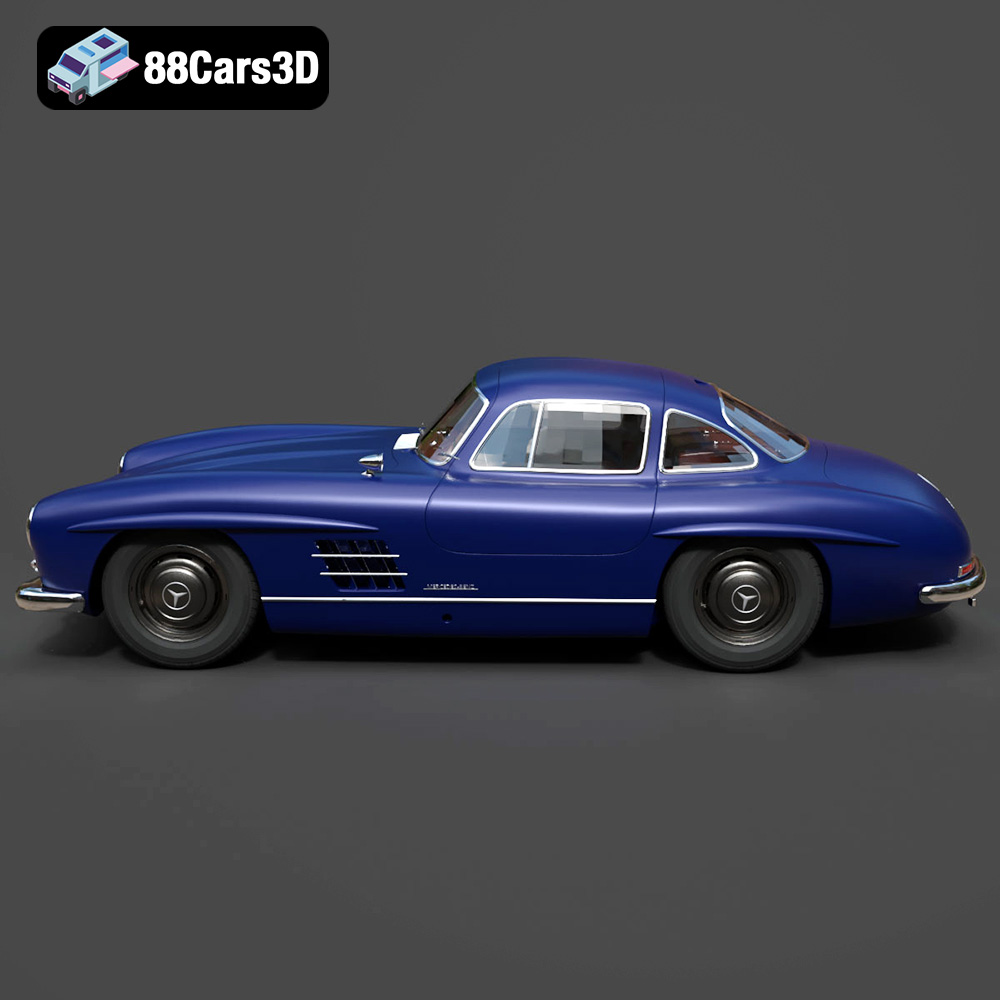
The exterior of the 300 SL is its defining feature. The model accurately captures the distinctive gullwing doors, which are not just an aesthetic choice but a functional marvel. The elongated hood, iconic front grille with the prominent Mercedes star, and period-correct headlights and taillights are all rendered with meticulous attention to detail. Chrome bezels, authentic rear exhaust systems, and vintage multi-spoke wheels with high-profile classic tire treads contribute to an undeniable sense of realism. Even intricate suspension details are included, providing a level of depth that elevates the model beyond a simple static prop. For automotive rendering specialists, these details are paramount, allowing for photorealistic studio shots or dynamic action sequences that truly showcase the car’s legendary status.
Beyond the breathtaking exterior, the interior of the 300 SL is equally significant, especially for applications like virtual reality or first-person gaming. This 3D model provides an exquisitely detailed vintage cockpit, featuring classic bucket seats with authentic upholstery patterns. The iconic thin-rimmed steering wheel, complete with its pivoting column, the highly accurate retro instrument cluster with detailed analog dials, and finely crafted gear shifter, pedals, and interior chrome trim all work together to create an immersive experience. Optimized geometry for first-person POV ensures that players or viewers stepping into the virtual driver’s seat will find a convincing and authentic environment, enhancing the overall realism and narrative potential of any project.
In the fast-paced world of game development and real-time visualization, performance is key. A beautiful 3D model is only truly valuable if it can be efficiently integrated and rendered within engines like Unreal or Unity without compromising frame rates or visual quality. The Mercedes Benz 300 SL 3D Model is designed with this critical balance in mind, making it a stellar game asset.
The specified triangle count of 1,198,278 is a sweet spot for high-end real-time applications. While not “low-poly” in the traditional sense, it’s meticulously optimized for next-generation engines. For scenes where performance is paramount, developers often implement Level of Detail (LOD) systems. This means having multiple versions of the model with varying polygon counts. A high-fidelity model like this one can serve as the primary LOD0, with progressively lower-poly versions generated for objects further from the camera. The clean topology of this 300 SL model facilitates the easy creation of these LODs, ensuring that the visual integrity is maintained even at a distance, while computational resources are managed effectively.
The availability of the Mercedes Benz 300 SL 3D Model in formats like .fbx and .unreal significantly streamlines the integration process into game engines. For Unreal Engine, the .unreal format means the asset is often already configured with appropriate materials, textures, and possibly even collision meshes, ready to be dropped into a level. In Unity, importing the .fbx file allows for quick setup, with materials and textures typically assigned automatically or requiring minimal adjustments. Proper pivot setups for steering, wheel rotation, and suspension travel are included, which are critical for animating a believable vehicle in a game environment. This ‘game-ready’ approach saves countless hours for developers, allowing them to focus on gameplay mechanics and overall experience rather than asset preparation.
A static car model, no matter how detailed, has limited utility in a dynamic game or simulation. The 300 SL model addresses this by providing separate wheels, suspension, and steering components. This modularity is vital for animation pipelines. With properly set pivots, developers can easily animate:
This level of articulation ensures that the classic 300 SL can perform authentically within a game, whether it’s navigating a challenging race track or cruising through an open-world environment.
While game development is a significant application, premium 3D car models like the Mercedes Benz 300 SL offer immense value across a broader spectrum of digital and physical creative endeavors. From stunning architectural visualizations to interactive virtual showrooms and tangible collectible prints, the versatility of such an asset is truly impressive.
For high-end automotive rendering, the Mercedes Benz 300 SL 3D Model is an exceptional starting point. Using software like 3ds Max with renderers such as V-Ray or Corona Renderer, or Blender with Cycles/Eevee, artists can create breathtaking photorealistic images and animations. The model’s high-fidelity topology ensures that reflections, refractions, and intricate surface details are accurately rendered. Artists can experiment with various studio lighting setups, environmental HDRI maps, and material variations (matte, gloss, metallic finishes, custom body/tank colors) to produce stunning visuals for advertising campaigns, automotive lifestyle magazines, or digital art galleries. The accuracy of the frame geometry and period-correct details ensure that every render evokes the genuine elegance of the original vehicle.
The burgeoning fields of Augmented Reality (AR) and Virtual Reality (VR) present exciting opportunities for showcasing classic vehicles. Imagine a virtual showroom where potential buyers can walk around a life-sized Mercedes Benz 300 SL, open its gullwing doors, step inside, and even change its paint color in real-time. The optimized nature of this 3D model, especially its availability in .glb format, makes it ideal for such interactive applications. Companies can use it to create immersive configurators, allowing customers to customize the car in a virtual space, or develop educational VR experiences that delve into the history and engineering of this automotive icon. Mobile AR experiences, where the 300 SL appears on a user’s driveway, become seamlessly possible.
For hobbyists, collectors, or designers who wish to hold a piece of automotive history in their hands, the ability to 3D print the Mercedes Benz 300 SL model is a fantastic feature. The inclusion of the .stl format, specifically tailored for 3D printing, opens up this avenue. The product description provides excellent guidance for print settings:
Post-processing, including sanding, priming, and painting with authentic factory colors, allows for the creation of stunning display-scale models that capture the allure of the original.
In any professional 3D production pipeline, time and quality are precious commodities. Sourcing high-quality, pre-made 3D car models like the Mercedes Benz 300 SL from reputable marketplaces such as 88cars3d.com can dramatically enhance efficiency and elevate the final output.
Creating a detailed, game-ready 3D car model from scratch is an incredibly time-consuming and resource-intensive process. It requires expert modeling, texturing, UV mapping, and optimization skills. By starting with a premium asset like the Mercedes Benz 300 SL 3D model, studios and individual artists can bypass these initial stages, saving hundreds of hours of development time. This allows teams to allocate resources to other critical aspects of a project, such as level design, gameplay scripting, or advanced rendering techniques. The included technical specifications—accurate real-world scale, optimized polycount, and proper pivot setups—mean the asset is ready for immediate integration, minimizing pre-production headaches.
Despite being a pre-made asset, the Mercedes Benz 300 SL model offers substantial customization options, ensuring it fits perfectly into diverse project requirements. Users can:
This adaptability makes the model a versatile tool for a wide range of creative applications, from a pristine museum piece to a weathered racing legend.
Choosing a marketplace like 88cars3d.com ensures access to high-quality 3D car models that meet professional standards. The detailed product descriptions, clear technical specifications, and a variety of included file formats exemplify a commitment to providing value to designers, developers, and enthusiasts. The availability of a historically significant vehicle like the Mercedes Benz 300 SL, prepared for diverse uses from game development to 3D printing, highlights the curated selection offered. Investing in such an asset is an investment in efficiency, quality, and the ability to bring ambitious projects to life with confidence.
The Mercedes Benz 300 SL is more than just a car; it’s a piece of history, an icon of design, and a symbol of automotive passion. Translating such a legend into the digital realm requires an unparalleled blend of technical skill and artistic vision. The Mercedes Benz 300 SL 3D Model embodies this, offering a meticulously crafted, game-ready, and highly versatile asset for professionals across various industries. From its precise geometry and authentic details to its optimized performance for real-time engines and comprehensive file format support, this model is designed to excel.
Whether you are developing a next-generation racing simulator, creating a photorealistic automotive advertisement, building an immersive AR/VR experience, or simply wish to 3D print a stunning display piece, this 3D model provides the perfect foundation. Its adaptability and the sheer quality of its construction ensure it will enhance any project it’s integrated into. For those seeking premium 3D car models that truly stand out, explore the exceptional offerings at 88cars3d.com and bring your creative visions to life with unparalleled realism.
The Mercedes Benz 300 SL is arguably one of the most iconic classic sports cars in automotive history, renowned for its breathtaking gullwing doors, elongated hood, and elegant aerodynamic curves. This model perfectly captures the essence of the 1950s legend, featuring meticulously modeled bodywork, signature front grille with the prominent Mercedes star, a beautifully sculpted inline-six engine bay representation, and authentic rear exhaust detailing.
Boasting a high-fidelity topology with a triangle count of 1198278, this 3D model delivers exceptional visual realism while retaining clean, optimized geometry suitable for high-end rendering and advanced real-time engines. It is a premium asset tailored for next-generation game development, virtual reality (AR/VR) showrooms, and high-quality cinematic automotive animations.
Perfect for classic car virtual museums, high-end racing simulators, photorealistic architectural visualizations, and automotive lifestyle rendering scenes.
.blend, .fbx, .obj, .glb, .stl, .ply, .unreal, .max
Tags:
mercedes-benz, 300-sl, classic-car, sports-car, gullwing, game-ready, low-poly, optimized, car-3d-model, game-asset, rendering, vr-ar, blend, fbx, obj, glb, stl, ply, unreal, max
$66.99
.blend
.fbx
.glb
.gullwing
.max
.obj
.ply
.rendering
.sports car
.stl
.unreal
300-sl
car-3d-model
classic-car
game asset
game-ready
low-poly
mercedes-benz
optimized
VR/AR


I have been searching everywhere for a high-quality Mercedes Benz 300 SL 3D model for my resin printer! Does the STL download come with the body and chassis separated, or is it one solid piece? I can’t wait to 3D print this automotive icon.