Get 20% OFF All Premium 3D & STL Models!

In the dynamic world of digital content creation, the quest for realism and efficiency is ceaseless. From blockbuster game titles and captivating automotive advertisements to immersive architectural visualizations and cutting-edge AR/VR experiences, high-quality 3D assets form the bedrock of compelling visual narratives. Vehicle models, in particular, demand an exceptional level of detail, accuracy, and optimization to truly shine. They are not merely static props but often central characters, requiring faithful representation down to the smallest bolt.
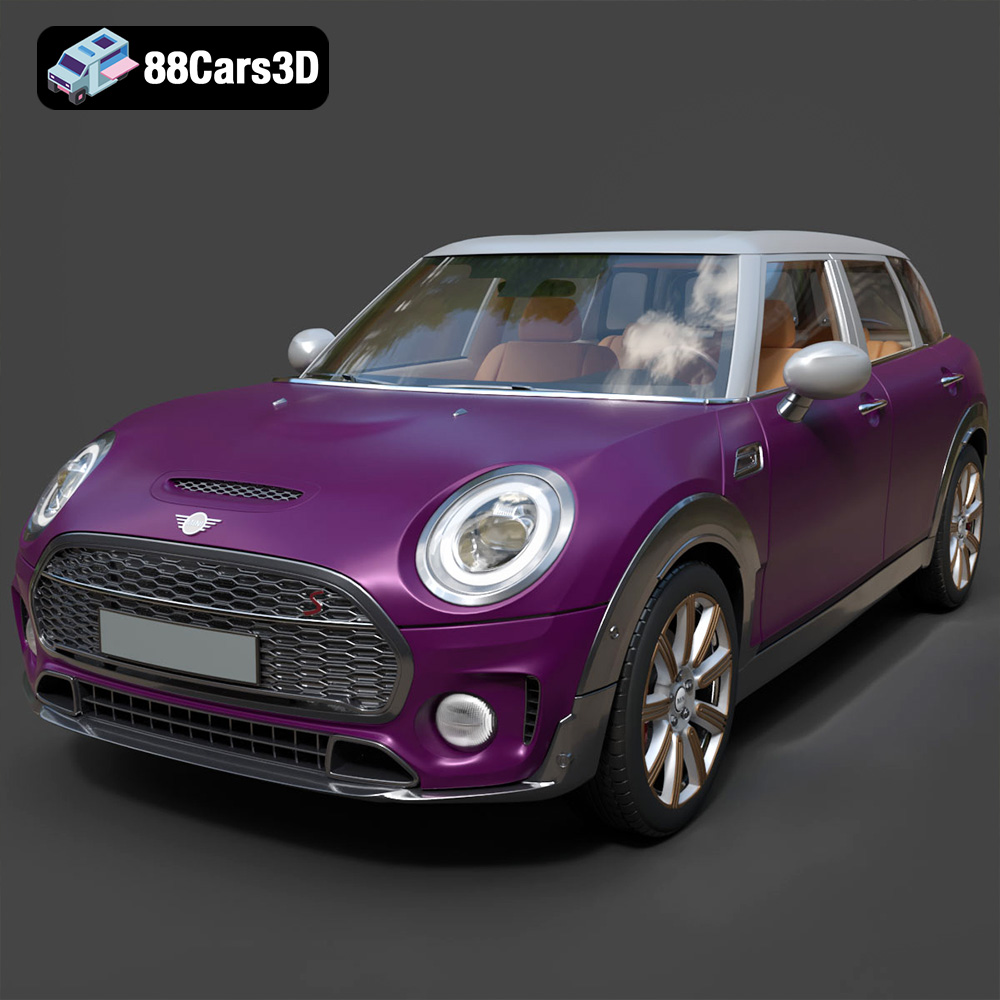
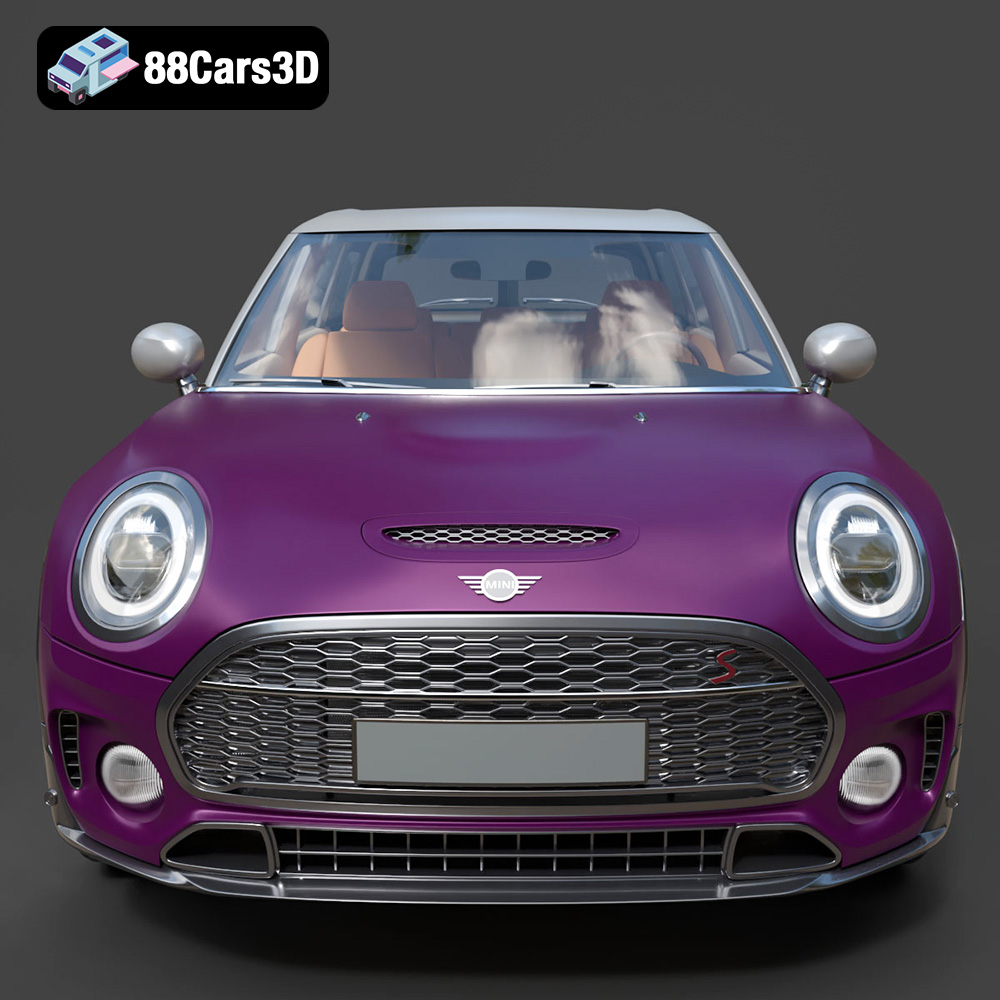
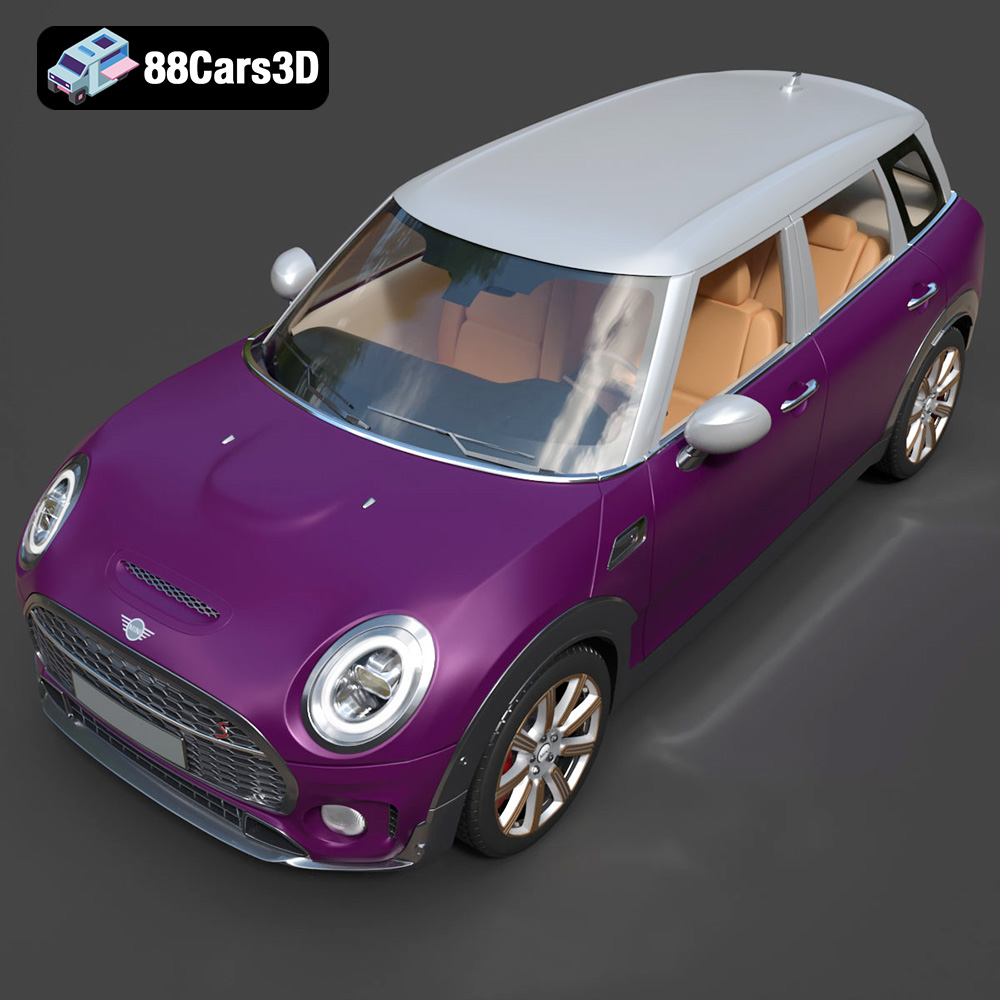
Today, we’re taking a deep dive into an outstanding example of such an asset: the Mini Clubman 3D model. This meticulously crafted digital replica, available at 88cars3d.com, encapsulates the iconic blend of British heritage and modern urban practicality that defines the real-world vehicle. With its distinctive split rear barn doors, elongated wheelbase, and signature styling, the Clubman demands precise digital translation, and this model delivers. It’s an asset designed not just for visual fidelity but for seamless integration into a multitude of professional workflows, offering a glimpse into the future of 3D asset utilization across industries.
The success of any digital project, be it a cinematic short, an interactive game, or a product configurator, hinges on the quality of its assets. For something as visually complex and emotionally resonant as an automobile, this principle is amplified. Generic or low-quality models can break immersion, compromise brand perception, and ultimately undermine an entire project’s credibility.
Premium 3D car models serve as critical bridges, transforming abstract design concepts into tangible digital realities. In automotive design, they allow engineers and designers to iterate rapidly, visualize changes in real-time, and conduct virtual wind tunnel tests long before a physical prototype is ever built. For marketing and advertising agencies, these models enable the creation of stunning photorealistic renders and animations that showcase a vehicle’s features and evoke desired emotions, all without the logistical complexities and costs associated with physical photoshoots or film productions. For game developers, detailed 3D car models are the heartbeat of their virtual worlds, driving player engagement through believable driving dynamics and visual splendor.
While readily available free or cheap 3D models might seem tempting, they often come with hidden costs. Subpar topology, inaccurate scale, missing details, or poorly optimized meshes can lead to countless hours of corrective work, spiraling project budgets, and delayed timelines. A high-quality asset, like the Mini Clubman 3D model, is an investment that pays dividends in efficiency, fidelity, and peace of mind. It allows artists and developers to focus on creativity rather than troubleshooting, knowing they have a robust foundation upon which to build their vision. This focus on quality is precisely what platforms like 88cars3d.com champion, providing professionals with assets that are ready to perform at the highest level.
The choice of file format is a critical decision in any 3D workflow, dictating compatibility, feature retention, and optimization for specific applications. A premium 3D car model, such as the Mini Clubman, often comes packed with a suite of formats, ensuring maximum flexibility for artists and developers. Understanding when and why to use each format is paramount for a smooth and efficient pipeline.
The **.blend** file format is Blender’s native project file. It’s a complete package, containing not just the mesh data but also materials, textures, lighting setups, animations, cameras, modifiers, and even scene settings. For artists primarily working within Blender, this is the most powerful format as it preserves every editable aspect of the scene. When downloading the Mini Clubman model in .blend format, users gain full access to its construction, allowing for deep customization, adjustments to topology, rigging, or integration into existing Blender scenes without any loss of data fidelity. It’s ideal for those who wish to extend the model’s functionality or integrate it seamlessly into Blender-centric animation or rendering projects.
.fbx (Filmbox) is an industry-standard proprietary file format owned by Autodesk, renowned for its ability to store a wide array of data beyond just geometry, including animation, materials, textures, bone rigging, and lights. It’s the go-to format for transferring assets between different 3D software packages (like 3ds Max, Maya, Cinema 4D, Blender) and, crucially, for importing into real-time game engines like Unreal Engine and Unity. Its robustness in handling complex scene data makes it invaluable for animated car models, ensuring that elements like the Mini Clubman’s separate wheels, suspension, and steering components retain their pivot information and hierarchy for animation. The Mini Clubman .fbx is perfectly suited for game development or complex cinematic animation pipelines.
.obj (Wavefront Object) is another widely adopted, universal format, though it’s simpler than .fbx. It primarily stores geometry (vertices, normals, texture coordinates, and faces) and references external material files (typically .mtl files) for surface properties. While .obj doesn’t support animation or rigging directly, its widespread compatibility makes it an excellent fallback or starting point for projects requiring clean mesh data. It’s robust and easily imported into virtually any 3D software, making the Mini Clubman .obj ideal for static renders, basic modeling tasks, or as a foundation before advanced material setup in a new environment.
.glb is the binary form of glTF (Graphics Library Transmission Format), an open-standard 3D file format that has quickly become the “JPEG of 3D” due to its efficiency and versatility. Designed for easy transmission and loading in web, AR, and VR applications, .glb packages all necessary data (geometry, materials, textures, animations) into a single, self-contained file. This makes it incredibly streamlined for immersive experiences and browser-based 3D viewers. The Mini Clubman .glb variant is optimized for fast loading and rendering in AR/VR apps and virtual showrooms, providing a lightweight yet visually rich representation of the vehicle for interactive environments.
.stl (STereoLithography) is arguably the most common file format for 3D printing. It represents a 3D model as a series of connected triangles (a triangulated mesh), defining only the surface geometry of an object without color, texture, or material information. While simple, its universal acceptance by 3D printers and slicer software makes it essential. The Mini Clubman .stl file is specifically provided for users looking to physically manifest the digital model, allowing hobbyists and professionals to 3D print the car at various scales, such as 1:12 or 1:18, as detailed in the product description.
.ply (Polygon File Format or Stanford Triangle Format) is a format primarily used for storing 3D data from 3D scanners, CAD software, and other precision mesh applications. It can store not only geometry but also color, transparency, and sometimes even normal vectors, making it richer than .stl for certain data sets. While less common for direct rendering, its precision mesh capabilities make the Mini Clubman .ply file useful for engineers or artists who might need a robust, analytical representation of the geometry, or for integration into CAD pipelines.
The **.unreal** file format typically refers to an asset that has been specifically prepared or exported for direct use within Unreal Engine. This might involve pre-configured materials (PBR ready), optimized UVs, LODs (Levels of Detail), and proper collision meshes, saving developers significant setup time. Having the Mini Clubman as an .unreal asset means it’s practically plug-and-play for Unreal Engine projects, leveraging the engine’s capabilities immediately. This makes it an incredibly efficient asset for game development and high-fidelity real-time visualization.
Finally, **.max** is the native file format for Autodesk 3ds Max, a powerful 3D modeling, animation, and rendering software widely used in architectural visualization, product design, and cinematic production. Similar to .blend, a .max file preserves all scene information, including modifiers, complex material networks (e.g., V-Ray or Corona materials), lighting setups, and character rigs. The Mini Clubman .max file is the ultimate source for professional artists working in 3ds Max who require full editing capabilities, whether for advanced automotive rendering, detailed animation sequences, or integration into large-scale architectural scenes.
The true measure of a premium 3D car model lies in its ability to faithfully replicate the complexities of its real-world counterpart while remaining versatile enough for diverse applications. The Mini Clubman 3D model stands as a testament to this balance, offering an asset that is both visually stunning and technically robust.
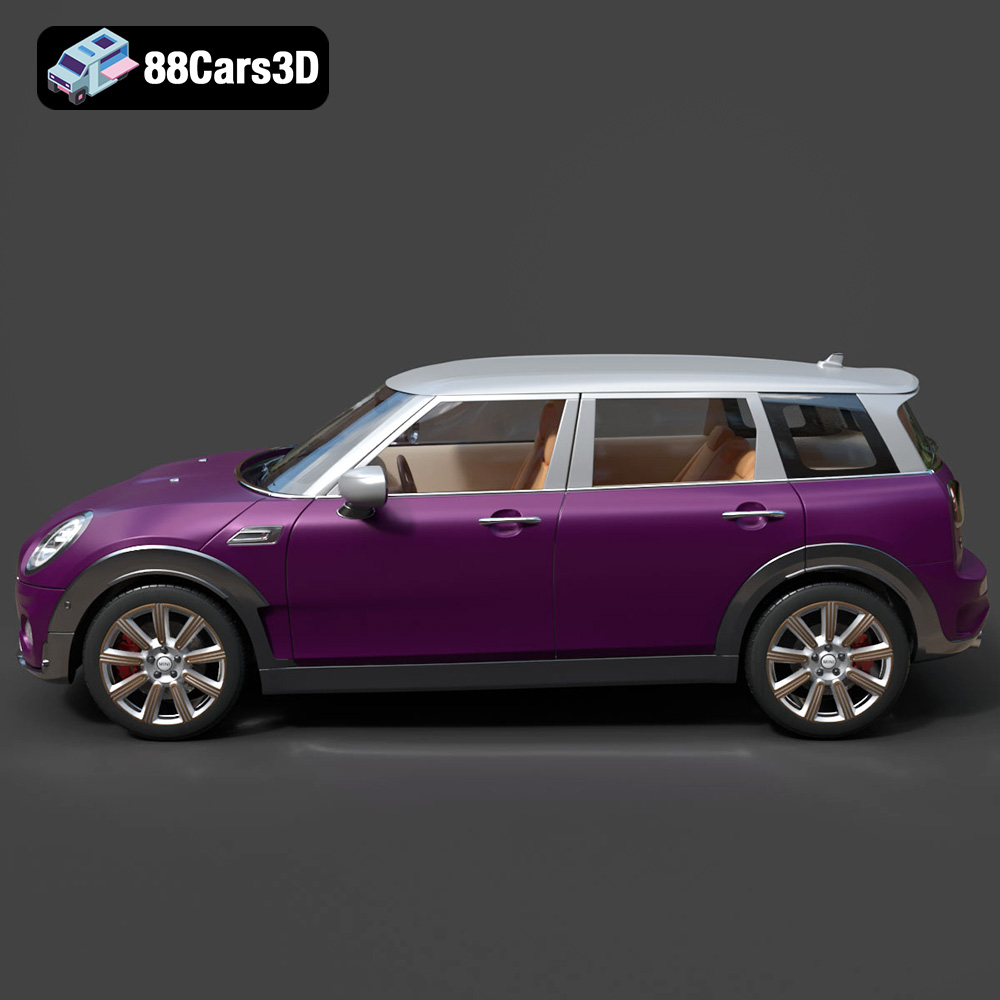
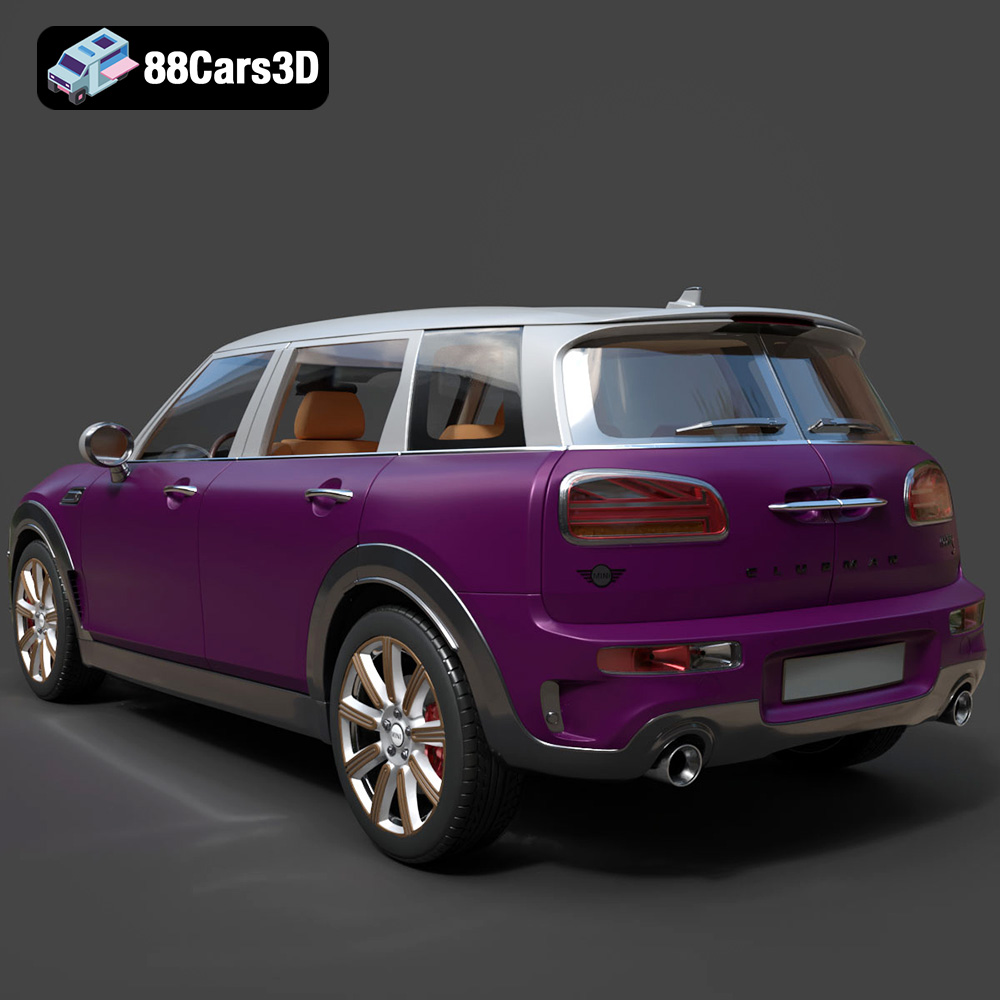
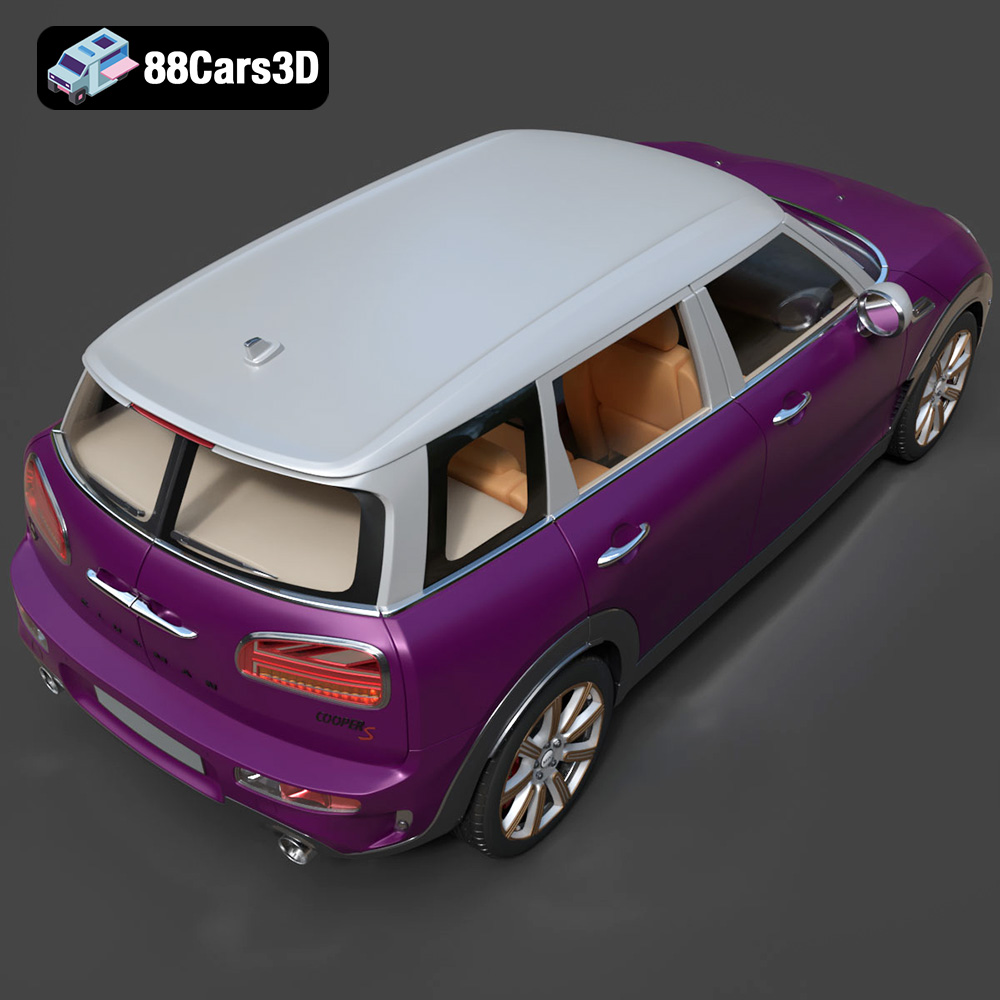
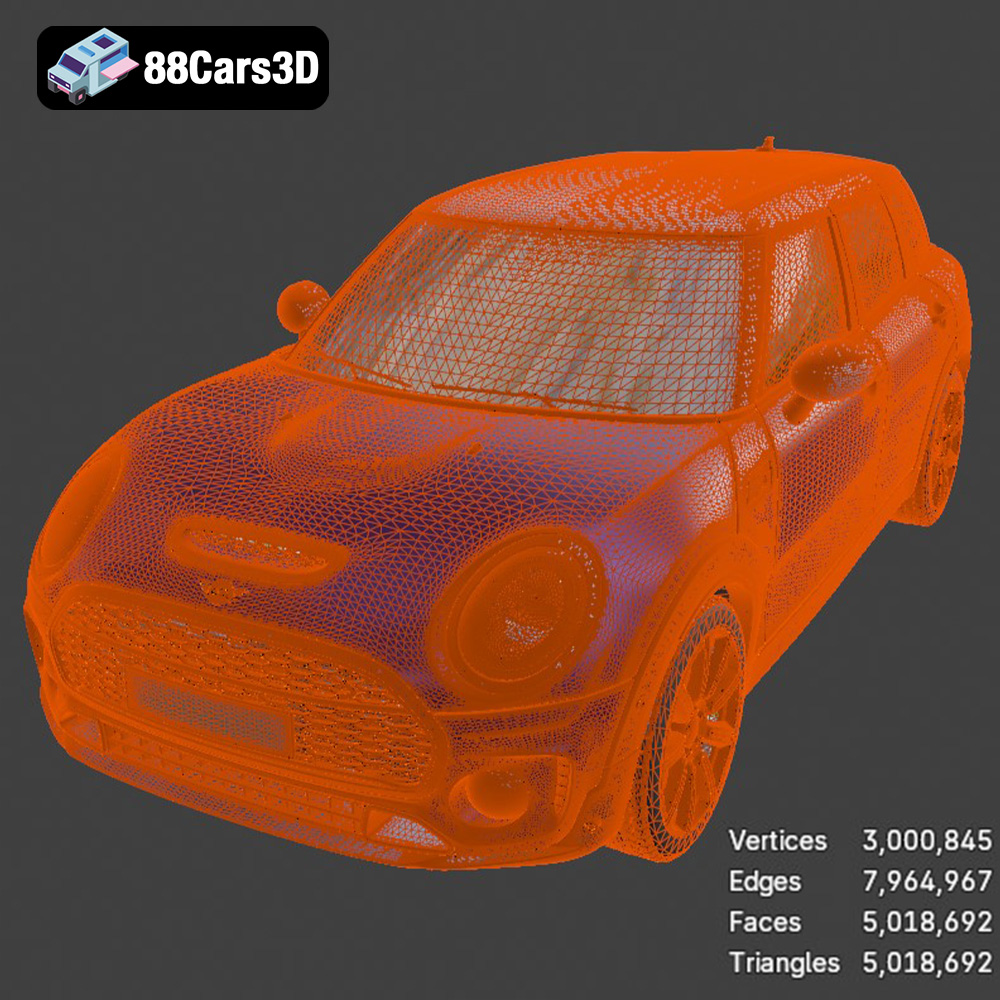
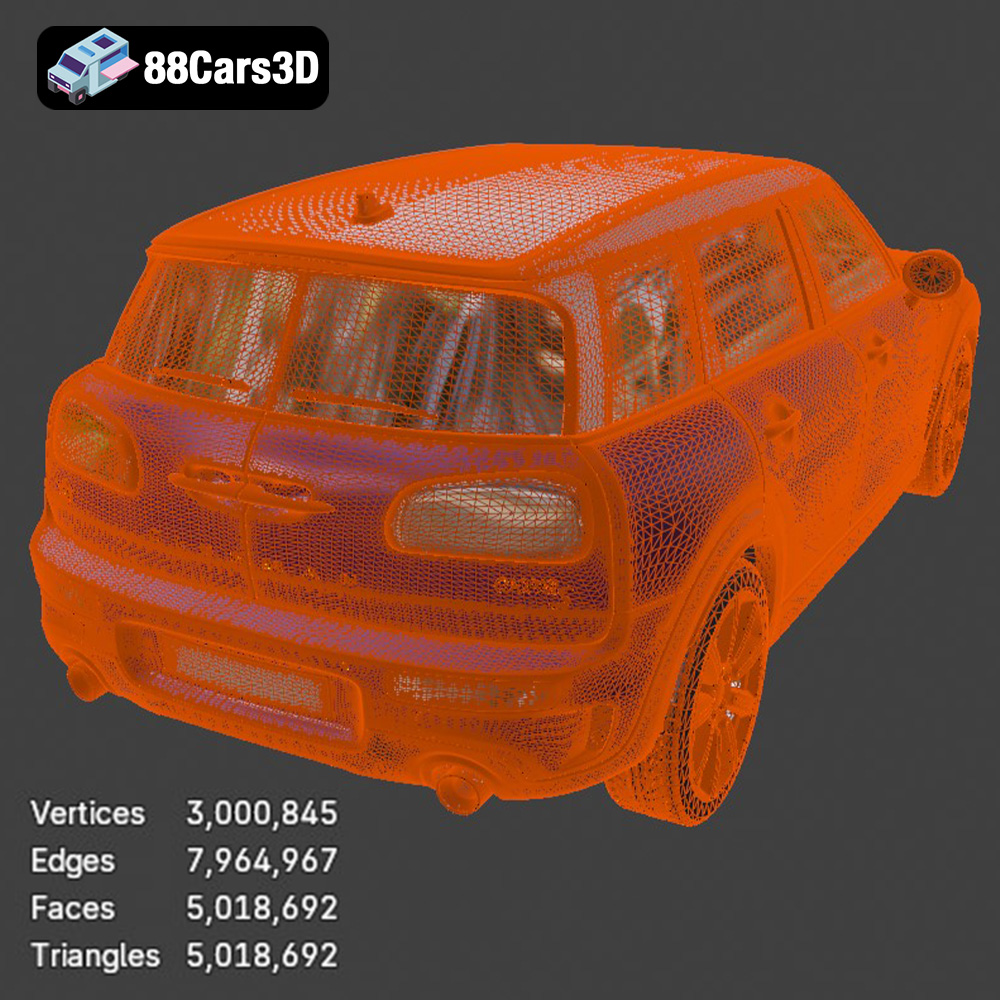
The Mini Clubman is more than just a car; it’s an icon. Its signature features – the elongated wheelbase, the distinctive split rear “barn” doors, the rounded headlights, and the unique grille – are all meticulously captured in this digital rendition. The model boasts a highly detailed topology of 5,018,692 triangles. While this figure might seem substantial, it represents a conscious decision to provide uncompromised visual fidelity, making it suitable for high-end rendering, cinematic close-ups, and scenarios where every curve and panel gap must be perfectly represented. This high polygon count is precisely structured to ensure that despite its detail, the geometry is optimized for integration into powerful real-time engines, striking an impressive balance between realism and performance.
The model’s attention to detail extends beyond its iconic silhouette:
The true value of a versatile 3D asset is its ability to integrate seamlessly into diverse professional pipelines. The Mini Clubman 3D model, with its array of file formats and optimized structure, is engineered for such versatility.
For high-end automotive rendering, 3ds Max, coupled with renderers like V-Ray or Corona, remains an industry staple. The Mini Clubman’s native .max file ensures that artists can load a fully editable project, complete with sophisticated material setups and potentially even pre-configured studio lighting. The workflow typically involves importing the .max file, fine-tuning PBR (Physically Based Rendering) materials to react realistically to light, setting up complex lighting environments (e.g., HDRI domes, studio lights), positioning cameras for dramatic angles, and then rendering photorealistic images or animations. This model is ideal for creating stunning brand campaigns, lifestyle commercial renderings, or virtual automotive showrooms that demand cinematic quality.
Imagine an automotive marketing agency tasked with launching a new Mini Clubman campaign. Instead of expensive physical shoots, they leverage the 3D model from 88cars3d.com. Using 3ds Max, they import the .max file. The detailed topology allows for extreme close-ups on the alloy wheels and headlights, while the accurate interior enables shots showcasing the premium cockpit. With a virtual studio environment, they can render a series of high-resolution images and a 30-second animation featuring the car driving through a stylized urban landscape, complete with reflections and dynamic lighting, all before a single physical car is delivered to the dealer.
In game development, the balance between visual quality and real-time performance is paramount. The Mini Clubman’s “Game-Ready & Optimized” status, despite its 5 million triangles, means it is built with intelligent topology that, when combined with proper material setup and engine optimization techniques (like LODs, if the engine applies them automatically based on screen distance), can perform efficiently. Importing the .fbx or the dedicated .unreal file into Unreal Engine or Unity allows developers to quickly set up PBR materials, define collision meshes, and configure its physics for realistic driving mechanics. The separate wheel, suspension, and steering components are crucial here, enabling complex vehicle animations and dynamic suspension simulation.
A game studio is creating an open-world driving game set in a bustling metropolis. They need a variety of realistic vehicles to populate their streets and for players to drive. The Mini Clubman 3D model, imported as an .fbx or .unreal asset, provides a high-fidelity option. Its optimized polycount allows it to be integrated into the game world without heavily impacting frame rates. The accurately set up pivot points for wheels and steering mean animators can quickly rig it for in-game driving, and designers can drop it into traffic systems, enhancing the realism of their virtual environment.
Augmented Reality (AR) and Virtual Reality (VR) applications demand assets that are both visually rich and incredibly lightweight for real-time interaction on various devices. The .glb format is tailor-made for this. By using the Mini Clubman .glb, developers can create immersive virtual showrooms, interactive car configurators, or mobile AR experiences where users can place a digital Mini Clubman in their physical environment. The format’s efficiency ensures smooth performance, even on less powerful hardware.
An automotive brand wants to launch an interactive experience for potential buyers. They develop a VR application where users can explore the Mini Clubman in a virtual showroom. The .glb version of the 3D model is loaded, allowing users to walk around the car, open doors (if animated in the model), change exterior colors and interior trims in real-time. The optimized geometry ensures a fluid experience without motion sickness, allowing customers to truly “feel” the car before visiting a dealership.
The utility of a comprehensive 3D model extends beyond purely digital realms, bridging the gap to physical creation and allowing for endless creative adaptation.
For hobbyists, model makers, or even prototyping, the ability to 3D print a digital asset is invaluable. The Mini Clubman 3D model’s inclusion of the .stl format directly addresses this. Converting the intricate digital geometry into a printable mesh allows users to fabricate a tangible replica. The recommended settings provided – such as scales like 1:12, 1:18, or 1:24, and the advice for resin printing for fine details – guide users toward achieving the best possible physical output. The need for supports for detailed parts like the exhaust and mirrors, along with specific print orientations, highlights the technical considerations built into the model for physical production. Post-processing with sanding, primer, and authentic factory colors can bring a high level of realism to the printed model, making it a perfect display piece.
A well-structured 3D model is a canvas for creativity. The Mini Clubman model is designed for extensive customization. Users can effortlessly change body colors, applying various factory shades or custom finishes to match specific branding or artistic visions. Modifying tire textures from street variants to off-road options allows for adaptation to different environmental contexts. Adjusting material finishes – from matte to gloss or metallic – dramatically alters the car’s perceived luxury or ruggedness. Furthermore, adapting lighting for different environments, whether it’s a dramatic sunset or a clinical studio setup, can entirely transform the model’s visual impact. This level of creative control ensures that the Mini Clubman model from 88cars3d.com can be endlessly adapted to suit any project’s unique requirements.
The term “game-ready” often conjures images of low-polygon models, but the Mini Clubman 3D model challenges this preconception by delivering high visual fidelity without sacrificing real-time performance. Its 5,018,692 triangles are not merely a count but a testament to intelligent geometry.
Achieving a balance between breathtaking visual fidelity and smooth frame rates in real-time applications is a constant challenge. The Mini Clubman model manages this by focusing on clean, well-optimized topology. While the overall triangle count is high, the geometry is distributed intelligently, dedicating detail where it matters most (e.g., intricate grille, wheel wells, interior components) and maintaining efficiency elsewhere. This allows the model to look incredibly realistic even in close-up shots while still being manageable within game engines, especially when combined with engine-level optimizations like automatic LOD generation, occlusion culling, and efficient material shaders. Its “Game-Ready” specification isn’t just a label; it’s an assurance of thoughtful construction designed for performance.
Beyond visual detail, technical accuracy is paramount for professional applications. The Mini Clubman model adheres to real-world scale accuracy, based on the actual vehicle chassis. This is crucial for architectural visualization (ensuring the car fits correctly into a scene), game development (for accurate physics and interaction), and AR/VR (for believable scale in the real world). Furthermore, the proper pivot setup for steering, wheel rotation, and suspension travel is a subtle yet critical technical advantage. It means animators and game developers don’t have to spend precious time correcting pivot points, allowing for immediate rigging and realistic simulation of vehicle dynamics. This attention to underlying technical precision is a hallmark of premium 3D car models.
The journey through the capabilities and versatility of high-quality 3D car models reveals a profound impact on modern digital content creation. Assets like the Mini Clubman 3D model are more than just digital replicas; they are foundational tools that empower artists, designers, and developers to push the boundaries of realism, efficiency, and immersion across industries. From cinematic automotive rendering in 3ds Max to seamless integration into game engines like Unreal, from compelling AR/VR experiences to the tangible output of 3D printing, the value of a meticulously crafted and optimized 3D asset cannot be overstated.
The Mini Clubman 3D model, with its stunning detail, comprehensive file formats, and technical accuracy, exemplifies the premium quality that professionals demand. It’s a testament to how intelligent design in the digital realm can save countless hours, enhance creative freedom, and elevate the final output of any project. For those seeking to equip their projects with superior 3D car models, exploring the extensive collection at 88cars3d.com offers a gateway to assets that are truly ready to perform.
Discover the perfect blend of British heritage and modern urban practicality with this meticulously crafted Mini Clubman 3D model. Renowned for its iconic split rear barn doors, elongated wheelbase, and distinctive rounded styling, the Clubman stands out as a unique premium compact car. This digital replica faithfully captures its signature front grille, circular headlights, and dynamic stance, delivering an authentic automotive experience.
$90.00
.blend
.clubman
.fbx
.glb
.max
.mini
.obj
.ply
.rendering
.stl
.unreal
car-3d-model
compact-car
game asset
game-ready
low-poly
optimized
VR/AR