Get 20% OFF All Premium 3D & STL Models!

In the exhilarating world of 3D visualization, few subjects command as much attention, detail, and passion as automotive design. From sleek supercars destined for a blockbuster game to historically accurate classics brought to life for archival purposes, 3D car models are the epitome of digital craftsmanship. They are intricate assemblies of art and engineering, demanding a mastery of both aesthetic principles and technical execution. The journey from a mere concept to a fully realized, photorealistic vehicle or an optimized game asset is a complex pipeline, fraught with challenges but immensely rewarding.
This comprehensive guide delves deep into the multifaceted universe of 3D car modeling. We will navigate the critical stages involved, from laying down the foundational geometry with impeccable topology to crafting mesmerizing PBR materials, orchestrating breathtaking renders, and meticulously optimizing models for real-time applications like games and AR/VR. Whether you’re an aspiring 3D artist, a seasoned game developer, an automotive designer, or a visualization professional, understanding these technical intricacies is paramount to producing industry-standard results. Prepare to unlock the secrets behind creating high-quality automotive assets that not only look phenomenal but also perform flawlessly across a spectrum of demanding applications.
The bedrock of any high-quality 3D car model lies in its topology and edge flow. These are not merely technical terms but fundamental principles that dictate how smoothly a surface will render, how effectively it can be subdivided, and how realistic its reflections will appear. For automotive models, which are characterized by sleek curves, sharp creases, and precise panel gaps, impeccable topology is non-negotiable. It influences everything from the model’s visual integrity to its performance in various engines and its suitability for animation or deformation.
Clean topology primarily means using quad-dominant geometry (four-sided polygons) and judiciously avoiding N-gons (polygons with more than four sides) and excessive triangles where possible, especially on large, smooth surfaces. Quads are essential for predictable subdivision (e.g., using a TurboSmooth modifier in 3ds Max or Subdivision Surface in Blender), ensuring that the mesh smooths evenly without creating undesirable pinching or artifacts. For car bodies, maintaining a consistent mesh density across surfaces helps distribute detail uniformly and allows for cleaner deformations if the model were to be animated. Attention to detail around cutouts like windows, headlights, and grilles is crucial, ensuring edge loops flow naturally around these features rather than terminating abruptly or creating unsightly poles.
Edge flow describes the direction and continuity of edge loops across the mesh. For automotive models, optimal edge flow is critical because car surfaces are highly reflective. Any imperfection in the surface, even a subtle bump or ripple caused by poor edge flow, will be dramatically exaggerated by reflections. A car’s surface should act like a perfectly polished mirror, and the reflections of the environment should glide smoothly across it.
To achieve this, artists often start by meticulously tracing blueprints or reference images, establishing the primary contours and major feature lines of the vehicle. Techniques include box modeling (starting from a simple primitive and refining it), spline modeling (creating curves and then generating surfaces), or polygonal modeling (building face by face). Regardless of the method, the goal is to ensure that edge loops follow the natural curvature of the car, guiding reflections logically. For instance, edge loops should run parallel to the length of the hood and wrap around the contours of the fenders. Carefully adjusting vertices and edges to eliminate any pinching or unwanted undulations is an ongoing process, often requiring multiple passes with subdivision turned on to inspect the surface’s integrity.
Once the geometric foundation is solid, the next crucial step is to give the 3D car model its skin. This involves UV mapping and the creation of physically based rendering (PBR) materials, which together define how textures are applied and how light interacts with the car’s surfaces to achieve ultimate realism. This stage is where a model truly begins to resemble a tangible object, with realistic paint, chrome, glass, and rubber.
UV mapping is the process of unfolding the 3D mesh into a 2D space, much like flattening a cardboard box. This 2D representation, known as a UV map or UV layout, dictates how textures are painted onto the 3D surface. For complex objects like cars, meticulous UV unwrapping is essential to avoid texture stretching, minimize visible seams, and efficiently utilize texture resolution. PBR materials, on the other hand, provide a standardized, physically accurate way to define surface properties, ensuring that the car looks realistic under any lighting conditions, whether in a renderer like Corona or Cycles, or a game engine like Unity or Unreal.
Automotive models present unique UV mapping challenges due to their intricate shapes and numerous distinct material zones. A common strategy is to break the car into logical components (body, interior, wheels, glass, lights) and unwrap each separately. For the main body, methods like planar or cylindrical mapping might serve as a starting point, followed by careful cutting of seams along natural breaks or hidden areas (e.g., undercarriage, inside door frames) to allow for unwrapping. It’s crucial to minimize stretching (where a texture pixel covers too much surface area) and ensure that the UV islands are packed efficiently into the 0-1 UV space to maximize texture resolution.
For high-detail assets, especially for close-up renders, artists might employ the UDIM workflow (U-Dimension), which uses multiple UV tiles (e.g., UV 1001, 1002, etc.) to allow for much higher texture resolution across different parts of the model without sacrificing detail. For instance, the car body might occupy several UDIMs, while the wheels and interior get their own. This approach is common in film and high-end visualization. Regardless of the method, ensuring correct texel density (pixels per unit of surface area) across all parts helps maintain visual consistency.
PBR materials rely on a set of texture maps that describe a surface’s properties in a physically accurate manner. The core maps include:
Creating these materials involves using specialized software like Substance Painter, Mari, or even directly within your 3D application (e.g., 3ds Max with Corona Physical Material, Blender with Principled BSDF). For car paint, a complex shader network might combine multiple layers: a base metallic/dielectric layer, a clear coat layer with its own roughness and perhaps a normal map for orange peel effect, and a flake layer for metallic paints. Glass requires specific IOR (Index of Refraction) values, typically around 1.5-1.55, and accurate transparency and reflection settings. For components like tires, a detailed normal map derived from a sculpted high-poly model can add incredible realism to the tread patterns and sidewall details. The key is understanding how each map contributes to the final look and how they interact within the shader network.
With a meticulously modeled and textured 3D car model, the next phase is to bring it to life through stunning renders. This is where the magic of light, camera, and environment converge to create photorealistic images that are indistinguishable from real-life photographs. Automotive rendering is an art form that requires a deep understanding of lighting principles, camera composition, and the capabilities of modern render engines like Corona Renderer, V-Ray, Cycles, and Arnold.
The goal is not just to illuminate the car but to tell a story, highlight its design, and evoke emotion. This involves carefully setting up the scene, choosing the right environment, positioning the camera, and orchestrating a sophisticated lighting scheme. The nuances of reflections, shadows, and global illumination play a critical role in achieving that coveted “photorealistic” look that professionals and enthusiasts alike seek. It’s a delicate balance between technical precision and artistic vision.
The environment where the car is rendered profoundly impacts the final image. Common approaches include:
Camera work is equally vital. Choose a focal length that flatters the car – often between 50mm and 100mm for a realistic perspective, avoiding wide-angle distortions unless for a specific effect. Utilize cinematic composition techniques like the rule of thirds, leading lines, and negative space to create compelling images. Depth of field can isolate the car from the background, drawing the viewer’s eye to the key subject. Experiment with low angles to emphasize power or higher angles for a more elegant feel. In software like 3ds Max or Blender, precise camera placement and lens adjustments are paramount.
Effective lighting is the cornerstone of realism. For automotive renders:
Once rendering is complete, post-processing in tools like Photoshop or Affinity Photo can further enhance the image by adjusting exposure, color balance, adding subtle atmospheric effects, and sharpening details. This final polish can bridge the gap between a good render and an outstanding one. Platforms like 88cars3d.com specialize in providing high-quality 3D car models that are meticulously crafted to interact beautifully with these advanced rendering techniques, saving artists invaluable time in setup and optimization.
While high-fidelity renders are perfect for static imagery, the demands of real-time environments like video games, interactive configurators, and AR/VR applications are fundamentally different. Here, the primary concern shifts from raw polygon count and ultimate photorealism to performance and responsiveness. A beautifully detailed 3D car model designed for film or advertising might have millions of polygons and dozens of 4K textures, which would bring any game engine to its knees. Therefore, rigorous optimization is essential to ensure smooth frame rates and immersive experiences.
Optimization involves a suite of techniques aimed at reducing the computational load on the graphics card and CPU. This includes decreasing polygon counts, consolidating textures, minimizing draw calls, and simplifying materials. The goal is to strike a delicate balance between visual quality and real-time performance, allowing the car model to look its best while running smoothly on target hardware, be it a high-end gaming PC, a mobile device, or a VR headset.
For game development, cars are often hero assets, but they still need to be performant. Here are key optimization strategies:
Additionally, collision meshes (simplified meshes used for physics calculations) should be as basic as possible, and instancing (reusing the same mesh data for multiple identical objects) can further boost performance.
Augmented Reality (AR), Virtual Reality (VR), and WebGL applications impose even stricter performance budgets than traditional video games. Mobile AR and VR headsets, in particular, have limited processing power, making extreme optimization a necessity for smooth, interactive experiences.
Platforms like 88cars3d.com specialize in providing high-quality, pre-optimized 3D car models suitable for these demanding real-time applications, often offering different LODs and optimized texture sets to fit various performance budgets, making them ideal for rapid development in Unity, Unreal Engine, or web-based AR/VR frameworks.
The journey of a 3D car model doesn’t end with a stunning render or a game-ready asset. The versatility of these digital creations allows them to be utilized across an astonishing array of industries and applications, from virtual reality showrooms to tangible 3D printed prototypes. Understanding the various file formats and their specific advantages is crucial for ensuring compatibility, preserving data integrity, and expanding the reach of your 3D assets.
Each application often has its preferred or most efficient file format, and the ability to convert and prepare models for these diverse uses is a valuable skill. Whether you’re archiving a historical vehicle, creating a physical scale model, or designing an interactive educational experience, the core 3D model remains the foundation, adaptable to countless possibilities.
The 3D industry is rich with various file formats, each serving specific purposes:
When converting between formats, it’s essential to check for issues like scale (units), axis orientation (Y-up vs. Z-up), material integrity (PBR maps might need re-linking or re-exporting), and smoothing groups/normal data. Cleanly structured source files with proper naming conventions greatly simplify the conversion process and ensure maximum compatibility across platforms. Whether you’re looking for FBX models for game development or high-fidelity MAX files for architectural visualization, marketplaces like 88cars3d.com provide models across a spectrum of popular formats, ensuring you have the right asset for your specific project.
Taking a digital 3D car model and transforming it into a physical object via 3D printing is a fascinating application, used for rapid prototyping, scale models, or collectible figurines. However, 3D printing has its own strict set of requirements for mesh integrity:
Preparing a highly detailed car model for printing involves careful preparation, often more focused on structural integrity than visual aesthetics. It’s a testament to the versatility of a well-constructed 3D asset that it can transition seamlessly from the purely virtual realm to a tangible, physical form.
The final step in the creation of a captivating 3D automotive image often extends beyond the raw render itself. Post-processing and compositing are crucial stages where a good render can be transformed into a truly outstanding piece of visual art. This involves taking the output from the render engine and finessing it in image manipulation software, adding layers of depth, atmosphere, and visual impact that are difficult or impossible to achieve solely within the 3D scene.
This phase is where professional artists add their personal touch, ensuring the image communicates the desired mood, brand message, and aesthetic quality. It’s about polishing every reflection, enhancing every highlight, and making the colors pop, ultimately delivering a presentation-ready asset that meets the highest industry standards.
Modern render engines allow artists to output various “render passes” or “render elements.” These are separate image layers that capture different aspects of the scene’s lighting and geometry, providing immense control in post-production:
Using software like Adobe Photoshop, Affinity Photo, or Nuke, these passes are layered and blended. Common techniques include:
The goal is always to enhance, not distract. Subtle adjustments often yield the most powerful results, leading to images that resonate with realism and visual sophistication.
Beyond individual image enhancement, post-processing is crucial for maintaining visual consistency across a series of renders, especially for a brand or a larger project. This involves:
Ultimately, post-processing is the final layer of artistry, turning technical renders into compelling visual stories that capture attention and leave a lasting impression. It’s the difference between a meticulously crafted 3D car model and a truly unforgettable image.
The journey through the creation and application of 3D car models is a testament to the intricate blend of technical prowess and artistic vision required in the modern digital landscape. From the foundational precision of clean topology and edge flow, through the meticulous detail of UV mapping and PBR material creation, to the sophisticated orchestration of photorealistic rendering workflows, each stage demands a high level of expertise. Furthermore, the imperative of optimization for real-time environments like game engines and AR/VR, coupled with the versatility offered by diverse file formats and even 3D printing, showcases the broad utility of these digital assets.
Mastering these techniques not only elevates the quality of your work but also expands your capabilities across a multitude of industries – from automotive design and cinematic visualization to interactive experiences and product prototyping. The constant evolution of software and hardware means that the tools and methods are always advancing, but the core principles of quality modeling, texturing, lighting, and optimization remain timeless.
For artists, developers, and designers seeking to accelerate their projects with top-tier assets, exploring the extensive collection of high-quality 3D car models available at 88cars3d.com is a fantastic next step. These models are crafted with industry best practices in mind, offering clean topology, realistic PBR materials, and optimized versions across various file formats, providing an invaluable resource to jumpstart your creative endeavors and bring your visions to life with unparalleled realism and performance.
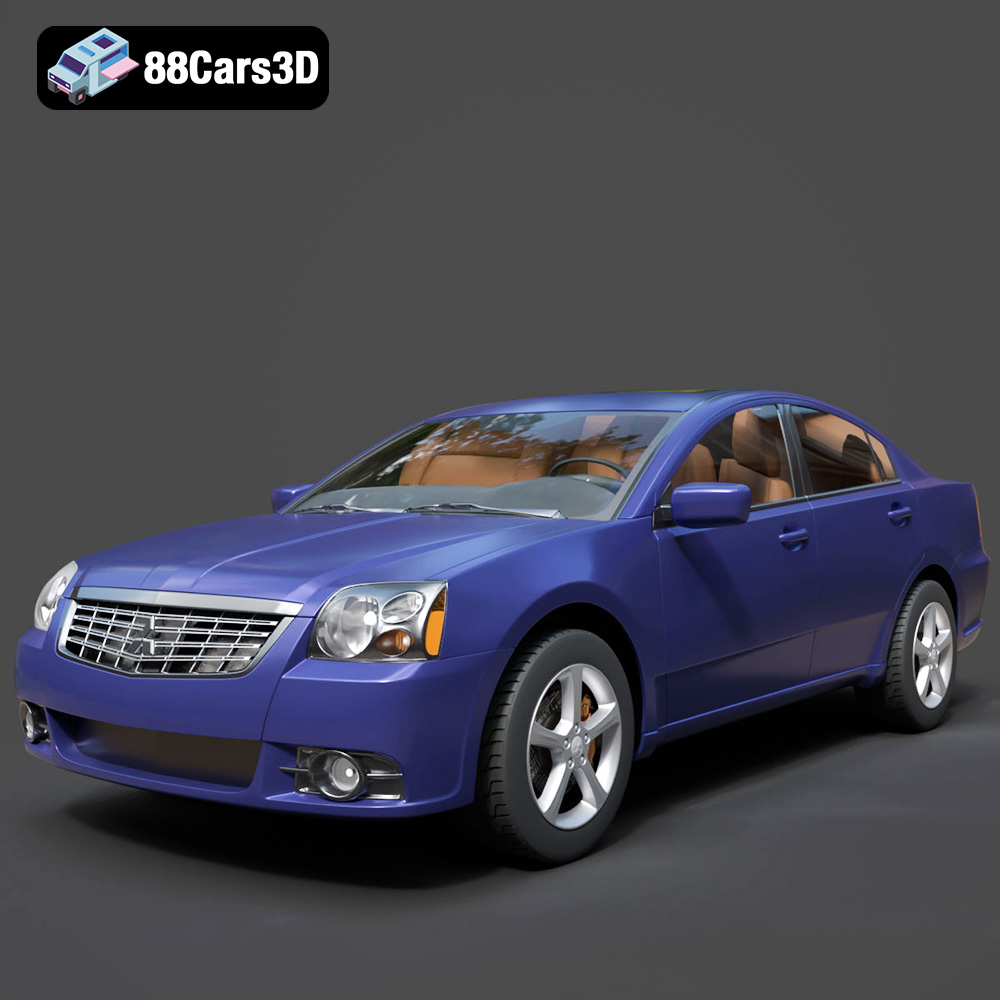
Texture: Yes
Material: Yes
Download the Mitsubishi Galant 2009 3D Model featuring clean geometry, realistic detailing, and a fully modeled interior. Includes .blend, .fbx, .obj, .glb, .stl, .ply, .unreal, and .max formats for rendering, simulation, and game development.
Price: $4.99
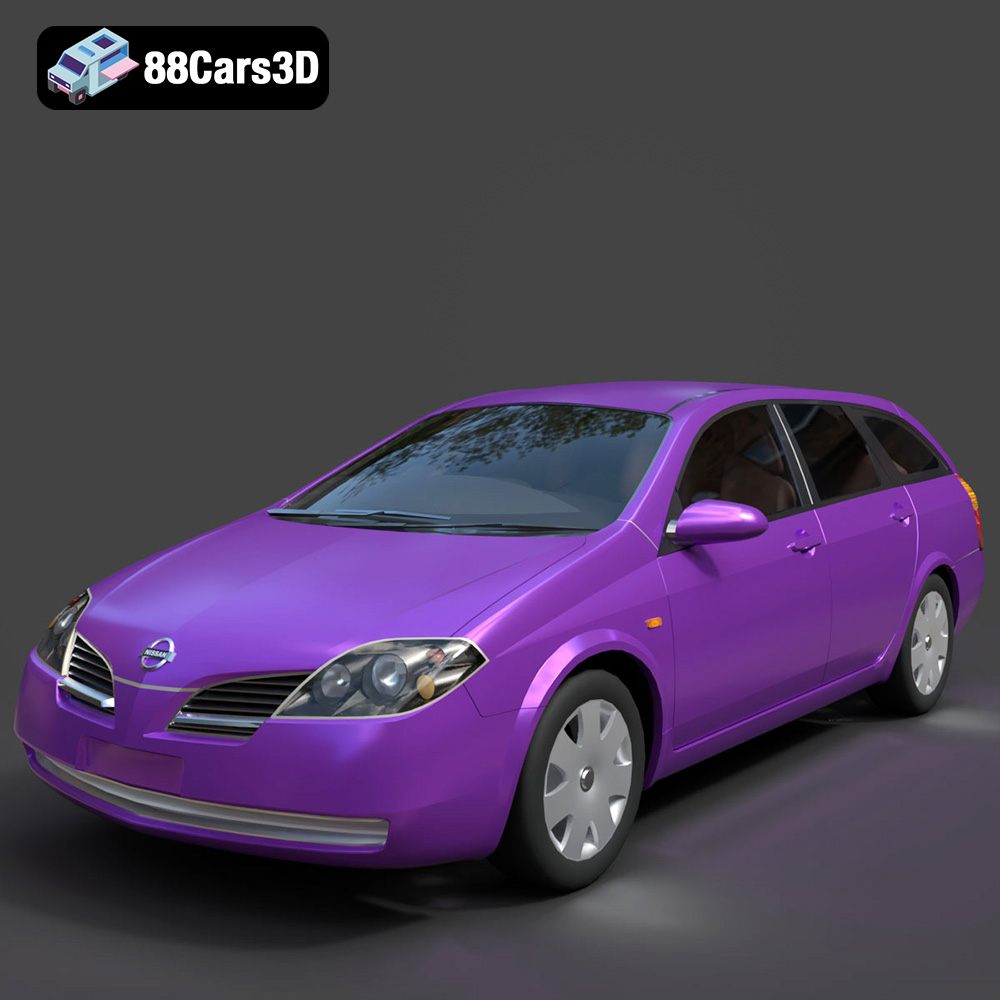
Texture: Yes
Material: Yes
Download the Nissan Primera Wagon 3D Model featuring clean geometry, realistic detailing, and a fully modeled interior. Includes .blend, .fbx, .obj, .glb, .stl, .ply, .unreal, and .max formats for rendering, simulation, and game development.
Price: $4.99
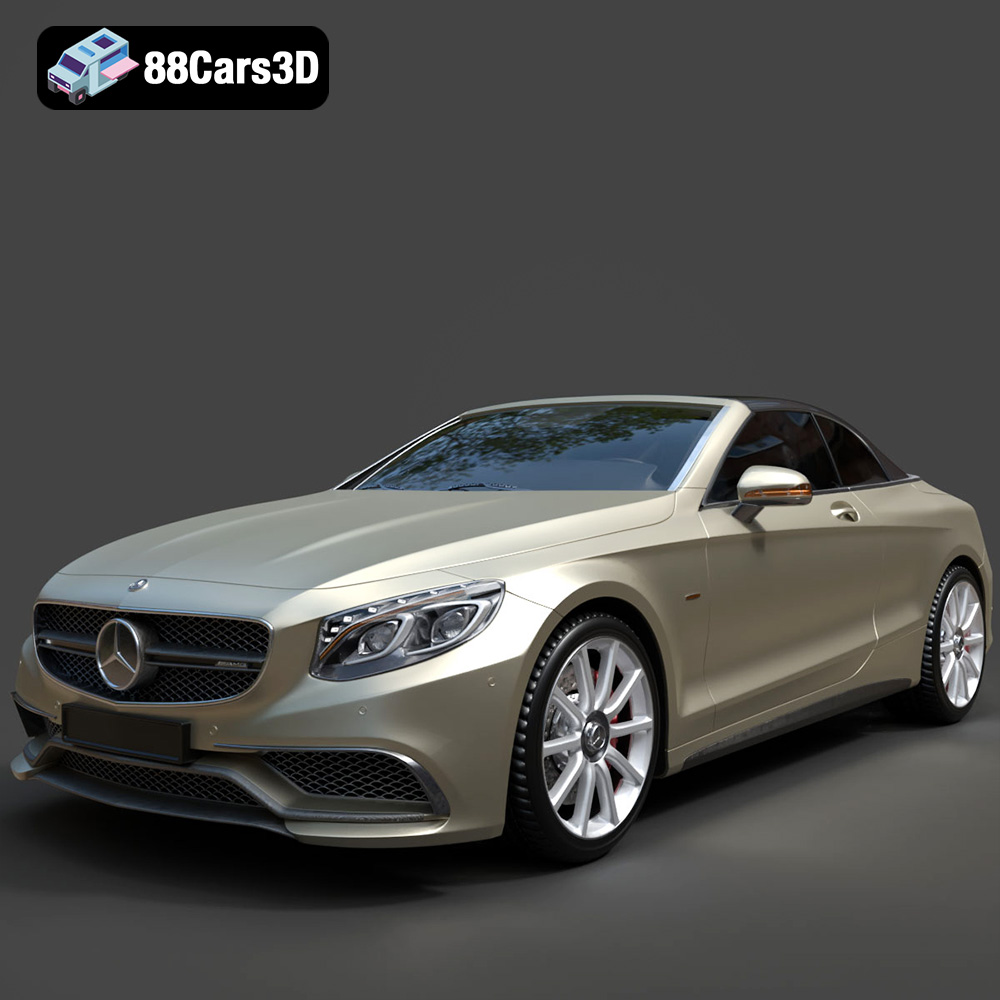
Texture: Yes
Material: Yes
Download the Mercedes-Benz S63 AMG Cabriolet 2017 3D Model featuring clean geometry, realistic detailing, and a fully modeled interior. Includes .blend, .fbx, .obj, .glb, .stl, .ply, .unreal, and .max formats for rendering, simulation, and game development.
Price: $20.99
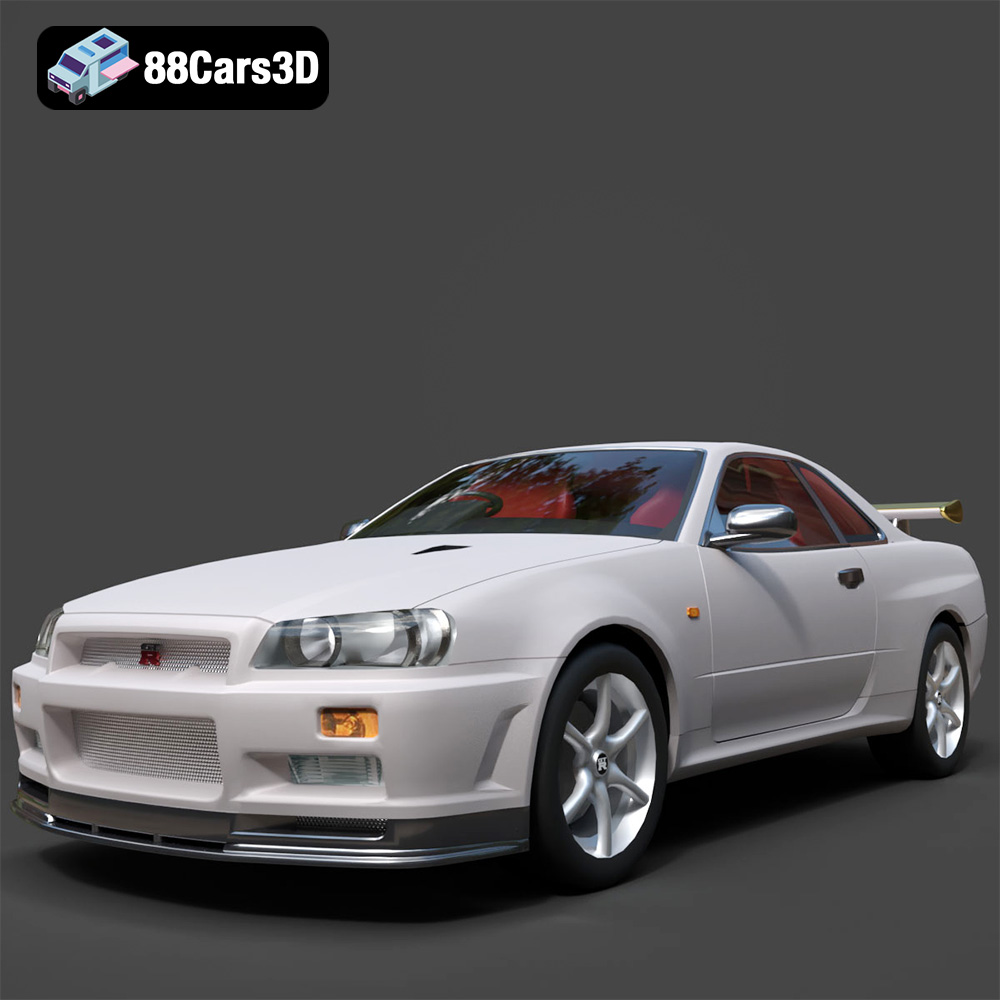
Texture: Yes
Material: Yes
Download the Nissan Skyline R34 2002 3D Model featuring clean geometry, realistic detailing, and a fully modeled interior. Includes .blend, .fbx, .obj, .glb, .stl, .ply, .unreal, and .max formats for rendering, simulation, and game development.
Price: $4.99
Texture: Yes
Material: Yes
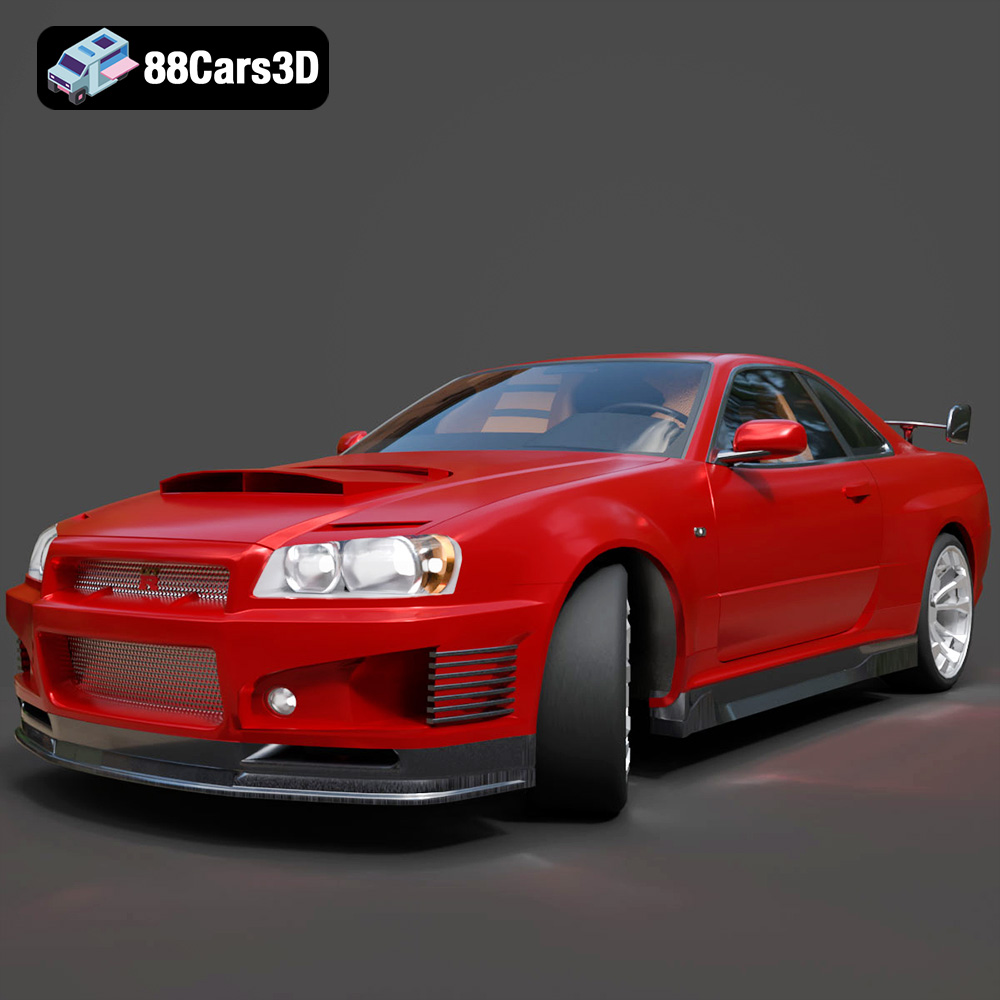
Download the Nissan Skyline 3D Model featuring clean geometry, realistic detailing, and a fully modeled interior. Includes .blend, .fbx, .obj, .glb, .stl, .ply, .unreal, and .max formats for rendering, simulation, and game development.
Price: $9.99
Texture: Yes
Material: Yes
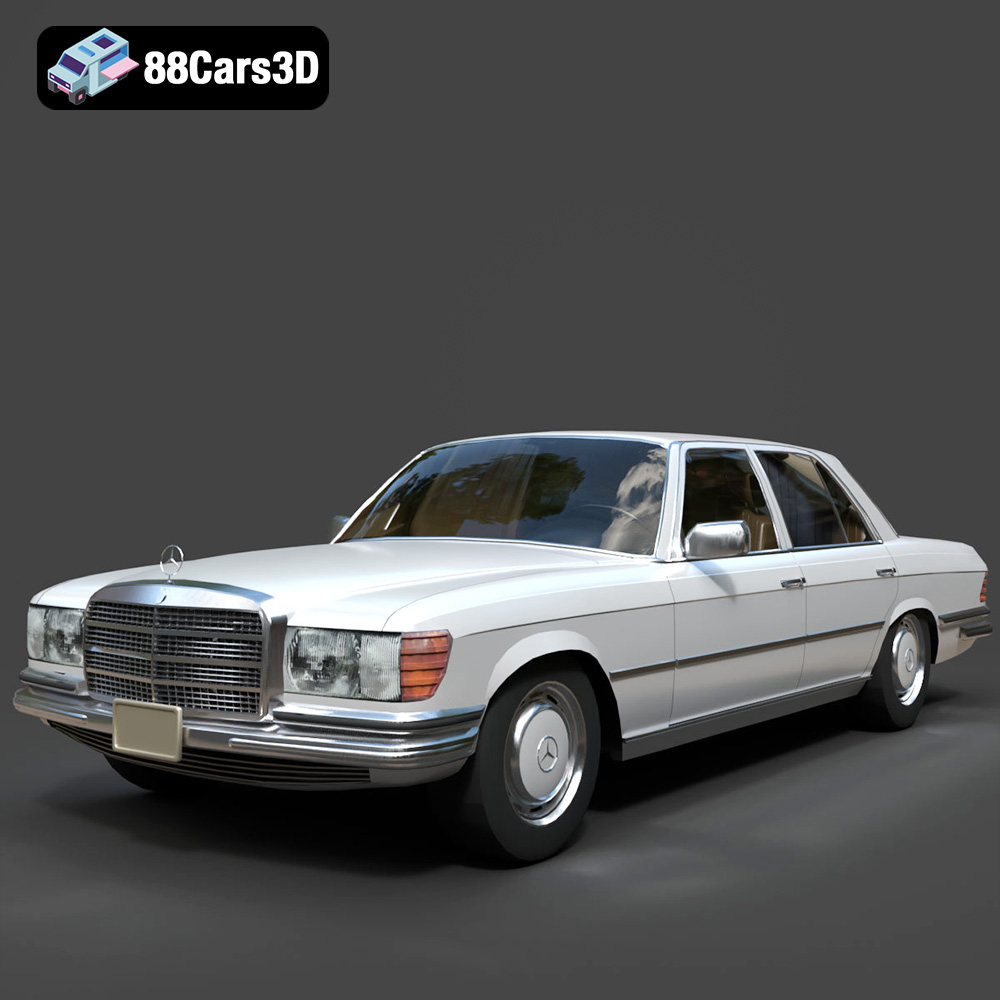
Download the Mercedes-Benz S-Klasse W116 3D Model featuring clean geometry, realistic detailing, and a fully modeled interior. Includes .blend, .fbx, .obj, .glb, .stl, .ply, .unreal, and .max formats for rendering, simulation, and game development.
Price: $4.99
Texture: Yes
Material: Yes
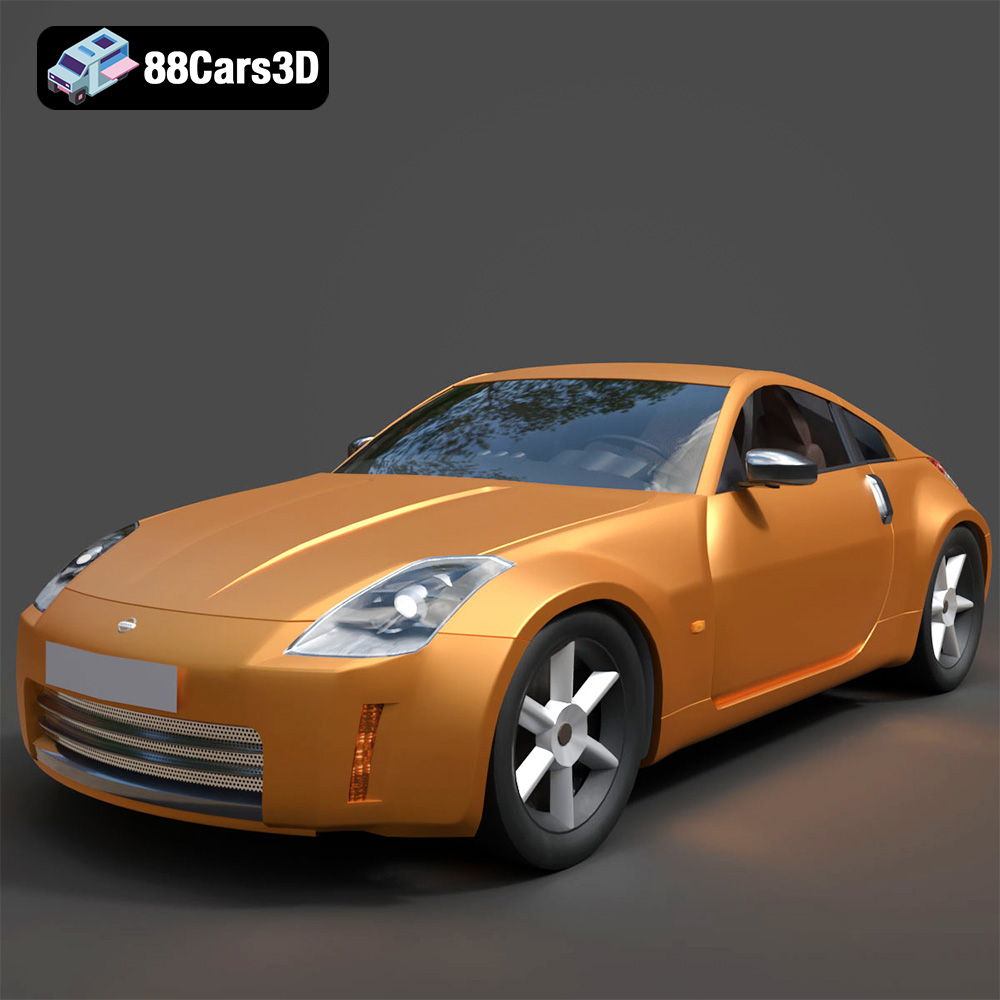
Download the Nissan 350Z 3D Model featuring clean geometry, realistic detailing, and a fully modeled interior. Includes .blend, .fbx, .obj, .glb, .stl, .ply, .unreal, and .max formats for rendering, simulation, and game development.
Price: $4.99

Texture: Yes
Material: Yes
Download the Nissan Skyline V35 2001 3D Model featuring clean geometry, realistic detailing, and a fully modeled interior. Includes .blend, .fbx, .obj, .glb, .stl, .ply, .unreal, and .max formats for rendering, simulation, and game development.
Price: $4.99

Texture: Yes
Material: Yes
Download the Mercedes-Benz S-Klasse 221-007 3D Model featuring clean geometry, realistic detailing, and a fully modeled interior. Includes .blend, .fbx, .obj, .glb, .stl, .ply, .unreal, and .max formats for rendering, simulation, and game development.
Price: $4.99
Texture: Yes
Material: Yes
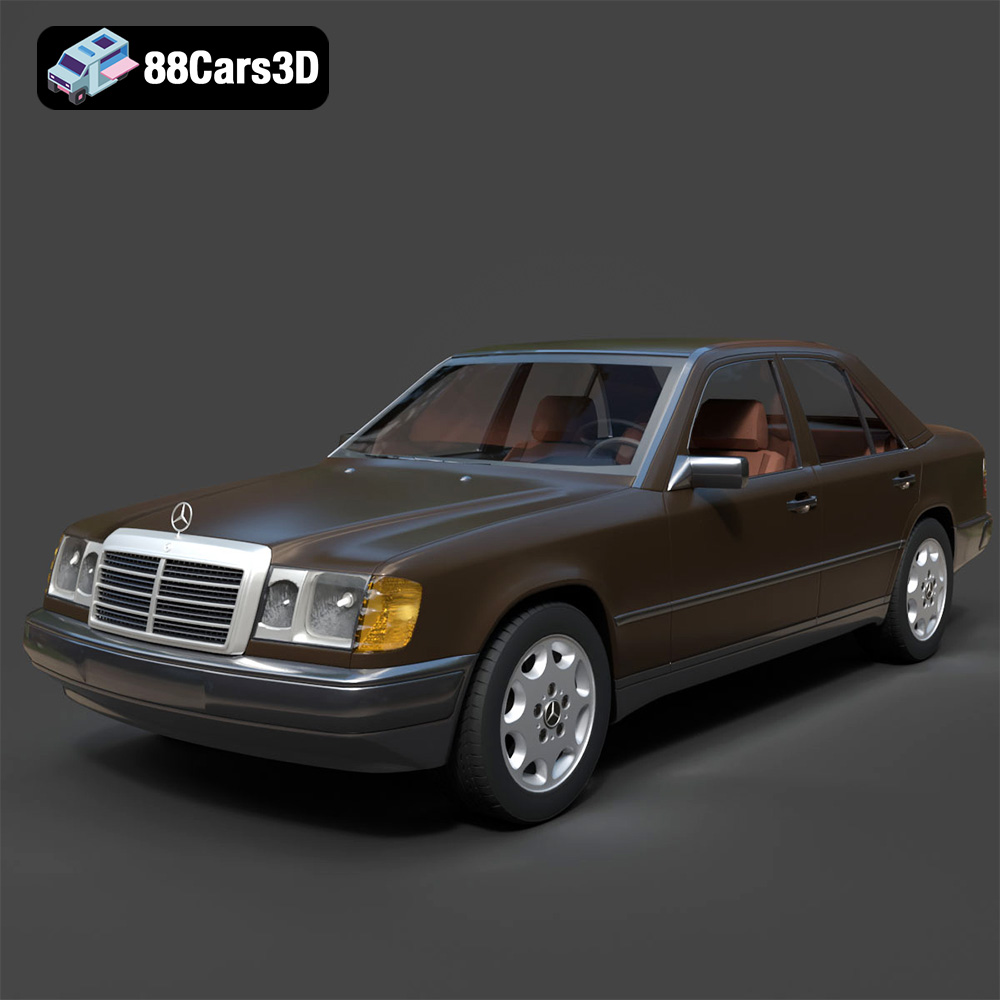
Download the Mercedes W124 Sedan 3D Model featuring clean geometry, realistic detailing, and a fully modeled interior. Includes .blend, .fbx, .obj, .glb, .stl, .ply, .unreal, and .max formats for rendering, simulation, and game development.
Price: $4.99

