Get 20% OFF All Premium 3D & STL Models!

“`html
The allure of a perfectly rendered automobile is undeniable. It’s a synthesis of engineering precision and artistic expression, where every curve, reflection, and material detail contributes to a sense of realism that can captivate an audience. Whether it’s a hero car in a blockbuster video game, a gleaming centerpiece in an architectural visualization, or a stunning image for a marketing campaign, the journey from a raw 3D model to a final, polished asset is a complex and rewarding process. Many artists, from aspiring students to seasoned professionals, seek to master this pipeline, but the path is filled with technical hurdles and nuanced decisions.
This comprehensive guide will demystify that journey. We will dissect the entire workflow, starting with the foundational principles of a high-quality 3D car model and progressing through the intricate stages of UV mapping, PBR texturing, photorealistic rendering, and real-time game engine optimization. You will learn the industry-standard techniques used by professionals to transform a dense, high-polygon mesh into both a breathtaking final render and an efficient, game-ready asset. We’ll explore software-specific tips for 3ds Max, Blender, and Unreal Engine, discuss critical concepts like topology and texel density, and provide actionable strategies to overcome common challenges. By the end, you’ll have a clear roadmap for your next automotive 3D project.
Before any texturing or rendering can begin, the quality of the source 3D model is paramount. A masterfully crafted model serves as the bedrock for every subsequent step, and its characteristics will dictate the potential for realism and the ease of optimization. Starting with a poorly constructed model will lead to frustrating roadblocks, visible artifacts, and a subpar final result. This is why many professionals choose to start with production-ready assets from marketplaces like 88cars3d.com, which ensures the foundational geometry is flawless.
Topology refers to the arrangement of vertices, edges, and polygons that form the model’s surface. For automotive models, quad-based topology (using four-sided polygons) is the industry standard. This is crucial for two main reasons: it subdivides cleanly and predictably when using modifiers like TurboSmooth or OpenSubdiv, and it allows for smooth, accurate surface reflections. The way edges flow across the car’s body panels directly influences how light and reflections behave. Poor edge flow creates pinching, visible faceting, and distorted highlights, immediately breaking the illusion of realism. A professional model will have edge loops that follow the natural curvature and character lines of the vehicle, ensuring that reflections glide seamlessly across the surface, just as they would on a real car.
High-poly models are designed for detail, not for real-time performance. A “hero” car model intended for cinematic close-ups or high-resolution marketing stills can range from 500,000 to over 2 million polygons. This density allows for incredibly fine details: panel gaps are modeled in, emblems are fully geometric, and even the subtle bevels on window trim are present. However, every polygon is a calculated decision. The interior, undercarriage, and engine bay might have varying levels of detail depending on the intended use. For instance, a model for an exterior beauty shot may have a simplified “blacked out” interior to save on polygons, while a model for an interactive configurator would require a fully detailed cockpit.
Most high-quality car models are built using a subdivision workflow. This means the base mesh is relatively simple, but it’s constructed with precise “holding edges” or “support loops” placed near sharp creases and panel edges. When a subdivision modifier is applied, these support loops control the tightness of the curve, allowing for perfectly crisp yet smooth edges. This technique is far more efficient and flexible than trying to model every surface with an extremely dense base mesh. When inspecting a professional model, you can often toggle the subdivision modifier off and on to see the underlying control cage and appreciate the efficiency of its construction.
UV mapping is the process of flattening a 3D model’s surface into a 2D space so textures can be applied correctly. For a complex object like a car, with its mix of large, flowing panels and small, intricate details, this is a particularly challenging stage. A sloppy unwrap will result in stretched textures, visible seams, and inconsistent detail, undermining even the best PBR materials.
The golden rule of UV mapping is to place seams where they are least visible. For a car, this means hiding them along natural boundaries:
The goal is to create logical UV islands that minimize texture distortion. Large, curved panels like the hood or roof should be unwrapped with as few seams as possible, using projection methods and relaxation algorithms in tools like 3ds Max, Blender, or Maya to reduce stretching.
Texel density is the measure of texture resolution on a model’s surface (e.g., pixels per meter). Maintaining a consistent texel density across the entire vehicle is crucial for realism. If the door has a much higher resolution than the fender next to it, the difference will be jarringly obvious, especially when applying fine details like dirt or small decals. Professionals use tools and scripts to visualize and normalize texel density. For a next-gen game vehicle, a target might be 1024 pixels per meter (px/m), while a film asset could aim for 4096 px/m or higher. This ensures that a scratch or a flake of metallic paint appears the same size and quality whether it’s on the bumper or the roof.
For high-end rendering in film and visualization, a single 4K or 8K texture map may not provide enough resolution for the entire car. This is where a multi-tile UV workflow, commonly known as UDIM (U-Dimension), comes in. Instead of packing all UV islands into the standard 0-1 UV space, UDIMs allow you to assign different parts of the model to different UV tiles. For example, the main body could be on tile 1001, the wheels on 1002, the interior on 1003, and so on. This enables you to use multiple high-resolution texture maps (e.g., several 8K maps) on a single object, providing phenomenal detail for extreme close-up shots without being limited by a single texture’s resolution.
Physically Based Rendering (PBR) is a methodology for shading and rendering that provides a more accurate representation of how light interacts with materials. This is the key to achieving photorealism on 3D car models. The standard PBR Metal/Roughness workflow uses a set of texture maps to define a material’s properties.
Real-world car paint is not a simple material; it’s a complex layering of primer, a base paint coat (often with metallic flakes), and a protective clear coat. Replicating this in 3D is essential for authenticity. Most modern render engines like Corona, V-Ray, and Cycles have dedicated Car Paint Shaders, but the principles are the same:
A perfectly clean, factory-fresh car can look sterile and artificial. The final touch of realism comes from subtle imperfections. Using procedural masks and grunge textures, artists add layers of subtle detail:
With a perfectly modeled and textured car, the final step is to place it in a virtual environment and render it. This stage is analogous to professional automotive photography, where lighting, camera, and composition are everything.
There are two primary approaches to lighting a 3D car:
Don’t just point and shoot. Treat the 3D camera like a real DSLR. A longer focal length (85mm – 135mm) is often used in automotive photography to compress the perspective and make the car look powerful and sleek, avoiding the distortion of wide-angle lenses. Using a shallow depth of field (low F-stop) can help draw focus to a specific part of the car, blurring the background and foreground for an artistic effect. Compositional rules like the rule of thirds and leading lines should be applied to create a dynamic and visually appealing image.
For ultimate control, professionals rarely use the “raw” render straight out of the engine. Instead, they render out multiple layers, or “passes,” such as:
– Specular Pass: Contains only the highlights.
These passes are then composited in software like Adobe Photoshop or Foundry Nuke. This allows for fine-tuning of reflections, adjusting shadow intensity, color grading, and adding effects like lens flare or chromatic aberration without having to re-render the entire scene.
A 2-million-polygon model with a dozen 8K UDIM textures would bring any game engine to its knees. The process of converting a high-poly cinematic model into a performant game asset is a delicate art of illusion and optimization.
The first step is creating a low-polygon game mesh. This is done through a process called retopology, where a new, clean mesh with a much lower polygon count (e.g., 50,000 – 100,000 triangles for a hero car) is built over the surface of the high-poly model. This low-poly mesh must retain the original silhouette as closely as possible. Then, the fine surface details from the high-poly model are “baked” into a Normal Map. When this Normal Map is applied to the low-poly model in the game engine, it simulates the high-poly detail by manipulating how light reflects off the surface, creating a convincing illusion of complexity.
Even an optimized 80,000-triangle model is too heavy to render for a car that’s far away from the player’s camera. This is where Levels of Detail (LODs) come in. Developers create several versions of the car model with progressively lower polygon counts:
The game engine automatically switches between these LODs based on the car’s distance from the camera, drastically improving performance, especially in scenes with many vehicles.
In a game engine, every unique material applied to an object can result in a “draw call,” which is an instruction sent to the GPU. Too many draw calls can create a performance bottleneck. To combat this, developers use texture atlasing. Instead of having separate textures for the headlights, taillights, grille, badges, and dashboard, the UVs for all these small parts are arranged onto a single, larger texture sheet (an atlas). This allows them to be rendered with a single material and a single draw call, significantly boosting efficiency. High-quality models sourced from platforms such as 88cars3d.com often feature logically separated materials, which makes this consolidation process much more straightforward for game developers.
The utility of a high-quality 3D car model now extends beyond renders and games into the realms of augmented reality, virtual reality, and physical production through 3D printing.
AR and VR applications, especially those on mobile devices, are even more performance-sensitive than traditional PC or console games. The optimization principles are similar but more aggressive. Polygon counts must be extremely low, and texture sizes must be kept to a minimum (e.g., 2K or even 1K). PBR materials are supported, but complex shaders with features like clear coats or subsurface scattering are often too computationally expensive. The preferred file formats for this space are GLB (for web and Android AR) and USDZ (for Apple AR), as they are compact, self-contained formats that package the model, textures, and materials into a single file.
To 3D print a car model, the digital mesh must be converted into a solid, manufacturable object. This involves several key steps:
The journey from a high-polygon 3D car model to a final asset is a testament to the fusion of technical precision and artistic vision. It begins with a flawless geometric foundation, where clean topology and meticulous detail set the stage for success. It progresses through the careful, deliberate processes of UV mapping and PBR texturing, where surfaces are imbued with the properties that make them look and feel real. Finally, whether the destination is a jaw-dropping photorealistic render or a hyper-optimized game asset, the core principles of lighting, composition, and strategic simplification determine the quality of the final product.
Mastering this entire pipeline requires practice and a deep understanding of each stage. By applying the techniques outlined here—from planning your edge flow and managing texel density to building layered materials and creating efficient LODs—you can elevate the quality of your automotive projects significantly. The next time you begin a project, remember that every step builds upon the last. Start with a superior foundation, perhaps by exploring the professionally crafted models available at 88cars3d.com, and apply these industry-proven workflows to bring your digital automotive visions to life.
“`

Texture: Yes
Material: Yes
Download the Mercedes-Benz SLK 350 2005 3D Model featuring clean geometry, realistic detailing, and a fully modeled interior. Includes .blend, .fbx, .obj, .glb, .stl, .ply, .unreal, and .max formats for rendering, simulation, and game development.
Price: $9.99

Texture: Yes
Material: Yes
Download the Mercedes-Benz SL 65 AMG 3D Model featuring clean geometry, realistic detailing, and a fully modeled interior. Includes .blend, .fbx, .obj, .glb, .stl, .ply, .unreal, and .max formats for rendering, simulation, and game development.
Price: $9.99

Texture: Yes
Material: Yes
Download the Mercedes-Benz S500 3D Model featuring clean geometry, realistic detailing, and a fully modeled interior. Includes .blend, .fbx, .obj, .glb, .stl, .ply, .unreal, and .max formats for rendering, simulation, and game development.
Price: $9.99
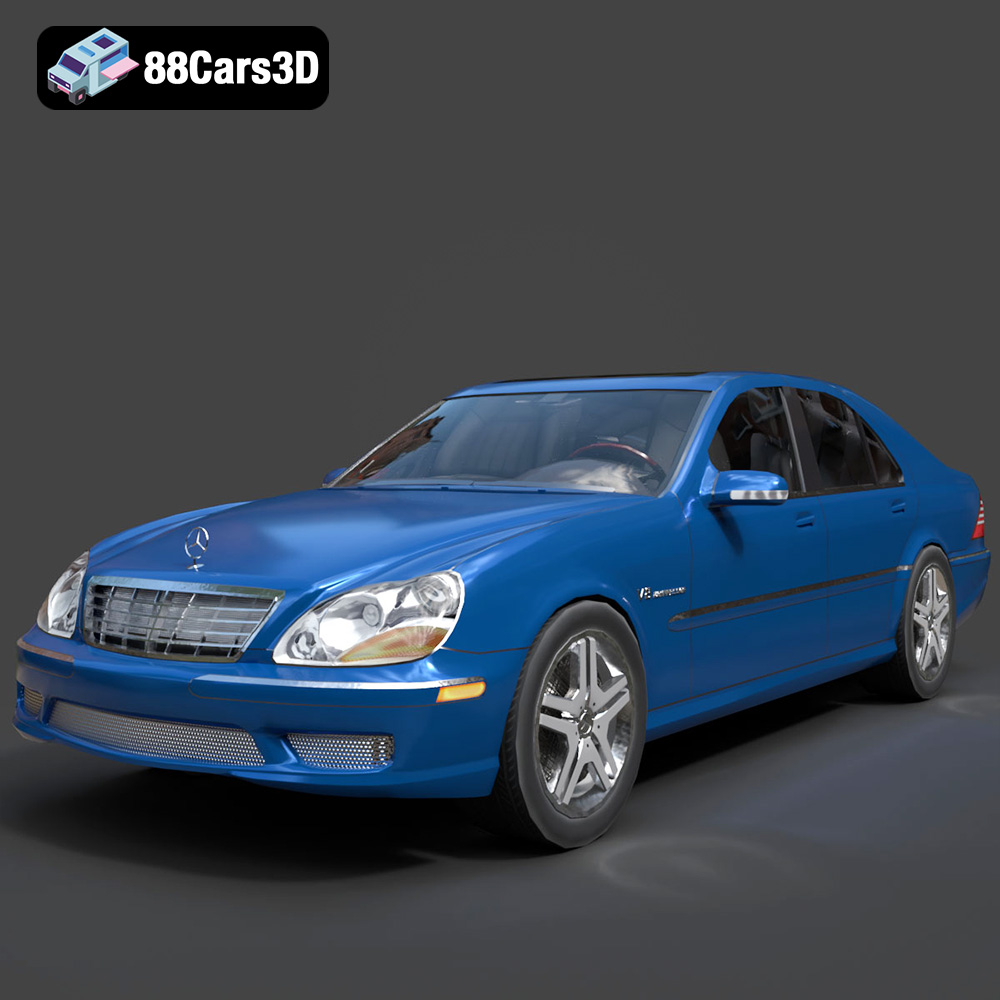
Texture: Yes
Material: Yes
Download the Mercedes-Benz S55 W220 AMG 1999 3D Model featuring clean geometry, realistic detailing, and a fully modeled interior. Includes .blend, .fbx, .obj, .glb, .stl, .ply, .unreal, and .max formats for rendering, simulation, and game development.
Price: $9.99
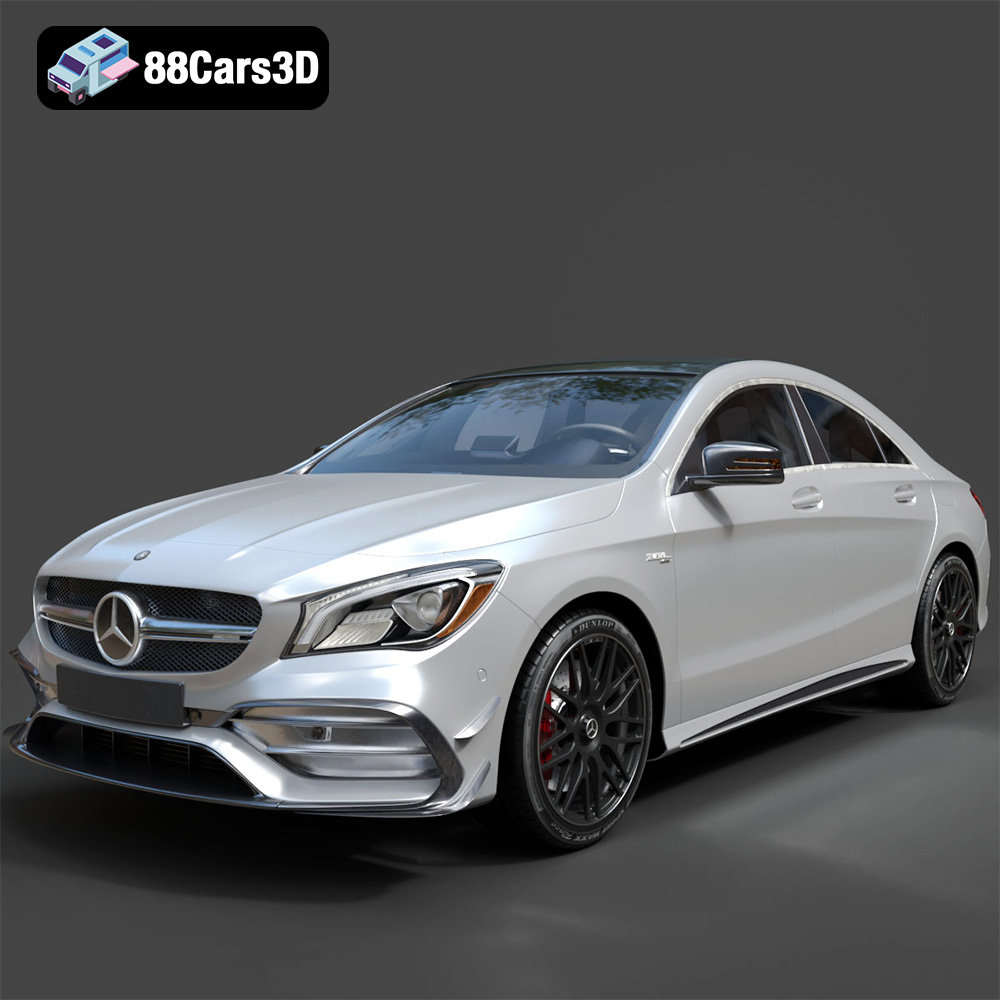
Texture: Yes
Material: Yes
Download the Mercedes-Benz CLA45 AMG 2017 3D Model featuring clean geometry, realistic detailing, and a fully modeled interior. Includes .blend, .fbx, .obj, .glb, .stl, .ply, .unreal, and .max formats for rendering, simulation, and game development.
Price: $29.99
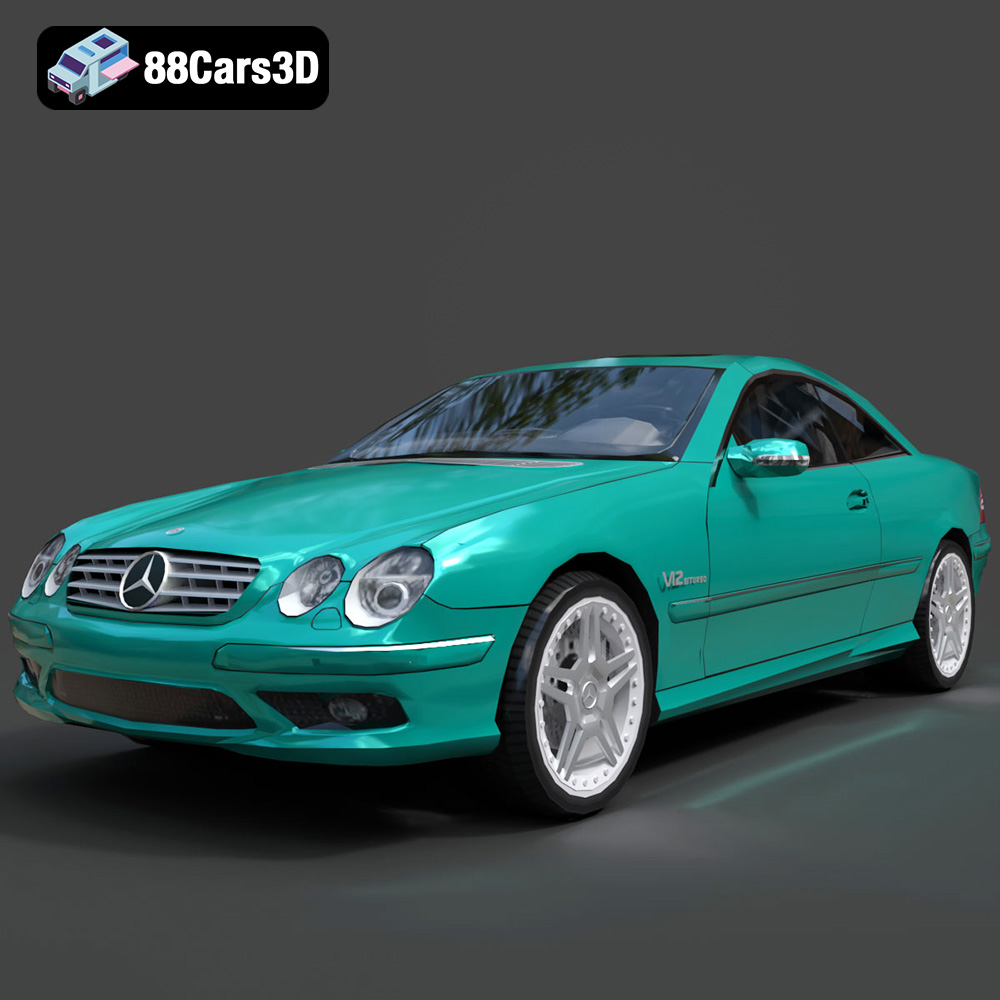
Texture: Yes
Material: Yes
Download the Mercedes-Benz CL65 C215 AMG 3D Model featuring clean geometry, realistic detailing, and a fully modeled interior. Includes .blend, .fbx, .obj, .glb, .stl, .ply, .unreal, and .max formats for rendering, simulation, and game development.
Price: $9.99
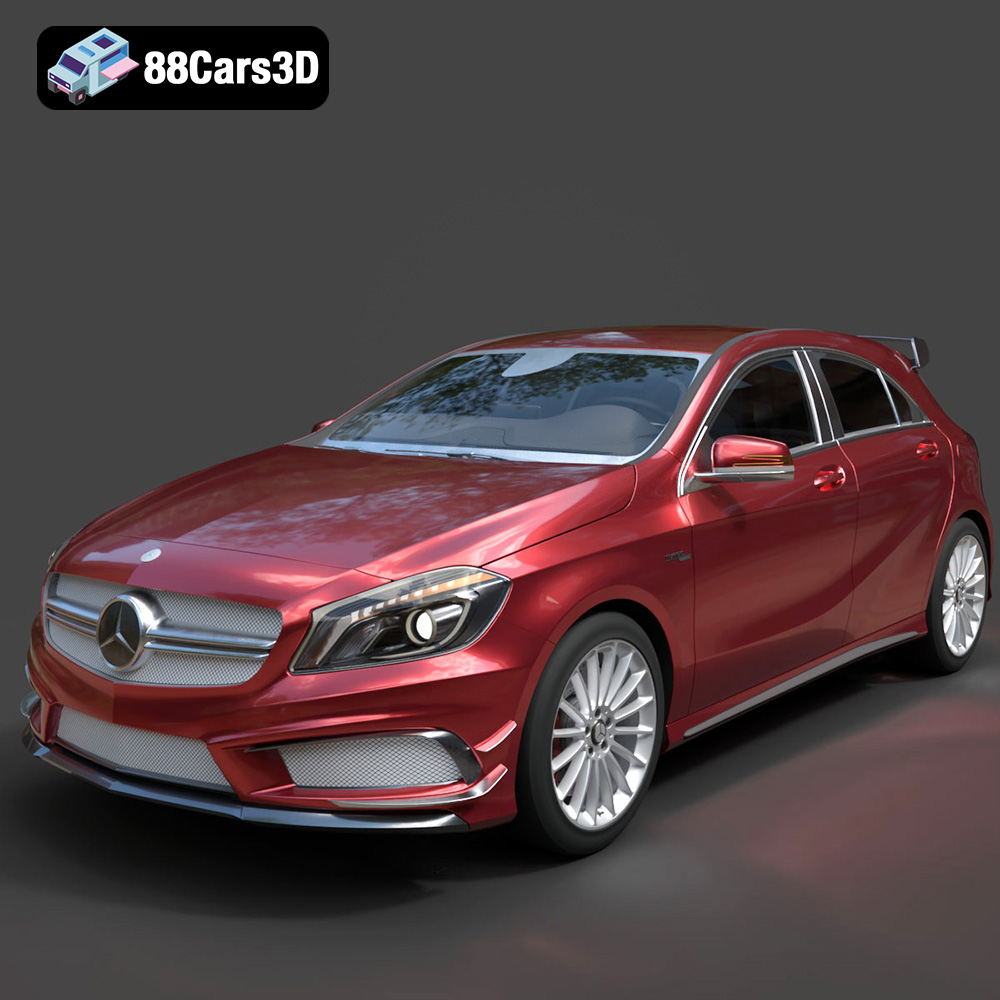
Texture: Yes
Material: Yes
Download the Mercedes-Benz A45 2021 3D Model featuring clean geometry, realistic detailing, and a fully modeled interior. Includes .blend, .fbx, .obj, .glb, .stl, .ply, .unreal, and .max formats for rendering, simulation, and game development.
Price: $9.99
Texture: Yes
Material: Yes
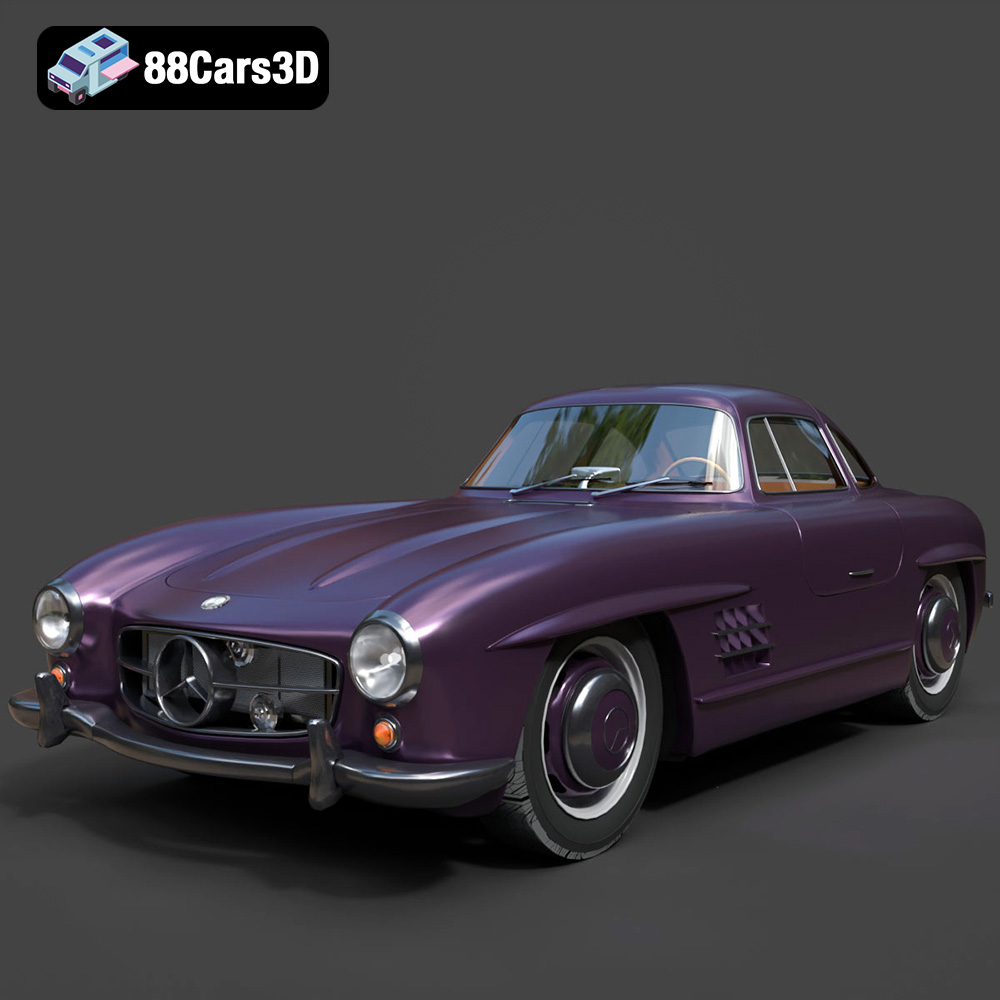
Download the Mercedes-Benz 300SL 1955 3D Model featuring clean geometry, realistic detailing, and a fully modeled interior. Includes .blend, .fbx, .obj, .glb, .stl, .ply, .unreal, and .max formats for rendering, simulation, and game development.
Price: $9.99
Texture: Yes
Material: Yes
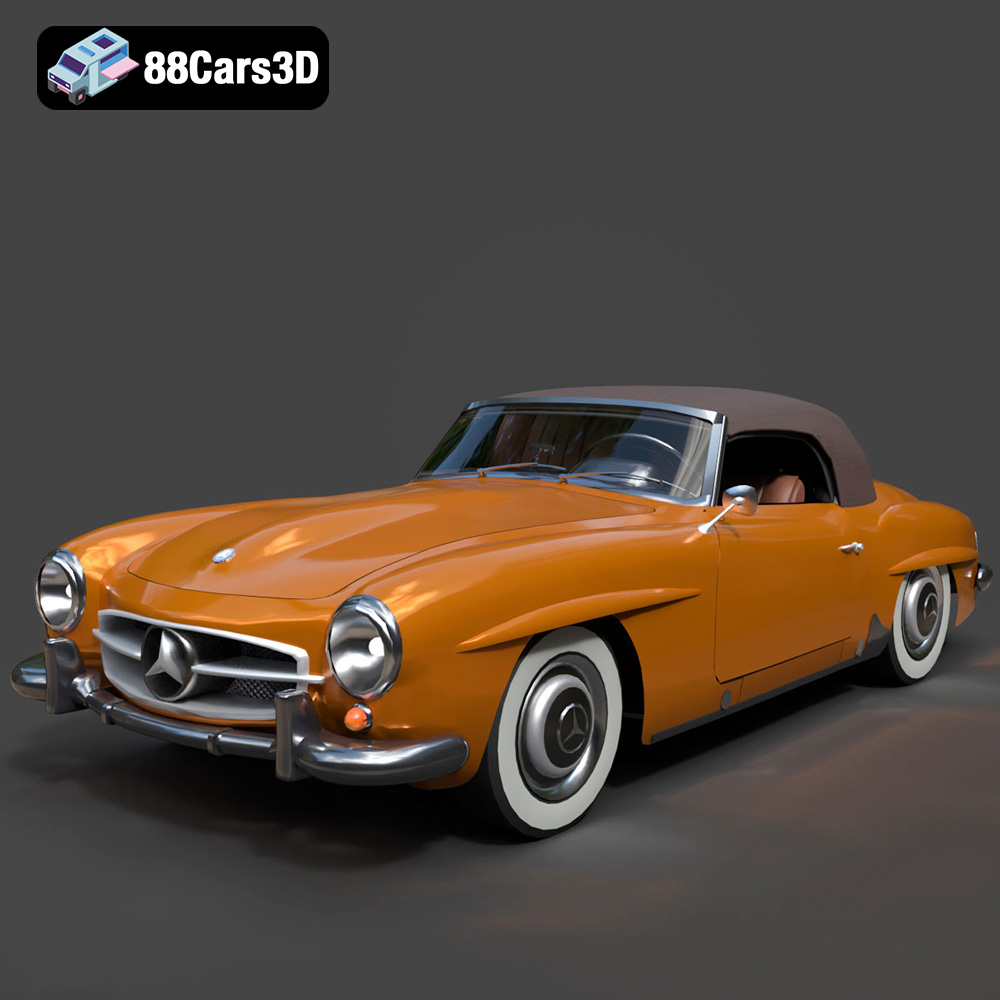
Download the Mercedes-Benz 190SL 1955 3D Model featuring clean geometry, realistic detailing, and a fully modeled interior. Includes .blend, .fbx, .obj, .glb, .stl, .ply, .unreal, and .max formats for rendering, simulation, and game development.
Price: $9.99
Texture: Yes
Material: Yes
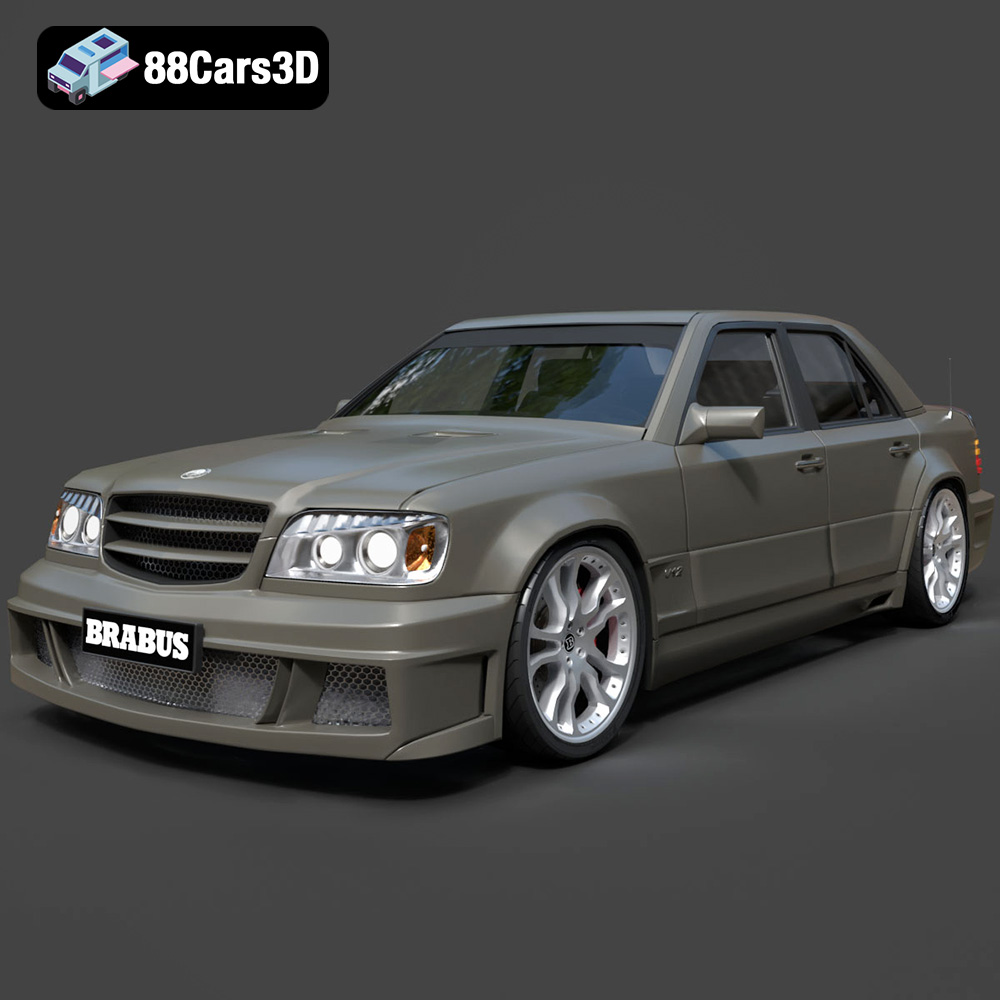
Download the Mercedes-Benz W124 Brabus V12 3D Model featuring clean geometry, realistic detailing, and a fully modeled interior. Includes .blend, .fbx, .obj, .glb, .stl, .ply, .unreal, and .max formats for rendering, simulation, and game development.
Price: $9.99

