Get 20% OFF All Premium 3D & STL Models!

In the world of 3D, the automobile is a pinnacle of artistic and technical achievement. Its complex curves, reflective surfaces, and intricate mechanical details present a unique challenge that pushes artists and their tools to the limit. A high-quality 3D car model is a remarkably versatile asset, but its journey from a modeling program to a final product—be it a photorealistic render, an interactive game asset, an augmented reality experience, or even a physical 3D print—is fraught with technical hurdles. Simply having a great-looking model isn’t enough; it must be meticulously prepared and optimized for its intended destination.
This comprehensive guide is your roadmap to mastering the art and science of preparing 3D car models for any professional pipeline. We’ll move beyond basic modeling and dive deep into the specific workflows required for each application. You will learn the secrets of creating flawless topology, mastering complex UV unwrapping, building realistic PBR materials, and optimizing for both high-fidelity automotive rendering and high-performance real-time engines. Whether you are an automotive designer creating portfolio renders, a game developer building the next great racing simulator, or a visualization specialist crafting immersive AR/VR experiences, this guide will equip you with the knowledge to ensure your automotive assets perform beautifully, no matter the context.
Everything starts with the mesh. The underlying geometry of a 3D car model is the foundation upon which all subsequent work—UV mapping, texturing, and rendering—is built. Poor topology can lead to shading errors, difficulty in UV unwrapping, and poor deformation, while clean, well-planned geometry ensures smooth surfaces and predictable results. For automotive models, where surface continuity and crisp reflections are paramount, achieving perfect topology is non-negotiable. It’s the difference between a model that looks passable and one that looks truly photorealistic. The initial investment in creating a pristine mesh pays dividends throughout the entire production pipeline, saving countless hours of troubleshooting later.
The gold standard for hard-surface modeling, especially for vehicles, is an all-quad topology. While triangles (tris) and n-gons (polygons with more than four sides) have their place, a mesh composed primarily of four-sided polygons offers several critical advantages:
Edge flow is equally critical. This refers to the direction in which the polygon edges travel across the surface of the model. For a car, the edge flow should follow the primary contours and character lines of the vehicle. This not only defines the shape accurately but also ensures that reflections flow smoothly and realistically across the surfaces without visible distortion or wobbling.
A common mistake is to create a model that is either too dense or not dense enough. The ideal polygon count is entirely dependent on the final application.
A professional 3D car model is not a single, monolithic piece of geometry. It should be logically separated into multiple, distinct objects, just like a real car. This strategy is vital for texturing, rigging, and animation. A typical separation scheme includes:
Using a clear naming convention (e.g., `CarName_Body_01`, `CarName_Wheel_FL_Rim_01`) and organizing objects into layers or collections is a crucial professional practice. When sourcing models from marketplaces such as 88cars3d.com, look for assets that are already intelligently separated and named, as this indicates a high level of quality and usability.
UV mapping is the process of translating the 3D surface of your model onto a 2D plane, allowing you to apply textures accurately. For a complex object like a car, this is one of the most challenging and time-consuming stages, but it’s absolutely essential for professional results. Proper UV mapping prevents texture stretching, ensures consistent detail density, and is the foundation for creating believable PBR materials.
Think of UV seams as the cuts you would make on a paper model to flatten it out. The goal is to place these seams in the least conspicuous locations possible to hide any potential texture discontinuities. Good places for seams on a car model include:
The resulting 2D pieces are called UV islands or shells. The key is to unwrap these islands with minimal distortion. Most 3D software includes tools to visualize UV stretch (often with a red/blue heat map), allowing you to relax and adjust the UVs until the distortion is minimized and the checker pattern applied to the model appears uniform and square.
For achieving extremely high levels of detail, a single UV map might not provide enough texture resolution. This is where the UDIM (U-Dimension) workflow comes in.
When creating a model for a marketplace, offering both a single UV set and a UDIM version provides maximum flexibility for different customer needs.
Texel density refers to the number of texture pixels per unit of 3D surface area. For a realistic result, the texel density should be consistent across the entire model. You don’t want the door handle to have more texture detail than the door panel itself. Most modern UV tools have features to automatically normalize the scale of UV islands to achieve a consistent texel density.
When packing your UV islands into the 0-to-1 space, the goal is to utilize as much of the map as possible to avoid wasting precious texture memory. A good packing algorithm will arrange the islands efficiently, leaving minimal empty space. Be sure to leave adequate padding (a few pixels of space) between islands to prevent texture bleeding, especially when mipmaps are generated for game engines.
Physically Based Rendering (PBR) is a methodology for shading and rendering that provides a more accurate representation of how light interacts with surfaces in the real world. For automotive models, a PBR workflow is essential for creating believable materials like metallic car paint, rubber tires, chromed trim, and glass. High-quality 3D car models are defined by the realism of their materials, and a solid understanding of PBR is key.
While the specific maps can vary between workflows (Metallic/Roughness vs. Specular/Glossiness), the Metallic/Roughness model is the most common standard in real-time engines and many modern renderers. The primary maps include:
Standard PBR materials can be taken further by building complex shaders with layered materials and specialized properties.
The resolution of your textures directly impacts the final visual quality. For high-end automotive rendering, 4K (4096×4096) or even 8K (8192×8192) textures are standard, especially when using a UDIM workflow. For game assets, resolutions are often scaled down to 2K or even 1K for less important parts to conserve memory.
File formats also matter. Use lossless formats like .PNG or .TGA for most maps. For maps containing high dynamic range data, like an HDRI for lighting, use .EXR or .HDR.
This is where your meticulously prepared model comes to life. Creating a photorealistic render involves more than just hitting the “render” button. It’s a careful orchestration of lighting, camera setup, and render settings to produce a final image that is both technically accurate and artistically compelling. The goal is to showcase the car’s design, materials, and form in the best possible way.
Lighting is the single most important factor in achieving realism. There are two primary approaches for automotive rendering:
Often, the best results come from a hybrid approach: using an HDRI for realistic ambient light and reflections, supplemented with a few manual lights to add highlights and shape where needed.
Your virtual camera should mimic a real-world DSLR. Pay attention to:
The choice of render engine often comes down to artist preference and software integration. All modern path-tracing renderers can produce stunning results.
When moving from offline rendering to real-time applications like games or AR/VR, the primary focus shifts from ultimate visual fidelity to maximum performance. The goal is to maintain the highest possible visual quality while ensuring a smooth, consistent frame rate (typically 60-90 FPS). This requires a different set of optimization techniques and a deep understanding of how real-time engines work.
LODs are crucial for performance. An engine doesn’t need to render a 150,000-polygon car when it’s just a tiny speck in the distance. The LOD system involves creating multiple, lower-polygon versions of the model that the engine swaps between based on the camera’s distance.
Creating these can be done manually for best results or by using automated tools like InstaLOD or Simplygon, though manual retopology often yields a cleaner outcome.
A “draw call” is a command from the CPU to the GPU to draw an object on the screen. Each object with a unique material generates at least one draw call. Too many draw calls can create a CPU bottleneck and cripple performance. To combat this:
The file format you choose is critical for compatibility with real-time platforms. When looking for models on a platform like 88cars3d.com, checking for the availability of these real-time-ready file formats is a huge time-saver.
Taking a digital 3D car model and turning it into a physical object via 3D printing presents its own unique set of challenges. A model that looks perfect on screen can fail to print if it’s not properly prepared. The focus here shifts from visual properties to structural integrity and geometry “correctness.”
This is the most critical requirement for 3D printing. A “watertight” or “manifold” mesh is a continuous, closed surface with no holes. Imagine filling the 3D model with water—if there are any holes, the water would leak out. A non-manifold mesh confuses the slicing software (the program that generates the printing instructions), leading to failed prints. Common issues to fix include:
Software like Meshmixer or the 3D-Print Toolbox in Blender are excellent for identifying and repairing these issues.
Printing a car model as a solid block of plastic is slow and wastes a lot of material. It’s far more efficient to “hollow” the model, leaving a shell of a specified thickness.
Wall thickness is a critical setting. If the walls are too thin, the model will be fragile and may break during printing or post-processing. If they’re too thick, it wastes material. A minimum wall thickness of 1-2mm is a safe starting point for most resin and FDM printers, but this depends heavily on the scale of the model and the printing technology being used. Small, delicate parts like side mirrors and antennas may need to be thickened artificially to ensure they print successfully.
Finally, you must ensure the model is scaled to the correct physical dimensions (e.g., millimeters or inches) before exporting it for the slicing software.
While many formats exist, a few are standard in the 3D printing world:
As we’ve journeyed through these diverse pipelines, a clear theme has emerged: a truly professional 3D car model is a masterclass in preparation and versatility. The journey from a raw mesh to a final product is not a single path, but a series of deliberate, technical choices tailored to a specific outcome. A model destined for a cinematic close-up requires a focus on flawless subdivision and high-resolution textures, while a game asset demands aggressive optimization, clever use of normal maps, and a deep respect for the real-time performance budget. An AR experience needs compact, efficient file formats like GLB and USDZ, and a 3D printing project hinges on the structural integrity of a watertight mesh.
The key takeaway is that the highest value lies in a clean, well-structured source model. An asset built with pristine quad topology, logical object separation, and clean UVs can be adapted for any purpose. It can be subdivided for rendering, optimized for gaming, or solidified for printing. By mastering these distinct workflows—from material creation in the PBR pipeline to LOD generation for real-time engines—you elevate your skills from simply being a 3D modeler to being a true technical artist and problem-solver. The next time you begin a project, think beyond the final render. Consider the full spectrum of possibilities and prepare your model to succeed in any of them.

Texture: Yes
Material: Yes
Download the Mercedes-Benz SLK 350 2005 3D Model featuring clean geometry, realistic detailing, and a fully modeled interior. Includes .blend, .fbx, .obj, .glb, .stl, .ply, .unreal, and .max formats for rendering, simulation, and game development.
Price: $9.99
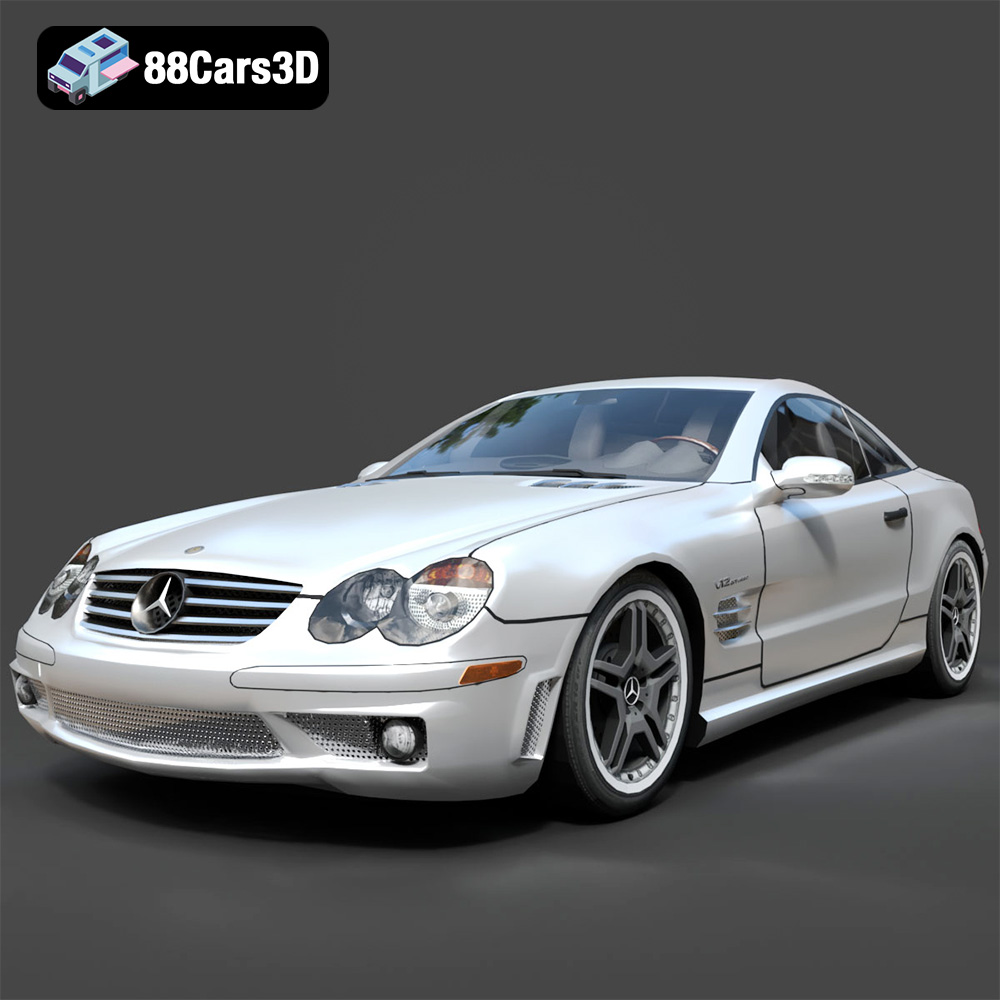
Texture: Yes
Material: Yes
Download the Mercedes-Benz SL 65 AMG 3D Model featuring clean geometry, realistic detailing, and a fully modeled interior. Includes .blend, .fbx, .obj, .glb, .stl, .ply, .unreal, and .max formats for rendering, simulation, and game development.
Price: $9.99
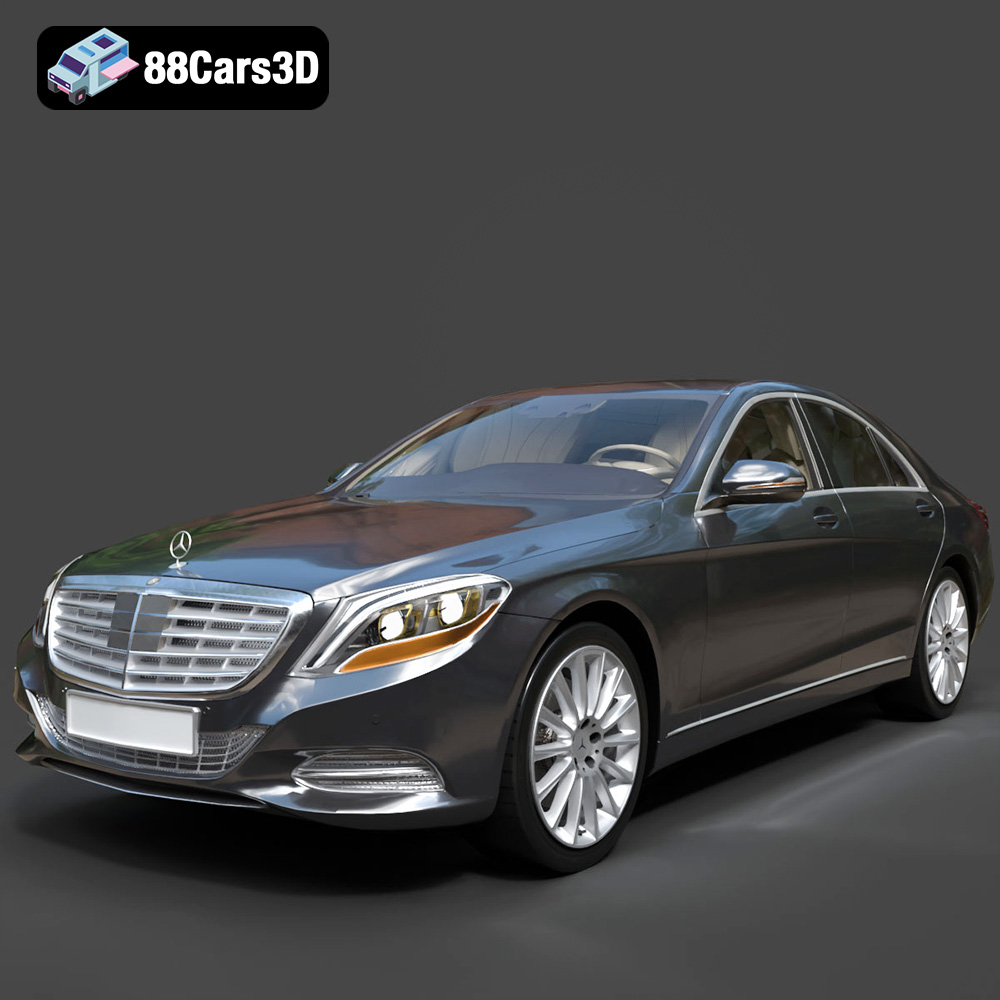
Texture: Yes
Material: Yes
Download the Mercedes-Benz S500 3D Model featuring clean geometry, realistic detailing, and a fully modeled interior. Includes .blend, .fbx, .obj, .glb, .stl, .ply, .unreal, and .max formats for rendering, simulation, and game development.
Price: $9.99
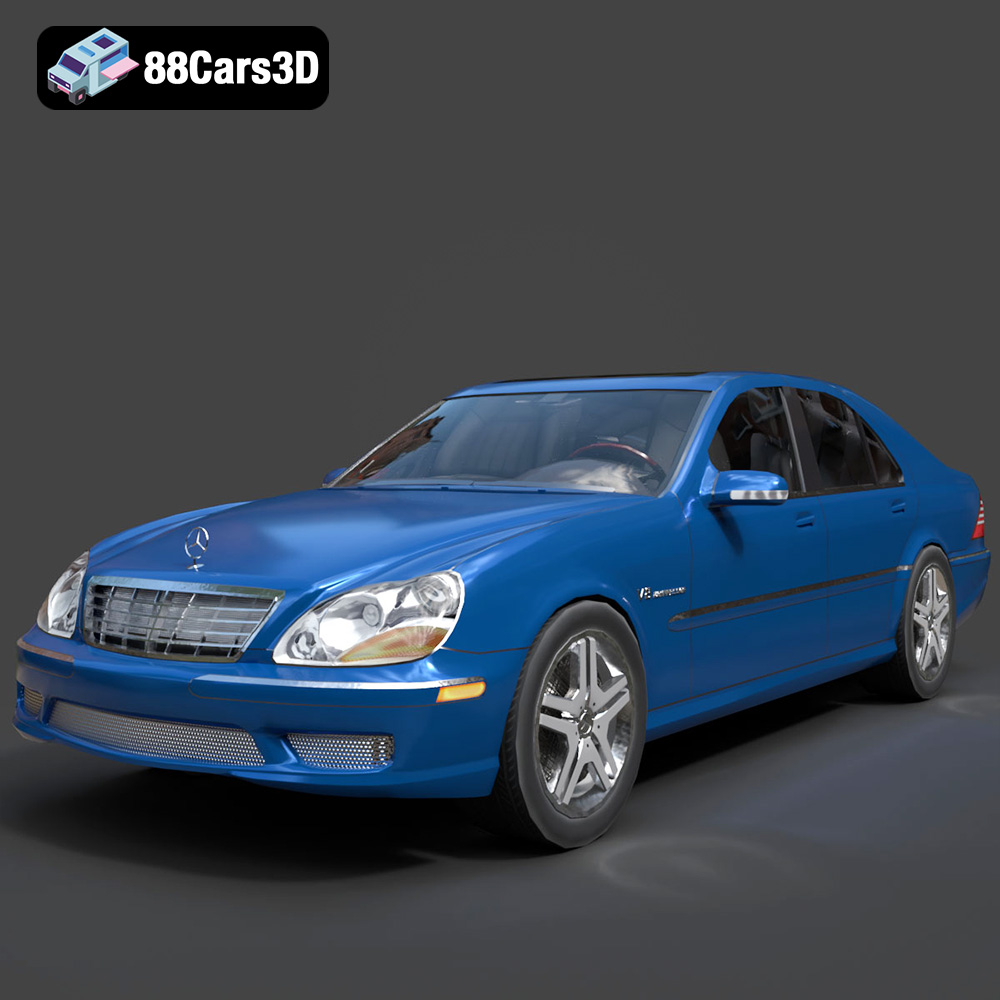
Texture: Yes
Material: Yes
Download the Mercedes-Benz S55 W220 AMG 1999 3D Model featuring clean geometry, realistic detailing, and a fully modeled interior. Includes .blend, .fbx, .obj, .glb, .stl, .ply, .unreal, and .max formats for rendering, simulation, and game development.
Price: $9.99
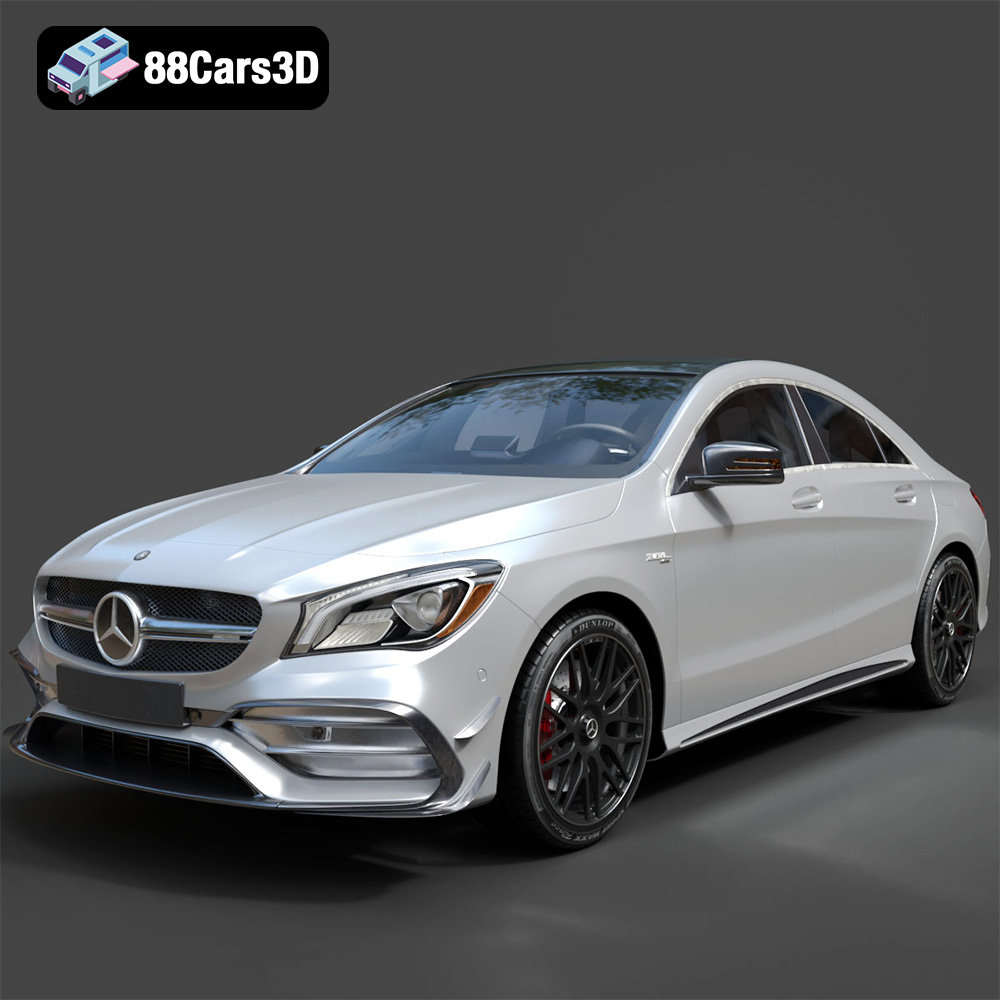
Texture: Yes
Material: Yes
Download the Mercedes-Benz CLA45 AMG 2017 3D Model featuring clean geometry, realistic detailing, and a fully modeled interior. Includes .blend, .fbx, .obj, .glb, .stl, .ply, .unreal, and .max formats for rendering, simulation, and game development.
Price: $29.99
Texture: Yes
Material: Yes
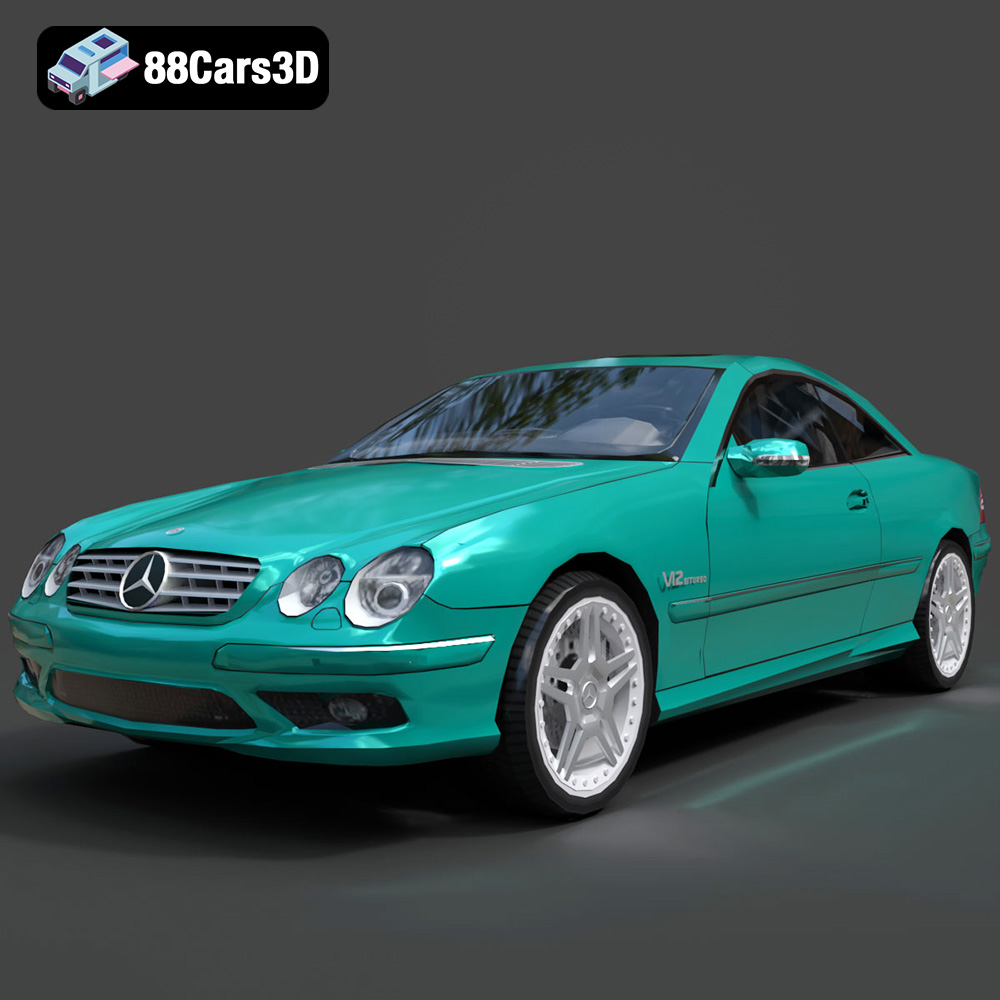
Download the Mercedes-Benz CL65 C215 AMG 3D Model featuring clean geometry, realistic detailing, and a fully modeled interior. Includes .blend, .fbx, .obj, .glb, .stl, .ply, .unreal, and .max formats for rendering, simulation, and game development.
Price: $9.99
Texture: Yes
Material: Yes
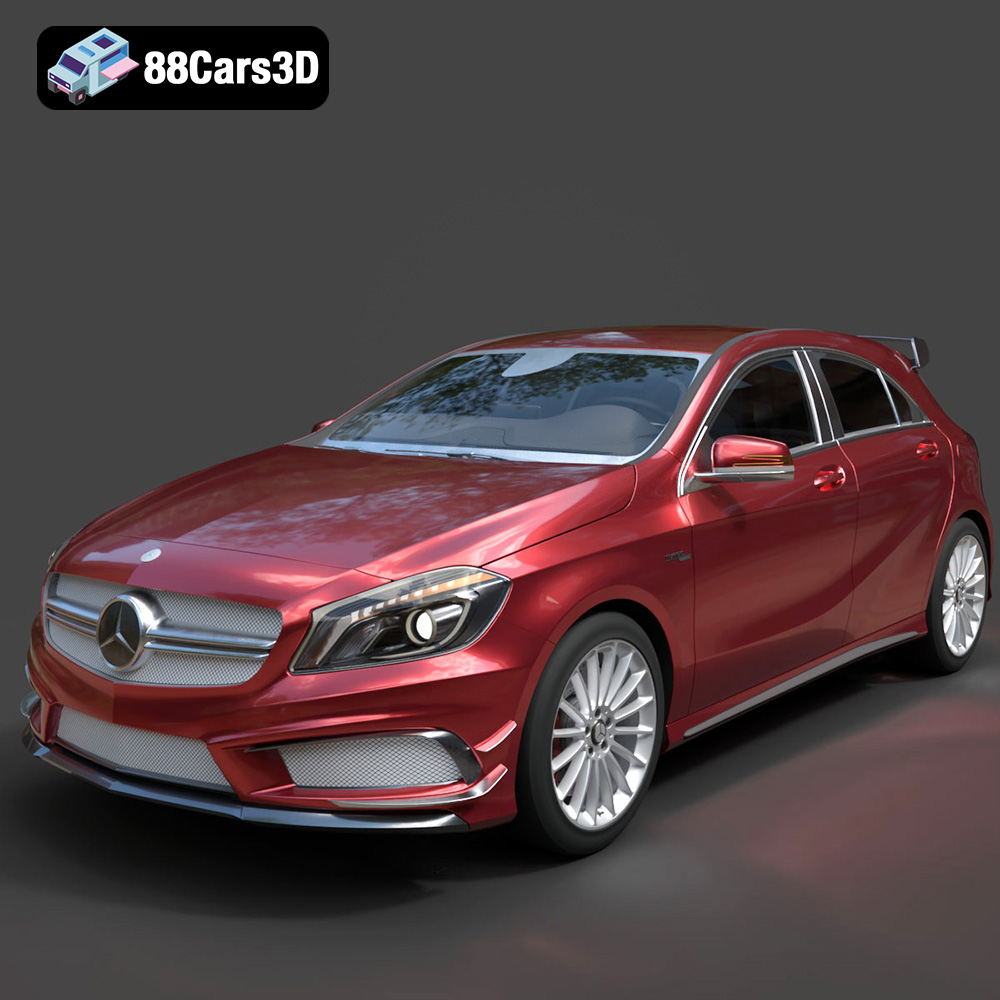
Download the Mercedes-Benz A45 2021 3D Model featuring clean geometry, realistic detailing, and a fully modeled interior. Includes .blend, .fbx, .obj, .glb, .stl, .ply, .unreal, and .max formats for rendering, simulation, and game development.
Price: $9.99
Texture: Yes
Material: Yes
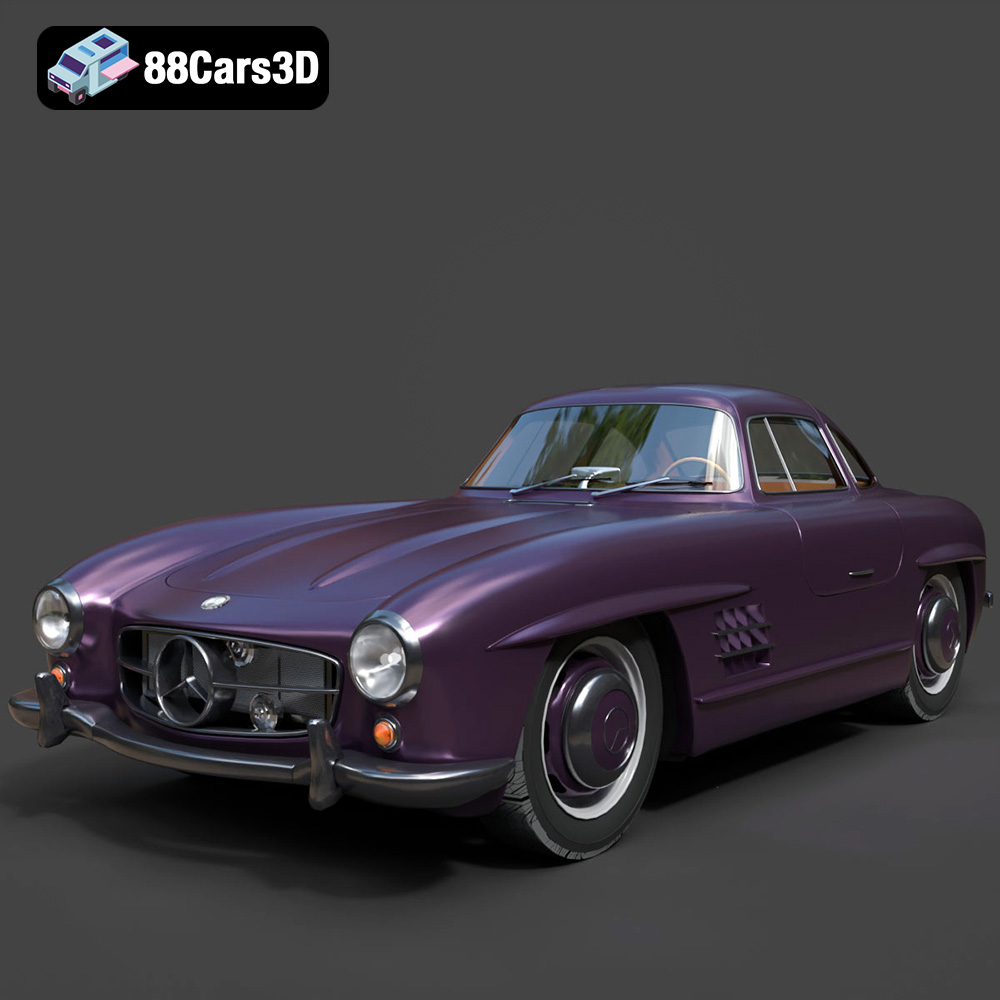
Download the Mercedes-Benz 300SL 1955 3D Model featuring clean geometry, realistic detailing, and a fully modeled interior. Includes .blend, .fbx, .obj, .glb, .stl, .ply, .unreal, and .max formats for rendering, simulation, and game development.
Price: $9.99
Texture: Yes
Material: Yes
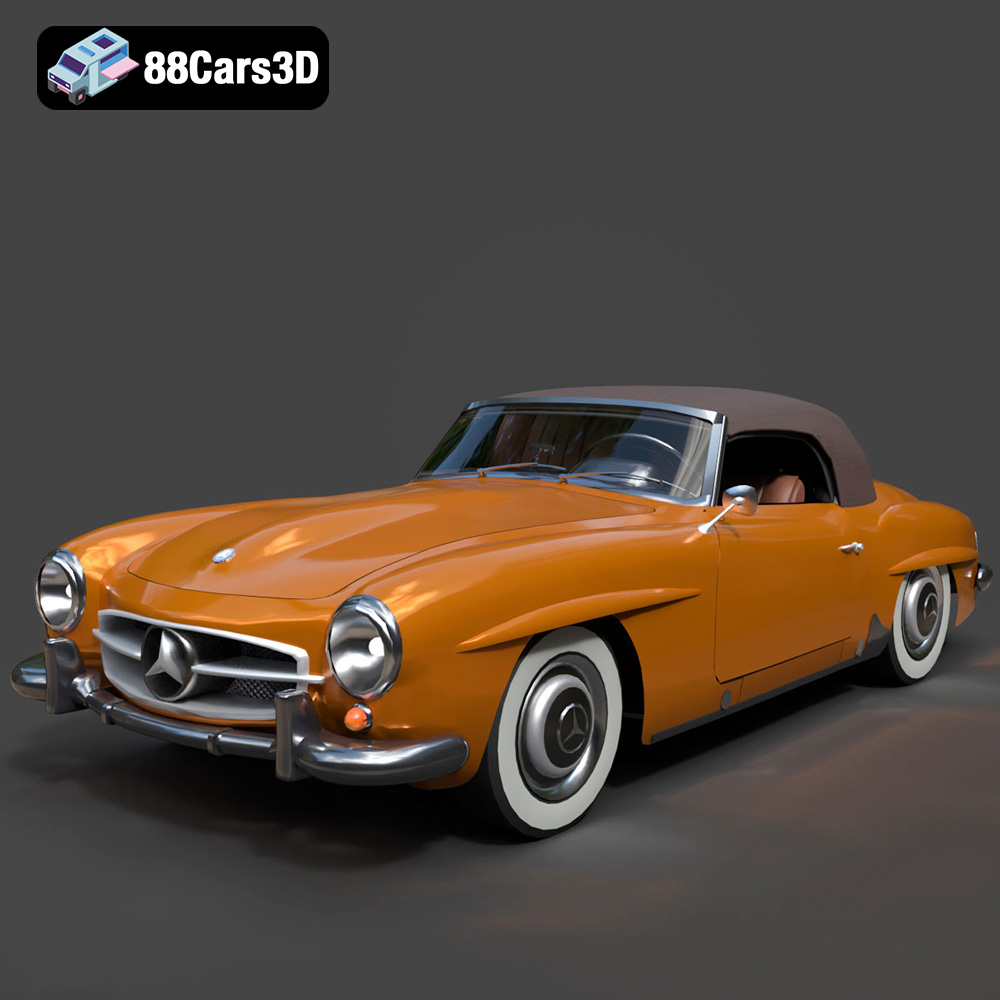
Download the Mercedes-Benz 190SL 1955 3D Model featuring clean geometry, realistic detailing, and a fully modeled interior. Includes .blend, .fbx, .obj, .glb, .stl, .ply, .unreal, and .max formats for rendering, simulation, and game development.
Price: $9.99
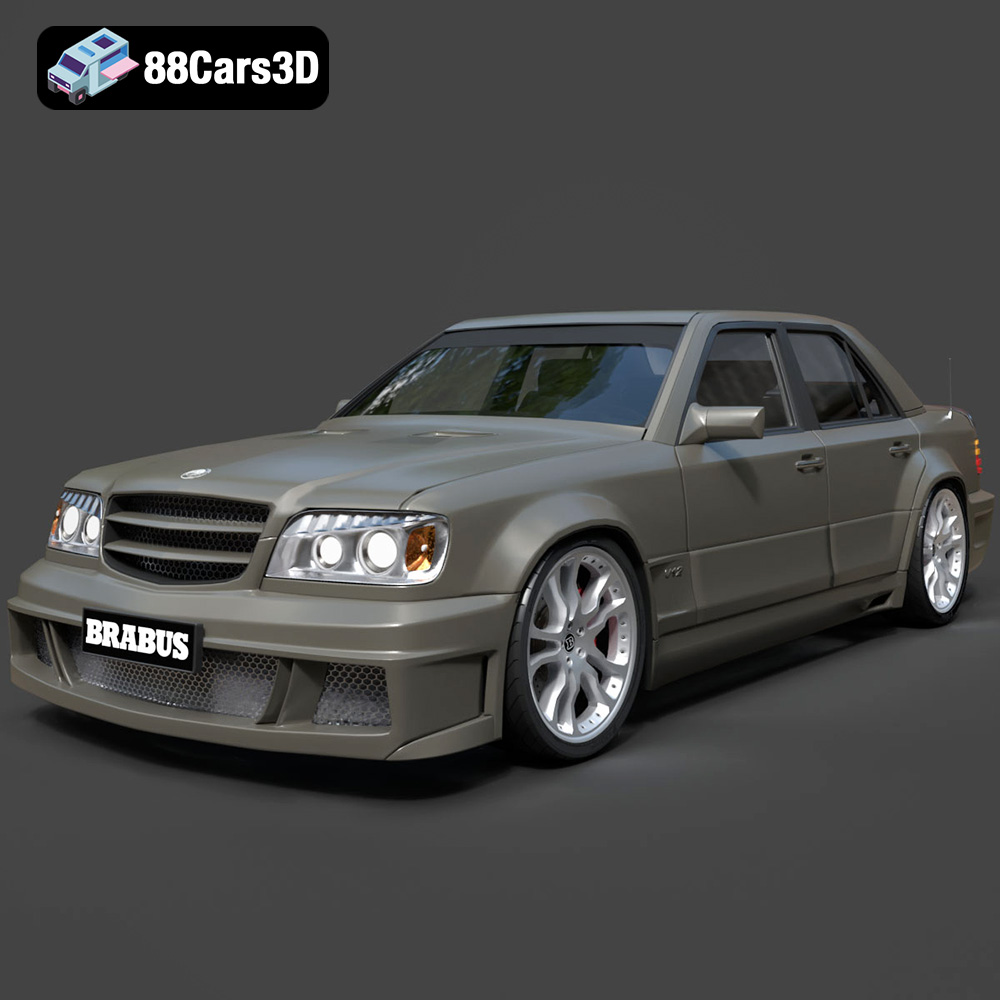
Texture: Yes
Material: Yes
Download the Mercedes-Benz W124 Brabus V12 3D Model featuring clean geometry, realistic detailing, and a fully modeled interior. Includes .blend, .fbx, .obj, .glb, .stl, .ply, .unreal, and .max formats for rendering, simulation, and game development.
Price: $9.99

