Get 50% OFF All Premium 3D & STL Models!

“`html
There’s an undeniable magic to a photorealistic 3D car model. It’s the seamless blend of engineering precision and artistic flair, where every curve, reflection, and material feels tangible. Whether it’s a gleaming supercar in a high-end automotive render, a battle-scarred vehicle in a blockbuster video game, or an interactive model in an AR showroom, the demand for high-quality 3D car models has never been greater. But creating them is a discipline that requires a mastery of various complex techniques. It’s a journey that takes a digital artist from a simple blueprint to a stunningly realistic asset that can stand up to the closest scrutiny.
This comprehensive guide will take you through the entire professional workflow for creating world-class 3D car models. We will dissect each critical stage of the process, providing technical insights and actionable advice. We’ll start with the foundational principles of precision modeling and achieving perfect, subdivision-ready topology. From there, we’ll navigate the intricacies of UV unwrapping for complex surfaces, dive deep into the science and art of PBR material creation for hyper-realistic shaders, and explore advanced lighting and rendering techniques. Finally, we’ll cover the crucial steps of optimizing your models for real-time applications like game engines, AR/VR, and even preparing them for 3D printing. This is your roadmap to transforming a passion for cars into a high-level digital skill.
The journey to a photorealistic 3D car model begins not with polygons, but with preparation and a solid understanding of form. The modeling stage is the bedrock upon which all subsequent steps—texturing, lighting, and rendering—are built. A single mistake here, a wobbly curve or a poorly planned edge loop, will be magnified under realistic lighting and reflections. Achieving automotive precision in a 3D environment requires a meticulous approach that combines high-quality references with a deep understanding of surface topology. Without a perfect mesh, you cannot achieve a perfect render. This initial phase demands patience and an eye for detail, as it sets the standard for the final quality of the asset.
You cannot model what you cannot see. The first, and arguably most crucial, step is to gather an extensive library of high-resolution references. This includes official blueprints (front, side, top, and rear views), factory specifications, and hundreds of photographs covering every conceivable angle, detail, and lighting condition. Focus on close-ups of complex areas like headlights, grilles, panel gaps, and interior stitching. For automotive rendering, understanding how light interacts with the car’s surfaces in the real world is paramount. CAD data, when available, is the gold standard for accuracy, but high-quality blueprints are essential for blocking out the primary forms correctly in your 3D software of choice, be it 3ds Max, Blender, or Maya. These blueprints should be carefully aligned on image planes to ensure all proportions are accurate from the very start.
Topology refers to the structure and flow of polygons (quads, specifically) that form your 3D mesh. For hard-surface models like cars, clean topology is non-negotiable. This means creating a mesh composed almost entirely of four-sided polygons (quads) with an even, logical distribution. Good edge flow follows the natural contours and feature lines of the car, defining its shape and character. This is vital for several reasons:
Pay special attention to creating clean holding edges around panel gaps, wheel arches, and windows to maintain sharp, defined lines after subdivision.
While cars are designed in the real world using NURBS (Non-Uniform Rational B-Splines) or CAD software for manufacturing precision, the vast majority of 3D car models for visualization and entertainment are created using Subdivision Surface (SubD) modeling. The workflow involves building a low-polygon “cage” mesh that defines the basic shape. A subdivision modifier is then applied, which smooths the mesh by adding geometric density. The artist works back and forth, refining the low-poly cage to control the final high-poly shape. This technique offers immense artistic control and flexibility. A typical high-poly model for automotive rendering might range from 500,000 to several million polygons after subdivision, ensuring every curve is perfectly smooth even in extreme close-ups.
If modeling gives your car its shape, UV unwrapping gives it a canvas for its skin. UV unwrapping is the process of flattening the 3D model’s surface into a 2D map, allowing textures to be applied accurately and without distortion. For a complex object like a car, with its mix of large, flowing panels and intricate mechanical parts, this stage is a technical puzzle that requires foresight and strategy. A poor unwrap can lead to stretched textures, visible seams, and inconsistent resolution, undermining all the hard work of the modeling phase. Professionals dedicate significant time to this process, understanding that a clean UV layout is just as important as clean topology for achieving photorealistic results, especially in high-end automotive visualization and game development.
A UV map is created by defining “seams” on the 3D mesh, which act as cutting lines for the unwrap. Where you place these seams is critical. The goal is to hide them in areas where they are least likely to be seen—along hard edges, inside panel gaps, on the underside of the car, or where one material meets another. For a car’s main body, you might place seams along the sharp edges of the door panels or the hood. For a tire, a seam can be hidden on the inside circumference. Strategic seam placement is key to minimizing texture distortion and avoiding visible artifacts, particularly when using procedural textures or painting details across UV islands.
Texel density refers to the resolution of your texture map relative to the size of the 3D surface it’s applied to. Consistent texel density across the entire model is crucial for a professional look. You wouldn’t want the door handle to have a sharper texture than the door panel itself. To achieve this, UV islands must be scaled relative to their corresponding polygon size on the 3D model. For hero assets that require extreme detail, a single texture map is often not enough. This is where the UDIM (U-Dimension) workflow comes in. UDIMs allow you to spread your UVs across multiple texture sets (or tiles), each with its own high-resolution map (e.g., 4K or 8K). This enables you to assign massive texture resolution to a single asset, a standard practice for film and high-end automotive rendering where incredible close-up detail is required.
Both Blender and 3ds Max offer robust toolsets for UV editing. The process typically involves selecting edges to be seams, then using an unwrap tool (like Blender’s “Unwrap” or the “Peel” tool in 3ds Max) to flatten the resulting UV shells. Tools like “Smart UV Project” in Blender can be useful for mechanical parts, but for the main body panels, manual seam placement provides the best results. Once unwrapped, the UV islands must be efficiently packed into the 0-1 UV space (or across multiple UDIM tiles) to maximize texture space and minimize waste. Modern UV packing algorithms can automatically arrange shells with optimal spacing and orientation, but manual adjustments are often needed to align islands logically for easier texturing.
This is where your 3D car model truly comes to life. The texturing and material creation stage is a meticulous process of recreating the physical properties of real-world surfaces. Modern real-time and offline renderers rely on Physically Based Rendering (PBR) principles, which simulate the flow of light in a physically plausible way. This approach removes the guesswork from material creation, allowing artists to build shaders for car paint, glass, chrome, and rubber that react realistically to any lighting condition. A deep understanding of PBR workflows and the ability to craft complex, layered materials are essential skills for any artist aiming for photorealism in their automotive rendering projects.
The most common PBR workflow is the Metallic/Roughness model. It relies on a set of texture maps to define a surface’s properties:
By combining these maps, you can create virtually any material imaginable with stunning realism.
Automotive paint is one of the most complex materials to replicate. It’s a layered shader consisting of a base paint layer, embedded metallic flakes, and a final protective clear coat. In a PBR shader like Blender’s Principled BSDF, this can be achieved by using specific parameters. The process is as follows:
Beyond the paint, a car features a wide array of materials. For chrome, the shader is simple: a white Base Color, a Metallic value of 1, and a very low Roughness value (near 0). For glass and headlights, you’ll use a shader with a high Transmission value (1.0) and a specific Index of Refraction (IOR), typically around 1.52 for glass. Tires require a dark gray, non-metallic Base Color and a complex Roughness map that incorporates wear, dirt, and scuff marks. The sidewall lettering is often created with a separate mask. For interior leather, the Normal map is paramount for creating the convincing grain and wrinkle detail, while the Roughness map defines the subtle sheen of the material.
With a meticulously modeled and textured car, the final step to achieving a jaw-dropping image is the lighting and rendering process. This is where mood, context, and photorealism are truly cemented. A great model can look average in poor lighting, while a masterful lighting setup can elevate it to a work of art. The choice of lighting, camera angles, and render engine settings all play a pivotal role in showcasing the vehicle’s design, materials, and form. Whether you’re aiming for a clean, commercial studio shot or a dynamic environmental scene, this stage is about shaping light to tell a story and produce a final image that is indistinguishable from a photograph.
There are two primary approaches to lighting 3D car models. Studio lighting involves manually placing lights (area lights, softboxes, spotlights) in the scene, similar to a real-world photography studio. This method offers complete artistic control, allowing you to sculpt the light to highlight specific curves and feature lines, creating a clean, commercial look perfect for advertising. A common setup is the three-point lighting system (key, fill, and rim lights). In contrast, Image-Based Lighting (IBL) uses a High Dynamic Range Image (HDRI) to illuminate the entire scene. An HDRI captures the full range of light from a real-world location, providing incredibly realistic environmental lighting and reflections with minimal setup. This is the fastest way to place your car in a believable context, whether it’s a sunny racetrack or a moody urban street.
The render engine is the software that calculates the final image from your 3D scene. For photorealistic results, path-tracing engines are the industry standard.
Key settings to master in any engine include sampling (the number of light rays calculated per pixel to reduce noise), camera settings like aperture for depth of field, and the use of modern AI-powered denoisers to achieve clean images faster.
The raw render from the engine is rarely the final product. Post-processing is an essential step where artists refine and enhance the rendered image. This is often done in applications like Adobe Photoshop, Affinity Photo, or a node-based compositor like Fusion or Nuke. The process involves rendering out separate images for different elements, known as render passes or AOVs (Arbitrary Output Variables). Common passes include Ambient Occlusion for contact shadows, Reflections, Z-Depth for atmospheric haze, and Material ID masks for easy selection. In post, you can precisely control color grading, adjust contrast, add effects like lens flare and bloom, enhance highlights, and apply a final sharpening pass to make the details pop.
Creating a car model for a real-time application like a video game or an AR/VR experience presents a different set of challenges compared to offline rendering. In real-time, the goal is to maintain the highest possible visual fidelity while ensuring the application runs at a smooth, consistent frame rate (typically 30-60 FPS or higher). This requires a delicate balance between detail and performance, achieved through a series of specialized optimization techniques. The ultra-high-polygon models used for cinematic renders are simply too demanding for a game engine to handle. Instead, artists employ clever workflows to create the illusion of high detail on a much more efficient, low-polygon mesh. Sourcing models from marketplaces that already provide game-ready versions, such as **88cars3d.com**, can be a massive time-saver for developers.
The core of game asset optimization is retopology. This is the process of building a new, clean, and highly optimized low-polygon mesh directly over the surface of the original high-poly model. This new “game-res” mesh is designed to retain the silhouette and primary forms of the source model while using a fraction of the polygons. For a hero car in a modern AAA game, the polygon budget might be between 100,000 and 300,000 triangles (not quads). This process can be done manually using tools in Blender or 3ds Max, or with the help of specialized software. The resulting low-poly model is what will actually be rendered in the game engine.
So how does a low-poly model look so detailed? The magic lies in map baking. This process projects and saves the surface detail from the high-poly model onto a texture map that is then applied to the low-poly model. The most important baked map is the Normal Map. It stores the directional information of the high-poly surface’s normals, allowing the low-poly mesh to react to light as if it had all the original detail—panel lines, vents, bolts, and curves are all preserved visually without any extra geometric cost. Another commonly baked map is the Ambient Occlusion (AO) Map, which pre-calculates soft contact shadows in areas where geometry is close together, adding depth and realism.
To further optimize performance, artists create Levels of Detail (LODs). An LOD system involves generating several versions of the car model, each with a progressively lower polygon count and simpler materials. The game engine, such as Unity or Unreal Engine, automatically swaps these models based on the car’s distance from the camera. The closest version (LOD0) is the highest quality, while a car far in the distance (e.g., LOD3) might be just a few hundred triangles. This technique is absolutely critical for performance in open-world games. Another key strategy is texture atlasing, where textures for multiple smaller parts (like interior buttons, gauges, and vents) are combined into a single, larger texture sheet. This significantly reduces the number of draw calls—requests from the CPU to the GPU to draw an object—which is a major bottleneck in real-time rendering.
A high-quality 3D car model is an incredibly versatile asset, but its journey doesn’t end with a beautiful render or a game-ready mesh. To be truly useful in a modern production pipeline, the model must be prepared and exported in various formats, each tailored to a specific application. From ensuring compatibility with different 3D software and game engines to optimizing for the unique demands of Augmented Reality (AR) and preparing a mesh for the physical world of 3D printing, this final stage is about maximizing the asset’s utility. A professional asset, like those found on platforms such as **88cars3d.com**, is often delivered with multiple file formats and configurations to serve the widest possible audience of creators and developers.
Understanding the common 3D file formats is essential for seamless integration into any workflow. Here’s a quick breakdown of the most important ones for automotive models:
Augmented Reality (AR) and Virtual Reality (VR) applications have extremely strict performance requirements. To prevent motion sickness and maintain immersion, they must render scenes at very high frame rates (90 FPS or more) on often limited mobile hardware. This necessitates aggressive optimization beyond what is typical for standard PC or console games. Polygon counts must be kept very low, texture resolutions are often limited to 2K or even 1K, and shader complexity must be minimized. The use of baked lighting and efficient texture atlasing is not just recommended; it’s mandatory. Every kilobyte and every draw call matters, forcing a constant trade-off between visual quality and real-time performance.
Preparing a 3D car model for physical 3D printing is a completely different discipline. Unlike a visual model, which can have intersecting geometry and paper-thin surfaces, a 3D printable model must be a single, solid, “watertight” volume. This means the mesh must be fully enclosed with no holes (a manifold mesh). All separate parts must be properly Booleaned together or designed with interlocking keys. It’s also critical to consider the physical limitations of the 3D printer, such as minimum wall thickness to ensure parts are strong enough and won’t break. Tools like Blender’s built-in 3D-Print Toolbox can help analyze a mesh for non-manifold edges, wall thickness, and other issues before sending it to the printer.
Creating a truly photorealistic 3D car model is a journey of dedication, blending technical precision with artistic vision. As we’ve explored, every stage—from gathering pristine references and building a flawless topological foundation to crafting intricate PBR materials and mastering lighting—is a critical piece of the puzzle. The process demands a holistic understanding of how these elements interconnect to create a final asset that is both beautiful and functional, whether it’s destined for a stunning automotive render, an interactive game engine, or an AR experience.
The path to mastery is built on practice and a keen eye for detail. Remember that perfection in the early stages prevents headaches later on; a clean mesh will always texture and render more predictably. For those just starting, begin by focusing on topology and form. For experienced artists, pushing the boundaries of material creation and lighting can elevate your work to new heights. And for professionals working under tight deadlines, leveraging high-quality, production-ready assets from marketplaces like **88cars3d.com** can be an invaluable resource, serving as either a final product or an excellent base for customization. Keep honing your skills, stay curious, and continue pushing the boundaries of what’s possible in the exciting world of 3D automotive art.
“`

Texture: Yes
Material: Yes
Download the Chevrolet Camaro 1970 3D Model featuring clean geometry, realistic detailing, and a fully modeled interior. Includes .blend, .fbx, .obj, .glb, .stl, .ply, .unreal, and .max formats for rendering, simulation, and game development.
Price: $10

Texture: Yes
Material: Yes
Download the Mercedes-AMG GT 2015 3D Model featuring clean geometry, realistic detailing, and a fully modeled interior. Includes .blend, .fbx, .obj, .glb, .stl, .ply, .unreal, and .max formats for rendering, simulation, and game development.
Price: $88.99
Texture: Yes
Material: Yes
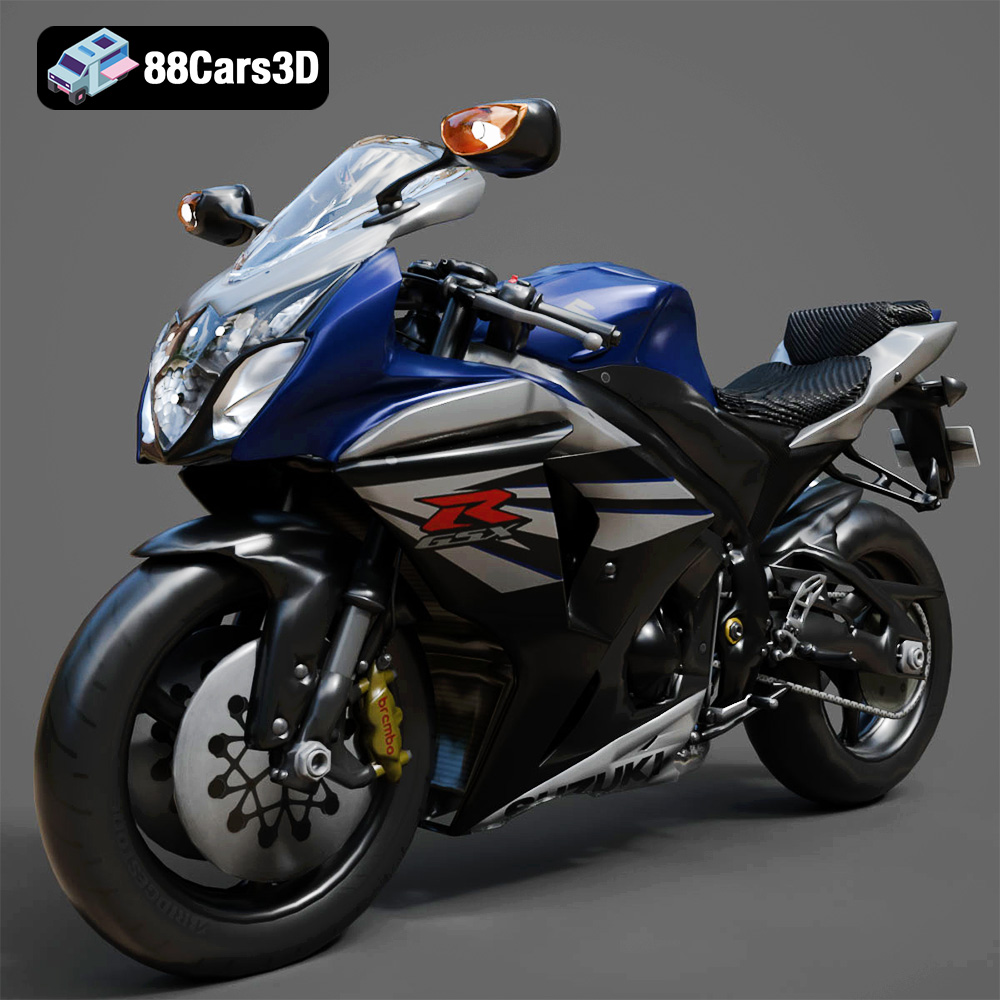
Download the Suzuki GSX-R 1000 3D Model featuring clean geometry, realistic detailing, and a fully modeled interior. Includes .blend, .fbx, .obj, .glb, .stl, .ply, .unreal, and .max formats for rendering, simulation, and game development.
Price: $10
Texture: Yes
Material: Yes
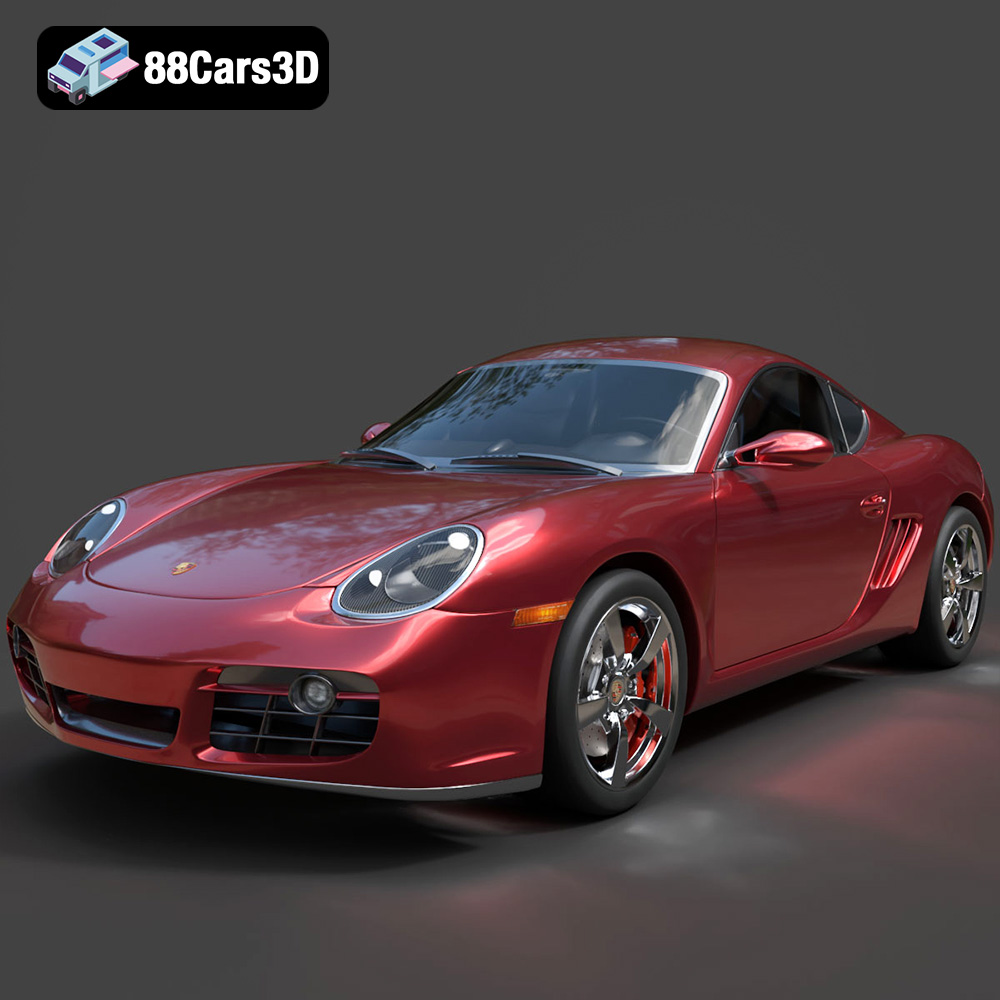
Download the Porsche Cayman S 2024 3D Model featuring clean geometry, realistic detailing, and a fully modeled interior. Includes .blend, .fbx, .obj, .glb, .stl, .ply, .unreal, and .max formats for rendering, simulation, and game development.
Price: $10
Texture: Yes
Material: Yes
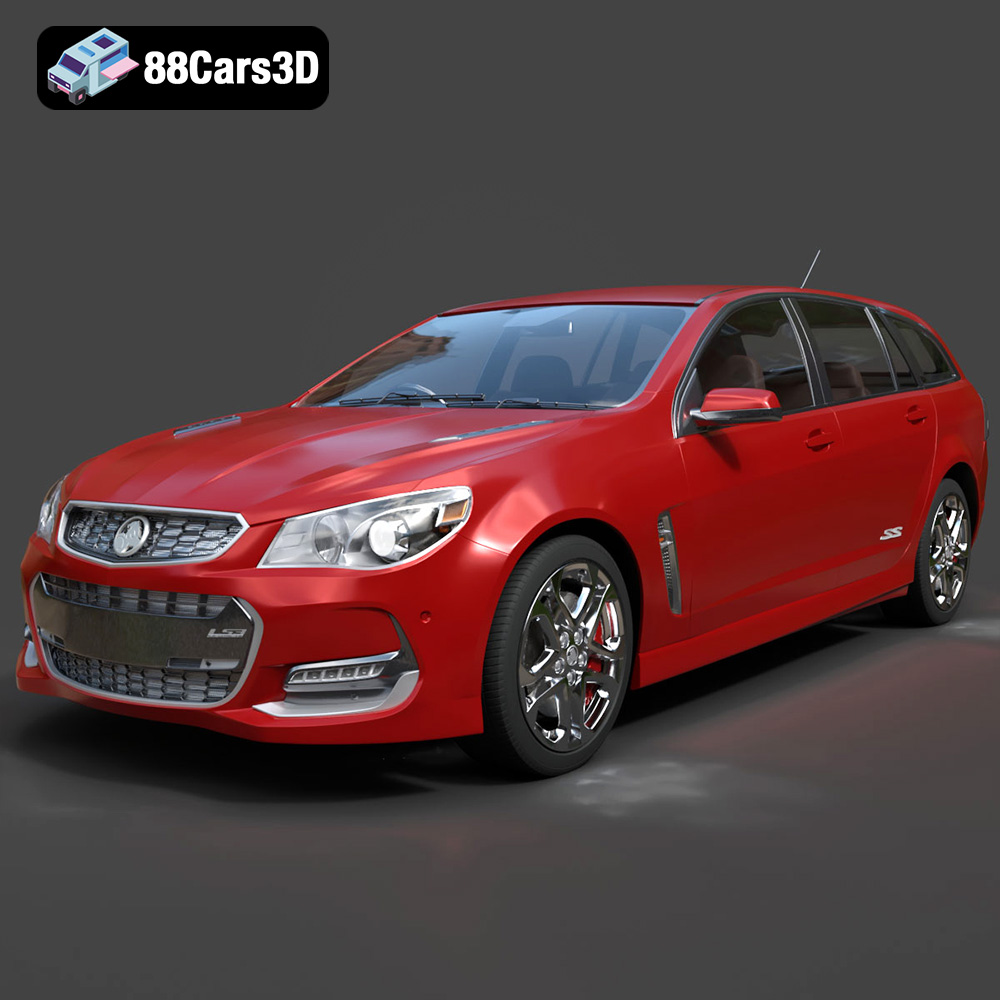
Download the Holden Commodore Sportwagon 2017 3D Model featuring clean geometry, realistic detailing, and a fully modeled interior. Includes .blend, .fbx, .obj, .glb, .stl, .ply, .unreal, and .max formats for rendering, simulation, and game development.
Price: $10

**Meta Description:**
Texture: Yes
Material: Yes
Download the Toyota Crown Majesta 2009 3D Model with luxury detailing, clean topology, and a fully modeled interior. Available in .blend, .fbx, .obj, .glb, .stl, .ply, .unreal, and .max formats for rendering, simulation, and game development.
Price: $4.99

**Meta Description:**
Texture: Yes
Material: Yes
Download the Toyota AE86 Levin 1983 1987 3D Model featuring realistic exterior and interior detailing. Includes .blend, .fbx, .obj, .glb, .stl, .ply, .unreal, and .max formats for rendering, simulation, and game development.
Price: $9.99

Texture: Yes
Material: Yes
Download the Toyota Mark 2 2001 3D Model featuring clean geometry, realistic detailing, and a fully modeled interior. Includes .blend, .fbx, .obj, .glb, .stl, .ply, .unreal, and .max formats for rendering, simulation, and game development.
Price: $4.99

Texture: Yes
Material: Yes
Download the Toyota Celica 2000 3D Model featuring clean geometry, realistic detailing, and a fully modeled interior. Includes .blend, .fbx, .obj, .glb, .stl, .ply, .unreal, and .max formats for rendering, simulation, and game development.
Price: $4.99

Download the Toyota Camry US 2012 3D Model featuring clean geometry, realistic detailing, and a fully modeled interior. Includes .blend, .fbx, .obj, .glb, .stl, .ply, .unreal, and .max formats for rendering, simulation, and game development.
Price: $4.99

