Get 50% OFF All Premium 3D & STL Models!

The gleaming curves, intricate reflections, and dynamic interplay of light on a perfectly rendered 3D car model are a testament to artistry and technical prowess. However, bringing these automotive visions to life often comes with a significant challenge: agonizingly long render times. For 3D artists, game developers, and visualization professionals, waiting hours or even days for a single frame is not just an inconvenience; it can be a critical bottleneck, stifling creativity and blowing project deadlines.
This comprehensive guide is designed to equip you with the advanced technical knowledge and practical strategies needed to dramatically reduce render times for even the most complex car scenes without sacrificing visual fidelity. We’ll dissect every critical aspect of your 3D pipeline, from meticulous geometry optimization and intelligent material creation to nuanced lighting setups and renderer-specific tweaks. Whether you’re working with high-quality 3D car models, such as those found on platforms like 88cars3d.com, or crafting your own assets from scratch, understanding these principles is paramount. Prepare to transform your workflow, enabling quicker iterations, more dynamic explorations, and ultimately, a more efficient and enjoyable rendering experience.
The foundation of any efficient render begins with well-constructed 3D geometry. While detail is crucial for realism, excessive or poorly optimized mesh data can become the primary culprit for slow render times. Understanding how to manage polygon counts and structure your models is not just good practice; it’s a render optimization imperative.
The notion that “more polygons equals better quality” is a common misconception that can cripple render performance. Instead, the goal is to achieve an optimal balance between visual detail and computational efficiency. For a hero car model, a typical polygon budget might range from 150,000 to 500,000 triangles for high-quality visualization, while incredibly detailed cinematic renders could push beyond 1 million. The key is to allocate these polygons intelligently. Exterior body panels, wheels, and highly visible interior elements demand higher mesh density to capture smooth curves and sharp creases. Conversely, hidden components, elements that are blurred by depth of field, or parts that are rarely seen can tolerate significantly lower polygon counts.
A crucial aspect of optimization is clean topology, characterized by a predominance of quads (four-sided polygons) and well-defined edge loops. This structure is not only essential for clean subdivision surface modeling but also aids the renderer in processing surfaces efficiently. Avoid n-gons (polygons with more than four sides) and excessive triangulation on flat or smoothly curving surfaces, as these can lead to shading artifacts and less predictable subdivision behavior. Techniques like manual retopology, utilizing automatic retopology tools with careful oversight, or simply meticulous modeling practices from the outset are invaluable. Leveraging modifiers like the `Subdivision Surface` (or `Turbosmooth` in 3ds Max) strategically allows you to work with a lower-poly base mesh during development and only introduce high-resolution detail at render time, significantly improving viewport performance and reducing file size.
When dealing with repeating elements in your scene, such as bolts, rivets, tire treads, or even entire background vehicles, simply duplicating the geometry is highly inefficient. Each duplicate creates a unique set of mesh data that the renderer must process and store in memory. This is where instancing becomes a game-changer. An instance is a lightweight reference to a single, original piece of geometry. When you use instances, the renderer only needs to load the actual mesh data for the original object once. All instances then refer to this single data block, saving massive amounts of memory and significantly speeding up scene loading and render preparation.
Think about a car’s interior with dozens of identical buttons or a wheel with multiple identical lug nuts. If each is a unique mesh, your scene size explodes. As instances, they are nearly free in terms of memory overhead. Similarly, utilizing proxies or stand-ins for very high-polygon assets or distant background elements is an excellent strategy. Proxies load a simplified viewport representation but switch to the full-resolution geometry only at render time, or even stream the data directly to the renderer, keeping your scene file agile. Furthermore, good asset library management allows you to reuse optimized components across projects, ensuring consistency and efficiency. Finally, apply culling techniques, where the renderer or artist manually identifies and removes geometry that will never be visible to the camera (e.g., the backside of a dashboard when only the front is seen), further reducing the computational load.
Beyond geometry, the complexity and quantity of your materials and textures often represent the next significant bottleneck in render performance. Physically Based Rendering (PBR) workflows demand accuracy, but smart optimization ensures that this accuracy doesn’t come at the cost of crippling render times.
The PBR workflow, with its emphasis on physically accurate material properties, has revolutionized realism in 3D. However, the shader networks used to achieve these stunning effects can become incredibly complex, leading to increased computation time for each ray that hits a surface. Every node in your material graph, from texture samplers to procedural noises and layered mixes, requires calculations. While aiming for realism, it’s crucial to simplify where possible. For instance, creating an overly intricate shader for car paint that includes complex subsurface scattering (SSS) effects when a simpler layered material would suffice visually, is an unnecessary drain on resources. SSS is notoriously expensive and rarely contributes meaningfully to typical car paint renders.
Focus on the essential PBR maps: Base Color (Albedo), Metallic, Roughness/Glossiness, Normal, and potentially Ambient Occlusion. Layered materials, such as those often used for realistic car paint (base coat, clear coat, metallic flakes), are inherently more complex. Where possible, utilize specialized car paint shaders provided by your renderer, as these are often highly optimized. Also, be mindful of texture sampling rates; higher sampling for certain effects (like anisotropic reflections on brushed metal) will increase render time. Test different shader variations to find the sweet spot between visual quality and performance.
Textures are voracious consumers of memory, and inefficient use can quickly lead to out-of-memory errors or extremely slow texture loading, especially when rendering on GPUs. Strategic texture resolution is paramount. A 4K or 8K texture for a massive body panel seen up close is appropriate, but applying the same resolution to a small bolt or an unseen component is a wasteful practice. Downscale textures intelligently: 2K or 4K for primary surfaces, 1K or 512 for smaller details, and 256 or even 128 for very minor or distant elements.
The choice of file format also matters. For high-dynamic-range images (HDRIs) or displacement maps, EXR or TIFF (32-bit float) are ideal as they preserve crucial data. For color maps, PNG (lossless) or JPG (lossy, but highly efficient) are common. Understand the trade-offs: JPG offers significant file size reduction at the cost of some quality, while PNG is pristine but larger. Many renderers can convert textures to optimized formats internally (e.g., .tx or .exr tiled mipmaps) which can significantly improve loading and sampling performance, particularly on GPU renders. Efficient UV mapping is another critical factor. Well-packed UV islands reduce wasted texture space, ensuring that your chosen resolution is used effectively. Avoid overlapping UVs unless intentional for mirrored details, as this can confuse texture caching and increase memory footprint if the renderer can’t optimize for it. Leveraging tiled textures and trim sheets for smaller, repeating details can also drastically reduce the number of unique textures in your scene, thus improving memory footprint and render speed.
Lighting is perhaps the most critical component for render realism, but it is also a major driver of render times. Especially with complex global illumination (GI) calculations, an unoptimized lighting setup can quickly push render times into the realm of the impractical.
Global Illumination is what gives your renders their depth and realism, simulating how light bounces off surfaces and illuminates indirect areas. However, these calculations are inherently complex and resource-intensive. Most modern renderers offer various GI algorithms, each with its strengths and weaknesses regarding speed and accuracy. Understanding these is key to optimization.
Common GI solutions include:
* **Brute Force:** Highly accurate but can be slow, especially in complex scenes with many light bounces. It calculates GI for every pixel.
* **Irradiance Caching/Map:** Faster for static scenes, pre-calculates GI information at specific points and interpolates between them. Less accurate for detailed indirect lighting or moving objects.
* **Light Cache:** A faster, approximate solution that records GI information from camera samples. Often used as a secondary GI engine.
* **Photon Mapping:** Good for complex caustics and physically accurate light distribution, but can be memory-intensive.
For static scenes, using cached GI solutions like Irradiance Map or Light Cache as a primary or secondary bounce engine can provide significant speedups. In V-Ray, for example, a common and efficient setup is Brute Force for primary bounces (for accuracy) combined with Light Cache for secondary bounces (for speed). For Corona Renderer, `Path Tracing` as the primary solver combined with `UHD Cache` for secondary bounces often yields excellent results quickly. For animations, consider pre-calculating and baking GI solutions to textures or vertex maps to ensure flicker-free results and significantly faster render times per frame, as the heavy GI calculation only happens once. Carefully balance `GI samples` and `interpolation settings`; reducing samples too much leads to splotchy results, while too many unnecessarily extend render times.
The number and type of light sources in your scene directly impact render performance. Each light source, especially those casting physically accurate area shadows, requires calculations to trace rays and determine illumination. While a complex setup with many small lights might be realistic, consolidating light sources where possible, or using efficient alternatives, is crucial. For instance, instead of multiple point lights to simulate diffuse ambient light, a single large area light or an HDRI (High Dynamic Range Image) can achieve similar effects with fewer calculations.
HDRI environments are a powerful tool for achieving realistic, complex lighting and reflections, but their resolution and projection can impact performance. While a high-resolution HDRI (e.g., 8K to 16K) is excellent for primary lighting and sharp reflections, consider if an even higher resolution (32K+) is truly necessary, as it can consume significant VRAM and increase texture loading times. For background reflections where precise detail isn’t critical, a lower-resolution HDRI or even a flat image projection might suffice. When placing lights, optimize their shadow quality. Area shadows are realistic but expensive; reducing their samples or using simpler shadow types (if appropriate for the scene) can provide speedups. For backplates and foreground elements, instead of modeling complex 3D environments that will only serve as reflections, consider using planes with emission shaders or simple geometry with projected textures to simulate the environment, significantly reducing scene complexity.
Each rendering engine has its unique architecture and optimization levers. Understanding these specific settings is crucial for squeezing maximum performance out of your complex car scenes, whether you’re using V-Ray, Corona, Cycles, or Arnold.
V-Ray, a staple in architectural and automotive visualization, offers a wealth of optimization settings.
* **Image Sampler (Antialiasing):** The `Min/Max Subdivisions` parameters are vital. For a clean image, start with `Min 1` and `Max 16-24` with an `Adaptive` sampler type. Higher `Max` values will resolve fine details but increase render time.
* **Noise Threshold:** This is your primary quality control. A lower value (e.g., 0.005) means higher quality and longer renders, while a higher value (e.g., 0.01-0.015) renders faster with more visible noise. Find a balance; often, `0.008` is a good starting point for production.
* **Global Illumination (GI):** As discussed, `Brute Force` for primary bounces and `Light Cache` for secondary bounces is a robust combination. Optimize `Light Cache Subdivisions` (e.g., 1000-1500 for stills) and `Sample Size`.
* **Ray Tracing Limits:** Under `Global Switches` or specific material settings, limit `Max Ray Intensity`, `Max Reflection/Refraction Depth`. Excessive bounces (e.g., 10+ for reflections) are rarely visually distinguishable and add significant render time.
* **Render Elements:** Instead of increasing overall render quality excessively, separate your render into elements (e.g., `Reflections`, `Refractions`, `Diffuse`, `Specular`, `Ambient Occlusion`). This allows for greater control in post-production and can sometimes reveal that lower quality GI/sampling is acceptable if combined effectively.
* **Dynamic Memory Limit:** Increase this if you encounter out-of-memory errors, especially with high-res textures and complex geometry.
Corona Renderer is known for its ease of use and physically accurate results. Its optimization philosophy often revolves around noise reduction and efficient GI.
* **Pass Limit/Noise Limit:** Corona’s primary control for render quality. Instead of specific samples, you set a `Pass Limit` (e.g., 100-200 for a clean image) or a `Noise Limit` (e.g., 3-5%) which stops rendering once the scene reaches that level of noise. For fast previews, a higher `Noise Limit` (e.g., 10%) works well.
* **Denoising:** This is a crucial feature for Corona. The built-in `Corona Denoiser` or `NVIDIA OptiX Denoiser` (if you have an NVIDIA GPU) can dramatically reduce required render passes, allowing you to achieve clean results in a fraction of the time. You can often stop rendering at a higher noise level and let the denoiser clean up the image.
* **GI Solvers:** `Path Tracing` for primary combined with `UHD Cache` for secondary bounces is highly recommended for static scenes, offering a good balance of speed and accuracy. For animations, consider `Photon Mapping` for smoother GI transitions.
* **LightMix:** A powerful post-production tool within Corona that allows you to adjust the intensity and color of individual lights or light groups *after* rendering without re-rendering the scene. This saves immense time for lighting iterations.
* **Render Stamps/Watermarks:** Disable these for final renders, as they can sometimes add a minor overhead.
Blender’s Cycles engine offers powerful rendering capabilities, especially with GPU acceleration. For accurate and up-to-date information, refer to the official Blender 4.4 documentation at https://docs.blender.org/manual/en/4.4/.
* **Sampling:** Under `Render Properties > Sampling`, adjust `Render Samples` and `Viewport Samples`. For final renders, enable `Adaptive Sampling` to intelligently stop sampling areas that have converged, saving time. Set a reasonable `Noise Threshold` (e.g., `0.01` to `0.005`).
* **Denoising:** Cycles benefits immensely from denoising. Enable `Denoise` under `Render Properties > Sampling > Denoising`. `OptiX` (NVIDIA GPUs) or `OpenImageDenoise` (CPU or any GPU) are excellent choices that allow you to render with fewer samples and achieve clean results faster.
* **Light Paths:** Under `Render Properties > Light Paths`, judiciously reduce `Max Bounces`, especially `Glossy` and `Transmission` bounces. For many car renders, 4-6 glossy bounces might be sufficient, and drastically reducing `Total` bounces to 8-12 can yield significant speedups without visible quality loss for most scenes. Disable `Caustics` if not explicitly needed, as they are extremely expensive to calculate.
* **Performance:** In the `Performance` panel, for CPU rendering, enable `Persistent Data` for animations to keep geometry loaded between frames. For GPU rendering, `Tiles` can be set to a higher value or disabled depending on your GPU’s memory. `Embree` is a CPU rendering acceleration library; ensure it’s enabled for faster CPU renders.
Beyond individual settings, a holistic approach to your rendering workflow and leveraging your hardware effectively can unlock further significant render time reductions. These strategies are critical for large-scale projects and professional pipelines.
One of the most powerful techniques for professional automotive rendering is the strategic use of render passes (also known as AOV’s or Render Elements) combined with compositing. Instead of rendering a single, monolithic image, you break down the final image into its constituent components: diffuse, specular, reflections, refractions, shadows, ambient occlusion, depth, and more. This separation offers immense advantages:
* **Iterative Tweaks:** You can adjust the intensity of reflections, the color of the diffuse pass, or the strength of shadows in post-production software (like Nuke, After Effects, or Photoshop) without needing to re-render the entire 3D scene. This saves countless hours of re-rendering.
* **Quality Control:** If an area is too noisy in reflections, you can denoise just that pass, rather than increasing overall render quality and render time for the entire image.
* **Artistic Freedom:** Compositing allows for greater artistic control, enabling you to fine-tune every aspect of the final look, add effects, or blend multiple render passes for a truly polished result.
* **Cryptomatte:** Modern renderers offer tools like `Cryptomatte`, which automatically generates accurate masks for individual objects, materials, or asset groups. This simplifies the creation of complex selections in compositing, speeding up isolated adjustments.
Furthermore, for complex scenes with dynamic elements like simulations (e.g., fluid dynamics, cloth, particles), render caching is indispensable. Cache these computationally intensive simulations to disk. This means the simulation only needs to run once, and its results are stored, allowing you to re-render frames or sections of an animation quickly without re-simulating, drastically cutting down iteration times.
Your hardware setup plays a monumental role in render times. Investing in the right components is an investment in your productivity.
* **GPU vs. CPU Rendering:** Modern rendering offers a choice between GPU and CPU.
* **GPU Rendering:** Often significantly faster for specific tasks due to thousands of processing cores, excelling with renderers like Octane, Redshift, and Cycles. However, GPU memory (VRAM) is often a limiting factor for extremely complex scenes with high-resolution textures and dense geometry.
* **CPU Rendering:** More versatile and scales well with core count. CPUs generally handle larger scenes with vast amounts of geometry and textures more gracefully as they leverage system RAM. Renderers like V-Ray and Corona often operate very efficiently on CPUs, with hybrid options also available.
* **RAM:** For complex car scenes, adequate system RAM is non-negotiable. Aim for a minimum of 32GB, but 64GB or even 128GB is highly recommended for professionals dealing with massive environments, multiple high-poly assets, and demanding texture sets. Lack of RAM will lead to constant disk swapping, severely impacting performance.
* **SSDs:** Solid-State Drives are crucial for fast scene loading, texture streaming, and quick access to cached data. While not directly impacting the render calculation itself, they dramatically improve overall workflow speed.
* **Software Updates:** Keep your DCC software (3ds Max, Blender, Maya) and rendering engines updated. Developers constantly release performance optimizations, bug fixes, and new features that can directly translate into faster render times.
* **Distributed Rendering/Render Farms:** For massive projects or tight deadlines, leveraging distributed rendering across multiple machines on a local network or utilizing commercial render farms (like Rebusfarm or GarageFarm) can cut render times from days to hours by parallelizing the workload. This is often a critical solution for studios and busy freelancers.
Optimizing render times for complex automotive scenes is a multifaceted endeavor that demands a deep understanding of your 3D assets, rendering engine, and overall workflow. There’s no single magic bullet; rather, it’s about meticulously addressing bottlenecks at every stage of the pipeline. From intelligently managing polygon budgets and crafting efficient PBR materials to fine-tuning global illumination settings and leveraging render-specific features, every optimization compounds to deliver substantial time savings.
By adopting strategies like strategic instancing, prudent texture resolution, streamlined lighting setups, and harnessing the power of compositing with render passes, you can transform your rendering workflow. Remember to always begin with high-quality, well-optimized base models – platforms like 88cars3d.com offer an excellent starting point for this – and then apply these advanced techniques. Continually test, analyze, and refine your scene as you progress. Mastering these optimization techniques will not only accelerate your project delivery but also free up invaluable creative time, allowing you to focus more on the artistic vision and less on the frustrating wait. The journey to faster, more efficient automotive rendering is an ongoing process of learning and refinement, and with these insights, you’re well on your way to achieving professional-grade results with unprecedented speed.
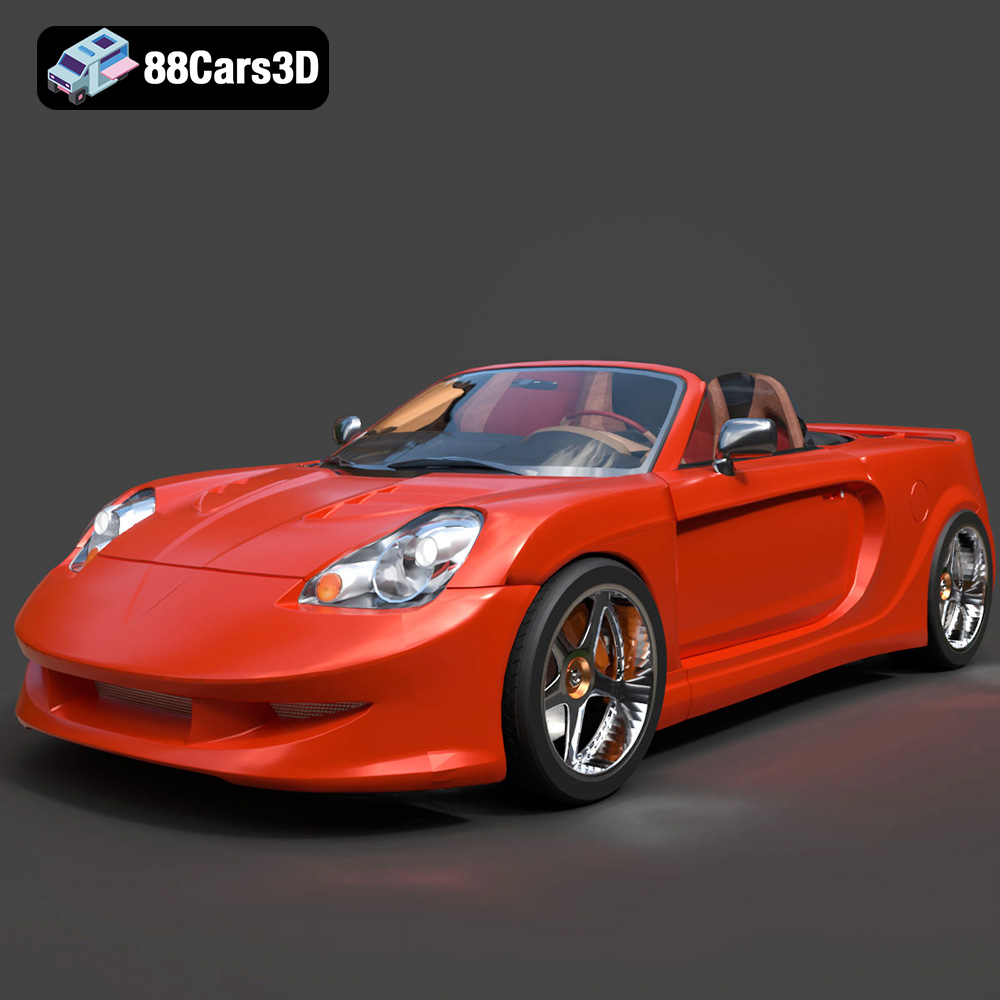
Texture: Yes
Material: Yes
Download the Toyota MRS-007 3D Model featuring clean geometry, realistic detailing, and a fully modeled interior. Includes .blend, .fbx, .obj, .glb, .stl, .ply, .unreal, and .max formats for rendering, simulation, and game development.
Price: $10

Texture: Yes
Material: Yes
Download the Porsche 911 Turbo S 2024 3D Model featuring clean geometry, realistic detailing, and a fully modeled interior. Includes .blend, .fbx, .obj, .glb, .stl, .ply, .unreal, and .max formats for rendering, simulation, and game development.
Price: $20

Texture: Yes
Material: Yes
Download the Pontiac Solstice 2009 3D Model featuring clean geometry, realistic detailing, and a fully modeled interior. Includes .blend, .fbx, .obj, .glb, .stl, .ply, .unreal, and .max formats for rendering, simulation, and game development.
Price: $10

Texture: Yes
Material: Yes
Download the Mini Cooper Countryman 2025 3D Model featuring clean geometry, realistic detailing, and a fully modeled interior. Includes .blend, .fbx, .obj, .glb, .stl, .ply, .unreal, and .max formats for rendering, simulation, and game development.
Price: $29.9
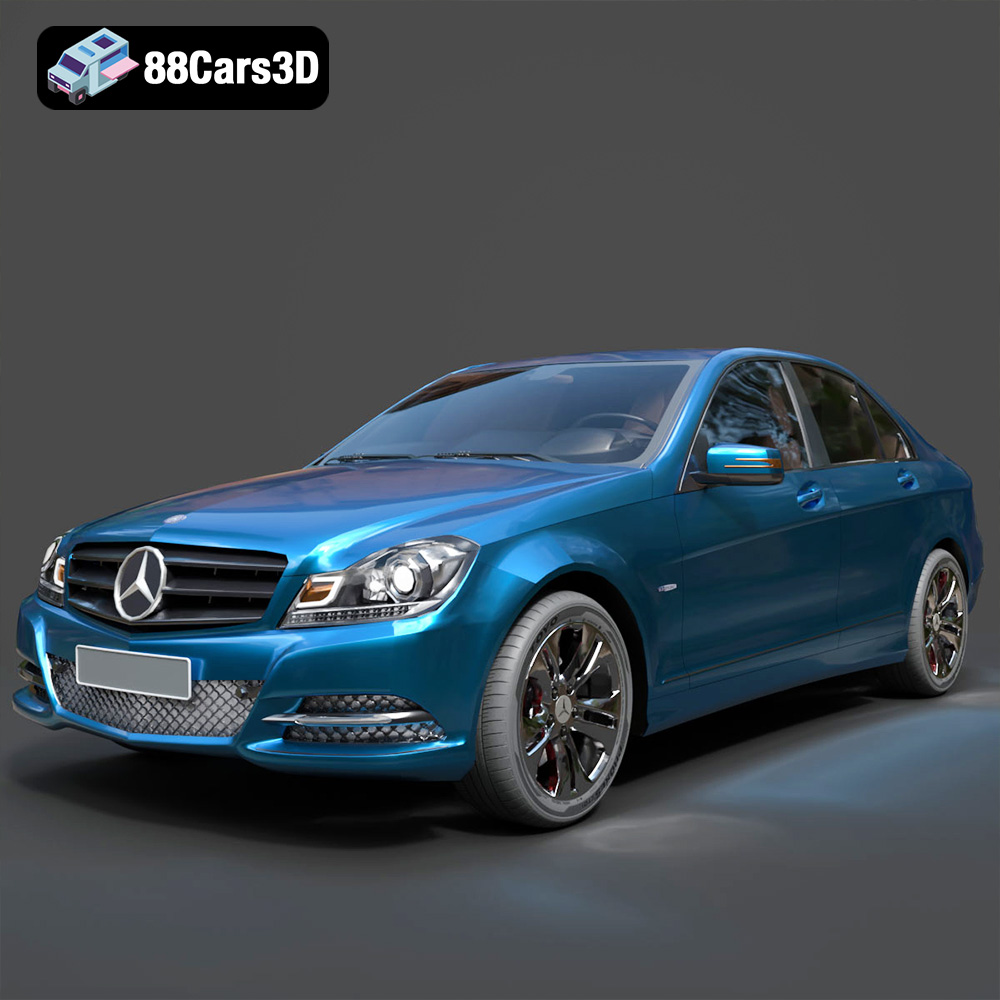
Texture: Yes
Material: Yes
Download the Mercedes C Classe 2012 3D Model featuring clean geometry, realistic detailing, and a fully modeled interior. Includes .blend, .fbx, .obj, .glb, .stl, .ply, .unreal, and .max formats for rendering, simulation, and game development.
Price: $19.9
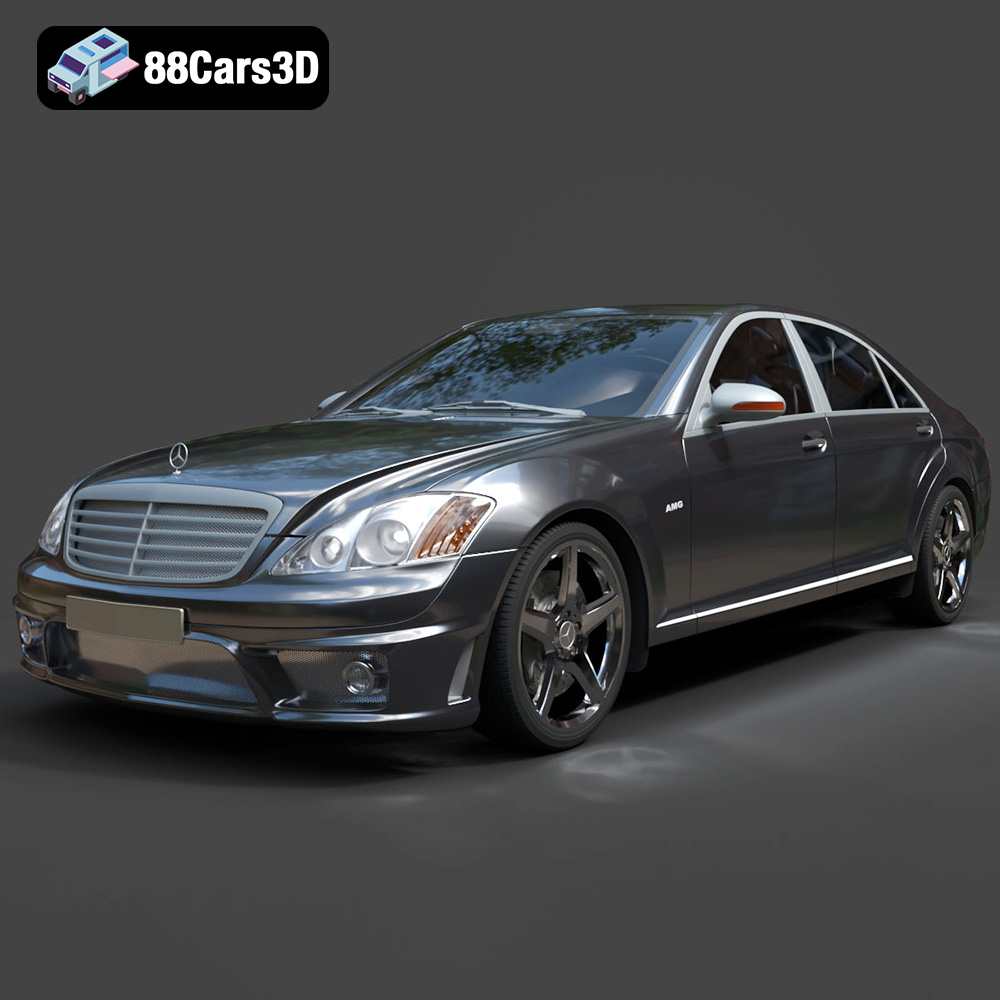
Texture: Yes
Material: Yes
Download the Mercedes-Benz S65 AMG 2018 3D Model featuring clean geometry, realistic detailing, and a fully modeled interior. Includes .blend, .fbx, .obj, .glb, .stl, .ply, .unreal, and .max formats for rendering, simulation, and game development.
Price: $19.9

Texture: Yes
Material: Yes
Download the Mazda 3 Sedan 2004 3D Model featuring clean geometry, realistic detailing, and a fully modeled interior. Includes .blend, .fbx, .obj, .glb, .stl, .ply, .unreal, and .max formats for rendering, simulation, and game development.
Price: $10

Texture: Yes
Material: Yes
Download the Martin Rapide 2011 3D Model featuring clean geometry, realistic detailing, and a fully modeled interior. Includes .blend, .fbx, .obj, .glb, .stl, .ply, .unreal, and .max formats for rendering, simulation, and game development.
Price: $20.9
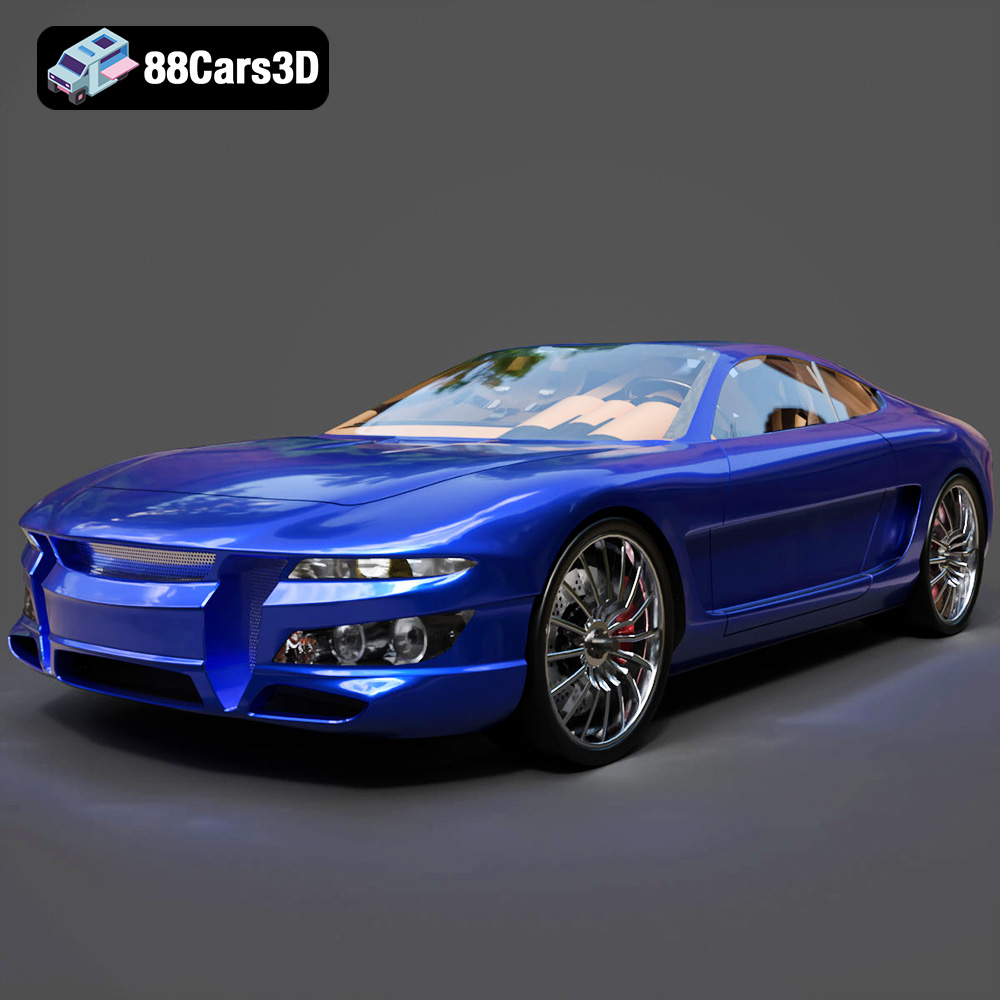
Texture: Yes
Material: Yes
Download the Car Tasergal 005 3D Model featuring clean geometry, realistic detailing, and a fully modeled interior. Includes .blend, .fbx, .obj, .glb, .stl, .ply, .unreal, and .max formats for rendering, simulation, and game development.
Price: $10
Texture: Yes
Material: Yes
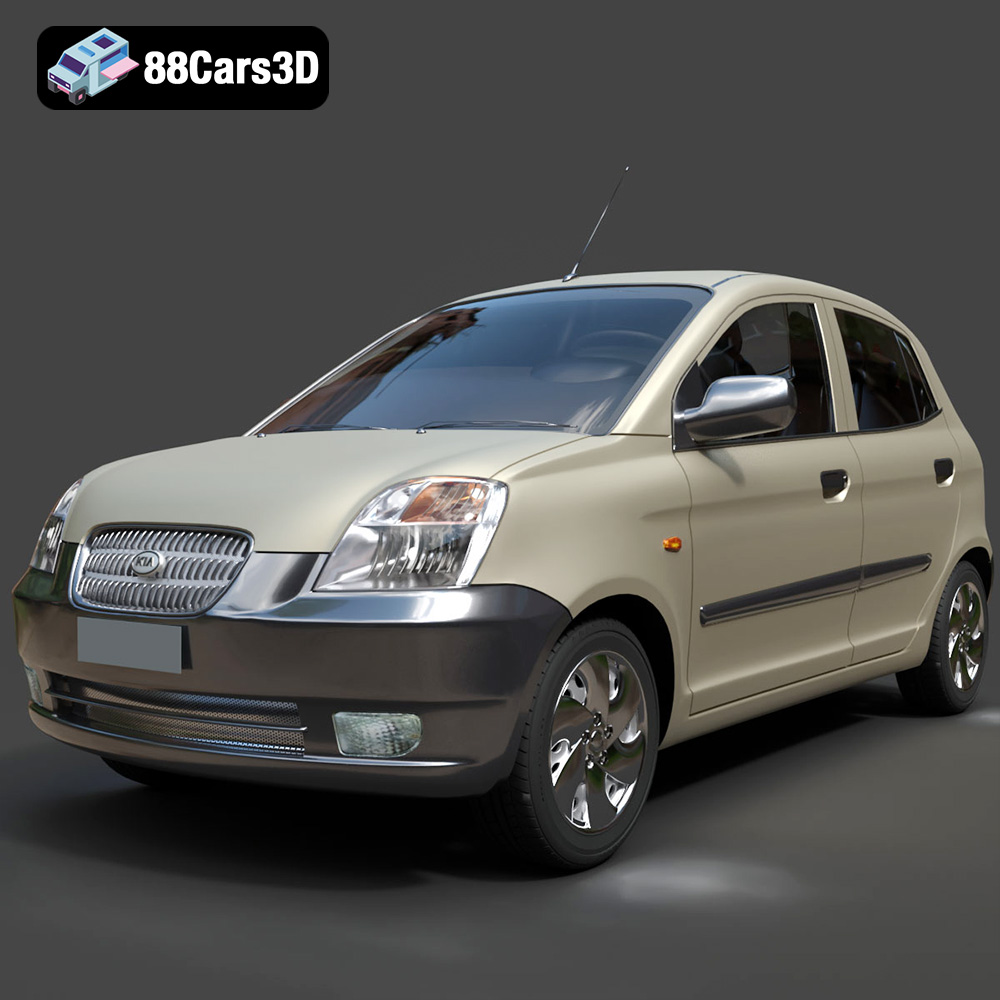
Download the Kia Picanto 2024 3D Model featuring clean geometry, realistic detailing, and a fully modeled interior. Includes .blend, .fbx, .obj, .glb, .stl, .ply, .unreal, and .max formats for rendering, simulation, and game development.
Price: $15.99

