Get 50% OFF All Premium 3D & STL Models!

The pursuit of photorealism in real-time applications has long been a driving force in game development, architectural visualization, and cinematic production. While environments, vehicles, and props have reached astonishing levels of fidelity, creating believable, high-quality digital humans has remained one of the most resource-intensive and technically challenging aspects. Enter MetaHuman Creator, a revolutionary tool from Epic Games that is democratizing the creation of hyper-realistic digital characters, making them accessible to artists and developers of all skill levels.
This isn’t just about making prettier characters; it’s about unlocking new dimensions of storytelling and interactivity. Imagine a virtual automotive showroom where a lifelike digital assistant guides a prospective buyer through the features of a meticulously rendered vehicle. Or an immersive game where NPCs possess the nuanced expressions and presence of real actors. The integration of MetaHuman Creator with Unreal Engine is making these visions a tangible reality. In this comprehensive guide, we’ll delve into the intricacies of generating, optimizing, and integrating MetaHuman characters into your Unreal Engine projects, exploring how these digital humans can elevate scenes featuring high-quality assets, such as the premium 3D car models available on platforms like 88cars3d.com. Get ready to transform your real-time experiences with unparalleled character realism and performance.
MetaHuman Creator isn’t merely a character generator; it’s a paradigm shift in how digital humans are conceived, built, and deployed. Built on a foundation of cutting-edge scanning and photogrammetry data, the cloud-based application empowers users to craft unique, highly realistic characters with remarkable ease and speed. Before MetaHuman, creating a photorealistic character involved a complex pipeline spanning sculpting, retopology, UV mapping, texture painting, hair grooming, rigging, and skinning – a process that could take weeks or even months for a single character and required a highly specialized skillset. MetaHuman Creator condenses this into an intuitive interface, allowing artists to achieve studio-quality results in minutes.
The true power lies in its seamless integration with Unreal Engine, bringing a new standard of human presence to any real-time project. This leap in character fidelity dramatically enhances immersion in virtual productions, interactive training simulations, and, crucially, automotive visualizations where a believable human element can add significant context and emotional connection to a vehicle.
The traditional character pipeline was often a bottleneck, particularly for projects with limited budgets or tight deadlines. Achieving a level of realism comparable to MetaHuman often necessitated outsourcing or dedicating significant internal resources to highly specialized character artists. MetaHuman Creator obliterates these barriers by providing a library of diverse digital humans and an extensive set of tools for modification. Users can blend different facial features, adjust skin tones, add wrinkles, and select from a vast array of hairstyles and outfits, all while maintaining consistent, animation-ready topology and PBR (Physically Based Rendering) materials.
This efficiency doesn’t come at the cost of quality. Each MetaHuman is generated with a full skeletal rig, advanced facial blend shapes, detailed skin and hair grooms, and multiple levels of detail (LODs), ensuring optimal performance across different platforms without sacrificing visual integrity. The underlying assets are optimized for Unreal Engine’s advanced rendering features, including Nanite and Lumen, making them production-ready straight out of the box.
MetaHuman Creator provides an astonishing depth of customization. Users can sculpt a character’s face using intuitive tools, adjusting everything from nose bridge height to eye color and pupil dilation. The system smartly blends scanned data, ensuring that even extreme modifications result in anatomically plausible and visually appealing outcomes. Furthermore, the tool supports an expansive range of demographics, allowing creators to accurately represent different ages, ethnicities, and body types. This diversity is crucial for modern storytelling and for creating inclusive interactive experiences.
Hair is generated using Unreal Engine’s advanced Groom system, offering realistic flow and physics simulation. Clothing options are also extensive, with varying fabric types, colors, and patterns, all designed to interact realistically with the MetaHuman’s body. This level of granular control ensures that every character can be truly unique, fitting perfectly into the narrative or functional requirements of your project, whether they’re a protagonist in a next-gen game or a digital sales representative in a virtual car showroom.
Bringing your MetaHuman to life in Unreal Engine begins in the MetaHuman Creator. This cloud-based application is accessed via your Epic Games account and provides a streamlined workflow from conception to deployment. The process is intuitive, allowing for rapid iteration and creative exploration. Once your digital human is sculpted and styled to your satisfaction, the next crucial step is to get it into your Unreal Engine project efficiently and correctly. This is primarily handled through Quixel Bridge, Epic Games’ content management system for accessing Megascans assets and, importantly, your custom MetaHumans.
The MetaHuman Creator interface is designed for ease of use. You start by selecting from a diverse set of pre-built MetaHumans or by blending multiple identities to form a unique base. From there, the sculpting tools allow for precise adjustments to facial features, ear shape, body proportions, and more. You can refine skin details, add blemishes or freckles, and choose from a range of makeup options. For hair, select from various styles, colors, and lengths, all using Unreal Engine’s advanced Groom system, which provides realistic physics and lighting. Clothing options are extensive, including upper wear, lower wear, and footwear, with material and color customization.
When creating a MetaHuman for a specific project, consider its role. Will it be a background character, a lead NPC, or an interactive host? This will influence the level of detail and specific features you prioritize. For instance, a MetaHuman acting as a virtual assistant alongside high-quality 3D car models from 88cars3d.com would benefit from expressive facial controls and a polished appearance to convey professionalism and engage users effectively. Always aim for a consistent aesthetic that complements your existing project assets.
After designing your MetaHuman, save it within the Creator. It will then appear in your personal collection within Quixel Bridge, which acts as the crucial link between the cloud-based Creator and your local Unreal Engine installation.
To export your MetaHuman:
The download size for a single MetaHuman can be significant (several gigabytes for highest quality), so ensure you have sufficient disk space and a stable internet connection. The advantage is that all the complex PBR materials, skeletal meshes, and Groom assets are pre-configured for optimal use within Unreal Engine, saving countless hours of manual setup.
Once your MetaHuman has been successfully exported from Quixel Bridge, it arrives in your Unreal Engine project as a robust collection of assets. These assets are meticulously structured to leverage Unreal Engine’s advanced rendering capabilities, but a few initial setup steps and optimization considerations are essential to ensure your MetaHuman looks its best and performs efficiently. The MetaHuman plugin is crucial for handling the complex data structures, animation rigs, and shader networks that make these characters so realistic. Proper project configuration will lay the groundwork for a smooth development process, whether you’re building a game, a virtual production scene, or an interactive automotive configurator.
Before you begin placing your MetaHuman in a scene, verify that your Unreal Engine project is correctly configured.
After enabling, restart the Unreal Engine editor for changes to take effect.
These initial settings ensure that Unreal Engine is ready to display your MetaHuman with the visual fidelity it was designed for, preparing it for any scenario, from high-end cinematic sequences to interactive applications where performance is balanced with quality. You can find more detailed information on setting up your project for optimal performance on the official Unreal Engine learning portal: dev.epicgames.com/community/unreal-engine/learning.
While MetaHumans are incredibly detailed, they are also highly optimized for real-time rendering. Understanding and leveraging their built-in optimization features is key to maintaining high frame rates.
By thoughtfully configuring your project and utilizing the built-in optimization features, you can ensure your MetaHumans look stunning and run efficiently, enhancing the overall quality of your real-time projects.
A photorealistic character is only truly impactful when it can move, speak, and express emotion convincingly. MetaHumans are designed from the ground up to be highly animatable, integrating seamlessly with Unreal Engine’s powerful animation toolset. From real-time facial capture to full-body motion, bringing your MetaHuman to life unlocks a new dimension of storytelling and user engagement. This capability is vital for creating immersive experiences, whether it’s a game where players interact with believable NPCs, a virtual production where digital actors perform alongside real ones, or an interactive automotive visualization where a MetaHuman explains vehicle features with natural gestures and expressions.
The advanced rigging of MetaHumans supports a wide array of animation techniques:
This workflow makes high-quality facial animation accessible to virtually anyone.
Beyond pre-scripted animations, Blueprints allow you to make your MetaHuman characters interactive and responsive to player input or environmental events. This is where characters truly come alive in dynamic, real-time applications.
Here are a few examples of how Blueprints can enhance MetaHuman interactivity:
By combining robust animation workflows with the power of Blueprint visual scripting, you can create truly engaging and dynamic MetaHuman characters that enrich any real-time Unreal Engine experience.
Achieving photorealism in real-time is a complex dance between high-fidelity assets and cutting-edge rendering techniques. For MetaHumans and the sophisticated 3D car models often found on 88cars3d.com, leveraging Unreal Engine’s advanced rendering features like Lumen and Nanite is paramount. These technologies work in concert to deliver stunning visual quality that blurs the line between reality and CG. Understanding how to properly light, shade, and optimize these assets is key to producing compelling visuals that engage and impress your audience.
The true magic happens when MetaHumans are integrated into rich, detailed environments, especially those featuring premium 3D assets. For creators leveraging high-quality 3D car models from marketplaces like 88cars3d.com, bringing in a MetaHuman can dramatically elevate the scene’s impact and utility.
By mastering these advanced rendering techniques and thoughtfully integrating MetaHumans with other high-fidelity assets, you can create compelling real-time experiences that push the boundaries of visual fidelity and immersion.
The integration of MetaHuman Creator with Unreal Engine is not just a technological advancement; it’s an enabler for entirely new categories of real-time experiences across diverse industries. From hyper-realistic game characters to digital presenters in virtual events, MetaHumans are redefining what’s possible in digital human creation and interaction. The efficiency and quality they offer mean that developers and artists can now focus more on creative storytelling and interactive design, rather than getting bogged down in the complex and time-consuming process of character asset creation. This transformative impact is especially evident in fields such as virtual production, next-generation gaming, and advanced automotive visualization, where the synergy between realistic characters and high-fidelity assets (like those available on 88cars3d.com) is crucial.
For the automotive industry, MetaHumans represent a significant leap forward in presenting vehicles and engaging prospective buyers.
The combination of photorealistic digital humans and highly detailed vehicle models (such as those meticulously crafted by 88cars3d.com for Unreal Engine) opens up unprecedented possibilities for engaging customers and streamlining development processes in the automotive sector.
Beyond automotive, MetaHumans are making waves across a multitude of real-time applications, continuously pushing the boundaries of interactive experiences.
As Unreal Engine and MetaHuman Creator continue to evolve, we can expect even greater levels of realism, efficiency, and broader adoption across industries, making photorealistic digital humans an integral part of the next generation of real-time interactive experiences.
The integration of MetaHuman Creator with Unreal Engine marks a monumental leap in the realm of real-time digital human creation. We’ve journeyed from the unparalleled efficiency and realism offered by the Creator, through the seamless export process via Quixel Bridge, and into the crucial steps of project setup and performance optimization within Unreal Engine. We’ve explored the dynamic workflows for bringing characters to life through advanced animation techniques like Live Link Face and Control Rig, and empowered them with interactivity using Blueprint scripting. Finally, we’ve delved into the advanced rendering features, such as Lumen and Nanite, that elevate MetaHumans to photorealistic standards, particularly when paired with high-quality automotive models and other assets.
The impact of MetaHumans is profound. They not only save countless hours of development time and reduce the need for highly specialized artistic skills but also raise the bar for immersion and engagement across diverse applications. From revolutionizing automotive visualization with interactive showrooms featuring digital hosts, to populating next-gen games with believable characters, and streamlining virtual production pipelines, MetaHumans are enabling creators to realize visions that were once technically or financially out of reach.
For anyone looking to elevate their real-time projects, especially those incorporating meticulously crafted environments and vehicles, like the premium 3D car models found on 88cars3d.com, integrating MetaHumans is a logical next step. Their blend of cutting-edge fidelity and production-ready optimization makes them an indispensable asset for delivering truly captivating and memorable experiences. Dive into MetaHuman Creator and Unreal Engine today, and unlock the incredible potential of hyper-realistic digital humans for your next project.
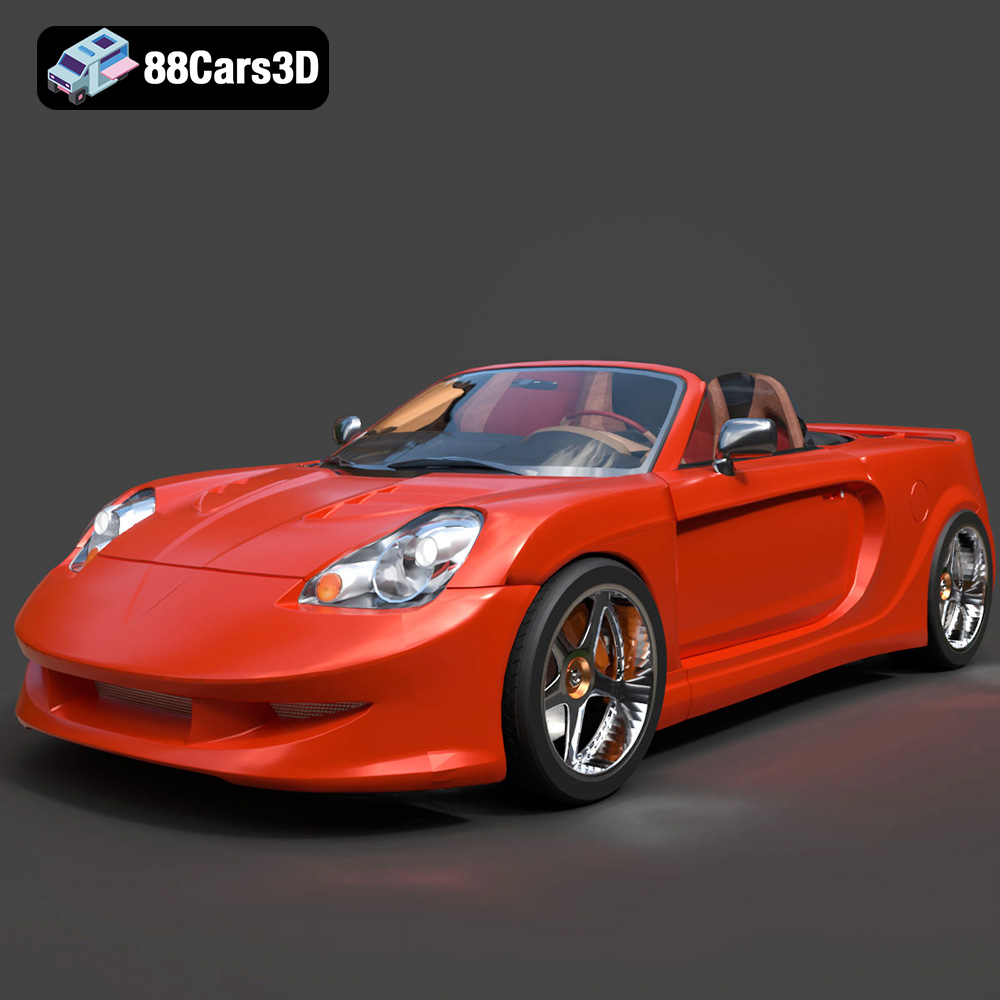
Texture: Yes
Material: Yes
Download the Toyota MRS-007 3D Model featuring clean geometry, realistic detailing, and a fully modeled interior. Includes .blend, .fbx, .obj, .glb, .stl, .ply, .unreal, and .max formats for rendering, simulation, and game development.
Price: $10

Texture: Yes
Material: Yes
Download the Porsche 911 Turbo S 2024 3D Model featuring clean geometry, realistic detailing, and a fully modeled interior. Includes .blend, .fbx, .obj, .glb, .stl, .ply, .unreal, and .max formats for rendering, simulation, and game development.
Price: $20

Texture: Yes
Material: Yes
Download the Pontiac Solstice 2009 3D Model featuring clean geometry, realistic detailing, and a fully modeled interior. Includes .blend, .fbx, .obj, .glb, .stl, .ply, .unreal, and .max formats for rendering, simulation, and game development.
Price: $10

Texture: Yes
Material: Yes
Download the Mini Cooper Countryman 2025 3D Model featuring clean geometry, realistic detailing, and a fully modeled interior. Includes .blend, .fbx, .obj, .glb, .stl, .ply, .unreal, and .max formats for rendering, simulation, and game development.
Price: $29.9
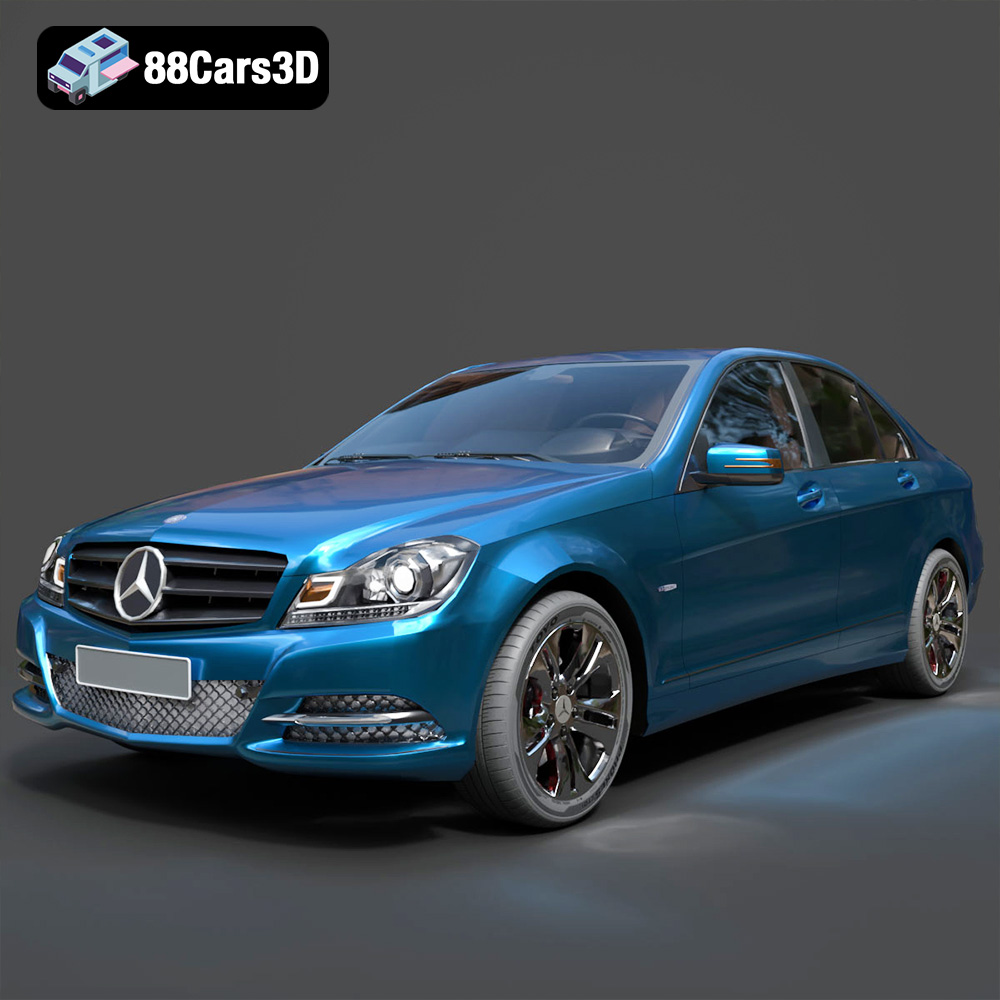
Texture: Yes
Material: Yes
Download the Mercedes C Classe 2012 3D Model featuring clean geometry, realistic detailing, and a fully modeled interior. Includes .blend, .fbx, .obj, .glb, .stl, .ply, .unreal, and .max formats for rendering, simulation, and game development.
Price: $19.9
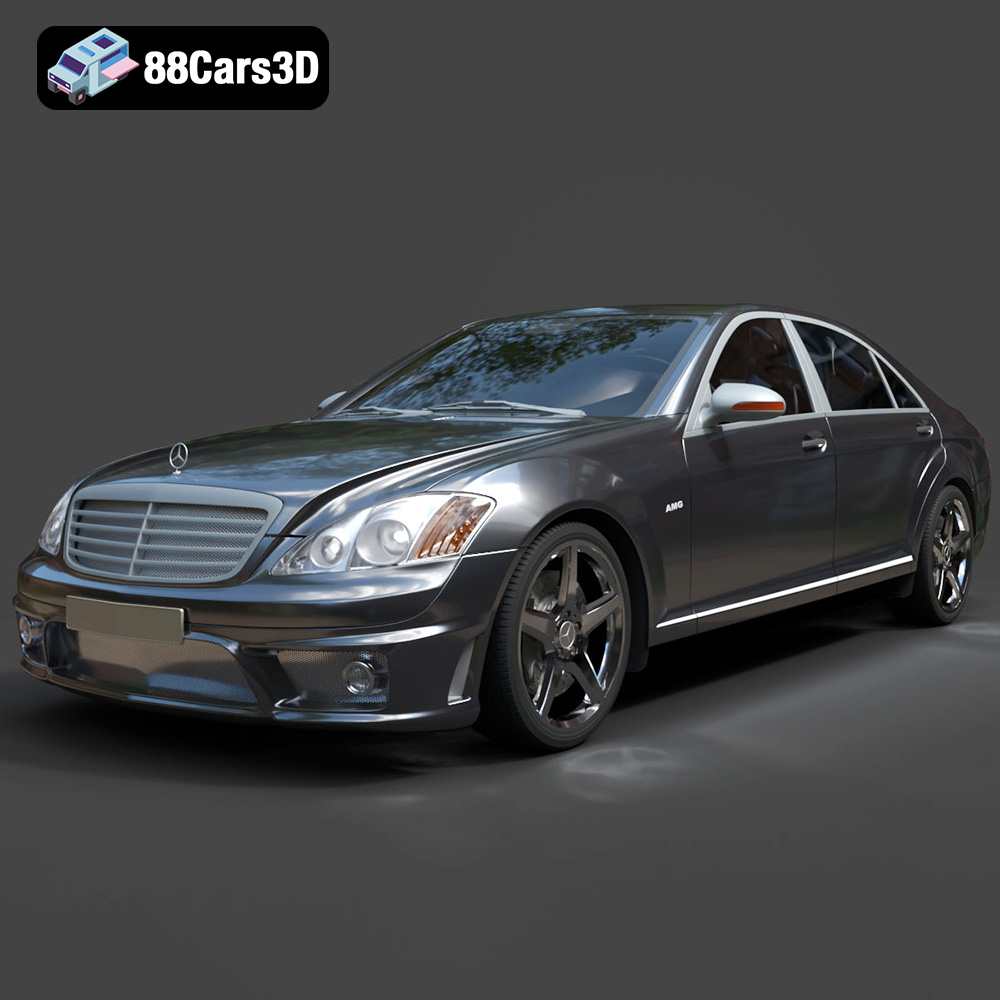
Texture: Yes
Material: Yes
Download the Mercedes-Benz S65 AMG 2018 3D Model featuring clean geometry, realistic detailing, and a fully modeled interior. Includes .blend, .fbx, .obj, .glb, .stl, .ply, .unreal, and .max formats for rendering, simulation, and game development.
Price: $19.9

Texture: Yes
Material: Yes
Download the Mazda 3 Sedan 2004 3D Model featuring clean geometry, realistic detailing, and a fully modeled interior. Includes .blend, .fbx, .obj, .glb, .stl, .ply, .unreal, and .max formats for rendering, simulation, and game development.
Price: $10

Texture: Yes
Material: Yes
Download the Martin Rapide 2011 3D Model featuring clean geometry, realistic detailing, and a fully modeled interior. Includes .blend, .fbx, .obj, .glb, .stl, .ply, .unreal, and .max formats for rendering, simulation, and game development.
Price: $20.9
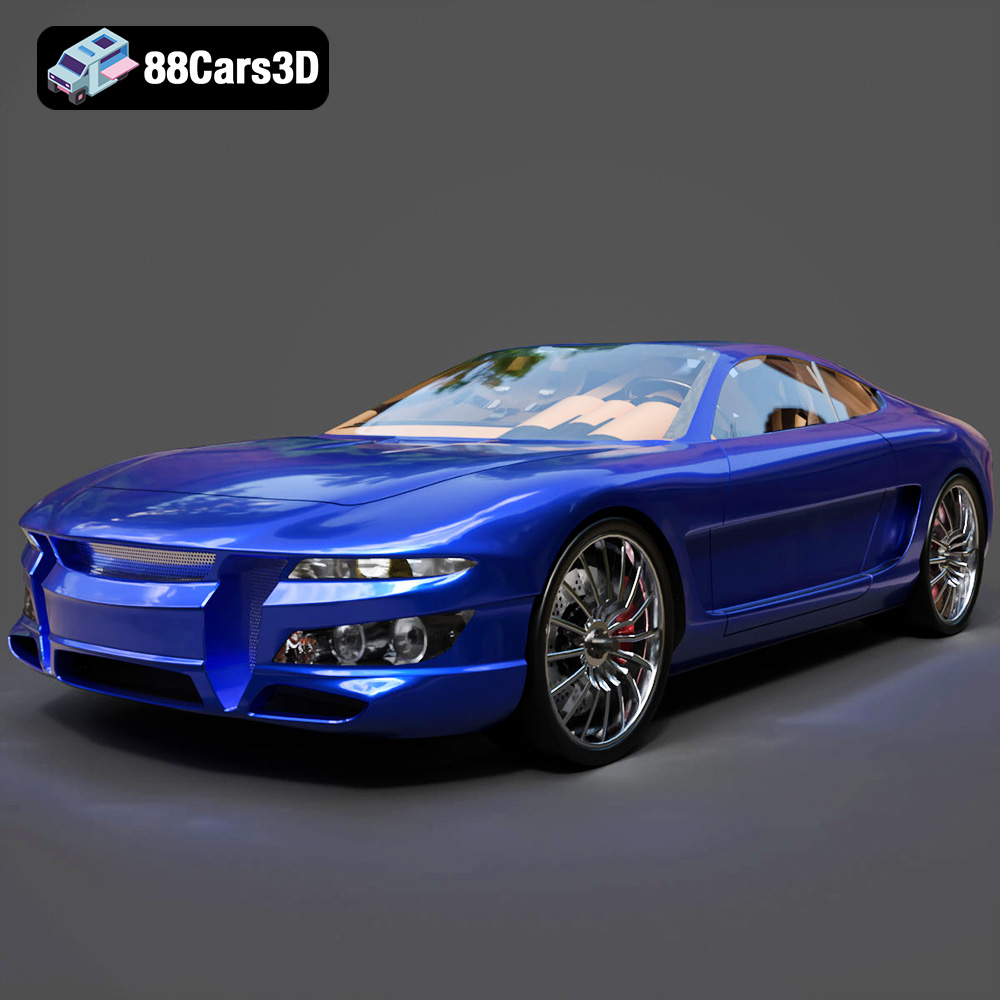
Texture: Yes
Material: Yes
Download the Car Tasergal 005 3D Model featuring clean geometry, realistic detailing, and a fully modeled interior. Includes .blend, .fbx, .obj, .glb, .stl, .ply, .unreal, and .max formats for rendering, simulation, and game development.
Price: $10
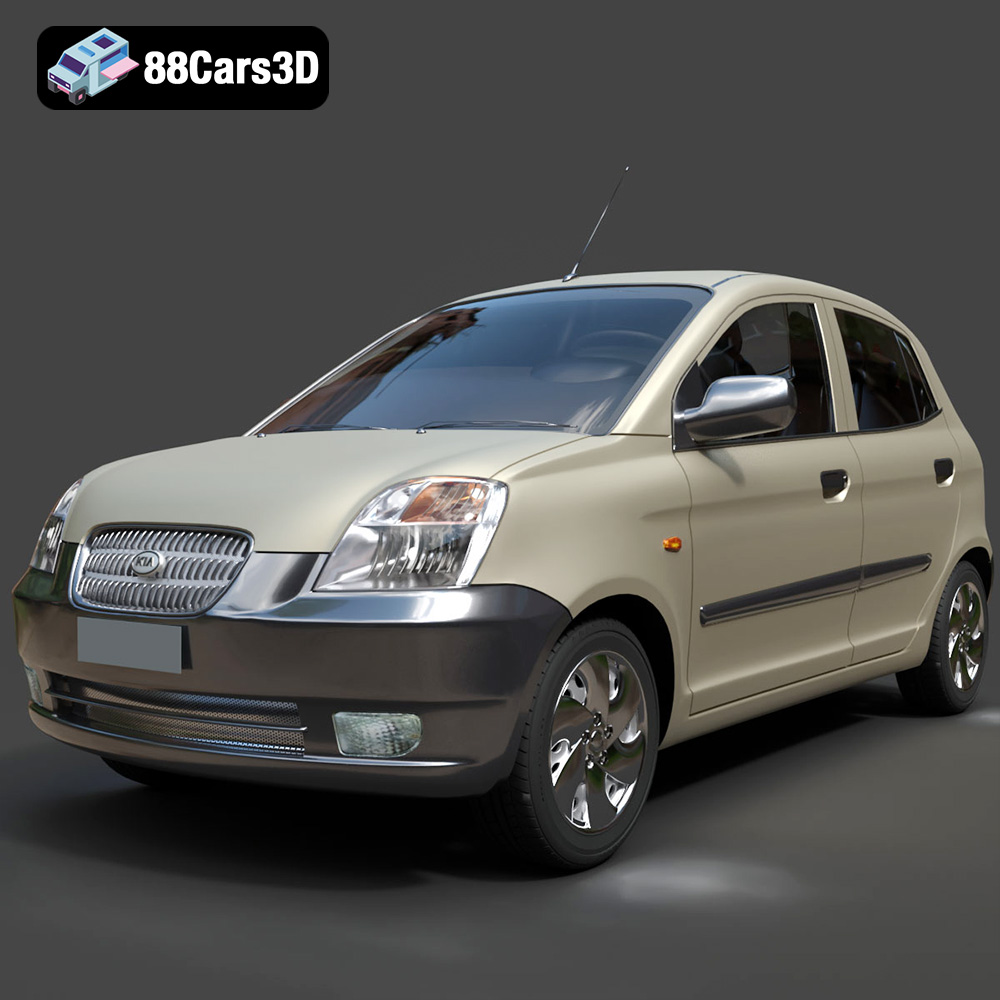
Texture: Yes
Material: Yes
Download the Kia Picanto 2024 3D Model featuring clean geometry, realistic detailing, and a fully modeled interior. Includes .blend, .fbx, .obj, .glb, .stl, .ply, .unreal, and .max formats for rendering, simulation, and game development.
Price: $15.99

