Get 50% OFF All Premium 3D & STL Models!

In the high-stakes world of automotive visualization, game development, and real-time rendering, efficiency and fidelity are paramount. Unreal Engine stands as a titan in this domain, offering unparalleled visual quality and interactive capabilities. However, harnessing its full power, especially when dealing with complex assets like high-fidelity 3D car models, requires more than just technical skill—it demands meticulous asset management and project organization. Without a structured approach, even the most ambitious projects can quickly descend into chaos, leading to performance bottlenecks, extended development cycles, and frustrating debugging sessions.
This comprehensive guide is designed to equip Unreal Engine developers, 3D artists, and visualization professionals with the strategies and best practices needed to maintain pristine projects. We’ll delve into establishing robust folder structures, optimizing the ingestion of complex automotive models, streamlining material workflows, organizing interactive elements with Blueprints, and ensuring optimal performance through diligent auditing. By the end of this article, you’ll have a clear roadmap to create scalable, maintainable, and high-performance automotive projects within Unreal Engine, making your development journey smoother and your final output more impressive.
The cornerstone of any successful Unreal Engine project, particularly one involving numerous detailed 3D car models, is a well-defined and consistently applied organizational system. Just as a physical car requires an organized assembly line, your digital assets need a logical home. This prevents clutter, facilitates collaboration, and dramatically reduces the time spent searching for specific files. A well-structured project is inherently more scalable and easier to troubleshoot.
Start by creating a top-level folder structure that mirrors the logical components of your project. The default `Content` folder is your canvas, but how you partition it makes all the difference. For automotive visualization, consider categories like `Blueprints`, `Materials`, `Meshes`, `Textures`, `Maps`, `Cinematics`, `VFX`, and `Audio`. Within the `Meshes` folder, you might have `Cars`, `Environments`, and `Props`. For the `Cars` folder, it’s often beneficial to create subfolders for each car manufacturer, then individual car models. For instance, `Content/Cars/Audi/R8`, `Content/Cars/BMW/M5`. This modular approach ensures that all assets related to a specific vehicle are contained within a single, easily locatable directory.
Consistency extends to your naming conventions. This is not merely a preference but a crucial practice for readability and searchability. Adopting a clear prefix system for your assets is a widely accepted best practice. For example, `SM_` for Static Meshes (e.g., `SM_R8_Body`), `T_` for Textures (`T_R8_Body_BaseColor`), `M_` for Master Materials (`M_CarPaint`), `MI_` for Material Instances (`MI_R8_RedPaint`), `BP_` for Blueprints (`BP_R8_Configurator`), and `LS_` for Level Sequences (`LS_R8_Showcase`). This system allows you to quickly identify an asset’s type at a glance and aids in filtering within the Content Browser. When sourcing high-quality automotive assets from platforms like 88cars3d.com, they often come with their own well-defined naming conventions, which you should strive to integrate or adapt to your project’s existing schema for seamless workflow integration.
For large-scale projects, especially those involving multiple car models and complex environments, a “modules” or “features” based folder structure can be incredibly effective. Instead of a monolithic `Materials` folder, you might have `Content/Features/CarConfigurator/Materials` or `Content/Vehicles/CarName/Materials`. This keeps related assets grouped by their functional purpose or the specific vehicle they belong to. It encourages self-contained modules, simplifying migration and reuse. Consider a `Vehicles` folder at the root of `Content`, with each subfolder representing a specific vehicle (e.g., `Vehicles/Porsche_911_GT3`). Inside each vehicle’s folder, you’d then replicate the standard asset type folders: `Blueprints`, `Materials`, `Meshes`, `Textures`, etc. This creates a highly organized, encapsulated structure for each vehicle asset pack.
It’s also beneficial to have a `_Shared` or `_Global` folder for assets that are used across multiple vehicles or the entire project, such as generic PBR texture sets (e.g., dust, scratches), common utility materials, or project-wide post-process profiles. This avoids duplication and ensures that global changes can be made from a single source. Regularly review and refactor your folder structure as the project evolves, ensuring it continues to serve your team’s needs. Unreal Engine’s Content Browser allows for easy drag-and-drop reorganization, but making these decisions early on saves immense effort.
The importance of consistent naming cannot be overstated. Beyond the prefixes, ensure descriptive names that clearly indicate an asset’s purpose. For example, instead of `SM_Wheel`, use `SM_R8_Wheel_FrontLeft`. If an asset has multiple versions, append version numbers (e.g., `SM_R8_Body_v01`, `SM_R8_Body_v02`). This is particularly useful during iterative development. When renaming assets, always perform the rename within the Unreal Editor’s Content Browser. This ensures that all references to the asset are automatically updated, preventing broken links and crashes. Directly renaming files in the operating system will break these references.
For teams, establishing a clear naming convention document and enforcing it through regular code reviews or automated checks can save countless hours. While Unreal Engine doesn’t have built-in strict naming convention enforcement, plugins and external tools can help. More importantly, consistent use of naming also aids in asset validation. When you export assets, ensuring their names match your project’s convention before importing them into Unreal Engine will streamline the integration process. This discipline ensures that your Content Browser remains a powerful tool, not an overwhelming repository of ambiguously named files.
Bringing high-fidelity 3D car models into Unreal Engine is a critical step that requires careful attention to detail for both visual quality and real-time performance. Automotive models are inherently complex, often featuring intricate geometries, multiple material zones, and precise details that can quickly impact frame rates if not managed correctly. When you acquire models from a reputable source like 88cars3d.com, you often benefit from pre-optimized assets designed with real-time rendering in mind, but understanding the import process and subsequent optimization steps is still vital.
The primary format for importing 3D models into Unreal Engine is FBX. Before importing, always ensure your FBX files are clean: remove unnecessary empty nodes, freeze transformations, and verify scale. Unreal Engine typically works best with a 1 unit = 1 centimeter scale. If your model was built in a different unit, adjust the import scale factor. During import, the FBX Import Options window provides crucial settings. Pay close attention to:
Upon import, always check the pivot point of your model and individual components. For interactive car parts like doors or wheels, correct pivot points are crucial for realistic rotation. You can adjust pivots directly in the Static Mesh Editor.
Unreal Engine 5’s Nanite virtualized geometry system has revolutionized how high-polygon models are handled in real-time. For highly detailed 3D car models, Nanite is a game-changer. It allows artists to import cinematic-quality meshes with millions of polygons directly into the engine without significant performance penalties. Nanite automatically handles polygon reduction and streaming at render time, ensuring that only the necessary detail is drawn based on distance and screen space. To enable Nanite on an imported static mesh, simply open the Static Mesh Editor, navigate to the ‘Details’ panel, and check the ‘Enable Nanite’ box. For models with complex geometry, like those found on 88cars3d.com, Nanite transforms workflow, letting you focus on visual fidelity rather than aggressive poly-reduction.
However, Nanite isn’t a silver bullet for all scenarios. Skeletal meshes, meshes with custom UVs that require very specific control (e.g., cloth simulation), and opaque masks currently don’t fully support Nanite. For these cases, and for achieving optimal performance on lower-end platforms (e.g., AR/VR), Level of Detail (LOD) management remains critical. LODs are simplified versions of your mesh that are swapped in at different distances from the camera. Unreal Engine can automatically generate LODs (often found in the Static Mesh Editor under ‘LOD Settings’), but for complex automotive models, manually created, purpose-built LODs will always yield better results. Aim for significant polygon reductions (e.g., LOD1 at 50% of base mesh, LOD2 at 25%, LOD3 at 10%) while maintaining key silhouettes. For AR/VR applications, consider a much more aggressive LOD0 or even a dedicated ‘AR_LOD’ with significantly fewer polygons (e.g., 50k-100k triangles for an entire car) to meet strict performance budgets.
Before and after importing, a quick cleanup routine is advisable. If your FBX contains multiple separate meshes for a single logical component (e.g., several small pieces forming a headlight housing), consider combining them in your 3D software or in Unreal Engine using the ‘Merge Actors’ tool if they won’t require individual interaction. This reduces draw calls and simplifies asset management. Always verify the scale of your imported models. If a car model appears too small or too large, adjust the `Import Uniform Scale` factor in the FBX import options. If you’ve already imported it, you can scale the Static Mesh asset directly in its editor, but be aware this doesn’t change the scale of existing instances in your levels; you’d need to re-drag them. A better approach is to fix the source FBX or re-import with the correct scale. Furthermore, check the origin/pivot point of the imported car. For full vehicles, the pivot should typically be at the center of the base, resting on the ground. For components like doors or wheels, ensure their pivots are at their rotation points. Proper scaling and pivot setup are fundamental for accurate physics, animations, and scene composition.
Achieving photorealistic results with 3D car models in Unreal Engine heavily relies on a robust Physically Based Rendering (PBR) material workflow. PBR materials accurately simulate how light interacts with surfaces in the real world, leading to more believable and consistent visuals under various lighting conditions. For automotive visualization, this means capturing the nuances of car paint, metals, glass, rubber, and leather with exceptional fidelity.
A typical PBR material in Unreal Engine’s Material Editor utilizes several key texture maps:
Instead of creating a new unique material for every part, a powerful strategy is to create highly customizable ‘Master Materials’ and then generate ‘Material Instances’ from them. A Master Material contains the core logic (e.g., car paint shader with clear coat, metallic flake, and dirt layers). Material Instances inherit this logic but expose parameters (color, roughness values, texture inputs) that artists can easily adjust without recompiling the shader, enabling rapid iteration and customization. For example, a single `M_CarPaint` master material could drive hundreds of `MI_RedPaint`, `MI_BluePaint`, and `MI_MatteBlack` instances, all unique in appearance but sharing core performance characteristics. This modularity is particularly useful for building interactive car configurators, allowing users to switch colors and finishes in real-time.
Automotive materials are notoriously complex. Car paint, for instance, often requires a multi-layered approach: a base color, a metallic flake layer, a clear coat layer, and potentially dirt or wear layers. In Unreal Engine, this can be achieved using material functions and blend nodes within a Master Material. A clear coat can be simulated using a custom lighting model (like Clear Coat Shading Model in the material properties) or by layering materials with masked opacity. Metallic flakes require a procedural texture or a carefully crafted tileable texture, often combined with Fresnel effects to simulate accurate reflection changes at grazing angles. For realism, consider using high-resolution textures (4K or 8K) for hero car assets, especially for parts that will be viewed up close. Remember to reference the official Unreal Engine documentation at https://dev.epicgames.com/community/unreal-engine/learning for detailed guides on PBR workflows and advanced material setups.
Another crucial aspect is managing texture inputs. Instead of having separate texture assets for every single component (e.g., `T_Door_BaseColor`, `T_Hood_BaseColor`), consider texture atlases where multiple smaller textures are packed into a single larger one. This reduces draw calls and improves texture streaming performance. Use texture compression settings wisely; for normal maps, ensure they are set to ‘Normalmap’ compression. For color maps, ‘Default (DXT1/5)’ is usually fine, but consider ‘VectorDisplacementmap’ or ‘HDR’ for specific needs. Packaging texture maps (e.g., Roughness, Metallic, Ambient Occlusion) into different channels of a single RGB texture (e.g., R=AO, G=Roughness, B=Metallic) is a common optimization technique known as ‘channel packing’, further reducing texture memory footprint and lookup times.
Effective texture management is crucial for performance, especially with the high resolutions required for automotive visualization. Texture atlasing involves combining multiple smaller textures into a single larger texture sheet. For example, all the interior fabric patterns, button icons, and small decals for a car’s dashboard could be packed into one 4K texture atlas. This reduces the number of texture samples and draw calls, leading to improved rendering performance. When creating texture atlases, ensure sufficient padding between individual textures to prevent bleeding artifacts due to texture mip-mapping.
Furthermore, pay close attention to texture resolutions. While 4K or 8K textures might be necessary for hero assets like the car body, smaller, less prominent details or parts viewed from a distance can often use 2K or even 1K textures without noticeable quality loss. Unreal Engine’s texture streaming system helps manage memory by loading only the necessary mip levels, but large unoptimized textures can still consume significant resources. Ensure your UV maps are laid out efficiently, maximizing texture space usage without excessive stretching or distortion. Use multiple UV channels when necessary: UV0 for primary texture mapping, UV1 for lightmaps (if applicable), and potentially UV2 for custom effects or decals.
Unreal Engine’s Blueprint visual scripting system is a powerful tool for adding interactivity, logic, and dynamic behaviors to your automotive projects without writing a single line of C++ code. For everything from simple door animations to complex car configurators, Blueprints provide a flexible and intuitive way to bring your 3D car models to life. Effective organization of your Blueprints and related data is key to building scalable, maintainable, and robust interactive experiences.
When developing complex features like an interactive car configurator, resist the urge to cram all logic into a single massive Blueprint. Instead, adopt a modular design approach. For example, a `BP_CarConfigurator` could be the main orchestrator, but individual interactive elements of the car (doors, lights, color options) should be handled by their own dedicated Blueprints or Blueprint components.
This modularity makes your Blueprints easier to understand, debug, and extend. If you need to change how a door opens, you only modify the `BP_Door_Component` once, and all doors using it will update automatically.
Consider a detailed car model with opening doors, working headlights, an adjustable interior, and a customizable paint job. Instead of a monolithic `BP_Car` managing everything, break it down:
These components communicate using Blueprint Interfaces, allowing the main car Blueprint or a UI Blueprint to call functions like `OpenDoor()`, `TurnOnHeadlights()`, or `SetCarPaintColor()`. This approach not only keeps individual Blueprints clean but also promotes asset reuse across multiple car models in your project. For advanced vehicle dynamics, consider using Unreal Engine’s Chaos Vehicles plugin. This involves setting up a `ChaosVehicleMovementComponent` and configuring suspension, tires, and engine parameters, often within a dedicated `BP_VehiclePawn` that inherits from a `VehiclePawn` class.
When creating interactive automotive configurators, you’ll likely have numerous options for colors, wheels, interior trims, and accessories. Storing these options directly within Blueprints can lead to messy, hard-to-update logic. This is where Data Assets shine. Data Assets are simple Unreal Engine assets that hold structured data. You can define a `UDataAsset` C++ class or create a ‘Data Table’ (CSV/JSON import) in Blueprints, and then create instances of that data asset to store your configurator options.
For example, you could create a `DA_CarPaintOption` Data Asset with properties for `PaintName`, `BaseColor`, `RoughnessValue`, `MetallicValue`, and a reference to a `MaterialInstance`. Then, create multiple instances of this Data Asset: `DA_RedPaint`, `DA_BluePaint`, `DA_MetallicBlack`. Your car configurator Blueprint simply needs to reference these Data Assets and apply their properties to the car’s material instances, rather than having hardcoded color values. This makes adding new colors or options as simple as creating a new Data Asset instance, without touching any Blueprint logic. This strategy is incredibly powerful for scalability, especially when managing a large library of car models and their customization options from a marketplace like 88cars3d.com, ensuring easy updates and expansions.
Achieving stunning automotive visualization in Unreal Engine goes beyond meticulously crafted 3D models and materials; it critically depends on expert lighting, efficient scene organization, and a well-planned cinematic workflow. These elements work in concert to define the mood, emphasize design details, and tell compelling visual stories about your vehicles.
Unreal Engine offers sophisticated real-time global illumination and reflection systems that are perfect for showcasing vehicles. Lumen, Unreal Engine 5’s default global illumination and reflection solution, provides dynamic, real-time indirect lighting without the need for lightmap baking. This is ideal for automotive showrooms or configurators where lighting conditions might change interactively or cars might be moved around. Properly setting up Lumen involves configuring the Post Process Volume in your level: ensuring Lumen GI and Reflections are enabled, and adjusting settings like Final Gather Quality and Samples for optimal balance between visual fidelity and performance. For precise reflections, especially on highly reflective car surfaces, strategically placed Reflection Capture Actors (Sphere or Box) are still valuable, even with Lumen, as they can provide localized, higher-fidelity reflections for specific areas. Traditional static lighting (Lightmass) can still be used for static elements of your environment if you need extremely predictable and optimized baked lighting, but Lumen largely supersedes it for dynamic scenarios.
Effective level management is crucial for complex scenes. Large environments or interactive configurators often benefit from modular level design using sub-levels. A main level might house the overall environment, while separate sub-levels contain individual car models, showroom props, or specific lighting setups. This allows multiple artists to work on different parts of a scene simultaneously without conflicts and improves loading times. Unreal Engine’s World Partition system further enhances this for extremely large open worlds, automatically streaming level content based on camera proximity. For automotive applications, Data Layers can be incredibly powerful. You can assign different car models, lighting setups, or environment variations to different Data Layers. Then, in your configurator Blueprint, you can simply toggle the visibility of these layers to switch between different vehicles or environments, providing a highly optimized way to manage multiple interactive elements within a single level.
When working with Lumen, ensure your environment meshes (walls, floor, ceiling of a showroom) have high-quality PBR materials and sufficient detail to contribute to global illumination effectively. Lumen relies on mesh distance fields or software ray tracing for its calculations. For exterior automotive scenes, consider using a high-dynamic range (HDR) sky sphere or HDRI backdrop to provide realistic ambient lighting and reflections. The HDRI acts as a powerful source of indirect light and realistic reflections, often integrated through a Sky Light actor and a dedicated Sky Sphere mesh that uses an Unlit material with the HDRI texture. For targeted lighting, use directional lights (sun), spot lights, and point lights to highlight specific features of the car, mimicking professional studio photography setups. Organizing your lights into separate folders within the Outliner (e.g., ‘Main Lights’, ‘Fill Lights’, ‘Accent Lights’) keeps your scene manageable.
Reflection Captures, even with Lumen, serve to provide precise, local reflections. For a highly polished car body, placing a Sphere Reflection Capture Actor in the immediate vicinity of the vehicle will capture the direct environment and reflect it accurately on the car’s surface. Multiple captures might be necessary for larger scenes or varying reflection requirements. Always ensure ‘Affects Global Illumination’ is checked on your primary light sources to correctly influence Lumen’s calculations, providing realistic bounce light and color spill onto surrounding surfaces.
For modular scene construction, levels and sub-levels are your primary tools. Imagine a virtual showroom: your ‘Main_Showroom_Level’ could contain the permanent structures (walls, floor). Sub-levels might include ‘Car_A_Level’, ‘Car_B_Level’, ‘Showroom_Props_Level’, and ‘Lighting_Setup_Level’. This allows you to load and unload these components independently. Data Layers, however, offer more dynamic control within a single level. You could have a `DL_RedCar`, `DL_BlueCar`, `DL_InteriorOptionA`, `DL_InteriorOptionB`. Then, through Blueprints, you can activate or deactivate these layers instantly, swapping out entire car models or interior configurations. This is far more efficient than spawning and destroying actors, especially for complex assemblies. For collaborative projects, utilizing World Partition and Data Layers together allows multiple artists to work on different regions or functional layers of the same level simultaneously, streamlining development.
When it comes to presenting your 3D car models in a visually engaging way, Unreal Engine’s Sequencer is an indispensable tool. Sequencer is a multi-track editor for creating cinematic sequences, animations, and interactive events. For automotive visualization, it’s perfect for crafting marketing videos, virtual production shots, or dynamic in-game cutscenes. Organize your cinematics into individual Level Sequences, each with a clear purpose (e.g., `LS_R8_ExteriorFlyby`, `LS_R8_InteriorDetails`). Within each sequence, meticulously arrange your camera tracks, car animations (door opens, wheel spins), lighting changes, material parameter changes, and audio cues. Utilize the ‘Take Recorder’ to capture real-time camera movements or actor animations for a more organic feel. By keeping each cinematic segment encapsulated within its own Level Sequence, you ensure a clean, manageable project structure that’s easy to edit and render. Refer to the Unreal Engine learning library (https://dev.epicgames.com/community/unreal-engine/learning) for advanced Sequencer workflows.
Even with the most organized project, performance can quickly become a bottleneck if assets and engine features are not optimized for real-time rendering. This is especially true for highly detailed automotive models in complex environments. Continuous auditing and optimization are not one-time tasks but ongoing processes throughout the development cycle. The goal is to achieve the highest visual fidelity possible while maintaining a smooth, consistent frame rate across your target platforms (PC, AR/VR, console).
Start your optimization journey with Unreal Engine’s built-in profiling tools. The console commands `stat unit`, `stat rhi`, and `stat gpu` are invaluable for identifying whether your project is CPU-bound (processing game logic, physics, animation), RHI-bound (Render Hardware Interface, often indicates too many draw calls), or GPU-bound (rendering complex shaders, high polygon counts, excessive post-processing).
The Shader Complexity view mode (accessed via ‘Show > Visualize > Shader Complexity’) is another crucial tool for material optimization. It visualizes the cost of your materials in terms of shader instructions. Green indicates efficient shaders, while red and white indicate very expensive ones. Always aim to keep your material complexity as low as possible without sacrificing visual quality, especially for transparent or opaque-masked materials.
For AR/VR applications, optimization is even more critical due to the extremely high frame rate requirements (e.g., 90 FPS per eye). Aggressive LODs, heavily optimized materials (often simpler shading models), baked lighting where possible, and careful management of draw calls are paramount. Reducing overdraw (rendering pixels that will be covered by other pixels) is also essential; this often means optimizing mesh geometry and avoiding excessive transparent layers.
Beyond the basic `stat` commands, Unreal Engine offers more advanced profiling tools. The built-in Unreal Insights profiler provides a deep dive into CPU and GPU performance over time, visualizing thread activity, rendering passes, and game logic execution. For memory analysis, the `memreport` console command generates a detailed breakdown of memory usage, helping you track down large textures, unoptimized meshes, or redundant assets consuming excessive RAM. The ‘Session Frontend’ tool is also extremely useful for connecting to running builds and analyzing performance metrics, console output, and even capturing performance traces.
When profiling, always test on your target hardware. Performance on a high-end development machine will differ significantly from a mid-range PC or a standalone VR headset. Focus on optimizing the largest bottlenecks identified by your profiling tools. Small, incremental optimizations across many areas often yield better results than spending excessive time on a single, minor issue.
Regularly auditing your project’s assets prevents bloat and ensures optimal performance. The ‘Asset Audit’ window in Unreal Engine (accessible via `Window > Developer Tools > Asset Audit`) provides an overview of your assets, their memory footprint, and dependencies. Use it to identify:
When sourcing models, such as the optimized 3D car models available on 88cars3d.com, they often come with clean topology and efficient UVs, which significantly eases the auditing process. However, integrating them into your specific project may still require adjustments, like generating custom LODs or optimizing materials to fit your project’s performance budget. Establish a routine for checking your project’s health:
For AR/VR, specifically validate texture sizes (prefer powers of 2), material instruction counts (aim for lowest possible), and draw calls. Remember, a well-managed and regularly audited project not only performs better but also significantly improves team collaboration and long-term maintainability.
Creating compelling automotive visualization and interactive experiences in Unreal Engine is a demanding yet highly rewarding endeavor. The complexity of high-fidelity 3D car models, coupled with the engine’s vast capabilities, necessitates a disciplined approach to asset management and project organization. By systematically implementing the strategies outlined in this guide—from establishing clear folder hierarchies and naming conventions to mastering PBR materials, leveraging Blueprints, organizing levels, and diligently optimizing performance—you lay the groundwork for a successful and scalable project.
A well-organized Unreal Engine project is not just about aesthetics; it’s about efficiency, collaboration, and scalability. It streamlines workflows, reduces debugging time, and ultimately allows you to focus more on creative innovation and less on technical headaches. Whether you’re building a photorealistic virtual showroom, an interactive car configurator, or a stunning cinematic sequence, a structured approach is your most powerful tool. Remember to source high-quality, pre-optimized assets from reputable platforms like 88cars3d.com to give your project a head start, then apply these organizational and optimization principles to unlock their full potential. Embrace these best practices, and watch your Unreal Engine projects accelerate towards success.
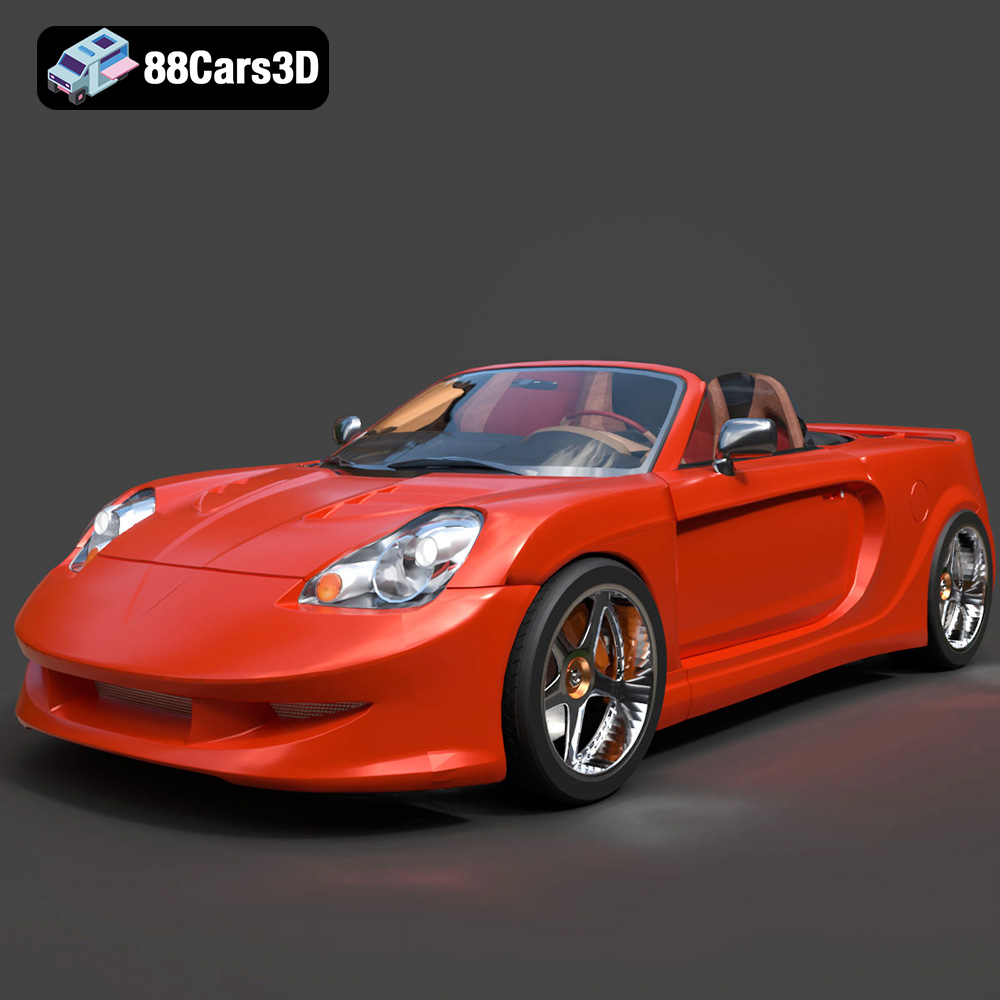
Texture: Yes
Material: Yes
Download the Toyota MRS-007 3D Model featuring clean geometry, realistic detailing, and a fully modeled interior. Includes .blend, .fbx, .obj, .glb, .stl, .ply, .unreal, and .max formats for rendering, simulation, and game development.
Price: $10

Texture: Yes
Material: Yes
Download the Porsche 911 Turbo S 2024 3D Model featuring clean geometry, realistic detailing, and a fully modeled interior. Includes .blend, .fbx, .obj, .glb, .stl, .ply, .unreal, and .max formats for rendering, simulation, and game development.
Price: $20

Texture: Yes
Material: Yes
Download the Pontiac Solstice 2009 3D Model featuring clean geometry, realistic detailing, and a fully modeled interior. Includes .blend, .fbx, .obj, .glb, .stl, .ply, .unreal, and .max formats for rendering, simulation, and game development.
Price: $10

Texture: Yes
Material: Yes
Download the Mini Cooper Countryman 2025 3D Model featuring clean geometry, realistic detailing, and a fully modeled interior. Includes .blend, .fbx, .obj, .glb, .stl, .ply, .unreal, and .max formats for rendering, simulation, and game development.
Price: $29.9
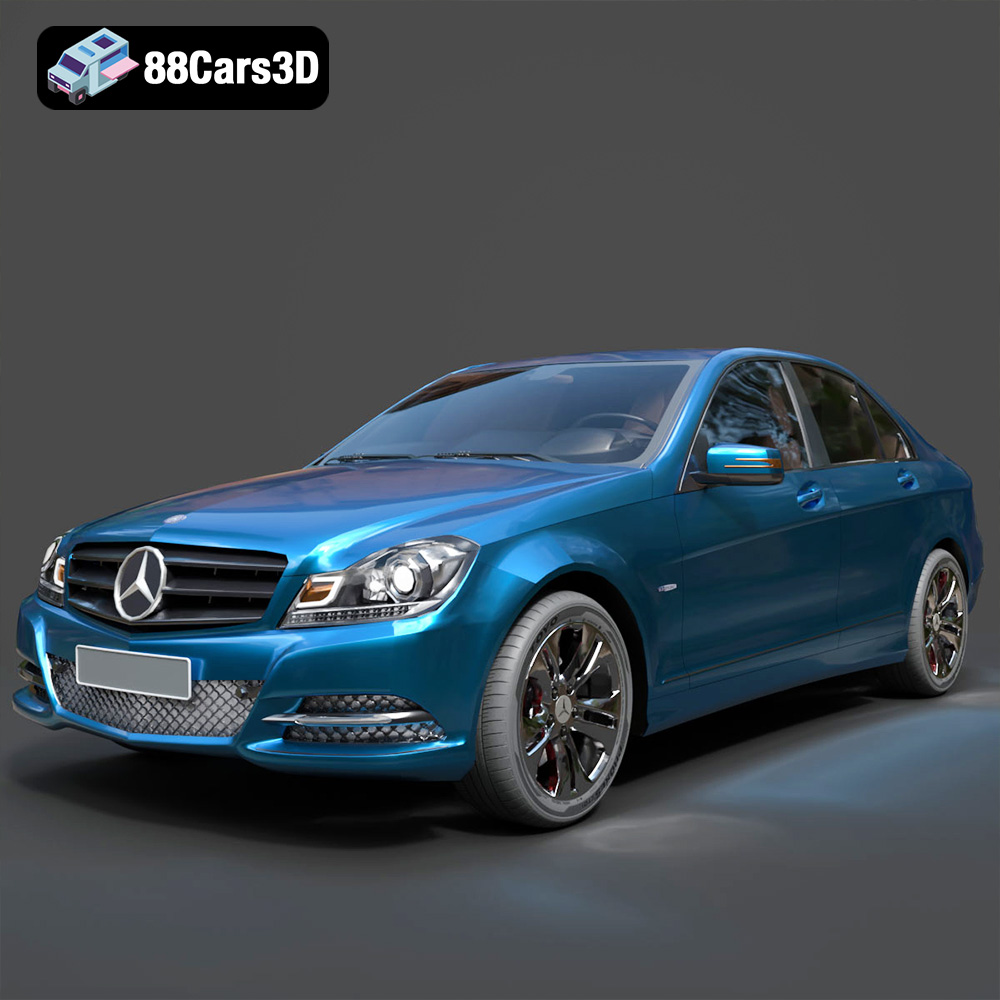
Texture: Yes
Material: Yes
Download the Mercedes C Classe 2012 3D Model featuring clean geometry, realistic detailing, and a fully modeled interior. Includes .blend, .fbx, .obj, .glb, .stl, .ply, .unreal, and .max formats for rendering, simulation, and game development.
Price: $19.9
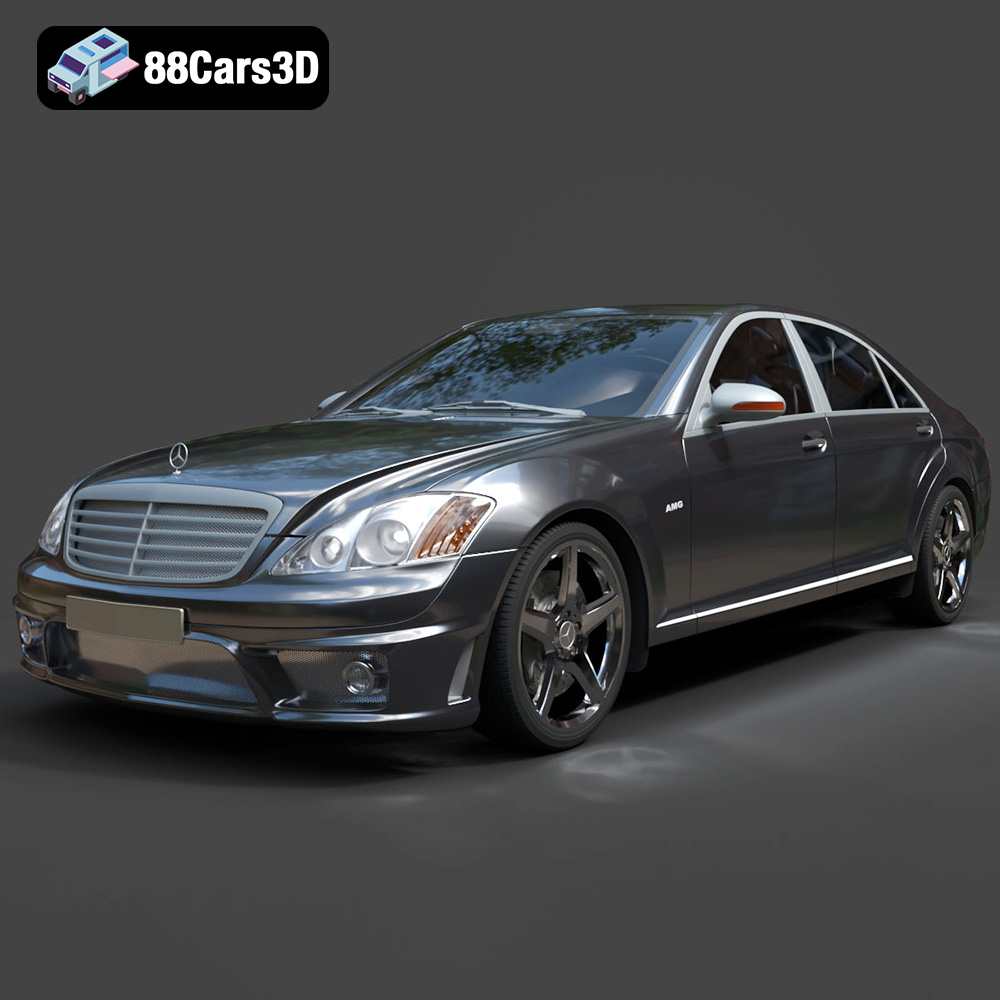
Texture: Yes
Material: Yes
Download the Mercedes-Benz S65 AMG 2018 3D Model featuring clean geometry, realistic detailing, and a fully modeled interior. Includes .blend, .fbx, .obj, .glb, .stl, .ply, .unreal, and .max formats for rendering, simulation, and game development.
Price: $19.9
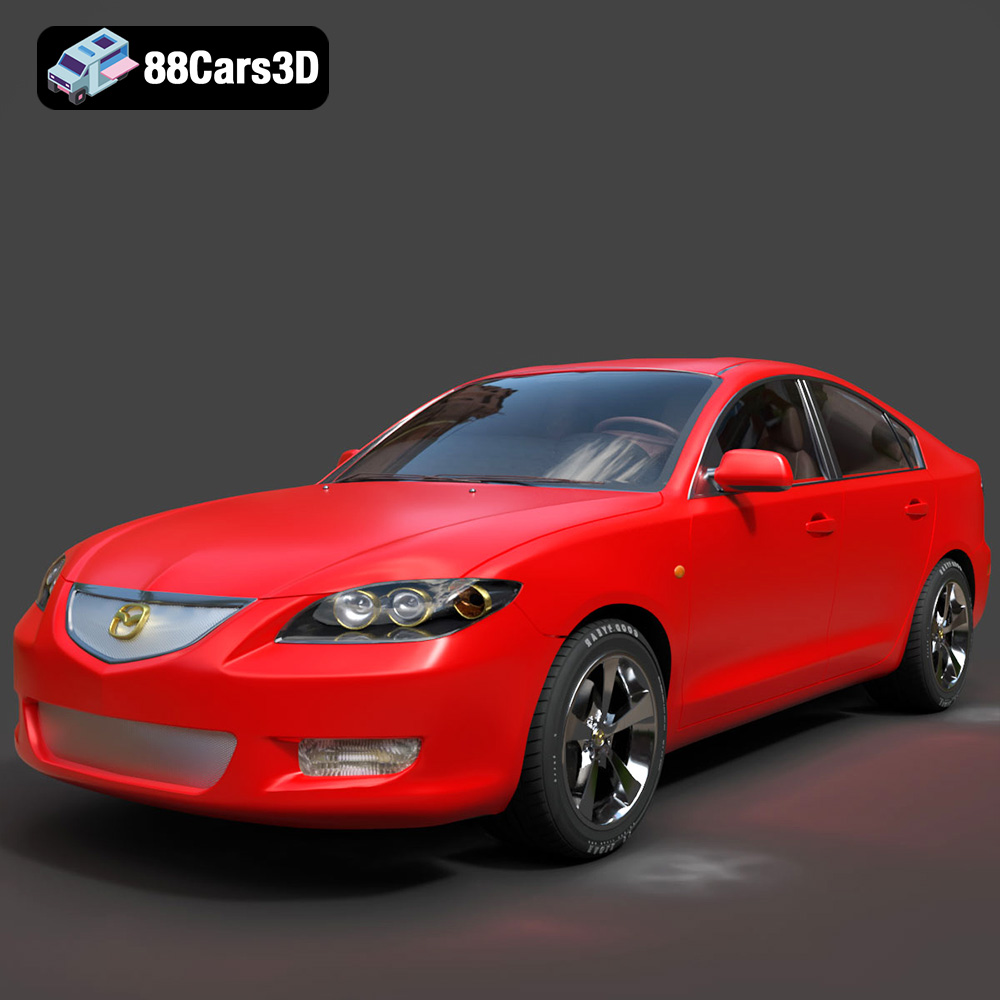
Texture: Yes
Material: Yes
Download the Mazda 3 Sedan 2004 3D Model featuring clean geometry, realistic detailing, and a fully modeled interior. Includes .blend, .fbx, .obj, .glb, .stl, .ply, .unreal, and .max formats for rendering, simulation, and game development.
Price: $10

Texture: Yes
Material: Yes
Download the Martin Rapide 2011 3D Model featuring clean geometry, realistic detailing, and a fully modeled interior. Includes .blend, .fbx, .obj, .glb, .stl, .ply, .unreal, and .max formats for rendering, simulation, and game development.
Price: $20.9
Texture: Yes
Material: Yes
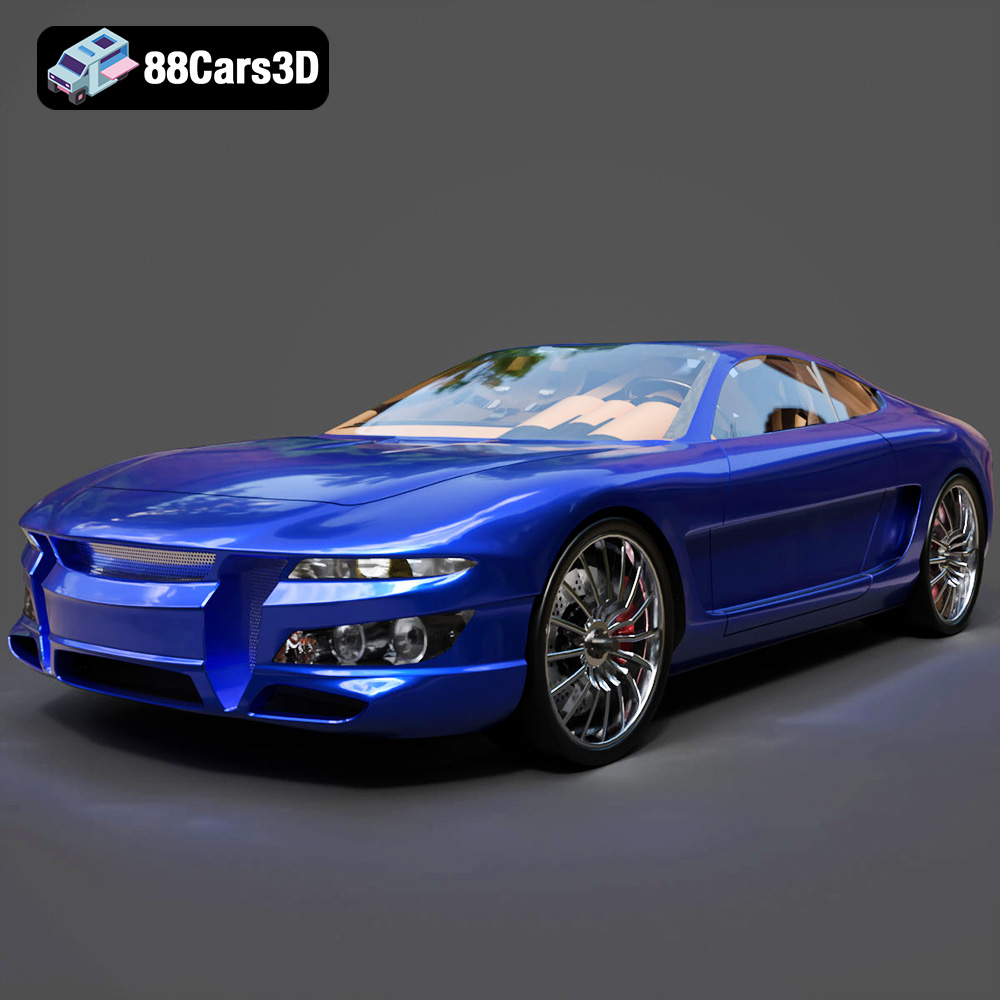
Download the Car Tasergal 005 3D Model featuring clean geometry, realistic detailing, and a fully modeled interior. Includes .blend, .fbx, .obj, .glb, .stl, .ply, .unreal, and .max formats for rendering, simulation, and game development.
Price: $10
Texture: Yes
Material: Yes
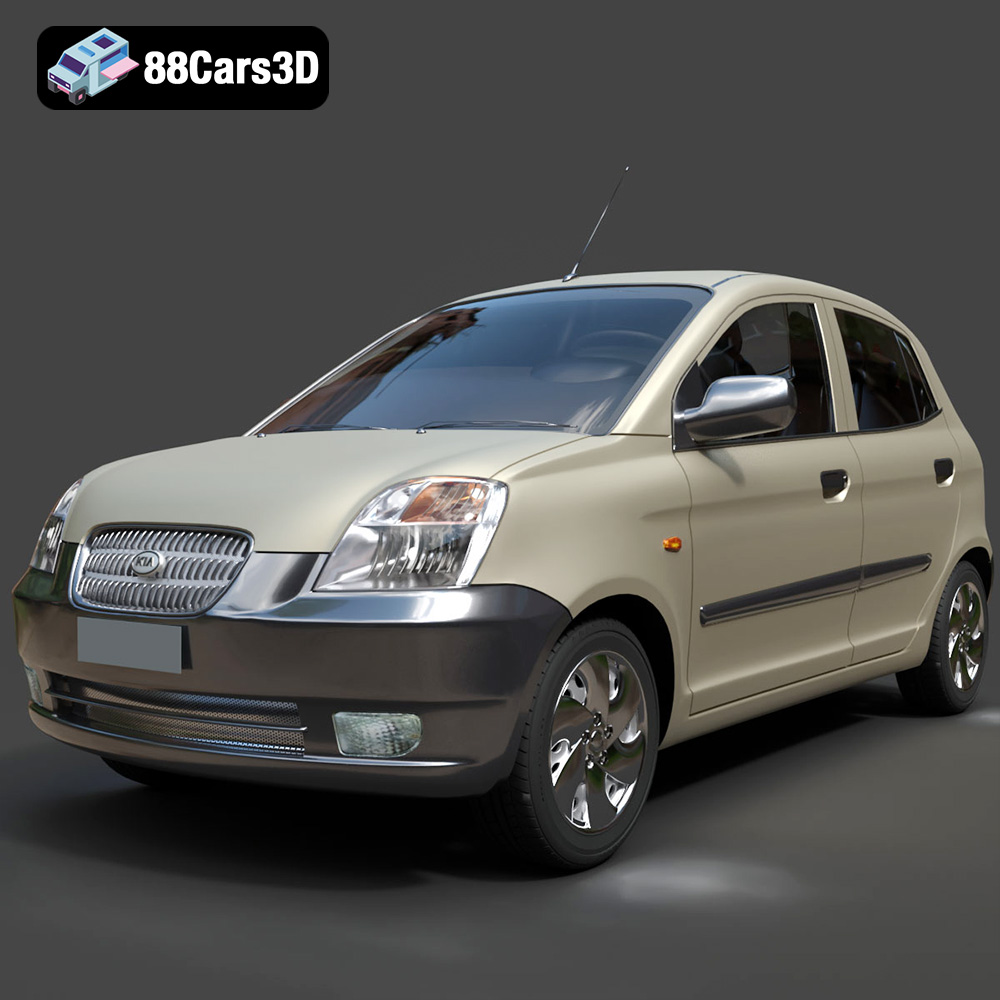
Download the Kia Picanto 2024 3D Model featuring clean geometry, realistic detailing, and a fully modeled interior. Includes .blend, .fbx, .obj, .glb, .stl, .ply, .unreal, and .max formats for rendering, simulation, and game development.
Price: $15.99

