Get 50% OFF All Premium 3D & STL Models!

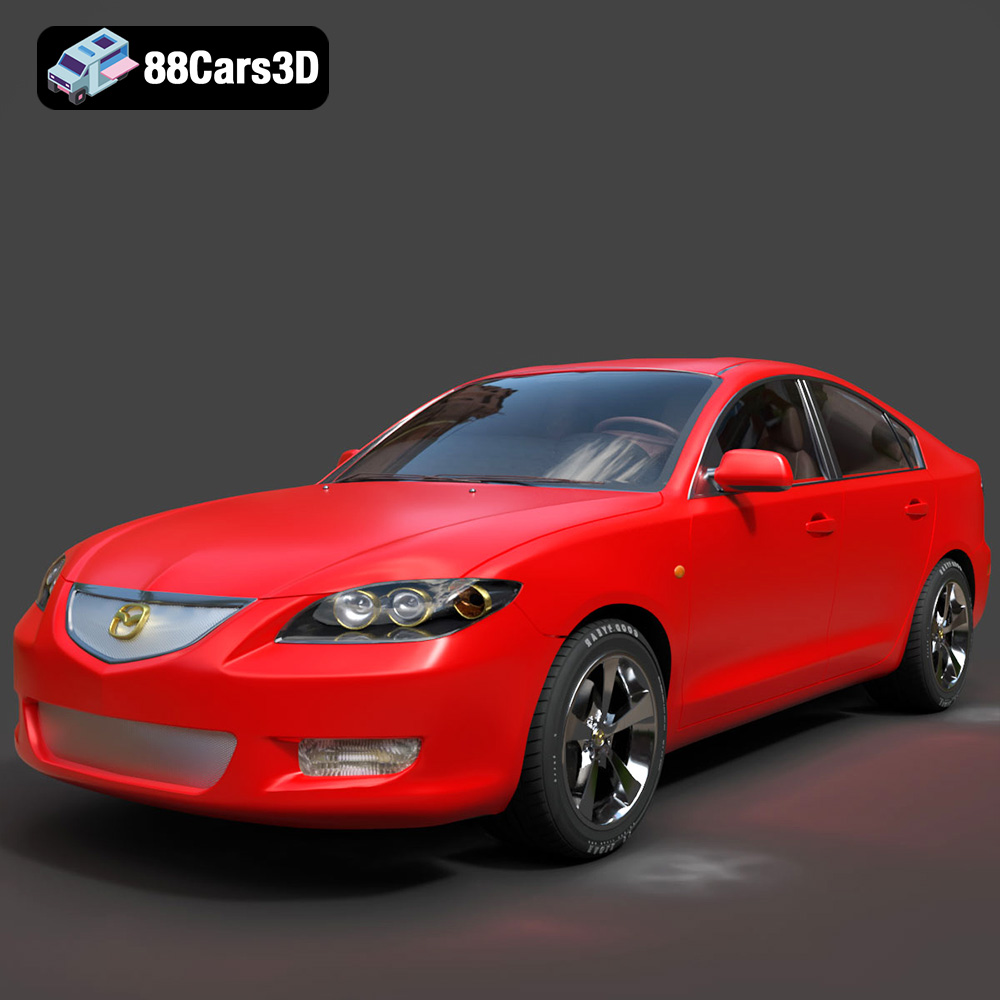
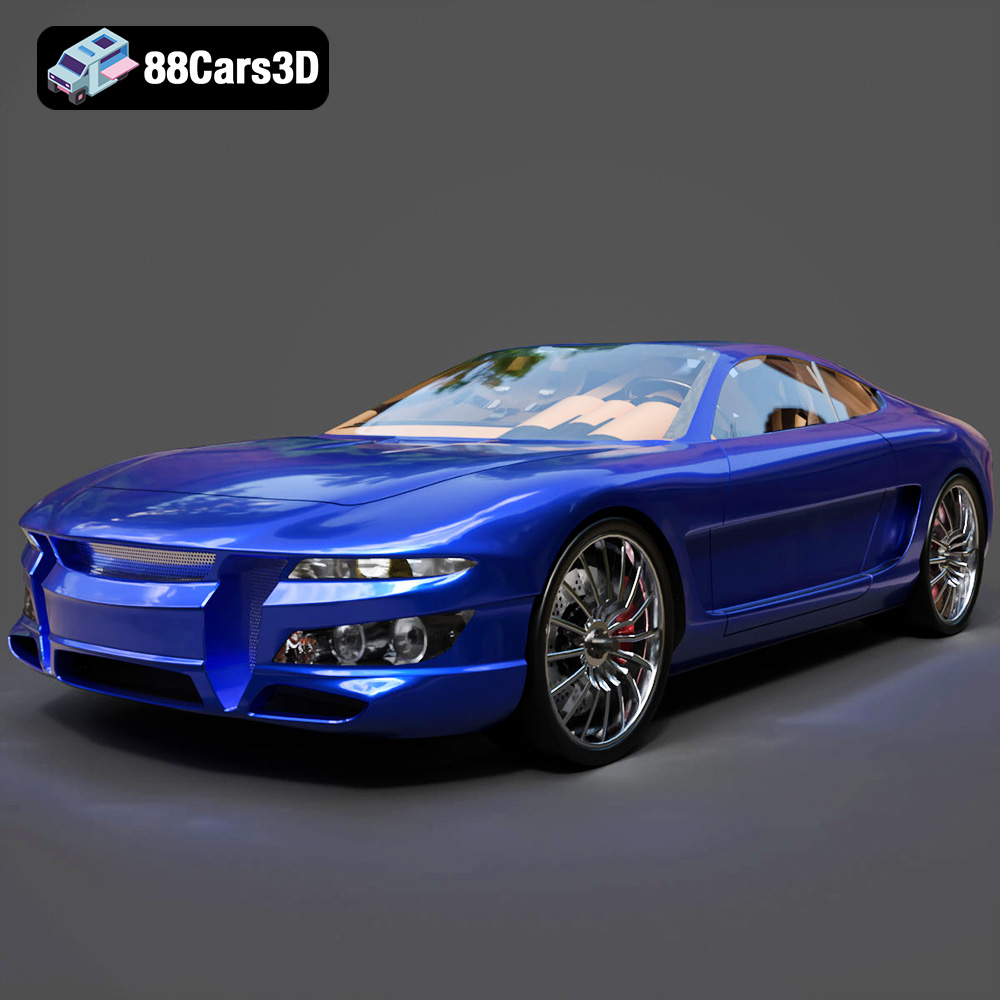
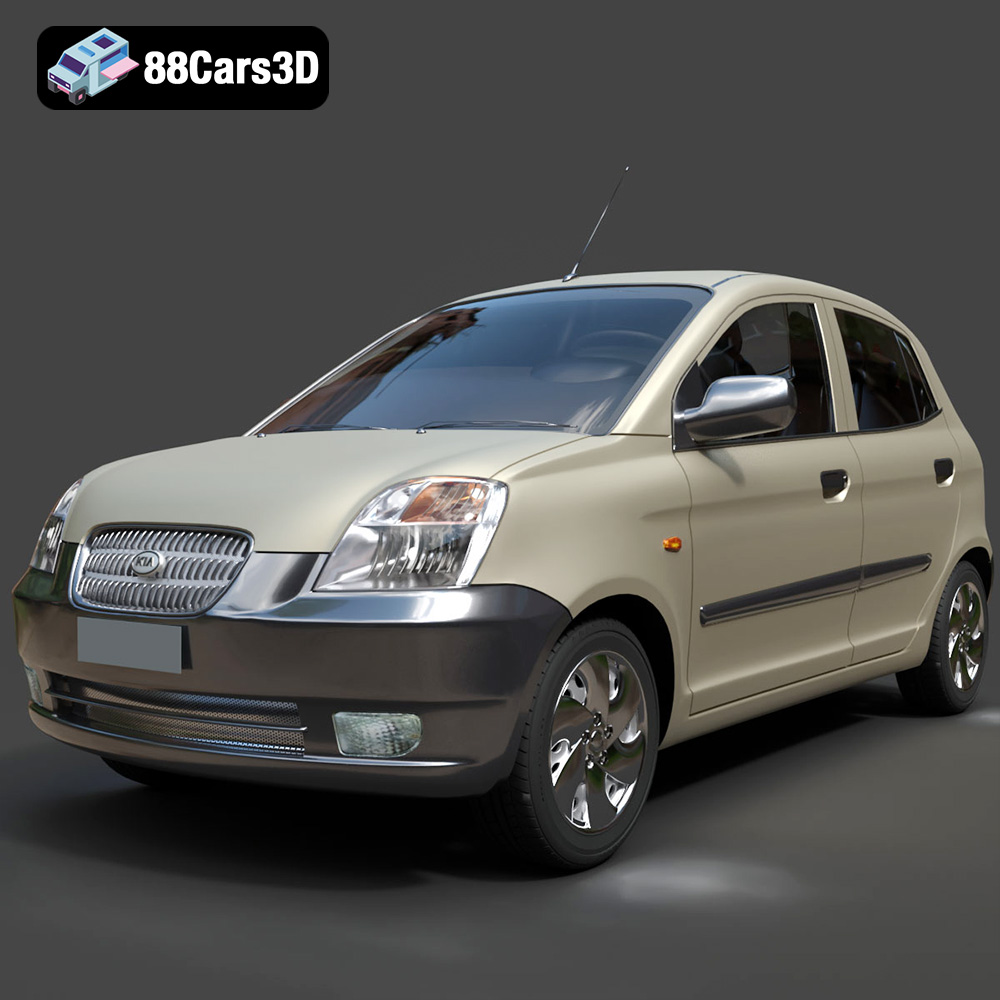
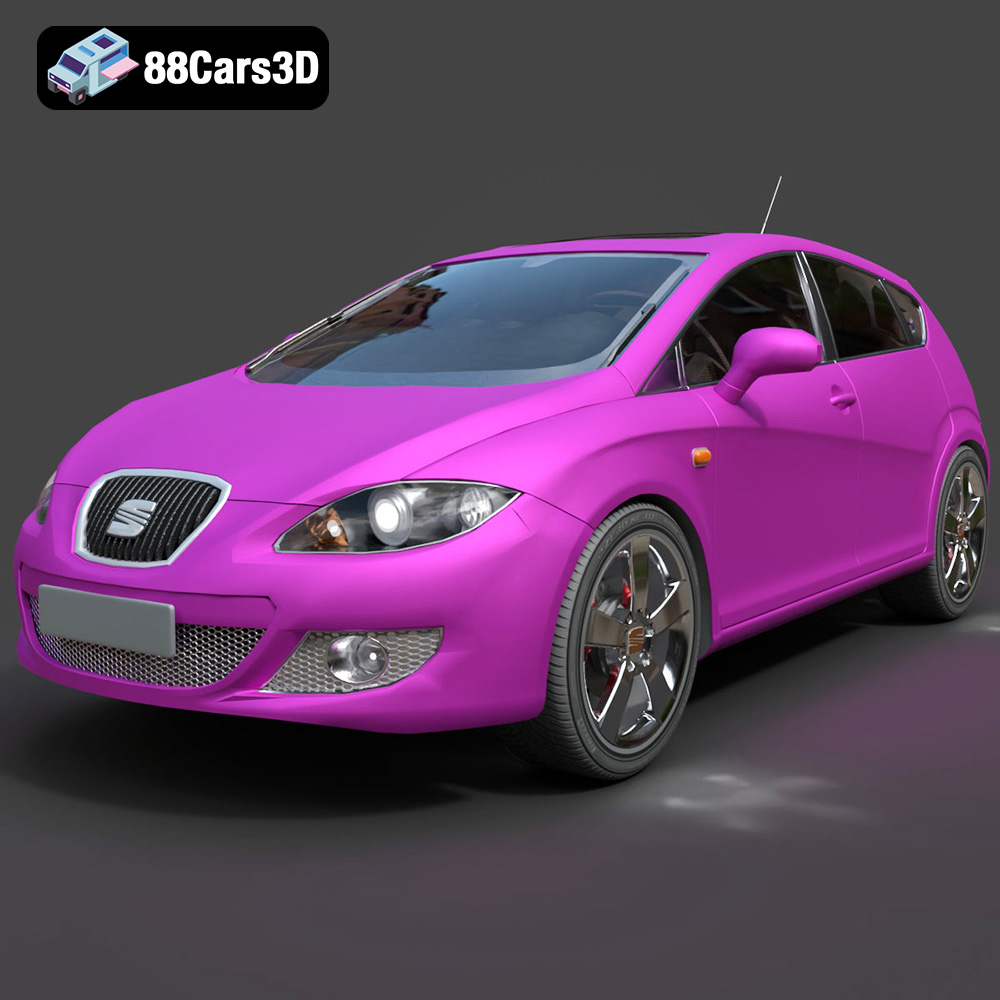
The allure of the automobile transcends the physical world, finding a vibrant and increasingly critical space in the digital realm. From the sleek lines of a concept car rendered with breathtaking photorealism to a highly optimized vehicle tearing through a virtual race track, 3D car models are the foundational elements driving innovation across industries. Whether you’re an automotive designer visualizing a new prototype, a marketing team crafting a captivating advertisement, or a game developer building the next open-world driving experience, the quality and technical prowess of your 3D assets are paramount. This comprehensive guide will delve into the intricacies of automotive rendering, game asset development, and the crucial technical specifications that define professional-grade 3D car models. For those seeking a reliable source of high-quality assets, 88cars3d.com stands as a prime example of a platform dedicated to delivering precision and fidelity.
Choosing the correct file format for your 3D car models is a fundamental decision that impacts workflow, compatibility, and the final application of your assets. Each format has its strengths, limitations, and specific use cases, tailored for different stages of the production pipeline, from initial modeling to final deployment in games, renders, or AR/VR experiences. Understanding these distinctions is critical for any professional working with digital automotive assets.
The .blend format is native to Blender, the popular open-source 3D creation suite. A .blend file encapsulates an entire Blender scene, including all 3D geometry, materials (with complex node setups), textures, lighting, cameras, animations, and even physics simulations. This makes it an incredibly powerful format for Blender users, offering full editability and preserving all project data in a single package. For artists creating or modifying assets primarily within Blender, .blend is the go-to. It ensures that every aspect of the model, from subdivision modifiers to custom drivers, is retained and ready for further development without data loss during export/import cycles.
Developed by Autodesk, the .fbx (Filmbox) format has become an industry standard for interoperability, particularly within game development and animation pipelines. FBX files can store a vast amount of data, including geometry, materials, textures, animations, rigging information (skeletal meshes), and even camera and light data. Its robust nature makes it the preferred format for transferring complex 3D car models into game engines like Unreal Engine and Unity, or into other DCC (Digital Content Creation) software like Maya or 3ds Max. While powerful, users must be mindful of version compatibility and export settings to ensure all data translates correctly.
The .obj (Wavefront Object) format is one of the oldest and most universally supported 3D file formats. It’s renowned for its simplicity and wide compatibility across virtually all 3D software. An OBJ file primarily stores geometry (vertices, normals, UV coordinates) and can reference an associated Material Template Library (MTL) file for basic material properties and texture assignments. While it doesn’t support advanced features like rigging, animation, or complex PBR materials, its widespread acceptance makes it excellent for static mesh exchange and archival purposes where maximum cross-software compatibility is required. It’s a reliable choice for sharing base mesh data.
.glb (GL Transmission Format Binary) is the binary version of glTF (GL Transmission Format), designed specifically for efficient transmission and loading of 3D scenes and models in web, augmented reality (AR), and virtual reality (VR) applications. A .glb file is self-contained, embedding all necessary data—geometry, materials, textures, and even animations—into a single, optimized binary package. Its compact size and ease of integration make it perfect for interactive product configurators, virtual showrooms, and real-time experiences where quick loading and smooth performance are critical. Many automotive companies leverage .glb for showcasing their vehicles directly in browsers or AR apps.
The .stl (Stereolithography) format is the de facto standard for 3D printing and rapid prototyping. It represents a 3D model’s surface geometry using a tessellation of triangular facets. Crucially, STL files contain only geometric data and lack any information about color, texture, or material properties. While simple, its efficiency in describing solid shapes makes it indispensable for manufacturing and physical model creation. When preparing 3D car models for 3D printing, ensuring manifold (watertight) geometry and exporting as STL is the standard procedure.
The .ply (Polygon File Format) is similar to OBJ but offers more flexibility in storing additional data, such as color, transparency, surface normals, and even point clouds. It’s often used in applications involving 3D scanning, CAD (Computer-Aided Design), and scientific visualization, where precise geometric and attribute data is crucial. PLY can represent both polygonal meshes and raw point cloud data, making it valuable for detailed analysis and reconstruction projects, including reverse engineering or quality control of automotive parts.
While not a standalone export format in the traditional sense, an .unreal asset (specifically a .uasset file) refers to a 3D model that has been imported, processed, and optimized within Unreal Engine. Typically, a model originally supplied as an FBX or another compatible format is imported into Unreal, where it generates its own internal representation as a .uasset. This includes the static mesh, skeletal mesh, associated materials, textures, and physics assets, all optimized for Unreal’s rendering pipeline. This “engine-ready” state means the asset is fully integrated and immediately usable in real-time environments, taking advantage of Unreal’s specific optimizations like Nanite for geometry or Lumen for global illumination.
The .max format is the native file type for Autodesk 3ds Max, one of the most widely used 3D software packages in professional visualization and game asset creation. Similar to Blender’s .blend, a .max file stores an entire 3ds Max scene, encompassing geometry, materials, textures, lighting, cameras, animation data, and render settings. For artists and studios heavily invested in the 3ds Max ecosystem, working with .max files ensures full preservation of all scene parameters and editability, making it ideal for complex projects involving detailed automotive rendering, animation, or vehicle rigging for cinematics.
Automotive rendering is where technical precision meets artistic vision. The goal is often photorealism, creating images so convincing they are indistinguishable from photographs. This demanding discipline requires a deep understanding of materials, lighting, and advanced rendering techniques.
The foundation of photorealistic automotive rendering lies in meticulous attention to detail. This begins with accurate 3D car models, where every panel gap, curve, and seam precisely mimics reality. Central to realism are Physically Based Rendering (PBR) materials, which simulate how light interacts with surfaces based on real-world properties. A car paint material, for instance, requires multiple layers: a base color, a metallic layer, a roughness map to define its micro-surface imperfections, and a clear coat layer that scatters and reflects light. Tyres need realistic rubber shaders with intricate displacement maps for tread patterns, while headlights and taillights demand complex glass and translucent materials with precise light scattering. Every detail, from the stitching on the interior leather to the fine grain of a dashboard, contributes to the overall believability, often using high-resolution 4K or 8K texture maps.
Beyond materials, sophisticated rendering techniques are essential. High Dynamic Range Imagery (HDRI) environments are critical for casting realistic lighting and reflections onto the car’s surface. These 360-degree images capture real-world light information, accurately simulating everything from bright sunlight to subtle ambient occlusion in a studio setting. Global Illumination (GI) algorithms simulate the bouncing of light within a scene, creating soft, realistic indirect lighting and color bleed. Modern renderers leverage advanced ray tracing (e.g., NVIDIA RTX technology in V-Ray, Octane, Redshift) to compute reflections, refractions, and shadows with unparalleled accuracy, mimicking the physical behavior of light. Techniques like caustics for light passing through glass elements and volumetric effects for exhaust smoke or fog further enhance the realism.
Even the most technically perfect render can be elevated through post-production. This typically involves rendering out multiple passes (e.g., diffuse, reflection, specular, ambient occlusion, Z-depth, object IDs) from the 3D software. These passes are then composited in tools like Adobe Photoshop or Foundry Nuke. Artists apply color grading, adjust contrast and exposure, add lens effects like bloom and glare, and subtly introduce depth of field to draw the viewer’s eye. Imperfections such as subtle dust, fingerprints, or slight scratches can be added through texture overlays to break the “perfect” digital look, grounding the image in reality. The careful balance between raw render fidelity and artistic post-processing is what truly defines a breathtaking automotive visual.
Creating game assets for vehicles presents a unique set of challenges compared to static renders. Here, performance is paramount, requiring a careful balance between visual fidelity and real-time rendering constraints. Every polygon, texture, and animation must be optimized to ensure smooth gameplay across diverse hardware.
The polygon count of a 3D car model is a critical factor for game performance. While a cinematic render might utilize millions of polygons for extreme detail, a game asset must operate within strict budgets. Current-generation consoles and high-end PCs can handle main player vehicles with 80,000 to 200,000 polygons, while background or distant cars might be as low as a few thousand. To manage this, developers employ Levels of Detail (LODs). This involves creating multiple versions of the same model, each with progressively fewer polygons. The game engine dynamically swaps between these LODs based on the vehicle’s distance from the camera, ensuring optimal performance without noticeable visual degradation for the player. Tools often include automated decimation or manual retopology to create these lower-poly versions efficiently.
Clean, non-overlapping UV mapping is absolutely essential for game assets. Textures are applied to the 3D model via these UV coordinates, and any overlap can lead to visual artifacts. Beyond this, efficient use of texture space is key. Texture atlases, which combine multiple smaller textures (e.g., for different car parts like interior, exterior, wheels) into a single larger texture sheet, reduce draw calls and improve rendering performance. PBR material workflows are standard in game engines, requiring maps like Albedo (Base Color), Normal, Metallic, Roughness, and Ambient Occlusion. Texture resolutions (typically 2K or 4K for hero vehicles) must be balanced with memory budgets, often utilizing texture streaming to load higher resolution textures only when needed.
For a car to function realistically in a game, it needs proper rigging and integration with the game engine’s physics system. Vehicle rigs include bones or joints for the wheels, steering, suspension, and potentially for opening doors, hoods, or trunks. This allows for realistic deformation and interaction. While static meshes are used for non-moving parts, skeletal meshes are employed for animated components. Animations for suspension compression, wheel rotation, or even complex damage models are crucial. Finally, these rigged models are integrated with the game engine’s physics system (e.g., Unreal Engine’s Chaos, Havok, PhysX) to simulate realistic driving dynamics, collision detection, and vehicle behavior in various environments, ensuring an immersive and believable player experience.
The utility of high-quality 3D car models extends far beyond traditional rendering and gaming. Augmented Reality (AR), Virtual Reality (VR), and advanced visualization tools are transforming how automotive products are designed, marketed, and experienced.
AR and VR experiences demand even stricter performance budgets than conventional games due to the need for extremely high and stable frame rates to prevent motion sickness and ensure immersion. This means models must be ultra-optimized, often with even lower polygon counts, fewer draw calls, and carefully managed texture resolutions. Baked lighting, where complex lighting information is pre-calculated into textures, is frequently used to offload real-time computation. Achieving consistent high fidelity at 90+ frames per second (FPS) for VR, or seamless integration into a real-world camera feed for AR, requires an expert understanding of asset optimization and engine capabilities.
The automotive industry has embraced AR and VR for sales and marketing. Interactive car configurators allow potential buyers to customize a vehicle’s color, wheels, interior trim, and accessories in real-time, either on a screen or within an immersive VR environment. Virtual showrooms offer a digital space for customers to explore a car from every angle, open doors, sit inside, and even take a virtual test drive, all without leaving their home. These applications leverage optimized 3D car models, often delivered in web-friendly formats like GLB, to provide a rich, engaging, and personalized customer journey, significantly enhancing the buying experience.
On the other end of the spectrum, 3D car models serve as the foundation for physical prototyping and manufacturing. For 3D printing, models must be “watertight” or “manifold,” meaning they have no holes or gaps in their surface geometry to ensure a solid, printable object. Exporting in formats like STL or OBJ is standard, followed by processing in slicing software that prepares the model for a specific 3D printer. This allows designers to rapidly create physical iterations of car parts, scale models, or even functional prototypes, bridging the gap between digital design and tangible reality in the automotive development cycle.
The difference between an average 3D car model and a truly exceptional one lies in its underlying technical quality. Professional-grade assets from resources like 88cars3d.com are built with meticulous attention to detail, ensuring versatility and longevity across various production pipelines.
Superior 3D car models are built with clean quad-based topology, meaning the mesh is composed primarily of four-sided polygons. This is crucial for several reasons: it ensures predictable deformation during animation, allows for smooth subdivision (e.g., using a Subdivision Surface modifier in Blender or Turbosmooth in 3ds Max) to generate high-resolution meshes without artifacts, and makes the model easier to edit and UV unwrap. Excellent edge flow ensures that polygon edges follow the natural contours and creases of the car, which is vital for maintaining shape and detail when the model is smoothed or animated. Poor topology, with triangles or N-gons (polygons with more than four sides) in critical areas, can lead to rendering issues, pinching, and difficulties in texture mapping.
Beyond geometry, flawless UV unwrapping is a hallmark of a high-quality model. Clean UVs ensure that textures are applied without stretching, distortion, or overlapping, which is paramount for both rendering and real-time engines. A consistent texel density across the entire model ensures that texture resolution is uniform, avoiding blurry or pixelated areas. Modern pipelines universally adopt the PBR (Physically Based Rendering) material workflow. This involves accurately calibrated maps for Base Color (Albedo), Metallic, Roughness, Normal, and Ambient Occlusion. These maps must be meticulously created (often in software like Substance Painter) to replicate real-world material properties, ensuring the car looks consistent and realistic under any lighting condition, whether in a high-end renderer or a game engine.
Precision in scale and measurements is non-negotiable for professional 3D car models. Models should always be built to real-world dimensions, typically in centimeters or meters, to ensure accurate proportions and seamless integration into various scenes and simulations. This often involves extensively using engineering blueprints, photographic references, and technical specifications of the actual vehicle. Accurate blueprint matching ensures that every curve, panel gap, and component matches the real-world counterpart. This meticulous approach to scale and accuracy is not just for realism; it’s essential for engineering visualization, precise collision detection in games, and correct scaling in AR/VR applications where immersion relies heavily on believable spatial relationships.
To illustrate the application of these technical principles, let’s explore a few scenarios where high-quality 3D car models are critical for success.
Consider a national television commercial for a luxury automotive brand. The goal is to showcase the car in an aesthetically perfect, stylized environment. Here, the 3D car model needs to be of the absolute highest fidelity, with a poly count in the millions (often achieved through subdivision), pristine PBR materials capturing every nuance of the paintwork, chrome, and interior leather. The workflow would involve 3ds Max or Maya for modeling and animation, paired with an advanced render engine like V-Ray, Octane, or Redshift, leveraging extensive ray tracing and global illumination. Every reflection, shadow, and glint of light is meticulously crafted. Post-production in Nuke or After Effects would involve compositing render passes, adding subtle atmospheric effects, and precise color grading to achieve that iconic, cinematic look. The emphasis is on visual spectacle and emotional impact.
Imagine the development of a next-generation open-world racing game. This requires a fleet of 3D car models, each optimized for real-time performance. The primary player vehicles would feature multiple LODs, allowing the engine to dynamically swap between high-detail meshes up close and heavily optimized versions at a distance. UV mapping would be clean and efficient, often utilizing texture atlases for consolidated assets. PBR materials are set up within the game engine (e.g., Unreal Engine) with careful consideration for performance. Each car would have a robust physics rig, integrated with the engine’s physics system to provide realistic driving feel, collision dynamics, and damage models. Dynamic features like changing paint finishes, wheel swaps, and interior customization would rely on well-structured material instances and modular 3D car models, ensuring smooth, interactive experiences for players.
Finally, envision a new model launch where customers can explore the car in their driveway using a mobile AR app. The core challenge here is delivering a visually appealing model that runs smoothly on a wide range of mobile devices. This demands extreme optimization: the base 3D car model needs a modest polygon count (e.g., 50k-100k triangles), highly optimized textures, and potentially baked lighting for efficiency. The asset would likely be delivered in a lightweight, self-contained format like GLB, optimized for web and mobile performance. The AR application (built perhaps with Unity or Unreal Engine) would handle accurate real-world tracking, dynamic shadows, and interactive elements such as changing paint colors or opening doors. The focus is on a seamless, real-time interactive experience that bridges the digital and physical worlds, offering a compelling glimpse of the product.
The world of 3D car models is a complex, ever-evolving landscape where technical expertise and artistic vision converge. From the foundational choice of file formats to the intricate dance of polygons and PBR materials, every decision impacts the final output, whether it’s a breathtaking automotive render, an immersive game asset, or an interactive AR experience. The demand for high-quality, technically sound assets continues to grow across industries, highlighting the critical role of well-crafted digital vehicles. For artists and developers seeking top-tier assets that meet rigorous industry standards, understanding these technical details is key to unlocking the full potential of their projects. Platforms like 88cars3d.com exemplify the commitment to providing the precision and quality required to bring any automotive vision to life.