Get 50% OFF All Premium 3D & STL Models!

In the vast landscape of modern game development, players demand experiences that are not only visually stunning but also deeply engaging and mechanically rich. Crafting responsive, scalable, and network-friendly combat systems is a monumental challenge, especially in titles that feature complex character interactions, diverse abilities, and intricate stat management. This is precisely where Unreal Engine’s Gameplay Ability System (GAS) shines. A robust, framework-agnostic solution developed by Epic Games, GAS provides a comprehensive toolkit for building everything from simple attacks to elaborate spellcasting, character buffs, and even sophisticated vehicular abilities.
While platforms like 88cars3d.com provide stunning, optimized vehicle models that form the visual backbone of immersive worlds, the underlying mechanics dictate how players interact with those visuals. Imagine a high-octane vehicular combat game where cars from 88cars3d.com are outfitted with unique abilities: a temporary speed boost, a deployable shield, an EMP blast, or a self-repair function. These complex interactions require a system that is both flexible and powerful. GAS offers the perfect architecture for managing these ‘combat’ or ‘ability’ mechanics, irrespective of whether they’re for a human character wielding a sword or a supercar deploying a specialized gadget.
This deep dive will unravel the core components of GAS, guiding you through its architecture, attribute management, ability implementation, effect application, and crucial networking considerations. By the end, you’ll understand how to leverage GAS to create dynamic, advanced combat and interaction systems for any Unreal Engine project, turning those beautifully rendered 3D models into truly interactive and engaging experiences.
The Gameplay Ability System is Epic Games’ answer to managing complex, data-driven gameplay mechanics, primarily abilities, attributes, and effects. It’s a modular, extensible framework designed to be highly scalable and network-replicated out of the box, making it ideal for everything from single-player RPGs to large-scale multiplayer online games. Instead of hardcoding every ability and its effects, GAS provides a structured way to define, activate, and modify gameplay elements, leading to cleaner code, easier balancing, and faster iteration.
At its heart, GAS revolves around four primary building blocks: the UAbilitySystemComponent (ASC), UGameplayAbility, UGameplayAttributeSet, and UGameplayEffect. These components work in harmony to define ‘what’ can happen (abilities), ‘who’ it happens to and ‘how’ they’re affected (attributes and attribute sets), and ‘how’ those effects are applied (gameplay effects). Why use GAS? Its robust design patterns inherently solve many common game development challenges, such as handling cooldowns, costs, activation conditions, dynamic stat modifications, and ensuring consistent behavior across networked clients and servers. This frees developers to focus on creative gameplay instead of reinventing fundamental systems.
The UAbilitySystemComponent is arguably the most critical part of GAS. It acts as the central hub for any actor that needs to participate in the ability system. You typically attach an ASC to a character, a weapon, or even a vehicle, as it holds all the information pertinent to that entity’s abilities, attributes, and active gameplay effects. Think of it as the brain that processes all ability requests, manages attribute values, and applies incoming or outgoing effects. Every entity that can activate an ability, possess attributes, or be affected by a gameplay effect must have an ASC. When dealing with vehicles, such as those you might acquire from 88cars3d.com, equipping them with an ASC transforms them from static meshes into dynamic entities capable of advanced interactions.
Gameplay Tags are a powerful, hierarchical data structure that forms the backbone of filtering and communication within GAS. They are lightweight, editor-defined, and incredibly versatile for categorizing everything from abilities (e.g., Ability.Offensive.Fireball, Ability.Defensive.Shield, Ability.Vehicle.Boost), to effects (e.g., Effect.Buff.Speed, Effect.Debuff.Stun), input actions, and even character states. Using Gameplay Tags, you can easily define conditions for ability activation (e.g., “requires tag Status.Grounded“), block conflicting abilities (e.g., “cannot activate while Ability.Blocking tag is active”), or query for specific effects. This tag-based system promotes loose coupling and makes your GAS setup incredibly flexible and extensible, allowing for complex interactions without rigid dependencies.
In any game with combat or complex interactions, entities possess a set of characteristics that define their capabilities and current state. In GAS, these are known as Gameplay Attributes. Attributes are numerical values that represent measurable traits like Health, Mana, Stamina, Attack Power, Defense, Movement Speed, or even specific vehicle statistics like Top Speed, Acceleration, Handling, or Shield Strength. Attributes are not just static values; they are dynamic, capable of being modified by Gameplay Effects, and can be instantly replicated across the network, ensuring consistent game state for all players.
A collection of related attributes is housed within an UGameplayAttributeSet. You typically create a custom UGameplayAttributeSet for your player characters, AI, and any interactive entities like vehicles, containing all the relevant attributes for that specific type. For example, a VehicleAttributeSet might contain attributes like MaxSpeed, CurrentSpeed, ArmorValue, ShieldCapacity, and NitroFuel. Defining these attributes clearly and structuring them within attribute sets is the first critical step in designing a robust GAS implementation. These attribute sets are instantiated and managed by the AbilitySystemComponent, allowing the system to track and manipulate the stats of any participating entity.
The true power of attributes lies in their ability to be dynamically modified by UGameplayEffects. A GameplayEffect describes how an attribute should change. These changes can be simple additions or subtractions, multiplications, or even percentage-based modifications. When defining an effect, you specify an FGameplayModifierInfo for each attribute it affects. This info includes the attribute to modify (e.g., Health), the operation type (Add, Multiply, Divide, Override), and the magnitude of the change. For instance, a “Speed Boost” effect on a car might add a flat value to its CurrentSpeed attribute and a percentage modifier to its Acceleration attribute.
Capture Definitions are a more advanced feature used within Gameplay Effects to ‘capture’ an attribute from the source or target of an effect at the moment of its application. This is particularly useful for calculating damage or healing based on the target’s current stats or the caster’s stats. For example, a car’s “Ramming” ability might deal damage based on its current CurrentSpeed attribute multiplied by its Weight attribute when it impacts another vehicle. These captured attributes can then be used in calculation formulas within the Gameplay Effect, enabling highly dynamic and context-sensitive attribute manipulations.
Attributes are not just internal numbers; they drive visual feedback and physical behaviors. Connecting your UGameplayAttributeSet values to the game’s User Interface (UI) and physics systems is crucial for a complete experience. For UI, you can bind text or progress bars directly to attribute values using Unreal Engine’s UMG framework. When an attribute changes (e.g., car’s Nitro Fuel depletes), the UI automatically updates. This involves subscribing to attribute change delegates provided by the ASC. Similarly, attributes can directly influence physics. A car’s CurrentSpeed attribute might directly feed into the vehicle’s movement component, affecting its actual velocity. An attribute like VehicleWeight could influence its physics simulation. This direct linkage ensures that your gameplay mechanics are visually represented and physically simulated in a consistent and responsive manner.
UGameplayAbility is the core building block for any action an entity can perform within the GAS framework. Whether it’s a character attacking, using an item, or a car deploying a gadget, a Gameplay Ability encapsulates the logic, costs, cooldowns, and activation conditions for that action. Each ability is defined as a UObject, which means it can be highly data-driven and easily iterated upon in Blueprints or C++. This modularity ensures that abilities are reusable and manageable, making it straightforward to add new actions or modify existing ones without disrupting other parts of your game system.
When an ability is activated (e.g., a player presses the ‘boost’ button for their car), GAS handles a series of checks: Does the player have enough “Nitro Fuel” (an attribute)? Is the “Boost” ability on cooldown? Are there any blocking tags that prevent its activation? If all checks pass, the ability’s logic executes. This logic can range from simple instant effects (like applying a temporary speed buff) to complex, multi-stage operations involving animation playback, spawning projectiles, and applying multiple gameplay effects over time. The flexibility of UGameplayAbility allows for virtually any type of gameplay action you can imagine.
Connecting player input to a GameplayAbility involves a two-step process: associating an FGameplayAbilitySpecHandle with an input ID, and then mapping that input ID to a physical input key. When the player presses the bound key, the game’s input system triggers the ASC to activate the corresponding ability. For instance, you might assign an input ID like 0 to your car’s “Boost” ability. When the player presses a configured key (e.g., ‘Left Shift’), the ASC receives input ID 0 and attempts to activate the “Boost” ability. This system allows for dynamic remapping of abilities to different input keys, and even supports scenarios where input context changes (e.g., different abilities when on foot vs. in a vehicle). Utilizing Unreal Engine’s Enhanced Input System can further streamline this process, allowing for more robust and flexible input mappings.
Many abilities are not instantaneous; they involve sequences of actions, delays, or interactions that occur over time. This is where Ability Tasks come into play. Ability Tasks are specialized UObjects that allow a UGameplayAbility to perform asynchronous operations, manage timers, wait for specific events (like montage completion or damage application), and then continue or end the ability’s execution. For example, a “Charge Shot” ability for a vehicle might use an Ability Task to “Wait for Input Release” to determine the charge duration, or a “Self-Repair” ability might use a “Wait for Duration” task to apply healing over several seconds. These tasks handle networking and cleanup automatically, making it much simpler to implement complex, time-dependent ability logic. They are crucial for creating engaging, multi-stage abilities that feel polished and responsive, even in a networked environment.
UGameplayEffect is the primary mechanism through which attributes are modified, and temporary or permanent changes are applied to entities within GAS. They are the workhorse for everything from dealing damage and healing to applying buffs, debuffs, status effects, and even persistent upgrades. A Gameplay Effect describes a set of attribute modifiers, gameplay tags to add or remove, and other effects that should occur when the effect is applied to an AbilitySystemComponent. The design of Gameplay Effects is incredibly flexible, allowing for complex interactions and dynamic attribute manipulation.
Gameplay Effects come in several flavors: Instant effects apply their changes immediately and then expire (e.g., a single burst of damage, an instant heal). Duration effects apply their changes for a specified period and then automatically reverse or remove themselves (e.g., a temporary speed boost, a defensive shield). Periodic effects are duration effects that also apply instant changes at regular intervals (e.g., damage-over-time, healing-over-time). This rich variety allows developers to implement virtually any type of game-state modification, ensuring that interactions between abilities and entities are dynamic and impactful.
Let’s consider a practical example using an automotive asset from 88cars3d.com. To create a “Speed Boost” effect for a car, you would define a UGameplayEffect. In its Modifiers section, you would add an entry to modify the car’s CurrentSpeed attribute, specifying an Add operation with a positive magnitude (e.g., +500.0 units). You might also add a Multiply operation to an AccelerationMultiplier attribute to enhance acceleration during the boost. The Duration Policy would be set to Has Duration, with a fixed duration (e.g., 5.0 seconds). Optionally, you could add Granted Tags like Status.Boosting to indicate the car’s state and Remove Tags upon expiration. When this effect is applied via an ability, the car’s attributes dynamically change, giving the player a tangible sense of increased power, and then return to normal after the duration. Similarly, a “Shield” effect could temporarily increase a ShieldCapacity attribute or reduce incoming damage by adding a negative modifier to an IncomingDamage attribute, providing a defensive layer to the vehicle.
For multiplayer games, accurate and efficient replication of Gameplay Effects is paramount. GAS handles much of this complexity for you. When a Gameplay Effect is applied on the server, it is automatically replicated to relevant clients, ensuring that all players see the same state changes. However, client-side prediction is essential for a smooth, responsive user experience. When a player activates an ability that applies an effect (e.g., their car boosts), the client can optimistically apply the effect immediately, showing the visual and mechanical feedback without waiting for server confirmation. If the server later validates the action, the client’s predicted state is reconciled. If the server rejects the action (e.g., insufficient “Nitro Fuel”), the client’s state is “rolled back” to match the server’s authoritative state. This prediction system, baked into GAS, significantly reduces perceived latency and makes networked gameplay feel much more responsive, especially for fast-paced actions like vehicular combat. Understanding the nuances of prediction and potential rollbacks is key to debugging and ensuring a robust networked experience with GAS.
One of the most compelling reasons to use GAS is its inherent support for network replication and client-side prediction, which are critical for any multiplayer game. Building robust multiplayer combat or interaction systems from scratch is incredibly complex, fraught with issues like lag, cheating, and synchronization errors. GAS abstract away much of this complexity, providing a battle-tested framework that handles the authoritative server-client model gracefully. Abilities, attributes, and effects can be configured with specific replication policies, ensuring that only necessary data is sent over the network, optimizing bandwidth while maintaining consistency.
However, simply using GAS doesn’t automatically guarantee a perfectly optimized or cheat-proof system. Developers must still make informed decisions about what to replicate, when, and how, particularly concerning sensitive data like attribute values and ability activation. Understanding the flow of information between server and client, and leveraging GAS’s prediction capabilities effectively, are key to creating a responsive and fair multiplayer experience. For detailed guidance on network replication in Unreal Engine, including GAS specifics, always refer to the official Unreal Engine documentation.
When designing networked abilities, consider the following best practices:
NetExecutionPolicy for your abilities (e.g., ServerOnly for critical actions, LocalPredicted for client-side predicted abilities).UGameplayAttributeSet, mark attributes as ReplicatedUsing a setter function to handle custom logic upon replication.Gameplay Cues for purely cosmetic visual or audio effects. These are typically not replicated via the core GAS system but sent as RPCs to relevant clients, saving bandwidth.While GAS is highly optimized, it’s possible to introduce performance bottlenecks with poor implementation. Excessive use of complex calculation formulas in Gameplay Effects, frequent application of many small effects, or inefficient attribute change listeners can impact performance. To optimize:
Beyond the fundamental building blocks, GAS offers a wealth of advanced features that empower developers to create truly sophisticated gameplay systems. These techniques streamline complex interactions, enhance player experience, and provide robust solutions for diverse gameplay scenarios, extending far beyond traditional character combat. From managing overlapping ability cooldowns to creating intricate multi-stage interactions, GAS continues to prove its versatility.
One such advanced feature is Ability Batching, which allows multiple abilities triggered rapidly to be processed efficiently. Another is the concept of Cooldown Groups, where activating one ability can place other, related abilities on cooldown, preventing spamming or unbalanced combos. Custom Prediction allows developers to implement highly specific client-side prediction logic for abilities that fall outside the standard GAS prediction model, such as complex physics interactions or projectile trajectories. These capabilities ensure that GAS can handle the most demanding and unique gameplay requirements, delivering both flexibility and performance.
Here’s where the synergy between mechanical depth and visual quality becomes paramount. Imagine a vehicular combat game utilizing high-quality 3D car models from 88cars3d.com. These visually stunning vehicles are no longer just static assets; they become dynamic combatants powered by GAS. A car model could have an ASC, allowing it to:
Each of these abilities would be defined as a UGameplayAbility, drawing from and modifying a VehicleAttributeSet. The visually compelling automotive assets sourced from marketplaces such as 88cars3d.com provide the perfect canvas for these complex mechanics. Players experience the thrill of engaging abilities, visually represented by the high-fidelity car models, explosions, and particle effects.
A great ability system needs clear visual and auditory feedback. GAS integrates seamlessly with other Unreal Engine features like Niagara for visual effects and Blueprint for scripting custom behaviors and UI. When an ability is activated or a Gameplay Effect is applied, you can trigger Gameplay Cues – lightweight, replicated events that play sounds, spawn particles, or animate UI elements on relevant clients. For example, a car’s “EMP Blast” ability might trigger a Niagara particle effect around the vehicle and a specific sound cue, all managed through Gameplay Cues, without requiring complex replication logic for the visual itself.
Blueprint allows for rapid prototyping and iteration of abilities and effects. While core GAS components are C++, much of the ability logic can be implemented directly in Blueprint, making it accessible to designers and less technical developers. This integration ensures that the powerful backend of GAS can be easily expressed and visually conveyed to the player, enhancing immersion and clarity for actions performed by any entity, be it a character or a sophisticated vehicle model.
The Unreal Engine Gameplay Ability System is a formidable framework, offering unparalleled flexibility and robustness for developing complex, dynamic, and network-friendly gameplay mechanics. From managing character attributes like health and stamina to implementing intricate abilities with costs, cooldowns, and diverse effects, GAS provides a solid foundation that simplifies development and accelerates iteration. Its built-in support for network replication and client-side prediction addresses some of the most challenging aspects of multiplayer game development, allowing you to focus on creating engaging player experiences rather than wrestling with low-level synchronization issues.
Whether you’re building a traditional RPG, a fast-paced action game, or an innovative vehicular combat simulator where cars from 88cars3d.com deploy unique gadgets and defensive maneuvers, GAS offers the toolkit to bring your vision to life. By understanding its core components – the Ability System Component, Gameplay Attributes, Gameplay Abilities, and Gameplay Effects – and by following best practices for networking and optimization, you can craft systems that are not only powerful but also scalable and maintainable. Dive into the official Unreal Engine documentation at dev.epicgames.com to deepen your understanding and begin experimenting. Embrace the power of GAS, and transform your game’s mechanics into truly memorable and advanced interactive experiences.

Texture: Yes
Material: Yes
Download the Toyota MRS-007 3D Model featuring clean geometry, realistic detailing, and a fully modeled interior. Includes .blend, .fbx, .obj, .glb, .stl, .ply, .unreal, and .max formats for rendering, simulation, and game development.
Price: $10

Texture: Yes
Material: Yes
Download the Porsche 911 Turbo S 2024 3D Model featuring clean geometry, realistic detailing, and a fully modeled interior. Includes .blend, .fbx, .obj, .glb, .stl, .ply, .unreal, and .max formats for rendering, simulation, and game development.
Price: $20

Texture: Yes
Material: Yes
Download the Pontiac Solstice 2009 3D Model featuring clean geometry, realistic detailing, and a fully modeled interior. Includes .blend, .fbx, .obj, .glb, .stl, .ply, .unreal, and .max formats for rendering, simulation, and game development.
Price: $10

Texture: Yes
Material: Yes
Download the Mini Cooper Countryman 2025 3D Model featuring clean geometry, realistic detailing, and a fully modeled interior. Includes .blend, .fbx, .obj, .glb, .stl, .ply, .unreal, and .max formats for rendering, simulation, and game development.
Price: $29.9

Texture: Yes
Material: Yes
Download the Mercedes C Classe 2012 3D Model featuring clean geometry, realistic detailing, and a fully modeled interior. Includes .blend, .fbx, .obj, .glb, .stl, .ply, .unreal, and .max formats for rendering, simulation, and game development.
Price: $19.9

Texture: Yes
Material: Yes
Download the Mercedes-Benz S65 AMG 2018 3D Model featuring clean geometry, realistic detailing, and a fully modeled interior. Includes .blend, .fbx, .obj, .glb, .stl, .ply, .unreal, and .max formats for rendering, simulation, and game development.
Price: $19.9

Texture: Yes
Material: Yes
Download the Mazda 3 Sedan 2004 3D Model featuring clean geometry, realistic detailing, and a fully modeled interior. Includes .blend, .fbx, .obj, .glb, .stl, .ply, .unreal, and .max formats for rendering, simulation, and game development.
Price: $10

Texture: Yes
Material: Yes
Download the Martin Rapide 2011 3D Model featuring clean geometry, realistic detailing, and a fully modeled interior. Includes .blend, .fbx, .obj, .glb, .stl, .ply, .unreal, and .max formats for rendering, simulation, and game development.
Price: $20.9
Texture: Yes
Material: Yes
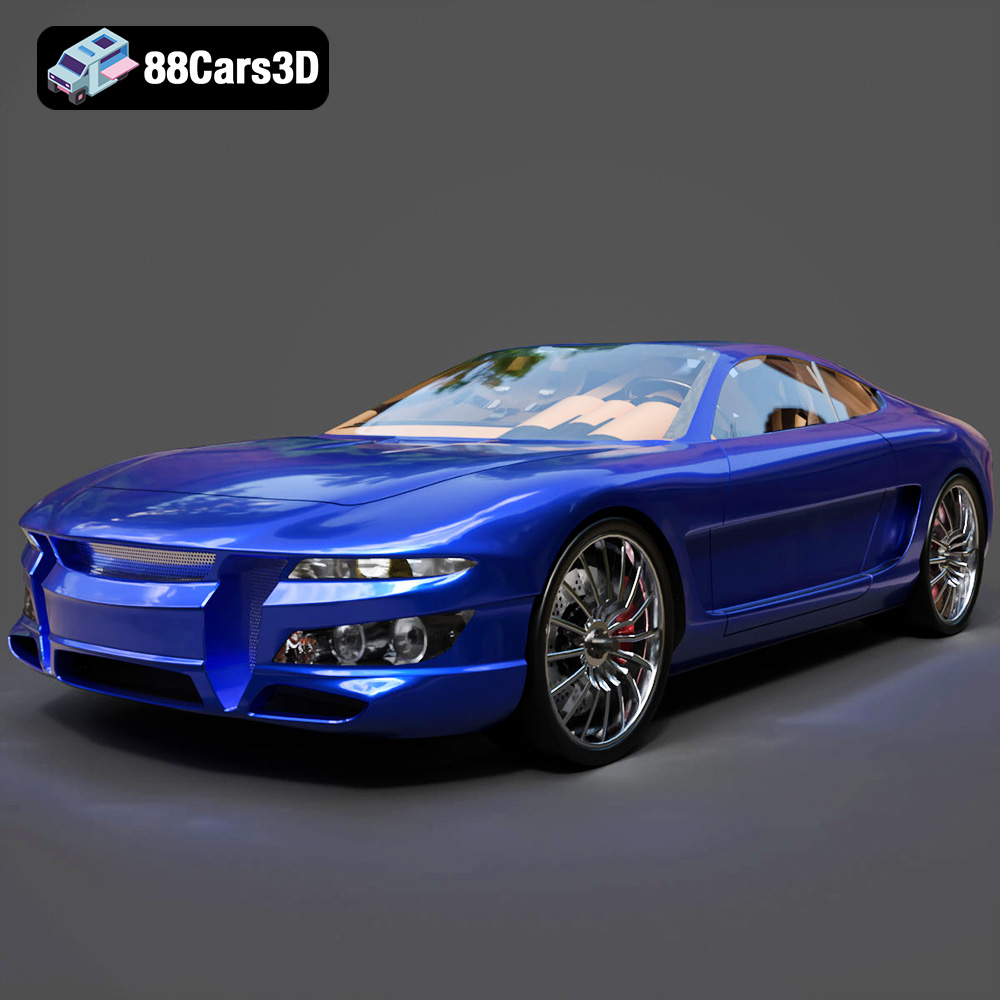
Download the Car Tasergal 005 3D Model featuring clean geometry, realistic detailing, and a fully modeled interior. Includes .blend, .fbx, .obj, .glb, .stl, .ply, .unreal, and .max formats for rendering, simulation, and game development.
Price: $10

Texture: Yes
Material: Yes
Download the Kia Picanto 2024 3D Model featuring clean geometry, realistic detailing, and a fully modeled interior. Includes .blend, .fbx, .obj, .glb, .stl, .ply, .unreal, and .max formats for rendering, simulation, and game development.
Price: $15.99

