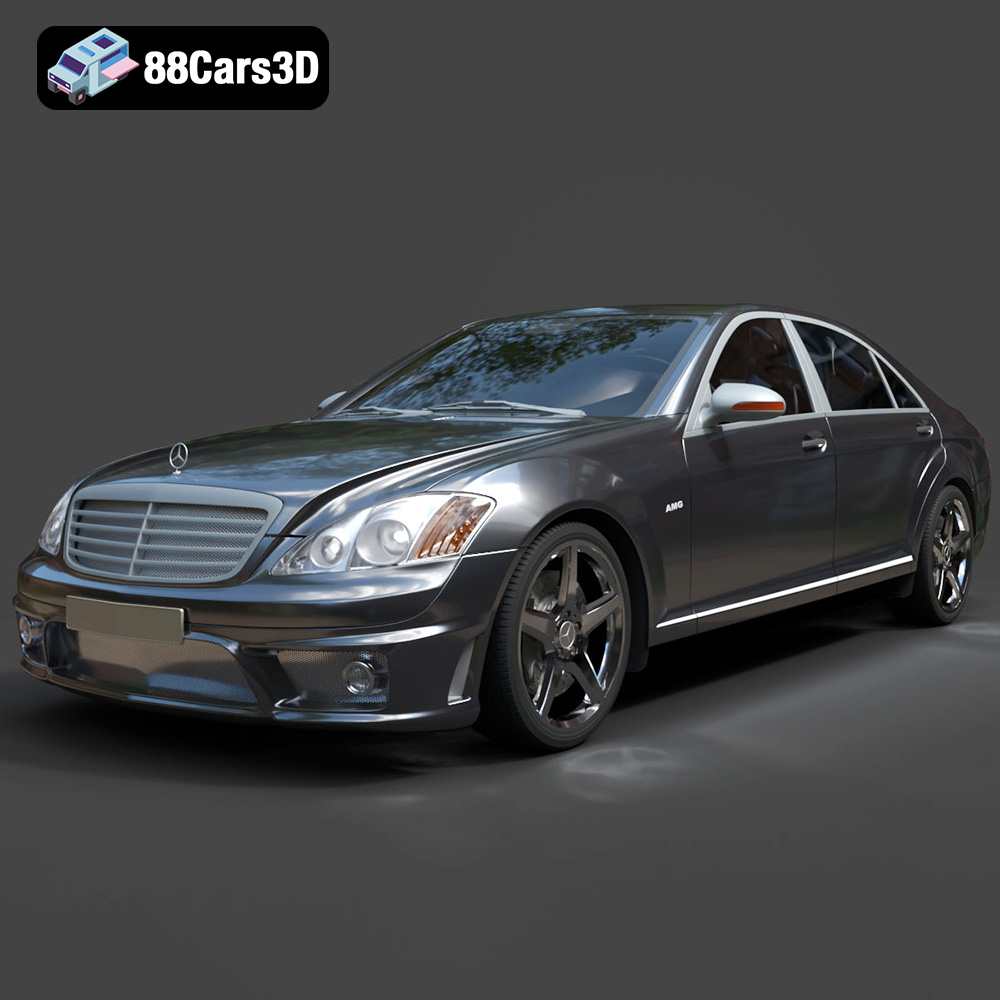
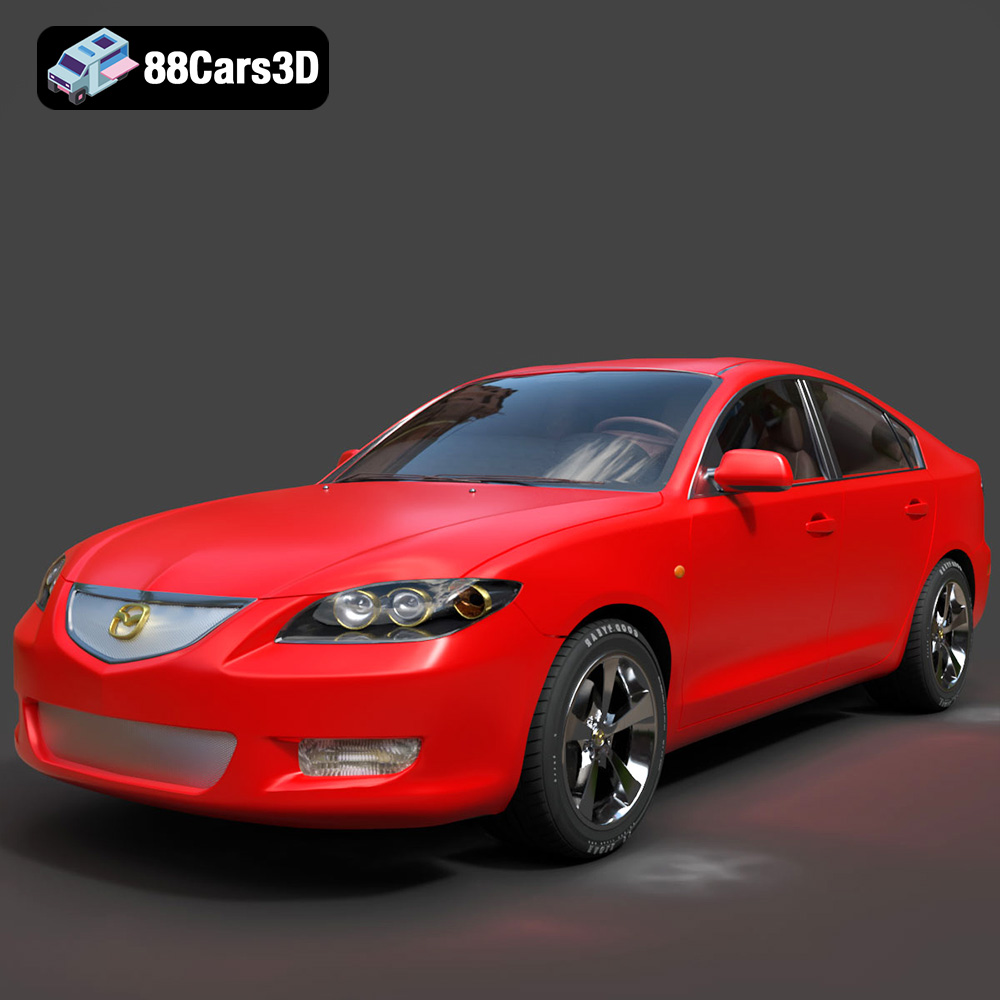
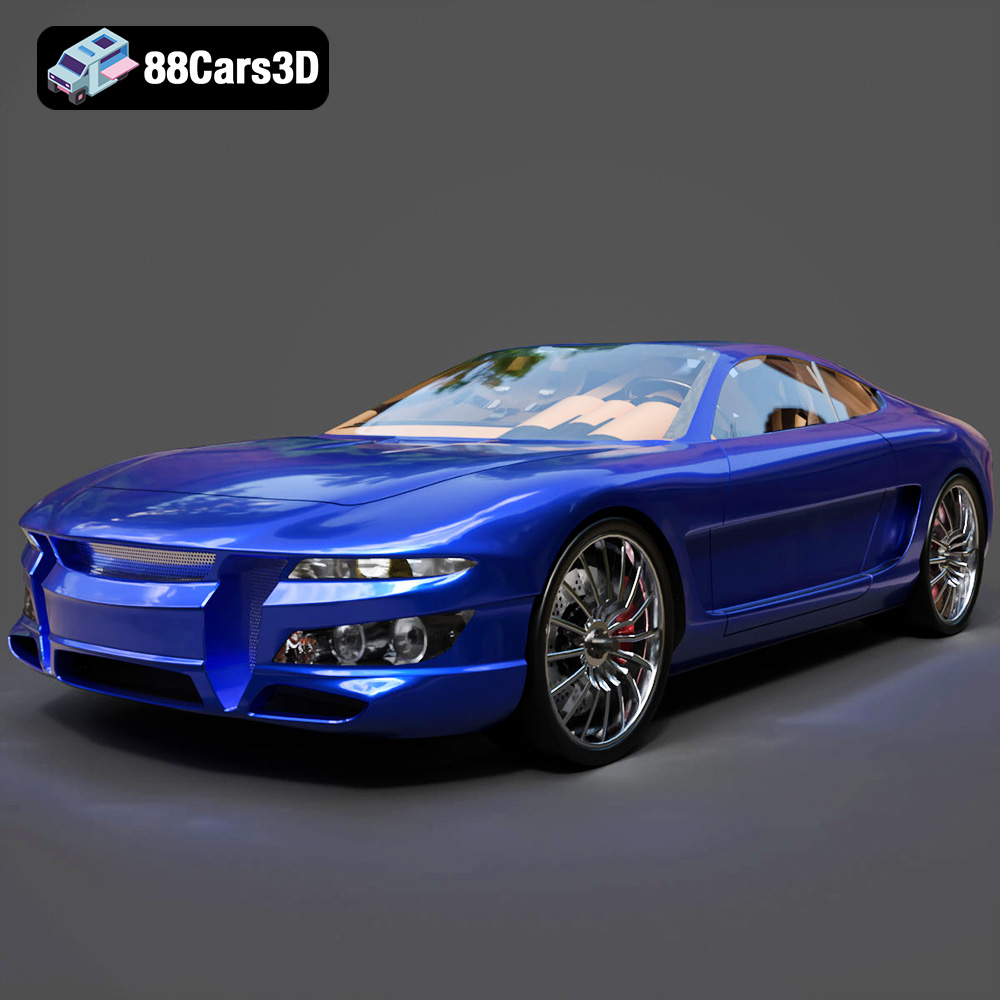
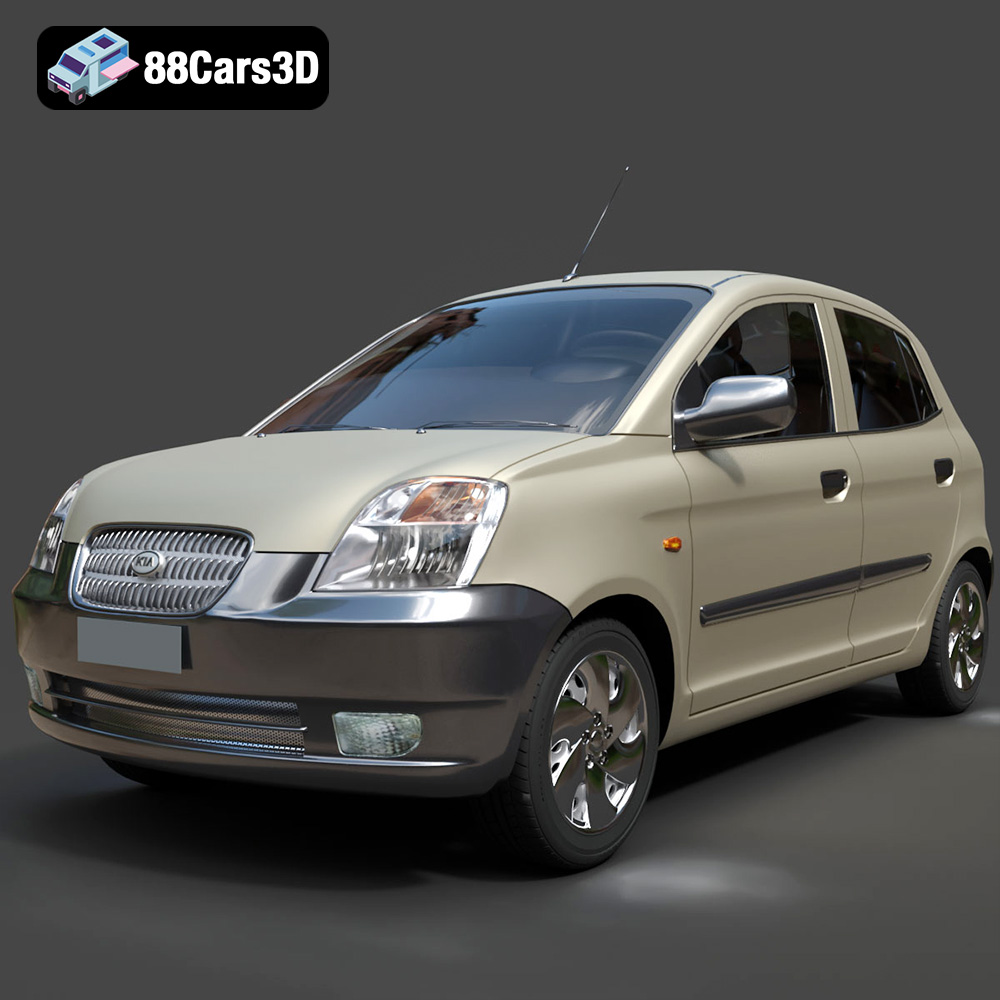
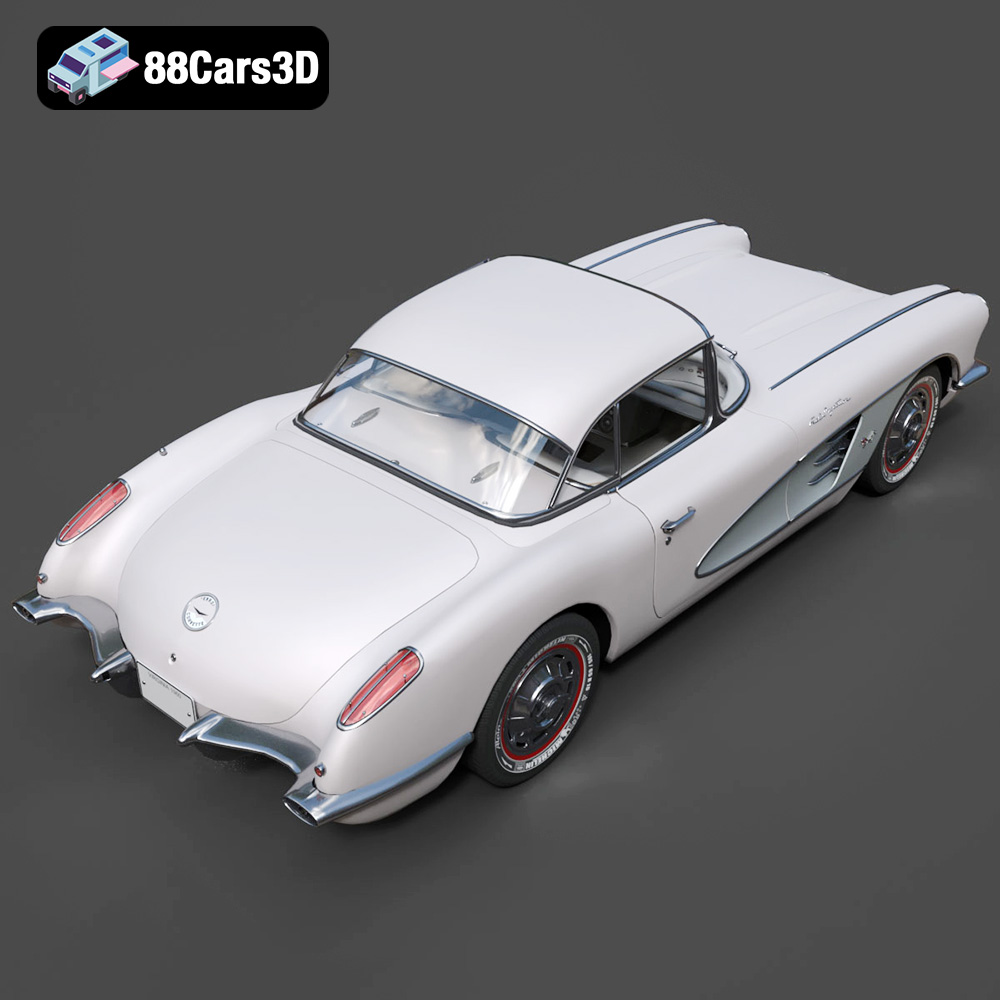
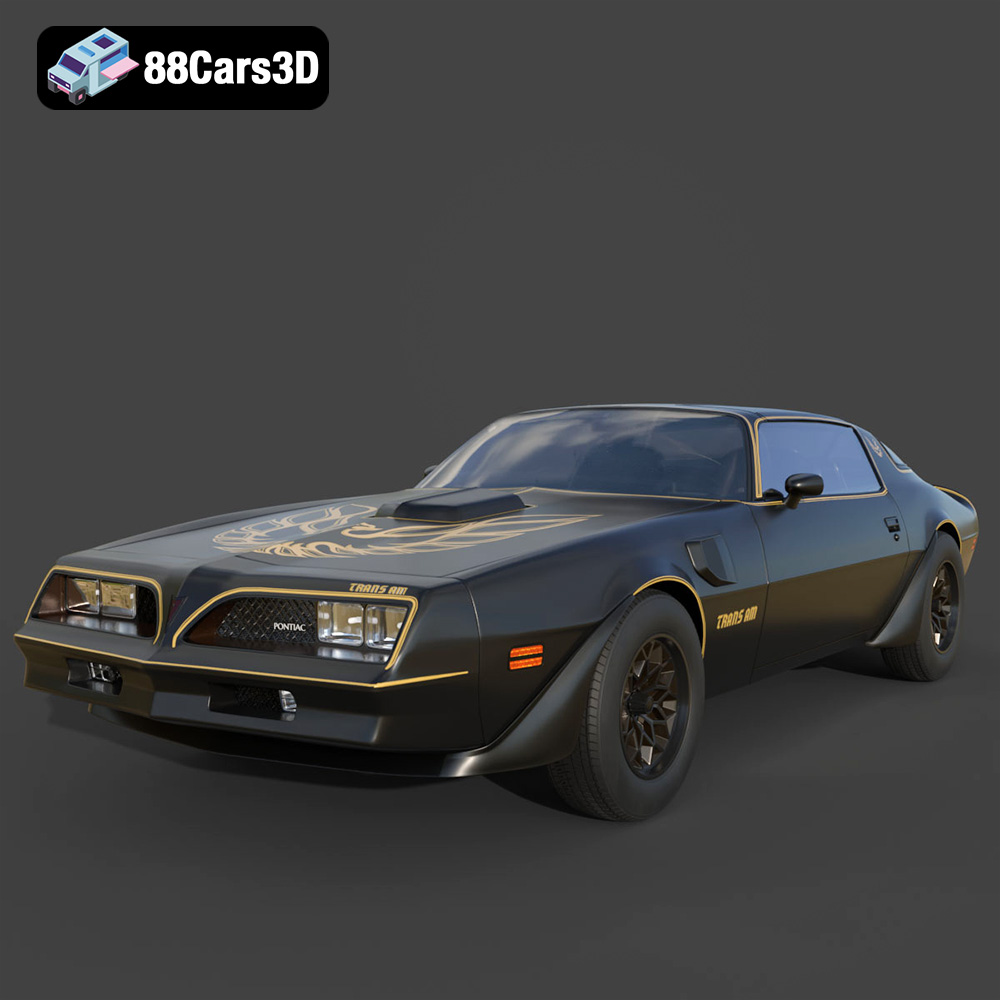
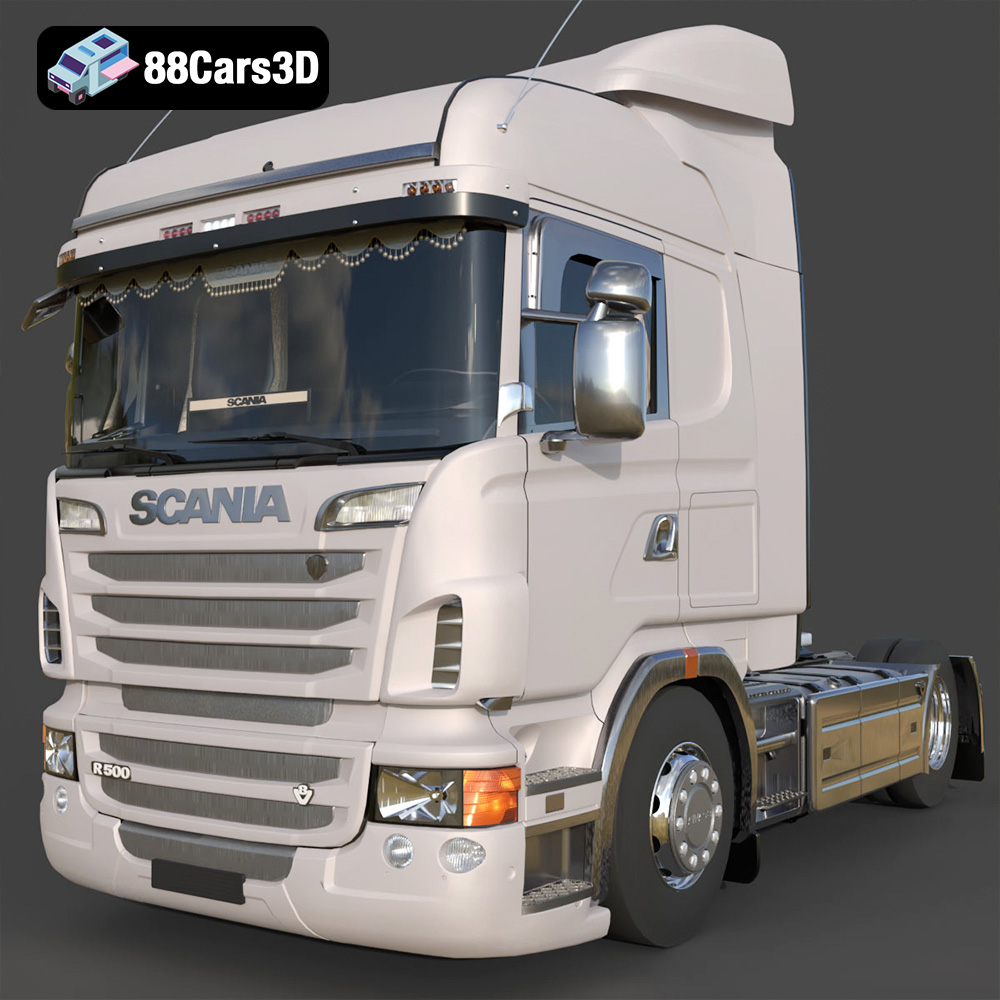
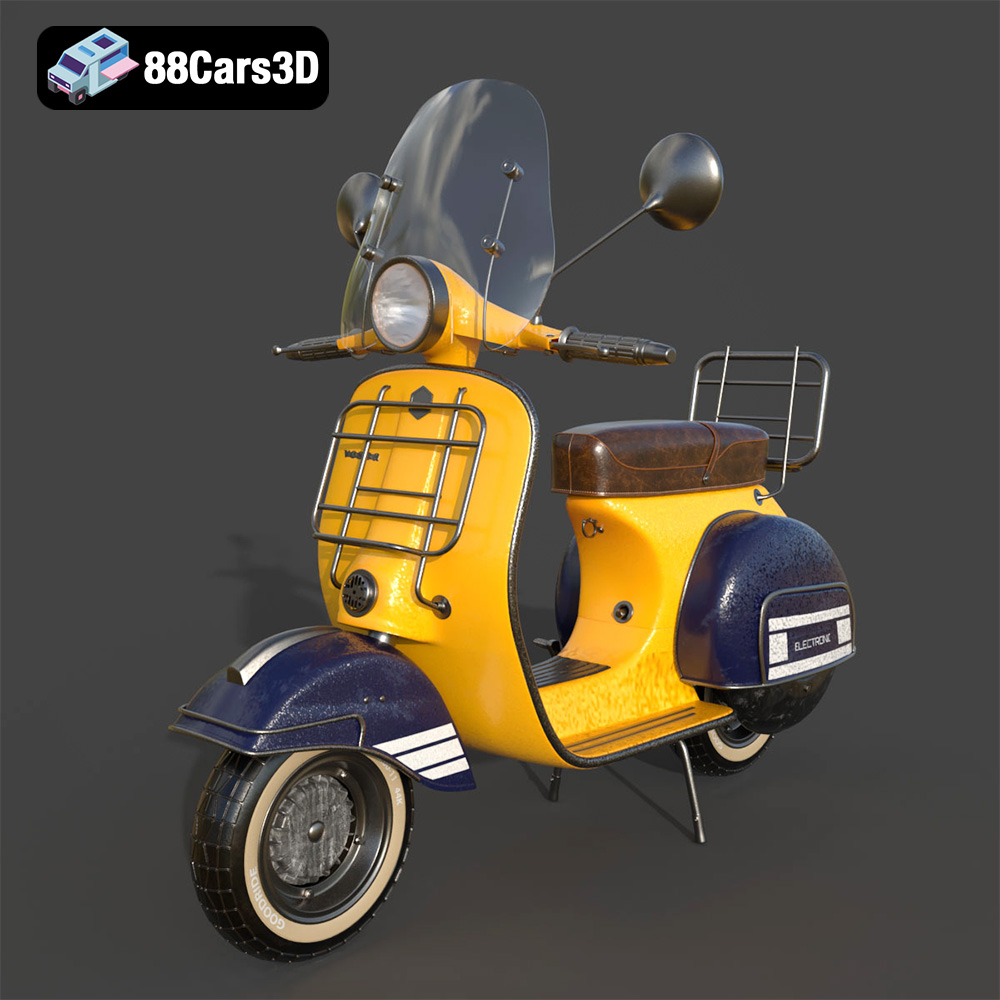
Unlocking the Power of the Digital Garage: A Deep Dive into High-Quality 3D Car Models for Rendering and Game Development
The automotive world has always been at the forefront of design, engineering, and innovation. Today, a significant part of that innovation unfolds not on physical roads or factory floors, but within the intricate digital realms of 3D software. High-quality 3D car models are the foundational blocks for everything from breathtaking marketing visuals and immersive virtual showrooms to realistic video game environments and cutting-edge AR/VR experiences. These aren’t just simple digital representations; they are complex assemblies of geometry, textures, and material definitions, meticulously crafted to replicate their real-world counterparts with astonishing fidelity.
The demand for these assets is insatiable, driven by industries constantly striving for greater realism, efficiency, and interactivity. Whether you’re an automotive designer visualizing a new concept, a marketing agency producing a dazzling commercial, or a game developer needing a fleet of vehicles for your next AAA title, the quality of your 3D car models directly impacts the final output. This comprehensive guide will explore the technical intricacies, workflows, and applications of these digital masterpieces, revealing how they are created, optimized, and ultimately brought to life through advanced automotive rendering and seamless integration into interactive platforms as sophisticated game assets. Platforms like 88cars3d.com provide a vital resource for professionals seeking these high-caliber assets, ensuring projects start with a strong visual foundation.
The Art and Science of Crafting High-Fidelity 3D Car Models
Creating a realistic 3D car model is a labor-intensive process that blends artistic vision with rigorous technical execution. It begins long before any polygons are laid down, rooted in deep understanding of automotive design, engineering, and surface aesthetics.
From Blueprint to Polygon: Initial Modeling Phases
The journey of a 3D car model often starts with meticulous reference gathering. This includes blueprints, detailed photographs from multiple angles, and even CAD data if available. These references are crucial for establishing accurate proportions and capturing the unique design language of a vehicle.
- Setting up References: In software like 3ds Max or Blender, artists typically load orthogonal views (front, side, top, back) into the viewport as image planes. This provides a precise guide for tracing and blocking out the primary forms.
- Blocking Out Proportions: The initial stage involves creating a simplified, low-polygon mesh that captures the overall silhouette and major masses of the car. This ‘blocking’ phase is critical for ensuring correct scale and fundamental shape before delving into detail. Artists focus on main volumes like the body, wheel arches, roofline, and window frames using basic primitives and polygonal modeling tools.
- Primary Surface Modeling and Topology: As the model progresses, attention shifts to maintaining clean and efficient topology. This means primarily using quadrilateral polygons (quads) and ensuring sensible edge flow. Good topology is paramount for smooth subdivision surface modeling, accurate deformation (should the model be animated), and clean UV mapping. Key areas like panel lines, character lines, and curvature transitions are carefully sculpted to reflect the real car’s design, paying close attention to highlights and reflections that reveal surface quality.
Detailing and Refinement: Adding Realism
Once the primary forms are established, the true complexity of a high-fidelity model emerges through detailing and refinement.
- Subdivision Surface Modeling: Many high-quality 3D car models are built using subdivision surface techniques (e.g., Turbosmooth in 3ds Max, Subdivision Surface modifier in Blender). This allows for a relatively low-polygon base mesh to be smoothed into a high-resolution, organic surface, facilitating rapid iteration and control over curvature. Fine details like sharp creases, panel gaps, and complex intersections are often achieved by adding ‘support loops’ – extra edge loops that tighten the subdivision effect.
- Interior Modeling and Components: A truly comprehensive 3D car model extends beyond the exterior. Detailed interiors, including dashboards, seats, steering wheels, and door panels, are modeled with similar precision. Components like wheels, tires (with tread patterns), brake calipers, suspension elements, and intricate headlight/taillight assemblies are also meticulously crafted, often as separate, highly detailed sub-objects.
- Advanced Techniques: For ultra-precision and complex cutouts (like air vents or grilles), techniques such as Boolean operations followed by careful cleanup and retopology are employed. This ensures sharp, accurate edges without compromising mesh integrity. Retopology is also crucial for optimizing high-detail sculpts or CAD imports into clean, animation-friendly meshes, especially when preparing models for real-time environments as game assets.
Understanding 3D Model File Formats
Choosing the correct file format for your 3D car model is as crucial as the modeling itself, directly impacting workflow efficiency, compatibility across software, and final application. Each format is designed with specific strengths and use cases in mind, making an informed decision vital for any project. Whether you’re aiming for photorealistic automotive rendering or optimized game assets, understanding these formats is fundamental.
Versatile Formats for Diverse Workflows
- .blend (Blender): This is Blender’s native file format, saving the entire scene data including geometry, materials, textures (packed within the file or linked), lighting, cameras, animations, and modifiers. Its primary advantage is retaining full editability within Blender, allowing for complete control over every aspect of the model. It’s ideal for projects primarily developed and managed within the Blender ecosystem, offering a complete and portable project archive.
- .max (3ds Max): Similar to .blend, the .max file is the native format for Autodesk 3ds Max, storing all scene information. This includes complex hierarchies, modifiers, animation paths, rigging data, and advanced material setups often leveraging renderers like V-Ray or Corona. .max files are indispensable for large-scale architectural visualization, advanced animation, and high-end automotive rendering projects that require the extensive toolset and robust renderer integrations of 3ds Max. Full editability is guaranteed within its native environment.
- .fbx (Filmbox): Developed by Autodesk, FBX is arguably the most widely adopted interchange format for 3D assets, especially popular in game development pipelines. It supports geometry, UVs, textures (often linked, though embedding is possible), materials (basic properties), cameras, lights, and crucially, animation and rigging data. Its strength lies in its ability to transfer complex animated scenes between different 3D applications (e.g., 3ds Max to Unreal Engine or Unity). For creating game assets, FBX is the go-to choice due to its excellent support for skeletal animations and efficient data transfer.
- .obj (Wavefront OBJ): This is a universal geometry definition file format, highly compatible across virtually all 3D software. OBJ files primarily store vertex positions, UV coordinates, normals, and polygonal faces. They can link to an accompanying .mtl (material template library) file for basic material properties and texture references. While it doesn’t support animation or complex hierarchies like FBX, its simplicity and wide compatibility make it excellent for transferring static meshes and basic models between different platforms. It’s a reliable choice for ensuring cross-software interoperability of core geometry.
Specialized Formats for Specific Applications
- .glb (GL Transmission Format Binary): GLB is a binary version of the glTF (Graphics Language Transmission Format), designed specifically for efficient transmission and loading of 3D scenes and models on the web and in AR/VR applications. It’s self-contained, packing geometry, materials, textures, and animations into a single file. GLB is optimized for minimal file size and fast parsing, making it perfect for interactive web experiences, social media filters, and augmented reality applications where lightweight and rapid display are paramount. For displaying 3D car models in a browser or mobile AR, GLB is an increasingly dominant choice.
- .stl (Stereolithography): STL is the industry standard format for 3D printing. It represents a 3D object as a collection of unconnected triangular facets, defining only the surface geometry without color, texture, or material information. While excellent for outputting models for physical fabrication, its tessellated nature means it’s not suitable for rendering or animation where smooth, editable surfaces are required. For producing scale models or prototypes of 3D car models, STL is essential.
- .ply (Polygon File Format): PLY is a versatile polygon format often used for storing 3D data from 3D scanners, CAD systems, and scientific applications. It can store various properties for each vertex (color, normals, confidence values) and face (color, texture coordinates), offering more flexibility than OBJ in terms of per-vertex data. It’s less common for general 3D asset exchange but invaluable for precision mesh data, especially in fields requiring accurate capture and analysis of physical objects.
- .unreal (Unreal Engine Asset): While not a single file extension in the traditional sense like FBX, “Unreal” assets typically refer to a pre-packaged, optimized collection of files (often derived from FBX imports) specifically configured for Unreal Engine. This might include static meshes, skeletal meshes, materials (using Unreal’s node-based material editor), textures, collision meshes, and even Blueprints. These assets are ready to be dragged and dropped into an Unreal Engine project, often distributed as part of an Unreal Engine project file or content pack. They come with optimized settings for real-time rendering, making them invaluable for game developers or virtual production studios seeking engine-ready game assets with minimal setup time. Buying such assets, potentially from a curated marketplace like 88cars3d.com, saves significant development time.
Mastering Automotive Rendering: Bringing Cars to Life
Rendering is the process of generating a photorealistic image from a 3D car model. It’s where all the meticulous modeling, texturing, and lighting efforts converge to create a compelling visual. Achieving photorealism in automotive rendering demands a deep understanding of light, materials, and composition.
Lighting Techniques for Photorealism
Lighting is arguably the most critical element in convincing rendering. It defines shape, mood, and realism.
- HDRI Environments (High Dynamic Range Images): HDRI maps are photographic captures of real-world lighting environments. When used as illumination sources in rendering software (e.g., V-Ray, Corona, Arnold, Cycles), they provide incredibly realistic global illumination, reflections, and subtle color nuances that mimic actual outdoor or indoor scenes. This is indispensable for replicating how light interacts with a car’s reflective surfaces in a specific setting.
- Studio Lighting Setups: For product shots or showcasing design details, virtual studio lighting is often employed. This typically involves a combination of area lights, softboxes, and spotlights carefully positioned to highlight contours, reflections, and paint finishes. Common setups include three-point lighting (key, fill, back light) and complex array lighting to create dramatic reflections along the bodywork.
- Importance of Reflections and Refractions: A car’s surface is a complex interplay of reflections. Accurate reflections of the environment, light sources, and even other parts of the car itself are crucial. Similarly, glass components (windshields, windows, headlights) require precise refraction calculations to convey depth and material authenticity.
Material Creation and PBR Workflows
The materials applied to a 3D car model dictate how light interacts with its surfaces, from the glossy paint to the intricate leather of the interior.
- Physically Based Rendering (PBR) Principles: Modern rendering relies heavily on PBR workflows. This approach simulates how light interacts with materials in the real world, ensuring consistency across different lighting conditions. Key PBR maps include:
- Albedo/Base Color: The inherent color of the surface, free from lighting information.
- Normal Map: Adds surface detail without increasing polygon count, simulating bumps and grooves.
- Roughness/Glossiness Map: Controls the specularity and blurriness of reflections.
- Metallic Map: Defines which parts of a material behave like metal and which behave like a dielectric (non-metal).
- Ambient Occlusion (AO): Simulates soft shadows where surfaces are close together.
- Layering Materials for Automotive Finishes: Car paint is a prime example of complex material layering. It typically involves a base metallic flake layer, followed by a clear coat that provides depth, gloss, and reflection. Other materials like rubber for tires, chrome for trim, glass, and various interior fabrics each require unique PBR setups.
- Displacement and Bump Mapping: For subtle surface textures like tire treads, leather grain, or fine panel details, displacement and bump maps add unparalleled realism without excessive geometric detail. Displacement maps actually modify the mesh geometry, while bump maps only simulate the effect of height variation through normal perturbation.
Post-Production and Compositing
The rendered image is rarely the final product. Post-production in software like Adobe Photoshop or After Effects is essential for polishing the image.
- Color Grading and Tone Mapping: Adjusting colors, contrast, and overall tonal balance to enhance mood and visual appeal.
- Lens Effects: Adding subtle photographic imperfections like depth of field (blurring parts of the image), bloom (light spill from bright areas), and lens flares for cinematic realism.
- Motion Blur: For animated sequences, accurate motion blur is critical for conveying speed and dynamism. This can be rendered in 3D or added in post-production.
- Compositing Elements: Combining render passes (e.g., beauty, reflections, shadows, AO) for greater control, and integrating the car into background plates or environments.
Integrating 3D Car Models into Game Development
While automotive rendering focuses on static images or pre-rendered animations, game development demands real-time performance. This necessitates significant optimization and specialized workflows to transform high-fidelity 3D car models into efficient game assets.
Optimization for Real-time Performance
Game engines must render thousands or millions of polygons per frame, often at 60 frames per second or higher. Unoptimized models can cripple performance.
- Poly Count Budgets and LODs (Level of Detail): Game-ready models adhere to strict polygon count budgets. A single high-resolution car might have hundreds of thousands or even millions of polygons for cinematic rendering. For games, multiple versions of the model (LODs) are created: a high-poly version for close-up views, and progressively lower-poly versions that are swapped in when the car is further from the camera. This saves immense processing power.
- Efficient UV Mapping for Texture Atlases: Textures are a significant performance factor. Instead of many small textures, game assets often use texture atlases – a single large texture sheet containing all the necessary maps (Albedo, Normal, Roughness, etc.) for multiple parts of the model. This requires careful UV unwrapping to minimize seams and maximize texture space utilization.
- Occlusion Culling and Draw Calls: Game engines use techniques like occlusion culling to avoid rendering objects that are hidden from view. Efficient asset management and geometry are crucial to minimize draw calls – the number of times the CPU tells the GPU to render something – which is a major performance bottleneck.
Asset Pipeline with Unreal Engine and Unity
Modern game engines provide robust pipelines for importing and configuring 3D car models.
- Import Process (FBX): The FBX format is the de facto standard for importing game assets into engines like Unreal Engine and Unity. It efficiently transfers geometry, UVs, basic materials, and skeletal animation. Upon import, specific settings are crucial, such as collision generation, material creation, and LOD group setup.
- Material Setup (PBR): Once imported, the raw geometry needs game engine materials. These are typically PBR materials, where the previously created Albedo, Normal, Roughness, and Metallic maps are plugged into the engine’s shader graphs (e.g., Unreal’s Material Editor, Unity’s Shader Graph). Optimizing these materials for performance (e.g., using masked vs. translucent shaders appropriately) is key.
- Collision Meshes: For physics and interaction, cars require collision meshes. These are simplified, low-polygon versions of the car’s geometry, invisible to the player but used by the physics engine to detect impacts, calculate forces, and allow players to interact with the environment. Often, primitive collision shapes (boxes, capsules) are used for efficiency, or a convex hull generated from the model itself.
Animation and Rigging for Game Assets
Cars in games are rarely static. They drive, their wheels turn, doors open, and suspensions articulate.
- Simple Rigs for Interactive Elements: While full character rigs are complex, cars require simpler rigs. This typically involves rigging the wheels to rotate independently, adding joints for doors to open and close, and sometimes simple suspension articulation. These rigs are defined by a skeletal structure (bones) that can be animated or driven by physics.
- Skeletal Meshes vs. Static Meshes: Parts of the car that deform or animate (like the main chassis if suspension is dynamic, or doors) are typically imported as skeletal meshes. Static meshes are used for non-moving parts or for objects that are simply rigid bodies.
- Blueprint/Scripting for Interactivity: In Unreal Engine, Blueprints are used to define the car’s behavior: how it accelerates, brakes, turns, and how interactive elements like headlights or opening doors respond to player input. In Unity, C# scripts fulfill a similar role, controlling physics, animation, and UI interaction.
Real-World Applications and Case Studies
The utility of high-quality 3D car models extends far beyond digital art and gaming, impacting various industries and creating new possibilities for interaction and visualization.
Automotive Marketing and Visualization
The automotive industry leverages 3D car models extensively for marketing, often long before a physical vehicle is produced.
- Virtual Showroom Configurators: Many car manufacturers offer online configurators where customers can customize a vehicle in 3D, changing colors, wheels, and interior trims in real-time. This interactive experience, powered by optimized game assets and real-time rendering, significantly enhances engagement.
- Virtual Launch Events and Product Showcases: With increasing reliance on digital communication, virtual product launches and immersive showcases are becoming standard. Photorealistic 3D models allow manufacturers to present new vehicles with stunning fidelity, regardless of physical location.
- Empowering Agencies: Marketing and advertising agencies rely on readily available, high-quality 3D car models from resources like 88cars3d.com. These assets enable them to quickly produce compelling visuals for print ads, TV commercials, and digital campaigns without the cost and logistical challenges of physical photography or videography.
AR/VR Experiences and Interactive Training
Augmented Reality (AR) and Virtual Reality (VR) are transforming how we interact with cars, offering immersive experiences.
- Virtual Test Drives: VR allows users to “sit” inside a car and even “drive” it in a simulated environment, providing a realistic sense of scale and presence. This is invaluable for showcasing new models or for driver training simulations.
- Maintenance and Training Simulations: AR/VR applications are used to train technicians on complex vehicle maintenance procedures. Overlays of 3D car models (often with cutaway views or exploded diagrams) can guide users through step-by-step processes, reducing errors and training costs.
- Immersive Product Tours: Potential buyers can use AR apps on their phones to place a virtual 3D car model in their driveway or garage, exploring features and scale in their actual environment. GLB format is particularly suited for these lightweight, browser-based, or mobile AR experiences.
Beyond the Screen: 3D Printing and Prototyping
While often associated with digital displays, 3D car models also have a tangible output through 3D printing.
- Rapid Prototyping of Scale Models: Designers and engineers use 3D printing (using STL or PLY formats) to quickly create physical scale models of their digital designs. This allows for tactile evaluation of proportions, aesthetics, and ergonomics early in the design process, identifying potential issues before committing to expensive full-scale prototypes.
- Design Verification: From small components to entire car bodies, 3D printed models serve as crucial tools for design verification, material testing, and assembly checks, bridging the gap between digital ideation and physical manufacturing.
Conclusion
The journey of a 3D car model, from its initial conceptualization and meticulous digital sculpting to its breathtaking realization through automotive rendering and seamless integration as optimized game assets, is a testament to the confluence of art and engineering. These digital artifacts are more than just pretty pictures; they are versatile tools that drive innovation, accelerate design cycles, and create immersive experiences across a multitude of industries.
As technology continues to advance, the demand for ever more realistic, efficient, and versatile 3D car models will only grow. Understanding the intricacies of modeling, the nuances of different file formats, the artistry of rendering, and the technical demands of real-time optimization is essential for anyone operating in this dynamic field. Resources like 88cars3d.com play a critical role in empowering professionals and enthusiasts alike by providing access to a curated selection of high-quality assets, ensuring that projects can begin with the strongest possible foundation. The digital garage is here, and it’s driving the future of automotive design and visualization.
Featured 3D Car Models