

Populating the Digital World: Mastering Crowd Simulation with Unreal Engine’s Mass Entity System for Automotive Visualization and Beyond
In the quest for ultimate realism within real-time environments, creating believable, dynamic, and populated scenes is as crucial as rendering a perfectly polished vehicle. Imagine showcasing a stunning 3D car model, perhaps sourced from a premium marketplace like 88cars3d.com, only for it to sit static in an empty, lifeless world. The magic truly happens when that vehicle is surrounded by the hustle and bustle of a realistic urban street, a cheering crowd at a race track, or a busy showroom floor. This is where the challenge of large-scale entity management comes into play – a challenge elegantly solved by Unreal Engine’s formidable Mass Entity System (MES).
The Mass Entity System is a paradigm shift in how developers can manage vast numbers of interactive objects with unparalleled performance and scalability. While its applications are broad, it truly shines in crowd simulation, allowing artists and developers to breathe life into environments without compromising frame rates. This comprehensive guide will delve deep into the MES, explaining its core principles, practical implementation for dynamic crowd scenes, and how it seamlessly integrates with other Unreal Engine features to elevate your automotive visualizations, game development projects, and virtual productions. You’ll learn how to transform static backdrops into vibrant, believable settings, making your high-fidelity car models from 88cars3d.com stand out even more amidst a truly immersive world.
Understanding the Mass Entity System: A Foundation for Scale and Performance
At its core, the Mass Entity System (MES) represents Epic Games’ embrace of Data-Oriented Design (DOD) and the Entity-Component-System (ECS) architecture. Unlike traditional object-oriented programming (OOP) where entities are heavy-weight Actors with integrated data and logic, MES decouples these elements for vastly improved performance, particularly when dealing with thousands or even millions of entities. This shift is critical for modern game development and high-fidelity real-time rendering, where scalability and memory efficiency are paramount. The system is designed from the ground up to leverage modern CPU architectures, minimizing cache misses and maximizing parallel processing capabilities.
For automotive visualization, this means you can populate a meticulously crafted city street, complete with high-quality car models, with thousands of pedestrians, cyclists, or even background vehicles, all moving and interacting dynamically, without bringing your frame rate to its knees. This level of environmental fidelity elevates the realism of your scene, making your vehicles from platforms like 88cars3d.com appear truly integrated into a living world rather than isolated models. The performance gains come from how data is stored and processed: instead of iterating over disparate Actor objects, MES processes contiguous blocks of data (fragments) for entities with similar characteristics (archetypes), leading to highly efficient CPU utilization.
Data-Oriented Design vs. Actor-Centric Approach
Traditional Unreal Engine development often relies on the Actor model, where an Actor encapsulates its own data, behavior, and visual representation. While flexible for individual, complex objects, this approach can become a bottleneck when instantiating thousands of similar entities. Each Actor carries overhead, and their data might be scattered across memory, leading to frequent cache misses during processing. Data-Oriented Design (DOD), as implemented in MES, flips this on its head. It prioritizes the layout and access patterns of data in memory. Instead of processing objects, you process data. This means that all similar data components (fragments) for multiple entities are stored contiguously. When a Processor operates on this data, it can efficiently read and write to large blocks of memory, fully utilizing CPU caches and enabling highly parallel operations. For example, a “MoveEntitiesProcessor” can iterate through thousands of position and velocity fragments much faster than an “UpdatePosition” function called on thousands of individual Actor objects.
Key Terminology: Entities, Fragments, and Processors
- Entity: A lightweight ID representing a unique object in the Mass world. It holds no data itself but points to a collection of fragments.
- Fragment: A simple data structure (e.g., `FMassLocationFragment`, `FMassVelocityFragment`, `FMassCrowdAnimationFragment`). Fragments define the properties of an entity. They are pure data, making them extremely memory-efficient and easy to process in bulk.
- Processor: The logic unit that operates on entities based on their fragments. Processors run on the game thread or as part of a task graph, performing operations like updating positions, checking for collisions, or changing animation states. A `MassMovementProcessor` might update `FMassLocationFragment` based on `FMassVelocityFragment` for all entities simultaneously.
- Archetype: A unique combination of fragments. Entities sharing the same archetype are stored together, optimizing data access. For crowd simulation, you might have archetypes for “Pedestrian,” “Bystander,” or “Runner,” each with a specific set of fragments.
- Tags: Empty fragments used for filtering entities or marking them for specific behaviors without adding data overhead. For instance, a `FMassTag_RequiresNavMesh` tag could be used by a navigation processor.
Understanding these core concepts is fundamental to leveraging the power of Mass. For detailed technical specifications and further reading on the Mass Entity System, you can always consult the official Unreal Engine documentation at https://dev.epicgames.com/community/unreal-engine/learning.
Setting Up Crowd Simulation with Mass Framework
Implementing crowd simulation using the Mass Entity System in Unreal Engine involves enabling specific plugins and carefully configuring the entities, their behaviors, and their interaction with the environment. This process demands a structured approach to ensure both visual fidelity and optimal performance. The Mass framework provides specialized modules like MassCrowd and MassMovement that streamline the creation of large-scale animated populations. Before diving into the technical setup, ensure you have the necessary Mass plugins enabled in your project settings: MassGameplay, MassEntity, MassMovement, MassCrowd, MassNavigation, and potentially MassSignals if you plan on complex entity-to-entity communication. Restarting the editor after enabling these is crucial.
The core of crowd spawning begins with a Mass Spawner. This is typically an Actor placed in your world that utilizes a `UMassSpawnerSubsystem` to generate entities. You’ll define an entity configuration asset, specifying the fragments that compose your crowd entities (e.g., `FMassLocationFragment`, `FMassVelocityFragment`, `FMassSkeletalMeshFragment`, `FMassCrowdAnimationFragment`). You can then use a `MassSpawnLocationProcessor` to determine where these entities appear, often driven by volumes or designated spawn points. The behavior of these entities is controlled by Mass State Trees or Behavior Trees that interact with Mass fragments. State Trees, in particular, are highly efficient for defining the various states (e.g., idle, walking, running, interacting) and transitions for crowd agents, allowing them to react intelligently to their environment, navigate pathways, and avoid collisions.
Designing Crowd Entity Archetypes
An entity archetype is a blueprint for your crowd agents, dictating which fragments an entity possesses. This is a critical design step. For instance, a “Standard Pedestrian” archetype might include `FMassLocationFragment`, `FMassVelocityFragment`, `FMassRotationFragment`, `FMassSkeletalMeshFragment` (for rendering), `FMassCrowdAnimationFragment` (for animation logic), `FMassNavigationFragment` (for pathfinding), and possibly a custom `FMassHealthFragment` if they can take damage. A “Stationary Spectator” archetype, on the other hand, might omit `FMassVelocityFragment` and `FMassNavigationFragment`, simplifying its data footprint and processing. By carefully composing archetypes, you minimize the memory footprint and processing overhead for each entity, ensuring that only the necessary data and logic are applied. This modularity is a cornerstone of MES’s efficiency, allowing for a wide variety of crowd behaviors with minimal performance impact, perfectly complementing the static fidelity of high-quality assets like the 3D car models available on 88cars3d.com.
Guiding Crowds: Pathfinding and Navigation
For realistic crowd movement, proper pathfinding and navigation are essential. The Mass Entity System integrates seamlessly with Unreal Engine’s built-in Navigation Mesh (NavMesh) system. Crowd entities equipped with `FMassNavigationFragment` can leverage the NavMesh to find paths, avoid obstacles, and navigate complex environments. A `MassNavigationProcessor` or similar custom processor will query the NavMesh and update the `FMassTargetLocationFragment` or `FMassMoveTargetFragment` of the crowd entities. The NavMesh itself is generated using `NavMeshBoundsVolume` placed in your level, defining the walkable areas. For dynamic environments or complex scenarios, you might need to combine NavMesh-based pathfinding with local steering behaviors (e.g., flocking, collision avoidance) implemented through Mass Processors. The `MassCrowd` plugin provides many foundational fragments and processors for these behaviors, offering robust solutions for guiding thousands of entities through your meticulously designed scenes, ensuring they naturally interact with elements like the detailed car models you might integrate from 88cars3d.com.
Visualizing Crowds: Rendering and Animation Strategies
Bringing thousands of crowd entities to life visually without decimating performance requires shrewd rendering and animation strategies. The Mass Entity System, by its very nature, is designed for efficient data management, which extends to how these entities are rendered and animated. The primary technique for visual representation of Mass-managed skeletal meshes is Skeletal Mesh Instancing. Instead of drawing each character individually, which would incur significant CPU overhead, Mass groups similar skeletal meshes and draws them in batches. This is crucial for maintaining high frame rates with large crowds. It’s often paired with various Level of Detail (LOD) techniques to ensure that characters further from the camera use simpler meshes and fewer bones for animation.
Mass includes robust features for Mass LODs and Culling. Entities further away can automatically switch to lower-polygon versions of their skeletal meshes, use fewer animation bones, or even transition to static billboards or impostors at extreme distances. Frustum culling (not rendering objects outside the camera’s view) and occlusion culling (not rendering objects hidden behind others) are also naturally integrated. For animation, `MassSkeletalMeshFragments` combined with `MassAnimationProcessors` handle the diverse range of movements. Instead of individual Animation Blueprints, which are costly for large numbers, Mass typically utilizes a more data-driven approach, often relying on animation sequences, blend spaces, and pose libraries directly driven by fragment data to achieve variety and realism. PBR materials for crowd characters should be optimized with shared material instances and texture atlases to minimize draw calls and memory footprint, ensuring visual consistency with high-quality assets like the 3D car models from 88cars3d.com.
Leveraging Nanite for High-Fidelity Crowds
Nanite, Unreal Engine’s virtualized geometry system, has revolutionized the handling of extremely high-polygon models. While traditionally associated with static, highly detailed environments, Nanite can also be applied to skeletal meshes for crowd characters, especially for “hero” agents or those in close-up shots. For distant crowd members, Nanite might not provide the same performance benefits as traditional instancing and aggressive LODs, as the overhead of processing individual meshes could outweigh the geometric savings. However, for a smaller number of foreground characters that need to maintain extreme detail regardless of distance, converting their skeletal meshes to Nanite can be game-changing. This allows for film-quality geometry even in real-time, blending seamlessly with the pristine details of a 3D car model from 88cars3d.com. The challenge lies in strategically balancing Nanite-enabled characters with heavily optimized, instanced characters to achieve both visual fidelity and optimal performance across the entire crowd.
Dynamic PBR Materials for Crowd Variety
To avoid a “cloned” look in your crowd simulations, visual variety is paramount. This can be achieved efficiently through intelligent PBR material design. Instead of unique materials for every character, create a master PBR material that incorporates parameters for color variations, texture offsets, and perhaps even different normal map intensities. For example, using a single material instance, you can dynamically adjust parameters like “ClothingColor,” “SkinToneHue,” or “HairTextureIndex” via Mass Fragments associated with each entity. Texture atlases, where multiple variations of clothing or facial features are packed into a single texture, are also incredibly powerful for PBR crowd characters. By adjusting UV coordinates or using texture masks driven by entity data, you can achieve a vast array of unique appearances with minimal material draw calls. This ensures that your crowds are visually diverse and believable, providing a rich, immersive context for the highly detailed automotive models you might acquire from a marketplace such as 88cars3d.com.
Interactivity, Physics, and Real-Time Environmental Integration
A truly dynamic crowd simulation goes beyond mere movement; it involves rich interactivity with the environment and other entities. The Mass Entity System facilitates sophisticated interactions, making your virtual worlds more believable. Crowd entities need to react to collisions, engage with objects, and integrate seamlessly with Unreal Engine’s advanced rendering features like Lumen and Niagara. Collision detection for Mass entities can range from simple sphere-vs-sphere checks implemented in a processor to more complex physics interactions. For large crowds, full physics simulation for every agent is often too costly. Instead, developers typically employ simplified collision volumes (e.g., capsule components) for key interactions and rely on navigation systems for path avoidance. When a crowd entity encounters a detailed car model from 88cars3d.com, for example, it can trigger a simple push-back, re-path, or even an animation response, enhancing the overall realism of the scene.
The integration of Lumen, Unreal Engine’s real-time global illumination and reflection system, is vital for grounding crowd characters within the environment. Crowd entities, whether instanced skeletal meshes or Nanite-enabled, will realistically receive bounce light and reflections from surrounding objects and surfaces, including the reflective surfaces of your automotive assets. This means their appearance dynamically adapts to changes in lighting, time of day, or the color of nearby objects, vastly improving visual coherence. Furthermore, Blueprint visual scripting can serve as a powerful bridge between high-level game logic and the low-level efficiency of Mass. While Mass Processors handle the bulk of entity updates, Blueprint can be used to trigger Mass spawning events, query entity data for UI displays, or create high-level behaviors that manipulate Mass entities indirectly. For dynamic visual effects, Niagara, Unreal Engine’s powerful particle system, can be integrated with Mass. Imagine dust clouds kicked up by a moving crowd or footstep effects that are automatically spawned and managed by a Mass Processor, adding another layer of authenticity to your crowded scenes.
Crowd-Vehicle Interaction and Collision Response
Integrating crowd entities with vehicles – particularly the high-fidelity car models from 88cars3d.com – presents a unique set of challenges and opportunities for realism. For many crowd entities, a full, per-vertex collision is impractical due to performance constraints. Instead, a common approach involves using simplified collision shapes (e.g., capsules for pedestrians, bounding boxes for cars) for broad-phase detection. A Mass Processor can then detect overlaps or hits between crowd entities and vehicle-specific collision volumes. Upon detection, a crowd agent could trigger an avoidance behavior (re-pathing around the vehicle), a simple animation (stepping back), or a physics impulse for more dramatic, fewer instances. For critical interactions, a more detailed physics simulation might be temporarily activated for a specific crowd agent. Ensuring that crowd members intelligently react to the presence and movement of vehicles adds immense depth to simulations, making automotive visualizations more interactive and believable, whether for marketing, training, or open-world gameplay.
Blueprint for High-Level Crowd Control
While Mass Processors are where the core logic and performance gains reside, Blueprint visual scripting offers an accessible way for designers and artists to control and interact with the Mass Entity System without delving into C++. Blueprint can be used to:
- Trigger Spawning: Create an event in Blueprint to spawn a specific type of crowd entity at a designated location using a Mass Spawner Actor.
- Modify Crowd Goals: Set up Blueprint logic to change the navigation targets or behavioral states for groups of Mass entities, perhaps making a crowd surge towards a specific point of interest or disperse after an event.
- Query Entity Data: Extract aggregate data from Mass entities, such as the total count of pedestrians in an area, or the average speed of a group, to drive UI elements or game logic.
- Interact with Specific Entities: While direct manipulation of individual Mass entities through Blueprint is less efficient than through Processors, Blueprint can facilitate high-level interactions, such as highlighting a specific crowd member for debugging or allowing a player character to “push” a small number of nearby agents.
This Blueprint-Mass synergy empowers a broader range of team members to contribute to complex crowd behaviors, ensuring that your dynamic scenes, featuring stunning car models from 88cars3d.com, are not only performant but also artistically controlled and reactive.
Performance Optimization and Best Practices for Large-Scale Crowds
Achieving thousands of animated, interactive crowd characters in real-time demands rigorous optimization. The Mass Entity System itself is a performance-first solution, but leveraging its full potential requires adherence to specific best practices. The goal is to maximize data locality, minimize processing overhead, and strategically manage the visual fidelity of your crowd agents across various distances. Central to this is Processor Efficiency. Processors should be lean, focused on a single task, and avoid unnecessary branching or complex calculations. Batching operations is key: instead of processing one entity at a time, processors should operate on arrays or blocks of fragments, utilizing SIMD (Single Instruction, Multiple Data) instructions where possible. Always profile your custom processors to identify bottlenecks.
Memory Management is equally crucial. Design your fragments to be as small as possible, containing only the essential data. Avoid adding large arrays or complex objects to fragments; instead, use lightweight pointers or IDs to reference shared data where appropriate. For example, instead of a `FMassMaterialFragment` holding an entire UMaterialInstance, it might hold an index into a global array of crowd materials. LOD and Culling Strategies must be meticulously fine-tuned. Implement aggressive distance culling for both geometry and animation. Beyond traditional skeletal mesh LODs, consider reducing bone count, keyframe density, or even disabling animation entirely for distant characters. At very far distances, crowd entities can transition to simple static meshes, billboards, or even be culled completely. Regularly conduct Scalability Testing by gradually increasing crowd density and profiling performance to identify and address bottlenecks early in development. Finally, consider Hardware Considerations: Mass is highly parallel, so systems with more CPU cores will generally perform better. However, memory bandwidth can also become a limiting factor, emphasizing the importance of compact fragment design.
Debugging Mass Entity Systems
Debugging a Mass Entity System can be more challenging than traditional Actor-based debugging due to its data-oriented nature and parallel processing. Unreal Engine provides powerful tools to aid this process:
- Mass Debugger: Accessible via the console command `Mass.Debug`, this visualizer overlays information about Mass entities in the viewport. You can inspect fragment data, archetype compositions, and processor activity for individual entities or groups. This is invaluable for verifying that your entities have the correct data and are being processed as expected.
- Unreal Insights: This comprehensive profiling tool is essential for understanding performance bottlenecks. You can capture traces of Mass Processors, see their execution times, identify cache misses, and analyze memory access patterns. Use Insights to pinpoint which processors are taking the most time and optimize their code.
- Logging and Console Commands: Implement robust logging within your custom processors and use console commands to temporarily enable/disable processors or adjust debug settings for specific Mass behaviors.
Effective debugging is key to unlocking the full performance potential of Mass and ensuring your crowd simulations are robust and error-free, seamlessly complementing your detailed automotive assets from 88cars3d.com.
Balancing Visual Fidelity and Performance
The eternal challenge in real-time rendering is striking the right balance between visual fidelity and performance. For crowd simulation, this often involves making careful trade-offs for character assets. While platforms like 88cars3d.com provide incredibly high-quality car models, crowd characters require a different approach:
- Polygon Counts: Keep crowd character meshes as low-poly as aesthetically acceptable, especially for distant LODs. A general guideline might be 5,000-10,000 triangles for mid-range characters, dropping to a few hundred for far LODs.
- Texture Resolutions: Use efficient texture atlases. Textures should be optimized (e.g., 2K for primary characters, 1K or less for background, heavily compressed). Leverage shared materials and material instances heavily.
- Animation Complexity: Minimize unique bone counts. Use fewer animation curves. Consider baking vertex animations for very simple, distant movements or pre-calculating animation states.
- Shading Complexity: Keep PBR materials for crowd characters relatively simple. Avoid complex shader graphs with many instructions that can increase GPU overhead.
- Occlusion Culling: Ensure your scene geometry correctly occludes crowd characters that are out of view, reducing GPU load.
By judiciously optimizing these aspects, you can render vast, believable crowds that enhance your scenes without overshadowing the detailed craftsmanship of premium assets like the 3D car models available on 88cars3d.com.
Real-World Applications: Enhancing Automotive Visualization and Games
The integration of the Mass Entity System for crowd simulation opens up a plethora of exciting possibilities across various industries, particularly in automotive visualization and game development. The ability to create large, dynamic, and performance-friendly populations transforms static environments into living, breathing worlds, significantly enhancing the immersion and realism of your projects. When you showcase a meticulously crafted 3D car model from 88cars3d.com, placing it in a busy street scene, a crowded exhibition hall, or amidst cheering fans at a race circuit instantly elevates its presence and context. This capability is invaluable for creating compelling marketing materials, engaging interactive experiences, and realistic training simulations.
In Automotive Configurators, clients can not only customize their dream car but also see it dynamically placed within a bustling city square or a serene showroom, complete with lifelike pedestrians or admiring onlookers, adding a vital layer of realism and aspiration. For Virtual Production and LED wall workflows, Mass-driven crowds are revolutionary. They allow filmmakers and content creators to instantly populate digital backdrops with thousands of extras, who can respond to on-set action or camera movements in real-time. This eliminates the need for costly physical extras or time-consuming post-production compositing, providing immediate, high-quality results. In Open-World Games, the Mass Entity System is critical for populating vast urban environments, sports stadiums, or warzones with believable AI agents, making cities feel alive and battles epic. Finally, for AR/VR Experiences, where immersion is paramount, dynamic crowds can transform a virtual car showcase from a sterile experience into a vivid, interactive journey, where the vehicle from 88cars3d.com feels tangible within a bustling virtual world.
Cinematic Storytelling with Mass and Sequencer
Unreal Engine’s Sequencer, the powerful multi-track editor for creating cinematic sequences, becomes even more potent when combined with Mass-driven crowds. While Mass handles the low-level simulation of thousands of entities, Sequencer allows you to choreograph the high-level narrative and camera work around them. Imagine a cinematic shot introducing a new car model, acquired from 88cars3d.com, as it drives through a busy street. Using Sequencer, you can keyframe the car’s path, camera movements, and cuts, while the Mass Entity System ensures the surrounding pedestrians are realistically navigating the sidewalks, reacting to the vehicle, and bringing the scene to life. You can even use Blueprint to trigger specific crowd behaviors (e.g., a group turning to look at the car, a sudden increase in pedestrian density) at precise moments within your cinematic sequence, creating truly dynamic and engaging storytelling.
Enhancing Automotive Marketing and Training Simulations
For automotive marketing, the ability to create vivid, populated environments around new vehicle releases is a game-changer. Imagine a virtual launch event where a car from 88cars3d.com is unveiled to a virtual audience of thousands, all realistically rendered and moving. Or consider interactive marketing experiences where potential buyers can explore a car in a simulated environment, with dynamic crowds reflecting real-world scenarios. In training simulations, Mass-driven crowds can simulate complex urban scenarios for autonomous vehicle development, emergency response training, or even driver education, providing a realistic and challenging environment for testing. The combination of high-fidelity car models and scalable, intelligent crowd simulations offers an unparalleled level of realism and interactivity, making virtual product showcases more impactful and training experiences more effective and immersive.
Conclusion
The Mass Entity System stands as a monumental leap forward in Unreal Engine’s capability to handle large-scale simulations, particularly crowd simulation. By embracing Data-Oriented Design, it empowers developers to create incredibly rich, dynamic, and populated environments with unprecedented performance and scalability. For anyone working in automotive visualization, game development, or virtual production, understanding and leveraging Mass is no longer an option but a necessity for pushing the boundaries of real-time rendering.
From orchestrating thousands of background pedestrians in a bustling city street to animating a cheering crowd around a race track, Mass ensures that your scenes feel alive and immersive. This vibrant context profoundly enhances the presentation of high-fidelity assets like the detailed 3D car models you can find on 88cars3d.com, grounding them in a believable world. By combining the efficiency of Mass with other powerful Unreal Engine features like Nanite, Lumen, Blueprint, and Sequencer, you gain the tools to craft experiences that are not only visually stunning but also technically robust.
We encourage you to dive into the Mass Entity System, experiment with its fragments, archetypes, and processors, and unlock the full potential of large-scale entity management. The future of interactive, populated digital worlds is here, and with Mass, you have the power to create them. Explore the official Unreal Engine documentation at https://dev.epicgames.com/community/unreal-engine/learning to begin your journey, and remember that platforms like 88cars3d.com are ready to provide the high-quality automotive assets to populate your newly vibrant virtual worlds.
Featured 3D Car Models

Cadillac CTS-V Coupe 3D Model
Meta Description:
Texture: Yes
Material: Yes
Download the Cadillac CTS-V Coupe 3D Model featuring detailed exterior styling and realistic interior structure. Includes .blend, .fbx, .obj, .glb, .stl, .ply, .unreal, and .max formats for rendering, simulation, AR VR, and game development.
Price: $13.9

Cadillac CTS SW 2010 3D Model
Texture: Yes
Material: Yes
Download the Cadillac CTS SW 2010 3D Model featuring a detailed exterior, functional interior elements, and realistic materials. Includes .blend, .fbx, .obj, .glb, .stl, .ply, .unreal, and .max formats for rendering, simulation, and game development.
Price: $10.79
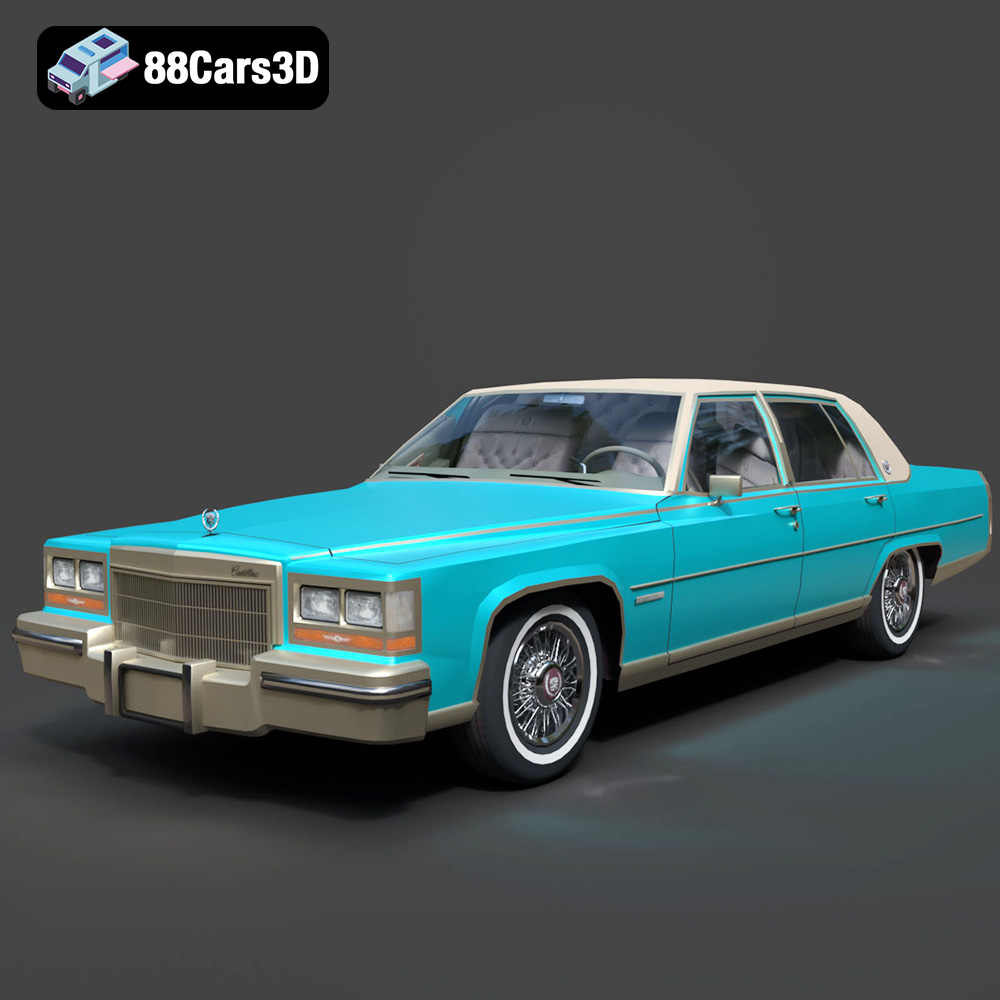
Cadillac Fleetwood Brougham 1985 3D Model
Texture: Yes
Material: Yes
Download the Cadillac Fleetwood Brougham 1985 3D Model featuring its iconic classic luxury design and detailed craftsmanship. Includes .blend, .fbx, .obj, .glb, .stl, .ply, .unreal, and .max formats for rendering, simulation, and game development.
Price: $10.79
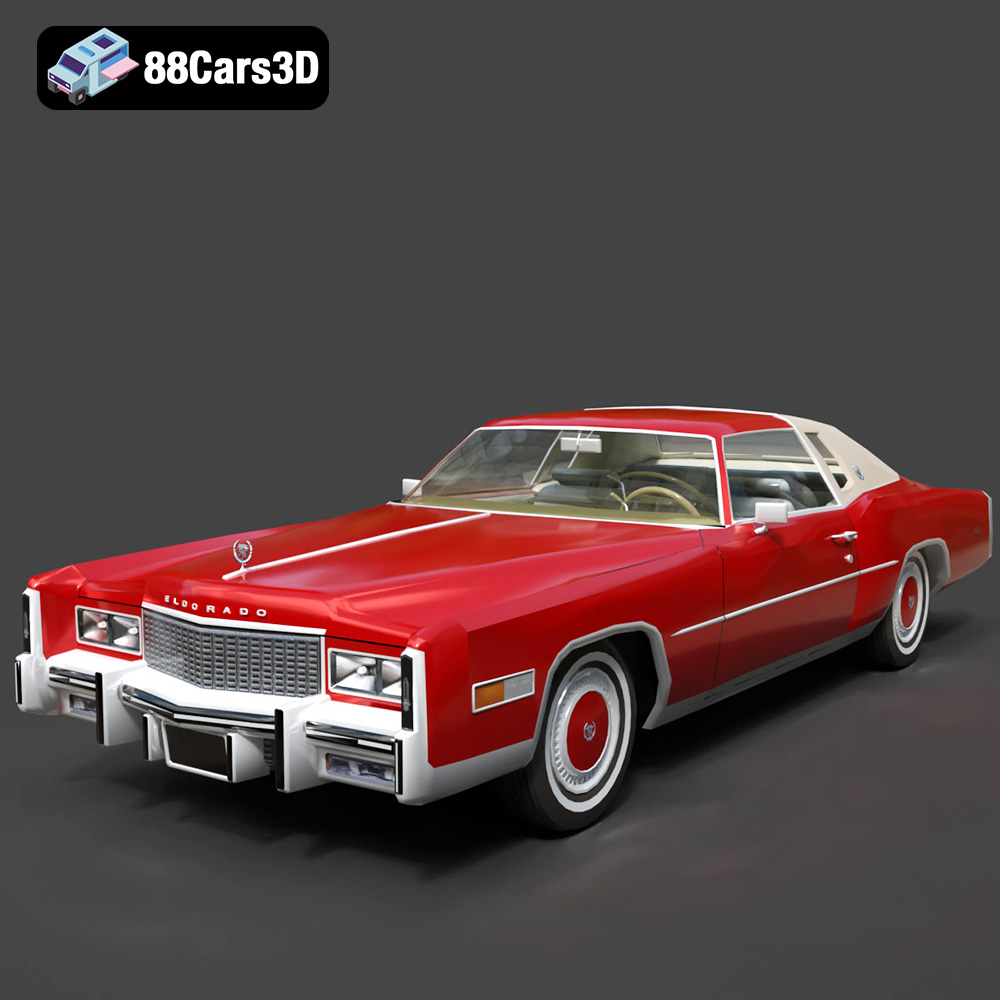
Cadillac Eldorado 1978 3D Model
Texture: Yes
Material: Yes
Download the Cadillac Eldorado 1978 3D Model featuring accurately modeled exterior, detailed interior, and period-correct aesthetics. Includes .blend, .fbx, .obj, .glb, .stl, .ply, .unreal, and .max formats for rendering, simulation, and game development.
Price: $10.79
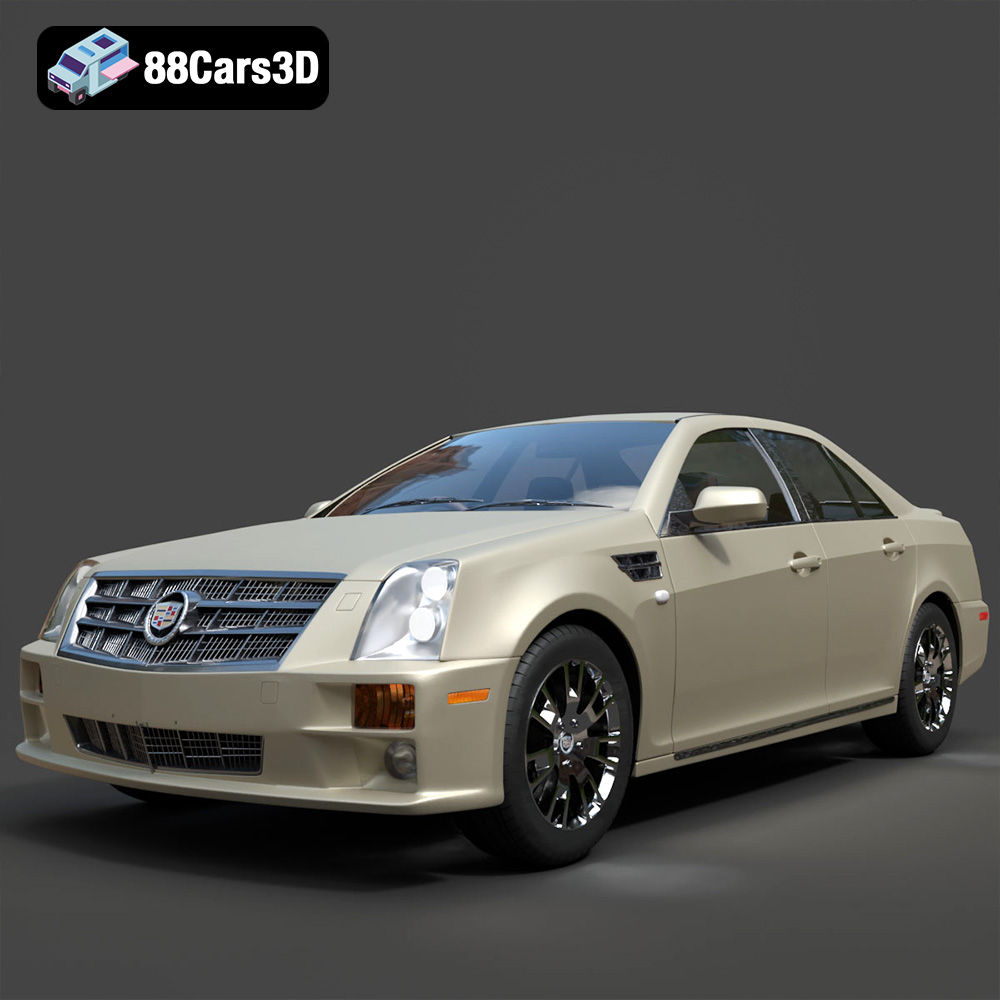
Cadillac STS-005 3D Model
Texture: Yes
Material: Yes
Download the Cadillac STS-005 3D Model featuring a detailed exterior and interior. Includes .blend, .fbx, .obj, .glb, .stl, .ply, .unreal, and .max formats for rendering, simulation, and game development.
Price: $22.79
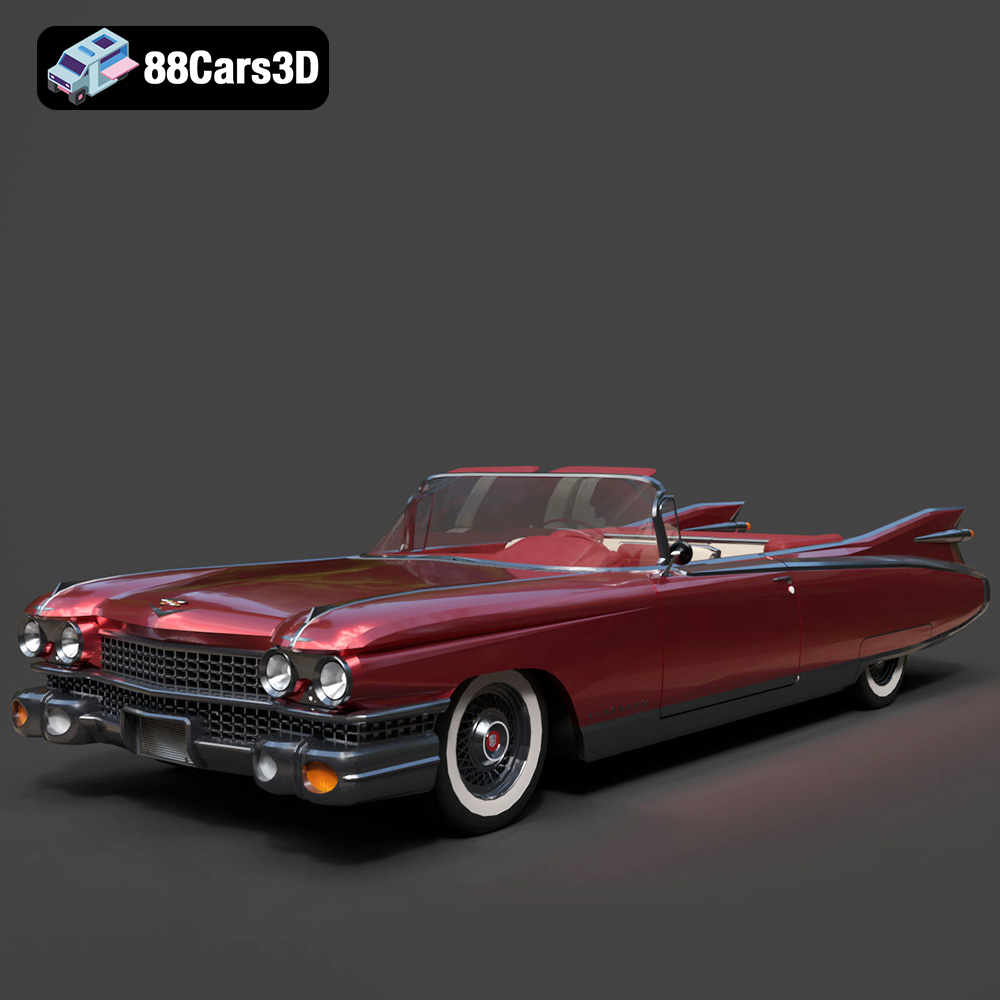
Cadillac Eldorado Convertible (1959) 3D Model
Texture: Yes
Material: Yes
Download the Cadillac Eldorado Convertible (1959) 3D Model featuring iconic fins, luxurious chrome details, and a classic vintage design. Includes .blend, .fbx, .obj, .glb, .stl, .ply, .unreal, and .max formats for rendering, simulation, and game development.
Price: $20.79

Cadillac DTS-005 3D Model
Texture: Yes
Material: Yes
Download the Cadillac DTS-005 3D Model featuring its iconic luxury design, detailed interior, and realistic exterior. Includes .blend, .fbx, .obj, .glb, .stl, .ply, .unreal, and .max formats for rendering, simulation, and game development.
Price: $10.79

Buick LeSabre 1998 3D Model
Texture: Yes
Material: Yes
Download the Buick LeSabre 1998 3D Model featuring a classic American full-size sedan design. Includes .blend, .fbx, .obj, .glb, .stl, .ply, .unreal, and .max formats for rendering, simulation, and game development.
Price: $10.79
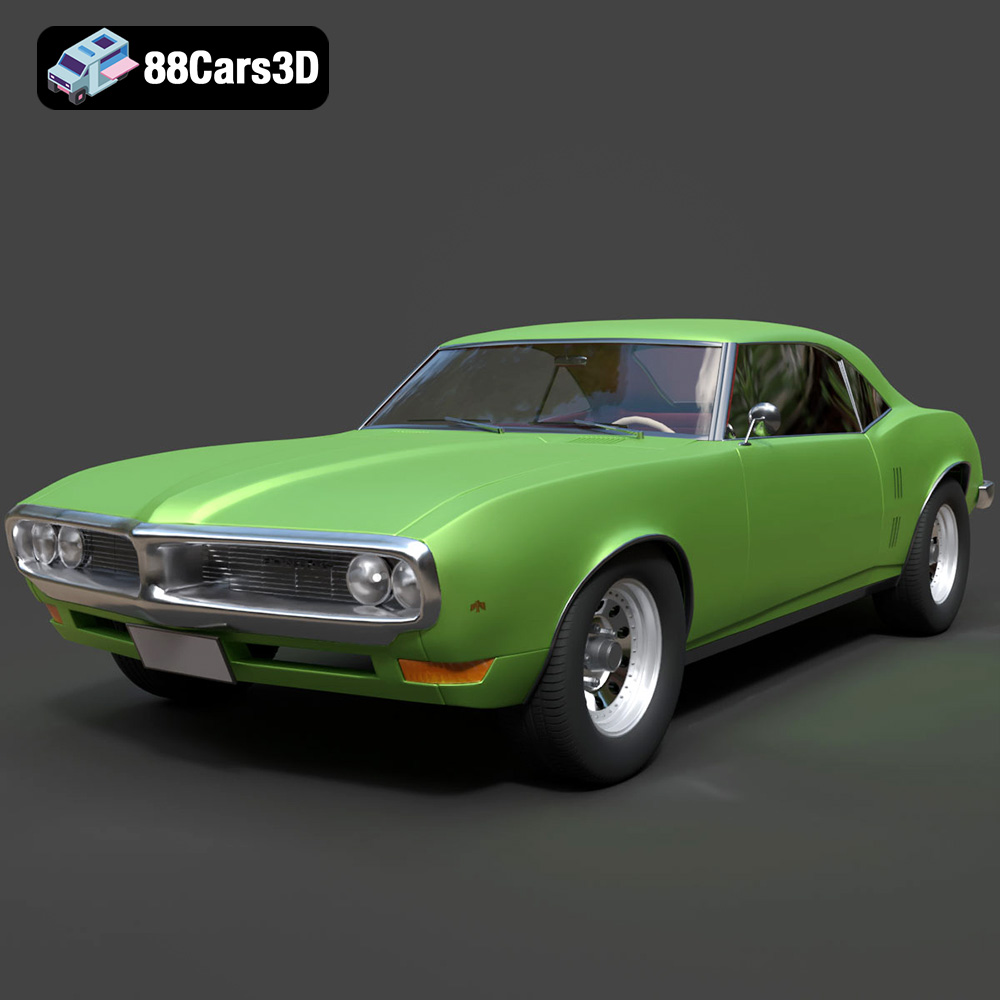
Pontiac Firebird 1998 3D Model
Texture: Yes
Material: Yes
Download the Pontiac Firebird 1998 3D Model featuring clean geometry, realistic detailing, and a fully modeled interior. Includes .blend, .fbx, .obj, .glb, .stl, .ply, .unreal, and .max formats for rendering, simulation, and game development.
Price: $10

Opel Astra 2008 3D Model
Texture: Yes
Material: Yes
Download the Opel Astra 2008 3D Model featuring clean geometry, realistic detailing, and a fully modeled interior. Includes .blend, .fbx, .obj, .glb, .stl, .ply, .unreal, and .max formats for rendering, simulation, and game development.
Price: $10
