

Unlocking Photorealism: Mastering Path Tracing for Automotive Visualization in Unreal Engine
The automotive industry constantly pushes the boundaries of visual fidelity, demanding imagery that blurs the line between digital and reality. From showcasing a car’s sleek design to demonstrating intricate mechanical details, photorealism is paramount. While real-time rendering in Unreal Engine has made incredible strides with features like Lumen and Nanite, there are times when absolute photographic accuracy, free from real-time constraints, becomes the ultimate goal. This is where Unreal Engine’s integrated Path Tracer shines, offering an offline rendering solution that delivers unmatched visual quality for automotive visualization.
In this comprehensive guide, we’ll dive deep into Path Tracing within Unreal Engine, exploring how you can harness its power to create breathtaking renders of your 3D car models. We’ll cover everything from foundational principles and project setup to advanced lighting techniques, material optimization, and strategies for achieving pristine, noise-free images. Whether you’re an automotive designer, a visualization professional, or a game developer aiming for the highest fidelity cinematics, mastering Path Tracing will elevate your projects to a new echelon of realism. Prepare to transform your digital automotive assets into stunning, production-ready visuals that captivate and convince.
Understanding Path Tracing in Unreal Engine: A Deep Dive into Ray Tracing Foundations
Path Tracing represents the pinnacle of physically-based rendering, simulating light transport in a scene with unparalleled accuracy. Unlike traditional real-time rasterization or even hybrid ray tracing methods like Lumen, Path Tracing casts numerous rays from the camera into the scene, tracing their paths as they interact with surfaces—reflecting, refracting, absorbing, and scattering light. Each ray contributes to the final pixel color, accumulating a complete picture of direct and indirect illumination, shadows, reflections, and refractions. This “ground truth” simulation produces images with a level of realism that is incredibly difficult, if not impossible, to achieve with approximate methods.
For automotive visualization, the advantages of Path Tracing are transformative. Imagine a highly reflective car paint material, perfectly capturing the subtle nuances of its environment and reflections. Path Tracing flawlessly renders complex material interactions like clear coats, metallic flakes, and intricate glass refractions, including physically accurate caustics. Global illumination is naturally resolved with exquisite detail, ensuring that light bounces realistically around the interior of a car cabin or under a car’s chassis. Shadows exhibit soft, natural falloffs, and ambient occlusion is intrinsically part of the light simulation. While performance is not the primary goal (as it’s an offline renderer), the resulting image quality sets the industry benchmark for visual fidelity, making it ideal for marketing materials, design reviews, and high-end cinematics. To delve deeper into Unreal Engine’s rendering features, you can always refer to the official Unreal Engine documentation at https://dev.epicgames.com/community/unreal-engine/learning.
The Core Principles of Path Tracing
At its heart, Path Tracing is a Monte Carlo simulation. This means it uses random sampling to solve the complex light transport equation. Instead of calculating every single light path (which would be computationally impossible), it samples a large number of random paths and averages their contributions. The more samples taken per pixel, the more accurate the result and the less “noise” will be present. Each ray can bounce multiple times, gathering information about diffuse interreflections, specular reflections, and transmissions through transparent objects. This stochastic approach inherently handles phenomena like soft shadows, depth of field, motion blur, and global illumination without needing specific algorithms or approximations for each. The beauty lies in its simplicity and physical correctness, albeit at the cost of computational intensity, requiring significant GPU power and often longer render times compared to real-time techniques.
Enabling Path Tracing in Unreal Engine
To enable Path Tracing in your Unreal Engine project, you first need to ensure your project and hardware meet the requirements. You’ll need a GPU that supports DirectX 12 (DXR) with hardware Ray Tracing capabilities (NVIDIA RTX series or AMD Radeon RX 6000 series and newer).
1. **Project Settings:** Navigate to `Edit > Project Settings > Engine > Rendering`.
2. Under the `Ray Tracing` section, ensure `Ray Tracing` is enabled. You might need to restart the editor.
3. Still in `Rendering` settings, scroll down to `Path Tracing` and ensure `Enable Path Tracing` is checked.
4. **Post Process Volume:** Path Tracing is controlled via the `Post Process Volume`. Place one in your scene, or select an existing one.
5. In the `Details` panel of the Post Process Volume, search for `Path Tracing`.
6. Set the `Path Tracing` mode to `Enabled`. This will switch the viewport to Path Tracing mode.
7. Adjust key parameters like `Samples Per Pixel` and `Max Bounces` to control rendering quality and complexity. Higher values will yield cleaner results but increase render times.
Preparing Your High-Fidelity 3D Car Models for Path Tracing
The quality of your final Path Traced render is intrinsically linked to the quality of your source assets. For automotive visualization, where details are scrutinized, starting with high-fidelity 3D car models is non-negotiable. Platforms like 88cars3d.com offer meticulously crafted 3D car models specifically designed for professional applications, featuring clean topology, realistic materials, and proper UV mapping, which are all crucial for optimal Path Tracing results. These models are often ready to be dropped into Unreal Engine with minimal setup, saving significant production time.
Path Tracing thrives on accurate physical properties. This means your model’s geometry must be robust, and its PBR materials must be correctly configured. Unlike real-time rasterization which can be forgiving of minor mesh imperfections or simplified materials, Path Tracing will expose every flaw. Polygons should be well-formed, normals consistent, and UVs properly laid out to prevent texture stretching or artifacting. For reflective surfaces, even minor surface irregularities can become noticeable, highlighting the importance of high-quality normal and displacement maps. The meticulous attention to detail in assets sourced from marketplaces such as 88cars3d.com directly translates to superior Path Traced renders.
Essential PBR Material Workflow for Path Tracing
Physically Based Rendering (PBR) materials are fundamental to achieving realism with Path Tracing. Unreal Engine’s Material Editor provides all the tools needed to create sophisticated materials that interact correctly with light.
* **Base Color:** This texture defines the diffuse color of the surface. For car paint, consider a base color that represents the pigment beneath the clear coat.
* **Metallic:** A grayscale value (0 to 1) indicating how metallic a surface is. Car paint typically has a metallic component (0.8-1.0 for the flakes, but the overall material might be less due to the clear coat), while plastic or rubber parts are non-metallic (0).
* **Roughness:** Crucial for defining the micro-surface detail and how sharp or blurry reflections are. A perfectly smooth surface like polished chrome has very low roughness (near 0), while matte plastic has high roughness (closer to 1). Car paint often features varying roughness layers.
* **Normal Map:** Provides surface detail without adding geometry, essential for subtle imperfections, seams, or fine metallic flake patterns on car paint. Ensure tangents are correctly calculated.
* **Ambient Occlusion (AO):** While Path Tracing intrinsically calculates indirect shadowing, an additional baked AO map can still enhance contact shadows, especially for static objects.
* **Refraction:** For glass materials, ensure you set the `Blend Mode` to `Translucent` and the `Shading Model` to `Default Lit` or `Clear Coat` if appropriate. Utilize the `Refraction` input with an appropriate Index of Refraction (IOR) value (e.g., 1.5 for glass, 1.4 for clear plastics).
* **Clear Coat:** Unreal Engine’s `Clear Coat` shading model is a game-changer for car paint. It adds a second specular lobe, allowing for a glossy, reflective layer over a potentially rougher base material. This perfectly simulates the lacquer layer on automotive finishes. Configure the `Clear Coat` and `Clear Coat Roughness` inputs in your material for realistic results.
Always check your material parameters in a PBR viewer or directly within Unreal Engine under various lighting conditions to ensure they behave as expected.
Geometry Considerations: Nanite and Traditional Meshes
For Path Tracing, the fidelity of your mesh directly impacts the accuracy of light bounces and surface detail. While Path Tracing itself does not *require* Nanite, Nanite-enabled meshes are fully compatible and can significantly ease the management of extremely high-polygon automotive models. Nanite virtually eliminates polygon budget constraints, allowing you to import CAD data or highly detailed sculpted models directly without traditional LOD (Level of Detail) generation or decimation workflows.
* **Nanite:** When enabled for your static meshes, Nanite handles the rendering of millions or even billions of triangles efficiently, ensuring that complex geometry like detailed car interiors, intricate engine parts, or high-resolution tire treads are accurately represented in your Path Traced renders. Path Tracing will correctly interpret the full geometric detail provided by Nanite. To convert a static mesh to Nanite, simply select it in the Content Browser, right-click, and choose `Nanite > Enable Nanite`. Then, in the Static Mesh Editor, ensure `Enable Nanite` is checked in the `Details` panel.
* **Traditional Meshes:** For non-Nanite meshes, it’s still best practice to use reasonably dense geometry for areas that require smooth curves or fine details, as excessive faceting will be apparent in Path Traced reflections. Ensure your meshes have consistent face normals to avoid rendering artifacts, particularly on reflective surfaces. UV mapping is also critical for texture projection and lightmap generation (if you’re also using traditional lighting methods for context). When sourcing high-quality 3D car models from platforms like 88cars3d.com, these considerations are usually already addressed, providing you with optimized assets ready for Path Tracing.
Mastering Lighting and Environments for Photorealistic Renders
Lighting is the soul of any render, and with Path Tracing, its impact is even more profound due to the physically accurate simulation of light transport. For automotive visualization, achieving realism often hinges on recreating real-world lighting conditions or crafting stylized yet believable environments that accentuate the vehicle’s form and finish. Unreal Engine provides a robust suite of lighting tools that, when combined with Path Tracing, can produce stunning results.
The key to successful automotive lighting lies in understanding how light interacts with the car’s reflective surfaces and how the environment contributes to the overall ambiance. Path Tracing automatically calculates complex phenomena like indirect lighting, color bleeding, and caustics, removing much of the guesswork associated with baking lightmaps or faking global illumination. However, the placement and properties of your light sources and environment still require careful artistic direction to achieve the desired mood and visual impact. From studio setups to outdoor scenes, every light source and environmental element plays a critical role in defining the final look of your Path Traced image.
Strategic Lighting for Automotive Realism
When lighting a car model for Path Tracing, consider these strategies:
* **Three-Point Lighting:** This classic studio setup provides a foundational understanding. Use a `Key Light` (main light source), a `Fill Light` (softens shadows), and a `Back Light` (rim light to separate the car from the background). With Path Tracing, these lights will naturally interact and bounce, creating realistic falloffs and indirect illumination.
* **Area Lights:** Unreal Engine’s `Rect Light` and `Sphere Light` actors are excellent for simulating studio softboxes or large light sources. They cast physically accurate soft shadows and provide even illumination, crucial for highlighting the car’s curves without harsh reflections. Configure the light’s size to control shadow softness.
* **Volumetric Lighting:** For atmospheric effects like god rays or fog, enable `Volumetric Fog` in your `Post Process Volume` and ensure your lights have `Volumetric Scattering Intensity` set appropriately. Path Tracing will accurately render how light interacts with these volumetric elements, adding depth and mood.
* **Light Importance Volume:** For very large scenes, enclosing your main area of interest (e.g., the car and its immediate surroundings) within a `Light Importance Volume` can help focus the Path Tracing calculations, improving efficiency and reducing noise in critical areas.
Remember that with Path Tracing, every light source contributes to the scene’s illumination in a physically correct manner. Experiment with subtle light intensities and colors to evoke specific moods.
Leveraging HDRI and Physical Light Actors
High Dynamic Range Image (HDRI) panoramas are indispensable for realistic automotive lighting, especially for outdoor scenes or studio environments that mimic real-world lighting. An HDRI provides both background visual information and accurate environmental lighting data, capturing the luminance and color of a real scene.
* **Sky Light with HDRI:**
1. Place a `Sky Light` actor in your scene.
2. In its `Details` panel, set `Source Type` to `Specified Cubemap`.
3. Assign a high-resolution HDRI texture to the `Cubemap` slot. Unreal Engine will automatically convert it.
4. Adjust the `Intensity Scale` to control the overall brightness.
5. For Path Tracing, ensure `Ray Tracing > Cast Shadows` is enabled on the Sky Light to get accurate contact shadows and overall indirect illumination from the environment.
6. Consider `Real Time Capture` for dynamic sky lighting, although for static Path Traced renders, a baked cubemap is often sufficient and more performant for real-time interaction (though not directly for Path Tracing).
* **Physical Light Actors for Specific Contributions:** While HDRI provides excellent ambient and indirect lighting, dedicated Unreal Engine light actors (`Directional Light`, `Point Light`, `Spot Light`, `Rect Light`, `Sphere Light`) are essential for direct illumination, sharp shadows, and emphasizing specific features of the car.
* Use a `Directional Light` to simulate the sun, giving sharp, distinct shadows. Align its rotation with the primary light source in your HDRI for consistency.
* Employ `Rect Lights` or `Sphere Lights` as fill lights or to simulate soft studio lighting. These are especially effective for creating flattering reflections on the car’s bodywork.
* All these lights will be correctly sampled by the Path Tracer, contributing to a truly physically accurate rendering of your scene.
Optimizing Path Tracing for Quality and Performance: Balancing Fidelity and Render Times
Path Tracing, while delivering exceptional quality, is computationally intensive. Achieving a noise-free, high-resolution render within a reasonable timeframe requires a careful balance of settings and optimization strategies. The primary challenge lies in minimizing noise – the grainy appearance caused by insufficient ray samples – without incurring excessively long render times. This balance is particularly critical for high-resolution images or cinematic sequences where every frame must be pristine.
Unreal Engine provides several parameters within the Post Process Volume that allow you to fine-tune the Path Tracing process. Understanding how each setting impacts both quality and performance is key to efficiently producing your final renders. While the goal is not “real-time” performance, optimizing the offline render process means faster iterations, reduced hardware strain, and ultimately, more efficient production workflows. Professional users continuously adjust these settings based on scene complexity, material properties, and desired output resolution to strike that perfect equilibrium.
Fine-Tuning Path Tracing Settings
Within the `Post Process Volume`, under the `Path Tracing` section, you’ll find the core controls:
* **Samples Per Pixel:** This is the most critical setting. Higher values mean more rays are traced per pixel, resulting in less noise and a cleaner image. For production-quality stills, values can range from **256 to 2048 or even higher**, depending on scene complexity and material reflectivity. For cinematics, lower values might be acceptable if combined with a denoiser and temporal accumulation.
* **Max Bounces:** Determines how many times a light ray can reflect or refract within the scene.
* `Diffuse`: Controls the number of diffuse bounces (indirect global illumination). For realistic indirect light, set this to **3-5**.
* `Glossy`: Controls glossy reflections. Higher values are crucial for highly reflective materials like car paint or chrome, often **4-8**.
* `Transmission`: Controls light passing through transparent objects. For complex glass or liquid, **4-8** is a good starting point.
* `Volume`: For volumetric scattering, e.g., fog.
* General recommendation: Start with `Max Bounces` at **6-8** and increase if you notice missing indirect light or reflections, or if glass appears too dark. Exceeding around 10-12 bounces rarely yields significant visual improvement for typical scenes but can drastically increase render times.
* **Max Path Exposure:** Adjusts the maximum brightness allowed for any single light path, helping to prevent fireflies (extremely bright pixels) in certain scenarios.
* **Filter Width:** Controls the anti-aliasing filter size. A slightly larger value can soften edges but might blur fine details.
* **Tile Size:** Affects how the image is broken into smaller chunks for rendering. Larger tile sizes can sometimes be more efficient for GPUs with ample VRAM, but smaller tiles can distribute the workload better across multiple GPUs or aid in recovery from crashes.
Always render a small region or a low-sample preview first to evaluate the impact of your settings before committing to a full-resolution final render.
Mitigating Noise and Enhancing Render Speed
Noise is the primary enemy of Path Tracing. Here’s how to tackle it and improve efficiency:
1. **Increase Samples Per Pixel:** The most straightforward solution, but also the most expensive. Incrementally increase until noise is acceptable.
2. **Unreal Engine’s Denoiser:**
* Under `Post Process Volume > Path Tracing > Denoising`, ensure `Enable Denoiser` is checked.
* The built-in denoiser (OptiX for NVIDIA GPUs, Open Image Denoise for others) is highly effective at cleaning up noise, especially with lower sample counts. You can often achieve excellent results with significantly fewer samples than would be required without denoising.
* Adjust `Denoiser Input Passes` (e.g., `Albedo`, `Normal`, `Depth`) for better denoising accuracy.
3. **Material Optimization:**
* Avoid excessively rough or transparent materials in complex setups if not absolutely necessary, as they require more samples to resolve accurately.
* Use the `Clear Coat` shading model for car paint; it’s optimized for this specific look.
4. **Light Source Optimization:**
* Limit the number of very small, intense light sources. Path Tracing struggles to find these tiny light sources, leading to noise. Use larger area lights or HDRI for broader illumination.
* Consider `Light Portals` for interior scenes. These invisible meshes placed in windows or openings can guide light rays, making indoor scenes less noisy by focusing samples where light enters.
5. **Scene Complexity:**
* While Nanite handles geometry efficiently, a scene with extreme geometric detail *and* complex material interactions (e.g., many layers of glass and reflective metals) will naturally take longer.
* Cull unnecessary objects outside the camera’s view using a `Cull Distance Volume` if applicable, although Path Tracing usually only samples what’s visible.
6. **GPU Utilization:** Ensure your GPU drivers are up to date. If you have multiple GPUs, Unreal Engine can utilize them for Path Tracing, significantly speeding up render times. Go to `Edit > Editor Preferences > General > Performance` and ensure `Use All Available GPUs` is enabled under `Ray Tracing`.
By judiciously applying these techniques, you can achieve stunning, noise-free Path Traced renders of your automotive models without waiting indefinitely.
Advanced Path Tracing Applications: Beyond Still Images
The power of Path Tracing extends far beyond generating static, high-resolution images. Its ability to produce physically accurate light transport and flawless material interactions makes it an invaluable tool for a range of advanced applications within automotive visualization and virtual production. From crafting cinematic sequences that rival live-action footage to developing high-fidelity interactive experiences, Path Tracing offers a level of realism that can elevate any project. Leveraging the foundational principles discussed earlier, we can explore how Unreal Engine integrates Path Tracing into complex workflows, pushing the boundaries of what’s possible in digital automotive content creation.
Whether you’re working on a marketing campaign, a design review, or an immersive virtual reality experience, the underlying quality provided by Path Tracing ensures that your 3D car models, especially those from reputable sources like 88cars3d.com, are presented in their absolute best light. This opens up avenues for incredibly convincing digital presentations and experiences, cementing Unreal Engine’s position as a powerhouse for professional automotive content.
Cinematic Production with Path Tracing and Sequencer
For creating stunning automotive cinematics, Path Tracing combined with Unreal Engine’s Sequencer offers an unparalleled workflow. Sequencer is Unreal Engine’s multi-track non-linear editor that allows you to choreograph complex scenes, animate cameras, control lights, and trigger events over time. When Path Tracing is active, every frame rendered through Sequencer will leverage the physically accurate lighting, resulting in breathtaking, production-quality animations.
* **Setup for Cinematics:**
1. Create a new `Level Sequence` (`Cinematics > Add Level Sequence`).
2. Add a `Camera Actor` to your sequence and animate its movement.
3. Keyframe changes to lights, materials, or even the car’s components (e.g., opening doors, rotating wheels).
4. Ensure your `Post Process Volume` with Path Tracing enabled is present in the scene or bound to the sequence.
5. For rendering, open the `Movie Render Queue` (`Window > Cinematics > Movie Render Queue`). This powerful tool is designed for high-quality offline renders, offering advanced features like:
* **Anti-aliasing:** Configure spatial and temporal anti-aliasing for smooth, flicker-free animations.
* **High Sample Counts:** Set the `Path Tracing Samples Per Pixel` for each frame, potentially lower than stills if a good denoiser is used.
* **Multi-GPU Support:** Utilize all available GPUs for faster frame rendering.
* **Output Formats:** Render to EXR sequences for maximum dynamic range and flexibility in post-production.
* **Denoiser:** The `Movie Render Queue` integrates denoising for Path Traced frames, cleaning up noise effectively.
* **Virtual Production and LED Wall Workflows:** Path Tracing plays a crucial role in virtual production environments, especially when rendering backgrounds for LED volumes. While the real-time scene runs on the LED wall, Path Traced elements can be pre-rendered or used for reference, ensuring photorealistic lighting and reflections are consistent with physical sets. For example, a car might be physically present on a stage, but its reflections and the environment around it could be driven by Path Traced backplates or pre-rendered elements projected onto the LED wall. This hybrid approach allows for real-time interaction with a physical car while maintaining the pristine visual quality of Path Tracing for the digital surroundings, creating truly immersive and believable composite shots.
Exploring High-End Interactive Experiences and Configurators
While Path Tracing is primarily an offline rendering technique, its influence can extend to interactive experiences, particularly for high-end automotive configurators or interactive showrooms designed for powerful workstations.
* **Pre-rendered Sequences and Lightmaps:** For interactive applications running on consumer-grade hardware, Path Tracing can be used to generate ultra-high-quality static lightmaps or reflection probes. This “bakes” the exquisite lighting and reflections into the real-time scene, offering a significant visual boost without real-time Path Tracing performance overhead. Imagine switching between car colors in an interactive configurator, each material change dynamically updating the Path Traced reflection and global illumination via pre-rendered data.
* **High-End Real-time Path Tracing:** For specialized applications, such as an interactive experience running on a powerful desktop PC or a dedicated showroom kiosk equipped with multiple high-end GPUs, it’s possible to enable real-time Path Tracing. While demanding, this allows users to interactively explore a car model with true physical lighting and reflections. This would require robust hardware and careful scene optimization to maintain acceptable frame rates (e.g., 20-30 FPS). Blueprint visual scripting could be used to dynamically adjust Path Tracing samples based on user interaction or camera movement, prioritizing responsiveness when moving and quality when stationary.
* **Virtual Reality (VR) and Augmented Reality (AR) Pre-visualization:** For VR/AR applications, real-time Path Tracing is generally too demanding. However, Path Tracing can be used to generate ultra-high-quality renders of environments or static scenes that are then viewed in VR/AR. For instance, a 360° stereo panoramic render generated with Path Tracing can create an incredibly immersive and photorealistic backdrop for a real-time car model in a VR experience. This method combines the best of both worlds: high fidelity from Path Tracing for static elements and real-time responsiveness for interactive components.
These advanced applications demonstrate Path Tracing’s versatility, enabling creators to deliver unparalleled visual quality across various media, from pre-rendered marketing assets to cutting-edge virtual experiences, all powered by the robust capabilities of Unreal Engine.
Conclusion: The Future of Automotive Visualization Powered by Path Tracing
The journey into Path Tracing within Unreal Engine reveals a powerful tool that closes the gap between digital renderings and photographic reality. For automotive visualization, where precision and aesthetic appeal are paramount, Path Tracing stands as an indispensable technique for achieving the highest levels of photorealism. We’ve explored its foundational principles, learned how to prepare our high-fidelity 3D car models—like those meticulously crafted and optimized by 88cars3d.com—and mastered the art of lighting and environmental setup to create stunning, lifelike renders.
From fine-tuning sampling rates and bounce limits to leveraging Unreal Engine’s denoiser and robust Movie Render Queue for cinematic output, the path to pristine automotive imagery is clear. Path Tracing empowers artists and developers to produce marketing assets, design reviews, and virtual production elements that resonate with unparalleled authenticity. While demanding on hardware, the visual return on investment is undeniable, providing a competitive edge in an industry that constantly seeks visual innovation.
We encourage you to experiment with these techniques, push the boundaries of your creativity, and unlock the full photorealistic potential of your automotive projects in Unreal Engine. Start by exploring the vast library of high-quality 3D car models available on 88cars3d.com, specifically designed for seamless integration and stunning results in Unreal Engine, then apply the Path Tracing workflows discussed here. The future of automotive visualization is here, and it’s rendered with breathtaking realism, one ray-traced bounce at a time.
Featured 3D Car Models

Cadillac CTS-V Coupe 3D Model
Meta Description:
Texture: Yes
Material: Yes
Download the Cadillac CTS-V Coupe 3D Model featuring detailed exterior styling and realistic interior structure. Includes .blend, .fbx, .obj, .glb, .stl, .ply, .unreal, and .max formats for rendering, simulation, AR VR, and game development.
Price: $13.9
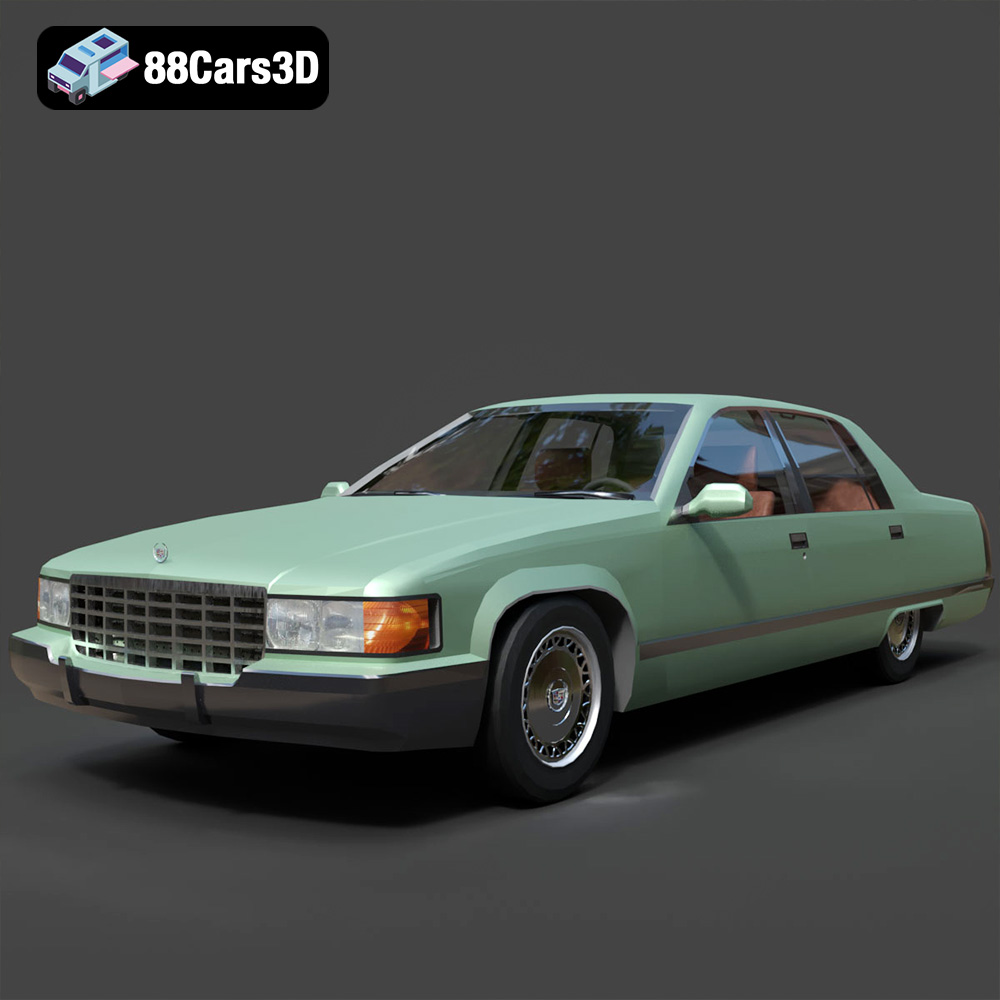
Cadillac Fleetwood Brougham 3D Model
Texture: Yes
Material: Yes
Download the Cadillac Fleetwood Brougham 3D Model featuring its iconic classic luxury design and detailed exterior and interior. Includes .blend, .fbx, .obj, .glb, .stl, .ply, .unreal, and .max formats for rendering, simulation, and game development.
Price: $10.79
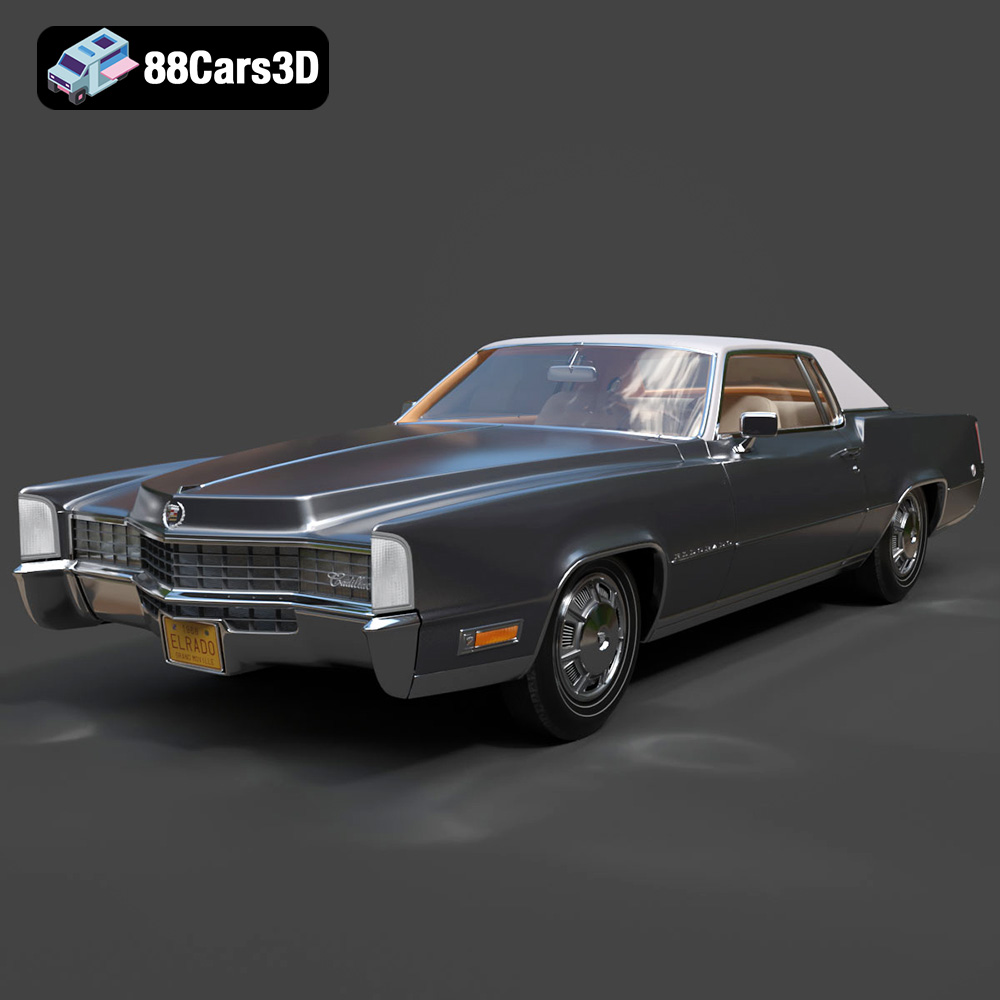
Cadillac Eldorado 1968 3D Model
Texture: Yes
Material: Yes
Download the Cadillac Eldorado 1968 3D Model featuring its iconic elongated body, distinctive chrome accents, and luxurious interior. Includes .blend, .fbx, .obj, .glb, .stl, .ply, .unreal, and .max formats for rendering, simulation, and game development.
Price: $20.79

Cadillac CTS SW 2010 3D Model
Texture: Yes
Material: Yes
Download the Cadillac CTS SW 2010 3D Model featuring a detailed exterior, functional interior elements, and realistic materials. Includes .blend, .fbx, .obj, .glb, .stl, .ply, .unreal, and .max formats for rendering, simulation, and game development.
Price: $10.79
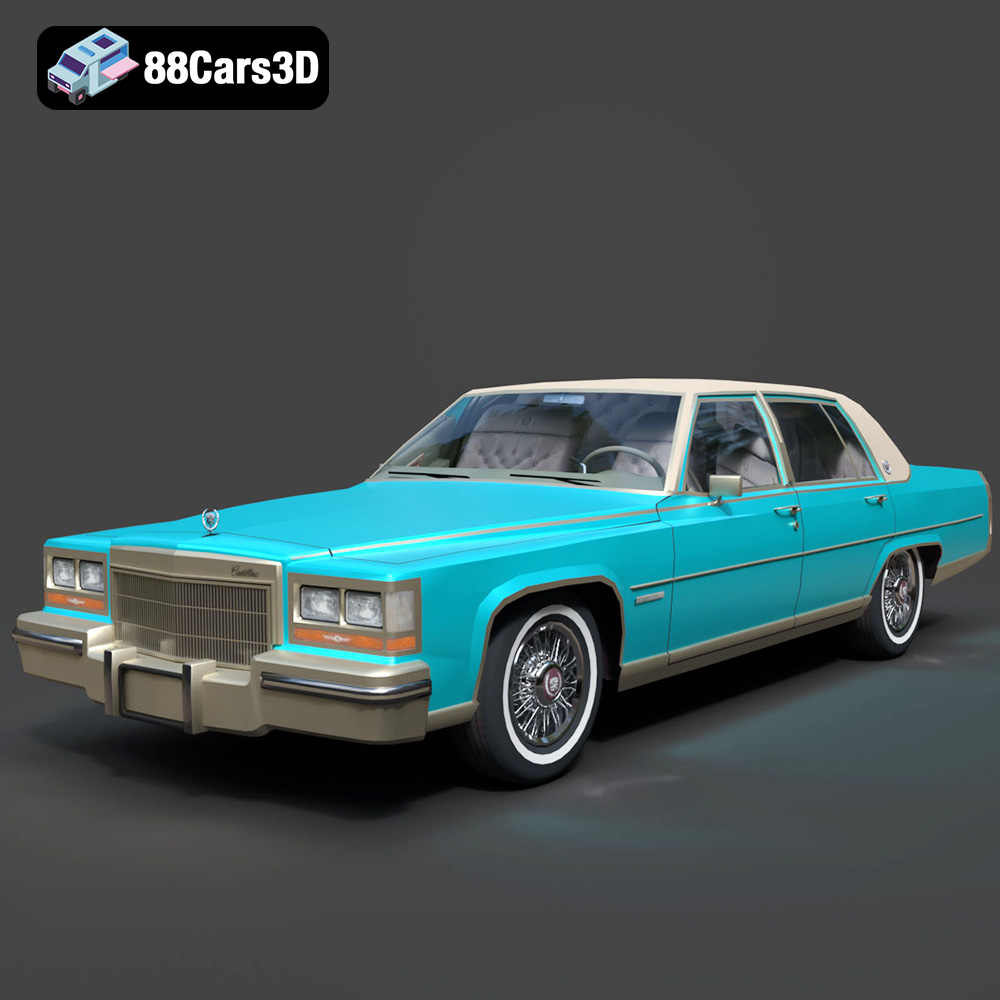
Cadillac Fleetwood Brougham 1985 3D Model
Texture: Yes
Material: Yes
Download the Cadillac Fleetwood Brougham 1985 3D Model featuring its iconic classic luxury design and detailed craftsmanship. Includes .blend, .fbx, .obj, .glb, .stl, .ply, .unreal, and .max formats for rendering, simulation, and game development.
Price: $10.79
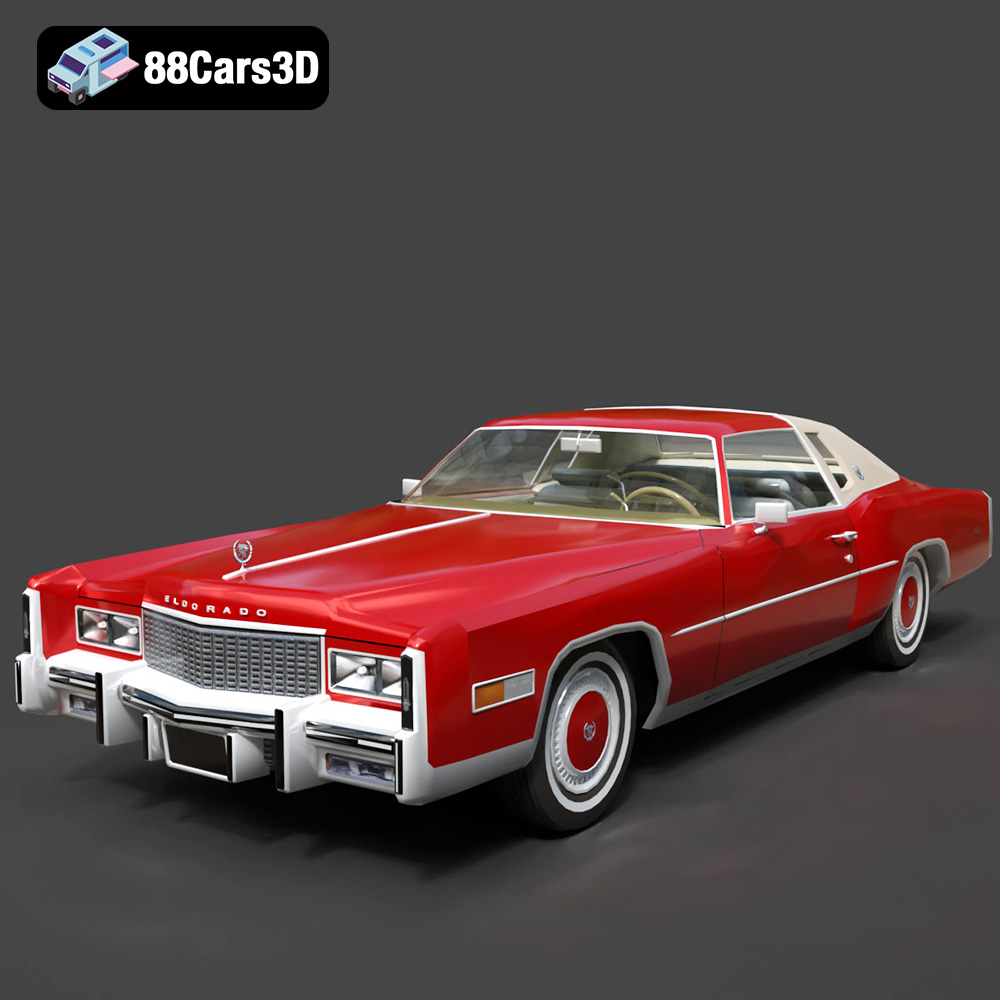
Cadillac Eldorado 1978 3D Model
Texture: Yes
Material: Yes
Download the Cadillac Eldorado 1978 3D Model featuring accurately modeled exterior, detailed interior, and period-correct aesthetics. Includes .blend, .fbx, .obj, .glb, .stl, .ply, .unreal, and .max formats for rendering, simulation, and game development.
Price: $10.79
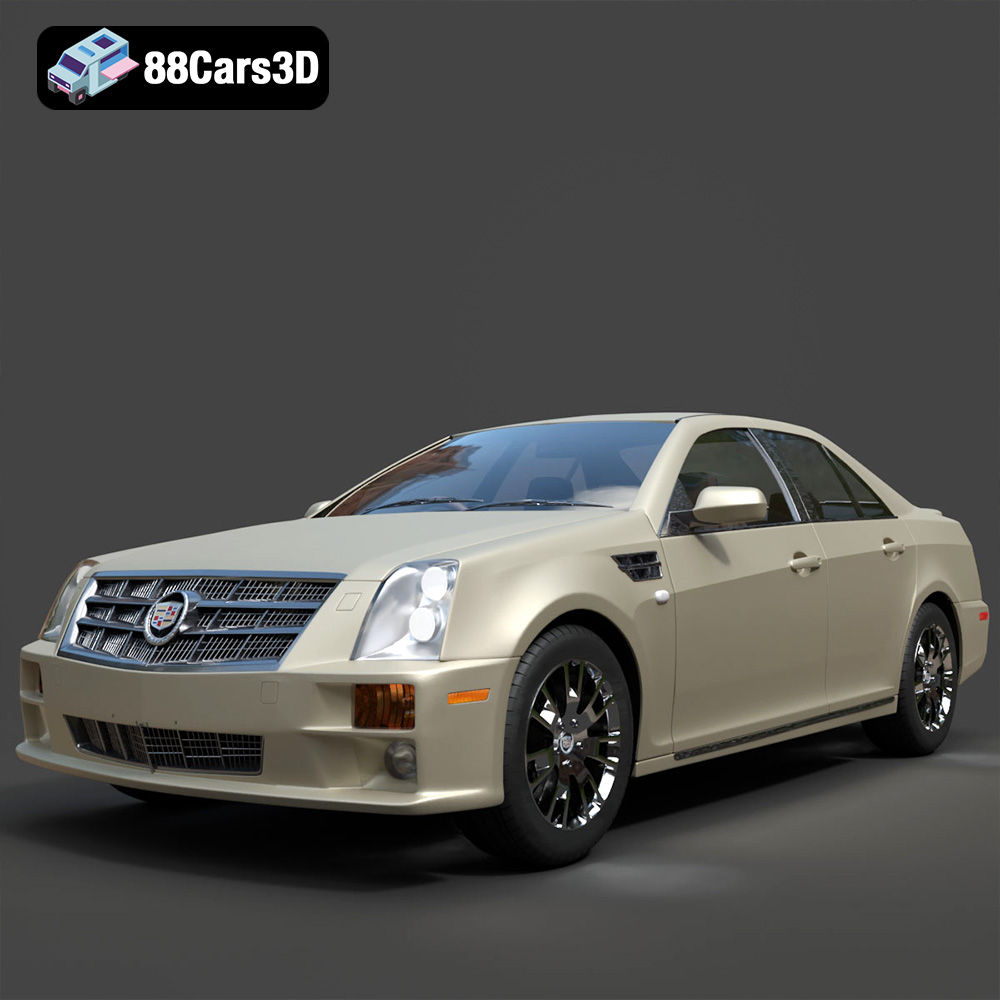
Cadillac STS-005 3D Model
Texture: Yes
Material: Yes
Download the Cadillac STS-005 3D Model featuring a detailed exterior and interior. Includes .blend, .fbx, .obj, .glb, .stl, .ply, .unreal, and .max formats for rendering, simulation, and game development.
Price: $22.79
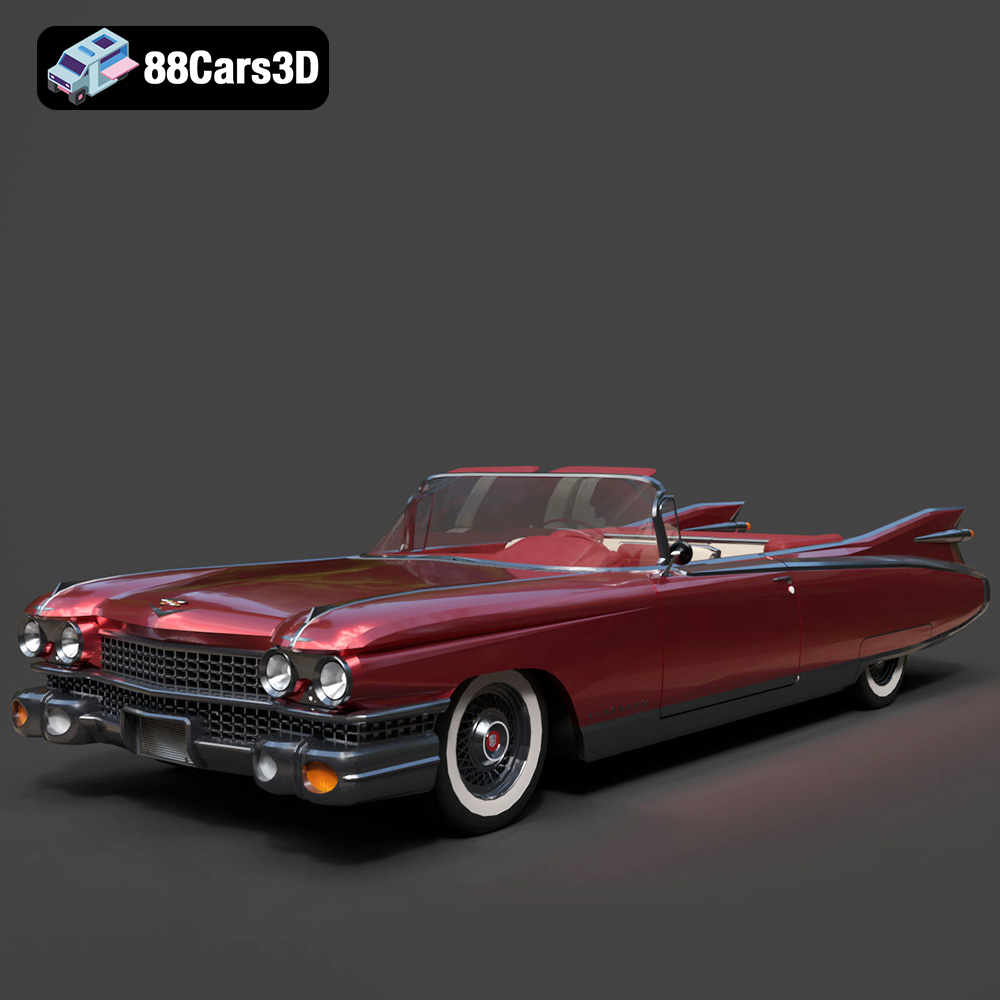
Cadillac Eldorado Convertible (1959) 3D Model
Texture: Yes
Material: Yes
Download the Cadillac Eldorado Convertible (1959) 3D Model featuring iconic fins, luxurious chrome details, and a classic vintage design. Includes .blend, .fbx, .obj, .glb, .stl, .ply, .unreal, and .max formats for rendering, simulation, and game development.
Price: $20.79

Cadillac DTS-005 3D Model
Texture: Yes
Material: Yes
Download the Cadillac DTS-005 3D Model featuring its iconic luxury design, detailed interior, and realistic exterior. Includes .blend, .fbx, .obj, .glb, .stl, .ply, .unreal, and .max formats for rendering, simulation, and game development.
Price: $10.79

Buick LeSabre 1998 3D Model
Texture: Yes
Material: Yes
Download the Buick LeSabre 1998 3D Model featuring a classic American full-size sedan design. Includes .blend, .fbx, .obj, .glb, .stl, .ply, .unreal, and .max formats for rendering, simulation, and game development.
Price: $10.79
