

“`html
Mastering Imperfect Meshes: A Guide to Repairing STL Files for 3D Printed Car Models
The thrill of 3D printing a meticulously detailed car model, whether it’s a classic icon or a futuristic concept, is immense. At 88cars3d.com, we pride ourselves on delivering high-quality, print-ready STL files designed to bring your automotive visions to life. However, the journey from a digital design to a physical object can sometimes be complicated by the inherent nature of 3D printing and the STL file format. Often, downloaded models, especially those sourced from less curated platforms, or even custom-designed meshes, can suffer from ‘non-manifold’ errors – essentially, holes, inverted faces, or disconnected geometry that prevent them from being sliced and printed correctly. These broken meshes are a common frustration for makers and hobbyists alike. This comprehensive guide will equip you with the knowledge and practical steps to repair these common STL mesh errors using industry-standard software like Autodesk Meshmixer and Netfabb, ensuring your printable car models emerge flawlessly from your 3D printer.
We’ll delve into the specifics of identifying mesh defects, understanding why they occur, and then walk through detailed, step-by-step repair processes within these powerful tools. From simple hole filling to complex self-intersection correction, you’ll learn how to transform problematic STL files into perfectly manifold models ready for your slicer. By the end of this article, you’ll gain the confidence to tackle virtually any mesh imperfection, ensuring your 3D printer settings are optimized for success and your hobbyist collections grow with pristine replicas.
Understanding STL File Imperfections: The Anatomy of a Broken Mesh
Before we dive into the repair process, it’s crucial to understand what constitutes a “broken” STL file and why these issues arise. The STL (STereoLithography) format is a triangulated representation of a 3D surface. It describes the geometry of an object using a collection of triangular facets. While simple and widely supported, this format has limitations, particularly regarding the integrity of the mesh.
Common Mesh Defects and Their Impact on 3D Printing
Several common defects can render an STL file unprintable. These often stem from the design process, conversion errors, or limitations in the modeling software used to create the original mesh. Understanding these issues is the first step towards effective repair.
- Holes (Openings): These are gaps in the surface where triangles are missing. In 3D printing, a printable model must represent a watertight, solid volume. Holes mean the slicer cannot determine the inside from the outside, leading to errors or incomplete prints.
- Non-Manifold Edges: An edge is considered non-manifold if it connects more than two triangles, or if two triangles share an edge but point in opposite directions (a “boundary edge” where there shouldn’t be one). These often indicate internal faces or overlapping geometry that confuse the slicer.
- Inverted Faces: In an STL file, each triangle has a normal vector indicating which way its surface is facing. If these normals are inverted (pointing inwards instead of outwards), the slicer interprets the geometry incorrectly, potentially flipping surfaces or creating hollow shells where solid material is expected.
- Duplicate Faces/Triangles: Overlapping triangles or faces occupying the exact same space can confuse the slicing software, leading to unpredictable print results, such as thickened walls or internal artifacts.
- Self-Intersections: This occurs when parts of the mesh intersect themselves, creating impossible geometry. Imagine a car door folding in on itself – the slicer cannot accurately determine the volume of such an object.
- Degenerate Triangles: These are triangles with zero area (all vertices are coincident) or triangles that are essentially lines (all vertices are collinear). They add no useful geometric information and can cause processing errors.
These defects can manifest in various ways during the slicing process, from critical errors preventing slicing altogether to subtle issues that result in print failures like missing sections, internal voids, or distorted shapes. For highly detailed printable car models, even minor defects can compromise the final aesthetic and structural integrity. That’s why mastering mesh repair is essential for anyone serious about achieving professional-quality prints.
Autodesk Meshmixer: A Free and Powerful Solution for STL Repair
Autodesk Meshmixer is a versatile and, crucially, free software tool that excels at editing, sculpting, and repairing 3D meshes. Its intuitive interface and robust set of tools make it an ideal choice for hobbyists and professionals alike looking to fix STL files before slicing.
Basic Mesh Analysis and Error Detection
The first step in Meshmixer is to import your STL file and let the software analyze it for potential issues. Meshmixer doesn’t have an explicit “find errors” button in the same way some commercial tools do, but its selection tools and visual feedback are excellent for identifying problems.
- Import: Open Meshmixer and go to ‘File’ > ‘Import’, then select your STL file.
- Select All: Press Ctrl+A (or Cmd+A on Mac) to select the entire mesh.
- Inspect Visual Cues: Look for any areas that appear visually distorted, have sharp creases, or seem incomplete.
- Measure Tool: Use the ‘Measurement’ tool to check for very small features or walls that might be too thin for your 3D printer.
- Transform Tool: Manipulating the mesh slightly with the ‘Transform’ tool can sometimes reveal underlying issues if parts of the mesh disappear or behave erratically.
Automatic and Manual Repair Techniques in Meshmixer
Meshmixer offers both automated and manual methods to address common mesh defects found in STL files.
Automated Repair: The ‘Make Solid’ and ‘Inspector’ Tools
While Meshmixer’s core strength lies in manual editing, the ‘Make Solid’ function can be a powerful, albeit sometimes aggressive, repair tool. The ‘Inspector’ tool, available in newer versions or as part of more advanced workflows, can also auto-detect and attempt to fix errors.
- ‘Make Solid’ Workflow:
- Select your imported mesh.
- Go to ‘Edit’ > ‘Make Solid’.
- Adjust the ‘Solid Accuracy’ slider (higher values mean more detail preserved but longer processing) and ‘Mesh Resolution’ (controls the density of the new mesh).
- Click ‘Compute’. Meshmixer will attempt to create a new, watertight mesh from your potentially problematic input.
- Review the generated mesh. ‘Make Solid’ can sometimes smooth out details or create unintended geometry, so always inspect the result. If successful, you can accept it.
- ‘Inspector’ Tool (if available):
- Navigate to ‘Analysis’ > ‘Inspector’.
- Click ‘Auto Repair All’. Meshmixer will attempt to identify and fix holes, non-manifold edges, and other common issues.
- Inspect the highlighted areas it couldn’t fix automatically.
Manual Repair: Filling Holes and Smoothing
For more precise control, manual techniques are often superior, especially for intricate printable car models.
- Hole Filling:
- Switch to ‘Edit’ mode.
- Select the ‘Select’ tool.
- Set the Selection Mode to ‘Boundary’ or ‘Face Loop’.
- Click on the edge loop surrounding a hole. Meshmixer will highlight the boundary.
- Go to ‘Edit’ > ‘Hole’ > ‘Fill Hole’. Meshmixer will attempt to create new triangles to close the gap.
- For complex holes, you might need to use the ‘Plane Cut’ tool to create a flat surface, or the ‘Sculpt’ tools to manually patch areas.
- Smoothing: After repairs, surfaces might appear rough. The ‘Sculpt’ tool with a ‘Smooth’ brush can refine these areas. Use it subtly to avoid losing detail on your car models.
- Removing Overhangs/Unnecessary Geometry: The ‘Select’ tool combined with ‘Delete’ can remove unwanted floating pieces or internal structures that might have resulted from faulty geometry.
Remember to save your progress frequently, using different filenames (e.g., ‘car_model_repaired_v1.stl’) to create backups. Once satisfied, export the repaired mesh using ‘File’ > ‘Export’ > ‘Save as STL Binary’.
Autodesk Netfabb: Professional-Grade STL Repair and Preparation
Autodesk Netfabb is a professional software suite geared towards additive manufacturing. It offers highly advanced tools for analyzing, repairing, and optimizing 3D models, including sophisticated automated repair capabilities that go beyond what’s typically found in free software. While it has a steeper learning curve and is a commercial product, its power is undeniable for complex projects.
Leveraging Netfabb’s Advanced Analysis and Repair Modules
Netfabb’s strength lies in its automated analysis and repair algorithms, which can identify and fix a wide range of STL file defects with high accuracy.
- Import and Initial Analysis:
- Open Netfabb and import your STL file.
- Netfabb will immediately perform an automatic analysis, highlighting various issues with color-coded indicators. Red typically signifies critical errors like holes or non-manifold edges.
- Navigate through the ‘Project’ tab or the 3D view to examine the detected errors. Common issues include ‘Boundary edges’ (holes), ‘Non-manifold edges’, ‘Inverted faces’, and ‘Degenerate triangles’.
- Automated Repair Functions:
- Repair Script: The most powerful tool is the ‘Repair’ function. You can select specific repair scripts or run a default ‘Standard Repair’ script. This script automatically addresses most common issues like holes, non-manifold edges, and inverted faces. Netfabb attempts to intelligently fill holes and reconstruct surfaces.
- Specific Repair Tools: For more control, Netfabb offers dedicated tools:
- Cut: Can be used to chop off problematic sections or to create a flat base for better bed adhesion.
- Extrude: Useful for extending surfaces or closing very large holes by creating new geometry.
- Thicken: If parts of your model are too thin for FDM printing, Netfabb can add thickness uniformly.
- Remove Faces/Self- Intersections: Dedicated tools exist to tackle complex self-intersections that automated scripts might miss.
Ensuring Watertight Geometry and Preparing for Slicing
Netfabb’s primary goal is to ensure your model is “watertight” – a solid, unambiguous volume suitable for slicing. Beyond basic repair, it offers tools to optimize the mesh for the printing process itself.
- Verification: After running repair scripts, always re-run the analysis to confirm that all critical errors have been resolved. Netfabb will indicate if the mesh is now ‘Watertight’.
- Remeshing: Sometimes, repairs can result in an overly dense or uneven mesh. Netfabb’s ‘Remesh’ tool allows you to create a new mesh with a more uniform triangle distribution, which can improve slicing performance and reduce file size without significant loss of detail.
- Part Packing and Positioning: For multi-part models or efficient build plate utilization, Netfabb offers advanced tools for arranging parts. This is particularly useful when printing multiple printable car models or complex assemblies.
- Exporting for Slicers: Once repaired and optimized, export your model as an STL file. Netfabb allows fine-tuning of export settings, such as triangle quality, which can impact the final print quality.
While Netfabb is a professional tool, its automated repair capabilities can save significant time and effort, making it an invaluable asset for anyone dealing with frequent or complex mesh issues. For users downloading models from platforms like 88cars3d.com, even though our models are print-ready, understanding these repair tools provides an extra layer of confidence and problem-solving capability.
Advanced Techniques for Complex STL Repair Scenarios
Sometimes, the defects in an STL file are more intricate than simple holes or inverted faces. These situations require a deeper understanding of mesh topology and more advanced repair strategies, often involving a combination of software and careful manual intervention.
Handling Self-Intersections and Internal Geometry
Self-intersections are notoriously difficult because they create impossible geometry where a surface passes through itself. Automated tools can sometimes struggle with these, especially if the intersections are complex.
- Visual Identification: In Meshmixer, use the ‘Inspector’ tool or carefully rotate the model to visually identify areas where surfaces appear to fold unnaturally. In Netfabb, the analysis report will explicitly flag self-intersections.
- Boolean Operations (Meshmixer): For simpler self-intersections, you might be able to use ‘Boolean’ operations. Duplicate the problematic part of the mesh, move it slightly, and then use ‘Boolean’ > ‘Union’ to merge them. This can sometimes resolve the intersection.
- ‘Make Solid’ as a Reset: The ‘Make Solid’ function in Meshmixer can sometimes resolve complex self-intersections by creating a new, simplified solid representation. However, this might sacrifice fine details.
- Manual Reconstruction: In extreme cases, you may need to manually delete the intersecting geometry and use Meshmixer’s ‘Sculpt’ tools (like ‘Add’, ‘Plane Cut’, ‘Smooth’) or Netfabb’s modeling tools to reconstruct the area cleanly. This requires patience and a good understanding of the intended geometry.
- Software-Specific Tools: Netfabb offers dedicated tools for fixing self-intersections, often by analyzing the mesh’s path and simplifying it. Experimenting with different repair scripts within Netfabb is often the most effective approach.
Optimizing Mesh Density and Wall Thickness
Beyond just being watertight, a printable mesh needs appropriate wall thickness and optimized density for successful 3D printing, especially when transitioning between FDM printing and resin printing.
- Wall Thickness Analysis: Both Meshmixer and Netfabb offer tools to analyze wall thickness. In Meshmixer, the ‘Thickness’ analysis under ‘Analysis’ can color-code areas based on their thickness. Netfabb has a dedicated ‘Thickness Analysis’ tool. Identify areas that are below your printer’s minimum printable thickness (e.g., less than 0.8mm for FDM).
- Adding Thickness:
- Meshmixer: Use the ‘Offset’ tool (under ‘Sculpt’) to extrude surfaces inwards or outwards, effectively thickening walls. Alternatively, the ‘Bubble’ tool can add uniform thickness, but use it cautiously as it can distort geometry.
- Netfabb: The ‘Thicken’ tool is highly effective. You can specify a uniform thickness or even variable thickness based on curvature. This is ideal for reinforcing delicate parts of a car model, like spoilers or mirrors.
- Remeshing for Performance: Very high-polygon meshes can slow down slicers and increase file sizes. Use the ‘Remesh’ or ‘Reduce’ tools (available in both software packages) to decrease the triangle count while preserving essential details. Target a poly count that balances detail with performance – for complex car models, aim for polygon counts between 100,000 and 1 million, depending on the complexity and your slicer’s capabilities.
- Export Settings: When exporting to STL, ensure you select binary format for smaller file sizes and consider the ‘Deviation’ or ‘Triangle Quality’ settings if available. Lower deviation means more triangles and higher fidelity, but also a larger file. Finding the right balance is key.
Mastering these advanced techniques allows you to confidently handle even the most challenging STL files, ensuring that models downloaded from marketplaces such as 88cars3d.com or those you’ve designed yourself are optimized for flawless reproduction on your 3D printer.
Post-Repair Workflow: Slicing and Printing Best Practices
Once your STL file has been meticulously repaired and optimized using tools like Meshmixer or Netfabb, the next critical phase is preparing it for printing. The slicing process translates the 3D model into layer-by-layer instructions for your 3D printer, and specific settings can dramatically impact the success of printing complex geometries like car models.
Slicer Settings for Intricate Models
The software you use to slice (e.g., Cura, PrusaSlicer, Simplify3D) plays a vital role. Settings should be tailored to the model’s details and your chosen printing technology (FDM or resin).
- Layer Height: For highly detailed car models, a smaller layer height is crucial for capturing fine curves and surface details. For FDM, consider 0.1mm to 0.15mm instead of the standard 0.2mm. Resin printers can achieve much finer details, often starting at 0.05mm or lower. While finer layers increase print time, the visual improvement is often significant.
- Wall Thickness and Line Count: Ensure your slicer’s wall settings (perimeters or shell thickness) are sufficient to create strong, watertight walls. For FDM, using 3-4 wall lines or a thickness of 1.2mm-1.6mm is generally recommended for models with fine details.
- Infill Density and Pattern: For display models, high infill is often unnecessary. 10-15% infill is usually sufficient. Patterns like ‘Gyroid’ or ‘Cubic’ offer good strength-to-weight ratios. For very small or delicate parts, consider increasing infill density or even using 100% infill for maximum strength.
- Print Speed: Reduce print speed, especially for outer walls and intricate details, to improve surface finish and accuracy. Printing outer walls at 30-40 mm/s and inner walls at 50-60 mm/s is a good starting point for FDM.
- Cooling Fan Speed: Ensure adequate cooling for overhangs and fine details, particularly with PLA. Start with 100% fan speed after the first few layers.
Support Structures: The Unsung Heroes of Complex Prints
Detailed car models often feature complex overhangs, bridges, and floating components (like spoilers, side mirrors, or suspension parts) that require support structures to print successfully.
- Types of Supports: Slicers offer various support types: standard (tree-like), zigzag, or custom supports. For car models, ‘Tree’ or ‘Organic’ supports (in Cura) are often preferred as they minimize contact points on the model’s surface, making removal cleaner and easier.
- Support Placement: Ensure supports are generated for all overhangs exceeding your printer’s threshold (typically 45-60 degrees). Critical areas include wheel wells, undercarriage details, and any protruding elements.
- Support Density and Interface Layers: Adjusting support density affects how easily they can be removed. A lower density (10-15%) is easier to break away. Crucially, use ‘Support Interface Layers’ – these denser, flat layers at the top and bottom of the support structure create a smoother surface finish on the model where the support touches it, making cleanup much easier.
- Support Removal: Allow the print to cool completely before attempting support removal. Use flush cutters, pliers, and hobby knives carefully. For resin prints, supports are removed after washing and curing. Sanding or filing might be necessary to clean up any remaining marks.
Bed Adhesion and Print Orientation
Proper bed adhesion is paramount to prevent print failures, especially for models with small footprints or high centers of gravity like some car models.
- Build Plate Preparation: Clean your build plate thoroughly with isopropyl alcohol. For FDM, consider using adhesion aids like glue stick, hairspray, or specialized build surfaces (e.g., PEI).
- First Layer Settings: Ensure your first layer is well-calibrated – not too high (causes poor adhesion) or too low (causes elephant’s foot). Printing the first layer slower (e.g., 20 mm/s) and potentially slightly hotter can help.
- Brim or Raft: For models prone to warping or detaching, use a ‘Brim’ (a single layer flat area around the base of the model) or a ‘Raft’ (a thicker base structure). A brim increases the contact area with the build plate without significantly impacting print time or material usage.
- Orientation: Experiment with different print orientations in your slicer. Placing the car model upright often shows the most detail but might require extensive supports. Sometimes, printing it on its side or even upside down (with a solid base created by a raft or platform) can minimize supports and improve surface quality on visible areas. Always consider how orientation affects overhangs and the need for supports.
By carefully considering these slicing, support, and adhesion strategies after repairing your STL files, you significantly increase the probability of achieving a stunning, flawless 3D printed car model, ready to be admired in your collection.
In conclusion, while the world of 3D modeling and file formats can present challenges, the ability to repair broken STL files is an invaluable skill for any 3D printing enthusiast. Tools like Autodesk Meshmixer and Netfabb provide powerful solutions, from basic hole filling to complex self-intersection correction. By understanding common mesh defects and systematically applying the repair techniques discussed, you can transform problematic files into perfectly watertight models. This not only saves time and filament by preventing print failures but also unlocks the full potential of intricate designs, such as the detailed printable car models available on platforms like 88cars3d.com.
Remember that preparation is key. Invest time in analyzing your models, choose the right repair strategy, and then optimize your 3D printer settings and support structures within your slicer. Whether you’re printing for hobbyist collections, educational purposes, or prototyping, mastering STL repair ensures your creative vision translates accurately into the physical world. So, don’t let a few broken triangles deter you; embrace the challenge, hone your repair skills, and keep those printers running, creating amazing 3D printed car models and beyond!
“`
Featured 3D Car Models

BMW Motorsport M1 E26 1981 3D Model
Texture: Yes
Material: Yes
Download the BMW Motorsport M1 E26 1981 3D Model featuring its iconic design, race-bred aerodynamics, and meticulously crafted details. Includes .blend, .fbx, .obj, .glb, .stl, .ply, .unreal, and .max formats for rendering, simulation, and game development.
Price: $20.79

Cadillac CTS-V Coupe 3D Model
Meta Description:
Texture: Yes
Material: Yes
Download the Cadillac CTS-V Coupe 3D Model featuring detailed exterior styling and realistic interior structure. Includes .blend, .fbx, .obj, .glb, .stl, .ply, .unreal, and .max formats for rendering, simulation, AR VR, and game development.
Price: $13.9
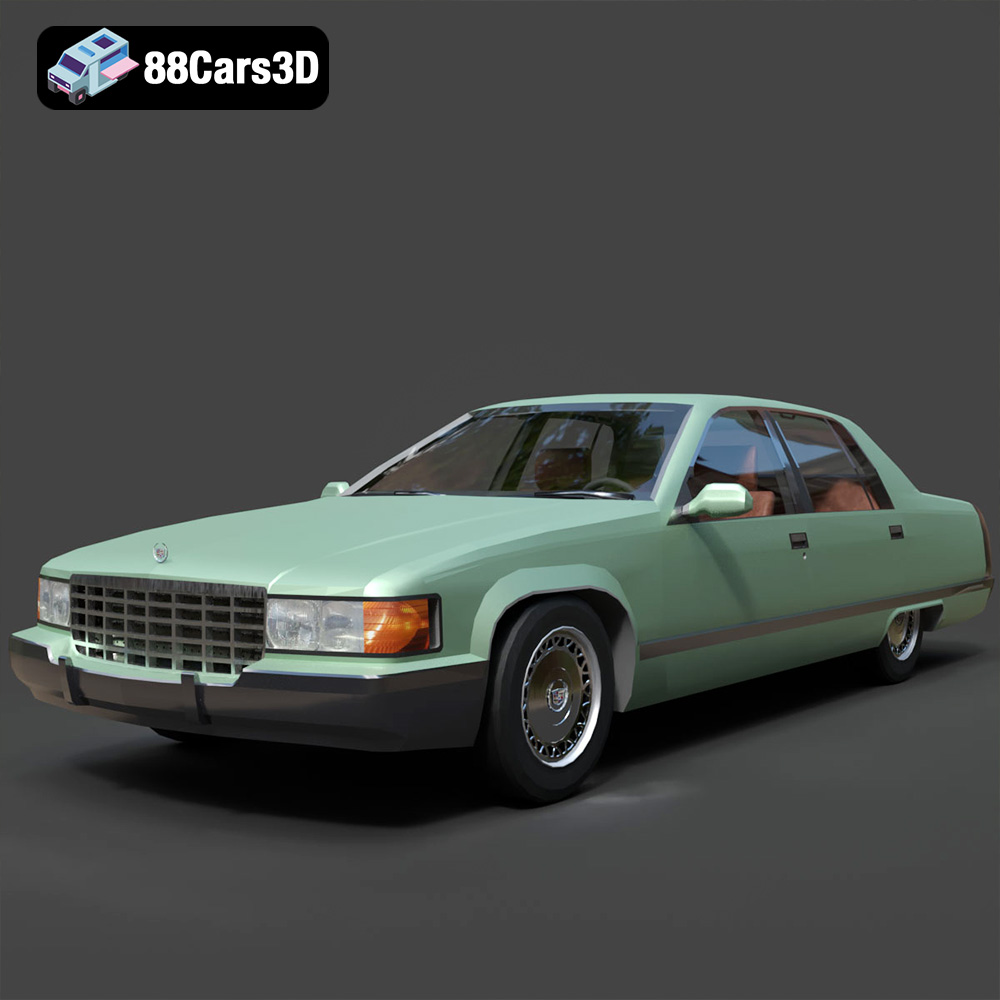
Cadillac Fleetwood Brougham 3D Model
Texture: Yes
Material: Yes
Download the Cadillac Fleetwood Brougham 3D Model featuring its iconic classic luxury design and detailed exterior and interior. Includes .blend, .fbx, .obj, .glb, .stl, .ply, .unreal, and .max formats for rendering, simulation, and game development.
Price: $10.79

Cadillac Eldorado 1968 3D Model
Texture: Yes
Material: Yes
Download the Cadillac Eldorado 1968 3D Model featuring its iconic elongated body, distinctive chrome accents, and luxurious interior. Includes .blend, .fbx, .obj, .glb, .stl, .ply, .unreal, and .max formats for rendering, simulation, and game development.
Price: $20.79

Cadillac CTS SW 2010 3D Model
Texture: Yes
Material: Yes
Download the Cadillac CTS SW 2010 3D Model featuring a detailed exterior, functional interior elements, and realistic materials. Includes .blend, .fbx, .obj, .glb, .stl, .ply, .unreal, and .max formats for rendering, simulation, and game development.
Price: $10.79
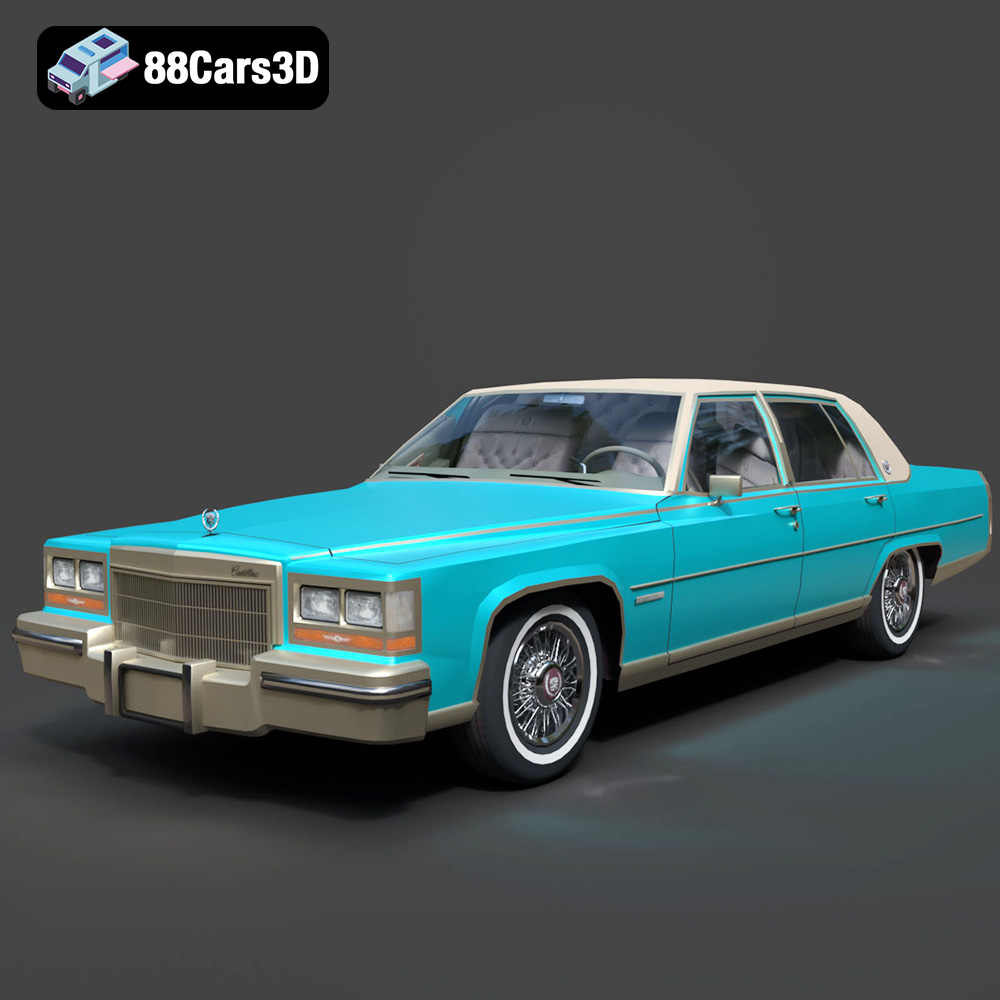
Cadillac Fleetwood Brougham 1985 3D Model
Texture: Yes
Material: Yes
Download the Cadillac Fleetwood Brougham 1985 3D Model featuring its iconic classic luxury design and detailed craftsmanship. Includes .blend, .fbx, .obj, .glb, .stl, .ply, .unreal, and .max formats for rendering, simulation, and game development.
Price: $10.79

Cadillac Eldorado 1978 3D Model
Texture: Yes
Material: Yes
Download the Cadillac Eldorado 1978 3D Model featuring accurately modeled exterior, detailed interior, and period-correct aesthetics. Includes .blend, .fbx, .obj, .glb, .stl, .ply, .unreal, and .max formats for rendering, simulation, and game development.
Price: $10.79
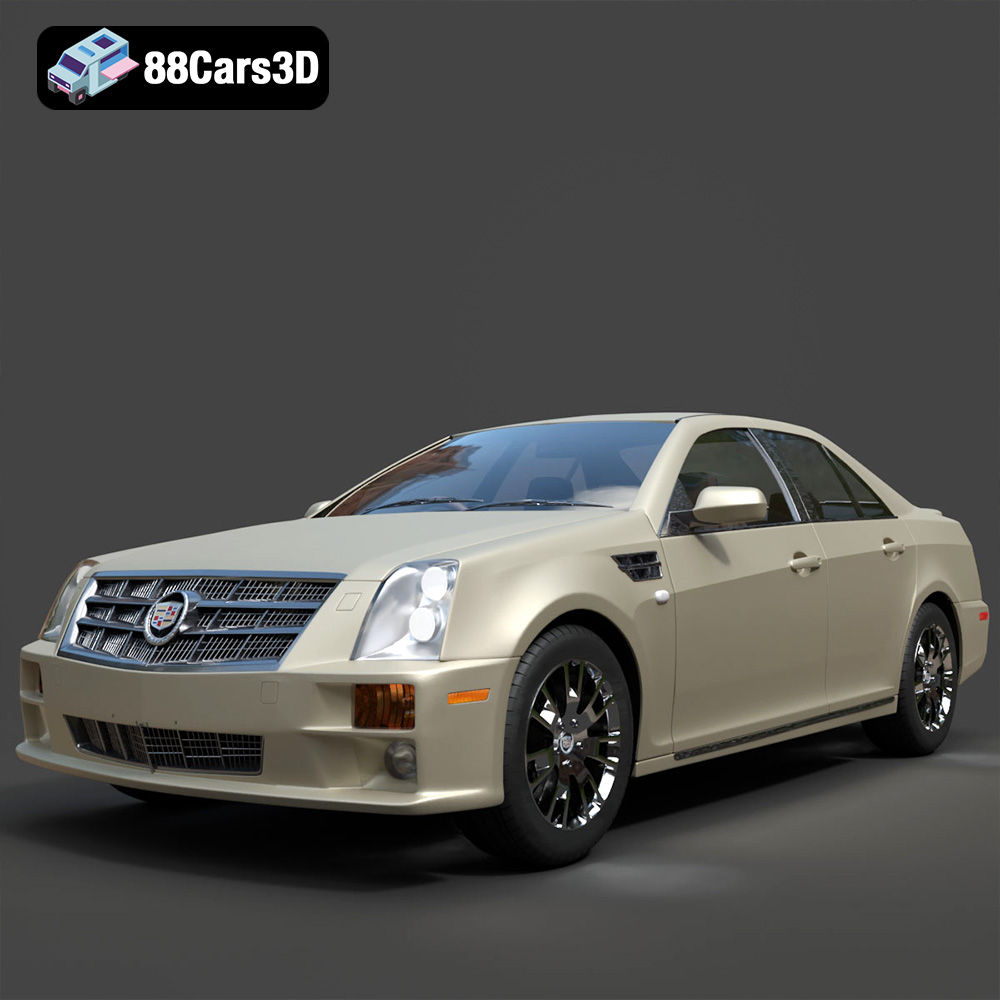
Cadillac STS-005 3D Model
Texture: Yes
Material: Yes
Download the Cadillac STS-005 3D Model featuring a detailed exterior and interior. Includes .blend, .fbx, .obj, .glb, .stl, .ply, .unreal, and .max formats for rendering, simulation, and game development.
Price: $22.79

Cadillac Eldorado Convertible (1959) 3D Model
Texture: Yes
Material: Yes
Download the Cadillac Eldorado Convertible (1959) 3D Model featuring iconic fins, luxurious chrome details, and a classic vintage design. Includes .blend, .fbx, .obj, .glb, .stl, .ply, .unreal, and .max formats for rendering, simulation, and game development.
Price: $20.79

Cadillac DTS-005 3D Model
Texture: Yes
Material: Yes
Download the Cadillac DTS-005 3D Model featuring its iconic luxury design, detailed interior, and realistic exterior. Includes .blend, .fbx, .obj, .glb, .stl, .ply, .unreal, and .max formats for rendering, simulation, and game development.
Price: $10.79
