

“`html
Mastering Your 3D Prints: A Deep Dive into STL File Cleanup with Blender
Embarking on the journey of 3D printing, especially with intricate models like those found on platforms like 88cars3d.com, often involves more than just hitting “print.” The magic of bringing a digital car model to life lies not only in its design but also in the integrity of the STL file itself. An STL file, the de facto standard for 3D printing, describes the surface geometry of a 3D object using a collection of triangular facets. However, these files can sometimes be riddled with imperfections: holes, non-manifold edges, inverted normals, and disconnected components. These flaws, often invisible to the naked eye, can cause significant headaches for your 3D printer settings and slicing software, leading to failed prints, distorted models, or a general inability to slice the model at all.
This comprehensive guide will equip you with the knowledge and practical steps to effectively clean up your STL files using Blender, a powerful, free, and open-source 3D creation suite. We’ll demystify the underlying principles of STL file structure, explore essential mesh repair techniques, and walk through the process of preparing your 3D printable car models for flawless execution on your FDM or resin 3D printer. Whether you’re a seasoned maker or just starting, understanding how to ensure your printable car models are “print-ready” is a crucial skill. By the end of this article, you’ll be confident in tackling common STL file issues, optimizing your workflow, and achieving higher quality results with your additive manufacturing projects.
Understanding the STL File Format and Its Common Pitfalls
The STL file format, short for Stereolithography, is the workhorse of the 3D printing industry. It represents a 3D model as a collection of interconnected triangles, forming a mesh that approximates the object’s surface. Each triangle is defined by the coordinates of its three vertices and a normal vector, which indicates the outward-facing direction of the triangle’s surface. This simplicity makes it universally compatible with most 3D printers and slicing software. However, this simplicity can also lead to issues.
The core principle of a “watertight” or manifold mesh is paramount for successful 3D printing. Imagine a solid object: it has no holes in its surface, and every edge is shared by exactly two triangles. When this condition is not met, your slicing software encounters problems. For instance, if your model has holes, the slicer doesn’t know whether to fill them or leave them open, leading to unpredictable slicing outcomes. Non-manifold geometry, such as edges shared by more than two triangles or internal faces, confuses the slicing algorithms, preventing them from generating toolpaths or support structures correctly. Inverted normals, where a triangle’s normal vector points inward instead of outward, can also cause the slicer to interpret the geometry incorrectly, potentially leading to missing sections or solid blocks where there should be empty space.
Common sources of these errors include:
- Model Export Issues: When a 3D model is exported from CAD software or other modeling programs, complex operations or specific export settings can introduce errors.
- Boolean Operations: Combining or subtracting shapes in 3D modeling software can sometimes leave behind faulty geometry if not performed carefully.
- Decimation/Simplification: Reducing the polygon count of a model can inadvertently create holes or degenerate triangles.
- Scanned Data: 3D scans, while useful, often produce meshes with numerous imperfections that require significant cleanup.
Platforms like 88cars3d.com strive to provide models with clean geometry, but even the best models can sometimes benefit from a quick check and potential cleanup, especially if you plan on making modifications or scaling the model significantly.
The Importance of a Manifold Mesh
A manifold mesh is a solid, watertight representation of a 3D object. In simpler terms, it means the mesh has no holes, no internal faces, and every edge connects exactly two faces. Think of it like a perfectly sealed container. When your STL file represents a manifold mesh, your slicing software can confidently determine the interior from the exterior of the object. This is crucial for several reasons:
- Accurate Slicing: Slicers rely on manifold meshes to generate infill, top and bottom layers, and support structures precisely where needed.
- Consistent Wall Thickness: A manifold mesh ensures that the intended wall thickness is maintained throughout the model, preventing thin or non-existent walls.
- Reduced Print Failures: Many print failures, such as delamination, stringing, or incomplete layers, can be traced back to underlying mesh errors in the STL file.
- Reliable Measurements: For functional parts or precise models, a manifold mesh ensures accurate dimensions and proportions.
Identifying and fixing non-manifold geometry is one of the most critical steps in preparing an STL file for printing.
Identifying Common STL Errors
Before diving into repairs, it’s essential to know what to look for. Common errors include:
- Holes: Gaps in the mesh surface.
- Non-Manifold Edges: Edges where more than two faces meet.
- Internal Faces: Faces that exist inside the object’s volume, not contributing to the outer surface.
- Coplanar Faces: Two or more faces that lie on the same plane, which can sometimes cause slicing issues.
- Degenerate Triangles: Triangles with zero area (e.g., all vertices are the same point or collinear).
- Inverted Normals: Faces where the normal vector points inwards, effectively flipping the surface.
Understanding these errors will help you target your cleanup efforts effectively within Blender.
Blender as Your STL Cleanup Toolkit
Blender, while primarily known as a powerful tool for 3D modeling, animation, and rendering, also possesses a robust set of mesh editing capabilities that make it an excellent choice for repairing STL files. Its intuitive interface (once you get past the initial learning curve) and extensive feature set allow for both automated and manual mesh correction. For those downloading models from marketplaces such as 88cars3d.com, Blender offers a free and accessible way to ensure these excellent models are perfectly prepared for your specific printing needs.
The key advantages of using Blender for STL cleanup include:
- Free and Open Source: No cost barrier to entry, making it accessible to everyone.
- Comprehensive Toolset: Offers a wide array of modeling, sculpting, and mesh editing tools.
- Extensibility: A vast ecosystem of add-ons can further enhance its capabilities, including specialized STL import/export and repair tools.
- Visual Feedback: Blender’s 3D viewport provides immediate visual feedback on your mesh edits, making it easier to spot and correct errors.
- Cross-Platform Compatibility: Runs on Windows, macOS, and Linux.
While professional software like Netfabb or Materialise Magics offer highly specialized automated repair functions, Blender provides a powerful and flexible manual and semi-automated approach that is more than sufficient for the vast majority of STL file preparation tasks required for hobbyist and enthusiast 3D printing.
Setting Up Blender for STL Import and Viewing
Before you can start cleaning, you need to import your STL file into Blender and configure it for optimal viewing. The process is straightforward:
- Download and Install Blender: If you don’t have it already, download the latest stable version from blender.org.
- Open Blender: Launch the application. You’ll typically see a default scene with a cube, camera, and light.
- Delete Default Objects: Select all objects in the 3D viewport (press ‘A’) and delete them (press ‘X’ and confirm).
- Import STL: Go to
File > Import > Stl (.stl). Navigate to your STL file, select it, and click “Import STL.” - Scene Management: Your car model will now appear in the viewport. You might need to zoom out (scroll wheel) or center the view on your object.
- Object Mode vs. Edit Mode: Ensure you are in “Object Mode” initially. To edit the mesh, select the object and press the ‘Tab’ key to enter “Edit Mode.” Press ‘Tab’ again to return to Object Mode.
For better visualization of mesh issues, consider enabling wireframe overlays or face orientation display. In Edit Mode, you can find these options in the “Overlays” menu in the top-right corner of the 3D viewport. Enabling “Face Orientation” is particularly useful, as it colors faces blue if their normals point outward and red if they point inward, immediately highlighting inverted normals.
Essential Blender Tools for Mesh Repair
Blender offers a suite of tools perfect for tackling STL imperfections. When working in Edit Mode:
- Select Tools: Use vertex, edge, and face selection modes (accessible via keys ‘1’, ‘2’, ‘3’ or icons at the top-left of the viewport) to isolate problematic areas. Tools like ‘Circle Select’ (C), ‘Box Select’ (B), and ‘Lasso Select’ (Ctrl+Left Click Drag) are invaluable.
- Mesh > Clean Up: This is a powerful menu with several automated options:
- “Delete Loose”: Removes disconnected vertices, edges, or faces.
- “Fill Holes”: Attempts to automatically fill selected boundaries, closing gaps.
- “Make Manifold”: Tries to correct non-manifold geometry.
- “Merge by Distance”: Merges vertices that are closer than a specified distance, useful for cleaning up duplicate geometry.
- Mesh > Normals:
- “Recalculate Outside” (Shift+N): This is your go-to for fixing inverted normals. It attempts to orient all selected faces outward.
- “Flip”: Manually flips the normals of selected faces.
- Transform Tools: ‘Grab’ (G), ‘Rotate’ (R), and ‘Scale’ (S) are fundamental for moving, rotating, and resizing vertices, edges, and faces to fix geometry.
- Extrude (E): Useful for closing small holes by extruding edges inwards or outwards.
- Merge Vertices (M): Allows you to merge selected vertices at the cursor, at the center, or by distance.
The key is to combine these tools strategically. Start with automated functions and then use manual tools for finer adjustments.
Step-by-Step STL File Cleanup Workflow in Blender
Preparing an STL file for printing is often an iterative process. Here’s a detailed workflow that leverages Blender’s capabilities. When downloading models from marketplaces such as 88cars3d.com, starting with a quick verification run through these steps is highly recommended.
- Import and Initial Inspection: Import your STL file into Blender. Switch to Edit Mode (‘Tab’). Enable “Face Orientation” in the Overlays menu. Look for large red areas, which indicate inverted normals. Also, visually scan for obvious holes or gaps in the mesh.
- Fix Inverted Normals: In Edit Mode, select all faces (press ‘A’ twice). Go to
Mesh > Normals > Recalculate Outside. This should turn most red faces blue. If any red faces remain, they might be part of internal geometry or complex issues requiring manual attention. You can manually select problematic red faces and useMesh > Normals > Flip. - Address Holes: Identify any holes. For simple holes, select the boundary edges of the hole. Then, go to
Face > Fill(or press ‘F’). For more complex or larger holes, theMesh > Clean Up > Fill Holestool might work, but it’s often less predictable. Manual patching using edge extrusion and vertex merging might be necessary for intricate gaps. - Correct Non-Manifold Geometry: Blender has a built-in way to select non-manifold geometry. In Edit Mode, go to
Select > Select All by Trait > Non Manifold. This will highlight all problematic edges and vertices. You can then attempt to fix these manually using merge, dissolve, or extrude tools, or try theMesh > Clean Up > Make Manifoldoption, although its success varies. - Remove Loose Geometry: Sometimes, especially after Booleans or complex edits, small, disconnected pieces of geometry can remain. In Object Mode, go to
Mesh > Clean Up > Delete Loose. Adjust the “Max Face Size” and “Max Edge Length” parameters carefully to avoid deleting parts of your intended model. - Merge by Distance: Overlapping vertices can cause issues. In Edit Mode, select all vertices (‘A’) and use
Mesh > Clean Up > Merge by Distance. Adjust the “Merge Distance” value in the operator panel (bottom-left of the viewport) to a small value (e.g., 0.001m) to merge vertices that are extremely close without affecting the overall shape. - Check Wall Thickness (Optional but Recommended): For critical parts, ensure your walls have adequate thickness for printing. Use Blender’s “3D-Print Toolbox” add-on (enable it in
Edit > Preferences > Add-ons) which has a “Thickness” analysis tool. - Final Verification: After applying these steps, re-inspect the mesh visually. Check the Face Orientation again. If the model appears solid and watertight, it’s likely ready.
- Export as STL: In Object Mode, select your cleaned model. Go to
File > Export > Stl (.stl). Ensure “Selection Only” is checked if you only want to export the selected model. Choose your desired scale and units.
This structured approach ensures that you methodically address potential issues, leading to a higher probability of a successful print. Remember, complex models might require more time and patience.
Leveraging Blender Add-ons for Enhanced Repair
While Blender’s built-in tools are powerful, certain add-ons can streamline the STL cleanup process. The most notable is the “3D-Print Toolbox” add-on, which comes bundled with Blender but needs to be enabled:
- Enable Add-on: Go to
Edit > Preferences > Add-ons. Search for “3D-Print” and enable “Mesh: 3D-Print Toolbox.” - Access Tools: After enabling, a new panel will appear in the 3D viewport sidebar (press ‘N’ to toggle the sidebar if it’s hidden). Look for the “3D-Print” tab.
- Key Features:
- Check All: This button performs a series of automated checks for common issues like non-manifold edges, intersecting faces, zero-area faces, and bad regions. It provides a summary of problems found.
- Make Manifold: A more robust version of the built-in “Make Manifold” tool.
- Clean Up: Offers options to remove isolated interior and exterior faces, which are often artifacts from boolean operations or bad topology.
- Scale: Allows precise scaling and unit conversion, essential for ensuring your model prints at the correct size.
- Printability Analysis: Includes thickness analysis, enabling you to identify areas that might be too thin to print reliably.
The “3D-Print Toolbox” acts as an excellent diagnostic tool and a convenient shortcut for many repair operations, significantly speeding up the workflow for preparing files, including those from 88cars3d.com.
Manual Intervention: When Automation Fails
Automated tools are fantastic, but they aren’t foolproof. Complex mesh distortions, self-intersecting geometry, or deeply flawed topology might require manual intervention. This is where Blender’s core modeling tools shine.
- Vertex Manipulation: If a hole is particularly jagged, you might need to manually move individual vertices (‘G’) to create a clean edge loop before attempting to fill it.
- Edge Sliding and Vertex Merging: Tools like “Edge Slide” (G twice) allow you to move an edge along the surface of the mesh, helping to realign geometry. Merging vertices (‘M’) is crucial for eliminating double vertices or closing small gaps precisely.
- Bridging Edge Loops: For larger holes, you can create new faces between two edge loops by selecting both loops and using
Edge > Bridge Edge Loops. This requires careful selection and often results in a cleaner fill than automatic tools. - Sculpt Mode for Minor Fixes: For very localized bumps or imperfections on the surface, switching to Sculpt Mode and using tools like the “Smooth” brush or “Grab” brush can sometimes make quick work of minor surface defects. Be cautious not to distort the overall shape.
Manual repair demands a good understanding of mesh topology and can be time-consuming, but it offers the highest level of control for achieving a perfect, print-ready model.
Optimizing STL Files for Slicing and Printing
Once your STL file is clean and watertight, further optimization can enhance print quality and reduce print time. This involves considering how your slicer software interprets the mesh and how your 3D printer settings will interact with it.
STL Resolution and File Size Considerations
The STL format represents curved surfaces using a series of flat triangles. The more triangles used (higher resolution), the smoother and more accurate the approximation of the curve. However, this also leads to larger file sizes and potentially slower processing times for your slicer.
- High Resolution: Generally preferred for highly detailed models where smooth curves are essential. This is often the default for models from quality sources like 88cars3d.com.
- Low Resolution: Can result in visible faceting (stair-stepping effect) on curved surfaces. Useful for very simple models or when file size is a critical constraint, though rarely necessary for car models.
When exporting from Blender, you can influence the resolution. While Blender doesn’t directly control STL triangle count during export, the density of your mesh *before* export is what matters. If you imported a low-poly STL, it will remain low-poly. If you need to increase resolution, you can use Blender’s subdivision surface modifiers *before* applying them and exporting, but be mindful of exponentially increasing file sizes and processing demands.
For most car models, finding a balance is key. Excessive triangulation can bog down your slicer without providing a noticeable visual improvement on a typical 3D print. If you feel a model is too dense (e.g., millions of polygons), you could use Blender’s “Decimate” modifier to reduce the polygon count while attempting to preserve the shape, but always check the result carefully for surface artifacts.
Export Settings for Print-Ready STLs
When exporting your cleaned mesh from Blender, pay attention to the export options:
- Scale: Ensure the scale is set correctly. If your model was designed in millimeters, exporting with a scale of 1.0 will maintain that. If you need to scale it up or down for printing, it’s often better to do this within the slicer, but exporting at the intended scale is also an option.
- Scene Unit vs. Export Unit: Blender’s scene units can be set independently from export units. By default, Blender uses meters. When exporting to STL, the default is to export in the scene unit. Ensure your slicer interprets the units correctly (usually millimeters). Setting Blender’s Unit System to Metric and Length to Millimeters (in
Scene Properties) *before* importing or modeling can simplify things. - Selection Only: Crucial if your Blender scene contains other objects (like lights or cameras). Check this box to export only the selected car model.
- Apply Modifiers: If you used modifiers (like Subdivision Surface or Mirror) and want their effect baked into the exported mesh, check this option. For STL export, it’s generally recommended to apply modifiers before export, as slicers don’t interpret Blender-specific modifiers.
Proper export settings prevent common scaling issues and ensure your model’s dimensions are accurately translated to the slicing software.
Preparing for Different Printing Technologies (FDM vs. Resin)
While the STL file itself is universal, the preparation and slicing steps differ significantly between FDM (Fused Deposition Modeling) and resin (SLA/DLP) printing.
- FDM Printing:
- Wall Thickness: Ensure walls are at least 2-3 extrusion widths thick (e.g., 0.8mm – 1.2mm for a 0.4mm nozzle). The “3D-Print Toolbox” in Blender is excellent for checking this.
- Support Structures: FDM printers require support for overhangs steeper than typically 45-60 degrees. Supports are generated in the slicer. You might orient the model in the slicer to minimize support needs.
- Bed Adhesion: Models need a solid base. Check for flat areas suitable for bed adhesion. Brims or rafts might be necessary.
- Material: Common materials include PLA, PETG, and ABS. Layer height settings (e.g., 0.1mm – 0.2mm) impact detail vs. print time.
- Resin Printing:
- Hollowing: To save resin and reduce curing time/stress, models are often hollowed in the slicer, with drainage holes added.
- Support Structures: Resin printers require dense, detailed supports, often added manually or semi-automatically in slicer software (e.g., ChiTuBox, Lychee Slicer). Supports are critical for preventing print failures due to suction forces.
- Orientation: Models are typically oriented at an angle (e.g., 15-45 degrees) to the build plate to minimize the surface area exposed during each layer’s lift, reducing peel forces and improving success rates.
- Resolution: Resin printers offer higher detail, so a clean, high-resolution STL is beneficial. Layer heights are much finer (e.g., 0.025mm – 0.05mm).
Understanding these differences helps you tailor your STL cleanup and preparation strategy based on your intended printing technology.
Conclusion: Print with Confidence
Mastering the art of STL file cleanup is a fundamental skill for any serious 3D printing enthusiast. By understanding the intricacies of the STL format and leveraging the powerful, free tools available in Blender, you can transform potentially problematic files into flawless models ready for printing. We’ve explored the importance of manifold meshes, identified common STL errors, and walked through a detailed workflow using Blender’s selection, mesh repair, and normal editing tools. Furthermore, we touched upon the benefits of add-ons like the “3D-Print Toolbox” and the necessity of manual intervention for complex issues.
Remember that preparation is key. Taking the time to clean and verify your STL files, whether they are original creations or downloaded gems from marketplaces like 88cars3d.com, will save you significant time, material, and frustration in the long run. A clean file translates directly to a cleaner slice, more reliable supports, and ultimately, a higher quality print. This process not only improves your printing success rate but also deepens your understanding of 3D geometry and the additive manufacturing process. So, dive into Blender, practice these techniques, and enjoy the satisfaction of bringing perfectly printed 3D car models to life!
“`
Featured 3D Car Models
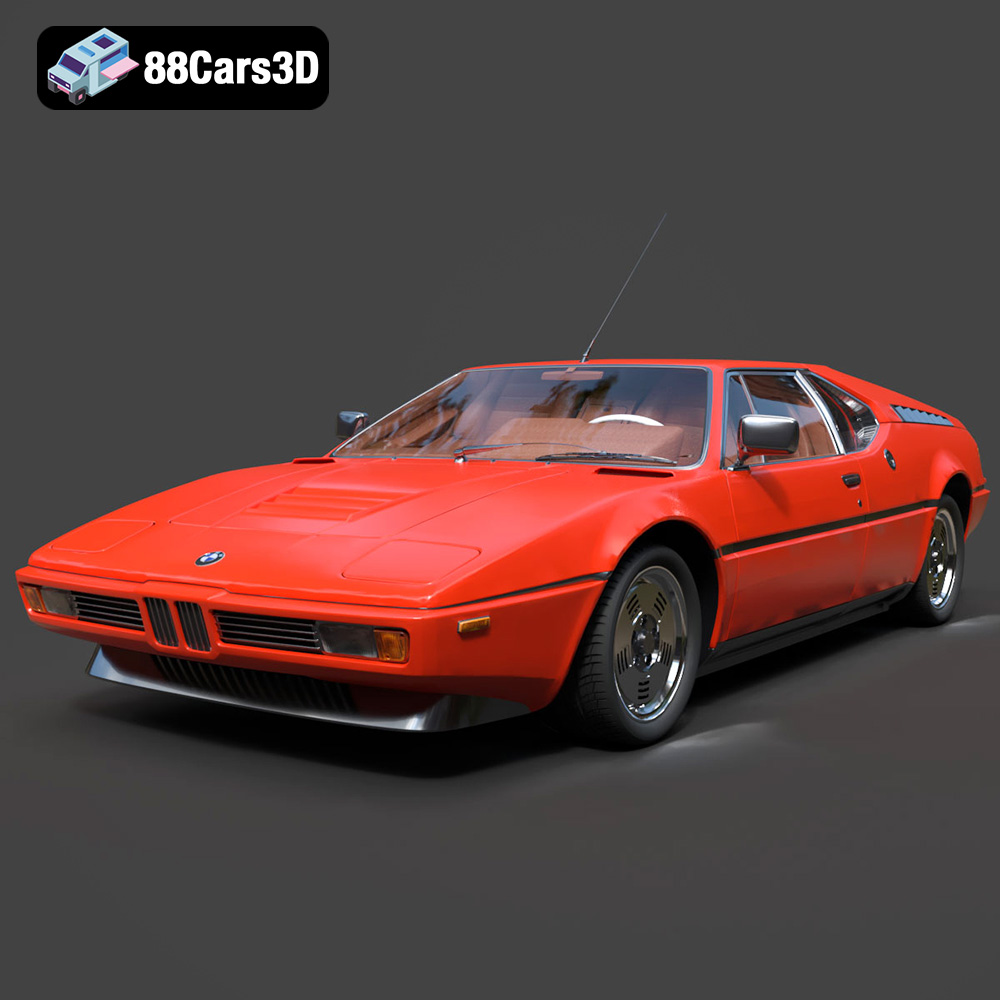
BMW Motorsport M1 E26 1981 3D Model
Texture: Yes
Material: Yes
Download the BMW Motorsport M1 E26 1981 3D Model featuring its iconic design, race-bred aerodynamics, and meticulously crafted details. Includes .blend, .fbx, .obj, .glb, .stl, .ply, .unreal, and .max formats for rendering, simulation, and game development.
Price: $20.79

Cadillac CTS-V Coupe 3D Model
Meta Description:
Texture: Yes
Material: Yes
Download the Cadillac CTS-V Coupe 3D Model featuring detailed exterior styling and realistic interior structure. Includes .blend, .fbx, .obj, .glb, .stl, .ply, .unreal, and .max formats for rendering, simulation, AR VR, and game development.
Price: $13.9
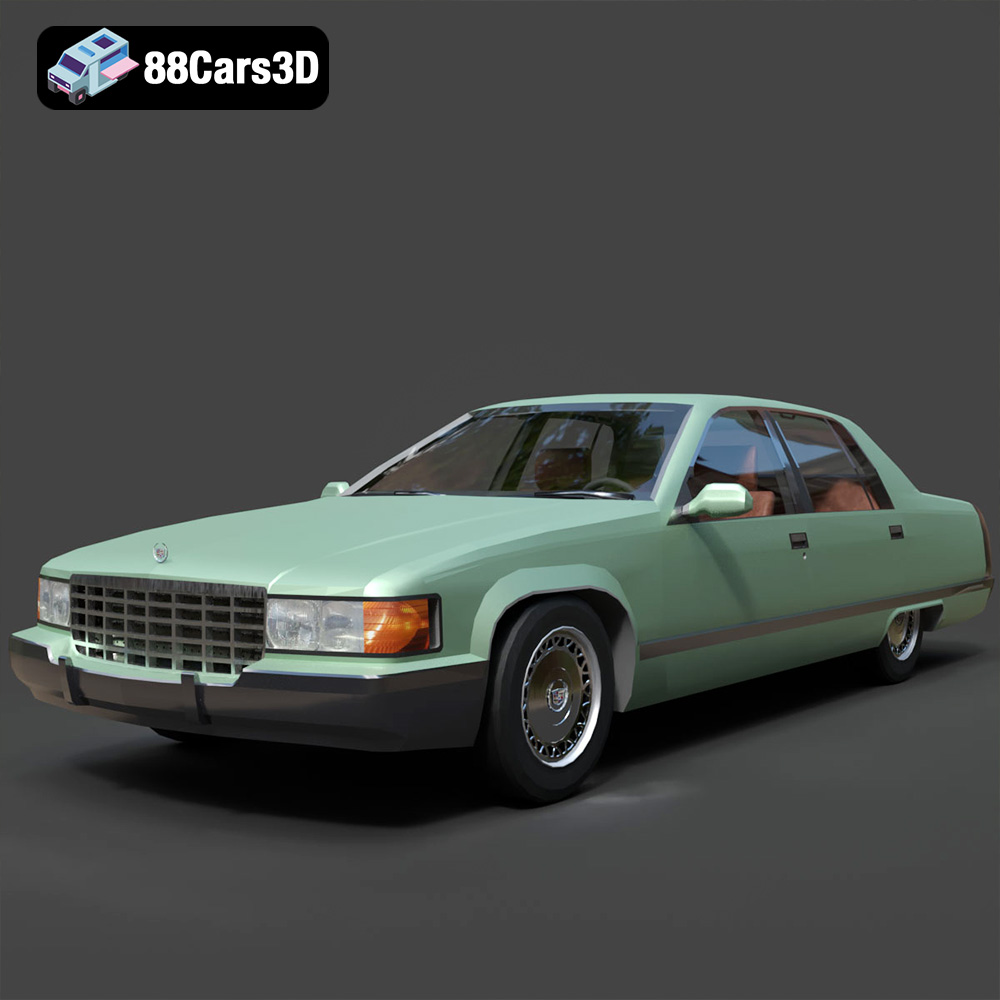
Cadillac Fleetwood Brougham 3D Model
Texture: Yes
Material: Yes
Download the Cadillac Fleetwood Brougham 3D Model featuring its iconic classic luxury design and detailed exterior and interior. Includes .blend, .fbx, .obj, .glb, .stl, .ply, .unreal, and .max formats for rendering, simulation, and game development.
Price: $10.79

Cadillac Eldorado 1968 3D Model
Texture: Yes
Material: Yes
Download the Cadillac Eldorado 1968 3D Model featuring its iconic elongated body, distinctive chrome accents, and luxurious interior. Includes .blend, .fbx, .obj, .glb, .stl, .ply, .unreal, and .max formats for rendering, simulation, and game development.
Price: $20.79

Cadillac CTS SW 2010 3D Model
Texture: Yes
Material: Yes
Download the Cadillac CTS SW 2010 3D Model featuring a detailed exterior, functional interior elements, and realistic materials. Includes .blend, .fbx, .obj, .glb, .stl, .ply, .unreal, and .max formats for rendering, simulation, and game development.
Price: $10.79
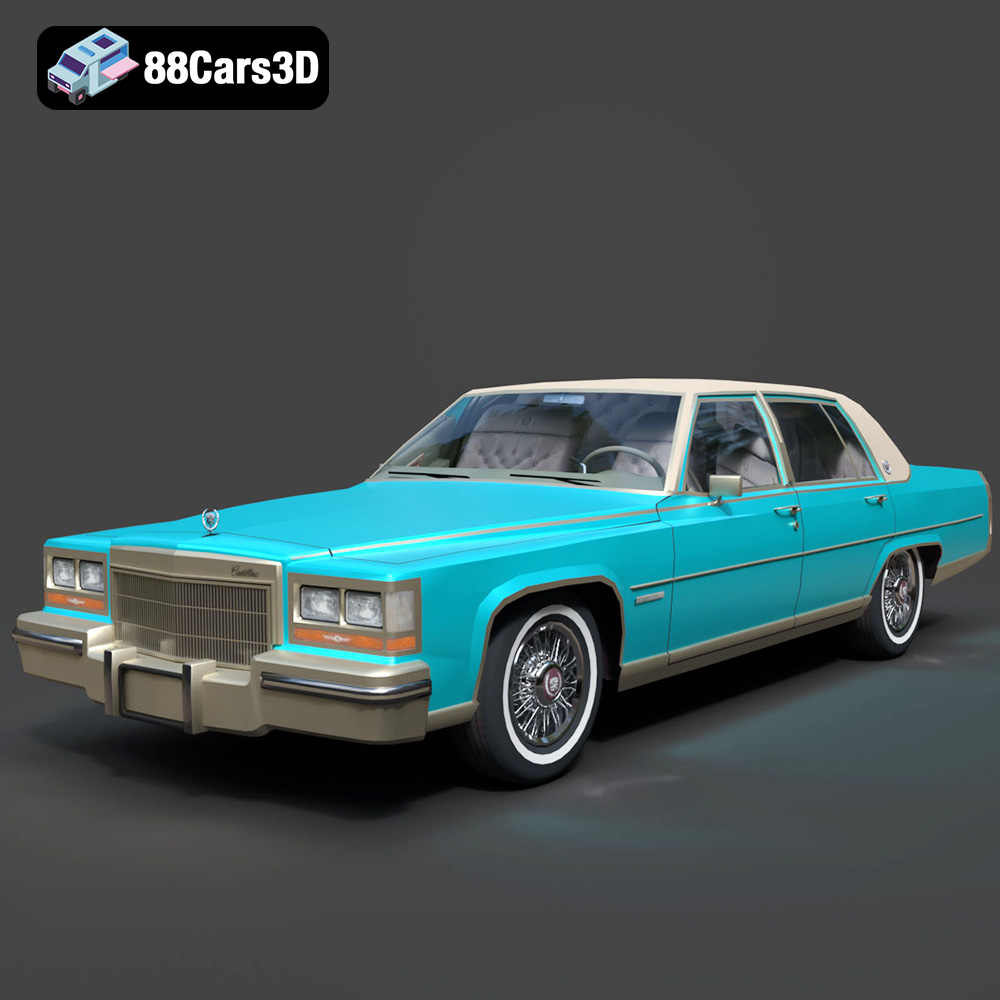
Cadillac Fleetwood Brougham 1985 3D Model
Texture: Yes
Material: Yes
Download the Cadillac Fleetwood Brougham 1985 3D Model featuring its iconic classic luxury design and detailed craftsmanship. Includes .blend, .fbx, .obj, .glb, .stl, .ply, .unreal, and .max formats for rendering, simulation, and game development.
Price: $10.79

Cadillac Eldorado 1978 3D Model
Texture: Yes
Material: Yes
Download the Cadillac Eldorado 1978 3D Model featuring accurately modeled exterior, detailed interior, and period-correct aesthetics. Includes .blend, .fbx, .obj, .glb, .stl, .ply, .unreal, and .max formats for rendering, simulation, and game development.
Price: $10.79
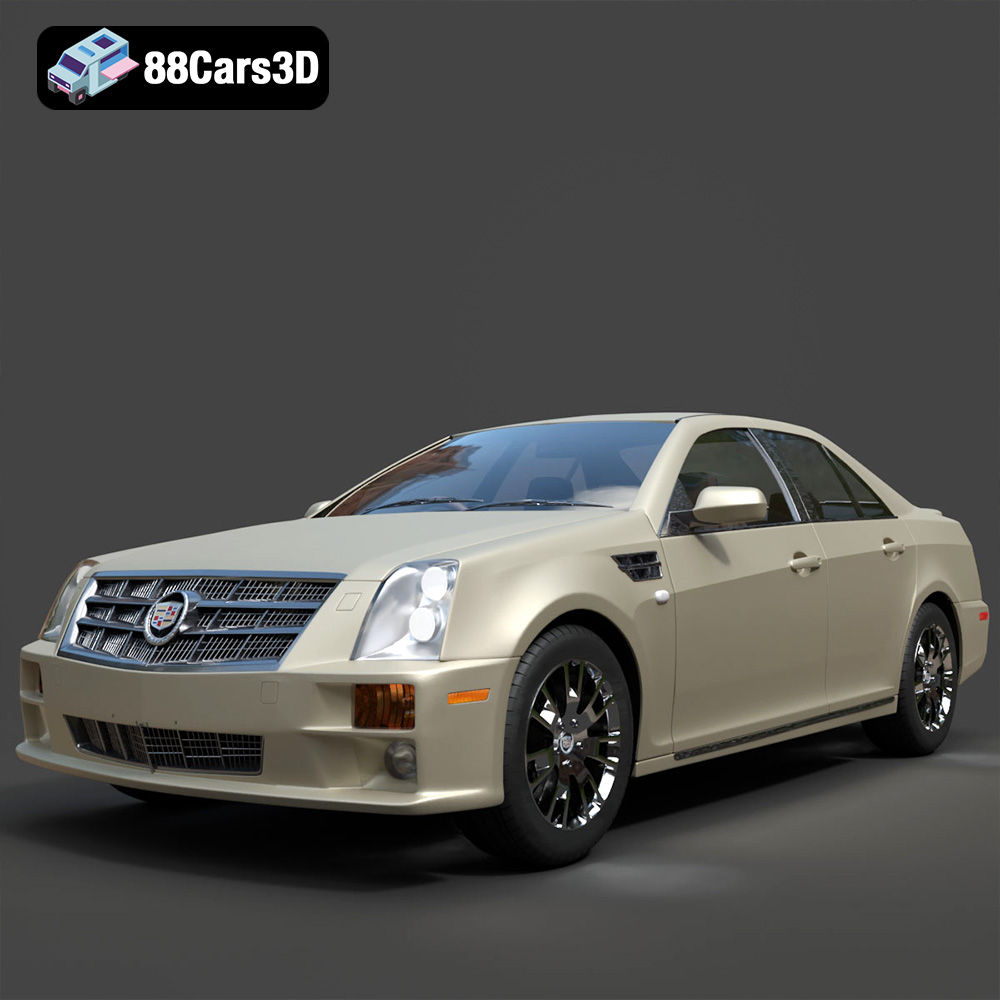
Cadillac STS-005 3D Model
Texture: Yes
Material: Yes
Download the Cadillac STS-005 3D Model featuring a detailed exterior and interior. Includes .blend, .fbx, .obj, .glb, .stl, .ply, .unreal, and .max formats for rendering, simulation, and game development.
Price: $22.79

Cadillac Eldorado Convertible (1959) 3D Model
Texture: Yes
Material: Yes
Download the Cadillac Eldorado Convertible (1959) 3D Model featuring iconic fins, luxurious chrome details, and a classic vintage design. Includes .blend, .fbx, .obj, .glb, .stl, .ply, .unreal, and .max formats for rendering, simulation, and game development.
Price: $20.79

Cadillac DTS-005 3D Model
Texture: Yes
Material: Yes
Download the Cadillac DTS-005 3D Model featuring its iconic luxury design, detailed interior, and realistic exterior. Includes .blend, .fbx, .obj, .glb, .stl, .ply, .unreal, and .max formats for rendering, simulation, and game development.
Price: $10.79
