⚡ FLASH SALE: Get 60% OFF All Premium 3D & STL Models! ⚡

The automotive industry has always been at the forefront of technological innovation, and 3D modeling software is no exception. From initial concept sketches to detailed engineering, photorealistic rendering, and interactive AR/VR experiences, the choice of 3D software profoundly impacts efficiency, precision, and the final quality of automotive designs. As technology evolves, so too do the capabilities of these powerful tools, offering designers and engineers unparalleled control over form, function, and aesthetics.
Selecting the right 3D modeling software for automotive design is a critical decision that depends on your specific needs, whether you’re focusing on Class-A surfacing for manufacturing, developing high-fidelity game assets, creating stunning marketing visualizations, or preparing models for 3D printing. This comprehensive guide will explore the top 10 best 3D modeling software for automotive design in 2024, delving into their unique strengths, typical workflows, and technical considerations. We’ll cover everything from NURBS-based precision to polygonal flexibility, parametric accuracy, and rendering prowess, helping you make an informed choice to elevate your automotive projects. Discover how these tools empower artists and engineers to push the boundaries of car design, ensuring every curve, every reflection, and every detail meets the highest industry standards.
Autodesk Alias AutoStudio stands as the industry standard for industrial design, particularly in automotive surfacing. Known for its unparalleled NURBS (Non-Uniform Rational B-Spline) modeling capabilities, Alias enables designers to create mathematically precise, high-quality Class-A surfaces. This precision is crucial for manufacturing, where even microscopic imperfections can affect aerodynamics, panel gaps, and aesthetic appeal. Alias workflows typically begin with concept sketches or scan data, evolving into complex surface models with exacting control over curvature and tangency. Its powerful diagnostic tools, such as curvature combs and surface continuity checks, are indispensable for achieving the flawless transitions required for production-ready designs. Professional automotive studios rely on Alias to bridge the gap between artistic intent and engineering feasibility, ensuring designs are both stunning and manufacturable.
Alias excels in creating curvature-continuous (G2 or G3) surfaces, which are essential for achieving the smooth, reflective qualities characteristic of high-end vehicles. Its direct manipulation tools allow designers to intuitively sculpt forms while maintaining underlying mathematical integrity. The software’s robust history-based modeling ensures that design changes can be propagated easily across the model, facilitating rapid iteration. This non-destructive workflow is vital in the iterative nature of automotive design, where numerous design variations and refinements are common. Furthermore, features like “Surface Offset” and “Shell” are critical for creating interior and exterior panels with consistent thickness, directly informing engineering and manufacturing processes. Alias also provides sophisticated tools for analyzing surface quality, identifying potential defects before they become costly production issues.
In a typical automotive design pipeline, Alias models serve as the master surfaces from which all subsequent data is derived. These precise NURBS models are then exported to CAD software like CATIA or SolidWorks for detailed engineering and manufacturing documentation. Alias supports a wide array of industry-standard file formats, including IGES, STEP, and DWG, ensuring seamless interoperability with other software packages. For visualization purposes, Alias models can be tessellated into polygon meshes (OBJ, FBX) with controllable polygon counts and then imported into rendering engines like VRED, V-Ray, or Corona. This robust data exchange capability makes Alias a central hub in the automotive design ecosystem, connecting conceptual design with engineering and marketing visualization. Understanding Alias’s data export settings is critical for maintaining model integrity across different applications, ensuring that the visual intent is preserved in both engineering schematics and marketing renders.
While not a primary modeling tool in the traditional sense, Autodesk VRED is indispensable for automotive design due to its unparalleled real-time photorealistic visualization capabilities. VRED transforms raw CAD or polygon data into stunning, interactive experiences, allowing designers and marketing teams to evaluate and present vehicle designs with incredible fidelity. It excels at rendering complex automotive materials—like car paint, glass, chrome, and intricate interior fabrics—with physically accurate reflections, refractions, and global illumination. VRED supports large datasets, making it suitable for full-scale vehicle projects, and offers advanced features for lighting simulation, material variation, and design configuration. Its real-time raytracing and physically based rendering (PBR) engine provide immediate visual feedback, significantly accelerating design review cycles and decision-making processes, bridging the gap between digital models and real-world perception.
VRED’s core strength lies in its ability to achieve cinematic quality renders in real-time. It boasts an extensive library of automotive-specific PBR materials, including flakes, clear coats, and metallic paints, which can be customized to an exceptional degree. The software’s advanced lighting tools allow for complex studio setups, HDR image-based lighting (IBL), and accurate simulation of real-world lighting conditions, crucial for evaluating how a vehicle’s form interacts with light. Furthermore, VRED’s ability to create realistic shadows, reflections, and ambient occlusion contributes significantly to the perceived realism. This immediate visual feedback empowers designers to experiment with material choices, color combinations, and lighting environments on the fly, making it a powerful tool for aesthetic validation and rapid prototyping of visual concepts without the long render times associated with offline renderers.
VRED is designed for collaborative workflows, offering features like interactive design reviews in VR, multi-user sessions, and comprehensive presentation tools. Designers can load massive CAD assemblies (e.g., from CATIA or SolidWorks) directly into VRED, optimizing them for real-time performance without compromising visual quality. Its scene graph management allows for efficient handling of complex hierarchies and variations, enabling users to switch between different car configurations, colors, and features seamlessly. For instance, a designer can instantly swap out different wheel designs or interior trim options during a live presentation. The software’s robust data import capabilities (supporting formats like VRED’s own .vpb, FBX, OBJ, STEP, IGES, and many native CAD formats) ensure that models from various stages of the design pipeline can be integrated and visualized effectively. This focus on high-fidelity, interactive visualization makes VRED an invaluable asset for automotive design communication and decision-making.
Autodesk 3ds Max is a cornerstone in the world of 3D content creation, widely adopted in architectural visualization, game development, and, crucially, high-fidelity automotive visualization and game asset creation. While Alias handles Class-A surfacing, 3ds Max excels in transforming those precise NURBS models into optimized polygon or subdivision surface (SubD) meshes, or building intricate details from scratch. Its robust polygonal modeling tools, coupled with powerful modifiers like “TurboSmooth,” allow artists to create smooth, production-ready surfaces ideal for rendering and game engines. 3ds Max’s strength lies in its versatility, offering advanced rendering integrations (V-Ray, Corona Renderer), comprehensive animation tools, and extensive scripting capabilities, making it a powerhouse for bringing automotive designs to life with stunning realism and dynamic presentation.
For automotive artists, 3ds Max’s SubD modeling workflow is critical. It allows for the creation of organic, smooth surfaces by starting with a low-polygon cage and subdividing it into a high-resolution mesh. The key here is clean topology – maintaining optimal edge flow and polygon distribution to ensure smooth deformation, accurate reflections, and efficient UV mapping. Best practices involve using quad-based geometry, minimizing poles with more than five edges, and strategically placing support loops to control creasing. This approach is essential for converting CAD data into render-ready or game-ready assets while preserving the design’s curvature and detail. Platforms like 88cars3d.com often feature models meticulously crafted in software like 3ds Max, optimized for clean topology and ready for various applications.
3ds Max integrates seamlessly with leading physically based renderers like V-Ray and Corona Renderer, enabling artists to produce photorealistic automotive imagery. These renderers offer sophisticated material systems for realistic car paint, glass, and metal, along with advanced lighting and global illumination solutions. For game development, 3ds Max is instrumental in creating optimized game assets. This involves baking high-detail models onto low-polygon meshes for efficient real-time rendering, generating Level of Detail (LODs) to manage polygon count based on distance, and creating efficient texture atlases to reduce draw calls. Understanding polygon budgets (e.g., a high-detail game car model might range from 80,000 to 200,000 triangles, while an LOD0 might be 30,000-50,000) and mastering UV mapping strategies for complex car surfaces are crucial for game engine performance. File formats like FBX are commonly used for exporting optimized models and animations to game engines like Unity or Unreal Engine.
Blender has evolved into a formidable contender in the 3D software landscape, offering an incredibly robust and comprehensive suite of tools for modeling, sculpting, animation, rendering, and compositing – all completely free and open-source. For automotive designers and artists, Blender provides powerful polygonal and subdivision surface modeling capabilities, allowing for the creation of intricate vehicle models with excellent control over topology and form. Its integrated Cycles and Eevee renderers deliver stunning photorealistic and real-time results, respectively, making it suitable for both high-end visualizations and quick design iterations. Blender’s rapid development, vibrant community, and extensive add-on ecosystem make it an increasingly popular choice for artists seeking a versatile and cost-effective solution for creating high-quality 3D car models, whether for rendering, game assets, or concept design.
Blender’s modeling tools are highly intuitive and efficient. Its polygon modeling toolkit allows for precise control over vertices, edges, and faces, making it excellent for creating both hard-surface and organic shapes. Modifiers like “Subdivision Surface” are crucial for achieving smooth, production-quality vehicle surfaces from a low-poly base, similar to 3ds Max. The “Bevel” modifier, for instance, allows for precise control over edge sharpness, vital for automotive panel gaps and character lines. For more detailed information on Blender’s comprehensive modeling capabilities, including specific tools and workflows, users can consult the official Blender 4.4 documentation. Blender’s open-source nature means constant innovation and community-driven development, ensuring it remains at the cutting edge of 3D technology, often introducing features that later become industry standards.
Blender features two powerful built-in render engines: Cycles and Eevee. Cycles, a physically based path tracer, is renowned for its photorealistic output, making it ideal for high-quality automotive rendering with accurate global illumination, reflections, and refractions. It supports advanced material nodes for creating complex car paint shaders with multiple layers, metallic flakes, and clear coats. Eevee, Blender’s real-time renderer, provides immediate visual feedback, perfect for design iteration, animation previews, and game asset visualization. Both engines fully support PBR material workflows, allowing artists to create realistic shaders using albedo, roughness, metallic, normal, and ambient occlusion maps. This enables artists to develop visually stunning automotive models that react realistically to light, making them perfect for high-end marketing collateral or integration into interactive experiences like AR/VR applications.
Autodesk Maya is best known for its exceptional animation, rigging, and visual effects capabilities, making it a staple in film, television, and game development. However, its comprehensive polygonal and NURBS modeling toolsets also make it a strong contender for automotive design, especially when animation or complex rigging of vehicle components (like suspension systems or doors) is required. Maya offers robust tools for creating clean, subdivision-ready geometry, essential for high-quality rendering and efficient game asset creation. While not as focused on Class-A surfacing as Alias, Maya’s flexibility allows artists to sculpt intricate automotive forms and prepare them for various stages of the production pipeline, from concept visualization to detailed asset development for interactive simulations or cinematic presentations.
Maya’s polygonal modeling environment is incredibly powerful, offering a wide array of tools for precise control over geometry. Features like the “Quad Draw” tool enable artists to retopologize scanned data or concept sculpts into clean, quad-based meshes with optimal edge flow – a critical step for automotive models to ensure smooth reflections and proper deformation. The “Mesh Tools” menu provides comprehensive options for manipulating vertices, edges, and faces, while modifiers like “Smooth” are used to achieve high-resolution, production-quality surfaces from low-poly control meshes. Maintaining good topology is paramount in automotive modeling within Maya, as it directly impacts the quality of subdivisions, UV mapping, and the behavior of the model during animation or when exported as game assets. This meticulous approach ensures that car models retain their intended aesthetic and perform optimally in various downstream applications.
Where Maya truly shines for automotive design is in its animation and rigging capabilities. Artists can create sophisticated rigs for car models, allowing for realistic simulations of suspension, steering, door openings, and even complex transformations for concept vehicles. This is invaluable for creating compelling marketing animations, product showcases, or interactive configurators. Maya’s robust UV mapping tools ensure efficient texture space utilization, a key consideration for both rendering and game engine performance. Furthermore, its support for industry-standard file formats like FBX, OBJ, and Alembic ensures seamless integration into pipelines involving other software, renderers (like Arnold, its native renderer, or third-party options like V-Ray), and game engines. For creating dynamic, high-impact automotive presentations, Maya offers a professional-grade solution that bridges the gap between static design and immersive storytelling.
SolidWorks is a market leader in parametric CAD (Computer-Aided Design) software, primarily used for mechanical design, engineering, and manufacturing. For automotive design, it plays a critical role in the engineering phase, transforming conceptual designs into precise, dimensionally accurate, and manufacturable components. Unlike SubD or NURBS surfacing tools that prioritize aesthetic form, SolidWorks focuses on creating robust, feature-based models that are fully constrained and easily modified. Engineers use SolidWorks to design chassis components, engine parts, interior mechanisms, and intricate assemblies, ensuring that every part fits together perfectly and meets stringent engineering requirements. Its emphasis on design intent and associativity means that changes made to one feature automatically update related parts and assemblies, significantly streamlining the engineering process.
SolidWorks’ parametric approach is its defining feature. Every dimension, relationship, and feature is stored in a design tree, allowing for precise control and easy modification. For automotive components, this means engineers can design parts with exact tolerances, ensuring manufacturing feasibility. Features like “Extrude,” “Revolve,” “Sweep,” and “Loft” are used to create complex geometries, while “Fillet” and “Chamfer” tools precisely refine edges. Its extensive library of standard parts and materials further accelerates the design process. The ability to perform stress analysis (FEA – Finite Element Analysis) and simulation directly within SolidWorks is invaluable for validating the structural integrity and performance of automotive components, reducing the need for costly physical prototypes. This level of engineering detail is paramount for safety, performance, and regulatory compliance in the automotive industry.
SolidWorks provides a seamless workflow from detailed design to manufacturing. It can generate technical drawings, bill of materials (BOMs), and integrate with CAM (Computer-Aided Manufacturing) software for machining and fabrication. For design visualization, SolidWorks models are often exported using formats like STEP or IGES to dedicated rendering applications such as KeyShot, VRED, or even polygon-based tools like 3ds Max or Blender. When moving from CAD to visualization, a crucial step involves tessellating the precise NURBS surfaces into a polygon mesh. SolidWorks allows control over this tessellation density, enabling users to balance visual fidelity with file size and performance for rendering or game engine integration. While SolidWorks itself has rendering capabilities (PhotoView 360), external renderers are often used for marketing-grade photorealism, requiring careful consideration of mesh export settings to maintain detail and smoothness.
CATIA (Computer-Aided Three-dimensional Interactive Application) by Dassault Systèmes is a premier, high-end CAD/CAE/CAM software suite extensively used by major automotive and aerospace manufacturers globally. It is renowned for its advanced surface design capabilities, particularly its Class-A surfacing tools that rival Alias in precision and complexity. CATIA goes beyond just modeling; it offers a comprehensive suite for product lifecycle management (PLM), enabling companies to manage the entire development process from concept to manufacturing and in-service. For automotive, CATIA is often used in the later stages of design refinement and throughout engineering, where robust functionality for complex assemblies, sophisticated simulations, and multi-disciplinary collaboration is critical. Its powerful capabilities handle massive datasets and intricate component interdependencies characteristic of modern vehicle development.
CATIA’s Generative Shape Design (GSD) and Freestyle Sketch Tracer modules provide powerful tools for both conceptual and highly refined Class-A surfacing, crucial for exterior body panels and interior aesthetics. It allows for the creation of complex, multi-patch surfaces with exacting control over curvature and continuity, meeting the stringent quality demands of automotive manufacturing. Beyond geometry, CATIA integrates deeply with PLM systems, managing product data, processes, and resources across the entire enterprise. This means that design changes, engineering analyses, and manufacturing instructions are all linked, ensuring consistency and reducing errors across a global development team. The associativity in CATIA is paramount; modify a single component, and all dependent assemblies, drawings, and analyses automatically update, saving immense time and reducing risk in complex automotive projects.
CATIA provides a holistic environment where designers, engineers, and manufacturing specialists can collaborate. It offers modules for mechanical design, electrical systems, composites, human factors, and manufacturing process planning. This integrated ecosystem is vital for automotive design, where various disciplines must work in concert. For instance, designers can create a vehicle’s exterior, while engineers simultaneously work on the chassis and powertrain, all within the same platform. CATIA is particularly adept at handling massive assemblies (e.g., thousands of individual parts in a complete vehicle) with efficient data management and performance. Its ability to manage large datasets and complex interdependencies makes it the go-to solution for large-scale automotive development programs, ensuring data integrity and facilitating sophisticated simulations like crash analysis or aerodynamic studies.
Rhinoceros 3D, often simply called Rhino, is a powerful and versatile NURBS-based 3D modeling software renowned for its free-form accuracy and flexibility. It offers a more accessible entry point into NURBS modeling compared to Alias or CATIA, making it popular among industrial designers, architects, and product designers, including those in the automotive sector, especially for concept development and prototyping. Rhino’s strength lies in its ability to create complex curves and surfaces with high precision, allowing designers to sculpt intricate vehicle forms without being constrained by parametric feature trees. Its extensive compatibility with other software via numerous file formats, coupled with its robust scripting capabilities (Grasshopper for algorithmic design), makes it an incredibly adaptable tool for exploring design variations and solving complex geometric challenges.
Rhino provides an intuitive environment for creating, editing, and analyzing NURBS curves and surfaces. Designers can directly manipulate control points, define curves using various methods, and generate surfaces with high levels of continuity. This direct manipulation is excellent for rapidly prototyping different automotive shapes and exploring aesthetic possibilities. Beyond manual modeling, Rhino’s integration with Grasshopper, a visual programming editor, allows for algorithmic and parametric design. This means designers can define rules and parameters that generate complex geometries, enabling rapid iteration of design concepts, such as parametric grille patterns or customizable interior components. This algorithmic approach is invaluable for exploring a vast design space quickly and efficiently, pushing the boundaries of traditional modeling.
Rhino is frequently used in the early stages of automotive design for conceptual modeling, form exploration, and creating models for rapid prototyping, including 3D printing. Its ability to create watertight solid models from surfaces is crucial for additive manufacturing processes. For visualization, Rhino models are typically exported as OBJ, FBX, or STEP files to rendering software like KeyShot, V-Ray, or Blender. When preparing models for rendering or game engines, Rhino can convert its precise NURBS surfaces into polygon meshes. Users have fine control over the mesh generation parameters, allowing them to balance polygon count and visual fidelity. This flexibility makes Rhino an excellent bridge between precise NURBS design and the polygon-based workflows of visualization and game asset creation. For tasks like mesh repair for 3D printing, Rhino’s tools can identify and fix non-manifold edges or holes, ensuring a printable model.
Modo by Luxology (now part of Maxon) is a powerful 3D modeling, sculpting, rendering, and animation package celebrated for its intuitive workflow and artistic-centric approach. For automotive designers and artists, Modo offers an incredibly efficient and flexible polygonal and subdivision surface modeling toolset. Its direct modeling capabilities, combined with a procedural modeling system, allow for rapid iteration and creative freedom when sculpting car bodies, interior details, and wheel designs. Modo’s integrated physically based renderer is highly regarded for producing beautiful, photorealistic results, making it an excellent choice for creating marketing renders and high-quality visualizations of automotive models. Its focus on user experience and speed makes it a favorite among artists seeking an expressive and productive environment.
Modo’s modeling workflow is highly optimized for creating clean, production-ready subdivision surface models. Its direct modeling tools allow artists to push, pull, and sculpt geometry with immediate visual feedback, making it ideal for refining complex curves and panel gaps on a car body. Beyond direct manipulation, Modo’s MeshFusion feature enables boolean operations on subdivision surfaces while maintaining clean topology, perfect for creating precise cutouts and complex panel intersections. Furthermore, Modo’s procedural modeling system provides a non-destructive way to build and modify geometry, allowing artists to stack operations and easily revert changes or experiment with variations. This blend of direct and procedural approaches offers immense flexibility for achieving intricate and high-quality automotive forms, from initial blocking to final detailing.
Modo is praised for its clean, customizable interface and logical tool organization, which contributes to a highly efficient workflow. Its integrated renderer is physically based, offering advanced capabilities for lighting, global illumination, and realistic material creation, including complex car paint shaders. This makes Modo a strong contender for generating stunning marketing renders of 3D car models. For game asset development, Modo provides excellent UV mapping tools and baked texture workflows, allowing artists to generate normal maps, ambient occlusion maps, and other PBR textures from high-detail models onto optimized low-polygon meshes. This workflow is crucial for preparing assets for real-time engines like Unity or Unreal, ensuring visual fidelity while adhering to performance budgets. Artists often turn to platforms such as 88cars3d.com for pre-made, game-ready automotive models created with such meticulous attention to detail and optimization.
Autodesk Fusion 360 is a cloud-based CAD/CAM/CAE software that uniquely combines industrial design, mechanical engineering, collaboration, and manufacturing into a single, accessible platform. For automotive design, Fusion 360 bridges the gap between conceptual freeform modeling and precise parametric engineering, making it an excellent tool for individual designers, small teams, and even hobbyists working on custom automotive projects. It supports various modeling types, including direct modeling, parametric modeling, and T-spline (freeform surface) modeling, providing flexibility to sculpt organic shapes while still being able to apply precise engineering constraints. Its integrated simulation and manufacturing tools streamline the entire product development process, from initial sketch to finished prototype or part.
Fusion 360 stands out for its comprehensive, integrated workspace. Designers can start with freeform T-spline modeling to quickly sculpt organic car body shapes, then seamlessly transition to parametric modeling to add precise engineering features like mounting points, panel lines, or interior components. This hybrid approach is incredibly powerful for automotive design, allowing for both aesthetic exploration and engineering accuracy within the same environment. The “Form” workspace (T-splines) is excellent for creating fluid, aerodynamic surfaces, while the “Solid” workspace handles the precise mechanical details. Fusion 360 also offers powerful tools for assembly modeling, ensuring that complex vehicle components fit together correctly. Its integrated FEA (Finite Element Analysis) capabilities allow for basic stress and thermal simulations, providing early insights into design performance.
Being a cloud-based platform, Fusion 360 facilitates seamless collaboration among design teams, allowing multiple stakeholders to access, review, and comment on projects from anywhere. This is particularly beneficial for distributed automotive design teams or for working with external suppliers. The software also includes integrated CAM tools for generating toolpaths for CNC machining and 3D printing preparation, enabling designers to quickly move from digital model to physical prototype. For visualization, Fusion 360 has its own rendering environment, and models can also be easily exported as STEP, OBJ, or FBX for higher-end rendering in applications like KeyShot, V-Ray, or Blender. The ability to manage versions and project data in the cloud ensures that all team members are working on the most up-to-date files, streamlining the iterative design process crucial for automotive development.
The landscape of 3D modeling software for automotive design in 2024 is rich and diverse, offering specialized tools for every stage of the development process. From the unparalleled precision of Autodesk Alias AutoStudio and CATIA for Class-A surfacing and engineering, to the artistic freedom of 3ds Max, Blender, Maya, and Modo for high-fidelity rendering and game asset creation, and the integrated engineering prowess of SolidWorks and Fusion 360, each software brings unique strengths to the table. Autodesk VRED stands out for its real-time photorealistic visualization, while Rhino 3D offers versatile NURBS modeling for conceptual exploration.
The “best” software ultimately depends on your specific role in the automotive pipeline, your budget, and the desired outcome. Professional studios often employ a combination of these tools, leveraging each software’s strengths to create a seamless workflow from initial concept to final production. Understanding the technical nuances—such as topology, UV mapping strategies, PBR material creation, and file format compatibility (FBX, OBJ, STEP, IGES)—is paramount for any serious automotive 3D professional. Whether you’re aiming for engineering accuracy, stunning marketing visuals, or optimized game assets, making an informed choice about your primary modeling tool is the first step towards achieving exceptional results.
As you embark on your automotive design journey, remember that the right tools, combined with skill and dedication, can transform your vision into reality. For artists and developers looking to accelerate their projects or find inspiration, platforms like 88cars3d.com offer a curated selection of high-quality 3D car models, meticulously crafted and optimized for rendering, game development, AR/VR, and visualization. Explore, experiment, and empower your creativity with the industry’s leading 3D modeling software.
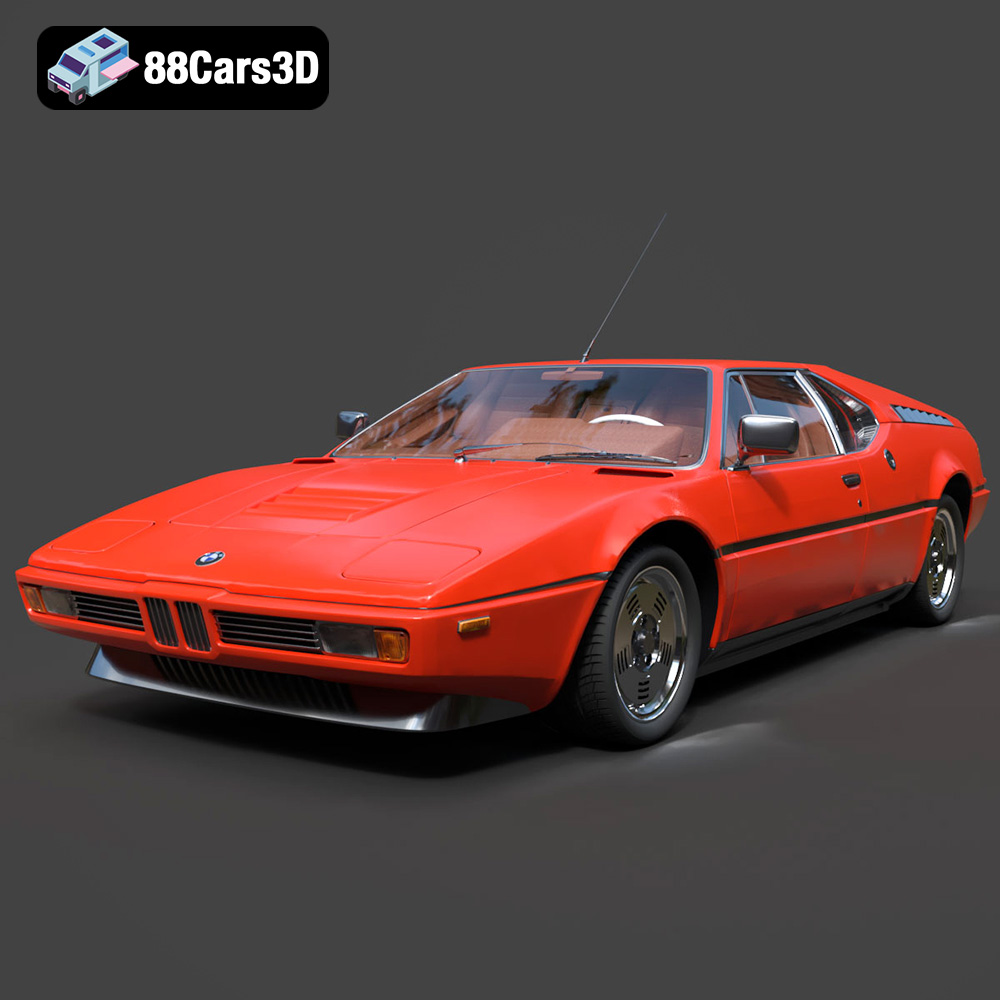
Texture: Yes
Material: Yes
Download the BMW Motorsport M1 E26 1981 3D Model featuring its iconic design, race-bred aerodynamics, and meticulously crafted details. Includes .blend, .fbx, .obj, .glb, .stl, .ply, .unreal, and .max formats for rendering, simulation, and game development.
Price: $20.79

Meta Description:
Texture: Yes
Material: Yes
Download the Cadillac CTS-V Coupe 3D Model featuring detailed exterior styling and realistic interior structure. Includes .blend, .fbx, .obj, .glb, .stl, .ply, .unreal, and .max formats for rendering, simulation, AR VR, and game development.
Price: $13.9
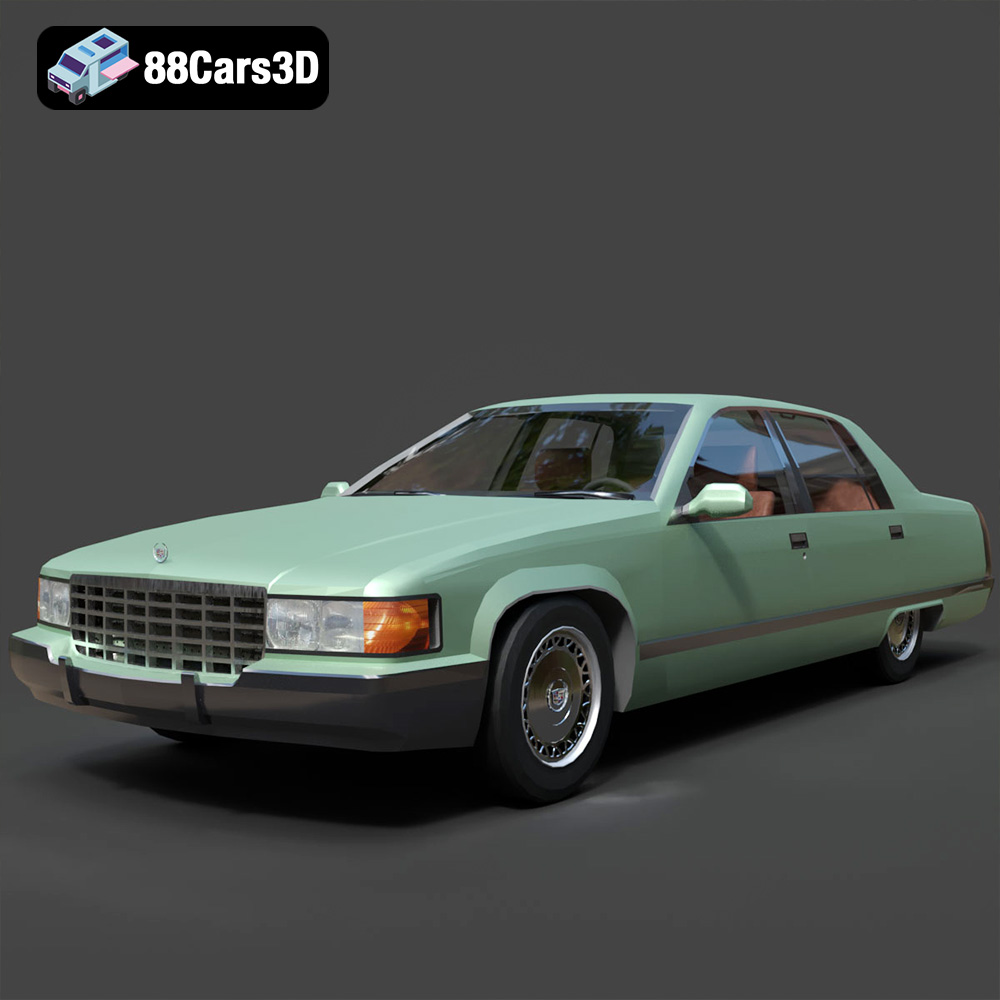
Texture: Yes
Material: Yes
Download the Cadillac Fleetwood Brougham 3D Model featuring its iconic classic luxury design and detailed exterior and interior. Includes .blend, .fbx, .obj, .glb, .stl, .ply, .unreal, and .max formats for rendering, simulation, and game development.
Price: $10.79
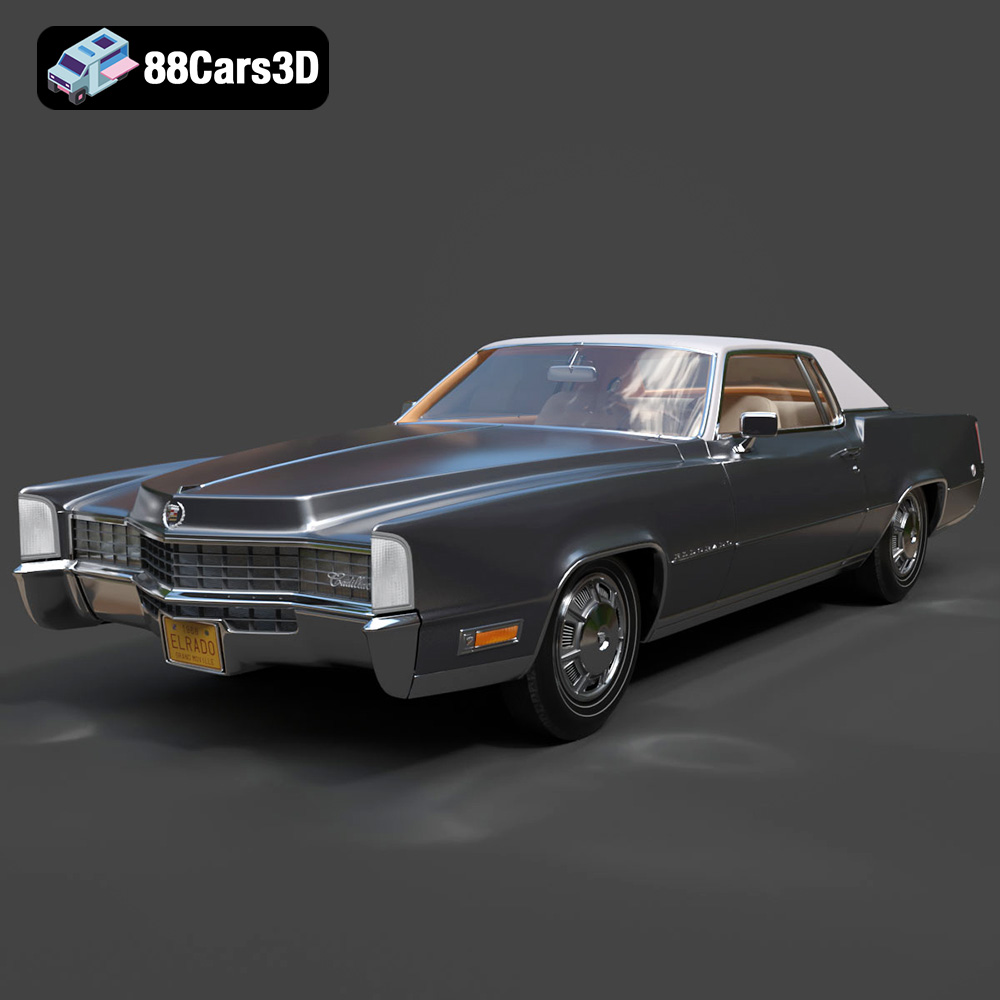
Texture: Yes
Material: Yes
Download the Cadillac Eldorado 1968 3D Model featuring its iconic elongated body, distinctive chrome accents, and luxurious interior. Includes .blend, .fbx, .obj, .glb, .stl, .ply, .unreal, and .max formats for rendering, simulation, and game development.
Price: $20.79

Texture: Yes
Material: Yes
Download the Cadillac CTS SW 2010 3D Model featuring a detailed exterior, functional interior elements, and realistic materials. Includes .blend, .fbx, .obj, .glb, .stl, .ply, .unreal, and .max formats for rendering, simulation, and game development.
Price: $10.79
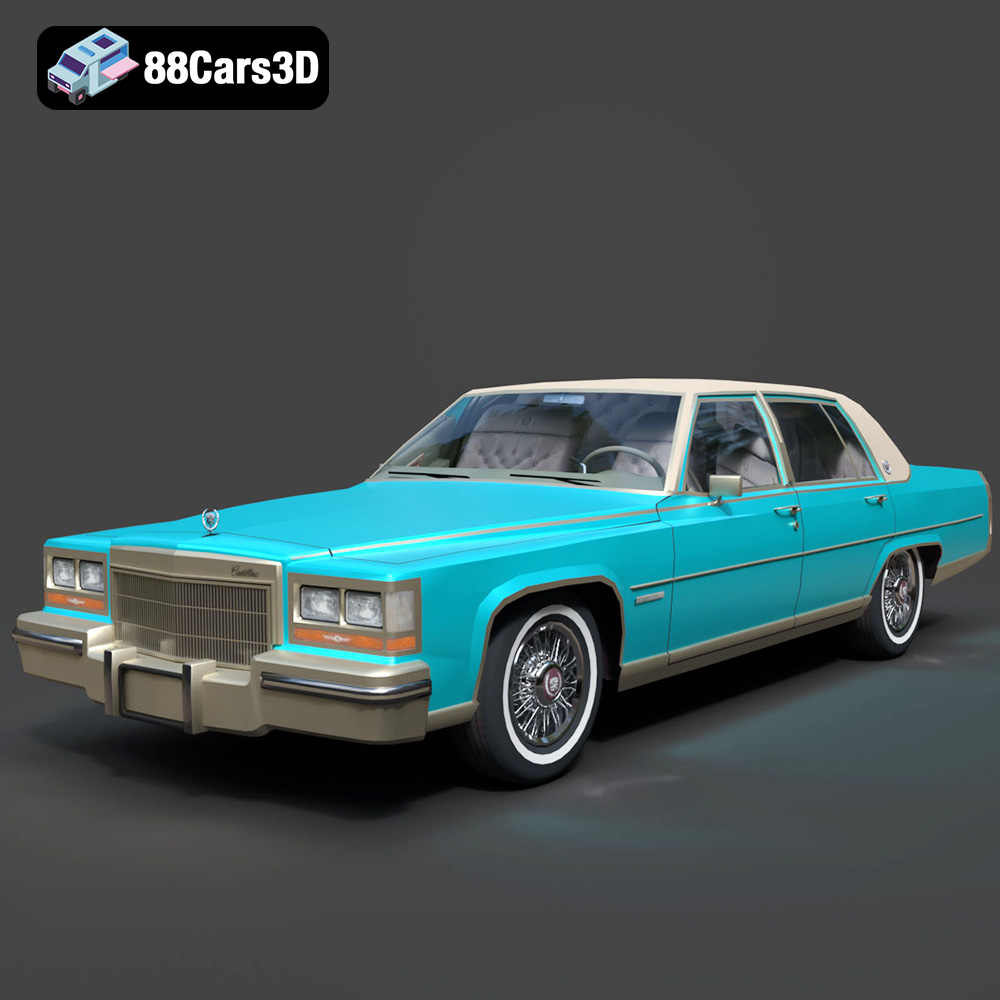
Texture: Yes
Material: Yes
Download the Cadillac Fleetwood Brougham 1985 3D Model featuring its iconic classic luxury design and detailed craftsmanship. Includes .blend, .fbx, .obj, .glb, .stl, .ply, .unreal, and .max formats for rendering, simulation, and game development.
Price: $10.79
Texture: Yes
Material: Yes
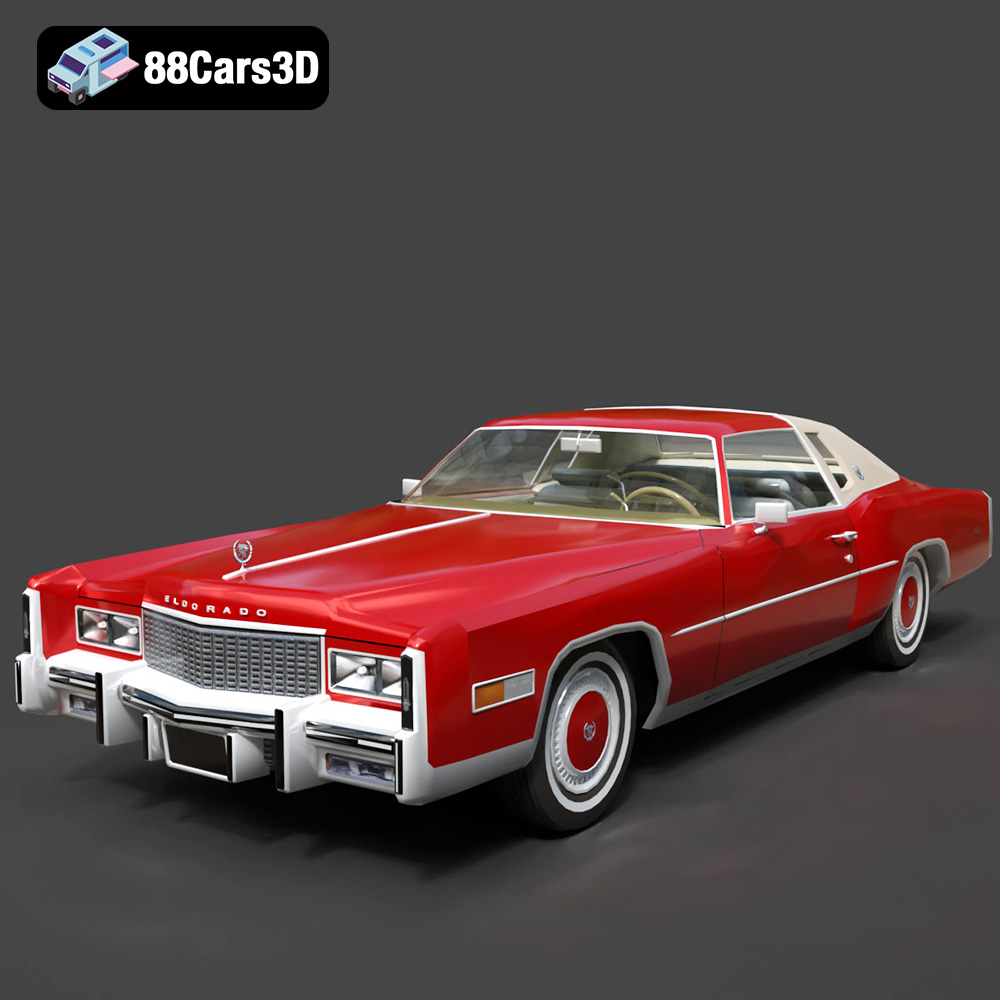
Download the Cadillac Eldorado 1978 3D Model featuring accurately modeled exterior, detailed interior, and period-correct aesthetics. Includes .blend, .fbx, .obj, .glb, .stl, .ply, .unreal, and .max formats for rendering, simulation, and game development.
Price: $10.79
Texture: Yes
Material: Yes
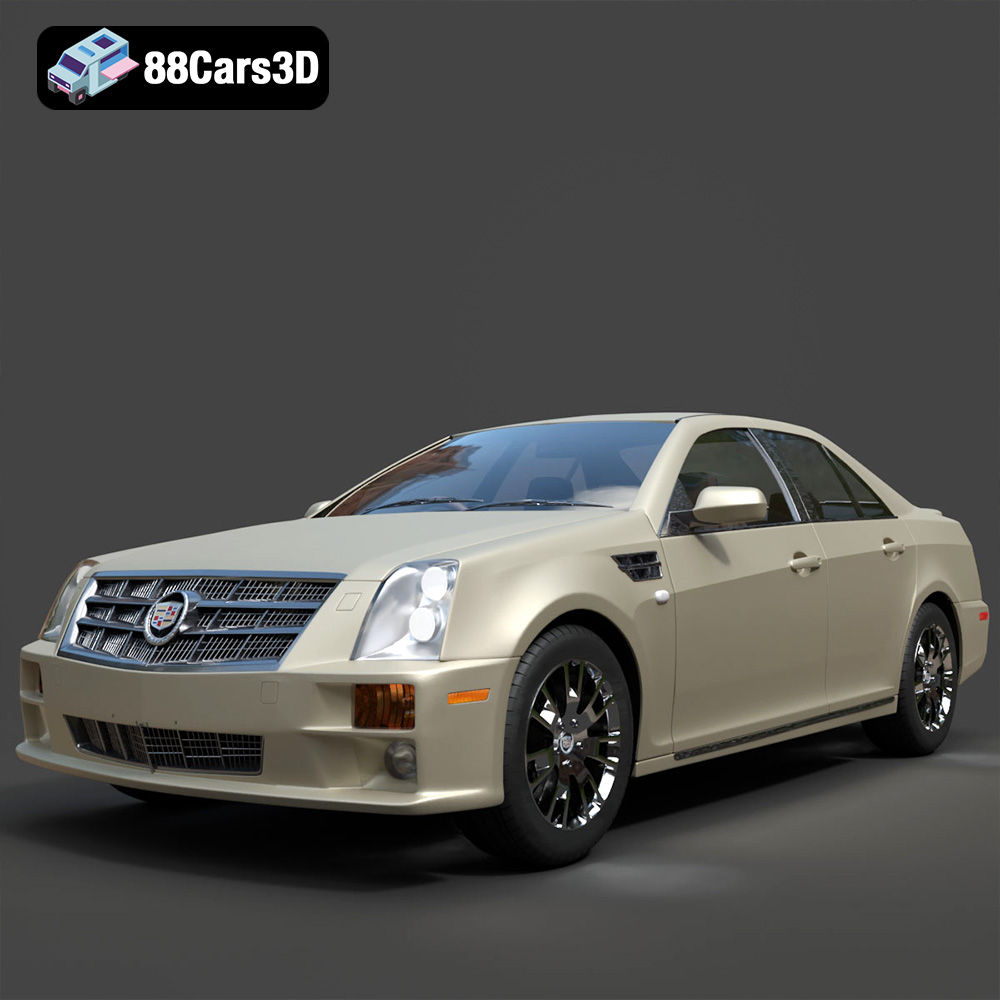
Download the Cadillac STS-005 3D Model featuring a detailed exterior and interior. Includes .blend, .fbx, .obj, .glb, .stl, .ply, .unreal, and .max formats for rendering, simulation, and game development.
Price: $22.79
Texture: Yes
Material: Yes
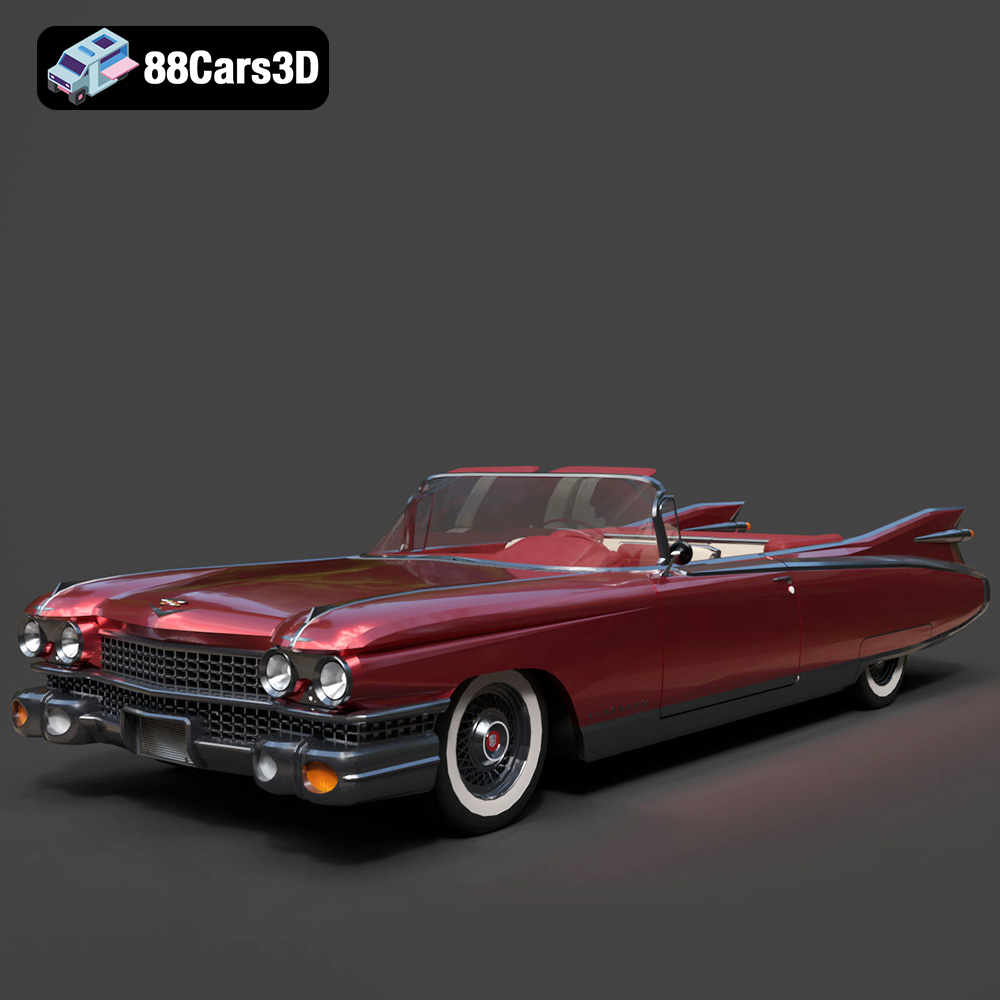
Download the Cadillac Eldorado Convertible (1959) 3D Model featuring iconic fins, luxurious chrome details, and a classic vintage design. Includes .blend, .fbx, .obj, .glb, .stl, .ply, .unreal, and .max formats for rendering, simulation, and game development.
Price: $20.79

Texture: Yes
Material: Yes
Download the Cadillac DTS-005 3D Model featuring its iconic luxury design, detailed interior, and realistic exterior. Includes .blend, .fbx, .obj, .glb, .stl, .ply, .unreal, and .max formats for rendering, simulation, and game development.
Price: $10.79

