“`html
Welcome to the world of 3D printed automotive marvels! At 88cars3d.com, we’re passionate about bringing iconic vehicles to life through meticulously crafted 3D printable STL files. However, the journey from digital model to a physical masterpiece isn’t always smooth. One of the most common hurdles 3D printing enthusiasts encounter is dealing with problematic STL files – specifically, broken or non-manifold meshes. These imperfections can cause slicing errors, print failures, and a lot of frustration. This comprehensive guide will equip you with the knowledge and techniques to repair these problematic meshes using powerful, yet accessible, software like Autodesk Meshmixer and Netfabb. We’ll dive deep into the underlying causes of mesh errors, explore the diagnostic tools available, and provide step-by-step workflows to ensure your printable car models are ready for flawless printing.
Understanding STL Files and Common Mesh Errors
Before we dive into the repair process, it’s crucial to understand what an STL file is and why mesh errors occur. STL (STereoLithography) is the de facto standard file format for 3D printing. It represents a 3D model as a collection of triangular facets. Each triangle is defined by three vertices and a normal vector, which indicates the outward-facing direction. This seemingly simple structure is incredibly effective, but it also has limitations and is prone to certain types of errors when exported or manipulated incorrectly.
The Anatomy of a 3D Mesh
A 3D mesh is essentially a surface made up of interconnected polygons, most commonly triangles in STL files. The arrangement of these triangles defines the shape and volume of the object. For a mesh to be considered “watertight” or “manifold” – essential for 3D printing – it must meet several criteria:
- Closed Volume: The surface must enclose a distinct volume without any holes or gaps. Imagine it like a balloon; it holds air inside.
- Consistent Orientation: All triangle normal vectors must point consistently outwards (or inwards), defining the “inside” and “outside” of the model.
- No Internal Faces: Triangles should not overlap or intersect each other in ways that create internal surfaces.
- No Non-Manifold Edges: An edge is where two triangles meet. In a manifold mesh, an edge should connect exactly two triangles. Edges connecting more than two triangles or only one triangle are non-manifold.
Common Causes of Mesh Errors
When you download a meticulously prepared STL file from a reputable source like 88cars3d.com, these errors are usually avoided. However, errors can creep in during various stages:
- Export Issues: When a 3D modeling software exports a model to STL, settings related to tessellation (how curves are converted into flat triangles) or intersecting geometry can lead to errors.
- Boolean Operations: Operations like combining or subtracting shapes in 3D modeling software can sometimes create overlapping faces or holes if not performed carefully.
- Sculpting and Editing: Aggressive sculpting or modifying a mesh without proper topology management can break the watertight nature of the surface.
- Stitching/Merging Meshes: Combining multiple separate STL files into one can result in gaps or non-manifold edges where the meshes meet.
- File Corruption: Though rare, data transfer or storage issues can occasionally corrupt an STL file.
These errors manifest in slicing software as warnings about “non-manifold edges,” “holes,” “inverted normals,” or simply failed attempts to generate support structures or prepare the model for printing. Identifying and fixing these issues is a critical skill for any serious 3D printer operator.
Diagnosing Mesh Issues: Finding the Flaws
The first step in repairing a broken STL file is to accurately diagnose the problems. Fortunately, both Meshmixer and Netfabb offer excellent tools for analyzing and visualizing mesh defects. It’s often beneficial to run an initial analysis in your preferred slicing software as well, as it will usually flag the presence of errors, even if it can’t fix them.
Using Slicing Software for Initial Checks
Most modern slicers, such as Cura, PrusaSlicer, or Simplify3D, include built-in mesh analysis tools. When you load an STL file, they will often display warnings or highlight problematic areas:
- Hole Detection: Slicers can identify gaps in the mesh that need to be filled.
- Non-Manifold Edge Warnings: These indicate edges where more than two faces meet, a common issue after complex modeling operations.
- Overlapping Faces: While harder for slicers to detect reliably, severe overlaps can disrupt slicing.
While slicers are good at alerting you to problems, their repair capabilities are often limited. For robust fixes, dedicated mesh editing software is necessary. When downloading models from marketplaces such as 88cars3d.com, they are typically provided in a print-ready state, but understanding these diagnostic steps is valuable for any STL file you encounter.
Meshmixer: Comprehensive Analysis Tools
Autodesk Meshmixer offers a suite of powerful analysis and repair functions. The primary tool you’ll use is “Inspector.”
- Import your STL: Open Meshmixer and drag and drop your problematic STL file into the workspace.
- Access Inspector: Navigate to Edit > Inspector.
- Run Auto-Repair: Meshmixer will immediately try to identify errors. You’ll see visual cues on the mesh, such as red cones or highlighted areas, indicating defects. Click the “Auto-Repair All” button. This is often a good starting point, as Meshmixer’s algorithms are quite effective at fixing common issues like holes and self-intersections.
- Manual Inspection: After auto-repair, zoom in on the areas that were highlighted. Meshmixer also provides specific error types you can click on to isolate:
- Holes: Click on “Holes” to see all detected gaps.
- Non-Manifold Edges: Click on “Non-Manifold Edges” to highlight edges that violate manifold rules.
- Degenerate Faces: Small, distorted, or zero-area triangles.
- Inner Faces: Faces hidden inside the mesh.
Meshmixer’s Inspector allows for iterative repair. You can run auto-repair, then manually fix specific issues, and then run auto-repair again.
Netfabb: Professional-Grade Analysis and Repair
Autodesk Netfabb (now often integrated into Fusion 360 or available as a standalone application) is a more professional-grade tool with highly sophisticated analysis and repair algorithms. It’s particularly powerful for complex models and industrial applications.
- Import your STL: Open Netfabb and import your STL file.
- Run Analysis: Go to Analysis >STRUCTION > Quality > Run Automatic Repair + Policy (or similar option depending on version). Netfabb will generate a detailed report of all detected issues.
- Explore the Report: Netfabb provides a comprehensive breakdown of errors, categorizing them by type (e.g., holes, non-manifold edges, intersecting triangles, inverted normals).
- Visualize Errors: You can selectively highlight and view each type of error on the model. This detailed reporting helps you understand the extent and nature of the damage.
- Apply Repairs: Netfabb offers various repair strategies, from simple automatic fixes to more advanced manual interventions. For most common issues, the automatic repair functions are highly effective.
Netfabb’s strength lies in its precision and the detailed feedback it provides, making it ideal for users who need absolute certainty about their model’s integrity.
Repairing Holes and Gaps
Holes are arguably the most common type of mesh defect encountered in 3D printing. They occur when the surface defining the model is not continuous, creating openings that prevent the slicing software from recognizing a solid, printable volume. Both Meshmixer and Netfabb provide excellent tools for addressing these.
Meshmixer: Filling Holes Effortlessly
Meshmixer’s “Inspector” tool is your primary weapon against holes. Once you’ve run the Inspector and it has identified holes (often shown as red markers or highlighted areas):
- Targeted Hole Filling: You can click directly on a detected hole marker. Meshmixer will attempt to intelligently fill it with new triangles.
- Advanced Hole Filling: For larger or more complex holes, you might need more control. Select Edit > Fill Holes. This brings up a dialog box where you can adjust parameters like “Recursion” and “Accuracy” to influence how Meshmixer generates the new surface. Often, the default settings work well, but fine-tuning can be necessary for intricate shapes.
- “Make Solid” Option: Meshmixer also has a powerful “Make Solid” function (under Edit > Make Solid). This tool attempts to create a completely new, watertight mesh from your potentially imperfect input mesh. It’s particularly useful for models that are severely damaged or have many intersecting parts. You can control the “Accuracy” and “Thickness” parameters. Be cautious with very complex models, as “Make Solid” can sometimes simplify or alter fine details. Always inspect the result carefully.
For printable car models from 88cars3d.com, holes are rare, but if you’re combining parts or modifying a downloaded model, this process is invaluable. Always check the fill afterwards by rotating the model and looking for any visible seams or unnatural deformations.
Netfabb: Robust Hole Patching
Netfabb excels at automated hole repair, especially when dealing with multiple gaps simultaneously.
- Automatic Repair: As mentioned earlier, running Netfabb’s automatic repair function will usually detect and fill most holes.
- Selective Hole Repair: If you want more control, Netfabb allows you to select specific holes or types of holes from the analysis report. You can then apply a patch specifically to that area.
- “Part Repair” Module: Netfabb has a dedicated “Part Repair” module with advanced algorithms. Within this module, you can find specific tools for “Fix Holes” or “Patch Holes.” These tools often offer settings to control the curvature and smoothness of the newly generated surface, ensuring it blends seamlessly with the surrounding geometry.
- “Generate Surface” (Advanced): For very complex situations, Netfabb can generate a new surface based on the boundary edges of a hole, providing a high degree of control over the repair.
Netfabb’s strength lies in its ability to handle complex hole structures and its sophisticated algorithms that aim to maintain the original model’s intent. It’s a go-to tool for ensuring that even difficult repairs are performed with a high degree of precision.
Correcting Non-Manifold Geometry and Inverted Normals
Non-manifold geometry and inverted normals are more subtle but equally critical mesh errors that can halt the printing process. Non-manifold edges (where more than two faces meet) and vertices (where edges converge abnormally) break the rule of a clean, single surface. Inverted normals mean that the faces are pointing inwards instead of outwards, confusing the slicer about which side is the “solid” material.
Meshmixer: Tackling Non-Manifold Edges and Normals
Meshmixer’s “Inspector” is again your first line of defense. When it detects non-manifold edges or issues with normals:
- “Auto-Repair All”: This function often resolves non-manifold conditions and attempts to correct inverted normals by recalculating face orientation.
- Manual Non-Manifold Correction: If auto-repair doesn’t fully fix it, you can manually address non-manifold edges. Select Edit > Select NonManifold Edges. This will highlight the problematic edges. You might need to manually delete errant faces or edges and then bridge the resulting gaps using the “Bridge” tool (under Edit > Bridge) or by filling holes.
- Flipping Normals: Meshmixer doesn’t have a direct “flip normals” button easily accessible like some other software. However, the “Inspector” will flag inverted faces. Often, using “Auto-Repair All” or “Make Solid” will correct these. If you need to manually flip specific faces, you might need to delete the face and redraw it, ensuring the new face’s normal points outwards. Alternatively, exporting to software with explicit normal editing capabilities might be necessary for stubborn cases.
The key with non-manifold geometry is often identifying the source – usually an overlap or a break in the surface continuity – and then carefully rebuilding that section of the mesh.
Netfabb: Precision Normal and Manifold Repair
Netfabb provides a more direct and powerful approach to these issues.
- Automatic Repair Policies: Netfabb’s automatic repair routines are designed to identify and correct non-manifold conditions and inverted normals as part of their standard process. It often does an excellent job of cleaning up these errors efficiently.
- “Mesh Fixer” Module: Within Netfabb’s repair tools, the “Mesh Fixer” offers granular control. You can enable specific repair actions, such as “Correct Normals” and “Remove Non-Manifold Edges.” This allows you to target precisely the issues you need to resolve.
- Visualizing Normals: Netfabb allows you to visualize face normals, often as small arrows extending from each triangle. This visual feedback is incredibly helpful for diagnosing complex orientation problems. You can then select specific faces or groups of faces and use the “Flip Normals” command.
- “Remove Degenerate Triangles” and “Remove Duplicate Triangles”: These options in Netfabb’s repair tools help clean up meshes that have been corrupted by unnecessary or overlapping geometry, which often contributes to non-manifold issues.
Netfabb’s integrated approach, combining detailed analysis with precise repair tools, makes it a formidable solution for even the most challenging mesh defects, ensuring that your printable car models are geometrically sound.
Optimizing Print Orientation and Supports
Once your STL file is repaired and watertight, the next critical step is preparing it for printing. This involves choosing the optimal print orientation on the build plate and generating effective support structures. These decisions significantly impact print quality, strength, and print time.
Strategic Print Orientation
The way you orient your model on the print bed can affect several factors:
- Surface Quality: Certain surfaces will have visible layer lines. Orienting the model to place these lines on less critical or easily post-processed areas can improve aesthetics. For car models, you might want to orient them to minimize visible layer lines on the hood, roof, or doors.
- Support Needs: Features like overhangs (parts extending horizontally with nothing below them) require support. Strategic orientation can minimize the amount of support needed, saving print time and material, and reducing post-processing effort.
- Part Strength: FDM prints are anisotropic, meaning they are weaker between layers than along the layers. Orienting the model so that critical stress points align with the strongest direction (along the layers) can improve durability.
- Warping: Large, flat surfaces can be prone to warping (lifting off the build plate). Orienting these surfaces to have a smaller contact area or be at an angle can mitigate this.
For a car model, consider the overall shape. Often, printing it upright (on its wheels) provides a good balance. However, if the underside has complex details or significant overhangs, you might consider printing it at an angle or even upside down with supports built into the wheel wells.
Effective Support Generation and Removal
Supports are temporary structures printed to hold up overhanging parts of the model during printing. They are essential but can leave marks and require careful removal.
- Slicer Settings: Most slicers (Cura, PrusaSlicer, etc.) have robust support generation features. Key settings include:
- Support Placement: “Touching Buildplate Only” or “Everywhere.” For complex models, “Everywhere” is often necessary.
- Support Overhang Angle: The angle at which supports begin to generate (e.g., 45-60 degrees).
- Support Density/Pattern: Affects the strength and ease of removal. Grid, zigzag, or tree supports are common. Tree supports are often excellent for intricate models as they touch the model at fewer points.
- Support Z Distance: The gap between the model and the support. A smaller gap means easier removal but potentially rougher surfaces. A larger gap means more support material but potentially better surface quality.
- Support Interface Layers: Adding solid layers at the top and bottom of the support structure can create a smoother surface where the support meets the model, making removal cleaner.
- Manual Support Placement: Some slicers allow you to manually add or remove support locations. This is invaluable for critical areas where you want to ensure support or prevent it entirely.
- Support Removal Techniques:
- Patience is Key: Gently break away larger sections first.
- Tools: Use pliers, hobby knives, dental picks, and flush cutters for precise removal.
- Heat: Sometimes, a quick blast of warm air from a heat gun (used carefully!) can soften supports for easier removal.
- Cleaning: After support removal, you may need to sand or file away small remnants.
When downloading models from platforms like 88cars3d.com, they often come with suggested orientation or even pre-generated supports for specific printing technologies. Always check these recommendations.
Material Selection and Print Settings for Automotive Models
The choice of material and the fine-tuning of your 3D printer settings are paramount for achieving high-quality, detailed prints, especially for intricate automotive models. Different materials offer unique properties, and understanding how to leverage them with precise settings will elevate your prints.
Choosing the Right Filament (FDM) or Resin (SLA/DLP)
For detailed car models, the capabilities of both FDM and resin printing technologies come into play.
- FDM Filaments:
- PLA (Polylactic Acid): The most popular choice for beginners and many hobbyists. It’s easy to print, has good detail, low warping, and comes in many colors. It can be a bit brittle. Ideal layer heights for detail are typically 0.1mm to 0.15mm.
- PETG (Polyethylene Terephthalate Glycol): Stronger and more durable than PLA, with better temperature resistance. It can be slightly stringier and requires slightly higher printing temperatures (e.g., 230-250°C) and potentially slower print speeds (40-60 mm/s).
- ABS (Acrylonitrile Butadiene Styrene): Known for its toughness and temperature resistance, but prone to warping and requires an enclosed printer and heated bed (e.g., 90-110°C). Printing temperatures are typically 240-260°C.
- Resin (SLA/DLP): Resin printers excel at capturing extremely fine details, making them ideal for small-scale, highly intricate car models.
- Standard Resins: Good all-around performance, often available in various colors. Layer heights can be as low as 0.025mm to 0.05mm for exceptional detail.
- Tough/ABS-like Resins: Offer increased durability and impact resistance, suitable for parts that might be handled frequently.
- High-Detail Resins: Formulated specifically for capturing the finest surface textures and sharp edges.
Fine-Tuning Slicer Settings
Regardless of the technology, meticulous slicer settings are crucial. These values are starting points and may need adjustment based on your specific printer, material, and the model itself.
- Layer Height: This is the primary determinant of vertical resolution.
- FDM: 0.1mm to 0.15mm for good detail, 0.2mm for faster prints, 0.05mm (requires specialized nozzles and setup) for extreme detail.
- Resin: 0.025mm to 0.05mm is common for high detail.
- Print Speed: Slower speeds generally yield better quality, especially for outer walls and details.
- FDM: Outer walls: 30-50 mm/s. Inner walls: 40-60 mm/s. Travel speed: 100-150 mm/s.
- Resin: Lift speed is critical; typically 30-60 mm/s depending on resin viscosity and layer height.
- Temperature: Follow filament/resin manufacturer recommendations. Bed temperature for FDM is crucial for adhesion (PLA: 50-60°C, PETG: 70-85°C, ABS: 90-110°C).
- Infill: For display models, infill density can be low (5-15%). Patterns like gyroid or cubic offer good strength for their weight. For functional parts, higher infill (20-50% or more) might be needed.
- Retraction (FDM): Crucial for preventing stringing. Settings like retraction distance (e.g., 5-7mm for Bowden, 1-2mm for direct drive) and retraction speed (e.g., 40-60 mm/s) need careful calibration (e.g., using retraction towers).
Calibrating your printer, including E-steps (for FDM extruders), flow rate, and temperature towers, is a fundamental step before tackling complex models. For resin printers, ensuring the build plate is level and performing exposure tests (dendometer prints) is essential for adhesion and detail.
Post-Processing and Finishing Touches
The journey doesn’t end when the print is complete. Post-processing is where you transform a raw 3D print into a polished, display-worthy replica. This stage is particularly important for automotive models, where realism and a smooth finish are often desired.
Cleaning and Support Removal Refinement
As discussed earlier, careful support removal is the first step. After removing the bulk of the supports:
- Detail Work: Use fine-grit sandpaper (starting from around 220 grit and moving up to 1000-2000 grit or even higher), files, or a rotary tool (like a Dremel) with various bits for smoothing out connection points and imperfections. Be gentle to avoid damaging delicate details.
- Washing and Curing (Resin): Resin prints need to be thoroughly washed in isopropyl alcohol (IPA) or a specialized resin cleaner to remove uncured resin. After washing, they must be cured under UV light (using a dedicated curing station or sunlight) to achieve their final hardness and strength.
Sanding and Surface Smoothing
Achieving a glass-smooth finish, especially on car bodies, often requires significant sanding.
- Wet Sanding: Using sandpaper with water can help lubricate the surface, reduce dust, and prevent clogging of the sandpaper. It also tends to produce a finer finish.
- Filler Primer: For FDM prints with visible layer lines, applying a filler primer (automotive primer works well) is a game-changer. Multiple thin coats, sanded between applications (again, starting with lower grits and moving to higher ones), can fill layer lines and create a perfectly smooth surface ready for paint.
- Using Putty/Epoxy: For larger gaps or imperfections, modeling putty or a two-part epoxy can be used to fill and smooth areas before sanding.
Painting and Detailing
This is where your car model truly comes to life.
- Priming: Always prime your model, whether it’s FDM or resin. Primer helps paint adhere better and reveals any remaining surface imperfections.
- Base Coat: Apply your main color using spray paints or an airbrush for the best finish. Multiple thin coats are better than one thick coat.
- Detail Painting: Use fine brushes to paint details like headlights, taillights, trim, grilles, and interiors. Acrylic model paints are excellent for this.
- Clear Coat: Apply a clear coat (gloss, satin, or matte, depending on the desired finish) to protect the paint job and give it a uniform sheen.
- Weathering and Decals: For added realism, consider applying weathering effects (washes, dry brushing) or waterslide decals for logos and emblems.
The level of post-processing you undertake depends on your desired outcome. Even a simple print can look great with basic sanding and a single coat of paint, while others might spend hours achieving a show-quality finish. Platforms like 88cars3d.com provide the perfect foundation for any level of finishing.
Conclusion: Mastering Your Printable Car Models
Successfully 3D printing detailed automotive models involves a blend of digital preparation and physical execution. Understanding how to identify and repair common STL mesh errors using tools like Autodesk Meshmixer and Netfabb is a fundamental skill that empowers you to overcome printing obstacles. By ensuring your files are watertight and manifold, you lay the groundwork for successful slicing and flawless prints. Beyond repair, mastering print orientation, support strategies, material selection, and meticulous post-processing techniques will elevate your creations from simple prints to stunning replicas.
Remember, every successful print starts with a good file. Take the time to analyze your models, especially if you encounter warnings in your slicer. Utilize the powerful repair tools available, practice your slicing skills, and experiment with different materials and settings. Whether you’re printing for a personal collection, a hobby project, or educational purposes, the knowledge gained here will significantly enhance your 3D printing experience. So, download that dream car STL from 88cars3d.com, dive into the repair and printing process, and enjoy bringing your automotive passion to life, one layer at a time!
“`
Featured 3D Car Models

Texture: Yes
Material: Yes
Download the Buick Skylark Convertible 1953 3D Model featuring iconic 1950s styling, a detailed exterior with chrome accents, and an accurately modeled interior. Includes .blend, .fbx, .obj, .glb, .stl, .ply, .unreal, and .max formats for rendering, simulation, and game development.
Price: $10.79
View Product

Texture: Yes
Material: Yes
Download the Buick Roadmaster Hardtop Coupe 1957 3D Model featuring a classic American design with detailed exterior and interior. Includes .blend, .fbx, .obj, .glb, .stl, .ply, .unreal, and .max formats for rendering, simulation, and game development.
Price: $10.79
View Product
Texture: Yes
Material: Yes
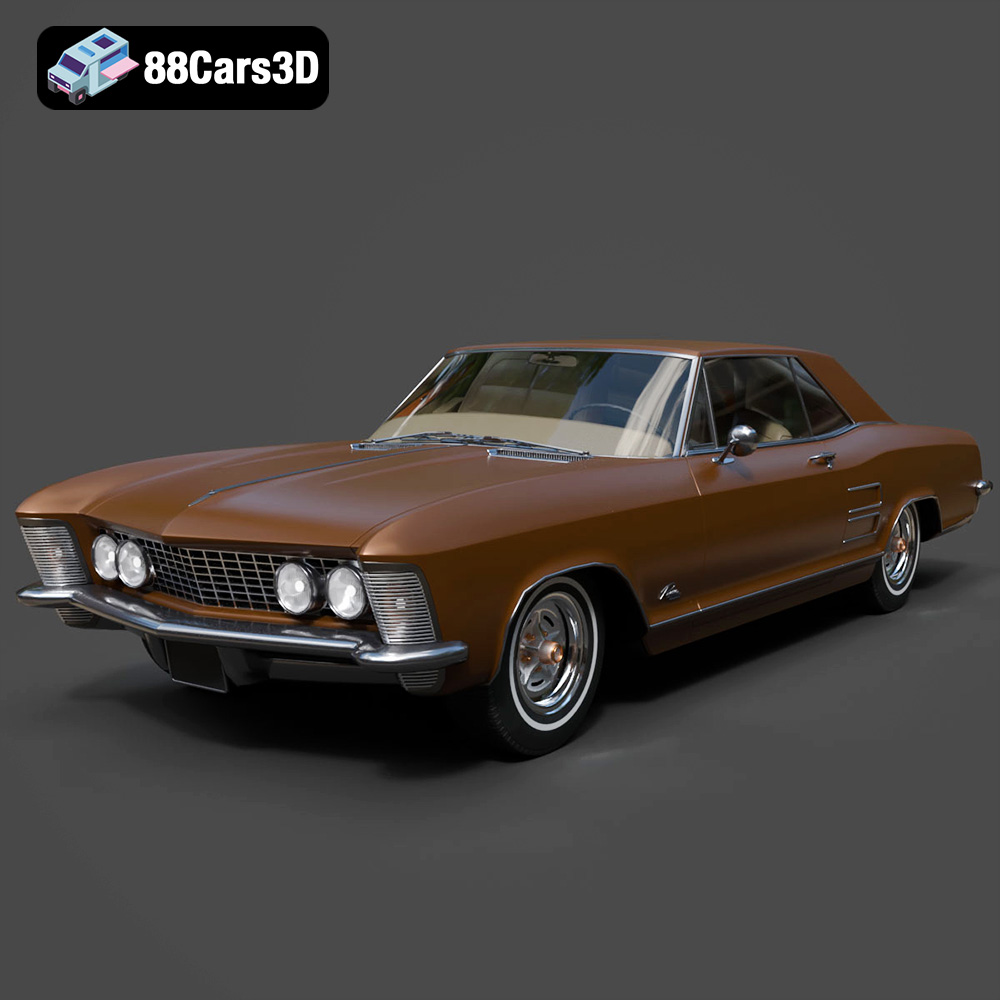
Download the Buick Riviera 1963 3D Model featuring classic American muscle car design and iconic styling. Includes .blend, .fbx, .obj, .glb, .stl, .ply, .unreal, and .max formats for rendering, simulation, and game development.
Price: $10.79
View Product

Texture: Yes
Material: Yes
Download the Buick Regal 3D Model featuring a classic American sedan design, detailed exterior, and optimized interior. Includes .blend, .fbx, .obj, .glb, .stl, .ply, .unreal, and .max formats for rendering, simulation, and game development.
Price: $10.79
View Product

Texture: Yes
Material: Yes
Download the Buick LaCrosse 3D Model featuring professional modeling and texture work. Includes .blend, .fbx, .obj, .glb, .stl, .ply, .unreal, and .max formats for rendering, simulation, and game development.
Price: $10.79
View Product

Texture: Yes
Material: Yes
Download the Bugatti Type 41 Napoleon 3D Model featuring its iconic luxury design, detailed exterior, and opulent interior. Includes .blend, .fbx, .obj, .glb, .stl, .ply, .unreal, and .max formats for rendering, simulation, and game development.
Price: $10.79
View Product

Texture: Yes
Material: Yes
Download the Bugatti Type 57SC Atlantic Coupe 3D Model featuring its iconic streamlined body and classic design. Includes .blend, .fbx, .obj, .glb, .stl, .ply, .unreal, and .max formats for rendering, simulation, and game development.
Price: $10.79
View Product

Texture: Yes
Material: Yes
Download the Bugatti 16C Galibier-006 3D Model featuring its luxurious sedan design, detailed interior, and sophisticated exterior. Includes .blend, .fbx, .obj, .glb, .stl, .ply, .unreal, and .max formats for rendering, simulation, and game development.
Price: $10.79
View Product

Texture: Yes
Material: Yes
Download the BMW Vision Connected Drive Concept 3D Model featuring its innovative design, advanced connectivity, and sleek aesthetics. Includes .blend, .fbx, .obj, .glb, .stl, .ply, .unreal, and .max formats for rendering, simulation, and game development.
Price: $19.79
View Product
Texture: Yes
Material: Yes
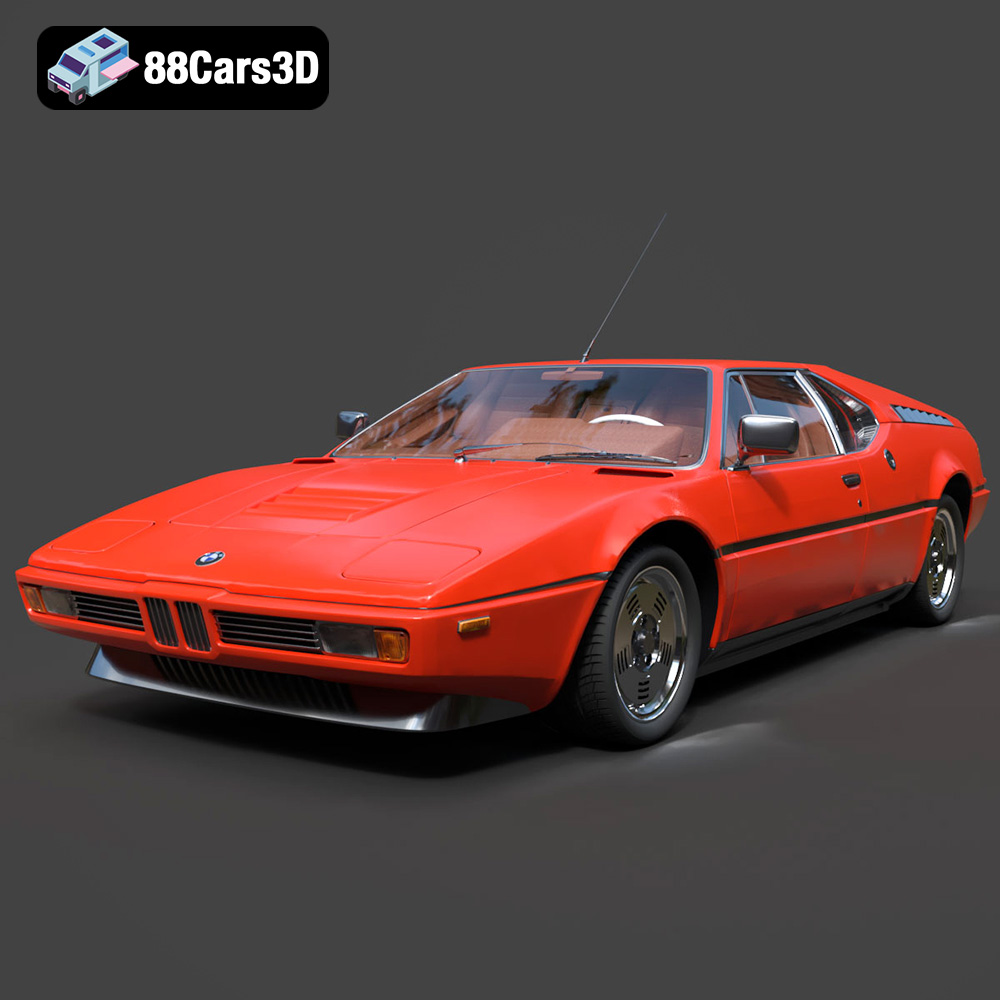
Download the BMW Motorsport M1 E26 1981 3D Model featuring its iconic design, race-bred aerodynamics, and meticulously crafted details. Includes .blend, .fbx, .obj, .glb, .stl, .ply, .unreal, and .max formats for rendering, simulation, and game development.
Price: $20.79
View Product


