Get 20% OFF All Premium 3D & STL Models!

“`html
Welcome, fellow makers and automotive enthusiasts! At 88cars3d.com, we’re passionate about bringing iconic vehicles to life through high-quality 3D printable car models. But have you ever wondered what makes these digital blueprints tick? The magic behind every intricate detail, every smooth curve, and every ready-to-print file lies within the ubiquitous STL file format. Far from being just a collection of data, the STL file is the foundational language of 3D printing. Understanding how it works – from its reliance on triangles to its fundamental mesh structure – is crucial for achieving flawless prints, whether you’re using FDM or resin technology.
This in-depth guide will demystify the STL file, pulling back the curtain on its internal workings. We’ll explore the geometry that defines it, the slicing process that translates it, and the preparation steps that ensure its success. By the end of this post, you’ll gain a profound appreciation for this essential file format and learn how to leverage your knowledge to achieve superior results with your 3D printed automotive masterpieces. Get ready to dive deep into the world of meshes, vertices, and normals – the building blocks of your next incredible model!
The STL (STereoLithography) file format, despite its age, remains the de facto standard for transferring 3D models to 3D printers. Its simplicity is both its strength and its limitation. At its core, an STL file describes the surface geometry of a three-dimensional object without any representation of color, texture, or other visual attributes. It achieves this by approximating the object’s surface with a collection of interconnected triangles. Think of it like building a complex sculpture using only flat, triangular pieces of paper glued together. The more triangles you use, and the smaller they are, the smoother and more accurate the final shape will appear.
Each triangle within an STL file is defined by three vertices (corner points) and a normal vector. The vertices specify the exact coordinates (X, Y, Z) of each corner of the triangle in 3D space. The normal vector, a crucial piece of information, is a vector perpendicular to the surface of the triangle, pointing outwards from the object. This normal vector dictates which side of the triangle is considered the “outside” of the model, which is vital for the slicing software to understand the model’s volume and orientation. Without correctly oriented normals, your slicer might interpret the inside of your model as the outside, leading to printing errors or incomplete objects.
The structure of an STL file can be either ASCII or binary. ASCII STLs are human-readable text files, making them easier to inspect and edit for simple modifications. However, they are significantly larger and slower to process. Binary STLs, on the other hand, are more compact and faster to parse, making them the preferred format for most 3D printing applications, especially for complex models like those found on platforms like 88cars3d.com. Regardless of the format, the fundamental principle remains the same: the entire 3D object is represented as a watertight, non-overlapping collection of these triangular facets.
Every point where the edges of these triangles meet is a vertex. Each vertex is defined by its precise X, Y, and Z coordinates. For instance, a single triangle might have vertices at (0.0, 0.0, 0.0), (1.0, 0.0, 0.0), and (0.0, 1.0, 0.0). These coordinates are relative to a defined origin point within the 3D modeling software. When you import an STL file into your slicer, it reads these vertex coordinates to construct the complete surface. The accuracy of these coordinate values directly impacts the precision of your final print. Tiny variations can lead to visible imperfections, especially on curved surfaces or fine details.
The normal vector is a three-dimensional vector (Nx, Ny, Nz) that is perpendicular to the face of the triangle. By convention, the normal vector points away from the solid object. This is critical for the slicing software to determine the orientation of each facet. For a manifold (watertight) mesh, the normals of adjacent triangles should be consistent. If two triangles share an edge, their normals should either point in the same direction (indicating a flat surface) or be mirrored across the surface they define (indicating a crease or edge). Incorrectly oriented normals can cause the slicing software to misinterpret the model’s volume, leading to holes, inverted surfaces, or failed prints. Software like Meshmixer or Netfabb can help identify and correct these normal orientation issues.
Once you have your STL file, the next critical step is to process it through slicing software. Slicers, such as Cura, PrusaSlicer, or Simplify3D, are essential tools that translate the 3D model’s surface geometry into a series of thin, horizontal layers. This process is fundamental because 3D printers build objects layer by layer. The slicer essentially “slices” the STL model at regular intervals defined by your chosen layer height, creating 2D outlines for each layer.
The quality and complexity of the STL file directly impact the slicing process. A “clean” STL file, meaning one with manifold geometry, no overlapping triangles, and consistent normals, will slice much more efficiently and accurately. Messy STL files often require repair before slicing, which can involve using specialized software to fix holes, disconnected facets, or inverted normals. When downloading high-quality models from marketplaces such as 88cars3d.com, the effort has already been put into ensuring the STL files are clean and print-ready, significantly simplifying this stage.
During slicing, you define a multitude of parameters that dictate how the printer will execute the print. These include layer height, infill density and pattern, print speed, temperature settings, and, crucially, the generation of support structures. The slicer generates G-code, a series of machine instructions, that the 3D printer interprets to move the print head or laser and deposit material layer by layer. The careful selection and tuning of these slicing parameters are what bridge the gap between a digital STL file and a physical, high-fidelity replica of a car model.
Layer height is arguably one of the most significant parameters affecting print quality and time. It refers to the thickness of each individual layer deposited by the printer. For FDM printers, common layer heights range from 0.05mm for highly detailed prints to 0.3mm for faster, less detailed drafts. For resin printers, layer heights can be even finer, often starting at 0.025mm or 0.01mm for incredibly smooth finishes.
A smaller layer height (e.g., 0.1mm) will result in a smoother surface finish, with less visible “stair-stepping” on curved or angled surfaces. This is particularly important for car models where smooth body panels are a defining characteristic. However, printing with smaller layer heights significantly increases print time, as the printer must lay down many more layers to complete the object. Conversely, a larger layer height (e.g., 0.2mm) will print much faster but will exhibit more pronounced layer lines, potentially detracting from the aesthetic appeal of detailed models.
The choice of layer height often depends on the specific model’s details and your priorities. For a display model where aesthetics are paramount, a smaller layer height is usually preferred. For a functional prototype or a quick test print, a larger layer height might suffice. Many slicers offer features like adaptive layer height, which automatically adjusts the layer height based on the model’s geometry, using smaller layers for intricate details and larger layers for less critical areas to optimize both quality and speed.
While the STL file defines the external surface of your model, the slicer determines what goes on the inside. Infill refers to the internal support structure printed within the hollow shell of your object. It’s not just about filling space; infill plays a crucial role in the model’s strength, weight, and material consumption. Infill density is expressed as a percentage, where 0% means a hollow model and 100% means a solid object.
For most display models, especially intricate car models, a low infill density (typically 10-20%) is sufficient. This provides enough internal support to prevent the outer walls from collapsing while minimizing print time and material usage. Higher infill densities (e.g., 50-100%) are reserved for functional parts that require significant strength and durability. Different infill patterns (e.g., grid, cubic, gyroid, honeycomb) also offer varying levels of strength and rigidity. The gyroid pattern, for example, is known for its excellent strength-to-weight ratio and is often a good choice for strong yet efficient infill.
Many 3D printable car models feature overhangs, bridges, and intricate details that cannot be printed directly in mid-air. This is where support structures come into play. Supports are temporary scaffolding printed alongside the main model, providing a base for overhanging features to be printed upon. Once the print is complete, these supports are carefully removed.
Generating effective support structures is a blend of art and science. The slicer software automatically calculates where supports are needed based on overhang angles defined in the settings. Common parameters include the overhang threshold (the angle at which supports become necessary), support density, support pattern, and the distance between the support and the model (Z-gap and XY-gap). A smaller Z-gap, for instance, makes supports adhere more strongly but can be harder to remove cleanly, potentially damaging the model’s surface.
The goal is to create supports that are strong enough to hold the overhanging geometry during printing but easy enough to remove without leaving significant marks or damaging delicate parts. This often requires experimentation and fine-tuning. For models with very fine details, like small spoilers or intricate grilles, manual support placement or tree-like support structures (available in some slicers) can be more effective than standard block supports, as they minimize contact points with the model.
The way you orient your model on the print bed and where you place supports are interconnected. Strategic orientation can often reduce the need for supports or place them in less visible areas. For example, printing a car body upright might require extensive supports for the undercarriage and wheel arches. However, printing it slightly tilted or even upside down (if the bottom is less critical for detail) might reduce the support needs and improve the quality of the visible surfaces.
When placing supports, consider the following:
Removing supports cleanly is a critical step in post-processing. The method of removal depends on the type of support, the material used, and the printer technology.
For FDM prints:
For resin prints:
Even seemingly perfect STL files can sometimes harbor hidden flaws that prevent them from printing correctly. This is where mesh repair and file preparation become paramount. The primary goal is to ensure the mesh is “manifold,” meaning it represents a solid, watertight object with no holes, self-intersections, or flipped faces. Models from reputable sources like 88cars3d.com are typically well-prepared, but understanding the process empowers you to fix issues or prepare your own models.
Common issues include:
Software like Autodesk Netfabb, Meshmixer (free), or even Blender offer powerful tools for diagnosing and repairing these issues. Often, a simple “Repair All” function can fix common problems. However, for more complex issues, manual intervention might be required, which involves identifying the problematic areas and manually editing the mesh.
Many modern slicers include basic mesh repair capabilities. When you import an STL file, they often detect non-manifold errors or holes and offer to automatically repair them. While convenient, these automatic repairs are not always perfect and can sometimes alter the model’s geometry more than desired. It’s a good first step, but if you encounter printing issues or suspect deeper problems, using dedicated mesh editing software is recommended.
Meshmixer is an invaluable free tool for mesh manipulation and repair. Its “Inspector” tool can automatically find and fix most common errors like holes and non-manifold edges. You can also use its sculpting and editing tools to manually adjust problematic areas. The “Make Solid” feature is particularly useful for converting complex, non-manifold meshes into printable solid objects, though it can sometimes simplify details.
Blender, a professional-grade 3D modeling software, also offers robust mesh editing and repair capabilities. While it has a steeper learning curve, its precise control over vertices, edges, and faces allows for meticulous repair work. Features like “3D-Print Toolbox” add-on provide specific tools for checking manifold errors, calculating wall thickness, and ensuring the model is printable.
The STL file is the blueprint, but the materials and printer settings are the tools and techniques that bring it to life. Choosing the right material and configuring your printer settings correctly are crucial for achieving the desired level of detail, strength, and finish for your 3D printed car models.
FDM Printing Materials:
Resin Printing Materials (SLA/DLP/MSLA):
Printer Settings: Regardless of the material, specific printer settings are vital. For FDM, these include nozzle temperature (typically 190-220°C for PLA), bed temperature (50-70°C for PLA/PETG), print speed (40-60 mm/s is a good starting point), and retraction settings to prevent stringing. For resin printers, crucial settings include layer exposure time (dictates how long the UV light cures each layer), lift speed, and layer height. Each material and printer combination will have recommended settings, which serve as a starting point for fine-tuning.
A well-calibrated printer is the foundation of successful prints. Before printing complex models, ensure your printer is properly calibrated. This includes:
Regular maintenance, such as cleaning the nozzle, lubricating the axes, and checking belts, also contributes to consistent and high-quality results.
Once your car model is printed and supports are removed, the journey isn’t over. Post-processing is where you elevate your print from a raw output to a polished display piece. Common techniques include:
The STL file format, though simple in its core concept of representing surfaces with triangles, is a powerful gateway to the world of 3D printed models. By understanding how meshes are constructed, how normals define orientation, and how slicing software interprets this data, you gain invaluable control over the printing process. From selecting the right layer height for optimal detail to strategically placing supports and meticulously repairing mesh errors, each step builds upon your knowledge of the STL file’s structure.
Whether you’re downloading a meticulously crafted 1969 Ford Mustang from 88cars3d.com or preparing your own custom design, this deep dive into STL files empowers you to troubleshoot effectively, optimize your prints, and achieve professional-grade results. Remember that clean STL files, combined with thoughtful slicer settings, appropriate material choices, and diligent post-processing, are the keys to unlocking the full potential of your 3D printer. So, go forth, explore the intricate world of 3D printable car models, and build your collection with confidence and precision!
“`

Texture: Yes
Material: Yes
Download the Buick Skylark Convertible 1953 3D Model featuring iconic 1950s styling, a detailed exterior with chrome accents, and an accurately modeled interior. Includes .blend, .fbx, .obj, .glb, .stl, .ply, .unreal, and .max formats for rendering, simulation, and game development.
Price: $10.79

Texture: Yes
Material: Yes
Download the Buick Roadmaster Hardtop Coupe 1957 3D Model featuring a classic American design with detailed exterior and interior. Includes .blend, .fbx, .obj, .glb, .stl, .ply, .unreal, and .max formats for rendering, simulation, and game development.
Price: $10.79
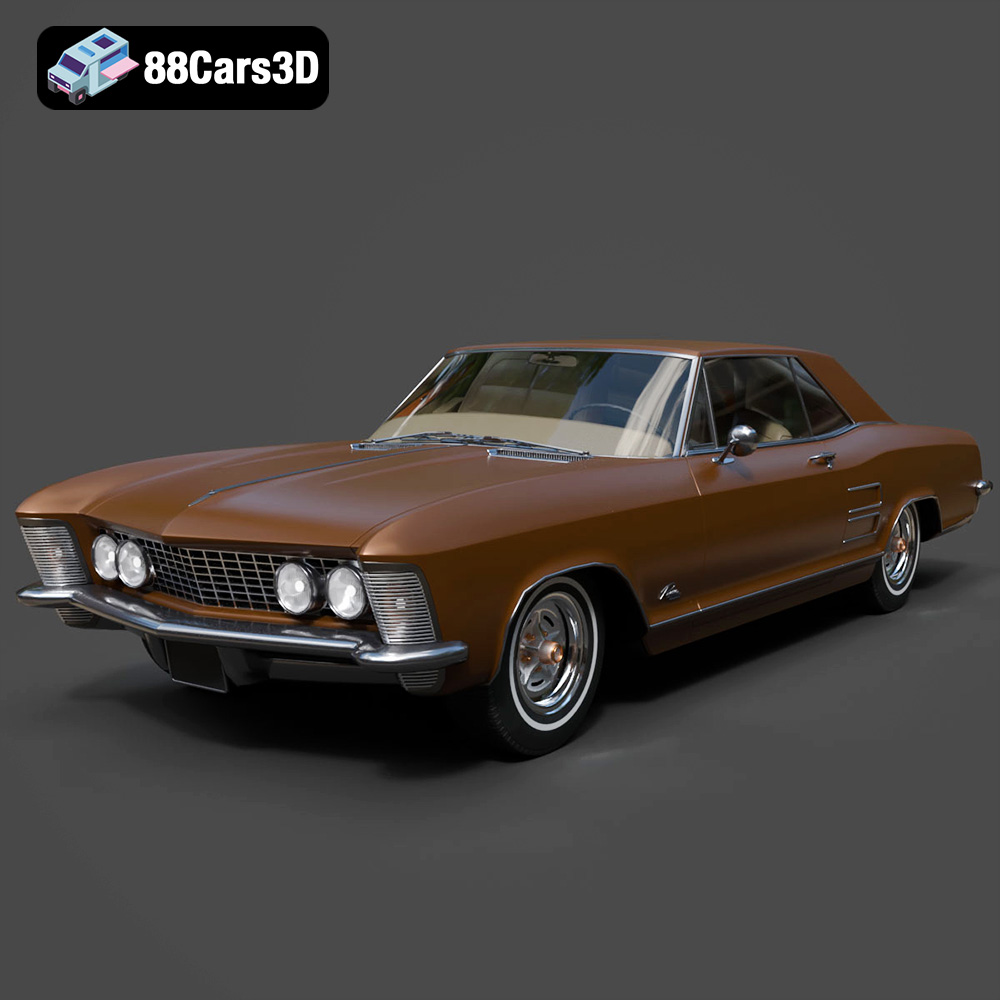
Texture: Yes
Material: Yes
Download the Buick Riviera 1963 3D Model featuring classic American muscle car design and iconic styling. Includes .blend, .fbx, .obj, .glb, .stl, .ply, .unreal, and .max formats for rendering, simulation, and game development.
Price: $10.79

Texture: Yes
Material: Yes
Download the Buick Regal 3D Model featuring a classic American sedan design, detailed exterior, and optimized interior. Includes .blend, .fbx, .obj, .glb, .stl, .ply, .unreal, and .max formats for rendering, simulation, and game development.
Price: $10.79

Texture: Yes
Material: Yes
Download the Buick LaCrosse 3D Model featuring professional modeling and texture work. Includes .blend, .fbx, .obj, .glb, .stl, .ply, .unreal, and .max formats for rendering, simulation, and game development.
Price: $10.79

Texture: Yes
Material: Yes
Download the Bugatti Type 41 Napoleon 3D Model featuring its iconic luxury design, detailed exterior, and opulent interior. Includes .blend, .fbx, .obj, .glb, .stl, .ply, .unreal, and .max formats for rendering, simulation, and game development.
Price: $10.79

Texture: Yes
Material: Yes
Download the Bugatti Type 57SC Atlantic Coupe 3D Model featuring its iconic streamlined body and classic design. Includes .blend, .fbx, .obj, .glb, .stl, .ply, .unreal, and .max formats for rendering, simulation, and game development.
Price: $10.79

Texture: Yes
Material: Yes
Download the Bugatti 16C Galibier-006 3D Model featuring its luxurious sedan design, detailed interior, and sophisticated exterior. Includes .blend, .fbx, .obj, .glb, .stl, .ply, .unreal, and .max formats for rendering, simulation, and game development.
Price: $10.79

Texture: Yes
Material: Yes
Download the BMW Vision Connected Drive Concept 3D Model featuring its innovative design, advanced connectivity, and sleek aesthetics. Includes .blend, .fbx, .obj, .glb, .stl, .ply, .unreal, and .max formats for rendering, simulation, and game development.
Price: $19.79
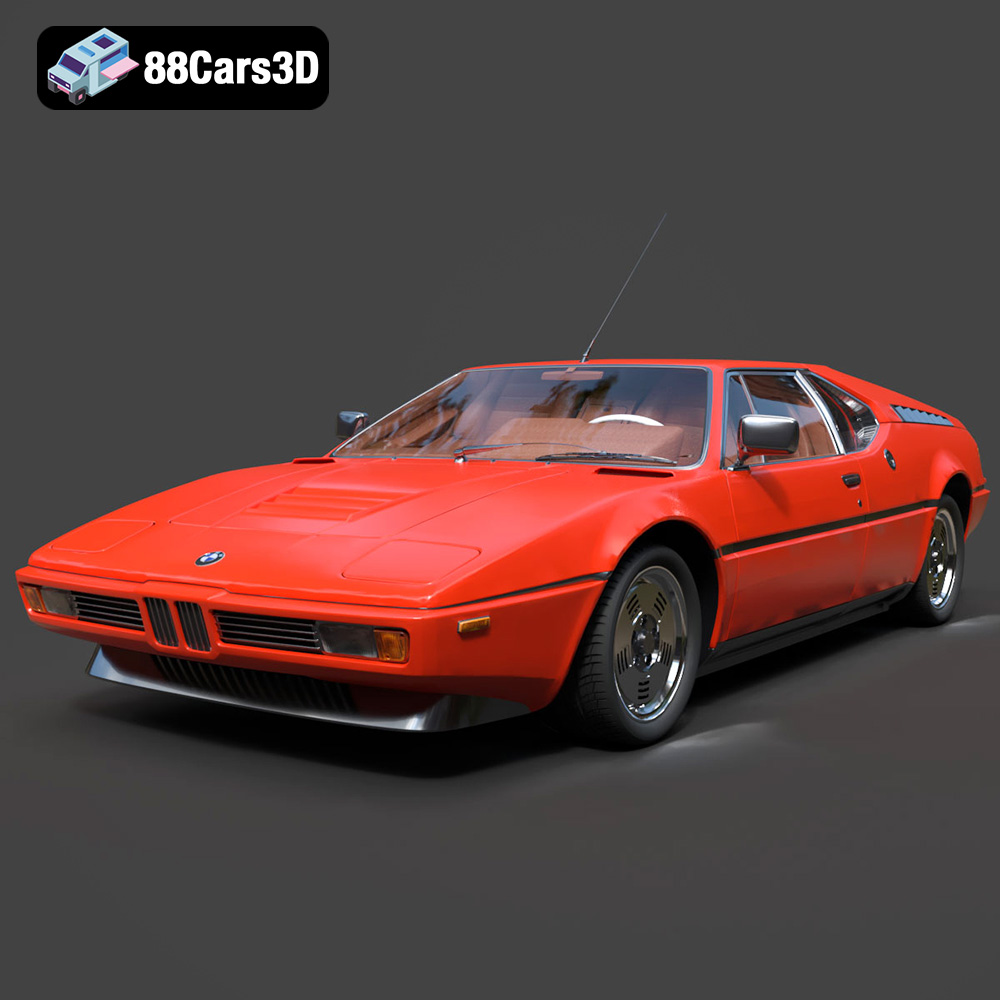
Texture: Yes
Material: Yes
Download the BMW Motorsport M1 E26 1981 3D Model featuring its iconic design, race-bred aerodynamics, and meticulously crafted details. Includes .blend, .fbx, .obj, .glb, .stl, .ply, .unreal, and .max formats for rendering, simulation, and game development.
Price: $20.79

