

Capturing Automotive Legend: A Deep Dive into Professional 3D Car Models and the BMW M1 E26
In the dynamic world of 3D visualization, automotive design, and game development, the foundation of any truly impactful project lies in the quality of its assets. A meticulously crafted 3D car model isn’t just a digital object; it’s a conduit for storytelling, a precision tool for engineers, and a canvas for artists. It embodies countless hours of research, artistic skill, and technical expertise. Among the pantheon of automotive legends, the BMW Motorsport M1 E26 from 1981 stands as a beacon of engineering prowess and racing heritage. Its distinctive wedge shape, pop-up headlights, and aggressive stance have captivated enthusiasts for decades. Now, imagine bringing this icon into your digital realm with unparalleled fidelity.
This article will explore the intricate world of professional 3D car models, focusing on the technical advantages, diverse applications, and critical file formats that empower creators. We’ll delve into how a high-quality asset, such as the BMW Motorsport M1 E26 1981 3D Model available on 88cars3d.com, serves as an indispensable tool across various industries, from cinematic rendering to immersive game development and beyond. We’ll dissect its features, discuss its integration into common workflows, and highlight why choosing a professionally prepared model can drastically elevate your projects.
The Art of Digital Recreation: Why High-Quality 3D Car Models Matter
The creation of a professional 3D car model is an intricate process, demanding both artistic vision and technical precision. It’s not merely about replicating a vehicle’s silhouette, but about capturing its essence, its mechanical integrity, and its visual presence down to the smallest detail. For anyone working in automotive rendering, game development, or serious visualization, the quality of the base 3D car model directly dictates the final output’s realism, performance, and versatility.
Precision in Design and Proportions
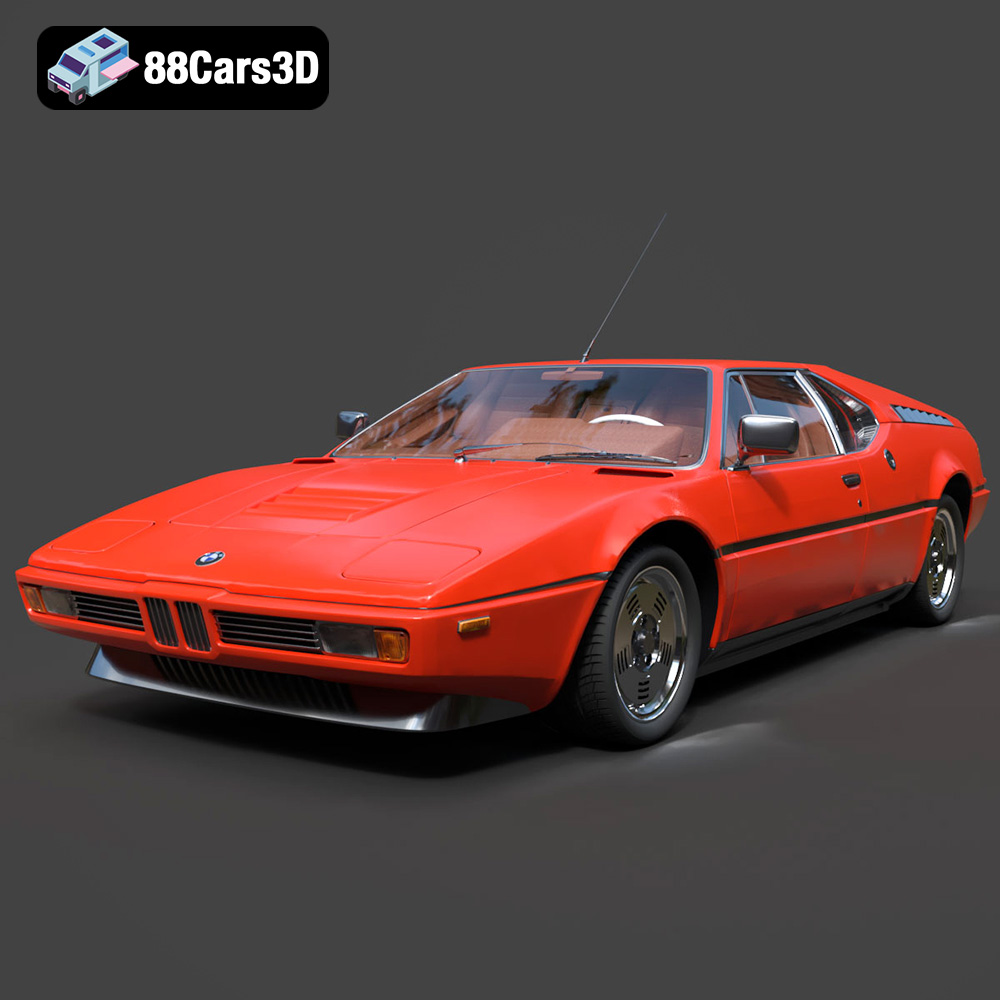
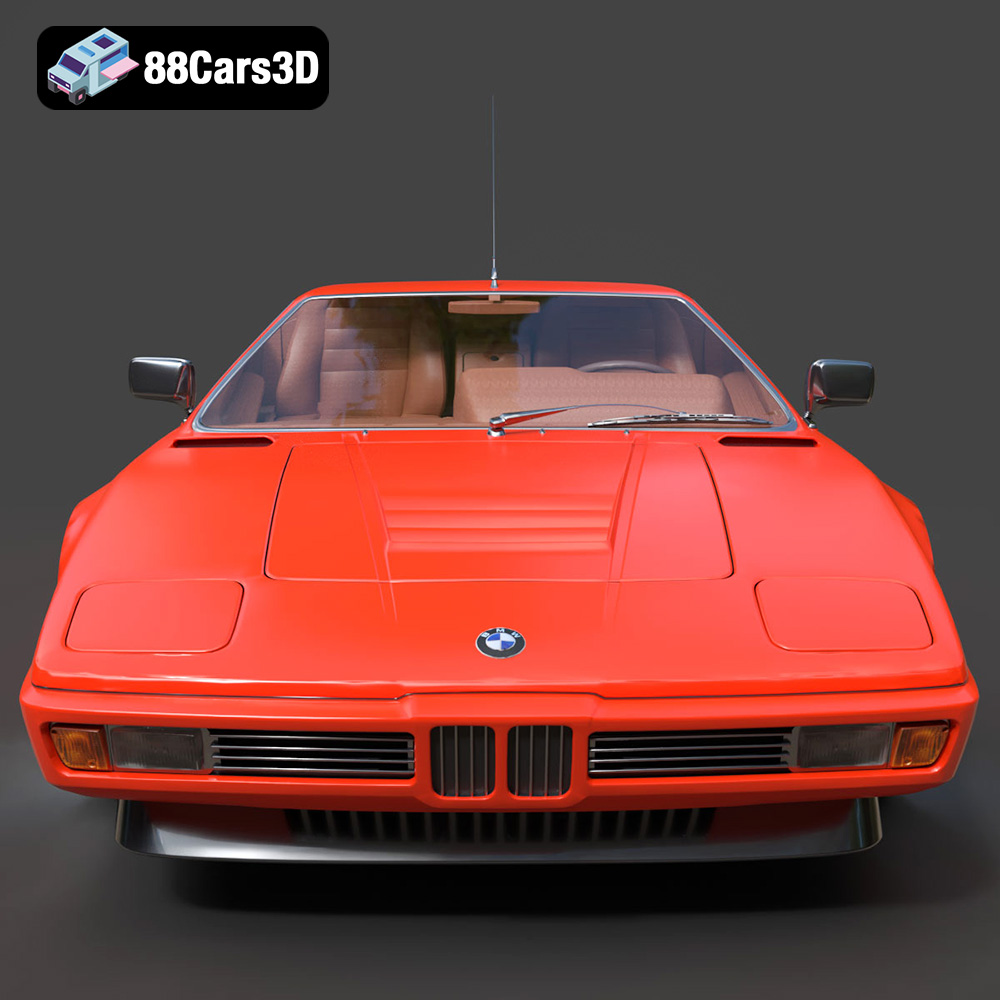
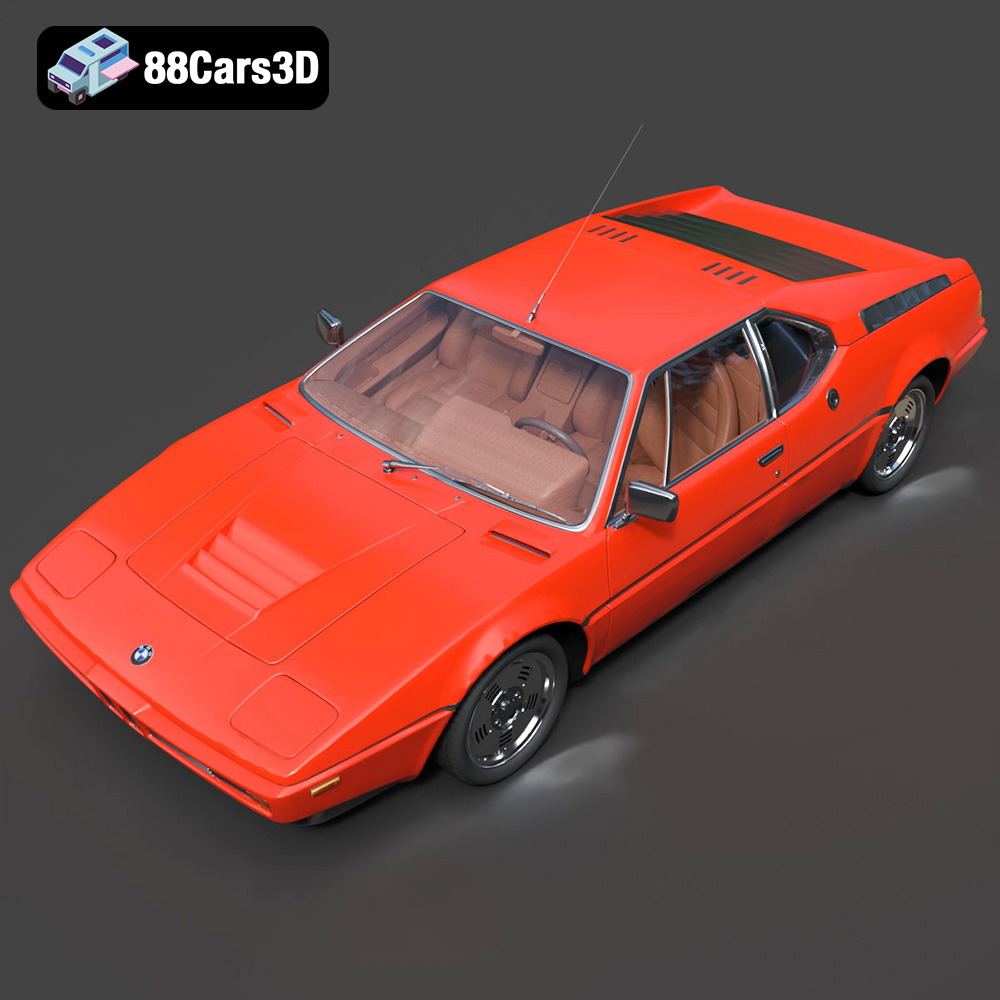
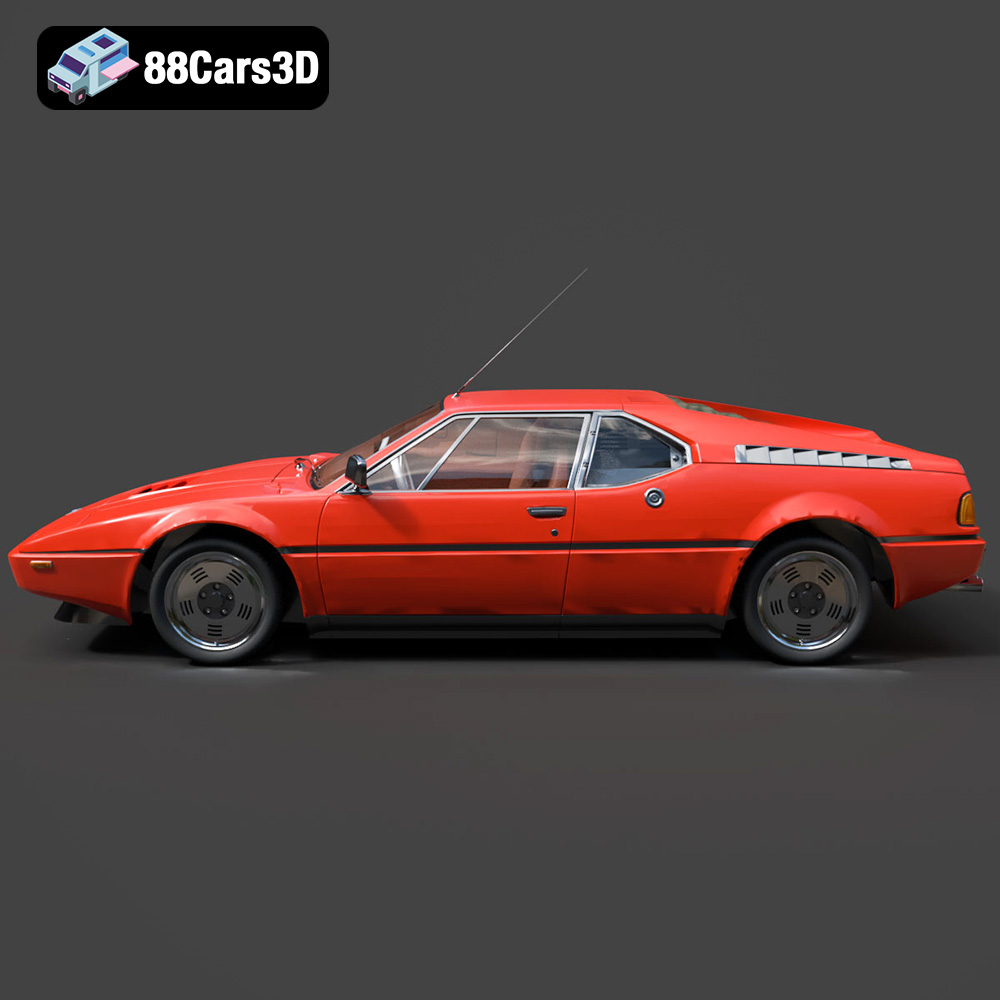
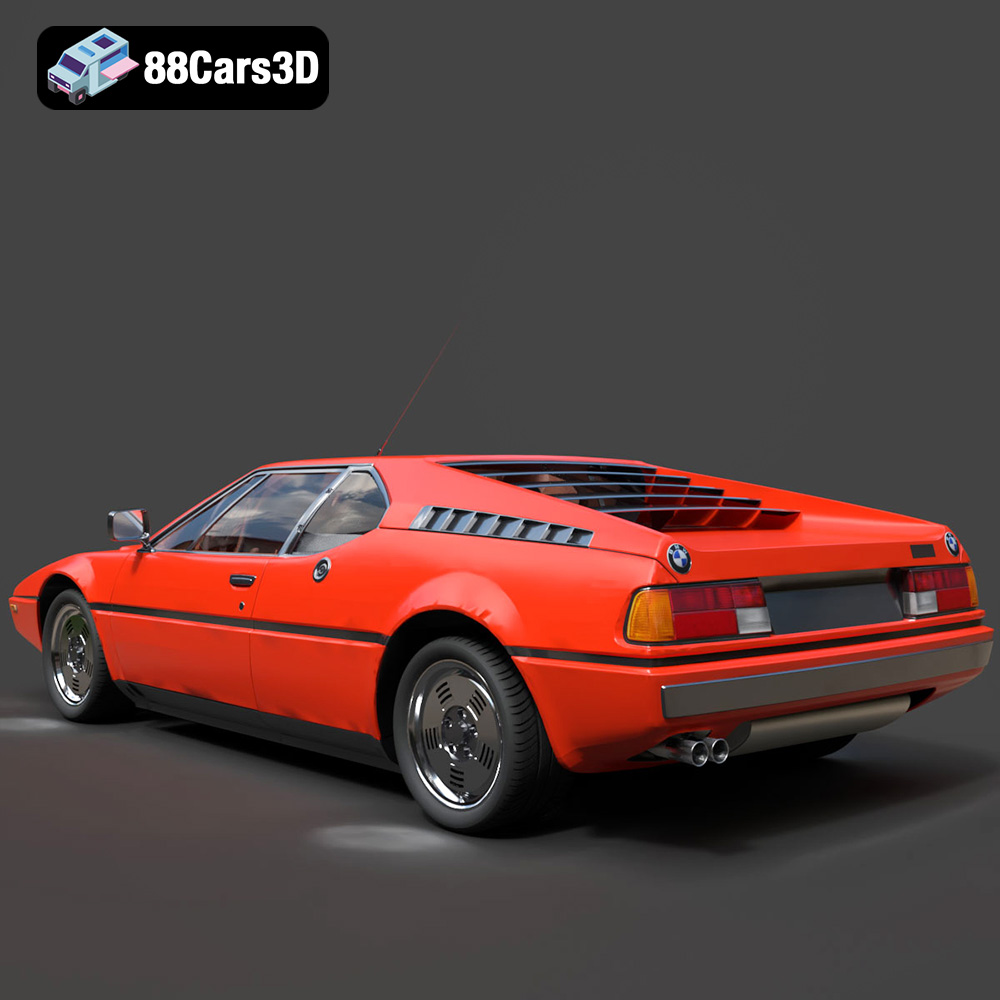
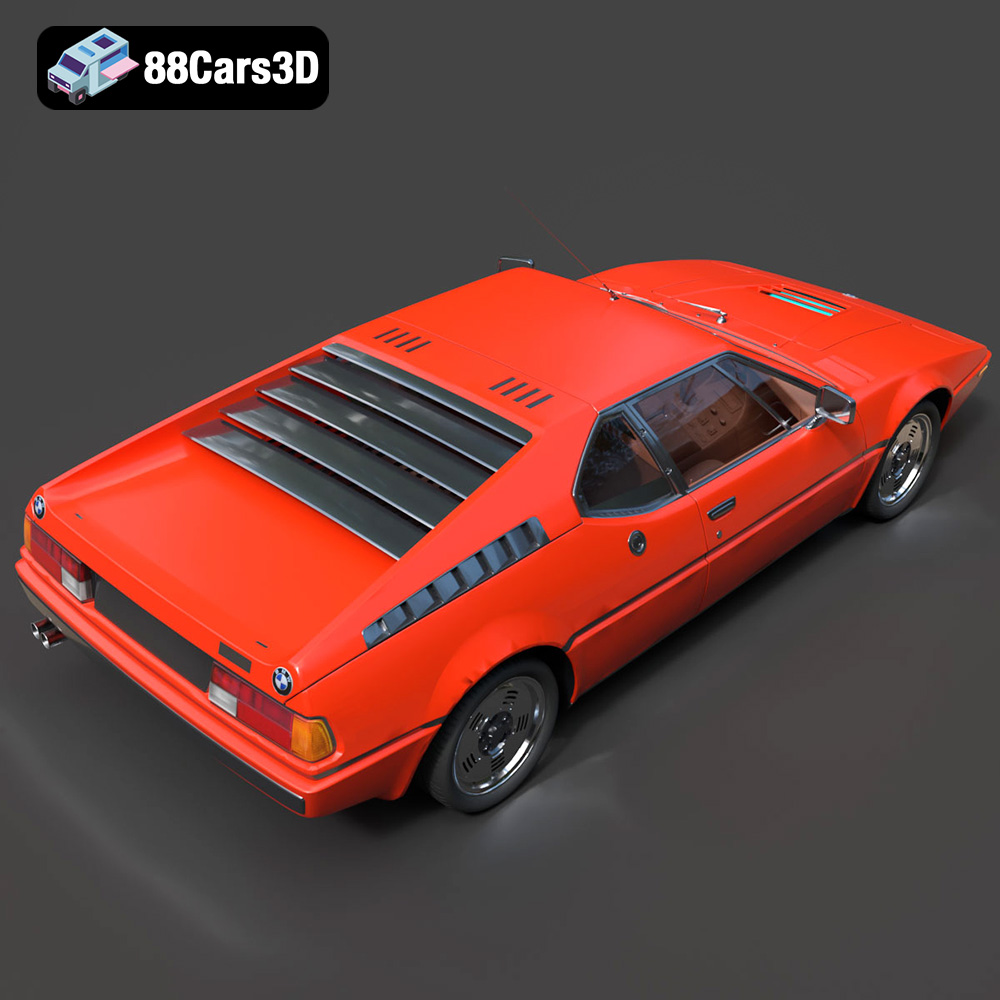
One of the foremost aspects of a high-quality 3D car model is its adherence to real-world scale and accurate proportions. The BMW Motorsport M1 E26 1981 3D Model, for instance, is meticulously built to reflect the actual dimensions of the legendary vehicle. This isn’t just an aesthetic choice; it’s a fundamental requirement for accurate physics simulations, realistic camera perspectives in rendering, and seamless integration into architectural visualizations or existing digital environments. Every curve, panel gap, and aerodynamic element is carefully sculpted to match the original, ensuring that the digital model behaves and appears convincingly, whether it’s navigating a virtual race track or gracing a high-end product advertisement.
The Role of Clean Topology and UV Mapping
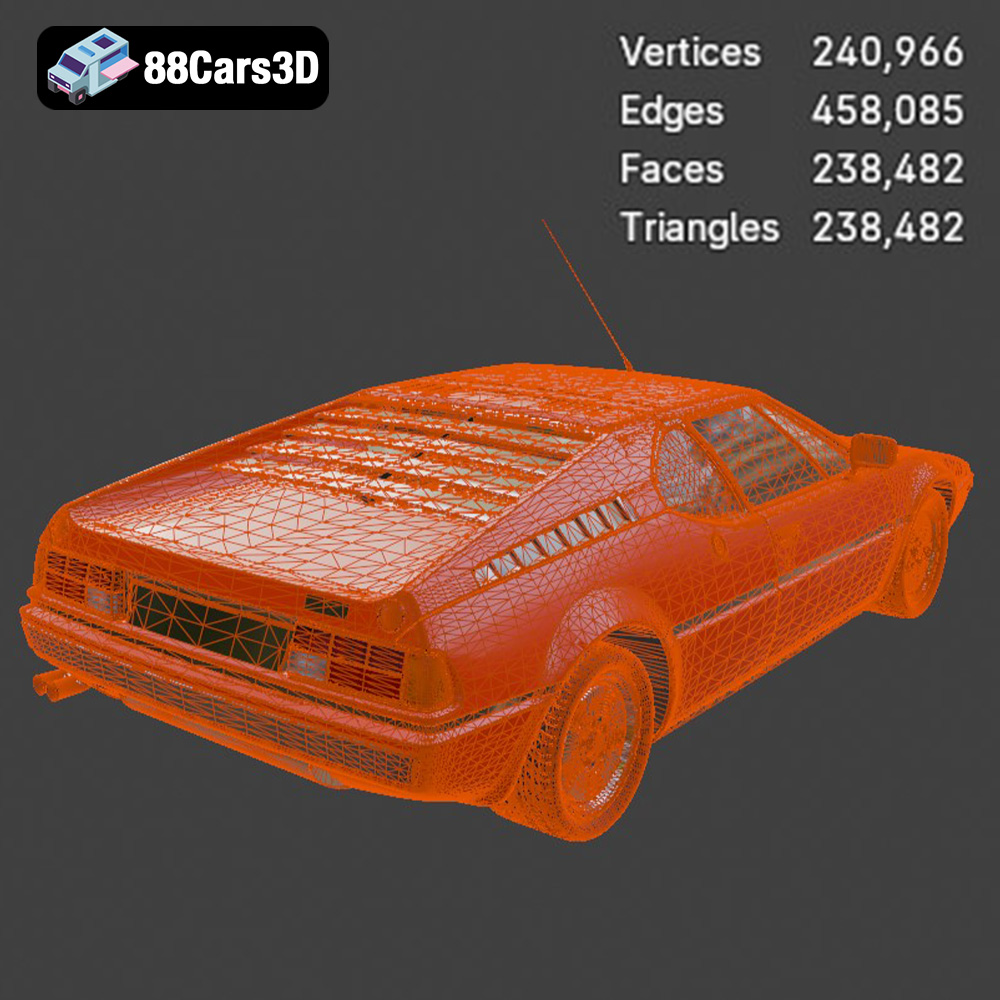
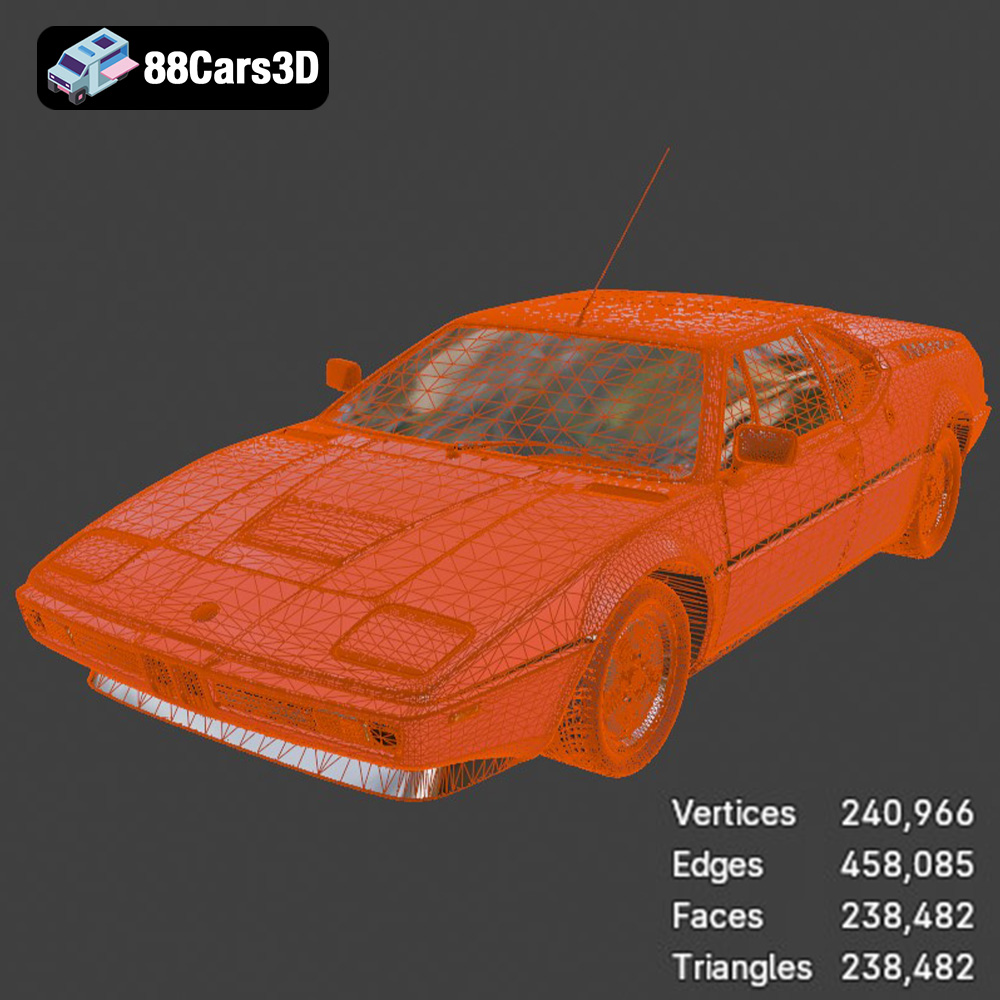
Beyond visual accuracy, the underlying technical structure of a 3D model is paramount. Clean, quad-dominant topology is a hallmark of professional assets. This refers to the arrangement of polygons (mostly four-sided) that form the mesh, providing a smooth, predictable surface that can be easily subdivided for greater detail without introducing artifacts. For the BMW M1 E26, this clean topology means effortless subdivision for extreme close-ups, smooth deformation during animation, and optimal performance in real-time engines. Coupled with this is efficient UV unwrapping, which is the process of flattening the 3D model’s surface into a 2D space for texture application. A properly UV-unwrapped model ensures textures align perfectly, reducing seams and allowing for straightforward customization of paint finishes, racing liveries, and graphic decals without complex re-mapping, saving countless hours in production.
Understanding 3D Model File Formats
Navigating the diverse landscape of 3D file formats is crucial for any professional working with digital assets. Each format serves specific purposes, offering unique advantages for different stages of the production pipeline, from initial modeling to final rendering, game integration, or 3D printing. The BMW Motorsport M1 E26 1981 3D Model from 88cars3d.com exemplifies this versatility by providing a comprehensive suite of file formats, ensuring maximum compatibility and efficiency for virtually any project.
Native Project Files for Full Control (.blend, .max, .unreal)
.blend (Blender project with materials): This is Blender’s native file format, offering a complete scene package. It contains the 3D model, its materials, textures, lighting, camera setups, and even animation data within a single file. For artists working in Blender, receiving a .blend file like that of the BMW M1 E26 means they have immediate access to a fully editable and customizable scene. They can easily modify geometry, tweak material nodes, adjust lighting, or even dissect the rigging if present, making it ideal for deep customization and complex rendering tasks.
.max (Editable 3ds Max scene for rendering and animation): Similar to .blend for Blender, .max is the native format for Autodesk 3ds Max. It stores all scene information, including the model’s geometry, modifiers, materials, lights, cameras, and animation keyframes. Professionals relying on 3ds Max for architectural visualization, product rendering, or character animation will find the .max file for the M1 E26 invaluable. It grants full control over the asset within its native environment, allowing for complex scene setups, advanced V-Ray or Corona rendering, and sophisticated animation sequences.
.unreal (Unreal Engine project setup): This isn’t a single file like .fbx, but rather implies a pre-configured asset or a small project file specifically tailored for Unreal Engine. It means the BMW M1 E26 model is likely imported, optimized, and set up with materials, collision meshes, and potentially even basic blueprints within an Unreal Engine project structure. This significantly reduces the setup time for game developers or virtual production artists, allowing them to drop the asset directly into their Unreal scenes with minimal fuss, ready for real-time interaction and high-fidelity rendering within the engine.
Universal Interoperability and Real-time Optimization (.fbx, .obj, .glb)
.fbx (Compatible with Unreal, Unity, and major 3D engines): Developed by Autodesk, FBX is arguably the most widely used interchange format in the 3D industry. It supports not only geometry but also materials, textures, animations, and skeletal data. Its robust nature makes it ideal for transferring assets between different 3D software and, more importantly, for integrating them into real-time game engines like Unreal and Unity. The .fbx version of the BMW M1 E26 1981 3D Model ensures that game developers have a streamlined path to bring this classic car into their interactive experiences, benefiting from its optimized mesh and prepared data.
.obj (Universal format for nearly all 3D software): OBJ is another highly universal format, known for its simplicity and broad compatibility. It primarily stores geometry (vertices, normals, texture coordinates) and references material libraries (.mtl files) for surface properties. While it doesn’t support animation or advanced scene data, its widespread adoption makes it an excellent fallback for cross-software compatibility. If you need to import the M1 E26 into less common software or simply want a clean mesh for sculpting or re-topology, the .obj version is highly reliable.
.glb (Optimized for AR, VR, and web-based visualization): GLB (GL Transmission Format Binary) is a relatively newer format gaining rapid traction, especially for web-based 3D, Augmented Reality (AR), and Virtual Reality (VR) applications. It’s a binary container format that includes geometry, materials, textures, and animations in a single, compact file. Its efficiency and ease of integration into browsers and mobile AR/VR platforms make the .glb version of the M1 E26 perfect for interactive product viewers, virtual showrooms, or dynamic AR experiences where file size and performance are critical.
Specialized Applications (.stl, .ply)
.stl (Ready for 3D printing): STL (Stereolithography) is the standard file format for 3D printing. It represents 3D surfaces as a series of connected triangles. While it doesn’t store color or material information, its universal acceptance by 3D printers and slicing software makes it essential for physical prototyping. The provision of an .stl file for the BMW M1 E26 allows enthusiasts and designers to effortlessly convert the digital model into a tangible, high-quality physical model, perfect for display or further physical modification.
.ply (Mesh format for analysis and CAD workflows): PLY (Polygon File Format) is often used for storing 3D data from 3D scanners, CAD software, and scientific applications. It’s known for its ability to store vertex attributes beyond just position, such as color, normal vectors, and even transparency, making it suitable for precision mesh analysis and specific engineering workflows. For detailed inspection or integration into certain CAD pipelines, the .ply file of the M1 E26 offers a robust, feature-rich mesh representation.
Elevating Automotive Rendering with the BMW M1 E26 3D Model
Automotive rendering demands an unparalleled level of detail and realism. Whether for advertising, product showcases, or film sequences, the visual fidelity of the 3D car model is paramount. The BMW Motorsport M1 E26 1981 3D Model is engineered to excel in these high-stakes rendering environments, providing artists with a foundation for stunning visuals.
Studio Lighting and Material Setup in 3ds Max/Blender
Achieving photorealistic renders begins with meticulous material and lighting setup. With its clean quad-dominant topology and UV-unwrapped surfaces, the M1 E26 model simplifies this process. In 3ds Max, artists can leverage advanced rendering engines like V-Ray or Corona Renderer to define sophisticated material properties for the body paint, chrome accents, rubber tires, and glass. The model’s logical hierarchy and properly set pivots mean that individual components like separated doors, hood, and trunk can be easily manipulated or animated for dynamic studio shots. Similarly, Blender users can harness Eevee for real-time previews or Cycles for physically accurate path tracing, benefiting from the model’s optimized mesh quality and prepared materials within the .blend file. Customization is key; effortlessly adjust paint finishes to a classic racing livery or a sleek metallic modern look, modify material roughness, or tint glass surfaces to achieve the desired visual effect under any lighting scenario.
Cinematic Visuals and Animation Potential
The M1 E26 model isn’t just for static beauty shots; it’s built for motion. Its separated doors, hood, and trunk, combined with an organized hierarchy, provide immense flexibility for complex animation sequences. Imagine a cinematic opening where the M1 E26’s iconic pop-up headlights slowly rise, or a shot showcasing the finely detailed interior as the car glides into frame. The real-world scale ensures accurate camera movements and depth of field, making it ideal for creating professional-grade car commercials, movie sequences, or interactive presentations. Whether you’re animating a full drive sequence or a subtle product reveal, the technical foundation of this 3D model allows for fluid, believable motion.
Real-World Case Studies: Advertising and Visualization
The applications for a model of this caliber are broad. In automotive advertising, agencies constantly seek high-fidelity 3D car models to create compelling visuals that may not be feasible or cost-effective with physical photography. The M1 E26 can be placed into any virtual environment, from a sun-drenched coastal road to a futuristic cityscape, without ever leaving the studio. For architectural visualization firms, integrating a classic car like the M1 E26 into a rendering of a luxury garage or a modern showroom adds a touch of sophistication and realism that elevates the entire scene. The ability to render multiple configurations, colors, and environments quickly, without the logistical challenges of real-world shoots, makes assets from 88cars3d.com invaluable.
Game Development and Interactive Experiences: Bringing the M1 E26 to Life
In the realm of interactive media, a 3D car model must strike a delicate balance between visual fidelity and real-time performance. Game developers, AR/VR creators, and simulation engineers require assets that are not only stunning but also optimized for efficiency. The BMW Motorsport M1 E26 1981 3D Model is perfectly suited for these demands.
Optimization for Real-time Performance in Unreal Engine and Unity
Game engines like Unreal Engine and Unity thrive on optimized assets. The M1 E26’s clean quad-dominant topology and balanced level of detail ensure it integrates seamlessly into these environments. The .fbx file format, explicitly mentioned as compatible, is the industry standard for importing models with materials and textures into game engines. For Unreal Engine users, the availability of a dedicated .unreal project setup means the model is already pre-configured with materials, collision meshes, and potentially LOD (Level of Detail) settings, significantly cutting down on development time. This optimization is crucial for maintaining high frame rates in demanding racing games or open-world environments, allowing players to experience the M1 E26 in all its glory without performance bottlenecks.
Developing Immersive AR/VR Applications
Augmented Reality (AR) and Virtual Reality (VR) represent the next frontier of immersive experiences, and realistic vehicle models are central to many applications. The .glb file format, specifically optimized for AR, VR, and web-based display, makes the M1 E26 an ideal candidate for these platforms. Imagine placing a virtual M1 E26 in your driveway via an AR app, exploring its interior in a VR showroom, or even test-driving it in a simulated environment. The model’s real-world scale and detailed features contribute significantly to the sense of presence and realism required for compelling AR/VR interactions. Developers can utilize its separate components for interactive features, such as opening doors or activating pop-up headlights with a simple tap or gaze interaction.
The M1 E26 as a Game Asset: Driving Simulation and Racing Titles
For racing games and driving simulations, authenticity is paramount. The BMW M1 E26 1981 3D Model offers an unparalleled level of detail, from the authentic body panels and iconic pop-up headlights to the faithfully modeled dashboard and racing-inspired controls. This ensures that the in-game experience accurately reflects the legendary car. Developers can use the optimized mesh and logically organized hierarchy to build precise physics models, creating a truly immersive driving experience. Whether it’s a vintage racing championship, a car enthusiast’s virtual garage, or a high-fidelity driving simulator, the M1 E26 model provides a robust and visually stunning foundation, capable of taking center stage in any virtual automotive narrative.
Beyond Visualization: Simulation, Training, and 3D Printing
While rendering and game development are prominent applications, the versatility of high-quality 3D car models extends far beyond traditional visualization. The BMW Motorsport M1 E26 1981 3D Model also serves critical functions in engineering, training, and even physical production.
Engineering Simulation and Virtual Prototyping
The meticulous detail and real-world accuracy of the M1 E26 model make it an invaluable asset for engineering simulations and virtual prototyping. Its clean geometry and proper scale enable engineers to conduct virtual wind tunnel tests, analyze aerodynamic performance, or study component interactions within a digital environment. The .ply file format, specifically designed for precision mesh data, allows for detailed analysis and integration into CAD workflows. This capability means that even legacy vehicles can be studied and understood in new ways, offering insights into their original design principles or serving as a basis for modern interpretations without requiring access to a physical vehicle. It bridges the gap between digital design and practical engineering analysis.
From Digital to Physical: 3D Printing the M1 E26
The ability to transform a digital model into a tangible object is a powerful application. The provision of an .stl file makes the BMW M1 E26 1981 3D Model ready for 3D printing. Enthusiasts, collectors, or model makers can produce high-quality physical replicas of this iconic car, bringing the digital legend into the real world. Whether for desktop display, prototyping custom modifications, or creating components for larger physical models, the .stl format ensures compatibility with virtually all 3D printers and slicing software. This capability offers a unique bridge between the digital and physical, allowing for a deeper appreciation and interaction with the car’s celebrated design.
Conclusion
The journey through the creation, application, and technical intricacies of professional 3D car models reveals their indispensable role in today’s digital landscape. From breathtaking cinematic renders and engaging interactive games to precise engineering simulations and tangible 3D prints, a high-quality asset is the cornerstone of success. The BMW Motorsport M1 E26 1981 3D Model stands as a testament to this commitment to excellence, offering unparalleled detail, technical advantages, and broad compatibility across numerous platforms and workflows.
Its meticulously recreated exterior and interior features, clean quad-dominant topology, and logical hierarchy empower artists and developers to bring the legacy of this iconic supercar to life with stunning realism and efficiency. By providing a comprehensive suite of file formats – from native project files like .blend and .max to universal interchange formats like .fbx and .obj, and specialized options like .glb and .stl – this model ensures that professionals have the right tool for every conceivable project. Investing in such a high-caliber 3D car model from reputable sources like 88cars3d.com is not just acquiring an asset; it’s acquiring a foundation for limitless creative and technical possibilities. Elevate your next project with an asset that truly embodies precision and performance.
Featured 3D Model
BMW Motorsport M1 E26 1981 3D Model
Immerse yourself in the legacy of motorsport with this professional 3D model of the BMW Motorsport M1 E26 from 1981. This iconic supercar, celebrated for its unique design and racing prowess, is meticulously recreated with clean geometry and a balanced level of detail. Perfect for high-fidelity rendering, dynamic animation sequences, advanced simulation projects, and seamless integration into game development environments, this model captures the essence of a true automotive legend.
$20.79
Product Image Gallery
Related Tags
.bmwmotorsport.m1e26.sportscar.racecar.coupe.rendering.simulation.gameasset.arvr.blend.fbx.obj.glb.stl.ply.unreal.max
