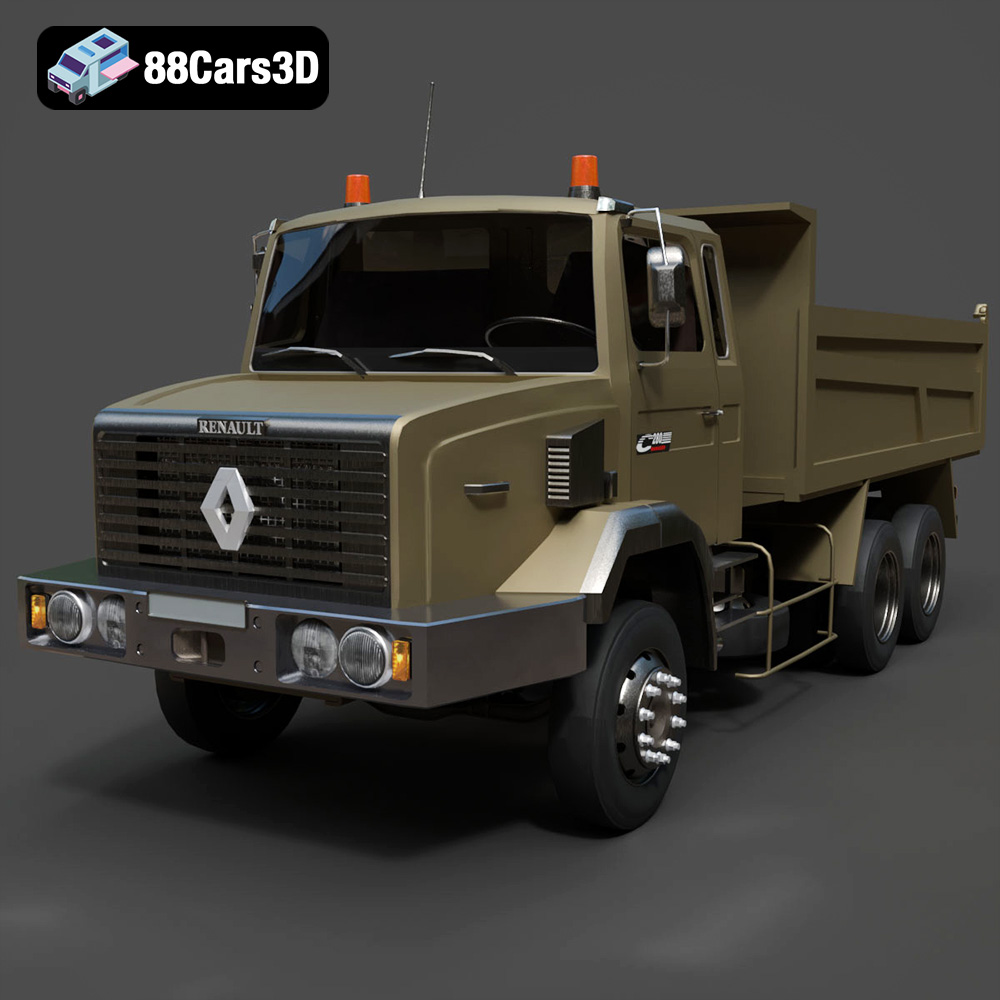
The Art and Science of 3D Car Models: From Concept to Collision
In today’s visually driven world, the demand for exceptionally detailed and technically sound 3D car models is at an all-time high. Whether for breathtaking automotive rendering, immersive game development, cutting-edge AR/VR experiences, or precision 3D printing, the quality of a 3D vehicle asset dictates the success of the entire project. The journey from a conceptual sketch to a fully realized digital car is a complex blend of artistic skill and technical mastery, requiring a deep understanding of modeling, texturing, optimization, and real-world application. This comprehensive guide delves into the intricate technical workflows and considerations involved in leveraging high-quality 3D car models, providing insights valuable to both seasoned professionals and aspiring artists. For those seeking a reliable source of expertly crafted models, marketplaces like 88cars3d.com stand as a testament to the dedication required in this specialized field.
The Foundation: Crafting High-Fidelity 3D Car Models
The genesis of any great 3D car model lies in meticulous craftsmanship. Building a vehicle from the ground up requires not only an eye for aesthetics but also a profound understanding of geometric topology, material science, and optimization principles. A poorly constructed model, regardless of its visual appeal, will quickly become a liability in any demanding pipeline.
Precision Modeling Techniques: NURBS vs. Polygon
Automotive modeling often begins with either Non-Uniform Rational B-Splines (NURBS) or polygonal modeling. CAD data, frequently based on NURBS surfaces, offers unparalleled precision and smooth curvature, making it ideal for replicating real-world vehicle designs. Software like Rhino or SolidWorks excels here. When transitioning from CAD to a polygonal mesh for rendering or game engines, a careful retopology process is critical. This involves converting the complex NURBS surface into a clean, quad-based mesh that maintains the original contours while being amenable to subdivision surfacing and deformation. Polygonal modeling, often done in 3ds Max or Blender, focuses on creating surfaces directly from vertices, edges, and faces. The key here is maintaining excellent edge flow, ensuring all polygons are quads where possible, and keeping the mesh resolution appropriate for the intended use. A dense mesh allows for fine details but demands more processing power, while a sparse mesh requires careful planning to maintain shape with subdivision modifiers.
Topology and Mesh Optimization
Clean topology is the backbone of a high-quality 3D car model. It ensures smooth deformations, efficient UV unwrapping, and predictable subdivision behavior. A good topological layout will have edge loops following the natural contours of the vehicle, particularly around creases, panel gaps, and areas that might deform (like tires). For game development, mesh optimization becomes paramount. This involves strategies like poly count reduction, often achieved through manual refinement, using decimation tools carefully, or by implementing Level of Detail (LOD) systems. LODs are pre-made versions of the model at varying poly counts, which are swapped dynamically based on the camera’s distance, ensuring performance without sacrificing visual fidelity up close.
UV Unwrapping for Flawless Textures
UV unwrapping is the process of flattening the 3D mesh into a 2D space, allowing for textures to be painted or applied. For a car model, this is a highly detailed task. Seamless unwrapping is crucial for consistent texture application, especially for complex materials like car paint, decals, and interior fabrics. Strategic placement of UV seams in less visible areas, combined with efficient UV packing to maximize texture space, prevents stretching or distortion. Modern workflows often utilize UDIM (UV Dimension) tiling, allowing for multiple UV tiles across different parts of the car (e.g., body, interior, wheels), enabling higher texture resolution and greater detail without exceeding the limits of a single texture map.
Understanding 3D Model File Formats
Choosing the correct file format is a critical technical decision that impacts workflow efficiency, compatibility, and the ultimate usability of your 3D car models. Each format serves specific purposes and excels in different pipelines, making a thorough understanding essential for any professional working with digital assets.
.blend – Fully Editable Blender Scene with Materials: The native file format for Blender, a powerful open-source 3D suite. A .blend file is a comprehensive package, storing not just the mesh geometry and UVs, but also materials, textures (packed within or linked externally), lighting setups, animations, cameras, simulations, and even custom scripts. This format offers maximum editability and full control over every aspect of the scene within Blender. It’s ideal for artists who primarily use Blender for their entire workflow, allowing for collaborative work among Blender users and preserving all intricate details of the setup. However, its native nature means direct compatibility with other software can sometimes be limited, often requiring export to more universal formats for cross-application use.
.fbx – Ideal for Unreal, Unity, and Real-Time Pipelines: Developed by Autodesk, FBX (Filmbox) is arguably the industry standard for 3D data interchange, particularly for animation and game development. It’s an incredibly versatile format that can store model geometry, UVs, textures, materials, rigged skeletons, animations, cameras, and lights. Its robust support for animation data makes it indispensable for transferring animated game assets, character rigs, and vehicle physics setups into game engines like Unreal Engine and Unity. FBX files are generally well-optimized for real-time environments, offering good performance and reliable integration across various 3D applications, making it a go-to choice for transferring completed models from DCC (Digital Content Creation) tools to engines.
.obj – Universal Format for Cross-Software Compatibility: OBJ (Object) is one of the oldest and most widely supported 3D file formats. It primarily stores geometric data (vertices, normals, UVs, faces) and can link to an accompanying .mtl (Material Template Library) file for basic material properties and texture references. While it doesn’t support animation, rigging, or advanced shader networks, its universality is its greatest strength. Almost every 3D software can import and export OBJ files, making it excellent for simple model exchange between different programs when only the mesh and basic UVs are required. It’s often used for static props or when a clean geometric base is needed before complex shading is applied in the target application.
.glb – Optimized for AR, VR, and Browser-Based Display: GLB (GL Transmission Format Binary) is the binary version of glTF (GL Transmission Format), a relatively new open-standard format specifically designed for efficient transmission and loading of 3D scenes and models by applications. GLB files are self-contained, embedding all necessary data—geometry, materials, textures, animations, and scene hierarchy—into a single file. This makes them incredibly lightweight and performant, ideal for web-based 3D viewers, augmented reality (AR), virtual reality (VR), and any environment where fast loading times and minimal network requests are crucial. It’s rapidly becoming the standard for displaying 3D content directly in browsers and mobile applications.
.stl – Suitable for 3D Printing Output: STL (Stereolithography) is a tessellated format primarily used for 3D printing. It represents a 3D model as a series of connected triangles, describing only the surface geometry without any color, texture, or material information. The key considerations for STL files are manifold errors (holes, inverted normals), which can cause issues during slicing for 3D printing. While not used for rendering or games, it’s indispensable for physical prototyping and manufacturing of 3D car models. Ensuring a watertight mesh with correctly oriented normals is crucial for a successful print.
.ply – Precision Mesh Format for CAD or Analysis: PLY (Polygon File Format) is often used for storing 3D data from 3D scanners, CAD applications, or for scientific analysis. Similar to OBJ, it stores geometric information but has the advantage of supporting properties beyond just vertex positions, such as color per vertex, surface normals, and transparency. This makes it useful for models derived from real-world scans where color information is captured directly onto the mesh. It’s less common for rendering or game pipelines but provides a higher degree of precision for raw mesh data and analytical tasks.
.unreal – Engine-Ready Asset for Real-Time Environments: It’s important to clarify that “.unreal” isn’t a standalone file extension in the same way as .fbx or .obj. Instead, when we refer to an “unreal” asset, we’re talking about a 3D car model that has been specifically prepared, optimized, and imported into Unreal Engine, residing within the engine’s content browser. Typically, these assets originate as .fbx files (or other compatible formats) exported from DCC software, then are imported into Unreal. During import, the engine processes the raw data, converting it into its native internal format, generating collision meshes, setting up materials using Unreal’s shader graph, and creating LODs. An “unreal” asset is therefore a fully integrated, engine-ready package that leverages Unreal Engine’s features for real-time performance, dynamic lighting, physics, and interactivity. This ensures the game assets are perfectly aligned with the engine’s pipeline.
.max – Editable 3ds Max Project for Animation and Rendering: The native file format for Autodesk 3ds Max. Similar to .blend, a .max file encapsulates an entire 3ds Max scene, including geometry, materials, textures, lights, cameras, animations, modifiers, and scripts. It provides the most complete and editable version of a model within the 3ds Max environment, making it ideal for users who perform their modeling, rigging, animation, and rendering entirely within 3ds Max. It allows for complex scene setups, advanced procedural workflows, and integration with 3ds Max’s rich plugin ecosystem. Like .blend, cross-software compatibility usually requires exporting to a more universal format.
Mastering Automotive Rendering for Stunning Visuals
Beyond the raw 3D data, it’s the rendering process that breathes life into a 3D car model, transforming it into a photorealistic image or animation. Achieving truly stunning automotive rendering requires a deep understanding of light, materials, and composition.
Material Creation and Shading Networks
The materials applied to a 3D car model are arguably the most crucial element for realism. Car paint, for instance, is not a simple solid color; it involves complex layers of base coat, metallic flakes, clear coat, and reflections. Physically Based Rendering (PBR) workflows are essential here, accurately simulating how light interacts with surfaces by defining properties like albedo (base color), roughness, metallic, and normal maps. Nodal shading networks, common in renderers like V-Ray, Corona, Arnold, or within Blender’s Cycles/Eevee, allow artists to build intricate material graphs that precisely mimic real-world materials like chromed metals, reflective glass, rubber, leather, and carbon fiber. Understanding Fresnel effects for reflections and anisotropic reflections for brushed metals is also key.
Lighting Setups for Realism
Lighting is the soul of a render. For automotive visuals, a combination of high-dynamic-range imaging (HDRI) environment maps and physical lights is often used. HDRIs provide realistic ambient lighting and reflections, simulating real-world environments with accurate light intensities and colors. Supplementary physical lights (area lights, spot lights) can be strategically placed to highlight specific features, create dramatic shadows, or simulate studio lighting setups. Understanding light falloff, intensity, color temperature, and shadow softness is critical to creating believable scenes. A common technique is to use softbox-like area lights for even illumination and rim lights to define the car’s silhouette.
Camera and Composition
Just like in traditional photography, camera angles and composition play a vital role in showcasing the 3D car models. Choosing the right focal length, depth of field, and framing can emphasize design elements, convey motion, or create a sense of scale. A longer focal length (e.g., 85mm-135mm) can flatten perspective and make a car appear more heroic, while a wider angle (e.g., 24mm-35mm) can emphasize speed or integrate the car more into its environment. Strategic use of the rule of thirds, leading lines, and negative space can significantly enhance the visual impact of a render.
Post-Processing and Color Grading
The rendering process doesn’t end when the image is calculated. Post-processing, often done in software like Photoshop or Affinity Photo, is crucial for adding the final polish. This includes color grading to set the mood, applying subtle effects like chromatic aberration, lens flares, or vignetting, and enhancing details through sharpening or contrast adjustments. Using Look-Up Tables (LUTs) can quickly apply cinematic color palettes. The goal is to elevate the raw render into a finished piece of commercial art, ensuring the automotive rendering achieves maximum impact.
Optimizing 3D Car Models for Game Development
While photorealistic renders prioritize visual fidelity above all else, game assets demand a delicate balance between visual quality and real-time performance. Optimizing 3D car models for game engines like Unreal Engine or Unity is a specialized discipline that focuses on efficiency without compromising too much on aesthetics.
Poly Count Management and LODs
One of the primary optimizations for game assets is managing poly count. Game engines need to render thousands or millions of polygons every frame, so every model must be as lean as possible. A high-detail car model for a cinematic might have millions of polygons, while an in-game drivable vehicle needs to be in the range of 50,000 to 200,000 triangles, depending on the platform and game type. This is where Level of Detail (LOD) systems become essential. A car might have 3-5 LODs: a high-poly model for close-ups, medium-poly for regular gameplay, low-poly for distant views, and even a billboard/sprite for extreme distances. These are automatically swapped by the engine, ensuring efficient rendering. Baking normal maps from a high-poly sculpt onto a low-poly mesh is also a standard technique to retain visual detail without the geometric cost.
Collision Meshes and Physics Assets
For vehicles in games, accurate physics and collision detection are paramount for realistic gameplay. A separate, much simpler collision mesh is typically created, distinct from the visual mesh. This “proxy” geometry is often made of simple convex shapes (boxes, capsules, spheres) that closely approximate the car’s silhouette. This dramatically reduces the computational load for the physics engine compared to calculating collisions on the detailed visual mesh. In Unreal Engine, this is often managed through Physics Assets, allowing designers to define individual collision bodies for different parts of the car (body, wheels) and assign physical properties like mass and friction.
Engine Integration Workflows
Integrating 3D car models into game engines involves specific workflows. For Unreal Engine, FBX is the preferred import format. During import, artists configure options for LOD generation, collision mesh creation, and material setup. Materials are typically rebuilt using the engine’s native shader graph (e.g., Unreal’s Material Editor), which allows for real-time physically based shading, decals, and custom effects. Textures are imported separately and assigned within these material graphs. Ensuring correct scale, pivot points, and coordinate systems (e.g., Z-up in Unreal) is vital for seamless integration and animation.
Animation and Rigging Considerations
Game cars require more than just static models; they need to move realistically. This involves rigging the vehicle, creating a hierarchical structure of bones or nulls that control parts like wheels, suspension, and doors. Wheel rotation, steering, and suspension compression are typically handled dynamically by the game engine’s physics system, but sometimes specific animations for opening doors, hoods, or trunk lids are pre-rigged. For damage systems, separate meshes or blend shapes might be used, allowing for real-time deformation and destruction effects. Each component that needs to move or deform must be properly weighted to its respective bone.
Real-World Applications and Case Studies
The utility of high-quality 3D car models extends far beyond traditional rendering, impacting numerous industries and creative fields. Their versatility makes them indispensable tools for a diverse range of applications, showcasing the true value of assets found on platforms like 88cars3d.com.
Automotive Marketing and Product Visualization
One of the most prominent applications for 3D car models is in automotive marketing and product visualization. Car manufacturers regularly use highly accurate digital models for their advertising campaigns, online configurators, and showroom displays long before a physical prototype exists. This allows for dynamic visual content, custom paint jobs, and accessory configurations to be showcased with photorealistic fidelity. Case studies include virtual test drives, interactive 360-degree views on websites, and high-resolution renders for print ads, all generated from a single, meticulously crafted 3D asset.
Virtual Production and Film VFX
In the film and television industry, 3D car models are integral to virtual production and visual effects (VFX). They serve as digital doubles for dangerous stunts, vehicles in impossible scenarios, or background traffic in bustling cityscapes. High-fidelity models can be seamlessly integrated into live-action footage, allowing filmmakers to achieve shots that would be too expensive, dangerous, or impractical with real vehicles. The rise of LED volumes in virtual production means that realistic 3D environments, including digital vehicles, can be rendered in real-time on massive screens, providing immersive backdrops for actors on set.
AR/VR Experiences
Augmented Reality (AR) and Virtual Reality (VR) environments are another burgeoning application for 3D car models. From interactive showrooms where customers can explore a car’s features in a virtual space, to AR apps that let users place a digital car in their driveway via their smartphone, these technologies offer unprecedented levels of engagement. The technical challenge here lies in optimizing models for real-time performance on mobile devices or VR headsets, often utilizing formats like .glb and prioritizing extremely efficient geometry and texture budgets to maintain smooth frame rates and minimize latency.
3D Printing and Prototyping
While visual applications are dominant, 3D car models also serve a crucial role in physical prototyping and manufacturing. Engineers and designers use precise 3D models to create physical prototypes through 3D printing. This allows them to test ergonomics, fit, and form factors before committing to expensive tooling. The technical considerations here include ensuring a “watertight” mesh (no holes or gaps), correct normal orientation, and sufficient wall thickness for structural integrity. The .stl format is typically used for this purpose, transforming the digital model into a tangible object.
Conclusion
The world of 3D car models is a testament to the powerful convergence of art and engineering. From the foundational precision of modeling and the crucial considerations of file formats to the artistic flair of automotive rendering and the rigorous demands of creating robust game assets, every stage requires a deep technical understanding and an unwavering commitment to quality. The continuous evolution of software and hardware pushes the boundaries of what’s possible, enabling artists and developers to create increasingly immersive and photorealistic experiences. As the digital landscape expands into new frontiers like AR, VR, and advanced simulations, the demand for meticulously crafted 3D vehicles will only grow. Investing in high-quality assets, like those meticulously curated on 88cars3d.com, is not just about acquiring data; it’s about empowering innovation and delivering unparalleled visual fidelity across every conceivable application.
Featured 3D Car Models