

The automotive industry thrives on innovation, not just in vehicle design and engineering, but also in how these marvels are presented to the world. From dazzling marketing campaigns to immersive virtual showrooms and cutting-edge game development, the demand for hyper-realistic visual experiences is constantly accelerating. While stunning 3D car models form the core of these visualizations, the human element often completes the narrative, providing scale, emotion, and interaction.
Historically, integrating lifelike characters into high-fidelity automotive scenes has been a complex and resource-intensive endeavor. Traditional character creation often involved extensive modeling, rigging, texturing, and animation workflows, making it a bottleneck for many projects. Enter MetaHuman Creator – Epic Games’ revolutionary cloud-based application that empowers artists and developers to generate photorealistic, fully rigged digital humans in minutes. When combined with the unparalleled power of Unreal Engine, MetaHumans offer an unprecedented opportunity to elevate automotive visualization.
This comprehensive guide will delve into the technical intricacies of integrating MetaHumans into your Unreal Engine projects, specifically focusing on how these characters can enhance your automotive visualizations. We’ll explore everything from initial project setup and asset optimization to advanced lighting, interactive experiences, and considerations for AR/VR and virtual production. By the end, you’ll understand how to leverage MetaHumans alongside high-quality 3D car models to create truly immersive and engaging automotive experiences that captivate your audience.
Elevating Automotive Realism with MetaHuman Integration
In the competitive landscape of automotive visualization, realism is paramount. While meticulously crafted 3D car models provide the foundation, the inclusion of realistic characters transforms static scenes into dynamic narratives. A MetaHuman driver in the cockpit provides a sense of scale and perspective, allowing viewers to truly appreciate the vehicle’s ergonomics and interior design. A presenter interacting with a car in a virtual showroom adds an emotional connection, making the experience more relatable and engaging than a sterile, empty environment. These characters aren’t just props; they are vital storytellers, enriching the visual context and enhancing the perceived value of the vehicle.
The power of MetaHuman Creator lies in its ability to democratize high-fidelity character generation. Before MetaHumans, achieving this level of realism for characters required significant investment in specialized character artists and lengthy production cycles. Now, a designer or developer can quickly iterate on character designs, ensuring they perfectly match the desired aesthetic for an automotive brand or a specific scene. This rapid iteration allows for more creative freedom and reduces the time-to-market for visualizations and interactive experiences. Platforms like 88cars3d.com offer highly optimized and visually stunning 3D car models that are ready to integrate seamlessly with these cutting-edge characters, creating a perfect synergy.
Bridging the gap between a high-polygon vehicle asset and a similarly detailed character requires careful attention to detail and a robust workflow. The visual fidelity of a MetaHuman, with its intricate skin details, realistic hair, and sophisticated PBR materials, demands equally impressive surroundings. When you source automotive assets from marketplaces such as 88cars3d.com, you are typically getting models with clean topology, accurate UV mapping, and PBR-ready materials, ensuring visual consistency between your vehicle and your MetaHuman characters. This harmony is crucial for achieving a believable and professional-grade automotive visualization.
From Concept to Character: Crafting MetaHumans for Automotive Scenes
Creating a MetaHuman suitable for an automotive scene begins in the MetaHuman Creator. Here, you can sculpt facial features, select skin tones, customize hairstyles, and choose clothing that complements the vehicle’s aesthetic or the scene’s context. For instance, a luxury car presentation might feature a MetaHuman dressed in sophisticated attire, while a sports car racing scene could have a MetaHuman in performance gear. Pay close attention to subtle details like eye color and expression, as these can convey significant emotion and personality, further enhancing the narrative around the vehicle. The goal is to create a character that feels like a natural inhabitant of the automotive world you are building.
Synergies with High-Quality 3D Car Models
The true magic happens when MetaHumans are paired with exceptional 3D car models. When sourcing models, always look for assets designed with clean topology and physically based rendering (PBR) materials, as offered by 88cars3d.com. This ensures that the car’s surfaces (paint, glass, interior fabrics) react to light in a physically accurate way, matching the realism of the MetaHuman’s skin and clothing. Consistency in material quality is paramount. A low-resolution car model or poorly optimized textures will immediately break the immersion that a MetaHuman works so hard to establish. Together, these assets elevate the realism of automotive visualization to new heights, creating compelling and believable scenes.
Unreal Engine Project Setup and MetaHuman Workflow for Automotive Projects
Integrating MetaHumans into an Unreal Engine project alongside your detailed 3D car models requires a structured approach to project setup and asset management. Starting with a blank Unreal Engine project is often ideal, as it provides a clean slate, allowing you to selectively enable the necessary plugins without unnecessary overhead. For MetaHumans, the “MetaHuman” plugin is essential, enabling the proper import and functionality of your characters. Additionally, if you plan to utilize advanced rendering features like Lumen and Nanite for both your cars and characters, ensure their respective plugins are enabled. For detailed guidance on plugin management, refer to the official Unreal Engine documentation.
The workflow for bringing a MetaHuman from the cloud-based MetaHuman Creator into Unreal Engine is streamlined through Quixel Bridge. After finalizing your MetaHuman in the Creator, it becomes available in your Quixel Bridge library. Bridge acts as your content browser for Quixel assets, including MetaHumans, Megascans, and other high-quality resources. Within Bridge, you select your MetaHuman and use the “Export” button to send it directly to your open Unreal Engine project. During this process, Bridge will automatically download all necessary assets (meshes, textures, materials, LODs) and create a comprehensive MetaHuman Blueprint within your project, ready for placement and manipulation.
Crucially, before exporting from Bridge, you’ll be prompted to choose the desired LOD settings. For automotive visualization, where character detail is often scrutinized, selecting high-resolution LODs (e.g., LOD0 or LOD1) is generally recommended, especially for close-up shots or interactive experiences. However, for distant characters or performance-critical applications like AR/VR, higher LODs (e.g., LOD5-7) might be more appropriate. Consider the final output and target platform when making this decision. The beauty of the MetaHuman system is that it generates multiple LODs automatically, providing flexibility for various performance needs without manual intervention.
Preparing Your Unreal Engine Environment for Blended Assets
When you initiate your Unreal Engine project, consider a “Blank” template to maintain maximum control over enabled features. For an automotive project blending high-fidelity cars and MetaHumans, several key plugins are typically required: “MetaHuman”, “Alembic (for complex animations if needed)”, “Chaos Vehicles (for car physics)”, and potentially “Niagara (for visual effects like exhaust fumes or rain).” Enabling these from ‘Edit > Plugins’ ensures your project can handle the diverse asset types. Proper folder structure is also vital; separate folders for your 88cars3d.com vehicle assets, MetaHumans, shared materials, and blueprints will keep your project organized and efficient. This methodical setup prevents clutter and streamlines the development process, especially as your project grows in complexity.
Importing MetaHumans and Their Integration with Automotive Assets
Once your project is set up, importing your MetaHuman is straightforward. Open Quixel Bridge, navigate to ‘MetaHumans’, select your character, and click ‘Add’ or ‘Export’ to Unreal Engine. Bridge will download all necessary files – skeletal meshes, static meshes, textures (up to 8K resolution), PBR materials, and a master Blueprint. This Blueprint is the central hub for your MetaHuman, containing all the logic for LODs, physics assets, and animation. Dragging this Blueprint into your scene allows you to position your character alongside your 88cars3d.com car models. Ensure you place both assets within a common scene environment to begin setting up lighting and interaction, focusing on how the car and character visually complement each other.
Optimizing MetaHumans and 3D Car Models for Real-time Automotive Performance
Achieving fluid real-time performance in automotive visualization, especially with the addition of high-fidelity MetaHumans, demands rigorous optimization. Both 3D car models and MetaHumans are inherently complex, featuring high polygon counts, intricate materials, and numerous textures. Unreal Engine’s revolutionary Nanite virtualized geometry system is a game-changer here, benefiting both asset types significantly. Nanite allows artists to import incredibly detailed models, whether they are a high-end vehicle or a MetaHuman, without manually creating LODs or compromising on visual fidelity. It intelligently streams and renders only the necessary geometry at a pixel level, dramatically reducing draw calls and performance overhead, even with millions of polygons.
For MetaHumans, Nanite handles the main body mesh, providing stunning detail up close while efficiently scaling for distant shots. However, not all MetaHuman components are Nanite-enabled out-of-the-box. Hair (which uses strand-based grooming), eyes, and clothing often rely on traditional LODs and draw calls. Therefore, careful management of these non-Nanite components is crucial. For car models, especially those from 88cars3d.com which are designed for optimal performance, Nanite can be enabled on the primary body panels, interior components, and wheels, allowing you to maintain exceptional visual quality without being bottlenecked by polygon budgets. This dual application of Nanite ensures that both your car and character assets contribute to a high-performance scene.
Texture streaming and physically based rendering (PBR) material efficiency are also critical. MetaHumans come with numerous 8K textures for skin, normal maps, and diffuse maps, while high-quality car models feature their own array of detailed PBR textures for paint, carbon fiber, leather, and glass. Ensure that texture streaming is properly configured in your Unreal Engine project settings to load textures at appropriate resolutions based on their distance and visibility, preventing unnecessary memory consumption. For materials, aim for efficient PBR setups that avoid overly complex shader graphs. Instances of materials should be used whenever possible to share common parameters and reduce compilation times. Optimize texture sizes for specific uses; for instance, a texture on a visible dashboard element might need higher resolution than one on an unseen underside component.
Leveraging Nanite and LODs for Character and Vehicle Scalability
To enable Nanite for a MetaHuman, simply import it through Quixel Bridge, and its main body mesh will automatically be Nanite-ready. For your 88cars3d.com car models, open the Static Mesh Editor for each component (e.g., car body, wheel rim) and enable ‘Enable Nanite’ in the Details panel. Nanite handles the primary geometry scaling, but manually created LODs (Levels of Detail) are still vital for non-Nanite components, such as MetaHuman hair, eyes, and clothing, as well as specific vehicle parts like intricate engine details or grilles that might not benefit from Nanite’s virtualization. Review the auto-generated LODs for MetaHumans and adjust their screen size thresholds in the MetaHuman Blueprint. For car parts, consider generating manual LODs or using Unreal Engine’s built-in LOD generation tools to ensure optimal performance when objects are viewed from a distance.
PBR Material Harmony: Ensuring Consistency Between Humans and Cars
PBR materials are the foundation of realistic rendering. For MetaHumans, their skin, hair, and clothing materials are highly sophisticated, built on industry-standard PBR principles. When working with 88cars3d.com car models, verify that their materials are also set up correctly using albedo, normal, roughness, metallic, and ambient occlusion maps. The key is to ensure that both character and vehicle materials respond consistently to light, sharing similar base material functions where possible. For instance, reflective surfaces on a car (paint, chrome) should mirror the reflections seen on a MetaHuman’s eyes or glossy clothing. Use Material Instances to tweak parameters like color or roughness without creating new, inefficient materials. This unified PBR approach is essential for believable integration and visual cohesion in your automotive scenes.
Advanced Lighting and Shading for Integrated Automotive & Character Scenes
Achieving photorealistic results when combining high-fidelity 3D car models with MetaHumans in Unreal Engine hinges on a sophisticated lighting and shading strategy. Unreal Engine’s Lumen global illumination system is a cornerstone for this, offering fully dynamic, real-time GI that beautifully illuminates both characters and vehicles. Lumen calculates indirect light bounces from surfaces, meaning light reflecting off a car’s paint can subtly illuminate a MetaHuman standing nearby, and vice-versa. This creates a natural interplay of light and shadow, essential for visual fidelity. For automotive visualization, Lumen allows for dynamic environment changes – imagine a car driving into a garage, with the lighting naturally adapting to the enclosed space and realistically reflecting off the vehicle’s surfaces and the character’s form. This level of dynamic realism was previously unattainable in real-time without extensive baking processes.
Beyond Lumen, ray tracing plays a pivotal role in elevating the realism of reflections, refractions, and shadows. For car models, ray-traced reflections provide physically accurate reflections on the metallic paint, polished chrome, and glass surfaces, making the vehicle feel grounded in its environment. On MetaHumans, ray-traced reflections enhance the realism of their eyes, which can accurately reflect the surrounding scene, and add subtle detail to wet-looking skin or glossy clothing. Ray-traced translucent shadows can also create soft, realistic shadows from car windows or a MetaHuman’s hair, contributing to overall visual depth. While computationally intensive, combining Lumen with selective ray tracing (e.g., for reflections only) strikes an excellent balance between performance and visual quality in high-end automotive renders.
When it comes to shading, mastering Physically Based Rendering (PBR) is non-negotiable. MetaHumans utilize complex PBR shaders for their skin, hair, and clothing, accurately simulating how light interacts with different material properties. For your 88cars3d.com car models, ensure their materials are also PBR-compliant, with meticulously crafted albedo, normal, roughness, metallic, and ambient occlusion maps. The interaction between these material parameters and the light sources dictates the final visual outcome. For instance, the clear coat on car paint requires a specific PBR setup to achieve realistic reflections and specular highlights. Similarly, the translucent properties of human skin need accurate subsurface scattering (SSS) to look lifelike. Balancing these complex shading models across both characters and vehicles is the key to creating a cohesive and believable scene. Refer to the Unreal Engine documentation on lighting for in-depth technical guidance.
Illuminating Realism: Lumen and Ray Tracing for Combined Scenes
To leverage Lumen, ensure it’s enabled in your Project Settings under ‘Rendering > Global Illumination’. Set ‘Global Illumination Method’ and ‘Reflection Method’ to Lumen. For ray tracing, enable ‘Ray Tracing’ in Project Settings and restart the editor. Then, activate specific ray-traced features (e.g., reflections, shadows) in your Post Process Volume. Position key light sources (Directional Light for sun, Skylight for ambient, Spot Lights for accents) to highlight both the MetaHuman and the car. Pay attention to how light bounces off the car’s surfaces and illuminates the character, and vice versa. Use HDRI skyboxes or Sphere Reflection Captures to provide a realistic environmental context for reflections, making the scene feel grounded and integrated.
Mastering PBR Shading for Car Paint, Skin, and Fabric
The PBR shaders for MetaHuman skin are highly advanced, simulating subsurface scattering and complex specular highlights. For your 88cars3d.com car models, focus on creating equally robust PBR materials. Car paint often benefits from a clear-coat layer, which can be simulated in Unreal Engine using dedicated material functions or by layering materials. Ensure the roughness and metallic values for car paint, chrome, and interior leather are physically accurate. Compare the visual response of the car’s materials with the MetaHuman’s skin and clothing under various lighting conditions. Adjust material parameters until the entire scene exhibits consistent and believable light interaction. This attention to detail in PBR shading is critical for seamless integration.
Interactive Automotive Experiences with MetaHumans via Blueprint and Sequencer
The true potential of integrating MetaHumans with 3D car models in Unreal Engine extends beyond static renders; it lies in creating rich, interactive experiences. Blueprint visual scripting is the cornerstone for developing these dynamic scenarios. Imagine an automotive configurator where a MetaHuman presenter guides the user through various vehicle options, pointing out features, opening doors, or even demonstrating the car’s interior space. With Blueprint, you can script complex interactions: clicking on a car component could trigger an animation, change its material, or prompt the MetaHuman to deliver a spoken line (via animation or audio). This level of interactivity transforms a passive viewing experience into an engaging exploration, making the automotive product truly come alive for the user.
For cinematic content and pre-rendered sequences, Unreal Engine’s Sequencer tool is indispensable. Sequencer allows you to orchestrate intricate timelines, combining camera movements, MetaHuman animations, car animations, and environmental changes into a cohesive narrative. For instance, you can use Sequencer to create a compelling commercial for a new vehicle, featuring a MetaHuman driving the car, performing specific gestures, or interacting with the vehicle’s infotainment system. You can keyframe camera paths that gracefully track the car and character, synchronize character dialogue with facial animations, and blend different vehicle states (e.g., convertible top opening, lights turning on). This empowers automotive marketers to produce broadcast-quality cinematics entirely within the real-time engine, significantly reducing production time and costs.
The combination of Blueprint and Sequencer opens up a world of possibilities for immersive automotive demos. Consider a virtual showroom experience: a user navigates through a meticulously designed environment (featuring high-quality car models from 88cars3d.com), while a MetaHuman avatar greets them and provides detailed information about specific vehicles. Blueprint can handle the user’s input, triggering character reactions or car animations. Sequencer can then take over for a more guided tour, showcasing the car’s features with cinematic flair. Furthermore, Blueprint can be used to set up physics simulations for vehicles, allowing for realistic driving mechanics, which can then be captured and refined in Sequencer for promotional videos or even interactive test drives within a simulated environment. For detailed Blueprint tutorials, consult the official Unreal Engine learning resources.
Blueprinting Interactive Showcases with Characters and Vehicles
To create interactive experiences, start by adding your MetaHuman Blueprint and your 88cars3d.com car models to your level. Use Event Graph in the Level Blueprint or create custom Actor Blueprints for specific interactions. For example, to make a MetaHuman open a car door, you could set up an ‘On Component Clicked’ event on the car door mesh. This event would then trigger an ‘Play Animation Sequence’ node on the MetaHuman to gesture towards the door, followed by a ‘Set Relative Rotation’ or ‘Set Actor Location’ node on the car door mesh to animate it opening. For more complex interactions, create an ‘Interaction Interface’ that both the MetaHuman and car can implement, allowing them to communicate and respond to each other’s actions seamlessly.
Cinematic Storytelling: Bringing Cars and MetaHumans to Life with Sequencer
Sequencer is your director’s studio. Add your MetaHuman and car models to a new Level Sequence. On the MetaHuman track, you can add ‘Animation’ sub-tracks for full-body motions and ‘Control Rig’ tracks for precise, keyframeable adjustments to facial expressions or specific body parts. For the car, add ‘Transform’ tracks to animate movement or ‘Material’ tracks to dynamically change paint colors or interior lighting. You can also add ‘Camera’ tracks to create dynamic shots, ‘Audio’ tracks for dialogue or sound effects, and ‘Event’ tracks to trigger Blueprint functions at specific points in the timeline. The real power comes from synchronizing these elements: a MetaHuman looking at a car as its headlights illuminate, or a character gesturing as a specific feature on the car is highlighted.
Performance and Scalability for AR/VR and Virtual Production in Automotive
The convergence of MetaHumans and 3D car models finds powerful applications in cutting-edge fields like AR/VR and virtual production, particularly within the automotive sector. However, these environments demand rigorous performance optimization due to their real-time constraints and high rendering requirements. For AR/VR, maintaining a consistent high frame rate (e.g., 72-90 FPS per eye) is critical to prevent motion sickness and deliver an immersive experience. This often means being incredibly judicious with polygon counts, draw calls, and texture resolutions for both the MetaHuman and the detailed car models. While Nanite assists greatly with geometry, non-Nanite components like MetaHuman hair and translucency can still be heavy. Strategically reducing the LOD bias for distant characters or simplifying complex car interior meshes can yield significant performance gains for these demanding platforms.
When developing for AR/VR, consider optimizing the MetaHuman’s asset settings within Unreal Engine. Reducing the resolution of the default 8K textures to 4K or even 2K for less critical maps can drastically cut down on VRAM usage. For hair, which is notoriously performance-intensive, experiment with simpler groom assets or disable real-time ray-traced hair strands if not strictly necessary. Similarly, high-quality car models from 88cars3d.com often come with multiple LODs; ensure that the appropriate LODs are being utilized based on the distance from the viewer in AR/VR. Implementing occlusion culling effectively will also help by preventing the rendering of objects that are not visible to the user, further optimizing draw calls.
In virtual production (VP) workflows, particularly with LED walls, MetaHumans and 3D car models play a central role in creating seamless mixed-reality environments. Here, the challenge shifts slightly: while still needing real-time performance, the focus is on integrating virtual elements (cars, MetaHumans, digital sets) with physical foreground elements and live-action cameras. Unreal Engine’s nDisplay system facilitates rendering across multiple synchronized displays, like a large LED volume. MetaHumans can act as virtual actors or drivers, interacting with physical props (like a real car interior mock-up) or digitally projected vehicles. Performance for VP means minimizing latency and maximizing render quality, often by carefully managing the asset complexity and ensuring efficient lighting solutions that match the real-world stage lighting.
Streaming levels are an invaluable tool for managing complex automotive environments, especially when combined with characters. Instead of loading an entire expansive scene at once, you can divide it into smaller, manageable levels that stream in and out as the player or camera moves. This is particularly useful for large virtual showrooms or open-world driving simulations that feature multiple high-detail cars and characters. For virtual production, ensuring consistent color pipelines (ACES) and robust synchronization between Unreal Engine and camera tracking systems are paramount. Integrating MetaHumans seamlessly into these advanced workflows showcases the transformative power of real-time rendering in shaping the future of automotive marketing and design.
Tailoring Performance for High-Fidelity AR/VR Automotive Experiences
For AR/VR, the goal is high frame rates. Begin by carefully evaluating the polycount of your 88cars3d.com car models; utilize their LODs effectively. For MetaHumans, lower the ‘Max LOD’ setting in the MetaHuman Blueprint to prioritize performance, especially for characters not in extreme close-up. In the MetaHuman’s ‘Body’ component, consider disabling ‘Ray Tracing’ if not critical for the visual style. Optimize texture settings by reducing resolution or disabling mip maps for non-essential textures. Implement ‘Culling Volumes’ for characters and cars to prevent rendering objects outside the visible frustum. Use baked lighting for static elements where Lumen’s dynamic nature is overkill, especially on mobile VR platforms. Always profile your scene using Unreal Engine’s profiling tools to identify bottlenecks.
MetaHumans and Cars in Virtual Production: LED Walls and Real-time Workflows
Virtual production (VP) with LED walls demands synchronized real-time rendering. Ensure your Unreal Engine project is set up for nDisplay, which distributes the rendering across multiple machines for the LED wall. For MetaHumans and car models, focus on consistent scale and PBR material calibration to match real-world elements. Use the ‘Composure’ plugin for seamless integration of virtual elements with live camera feeds. The key is to manage the scene’s complexity so that the engine can render everything at the required frame rate (often 60 FPS or higher) without hitches. Lighting needs to be meticulously crafted to blend the virtual MetaHumans and cars with the physical set and live actors, often using real-time lights in Unreal Engine that mirror the studio’s physical lighting setup.
Conclusion
The integration of MetaHumans with high-quality 3D car models in Unreal Engine represents a monumental leap forward for automotive visualization. We’ve explored the technical journey, from setting up your project and meticulously importing optimized assets to crafting dynamic lighting with Lumen and ray tracing. We’ve delved into the power of Blueprint for interactive experiences and the cinematic capabilities of Sequencer, ultimately showcasing how these tools bring unprecedented realism and engagement to automotive narratives.
The ability to effortlessly generate photorealistic characters and place them alongside stunning vehicle assets transforms static renders into living, breathing scenes. Whether you’re developing an immersive automotive configurator, a captivating marketing cinematic, an interactive game, or a cutting-edge AR/VR experience, the synergy between MetaHumans and optimized 3D car models unlocks a new realm of creative possibilities. This powerful combination not only elevates visual fidelity but also streamlines production workflows, making high-end visualization more accessible than ever before.
To embark on this exciting journey, start by exploring the vast library of meticulously crafted 3D car models available at 88cars3d.com. These assets, designed for optimal performance and visual quality in Unreal Engine, provide the perfect complement to your MetaHuman characters. By combining the strengths of high-fidelity vehicle assets with the expressive power of MetaHumans, you can create truly unforgettable automotive experiences that resonate with your audience and push the boundaries of real-time rendering.
Featured 3D Car Models
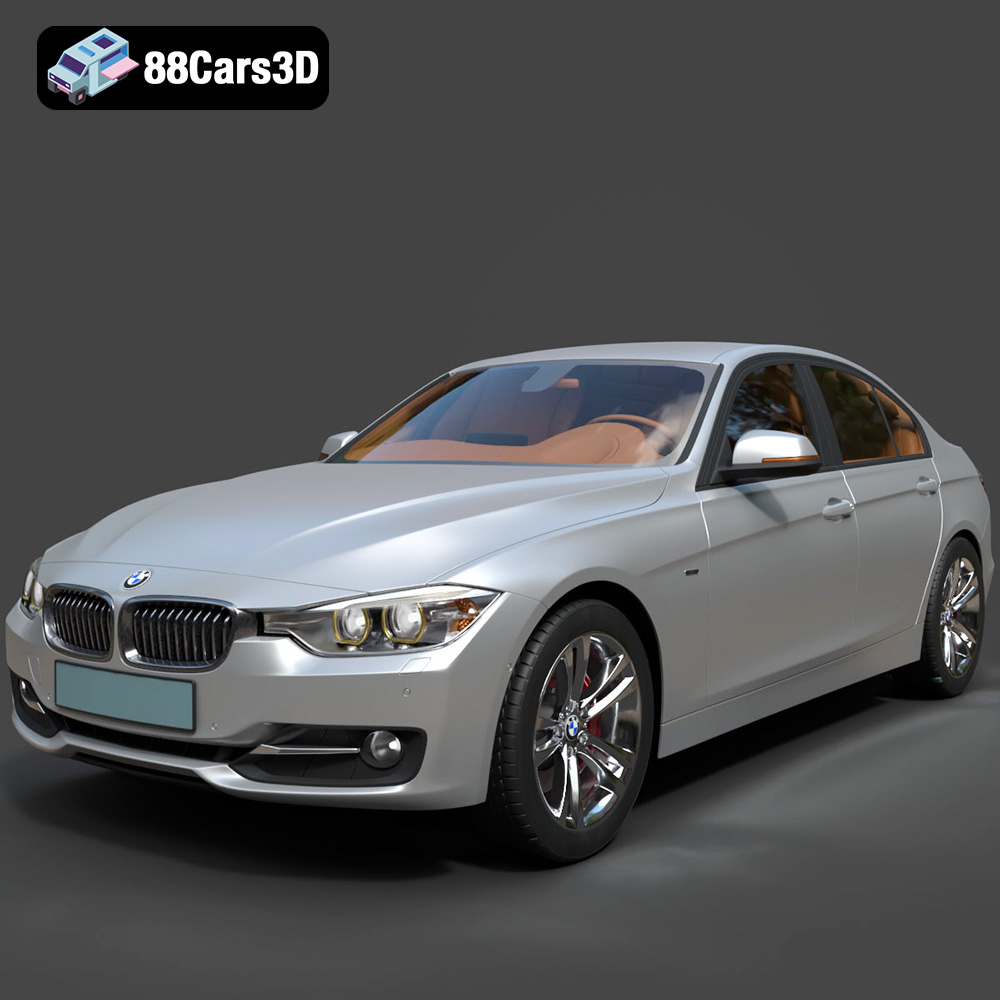
BMW 3 F30 3D Model
Texture: Yes
Material: Yes
Download the BMW 3 F30 3D Model featuring a detailed exterior, realistic interior, and optimized mesh. Includes .blend, .fbx, .obj, .glb, .stl, .ply, .unreal, and .max formats for rendering, simulation, and game development.
Price: $10.79
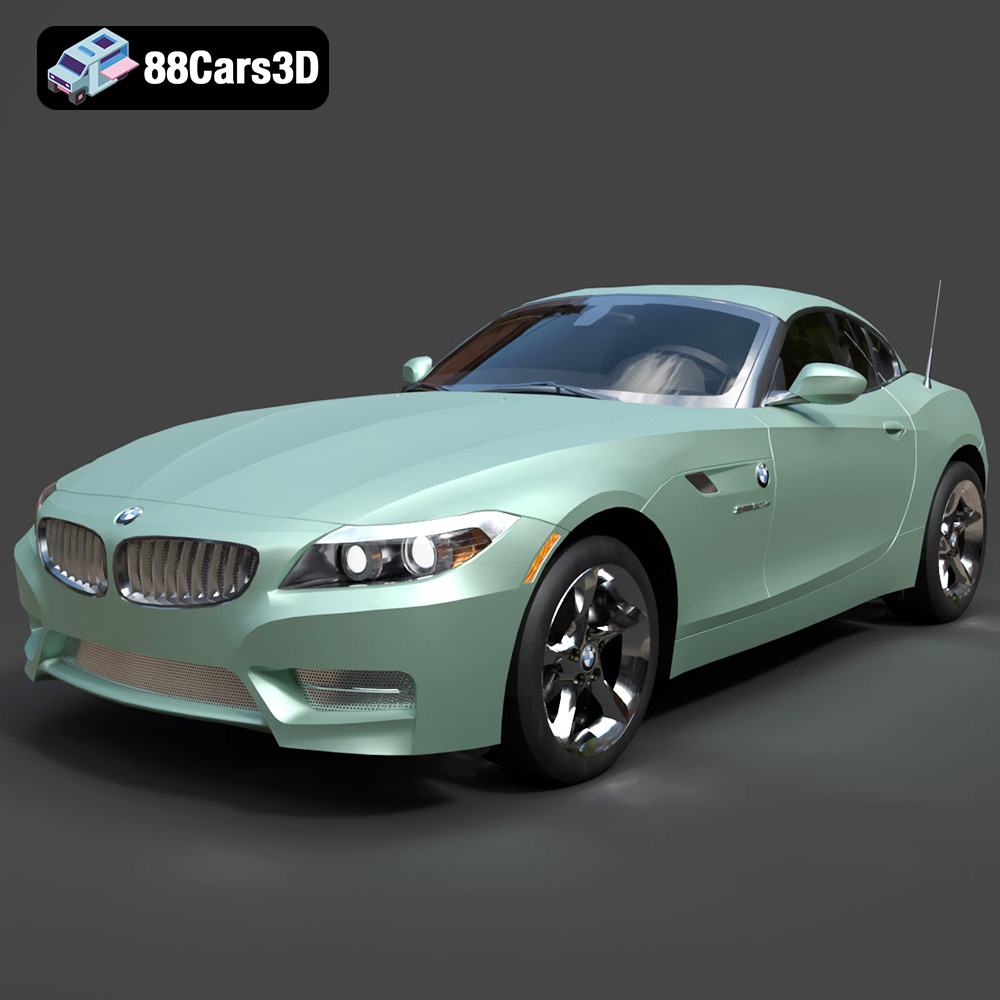
BMW Z4 Roadster E89 2012 3D Model
Texture: Yes
Material: Yes
Download the BMW Z4 Roadster E89 3D Model featuring clean geometry, realistic detailing, and a fully modeled interior. Includes .blend, .fbx, .obj, .glb, .stl, .ply, .unreal, and .max formats for rendering, simulation, and game development.
Price: $13.99

BMW Z4 E85 2005 3D Model
Texture: Yes
Material: Yes
Download the BMW Z4 E85 3D Model featuring clean geometry, realistic detailing, and a fully modeled interior. Includes .blend, .fbx, .obj, .glb, .stl, .ply, .unreal, and .max formats for rendering, simulation, and game development.
Price: $13.99

BMW M3 2024 3D Model
Texture: Yes
Material: Yes
Download the BMW M3 2024 3D Model featuring clean geometry, realistic detailing, and a fully modeled interior. Includes .blend, .fbx, .obj, .glb, .stl, .ply, .unreal, and .max formats for rendering, simulation, and game development.
Price: $13.99
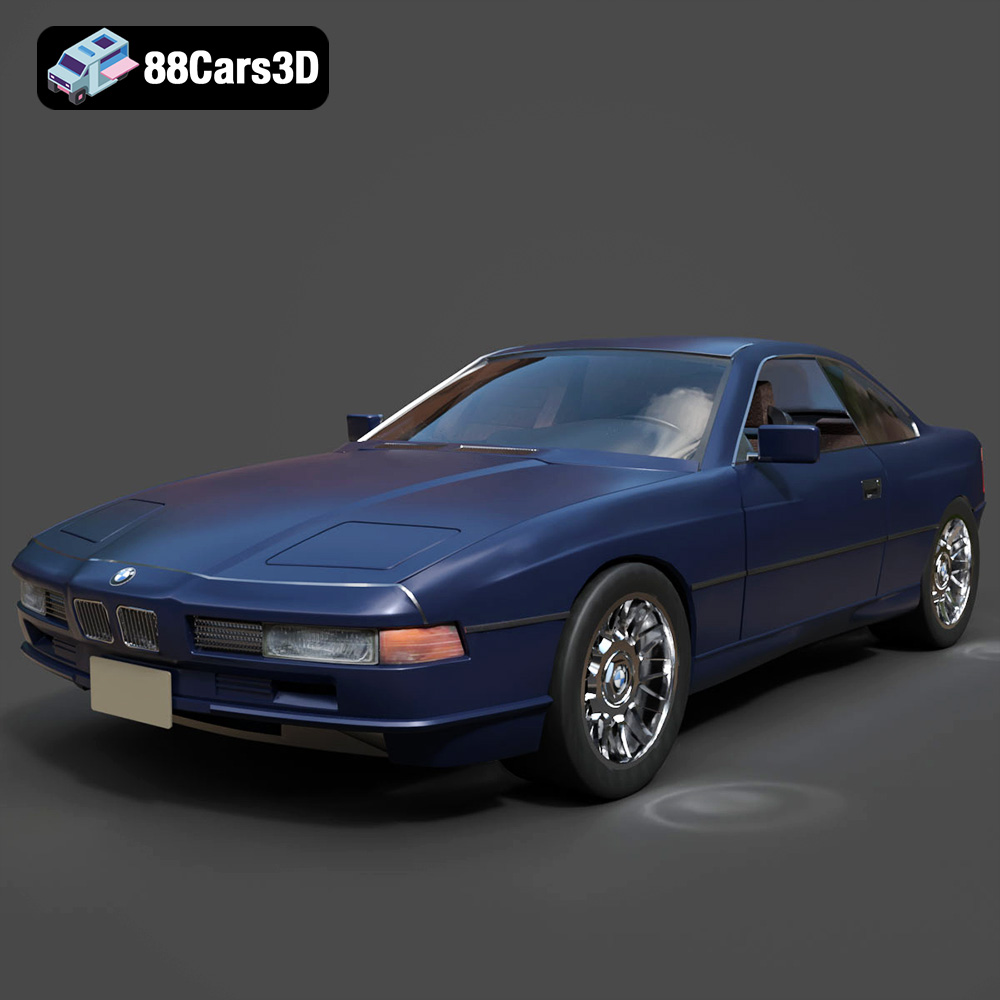
BMW 850i Coupe 1990 3D Model
Texture: Yes
Material: Yes
Download the BMW 850i Coupe 1990 3D Model featuring clean geometry, realistic detailing, and a fully modeled interior. Includes .blend, .fbx, .obj, .glb, .stl, .ply, .unreal, and .max formats for rendering, simulation, and game development.
Price: $13.99
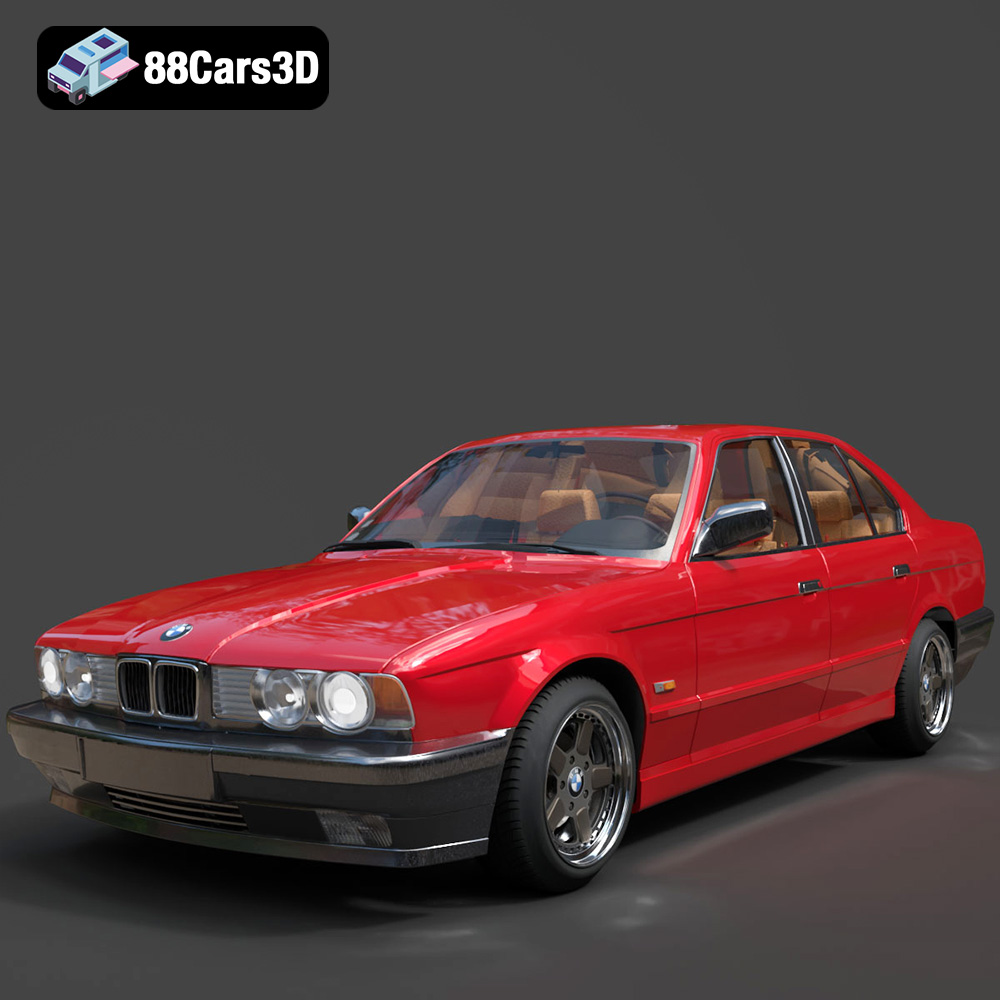
BMW 525i E34 1993 3D Model
Texture: Yes
Material: Yes
Download the BMW 525i E34 1993 3D Model featuring clean geometry, realistic detailing, and a fully modeled interior. Includes .blend, .fbx, .obj, .glb, .stl, .ply, .unreal, and .max formats for rendering, simulation, and game development.
Price: $12.99

BMW 7 Series 2016 3D Model
Texture: Yes
Material: Yes
Download the BMW 7 Series 2016 3D Model featuring luxurious design, detailed interior, and accurate exterior. Includes .blend, .fbx, .obj, .glb, .stl, .ply, .unreal, and .max formats for rendering, simulation, and game development.
Price: $10.79
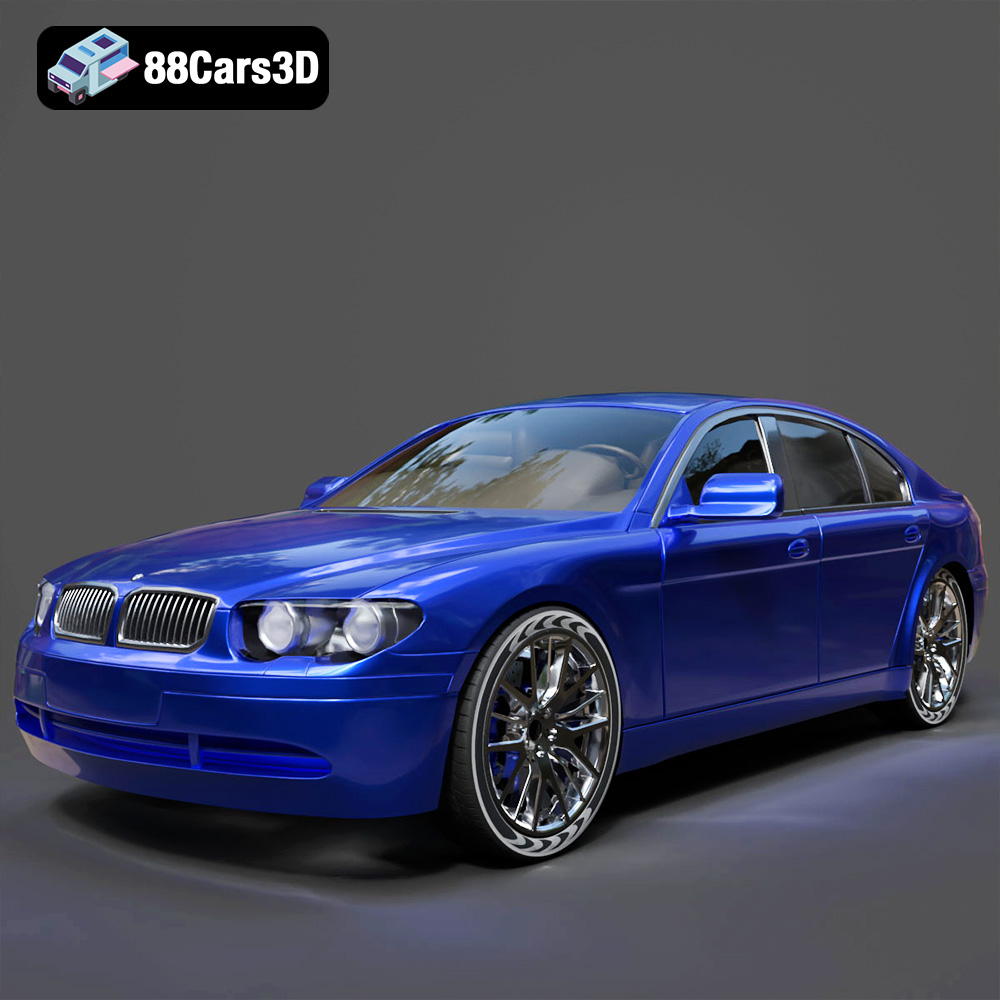
BMW 7 Series 30th Anniversary 3D Model
Texture: Yes
Material: Yes
Download the BMW 7 Series 30th Anniversary 3D Model featuring a meticulously crafted exterior, detailed interior, and realistic wheels. Includes .blend, .fbx, .obj, .glb, .stl, .ply, .unreal, and .max formats for rendering, simulation, and game development.
Price: $35.79

BMW 7-Series F02 3D Model
Texture: Yes
Material: Yes
Download the BMW 7-Series F02 3D Model featuring a detailed exterior and interior, optimized for rendering and animation. Includes .blend, .fbx, .obj, .glb, .stl, .ply, .unreal, and .max formats for rendering, simulation, and game development.
Price: $10.79
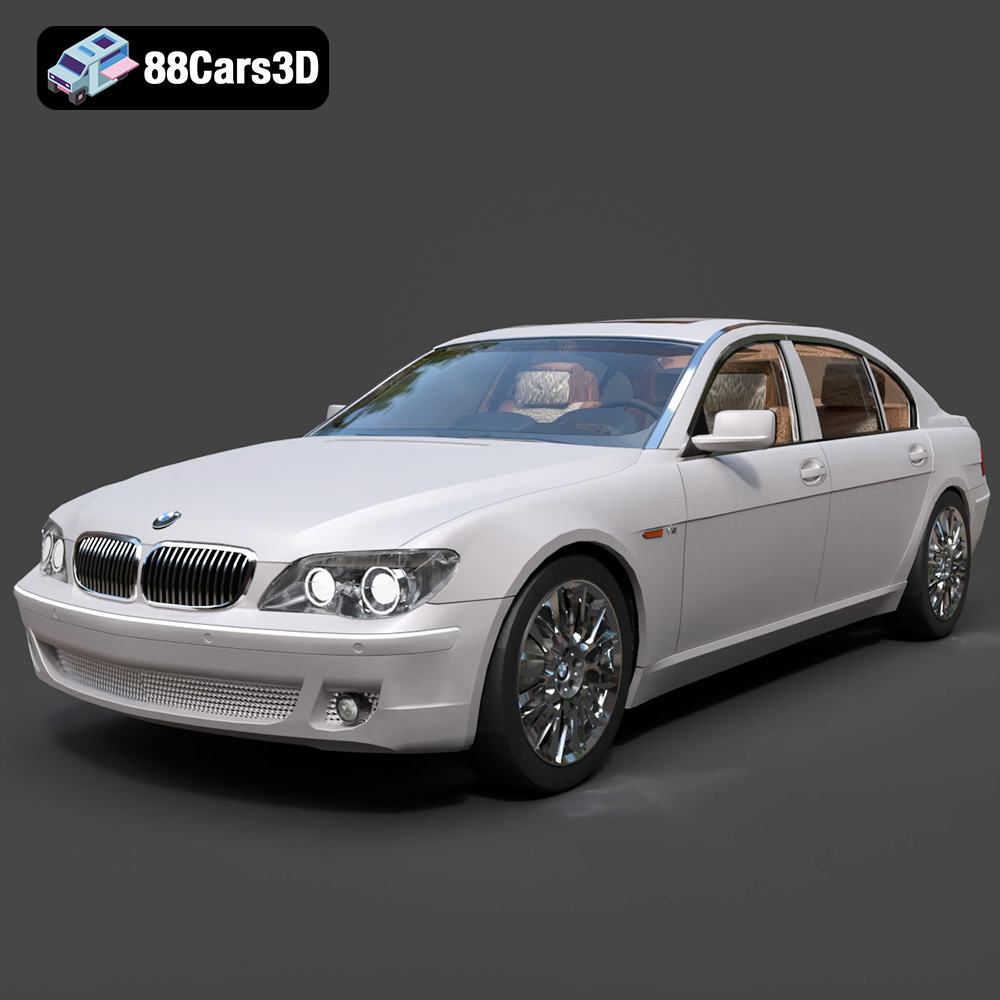
BMW 760Li E66 2005 3D Model
Texture: Yes
Material: Yes
Download the BMW 760Li E66 2005 3D Model featuring a detailed exterior, refined interior, and robust chassis. Includes .blend, .fbx, .obj, .glb, .stl, .ply, .unreal, and .max formats for rendering, simulation, and game development.
Price: $10.79
