

Mastering the Art of Realistic 3D Car Interiors: A Comprehensive Guide for Automotive Visualization and Game Assets
The roar of an engine, the sleek lines of an exterior – these are often the first elements that capture our imagination when thinking about a car. However, it’s the meticulously crafted interior that truly defines the user experience, comfort, and luxury of an automobile. In the world of 3D visualization and game development, replicating this intricate reality presents a unique and rewarding challenge. A convincing 3D car interior can elevate an automotive rendering from good to extraordinary, immersing viewers and players alike in a believable digital world. From the tactile feel of leather to the subtle reflections on dashboard plastics, every detail contributes to the overall realism. This comprehensive guide will deep dive into the technical workflows and artistic considerations necessary to create stunningly realistic 3D car interiors, whether your goal is high-fidelity automotive rendering, interactive game assets, or cutting-edge AR/VR experiences. We’ll explore everything from precision modeling and sophisticated UV mapping to advanced PBR material creation, rendering techniques, and crucial optimization strategies. Get ready to transform your understanding of interior design in the digital realm.
The Foundation: Precision Modeling and Topology for Interior Components
Creating a realistic 3D car interior begins with a robust and well-structured model. The quality of your mesh topology directly impacts how materials will look, how reflections will behave, and how easily you can animate or deform components later. Unlike exterior surfaces which often rely on smooth, flowing lines, interiors feature a complex interplay of hard surfaces, organic contours, and intricate details. Achieving accuracy requires a methodical approach, starting with precise reference gathering and moving through careful polygonal modeling. The goal is to create a clean, efficient mesh that can handle various levels of detail, from close-up renders to real-time game engine integration.
Blueprint Analysis and Reference Gathering
Before laying down a single polygon, extensive research is paramount. Gather high-resolution photographs, blueprints, CAD data, and even physical scans of the target vehicle’s interior. Look for consistency across different angles and lighting conditions. Pay close attention to subtle curves, panel gaps, stitching details, and the way different materials meet. A strong reference base ensures dimensional accuracy and helps capture the unique character of the interior. Use these references as image planes or background images in your 3D software (e.g., 3ds Max, Blender, Maya) to guide your initial blocking out and ensure correct proportions from the start.
Subdivision Surface Modeling for Organic Shapes
Many interior components, such as seats, dashboards, and door panels, feature complex organic curves that benefit greatly from subdivision surface modeling (SubD or turbosmooth). This technique involves creating a low-polygon cage model and then applying a subdividing modifier, which smooths the mesh based on the proximity of its edges. The key to successful SubD modeling is excellent edge flow. Ensure that edge loops follow the natural contours of the surface, particularly around creases, seams, and transitions between different forms. Use “holding edges” or “control loops” to sharpen desired corners and maintain crisp details without adding excessive geometry to the base mesh. This allows for a flexible workflow where you can easily adjust the overall shape while maintaining detail.
Hard Surface Modeling for Panels and Components
For components like air vents, buttons, infotainment screens, and steering wheel elements, hard surface modeling techniques are more appropriate. This involves directly modeling precise, sharp-edged geometry. Boolean operations can be useful for creating intricate cutouts and grooves, but they must be managed carefully to avoid creating messy, non-quad topology. After using booleans, always clean up the resulting mesh manually, converting triangles and N-gons into clean quad-based topology. This ensures consistent shading and facilitates future modifications. Pay close attention to the thickness of panels and the crispness of edges, as these details significantly contribute to the realism of hard surface elements. A slight bevel or chamfer on sharp edges is almost always necessary to catch highlights and prevent unnaturally sharp lines in renders.
Maintaining Clean Topology and Edge Flow
Regardless of the modeling technique, maintaining clean, all-quad topology is a golden rule for professional 3D car models. Quads deform predictably, shade smoothly, and are easier to unwrap for UV mapping. Avoid triangles and N-gons wherever possible, especially on deformation surfaces or prominent areas. Focus on creating an efficient mesh with optimal polygon counts. For high-fidelity renders, an interior might range from 200,000 to 500,000 polygons, depending on the level of detail, with intricate components like steering wheels and button arrays demanding a higher poly budget. Aim for a consistent density of polygons across the model, avoiding overly dense areas that don’t contribute to detail, and overly sparse areas that will look faceted. This attention to detail in topology is what differentiates a professional asset from a hastily constructed model.
Mastering Materiality: UV Mapping and PBR Texturing
Once the modeling is complete, the next critical step is to imbue your interior with lifelike materiality. This involves two core processes: UV mapping and Physically Based Rendering (PBR) texturing. Without proper UVs, applying textures accurately is impossible, and without PBR materials, your surfaces will lack the photorealistic qualities expected in modern visualizations. This stage is where your interior truly comes to life, transitioning from a mere geometric representation to a tangible, believable space.
Efficient UV Unwrapping Strategies for Complex Interiors
UV mapping is the process of flattening the 3D surface of your model into a 2D space, allowing you to apply 2D textures. For complex car interiors, this requires careful planning. Break down the interior into logical UV sets or islands (e.g., dashboard, seats, door panels, console). Strategically place seams in less visible areas to minimize texture stretching and distortions. For symmetrical components like certain panels or buttons, you can often overlap UVs to save texture space, provided the textures are also symmetrical. However, for unique details like leather stitching or wear patterns, non-overlapping UVs are essential. Efficient UV packing, ensuring minimal wasted space within your UV tile, is crucial, especially when working with texture atlases or limited texture budgets. Many 3D software packages offer advanced UV tools; for example, Blender’s UV Editor offers robust unwrapping algorithms and tools for managing UV islands, as detailed in the official Blender 4.4 documentation on UV Mapping.
Crafting Realistic PBR Materials (Leather, Fabric, Plastics, Metals, Glass)
PBR materials are fundamental for achieving photorealism because they simulate how light interacts with surfaces in a physically accurate manner. Each material type within a car interior – leather, fabric, plastics, metals, glass – has distinct PBR properties that need to be carefully defined using various texture maps.
* **Leather:** Requires detailed diffuse (Albedo/Base Color) maps capturing natural imperfections, strong normal maps for grain and subtle creases, and roughness maps to simulate its varying sheen. High-quality leather also benefits from slight subsurface scattering (SSS) for a more organic, less opaque look.
* **Fabrics:** Similarly need detailed Albedo and normal maps. The roughness map is key to showing the subtle fuzziness or weave. Anisotropy might be used for brushed fabrics to simulate directional light reflection.
* **Plastics:** Vary widely. Soft-touch plastics require higher roughness values, while glossy plastics need lower roughness and clear coat maps. Normal maps can add subtle texture or molded details. Some plastics might also have a subtle metallic flake effect, requiring a low metallic value.
* **Metals:** Often brushed or chrome. Brushed metals exhibit strong anisotropic reflections, requiring an Anisotropic map alongside metallic and roughness maps. Chrome is typically a high-metallic, very low-roughness material.
* **Glass:** Requires accurate IOR (Index of Refraction) values (around 1.5-1.6 for common glass), high transparency, and often a subtle tint. Roughness maps can simulate smudges or imperfections.
When working with PBR, consistency is key across all your maps. Use software like Substance Painter, Mari, or even your 3D package’s material editor to create and fine-tune these complex shader networks.
Texture Resolution and Atlasing for Performance
The resolution of your textures directly impacts both visual fidelity and performance. For high-end renders, 4K (4096×4096) or even 8K (8192×8192) textures might be used for primary interior surfaces like the dashboard or seats. For game assets or AR/VR, resolutions are typically lower, often 2K or 1K, to manage memory and draw calls. Texture atlasing involves combining multiple smaller textures for different components onto a single, larger texture sheet. This reduces the number of draw calls in game engines, significantly improving performance. For example, all buttons on a center console might share a single 2K texture atlas, rather than each having its own small texture. Platforms like 88cars3d.com often provide models with optimized texture sets, highlighting the importance of efficient texturing for diverse applications.
Illumination and Atmosphere: Lighting and Rendering Realistic Interiors
Once your interior is meticulously modeled and textured with PBR materials, the next crucial step is to illuminate it in a way that accentuates its realism and sets the desired mood. Lighting can make or break a render, transforming a flat image into a vibrant, atmospheric scene. Combined with advanced rendering techniques, proper lighting is essential for showcasing the intricate details and material properties you’ve worked so hard to create.
Setting Up Studio-Quality Lighting (HDRI, Area Lights, Spotlights)
For automotive interior renders, a combination of techniques is usually employed:
* **HDRI (High Dynamic Range Image) Lighting:** This is often the primary light source, providing realistic ambient light and reflections. An HDRI environment map of a studio, an overcast sky, or a specific outdoor location will wrap your scene, offering rich, nuanced lighting and reflections that react physically with your PBR materials. Rotate the HDRI to find the most flattering lighting angle for your interior.
* **Area Lights:** Used to simulate soft, broad light sources like ceiling lights or diffused sunlight coming through windows. Position them strategically to highlight key features of the interior, such as the contours of the dashboard or the texture of the seats. Control their size and intensity to adjust the softness and brightness of the light.
* **Spotlights/Point Lights:** Ideal for adding focused illumination to specific details, such as button backlighting, instrument cluster illumination, or small accent lights. Use them sparingly and with care to avoid harsh shadows or blown-out highlights. Adding Gobos (texture maps) to spotlights can simulate light coming through grilles or other intricate patterns.
* **Volumetric Lighting:** For a more atmospheric look, especially for dust particles or shafts of light entering through windows, consider adding volumetric effects. This can dramatically enhance the sense of depth and realism, though it often comes at a higher rendering cost.
Always aim for a natural light setup that mimics real-world conditions, even in a studio environment. Observe how light falls in actual car interiors and try to replicate those patterns.
Advanced Shading Networks and Procedural Textures
Beyond simple PBR maps, advanced shading networks can add incredible depth and realism. This involves layering materials, blending them with masks, and using procedural textures. For example:
* **Layering for Wear and Tear:** Create a base material (e.g., new leather) and then layer on dirt, scuffs, or worn-out patches using grunge maps and masks. This can be done by blending two PBR shaders together based on a masked texture.
* **Procedural Noise and Imperfections:** Instead of relying solely on image textures, use procedural noise patterns (e.g., fractal noise, Perlin noise) to break up perfectly uniform surfaces. This can be subtle, adding slight variations in roughness or color to plastic panels, making them feel less CG.
* **Anisotropy:** As mentioned for brushed metals, anisotropy is crucial for materials where the reflections are direction-dependent, such as brushed aluminum accents or certain fabrics. Ensure your shader network correctly implements anisotropic shading based on tangent space information.
Software like 3ds Max with V-Ray or Corona, Blender with Cycles, or Maya with Arnold offer powerful node-based shader editors that allow for complex material creations. Experiment with these tools to push the boundaries of realism.
Rendering Workflows in V-Ray, Corona, Cycles, and Arnold
Each major renderer has its strengths and specific workflows for achieving photorealistic results:
* **V-Ray (3ds Max, Maya):** Known for its robust feature set and speed. Focus on optimizing Global Illumination (GI) settings (e.g., Brute Force + Light Cache or Irradiance Map) to balance quality and render time. Utilize V-Ray’s powerful denoiser to clean up noise efficiently.
* **Corona Renderer (3ds Max, Cinema 4D):** Renowned for its ease of use and physically accurate results. It’s an unbiased renderer, meaning setup is often simpler, relying more on light and material properties. The interactive render window allows for real-time feedback, speeding up the look-development process.
* **Cycles (Blender):** Blender’s physically based path tracer. Supports GPU rendering (CUDA, OptiX, HIP) for faster iterations. Key settings include sampling rates, light bounces, and the use of the built-in denoiser (OpenImageDenoise or OptiX). For detailed information on Cycles settings and optimization, refer to the official Blender 4.4 documentation on Render Engines.
* **Arnold (Maya, 3ds Max, Cinema 4D):** A powerful, unbiased Monte Carlo path tracer. Excellent for complex lighting and realistic subsurface scattering. Arnold’s physically accurate approach requires careful material setup but yields stunning results. Pay attention to sampling settings for lights, materials, and overall render quality to minimize noise.
Regardless of the renderer, utilize render passes (e.g., diffuse, reflection, refraction, normals, Z-depth) to gain maximum control during post-processing and compositing.
Optimizing for Interactive Experiences: Game Engines and Real-time Applications
While high-fidelity renders prioritize visual quality above all else, real-time applications like video games, AR/VR experiences, and interactive configurators demand a careful balance between aesthetics and performance. A beautifully detailed interior that brings a powerful workstation to its knees is impractical in a game engine. This section focuses on the crucial optimization techniques needed to make your 3D car interior perform smoothly in interactive environments.
LODs, Draw Calls, and Performance Budgets
Performance in real-time engines is heavily influenced by polygon count and draw calls.
* **LODs (Levels of Detail):** A fundamental optimization technique. Create multiple versions of your interior components, each with progressively lower polygon counts. The highest LOD (LOD0) is used when the camera is close, while lower LODs (LOD1, LOD2, etc.) are swapped in automatically as the camera moves further away. For example, a steering wheel might have 50,000 polygons at LOD0, 15,000 at LOD1, and 5,000 at LOD2. This dramatically reduces the geometric load on the GPU when objects are distant.
* **Draw Calls:** Each time the engine has to tell the GPU to draw a batch of triangles, it’s a draw call. A single material on a single mesh counts as one draw call. Having hundreds of individual materials and meshes for an interior will cripple performance.
* **Performance Budgets:** Understand the target platform’s limitations. For mobile AR/VR, an entire car interior might need to stay under 50,000-100,000 polygons. For high-end PC games, it could be 150,000-300,000 polygons. Similarly, texture memory and draw call counts must be strictly managed.
Baking Details and Texture Compression
To maintain visual fidelity while reducing polygon count, baking is indispensable.
* **Normal Map Baking:** High-polygon details (e.g., stitching, intricate button patterns, subtle panel grooves) can be baked down into normal maps that are then applied to low-polygon meshes. This tricks the renderer into perceiving high detail without the geometric overhead.
* **Ambient Occlusion (AO) Baking:** Baking an AO map captures subtle self-shadowing details in crevices and corners, adding depth without dynamic lighting calculations.
* **Metallic/Roughness/Specular Maps:** These PBR maps are also baked from the high-poly model or created directly in texturing software.
* **Texture Compression:** Game engines aggressively compress textures to save VRAM. Use appropriate compression settings (e.g., DXT1/BC1 for diffuse, DXT5/BC3 for maps with alpha, BC7 for higher quality) to balance quality and file size. Be aware that excessive compression can lead to artifacting.
Integrating into Unity and Unreal Engine
Both Unity and Unreal Engine offer robust workflows for importing and optimizing 3D assets:
* **Unity:** Import FBX or GLB files. Ensure your materials are set up using the Standard PBR shader or Universal Render Pipeline (URP) / High Definition Render Pipeline (HDRP) shaders. Utilize Unity’s LOD Group component to manage your LODs. Leverage Unity’s Static Batching and Occlusion Culling to further reduce draw calls and visibility calculations.
* **Unreal Engine:** Primarily uses FBX. Materials are created using the powerful node-based Material Editor. Unreal’s Auto LOD generation can be useful, but manual creation offers more control. Nanite, Unreal Engine 5’s virtualized micro-polygon geometry system, can handle incredibly high polygon counts with efficient streaming, revolutionizing how high-detail models are integrated, potentially allowing for previously unimaginable interior detail.
AR/VR Considerations for Immersive Interiors
AR/VR experiences demand even stricter performance optimization due to the need for high frame rates (typically 90 FPS or more) across two eyes.
* **Performance Budget:** Budgets are tighter than traditional games. Every polygon, every draw call, and every texture needs to be scrutinized.
* **Stereoscopic Rendering:** Render performance for VR is effectively halved, as two views must be rendered simultaneously.
* **Scale and Ergonomics:** Ensure the interior feels correctly scaled and that interactive elements are within a comfortable reach for the user.
* **Occlusion Culling:** Crucial for VR to ensure only visible geometry is rendered.
* **Baked Lighting:** Often preferred over dynamic lighting to save performance, especially on mobile VR platforms, giving a highly realistic look at a fixed render cost.
When sourcing models for AR/VR from marketplaces such as 88cars3d.com, look for models specifically tagged as “game-ready” or “optimized for real-time” which often include LODs and efficient texture sets.
The Finishing Touches: Post-Processing and Professional Presentation
After all the meticulous modeling, texturing, lighting, and rendering, the final stage is to polish your imagery through post-processing and ensure your 3D assets are professionally packaged. This step is crucial for elevating your raw renders into stunning visual masterpieces and for making your 3D models desirable on marketplaces or for clients. A well-presented model, accompanied by high-quality renders, communicates professionalism and attention to detail.
Camera Settings and Composition for Impact
Just like a professional photographer, a 3D artist needs to consider camera angles, focal length, and composition to make their car interior shots compelling.
* **Focal Length:** Use appropriate focal lengths to avoid distortion. A wider lens (e.g., 20-35mm) can capture more of the interior but might introduce barrel distortion, while a longer lens (e.g., 50-85mm) provides a flatter, more compressed view, ideal for close-ups of details without distorting them.
* **Depth of Field (DOF):** Judiciously use DOF to guide the viewer’s eye. A shallow DOF can isolate a key detail, like a steering wheel badge or a climate control knob, while a deeper DOF might be used for wider shots to show the overall layout.
* **Compositional Rules:** Apply principles like the rule of thirds, leading lines, and negative space to create visually engaging images. Frame your shots to emphasize the unique selling points or design features of the interior. Experiment with different angles – a low angle can make the interior feel expansive, while a straight-on shot can highlight symmetry.
Post-Production in Photoshop/After Effects (Color Grading, DOF, Lens Flares)
Raw renders, even from the best engines, often benefit significantly from post-production. This is where you can add that extra layer of polish and artistic flair.
* **Color Grading:** Adjust the overall color balance, contrast, and saturation to enhance the mood and realism. Tools like Curves, Levels, and Color Balance in Photoshop or color correction nodes in After Effects are essential. Aim for a cinematic or photographic look that complements the car’s design.
* **Depth of Field (DOF):** While some DOF can be rendered in 3D, applying it in post-production offers greater flexibility and control without re-rendering. Use Z-depth passes from your 3D renderer to accurately apply a realistic depth blur.
* **Lens Flares and Glare:** Subtly add lens flares, glare, and bloom effects to simulate realistic camera optics and enhance light sources (e.g., dashboard lights, reflections on chrome). Overdoing these effects can quickly make an image look artificial, so use them sparingly.
* **Vignetting and Chromatic Aberration:** These subtle photographic imperfections, when applied judiciously, can add to the realism by mimicking how real cameras capture images.
* **Noise and Grain:** Adding a touch of subtle photographic grain can help blend the CG elements and make the image feel more integrated and less “perfectly clean.”
Preparing Models for Marketplaces and Clients (File Formats, Documentation)
When sharing or selling your 3D car interior models, preparation is key to ensuring usability and professionalism.
* **File Formats:** Provide models in widely accepted formats like FBX, OBJ, GLB, and USDZ.
* **FBX:** Excellent for retaining hierarchies, materials, and animations, widely used across game engines and 3D software.
* **OBJ:** A universal format, good for pure geometry and basic UVs, but lacks advanced material support.
* **GLB (glTF Binary):** An open standard, highly efficient for web-based 3D, AR/VR, and real-time applications, supporting PBR materials.
* **USDZ:** Apple’s proprietary format for AR experiences on iOS devices.
* **Clean and Organized Scene:** Ensure your 3D scene file is clean. Remove unnecessary geometry, duplicate objects, and unused materials. Name all objects, materials, and textures logically (e.g., “Dashboard_Leather,” “SteeringWheel_Metal”).
* **Documentation:** Provide clear documentation that includes:
* Polygon count and vertex count.
* Number of materials and textures.
* Texture resolutions and format (PNG, JPG, TGA).
* List of included file formats.
* Any specific software requirements or rendering settings used.
* Instructions for importing into common software/engines.
* A brief description of the model and its intended use.
* **High-Quality Renderings:** Include a diverse set of high-resolution beauty renders showing different angles, close-ups of key details, and wireframe shots to showcase topology. This is vital for attracting buyers on platforms like 88cars3d.com and demonstrating the quality of your work.
Conclusion: The Art of Immersive Interior Design
Crafting realistic 3D car interiors is a multifaceted discipline that marries technical precision with artistic vision. From the foundational stage of meticulous modeling and the strategic application of UVs, through the nuanced creation of PBR materials, to the intricate art of lighting and rendering, every step plays a pivotal role in achieving a truly immersive digital experience. We’ve explored how a clean topology and thoughtful edge flow underpin visual fidelity, how texture atlasing and LODs are critical for real-time performance, and how post-processing adds that final layer of photographic realism.
The journey to mastering 3D car interiors is one of continuous learning and refinement. Attention to minute details, such as subtle material imperfections, accurate light reflections, and the careful management of polygon budgets, is what ultimately separates a good model from an exceptional one. Whether you are developing assets for high-end automotive visualization, integrating them into demanding game engines, or pushing the boundaries of AR/VR, the principles outlined here provide a robust framework for success. Embrace the challenge, practice diligently, and always strive for that perfect blend of technical accuracy and aesthetic appeal.
Explore platforms like 88cars3d.com to find high-quality 3D car models that exemplify these best practices, and use them as inspiration for your own projects. The world of 3D automotive design is constantly evolving, and with the right knowledge and tools, you are well-equipped to drive innovation and create breathtaking digital interiors that captivate and engage.
Featured 3D Car Models

BMW 7 Series E38 3D Model
Texture: Yes
Material: Yes
Download the BMW 7 Series E38 3D Model featuring its iconic luxury sedan design and classic aesthetics. Includes .blend, .fbx, .obj, .glb, .stl, .ply, .unreal, and .max formats for rendering, simulation, and game development.
Price: $10.79

BMW 6 Series 640i F12 3D Model
Texture: Yes
Material: Yes
Download the BMW 6 Series 640i F12 3D Model featuring a sleek design and detailed interior. Includes .blend, .fbx, .obj, .glb, .stl, .ply, .unreal, and .max formats for rendering, simulation, and game development.
Price: $10.79

BMW 6 Coupe E63 3D Model
Texture: Yes
Material: Yes
Download the BMW 6 Coupe E63 3D Model featuring a sleek design, detailed interior, and realistic exterior. Includes .blend, .fbx, .obj, .glb, .stl, .ply, .unreal, and .max formats for rendering, simulation, and game development.
Price: $10.79
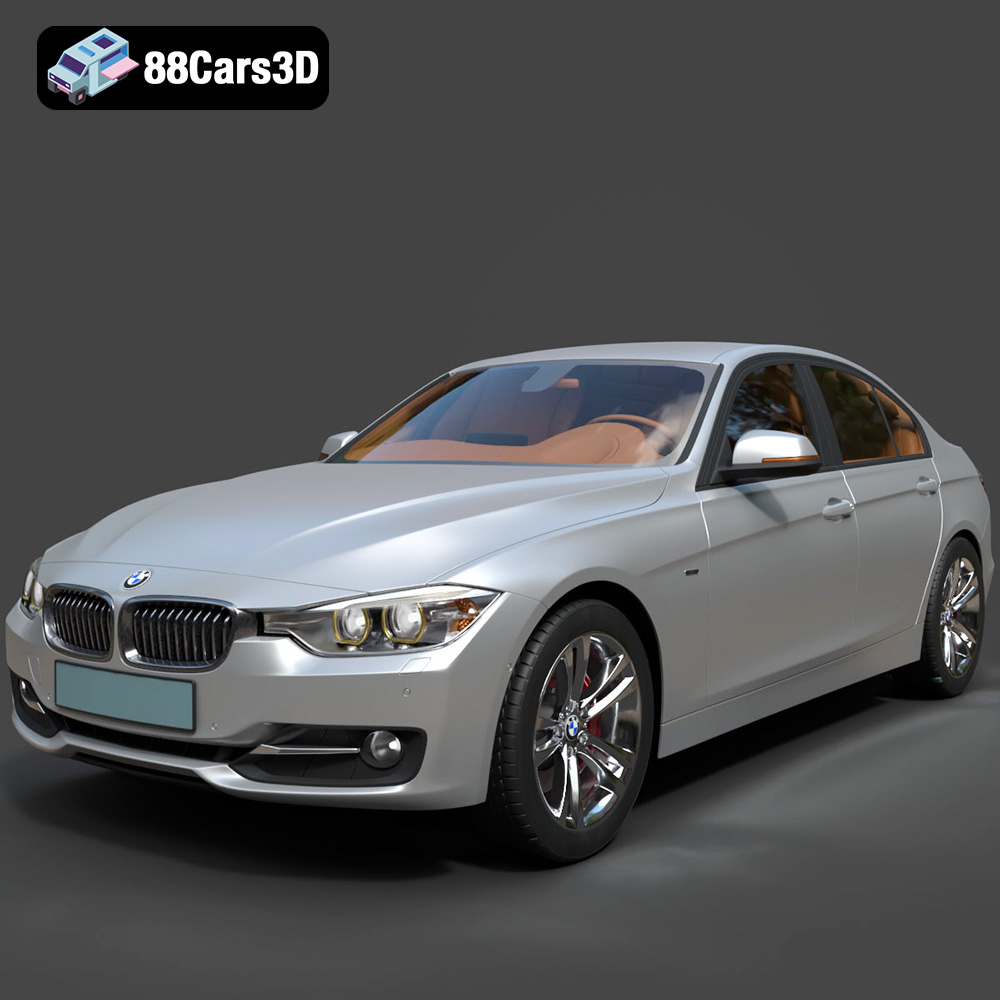
BMW 3 F30 3D Model
Texture: Yes
Material: Yes
Download the BMW 3 F30 3D Model featuring a detailed exterior, realistic interior, and optimized mesh. Includes .blend, .fbx, .obj, .glb, .stl, .ply, .unreal, and .max formats for rendering, simulation, and game development.
Price: $10.79
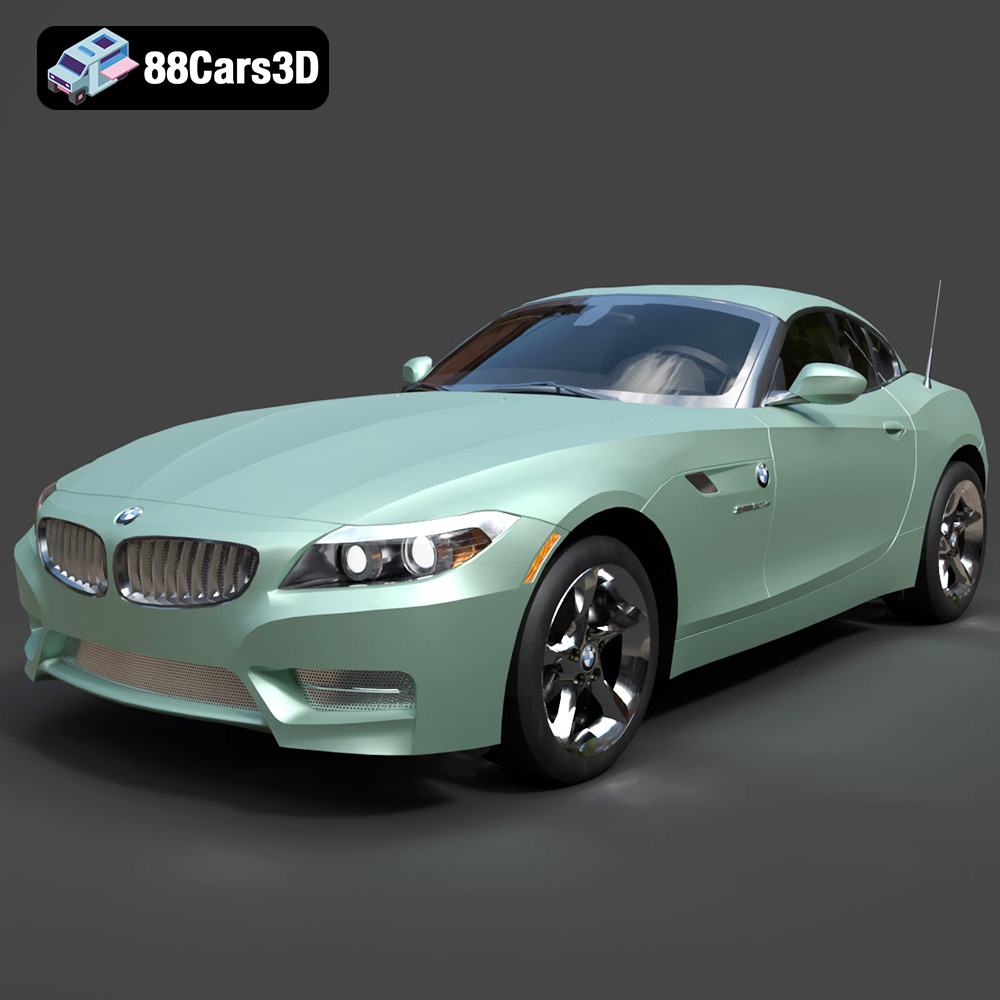
BMW Z4 Roadster E89 2012 3D Model
Texture: Yes
Material: Yes
Download the BMW Z4 Roadster E89 3D Model featuring clean geometry, realistic detailing, and a fully modeled interior. Includes .blend, .fbx, .obj, .glb, .stl, .ply, .unreal, and .max formats for rendering, simulation, and game development.
Price: $13.99

BMW Z4 E85 2005 3D Model
Texture: Yes
Material: Yes
Download the BMW Z4 E85 3D Model featuring clean geometry, realistic detailing, and a fully modeled interior. Includes .blend, .fbx, .obj, .glb, .stl, .ply, .unreal, and .max formats for rendering, simulation, and game development.
Price: $13.99

BMW M3 2024 3D Model
Texture: Yes
Material: Yes
Download the BMW M3 2024 3D Model featuring clean geometry, realistic detailing, and a fully modeled interior. Includes .blend, .fbx, .obj, .glb, .stl, .ply, .unreal, and .max formats for rendering, simulation, and game development.
Price: $13.99
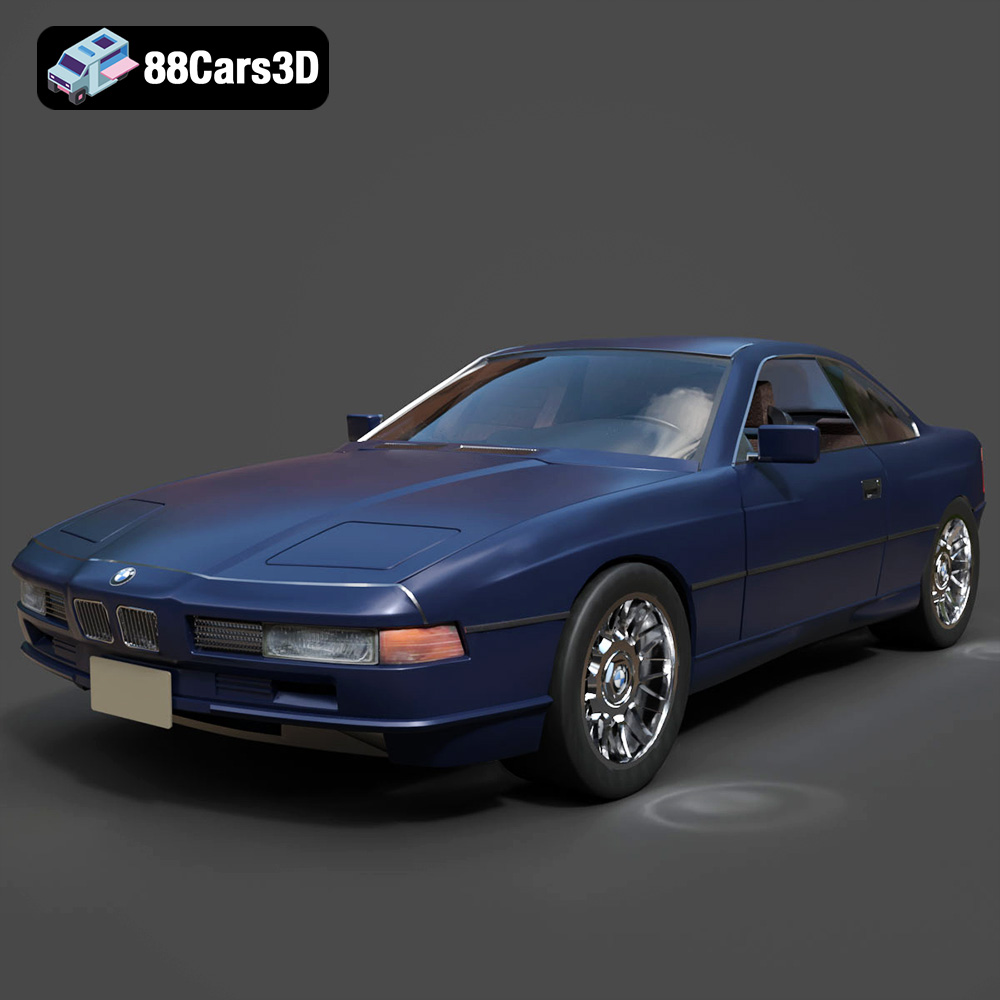
BMW 850i Coupe 1990 3D Model
Texture: Yes
Material: Yes
Download the BMW 850i Coupe 1990 3D Model featuring clean geometry, realistic detailing, and a fully modeled interior. Includes .blend, .fbx, .obj, .glb, .stl, .ply, .unreal, and .max formats for rendering, simulation, and game development.
Price: $13.99
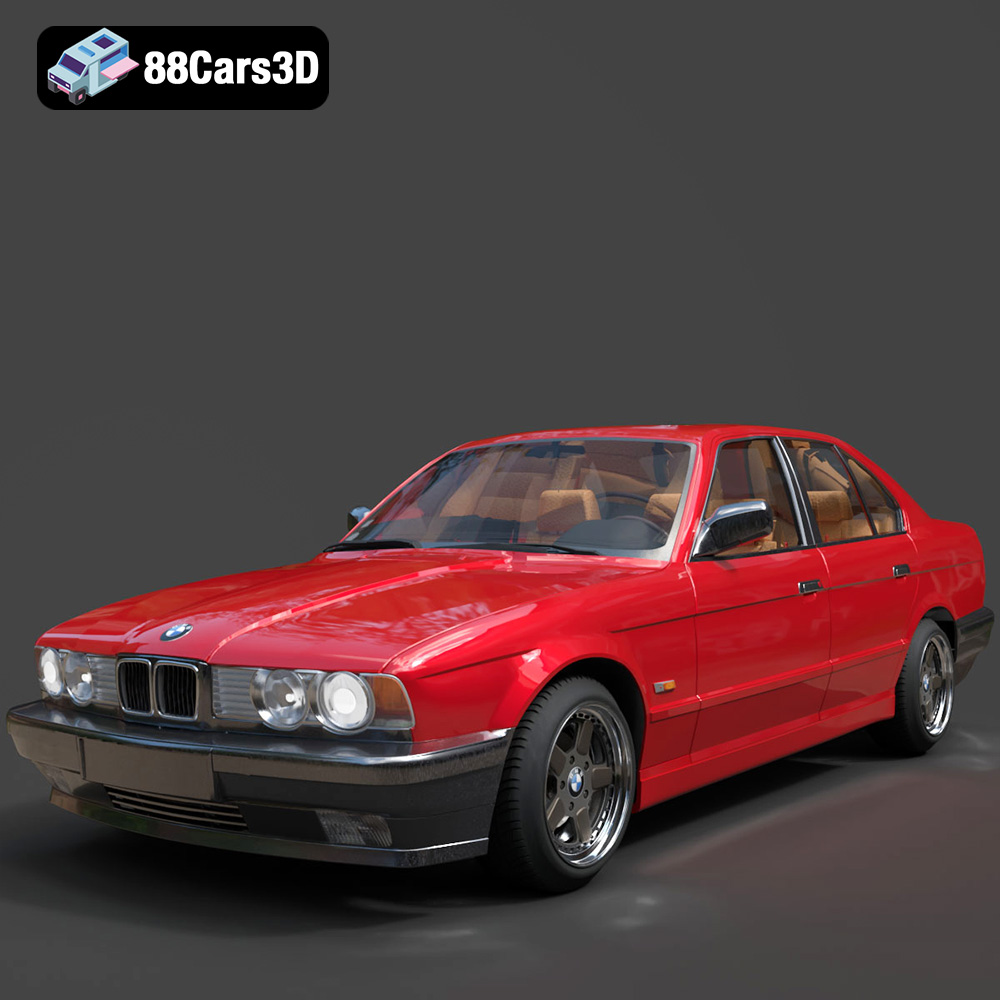
BMW 525i E34 1993 3D Model
Texture: Yes
Material: Yes
Download the BMW 525i E34 1993 3D Model featuring clean geometry, realistic detailing, and a fully modeled interior. Includes .blend, .fbx, .obj, .glb, .stl, .ply, .unreal, and .max formats for rendering, simulation, and game development.
Price: $12.99

BMW 7 Series 2016 3D Model
Texture: Yes
Material: Yes
Download the BMW 7 Series 2016 3D Model featuring luxurious design, detailed interior, and accurate exterior. Includes .blend, .fbx, .obj, .glb, .stl, .ply, .unreal, and .max formats for rendering, simulation, and game development.
Price: $10.79
