

“`html
Mastering the Micro-Details: A Technical Guide to 3D Printing Intricate Car Interiors from STL Files
The allure of the automobile extends beyond its sleek exterior; the intricate details within a car’s interior tell a story of design, function, and personal expression. For 3D printing enthusiasts and automotive model collectors, recreating these often-overlooked elements can be one of the most rewarding, yet challenging, aspects of additive manufacturing. While many focus on printing the car’s body, delving into the world of detailed dashboards, steering wheels, seats, and center consoles opens up a new dimension of realism and customization. This comprehensive guide will equip you with the technical knowledge and practical workflows to successfully 3D print highly detailed car interiors from STL files, transforming complex digital models into tangible masterpieces. We’ll navigate the nuances of file preparation, slicing strategies, printer settings, material choices, and post-processing techniques essential for capturing the fine lines and subtle textures of automotive interiors. Prepare to elevate your hobby and bring the heart of your favorite vehicles to life, one meticulously printed component at a time.
I. The Foundation: Understanding Your Detailed Interior STL Files
Before you even load a file into your slicer, a deep understanding of your 3D model’s structure is paramount. Detailed car interior STL files, especially those designed for high-fidelity printing, can be significantly more complex than simpler car body models. They often feature a high polygon count, intricate internal structures, and exceptionally fine details like stitching patterns, button textures, and vent grilles. Recognizing the characteristics of these files will directly influence your preparation and printing strategy.
A. Mesh Topology and Detail Preservation
The mesh topology of an STL file dictates how smoothly curves and surfaces are represented. For detailed interiors, a denser mesh (higher polygon count) is typically required to capture subtle contours and sharp edges. However, excessive polygons can lead to massive file sizes and processing difficulties. It’s a balance: models sourced from platforms like 88cars3d.com are often optimized for printability, meaning they strike a good chord between detail fidelity and manageable file size. Look for models that exhibit clean quad or triangle faces without significant distortions. Understanding how the mesh is constructed—identifying separate components like seats, dashboards, and steering wheels if they are provided as individual STLs—is crucial for effective slicing and printing.
B. Scale and Resolution Considerations
The intended scale of your interior print significantly impacts the level of detail you can achieve. Printing a full 1:18 scale interior on a standard FDM printer might reveal limitations in nozzle diameter and layer height, causing fine details to blur. Conversely, printing a 1:64 scale interior requires extremely high resolution and precision, often favoring resin printing. When working with STL files, consider the original design intent and your printer’s capabilities. You might need to scale the model up or down in your slicer. Always check the model’s dimensions and ensure it fits within your printer’s build volume. Scaling down too much can render tiny features unprintable, while scaling up excessively without sufficient mesh density can result in faceted surfaces.
C. Assessing Model Complexity and Component Breakdown
High-detail interior models often consist of multiple, interlocking or separate parts. This modularity is a blessing for printing, allowing you to orient individual components for optimal results and potentially use different materials or print settings for specific parts. For instance, a dashboard might have separate pieces for the instrument cluster, vents, and central console. Similarly, seats might be broken down into base, back, and headrest. When you download models from marketplaces such as 88cars3d.com, check the file descriptions to understand how the interior is segmented. This knowledge will inform your slicing approach, enabling you to print delicate parts like steering wheels or gear shifts individually and then assemble them later.
II. Slicing for Success: Translating Detail into Print Commands
The slicer is your primary tool for converting the static STL geometry into instructions your 3D printer can understand. For intricate car interiors, default slicing settings are rarely sufficient. A nuanced approach to layer height, support structures, print speed, and cooling is essential to capture the fine details without sacrificing structural integrity or print time.
A. Layer Height: The Trade-off Between Detail and Time
Layer height is arguably the most critical setting for achieving high-fidelity prints. For detailed interiors, you’ll want to use the smallest practical layer height your printer can reliably produce. For FDM printers, this often means layer heights between 0.05mm and 0.1mm. Resin printers, on the other hand, can achieve much finer layers, often down to 0.02mm or even 0.01mm. A smaller layer height dramatically increases the number of layers and, consequently, the print time. For example, a 10mm tall object printed at 0.1mm layer height will have 100 layers, while at 0.05mm, it will have 200 layers. Carefully consider the trade-off: extremely fine details like dashboard buttons or seat stitching might necessitate the longer print times associated with lower layer heights. Always perform calibration prints to determine your printer’s optimal fine-detail layer height.
B. Support Structures: The Unsung Heroes of Intricate Prints
Detailed interiors are rife with overhangs and bridges—think of the underside of a dashboard, the curvature of a seat back, or the intricate structure of a steering wheel. Effective support generation is crucial. For FDM printing, tree or organic supports (available in slicers like Cura) are often superior to standard supports for intricate models, as they minimize contact points with the model surface, reducing damage during removal and potentially capturing finer details. For resin printing, dense, fine supports are key. Consider orienting parts to minimize the need for supports on visible surfaces. Use support blockers in your slicer to prevent supports from printing on areas where they would be difficult to remove or would mar the surface finish. Experiment with support density, interface layers, and contact distance to find the sweet spot that provides stability without being overly difficult to remove.
C. Advanced Slicing Techniques for Interiors
Beyond basic settings, several advanced techniques can improve interior prints. Print speed should be significantly reduced for fine details, especially on FDM printers. Printing small features or delicate overhangs at speeds above 40mm/s can lead to poor adhesion, stringing, and loss of detail. Consider using different speed settings for outer walls, inner walls, and top/bottom layers. Cooling is also vital; adequate part cooling on FDM printers helps solidify extruded plastic quickly, improving the definition of sharp edges and overhangs. For resin printers, exposure times are the equivalent of layer height and speed combined – fine-tuning these is critical. Ensure your infill is sufficient to support outer walls but not so dense that it becomes difficult to remove from internal cavities if you plan to hollow the model. Patterns like Gyroid or Cubic can offer good support with less material.
III. Printer Settings and Material Choices: Precision Engineering for Miniatures
The choice of 3D printer technology and the materials used play a significant role in the success of printing detailed car interiors. Each technology and material has its strengths and weaknesses when it comes to capturing the subtle nuances of automotive interiors.
A. FDM vs. Resin Printing: Which is Right for Your Interior?
FDM (Fused Deposition Modeling) printers are versatile and widely accessible. They excel at printing larger components and offer a wider range of material options. However, their inherent layer lines and larger nozzle diameters (typically 0.4mm) can be a limitation for extremely fine details. To mitigate this on FDM, use a smaller nozzle (0.2mm or 0.25mm), drastically reduce layer height (0.05mm), and print slowly. Resin (SLA/DLP/MSLA) printers, on the other hand, offer superior resolution and surface finish, making them ideal for highly detailed miniatures and complex geometries like car interiors. Their layer heights can be significantly smaller (0.02-0.05mm), and the layer lines are much less pronounced. However, resin prints can be brittle, often require more post-processing (washing and curing), and the build volumes are typically smaller. For truly exceptional interior detail, a resin printer is often the preferred choice.
B. Material Selection: Properties for Interior Components
For FDM printing, PLA (Polylactic Acid) is often the go-to material due to its ease of printing, low warping, and good detail retention at low layer heights. It’s ideal for dashboards and structural components. If you need slightly more durability or temperature resistance, PETG (Polyethylene Terephthalate Glycol) can be a good option, though it can be more prone to stringing. For very fine details, consider specialty PLA filaments like “Silk” PLA which can polish to a smoother finish, or even wood-filled PLAs for a unique texture. For resin printing, standard “ABS-like” or “Standard” resins offer a good balance of detail and strength. For parts requiring flexibility, such as seat upholstery texture, flexible resins can be explored. Always ensure your chosen resin is compatible with your printer and has good UV resistance if the model will be exposed to sunlight.
C. Printer Calibration and Maintenance for Fine Detail
A well-calibrated printer is non-negotiable for detailed interior prints. Ensure your bed leveling is perfect to avoid first-layer adhesion issues that can ruin intricate details. Perform e-steps calibration for accurate filament extrusion on FDM printers, and calibrate exposure times meticulously for resin printers. Regularly clean your nozzle and ensure your filament path is clear. For resin printers, regularly check and clean the FEP film on your resin vat and ensure the build plate is clean. Loose belts or wobbly gantry systems on FDM printers can introduce artifacts like “ghosting” or “ringing,” which will detract from the fine details. Regular maintenance ensures consistency and precision, allowing you to confidently print the delicate features of your car interior models.
IV. File Preparation and Repair: Ensuring a Flawless Mesh
Even if you download a high-quality STL from a reputable source, issues can arise. A crucial step before slicing is to inspect and potentially repair the mesh. This is especially true for complex models with many interlocking parts or thin features.
A. Identifying and Repairing Non-Manifold Geometry
A “non-manifold” mesh is essentially a 3D model with errors that prevent it from being watertight or printable. Common issues include inverted normals, overlapping faces, holes, internal faces, and edges shared by more than two faces. Most slicers will flag these errors, but dedicated mesh editing software provides more robust solutions. Software like Meshmixer (free) or Autodesk Netfabb (paid, with a free basic version) are industry standards for mesh repair. You can use their automated tools to detect and fix common errors, or manually stitch holes, delete rogue faces, and ensure all geometry is “watertight.” For simple repairs, Blender also offers mesh analysis and repair tools.
B. STL vs. OBJ vs. FBX: Understanding File Format Nuances
While STL is the most common file format for 3D printing, it’s a mesh-only format that doesn’t store color or texture information. OBJ files are more versatile and can store color and material data, though most slicers ignore this for printing. FBX is a proprietary format often used in 3D animation and game development, capable of storing complex scene data. For 3D printing, particularly for detailed car interiors where clean geometry is key, STL is generally sufficient. However, if a model is provided in OBJ or FBX format, it often indicates a higher level of original modeling detail. Ensure you export to STL from your modeling software or convert it using specialized tools, verifying that the conversion process doesn’t introduce new mesh errors.
C. Simplifying and Optimizing Complex Meshes
Occasionally, a highly detailed interior model might have an excessively high polygon count that can bog down your slicing software or even your printer’s firmware. If you’re comfortable with 3D modeling software, you can use decimation or simplification tools to reduce the polygon count without significantly sacrificing visual detail. Be cautious when doing this, as over-simplification can lead to the loss of fine details essential for interiors. Focus on reducing polygons in flatter, less detailed areas while preserving areas with intricate features like buttons, vents, and stitching. Always save a backup of the original high-poly model before attempting any simplification.
V. Print Orientation and Bed Adhesion: Setting the Stage for Success
How you position your detailed interior components on the print bed and ensure they stick reliably are critical factors influencing print quality and the prevention of failures.
A. Strategic Orientation for Maximum Detail and Minimum Supports
The orientation of your part on the build plate is crucial. For intricate car interiors, aim to orient them so that the most detailed surfaces face upwards or outwards, minimizing the need for supports on these areas. For example, a dashboard might be best printed flat on its back, with the front face upwards. Seats could be printed on their base. Steering wheels might require careful angling to support the spokes and rim without obscuring detail. Consider printing components in multiple parts if a single orientation compromises too many critical surfaces. Experimentation and visualization within your slicer are key here. Rotate the model and preview the support structures and overhangs to identify the optimal orientation.
B. Achieving Robust Bed Adhesion for Small Parts
Small, detailed interior components can be prone to detachment from the build plate during printing, especially FDM prints where warping can occur. Ensure your build plate is clean and free of grease or dust. Using adhesion aids like a glue stick, hairspray, or specialized build surface adhesives can be beneficial. For FDM printing, incorporating a brim or raft in your slicer settings provides a larger surface area for the initial layers to adhere to, significantly reducing the risk of detachment. For resin printers, ensuring the build plate is properly cleaned and the “home” position is set correctly helps maintain adhesion. Over-exposing the first few layers can also enhance adhesion on resin printers.
C. Minimizing Warping and Improving First Layer Quality
Warping, the tendency for plastic to contract as it cools, can be a major issue, especially with materials like ABS on FDM printers. For detailed interiors, warping can lift delicate parts off the bed, ruining the print. Strategies to combat warping include using an enclosure to maintain a stable ambient temperature, printing with a brim, and ensuring your bed temperature is set correctly for the material. For resin printers, ensuring the print is not detached from the build plate and that the Z-axis lift speeds are calibrated correctly helps prevent delamination and peeling. A flawless first layer is the bedrock of any successful print; take the time to dial this in with precise leveling and flow calibration.
VI. Post-Processing: Bringing Your Printed Interior to Life
The journey doesn’t end when the print is complete. Post-processing is where you refine your printed interior, enhancing its realism and preparing it for assembly or display.
A. Support Removal and Surface Finishing
Carefully remove support structures. For FDM prints, this might involve using pliers, flush cutters, or a hobby knife. For resin prints, supports are often more delicate and require specialized tools. After support removal, the characteristic layer lines of FDM prints become apparent. Sanding is essential for achieving a smooth surface. Start with a coarse grit sandpaper (e.g., 220-400 grit) and gradually move to finer grits (e.g., 1000-2000 grit). For resin prints, sanding can also be used to smooth minor imperfections or prepare for painting. A rotary tool with fine sanding attachments can expedite this process. If painting, applying a primer coat first helps reveal any remaining imperfections and provides a uniform base for paint adhesion.
B. Painting Techniques for Realistic Interiors
Painting is where you can truly bring your detailed interior to life. Use acrylic paints, which are versatile and easy to clean. For FDM prints, a primer coat is highly recommended to fill in layer lines and create a smooth surface. Apply thin, even coats of paint to avoid obscuring fine details. Use fine-tipped brushes for details like buttons, stitching, and instrument panel markings. Weathering techniques, such as applying washes to simulate grime in crevices or dry-brushing to highlight raised details, can add significant realism. For resin prints, achieve a smooth finish with primer and then proceed with detailed painting. Airbrushing can be excellent for base coats and smooth transitions.
C. Assembly and Integration with Car Models
Once individual interior components are printed, cleaned, and painted, they need to be assembled. Use a good quality hobby glue (e.g., CA glue or plastic cement). Test fit parts before applying adhesive to ensure proper alignment. If you’re integrating the interior into a larger model car kit or a printable car body from a source like 88cars3d.com, ensure the dimensions and fitment are accurate. You might need to do some minor sanding or trimming to achieve a perfect fit. The satisfaction of seeing a fully printed and assembled interior slot perfectly into your model car is immense, rewarding all the meticulous effort you’ve invested.
Conclusion: Elevating Your Automotive 3D Printing Hobby
3D printing detailed car interiors from STL files presents a unique set of challenges and rewards. It requires a meticulous approach, from understanding the intricate geometry of the source files to mastering the nuanced settings of your slicer and printer. By carefully considering layer height, optimizing support structures, selecting the right materials, and employing effective post-processing techniques, you can overcome these challenges and achieve stunningly realistic results. Whether you’re using FDM or resin technology, the key lies in precision calibration, thoughtful preparation, and a willingness to experiment. Platforms like 88cars3d.com offer a fantastic starting point with expertly prepared STL files, allowing you to focus on the printing and finishing process. Embrace the journey of detailed modeling, learn from each print, and you’ll soon be creating incredibly lifelike automotive interiors that showcase your skill and passion for both 3D printing and the automotive world. Your next project awaits, ready to be brought to life with unparalleled detail.
“`
Featured 3D Car Models

BMW 7 Series E38 3D Model
Texture: Yes
Material: Yes
Download the BMW 7 Series E38 3D Model featuring its iconic luxury sedan design and classic aesthetics. Includes .blend, .fbx, .obj, .glb, .stl, .ply, .unreal, and .max formats for rendering, simulation, and game development.
Price: $10.79

BMW 6 Series 640i F12 3D Model
Texture: Yes
Material: Yes
Download the BMW 6 Series 640i F12 3D Model featuring a sleek design and detailed interior. Includes .blend, .fbx, .obj, .glb, .stl, .ply, .unreal, and .max formats for rendering, simulation, and game development.
Price: $10.79

BMW 3 F30 3D Model
Texture: Yes
Material: Yes
Download the BMW 3 F30 3D Model featuring a detailed exterior, realistic interior, and optimized mesh. Includes .blend, .fbx, .obj, .glb, .stl, .ply, .unreal, and .max formats for rendering, simulation, and game development.
Price: $10.79
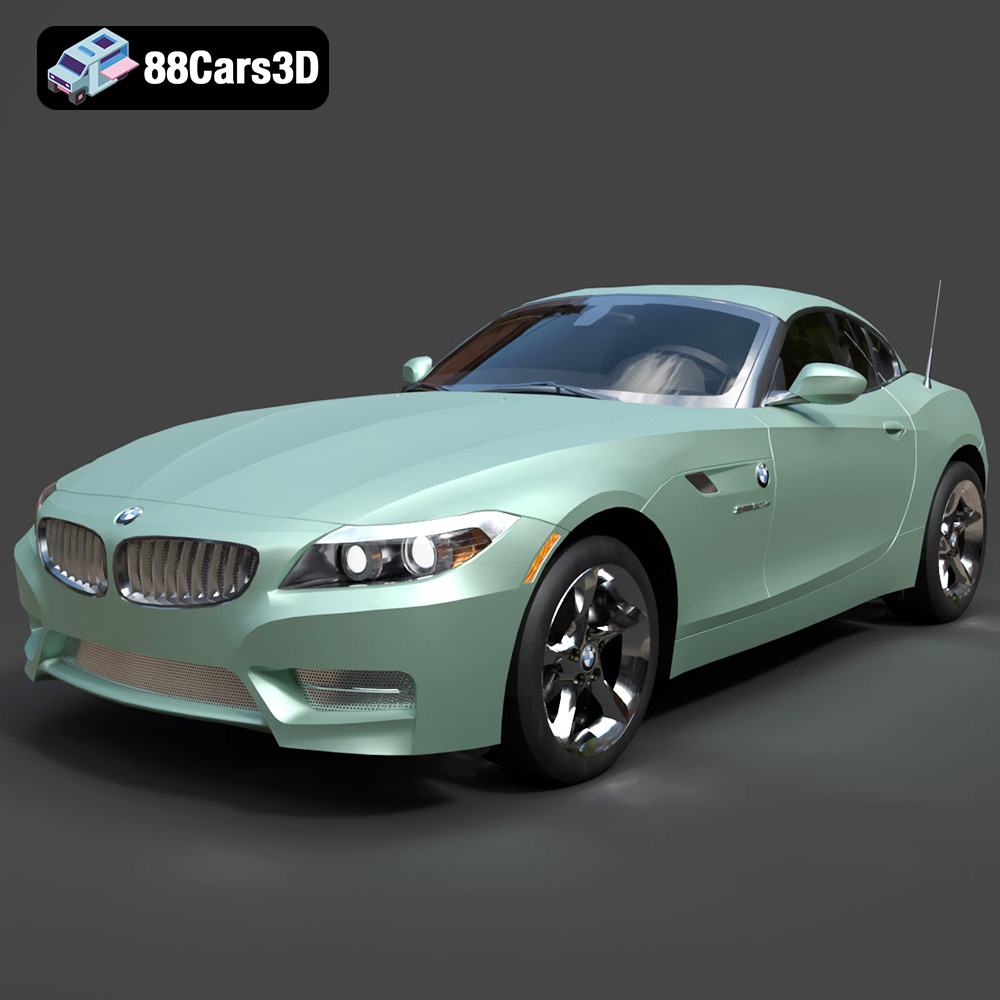
BMW Z4 Roadster E89 2012 3D Model
Texture: Yes
Material: Yes
Download the BMW Z4 Roadster E89 3D Model featuring clean geometry, realistic detailing, and a fully modeled interior. Includes .blend, .fbx, .obj, .glb, .stl, .ply, .unreal, and .max formats for rendering, simulation, and game development.
Price: $13.99

BMW Z4 E85 2005 3D Model
Texture: Yes
Material: Yes
Download the BMW Z4 E85 3D Model featuring clean geometry, realistic detailing, and a fully modeled interior. Includes .blend, .fbx, .obj, .glb, .stl, .ply, .unreal, and .max formats for rendering, simulation, and game development.
Price: $13.99

BMW M3 2024 3D Model
Texture: Yes
Material: Yes
Download the BMW M3 2024 3D Model featuring clean geometry, realistic detailing, and a fully modeled interior. Includes .blend, .fbx, .obj, .glb, .stl, .ply, .unreal, and .max formats for rendering, simulation, and game development.
Price: $13.99
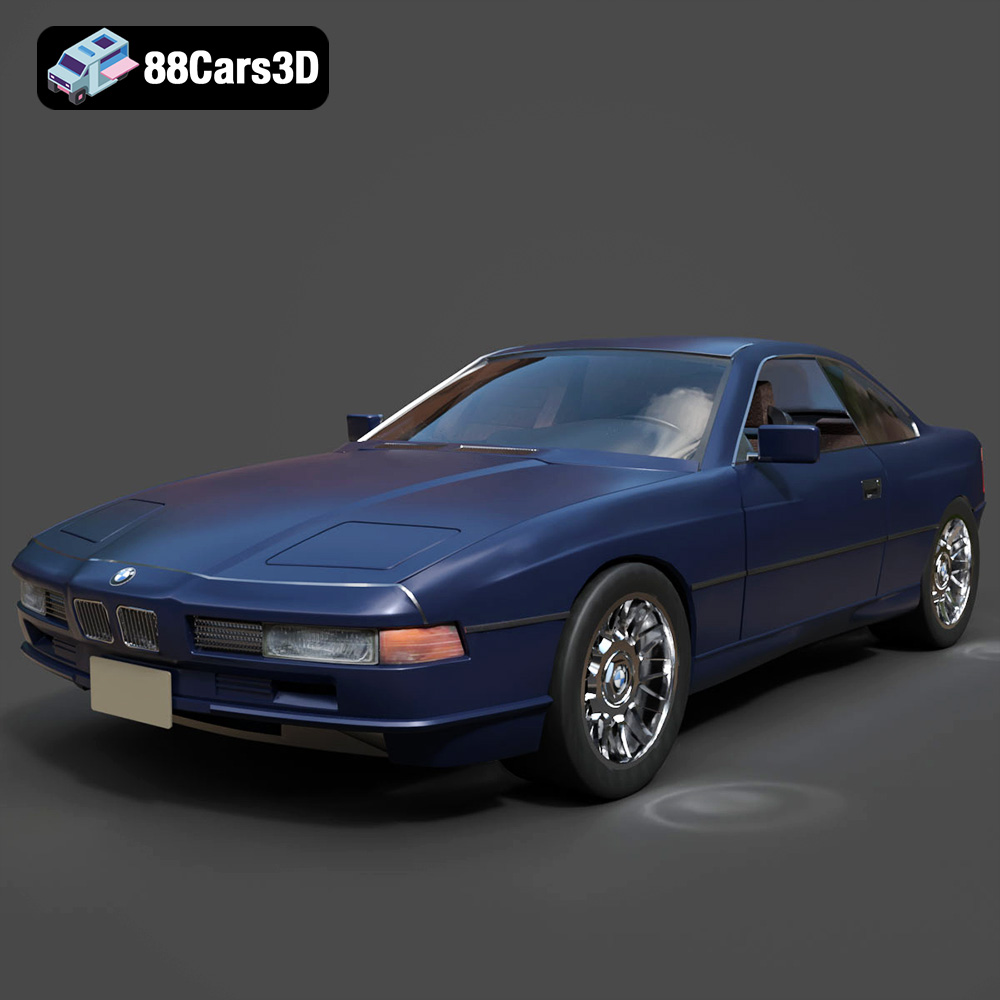
BMW 850i Coupe 1990 3D Model
Texture: Yes
Material: Yes
Download the BMW 850i Coupe 1990 3D Model featuring clean geometry, realistic detailing, and a fully modeled interior. Includes .blend, .fbx, .obj, .glb, .stl, .ply, .unreal, and .max formats for rendering, simulation, and game development.
Price: $13.99
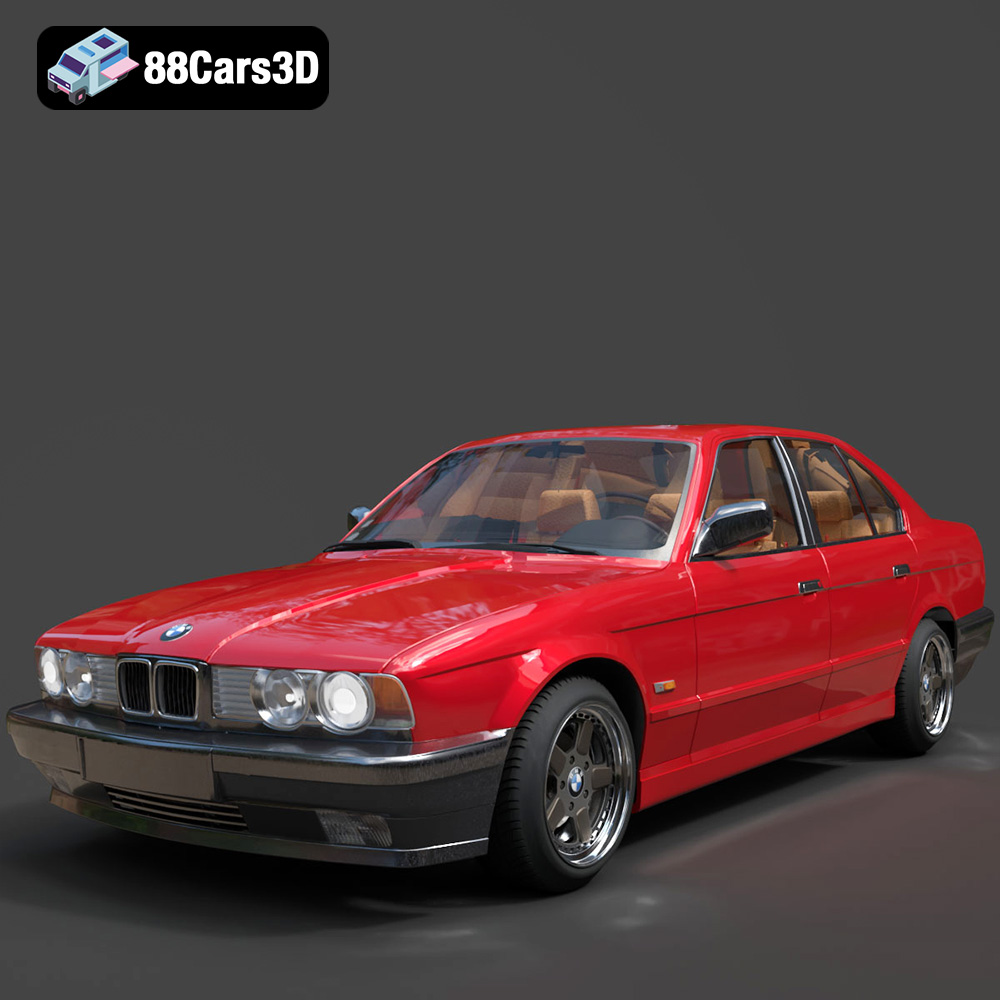
BMW 525i E34 1993 3D Model
Texture: Yes
Material: Yes
Download the BMW 525i E34 1993 3D Model featuring clean geometry, realistic detailing, and a fully modeled interior. Includes .blend, .fbx, .obj, .glb, .stl, .ply, .unreal, and .max formats for rendering, simulation, and game development.
Price: $12.99

BMW 7 Series 2016 3D Model
Texture: Yes
Material: Yes
Download the BMW 7 Series 2016 3D Model featuring luxurious design, detailed interior, and accurate exterior. Includes .blend, .fbx, .obj, .glb, .stl, .ply, .unreal, and .max formats for rendering, simulation, and game development.
Price: $10.79
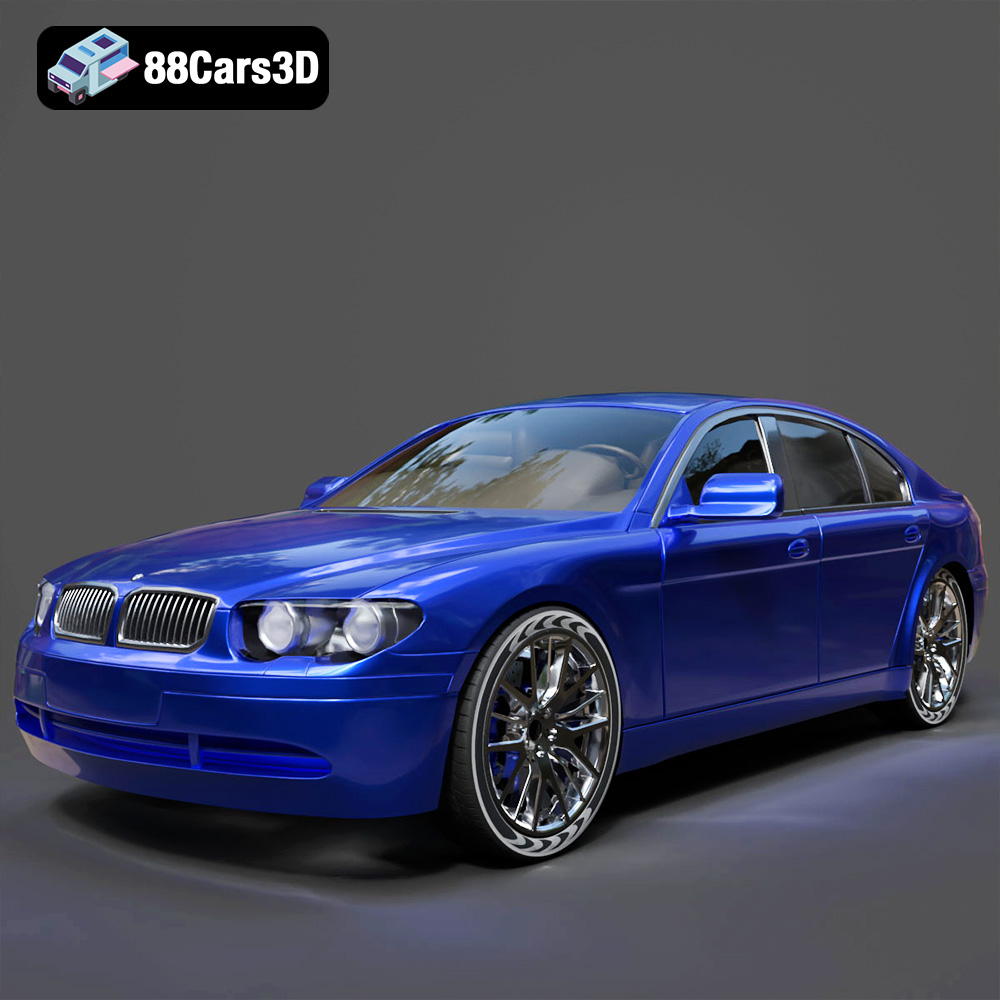
BMW 7 Series 30th Anniversary 3D Model
Texture: Yes
Material: Yes
Download the BMW 7 Series 30th Anniversary 3D Model featuring a meticulously crafted exterior, detailed interior, and realistic wheels. Includes .blend, .fbx, .obj, .glb, .stl, .ply, .unreal, and .max formats for rendering, simulation, and game development.
Price: $35.79
