

Mastering Your 3D Prints: A Technical Deep Dive into STL File Editing Software
Welcome, fellow makers and automotive enthusiasts! At 88cars3d.com, we’re passionate about bringing high-quality, 3D printable car models to your fingertips. We understand that the journey from a digital file to a physical masterpiece involves more than just hitting ‘print’. Often, you’ll want to refine, repair, or even customize the STL files you download. Whether you’re a seasoned 3D printing veteran or just starting your additive manufacturing adventure, knowing the right software tools can dramatically improve your results. This comprehensive guide will navigate you through the best free and paid software options for editing STL files, covering everything from basic mesh repair to advanced modifications. We’ll delve into the technical intricacies of mesh topology, slicing parameters, support generation, and how to leverage these software tools to ensure your printable car models turn out flawlessly, every single time.
Understanding STL Files: The Foundation of 3D Printing
Before diving into software, it’s crucial to understand what an STL (STereoLithography) file is. At its core, an STL file represents a 3D object’s surface geometry as a collection of interconnected triangles. This tessellated representation is the lingua franca of most 3D printers and slicing software. However, this simplicity can sometimes lead to issues. A “perfect” STL file for printing needs to be manifold (watertight), have consistent outward-facing normals, and possess appropriate wall thicknesses to be printable.
Mesh Topology: The Anatomy of a Printable Model
The ‘mesh’ is the collection of vertices, edges, and faces (triangles) that define the shape of your 3D model. In an STL file, each triangle is defined by three vertices and a normal vector. The normal vector indicates the direction the triangle’s surface is facing, which is critical for determining the ‘inside’ and ‘outside’ of the model. Issues like non-manifold edges (where more than two triangles share an edge), holes (missing triangles), and inverted normals (normals pointing inwards) are common problems that prevent a successful 3D print.
File Formats Beyond STL: OBJ, FBX, and More
While STL is ubiquitous, other 3D file formats exist, each with its strengths. OBJ files, for example, can store color and texture information, which STL cannot. FBX is a more complex format often used in animation and game development. Understanding these formats can be beneficial, especially when importing models from different sources or preparing them for more advanced workflows. However, for direct slicing and printing, STL remains the dominant format, and most software can convert between these formats.
Free Software Solutions: Powerful Tools for Every Maker
The good news is that you don’t need to break the bank to edit and repair STL files. A wealth of powerful free software is available, capable of handling most common editing tasks. These tools are indispensable for anyone looking to optimize models downloaded from marketplaces like 88cars3d.com or to make minor adjustments to their own designs.
Meshmixer: The Go-To for Repair and Preparation
Autodesk Meshmixer is a widely acclaimed free tool specifically designed for working with 3D meshes. It excels at repairing problematic STL files, adding supports, and making significant modifications. Its user-friendly interface, despite its powerful capabilities, makes it accessible for beginners and experts alike. Meshmixer offers a robust set of tools for automatic and manual mesh repair, simplifying the process of creating print-ready files.
- Automated Repair: Meshmixer’s ‘Inspector’ tool can automatically detect and fix many common errors like holes, non-manifold edges, and intersecting triangles. It’s often the first step after importing a potentially problematic STL.
- Hollowing and Wall Thickness: For resin printing, hollowing models significantly reduces material consumption and print time. Meshmixer allows you to hollow models and set precise wall thicknesses, ensuring structural integrity.
- Support Generation: While not as sophisticated as some dedicated slicer supports, Meshmixer’s tree-like support generation can be invaluable for complex models, especially when preparing them before slicing.
- Sculpting and Modification: You can use Meshmixer’s sculpting tools to smooth surfaces, add details, or even combine multiple STL files into a single object.
Blender: For Advanced Editing and Customization
Blender is a professional, open-source 3D creation suite that boasts an incredibly powerful feature set, far beyond simple STL editing. While its learning curve is steeper, for those who want to go beyond repairs and truly customize or design their own models, Blender is unparalleled. It handles STL files natively, though it’s more commonly used with its own .blend format.
- Mesh Editing: Blender’s Edit Mode provides precise control over vertices, edges, and faces. You can extrude, subdivide, bevel, and perform complex mesh manipulations.
- Boolean Operations: Essential for combining or subtracting shapes, Blender’s Boolean modifiers allow you to cut holes, merge parts, or create intricate interlocking designs.
- Sculpting: Similar to Meshmixer, Blender offers advanced sculpting tools for organic modeling and surface refinement.
- Add-ons: The Blender community has developed numerous add-ons that can further enhance its capabilities for 3D printing, including tools for mesh analysis and repair.
Microsoft 3D Builder: Simple and Effective
For Windows users, Microsoft 3D Builder is a surprisingly capable free application. It focuses on ease of use and provides essential tools for repair, simplification, and basic editing. It’s a great starting point for beginners who find other software too complex.
- Automatic Repair: Similar to Meshmixer, 3D Builder offers a one-click repair function that can fix most common STL errors.
- Object Manipulation: Easily resize, rotate, and position models. You can also combine multiple objects or use basic shapes to subtract from existing models.
- Hollowing and Slice: Offers basic hollowing capabilities and the ability to slice models for easier printing or assembly.
Paid Software Solutions: Professional Power and Workflow Integration
While free options are excellent, paid software often provides more advanced features, streamlined workflows, and dedicated support, especially for professional or complex projects. These tools are designed for users who require the utmost precision and efficiency.
Netfabb: The Industry Standard for Repair and Preparation
Autodesk Netfabb is a powerhouse in the 3D printing preparation space. It’s a professional suite designed for advanced mesh analysis, repair, and build preparation. For those printing complex parts or working with industrial additive manufacturing, Netfabb is often the tool of choice. It integrates seamlessly with CAD software and offers extensive automation capabilities.
- Advanced Repair Algorithms: Netfabb employs sophisticated algorithms for detecting and repairing complex mesh errors that other software might miss. This includes deep hole repair and self-intersection correction.
- Part Utility and Optimization: Tools for shelling, scaling, part consolidation, and creating internal lattices are readily available. It’s invaluable for optimizing designs for specific printing technologies and materials.
- Support Generation Automation: Netfabb offers highly configurable support generation, including automatic placement, removal analysis, and adaptive supports that minimize material usage and print time.
- Simulation and Analysis: For critical parts, Netfabb can simulate the printing process to predict potential failures like warping or stress points, allowing for design adjustments before printing.
SolidWorks, Fusion 360, and Other CAD Software: Design-Centric Editing
While not exclusively STL editors, professional CAD (Computer-Aided Design) packages like SolidWorks, Fusion 360, and Onshape are indispensable if you plan to design or heavily modify 3D car models. These parametric modelers allow for precise control over geometry.
- Parametric Modeling: Design and modify parts with precise dimensions and relationships. Changes made at any stage of the design process automatically update the model.
- Surface and Solid Modeling: Work with both solid bodies and complex surfaces, offering a high degree of design freedom.
- Direct Editing Tools: Many modern CAD packages offer direct editing tools that can manipulate existing geometry, even imported meshes, to some extent.
- Exporting to STL: These programs can export high-quality STL files, allowing you to control mesh density and ensure a clean export for slicing. When downloading models from platforms such as 88cars3d.com, you might import them into CAD software for integration into larger assemblies or for modification.
ZBrush: For Organic Sculpting and Detailing
For hyper-realistic car models or adding intricate details like panel lines, rivets, or custom body kits, ZBrush is the industry-standard digital sculpting tool. It operates on a different paradigm than traditional mesh modeling, using ‘digital clay’ to sculpt highly detailed models.
- High-Resolution Sculpting: Capable of handling millions of polygons, allowing for incredibly fine details.
- Posing and Deformation: Tools for posing models and making organic deformations.
- Retopology Tools: Essential for creating a clean, usable mesh from a sculpted high-poly model, which can then be exported as an STL.
Workflow: From Download to Print-Ready STL
Here’s a typical workflow for preparing a downloaded STL file for printing, combining the strengths of various software:
Step 1: Initial Import and Inspection
Download your chosen car model STL file from 88cars3d.com. Import it into your chosen repair software (Meshmixer or Microsoft 3D Builder are excellent free choices for this stage). Immediately use the automatic repair tools (‘Inspector’ in Meshmixer, ‘Repair’ in 3D Builder) to fix any obvious errors.
Step 2: Manual Refinement and Modification
If automatic repairs aren’t sufficient, or if you want to make modifications:
- Holes: Manually patch any remaining holes using tools like ‘Make Solid’ in Meshmixer or by creating custom geometry.
- Wall Thickness: Use analysis tools to check for areas with insufficient wall thickness. Add thickness where needed, perhaps by offsetting surfaces or thickening the mesh.
- Customization: If you want to add details (like custom wheels or spoilers), import these as separate STL files and use Boolean operations (in Meshmixer or Blender) to merge them with the main model.
Step 3: Preparing for Specific Printer Technologies
Consider your printing technology:
- FDM Printing: Ensure adequate wall thickness (minimum 1-2mm for most filaments like PLA or PETG). Check for overhangs that might require significant support. Consider splitting the model into parts if it exceeds your printer’s build volume or if certain orientations are problematic.
- Resin Printing: For larger models, hollow the part using Meshmixer or Netfabb. Set a wall thickness of 1-3mm. Add drain holes to allow uncured resin to escape. Orient the model to minimize islands and the surface area facing the build plate directly, which reduces peel forces.
Step 4: Support Generation
Import the cleaned and prepared STL into your slicer software (e.g., Cura, PrusaSlicer). Use the slicer’s built-in support generation tools. Experiment with different support types (normal, tree/organic) and densities. For very complex models, generating supports in Meshmixer or Netfabb first can sometimes yield better results, which can then be exported as part of the STL or as a separate file.
Step 5: Slicing and Print Settings
This is where the magic happens. Choose appropriate 3D printer settings based on your material and desired quality. For highly detailed car models:
- Layer Height: For FDM, 0.1mm to 0.16mm is a good balance between detail and print time. For resin printers, 0.025mm to 0.05mm is common for high detail.
- Infill: For display models, 10-20% infill with a Gyroid or Cubic pattern is often sufficient. For functional parts, increase density.
- Print Speed: Slower speeds (e.g., 40-60 mm/s for FDM) generally yield better surface quality and detail.
- Temperatures: Adhere to filament manufacturer recommendations for nozzle and bed temperatures.
Step 6: Post-Processing
Once printed, carefully remove supports. Sanding, priming, and painting are crucial steps to achieve a showroom finish. For resin prints, thorough washing and curing are essential.
Troubleshooting Common STL Issues
Even with the best software, printing failures can occur. Understanding common STL-related issues and their solutions is key.
Non-Manifold Edges and Holes
Cause: Corrupted mesh data, errors during export from CAD, or failed Booleans.
Solution: Use repair tools in Meshmixer, 3D Builder, or Netfabb. Manually patch holes if necessary. Ensure watertight models before slicing.
Inconsistent Normals (Inside-Out Surfaces)
Cause: Errors in mesh creation or export.
Solution: Most repair tools can recalculate normals. In Blender, you can use ‘Recalculate Outside’ under the Mesh menu in Edit Mode.
Insufficient Wall Thickness
Cause: Design flaw, or model scaled down too much.
Solution: Use shelling tools in Meshmixer or Netfabb, or thicken surfaces in CAD software. For FDM, ensure walls are at least 1-2mm thick; for resin, 1-3mm is typical for hollowed parts.
Tiny Islands and Detached Geometry
Cause: Complex detailing or errors in mesh creation.
Solution: Most slicers have options to ignore small parts or disconnected components. Alternatively, clean these up in Meshmixer before slicing.
Conclusion: Empowering Your 3D Printing Projects
Mastering STL file editing is a vital skill for any serious 3D printing enthusiast. Whether you’re downloading intricate printable car models from 88cars3d.com or creating your own designs, the right software empowers you to overcome challenges and achieve professional-quality results. Free tools like Meshmixer and Blender offer incredible power for repair and customization, while professional solutions like Netfabb provide advanced workflows for demanding applications. By understanding mesh topology, utilizing robust repair tools, and carefully preparing your files, you can ensure that every print is a success. Invest time in learning these software packages – the ability to refine and perfect your STL files will undoubtedly elevate your 3D printing hobby or professional work to the next level, transforming digital designs into tangible automotive treasures.
Featured 3D Car Models

BMW 7 Series E38 3D Model
Texture: Yes
Material: Yes
Download the BMW 7 Series E38 3D Model featuring its iconic luxury sedan design and classic aesthetics. Includes .blend, .fbx, .obj, .glb, .stl, .ply, .unreal, and .max formats for rendering, simulation, and game development.
Price: $10.79

BMW 6 Series 640i F12 3D Model
Texture: Yes
Material: Yes
Download the BMW 6 Series 640i F12 3D Model featuring a sleek design and detailed interior. Includes .blend, .fbx, .obj, .glb, .stl, .ply, .unreal, and .max formats for rendering, simulation, and game development.
Price: $10.79

BMW 6 Coupe E63 3D Model
Texture: Yes
Material: Yes
Download the BMW 6 Coupe E63 3D Model featuring a sleek design, detailed interior, and realistic exterior. Includes .blend, .fbx, .obj, .glb, .stl, .ply, .unreal, and .max formats for rendering, simulation, and game development.
Price: $10.79

BMW 5 Series Touring F11-007 3D Model
Texture: Yes
Material: Yes
Download the BMW 5 Series Touring F11-007 3D Model featuring a detailed exterior and interior. Includes .blend, .fbx, .obj, .glb, .stl, .ply, .unreal, and .max formats for rendering, simulation, and game development.
Price: $10.79

BMW 3 F30 3D Model
Texture: Yes
Material: Yes
Download the BMW 3 F30 3D Model featuring a detailed exterior, realistic interior, and optimized mesh. Includes .blend, .fbx, .obj, .glb, .stl, .ply, .unreal, and .max formats for rendering, simulation, and game development.
Price: $10.79

BMW Z4 Roadster E89 2012 3D Model
Texture: Yes
Material: Yes
Download the BMW Z4 Roadster E89 3D Model featuring clean geometry, realistic detailing, and a fully modeled interior. Includes .blend, .fbx, .obj, .glb, .stl, .ply, .unreal, and .max formats for rendering, simulation, and game development.
Price: $13.99

BMW Z4 E85 2005 3D Model
Texture: Yes
Material: Yes
Download the BMW Z4 E85 3D Model featuring clean geometry, realistic detailing, and a fully modeled interior. Includes .blend, .fbx, .obj, .glb, .stl, .ply, .unreal, and .max formats for rendering, simulation, and game development.
Price: $13.99

BMW M3 2024 3D Model
Texture: Yes
Material: Yes
Download the BMW M3 2024 3D Model featuring clean geometry, realistic detailing, and a fully modeled interior. Includes .blend, .fbx, .obj, .glb, .stl, .ply, .unreal, and .max formats for rendering, simulation, and game development.
Price: $13.99
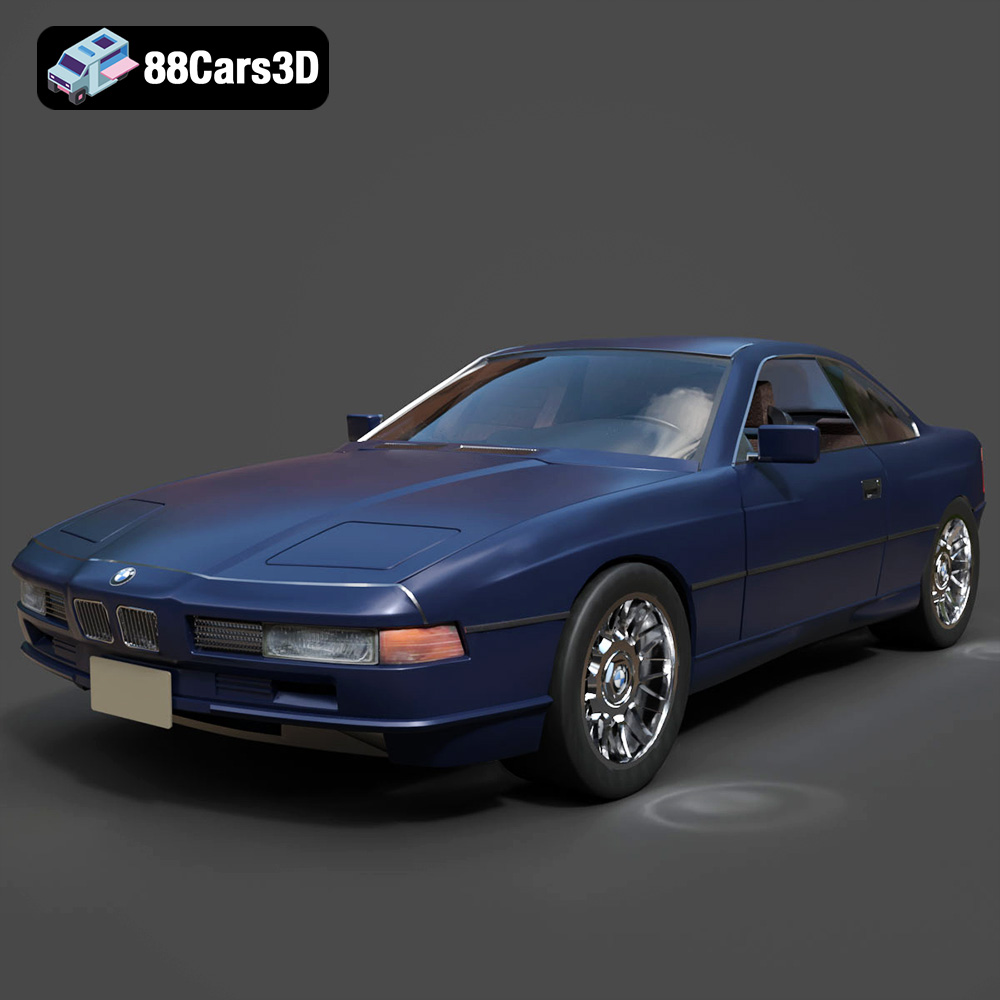
BMW 850i Coupe 1990 3D Model
Texture: Yes
Material: Yes
Download the BMW 850i Coupe 1990 3D Model featuring clean geometry, realistic detailing, and a fully modeled interior. Includes .blend, .fbx, .obj, .glb, .stl, .ply, .unreal, and .max formats for rendering, simulation, and game development.
Price: $13.99
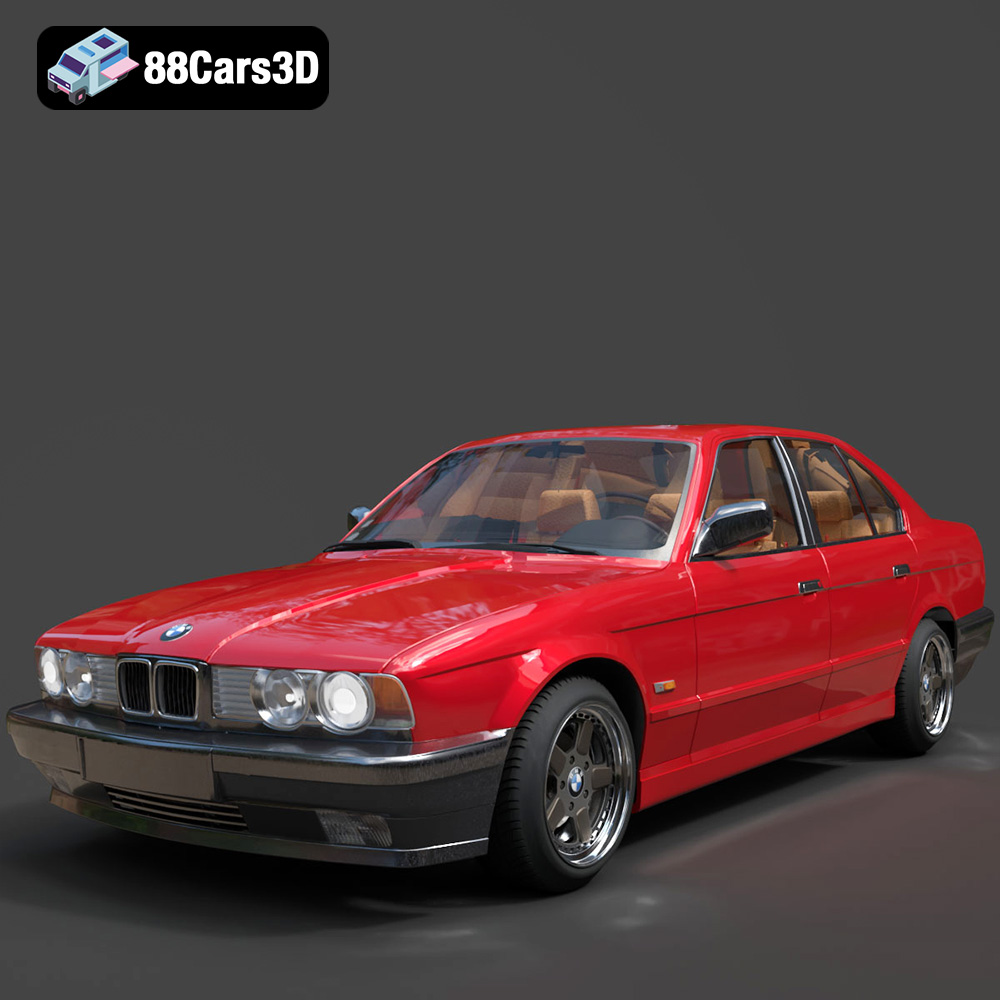
BMW 525i E34 1993 3D Model
Texture: Yes
Material: Yes
Download the BMW 525i E34 1993 3D Model featuring clean geometry, realistic detailing, and a fully modeled interior. Includes .blend, .fbx, .obj, .glb, .stl, .ply, .unreal, and .max formats for rendering, simulation, and game development.
Price: $12.99
