

The automotive industry is in a perpetual state of innovation, not just in vehicle design and engineering, but also in how cars are presented, visualized, and experienced. Gone are the days when static renders and physical prototypes were the only options. Today, Unreal Engine stands at the forefront of this revolution, offering unparalleled tools for real-time automotive visualization, interactive experiences, and even virtual production. Whether you’re a seasoned 3D artist, an aspiring game developer, or an automotive designer looking to push the boundaries of digital presentation, mastering Unreal Engine is a pivotal step.
This comprehensive guide will serve as your complete beginner’s tutorial to leveraging Unreal Engine for automotive projects. We’ll navigate the essential workflows, from setting up your project and importing high-quality 3D car models (like those available on 88cars3d.com) to crafting stunning PBR materials, implementing advanced lighting with Lumen, and building interactive experiences with Blueprint. Get ready to transform your vision into captivating, real-time automotive scenarios that redefine realism and interactivity.
Setting the Stage: Unreal Engine Project Setup & Interface
Embarking on any Unreal Engine project begins with a crucial first step: setting up your environment correctly. This foundational stage ensures your project is optimized from the outset for automotive visualization. When you launch Unreal Engine, you’re presented with the Project Browser, which offers various templates tailored for different types of development.
For automotive projects, while the “Games” templates might seem intuitive, the “Film, Television & Live Events” category, or even a “Blank” project, often provide a cleaner slate with fewer game-specific assets, allowing you to build your automotive scene from the ground up. The “Automotive, Product Design & Manufacturing” template is also an excellent starting point, as it includes common automotive materials, lighting setups, and specific project settings that cater to the industry’s needs. We recommend starting with a Blank project to understand the fundamental steps without pre-configured elements, or the Automotive template for a quick head start. Ensure you select the appropriate “Target Platform” (Desktop/Console for high-fidelity, Mobile for AR/VR applications) and “Quality Preset” (Maximum is generally preferred for high-end automotive visualization) to lay the groundwork for a performant and visually rich experience. Choose a project name that reflects your car model or brand, and specify a sensible save location.
Choosing the Right Template and Core Settings
When selecting your project template, consider the end goal. For photorealistic renders or configurators, the Automotive template is ideal. It comes with a default scene featuring a light studio, advanced car paint materials, and pre-configured Post Process Volume settings that enhance visual fidelity. If you prefer full control, a Blank project allows you to build everything from scratch, which is great for learning but requires more setup. Regardless of your choice, key project settings you’ll want to verify or enable include:
- Ray Tracing: Go to
Edit > Project Settings > Engine > Rendering > Ray Tracingand enable it for stunning reflections, global illumination, and ambient occlusion. This is critical for real-time rendering. - Lumen: Ensure Lumen Global Illumination and Reflections are enabled under
Engine > Rendering > Global IlluminationandReflections. Lumen is a powerful dynamic global illumination and reflection system that dramatically enhances realism for dynamic lighting scenarios in automotive showrooms. - Nanite: Found under
Engine > Rendering > Nanite, enable this for virtualized geometry, allowing you to import extremely high-polygon models (like detailed CAD data) without significant performance penalties.
After project creation, familiarize yourself with the main editor interface. The Viewport is where you visually construct your scene. The Content Browser manages all your assets, from 3D car models to textures and materials. The World Outliner lists every actor (objects, lights, cameras) in your scene, and the Details Panel allows you to modify the properties of selected actors. Understanding these core panels is fundamental to your Unreal Engine journey.
Navigating the Editor: Viewport, Content Browser, and Details Panel
Proficient navigation within the Unreal Editor is key to an efficient workflow. The Viewport allows you to move around your scene using familiar WASD controls (holding the right mouse button) and pan with the middle mouse button. The Content Browser, typically at the bottom, is your asset hub. Organize your assets meticulously by creating folders for Meshes, Materials, Textures, Blueprints, etc. For example, a common structure might be Content/Cars/[CarName]/Meshes, Content/Cars/[CarName]/Materials. This discipline pays dividends as your project grows, especially when dealing with complex 3D car models that have many sub-components and associated textures.
The Details Panel, usually on the right, is context-sensitive, displaying properties of whatever is selected in the Viewport or World Outliner. This is where you adjust material assignments, light intensities, transform properties, collision settings, and much more. The World Outliner, often beside the Details Panel, provides a hierarchical list of all actors, enabling quick selection and organization. Renaming actors here to descriptive names (e.g., “Car_Chassis_Mesh”, “Car_Wheel_FL_Mesh”) greatly improves clarity. Mastering these interface elements ensures a smooth and productive workflow as you bring your automotive visualization projects to life.
Importing and Optimizing Your 3D Car Models for Real-Time Performance
The core of any automotive visualization project is, naturally, the car model itself. Sourcing high-quality 3D car models is paramount, and platforms like 88cars3d.com offer professionally optimized assets specifically designed for Unreal Engine, featuring clean topology, realistic UV mapping, and multiple file formats. Once you have your models, understanding the import process and initial optimization steps is critical for maintaining real-time rendering performance.
The most common file format for importing 3D models into Unreal Engine is FBX, though USD (Universal Scene Description) and USDZ (for AR/VR applications) are gaining significant traction due to their ability to encapsulate entire scenes with materials, animations, and instances efficiently. When importing your 3D car model, careful attention to the import settings dialog is essential. For complex automotive assemblies, it’s often beneficial to import the entire car as a single FBX file, but with “Combine Meshes” unchecked. This allows Unreal Engine to import each component (chassis, doors, wheels, interior parts) as separate Static Mesh assets while maintaining their original pivot points and relative transformations, making them easier to manage, assign materials to, and animate individually later.
The Import Process: FBX, USD, and Beyond
Let’s walk through the FBX import process for a typical 3D car model. In the Content Browser, click the “Add” or “Import” button and navigate to your FBX file. The FBX Import Options dialog will appear, presenting a multitude of settings crucial for proper integration:
- Mesh Options:
- Skeletal Mesh: Only enable this if your car has a dedicated skeletal rig for animation (e.g., suspension, steering). For most static visualization or basic interactive elements, keep this unchecked.
- Static Mesh: This will be the default for most car parts.
- Combine Meshes: Crucially, uncheck this for complex cars. This ensures each part (door, wheel, hood) remains a separate asset.
- Generate Missing Collision: Enable this to automatically create basic collision meshes. For high-fidelity interactions, you might create custom collision later.
- Auto Generate Overlapping UVs: Enable for lightmap UV generation if your model doesn’t have a second UV channel (UV Channel 1) for lightmaps.
- Transform: Ensure your model’s scale, rotation, and translation are correctly handled. If your model was exported with Z-up, you might need to adjust the “Transform Z-Axis” setting.
- Material Options: Usually, you’ll want to “Do Not Create Materials” if you plan to build custom PBR materials in Unreal Engine for better quality.
After importing, drag your imported Static Meshes from the Content Browser into your Viewport. Assemble the car by parenting components in the World Outliner (e.g., wheels to the chassis) to make it easier to move as a single unit. For USD files, Unreal Engine’s native USD importer offers a more streamlined workflow, often preserving material assignments and scene hierarchy more accurately, making it an excellent choice for virtual production pipelines and collaborative environments. Remember to check the official Unreal Engine documentation at https://dev.epicgames.com/community/unreal-engine/learning for the most up-to-date best practices on import settings.
Initial Optimization Strategies: Collision, LODs, and Instance Meshes
Optimization is not an afterthought; it’s an integrated part of the workflow. High-fidelity 3D car models can have millions of polygons, and without proper management, performance will suffer. Here are initial steps:
- Collision Meshes: The “Generate Missing Collision” option on import provides basic collision. For more accurate physics or precise interaction (e.g., tracing rays against the car), you can create custom simplified collision meshes (UCX_ prefixes in your modeling software) or use Unreal Engine’s built-in tools (Double-click Static Mesh > Collision menu) to add simplified primitives like boxes and spheres.
- Level of Detail (LODs): For objects that will be viewed from varying distances, LODs are essential. Unreal Engine can automatically generate LODs for Static Meshes (Double-click Static Mesh > Details Panel > LOD Settings > Number of LODs). For a detailed car, aim for 3-5 LOD levels, progressively reducing polygon count (e.g., LOD0: 100%, LOD1: 50%, LOD2: 25%, LOD3: 12.5%). This ensures that distant cars use fewer polygons, significantly improving real-time rendering performance. For models sourced from 88cars3d.com, often multiple LODs are already provided, saving you crucial development time.
- Instanced Static Meshes: If your scene features multiple identical cars (e.g., a car dealership scene), use Instanced Static Meshes or Hierarchical Instanced Static Meshes instead of duplicating individual Static Mesh Actors. This allows Unreal Engine to draw multiple instances of the same mesh with a single draw call, drastically reducing CPU overhead.
These initial steps, combined with proper asset organization, set the foundation for a smooth and efficient Unreal Engine project.
Crafting Realistic Materials: PBR Workflows in Unreal Engine
Once your 3D car models are in Unreal Engine, the next crucial step is to define their visual properties using Physically Based Rendering (PBR) materials. PBR materials simulate how light interacts with surfaces in the real world, leading to incredibly realistic results. Unreal Engine’s Material Editor is a powerful node-based system that allows you to construct complex shaders for everything from glossy car paint to intricate interior fabrics and tire rubber.
The core principle of PBR is that material properties (like color, roughness, and metallicness) are defined based on real-world values, allowing the lighting engine to handle the physics of light reflection and absorption accurately. For automotive visualization, this means creating convincing car paint that reflects its environment dynamically, glass that refracts light realistically, and interior materials that respond to light in a tactile way. Most PBR workflows in Unreal Engine follow the metallic-roughness model, using a set of texture maps to define these properties: Base Color, Normal, Roughness, Metallic, Ambient Occlusion, and sometimes Emissive for headlights/taillights.
Understanding PBR Principles for Automotive Surfaces
The metallic-roughness workflow is fundamental to PBR materials in Unreal Engine. Here’s a breakdown of the key inputs for a material, and their relevance to automotive surfaces:
- Base Color (Albedo): This map defines the diffuse color of non-metallic surfaces and the reflective color of metallic surfaces. For a car, this would be the primary paint color, the color of leather seats, or the black of tires. It should be free of lighting information.
- Normal Map: Provides fine surface detail without adding actual geometry. Essential for subtle bumps on plastic, stitching on leather, or the texture of tire treads.
- Roughness Map: Controls the microscopic surface irregularities that scatter light. A value of 0 is perfectly smooth (like polished chrome or wet paint), while 1 is completely rough (like matte plastic or unfinished rubber). Car paint will have very low roughness, while interior plastics will have higher values.
- Metallic Map: A binary map (0 or 1) indicating whether a surface is metallic (1) or non-metallic (0). Car paint is technically non-metallic (a dielectric coating over a metallic base), but for simplicity in games, a value around 0.9-1.0 is often used for the metallic component of the paint to achieve realistic reflections. True metallic parts like chrome trim would be 1.
- Ambient Occlusion (AO) Map: Simulates soft global shadows in crevices and corners, enhancing depth. Used as a multiplier on the Base Color.
- Emissive Map: For surfaces that emit light, like headlights, taillights, or interior dashboard displays.
Each of these maps are typically 8-bit or 16-bit grayscale or color textures (e.g., PNG, TGA, EXR) and should ideally be square and powers of two in resolution (e.g., 2048×2048, 4096×4096). High-resolution textures are crucial for close-up shots in automotive visualization, especially for details on interiors or wheel rims.
Building Car Paint and Interior Materials in the Material Editor
Creating a realistic car paint shader is often seen as a benchmark for realism. It typically involves a clear coat layer over a metallic base. In Unreal Engine, this can be achieved using a Layered Material or by custom nodes in a single Material Graph:
- Base Car Paint Material:
- Create a new Material in the Content Browser.
- Connect your Base Color texture to the “Base Color” input. For a simple color change, you can use a Vector Parameter.
- Connect your Normal Map to the “Normal” input.
- For metallic paint, set the Metallic value to around 0.9. Connect a grayscale texture or a constant for fine control.
- Set Roughness to a very low value (e.g., 0.05-0.1) for a glossy finish. This can also be controlled by a texture.
- To simulate the clear coat, utilize the “Clear Coat” and “Clear Coat Roughness” inputs. Set “Clear Coat” to 1 and “Clear Coat Roughness” to a very low value (e.g., 0.02-0.05). This creates a second, shinier reflective layer.
- For metallic flakes, you can sample a noise texture, multiply it by a subtle color, and blend it into the normal map using a “Blend Angle Corrected Normals” node, then slightly adjust the Metallic input.
- Glass Material:
- Set the Material Blend Mode to “Translucent.”
- Set the “Lighting Mode” to “Surface TranslucencyVolume” or “Surface ForwardShading” for better quality.
- Connect a slightly dark color to “Base Color.”
- Set “Metallic” to 0.
- Set “Roughness” to 0 for perfectly clean glass.
- Use the “Opacity” input for transparency (e.g., 0.1-0.2).
- Crucially, use the “Refraction” input. A value around 1.5 is standard for glass.
- Tire Rubber Material:
- “Base Color” will be a dark grey.
- “Metallic” should be 0.
- “Roughness” will be relatively high (e.g., 0.6-0.8) to simulate the matte, slightly grippy texture of rubber.
- A detailed “Normal Map” for the tread pattern and sidewall text is essential.
- An “Ambient Occlusion” map can add depth to the tire’s grooves.
By leveraging these PBR principles and Unreal Engine’s Material Editor, you can create a wide array of realistic automotive materials that respond beautifully to dynamic lighting environments.
Illuminating Your Automotive Scenes: Real-Time Lighting with Lumen & More
Lighting is arguably the most critical element in achieving photorealistic automotive visualization. Unreal Engine provides a robust and flexible lighting system, with Lumen leading the charge for dynamic, high-fidelity global illumination and reflections. Proper lighting not only defines the mood and atmosphere of your scene but also highlights the intricate details and exquisite materials of your 3D car models.
Traditional lighting methods involved baking lightmaps for static global illumination, which limited dynamic changes. With the advent of Unreal Engine 5, Lumen has revolutionized this, offering fully dynamic global illumination and reflections that react in real-time to changes in lights, materials, and geometry. This is incredibly powerful for automotive showrooms, configurators, or virtual studios where light sources might move, or car colors change, affecting the entire environment’s lighting. Complementing Lumen, strategic placement of directional, point, spot, and skylights, often coupled with High Dynamic Range Images (HDRIs), allows for exquisite control over your scene’s illumination.
Harnessing Lumen for Dynamic Global Illumination
Lumen is Unreal Engine 5’s default global illumination and reflections system, designed for next-generation real-time rendering. To ensure Lumen is active and optimized for your automotive scene:
- Enable Lumen: As mentioned in project setup, ensure Lumen Global Illumination and Reflections are enabled in your Project Settings (
Edit > Project Settings > Engine > Rendering > Global IlluminationandReflections). Set both to “Lumen.” - Post Process Volume: Place a Post Process Volume in your scene and enable “Infinite Extent (Unbound)” so its settings affect the entire scene. Under “Global Illumination” and “Reflections,” ensure “Method” is set to “Lumen.” Here, you can fine-tune Lumen’s quality settings:
- Lumen Scene Quality: Higher values improve detail but increase cost.
- Lumen Reflections Quality: Affects the fidelity of reflections. Crucial for glossy car paint.
- Final Gather Quality: Controls the final pass of global illumination.
- Material Roughness: Lumen heavily relies on accurate PBR material properties. Ensure your roughness maps are well-calibrated, as this directly impacts how light scatters and reflects. Very low roughness values (e.g., for car paint) will produce sharp, mirror-like reflections that Lumen will render beautifully.
- Light Emitting Materials: Lumen can also pick up light from emissive materials. This means you can create dynamic light sources directly from meshes, such as glowing LED strips in a studio or active car headlights, contributing to the scene’s global illumination.
Lumen provides incredibly natural-looking light bounces and soft shadows, making it perfect for showcasing the complex curves and materials of automotive designs in a dynamically lit environment.
Strategic Lighting Setups: HDRI, Directional, and Spot Lights
While Lumen handles global illumination, specific light sources are vital for shaping your scene and highlighting your 3D car models. A typical high-quality automotive studio setup often combines several types of lights:
- HDRI (High Dynamic Range Image) with a Sky Light: This is often the first light source you should add. A Sky Light captures ambient light from the distant environment. By feeding it an HDRI texture (e.g., a studio environment, an outdoor scene), you provide realistic, diffuse global illumination and reflections that wrap around your car. This dramatically enhances realism, especially on reflective surfaces like car paint and chrome. Ensure your Sky Light is set to “Movable” to interact dynamically with Lumen.
- Directional Light: Simulates distant light sources like the sun. Provides strong, parallel light rays and sharp shadows. Essential for outdoor scenes or simulating a harsh studio spotlight. Adjust its angle to sculpt the car’s form.
- Spot Lights & Point Lights: These are your workhorses for targeted illumination. Use Spot Lights with soft attenuation to create rim lights that define the car’s silhouette, accentuating edges and curves. Point Lights can simulate interior dome lights or subtle ambient fill from light boxes. Always consider the “Source Radius” and “Source Length” to control shadow softness.
- Light Functions & IES Profiles: For advanced effects, Light Functions allow you to project textures onto light sources (e.g., gobos for patterned light). IES (Illuminating Engineering Society) profiles replicate the precise photometric data of real-world light fixtures, adding a layer of authenticity to your studio lighting. These are especially useful for matching a physical studio’s lighting characteristics in your virtual scene.
When lighting, always iterate. Adjust intensities, colors, and positions. Pay attention to reflections on the car’s surface – they tell the story of your environment. Use the “Reflection Capture” actors (for non-Lumen reflections or specific static zones) or rely purely on Lumen’s real-time reflections for a fully dynamic scene. For best practices, always consult the official Unreal Engine documentation on lighting workflows.
Bringing Cars to Life: Interactivity with Blueprint and Cinematics with Sequencer
Static renders, while beautiful, only scratch the surface of what Unreal Engine can offer for automotive visualization. The true power lies in creating interactive experiences and stunning cinematics. Blueprint, Unreal Engine’s visual scripting system, empowers artists and designers to add complex logic and interactivity without writing a single line of code. Meanwhile, Sequencer provides a robust non-linear editor for crafting professional-quality cinematic sequences, perfect for promotional videos or compelling presentations of your 3D car models.
Imagine a virtual showroom where users can open car doors, change paint colors with a click, or even configure different rim designs in real-time. This level of interaction enhances engagement and provides a much richer experience than passively viewing images. For marketing or product launches, a beautifully choreographed cinematic showcasing the car’s features and design details can be incredibly impactful. Combining Blueprint’s logic with Sequencer’s animation capabilities unlocks a vast array of possibilities, making your automotive projects truly dynamic and immersive.
Blueprint Fundamentals for Interactive Car Configurators
Blueprint scripting is a visual, node-based system that allows you to define game logic, UI interactions, and object behaviors. For an interactive car configurator, Blueprint is invaluable:
- Creating a Blueprint Actor for Your Car: Start by creating a new Blueprint Class (e.g., an Actor Blueprint named BP_CarConfigurator). Drag your car’s Static Meshes into its Components tab. This encapsulates your car’s geometry and allows you to control it programmatically.
- Changing Car Paint Color:
- Create a Dynamic Material Instance (DMI) for your car paint material. This allows you to modify material parameters at runtime.
- In your Blueprint Event Graph, add an “Event BeginPlay” node. From this, create a “Create Dynamic Material Instance” node, targeting your car paint material and the mesh component (e.g., chassis). Promote the DMI to a variable for later use.
- To change color, use a “Set Vector Parameter Value” node, targeting your DMI variable. Set the “Parameter Name” to “BaseColor” (or whatever parameter controls your paint color) and define a new color.
- Trigger this with an input event (e.g., a keyboard press, or a UI button click using UMG).
- Opening Doors:
- Ensure your car door mesh has its pivot point at the hinge.
- In your BP_CarConfigurator, get a reference to your door mesh component.
- Use a “Set Relative Rotation” node. Over time, you can smoothly animate this rotation using a “Timeline” node. Create a new float track in the Timeline, define keyframes for 0 to (e.g.) 90 degrees over 1 second. Connect the Timeline’s “Update” output to the “Set Relative Rotation” and feed its float output into the door’s Y-axis rotation.
- Trigger the Timeline with an input event (e.g., “E” key press). You can add logic to toggle open/close.
- Swapping Components (e.g., Rims):
- Keep different rim meshes as separate Static Mesh assets.
- In your Blueprint, get references to the original rim mesh and the alternative rim mesh.
- Use “Set Static Mesh” node to swap the visible mesh.
- Alternatively, you can have all rim options loaded and toggle their visibility using “Set Visibility” nodes.
This level of interactivity is key for automotive configurators and virtual showrooms, allowing users to explore and customize cars in real-time. For more in-depth learning, consult the official Unreal Engine Blueprint documentation.
Mastering Sequencer for Automotive Cinematics
Sequencer is Unreal Engine’s powerful multi-track non-linear editor for creating stunning cinematic sequences. It’s ideal for producing high-quality promotional videos, product reveals, or immersive walkthroughs of your 3D car models.
- Creating a New Sequence: In the Content Browser, right-click > “Animation” > “Level Sequence.” Name it appropriately (e.g., LS_CarReveal).
- Adding Actors to the Sequence: Drag your BP_CarConfigurator (or individual car meshes) and any cameras (Cine Camera Actors are recommended) from the World Outliner directly into the Sequencer window.
- Animating Cameras:
- Select your Cine Camera Actor in Sequencer. Click “+ Track” > “Transform.”
- Move your camera in the Viewport, then click the keyframe icon next to “Location” and “Rotation” in Sequencer to record its position and orientation at that point in time.
- Advance the timeline, move the camera again, and add new keyframes. Unreal Engine will automatically interpolate the movement between keyframes.
- Add camera specific tracks like “Focus Settings” and “Lens Settings” to control depth of field and focal length for a professional cinematic look.
- Animating Car Elements: You can animate the same elements you would control with Blueprint (e.g., door opening, wheel rotation, color changes) directly within Sequencer. Add tracks for the relevant components (e.g., Static Mesh Component) and animate their transform or material parameters over time.
- Adding Audio: Import audio files (WAV, OGG) and drag them into Sequencer to sync engine sounds, music, or voiceovers with your visuals.
- Rendering the Cinematic: Once your sequence is complete, click the “Render Movie” button in Sequencer. This opens the Movie Render Queue, which offers professional-grade export options, including multi-pass rendering, EXR output, and high-quality anti-aliasing. Configure your output resolution (e.g., 4K, 8K), frame rate, and output format for your final video or image sequence.
Sequencer is a powerful tool for crafting compelling narratives around your automotive designs, making it an indispensable part of any professional Unreal Engine workflow.
Advanced Optimization & Visual Fidelity: Nanite, LODs, and AR/VR Considerations
Achieving stunning visual fidelity with 3D car models while maintaining real-time rendering performance is a delicate balance. Modern automotive CAD data often boasts millions, if not billions, of polygons – far too dense for traditional real-time engines. However, Unreal Engine 5’s revolutionary technologies like Nanite virtualized geometry, coupled with smart Level of Detail (LOD) management and specific AR/VR optimization strategies, make it possible to bring these high-fidelity assets directly into your projects without compromising frame rates.
For automotive visualization, this means artists no longer need to spend countless hours manually retopologizing high-resolution models for real-time use. Nanite handles the complexity, allowing focus to shift towards artistic refinement and interactive experiences. When developing for performance-sensitive platforms like AR/VR, a disciplined approach to asset management and rendering settings becomes even more critical to ensure a smooth, immersive experience. Leveraging optimized assets from marketplaces like 88cars3d.com, which often include pre-generated LODs and clean topology, further accelerates this process.
Unleashing Nanite for High-Fidelity Car Models
Nanite is Unreal Engine 5’s virtualized micropolygon geometry system. It intelligently streams and processes only the necessary detail of a mesh, allowing for truly massive polygon counts (millions to billions) without traditional performance bottlenecks. For automotive visualization, this is a game-changer:
- Direct CAD Data Import: You can directly import extremely high-polygon CAD models (e.g., from SolidWorks, CATIA, Rhino) without extensive manual retopology. Nanite automatically handles the LOD generation and streaming.
- Enabling Nanite on Meshes: After importing your high-poly 3D car models, double-click a Static Mesh in the Content Browser. In the Details panel, under the “Nanite Settings” section, simply check “Enable Nanite Support.” You’ll see a green checkmark next to your mesh icon, indicating it’s Nanite-enabled.
- Performance Benefits: Nanite significantly reduces draw calls and memory footprint compared to traditional high-poly meshes, even with models that have tens of millions of triangles. This frees up GPU resources for higher quality lighting (Lumen) and more complex scenes.
- Exceptions: While powerful, Nanite has a few limitations to be aware of. It’s currently not supported for Skeletal Meshes (animated characters), translucent materials (like glass), or certain types of mesh deformations. For translucent elements like car windows, you’ll still need to use traditional Static Meshes. In these cases, ensure those specific meshes have appropriate LODs and optimized polygon counts.
By using Nanite for the solid body parts of your car, you can maintain incredible geometric detail, such as sharp edges and intricate panel gaps, leading to unprecedented visual fidelity in real-time rendering.
Strategic LOD Management and AR/VR Optimization
Even with Nanite, strategic LOD management remains crucial, especially for non-Nanite meshes and AR/VR optimization. LODs ensure that objects use progressively simpler geometry as they get further from the camera, saving performance. For AR/VR experiences, frame rate (ideally 90 FPS or higher) is paramount to prevent motion sickness.
- Manual vs. Auto LODs:
- Auto LOD Generation: Unreal Engine can automatically generate LODs (as discussed in the import section). This is great for many assets. Go to the Static Mesh Editor, under “LOD Settings,” set the “Number of LODs” and “Reduction Settings” for each level.
- Manual LOD Creation: For critical assets like your 3D car models, you might want to create manual LODs in your 3D modeling software. This gives you precise control over topology and UVs for each LOD, ensuring clean transitions and minimal visual popping. Import these separate LOD meshes into the Static Mesh Editor via the “Import LOD” option.
- Culling and Visibility:
- Culling Distances: For less important elements, set “Min Draw Distance” and “Max Draw Distance” in the Details panel of the Static Mesh Actor to completely remove them from rendering beyond a certain range.
- Occlusion Culling: Unreal Engine automatically performs occlusion culling, not rendering objects hidden behind other objects. Ensure your scene geometry is reasonably solid.
- AR/VR Specific Optimizations:
- Poly Count: Aim for much lower polygon counts than desktop applications for the lowest LODs, especially if your target platform is mobile AR (e.g., iOS/Android devices).
- Draw Calls: Minimize draw calls by combining meshes where possible and using Instanced Static Meshes.
- Material Complexity: Simplify materials. Avoid overly complex shader networks, multiple clear coats (unless critical), and excessive texture samples.
- Lighting: Often, baked lighting (Lightmass) combined with stationary lights is more performant than fully dynamic Lumen for mobile VR, though Lumen support is improving.
- Post-Processing: Be conservative with post-processing effects like bloom, depth of field, and anti-aliasing. They can be very expensive in VR.
- USDZ Export: For iOS AR experiences, Unreal Engine supports exporting scenes as USDZ files, which are highly optimized for Apple’s ARKit.
Thoughtful optimization is key to delivering a smooth and engaging experience, whether you’re showcasing a car in a real-time configurator or an immersive AR/VR application.
Real-World Automotive Applications & Professional Workflows
The methodologies and techniques discussed so far aren’t just theoretical; they form the backbone of cutting-edge professional applications in the automotive industry. Unreal Engine has moved beyond its gaming roots to become an indispensable tool for automotive designers, marketers, and engineers. From highly interactive automotive configurators that let customers personalize their dream car in real-time, to immersive virtual showrooms that transcend physical boundaries, and even advanced virtual production workflows for dazzling commercials, the possibilities are vast.
Leveraging high-quality assets, like the 3D car models available on 88cars3d.com, allows professionals to quickly populate these interactive experiences with photorealistic vehicles. These real-world applications not only streamline design and marketing pipelines but also redefine how consumers engage with automotive brands. Understanding these professional workflows is key to unlocking the full commercial potential of your Unreal Engine skills.
Creating Immersive Automotive Configurators and Virtual Showrooms
Interactive configurators and virtual showrooms are arguably one of the most impactful applications of Unreal Engine in the automotive sector. They offer a level of detail and interactivity previously unimaginable, allowing customers to explore and customize vehicles in a rich, real-time environment.
- User Interface (UI) with UMG: The primary interface for configurators is built using Unreal Motion Graphics (UMG). You’ll design widgets for buttons (e.g., “Change Color,” “Open Door”), sliders (e.g., “Rim Size”), and dropdowns. These widgets then trigger Blueprint events in your car’s Blueprint Actor.
- Dynamic Material Instances (DMIs): As discussed earlier, DMIs are crucial for real-time color changes. When a user selects a new paint color from the UMG interface, a Blueprint event calls
Set Vector Parameter Valueon the car paint DMI, instantly updating the car’s appearance. - Component Swapping: For elements like rims or interior trims, you can store multiple Static Meshes within your car’s Blueprint Actor. When a user selects a new rim, a Blueprint event uses
Set Static Meshto swap the visible mesh component. Alternatively, for simple toggles, you can useSet Visibilityon different components. - Blueprint Logic for Interactions:
- Door & Trunk Controls: Use “Timeline” nodes within Blueprint to smoothly animate the opening and closing of doors, hood, or trunk. Implement logic to prevent doors from opening into each other.
- Camera Views: Create multiple Cine Camera Actors placed at strategic “hot spots” around the car. Blueprint can then allow the user to cycle through these cameras or snap to specific views (e.g., exterior, interior, engine bay) via UI buttons.
- Engine Startup & Lights: Implement simple logic to play engine sound cues (using “Play Sound 2D” or “Play Sound at Location”) and activate emissive materials for headlights/taillights when an “Engine Start” button is pressed.
- Virtual Environments: Design immersive showrooms, outdoor environments, or even abstract studios where the car is presented. Use Lumen and Nanite to ensure these environments are as visually rich as the car itself.
These interactive experiences can be deployed to PC, VR headsets, or even web browsers via Pixel Streaming, enabling global access to virtual car showrooms.
Virtual Production and LED Wall Integration for Automotive Marketing
Virtual production, particularly with LED walls, is transforming how automotive commercials and marketing content are created. Instead of expensive physical sets or green screens, a real car is placed in front of a massive LED screen displaying a real-time Unreal Engine environment. This allows filmmakers to capture final pixels in-camera, with realistic lighting and reflections from the virtual world directly onto the physical car.
- NVIDIA nDisplay: Unreal Engine’s nDisplay framework is critical for virtual production. It enables rendering multiple camera views (for the LED wall and virtual camera tracking) simultaneously from a single Unreal Engine scene, distributed across several GPU machines. This ensures the perspective on the LED wall is correct from the physical camera’s point of view.
- Camera Tracking: Physical camera tracking systems (e.g., Ncam, Stype) feed real-time position and rotation data into Unreal Engine. This data drives a virtual camera within the engine, ensuring the digital environment on the LED wall moves in sync with the physical camera’s movement.
- Live Compositing & Chroma Keying: For elements that need to be replaced or enhanced digitally, Unreal Engine can perform real-time chroma keying directly within the engine using tools like Composure. This allows directors to see the final composite instantly.
- Benefits for Automotive:
- Dynamic Environments: Instantly swap backgrounds from a bustling city street to a serene mountain road without relocating the physical car.
- Realistic Reflections: The LED wall casts realistic environmental reflections and illumination directly onto the physical car’s bodywork, including the highly reflective paint and chrome, which is impossible with traditional green screen.
- Creative Control: Directors and DPs have unprecedented control over the environment, lighting, and camera moves, all in real-time on set.
- Cost & Time Savings: Reduces the need for expensive location shoots, extensive post-production, and reduces reshoot costs due to immediate visual feedback.
Integrating high-fidelity 3D car models and carefully crafted environments into these virtual production pipelines represents the pinnacle of Unreal Engine’s automotive visualization capabilities, delivering stunning, flexible, and efficient content creation.
Conclusion: Your Journey into Real-Time Automotive Visualization
You’ve now completed a comprehensive tour of getting started with Unreal Engine for automotive visualization. We’ve covered the critical steps from initial project setup and efficient asset importing (emphasizing the value of high-quality 3D car models from resources like 88cars3d.com) to crafting photorealistic PBR materials and illuminating your scenes with Lumen. Furthermore, we delved into bringing your cars to life through Blueprint interactivity and cinematic Sequencer animations, culminating in an exploration of advanced optimization techniques like Nanite and real-world applications in configurators and virtual production.
The journey into real-time rendering for automotive projects is incredibly rewarding. Unreal Engine provides an unparalleled toolkit that empowers artists, designers, and developers to push creative boundaries, delivering immersive experiences and visually stunning content. The key to mastery lies in continuous practice, experimentation, and staying updated with the latest engine features. Don’t be afraid to break things, try new ideas, and constantly refine your skills.
Your Next Steps: Actionable Advice for Continued Growth
To continue your growth in Unreal Engine automotive visualization:
- Practice Regularly: Replicate the workflows discussed, experiment with different car models and lighting scenarios.
- Explore the Documentation: The official Unreal Engine documentation is an invaluable resource. Dive deeper into specific features like Chaos Physics for vehicle dynamics or Niagara for advanced visual effects like smoke and water.
- Analyze Samples: Download and study the automotive sample projects available on the Unreal Engine Marketplace. These often contain professional-grade setups for materials, lighting, and Blueprints.
- Join the Community: Engage with the Unreal Engine community. Forums, Discord channels, and online groups are excellent places to ask questions, share your work, and learn from others.
- Experiment with Performance: Use Unreal Engine’s built-in profilers (e.g., Stat Unit, Stat GPU) to understand where performance bottlenecks occur in your scene and apply optimization techniques proactively.
- Upgrade Your Assets: Continually seek out high-quality 3D car models and PBR textures. Resources like 88cars3d.com are dedicated to providing assets that meet the demands of professional automotive projects.
The automotive industry’s digital future is being built today, and with Unreal Engine, you have the power to be a pivotal part of it. Start creating, start exploring, and redefine what’s possible in the world of real-time automotive visualization!
Featured 3D Car Models

BMW 7 Series E38 3D Model
Texture: Yes
Material: Yes
Download the BMW 7 Series E38 3D Model featuring its iconic luxury sedan design and classic aesthetics. Includes .blend, .fbx, .obj, .glb, .stl, .ply, .unreal, and .max formats for rendering, simulation, and game development.
Price: $10.79

BMW 6 Series 640i F12 3D Model
Texture: Yes
Material: Yes
Download the BMW 6 Series 640i F12 3D Model featuring a sleek design and detailed interior. Includes .blend, .fbx, .obj, .glb, .stl, .ply, .unreal, and .max formats for rendering, simulation, and game development.
Price: $10.79
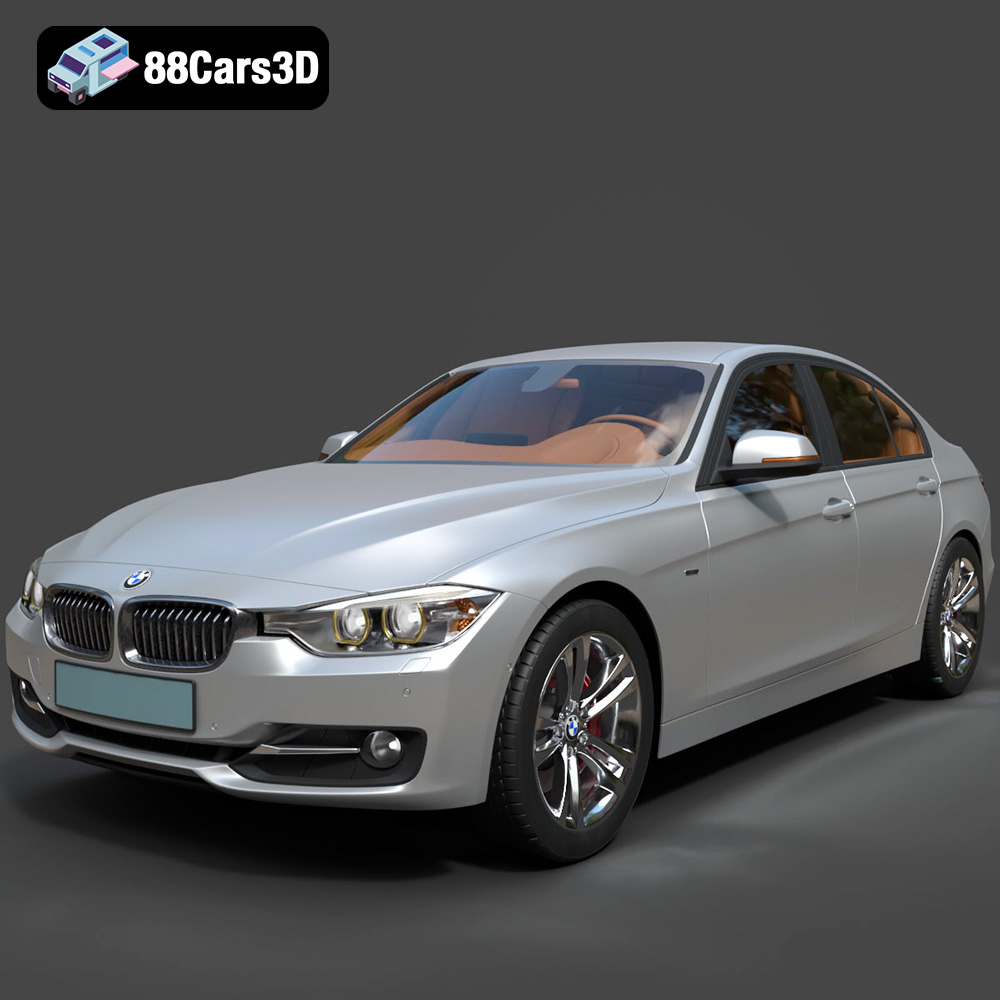
BMW 3 F30 3D Model
Texture: Yes
Material: Yes
Download the BMW 3 F30 3D Model featuring a detailed exterior, realistic interior, and optimized mesh. Includes .blend, .fbx, .obj, .glb, .stl, .ply, .unreal, and .max formats for rendering, simulation, and game development.
Price: $10.79
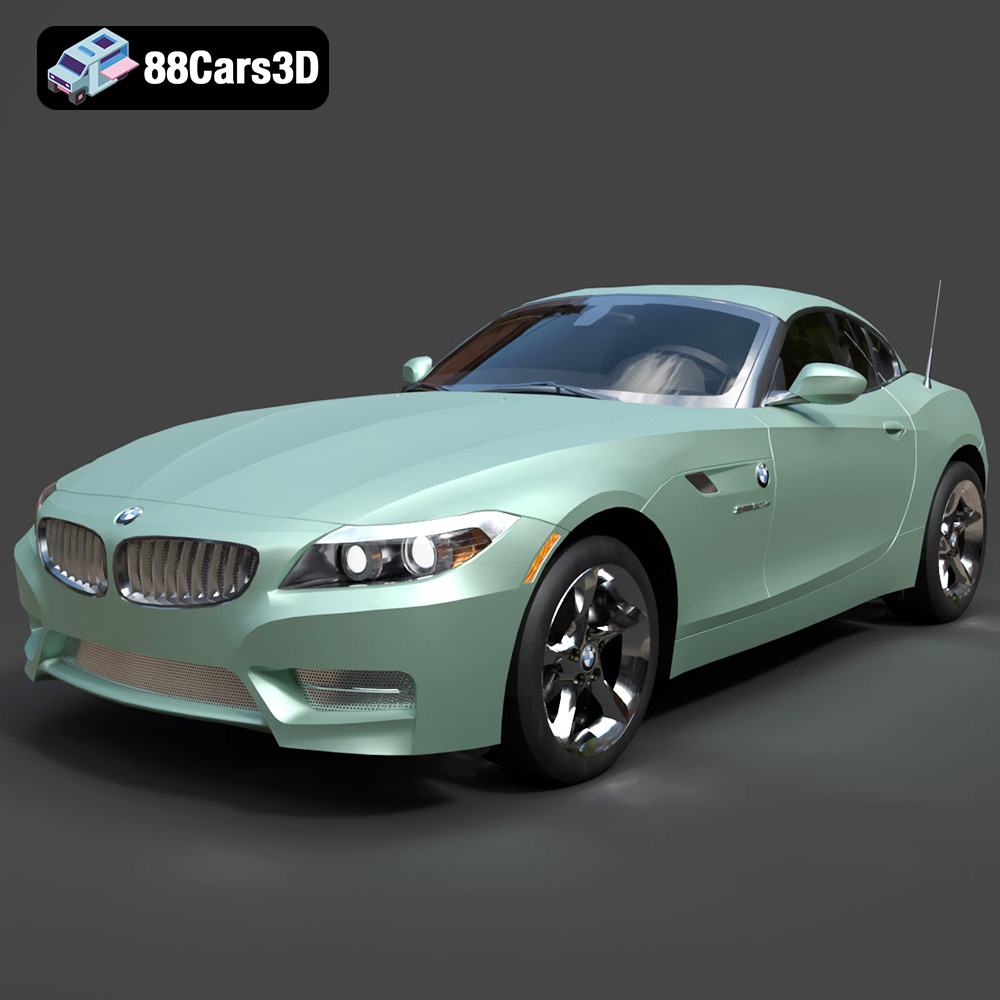
BMW Z4 Roadster E89 2012 3D Model
Texture: Yes
Material: Yes
Download the BMW Z4 Roadster E89 3D Model featuring clean geometry, realistic detailing, and a fully modeled interior. Includes .blend, .fbx, .obj, .glb, .stl, .ply, .unreal, and .max formats for rendering, simulation, and game development.
Price: $13.99

BMW Z4 E85 2005 3D Model
Texture: Yes
Material: Yes
Download the BMW Z4 E85 3D Model featuring clean geometry, realistic detailing, and a fully modeled interior. Includes .blend, .fbx, .obj, .glb, .stl, .ply, .unreal, and .max formats for rendering, simulation, and game development.
Price: $13.99

BMW M3 2024 3D Model
Texture: Yes
Material: Yes
Download the BMW M3 2024 3D Model featuring clean geometry, realistic detailing, and a fully modeled interior. Includes .blend, .fbx, .obj, .glb, .stl, .ply, .unreal, and .max formats for rendering, simulation, and game development.
Price: $13.99
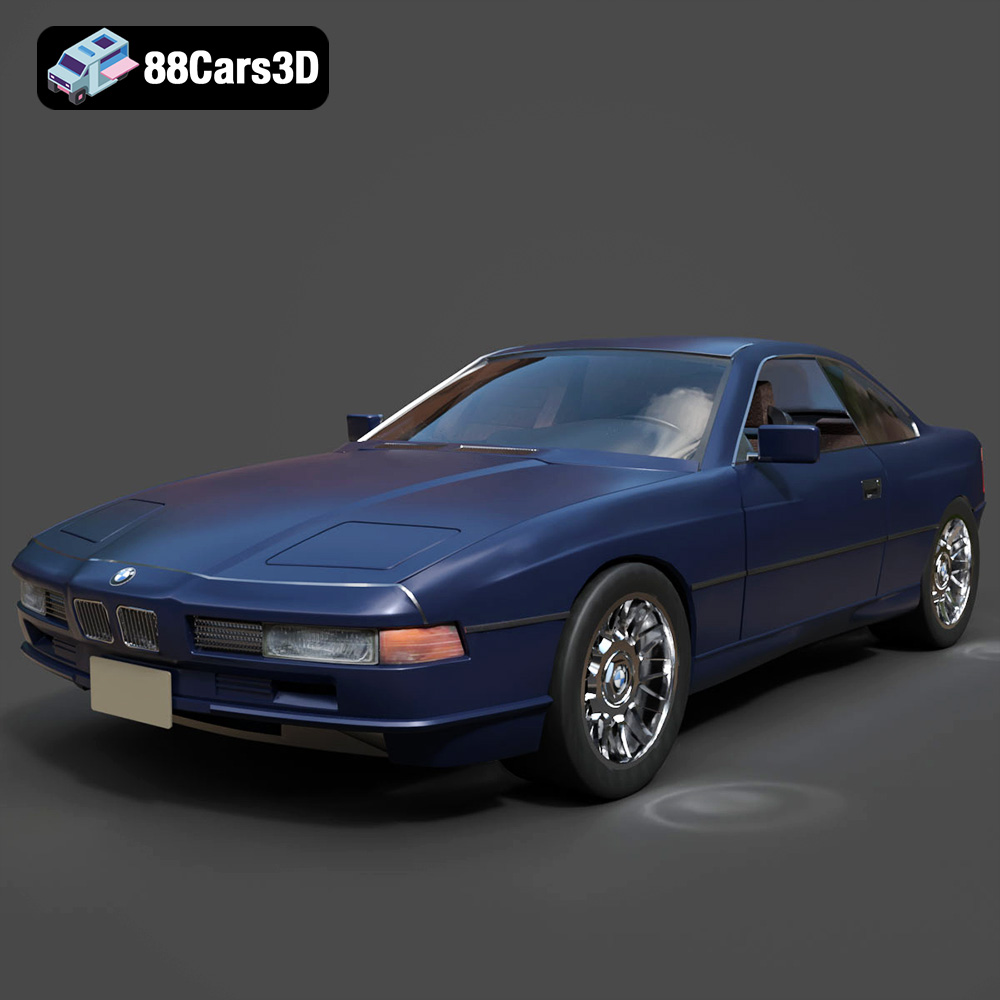
BMW 850i Coupe 1990 3D Model
Texture: Yes
Material: Yes
Download the BMW 850i Coupe 1990 3D Model featuring clean geometry, realistic detailing, and a fully modeled interior. Includes .blend, .fbx, .obj, .glb, .stl, .ply, .unreal, and .max formats for rendering, simulation, and game development.
Price: $13.99
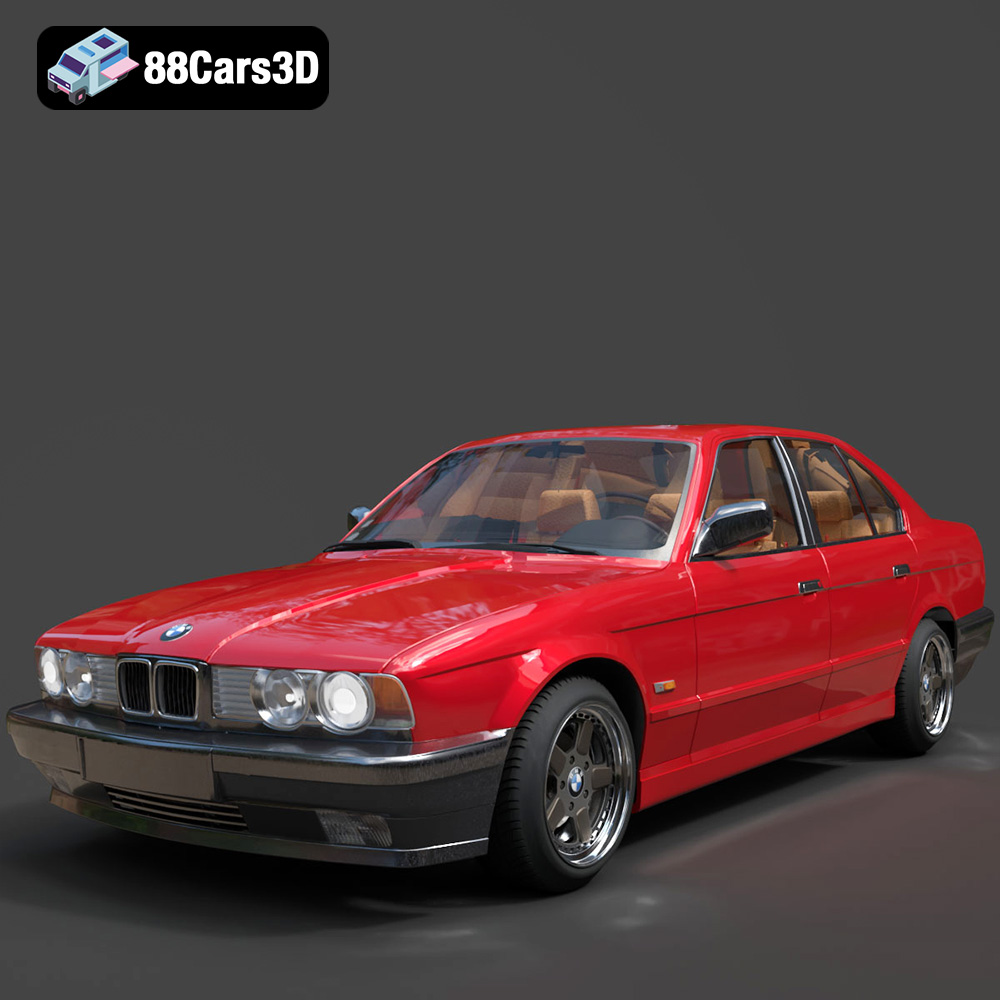
BMW 525i E34 1993 3D Model
Texture: Yes
Material: Yes
Download the BMW 525i E34 1993 3D Model featuring clean geometry, realistic detailing, and a fully modeled interior. Includes .blend, .fbx, .obj, .glb, .stl, .ply, .unreal, and .max formats for rendering, simulation, and game development.
Price: $12.99

BMW 7 Series 2016 3D Model
Texture: Yes
Material: Yes
Download the BMW 7 Series 2016 3D Model featuring luxurious design, detailed interior, and accurate exterior. Includes .blend, .fbx, .obj, .glb, .stl, .ply, .unreal, and .max formats for rendering, simulation, and game development.
Price: $10.79
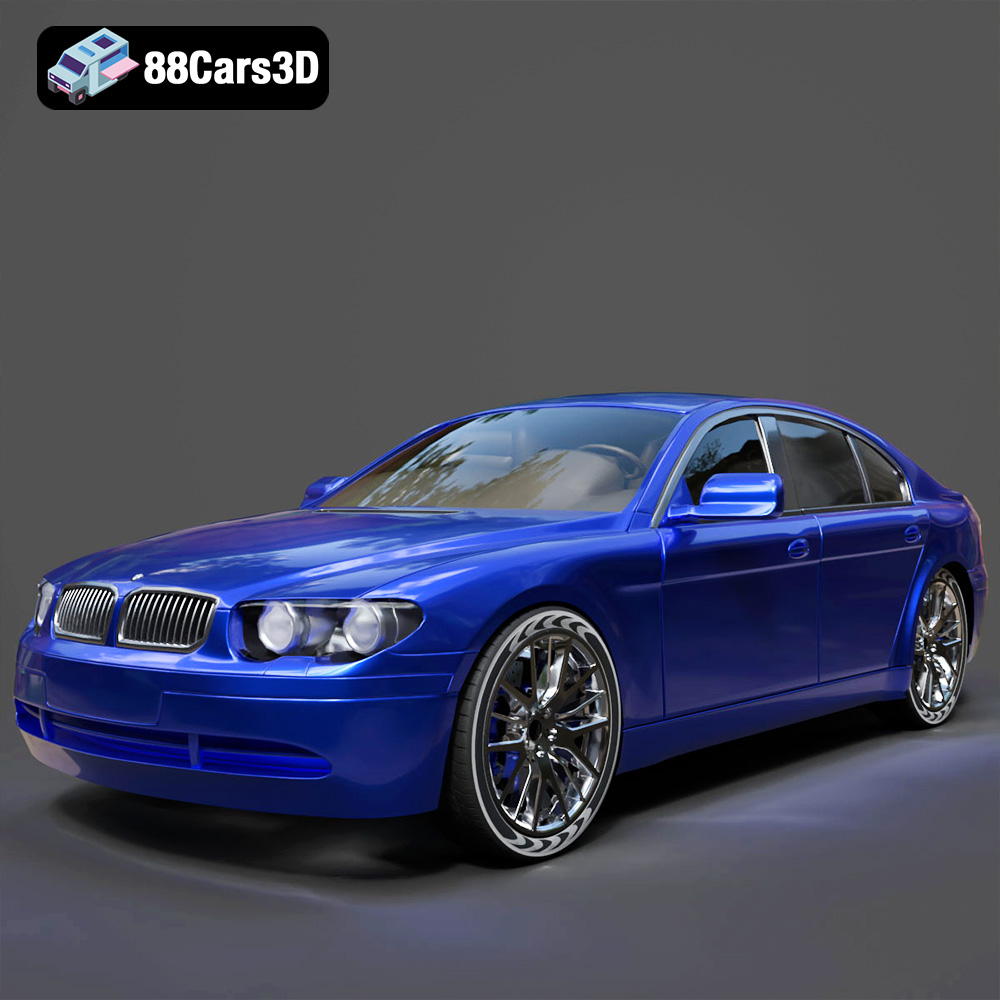
BMW 7 Series 30th Anniversary 3D Model
Texture: Yes
Material: Yes
Download the BMW 7 Series 30th Anniversary 3D Model featuring a meticulously crafted exterior, detailed interior, and realistic wheels. Includes .blend, .fbx, .obj, .glb, .stl, .ply, .unreal, and .max formats for rendering, simulation, and game development.
Price: $35.79
