

In the vibrant world of real-time rendering and interactive experiences, Unreal Engine stands as a titan, empowering developers to create everything from cinematic masterpieces to immersive games and cutting-edge visualizations. While platforms like 88cars3d.com provide the crucial foundation of high-quality 3D car models, the true magic often lies in bringing those static assets to life with sophisticated gameplay mechanics. For game developers aiming to craft dynamic and engaging vehicle combat or ability-driven automotive experiences, understanding the Unreal Engine Gameplay Ability System (GAS) is a game-changer.
The Gameplay Ability System is a robust, modular framework within Unreal Engine designed for building complex gameplay features such as character abilities, spells, combat skills, buffs, and debuffs. While traditionally associated with RPGs or character-based action games, its power and flexibility extend surprisingly well to vehicular combat or specialized automotive simulation games where vehicles themselves possess unique skills or interactive elements. Imagine a high-octane racing game where your custom car from 88cars3d.com can deploy an electromagnetic pulse, activate a temporary shield, or trigger an advanced nitro boost – all managed by GAS. This article will dive deep into GAS, showing you how to harness its capabilities to imbue your exquisite 3D car models with advanced combat and interactive mechanics, covering everything from initial setup and core concepts to integrating vehicle physics, optimizing performance, and achieving stunning visual effects.
The Foundation: Importing and Optimizing 3D Car Models from 88cars3d.com
Before any advanced abilities can be implemented, the vehicle itself must be integrated into Unreal Engine with precision and care. Sourcing high-quality 3D car models from marketplaces such as 88cars3d.com provides an excellent starting point, offering models often pre-optimized for real-time applications. However, additional steps are always necessary to ensure they perform optimally within a demanding combat environment where many vehicles and effects might be simultaneously active. Proper preparation here saves countless headaches down the line, ensuring your advanced combat mechanics run smoothly.
When you acquire a model, the first step is always an assessment of its topology, UV mapping, and material assignments. Clean geometry is paramount for performance and visual fidelity. Models from 88cars3d.com typically boast clean quad-based topology, but it’s crucial to inspect for any non-manifold edges, flipped normals, or excessive polygon density in areas that won’t benefit visually. For vehicle combat, where action is fast-paced, a balance between visual detail and performance is key. Decimation tools within your 3D software (like Blender or Maya) or Unreal Engine’s built-in Mesh Editor can help reduce polygon counts for less critical parts, while maintaining high detail on hero elements like the car body. Ensure each component of the car (body, wheels, windows, interior) is a separate mesh or has a logical material ID for flexible material assignment later.
Topology, UVs, and Mesh Prep for Combat Readiness
For models imported into Unreal Engine, particular attention should be paid to the UV layout. Your car models should ideally have multiple UV channels. UV Channel 0 is typically for base color, normal, and other PBR texture maps. UV Channel 1 is critical for lightmap baking, even if you’re primarily using Lumen. Clean, non-overlapping UVs on this channel are essential for static lighting components and for Global Illumination methods that rely on UVs. For detailed car models, a common practice is to have separate UVs for the main body, interior, and individual components like wheels and brake calipers, allowing for precise texture mapping and resolution allocation. Always ensure consistent mesh scaling – Unreal Engine operates on a unit of 1 Unreal Unit = 1 centimeter, so models should be scaled appropriately in your DCC application or upon import. This consistency is vital for physics simulations and correct interaction with the game world.
LODs and Performance Budgeting for Dynamic Scenes
Level of Detail (LOD) management is non-negotiable for vehicle combat games, especially when multiple high-fidelity car models are on screen simultaneously. High-quality models from 88cars3d.com will likely have a high polygon count suitable for close-up shots. You need to create several LODs to swap between lower-polygon versions of the model as the car moves further from the camera. Unreal Engine’s Static Mesh Editor provides robust tools for automatic LOD generation, but manual adjustments are often necessary to ensure visual integrity. Aim for a significant polygon reduction (e.g., LOD1 at 50% of base poly count, LOD2 at 25%, LOD3 at 10%) while maintaining key silhouettes. Beyond geometry, remember to also optimize skeletal meshes for animated components (like doors or suspensions) and consider texture streaming settings to manage memory usage, particularly for the large texture sets typically used for realistic car models. Each LOD should also have its corresponding lightmap UVs and collision meshes to ensure consistent behavior across distances.
Demystifying the Gameplay Ability System (GAS): Core Concepts
With your highly optimized 3D car models ready, it’s time to equip them with advanced combat capabilities using the Gameplay Ability System. GAS is not a simple drag-and-drop solution; it requires a foundational understanding of its core components. At its heart, GAS is built around an Ability System Component (ASC), which is attached to any actor (in our case, our car Pawn or Character) that can perform or be affected by abilities. Abilities themselves are defined as Gameplay Abilities (UGameplayAbility), while their effects (damage, healing, buffs, debuffs, cooldowns) are managed by Gameplay Effects (UGameplayEffect). Attributes (like health, speed, armor) are stored in Attribute Sets (UAttributeSet).
The beauty of GAS lies in its data-driven and modular design, allowing for highly reusable and scalable ability systems. Instead of writing monolithic ability functions, you break down gameplay mechanics into small, discrete, and easily manageable pieces. This approach makes it incredibly efficient to design, balance, and iterate on complex combat systems, crucial for games where different car models might have wildly varying abilities and statistics. Furthermore, GAS has built-in network replication support, making it ideal for multiplayer vehicle combat where ability synchronization is paramount. This robust framework helps to ensure fairness and responsiveness across all clients, a critical consideration for any online game.
Ability System Component (ASC) and Attribute Sets
The Ability System Component (ASC) is the central nervous system for your car’s abilities. You typically add this component to your vehicle’s Blueprint or C++ class. It manages all active abilities, applied gameplay effects, and tracks the vehicle’s attributes. Each car in your game would have its own ASC. Attached to the ASC are one or more Attribute Sets. These are simple UObjects that contain FGameplayAttribute properties, representing numerical statistics like “Health,” “MaxSpeed,” “ShieldDurability,” or “NitroFuel.” For a combat vehicle, you might have attributes for weapon damage, armor penetration, recharge rates, or even an “Overheat” attribute. When an attribute’s value changes, the ASC can notify other systems, enabling dynamic UI updates (e.g., a flashing health bar) or triggering other gameplay events. For instance, if “NitroFuel” attribute drops to zero, the ASC can automatically deactivate any active nitro boost ability.
Defining Gameplay Abilities (UGameplayAbility)
Gameplay Abilities are the actionable elements in the system. These are UObjects that encapsulate the logic for a specific action your car can perform, such as “Activate Nitro Boost,” “Deploy Mine,” “Fire Missile,” or “Engage EMP Shield.” Each Gameplay Ability can define its costs (e.g., consuming Nitro Fuel), cooldowns, activation conditions (e.g., “Must be moving to activate boost”), and the Gameplay Effects it applies. A typical Gameplay Ability’s lifecycle involves activation, execution, and potential termination. You can implement abilities entirely in Blueprint, C++, or a hybrid approach. For example, a “Nitro Boost” ability might: 1) check if the car has enough nitro fuel (an attribute), 2) apply a Gameplay Effect that temporarily increases the car’s speed and consumes fuel over time, and 3) spawn a particle effect (Niagara system) for visual feedback. The modularity means you can reuse the same “increase speed” Gameplay Effect across multiple abilities with different magnitudes or durations, making your system incredibly efficient to manage.
Crafting Dynamic Combat with Gameplay Effects and Tags
The true power of the Gameplay Ability System for advanced combat lies in the dynamic interplay of Gameplay Effects (GEs) and Gameplay Tags. GEs are the fundamental units for modifying attributes, applying status effects (buffs/debuffs), and managing timers like cooldowns or durations. They are data-driven recipes for changes, making them incredibly flexible and reusable. For instance, a single “Damage” GE could be configured with different magnitudes to represent a light machine gun hit versus a heavy missile impact, simply by varying its magnitude. Gameplay Tags, on the other hand, provide a powerful, hierarchical way to categorize and query abilities, effects, and even states within the game. Think of them as context markers that enable smart interactions and conditions throughout your combat system.
This data-driven approach means that many combat interactions can be configured directly in data assets without requiring changes to C++ or Blueprint code, significantly speeding up iteration and balancing. Want to change the duration of a shield or the damage of a rocket? You simply modify the relevant Gameplay Effect Data Asset. This separation of concerns is critical for maintaining complex combat systems where numerous abilities and their interactions need to be fine-tuned. Moreover, the built-in prediction and replication features of GEs ensure a smooth and responsive online multiplayer experience, crucial for fast-paced vehicular combat where latency can severely impact player perception and fairness.
Implementing Damage, Buffs, and Cooldowns
Gameplay Effects (GEs) are powerful data structures that describe how attributes are changed and how status effects are applied. For vehicle combat, you’d use GEs for:
- Damage: A GE can directly modify the “Health” attribute, with a damage magnitude calculated from weapon stats. It can also apply secondary effects like “Burning” (a periodic damage GE).
- Buffs: A “Nitro Boost” GE might temporarily increase the “MaxSpeed” and “Acceleration” attributes by a percentage for a set duration.
- Debuffs: A “EMP Stun” GE could apply a “CannotMove” tag and temporarily reduce “EnginePower” to zero.
- Cooldowns: GEs are commonly used to apply cooldowns to abilities. When an ability is activated, a GE is applied to the ASC that prevents the ability from being activated again until the GE expires.
- Costs: GEs can also be used to subtract resources (e.g., “AmmoCount” or “NitroFuel”) when an ability is activated.
GEs can be instant (applying once) or duration-based (applying over time). They can also be periodic, meaning they apply their effects every X seconds during their duration. The extensive configurability within a GE data asset allows for incredibly granular control over every aspect of an effect.
Leveraging Gameplay Tags for System Flexibility
Gameplay Tags are hierarchical names (e.g., Ability.Vehicle.Boost, Effect.Debuff.Stun, State.Moving) that you can associate with almost anything in GAS: Abilities, Effects, Attributes, and even the ASC itself. They serve several critical functions in a combat system:
- Activation Conditions: An ability might require the car to have the
State.Movingtag to activate. - Blocking Abilities: An “EMP Stun” GE might apply the
Ability.Block.Movementtag to the ASC, preventing any movement-related abilities from firing. - Filtering Effects: A “Shield” ability might apply a GE that grants the
Defense.Invulnerable.Explosiontag, making the car immune to effects that have theDamage.Type.Explosiontag. - UI and SFX: Gameplay Tags can drive UI changes (e.g., showing a “Stunned” icon) or trigger specific sound effects.
The hierarchical nature (e.g., Damage.Type.Fire is also Damage.Type) allows for broad or specific queries, greatly enhancing the flexibility and readability of your combat logic. Properly structured Gameplay Tags are the glue that holds complex GAS implementations together, enabling elegant solutions for intricate combat interactions without hardcoding dependencies. Further information on Gameplay Tags can be found on the official Unreal Engine documentation at dev.epicgames.com/community/unreal-engine/learning.
Integrating Vehicle Physics and GAS for Advanced Combat
For vehicular combat, the tight integration between the Gameplay Ability System and Unreal Engine’s robust vehicle physics is paramount. It’s not enough for an ability to merely change an attribute; that attribute change must meaningfully affect the car’s physical behavior. For example, a “Nitro Boost” ability implemented with GAS must directly interface with the vehicle’s movement component to provide a tangible surge of speed. This requires careful Blueprint scripting or C++ code to bridge the gap between GAS’s abstract mechanics and the concrete realities of vehicle dynamics. Achieving a seamless blend creates a truly immersive and responsive combat experience, where players feel the direct impact of their abilities on their driving performance.
This integration also extends to how abilities are activated and how their effects are perceived. A “Spin Attack” ability for a heavily armored vehicle might momentarily disable friction on the rear wheels and apply a rotational force, requiring the ability to not just apply a debuff but also directly manipulate the physics asset of the vehicle. Similarly, a “Tractor Beam” ability might apply forces to nearby enemy vehicles. The ability system provides the triggers and the logical outcomes, while the vehicle physics simulation translates those into physically believable (or dramatically exaggerated) movements and interactions. This synergy is where the rubber meets the road, transforming a collection of abilities into a cohesive and exciting combat system.
Blueprint Integration for Ability Activation
Most vehicle-specific Gameplay Abilities will be Blueprint-implemented for ease of iteration. Your car Pawn/Character Blueprint will house the Ability System Component (ASC) and often the Vehicle Movement Component (e.g., Chaos Vehicle Movement Component). When a player presses a button to activate an ability (e.g., “F” for Nitro Boost), this input is typically mapped to an Ability Input Tag. The ASC then tries to activate any Gameplay Ability associated with that tag. Inside the “Activate Nitro Boost” Gameplay Ability Blueprint, you would:
- Check Costs & Cooldowns: Use nodes like
Commit Ability (and Trigger Cooldown). - Apply Gameplay Effect: Apply a duration-based GE that increases “MaxSpeed” and “EngineTorque” attributes.
- Interact with Vehicle Physics: Use Blueprint nodes to directly get a reference to the vehicle’s movement component. Cast to the specific vehicle type (e.g.,
BP_MyCombatCar_C), then call functions likeSetMaxEngineTorque()orSetTurboMultiplier()on the Chaos Vehicle Movement Component, using the values from the applied GE or calculated within the ability. - Visual & Audio Feedback: Spawn Niagara particle effects (like exhaust flames) and play sound cues.
This direct manipulation ensures the ability’s effect is immediately felt in the driving mechanics.
Synchronizing Abilities with Vehicle State
Complex abilities often depend on the current state of the vehicle. For example, a “Drift Boost” ability might only activate if the car is currently drifting. You can achieve this synchronization using:
- Gameplay Tags on the Vehicle: Your vehicle Blueprint can apply Gameplay Tags to its own ASC based on its current state (e.g., apply
State.Vehicle.Driftingwhen sliding,State.Vehicle.Airbornewhen jumping). - Ability Activation Requirements: In your Gameplay Ability, you can define “Activation Blocked Tags” or “Activation Required Tags.” The “Drift Boost” ability would require the
State.Vehicle.Driftingtag to be present on the ASC. - Attribute Monitoring: If a “Shield” ability is active, and the “ShieldDurability” attribute (tracked by GAS) drops to zero due to damage, the ability can automatically end, and the visual shield effect can disappear. You can implement this by overriding
PostGameplayEffectExecutein your Attribute Set to listen for attribute changes.
This interplay ensures abilities are contextually relevant and react dynamically to the car’s physical environment and internal state, creating a deeply integrated combat experience. The official Unreal Engine documentation on Chaos Vehicles and GAS provides comprehensive resources for these integrations.
Visualizing Impact: PBR Materials, Lumen, Nanite, and Niagara
Advanced combat mechanics demand equally advanced visual feedback to convey power, impact, and strategy. Leveraging the stunning fidelity of Unreal Engine’s rendering features—PBR materials, Lumen, Nanite, and Niagara—transforms mere numerical effects into breathtaking spectacles. When your high-quality 3D car models, sourced from platforms like 88cars3d.com, engage in an ability-fueled skirmish, every explosion, shield shimmer, and nitro flame must contribute to the visceral experience. This section explores how to harness these technologies to make your vehicular combat truly shine, turning mundane gameplay events into unforgettable moments.
The visual impact is not just about aesthetics; it’s also crucial for gameplay clarity. Players need to instantly understand when a buff is active, when an enemy is debuffed, or the area of effect of an incoming ability. Well-designed particle effects, material changes, and dynamic lighting cues provide this vital information. Imagine an EMP ability that momentarily desaturates and distorts the visuals for affected vehicles, or a self-repair ability that manifests as glowing energy flowing across the car’s body. These visual cues, meticulously crafted with Unreal Engine’s toolset, elevate the entire combat experience beyond simple number changes, engaging players on a deeper, more immersive level. Moreover, these visual effects can be directly integrated into your Gameplay Abilities using Blueprint, ensuring they activate and deactivate in perfect synchronicity with the ability’s lifecycle.
High-Fidelity Car Materials and Real-time Lighting (Lumen)
The exquisite 3D car models from 88cars3d.com often come with stunning PBR (Physically Based Rendering) material setups. In Unreal Engine, this means importing textures for Base Color, Normal, Roughness, Metallic, and Ambient Occlusion. To create compelling combat scenes, these materials need to react realistically to dynamic lighting. Lumen, Unreal Engine 5’s fully dynamic Global Illumination and Reflections system, is ideal for this. It provides real-time indirect lighting and reflections, meaning your car’s glossy paintwork will accurately reflect nearby explosions, dynamic light sources (like headlights or ability effects), and the surrounding environment, all updating in real-time without pre-baked lightmaps.
- Material Customization: Beyond standard PBR, use Material Blueprints to add dynamic effects. A car’s paint material could have a parameter to control an emissive glow when a “Shield” ability is active, or show damage decals when its health attribute is low.
- Decals: Project damage decals (scorches, dents) onto the car body dynamically using Unreal’s Decal Actors, triggered by hit events or specific GEs.
- Lighting Scenarios: Use Lumen with various directional, point, and spot lights to create dramatic combat arenas. The way light spills and reflects off the car’s metallic surfaces and glass will add significant realism and visual punch to every ability activation and impact.
Further details on PBR materials and Lumen can be found in the Unreal Engine documentation.
Unleashing Visual Effects with Niagara and Nanite for Environments
Niagara, Unreal Engine’s advanced particle system, is your go-to for all combat-related visual effects: explosions, sparks, smoke trails from missiles, nitro boosts, energy fields for shields, and impactful hit reactions. Niagara’s modular nature allows you to create highly performant and artistically rich effects.
- Integrated Abilities: Within your Gameplay Ability Blueprint, you can spawn Niagara systems at specific sockets on your car model (e.g., exhaust pipes for nitro, weapon barrels for muzzle flash).
- Dynamic Parameters: Niagara systems can be controlled via Blueprint or C++ parameters, allowing you to scale an explosion’s intensity based on damage dealt or change the color of a shield effect based on team allegiance.
- Performance: Optimize Niagara systems with LODs, culling, and efficient emitter setups to avoid performance bottlenecks during intense combat.
Nanite, Unreal Engine 5’s virtualized geometry system, is perfect for rendering the incredibly detailed environments that your high-fidelity cars from 88cars3d.com will battle within. Nanite allows artists to import film-quality assets with billions of polygons, maintaining geometric detail without incurring significant performance costs. While directly affecting the car models themselves (which are typically Skeletal Meshes and don’t yet support Nanite for deformation), Nanite transforms the environmental backdrop. This means your combat arenas can be far more detailed and immersive, featuring realistic debris, highly detailed buildings, and intricate terrain, all rendered efficiently. This frees up performance budget for the dynamic elements: your ability effects, real-time lighting, and the complex physics of multiple combat vehicles. Together, Niagara and Nanite create a visually stunning and performant canvas for your advanced vehicular combat.
Performance and Scalability for Action-Packed Vehicle Combat
Developing a complex vehicle combat game with advanced GAS mechanics and high-fidelity 3D car models requires meticulous attention to performance and scalability. Lag, stuttering, or desynchronization can quickly ruin the player experience, especially in a fast-paced multiplayer environment. Therefore, optimizing every aspect, from geometric complexity to network replication, is crucial. The goal is to deliver a smooth, responsive, and visually appealing experience even during the most chaotic battles involving multiple players and a flurry of abilities and effects. This involves a holistic approach, considering how all components – the detailed car models, the complex physics, the dynamic abilities, and the myriad visual effects – interact and contribute to the overall frame budget and network bandwidth.
Scalability also means designing your system to perform well across a range of hardware configurations, from high-end PCs to consoles, and potentially even mobile or AR/VR platforms (though the latter introduces its own specific challenges). A well-optimized game doesn’t just run fast; it runs consistently and predictably, ensuring that every player has a fair and enjoyable experience. This proactive approach to performance tuning, integrated throughout the development cycle, rather than as a last-minute fix, is key to success in any real-time combat game. Leveraging Unreal Engine’s profiling tools (like the Session Frontend, GPU Visualizer, and Network Profiler) is indispensable for identifying bottlenecks and guiding optimization efforts.
Strategic LODs and Culling for Car Models
Revisiting Level of Detail (LOD) management, for vehicle combat, it extends beyond simple polygon reduction. Each car from 88cars3d.com will likely have multiple components, each with its own LODs. Ensure that:
- Aggressive LODing: For distant vehicles, not only should the mesh complexity drop, but also the texture resolution and material complexity. Use simple shaders for very distant LODs to save on pixel shader costs.
- Occlusion Culling: Unreal Engine automatically performs occlusion culling, not rendering objects hidden behind others. Ensure your environment meshes are properly set up for this.
- Distance Culling: Implement manual distance culling for less critical props or effects that are entirely irrelevant beyond a certain range.
- FX LODs: Niagara systems should also have LODs. Reduce particle count, emitter frequency, and complexity for effects viewed from afar.
This layered approach ensures that the GPU is only rendering the necessary detail for what the player sees, significantly impacting frame rates when multiple vehicles are in a busy scene.
Network Replication and Predictive Abilities
For multiplayer vehicle combat, GAS offers robust network replication features, essential for synchronizing abilities across clients.
- Ability Replication: Gameplay Abilities are designed to replicate their state. The ASC handles much of this automatically, ensuring an ability activated on one client correctly reflects on all others.
- Gameplay Effect Replication: GEs and their attribute changes are also replicated, so all players see the same health values, buffs, and debuffs.
- Client-Side Prediction: Critical for responsive gameplay, GAS supports client-side prediction. This means when a player activates an ability (e.g., nitro boost), the client immediately applies the effect locally without waiting for server confirmation. The server then validates the ability and corrects if necessary, minimizing perceived latency. This is crucial for fast-paced vehicle combat where a delay between input and effect can be fatal. Implement this by configuring your Gameplay Abilities to be “Server Initiated, Client Predicted” where appropriate.
For AR/VR applications, optimization becomes even more critical due to the higher frame rate requirements (e.g., 90 FPS per eye) and the need to maintain low latency. Every optimization discussed here is amplified, and further strategies like Foveated Rendering and instanced static meshes become essential. When planning for AR/VR, profile aggressively and simplify wherever possible to maintain a smooth and immersive experience, remembering that any hitches are far more jarring in VR. The Unreal Engine documentation has dedicated sections on network replication and performance for VR/AR.
Conclusion
The Unreal Engine Gameplay Ability System, while initially appearing complex, is an incredibly powerful and flexible framework for developing advanced combat mechanics. By understanding its core components—Ability System Components, Attribute Sets, Gameplay Abilities, and Gameplay Effects—and leveraging the versatility of Gameplay Tags, you can transform static 3D car models from 88cars3d.com into dynamic, ability-wielding machines ready for high-octane vehicular combat. The integration of GAS with Unreal Engine’s robust physics, advanced rendering features like Lumen and Nanite, and sophisticated visual effects via Niagara creates a truly immersive and engaging experience for players.
Building a compelling vehicle combat game requires not just creativity in ability design but also technical mastery in implementation and optimization. From meticulously preparing your high-quality car assets to ensuring smooth network replication and stunning visual feedback, every detail contributes to the overall success. By following the best practices outlined in this guide, you can create a performance-optimized, visually rich, and mechanically deep automotive combat experience that stands out. Dive into the world of GAS and elevate your Unreal Engine projects, turning your magnificent 3D car models into legends of the arena. Your journey into creating truly interactive and advanced automotive gameplay starts now.
Featured 3D Car Models

BMW 7 Series E38 3D Model
Texture: Yes
Material: Yes
Download the BMW 7 Series E38 3D Model featuring its iconic luxury sedan design and classic aesthetics. Includes .blend, .fbx, .obj, .glb, .stl, .ply, .unreal, and .max formats for rendering, simulation, and game development.
Price: $10.79

BMW 6 Series 640i F12 3D Model
Texture: Yes
Material: Yes
Download the BMW 6 Series 640i F12 3D Model featuring a sleek design and detailed interior. Includes .blend, .fbx, .obj, .glb, .stl, .ply, .unreal, and .max formats for rendering, simulation, and game development.
Price: $10.79

BMW 6 Coupe E63 3D Model
Texture: Yes
Material: Yes
Download the BMW 6 Coupe E63 3D Model featuring a sleek design, detailed interior, and realistic exterior. Includes .blend, .fbx, .obj, .glb, .stl, .ply, .unreal, and .max formats for rendering, simulation, and game development.
Price: $10.79
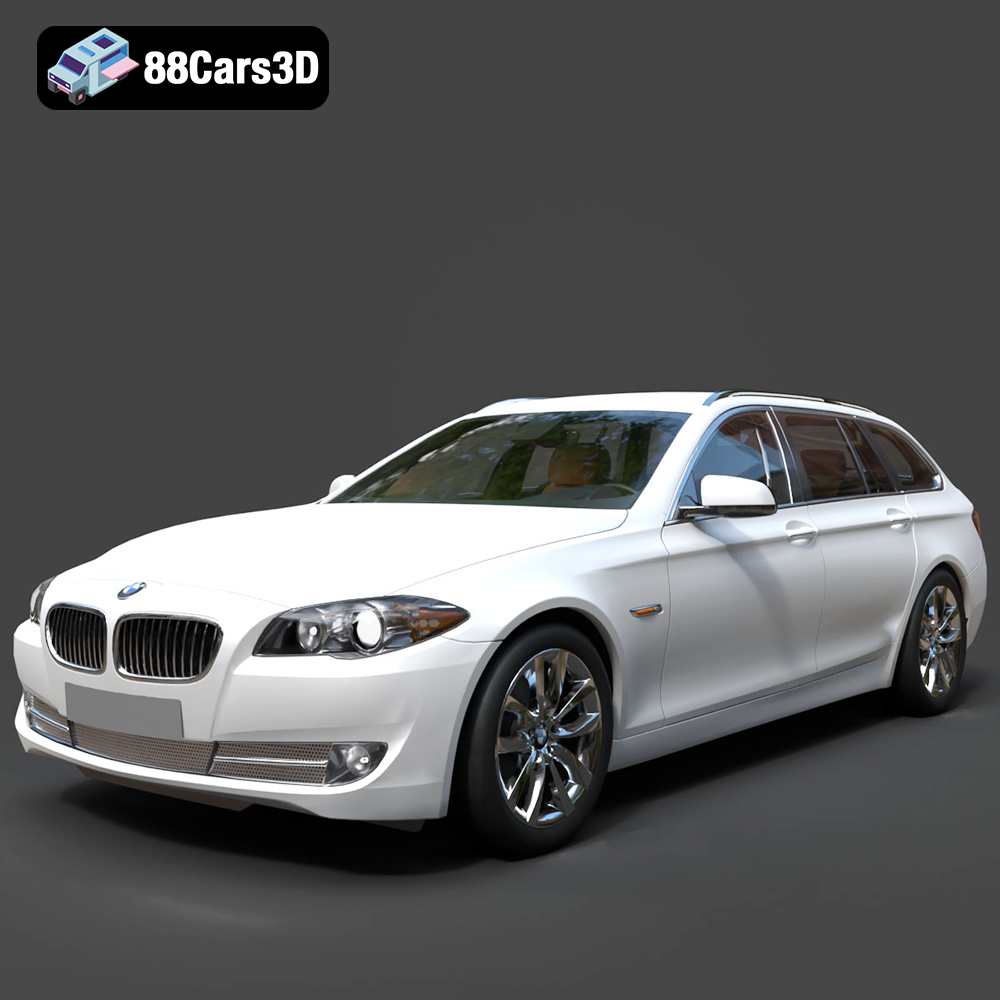
BMW 5 Series Touring F11-007 3D Model
Texture: Yes
Material: Yes
Download the BMW 5 Series Touring F11-007 3D Model featuring a detailed exterior and interior. Includes .blend, .fbx, .obj, .glb, .stl, .ply, .unreal, and .max formats for rendering, simulation, and game development.
Price: $10.79
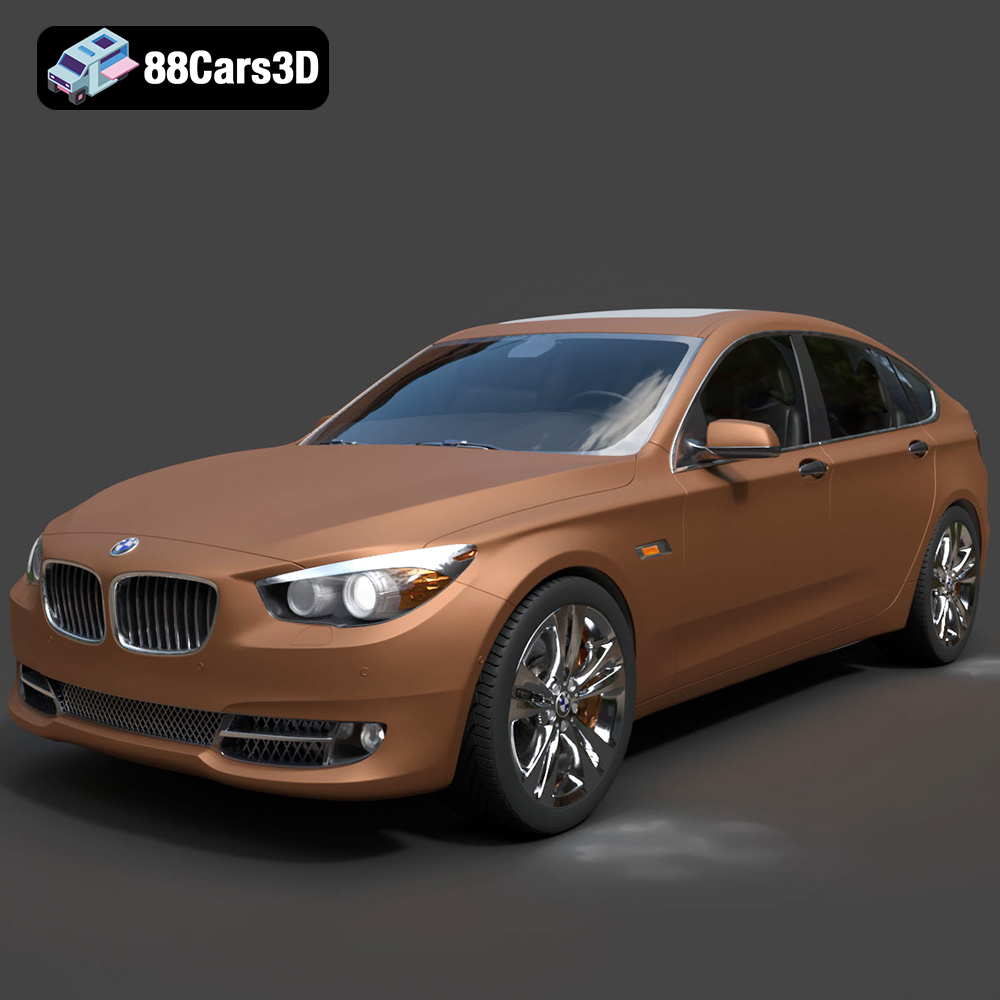
BMW 5 Series Gran Turismo F07-003 3D Model
Texture: Yes
Material: Yes
Download the BMW 5 Series Gran Turismo F07-003 3D Model featuring a detailed exterior and interior. Includes .blend, .fbx, .obj, .glb, .stl, .ply, .unreal, and .max formats for rendering, simulation, and game development.
Price: $10.79
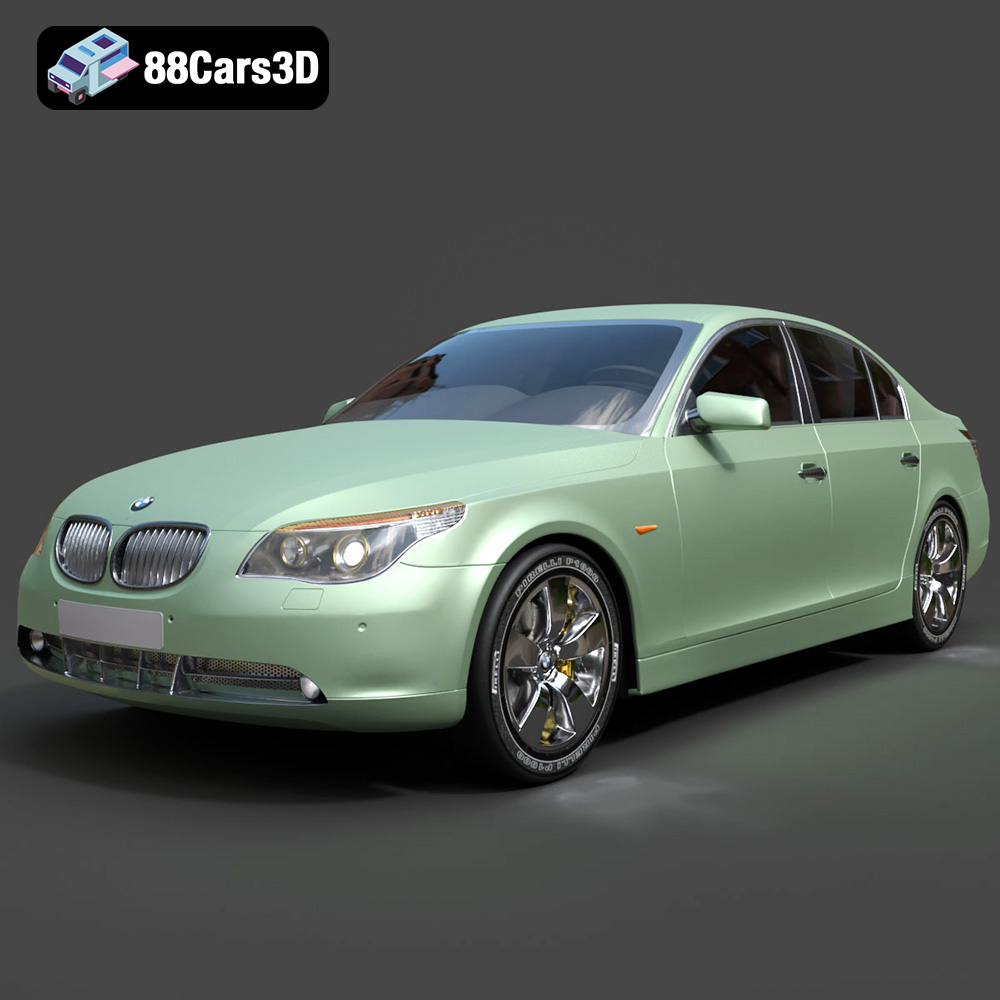
BMW 5 Series E60 3D Model
Texture: Yes
Material: Yes
Download the BMW 5 Series E60 3D Model featuring its iconic sedan design, detailed exterior, and interior. Includes .blend, .fbx, .obj, .glb, .stl, .ply, .unreal, and .max formats for rendering, simulation, and game development.
Price: $10.79

BMW 5 E34-535i 3D Model
Texture: Yes
Material: Yes
Download the BMW 5 E34-535i 3D Model featuring an iconic design, detailed exterior and interior, and accurate representation. Includes .blend, .fbx, .obj, .glb, .stl, .ply, .unreal, and .max formats for rendering, simulation, and game development.
Price: $10.79
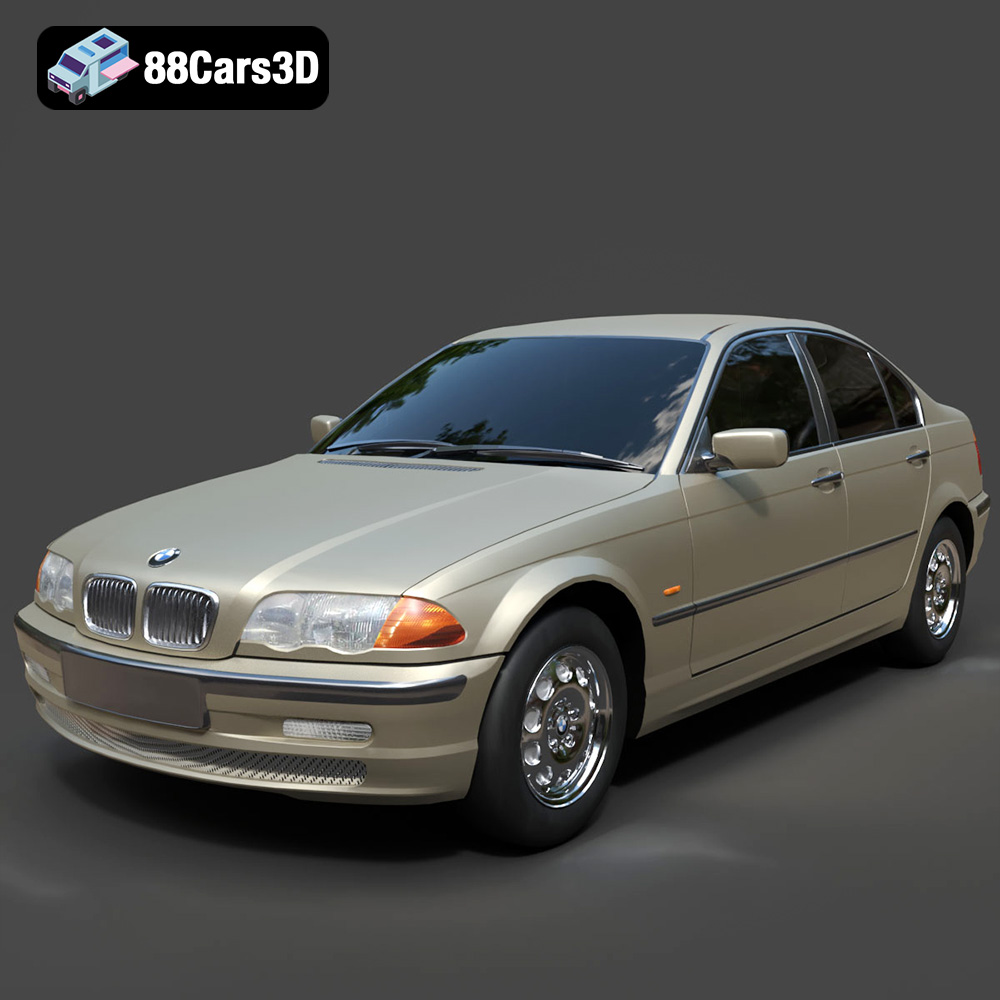
BMW 3 Series E46 3D Model
Texture: Yes
Material: Yes
Download the BMW 3 Series E46 3D Model featuring authentic exterior lines, a detailed interior, and separated components for animation. Includes .blend, .fbx, .obj, .glb, .stl, .ply, .unreal, and .max formats for rendering, simulation, and game development.
Price: $10.79
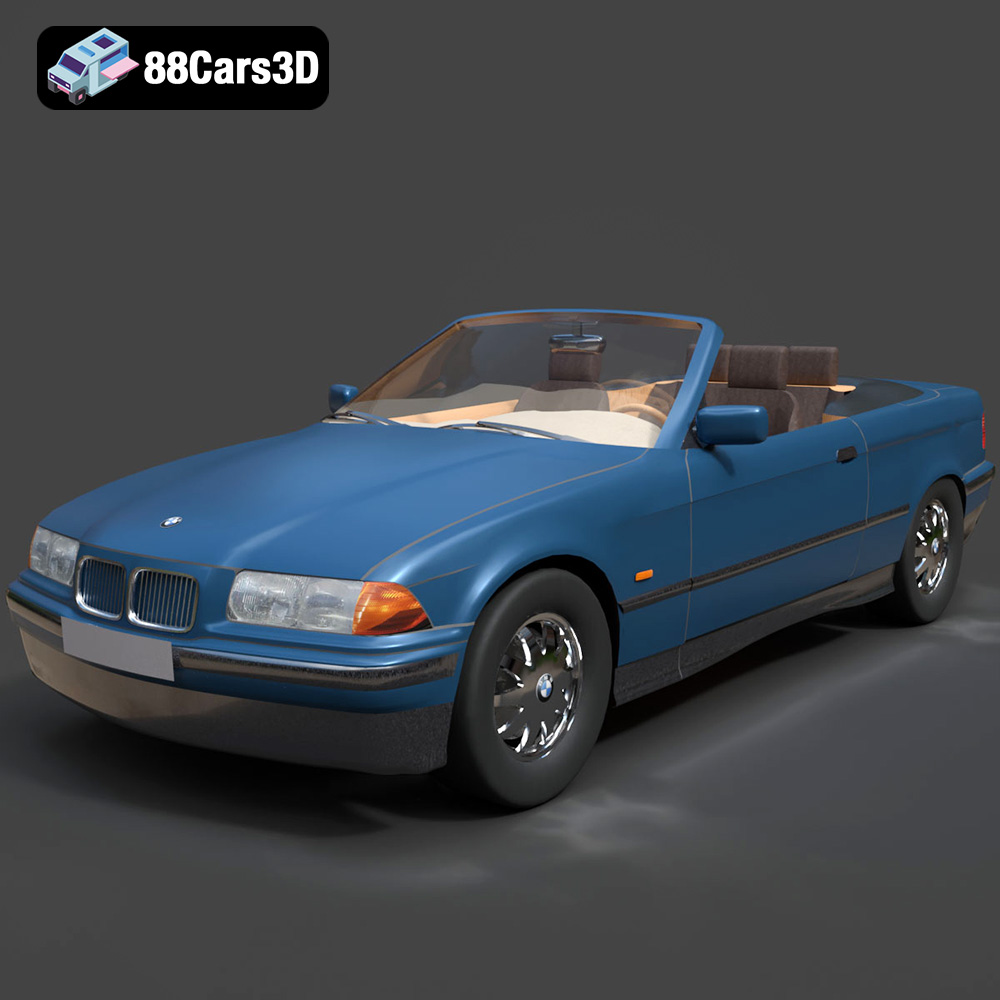
BMW 3 Series E36 Cabrio 325i 1998 3D Model
Texture: Yes
Material: Yes
Download the BMW 3 Series E36 Cabrio 325i 1998 3D Model featuring a classic convertible design and detailed interior. Includes .blend, .fbx, .obj, .glb, .stl, .ply, .unreal, and .max formats for rendering, simulation, and game development.
Price: $10.79

BMW 3 F30 3D Model
Texture: Yes
Material: Yes
Download the BMW 3 F30 3D Model featuring a detailed exterior, realistic interior, and optimized mesh. Includes .blend, .fbx, .obj, .glb, .stl, .ply, .unreal, and .max formats for rendering, simulation, and game development.
Price: $10.79
