

Mastering the Art of Realistic Reflections and Refractions in Automotive 3D Renders
In the competitive world of 3D visualization, especially when showcasing intricate machinery like high-performance automobiles, realism is paramount. For 3D artists, game developers, and automotive designers, the ability to create renders that blur the line between virtual and reality often hinges on one critical element: the accurate depiction of light interacting with surfaces. Specifically, mastering reflections and refractions can elevate a good 3D car model into an awe-inspiring digital masterpiece. These phenomena are not merely visual enhancements; they are fundamental to how we perceive material properties—from the lustrous sheen of polished chrome to the transparent clarity of a windshield and the deep, rich reflections in a car’s paintwork.
This comprehensive guide delves deep into the technical intricacies and artistic nuances required to achieve photorealistic reflections and refractions in your automotive renders. We’ll explore the underlying physics, sophisticated material setups, crucial environmental lighting, advanced rendering techniques, and post-processing strategies. Whether you’re working on high-fidelity visualizations for marketing, optimizing assets for immersive AR/VR experiences, or crafting stunning in-game visuals, understanding these principles is key. By the end of this article, you’ll possess the knowledge to transform your 3D car models, like those available on platforms such as 88cars3d.com, into breathtakingly real representations that captivate any audience.
The Science Behind Realistic Reflections and Refractions
Before diving into software specifics, it’s crucial to grasp the fundamental physics that govern how light behaves. Realistic reflections and refractions are not magic; they are the direct consequence of light interacting with various materials based on their physical properties. A deep understanding of these principles is the bedrock upon which truly convincing renders are built, enabling artists to diagnose issues and make informed decisions.
Understanding Light Interaction: Fresnel and Index of Refraction (IOR)
At the heart of realistic surface interaction lies the Fresnel effect. This optical phenomenon dictates that the reflectivity of a surface changes based on the angle at which light hits it. Simply put, surfaces reflect more light when viewed at a glancing angle (approaching 90 degrees to the normal) and transmit more light when viewed head-on (at 0 degrees to the normal). Think about looking at a puddle: you see reflections of the sky when looking across it, but you can see through it when looking straight down. This effect is crucial for materials like car paint, glass, and metals, as it adds depth and realism to their reflections. Most modern renderers and PBR shaders automatically handle the Fresnel effect based on a material’s Index of Refraction (IOR).
The Index of Refraction (IOR) is a dimensionless value that describes how light propagates through a specific medium. It quantifies how much light bends, or refracts, when it passes from one medium to another (e.g., from air into glass). Different materials have distinct IOR values: air is approximately 1.0, water is around 1.33, glass ranges from 1.45 to 1.70 (typical automotive glass is about 1.52), and diamond is 2.42. For metals, the IOR is complex, often represented by a value ‘n’ and ‘k’ (extinction coefficient), which accounts for both refraction and absorption. Accurate IOR values are critical for achieving correct refractions in transparent objects like windows and headlights, as well as for defining the reflectivity curve in opaque materials via the Fresnel effect.
Key Principles: Specular vs. Diffuse, Glossiness, Roughness
Light interaction can be broadly categorized into diffuse and specular components. Diffuse reflection occurs when light scatters evenly in all directions after hitting a rough surface. This is what gives objects their base color and is less sensitive to viewing angle. Specular reflection, on the other hand, is mirror-like, where light reflects off a smooth surface at the same angle it hit, producing highlights and reflections. Car paint, for instance, has both a diffuse base color and a strong specular component from its clear coat.
The quality and sharpness of specular reflections are controlled by parameters like Glossiness or Roughness (which are inverse of each other). A perfectly smooth, polished surface (low roughness, high glossiness) will produce sharp, clear reflections, like a mirror or highly polished chrome. As the surface becomes rougher (high roughness, low glossiness), the reflections become blurred, diffuse, and spread out, as seen on matte paint or brushed metals. Understanding and correctly adjusting these parameters, often controlled by grayscale textures, is fundamental to defining the material’s perceived smoothness and how clearly it reflects its environment. For optimal realism, especially for complex automotive surfaces, these parameters often require subtle variations across the model, achieved through detailed texture maps.
Mastering Materials: PBR Workflows for Automotive Surfaces
The foundation of photorealistic rendering lies in creating physically accurate materials. Physically Based Rendering (PBR) workflows are the industry standard for their ability to simulate how light interacts with surfaces in a way that is consistent with real-world physics. This consistency means materials look correct under any lighting condition, a critical factor for automotive rendering where a car might be viewed in various environments.
Car Paint Shaders: Layers of Realism (Base Coat, Clear Coat, Flakes)
Automotive paint is far more complex than a simple colored surface. A realistic car paint shader typically comprises several layers to mimic its real-world counterpart:
- Base Coat (Diffuse): This layer defines the primary color of the paint. It’s often a diffuse color map, but can also incorporate subtle variations in hue and value.
- Metallic Flakes: Many car paints contain tiny metallic or pearl flakes that catch the light and add sparkle. This effect is usually achieved by layering a very fine noise or procedural texture with a high specular value over the base coat, often with an anisotropic property to simulate the directional glint of the flakes. The size, density, and color of these flakes are key parameters.
- Clear Coat (Specular/Glossy): This is the most crucial layer for reflections. The clear coat is a highly reflective, often glossy, transparent layer that sits atop the base coat and flakes. It features a specific IOR (around 1.5) and high reflectivity, especially at glancing angles (Fresnel effect). The roughness/glossiness of this layer dictates how sharp or diffused the reflections are. A perfectly new car will have a very low roughness value, while an older, weathered car might have higher roughness due to micro-scratches.
Crafting these layers correctly requires careful attention to detail. For instance, creating a convincing flake effect might involve using a procedural noise texture as a mask for a metallic shader, scaled very finely, and then blended under the main clear coat shader. In renderers like Corona or V-Ray, these multi-layered materials are built using advanced shader networks, while Blender’s Cycles and Eevee engines leverage its powerful node-based shader editor to combine Principled BSDFs and other nodes.
Glass and Transparent Materials: IOR, Transmission, Absorption
Automotive glass, such as windshields, side windows, and headlights, requires careful attention to achieve believable transparency and refraction. The key parameters are:
- Index of Refraction (IOR): As mentioned, for typical glass, an IOR of 1.5-1.55 is a good starting point. This value dictates how much light bends as it passes through the glass.
- Transmission/Transparency: This controls how much light passes through the material. For clear glass, transmission should be high (close to 1).
- Absorption/Color: Real-world glass is rarely perfectly clear. It often has a subtle tint (e.g., green, blue, or a neutral grey) and can absorb some light, especially as its thickness increases. This is usually controlled by a ‘transmission color’ or ‘absorption color’ parameter, often paired with a ‘distance’ or ‘thickness’ value to simulate volumetric absorption.
- Roughness/Glossiness: While typically very smooth, even glass can have subtle roughness (e.g., frost, dirt, or etching) that blurs refractions and reflections.
Headlight lenses often feature complex internal geometry designed to refract and direct light. When modeling these, ensure your topology is clean and your mesh is watertight for accurate refraction calculations. For realism, consider subtle dust or water droplet maps on the exterior of the glass using normal and roughness maps.
Chrome and Metallic Finishes: Anisotropy and Polishing
Metals, like chrome, aluminum, or brushed steel found on car rims, trim, and badges, are purely reflective and have no diffuse component. Their color comes entirely from their reflections. Key aspects for metals include:
- Base Color (Albedo): For metals in PBR, the base color map defines the metallic tint of the reflections (e.g., a slightly blue tint for chrome, yellow for gold).
- Metallic Workflow: In a metallic workflow, the ‘metallic’ parameter is set to 1.0 (or close to it), and the base color directly influences the color of reflections.
- Roughness/Glossiness: Controls the sharpness of reflections. Highly polished chrome will have very low roughness, yielding crisp, mirror-like reflections. Brushed aluminum, conversely, will have higher roughness with directional blurring.
- Anisotropy: This is a crucial parameter for brushed or grooved metals. Anisotropic reflections occur when the surface roughness varies depending on the direction. This creates characteristic elongated highlights, like those seen on brushed aluminum or spun metal hubcaps. It’s controlled by an ‘anisotropy’ value and an ‘anisotropic rotation’ map, which dictates the direction of the brushing.
Achieving realistic metallic surfaces often involves carefully crafted roughness maps, potentially with anisotropic directionality, to convey the manufacturing process and texture of the metal. Ensure your UV mapping is clean for anisotropic effects to render correctly, as the direction of anisotropy is often tied to the UV layout.
Environment and Lighting: The Unsung Heroes of Reflectivity
Even with perfectly sculpted 3D car models and meticulously crafted PBR materials, your renders will fall flat without a thoughtfully designed lighting and reflection environment. The reflections seen on a car’s surface are literally images of its surroundings. Therefore, the environment is as much a part of the material’s appearance as its inherent properties.
HDRI for Image-Based Lighting and Reflections
High Dynamic Range Images (HDRIs) are the industry standard for realistic image-based lighting (IBL) and reflections. An HDRI is a 360-degree panoramic image that captures an enormous range of light intensities, far beyond what standard image formats can store. When used as an environment map in a 3D scene, an HDRI provides:
- Realistic Lighting: The light emitted from the HDRI illuminates the scene, mimicking the natural fall-off and color of real-world light sources.
- Accurate Reflections: The HDRI’s image content is directly reflected in all reflective surfaces, providing incredibly convincing environmental reflections that match the lighting.
- Variety: A vast library of HDRIs exists, ranging from studio setups to diverse outdoor locations (cityscapes, forests, industrial zones), allowing you to place your 3D car model into virtually any environment.
When selecting an HDRI, consider its resolution (higher resolution means sharper reflections), its dynamic range (for accurate light intensities), and its subject matter relative to your scene. For example, a car render meant to evoke a sunny afternoon will benefit from an outdoor HDRI with a strong sun element. You can often rotate the HDRI to find the most pleasing lighting and reflection angles. For indoor studio renders, a studio-based HDRI can provide soft, diffused reflections perfect for showcasing form without distraction.
Studio Lighting Setups: Creating Controlled Reflections
While HDRIs are excellent for broad environmental lighting, studio lighting setups allow for precise control over reflections and highlights. This is particularly important for commercial renders where specific angles and details of the 3D car model need to be emphasized. Common studio lighting techniques include:
- Softbox and Strip Lights: These large, diffused light sources create broad, soft reflections that highlight the contours of the car’s body panels without harsh hot spots. They are ideal for clean, professional studio shots.
- Reflective Cards: Large white or silver cards, placed strategically outside the camera’s view, can be used to bounce light back onto the car, filling in shadows or creating subtle, controlled reflections. Black cards can also be used to absorb light and create sharper, darker reflections to define edges.
- Spotlights and Gobos: Used to create specific highlights, rim lights, or project textures/patterns onto the car for artistic effects.
The key to studio lighting for automotive rendering is not just to illuminate the car, but to carefully sculpt its reflections to emphasize its shape, design lines, and material properties. Experiment with light placement to see how reflections crawl across the surface, revealing the underlying topology and form of your 3D car models.
The Role of Reflective Cards and Light Gels
Beyond primary light sources, reflective cards and light gels serve as powerful tools for fine-tuning reflections and adding artistic flair. Reflective cards (or ‘bounce cards’) are plain geometry objects (often simple planes) that are given a highly reflective material (e.g., pure white or a subtle metallic shader) and placed strategically to reflect light onto the car. They are invaluable for:
- Shaping Reflections: By varying their size, shape, and placement, you can sculpt the reflections on the car’s surface, defining edges and enhancing contours.
- Filling Shadows: They can gently illuminate areas that would otherwise be too dark, providing subtle fill light.
- Adding Detail to Reflections: Even when not directly lighting the car, a well-placed reflective card can become part of the reflected environment, adding interesting visual elements to a glossy surface.
Light Gels, or gobos (go-betweens), are textures or patterns applied to light sources to project specific shapes, colors, or gradients. While not directly creating reflections, they influence the light that *is* reflected. For example, a soft gradient gel on a light source can create a nuanced reflection across a car panel, mimicking real-world studio conditions with large softboxes that have subtle fall-offs. These techniques are often employed in high-end automotive advertising to create highly stylized and dramatic lighting scenarios.
Advanced Rendering Techniques and Software-Specific Workflows
With materials and environments set, the next step is to leverage your chosen rendering software to compute these complex light interactions. Different renderers employ various algorithms and offer a plethora of settings that significantly impact the quality and performance of reflections and refractions.
Ray Tracing vs. Rasterization: Accuracy and Performance
At a fundamental level, rendering light interaction involves two primary approaches:
- Ray Tracing: This method simulates light by tracing individual rays from the camera into the scene, calculating their bounces, refractions, and interactions with materials. It’s highly accurate, producing incredibly realistic reflections, refractions, shadows, and global illumination. Modern renderers like Corona, V-Ray, Cycles (Blender), and Arnold are all ray tracers. The downside is computational cost – more bounces and higher sample counts lead to longer render times. However, the accuracy of ray tracing makes it indispensable for photorealistic automotive rendering.
- Rasterization: This method primarily works by projecting 3D geometry onto a 2D screen. It’s extremely fast and is the foundation of real-time rendering in game engines (Unity, Unreal Engine). While reflections can be simulated using techniques like screen-space reflections (SSR), reflection probes, and planar reflections, they are approximations and generally less physically accurate than ray tracing. For high-fidelity reflections in game assets, a hybrid approach often uses pre-baked reflection probes with real-time SSR.
For offline rendering of detailed 3D car models, ray tracing is the preferred choice due to its superior realism for reflections and refractions. For game-ready assets, understanding the limitations and capabilities of real-time reflection techniques is crucial for performance optimization.
Render Settings for Optimal Reflections: Samples, Bounces, Caustics
Within ray tracing renderers, several settings directly impact the quality of reflections and refractions:
- Render Samples/Passes: This determines the number of light rays shot into the scene. Higher samples reduce noise (graininess) and produce cleaner reflections and global illumination. The optimal number depends on the scene’s complexity and desired quality.
- Reflection/Refraction Bounces: This setting controls how many times a light ray can reflect or refract off surfaces. For truly realistic scenarios, especially with multiple reflective or refractive objects (e.g., stacked glass, complex headlight geometry), higher bounce counts are necessary. Insufficient bounces can lead to reflections suddenly cutting off or transparent objects appearing opaque. Generally, 4-8 reflection bounces and 8-12 refraction bounces are good starting points for complex automotive scenes.
- Caustics: These are patterns of light and shadow created when light is focused or scattered by a curved reflective or refractive surface (e.g., light patterns cast by a glass lens). While computationally expensive, enabling caustics can add an incredible layer of realism to scenes with glass elements, such as headlights or water puddles. Many renderers offer options for approximate or brute-force caustics, with varying levels of quality and performance impact.
- Denoising: Modern renderers incorporate denoising algorithms (e.g., NVIDIA OptiX, Intel Open Image Denoise) that can intelligently remove noise from renders, allowing for lower sample counts and faster render times while maintaining image quality. This is particularly useful for reflection-heavy scenes.
Software Deep Dive: 3ds Max/Corona, Blender/Cycles, V-Ray, Arnold
Each renderer offers its own nuances for achieving realistic reflections and refractions:
- 3ds Max with Corona Renderer: Corona is renowned for its ease of use and physical accuracy. Its material editor makes building complex car paint shaders straightforward using layered materials. For reflections, focus on using quality HDRIs, adjusting the ‘Max Depth’ for reflections and refractions in the render settings, and leveraging the physically accurate PBR material system. Corona’s denoiser is highly effective for cleaning up noisy reflections.
- Blender with Cycles: Blender’s Cycles renderer is a powerful, unbiased path tracer. For realistic car renders, utilizing the Principled BSDF shader for all materials is key. Set the ‘Metallic’ slider to 1 for metals and adjust ‘Roughness’ for surface smoothness. For glass, use the Principled BSDF with ‘Transmission’ set to 1 and adjust ‘IOR’. For multi-layered car paint, blend multiple Principled BSDFs using ‘Mix Shader’ nodes. Ensure you’re working with Blender 4.4 for the latest features and optimizations. You can find comprehensive documentation on setting up materials and rendering in Cycles at the official Blender 4.4 manual: https://docs.blender.org/manual/en/4.4/. Pay particular attention to the ‘Light Paths’ settings in the Render Properties to control ‘Max Bounces’ for diffuse, glossy, transmission, and volume to ensure light bounces sufficiently for accurate reflections and refractions.
- V-Ray: A veteran in architectural and product visualization, V-Ray offers extensive controls. The V-Ray Material is highly versatile; use its ‘Reflect’ and ‘Refract’ parameters, along with the ‘Fresnel IOR’ to define reflective and refractive properties. V-Ray’s ‘Ray Traced Mode’ for reflections/refractions provides high accuracy, and its ‘Max depth’ settings control bounce limits. V-Ray’s Light Mix feature allows for adjusting light intensities during post-processing, which can subtly affect reflections.
- Arnold: Known for its robust rendering in film and VFX, Arnold excels at complex physically accurate light transport. The ‘Standard Surface’ shader is your go-to for all materials, featuring dedicated parameters for ‘Specular’ (reflections) and ‘Transmission’ (refraction) with adjustable ‘IOR’ and ‘Roughness’. Arnold handles caustics very well, though they can be resource-intensive. Its deep integration with Maya and other DCCs makes it a powerful choice for high-fidelity automotive work.
Post-Processing and Compositing for Enhanced Realism
While a strong render is the goal, the final polish often happens in post-production. Compositing software like Adobe Photoshop, Affinity Photo, DaVinci Resolve, or even Blender’s compositor can take your renders to the next level, enhancing reflections and refractions and integrating them seamlessly into their final context.
Render Passes: Reflection, Refraction, Specular, Normals
To gain maximum control in post-processing, it’s essential to render out multiple passes (also known as AOV’s – Arbitrary Output Variables). These passes isolate different components of the final image, allowing for independent manipulation:
- Reflection Pass: Contains only the reflection data, allowing you to brighten, darken, or subtly color-shift reflections without affecting other elements.
- Refraction Pass: Isolates the refracted light, useful for adjusting the clarity or tint of glass elements.
- Specular Pass: Specifically captures the specular highlights, giving you control over the “shininess” of surfaces.
- Normals Pass: Provides a color representation of the surface normals, which can be invaluable for creating masks or re-lighting effects in post-production.
- AO (Ambient Occlusion) Pass: Adds subtle contact shadows, enhancing depth, especially in crevices and between panels, which can indirectly make reflections appear more grounded.
By rendering these passes, you gain a non-destructive workflow where you can fine-tune every aspect of light interaction. For example, you might subtly boost the reflection pass to make the car paint appear glossier, or gently desaturate the refraction pass on the windshield to reduce distractions.
Adding Effects: Glare, Bloom, Lens Distortion
Once you have your clean render and passes, adding subtle photographic effects can significantly enhance realism:
- Glare/Streaks: Bright highlights, especially from direct light sources reflecting off polished surfaces, can produce optical glare or lens flares. Adding these effects in post-production with tools that simulate real-world camera optics can add drama and photographic realism. Avoid overdoing it, as excessive glare can look artificial.
- Bloom: This is the effect where light “bleeds” from very bright areas into surrounding darker regions, mimicking how light scatters within a camera lens. A subtle bloom on strong reflections or highlights can make them feel more integrated and luminous.
- Chromatic Aberration: A common lens distortion where colors are separated, often seen as a subtle colored fringe around high-contrast edges. Used sparingly, this can add a touch of imperfection that enhances realism, especially for renders aiming for a cinematic look.
- Vignetting: A slight darkening of the image corners, a natural characteristic of many lenses, can help draw the viewer’s eye towards the center of the car.
These effects, when applied judiciously, can trick the viewer’s eye into perceiving the image as a photograph rather than a render. The key is subtlety; even imperceptible applications can make a significant difference.
Color Grading and Final Touches
The final stage of post-processing involves color grading and overall image refinement. This is where you establish the mood and aesthetic of your render. Adjustments include:
- Contrast and Brightness: Essential for making the image pop and ensuring reflections have appropriate punch.
- Color Balance: Correcting any color casts and ensuring the white balance is accurate for the scene’s lighting.
- Saturation: Adjusting the intensity of colors. Often, a slight desaturation in reflections can make them feel more integrated.
- Sharpening: Applying a subtle sharpening filter can enhance the detail in textures and reflections, but be careful not to introduce artifacts.
- Noise/Grain: Sometimes, adding a very fine layer of photographic grain can help blend the render with real-world elements and reduce any “digital” feel, particularly useful for game assets where a consistent aesthetic across all visuals is important.
Remember that the goal is to make the entire image cohesive. The reflections and refractions should not exist in isolation but should contribute to the overall realism and artistic vision of your automotive render. Paying meticulous attention to these final touches ensures that the high-quality 3D car models, perhaps sourced from marketplaces like 88cars3d.com, are presented in their absolute best light.
Conclusion
Achieving truly realistic reflections and refractions in 3D automotive renders is a multifaceted discipline that combines scientific understanding with artistic finesse. It’s about more than just applying a shiny material; it’s about meticulously crafting every aspect of your scene, from the underlying physics of light interaction to the intricate details of your materials, the careful design of your lighting environment, and the final touches in post-processing. By mastering the Fresnel effect, understanding IOR values, building complex PBR car paint shaders, and leveraging the power of HDRIs and studio lighting, you lay a solid foundation for breathtaking visuals.
The journey to photorealism is iterative, requiring patience and a keen eye for detail. Experiment with different parameters, study real-world photography of cars, and constantly refine your techniques. Remember that your 3D car models, whether for automotive rendering, game development, AR/VR, or visualization, communicate their quality through their visual fidelity. The ability to convincingly portray the interplay of light on surfaces—the glint of chrome, the depth of paint, the clarity of glass—is what truly differentiates an ordinary render from an extraordinary one. Continue to explore, innovate, and push the boundaries of what’s possible in 3D, and your automotive renders will undoubtedly stand out.
Featured 3D Car Models

BMW 4 Series F32 3D Model
Texture: Yes
Material: Yes
Download the BMW 4 Series F32 3D Model featuring clean geometry, realistic detailing, and a fully modeled interior. Includes .blend, .fbx, .obj, .glb, .stl, .ply, .unreal, and .max formats for rendering, simulation, and game development.
Price: $12.99
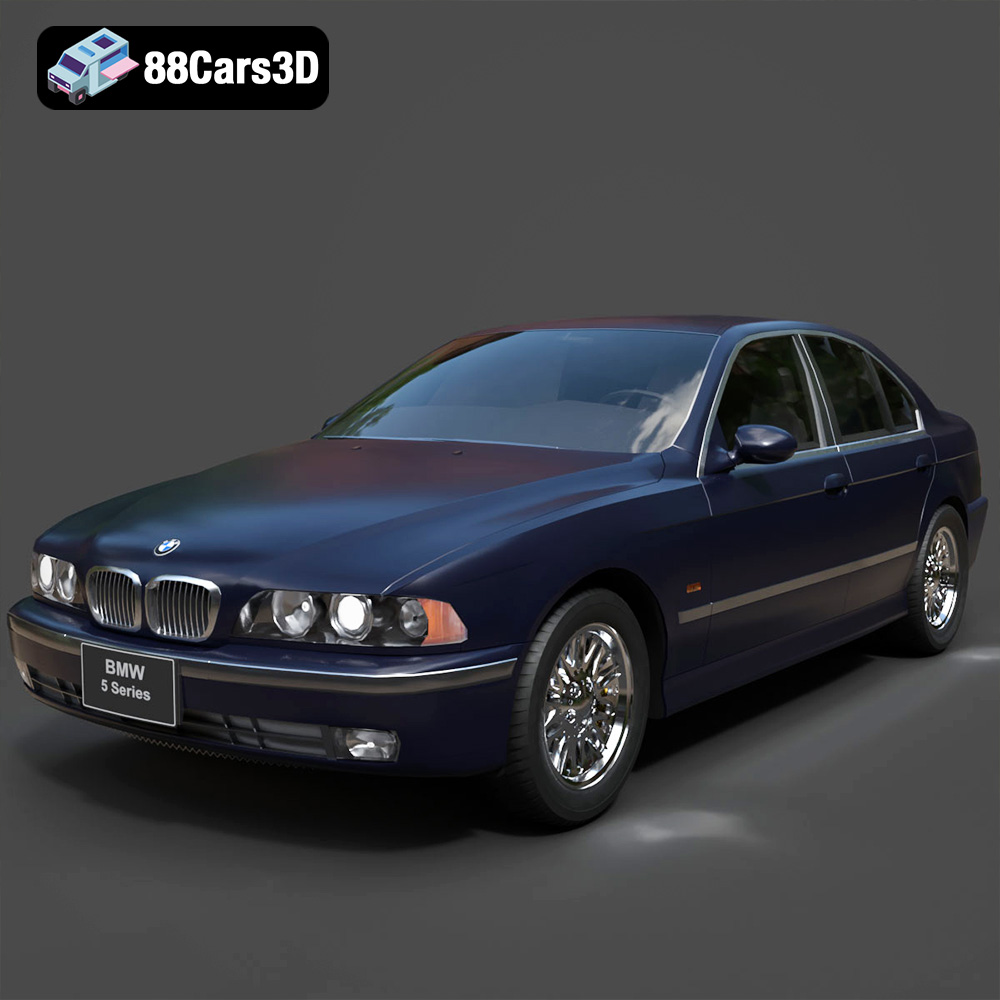
BMW E39 M5-540i 3D Model
Texture: Yes
Material: Yes
Download the BMW E39 M5-540i 3D Model featuring its iconic sedan design, detailed exterior, and realistic interior. Includes .blend, .fbx, .obj, .glb, .stl, .ply, .unreal, and .max formats for rendering, simulation, and game development.
Price: $10.79

BMW 7 Series E38 3D Model
Texture: Yes
Material: Yes
Download the BMW 7 Series E38 3D Model featuring its iconic luxury sedan design and classic aesthetics. Includes .blend, .fbx, .obj, .glb, .stl, .ply, .unreal, and .max formats for rendering, simulation, and game development.
Price: $10.79

BMW 6 Series 640i F12 3D Model
Texture: Yes
Material: Yes
Download the BMW 6 Series 640i F12 3D Model featuring a sleek design and detailed interior. Includes .blend, .fbx, .obj, .glb, .stl, .ply, .unreal, and .max formats for rendering, simulation, and game development.
Price: $10.79

BMW 6 Coupe E63 3D Model
Texture: Yes
Material: Yes
Download the BMW 6 Coupe E63 3D Model featuring a sleek design, detailed interior, and realistic exterior. Includes .blend, .fbx, .obj, .glb, .stl, .ply, .unreal, and .max formats for rendering, simulation, and game development.
Price: $10.79
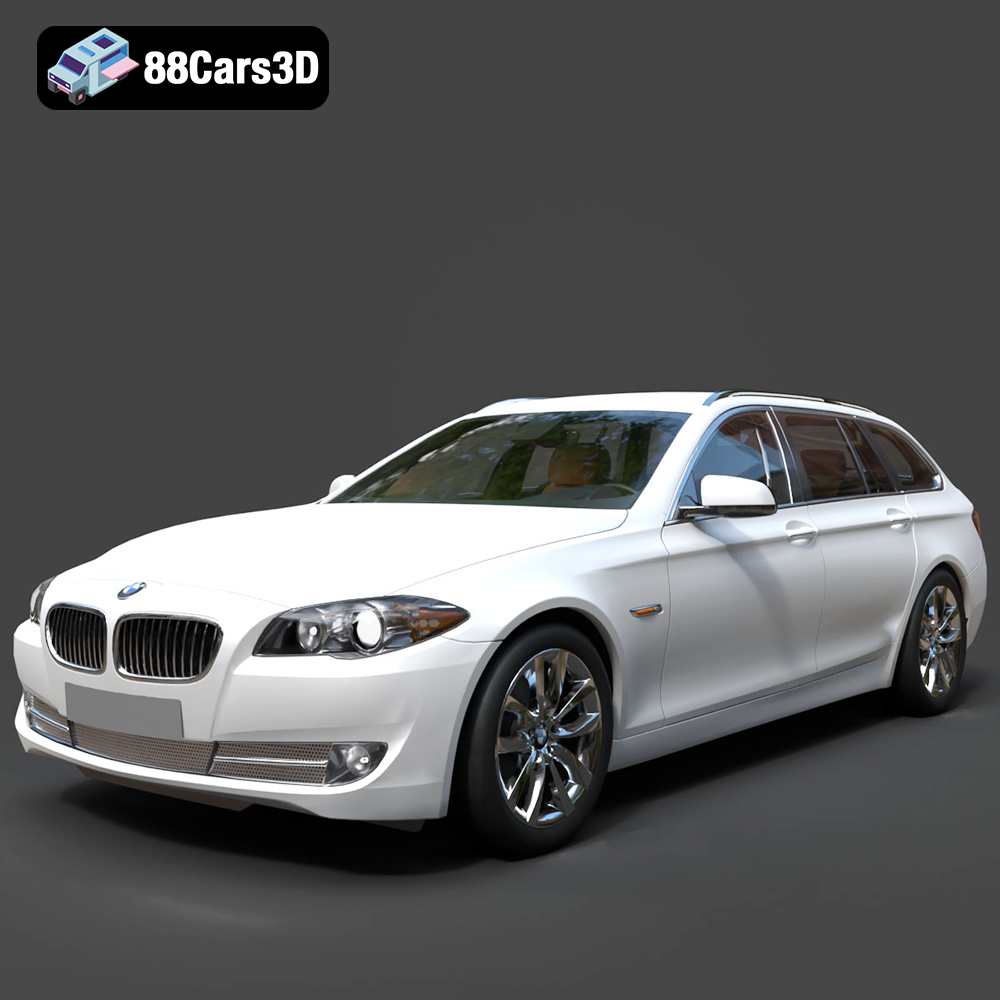
BMW 5 Series Touring F11-007 3D Model
Texture: Yes
Material: Yes
Download the BMW 5 Series Touring F11-007 3D Model featuring a detailed exterior and interior. Includes .blend, .fbx, .obj, .glb, .stl, .ply, .unreal, and .max formats for rendering, simulation, and game development.
Price: $10.79
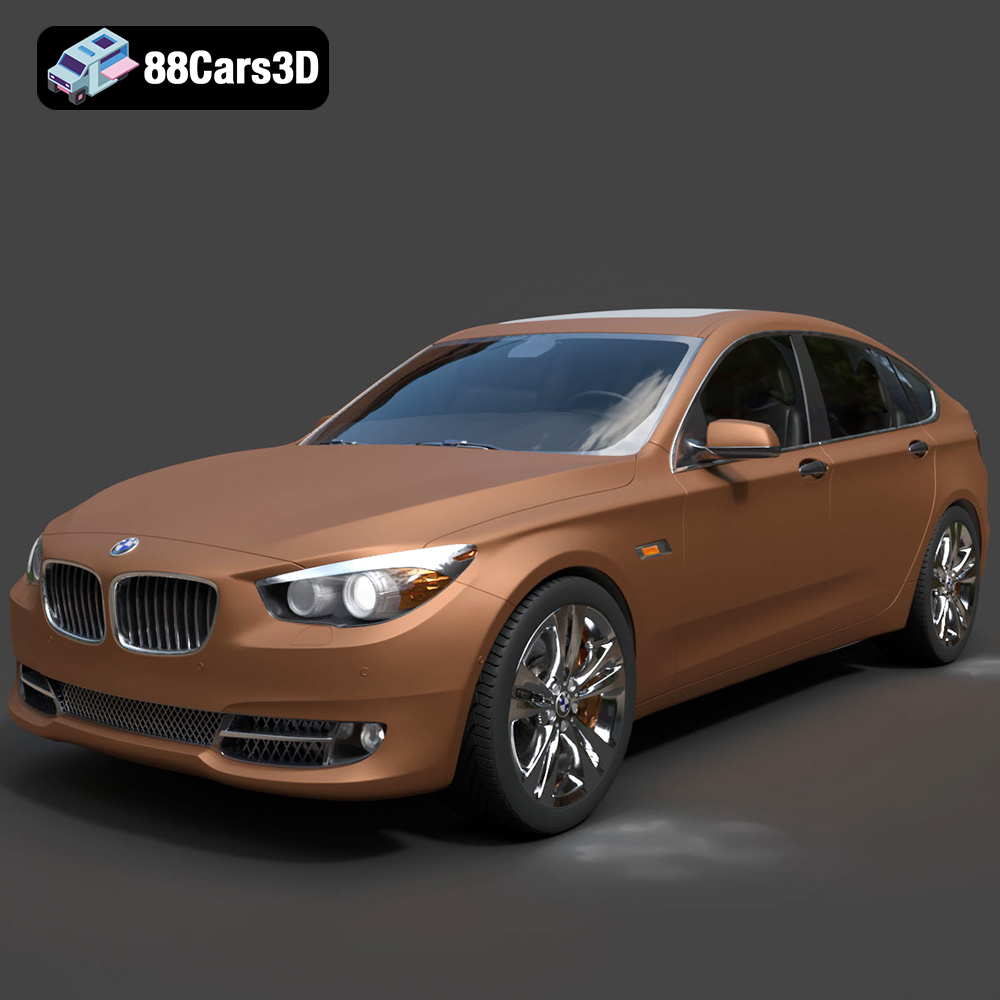
BMW 5 Series Gran Turismo F07-003 3D Model
Texture: Yes
Material: Yes
Download the BMW 5 Series Gran Turismo F07-003 3D Model featuring a detailed exterior and interior. Includes .blend, .fbx, .obj, .glb, .stl, .ply, .unreal, and .max formats for rendering, simulation, and game development.
Price: $10.79
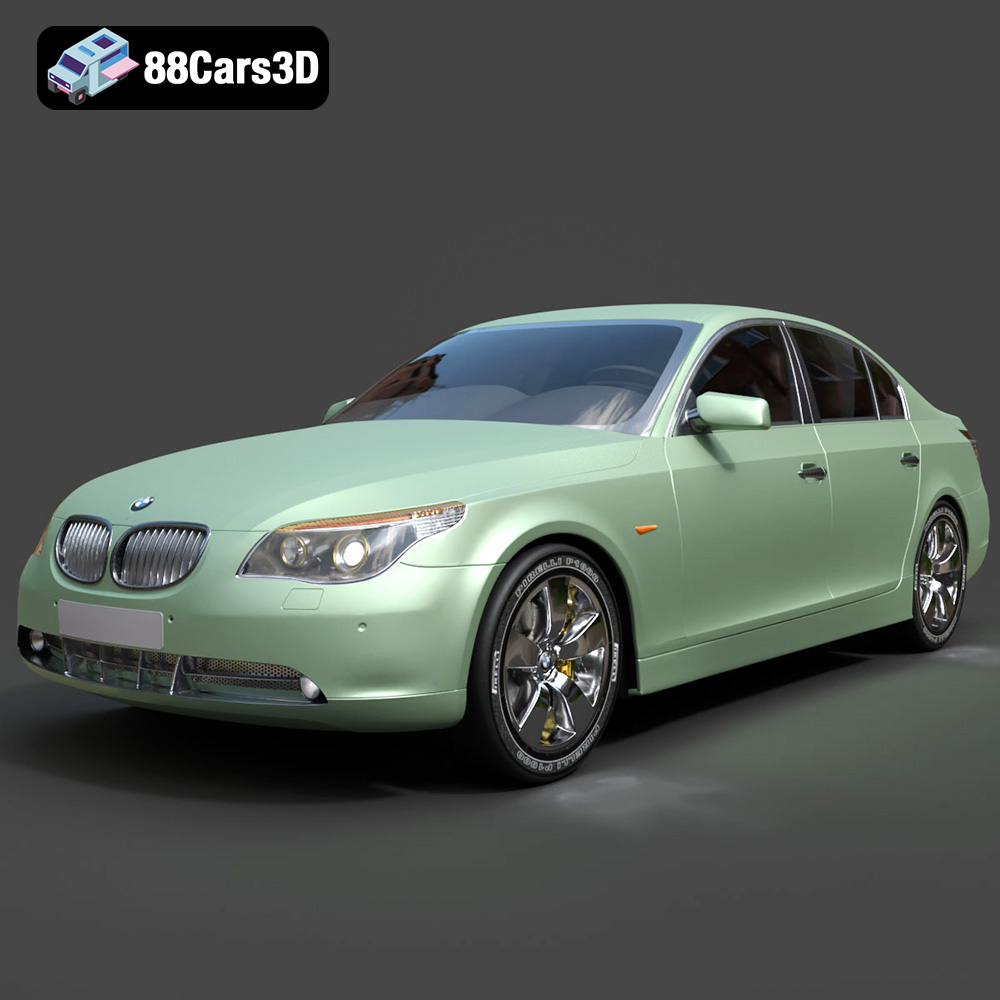
BMW 5 Series E60 3D Model
Texture: Yes
Material: Yes
Download the BMW 5 Series E60 3D Model featuring its iconic sedan design, detailed exterior, and interior. Includes .blend, .fbx, .obj, .glb, .stl, .ply, .unreal, and .max formats for rendering, simulation, and game development.
Price: $10.79

BMW 5 E34-535i 3D Model
Texture: Yes
Material: Yes
Download the BMW 5 E34-535i 3D Model featuring an iconic design, detailed exterior and interior, and accurate representation. Includes .blend, .fbx, .obj, .glb, .stl, .ply, .unreal, and .max formats for rendering, simulation, and game development.
Price: $10.79
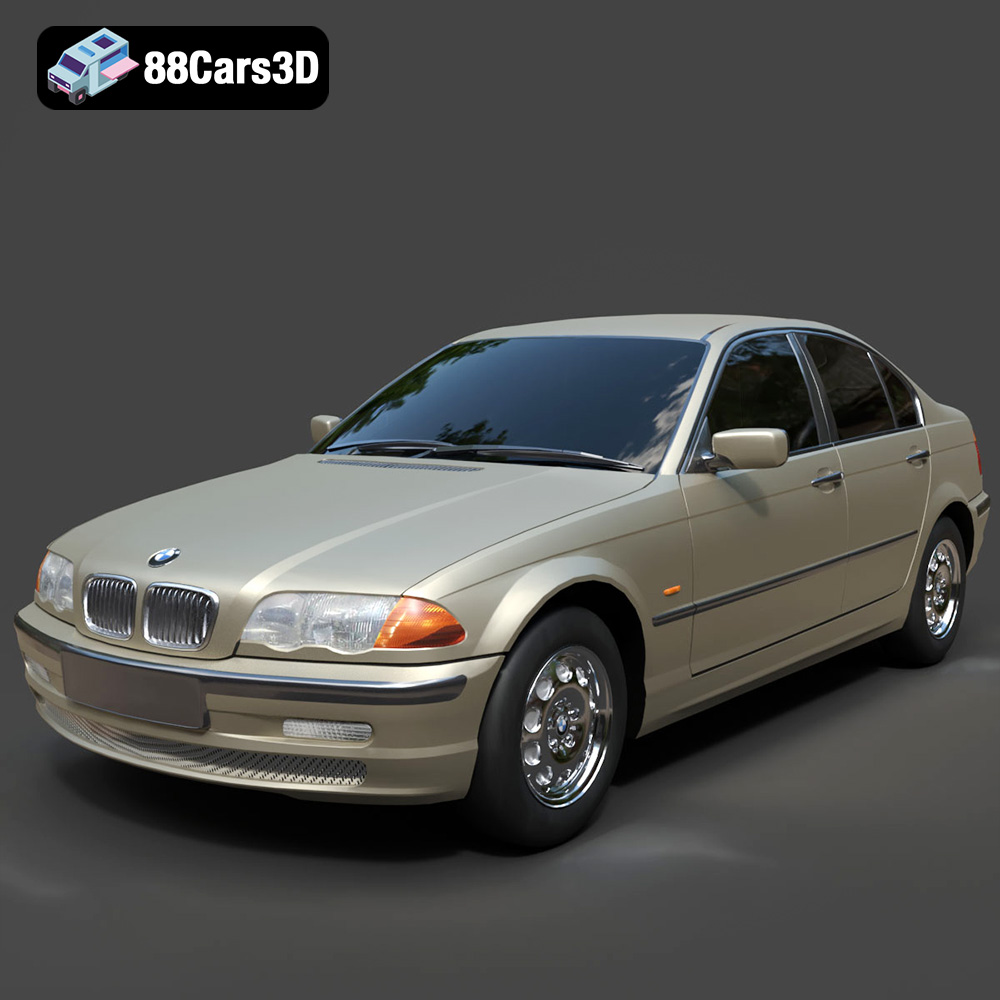
BMW 3 Series E46 3D Model
Texture: Yes
Material: Yes
Download the BMW 3 Series E46 3D Model featuring authentic exterior lines, a detailed interior, and separated components for animation. Includes .blend, .fbx, .obj, .glb, .stl, .ply, .unreal, and .max formats for rendering, simulation, and game development.
Price: $10.79
