

“`html
Mastering Your 3D Prints: Scaling, Hollowing, and Optimizing STL Files for Speed
The allure of 3D printing lies in its ability to transform digital designs into tangible objects, and for automotive enthusiasts, this means bringing iconic cars to life right on your desk. At 88cars3d.com, we’re passionate about providing you with high-quality, print-ready printable car models in STL file format, designed for a seamless printing experience. However, even the best STL files can benefit from intelligent preparation. This guide will delve deep into three crucial aspects of preparing your STL models: scaling, hollowing, and optimization for print speed. By mastering these techniques, you’ll not only achieve faster prints but also improve the quality, reduce material consumption, and tackle complex models with confidence. Whether you’re using FDM or resin printing, understanding these fundamentals is key to unlocking the full potential of your 3D printer and creating stunning replicas.
Understanding STL Files: The Foundation of 3D Printing
Before we dive into optimization, it’s essential to understand what an STL file is and how it represents a 3D model. STL (STereoLithography or Standard Tessellation Language) is the de facto standard for 3D printing, describing the surface geometry of a 3D object using a collection of triangular facets. Each triangle is defined by the coordinates of its three vertices and a normal vector, which indicates the outward direction of the surface. This tessellation approach means that curved surfaces are approximated by many small triangles. The quality and integrity of this mesh are paramount. A “watertight” or manifold mesh ensures that the slicer software can correctly interpret the model’s volume, preventing errors during slicing and printing. Models from reputable sources like 88cars3d.com are typically designed with clean geometry and watertight meshes, but understanding this underlying structure helps appreciate why certain repair or preparation steps are necessary.
Mesh Topology and File Integrity
The arrangement and connection of these triangles, known as mesh topology, significantly impact printability. Issues like non-manifold edges (where more than two triangles share an edge), inverted normals (where the outward direction is incorrectly defined), or holes in the mesh can cause major problems for slicers. Software like Meshmixer, Blender, or Netfabb are invaluable tools for inspecting and repairing these issues. A typical workflow involves importing the STL, running an automatic repair function, and then manually checking for any remaining errors. For car models, ensuring the integrity of intricate details like grilles, spoilers, and undercarriages is crucial. A clean mesh topology allows the slicer to generate accurate toolpaths and support structures, directly influencing print quality and success rates.
STL vs. Other 3D File Formats
While STL is ubiquitous for printing, it’s worth noting other formats you might encounter. OBJ files can store color and texture information alongside geometry, while FBX is a more complex format used in animation and game development, also supporting rich scene data. For pure 3D printing, STL remains the most common choice due to its simplicity and broad compatibility with slicers. However, understanding that STL is a surface representation and doesn’t inherently contain information about wall thickness or internal structure is key to the subsequent optimization steps we’ll discuss.
Scaling Models for Perfect Proportions and Fit
One of the most straightforward yet impactful ways to prepare an STL model is by scaling it. Whether you need a miniature version of a classic muscle car for your desk or a larger model for a display piece, scaling is your primary tool. However, scaling isn’t just about resizing; it’s also about maintaining aspect ratios and ensuring the final print meets your dimensional requirements. Most slicer software allows you to scale models uniformly (maintaining proportions) or non-uniformly (stretching or compressing along specific axes). For automotive models, maintaining the correct proportions is vital for aesthetic accuracy.
Uniform vs. Non-Uniform Scaling
Uniform scaling applies the same percentage change to all dimensions (X, Y, and Z axes), ensuring the model’s proportions remain consistent. This is generally the preferred method for preserving the original design’s integrity. Non-uniform scaling, while useful for specific corrections or artistic effects, should be used with caution for car models, as it can distort the vehicle’s iconic shape. For instance, if a particular print requires a slightly wider stance, non-uniform scaling along the Y-axis could be used, but this needs careful consideration of the desired outcome. Always check the final dimensions in your slicer after scaling.
Scaling for Specific Print Bed Sizes
Your 3D printer’s build volume is a critical constraint. If you download a large-scale car model from 88cars3d.com and your printer has a smaller build plate, you’ll need to scale it down. Conversely, if you have a large-format printer, you might choose to scale a model up. It’s important to remember that scaling up a model excessively can reveal limitations in the mesh resolution, leading to visible faceting. Scaling down too much can make fine details disappear or become too thin to print reliably. A common practice is to test print a small section or a simpler, smaller model at the desired scale to verify its printability before committing to a large, complex print.
Scaling for Assembly and Interlocking Parts
When printing multi-part models, such as those requiring assembly, scaling plays a crucial role in ensuring a good fit. If parts are printed separately and then joined, you might need to account for tolerances. For example, if you’re designing a model where a wheel hub fits into a wheel rim, you might scale the hub slightly smaller (e.g., by 0.1mm on its diameter) to allow for easy assembly. Similarly, if parts are designed to press-fit, you might scale one part up or down by a tiny percentage (e.g., 0.5% – 1%) to achieve a snug fit. This requires trial and error, often involving printing small test pieces to confirm clearances.
Hollowing Models: Saving Material and Reducing Print Time
Many STL models, especially those designed for display or visualization, are “solid” – meaning they represent a filled volume. Printing a completely solid object, particularly a large one, is incredibly time-consuming and uses a significant amount of filament or resin. Hollowing is the process of creating an internal cavity within the model, leaving only a thin shell. This dramatically reduces material usage and, crucially, print time. Most slicer software offers built-in features for hollowing, allowing you to specify the wall thickness and often add escape holes for resin printing.
The Mechanics of Hollowing in Slicers
When you enable hollowing in your slicer (e.g., Cura, PrusaSlicer, Lychee Slicer), the software effectively subtracts a smaller version of the model from the larger one, creating an internal void. You’ll need to specify a desired wall thickness. For FDM printing, a wall thickness of 1.2mm to 2.0mm is common, depending on the nozzle size (0.4mm nozzle typically uses 2-3 perimeters). For resin printing, thinner walls (0.5mm to 1.5mm) are often feasible, but ensuring sufficient strength is key. It’s critical to add “drain holes” or “vent holes” when hollowing, especially for resin prints. These holes allow uncured resin inside the hollowed model to drain out during the print and washing process, preventing internal pressure buildup and potential print failures or post-processing issues.
When to Hollow and When Not To
Hollowing is ideal for larger models where internal structure isn’t visible and doesn’t contribute to mechanical strength. Think large car bodies, statues, or display pieces. However, there are exceptions. If a model is designed to be robust and withstand significant stress (e.g., functional parts, or models intended to be weighted), printing it solid or with a high infill might be necessary. Furthermore, extremely complex internal geometries or very thin walls can sometimes lead to hollowing failures, where the internal surfaces intersect or the walls become too thin. Always inspect the hollowed model preview in your slicer to ensure the internal cavity is correctly formed and that drain holes are appropriately placed.
Hollowing Techniques for Specific Printer Types
FDM Printing: When hollowing for FDM, consider the number of perimeters. A wall thickness of 1.6mm, for example, would translate to four perimeters with a 0.4mm nozzle. This ensures a sturdy shell. Ensure your slicer’s “Hollow” or “Hollow Out” feature is properly configured. Escape holes are less critical for FDM unless printing very large, enclosed volumes where trapped air could theoretically cause issues, though it’s far less common than with resin.
Resin Printing: Hollowing is almost mandatory for larger resin prints to save expensive resin and significantly reduce print times. The critical aspect here is the placement and size of drain holes. Typically, you’ll place holes on surfaces that will be least visible or on the bottom of the model to facilitate drainage. Ensure holes are large enough (e.g., 3mm diameter or more) to allow resin to flow freely. Slicers like Lychee Slicer and ChiTuBox have dedicated hollowing and hole-punching tools. After printing, thorough washing and curing are essential to remove all residual resin from the interior.
Optimizing for Print Speed: Balancing Quality and Time
Print speed is often the holy grail for 3D printing enthusiasts. Who doesn’t want their creations faster? However, simply cranking up the speed settings can lead to a cascade of print quality issues: layer shifts, poor adhesion, ringing artifacts, and failed prints. True optimization involves a holistic approach, adjusting multiple parameters in conjunction with each other. The goal is to find the highest possible speed that still yields acceptable or excellent quality for your specific model and printer.
Layer Height and Speed Tradeoffs
The most direct impact on print time comes from layer height. Printing with a larger layer height (e.g., 0.3mm for FDM) means fewer layers are required to build the model, resulting in significantly faster prints. However, larger layer heights lead to more visible layer lines and a coarser surface finish. For highly detailed models, such as intricate car grilles or emblems, a smaller layer height (e.g., 0.1mm or 0.15mm for FDM, or 0.025mm – 0.05mm for resin) is necessary to capture fine details. The sweet spot often lies in finding a layer height that balances detail requirements with acceptable print times. For many car models, a 0.15mm to 0.2mm layer height on FDM provides a good balance.
Infill Patterns and Density for Speed
The infill is the internal support structure of a printed object. Printing with 100% infill is often unnecessary and dramatically increases print time and material usage. For most models, an infill density between 10% and 25% is sufficient. The choice of infill pattern also impacts speed and strength. Simple patterns like “Grid” or “Lines” print faster than complex ones like “Cubic” or “Gyroid.” For non-functional display models like car replicas, a lower infill density (10-15%) with a faster pattern is ideal. If the model requires some structural integrity, consider a pattern like “Gyroid,” which offers good strength in all directions and prints relatively efficiently.
Optimizing Print Settings: Flow, Acceleration, and Jerk
Beyond basic settings, advanced slicer parameters can unlock further speed improvements.
- Flow Rate: While often set to 100%, slight adjustments might be needed, especially when printing faster or with different materials. Calibrating your flow rate is crucial.
- Acceleration: This setting controls how quickly the print head speeds up and slows down. Increasing acceleration allows for faster travel and printing moves, but too high can cause ringing artifacts. Start with moderate increases (e.g., 10-20%) and test.
- Jerk: Similar to acceleration, jerk controls the instantaneous change in velocity at corners. Lower jerk values smooth out sharp corners, reducing ringing but slowing down prints. Increasing jerk can speed things up but may exacerbate ringing.
Experimenting with these settings on test prints is key. Many printers have profiles for “faster” printing, which often adjust these parameters. Always ensure your printer’s mechanics can handle the increased speeds without excessive vibration or wear.
Support Structures and Print Orientation
The way you orient your model on the build plate and the type of support structures you use have a significant impact on both print quality and time. Orienting a model to minimize overhangs and the need for supports will always result in faster prints and cleaner surfaces. For car models, this often means printing them upright or slightly tilted. Tree supports (in Cura) or organic supports (in PrusaSlicer) can be more material-efficient and easier to remove than standard supports for complex shapes. Optimizing supports means generating only what’s necessary, using the correct density, and ensuring they are easy to remove cleanly, reducing post-processing time.
Advanced Techniques and Workflow Integration
Mastering the fundamentals of scaling, hollowing, and speed optimization opens the door to more advanced workflows. Combining these techniques with careful file preparation and printer calibration ensures consistent, high-quality results, even for complex printable car models available on platforms like 88cars3d.com.
Mesh Repair and Preparation Workflow
A robust workflow begins with acquiring a good quality STL. If a model requires repair, use software like Meshmixer or Blender. The steps typically involve:
- Import the STL file.
- Use “Analysis” tools to detect errors (non-manifold edges, holes, intersecting faces).
- Apply automatic repair functions.
- Manually inspect and correct any remaining errors. For example, manually closing small holes or correcting inverted normals.
- Ensure the model is “watertight” before proceeding.
This initial preparation is critical for preventing downstream issues in the slicer.
Material Selection and Printer Calibration
The material you choose significantly influences optimal print settings.
- PLA: Easy to print, good for detailed models, but can be brittle. Ideal for display pieces.
- PETG: Stronger and more durable than PLA, with better temperature resistance. Good for functional parts or models that might be handled frequently.
- ABS: Requires higher temperatures and an enclosure to prevent warping, but offers excellent strength and temperature resistance.
- Resin (SLA/DLP): Offers incredibly high detail and smooth surfaces, perfect for intricate car models. However, it requires more post-processing and safety precautions.
Regardless of material, printer calibration is non-negotiable. Perform calibration prints for extruder E-steps, bed leveling, temperature towers, and retraction settings. A well-calibrated printer is the foundation for successful, optimized prints.
Post-Processing: Enhancing Your Finished Prints
Once a print is complete, post-processing transforms it from a raw object into a finished replica. This can include:
- Support Removal: Carefully remove support structures using pliers, cutters, or hobby knives. For resin prints, supports are often more delicate.
- Sanding: Start with coarse grit sandpaper (e.g., 120-220 grit) to remove layer lines and support marks, progressively moving to finer grits (up to 1000-2000 grit) for a smooth finish.
- Filling and Priming: Use fillers like wood filler or specialized 3D print putty to fill any remaining gaps or imperfections. Apply a primer spray for an even surface and to reveal any missed blemishes.
- Painting: Use acrylic paints, airbrushes, or spray paints to bring your car model to life with accurate colors and details.
- Assembly: For multi-part models, use appropriate adhesives (e.g., super glue, plastic cement) to join components securely.
Thorough post-processing elevates the final look of your 3D printed car models significantly.
By integrating these advanced techniques, you can systematically improve your 3D printing workflow. Understanding how to repair meshes, select the right materials, calibrate your printer accurately, and execute effective post-processing steps are all crucial components of professional-level 3D printing. These skills, combined with the quality STL files you’ll find at 88cars3d.com, will empower you to create truly exceptional automotive models.
Conclusion: Print Smarter, Not Just Faster
The journey of transforming an STL file into a detailed 3D printed car model is as much about preparation as it is about the printing process itself. By mastering scaling, you ensure your models fit your needs and aesthetic vision perfectly. Hollowing is a powerful technique to drastically cut down on material costs and print times, making larger and more ambitious projects feasible. Finally, strategic optimization for print speed, achieved through careful adjustments to layer height, infill, acceleration, and other slicer settings, allows you to balance quality with efficiency. Remember that these techniques are interconnected; scaling affects how hollowing should be applied, and both influence the optimal print speed settings.
The world of 3D printing, especially for intricate models like those found on 88cars3d.com, requires a blend of technical understanding and practical application. Don’t be afraid to experiment with different settings and workflows on your 3D printer. Utilize the preview features in your slicer to visualize the effects of your changes. Regularly calibrate your printer and test new materials. By applying the principles of proper file preparation, thoughtful slicing, and informed optimization, you’ll not only achieve faster prints but also consistently higher quality results. Happy printing!
“`
Featured 3D Car Models
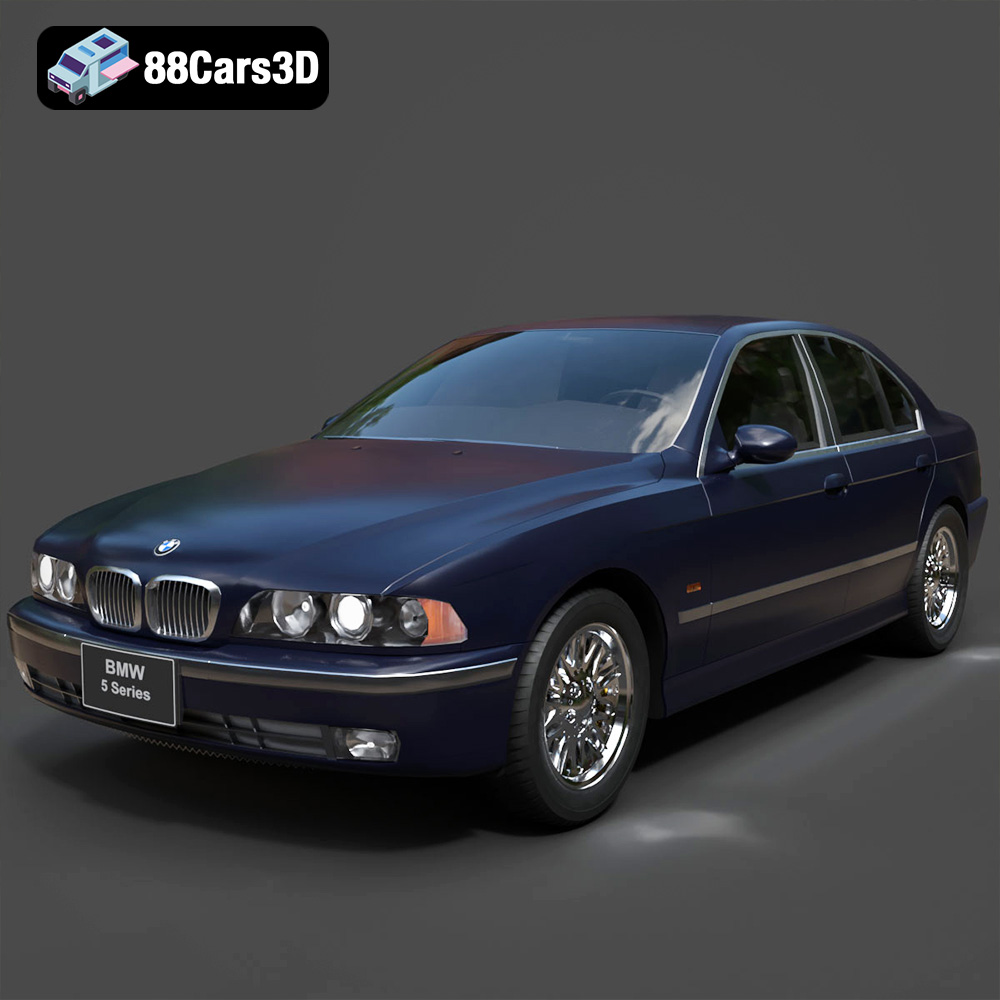
BMW E39 M5-540i 3D Model
Texture: Yes
Material: Yes
Download the BMW E39 M5-540i 3D Model featuring its iconic sedan design, detailed exterior, and realistic interior. Includes .blend, .fbx, .obj, .glb, .stl, .ply, .unreal, and .max formats for rendering, simulation, and game development.
Price: $10.79

BMW 7 Series E38 3D Model
Texture: Yes
Material: Yes
Download the BMW 7 Series E38 3D Model featuring its iconic luxury sedan design and classic aesthetics. Includes .blend, .fbx, .obj, .glb, .stl, .ply, .unreal, and .max formats for rendering, simulation, and game development.
Price: $10.79

BMW 6 Series 640i F12 3D Model
Texture: Yes
Material: Yes
Download the BMW 6 Series 640i F12 3D Model featuring a sleek design and detailed interior. Includes .blend, .fbx, .obj, .glb, .stl, .ply, .unreal, and .max formats for rendering, simulation, and game development.
Price: $10.79

BMW 6 Coupe E63 3D Model
Texture: Yes
Material: Yes
Download the BMW 6 Coupe E63 3D Model featuring a sleek design, detailed interior, and realistic exterior. Includes .blend, .fbx, .obj, .glb, .stl, .ply, .unreal, and .max formats for rendering, simulation, and game development.
Price: $10.79

BMW 5 Series Touring F11-007 3D Model
Texture: Yes
Material: Yes
Download the BMW 5 Series Touring F11-007 3D Model featuring a detailed exterior and interior. Includes .blend, .fbx, .obj, .glb, .stl, .ply, .unreal, and .max formats for rendering, simulation, and game development.
Price: $10.79
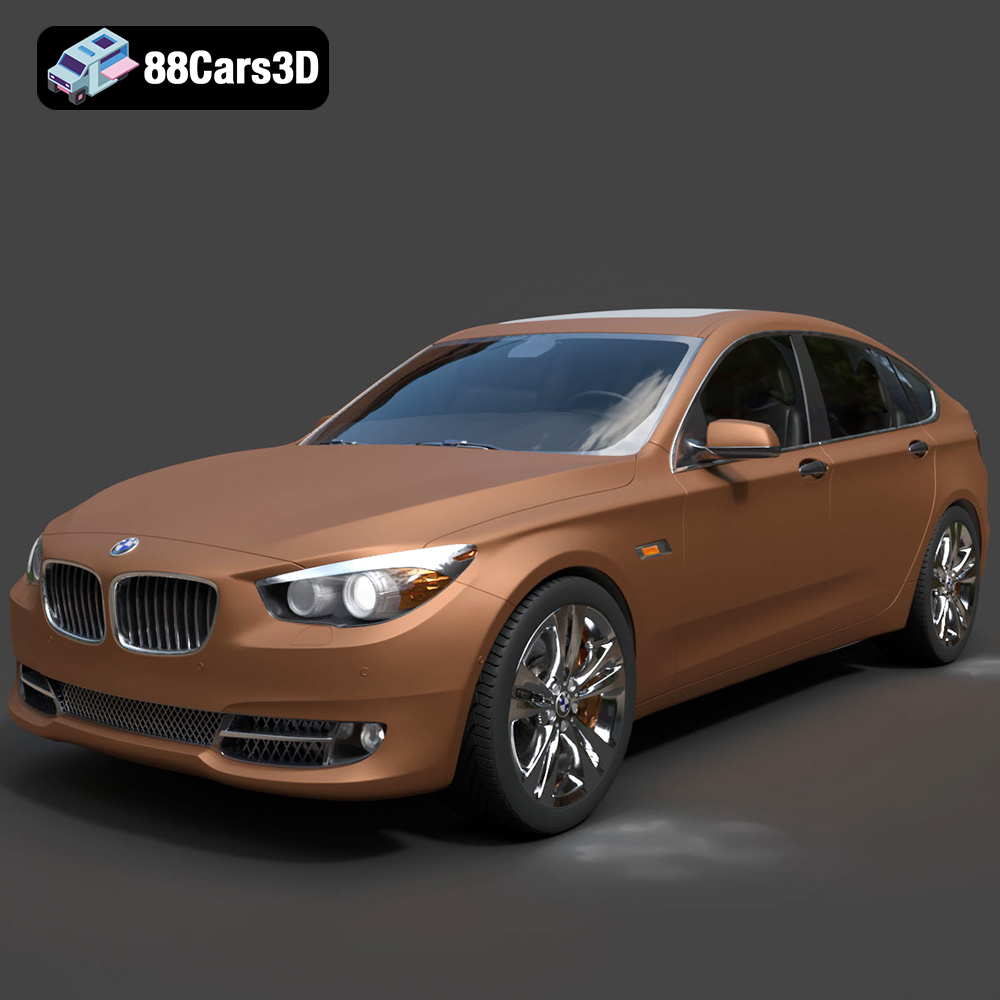
BMW 5 Series Gran Turismo F07-003 3D Model
Texture: Yes
Material: Yes
Download the BMW 5 Series Gran Turismo F07-003 3D Model featuring a detailed exterior and interior. Includes .blend, .fbx, .obj, .glb, .stl, .ply, .unreal, and .max formats for rendering, simulation, and game development.
Price: $10.79
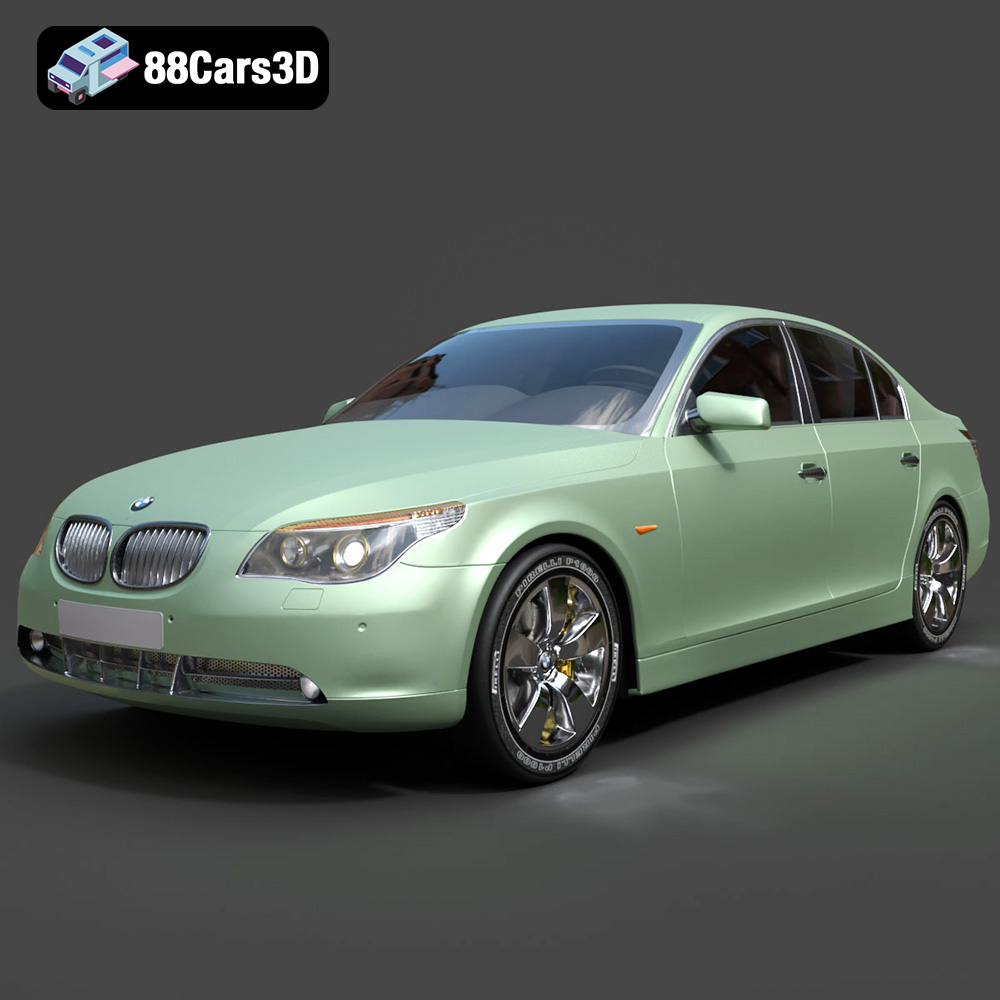
BMW 5 Series E60 3D Model
Texture: Yes
Material: Yes
Download the BMW 5 Series E60 3D Model featuring its iconic sedan design, detailed exterior, and interior. Includes .blend, .fbx, .obj, .glb, .stl, .ply, .unreal, and .max formats for rendering, simulation, and game development.
Price: $10.79

BMW 5 E34-535i 3D Model
Texture: Yes
Material: Yes
Download the BMW 5 E34-535i 3D Model featuring an iconic design, detailed exterior and interior, and accurate representation. Includes .blend, .fbx, .obj, .glb, .stl, .ply, .unreal, and .max formats for rendering, simulation, and game development.
Price: $10.79
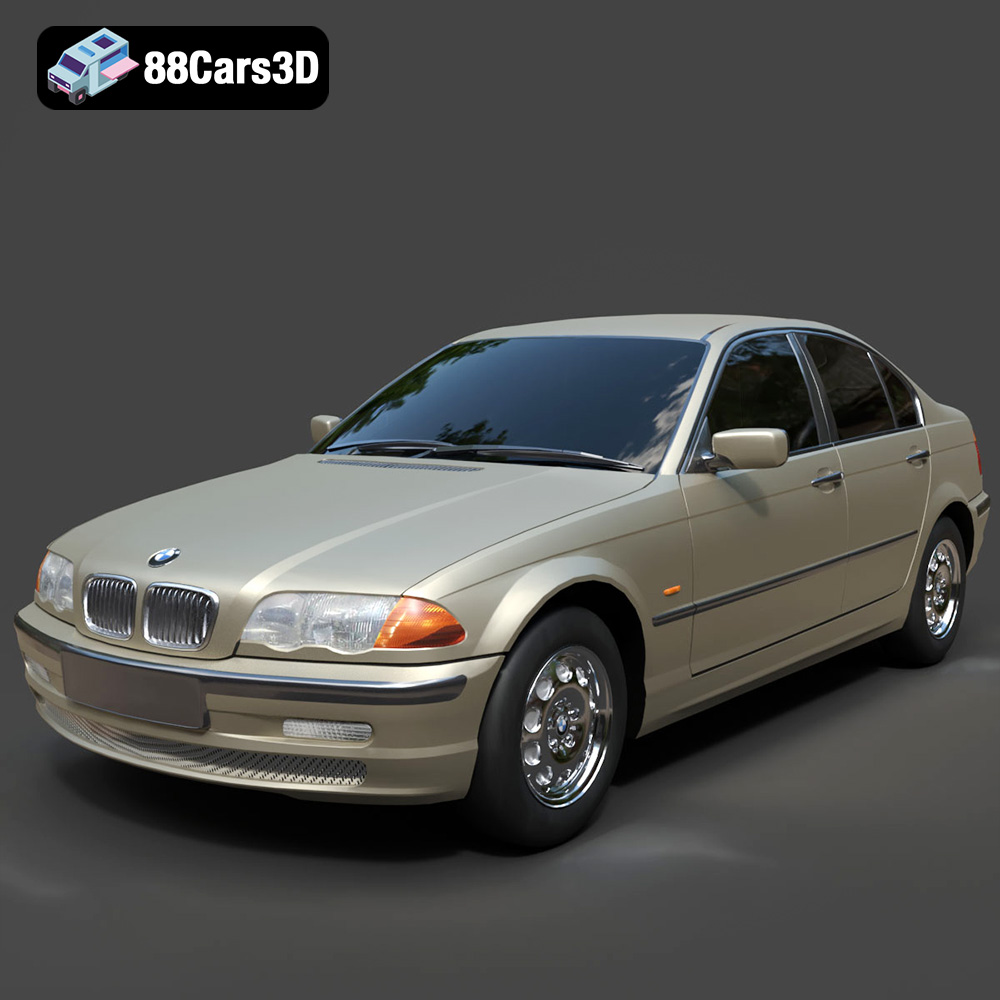
BMW 3 Series E46 3D Model
Texture: Yes
Material: Yes
Download the BMW 3 Series E46 3D Model featuring authentic exterior lines, a detailed interior, and separated components for animation. Includes .blend, .fbx, .obj, .glb, .stl, .ply, .unreal, and .max formats for rendering, simulation, and game development.
Price: $10.79
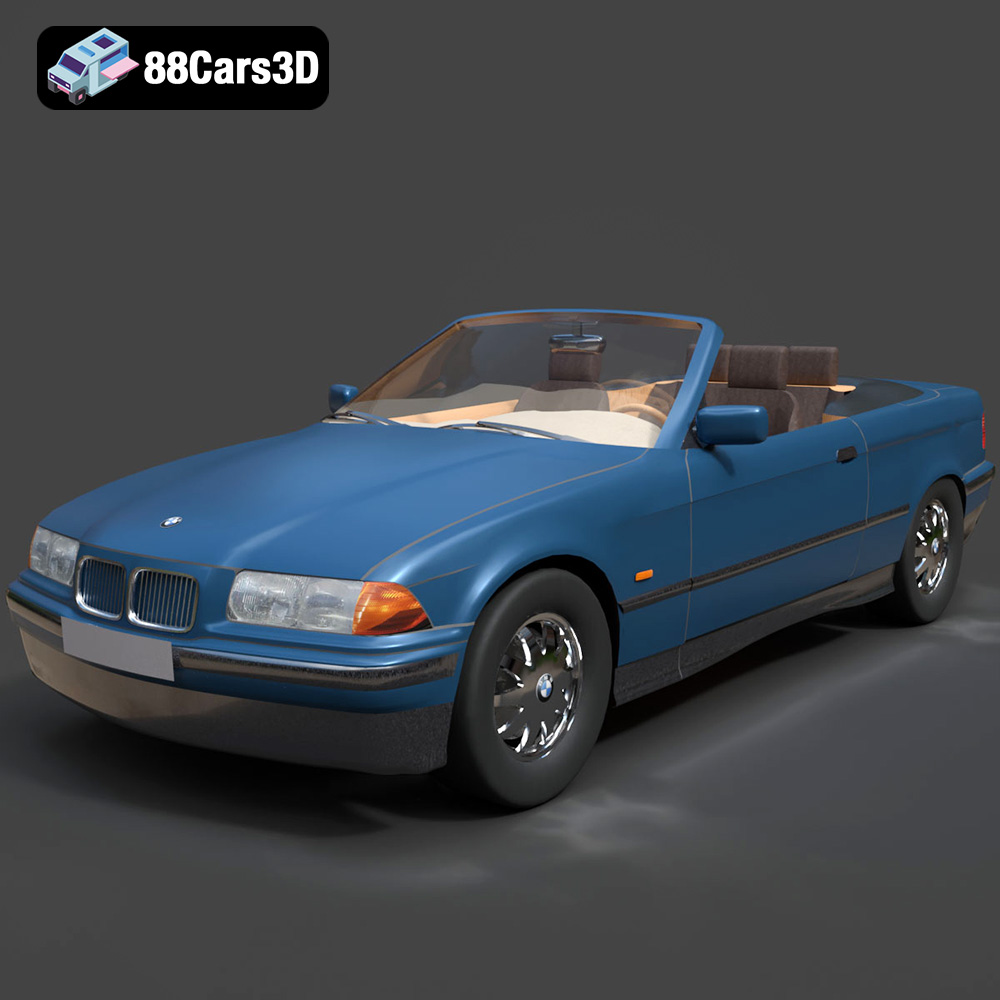
BMW 3 Series E36 Cabrio 325i 1998 3D Model
Texture: Yes
Material: Yes
Download the BMW 3 Series E36 Cabrio 325i 1998 3D Model featuring a classic convertible design and detailed interior. Includes .blend, .fbx, .obj, .glb, .stl, .ply, .unreal, and .max formats for rendering, simulation, and game development.
Price: $10.79
