

Transforming Visions: The Art and Science of Modeling Custom Body Kits for 3D Car Models
The automotive world thrives on individuality, and the digital realm is no exception. For 3D artists, game developers, and visualization professionals, the ability to take a meticulously crafted stock 3D car model and infuse it with bespoke personality through custom body kits and modifications is a highly sought-after skill. This comprehensive guide delves into the intricate technical processes, artistic considerations, and optimization strategies required to create stunning, performance-ready custom car parts. Whether you’re aiming for photorealistic renders, immersive game assets, or cutting-edge AR/VR experiences, mastering these techniques will elevate your creations and set them apart in a competitive digital landscape. From foundational topology to advanced PBR texturing and game engine optimization, we’ll cover everything you need to know to bring your unique automotive visions to life.
Foundations of Custom Body Kit Modeling – Precision and Topology
The journey of creating custom body kits begins with a solid foundation rooted in precision and immaculate topology. Without these, even the most imaginative designs can fall flat, exhibiting visual artifacts, poor deformation, and rendering inconsistencies. Understanding the nuances of automotive surface design is paramount.
Concept & Reference Gathering: The Blueprint for Innovation
Before touching a single vertex, exhaustive research and reference gathering are crucial. This initial phase involves collecting blueprints, side views, top views, and front/rear views of the base vehicle, alongside high-resolution photographs of real-world custom modifications that align with your design vision. Concept sketches, mood boards, and even rough 2D drawings can serve as invaluable guides. Accuracy in scale is non-negotiable; always model to real-world dimensions to ensure your custom parts integrate seamlessly with the base car model and maintain physical accuracy for rendering and simulation. This meticulous preparation prevents costly rework down the line and ensures your custom body kit not only looks good but also appears functionally plausible. Consider how aerodynamic principles might influence the shape and flow of your new components, even if the primary goal is aesthetic.
Topology for Automotive Design: The Backbone of Quality
Clean, efficient quad topology is the bedrock of professional 3D automotive modeling. For custom body kits, this means maintaining excellent edge flow that follows the contours and defines the hard edges of your new parts. Good topology ensures smooth subdivision for high-detail renders, predictable deformation for animation, and efficient performance in real-time applications. Prioritize quads, as triangles can lead to pinching and unwanted artifacts, especially on curved surfaces.
* **Edge Flow:** Direct edge loops to define creases, corners, and areas of high curvature. For a custom bumper, for instance, edge loops should trace the primary silhouette, the openings for grilles, and any sharp cut lines.
* **Polygon Density:** Balance detail with efficiency. High-detail areas like vents, grilles, or intricate aerodynamic elements will require denser geometry, while broader, smoother surfaces can use sparser polygon counts. For a typical custom bumper, you might aim for 5,000-15,000 polygons, depending on the desired detail level and target application. The goal is to capture form with the fewest possible polygons, leveraging subdivision surfaces where appropriate.
* **Modeling Techniques:**
* **Box Modeling:** Ideal for blocking out the overall shape of larger components like bumpers or side skirts.
* **Spline Modeling:** Excellent for creating precise outlines and maintaining smooth curves, particularly useful for extracting surfaces or creating trim pieces.
* **Surface Modeling (NURBS/Subdivision Surfaces):** Often used for highly precise, curvature-continuous surfaces, which are then converted to meshes.
* **Software Specifics:** In 3ds Max, the Editable Poly tools are your primary arsenal for manipulating vertices, edges, and faces. For Blender, tools like `Extrude` (E), `Loop Cut and Slide` (Ctrl+R), `Knife` (K), and `Bevel` (Ctrl+B) are fundamental for creating and refining automotive geometry. The Blender 4.4 documentation provides extensive details on these tools and their advanced applications, which are essential for maintaining clean topology and precise control over your custom components. You can explore these at https://docs.blender.org/manual/en/4.4/. Always ensure your meshes are watertight (no open edges) for robustness, especially if planning for 3D printing or complex rendering pipelines.
Advanced Sculpting and Detailing for Unique Aesthetics
While hard-surface modeling provides the structural integrity, advanced sculpting and detailing techniques add the intricate artistic flair that makes custom body kits truly unique and visually compelling. This stage is where complex, organic forms and minute surface details are introduced.
High-Poly Sculpting for Organic Shapes: Unleashing Creativity
Some custom body kit elements defy simple polygonal modeling due to their complex, organic, or highly stylized forms. Think aggressive fender flares that blend seamlessly into the car’s body, intricate aerodynamic wing profiles, or sculpted intake vents. This is where high-poly sculpting shines.
* **When to Sculpt:** Use sculpting when intricate curves, complex blends, or flowing, non-uniform shapes are required. It allows for a more intuitive, artistic approach to form creation.
* **Software Choices:** ZBrush is the industry standard for high-poly sculpting, offering unparalleled tools for manipulating dense meshes. Blender’s sculpting mode has also matured significantly, providing powerful brushes and workflows suitable for automotive detailing.
* **Techniques:**
* **Dynamesh (ZBrush):** Dynamically remeshes your model as you sculpt, ensuring even polygon distribution regardless of stretching.
* **Multiresolution Sculpting:** Allows you to sculpt on lower subdivision levels and project details to higher levels, offering flexibility and performance.
* **Form Definition:** Focus on defining primary and secondary forms before moving to tertiary details. Build up volumes gradually, ensuring smooth transitions and clean silhouettes.
Adding Micro-Details and Panel Gaps: The Realism Factor
The devil is in the details, and for automotive models, this translates to realistic panel gaps, rivets, bolts, and subtle surface textures. These micro-details are crucial for achieving photorealism and selling the illusion of a real-world object.
* **Panel Gaps:** These are not merely cut lines; they are carefully crafted crevices with proper depth and subtle bevels. For custom parts, ensure the gaps between your new components and the existing body panels are consistent and realistic. A common approach is to use slight offsets and precise edge loops.
* **Floating Geometry vs. Baked Normals:**
* **Floating Geometry:** For visible bolts, rivets, or emblem details that require distinct shadows and reflections, it’s often better to model them as separate, low-poly geometry positioned slightly above the surface.
* **Baked Normal Maps:** For intricate surface patterns (e.g., carbon fiber weave, perforated grilles that are too complex to model geometrically), small grooves, or subtle embossed logos, baking normal maps from a high-poly source onto your lower-poly custom part is highly efficient. This process transfers surface detail without increasing polygon count.
* **Tools:** Utilize alpha masks in sculpting software or directly model small details and project them. For creating normal maps, software like Substance Painter or Marmoset Toolbag excels at baking high-poly details onto low-poly meshes. Ensure the high-poly mesh is clean and free of errors before baking for optimal results.
UV Mapping and Texturing for Unrivaled Realism
Even the most perfectly modeled custom body kit will look unconvincing without proper UV mapping and high-quality PBR textures. This stage is where the surface of your model truly comes alive, reflecting light and displaying material properties with accuracy.
Strategic UV Unwrapping for Custom Parts: The Canvas Preparation
UV mapping is the process of flattening the 3D surface of your model into 2D coordinates, creating a “map” that tells your texturing software where to apply textures. For complex car surfaces, strategic unwrapping is key to minimizing distortion and maximizing texture resolution.
* **Minimizing Seams:** Aim to place seams in less visible areas or along natural breaks in the geometry (e.g., sharp edges, hidden undersides). Fewer, well-placed seams reduce visible texture breaks.
* **Distortion Control:** Use tools to relax UV shells and ensure an even distribution of pixels across the surface, preventing stretched or compressed textures.
* **UV Packing Efficiency:** After unwrapping, arrange your UV shells within the 0-1 UV space as efficiently as possible, maximizing the used area and leaving minimal empty space. This optimizes texture resolution and reduces file size.
* **Unique vs. Overlapping UVs:**
* **Unique UVs:** Essential for custom parts with asymmetrical details or where distinct weathering/damage needs to be applied.
* **Overlapping UVs:** Can be used for symmetrical parts where the texture repeats (e.g., a simple grill mesh) to save texture space, but be cautious as it limits unique detailing.
* **Software & Techniques:** Dedicated UV software like RizomUV offers advanced tools, but most 3D packages have capable UV editors. In Blender, using `Mark Seam` (Ctrl+E -> Mark Seam) and then `Unwrap` (U -> Unwrap) is fundamental. The `Smart UV Project` option can be a good starting point for complex shapes, but manual refinement is almost always necessary for optimal results. For detailed guidance on unwrapping techniques, refer to the Blender 4.4 documentation on UV Mapping at https://docs.blender.org/manual/en/4.4/.
PBR Material Creation and Shader Networks: Bringing Surfaces to Life
Physically Based Rendering (PBR) has become the standard for achieving realistic materials in 3D. It simulates how light interacts with surfaces based on real-world physics, requiring specific texture maps to define material properties.
* **PBR Maps:**
* **Albedo (Base Color):** The pure color of the surface, stripped of lighting information.
* **Metallic:** Defines whether a surface is metallic (1) or non-metallic (0), influencing reflections.
* **Roughness (Glossiness):** Controls the micro-surface detail that scatters light, determining how shiny or matte a surface appears. Lower roughness = shinier.
* **Normal Map:** Adds high-frequency surface detail without extra geometry, faking bumps and grooves.
* **Ambient Occlusion (AO):** Simulates self-shadowing in crevices and corners, adding depth.
* **Creating Realistic Paint Shaders:** Automotive paint is complex. It typically involves multiple layers: a base color, a metallic flake layer, and a clear coat.
* **Metallic Flake:** Use a subtle normal map or procedural texture to simulate the anisotropic reflections of metallic flakes.
* **Clear Coat:** Implement a separate clear coat layer with its own roughness and fresnel properties to mimic the glossy protective layer.
* **Pearlescent/Chameleon Effects:** Achieved through advanced shader networks that subtly shift hue based on viewing angle.
* **Material Layering:** Beyond the base paint, consider adding layers for dirt, dust, water spots, scratches, and wear. Software like Substance Painter excels at procedural texturing and layering, allowing for non-destructive workflows.
* **Software:** Substance Painter and Designer are industry leaders for PBR texture creation. Quixel Mixer is another powerful alternative. Within your 3D software, understanding node-based shader editors (e.g., Blender’s Shader Editor for Cycles/EEVEE, 3ds Max’s Slate Material Editor, Unreal Engine’s Material Editor) is crucial for building complex PBR materials and shader networks.
Optimizing Custom Car Models for Diverse Applications
Creating a beautiful custom body kit is only half the battle; ensuring it performs flawlessly across various platforms – from cinematic renders to interactive games and immersive AR/VR experiences – requires meticulous optimization. Each application has unique technical demands.
Game Engine Optimization: Performance in Real-Time
For game development, efficiency is paramount. Every polygon, texture, and draw call contributes to performance. Custom body kits, being added geometry, must be optimized carefully.
* **Level of Detail (LODs):** Create multiple versions of your custom parts with decreasing polygon counts.
* **LOD0 (High Detail):** Visible up close.
* **LOD1, LOD2, etc. (Lower Detail):** Used as the camera moves further away. Transitions should be seamless.
* **Strategy:** For a custom bumper, LOD0 might have 10,000 polys, LOD1 might be 4,000, and LOD2 might be 1,500, with an extremely simplified collision mesh possibly under 500 polys. Game engines automatically swap between LODs based on distance, saving computational power.
* **Draw Calls and Batching:** Minimize the number of materials used on your custom parts. Combining multiple smaller textures into one larger texture atlas can reduce draw calls. Batching similar materials or meshes together allows the GPU to render them more efficiently.
* **Texture Atlasing:** Consolidate multiple smaller textures (e.g., for different components of a custom spoiler) into a single, larger texture sheet. This reduces memory footprint and draw calls.
* **Collision Meshes:** Create highly simplified, invisible meshes specifically for physics interactions. These should have the lowest possible polygon count while accurately representing the main volume of the custom part.
AR/VR Readiness: The Ultimate Optimization Challenge
Augmented and Virtual Reality environments demand even stricter optimization due to real-time rendering, mobile hardware constraints, and the need for high frame rates to prevent motion sickness.
* **Ultra-Low Poly Counts:** Target aggressive polygon budgets. A custom body kit might need to be in the low thousands of polygons in total, relying heavily on normal maps for detail.
* **Minimalistic Shaders:** Avoid complex shader networks with many layers or expensive calculations. Simpler PBR setups are preferred.
* **Efficient Transparency:** Use opaque materials where possible. If transparency is necessary (e.g., for headlight covers on a custom front end), use efficient alpha clipping or alpha testing rather than costly alpha blending.
* **Export Formats:** `GLB` (glTF Binary) and `USDZ` (Apple’s AR format) are optimized for AR/VR, combining mesh, materials, and textures into a single, efficient file.
3D Printing Preparation: From Digital to Tangible
If your custom body kit is destined for a physical model or prototype, specific preparation steps are required to ensure printability.
* **Watertight and Manifold Meshes:** Your model must be a single, enclosed volume with no holes, inverted normals, or self-intersecting geometry. Every edge must be shared by exactly two faces.
* **Wall Thickness:** Ensure all parts of your custom kit have sufficient wall thickness (e.g., 1-2mm minimum, depending on the material and printer) to prevent breakage. Small, thin details are prone to snapping.
* **Mesh Repair:** Tools like Netfabb, Meshmixer, or Blender’s 3D Print Toolbox (available via `Edit -> Preferences -> Add-ons -> Mesh: 3D-Print Toolbox` – details in Blender 4.4 documentation) can identify and repair common 3D printing mesh errors.
* **File Formats:** `STL` (stereolithography) and `OBJ` are standard formats for 3D printing.
Rendering and Visualization – Bringing Custom Designs to Life
Once your custom body kit is modeled, textured, and optimized, the next critical step is to present it in the most compelling way possible through high-quality rendering and visualization. This is where your design truly shines.
Lighting and Environment Setup for Automotive Renders: The Art of Illumination
Lighting is arguably the most crucial element in achieving a photorealistic render. It defines form, highlights surface qualities, and sets the mood.
* **HDRI Lighting:** High Dynamic Range Images (HDRIs) are indispensable for automotive rendering. They provide realistic environmental lighting and reflections, mimicking real-world conditions like a sunny outdoor scene or an indoor studio. Use a high-resolution HDRI for crisp reflections on glossy paint.
* **Studio Lighting Setups:** For controlled, artistic renders, traditional studio lighting techniques are powerful.
* **Three-Point Lighting:** A classic setup using a key light (main illumination), fill light (softens shadows), and back/rim light (separates the car from the background).
* **Area Lights:** Use large, soft area lights to create pleasing reflections and diffuse illumination, particularly on broad, curved surfaces. Position them strategically to highlight the custom kit’s contours.
* **IES Profiles:** For realistic artificial light sources (e.g., headlights, street lamps), use IES (Illuminating Engineering Society) profiles, which define the distribution of light from a real-world luminaire.
* **Software:** Renderers like Corona Renderer, V-Ray, Cycles (Blender), and Arnold are all excellent choices, each offering robust tools for physically accurate lighting and materials. Experiment with different light temperatures and intensities to achieve desired effects.
Camera Angles and Composition: Framing Your Masterpiece
Just like in photography, thoughtful camera placement and composition are vital for showcasing your custom car model effectively.
* **Emphasizing Custom Details:** Use close-up shots to highlight intricate custom elements like bespoke grilles, aerodynamic winglets, or unique wheel designs.
* **Dynamic Angles:** Low camera angles can make the car appear more aggressive and powerful. Wide-angle lenses can exaggerate the custom kit’s stance, while telephoto lenses compress perspective, emphasizing sleek lines.
* **Rule of Thirds:** Position key elements (e.g., the front headlight, a custom fender flare) along the intersecting lines or at the intersection points of a nine-grid overlay for a balanced and engaging composition.
* **Depth of Field (DOF):** Judiciously use DOF to draw attention to your custom components, blurring the foreground and background to isolate the subject.
* **Leading Lines:** Utilize elements in the scene or the car’s own lines to guide the viewer’s eye towards the focal point of your custom design.
Post-Processing and Compositing: The Final Polish
The raw render is rarely the final product. Post-processing in image editing software adds that last layer of polish, enhancing mood, correcting imperfections, and pushing the visual impact.
* **Color Grading:** Adjust hue, saturation, and luminance to establish a specific mood or correct color casts.
* **Lens Effects:** Add subtle lens flares, chromatic aberration, or vignetting for a more cinematic look.
* **Motion Blur:** For dynamic renders, add realistic motion blur to wheels and the car’s body to convey speed.
* **Bloom and Glare:** Enhance highlights and light sources for added visual sparkle.
* **Atmospheric Effects:** Introduce subtle fog, haze, or dust particles to add depth and realism to the scene.
* **Software:** Adobe Photoshop, Affinity Photo, and DaVinci Resolve are powerful tools for post-processing and compositing. Render out separate render passes (e.g., beauty, reflections, shadows, Z-depth) from your 3D software to give you maximum control in compositing.
Workflow Integration and File Format Mastery
Successfully creating and deploying custom body kits necessitates a seamless workflow between multiple software packages and a thorough understanding of various 3D file formats. This ensures compatibility, data integrity, and efficient collaboration.
Seamless Software Integration: The Digital Assembly Line
A typical workflow for custom automotive parts often involves multiple specialized tools, each excelling at a specific task. Efficient data transfer between these applications is critical.
* **Modeling to Sculpting:** Export your base custom mesh from your primary 3D modeling software (e.g., 3ds Max, Blender, Maya) as an OBJ or FBX file to a sculpting application like ZBrush or Blender’s sculpt mode. After sculpting high-poly details, either retopologize or decimate the mesh and bake normal maps back onto your low-poly version.
* **Texturing Integration:** Export your UV-unwrapped low-poly mesh (with baked normal maps if applicable) to texturing software like Substance Painter. Export the generated PBR texture maps (Albedo, Metallic, Roughness, Normal, AO) back to your primary 3D software or directly into a game engine.
* **Iterative Workflows:** Be prepared to iterate. It’s common to go back and forth between modeling, sculpting, and texturing to refine details, fix issues, or adjust designs. Version control is highly recommended to manage these iterations effectively.
* **Data Integrity:** Always check for scale, orientation, and unit consistency when transferring between applications. Mismatched units are a common source of headaches.
Understanding Key File Formats: The Language of 3D
Different 3D file formats serve distinct purposes, each with its own advantages and limitations. Knowing which format to use for what application is vital.
* **FBX (Filmbox):** The industry standard for transferring 3D data, especially for game development and animation. It supports meshes, materials, textures, animations, and skeletal data. FBX files are versatile and widely adopted across major 3D software and game engines like Unity and Unreal Engine.
* **OBJ (Wavefront OBJ):** A universal format for static meshes. It’s highly compatible with almost all 3D software but primarily stores geometry and basic material information (no animation or complex shaders). Excellent for simple mesh transfers.
* **GLB/glTF (GL Transmission Format):** An efficient, royalty-free format designed for the web and real-time applications like AR/VR. It packages mesh, materials, textures, and animation into a single file, making it ideal for compact, fast-loading 3D assets.
* **USDZ (Universal Scene Description Zip):** Apple’s proprietary format for AR experiences on iOS devices. Like glTF, it bundles various asset types into a single, optimized file.
* **STL (Stereolithography):** Primarily used for 3D printing. It represents surfaces as a collection of triangles and is typically used for sending models directly to a 3D printer.
* **Compatibility:** When sourcing high-quality base models, platforms like 88cars3d.com often provide their assets in various formats, ensuring you have the right starting point for your modifications, regardless of your target application. Ensure that when you export your custom parts, you’re choosing the format that best suits your next step in the workflow. For example, for game engines, export the combined car and custom parts as FBX, ensuring materials are correctly embedded or linked.
Conclusion
Crafting custom body kits and modifications for 3D car models is a rewarding endeavor that seamlessly blends technical precision with artistic flair. We’ve navigated the journey from concept ideation and meticulous topology to advanced PBR texturing, stringent optimization for diverse platforms, and the art of cinematic rendering. Each stage, from ensuring pristine edge flow for custom fenders to strategically unwrapping UVs for a bespoke spoiler and optimizing polygon counts for AR/VR, demands a keen eye for detail and a deep understanding of 3D principles.
The ability to personalize and enhance 3D automotive models not only opens up vast creative possibilities but also significantly increases their value and versatility across industries—be it in high-fidelity visualization, immersive game environments, or tangible 3D prints. By mastering these workflows, you gain the power to transform standard vehicles into unique expressions of design, ready for any digital or physical application. Remember, practice is key, and continuous learning will keep your skills sharp in this ever-evolving field. So, take these insights, experiment with your tools, and unleash your creativity. When sourcing professional-grade base models to start your modification projects, remember that platforms like 88cars3d.com offer a wide selection of high-quality 3D car models, providing an excellent foundation for your next custom masterpiece. The digital road awaits your unique touch!
Featured 3D Car Models
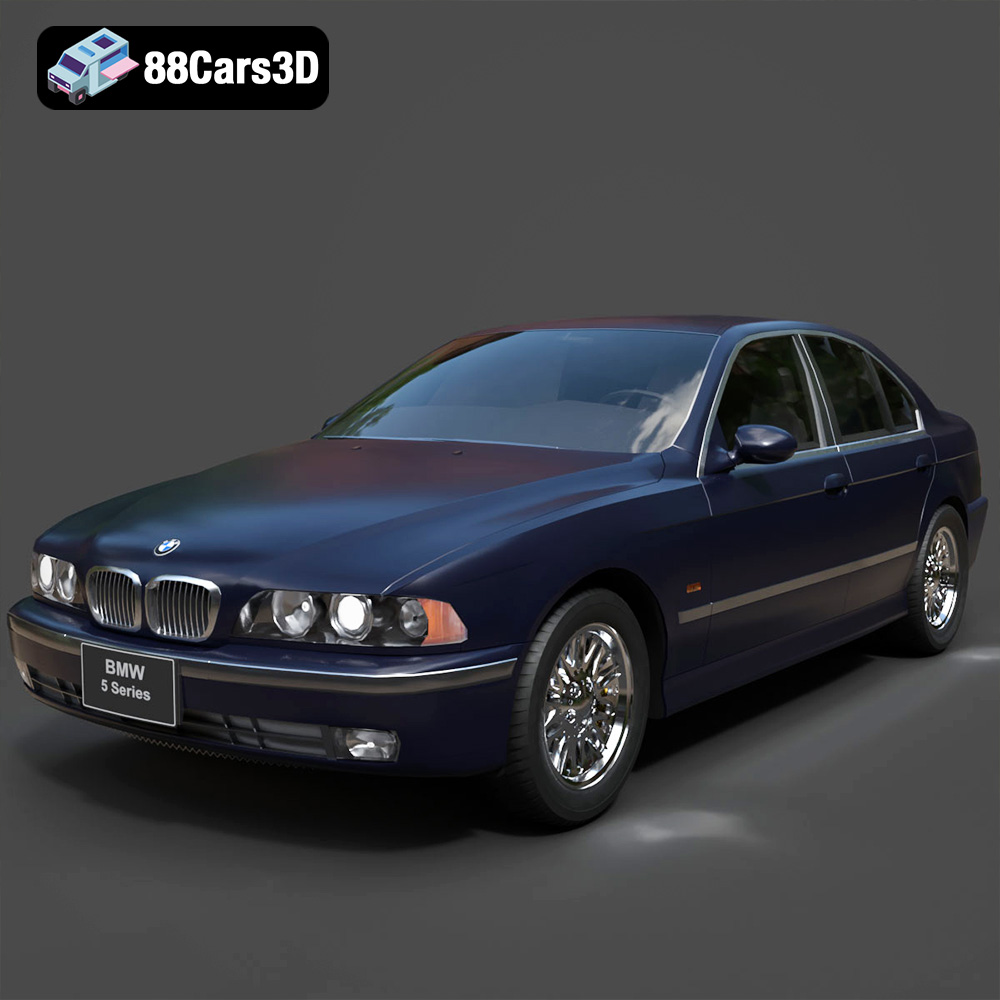
BMW E39 M5-540i 3D Model
Texture: Yes
Material: Yes
Download the BMW E39 M5-540i 3D Model featuring its iconic sedan design, detailed exterior, and realistic interior. Includes .blend, .fbx, .obj, .glb, .stl, .ply, .unreal, and .max formats for rendering, simulation, and game development.
Price: $10.79

BMW 7 Series E38 3D Model
Texture: Yes
Material: Yes
Download the BMW 7 Series E38 3D Model featuring its iconic luxury sedan design and classic aesthetics. Includes .blend, .fbx, .obj, .glb, .stl, .ply, .unreal, and .max formats for rendering, simulation, and game development.
Price: $10.79

BMW 6 Series 640i F12 3D Model
Texture: Yes
Material: Yes
Download the BMW 6 Series 640i F12 3D Model featuring a sleek design and detailed interior. Includes .blend, .fbx, .obj, .glb, .stl, .ply, .unreal, and .max formats for rendering, simulation, and game development.
Price: $10.79

BMW 6 Coupe E63 3D Model
Texture: Yes
Material: Yes
Download the BMW 6 Coupe E63 3D Model featuring a sleek design, detailed interior, and realistic exterior. Includes .blend, .fbx, .obj, .glb, .stl, .ply, .unreal, and .max formats for rendering, simulation, and game development.
Price: $10.79
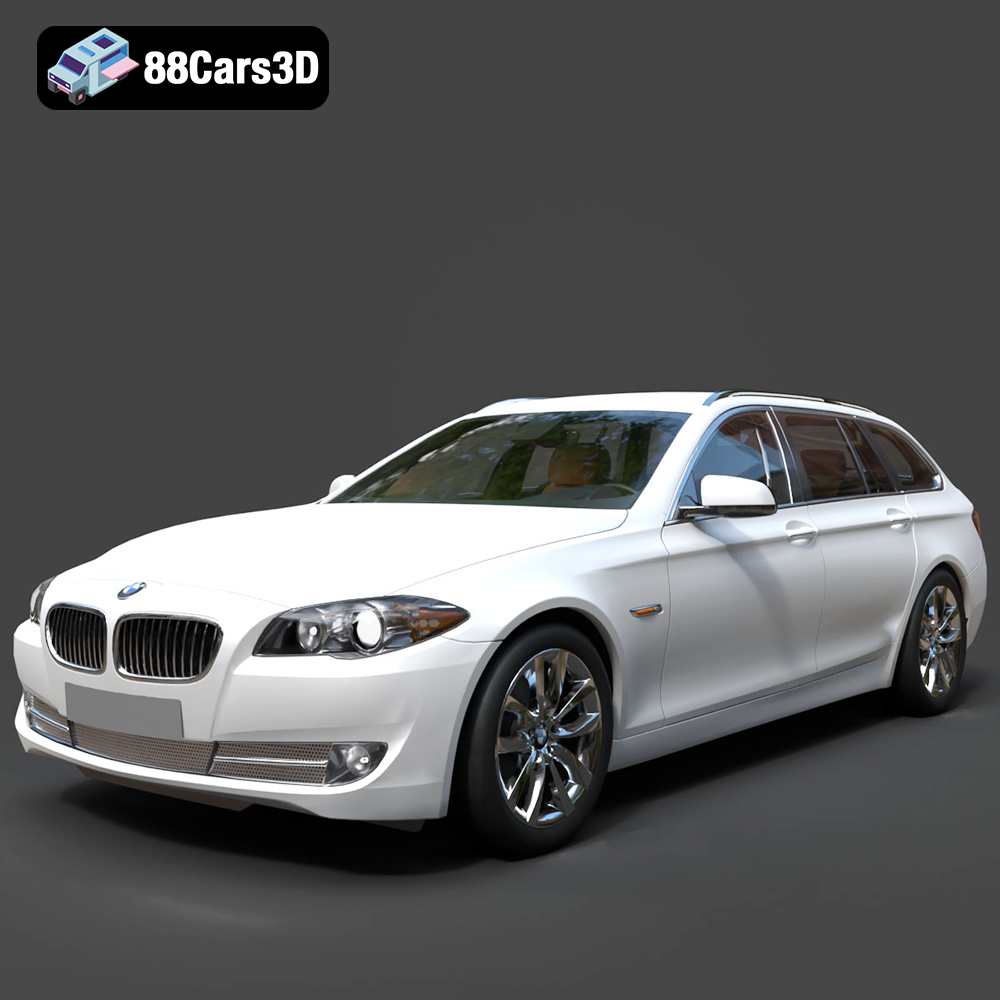
BMW 5 Series Touring F11-007 3D Model
Texture: Yes
Material: Yes
Download the BMW 5 Series Touring F11-007 3D Model featuring a detailed exterior and interior. Includes .blend, .fbx, .obj, .glb, .stl, .ply, .unreal, and .max formats for rendering, simulation, and game development.
Price: $10.79
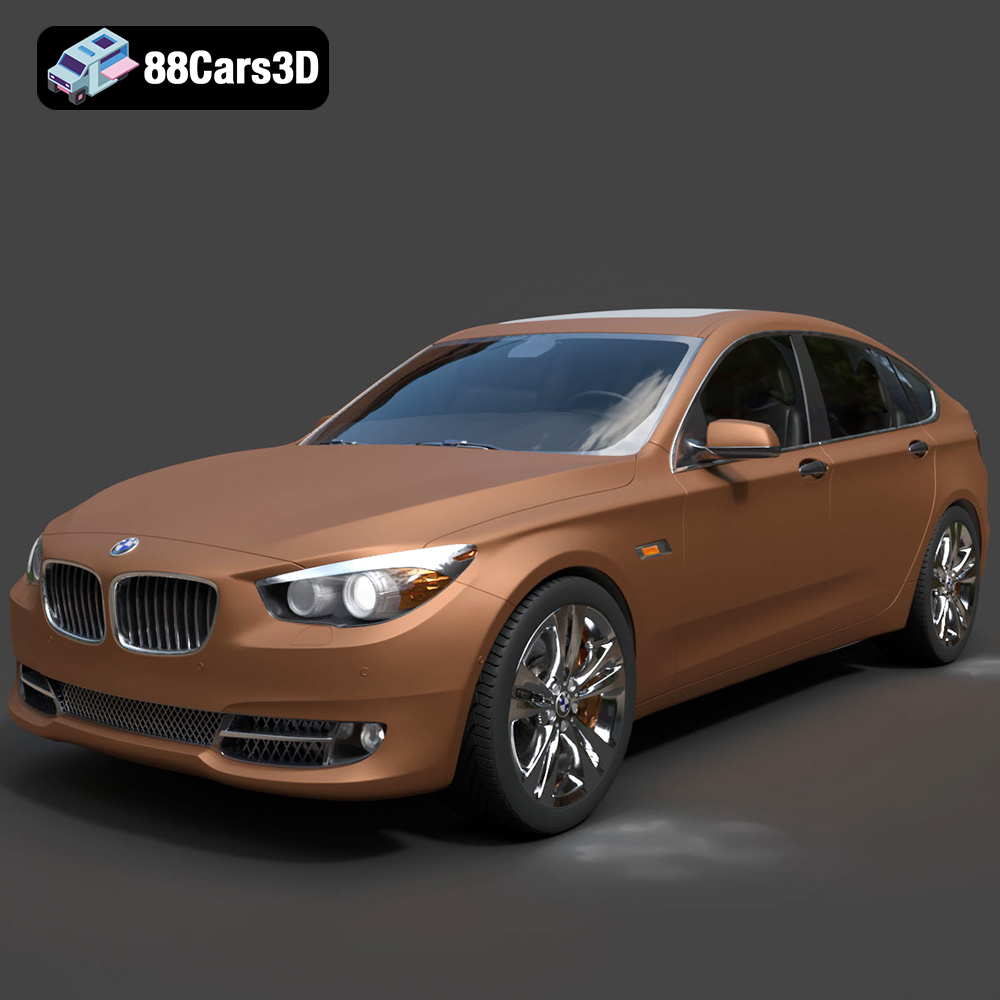
BMW 5 Series Gran Turismo F07-003 3D Model
Texture: Yes
Material: Yes
Download the BMW 5 Series Gran Turismo F07-003 3D Model featuring a detailed exterior and interior. Includes .blend, .fbx, .obj, .glb, .stl, .ply, .unreal, and .max formats for rendering, simulation, and game development.
Price: $10.79
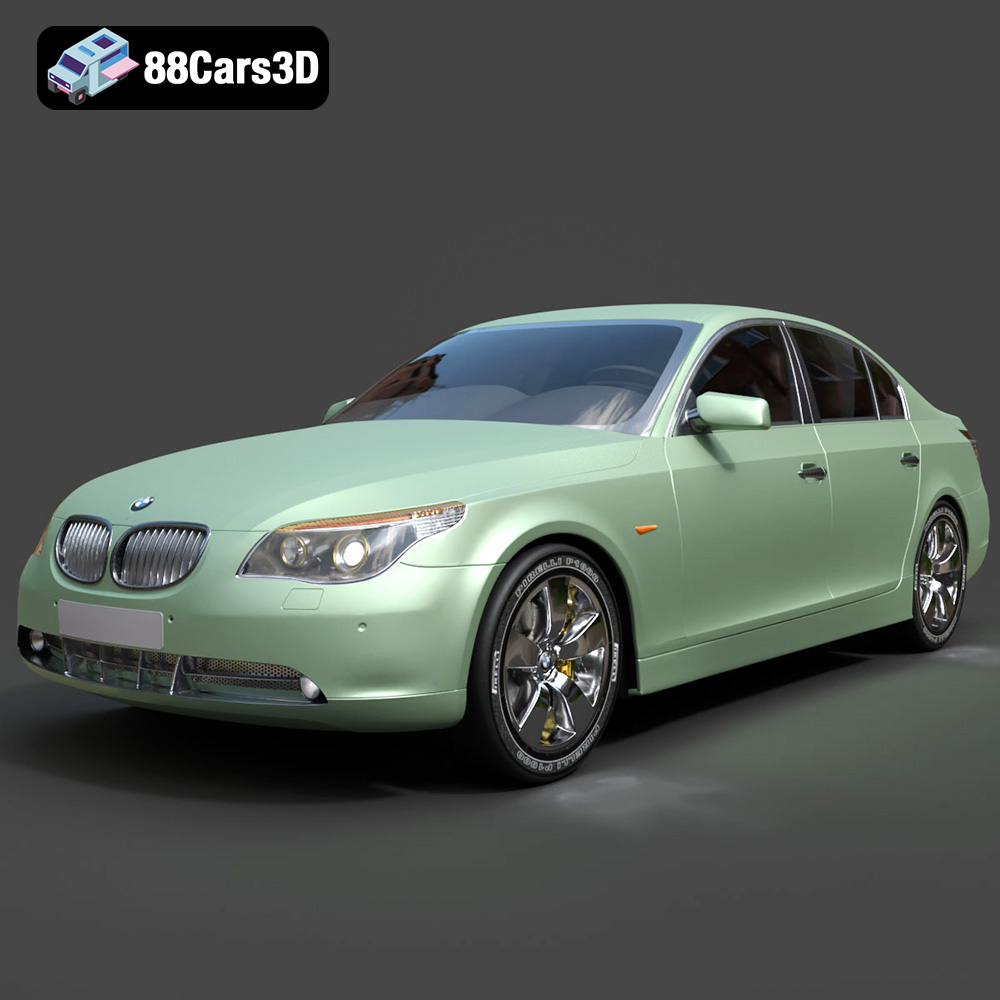
BMW 5 Series E60 3D Model
Texture: Yes
Material: Yes
Download the BMW 5 Series E60 3D Model featuring its iconic sedan design, detailed exterior, and interior. Includes .blend, .fbx, .obj, .glb, .stl, .ply, .unreal, and .max formats for rendering, simulation, and game development.
Price: $10.79

BMW 5 E34-535i 3D Model
Texture: Yes
Material: Yes
Download the BMW 5 E34-535i 3D Model featuring an iconic design, detailed exterior and interior, and accurate representation. Includes .blend, .fbx, .obj, .glb, .stl, .ply, .unreal, and .max formats for rendering, simulation, and game development.
Price: $10.79
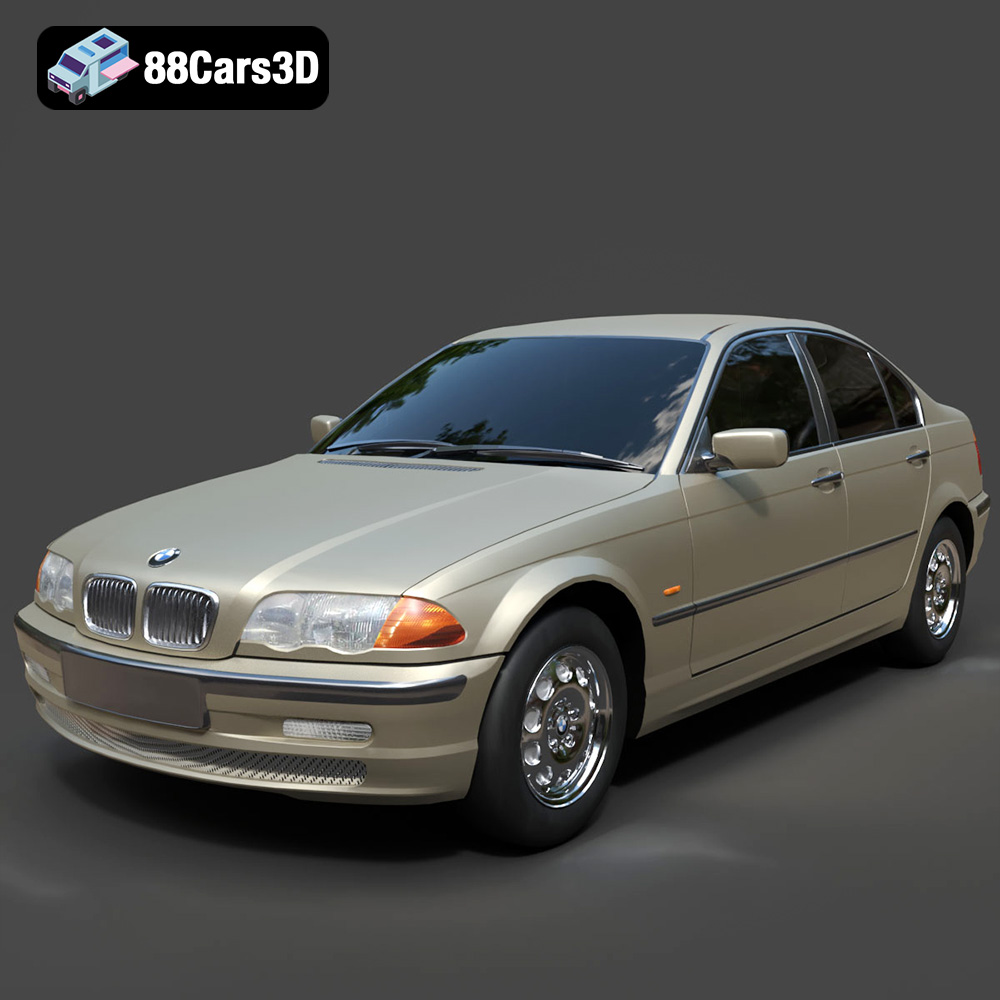
BMW 3 Series E46 3D Model
Texture: Yes
Material: Yes
Download the BMW 3 Series E46 3D Model featuring authentic exterior lines, a detailed interior, and separated components for animation. Includes .blend, .fbx, .obj, .glb, .stl, .ply, .unreal, and .max formats for rendering, simulation, and game development.
Price: $10.79
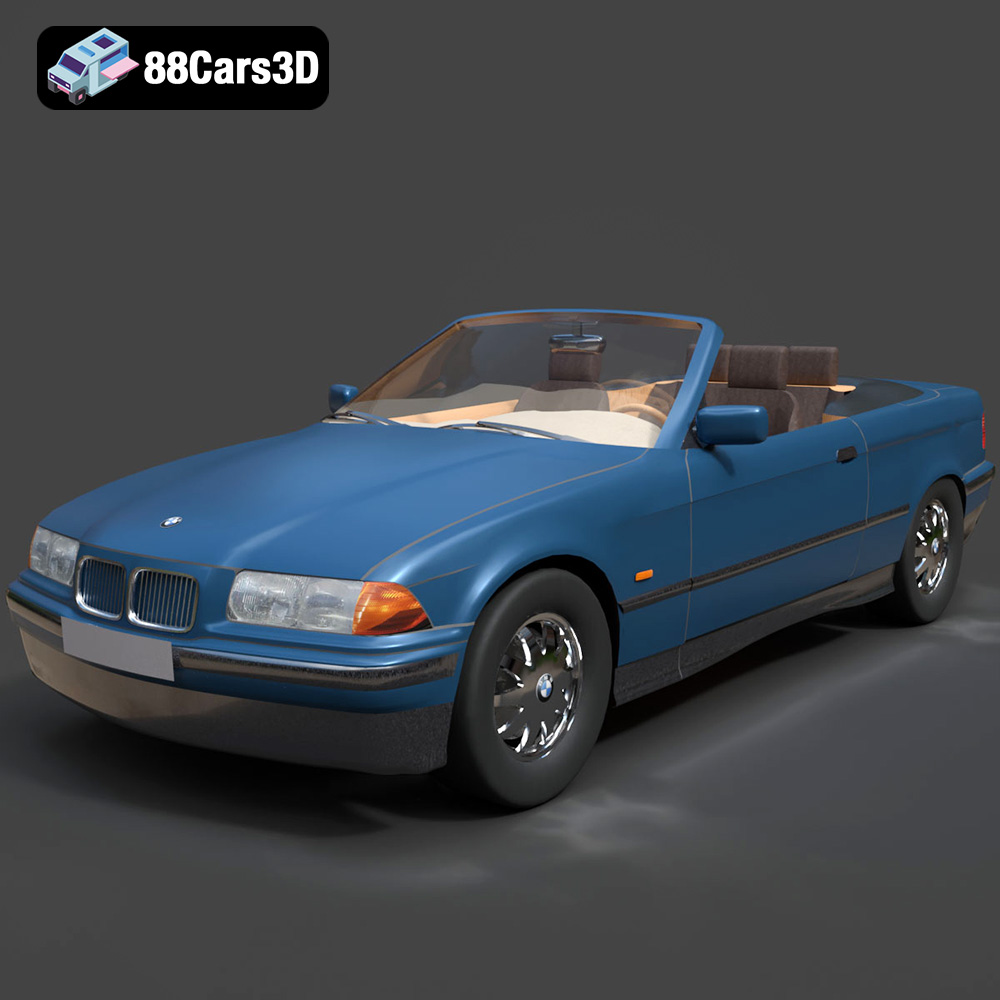
BMW 3 Series E36 Cabrio 325i 1998 3D Model
Texture: Yes
Material: Yes
Download the BMW 3 Series E36 Cabrio 325i 1998 3D Model featuring a classic convertible design and detailed interior. Includes .blend, .fbx, .obj, .glb, .stl, .ply, .unreal, and .max formats for rendering, simulation, and game development.
Price: $10.79
