

“`html
The world of 3D printing has exploded, bringing the ability to create intricate physical objects from digital designs right into our homes and workshops. For automotive enthusiasts and model makers, this means the opportunity to bring classic cars, modern supercars, and even concept vehicles to life as tangible models. However, transforming a digital STL file into a physical masterpiece involves a crucial decision: which 3D printing technology is best suited for the task? The two dominant players in the hobbyist and professional space are Fused Deposition Modeling (FDM) and Stereolithography (SLA) or Digital Light Processing (DLP) resin printing. Each offers distinct advantages and disadvantages when it comes to printing detailed printable car models. This comprehensive guide will dive deep into the technical aspects of both FDM and resin printing, helping you understand the nuances of 3D printer settings, slicing strategies, and post-processing techniques. By the end, you’ll have a clear understanding of which technology, or perhaps a combination, is the superior choice for your next project, whether you’re downloading a highly detailed printable car model from platforms like 88cars3d.com or working with your own designs.
Understanding the Core Technologies: FDM vs. Resin Printing
At their heart, FDM and resin printing employ fundamentally different methods to build objects layer by layer. FDM, also known as Fused Filament Fabrication, is the more common and accessible technology for many hobbyists. It works by melting a thermoplastic filament (like PLA, PETG, or ABS) and extruding it through a heated nozzle onto a build plate. The nozzle moves in X and Y directions, tracing out each layer, while the build plate moves down (or the gantry moves up) in the Z direction for the next layer. This process is akin to a very precise hot glue gun drawing out your model. FDM printers are generally more affordable, faster for larger prints, and can handle a wider range of materials, including those with higher strength and temperature resistance.
Resin printing, encompassing SLA and DLP technologies, operates on a different principle. Instead of extruding filament, these printers use a liquid photopolymer resin that cures and solidifies when exposed to a specific wavelength of light, typically from a UV laser (SLA) or a UV projector/screen (DLP). In a typical resin printer setup, the build plate is submerged in a vat of liquid resin. The light source selectively cures the resin layer by layer from the bottom up, adhering the newly formed layer to the build plate or the previous layer. This allows for incredibly fine detail and smooth surface finishes. However, resin printers often have smaller build volumes, require more careful handling of materials and post-processing, and can be slower for larger or solid objects due to the curing time required for each layer.
FDM Printing Mechanics and Material Diversity
The versatility of FDM is a major draw. The wide array of filament materials available means you can choose a resin for specific properties. PLA is excellent for beginners due to its ease of printing and low warping, making it ideal for detailed models where dimensional accuracy is key. PETG offers a good balance of strength, flexibility, and temperature resistance, suitable for parts that might experience some stress or higher ambient temperatures. ABS, known for its durability and heat resistance, requires a more controlled printing environment (often an enclosure) due to its tendency to warp. Advanced materials like carbon fiber-infused filaments can add significant stiffness and strength, though they require hardened steel nozzles to prevent abrasion. Understanding the nuances of each material’s printing temperature, bed adhesion requirements (e.g., PEI sheets, glue stick, or heated bed), and cooling fan settings is crucial for achieving successful prints, especially for complex geometries found in automotive models.
Resin Printing Resolution and Surface Finish
Resin printing excels in capturing the finest details, making it particularly well-suited for intricate components like miniature engine parts, delicate spoilers, or sharp panel lines on car models. The resolution is determined by the projector/screen resolution (for DLP) or the laser spot size (for SLA) and the layer height. Layer heights in resin printing are typically much smaller than in FDM, often ranging from 0.025mm to 0.1mm, compared to 0.1mm to 0.3mm or higher for FDM. This microscopic layer resolution translates into exceptionally smooth surfaces with minimal visible layer lines, often eliminating the need for extensive sanding that is common with FDM prints. The choice of resin itself also plays a role; standard resins are great for general-purpose models, while engineering resins can offer increased toughness, flexibility, or even high-temperature resistance, though at a higher cost.
Detail and Accuracy: Which Technology Captures the Nuances?
When printing printable car models, especially those with fine details like grilles, badges, exhaust pipes, and panel gaps, the level of detail achievable by each technology becomes paramount. Resin printers, with their sub-100-micron resolution capabilities and incredibly thin layer heights, are inherently superior in capturing these intricate features. The photopolymer cures precisely where the UV light hits, allowing for sharp edges and smooth curves that are often difficult or impossible to replicate perfectly with FDM, especially on smaller-scale models. The absence of visible layer lines on a well-executed resin print gives it a polished, injection-molded look right off the printer, significantly reducing post-processing time for achieving a show-quality finish. For collectors and display models where aesthetic perfection is key, resin printing often takes the lead.
FDM printing, while not as inherently detailed as resin, has made significant strides. By utilizing finer nozzle sizes (e.g., 0.2mm or 0.25mm instead of the standard 0.4mm), reducing layer heights to 0.1mm or even 0.05mm, and employing slower print speeds, FDM can produce surprisingly detailed results. However, achieving this level of detail often comes at the cost of dramatically increased print times and a higher risk of print failures. The inherent limitations of extruding a semi-molten filament mean that very fine overhangs, sharp internal corners, and delicate structures can be challenging. Despite these challenges, for larger-scale models, prototypes, or functional parts where extreme detail is secondary to structural integrity or cost-effectiveness, FDM remains a viable and often preferred option.
The Impact of Layer Height on Detail
Layer height is arguably the most critical parameter affecting the visual fidelity of a 3D print. In FDM, a common layer height might be 0.2mm. Reducing this to 0.1mm effectively halves the height of each “step” on curved surfaces, leading to a smoother appearance. Going down to 0.05mm can yield results that are almost indistinguishable from resin prints to the naked eye, but it quadruples the print time compared to 0.2mm layers. This layer height vs. print time tradeoff is a significant consideration for FDM users. For resin printing, layer heights of 0.05mm are standard, with some printers even capable of 0.025mm. This inherently smaller layer resolution means that fine details are captured much more easily and quickly, as the difference between layers is less perceptible. For the intricate bodywork of a sports car or the delicate spokes of a wheel, resin’s microscopic layer resolution offers a distinct advantage.
Tolerances and Dimensional Accuracy
Both technologies can achieve good dimensional accuracy, but they do so differently. FDM prints are affected by factors like filament expansion/contraction, nozzle diameter variations, and the cooling process. Warping, especially with materials like ABS, can significantly impact overall dimensions. Resin prints are generally more dimensionally stable during the printing process itself, as the curing is a more controlled chemical reaction. However, post-processing for resin prints, such as thorough washing and curing, can introduce slight dimensional changes if not done correctly. For models requiring extremely tight tolerances or the assembly of multiple parts, calibrating your printer and understanding these material behaviors is essential. Many marketplaces, like 88cars3d.com, provide models optimized with tolerances in mind, but user-specific printer accuracy will always play a role.
Print Speed, Build Volume, and Material Costs
When it comes to sheer speed, FDM printers often have an edge, particularly for larger objects. The process of extruding filament, while slow for extreme detail, can cover significant volumes quickly. A large, solid FDM print might take 24 hours or more, whereas an equivalent solid resin print could take days, if not weeks, due to the need to cure each thin layer individually. However, this speed advantage for FDM diminishes significantly when attempting high-detail prints with very small layer heights. Furthermore, FDM printers generally offer larger build volumes, allowing for the printing of bigger car models or multiple components simultaneously. Resin printers typically have smaller build areas, limiting the size of a single print or requiring models to be split into smaller sections.
Material cost is another critical factor. FDM filaments, such as PLA and PETG, are generally much cheaper per kilogram than liquid resins. A 1kg spool of PLA might cost $20-$30, while a 1-liter bottle of standard resin can range from $40-$100 or more, depending on the type and brand. This cost difference becomes substantial for large prints or for users who print frequently. However, the total cost of ownership also needs to consider failed prints, support material usage, and post-processing consumables. Resin prints often require more support material, and the uncured resin needs careful disposal, adding to the overall expense and environmental considerations.
Optimizing Print Speed: Slicing Strategies
For FDM, slicing software like Cura or PrusaSlicer offers extensive control over print speed. You can set different speeds for outer walls, inner walls, infill, and support structures. For car models, prioritizing slower speeds for outer walls (e.g., 30-50 mm/s) ensures a better surface finish, while faster speeds can be used for infill. Travel speed is also important to reduce stringing. For resin, speed is primarily dictated by the exposure time per layer. Faster layer cure times are achieved with more powerful UV sources or more photosensitive resins, but this can sometimes compromise detail or increase the risk of supports failing. Many slicers for resin printers (like ChiTuBox or Lychee) allow you to adjust the lift speed and distance, which significantly impacts print time for larger or taller prints, as well as the risk of suction forces detaching layers.
Infill Density and Its Impact
Infill plays a crucial role in FDM prints, affecting strength, weight, and print time. For display car models, a low infill density (e.g., 5-15%) is usually sufficient. Different infill patterns, such as grid, gyroid, or cubic, can offer varying degrees of strength and printability. For resin prints, the concept of infill is different. Most resin prints are printed solid, or with internal “hollow” structures that are then filled with support structures to prevent internal adhesion. When hollowing a resin model, it’s essential to add drain holes to allow excess resin to escape during printing and post-processing, preventing pressure build-up and print failures. This also significantly reduces resin consumption and print time for larger models.
Support Structures and Print Orientation: Essential for Success
Both FDM and resin printing require support structures for overhanging geometries. For FDM, supports are typically generated by the slicer when a layer needs to be printed more than a certain angle (e.g., 45-60 degrees) from the vertical. The type of support (normal, tree/branching), density, and interface layers can be adjusted to make them easier to remove while minimizing damage to the printed model. Support structures are critical for car models, especially for undercarriage details, wheel arches, and complex spoilers. Improperly placed or difficult-to-remove supports can leave unsightly marks or even break delicate parts.
Resin printing also relies heavily on supports, but with a different philosophy. Because resin prints are built from the bottom up, supports are often needed to connect the model to the build plate and to hold up any features that don’t have a solid layer beneath them. These are typically fine, needle-like structures that are much denser than FDM supports. The primary challenge with resin supports is the tendency for suction forces to pull the model off the supports or even detach layers from the build plate. Therefore, orienting the model correctly on the build plate is paramount. Placing the largest, flattest surfaces parallel to the build plate can reduce suction, but this often requires more complex support structures. The goal is to minimize the number of islands (layers with no connection to the layer below) and to ensure that each layer has sufficient support to cure correctly.
Advanced Support Generation Techniques
In FDM, software like Meshmixer or even some advanced features within Cura can help in manually adding or modifying supports. Tree supports, for instance, can be more material-efficient and easier to remove than traditional grid supports. For resin, dedicated software (like Lychee, ChiTuBox, PreForm) offers tools to add auto-supports, which can then be manually refined. Adding “anti-air” supports to crucial areas, adjusting contact points, and ensuring that supports are angled correctly to reduce peel forces are common practices. For very large or critical prints, designing custom supports or splitting a model to print sections vertically can also be effective. When downloading print-ready STL files from marketplaces such as 88cars3d.com, often the designer has already pre-supported the model for optimal results, though manual adjustment might still be beneficial.
Print Orientation Strategies for Optimal Results
For FDM, orienting a car model to minimize overhangs and maximize adhesion is key. Often, printing a car body upside down can place the roof, which typically has fewer complex details, on the build plate for a smooth finish, with the undercarriage details facing upwards where supports are more manageable. For resin, orientation is driven by minimizing suction forces and maximizing detail preservation. Typically, models are tilted at an angle (e.g., 5-15 degrees) off the build plate. This breaks up the surface area of each layer, reducing the force required to lift the print, and allows uncured resin to drain more easily. The orientation also dictates where support contact points will be, so choosing an orientation that places these on less visible areas is ideal.
Post-Processing: Sanding, Painting, and Finishing
The journey from a raw 3D print to a display-ready model doesn’t end when the printer finishes. Post-processing is a vital stage for both FDM and resin prints, though the specific techniques and effort required can vary significantly. For FDM prints, common post-processing steps include removing support structures, sanding to smooth out layer lines and imperfections, filling gaps or defects with modeling putty, and finally priming and painting. The level of sanding required depends heavily on the layer height and the desired finish. Achieving a perfectly smooth, showroom-quality finish on an FDM print can be a laborious process, often involving multiple grits of sandpaper, potentially fillers, and careful painting techniques to hide any remaining layer artifacts.
Resin prints, while boasting smoother surfaces out of the printer, still require attention. The first step is washing the print in isopropyl alcohol (IPA) or a specialized resin cleaner to remove any uncured resin. This is typically followed by a UV curing process, either in a dedicated curing station or under direct sunlight, to fully harden the resin. After curing, support structures need to be carefully removed. Due to the fine nature of resin supports, this is often done with flush cutters, small pliers, or hobby knives. Sanding might still be necessary where supports attached, but it’s usually a much less intensive process than with FDM. The smoother surface of resin prints makes them ideal for painting, as primers adhere well, and fine details are less likely to be obscured by sanding marks.
Sanding and Surface Preparation Techniques
For FDM, start with coarser grit sandpaper (e.g., 100-220 grit) to remove significant layer lines and support marks, gradually moving to finer grits (e.g., 400, 800, 1000+). Wet sanding can help reduce dust and achieve a smoother finish. For resin prints, if sanding is needed, start with much finer grits (e.g., 400-800) and work up. Using modeling putty or even 3D printing specific fillers can help fill small gaps or surface imperfections before priming. Priming the model is an essential step for both technologies, as it reveals any remaining surface flaws and provides a uniform base for paint.
Painting and Finishing for Realistic Models
When painting printable car models, whether FDM or resin, using acrylic paints, lacquers, or enamels is common. Airbrushing can provide the most professional and even finish, especially for car bodies. Techniques like applying multiple thin coats of primer, base coat, and clear coat are standard in model finishing. Decals can be applied for badges, racing stripes, or other livery. Weathering effects, such as adding subtle dirt, grime, or a subtle metallic sheen, can further enhance realism. For clear parts like windows, specialized clear paints or actual clear plastic sheets can be used. The choice of material and printing technology can influence how easily these advanced painting techniques can be applied.
Troubleshooting Common Print Failures
Even with the best 3D printer settings, failures can occur. Understanding common issues and their solutions is part of mastering either FDM or resin printing. For FDM, common failures include layer separation (delamination) due to poor bed adhesion or incorrect temperature settings, stringing caused by filament oozing during travel moves, elephant’s foot (the first few layers are squashed) due to excessive nozzle pressure or bed leveling issues, and failed supports leading to drooping overhangs. Print adhesion to the build plate is critical; issues here can range from warped corners to the entire print detaching mid-print. For detailed car models, small overhangs or fine details can easily fail if print speed or cooling is not optimized.
Resin printing has its own set of common failures. “Dreaded suction cup” failure, where a large, flat surface creates a vacuum and pulls the print off the supports or build plate, is notorious. Layer shifts, where layers become misaligned, can happen due to the build plate hitting a cured blob of resin or mechanical issues. Print failures can also occur if supports are too weak, leading to parts detaching from the supports and falling into the vat, or if the resin is not mixed properly, or if exposure times are too low, resulting in incomplete curing and weak structures. Contamination in the resin vat can also lead to print defects.
FDM Troubleshooting: Adhesion and Stringing
To combat adhesion issues, ensure your build plate is clean (using IPA or soap and water), level, and at the correct temperature for your material. Using adhesion aids like glue sticks, hairspray, or specialized bed surfaces (PEI, glass) can help. For stringing, adjust retraction settings in your slicer (distance and speed), ensure filament is dry, and consider lowering print temperature slightly. If a print fails mid-way, check that the printer is stable, not experiencing vibrations, and that all axes are moving freely without binding. For detailed parts, printing a calibration cube or a small test print with similar features can help diagnose issues before committing to a long print.
Resin Troubleshooting: Suction and Supports
To mitigate suction, orient models at an angle (5-15 degrees), consider hollowing larger models with strategically placed drain holes, and ensure sufficient exposure time for base layers and raft. Proper support is key; use enough supports, ensure they are well-anchored to the model, and consider adding “anti-air” supports to critical areas. If layer shifts occur, check if the Z-axis lead screws are clean and lubricated, if the build plate is securely attached, and if there are any obstructions. For print failures, meticulously check your resin for cured particles, ensure your resin is within its shelf life, and that your exposure times are appropriate for the resin type and your printer’s UV intensity. Many resin slicers have built-in tools to help generate more robust supports.
Choosing between FDM and resin printing for your printable car models ultimately depends on your priorities: detail, speed, cost, and post-processing effort. If achieving the highest level of intricate detail and a smooth, factory-like finish with minimal sanding is your primary goal, resin printing is likely the superior choice. It excels at capturing the sharp lines, delicate curves, and fine features that define a realistic car model. However, this comes with higher material costs, a smaller build volume, and more involved post-processing steps that require careful handling of chemicals.
On the other hand, FDM printing offers greater affordability, larger build volumes, and a wider range of material properties, making it ideal for larger models, functional prototypes, or when cost-effectiveness is a major consideration. While achieving the same level of detail as resin requires more effort in terms of fine-tuning 3D printer settings, reducing layer heights, and extensive post-processing, the results can still be highly impressive. For many hobbyists, an FDM printer might be their entry point, with a resin printer being a subsequent investment for specialized, high-detail projects. Ultimately, understanding the strengths and weaknesses of each technology, practicing good slicing techniques, and mastering the art of support generation and post-processing will allow you to create stunning printable car models, whether you’re downloading them from curated marketplaces like 88cars3d.com or designing them yourself.
“`
Featured 3D Car Models

BMW 4 Series F32 3D Model
Texture: Yes
Material: Yes
Download the BMW 4 Series F32 3D Model featuring clean geometry, realistic detailing, and a fully modeled interior. Includes .blend, .fbx, .obj, .glb, .stl, .ply, .unreal, and .max formats for rendering, simulation, and game development.
Price: $12.99
BMW E39 M5-540i 3D Model
Texture: Yes
Material: Yes
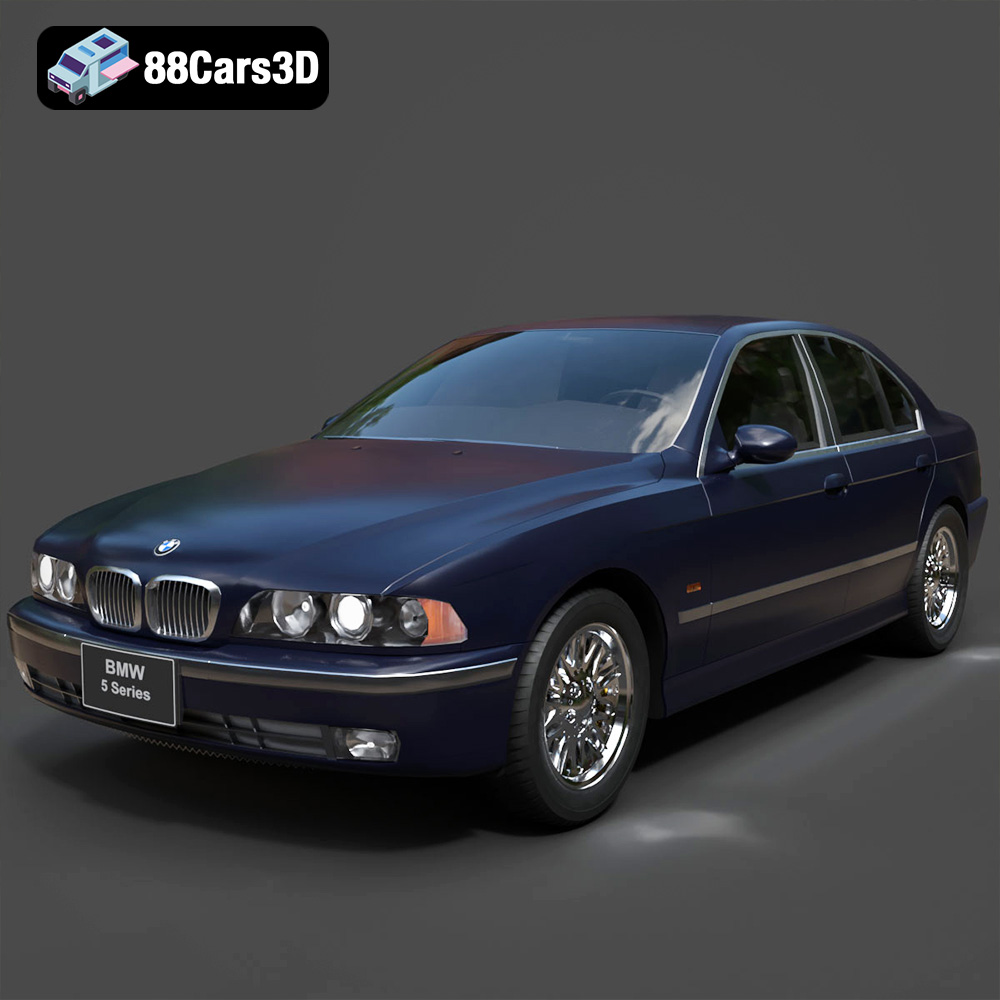
Download the BMW E39 M5-540i 3D Model featuring its iconic sedan design, detailed exterior, and realistic interior. Includes .blend, .fbx, .obj, .glb, .stl, .ply, .unreal, and .max formats for rendering, simulation, and game development.
Price: $10.79

BMW 7 Series E38 3D Model
Texture: Yes
Material: Yes
Download the BMW 7 Series E38 3D Model featuring its iconic luxury sedan design and classic aesthetics. Includes .blend, .fbx, .obj, .glb, .stl, .ply, .unreal, and .max formats for rendering, simulation, and game development.
Price: $10.79

BMW 6 Series 640i F12 3D Model
Texture: Yes
Material: Yes
Download the BMW 6 Series 640i F12 3D Model featuring a sleek design and detailed interior. Includes .blend, .fbx, .obj, .glb, .stl, .ply, .unreal, and .max formats for rendering, simulation, and game development.
Price: $10.79

BMW 6 Coupe E63 3D Model
Texture: Yes
Material: Yes
Download the BMW 6 Coupe E63 3D Model featuring a sleek design, detailed interior, and realistic exterior. Includes .blend, .fbx, .obj, .glb, .stl, .ply, .unreal, and .max formats for rendering, simulation, and game development.
Price: $10.79

BMW 5 Series Touring F11-007 3D Model
Texture: Yes
Material: Yes
Download the BMW 5 Series Touring F11-007 3D Model featuring a detailed exterior and interior. Includes .blend, .fbx, .obj, .glb, .stl, .ply, .unreal, and .max formats for rendering, simulation, and game development.
Price: $10.79

BMW 5 Series Gran Turismo F07-003 3D Model
Texture: Yes
Material: Yes
Download the BMW 5 Series Gran Turismo F07-003 3D Model featuring a detailed exterior and interior. Includes .blend, .fbx, .obj, .glb, .stl, .ply, .unreal, and .max formats for rendering, simulation, and game development.
Price: $10.79

BMW 5 Series E60 3D Model
Texture: Yes
Material: Yes
Download the BMW 5 Series E60 3D Model featuring its iconic sedan design, detailed exterior, and interior. Includes .blend, .fbx, .obj, .glb, .stl, .ply, .unreal, and .max formats for rendering, simulation, and game development.
Price: $10.79

BMW 5 E34-535i 3D Model
Texture: Yes
Material: Yes
Download the BMW 5 E34-535i 3D Model featuring an iconic design, detailed exterior and interior, and accurate representation. Includes .blend, .fbx, .obj, .glb, .stl, .ply, .unreal, and .max formats for rendering, simulation, and game development.
Price: $10.79

BMW 3 Series E46 3D Model
Texture: Yes
Material: Yes
Download the BMW 3 Series E46 3D Model featuring authentic exterior lines, a detailed interior, and separated components for animation. Includes .blend, .fbx, .obj, .glb, .stl, .ply, .unreal, and .max formats for rendering, simulation, and game development.
Price: $10.79
