

Unlocking the Full Potential: A Technical Guide to Splitting Large 3D Car Models for Seamless Printing
The world of 3D printing offers an unparalleled opportunity to bring intricate designs to life, and at 88cars3d.com, we’re passionate about providing you with high-quality, printable 3D car models. However, even the most meticulously designed vehicle can present a printing challenge if its sheer size exceeds the build volume of your 3D printer. This is where the art and science of model splitting come into play. Far from being a mere workaround, intelligently splitting a large STL file into smaller, manageable components is a crucial technique for hobbyists, makers, and professionals alike. It not only allows you to print models that would otherwise be impossible but also opens doors to enhanced detail, easier post-processing, and the ability to use different materials for specific parts. This comprehensive guide will walk you through the entire process, from understanding why splitting is necessary to mastering the software tools and achieving flawless multi-part prints. We’ll delve into the intricacies of mesh topology, slicing strategies, support generation, and crucial post-processing steps, empowering you to tackle even the most ambitious 3D printing projects with confidence.
The Necessity of Splitting: Beyond Build Volume Limitations
When embarking on a 3D printing journey with a substantial model, like many of the detailed car models available on platforms like 88cars3d.com, you’ll quickly encounter the physical constraints of your 3D printer. The build volume – the maximum dimensions your printer can accommodate – is the primary driver for splitting models. A car model designed for a gallery display might be several feet long, far exceeding the typical 200x200x200mm or even larger build plates of most desktop FDM or resin printers. However, the reasons for splitting extend beyond simply fitting the model onto the print bed.
Optimizing for Print Quality and Detail
Printing a very large, single-piece object can often lead to compromised print quality. As the print progresses, the cumulative effects of minor vibrations, filament inconsistencies, or slight temperature fluctuations can become more pronounced over a longer print duration. Splitting a model allows for printing smaller sections, each of which can be optimized individually for maximum detail and minimal print artifacts. This means you can potentially achieve finer surface finishes and sharper edges on each component before assembly. Furthermore, printing smaller parts often allows for the use of lower layer heights (e.g., 0.08mm or 0.1mm) on critical surfaces without dramatically extending the overall print time of the entire project, leading to a superior final product.
Material Efficiency and Versatility
Splitting also offers significant advantages in terms of material usage and flexibility. For instance, if your car model features a chassis and body panels, you might opt to print the chassis in a more robust material like PETG or ABS for structural integrity, while the exterior panels could be printed in PLA for ease of printing and superior surface finish. This is particularly relevant when dealing with complex geometries or parts that require different mechanical properties. Moreover, smaller parts are generally more material-efficient due to reduced waste from failed prints or the need for extensive support structures on very large overhangs. If a small section fails, it’s a much quicker and less wasteful fix than reprinting an entire large component.
Ease of Assembly and Post-Processing
A single, massive print can be a nightmare to handle, sand, paint, and assemble. By splitting your car model into logical components (e.g., body panels, chassis, wheels, interior elements), you simplify the post-processing workflow immensely. Each smaller part is easier to handle, sand to a smooth finish, prime, and paint. This allows for more controlled and precise application of finishes, especially for intricate details like panel gaps, trim lines, or interior components. The assembly process itself can become a rewarding part of the hobby, similar to traditional scale model building, where precise alignment and bonding techniques are employed.
Mastering the Art of Digital Segmentation: Software Tools and Techniques
The process of splitting a 3D model begins in your chosen 3D modeling or mesh editing software. While dedicated CAD software can be used, mesh editors are generally more suitable for manipulating STL files, which are inherently triangulated surfaces. The key is to achieve clean cuts that will mate perfectly when assembled, minimizing the need for extensive filling and sanding later.
Preparing Your Model: Understanding Mesh Topology
Before you even think about splitting, it’s crucial to ensure your STL file is “watertight” and manifold. This means there are no holes, no inverted normals, and no self-intersecting geometry. For models downloaded from marketplaces such as 88cars3d.com, this is typically not an issue as they are optimized for printing. However, if you’re working with a model from another source or have made modifications, you’ll need to use mesh repair tools. Software like Meshmixer, Blender, or even Netfabb (though Netfabb is more professional-grade) are excellent for this.
* **Watertight Check:** The software will analyze your mesh for any breaches in its surface. These need to be identified and repaired.
* **Manifold Correction:** Ensures that each edge is shared by exactly two faces, a fundamental requirement for 3D printing.
* **Normals Orientation:** All surface normals should point outwards, indicating the correct orientation of the faces.
Cutting Tools and Strategies
Most mesh editing software offers robust cutting tools. The approach you take will depend on the complexity of the model and your desired assembly method.
* **Boolean Operations (Difference/Subtract):** In software like Blender or Meshmixer, you can create simple geometric shapes (cubes, planes) and use them as “cutting tools” to subtract portions of your car model. This is effective for creating straight, clean cuts.
* **Plane Cuts:** Many programs allow you to define a plane and slice the model along it. This is ideal for dividing the car body into sections like the front, middle, and rear, or for splitting the roof from the body.
* **Manual Edge Loop Cutting (Blender):** For more intricate splitting, especially when you need to follow the contours of the model, tools like Blender’s “Loop Cut and Slide” can be invaluable. This allows for precise control over where the cuts are made.
Adding Interlocking Features: Keys, Pins, and Dovetails
Simply slicing a model in half often results in flat mating surfaces, which can be challenging to align accurately during assembly. To overcome this, it’s highly recommended to add interlocking features to your split parts before exporting them. These act as guides and add structural integrity to the joint.
* **Keyways and Keys:** You can cut a slot (keyway) into one part and extrude a corresponding tab (key) on the other part. This ensures the parts can only be joined in the correct orientation.
* **Dowel Pins:** Similar to keys, small cylindrical holes and corresponding pins can be added to create precise alignment points.
* **Dovetail Joints:** For stronger, more integrated connections, dovetail joints can be modeled, though these are more complex to design and print accurately.
When designing these interlocking features, remember to account for printer tolerances. For FDM printing, add a small gap (e.g., 0.2-0.4mm) around keys or pins to ensure they fit without being too tight. For resin printers, the tolerances can often be smaller. Always test fit these features on a small calibration print before committing to the full model.
Slicing for Success: Optimizing Parameters for Multi-Part Prints
Once your large car model has been successfully segmented into smaller, printable parts, the next critical step is preparing these individual files for your 3D printer using slicing software. Slicers like Cura, PrusaSlicer, or Simplify3D translate your 3D model into layer-by-layer instructions (G-code) for the printer. For multi-part prints, careful consideration of slicing parameters is essential for achieving quality and ensuring a smooth assembly process.
Layer Height: The Detail vs. Time Trade-off
The layer height setting dictates the thickness of each printed layer. A smaller layer height (e.g., 0.08mm or 0.1mm) results in finer detail and smoother curves, crucial for achieving a high-quality finish on car body panels. However, it also significantly increases print time. Conversely, a larger layer height (e.g., 0.2mm or 0.3mm) speeds up printing considerably but can lead to more visible layer lines.
For your car models, a common strategy is to print the exterior body panels with a lower layer height for maximum detail, perhaps 0.1mm. Structural components like the chassis or internal supports might be printed with a slightly higher layer height, like 0.2mm, to save time without sacrificing necessary strength. Consider which surfaces will be most visible and prioritize detail where it matters most.
Infill Patterns and Density: Balancing Strength and Material Usage
Infill refers to the internal structure printed within the outer walls of your model. The pattern and density of this infill play a significant role in the strength, weight, and material consumption of your print.
* **Patterns:** Common infill patterns include Grid, Cubic, Gyroid, and Lines. For car models, patterns like Gyroid offer good strength in all directions and are relatively efficient. Grid and Lines are faster but can be less structurally sound.
* **Density:** Infill density is expressed as a percentage. For display models, 10-15% infill is often sufficient for FDM printing. For parts that require higher strength or rigidity, you might increase this to 20-30%. Since you’re printing smaller parts, you can afford to be slightly more generous with infill if needed, without drastically increasing overall print duration for the entire project.
It’s crucial to remember that for resin printing, infill is often handled differently or not applied in the same way as FDM, as the entire object is cured, resulting in a solid part by default. However, designers often incorporate internal support structures or hollow out models to save resin and reduce cure times.
Print Speed and Acceleration: Finding the Sweet Spot
Print speed dictates how fast the print head moves when extruding filament. Higher speeds can reduce print time but may compromise quality, especially on complex curves or fine details. Acceleration controls how quickly the printer reaches its target speed.
For intricate car models and split parts, it’s often beneficial to reduce print speeds, particularly for outer walls and details. A common starting point for detailed FDM prints is 40-60 mm/s for outer walls and 80-100 mm/s for inner walls and infill. Experiment with your printer’s capabilities. Lowering acceleration values can also help reduce ringing or ghosting artifacts on the print surface, resulting in a cleaner finish.
The Critical Role of Support Structures and Bed Adhesion
Properly supporting overhangs and ensuring a strong first layer are paramount for successful multi-part printing. When your car model is split, the requirements for supports might change for each individual component.
Generating Effective Supports
Supports are temporary structures printed to hold up overhanging parts of your model during the printing process. Poorly generated supports can mar surfaces, be difficult to remove, or even cause print failures.
* **Support Type:** Slicers offer various support types, including ‘Normal’, ‘Tree’ (or ‘Branch’), and ‘Custom’. ‘Tree’ supports are often excellent for complex models as they minimize contact points with the model surface, leading to easier removal and less surface damage.
* **Support Overhang Angle:** This setting determines at what angle an overhang will require support. A common setting is 45 degrees, but for highly detailed models, you might lower this to 30 degrees to catch more subtle overhangs.
* **Support Placement:** Choose between ‘Touching Buildplate’ only or ‘Everywhere’. For split parts, ‘Everywhere’ is often necessary, but be mindful of how supports will interact with mating surfaces. You might need to manually disable supports in specific areas where parts will join to avoid damaging the interlocking features.
* **Support Density and Pattern:** Similar to infill, support density affects ease of removal. Lower density (e.g., 10-15%) makes removal easier but might be less stable. Experiment to find a balance.
When printing split parts, pay close attention to how supports interact with the newly created mating surfaces. If you’ve added keys or pins, ensure supports don’t interfere with these features. You may need to use support blockers in your slicer to prevent supports from being generated in these critical areas.
Ensuring Reliable Bed Adhesion
A strong first layer is the foundation of any successful 3D print. For split car model parts, ensuring they adhere securely to the build plate prevents shifting, warping, and ultimately, print failure.
* **Build Plate Material:** Different build plate surfaces (glass, PEI, textured sheets) offer varying levels of adhesion. Using an adhesion aid like glue stick, hairspray, or specialized adhesives can be beneficial.
* **Bed Leveling:** A perfectly leveled bed is non-negotiable. Calibrate your printer regularly.
* **First Layer Settings:** Increase the “Initial Layer Print Speed” (often to half your normal print speed) and “Initial Layer Line Width” (e.g., 120-150%) to promote better squish and adhesion.
* **Brims and Rafts:** For parts with a small footprint or those prone to warping (like ABS), using a brim (a single layer printed around the base of the part) or a raft (a thicker base structure) can significantly improve bed adhesion. Be cautious with rafts as they can sometimes leave a rough surface on the bottom of your print.
For resin printing, proper bed adhesion is also critical. Ensure the build plate is clean and level, and that the initial layer exposure times are correctly calibrated. Using a resin-specific adhesion enhancer or a textured build plate can also be beneficial.
Post-Processing Perfection: Sanding, Painting, and Assembly
The true magic of 3D printed car models often shines through in the post-processing stages. For split models, this is where the individual pieces transform into a cohesive, showroom-quality replica.
The Art of Sanding and Surface Preparation
Achieving a smooth, professional finish requires patience and a systematic approach to sanding. The goal is to eliminate layer lines and any imperfections left by supports.
* **Start with Coarse Grits:** Begin with sandpaper grits like 120 or 220 to remove prominent layer lines and support marks. Work in different directions to ensure even material removal.
* **Progress to Finer Grits:** Gradually move to finer grits (e.g., 400, 600, 800, 1000, and even up to 2000 or 3000 grit for a mirror finish). Each stage removes the scratches left by the previous grit.
* **Wet Sanding:** For FDM prints, wet sanding (using water or a sanding fluid) with finer grits can help reduce dust and achieve a smoother finish. Be sure to let the part dry completely before painting.
* **Filling and Priming:** For FDM prints, minor gaps or imperfections might require filling with modeling putty or automotive filler. After sanding, apply a primer. Primer not only helps reveal any remaining imperfections but also provides an excellent base for paint adhesion. For resin prints, a primer is also highly recommended for the same reasons.
Painting Techniques for Realism
With your parts sanded and primed, you’re ready for paint. Whether you’re using spray cans, an airbrush, or even hand brushes, attention to detail is key.
* **Color Choice:** Select paints that match your desired car color. Hobby shops offer a wide array of automotive-specific paints.
* **Multiple Thin Coats:** Apply paint in multiple thin coats rather than one thick coat. This prevents runs and drips and allows for better coverage.
* **Masking:** Use masking tape designed for models to create clean lines between different paint colors, such as for trim, two-tone paint schemes, or interior details.
* **Clear Coats:** Apply a clear coat (gloss, satin, or matte, depending on the desired finish) to protect the paintwork and provide a uniform sheen.
Assembly: Bringing Your Creation Together
This is the moment of truth – assembling your meticulously printed and painted parts.
* **Adhesives:** For FDM prints, cyanoacrylate (super glue) is a popular choice for its fast bonding. For larger parts or when you need more working time, a two-part epoxy or a plastic-specific adhesive can be used. For resin prints, super glue or specialized resin adhesives work well.
* **Alignment:** Carefully align the interlocking features (keys, pins) to ensure the parts fit together correctly.
* **Clamping:** Use clamps or masking tape to hold parts together securely while the adhesive cures.
* **Filling and Smoothing Joints:** After assembly, you may need to fill any minor gaps at the seams using putty or filler, followed by further sanding and painting to achieve a seamless finish.
Advanced Techniques and Troubleshooting Common Issues
Even with careful preparation, 3D printing can present challenges. Understanding common issues and advanced techniques can help you overcome them and achieve professional-level results.
Dealing with Warping and Shrinkage
Warping occurs when a print cools unevenly, causing the edges to lift from the build plate. This is more common with materials like ABS.
* **Solutions:** Use enclosures to maintain consistent temperatures, ensure good bed adhesion (brims, rafts, heated bed), and consider using materials less prone to warping like PLA or PETG. If warping occurs on a split part, it might be fixable by carefully heating and bending the warped section or by using filler during assembly.
Addressing Support Removal Scars
Torn surfaces or visible support marks can detract from the final appearance.
* **Solutions:** Use tree supports, adjust support density and interface settings for easier removal, and employ meticulous sanding techniques. For stubborn marks on FDM prints, a light application of filler and careful sanding can often hide them.
Ensuring Perfect Part Fitment
If your split parts don’t fit together as expected, it’s usually due to printer calibration or tolerance issues.
* **Solutions:** Calibrate your printer’s flow rate (extrusion multiplier) and ensure dimensional accuracy. When designing split parts, incorporate small tolerances (gaps) around interlocking features. Test fit small sections or calibration prints before committing to the full model. For resin printers, ensure your Z-axis calibration is correct and that exposure times aren’t excessive, which can lead to over-curing and parts not fitting.
Advanced Splitting Strategies
For highly complex models, consider these advanced techniques:
* **Internal Cavities for Electronics:** If you’re planning to add lights or other electronics, design internal cavities into your split parts during the segmentation phase.
* **Hollowing for Resin Printing:** To save resin and reduce print times on resin printers, consider hollowing out large solid parts. Ensure you add drainage holes to allow uncured resin to escape during the printing process.
* **Multi-Material Printing:** If your printer supports it, consider splitting parts to take advantage of multi-material printing for integrated details like tires or windows, although this requires advanced slicer setup.
By mastering the techniques of splitting, slicing, supporting, and post-processing, you can transform large, complex 3D car models into stunningly detailed replicas. Platforms like 88cars3d.com provide the high-quality source files, and this guide equips you with the knowledge to bring them to life, regardless of your printer’s limitations.
Conclusion: The Future of Large-Scale 3D Car Modeling is in Your Hands
Bringing a large, detailed 3D car model to life through 3D printing is an incredibly rewarding endeavor. As we’ve explored, the ability to intelligently split these models into smaller, manageable parts is not just a necessity dictated by build volumes, but a gateway to enhanced print quality, greater material flexibility, and a more manageable post-processing workflow. From understanding the nuances of STL file manipulation and mesh repair to mastering the intricate settings within your slicer for optimal support generation and bed adhesion, each step plays a crucial role.
Remember, the journey doesn’t end when the print is finished. The meticulous process of sanding, priming, painting, and finally assembling your segmented masterpiece is where the true artistry unfolds. By embracing these techniques, you can overcome the physical limitations of your 3D printer and achieve results that rival professional model making. Whether you’re a seasoned maker or just beginning your 3D printing adventure, the skills you’ve learned here will empower you to tackle increasingly ambitious projects, allowing you to create breathtakingly detailed replicas of your favorite vehicles. So, download your chosen STL files from 88cars3d.com, dive into your slicer, and start splitting – the road to your next incredible 3D printed car model awaits!
Featured 3D Car Models

BMW 7 Series E38 3D Model
Texture: Yes
Material: Yes
Download the BMW 7 Series E38 3D Model featuring its iconic luxury sedan design and classic aesthetics. Includes .blend, .fbx, .obj, .glb, .stl, .ply, .unreal, and .max formats for rendering, simulation, and game development.
Price: $10.79

BMW 6 Series 640i F12 3D Model
Texture: Yes
Material: Yes
Download the BMW 6 Series 640i F12 3D Model featuring a sleek design and detailed interior. Includes .blend, .fbx, .obj, .glb, .stl, .ply, .unreal, and .max formats for rendering, simulation, and game development.
Price: $10.79

BMW 6 Coupe E63 3D Model
Texture: Yes
Material: Yes
Download the BMW 6 Coupe E63 3D Model featuring a sleek design, detailed interior, and realistic exterior. Includes .blend, .fbx, .obj, .glb, .stl, .ply, .unreal, and .max formats for rendering, simulation, and game development.
Price: $10.79
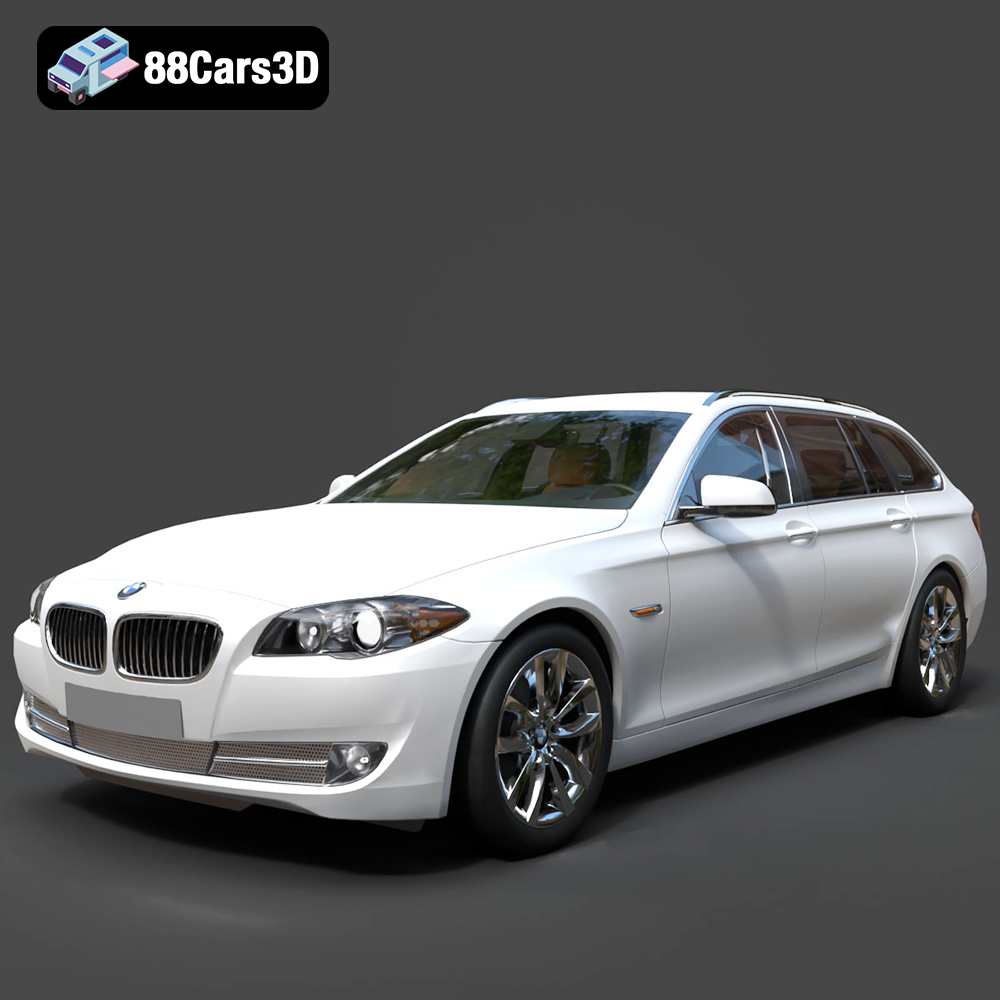
BMW 5 Series Touring F11-007 3D Model
Texture: Yes
Material: Yes
Download the BMW 5 Series Touring F11-007 3D Model featuring a detailed exterior and interior. Includes .blend, .fbx, .obj, .glb, .stl, .ply, .unreal, and .max formats for rendering, simulation, and game development.
Price: $10.79
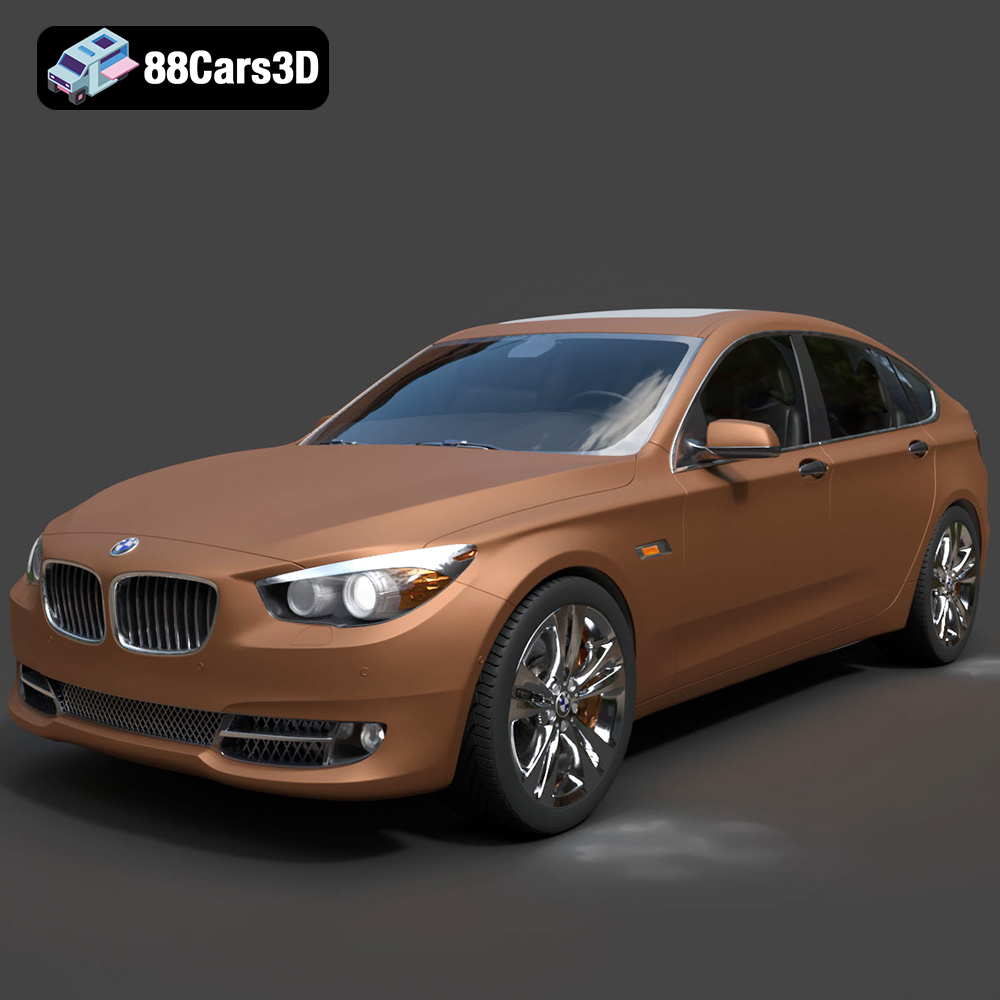
BMW 5 Series Gran Turismo F07-003 3D Model
Texture: Yes
Material: Yes
Download the BMW 5 Series Gran Turismo F07-003 3D Model featuring a detailed exterior and interior. Includes .blend, .fbx, .obj, .glb, .stl, .ply, .unreal, and .max formats for rendering, simulation, and game development.
Price: $10.79
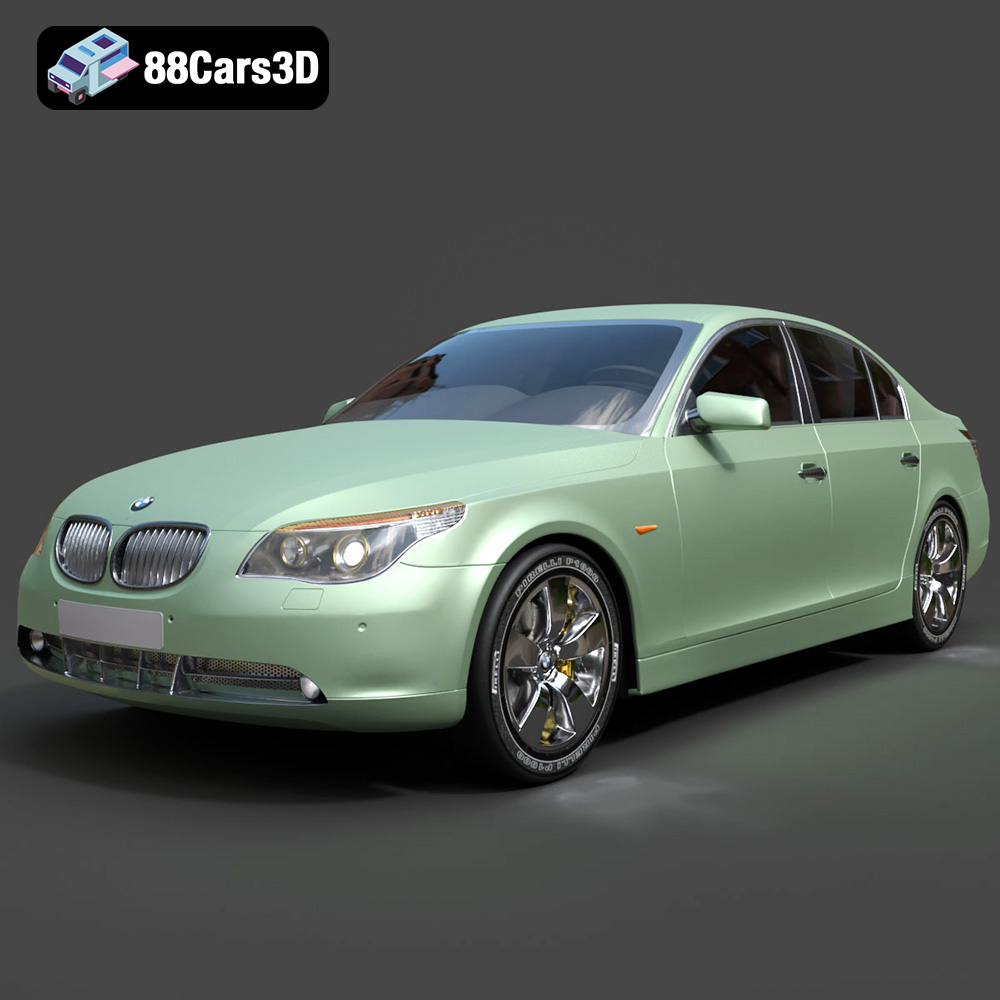
BMW 5 Series E60 3D Model
Texture: Yes
Material: Yes
Download the BMW 5 Series E60 3D Model featuring its iconic sedan design, detailed exterior, and interior. Includes .blend, .fbx, .obj, .glb, .stl, .ply, .unreal, and .max formats for rendering, simulation, and game development.
Price: $10.79

BMW 5 E34-535i 3D Model
Texture: Yes
Material: Yes
Download the BMW 5 E34-535i 3D Model featuring an iconic design, detailed exterior and interior, and accurate representation. Includes .blend, .fbx, .obj, .glb, .stl, .ply, .unreal, and .max formats for rendering, simulation, and game development.
Price: $10.79
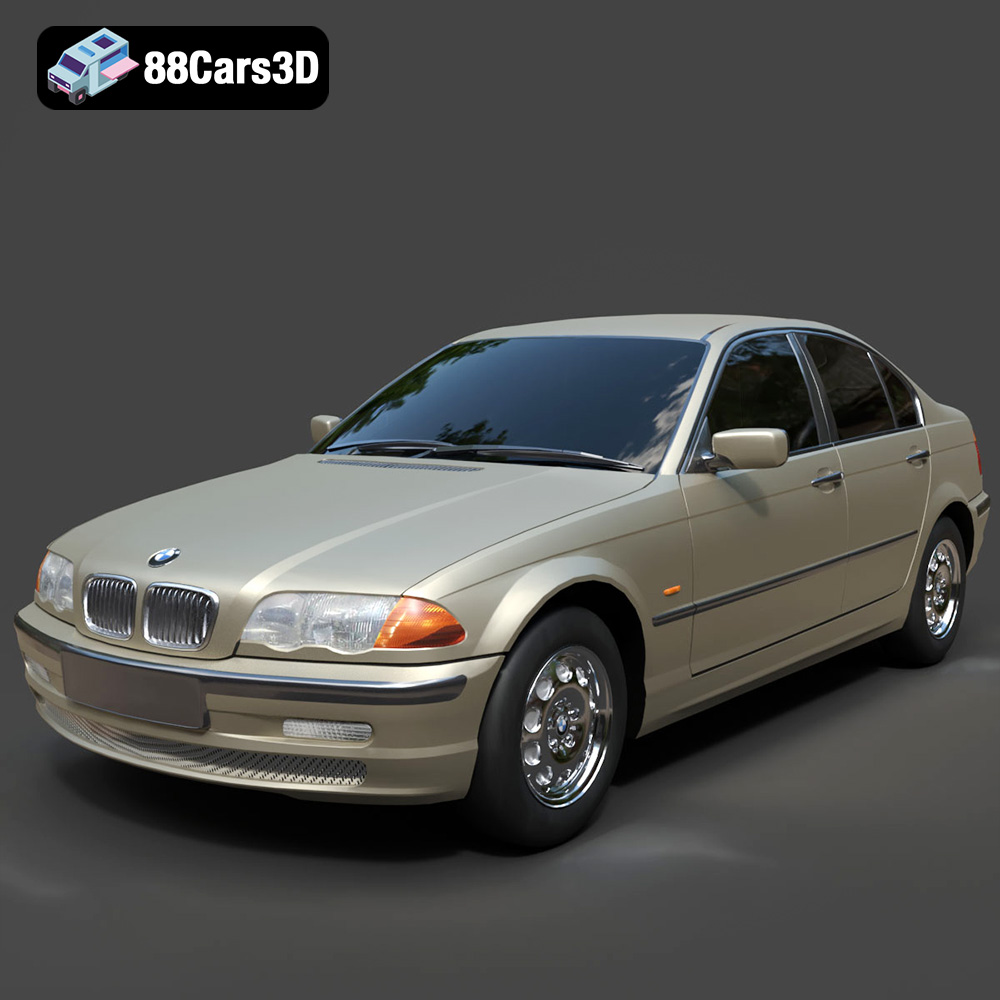
BMW 3 Series E46 3D Model
Texture: Yes
Material: Yes
Download the BMW 3 Series E46 3D Model featuring authentic exterior lines, a detailed interior, and separated components for animation. Includes .blend, .fbx, .obj, .glb, .stl, .ply, .unreal, and .max formats for rendering, simulation, and game development.
Price: $10.79
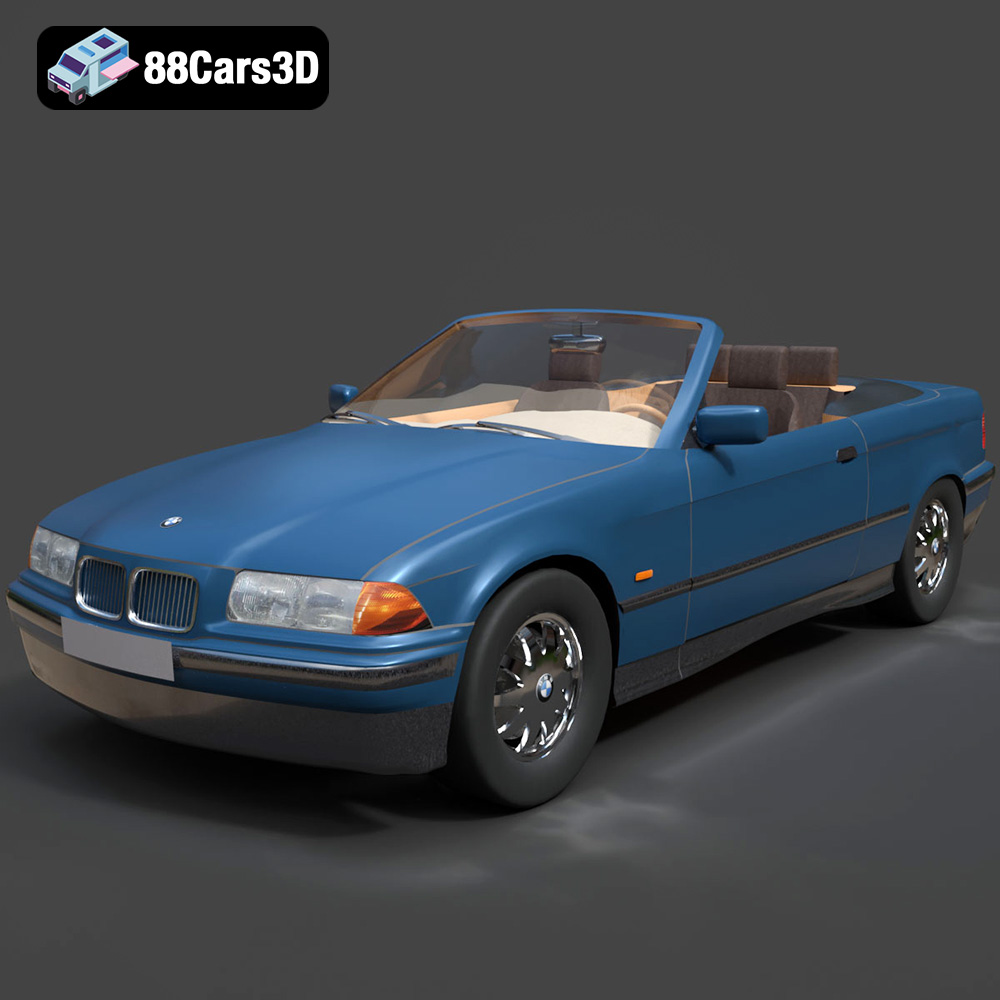
BMW 3 Series E36 Cabrio 325i 1998 3D Model
Texture: Yes
Material: Yes
Download the BMW 3 Series E36 Cabrio 325i 1998 3D Model featuring a classic convertible design and detailed interior. Includes .blend, .fbx, .obj, .glb, .stl, .ply, .unreal, and .max formats for rendering, simulation, and game development.
Price: $10.79
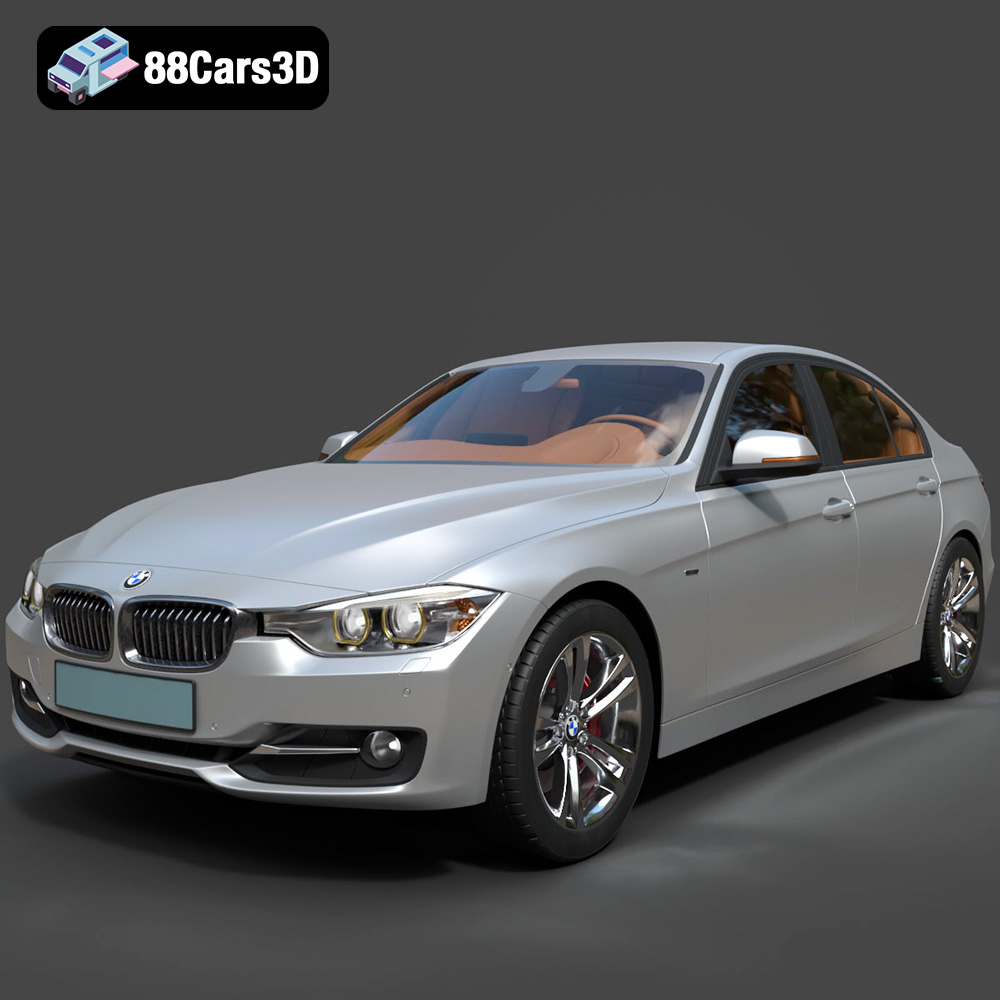
BMW 3 F30 3D Model
Texture: Yes
Material: Yes
Download the BMW 3 F30 3D Model featuring a detailed exterior, realistic interior, and optimized mesh. Includes .blend, .fbx, .obj, .glb, .stl, .ply, .unreal, and .max formats for rendering, simulation, and game development.
Price: $10.79
