

Mastering the Digital Road: Why High-Quality 3D Car Models Drive Success
In the fast-paced world of digital creation, the demand for exceptionally detailed and versatile 3D assets has never been higher. From breathtaking cinematic sequences and hyper-realistic architectural visualizations to immersive video games and cutting-edge AR/VR experiences, the quality of your 3D models can make or break a project. Automotive models, in particular, require a meticulous blend of artistic precision and technical expertise to capture the essence of a real-world vehicle.
Whether you’re an independent artist, a game studio developer, or an automotive designer, the foundation of a compelling visual rests on the integrity of your core assets. This is where models like the Honda Fit 2008 3D model distinguish themselves. This particular asset exemplifies the commitment to detail and versatility that professionals demand, offering a robust solution for a myriad of applications. Understanding the nuances of what makes a 3D car model truly exceptional, and how to leverage its technical advantages, is key to unlocking its full potential in your creative endeavors.
Understanding 3D Model File Formats: The Backbone of Digital Assets
The journey of a 3D model, from its creation to its final application, often involves navigating a landscape of diverse file formats. Each format is designed with specific use cases, compatibility, and technical advantages in mind. Choosing the right format is crucial for maintaining data integrity, optimizing performance, and ensuring seamless integration into your preferred software or engine. For a comprehensive asset like the Honda Fit 2008 3D model, understanding these distinctions is paramount for maximum utility.
.blend – The Power of Blender’s Native Ecosystem
The .blend format is Blender’s native file type, preserving an entire Blender scene with all its elements: meshes, materials, textures, lighting, cameras, animations, physics simulations, and modifiers. For users entrenched in the Blender ecosystem, this is the most flexible and editable format. It allows for direct manipulation of all model components, quick adjustments to materials using Blender’s powerful node editor, and leveraging its extensive suite of modeling, sculpting, and animation tools. The Honda Fit 2008 3D model in .blend format provides a fully editable environment, ideal for artists who want to delve deep into customization or integrate it into complex Blender projects.
.fbx – The Industry Standard for Interchange and Real-time
.fbx (Filmbox) is arguably the most widely adopted interchange format in the 3D industry, especially crucial for game development. Developed by Autodesk, it efficiently transfers 3D data between various software applications (like 3ds Max, Maya, Blender, Cinema 4D) and real-time engines (Unreal Engine, Unity). .fbx files can carry a rich dataset including geometry, materials, textures, animations, rigging, and even camera data. Its strength lies in its ability to preserve complex hierarchies and animation data, making it the ideal choice for importing animated 3D car models into game engines. The Honda Fit 2008 3D model’s .fbx version is optimized for these real-time pipelines, ensuring smooth performance and accurate representation.
.obj – The Universal Geometry Carrier
The .obj (Wavefront OBJ) format is a venerable and widely supported standard for exchanging 3D geometry data. It’s a universal format, compatible with nearly all 3D software due to its simple, text-based structure. While it excels at storing mesh data (vertices, normals, UV coordinates, and faces), it handles materials and textures through an accompanying .mtl (material library) file, which is less robust than .fbx or .blend. For static models or scenarios where geometry integrity is the primary concern, .obj remains a reliable choice. If you’re working with a new or niche 3D application, the .obj version of the Honda Fit 2008 3D model offers unparalleled cross-software compatibility.
.glb – Optimized for AR, VR, and Web-Based Display
.glb (GL Transmission Format Binary) is the binary version of glTF, a royalty-free specification for the efficient transmission and loading of 3D scenes and models by engines and applications. It’s quickly becoming the “JPEG of 3D” for its compactness and PBR (Physically Based Rendering) material support. .glb files embed all model data (geometry, textures, animations) into a single, self-contained file, making it perfect for rapid deployment in AR/VR applications, interactive web viewers, and mobile platforms. For creators looking to showcase the Honda Fit 2008 in an augmented reality experience or on a website, the .glb format offers optimal performance and visual fidelity.
.stl – The Standard for 3D Printing Output
.stl (Stereolithography) is the de facto standard format for 3D printing. It represents a 3D model as a series of connected triangles (a tessellation of the surface geometry) without color, texture, or other CAD attributes. Its simplicity makes it universally understood by 3D printers and slicing software. While the Honda Fit 2008 3D model is primarily designed for rendering and game development, its clean geometry ensures it can be easily converted to .stl for creating physical prototypes or miniature replicas, offering a tangible dimension to your digital asset.
.ply – Precision Mesh Format for CAD or Analysis
.ply (Polygon File Format or Stanford Triangle Format) is a versatile format for storing 3D data, particularly useful for scanned data, CAD, and scientific applications. It supports a wider range of properties than .obj, including color, transparency, and normal vectors per vertex or face. While less common for typical artistic workflows, its precision in representing mesh data makes it valuable for specific engineering, measurement, or analytical tasks. The inclusion of the Honda Fit 2008 in .ply format caters to niche applications requiring detailed mesh analysis or integration into specific CAD pipelines.
.unreal – Engine-Ready Asset for Real-time Environments
The .unreal format signifies an asset specifically packaged or configured for direct use within Unreal Engine. This often means the model has already undergone optimization, material setup, and potentially even blueprint integration within an Unreal project. It streamlines the workflow significantly, allowing developers to bypass many manual import and setup steps. For game developers or real-time visualization specialists using Unreal Engine, the .unreal version of the Honda Fit 2008 3D model is a direct pipeline to integration, saving valuable development time.
.max – The Versatility of 3ds Max Projects
The .max format is the native file type for Autodesk 3ds Max, one of the most powerful and widely used 3D modeling, animation, and rendering software packages. Like .blend, it saves the entire scene, including geometry, materials, textures, lighting, camera settings, and animations, making it fully editable within 3ds Max. For professionals working in architectural visualization, product design, or animation studios that rely on 3ds Max, the .max version of the Honda Fit 2008 3D model offers the highest level of detail and flexibility for fine-tuning, rendering with V-Ray or Corona, and animating complex sequences.
Understanding these formats ensures that when you acquire a high-quality asset from a marketplace like 88cars3d.com, you can effectively utilize it across your entire production pipeline, regardless of your specific software or project requirements.
The Art and Science of Automotive 3D Modeling
Creating a truly convincing 3D car model is a complex endeavor that combines artistic vision with rigorous technical standards. It goes beyond simply replicating a vehicle; it’s about translating its essence, its engineering, and its visual appeal into a digital form that performs flawlessly across various applications.
Accuracy in Design and Proportion
The first step in crafting any exceptional automotive 3D model is an unwavering commitment to accuracy. This means meticulously studying blueprints, reference images, and real-world dimensions to ensure every curve, every panel gap, and every proportion matches the original vehicle. For a model like the Honda Fit 2008, capturing its distinctive compact yet spacious character, its unique headlight design, and its overall silhouette requires precise modeling techniques. Any deviation, however small, can disrupt the realism and believability of the final render or in-game asset.
Topology and Mesh Optimization
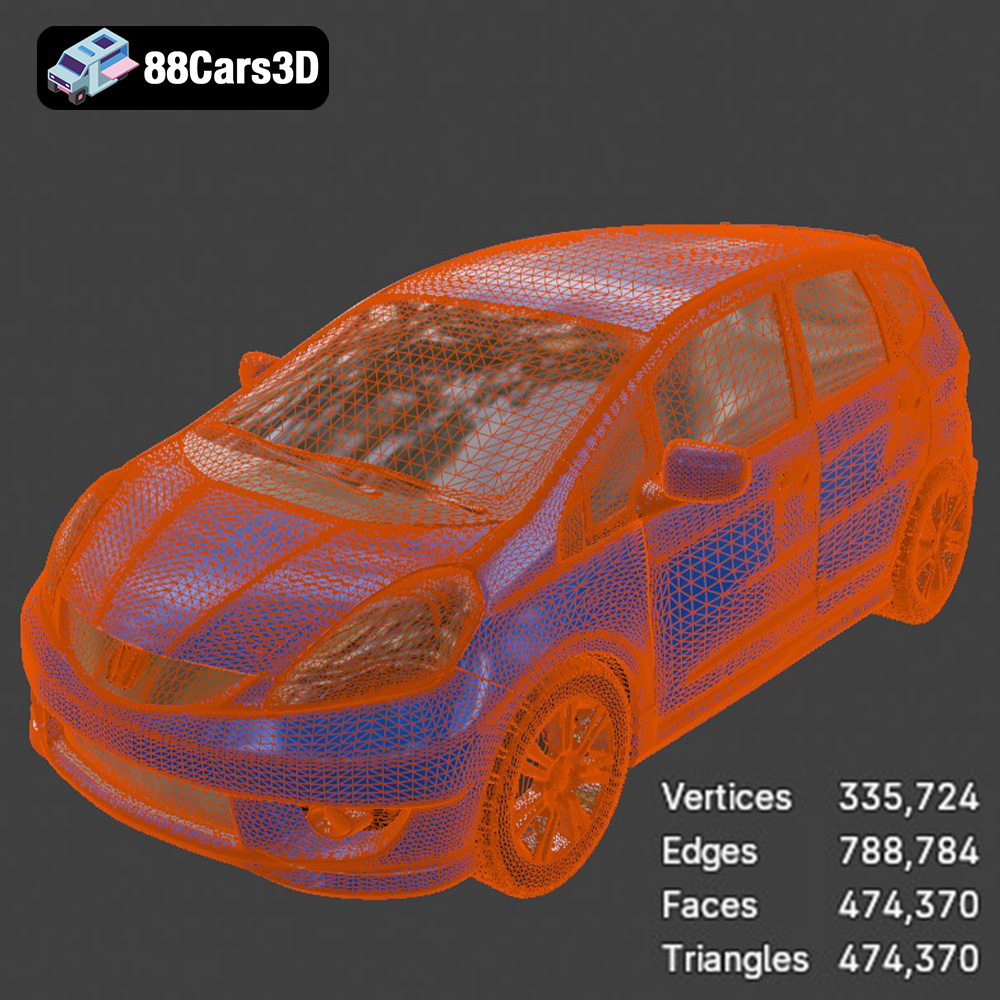
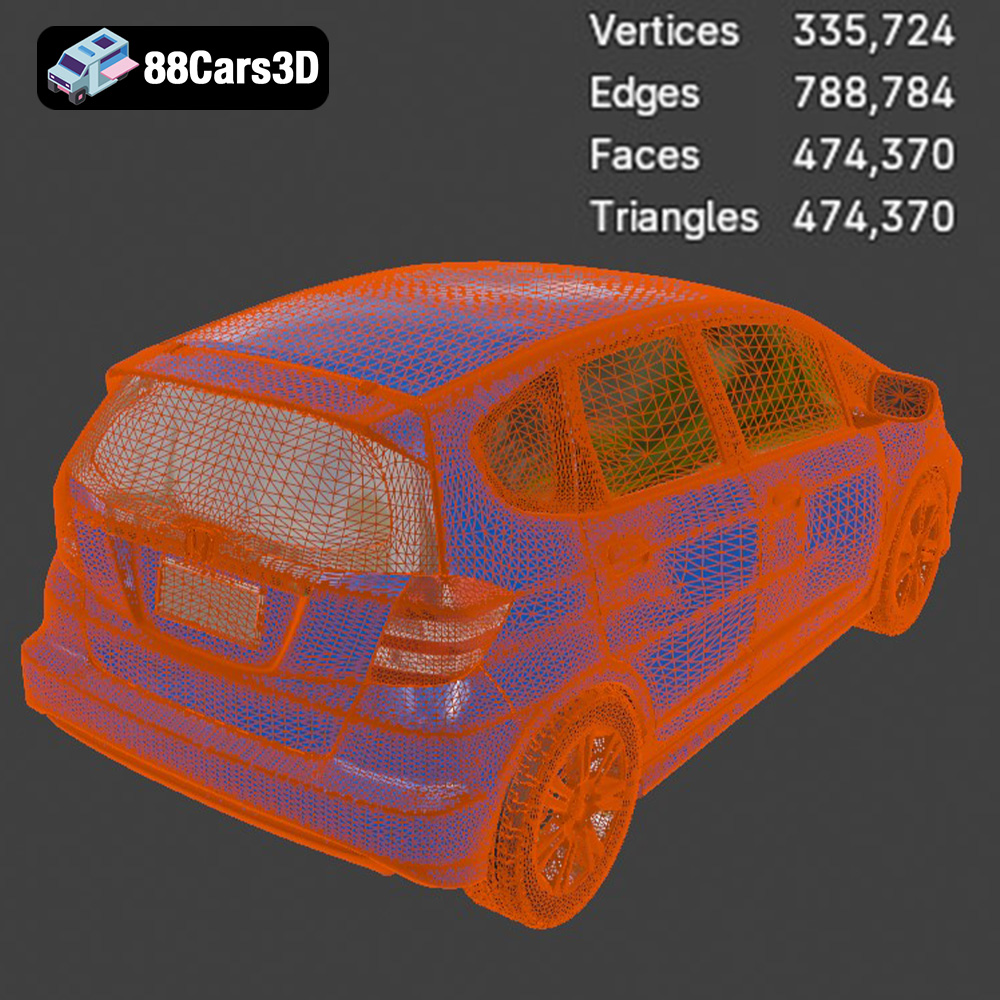
Underneath the surface, the “wireframe” or topology of a 3D model is crucial. High-quality 3D car models feature clean, quad-dominant topology. This means the mesh is predominantly composed of four-sided polygons, which ensures smooth subdivision when adding detail, predictable deformation during animation, and optimal performance in real-time engines. Poor topology can lead to pinching, artifacts, and difficulties in UV unwrapping. Furthermore, optimization of poly count is key: enough detail for realism without overburdening rendering engines or slowing down game performance. The Honda Fit 2008 3D model boasts such clean geometry, making it subdivision-ready and easy to work with.
Material and Texture Fidelity
A perfectly modeled mesh is only half the battle; realistic materials and textures bring it to life. Modern rendering relies heavily on Physically Based Rendering (PBR) workflows, which mimic how light interacts with real-world surfaces. This involves carefully crafted textures for color (albedo), reflectivity (metallic/specular), roughness, normal maps for fine surface detail, and transparency. Achieving authentic paint finishes, believable glass, convincing rubber tires, and detailed interior fabrics demands a deep understanding of PBR principles and expert texture artistry. The inclusion of realistic material finishes for the Honda Fit 2008 ensures it looks stunning out of the box, whether in a static render or a dynamic game scene.
Integrating the Honda Fit 2008 into Professional Workflows
The true value of a versatile 3D asset, such as the Honda Fit 2008 3D model, lies in its adaptability across diverse professional pipelines. Designed with multiple applications in mind, it provides a solid foundation for artists and developers in various industries.
High-Quality Rendering and Visualization
For rendering and visualization specialists, precision and aesthetic appeal are paramount. The Honda Fit 2008 3D model, with its clean geometry and realistic material finishes, is an ideal candidate for high-fidelity studio renders. In environments like 3ds Max (using V-Ray or Corona Renderer) or Blender (with Cycles or Eevee), the model’s meticulously crafted body panels, detailed lights, and accurate proportions shine. Architectural visualization artists can seamlessly integrate it into exterior scenes to add a touch of realism to streetscapes, while product visualization experts can use it to demonstrate how accessories or new technologies interact with a standard vehicle. Its real-world scale ensures accurate placement and lighting interactions within any scene.
Game Development and Real-Time Environments
Game developers demand models that are not only visually appealing but also highly optimized for real-time performance. The Honda Fit 2008 3D model is structured to meet these rigorous requirements. Its clean, quad-dominant topology and organized hierarchy facilitate efficient integration into game engines like Unreal Engine and Unity. The inclusion of `.fbx` and `.unreal` formats significantly streamlines the process, ensuring that the model, its materials, and any potential animations are ready to drop into a game world. Whether populating an urban environment in an open-world game, featuring in a racing simulator, or serving as a vehicle for interactive training modules, this model offers the balance of detail and performance essential for modern game development.
AR/VR and Web-Based Experiences
The burgeoning fields of Augmented Reality (AR), Virtual Reality (VR), and interactive web experiences require models that are lightweight yet visually rich. The `.glb` format, included with the Honda Fit 2008 3D model, is specifically optimized for these applications. Its compact, self-contained nature allows for quick loading and smooth interaction within immersive environments or browser-based viewers. Developers can easily integrate this model into AR apps that overlay the digital car onto the real world, VR simulations for virtual car showrooms, or interactive product configurators on automotive websites, offering engaging and cutting-edge user experiences. The model’s versatility makes it a perfect asset for showcasing innovative technologies in a new dimension.
Technical Deep Dive: The Honda Fit 2008 3D Model’s Advantages
Delving into the specifics of the Honda Fit 2008 3D model reveals the commitment to quality and usability that makes it a standout asset. Every feature is designed to enhance workflow and provide creative flexibility.
Meticulous Exterior Detailing
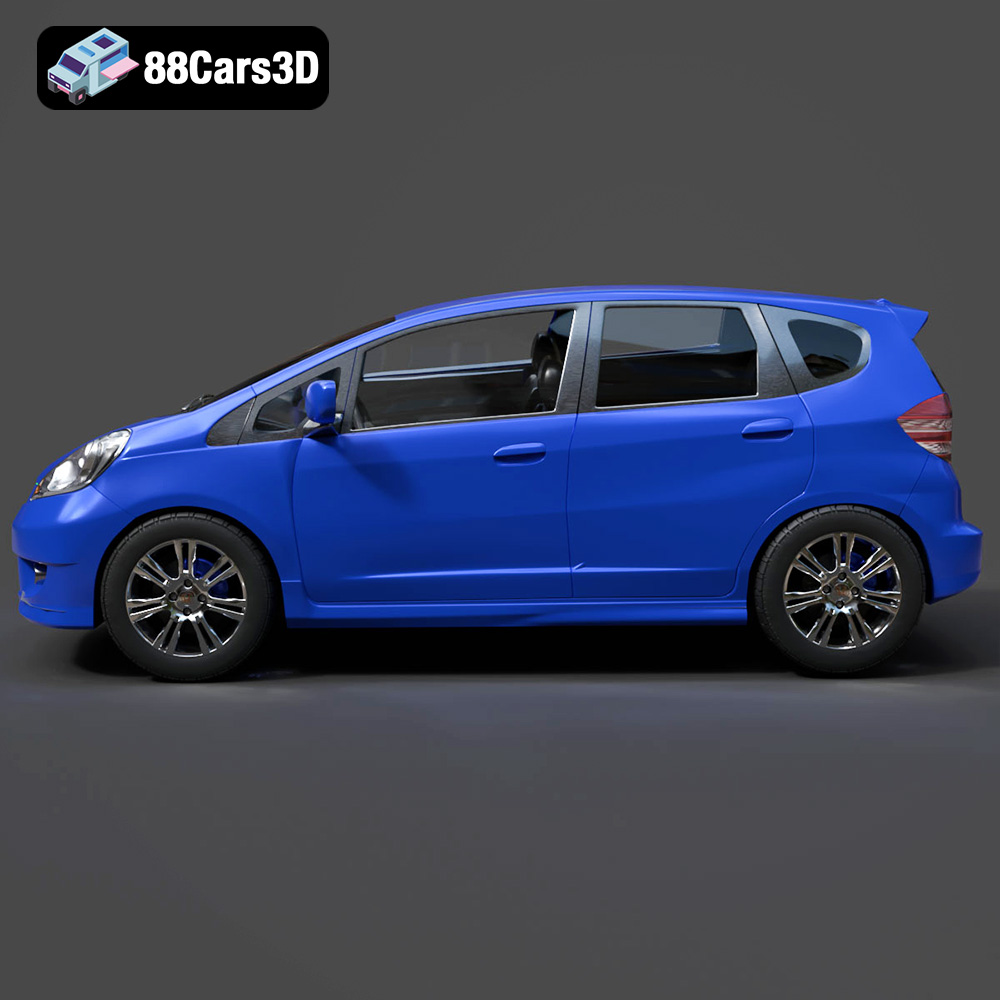
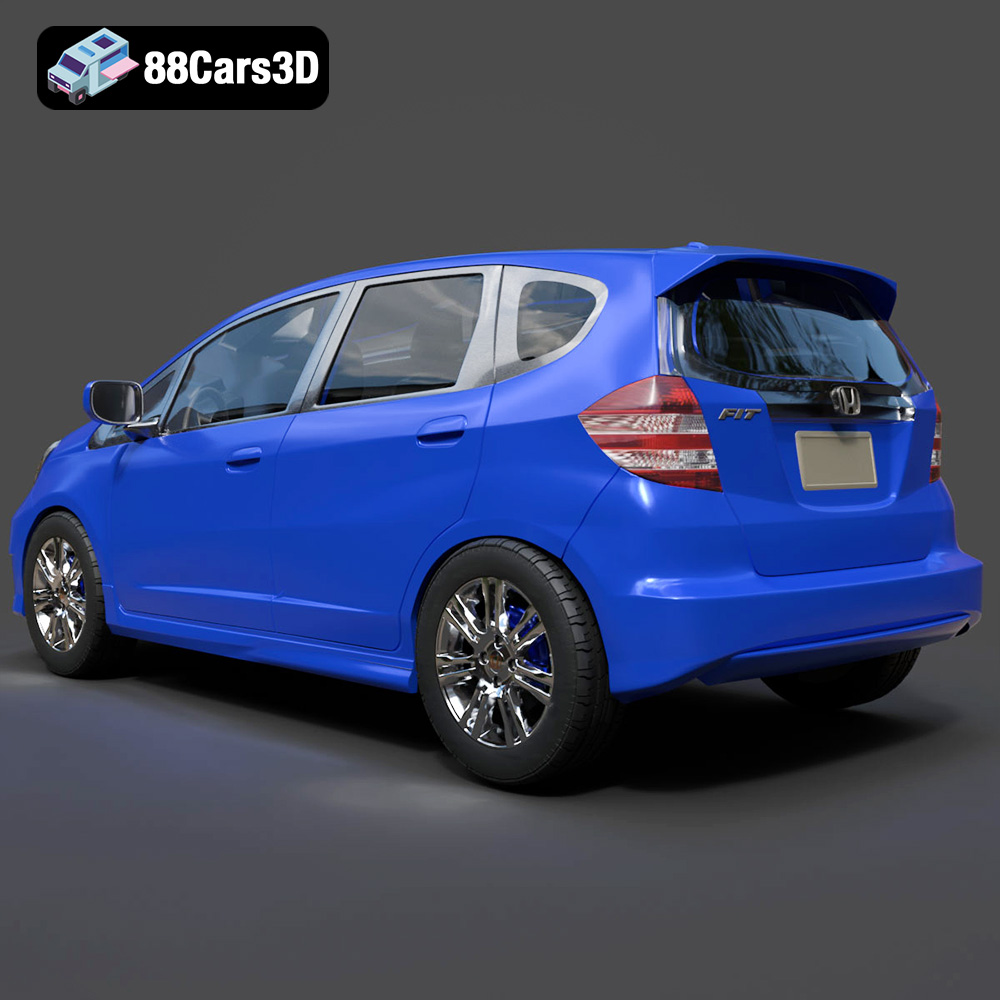
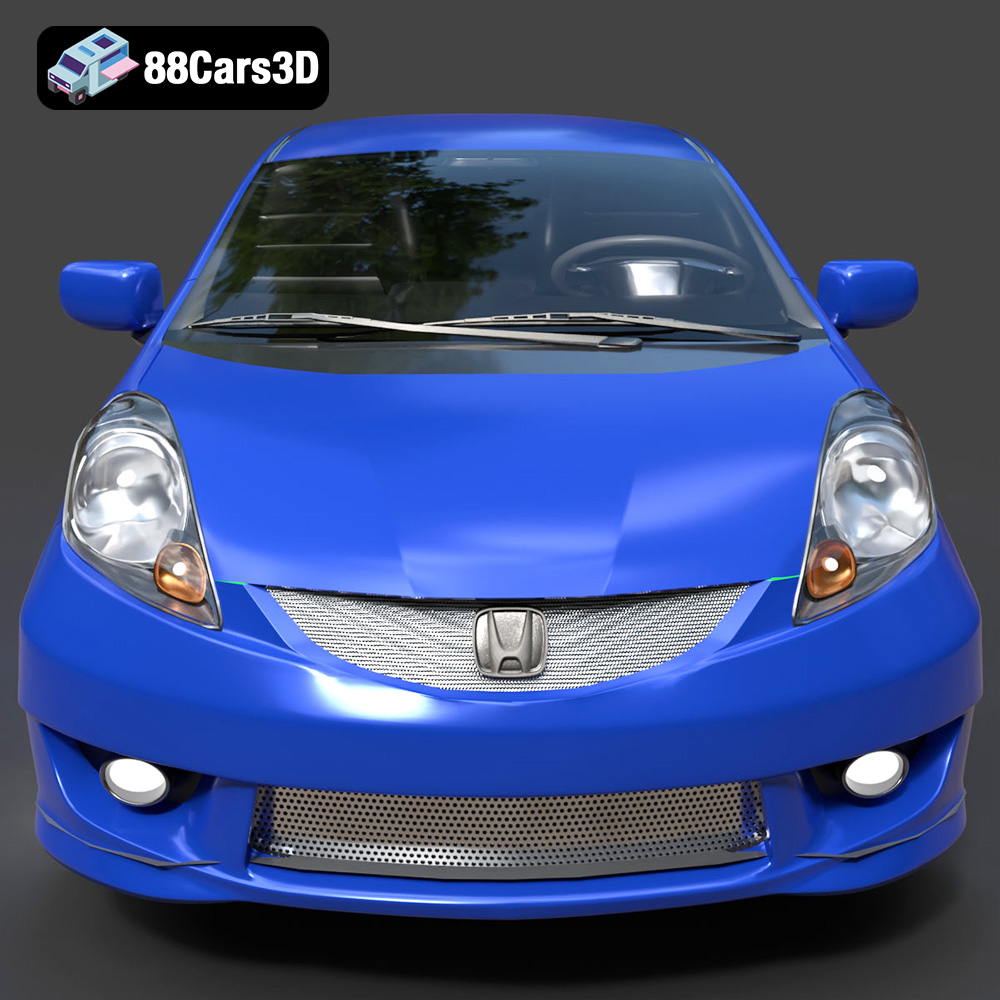
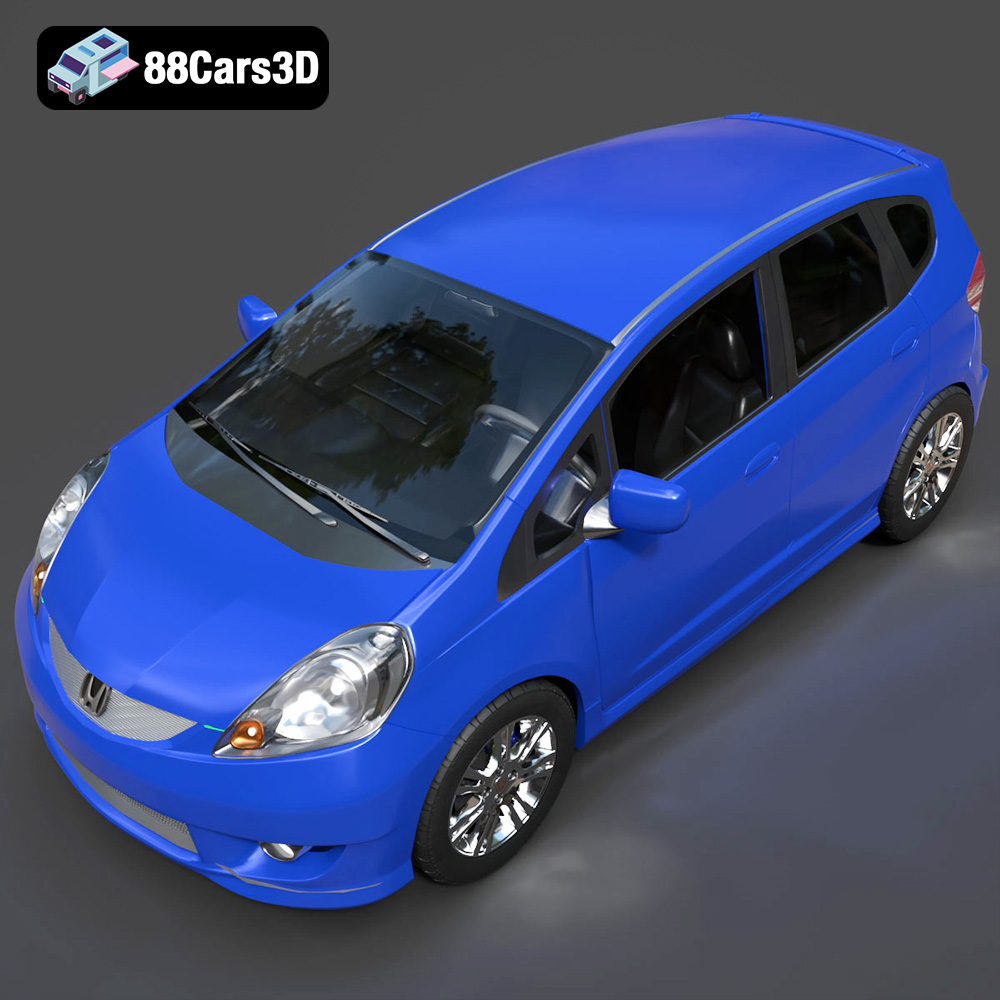
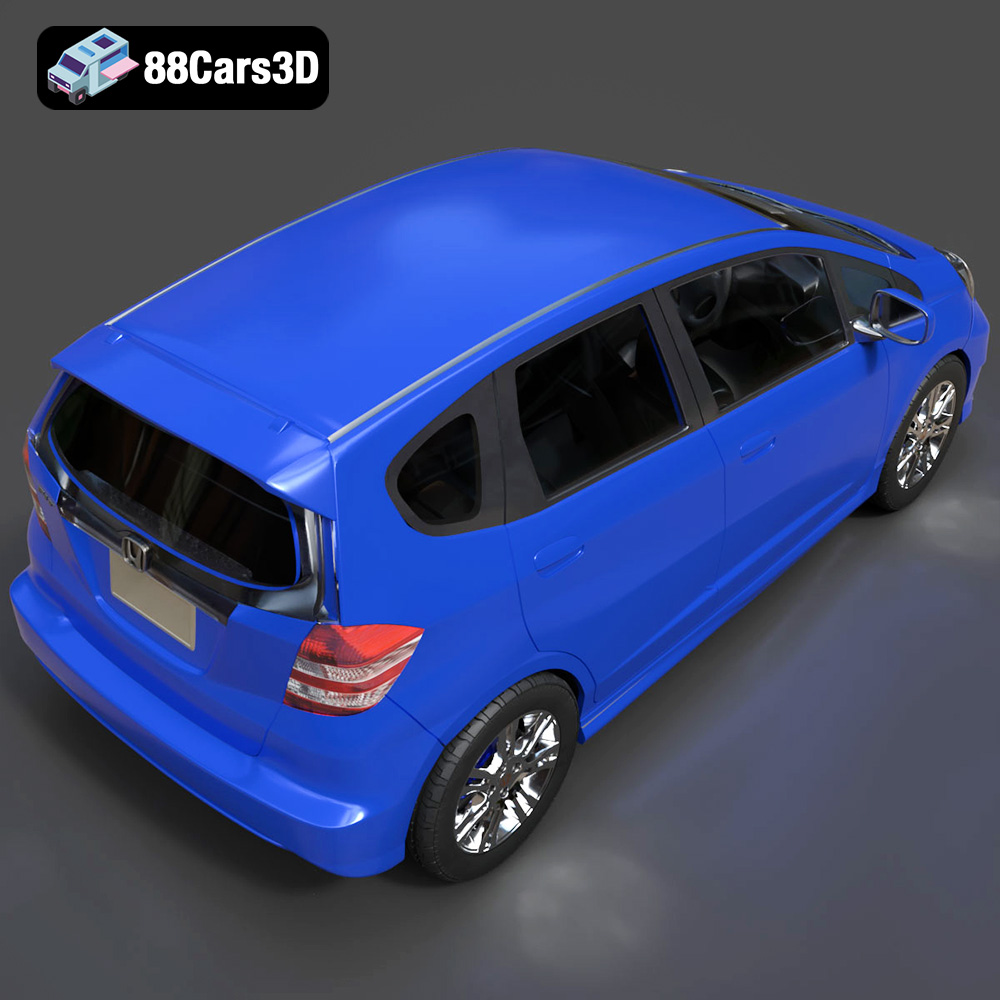
The exterior of the Honda Fit 2008 has been reproduced with an impressive level of fidelity. Authentic body panel design and proportions ensure the model is immediately recognizable and true to the original vehicle. Critical details like headlights, taillights, and indicator lights are not just textured but meticulously modeled with transparent materials, allowing for realistic lighting effects. The wheels, tires, and brake components are also accurately represented, adding a layer of realism that is crucial for close-up renders and animations. Crucially, components like doors, the hood, and the trunk are separated and have properly set pivot points, making them “animation-ready” right out of the box. This saves countless hours for animators who need to simulate opening doors or inspecting the engine bay.
Functional Interior and Optimized Mechanics
While often overlooked for exterior-focused projects, the interior of a 3D car model significantly enhances its overall utility. The Honda Fit 2008 3D model features a faithful reproduction of the dashboard, steering wheel, and center console, complete with appropriate textures for different surfaces. Comfortable seating arrangements and detailed door panels further enhance the realism for interior shots or driving simulations. Even visible mechanical parts, such as sections of the undercarriage, are optimized with mesh quality that balances detail with performance. This level of comprehensive detailing allows for versatile camera angles and interactive experiences that go beyond mere external appearances.
Workflow Enhancements and Customization
Beyond its visual accuracy, the Honda Fit 2008 3D model is built for efficient professional workflows. Its clean, quad-dominant topology ensures smooth subdivision and deformation, which is vital for artists who may need to add further detail or integrate the model into a dynamic scene with physics. Modeled to real-world scale, it integrates seamlessly into existing scenes without requiring manual scaling adjustments, maintaining accuracy for architectural visualizations or simulations. An organized hierarchy with properly set pivots for moving parts ensures easy animation and manipulation. Furthermore, the model is designed for effortless customization: paint finishes can be modified to any desired color scheme, material properties like chrome, rubber, and glass can be adjusted, and lighting setups can be adapted to achieve various moods and effects, providing unparalleled creative control.
Beyond the Screen: 3D Printing and Simulation
The utility of a robust 3D car model extends far beyond digital rendering and interactive media. It opens doors to tangible outputs and highly realistic training environments, demonstrating the true versatility of a well-engineered asset.
From Digital to Tangible: 3D Printing with .stl
The process of taking a digital 3D model and transforming it into a physical object via 3D printing is a fascinating application. For designers, engineers, or hobbyists, creating a physical prototype or a miniature scale model of a vehicle can be invaluable for presentation, analysis, or pure enjoyment. The Honda Fit 2008 3D model, with its clean geometry and solid construction, is easily convertible to the `.stl` format, the standard for 3D printing. This means you can confidently send the model to your 3D printer and produce a tangible representation of this compact hatchback. It’s a testament to the model’s clean underlying structure that it can make this transition from screen to reality seamlessly, offering a unique avenue for interaction with the design.
Driving Simulations and Training Modules
In fields requiring realistic training or simulation, high-fidelity 3D car models are indispensable. The Honda Fit 2008 3D model is suitable for integration into advanced driving simulators, automotive training modules, and educational content. Its accurate dimensions, functional interior details, and carefully organized geometry allow for realistic physics simulations and interactive experiences. Imagine trainee drivers learning the dynamics of a compact car, or engineers testing virtual modifications in a controlled environment. The model’s versatility, particularly its compatibility with major game engines via .fbx and .unreal formats, makes it an excellent foundation for creating immersive and effective learning tools, bridging the gap between theoretical knowledge and practical application.
Conclusion
The journey through the world of high-quality 3D car models reveals a landscape where artistic skill meets technical precision. Assets like the Honda Fit 2008 3D model are more than just digital replicas; they are versatile tools engineered to empower creators across diverse industries. From breathtaking architectural visualizations and immersive game worlds to cutting-edge AR/VR experiences and even tangible 3D prints, the demand for such meticulously crafted models continues to grow.
The Honda Fit 2008 3D model exemplifies the apex of professional-grade assets, offering clean, quad-dominant topology, accurate proportions, realistic materials, and an array of file formats including .blend, .fbx, .obj, .glb, .stl, .ply, .unreal, and .max, ensuring compatibility with virtually any professional workflow. It stands as a testament to how detailed modeling, thoughtful optimization, and a deep understanding of application-specific needs can yield an asset of enduring value.
Whether you’re developing the next big game, rendering a photorealistic scene, or pushing the boundaries of interactive design, investing in high-quality 3D car models from trusted sources like 88cars3d.com provides the robust foundation you need to elevate your projects and achieve unparalleled levels of realism and immersion. The digital road ahead is paved with possibilities, and with the right assets, you’re set to drive success.
Featured 3D Model
Honda Fit 2008 3D Model
Presenting a meticulously crafted 3D model of the Honda Fit 2008, a popular compact hatchback renowned for its practical design and surprising interior spaciousness. This model accurately captures the distinctive character of the 2008 Fit, featuring clean geometry and balanced detailing throughout. Optimized for versatility, it is an ideal asset for high-quality rendering, realistic animations, detailed simulations, and robust game development projects.
$10.79
Product Image Gallery

Related Tags
.2008
.arvr
.blend
.citycar
.compactcar
.fbx
.fit
.gameasset
.glb
.hatchback
.honda
.hondafit
.max
.obj
.ply
.rendering
.simulation
.stl
.unreal
