

Mastering Realism: Creating Damage and Wear Effects on 3D Car Models
In the world of 3D modeling, the pursuit of realism often hinges on the smallest, most overlooked details. While a pristine, showroom-quality car model is impressive, it’s the subtle imperfections, the signs of age, and the stories told through wear and tear that truly breathe life into a digital asset. Whether you’re crafting cinematic sequences, developing immersive game environments, or visualizing real-world scenarios, understanding how to apply convincing damage and wear effects to 3D car models is a critical skill.
This comprehensive guide delves deep into the art and science of transforming immaculate vehicles into character-rich assets. We’ll explore everything from fundamental topology considerations to advanced PBR texturing techniques, geometric deformation, and optimization strategies for various applications. Prepare to learn workflows that empower you to create realistic dents, scratches, rust, dirt, and material degradation, ensuring your 3D car models stand out in any project. By mastering these techniques, you’ll be able to create vehicles that not only look authentic but also tell a compelling visual narrative, making them invaluable for rendering, game development, AR/VR experiences, and high-fidelity visualization.
Foundations of Realistic Damage: Topology and Mesh Preparation
Before you even think about applying scratches or dents, the underlying mesh of your 3D car model must be robust enough to handle the deformations and material layering that damage entails. Good topology isn’t just about clean renders; it’s about control, flexibility, and ensuring that damage looks believable rather than broken. A model with poor edge flow will fight against your attempts to create smooth dents or realistic chipping, often resulting in unsightly pinches or stretched textures. The goal is to establish a foundation that allows for both subtle surface wear and significant structural deformation without compromising the model’s integrity or visual quality. Platforms like 88cars3d.com offer a range of high-quality base meshes that often come with excellent topology, providing a solid starting point for these advanced techniques.
Subdivisional Modeling for Damage
For high-fidelity models, especially those intended for cinematic rendering or close-up shots, subdivisional modeling is paramount. When creating dents or creases, the existing edge loops need to support the new forms. If your model has evenly distributed quads and appropriate supporting edge loops, a soft selection or sculpting brush will deform the surface smoothly. Imagine creating a subtle dent on a car door: with good topology, you can push vertices inwards, and the surrounding geometry will gracefully follow, maintaining curvature. Without it, you’ll get sharp, angular results. When working with subdivision surfaces, it’s crucial to add additional edge loops around areas that will experience significant deformation. These “control loops” help tighten the surface and prevent unwanted smoothing or loss of volume. For instance, around the rim of a dent, a few extra loops will help define its sharpness without introducing artifacts when subdivided. This control is vital for balancing smooth, organic dents with crisp, defined edges.
Edge Flow for Wear Areas
Beyond dents, edge flow dictates how wear patterns like scratches and chips will interact with the model’s surface. Areas prone to wear – such as fender flares, door edges, hood seams, and mirror housings – naturally follow the contours and exposed edges of the vehicle. Good edge flow ensures that these areas are well-defined and can receive specific material masks or vertex painting without issues. For example, a crisp edge loop running along a body panel’s crease provides a natural path for an “edge wear” material to blend in. This is particularly important for games, where procedural edge wear often relies on mesh curvature. When your model’s edges are clearly defined by a logical flow of quads, these effects will appear much more convincing. Consider the areas around wheel arches; these are prime candidates for dirt and stone chip effects. Ensuring the mesh has clear, circular edge loops around these openings will greatly simplify the application of grunge and damage textures, allowing them to flow naturally along the geometry. Always anticipate where wear will occur and ensure your topology can gracefully support it.
Sculpting and Modifying Geometry for Dents and Deformations
Once the foundation of good topology is established, the next step is to directly manipulate the geometry to create the visible signs of impact and structural compromise. This often involves a combination of direct modeling techniques and advanced sculpting tools, tailored to the specific software you’re using. The key is to achieve realistic deformation while maintaining the integrity of the mesh, avoiding self-intersections or unsightly stretching that can break the illusion. This stage is where the car truly begins to take on its battered character, transforming from a pristine object into a vehicle with a history.
Non-Destructive Workflows (Maya/3ds Max/Blender)
Employing non-destructive workflows is paramount for flexibility and iteration. In software like Maya, 3ds Max, or Blender, you can use techniques such as soft selection, deformers, and sculpting tools. Soft selection allows you to move, rotate, or scale a group of vertices with a falloff, creating smooth, organic dents. In Blender, for example, enabling proportional editing (accessed by pressing ‘O’) in edit mode offers various falloff types to sculpt dents effectively. For more intricate and artistic damage, sculpting modes are invaluable. Blender’s sculpt mode, accessible through the “Sculpting” workspace, provides a powerful set of brushes to push, pull, smooth, and pinch the mesh, allowing for highly detailed dents, creases, and crumpled metal effects. You can find detailed information on Blender’s sculpting capabilities, including brush settings and mask usage, in the official Blender 4.4 documentation: Blender 4.4 Sculpt Mode Documentation. Using layers or blend shapes (morph targets in 3ds Max) further enhances non-destructive editing, allowing you to create multiple damage states or easily revert changes. When creating a dent, focus on preserving the overall volume and direction of the impact. Avoid creating razor-thin edges or overlapping geometry, which can lead to rendering artifacts or issues in game engines.
Procedural Damage Generation
While manual sculpting offers artistic control, procedural tools can accelerate the creation of complex damage, especially for large-scale destruction or repeated elements. Fracture tools in software like Houdini, or even dedicated plugins for Maya and 3ds Max, can simulate impact effects and generate broken or torn geometry. While highly procedural, these tools often require careful setup to ensure the resulting mesh is clean and game-ready. For more subtle effects, such as general wear and tear, procedural noise or displacement modifiers can be used. For example, a subtle displacement map applied with a noise texture can create uneven surfaces typical of aged or slightly rusted metal. These methods are particularly useful for generating variations across multiple assets or when a highly randomized, natural look is desired. The output from such procedural tools often needs manual cleanup and optimization, particularly if the polygon count becomes excessive. Baking these high-poly details to normal maps for lower-poly assets is a common practice for real-time applications, ensuring visual fidelity without the performance hit.
Advanced Texturing for Wear and Tear: PBR Materials and Layering
Once the geometry has been deformed, the true magic of damage and wear comes alive through advanced texturing, specifically leveraging Physically Based Rendering (PBR) materials. PBR materials accurately simulate how light interacts with surfaces, making wear effects incredibly convincing. It’s not enough to simply add a dark texture for a scratch; you need to consider how that scratch affects the reflectivity (roughness), color (albedo), and perceived depth (normal/height) of the surface. This layered approach allows for a nuanced portrayal of material degradation, transforming a generic scratch into a story of chipped paint revealing primer, then bare metal, and finally, rust. High-quality base models from marketplaces such as 88cars3d.com often feature excellent UV mapping, which is a crucial prerequisite for effective PBR texturing, allowing artists to immediately focus on material definition and damage layering.
Layered Material Systems
The core of realistic wear lies in a layered material system. Imagine a car’s paint: it’s not a single, monolithic surface. It consists of a clear coat, colored paint, primer, and finally, the underlying metal. When damage occurs, these layers are progressively revealed. In a PBR workflow, this translates to blending multiple material definitions (each with its own Albedo, Roughness, Metallic, and Normal maps) using masks. For a scratch, you might have a base “clean paint” material. A mask (a grayscale image where white reveals the scratch and black hides it) then blends in a “chipped paint” material, perhaps revealing a duller primer. Another mask, precisely placed within the chipped paint area, could then reveal a “bare metal” material with higher metallic values. Finally, a subtle “rust” material might bleed out from the edges of the bare metal using yet another mask. This multi-layered approach ensures that each stage of wear – from a superficial scuff to deep corrosion – is represented with physically accurate material properties. Tools like Substance Painter or Mari excel at this, allowing artists to paint directly onto the 3D model to generate these intricate masks, often with procedural generators for edge wear or dirt accumulation.
Creating Realistic Albedo, Roughness, and Normal Maps
Each component of your PBR material stack needs to be meticulously crafted. The Albedo map (Base Color) will show the color variations: the vibrant car paint, the dull gray of primer, the subtle sheen of exposed steel, and the reddish-brown hues of rust. The Roughness map is critical for showing how light scatters. Clean, waxed paint will have very low roughness (highly reflective), while a scratch revealing matte primer will have much higher roughness. Rust will have extremely high roughness, appearing almost completely diffuse. The interplay between Albedo and Roughness is what defines the material. A metallic surface, for example, will typically have very low roughness and its color defined in the Albedo, while non-metallic surfaces will have their color in the Albedo and varying roughness values. Normal maps add crucial surface detail without increasing polygon count. Scratches will have fine lines indicating depth, and rust patches will show bumpy, uneven surfaces. These maps are often generated from high-poly sculpts or created procedurally using tools like Substance Designer. When considering texture resolutions, 2K (2048×2048) or 4K (4096×4096) are standard for detailed automotive assets, with 8K (8192×8192) reserved for hero assets in cinematic productions or extreme close-ups. For game engines, 1K or 2K is more common, often supplemented by texture atlasing for efficiency. Pay close attention to micro-surface details; even a clean paint job isn’t perfectly smooth. Subtle variations in roughness can mimic orange peel or minute dust particles, enhancing overall realism.
Simulating Environmental Effects: Dirt, Dust, Rust, and Water
Beyond direct impact damage, environmental factors play a huge role in a car’s appearance. Dirt, dust, mud, rust, and water streaks are the tell-tale signs of a vehicle’s journey, adding depth, context, and realism. These effects are rarely uniform; they accumulate in crevices, flow with gravity, and react to wind and weather. Simulating these dynamic elements requires a keen understanding of how they manifest in the real world and a strategic approach to their application in your 3D models. The goal is to make these effects look organic and plausible, rather than simply painted-on textures.
Vertex Painting and Blend Materials
For localized and organic environmental effects, vertex painting is an incredibly powerful tool, especially when combined with blend materials. Vertex colors are stored directly on the mesh’s vertices and can be used as masks to blend between different PBR material layers. Imagine painting a layer of mud onto the lower half of a car. You can simply paint red (or any chosen color channel) onto the vertices where you want the mud to appear. In your shader, this vertex color then drives the blend factor between your clean car paint material and a detailed mud material (complete with its own albedo, roughness, and normal maps). This method offers extremely precise control over the placement and intensity of dirt, grime, or even localized rust patches. It’s highly efficient for game engines as vertex colors are cheap to process compared to additional texture maps. Moreover, for dynamic dirt or interactive weather effects, vertex painting can be combined with real-time systems to dynamically update the wear and tear based on gameplay or environmental conditions. This technique is particularly effective for large, contiguous areas where a texture map might stretch or repeat too obviously.
Decals and Projection Mapping
For specific, non-uniform dirt smudges, isolated scratches, or specific mud splatters, decals and projection mapping offer excellent solutions. Decals are essentially floating textures projected onto the surface of your model. They are ideal for adding unique details without altering the base UV maps or complex material layers. You can create a decal texture of a mud splatter, a tar smudge, or a bird dropping, and then simply position and project it onto the car body. This is highly flexible and non-destructive. Projection mapping, a broader concept, uses a camera or light source to project a texture onto the mesh. This is particularly useful for applying details that follow the geometry’s curvature without needing perfect UVs. For instance, a texture of water streaks running down a window could be projected, ensuring the streaks follow the glass surface accurately. Both methods are extremely efficient for adding varied surface imperfections and are widely used in game development to break up repetitive textures and add character. They allow for a high degree of artistic freedom in placing unique grime and damage elements precisely where they’re needed, enhancing the storytelling aspect of the car model.
Optimization for Real-time and High-Fidelity Rendering
Creating highly detailed damaged car models is one thing; ensuring they perform efficiently in real-time applications like game engines or demanding render scenarios is another. Balancing visual fidelity with performance is a constant challenge, especially when dealing with complex geometry and multiple material layers. Optimization strategies are not an afterthought but an integral part of the damage creation pipeline. Without proper optimization, even the most stunningly detailed damaged car model can bring a frame rate to its knees or bloat render times excessively, rendering it impractical for its intended use. This section focuses on techniques that allow you to maintain visual quality while keeping resource consumption in check, ensuring your damaged assets are both beautiful and functional.
LODs (Levels of Detail) for Damaged Assets
Levels of Detail (LODs) are crucial for real-time performance. The principle is simple: as an object moves further away from the camera, it requires less geometric detail. For damaged car models, this is even more critical because dents and broken parts can significantly increase polygon count. You’ll create multiple versions of your damaged model, each with progressively lower polygon counts. The highest LOD (LOD0) will have all the detailed dents and subtle damage, used for close-ups. LOD1 might simplify some of the smaller dents and reduce overall polygon density. LOD2 and beyond would further simplify the mesh, perhaps even using normal maps to retain the illusion of damage from a distance, or even replacing complex broken pieces with simpler, solid geometry. Transitioning between these LODs smoothly in a game engine (like Unity or Unreal Engine) ensures that players always see an appropriate level of detail without unnecessary computational overhead. Effective LODs can dramatically reduce the GPU load, especially in scenes with many vehicles, making the difference between a smooth 60 FPS experience and a stuttering mess.
Texture Atlasing and Draw Calls
Another critical optimization for real-time applications is texture atlasing. Instead of having dozens of individual texture maps for different parts of your damaged car (e.g., separate textures for a dented fender, a scratched door, a rusty chassis), you consolidate them into a single, larger texture atlas. This reduces the number of “draw calls” – instructions sent to the GPU to render a single batch of triangles with a single material. Fewer draw calls mean better performance. For a damaged car, you could atlas all your albedo, roughness, metallic, and normal maps for the car body, interior, and wheels into a few large texture sheets. This also applies to the damage textures themselves; instead of having separate scratch maps for every panel, you could pack multiple scratch types, rust details, and dirt smudges onto a single atlas. While this requires careful UV unwrapping and texture layout, the performance benefits are substantial. Modern game engines are highly optimized for rendering objects with fewer draw calls, making atlasing a cornerstone of efficient asset development. When combined with LODs, texture atlasing ensures that your richly detailed damaged vehicles contribute to an immersive experience without bogging down the rendering pipeline.
Specific Applications: Game Engines, AR/VR, and 3D Printing
The techniques for creating damage and wear on 3D car models are highly versatile, but their application and optimization vary significantly depending on the intended use. A model designed for cinematic rendering has different requirements than one destined for a mobile AR experience or a physical 3D print. Understanding these nuances is crucial for delivering assets that are not only visually compelling but also perfectly suited for their specific platform. This section explores how to tailor your damaged car models for three distinct and demanding applications: real-time game engines, immersive AR/VR environments, and tangible 3D prints, highlighting the unique challenges and best practices for each. When sourcing models from marketplaces such as 88cars3d.com, consider their initial polycount and UV setup, as these factors significantly influence how easily they can be adapted for these diverse applications.
Game Engine Implementation (Unity/Unreal)
In game engines like Unity and Unreal Engine, implementing damage on car models requires a balance of visual quality and performance. Beyond LODs and texture atlasing, shader graphs play a pivotal role. You can create complex shader networks that dynamically blend clean and damaged materials based on various parameters. For instance, a health system could drive a ‘damage mask’ that progressively reveals deeper scratches, exposed metal, and rust as the car takes hits. Decal systems are also heavily utilized for dynamic, localized damage. Instead of pre-baking every possible dent, a game might spawn a ‘dent decal’ (a small mesh with a normal map and roughness map) at the point of impact, which dynamically adheres to the car’s surface. This allows for infinite variations of damage without increasing the base model’s polygon count. Physics-based damage systems can also deform a simplified low-poly mesh in real-time, then use vertex colors or UV distortion to subtly blend in a pre-rendered high-resolution damage texture, offering a highly immersive and reactive experience. The challenge lies in ensuring these systems are performant enough to run at target frame rates on a wide range of hardware, often requiring careful profiling and optimization of shader complexity and draw calls.
AR/VR Considerations
AR/VR environments present unique challenges for damaged car models, primarily due to stringent performance requirements and the need for immediate immersion. While realism is desired, excessive polygon counts and high-resolution textures can quickly degrade performance, leading to motion sickness or judder. Therefore, a highly optimized approach is essential. This often means aggressive LODs, heavy use of normal mapping to simulate intricate damage details on lower-poly meshes, and streamlined PBR material setups. Texture resolution might be capped at 1K or 512px for mobile AR, requiring artists to be clever with texture space and detail. Transparency and complex reflections should be minimized where possible, as they are computationally expensive. For AR, ensure that the damaged model’s scale and proportion are accurate to the real world, and that its visual state is legible even on smaller screens. In VR, where the user can get very close to the model, subtle damage details become more important, but they must be achieved efficiently. Baking ambient occlusion maps directly into the albedo or utilizing vertex colors for baked lighting can help add depth and realism without incurring run-time lighting costs. The key is to deliver compelling visual information using the fewest possible resources, ensuring a smooth and comfortable user experience.
3D Printing Preparation
Preparing a damaged 3D car model for 3D printing introduces an entirely different set of requirements. Here, virtual damage needs to translate into a physically manufacturable object. The primary concern is mesh integrity: the model must be “watertight” – a completely closed volume with no gaps, internal faces, or non-manifold geometry. Dents, breaks, and crumpled areas that look fine on screen can easily create holes or self-intersections that prevent a successful print. Mesh repair tools (found in software like Blender, Meshmixer, or Netfabb) become essential. You’ll need to meticulously check for and repair any gaps created by the damage, ensuring that all surfaces are properly joined and form a continuous shell. Overlapping geometry from crumpled panels must be merged or carefully trimmed to avoid printing errors. Wall thickness is another critical factor; thin, damaged parts that look convincing digitally might be too fragile or simply too thin for a 3D printer to accurately reproduce. You may need to subtly thicken certain areas, especially around torn metal or thin edges. For highly intricate damage, consider if the detail will even be visible or structurally viable at the chosen print scale. Often, simplified versions of complex damage are required, focusing on the overall form rather than minute texture-driven details, to ensure a successful and durable physical print.
Conclusion
The ability to accurately and convincingly portray damage and wear on 3D car models elevates an asset from mere geometry to a storytelling tool. We’ve journeyed through the intricate process, from establishing a solid topological foundation to artfully deforming meshes, crafting advanced PBR materials, simulating environmental effects, and optimizing for diverse applications. Understanding how to create realistic dents, scratches, rust, and dirt is not just about technical proficiency; it’s about observation, patience, and a deep appreciation for the details that define real-world objects. The interplay of geometric deformation, layered PBR textures, and intelligent optimization ensures that your damaged vehicles are not only visually stunning but also perform flawlessly across various platforms.
Whether you’re developing the next blockbuster game, rendering a photorealistic automotive advertisement, or creating immersive AR/VR experiences, mastering these techniques will set your work apart. The journey of transforming a pristine 3D car model into a battle-hardened, road-weary masterpiece is a challenging yet incredibly rewarding endeavor. Remember to start with high-quality base models, such as those available on 88cars3d.com, as a strong foundation will make every subsequent step more efficient and effective. Experiment with different workflows, pay close attention to real-world references, and don’t be afraid to push the boundaries of realism. Your attention to these intricate details will undoubtedly elevate your automotive 3D projects to new levels of authenticity and impact.
Featured 3D Car Models

Bentley Continental Flying Spur 3D Model
Texture: Yes
Material: Yes
Download the Bentley Continental Flying Spur 3D Model featuring clean geometry, realistic detailing, and a fully modeled interior. Includes .blend, .fbx, .obj, .glb, .stl, .ply, .unreal, and .max formats for rendering, simulation, and game development.
Price: $14.99
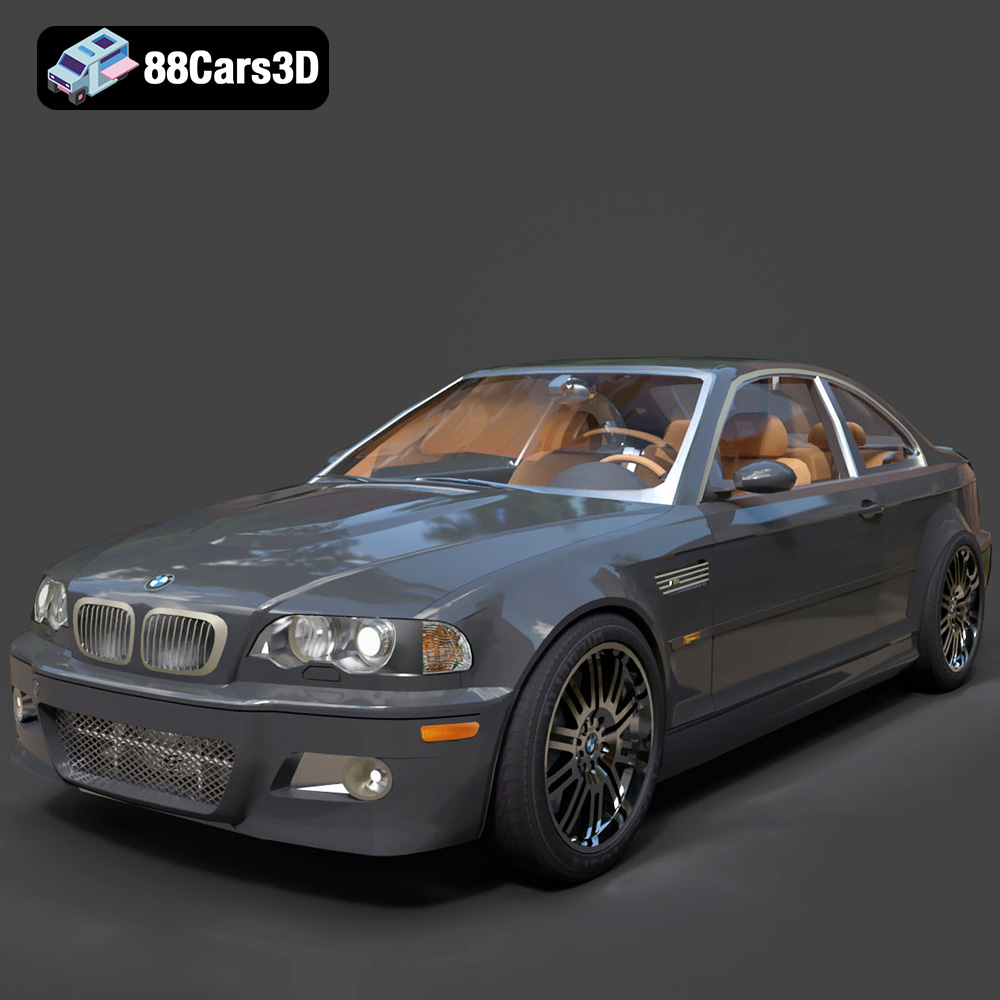
BMW M3 E46 3D Model
Texture: Yes
Material: Yes
Download the BMW M3 E46 3D Model featuring iconic sports car design and detailed interior. Includes .blend, .fbx, .obj, .glb, .stl, .ply, .unreal, and .max formats for rendering, simulation, and game development.
Price: $16.99

BMW i3 Coupe 3D Model
Texture: Yes
Material: Yes
Download the BMW i3 Coupe 3D Model featuring its iconic electric design and compact urban styling. Includes .blend, .fbx, .obj, .glb, .stl, .ply, .unreal, and .max formats for rendering, simulation, and game development.
Price: $17.99
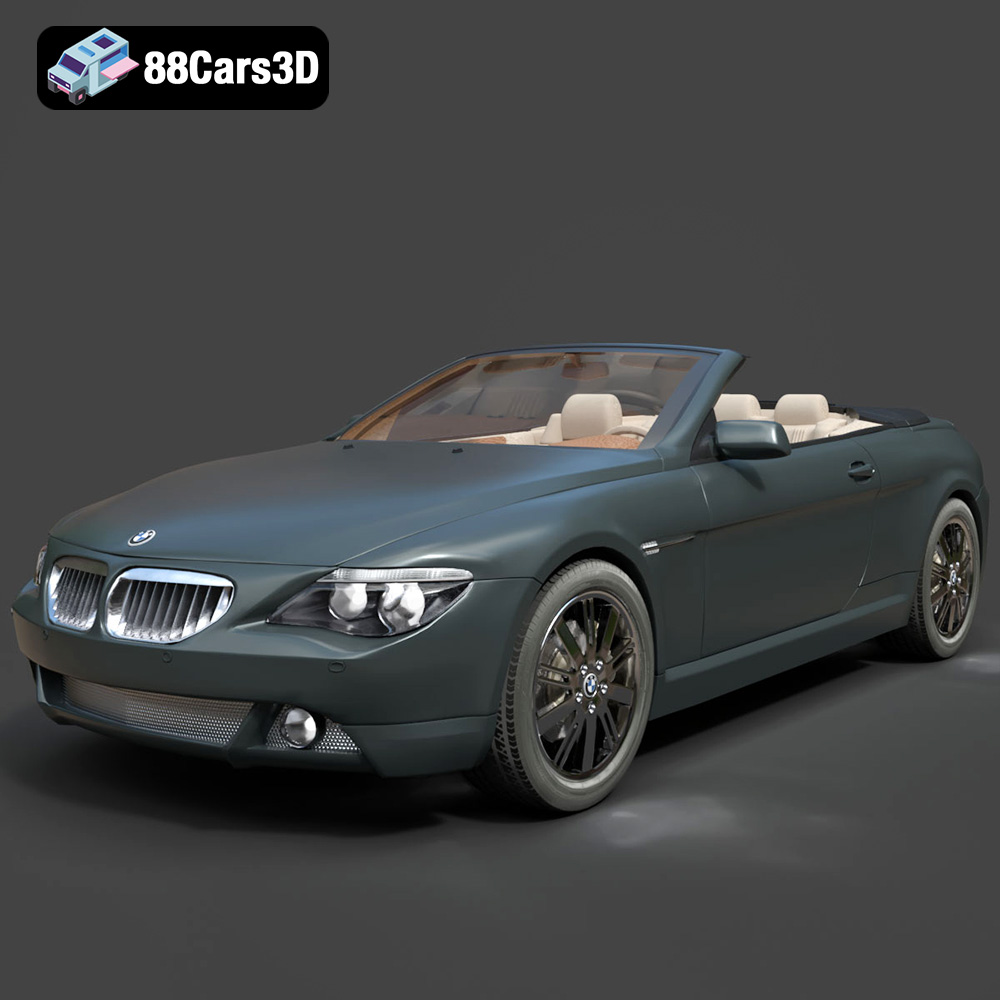
BMW 645ci 2004-2005 3D Model
Texture: Yes
Material: Yes
Download the BMW 645ci 3D Model featuring a sleek, detailed exterior and optimized interior. Includes .blend, .fbx, .obj, .glb, .stl, .ply, .unreal, and .max formats for rendering, simulation, and game development.
Price: $10.79
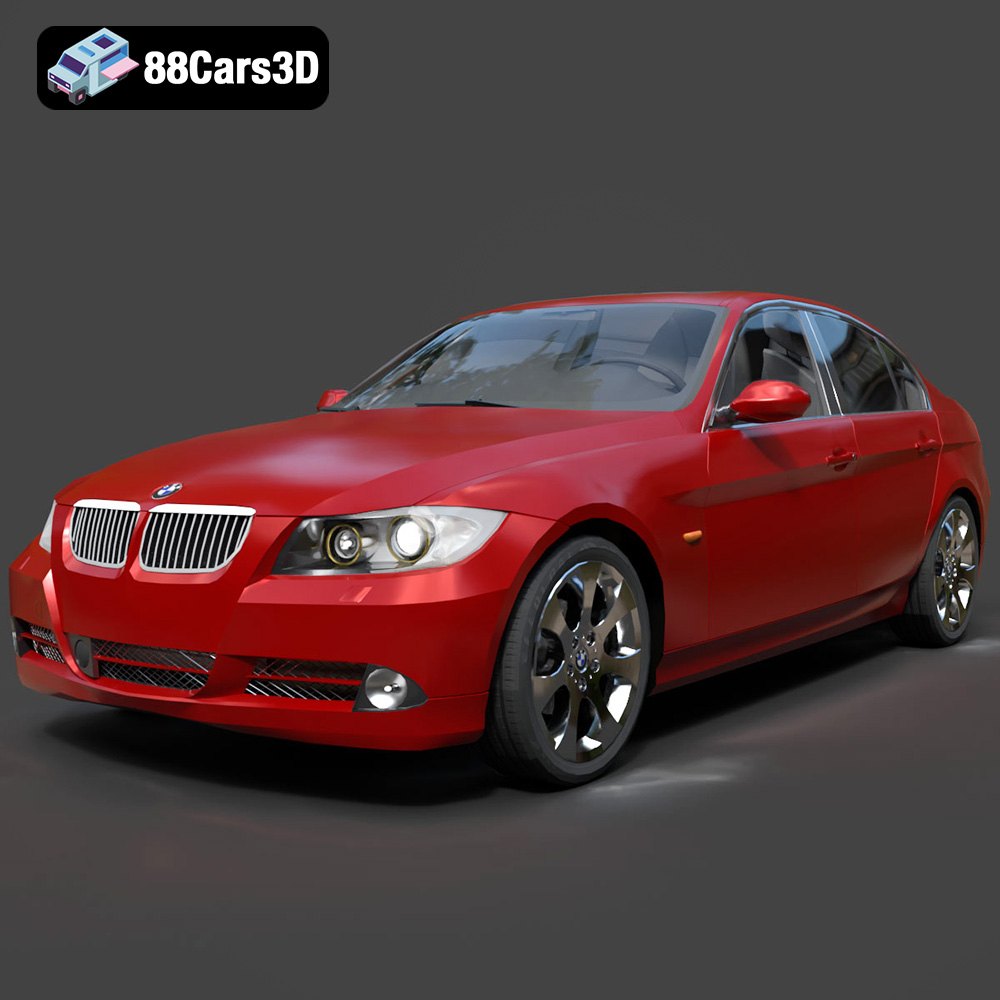
BMW 330i E90 3D Model
Texture: Yes
Material: Yes
Download the BMW 330i E90 3D Model featuring a detailed exterior, an optimized interior, and accurate mechanical components. Includes .blend, .fbx, .obj, .glb, .stl, .ply, .unreal, and .max formats for rendering, simulation, and game development.
Price: $14.79
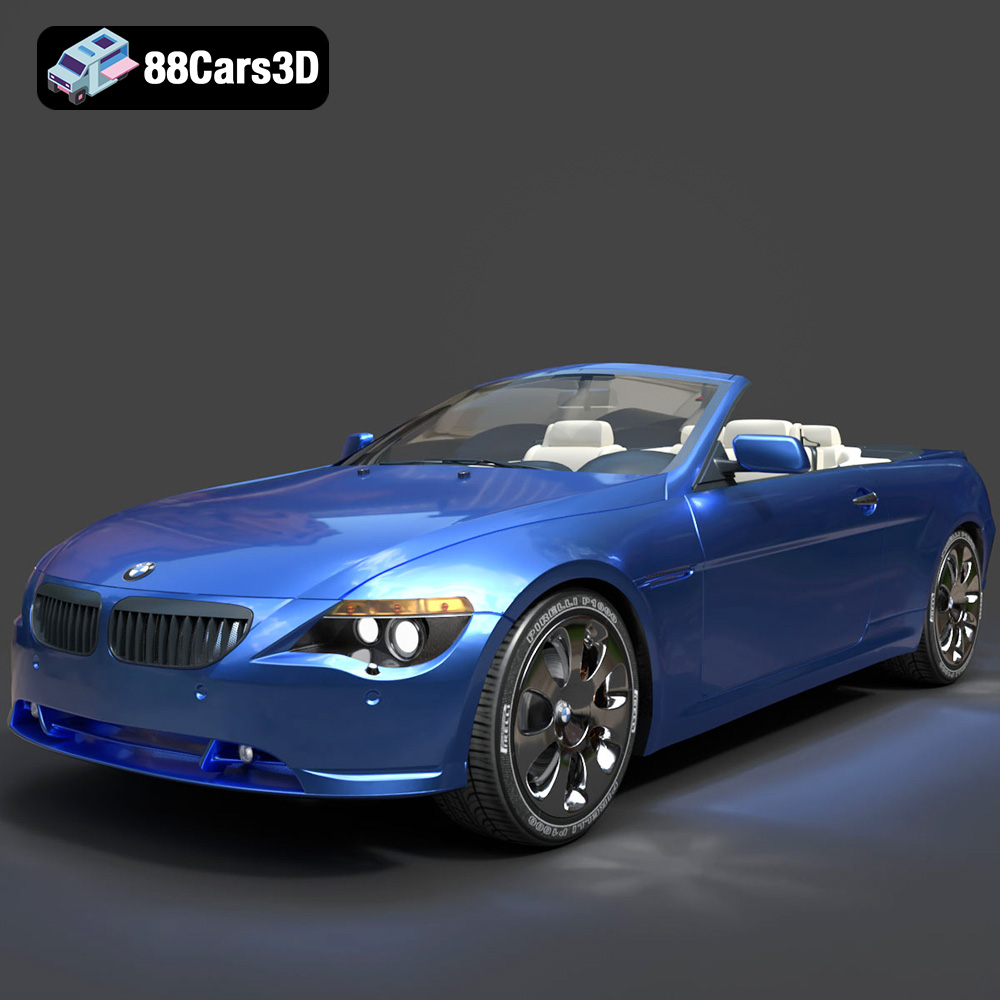
BMW 6 Series Convertible 3D Model
Texture: Yes
Material: Yes
Download the BMW 6 Series Convertible 3D Model featuring clean geometry, realistic detailing, and a fully modeled interior. Includes .blend, .fbx, .obj, .glb, .stl, .ply, .unreal, and .max formats for rendering, simulation, and game development.
Price: $14.99
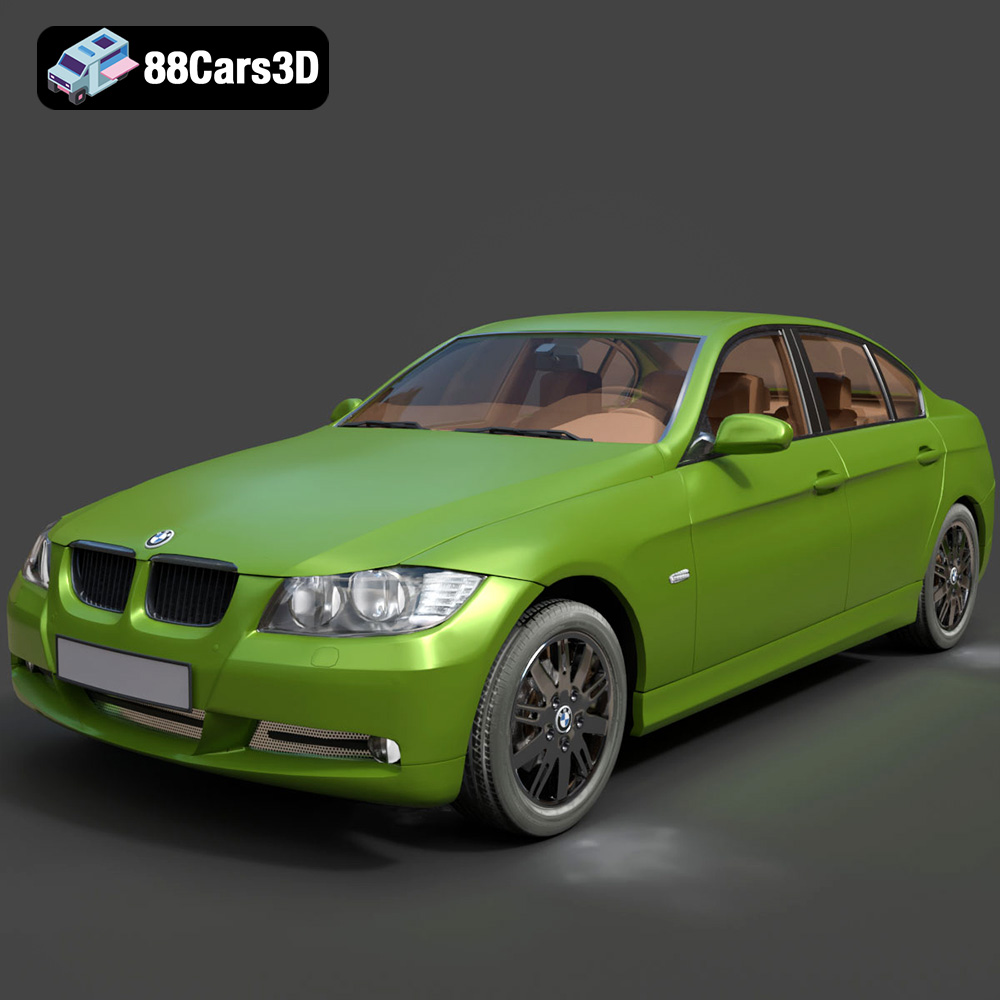
BMW 3-005 3D Model
Texture: Yes
Material: Yes
Download the BMW 3-005 3D Model featuring a sleek design, detailed exterior and interior. Includes .blend, .fbx, .obj, .glb, .stl, .ply, .unreal, and .max formats for rendering, simulation, and game development.
Price: $14.99
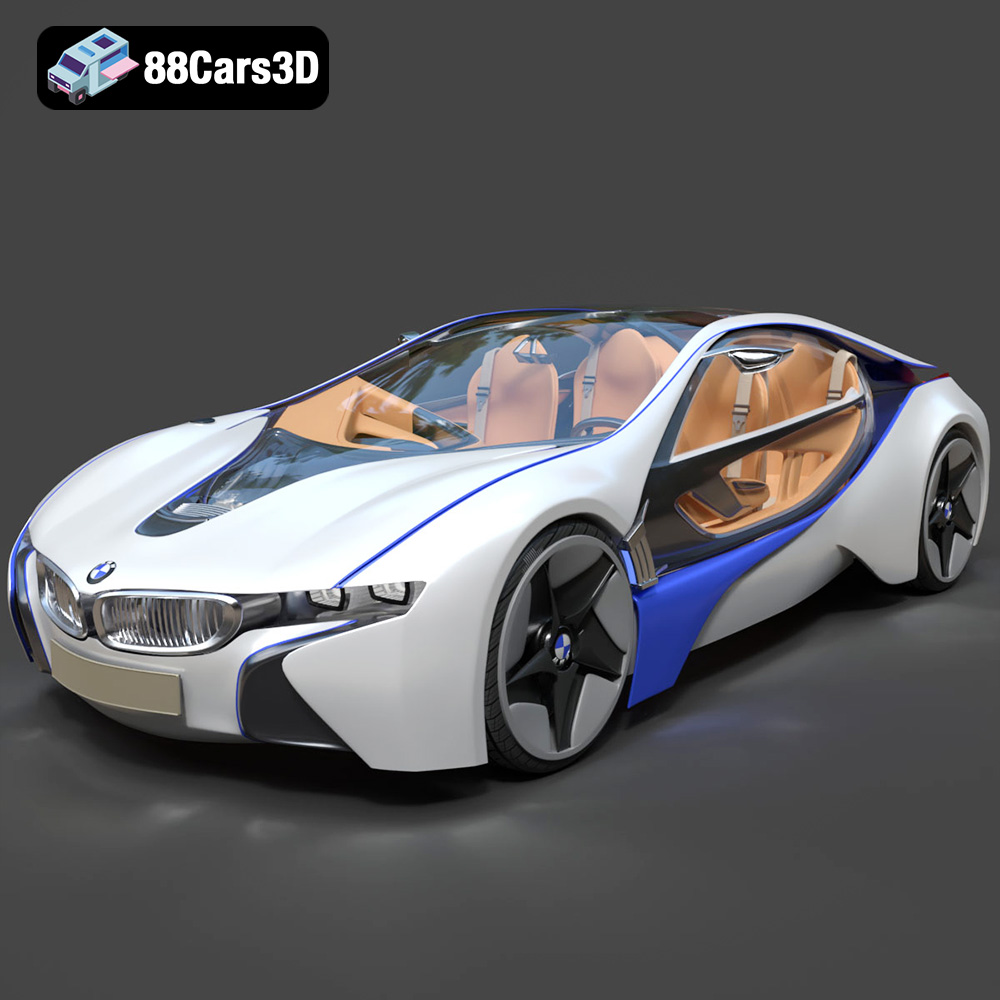
BMW Vision Effecient Dynamics-007 3D Model
Texture: Yes
Material: Yes
Download the BMW Vision Effecient Dynamics-007 3D Model featuring a sleek, futuristic design and hybrid concept aesthetics. Includes .blend, .fbx, .obj, .glb, .stl, .ply, .unreal, and .max formats for rendering, simulation, and game development.
Price: $14.99
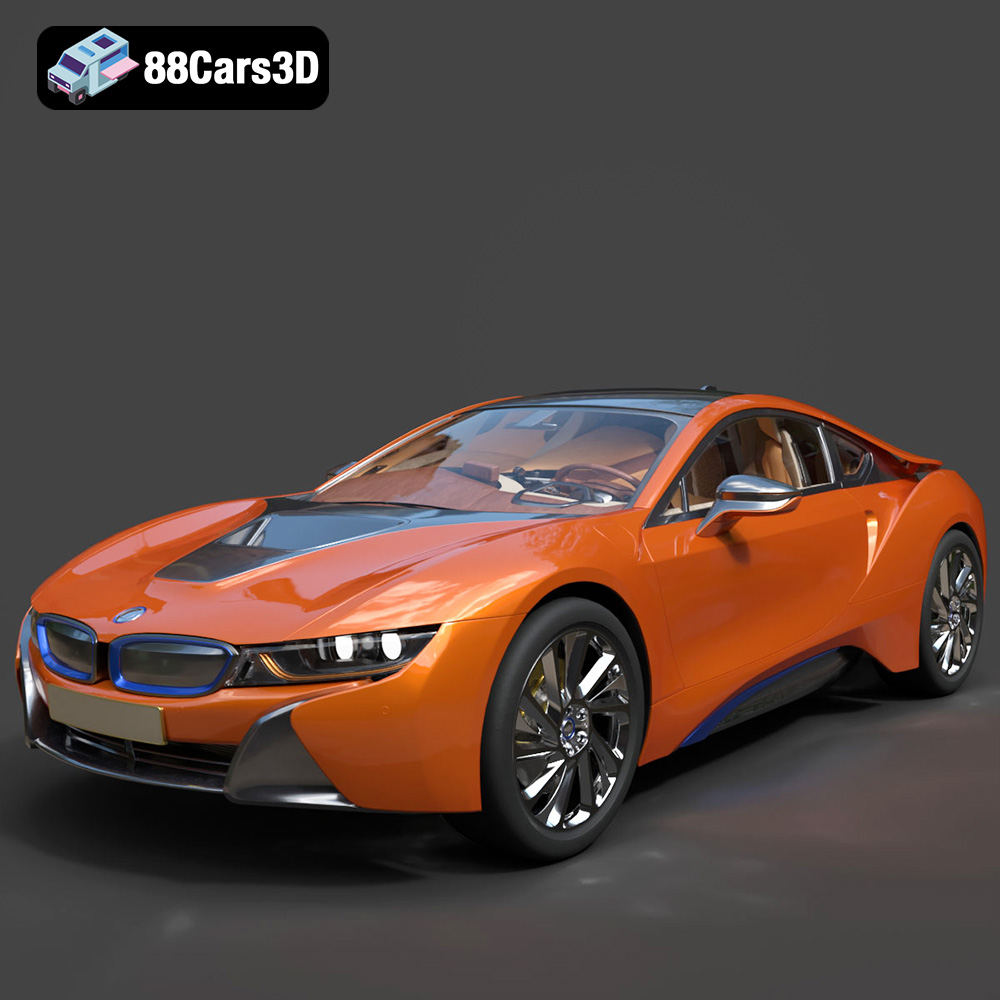
BMW i8 2015 3D Model
Texture: Yes
Material: Yes
Download the BMW i8 2015 3D Model featuring clean geometry, realistic detailing, and a fully modeled interior. Includes .blend, .fbx, .obj, .glb, .stl, .ply, .unreal, and .max formats for rendering, simulation, and game development.
Price: $12.99

BMW 4 Series F32 3D Model
Texture: Yes
Material: Yes
Download the BMW 4 Series F32 3D Model featuring clean geometry, realistic detailing, and a fully modeled interior. Includes .blend, .fbx, .obj, .glb, .stl, .ply, .unreal, and .max formats for rendering, simulation, and game development.
Price: $12.99
