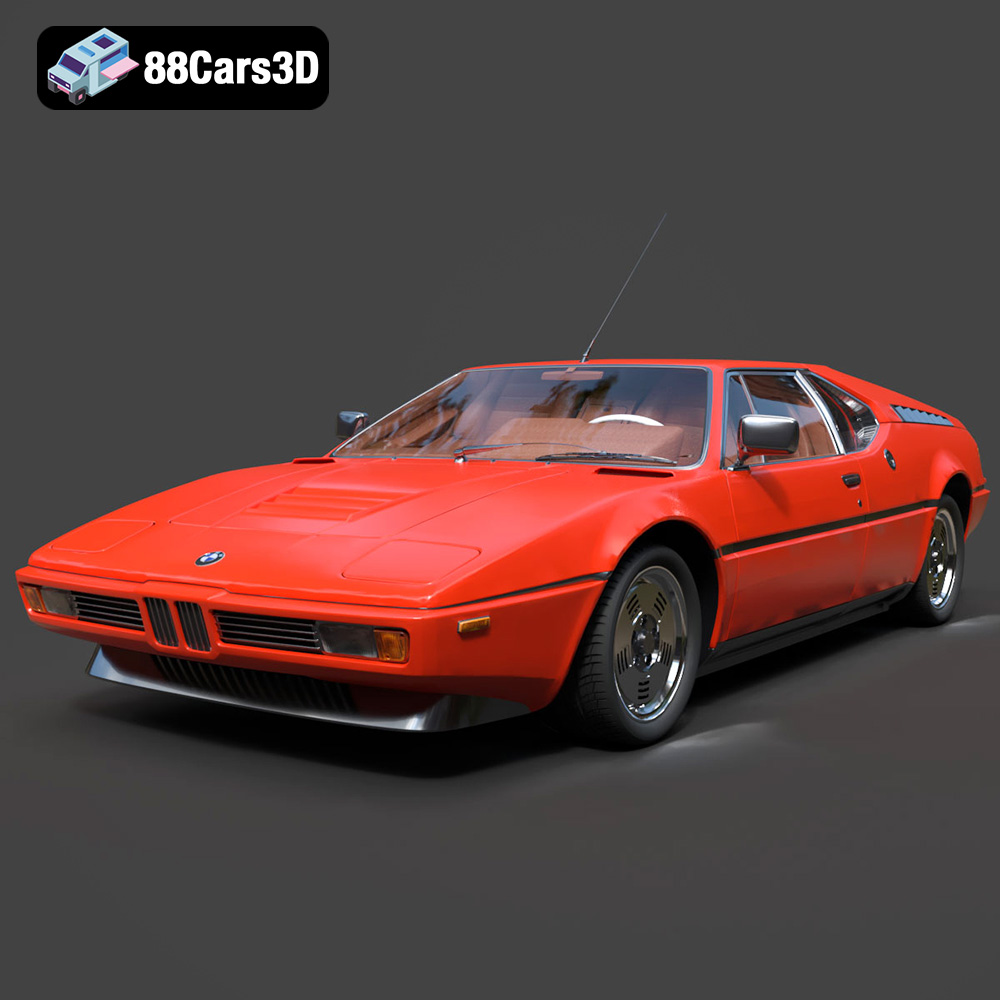
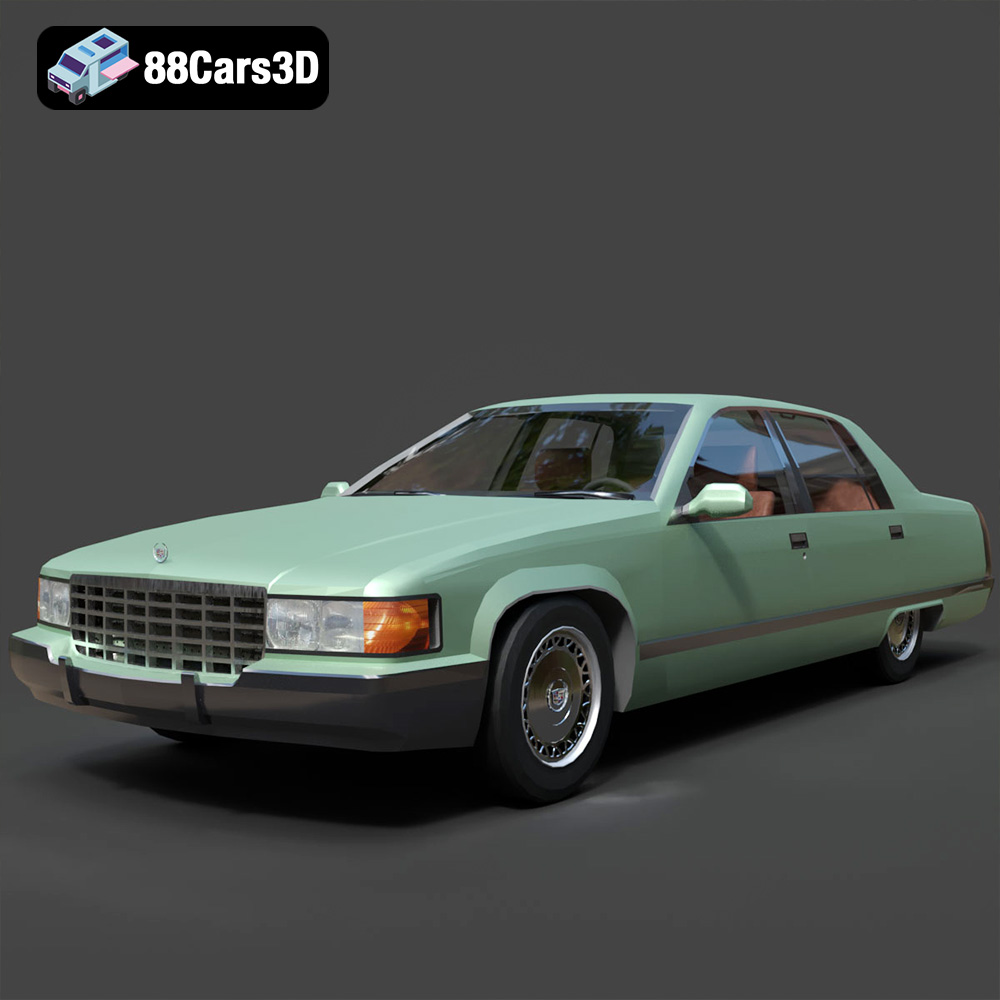
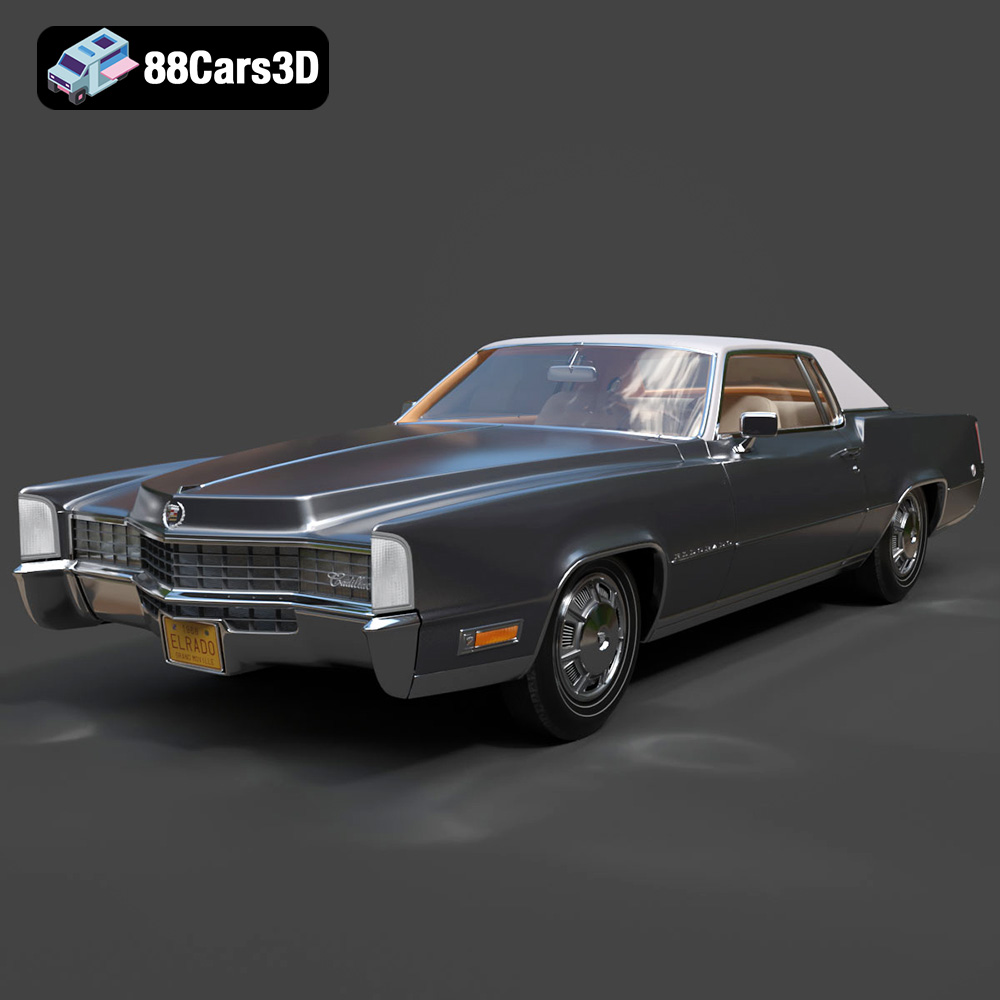
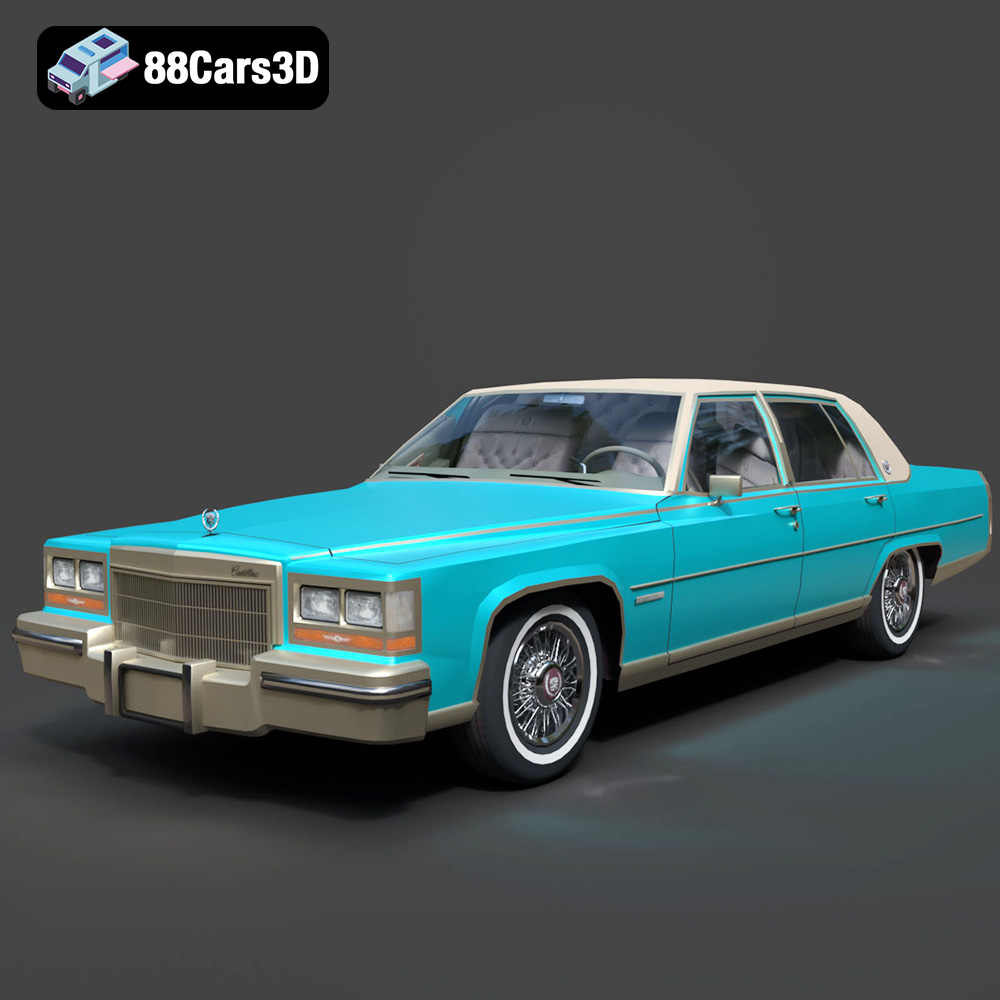
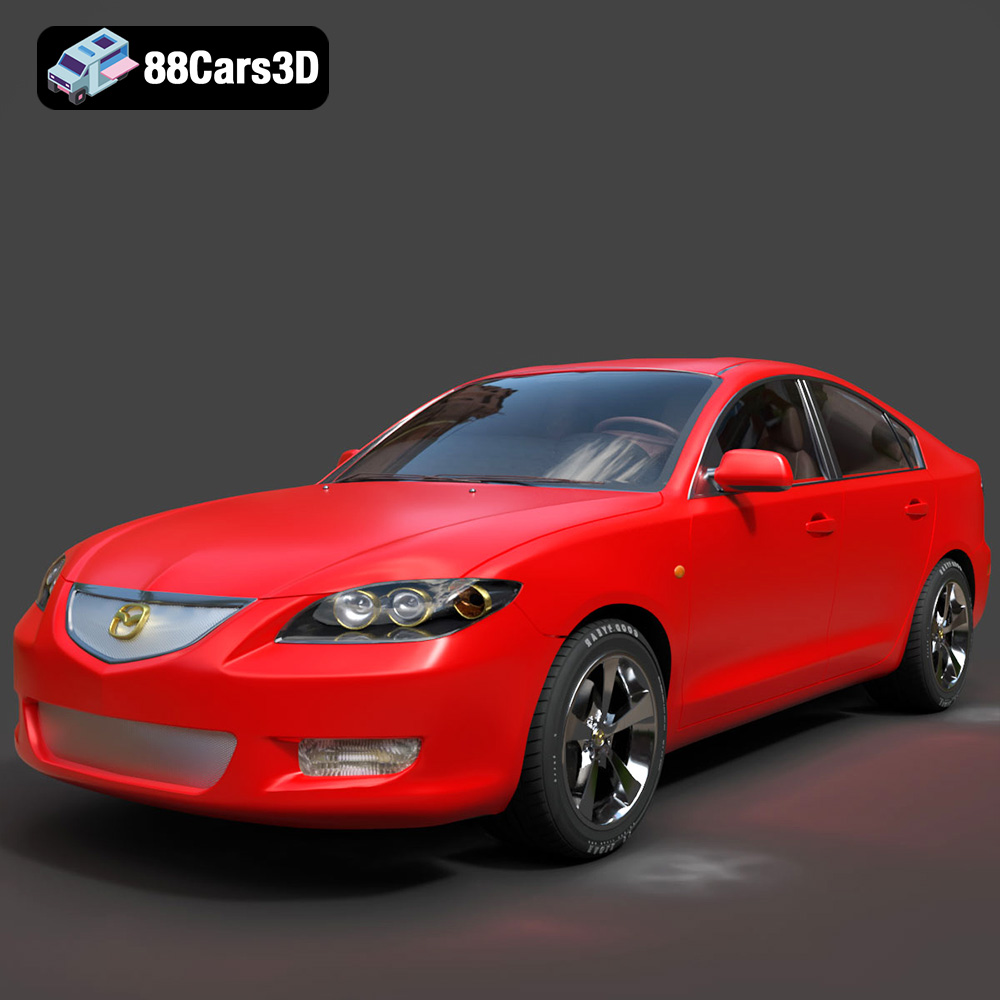
Unlocking Digital Realism: A Deep Dive into High-Quality 3D Car Models for Rendering, Gaming, and Beyond
In the rapidly evolving digital landscape, the demand for photorealistic and performant 3D car models has never been higher. From breathtaking automotive renders that blur the line between virtual and reality to immersive game environments and cutting-edge AR/VR experiences, high-fidelity vehicular assets are the cornerstone of compelling visual content. As industries from advertising to entertainment and industrial design increasingly rely on digital visualization, the technical intricacies of acquiring, optimizing, and deploying these models become paramount. This comprehensive guide will explore the technical considerations, workflows, and diverse applications of premium 3D car models, empowering creators and studios to achieve unparalleled digital excellence. For those seeking a reliable source of meticulously crafted assets, 88cars3d.com offers a curated selection designed to meet the rigorous demands of professional production pipelines.
The Foundation of Digital Automotive Excellence: Why Quality 3D Car Models Matter
The visual integrity of any project involving vehicles hinges entirely on the quality of its underlying 3D car models. A superior model is not merely aesthetically pleasing; it is a technically robust asset optimized for specific use cases, ensuring both visual fidelity and computational efficiency across various platforms and applications.
Precision in Design and Visualization
For automotive designers and marketers, 3D car models serve as powerful tools for conceptualization, presentation, and sales. High-polygon models, often originating from CAD data or meticulously sculpted in software like 3ds Max or Blender, capture every subtle curve, panel gap, and material transition with exquisite detail. This precision is critical for product showcases, allowing potential customers to explore vehicles virtually before physical prototypes even exist. Realistic shaders, complex lighting setups, and advanced rendering engines work in concert to produce images and animations indistinguishable from professional photography, making the choice of a high-quality base model non-negotiable for achieving photorealism.
Performance in Real-Time Applications
While hyper-detailed models are essential for static renders, real-time applications such as video games, interactive configurators, and AR/VR experiences demand a different kind of quality: optimized performance. Here, efficient topology, well-managed poly counts (often achieved through techniques like retopology and Level of Detail – LODs), and streamlined material setups are crucial. A quality 3D car model for a game engine like Unreal Engine or Unity must strike a delicate balance between visual fidelity and frame rate stability, ensuring smooth user experiences without sacrificing aesthetic appeal. Poorly optimized models can lead to performance bottlenecks, long load times, and a generally unsatisfactory user experience, highlighting the importance of game-ready assets.
Bridging the Gap Between Concept and Reality
High-quality 3D car models effectively bridge the gap between initial design concepts and tangible reality. Engineers can use them for aerodynamic simulations, designers can refine aesthetics, and marketing teams can generate collateral long before production begins. For filmmakers and advertisers, these models offer unparalleled flexibility, allowing for creative scenarios impossible or prohibitively expensive to film with physical cars. The ability to iterate quickly, test different materials, and place vehicles in any conceivable environment makes robust 3D assets an indispensable tool in modern creative and industrial workflows.
Understanding 3D Model File Formats
Choosing the correct file format for your 3D car model is a critical decision that impacts workflow efficiency, software compatibility, and the ultimate utility of your asset. Each format has distinct advantages and is optimized for different stages of the production pipeline, from initial design to final deployment. Understanding these nuances ensures seamless integration and maximum versatility for your projects.
Blender’s Native .blend and 3ds Max’s .max
- .blend (Blender): This is Blender’s native file format, serving as a comprehensive container for an entire Blender scene. A
.blendfile can store not only the mesh data of your 3D car model but also materials, textures, lighting, cameras, animations, physics simulations, and even custom scripts. It is the ideal format when working exclusively within Blender or sharing fully editable projects with other Blender users. It ensures that all scene data, including modifiers, constraints, and intricate node-based materials, remains intact and fully adjustable. For artists who rely on Blender’s powerful toolset, acquiring a.blendversion of a 3D car model from 88cars3d.com provides the ultimate level of flexibility for customization and animation. - .max (3ds Max): Similarly,
.maxis the proprietary file format for Autodesk 3ds Max. Like.blend, it encapsulates all aspects of a 3ds Max project, including geometry, materials (with support for advanced shaders like V-Ray, Corona, and Arnold), lighting setups, animation timelines, and scene hierarchies. It offers full editability within 3ds Max, making it the preferred choice for studios and individuals whose primary workflow revolves around this industry-standard software. For detailed rendering and complex animation tasks within a 3ds Max environment, a.maxfile ensures complete control over every element of the 3D car model.
Interoperability with .fbx and .obj
- .fbx (Filmbox): Developed by Autodesk,
.fbxis arguably the most widely adopted format for exchanging 3D data between different software applications. It is particularly strong in preserving animation data, rigging, skinning, blend shapes, and camera information alongside mesh and material data. This makes it an ideal choice for game development (Unreal, Unity), real-time visualization, and film production pipelines where assets need to move seamlessly between modeling, rigging, animation, and engine integration software. While it can embed textures, they are often linked externally. When you need to move a 3D car model from 3ds Max to Unreal Engine, or from Blender to Unity,.fbxis typically the most robust and reliable option, ensuring the core animated properties of the vehicle are preserved. - .obj (Wavefront OBJ): The
.objformat is a universal, open-standard format primarily used for exchanging pure geometric data. It’s highly compatible across almost all 3D software due to its simplicity. An.objfile stores vertex positions, UV coordinates, normals, and polygon faces, often accompanied by an associated.mtl(material) file for basic material properties and texture references. While it doesn’t support animation or advanced rigging, its widespread compatibility makes it an excellent fallback or starting point for static meshes. For archival purposes or when broad software compatibility is a priority for a static 3D car model,.objremains a solid choice.
Emerging Formats for Web and Manufacturing: .glb, .stl, .ply
- .glb (GL Transmission Format Binary): As the binary version of
.gltf,.glbis a highly optimized format specifically designed for efficient transmission and loading of 3D scenes and models on the web and in AR/VR applications. It embeds all necessary data (geometry, materials, textures, animations) into a single, compact file, making it perfect for browser-based viewers, interactive web experiences, and mobile AR apps. For showcasing 3D car models on a website or in an augmented reality demonstration,.glboffers excellent performance and ease of deployment. - .stl (Stereolithography): The
.stlformat is the de facto standard for 3D printing. It represents a 3D object as a collection of unconnected triangular facets, defining only the surface geometry without color, texture, or other advanced properties. Its simplicity makes it universally understood by 3D printing slicer software. If your goal is to physically manifest a 3D car model, perhaps for prototyping or creating a miniature collectible, converting to or acquiring an.stlfile is essential. - .ply (Polygon File Format/Stanford Triangle Format):
.plyis a less common but powerful format often used for storing 3D data from 3D scanners, scientific applications, and CAD software. It can store a wide range of properties for each vertex and face, including color, transparency, normals, and even confidence values. While not typically used for game assets, its precision and ability to store rich attribute data make it valuable for detailed analysis or specific manufacturing processes.
Engine-Ready Assets: The .unreal Format (or similar)
- .unreal (Unreal Engine Assets): While not a single universal file format like
.fbx, “Unreal Engine-ready” assets often refer to a package of files that have been specifically prepared and optimized for direct import and use within the Unreal Engine ecosystem. This typically means an.fbxfile for the mesh, accompanied by properly named and formatted texture maps (Base Color, Normal, Roughness, Metallic, Ambient Occlusion) and often includes pre-built material instances, skeletal meshes, and LOD groups. Sometimes, a project might even include a.uprojectfile containing the imported asset and its associated Unreal Engine-specific settings, ready for immediate use. These assets are meticulously prepared to leverage Unreal Engine’s rendering capabilities and real-time performance, saving significant time in the import and setup process for game developers and architectural visualizers.
By offering a wide array of these formats, 88cars3d.com ensures that creators can find the perfect 3D car model tailored to their specific software, workflow, and final application.
Crafting Immersive Automotive Renders: A Technical Deep Dive
Achieving photorealistic automotive renders requires a sophisticated understanding of scene composition, advanced shading, intricate lighting, and meticulous post-production. It’s a blend of technical expertise and artistic vision that brings 3D car models to life.
Setting Up a Realistic Scene in 3ds Max/Blender
The foundation of a great render begins with the scene. In 3ds Max or Blender, this involves carefully positioning the 3D car model within an environment that complements its design. This might be a detailed studio setup with softbox lighting, an outdoor HDR environment, or a fully modeled architectural scene. Crucial steps include defining ground planes or backdrops, ensuring realistic scale, and setting up initial camera angles that highlight the vehicle’s form. Utilizing physically based cameras, with settings akin to real-world photography (ISO, aperture, shutter speed), is essential for mimicking true optical effects like depth of field and motion blur. For complex reflective surfaces like car paint, ensuring a clean, uncluttered background that offers interesting reflections is key.
Advanced Shading and Texturing Techniques
The realism of a 3D car model is largely determined by its materials. Car paint, for instance, is not a simple color; it’s a complex multi-layered shader involving a base color, clear coat reflections (fresnel effect), metallic flakes, and potentially subsurface scattering for deeper hues. PBR (Physically Based Rendering) workflows are paramount here, requiring precise maps for Base Color (or Albedo), Metallic, Roughness, Normal, and Ambient Occlusion. Utilizing procedural textures, grunge maps, and dirt overlays can add a layer of authenticity, breaking up perfectly clean surfaces. Tyre rubber, glass, chrome, and interior fabrics each demand unique shader approaches, often involving anisotropy for brushed metals or advanced refractive properties for transparent elements. Models from 88cars3d.com often come with pre-configured PBR materials, significantly accelerating this process.
Leveraging Lighting for Photorealism
Lighting is the sculptor of form and mood. For automotive rendering, a common technique involves a three-point lighting setup (key, fill, back light) augmented by environment lighting from an HDRI (High Dynamic Range Image). HDRIs provide realistic global illumination and reflections, crucial for reflective surfaces like car paint and chrome. Additional area lights or photometric lights can be used to emphasize specific contours, create specular highlights, or simulate interior cabin lighting. Understanding light temperature, intensity, and shadow softness is vital. For dynamic shots, setting up motion blur within the renderer, or as a post-process effect, enhances the sense of speed and realism.
Post-Production for a Polished Finish
Once the raw render is complete, post-production in software like Adobe Photoshop or Affinity Photo elevates it to a professional standard. This stage involves color grading to refine mood and tone, adjusting contrast and saturation, and applying subtle photographic effects. Adding lens flares, chromatic aberration, or vignetting can enhance realism. Noise reduction and sharpening are often applied to refine image clarity. Compositing different render passes (e.g., reflections, refractions, ambient occlusion, z-depth) offers granular control over various elements, allowing artists to fine-tune individual components without re-rendering the entire scene. A strong understanding of color theory and photographic principles is essential to make the final image truly pop.
Integrating 3D Car Models into Game Engines (Unreal Engine Workflow Focus)
Developing immersive interactive experiences with 3D car models in game engines like Unreal Engine requires a systematic approach to asset optimization, material setup, and performance management. The goal is to deliver stunning visuals at playable frame rates.
Asset Import and Optimization for Unreal Engine
The journey begins with importing the 3D car model, typically an optimized .fbx file, into Unreal Engine. Key considerations during import include ensuring correct scale, proper normal orientation, and choosing appropriate import settings for meshes, materials, and textures. For complex models, generating Level of Detail (LOD) meshes is crucial. LODs are simplified versions of the model that automatically swap in at a distance, drastically reducing poly count and improving performance without noticeable visual degradation. For example, a high-detail model (LOD0) might have 200,000 polygons, while LOD1, LOD2, and LOD3 could progressively drop to 50,000, 15,000, and 5,000 polygons respectively. Proper UV mapping is also paramount for efficient texture packing and avoiding stretching, ensuring textures look crisp across all LODs. Assets from 88cars3d.com are often already optimized or come with source files that facilitate this process.
Setting Up Materials and LODs
Once imported, the 3D car model’s materials need to be configured using Unreal Engine’s PBR workflow. This involves creating material instances from master materials, allowing artists to easily tweak parameters like paint color, metallicness, roughness, and normal map intensity without recompiling shaders. Texture maps (Base Color, Normal, Roughness, Metallic, Ambient Occlusion) are connected to their respective material inputs. For complex car paint, advanced material graphs utilizing clear coat layers and metallic flake effects are constructed. For LODs, artists assign different material qualities or simplify existing materials to further enhance performance at a distance, ensuring consistency across the different levels of detail.
Physics and Interactive Elements
Bringing the 3D car model to life in a game engine involves implementing physics. Unreal Engine’s Chaos Vehicle physics system allows for realistic vehicle behavior, including suspension, tire friction, engine power, and steering. This requires setting up collision meshes (often simplified convex hulls or custom simplified meshes) and configuring physical materials for different surfaces (road, grass, dirt) to influence tire grip. Beyond basic movement, interactive elements like openable doors, working lights, and interior gauges can be added using Blueprint scripting. This involves setting up skeletal meshes for articulated parts (e.g., doors, wheels, steering wheel) and creating logic to respond to player input or environmental cues.
Performance Considerations for Large-Scale Environments
Integrating multiple 3D car models or a single highly detailed vehicle into a large-scale open-world game demands rigorous performance optimization. Instancing static meshes (ISM) or hierarchical instanced static meshes (HISM) for identical vehicles can dramatically reduce draw calls. Further optimization includes occlusion culling, where objects outside the camera’s view frustum are not rendered, and distance culling for very distant, insignificant objects. Managing texture memory through efficient texture atlases and streaming, as well as optimizing material complexity, are ongoing tasks. Profiling tools within Unreal Engine are indispensable for identifying and addressing performance bottlenecks, ensuring that even a scene with many high-quality 3D car models runs smoothly.
Beyond Rendering: Diverse Applications of 3D Automotive Assets
The utility of high-quality 3D car models extends far beyond traditional static renders and game development. These versatile assets are central to innovation across a spectrum of industries, enabling new forms of interaction, design, and visualization.
AR/VR Experiences and Interactive Showcases
Augmented Reality (AR) and Virtual Reality (VR) platforms are transforming how we interact with products, and 3D car models are at the forefront of this revolution. In AR, users can place a full-scale 3D car model in their driveway using a smartphone, exploring its features as if it were physically present. In VR, users can immerse themselves inside a vehicle, opening doors, interacting with the dashboard, and even “driving” in a simulated environment. These applications are invaluable for automotive marketing, training, and experiential design. Optimized .glb formats are often preferred for web-based AR/VR, while game engine-ready assets are used for high-fidelity interactive experiences, allowing potential buyers to configure and visualize their dream car in unprecedented detail.
3D Printing for Prototyping and Collectibles
The physical manifestation of digital designs through 3D printing opens up new avenues for 3D car models. Engineers use 3D prints for rapid prototyping of components or scale models to evaluate ergonomics and aesthetics before committing to expensive tooling. Enthusiasts and model makers can print highly detailed replicas of their favorite cars, ranging from small desktop collectibles to larger, functional remote-control vehicles. For 3D printing, the .stl format is standard due to its focus on watertight mesh geometry, crucial for successful prints. Attention to mesh integrity, wall thickness, and print resolution is vital to translate a digital model into a high-quality physical object.
Architectural Visualization and Environmental Integration
In architectural visualization (arch-viz), 3D car models are indispensable for populating scenes and conveying scale, lifestyle, and realism. Placing diverse vehicles around a new building development, within a streetscape, or in a parking garage instantly grounds the architectural design in a real-world context. The type and style of cars chosen can subtly influence the perceived demographic and aspirational quality of the environment. For these applications, static, high-quality 3D models with detailed materials are paramount, often rendered with the same precision as the architecture itself, enhancing the overall believability and narrative of the visualization. This integration helps clients and stakeholders envision how spaces will function and feel with real-world elements present.
Choosing the Right 3D Car Model for Your Project
Selecting the appropriate 3D car model is a critical decision that impacts project timelines, performance, and final output quality. It’s not just about aesthetics; it’s about technical suitability for your specific application. A comprehensive marketplace like 88cars3d.com provides the necessary information to make informed choices.
Assessing Poly Count and Topology
Poly count (polygon count) is a primary indicator of a model’s detail and computational cost. For photorealistic offline renders, a very high poly count (hundreds of thousands or even millions of polygons) is often desirable to capture fine details and smooth curves. However, for real-time applications like games or AR/VR, lower poly counts (tens of thousands or even just a few thousand for distant objects) are essential for maintaining performance. Good topology refers to the clean, efficient arrangement of polygons, typically quads, that allows for smooth deformations, easy UV unwrapping, and proper subdivision. Models with clean, optimized topology are easier to work with, animate, and adapt across different fidelity requirements. Always check if the model’s poly count and topology align with your project’s technical limitations and visual demands.
UV Mapping and Texture Quality
UV mapping is the process of flattening the 3D surface of a model into a 2D space, allowing textures to be applied accurately. High-quality 3D car models feature clean, non-overlapping UVs that efficiently utilize texture space, preventing stretching or distortion. Check if the model has logical UV sets for different parts (e.g., body, interior, wheels), which simplifies texturing and material creation. The texture quality itself is equally important. Are the textures high-resolution (e.g., 4K or 8K)? Are they PBR-ready (Base Color, Normal, Metallic, Roughness, AO maps)? Are they tileable where appropriate, and do they exhibit realistic details like panel lines, wear, and subtle imperfections? Superior texture work is crucial for achieving photorealism, especially under close inspection.
Rigging and Animation Readiness
If your project involves animation (e.g., wheels turning, doors opening, suspension movement), assessing the model’s rigging and animation readiness is paramount. A well-rigged 3D car model will have a clean skeletal hierarchy with appropriate bones and controls for key animated components like wheels, steering, and potentially doors or a convertible roof. The rigging should allow for realistic deformation and movement without visual artifacts. For game engines, this often means a proper skeletal mesh setup with skinning weights. Some models might come with pre-built animations or be set up for easy integration with vehicle physics systems. Verifying these capabilities upfront will save significant time and effort in the animation phase, allowing for dynamic storytelling and interactive experiences.
Conclusion
The world of 3D car models is a vibrant and technically demanding domain, critical to the success of projects across rendering, game development, AR/VR, and industrial design. From the intricate details captured in a high-polygon mesh to the optimized efficiency required for real-time performance, and the crucial understanding of file formats for seamless workflows, every technical aspect plays a vital role. Choosing high-quality assets with clean topology, meticulous UV mapping, and appropriate poly counts is paramount, as is selecting the right file format for your specific application. By understanding these technical nuances, creators can unlock the full potential of digital automotive visualization, crafting experiences that are not only visually stunning but also technically robust. For those committed to excellence and seeking a diverse selection of professional-grade 3D car models, 88cars3d.com stands as a valuable resource, providing the essential building blocks for your next groundbreaking project.
Featured 3D Car Models