⚡ FLASH SALE: Get 60% OFF All Premium 3D & STL Models! ⚡

“`html
The world of 3D printing is incredibly exciting, offering a gateway to tangible creations from digital designs. Whether you’re a seasoned maker or just beginning your additive manufacturing journey, understanding how to prepare your STL files is paramount to achieving successful, high-quality prints. This is especially true when dealing with intricate models, like the stunning automotive designs available on platforms like 88cars3d.com. Simply downloading an STL file and hitting “print” isn’t always the most efficient path. To truly unlock the potential of your 3D printer and get the best results, you need to delve into techniques like scaling, hollowing, and strategic optimization to enhance print speed without sacrificing detail. This comprehensive guide will walk you through the essential steps, from understanding STL file structure to fine-tuning your slicer settings, ensuring your next print is faster, more material-efficient, and visually impressive. Prepare to elevate your 3D printing game!
Before we dive into manipulation and optimization, it’s crucial to grasp what an STL (STereoLithography) file actually is. At its core, an STL file describes the surface geometry of a 3D object using a collection of triangular facets. It’s a relatively simple format, but its structure has profound implications for printability. Each facet is defined by three vertices (points in 3D space) and a normal vector, which indicates the outward-facing direction of the surface. This collection of triangles forms a “mesh” that represents the object’s shape. For a 3D printer to successfully interpret and build an object, this mesh must be “watertight” or “manifold.” This means there are no holes, gaps, or self-intersecting triangles. Think of it like a perfectly sealed container – no leaks allowed!
The arrangement and connectivity of these triangles form the mesh topology. In a manifold mesh, each edge is shared by exactly two triangles. If an edge is shared by only one, it signifies a hole. If it’s shared by more than two, it indicates a self-intersection, which can confuse the slicing software and lead to printing errors. Common issues include floating vertices (points not connected to any triangle) or overlapping faces. These problems can arise from the original design process, during file conversion, or even through minor corruptions. Fortunately, software tools are readily available to diagnose and repair these mesh imperfections, ensuring your STL files are print-ready. Recognizing these fundamental aspects of STL files is the first step towards effective optimization.
While STL is the de facto standard for 3D printing, you might encounter other 3D file formats like OBJ, FBX, or STEP. OBJ is another common format that can store color and texture information, but its mesh can sometimes be less robust than a well-formed STL. FBX is often used in animation and game development, also supporting richer data. STEP files are typically used in CAD (Computer-Aided Design) and represent solid geometry rather than a tessellated surface, offering higher precision but requiring conversion to a mesh format (like STL) for most 3D printers. When downloading models from marketplaces such as 88cars3d.com, you’ll primarily find STL files, which are usually well-prepared for direct printing. However, if you’re working with models from other sources or performing complex edits, understanding the nuances of these formats and how they translate to printable meshes is key.
One of the most fundamental ways to customize a 3D print is by scaling. Whether you want a miniature version of a classic car for your desk or a larger, more detailed display piece, scaling is a straightforward yet powerful tool. Slicing software allows you to adjust the dimensions of your model along the X, Y, and Z axes. Most commonly, you’ll want to scale uniformly, maintaining the original aspect ratio. However, sometimes non-uniform scaling might be necessary to fit a specific space or to emphasize certain features. It’s important to remember that scaling affects not only the size but also the print time and the level of detail visible. Smaller scales can sometimes obscure fine details, while larger scales can highlight imperfections if the print quality isn’t optimal.
Uniform scaling is achieved by applying the same percentage increase or decrease to all three axes (X, Y, and Z). This is the most common method for resizing models like cars, ensuring they remain proportional. For example, scaling a car model to 50% will result in a print that is half the size in every dimension. Non-uniform scaling, on the other hand, involves changing the dimensions independently. You might do this, for instance, to make a car model slightly longer and wider to fit a specific diorama base, while keeping its height the same. Always check your scaled model in the slicer’s preview to ensure the proportions still look correct and that no features have become too thin or distorted.
Scaling up a model will directly increase print time. If you double the dimensions of a model (scale by 200%), the volume increases by a factor of eight (2³), meaning it will take significantly longer to print. Conversely, scaling down reduces print time. More critically, scaling affects the visibility of detail. When you scale a model down, features that were designed to be 0.4mm wide might become less than the width of a single extrusion (typically 0.4mm for a standard nozzle). This can lead to features merging together or disappearing entirely. Similarly, scaling up can make subtle surface textures or panel lines more apparent, but it also magnifies any inherent imperfections in the mesh or printing flaws like layer lines. Always consider your printer’s resolution and your desired level of detail when deciding on a scale.
In popular slicers like Ultimaker Cura or PrusaSlicer, scaling is usually found within the “Transform” or “Scale” tools. You can typically input a percentage for uniform scaling or adjust X, Y, and Z dimensions individually. After scaling, it’s good practice to re-evaluate the model’s orientation and consider if support structures need adjustment. For example, a scaled-up model might now require more extensive support due to its increased height or overhangs. Always perform a slicing operation after scaling to get an updated estimate of print time and to visually inspect the toolpath and support generation.
Many 3D printable models, especially complex ones like car bodies, are designed as solid objects. While this ensures a robust print, it can lead to excessively long print times and consume a significant amount of filament or resin. Hollowing the model is a technique to remove the internal volume, leaving only a thin shell. This drastically reduces the amount of material used and, more importantly, cuts down on print time. Most slicers offer built-in options for hollowing, or you can use dedicated mesh editing software for more control. However, it’s not as simple as just making a model hollow; you need to ensure it’s printable by adding escape holes for air and resin (in resin printing).
When you hollow a model, the slicing software internally creates a void. Crucially, for FDM printing, this void needs a way for air to escape as the filament fills the space, preventing pressure buildup and potential print failures. For resin printing (SLA/DLP), hollowing is even more critical. Resin printers build layers from the bottom up, and if a large, solid model is printed upside down, the vat of uncured resin needs a way for the displaced resin to flow out as the object rises, and for air to enter. Without “drain holes” or “escape holes,” the pressure can cause the print to detach from the build plate or even crack the resin vat’s FEP film. These holes should be placed strategically, usually on the bottom surface of the model (when oriented for printing), and should be large enough to allow airflow and resin displacement but small enough to be less noticeable or easily patched later.
Many modern slicers, including Cura and PrusaSlicer, have a “Hollow” or “Hollow Out” function. You typically select the model, activate this feature, and specify a wall thickness (e.g., 1mm, 2mm). The software then attempts to create an internal cavity. Some slicers allow you to define the number and size of escape holes, or you might need to manually add these holes using mesh editing tools before slicing. It’s vital to preview the sliced model carefully after hollowing to ensure the walls are consistently thick and that the escape holes are correctly positioned and sized. If the slicer’s automatic hollowing doesn’t produce satisfactory results, or if you need precise control over hole placement, using external software is recommended.
For greater control, dedicated mesh editing software like Autodesk Meshmixer (free) or Blender (free and open-source) offers more robust hollowing capabilities. In Meshmixer, you can use the “Hollow” command under the “Edit” menu, specifying wall thickness and observer parameters. Critically, Meshmixer also provides tools to easily add and subtract geometry, allowing you to manually create precise escape holes. You can model simple shapes (like cylinders) and use them as “cutters” to subtract material from the model, creating perfectly circular holes. In Blender, similar operations can be achieved using modifiers like the “Solidify” modifier (to create thickness) and boolean operations (to cut holes). These tools offer unparalleled flexibility but come with a steeper learning curve. When working with complex models from 88cars3d.com, using these tools can ensure perfect drain hole placement for resin printing or efficient material saving for FDM.
Print speed is a constant consideration for any 3D printing enthusiast. While faster prints are appealing, they often come at the cost of quality. The goal of optimization is to find the sweet spot where you can significantly reduce print time without introducing unacceptable artifacts like stringing, poor layer adhesion, or loss of detail. This involves a combination of slicer settings, model orientation, and sometimes even modifying the model itself. For intricate models like cars, optimizing for speed often means making smart choices about where to save time – perhaps by not printing certain fine details at extremely high resolutions or by strategically placing supports.
Layer Height: This is one of the most impactful settings for print speed. A larger layer height (e.g., 0.2mm or 0.3mm) means the nozzle takes larger steps vertically, printing layers more quickly. However, it also results in more visible layer lines and can reduce the ability to capture fine vertical details. A smaller layer height (e.g., 0.1mm or 0.15mm) produces smoother surfaces and better detail but significantly increases print time. For car models, a balance is often found around 0.15mm to 0.2mm layer height, depending on the printer and desired finish. You might even consider printing different parts of the model at different layer heights if your slicer supports it (adaptive layer height).
Infill Density and Pattern: For solid parts, reducing infill density is a primary way to save material and time. For models that don’t require structural integrity (like display pieces), an infill of 5-15% is often sufficient. The infill pattern also plays a role; simpler patterns like “lines” or “grid” are generally faster to print than more complex ones like “gyroid” or “cubic.” For car models that are hollowed, the infill becomes less relevant, as the internal structure is already removed.
Most slicers allow you to set different print speeds for various features: outer walls, inner walls, top/bottom layers, and infill. To speed up prints, you might increase the speed for infill and inner walls, while keeping the outer wall speed lower to maintain surface quality. Print Speed values typically range from 40mm/s (for high quality) to 100mm/s or more (for faster prints). Equally important is Acceleration and Jerk settings. Higher acceleration and jerk allow the printer to change speed more rapidly, reducing time spent on slow movements and direction changes, especially on small, intricate parts. However, excessively high settings can lead to vibrations, ringing artifacts, and decreased print quality. Tuning these requires experimentation.
Supports are often necessary for overhangs and bridges, but they add significant print time and material. Strategically orienting your model can minimize the need for supports. For car models, printing them upright often requires supports for wheel wells, undercarriage details, and spoilers. Sometimes, printing a car model on its side or upside down can reduce the amount of support needed, though this might impact surface finish on the primary visible faces. When supports are unavoidable, consider using settings that make them faster to print and easier to remove. This includes adjusting support density (lower density prints faster), support interface layers (can make removal easier), and support pattern (tree supports can sometimes be faster and use less material than standard supports, and are often easier to remove from complex models).
Fine-tuning Flow Rate (also known as Extrusion Multiplier) and Retraction Settings can indirectly improve speed and print quality. Correcting over-extrusion by slightly reducing flow rate can prevent blobs and improve dimensional accuracy, potentially allowing for slightly faster outer wall printing. Proper retraction settings minimize stringing between disconnected parts of the model, which can save time by reducing the need for post-processing cleanup and prevent failed supports from snagging on newly printed features. Calibrating these settings using specific test prints is a vital step for any serious 3D printer user aiming for efficiency and quality.
“`
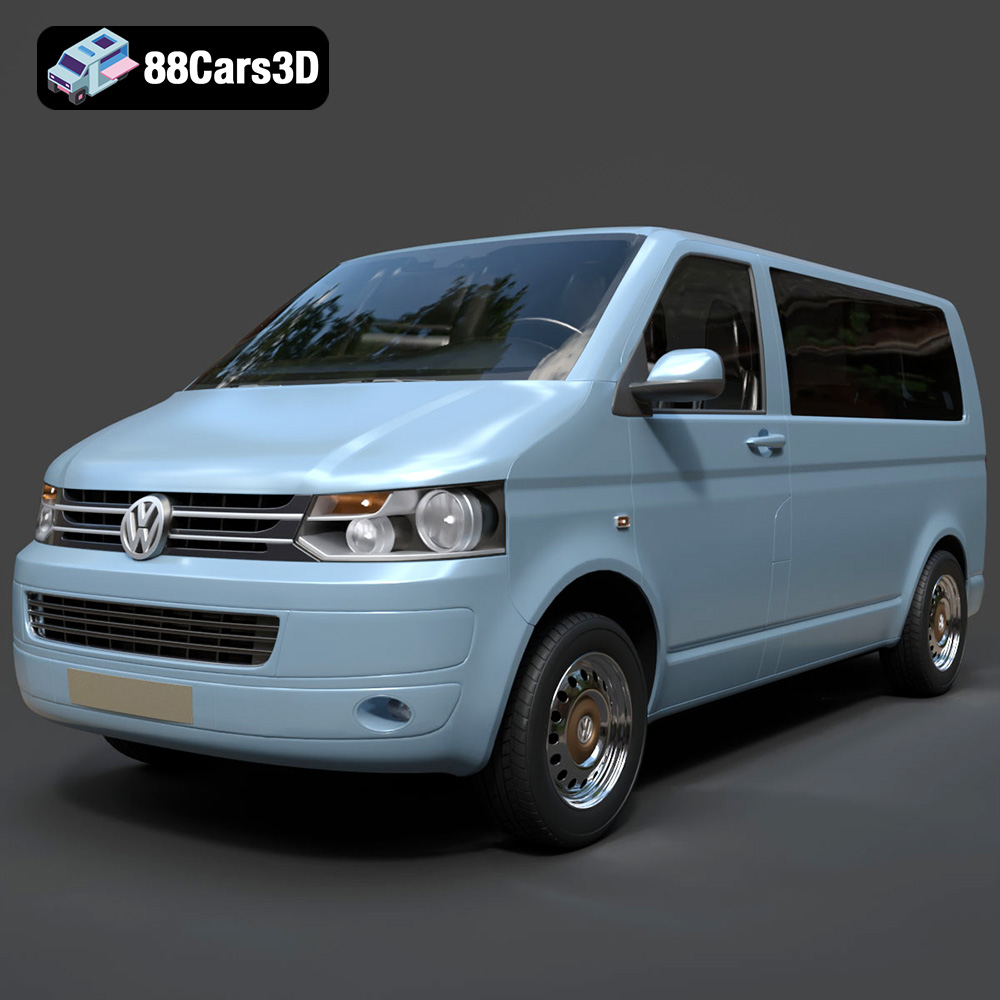
Texture: Yes
Material: Yes
Download the Volkswagen Transporter T5 FL 2010 3D Model featuring clean geometry, realistic detailing, and a fully modeled interior. Includes .blend, .fbx, .obj, .glb, .stl, .ply, .unreal, and .max formats for rendering, simulation, and game development.
Price: $22.99
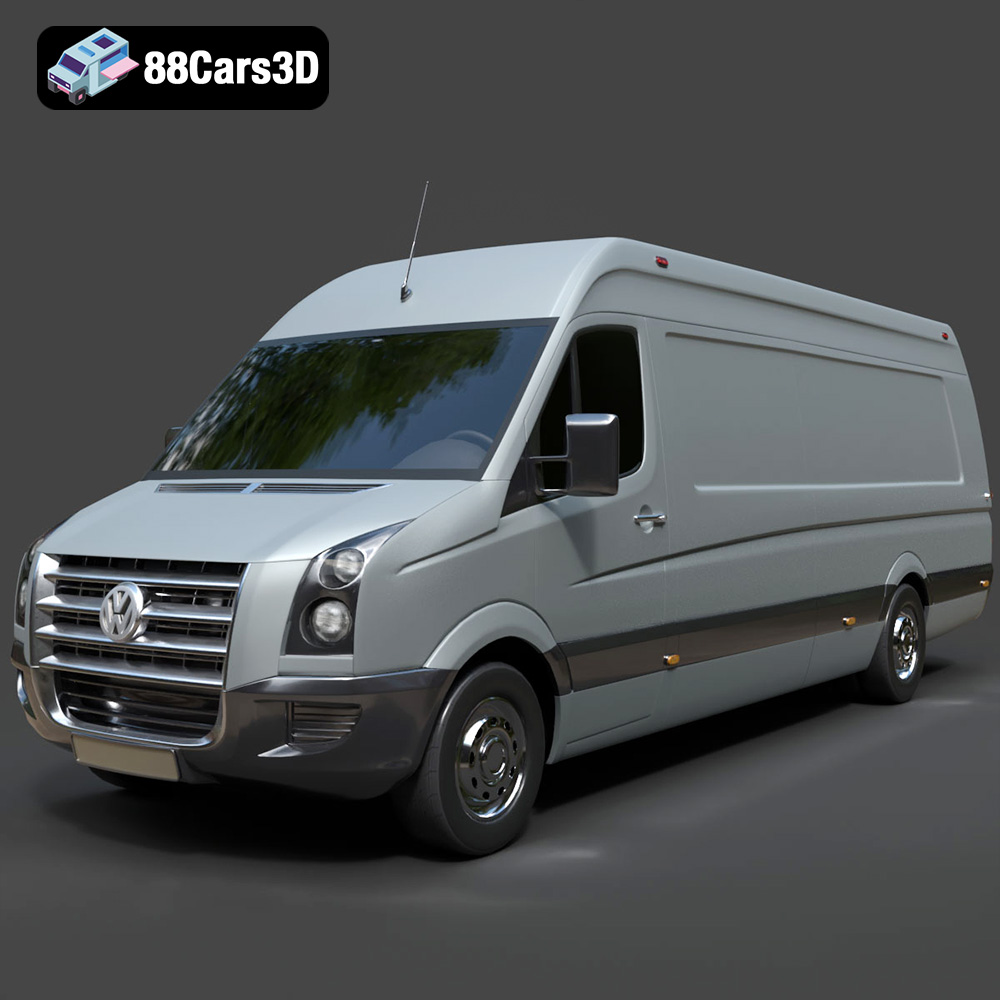
Texture: Yes
Material: Yes
Download the Volkswagen Crafter 2020 3D Model featuring clean geometry, realistic detailing, and a fully modeled interior. Includes .blend, .fbx, .obj, .glb, .stl, .ply, .unreal, and .max formats for rendering, simulation, and game development.
Price: $22.99
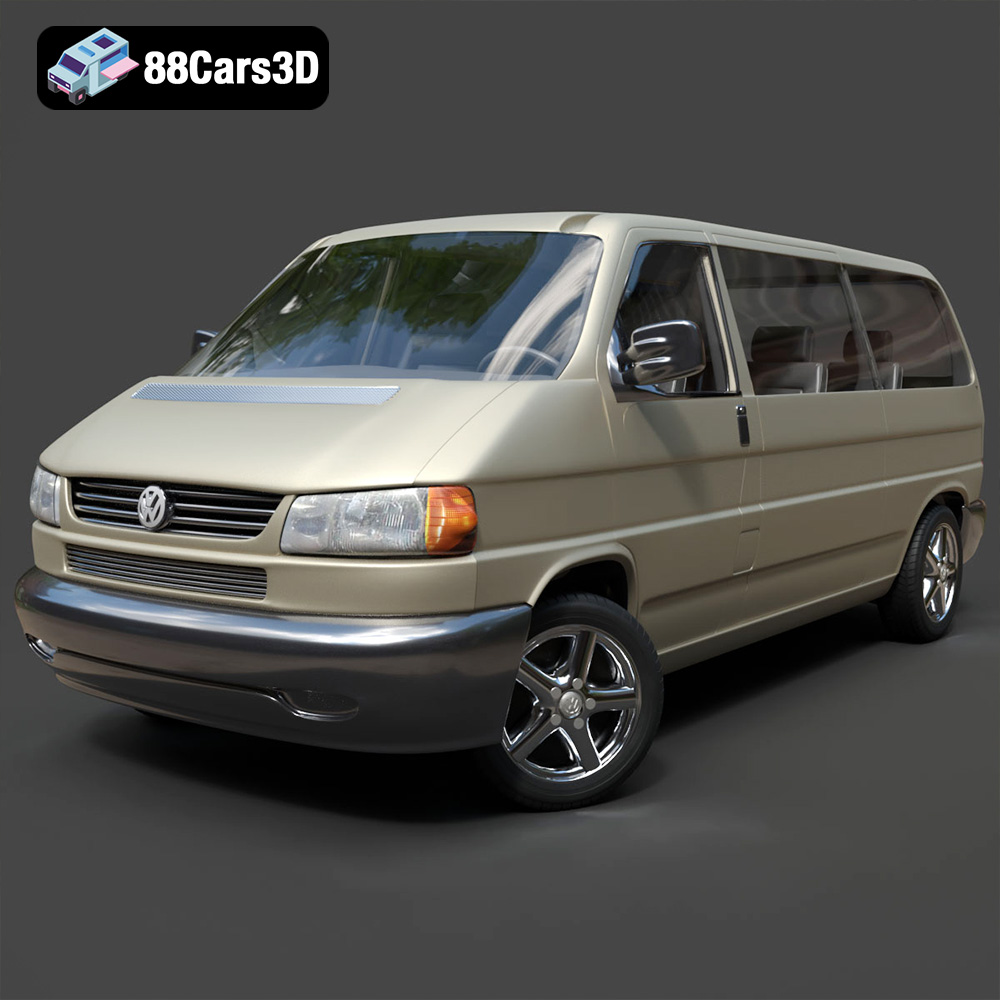
Texture: Yes
Material: Yes
Download the Volkswagen Caravelle 3D Model featuring a detailed exterior, functional interior, and optimized topology. Includes .blend, .fbx, .obj, .glb, .stl, .ply, .unreal, and .max formats for rendering, simulation, and game development.
Price: $23.99
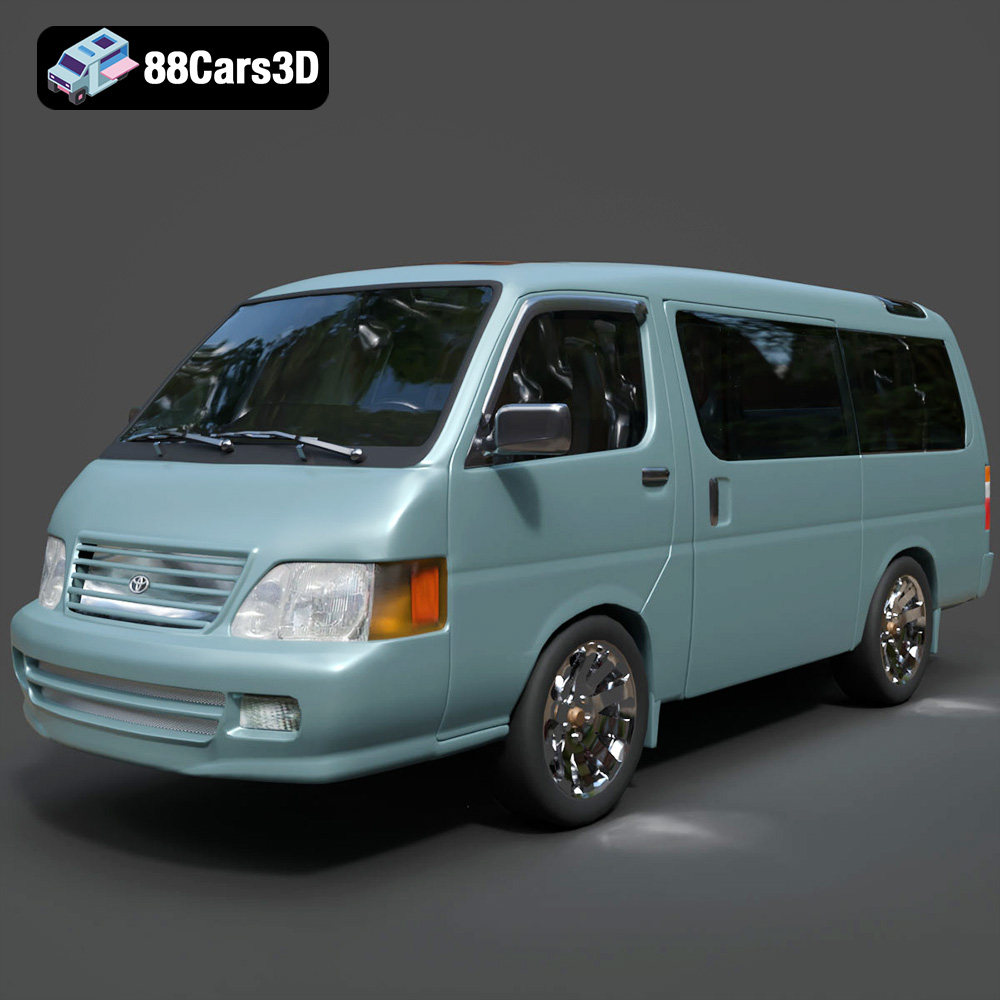
Texture: Yes
Material: Yes
Download the Toyota Hiace 3D Model featuring versatile design and detailed exterior. Includes .blend, .fbx, .obj, .glb, .stl, .ply, .unreal, and .max formats for rendering, simulation, and game development.
Price: $21.99
Texture: Yes
Material: Yes
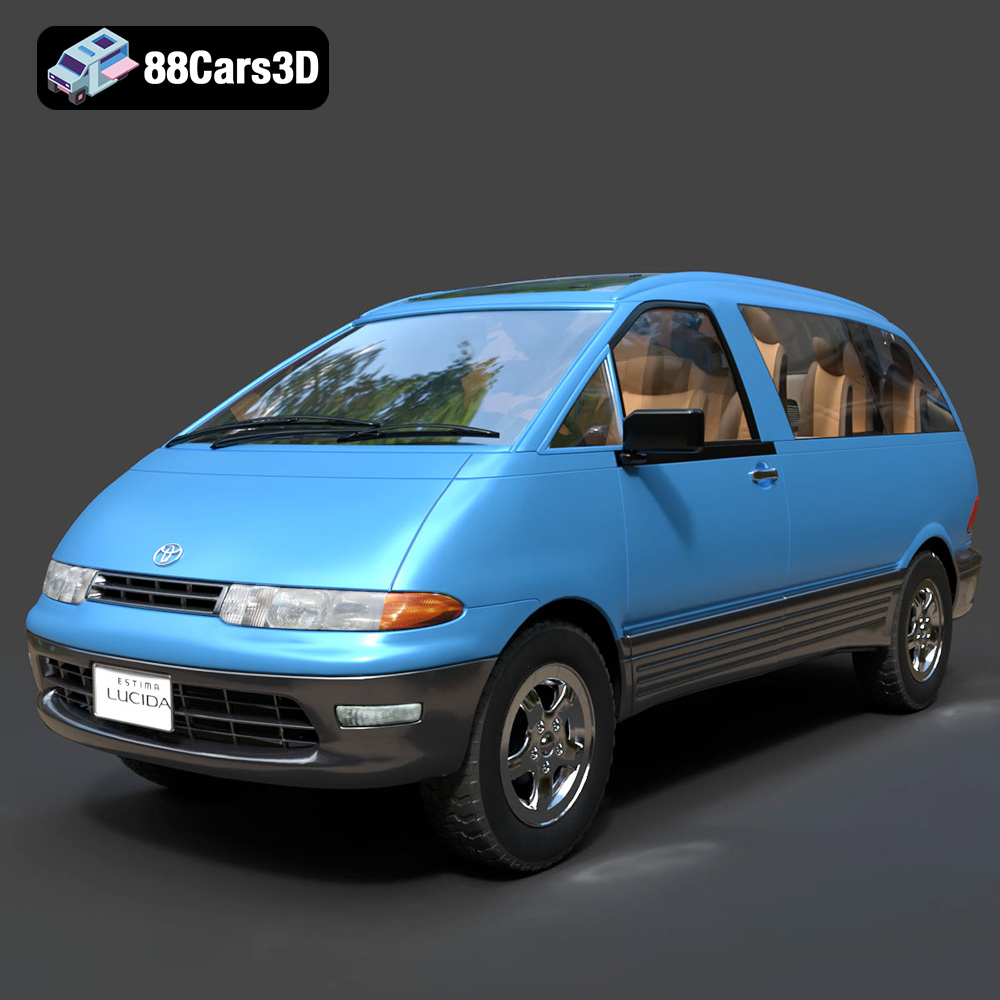
Download the Toyota Estima Lucida 3D Model featuring its iconic compact MPV design, versatile interior, and accurate exterior details. Includes .blend, .fbx, .obj, .glb, .stl, .ply, .unreal, and .max formats for rendering, simulation, and game development.
Price: $24.99

Texture: Yes
Material: Yes
Download the Toyota Alphard 3D Model featuring a detailed luxury minivan design with an accurate exterior and interior. Includes .blend, .fbx, .obj, .glb, .stl, .ply, .unreal, and .max formats for rendering, simulation, and game development.
Price: $21.99
Texture: Yes
Material: Yes
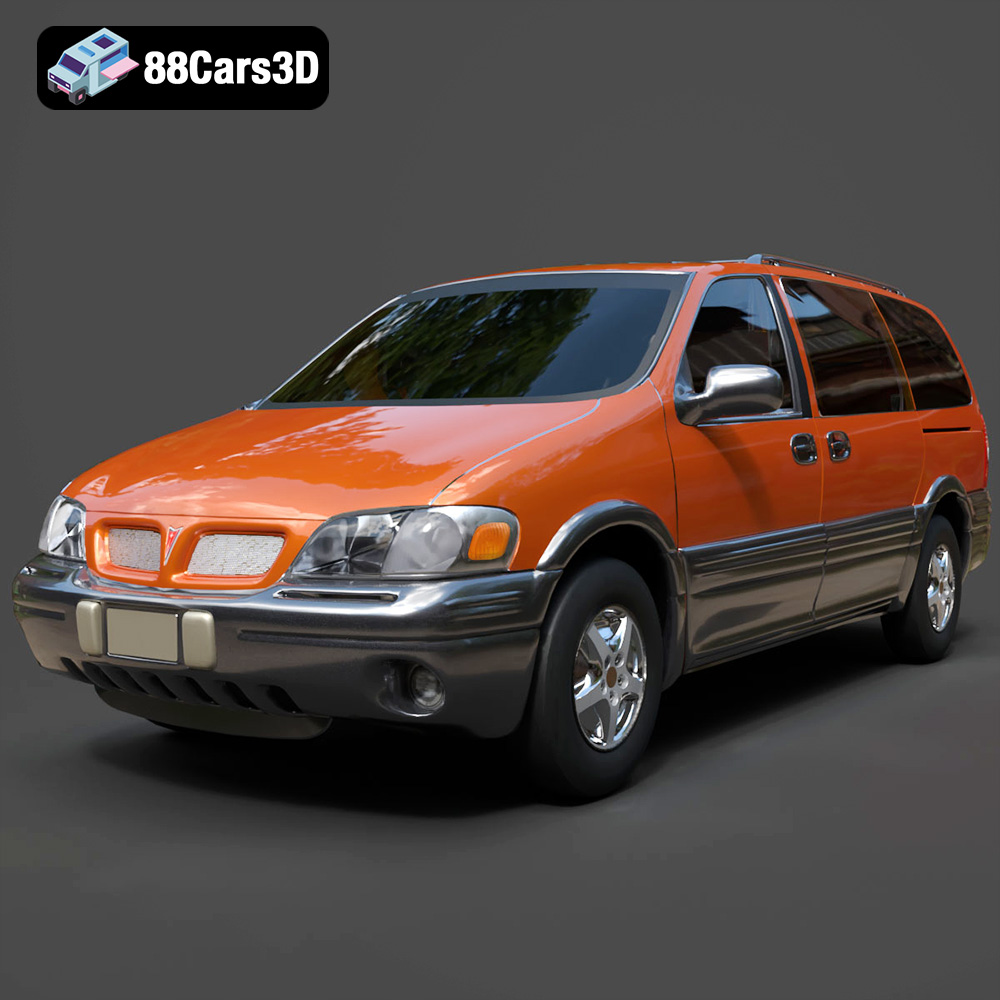
Download the Pontiac Montana 1998 3D Model featuring a detailed exterior, functional interior, and optimized mesh. Includes .blend, .fbx, .obj, .glb, .stl, .ply, .unreal, and .max formats for rendering, simulation, and game development.
Price: $21.99
Texture: Yes
Material: Yes
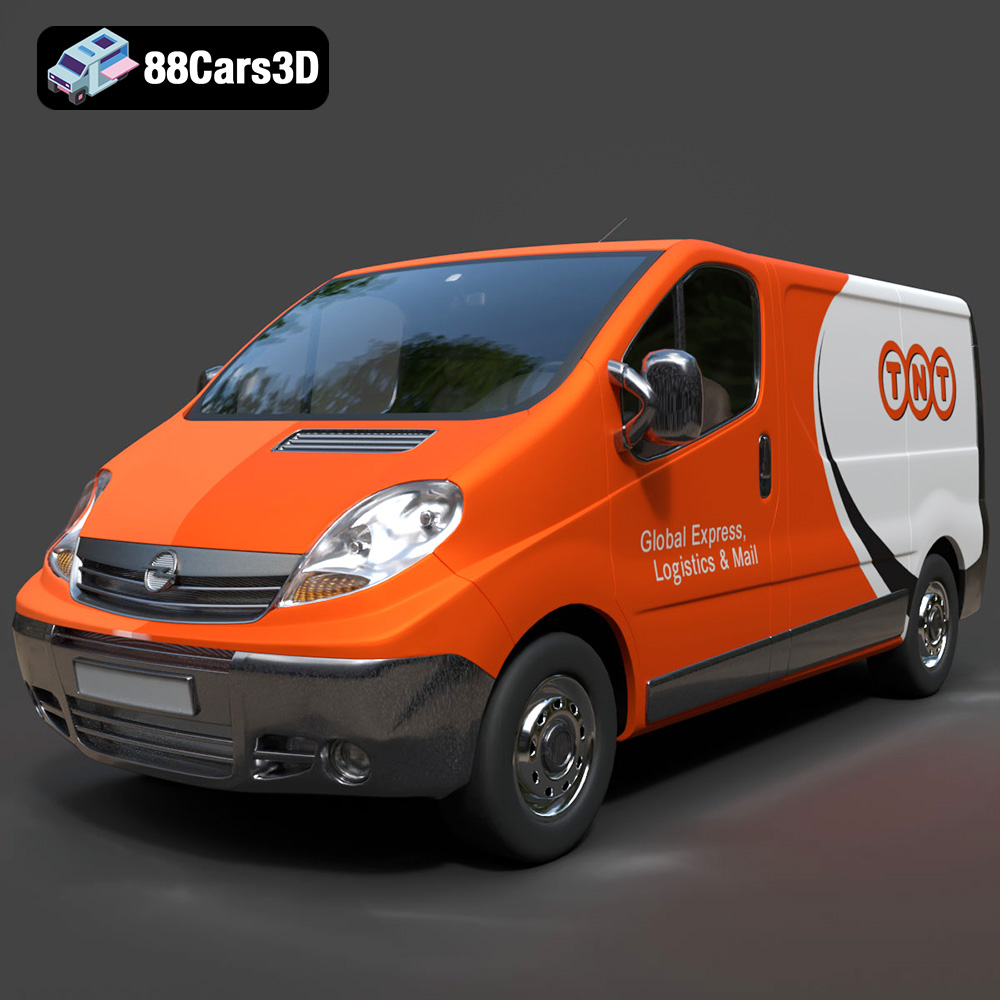
Download the Opel Vivaro 3D Model featuring a versatile commercial van design with balanced detailing. Includes .blend, .fbx, .obj, .glb, .stl, .ply, .unreal, and .max formats for rendering, simulation, and game development.
Price: $21.99
Texture: Yes
Material: Yes
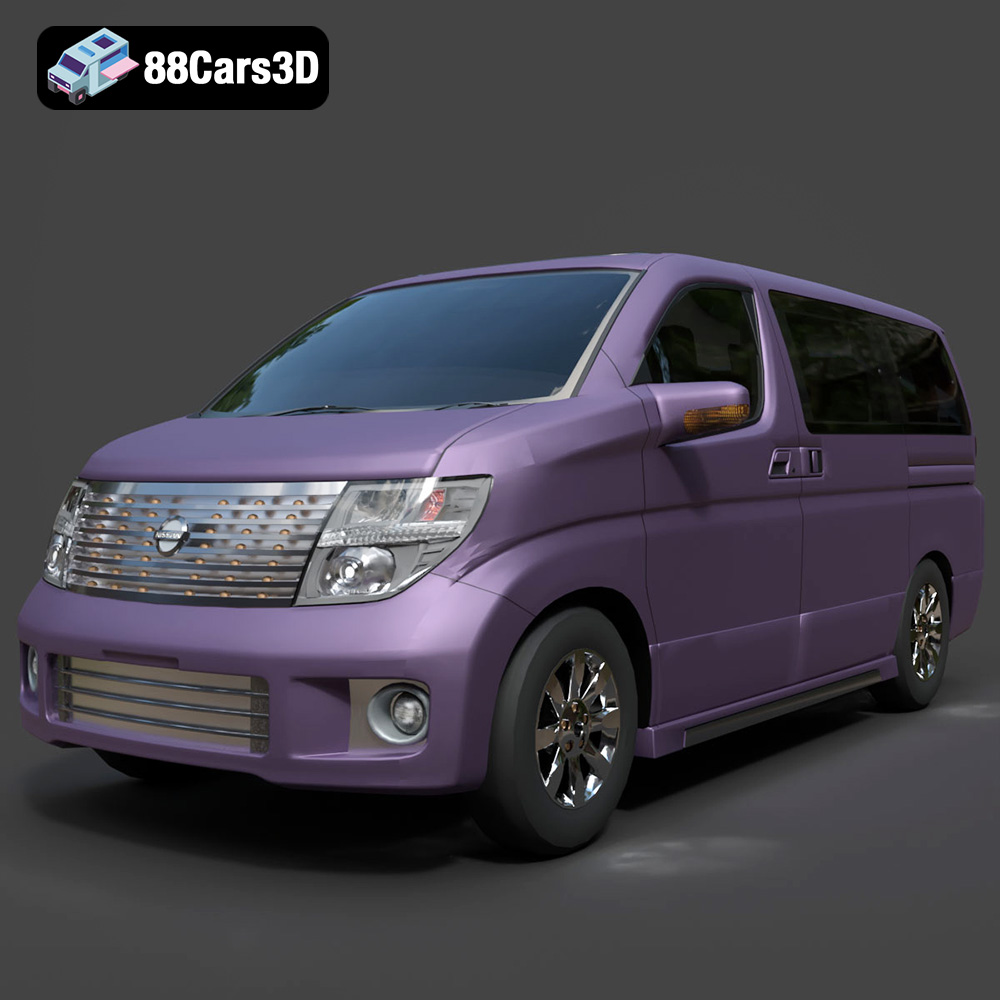
Download the Nissan Elgrand 3D Model featuring a versatile minivan design. Includes .blend, .fbx, .obj, .glb, .stl, .ply, .unreal, and .max formats for rendering, simulation, and game development.
Price: $21.99
Texture: Yes
Material: Yes
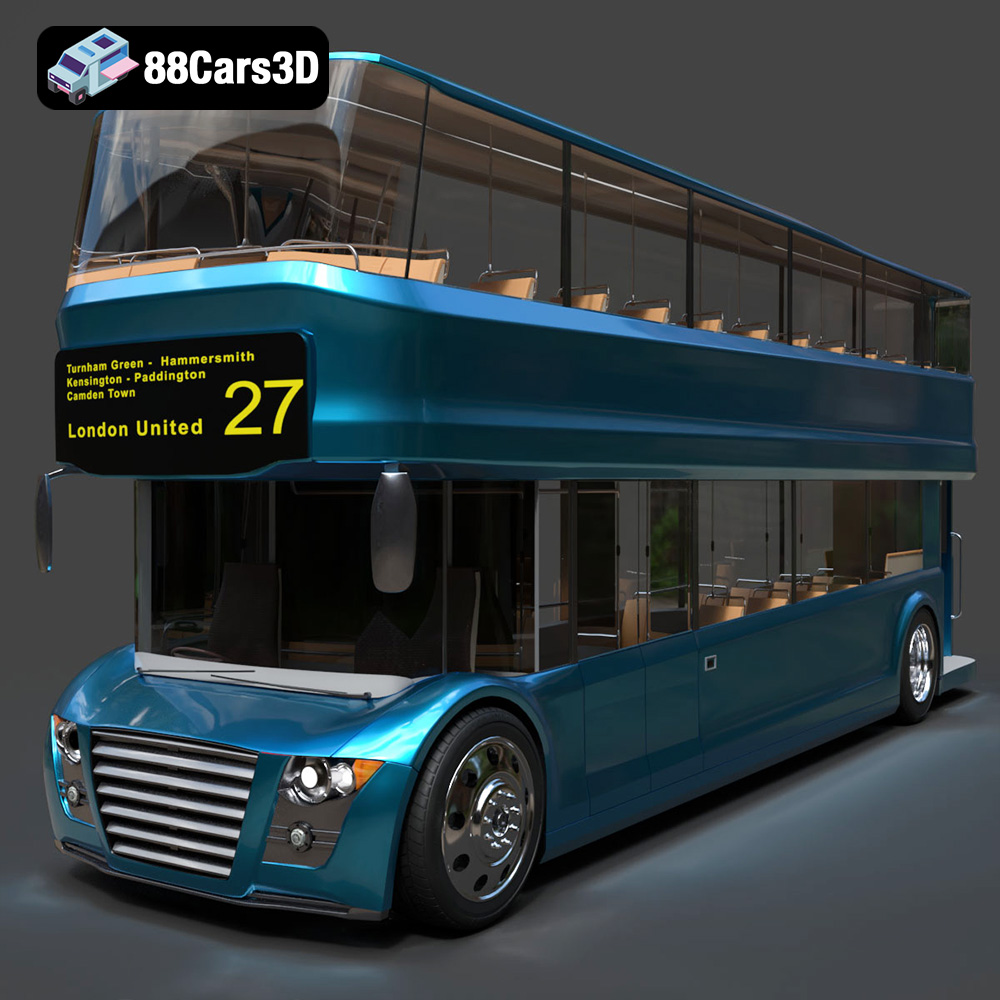
Download the New Bus For London 3D Model featuring a detailed exterior and interior, optimized for rendering and animation. Includes .blend, .fbx, .obj, .glb, .stl, .ply, .unreal, and .max formats for rendering, simulation, and game development.
Price: $21.99

