

In the world of automotive visualization and game development, the quest for photorealism is an unending journey. While real-time rendering continues to push boundaries with technologies like Lumen and Nanite, there are moments when absolute, uncompromised fidelity is paramount. This is where Path Tracing in Unreal Engine steps in, offering an offline rendering solution that delivers ground-truth global illumination, perfect reflections, and incredibly accurate light interactions. For automotive professionals, 3D artists, and game developers leveraging high-quality 3D car models, understanding and mastering Path Tracing is key to achieving stunning, studio-grade visuals that truly shine.
At 88cars3d.com, we understand the critical need for assets that can withstand the scrutiny of a path-traced render. Our models are meticulously crafted with clean topology, PBR-calibrated materials, and optimized UVs, making them ideal candidates for this demanding but rewarding rendering technique. This comprehensive guide will delve deep into Path Tracing within Unreal Engine, exploring its principles, setup, optimization, and advanced applications. Whether you’re creating breathtaking marketing stills, high-fidelity cinematics, or seeking to benchmark your real-time scenes against a photorealistic standard, mastering Path Tracing will elevate your automotive visualizations to an unparalleled level of realism.
Understanding the Power of Path Tracing in Unreal Engine
Path Tracing is a physically accurate rendering technique that simulates the journey of light rays through a scene, mimicking how light behaves in the real world. Unlike rasterization or even traditional ray tracing methods that often rely on approximations for global illumination, Path Tracing calculates light bounces and interactions with unparalleled precision. Each pixel in the final image is determined by tracing numerous light paths from the camera into the scene, accounting for direct illumination, reflections, refractions, and diffuse inter-reflections across all surfaces.
For automotive visualization, this physically based approach translates directly into superior image quality. You’ll observe incredibly soft, natural shadows, realistic light bleeding (color bleeding) from colored surfaces onto adjacent objects, and perfectly crisp reflections that capture every nuance of the environment. The complex interplay of light on polished car paint, glass, and chrome—often a challenge for real-time engines—is rendered with exquisite accuracy through Path Tracing. It’s the gold standard for visual fidelity, making it indispensable for high-end marketing materials, design reviews, and cinematic sequences where every detail counts.
What is Path Tracing and How Does it Work?
At its core, Path Tracing is an unbiased Monte Carlo integrator. This means it generates random light paths and averages their contributions to converge on a final, photorealistic image. When a camera ray hits a surface, instead of just calculating direct illumination, the Path Tracer randomly samples directions for secondary rays. These secondary rays continue to bounce around the scene—reflecting off shiny surfaces, refracting through transparent materials, and scattering off diffuse objects—until they hit a light source or reach a maximum bounce limit. By averaging the results of thousands, or even millions, of these individual light paths per pixel, the renderer converges on an accurate representation of light transport.
This method naturally handles complex lighting phenomena like global illumination, ambient occlusion, caustics (light focusing through transparent objects like car headlights or water puddles), and even subtle subsurface scattering without needing separate techniques or approximations. The computational cost, however, is significant. The more samples per pixel (SPP) you use, the less noise your image will have, but the longer it will take to render. This trade-off between render time and image quality is a fundamental aspect of working with Path Tracing.
Key Benefits for Automotive Visualization
The advantages of Path Tracing for automotive visualization are profound. Firstly, it offers **unmatched realism** for materials. Car paint, with its complex clear coat, metallic flakes, and diffuse base, is rendered with exquisite accuracy. Glass and transparent plastics exhibit correct refractions and internal reflections, essential for realistic headlights and windows. Chrome and highly reflective surfaces showcase the environment with photographic precision, making the vehicle feel truly integrated into its surroundings.
Secondly, **physically accurate lighting and shadows** are paramount. Path Tracing ensures that light bounces and attenuates realistically, producing incredibly soft, natural shadows that ground the vehicle within the scene. Color bleeding, where light picks up the color of a surface and subtly tints nearby objects, adds another layer of realism often missed by less accurate methods. This level of detail is crucial for communicating design intent and for creating marketing assets that truly capture the essence of a vehicle. For designers and marketers, Path Tracing provides the highest fidelity possible, ensuring that every curve, reflection, and material property is presented exactly as intended.
Setting Up Your Unreal Engine Project for Path Tracing
Before you can unleash the power of Path Tracing, your Unreal Engine project needs to be properly configured. This involves ensuring your engine version supports the necessary features, activating the correct plugins, and understanding the basic environment setup for optimal rendering. The quality of your input assets, such as the 3D car models you source from platforms like 88cars3d.com, plays a significant role in the final output, so proper preparation is key.
Start by creating a new project, perhaps using a Blank or Film/Television/Live Events template, as these often come with some relevant settings already configured. Once the project is open, you’ll need to dive into the project settings and ensure your hardware and software are ready to handle the demands of ray tracing and Path Tracing. This foundational setup will pave the way for a smooth and efficient rendering workflow, allowing you to focus on the artistic aspects of your automotive visualization.
Engine Configuration and Plugin Activation
To enable Path Tracing, you must first ensure your project is running on **DirectX 12 (DX12)**. Navigate to Edit > Project Settings > Platforms > Windows and change the Default RHI (Rendering Hardware Interface) to DirectX 12. After making this change, you will be prompted to restart the editor. It’s also crucial to have a modern graphics card that supports hardware-accelerated Ray Tracing (NVIDIA RTX series, AMD Radeon RX 6000 series or newer).
Next, you need to enable the necessary plugins. Go to Edit > Plugins and search for “Ray Tracing”. Ensure the **Ray Tracing** plugin is enabled. For high-quality output, you’ll also want to enable the **Movie Render Queue** plugin, which is essential for rendering cinematics and stills with Path Tracing. The **Movie Render Queue Additional Render Passes** plugin can also be helpful for exporting separate layers like normals, depth, or object IDs for compositing in post-production. After enabling these, restart the editor again to apply the changes. Finally, within your Project Settings, under the Engine > Rendering section, scroll down to the Ray Tracing category and ensure “Support Hardware Ray Tracing” is checked. This will unlock the full potential of Path Tracing within your scene.
Importing and Preparing 3D Car Models from 88cars3d.com
The foundation of any stunning automotive render is a high-quality 3D car model. When sourcing assets from marketplaces such as 88cars3d.com, you benefit from models that are already optimized for Unreal Engine. However, a few best practices during import and preparation will ensure flawless Path Tracing results. Firstly, always check the **scale** of your imported model. Automotive models should be imported at real-world scale (e.g., 1 unit = 1 centimeter) to ensure correct lighting and physics interactions. During import, ensure **"Combine Meshes"** is checked if the model is composed of many separate parts that belong together, but be mindful of breaking it down into logical components (e.g., body, wheels, interior) for easier material assignment.
Review the **UV mapping** of your model. Path Tracing is highly sensitive to texture accuracy, so clean, non-overlapping UVs are essential for PBR materials to display correctly. Models from 88cars3d.com typically come with excellent UVs, but it’s always good practice to verify. Ensure your model’s **topology** is clean and triangulated appropriately. While Nanite can handle incredibly high polygon counts, Path Tracing still benefits from well-structured geometry, especially for smooth surfaces that will catch reflections. Finally, ensure material IDs are correctly assigned during import, allowing you to easily apply different PBR materials to various parts of the car (paint, glass, tires, chrome, etc.) once inside Unreal Engine.
Mastering Materials and Lighting for Photorealism
With your project and model prepared, the next crucial step in achieving photorealistic automotive renders with Path Tracing lies in meticulously crafting your materials and orchestrating your lighting. Path Tracing’s physically accurate nature demands equally accurate inputs for materials and lighting. This is where the power of Physically Based Rendering (PBR) comes to the forefront, allowing you to define surfaces based on real-world material properties, and where sophisticated lighting setups truly make the car shine.
Every nuance of your vehicle’s surface—from the subtle metallic flakes in the paint to the refractive properties of the glass—will be faithfully reproduced. Combined with realistic lighting that mimics a studio, an outdoor environment, or a specific time of day, your 3D car model will transcend its digital origins and appear as a tangible object within the scene. Pay close attention to these details, and your Path Traced renders will possess an undeniable sense of presence and authenticity.
PBR Material Creation and Calibration
PBR materials are fundamental to Path Tracing. They accurately simulate how light interacts with surfaces based on physical properties, leading to predictable and realistic results. In the Unreal Engine Material Editor, your core PBR texture maps—**Base Color, Metallic, Specular (or not used if Metallic is 0 or 1), Roughness, and Normal Map**—are vital. For automotive paint, you’ll often use a custom material setup. A common approach involves blending a clear coat layer over a metallic base layer. The clear coat typically has low roughness and a high specular value (or metallic=0). The base metallic layer defines the car’s color and metallic properties.
Tips for Car Paint:
- **Base Color:** Use sRGB textures for color. For metallic paints, this defines the color of the paint flakes.
- **Metallic:** For true metals, use 1. For non-metals (dielectrics), use 0. Car paint is a complex blend, so the clear coat will be dielectric, while the base layer might be metallic.
- **Roughness:** Crucial for reflections. A value of 0 is perfectly smooth (mirror-like), 1 is completely rough (matte). Car paint typically has very low roughness (e.g., 0.05-0.2) for the clear coat.
- **Normal Map:** Adds surface detail without adding geometry, simulating subtle imperfections or flakes in the paint.
- **Layered Materials:** Consider using Material Layers or a custom shader to simulate the clear coat over a metallic base accurately. This allows for separate control over the roughness and metallic properties of each layer, essential for realistic car paint.
Ensure all your texture maps are correctly compressed and imported into Unreal Engine with the appropriate settings (e.g., sRGB for Base Color, Linear for Roughness/Metallic).
Advanced Lighting Techniques with Path Tracing
Lighting is the soul of any render, and Path Tracing excels at interpreting complex light setups. For automotive visualization, a combination of **High Dynamic Range Image (HDRI) maps** and traditional **physical lights (Rect Lights, Spot Lights, Point Lights)** often yields the best results. HDRIs provide an accurate representation of global illumination and reflections from a real-world environment, making the car look like it truly belongs in that scene.
Steps for HDRI Lighting:
- Import a high-quality HDRI into Unreal Engine (e.g., an .exr file).
- Place a **Sky Light** actor in your scene.
- In the Sky Light’s details panel, set its **Source Type** to “SLS Captured Scene” and then assign your HDRI texture to the **Cubemap** slot. Crucially, set the **Source Type** to “SLS Specified Cubemap” for the HDRI to be used directly.
- Enable **”Cast Ray Traced Shadows”** on the Sky Light. This will ensure your HDRI contributes to accurate soft shadows via Path Tracing.
- Adjust the **Intensity Scale** of the Sky Light to control the overall brightness of your environment.
For additional control and realism, supplement your HDRI with strategically placed physical lights. **Rect Lights** are excellent for simulating studio softboxes, creating beautiful, elongated reflections on car surfaces. Use **IES profiles** (Illuminating Engineering Society photometric files) with your Spot Lights to mimic the exact light distribution of real-world fixtures. Ensure all physical lights have “Cast Ray Traced Shadows” enabled for maximum accuracy. You can also leverage **light portals** in windows or openings when using interior scenes to guide rays more efficiently and reduce noise.
Addressing Path Tracing Specific Material Considerations
While PBR principles apply generally, Path Tracing demands particular attention to certain material properties. **Translucency and refraction** are handled with exceptional accuracy. Ensure your glass materials have the correct **IOR (Index of Refraction)** value (e.g., ~1.5 for standard glass, ~1.4 for plastic) in their material setup. The Path Tracer will accurately bend light rays as they pass through these surfaces. For realistic headlights and taillights, this is indispensable.
**Subsurface Scattering (SSS)**, although less common for exterior car parts, can be critical for interior elements like steering wheels, dashboard plastics, or even some tire compounds to give them a softer, more organic feel. While full SSS calculation can be expensive, Path Tracing supports it, allowing light to scatter beneath the surface before exiting. For metallic surfaces, especially highly polished chrome, ensure your roughness values are extremely low (close to 0) to get those sharp, mirror-like reflections. The fidelity of these complex material interactions is where Path Tracing truly differentiates itself from other rendering methods, delivering a level of detail that captures the manufacturing precision of an actual vehicle.
Optimizing for Render Quality and Performance
Path Tracing, by its nature, is computationally intensive. While it delivers unparalleled visual quality, achieving clean, noise-free renders in a reasonable timeframe requires careful optimization. This isn’t about compromising quality, but rather about efficiently guiding the renderer to produce the best possible image with the least amount of computational overhead. Understanding the relationship between samples, noise, geometry, and specific Path Tracing settings is crucial for a productive workflow.
Balancing render time with image fidelity is a constant challenge, but with the right strategies, you can significantly reduce noise and improve convergence speed without sacrificing the photorealism you’re aiming for. Leveraging modern Unreal Engine features like Nanite, even for offline renders, can also play a surprising role in managing scene complexity and optimizing render passes.
Samples Per Pixel and Denoising Strategies
The primary control over Path Tracing quality and render time is the **Samples Per Pixel (SPP)** setting. More samples equate to less noise but longer render times. For high-quality automotive renders, you might start with 256 SPP and increase as needed, often going into the thousands (e.g., 2048, 4096) for complex scenes with intricate lighting or highly refractive materials. You can find this setting in your **Post Process Volume** under the Ray Tracing section, or more robustly within the **Movie Render Queue’s Path Tracer** settings.
To mitigate noise efficiently, **denoising** is indispensable. Unreal Engine’s Movie Render Queue offers powerful denoising options, often leveraging NVIDIA’s OptiX Denoiser (if you have a compatible GPU) or Open Image Denoise.
- In Movie Render Queue, add a **Path Tracer** output to your job.
- In the Path Tracer settings, increase **Samples Per Pixel** until primary noise is reduced.
- Add a **"Denoise"** output setting. This will automatically apply a denoiser to your final image.
- For advanced compositing, you can add **"EXR"** output and then add specific **"Render Passes"** (e.g., Diffuse, Specular, Normals, Albedo, World Position) and apply denoising to these individual passes. This technique, known as AOV (Arbitrary Output Variables) denoising, gives you maximum control in post-production software like Photoshop or Nuke. It allows denoisers to work on cleaner, single-component images before combining them, often leading to superior results compared to denoising the final composite.
A well-tuned denoiser can effectively reduce noise from lower sample counts, saving significant render time while preserving detail, especially for automotive reflections and subtle material nuances.
Leveraging Nanite for High-Fidelity Geometry
While Path Tracing fundamentally works by tracing rays against the actual geometry, **Nanite** can still indirectly benefit your workflow, even for offline renders. Nanite virtualized geometry allows you to import and render incredibly high-polygon models (like detailed CAD data of a car) without traditional performance bottlenecks. For Path Tracing, this means you can work with source geometry that has an extremely high level of detail, knowing that Nanite efficiently manages the geometric complexity. Although the Path Tracer currently renders Nanite meshes as if they were standard static meshes (converting them during the render process), the ability to handle massive polycounts in your scene without editor slowdowns is a huge advantage.
This allows artists to focus on artistic quality rather than polygon budgets. For instance, a detailed car model with millions of polygons from 88cars3d.com can be ingested with Nanite enabled, preserving all its intricate details, which Path Tracing will then leverage for utterly realistic reflections and refractions. This workflow enables working with source assets that are effectively “future-proofed” for any rendering method, delivering superior visual quality for both real-time Lumen and offline Path Tracing renders.
Scene Optimization and Ray Tracing Specific Settings
Beyond samples and denoising, several Path Tracing-specific settings within Unreal Engine can dramatically impact render quality and time. These are typically found in the **Post Process Volume** under the **Ray Tracing** and **Path Tracing** categories.
- **Max Bounces:** Controls how many times a light ray can bounce around the scene. A higher value means more accurate global illumination but longer render times. For general automotive scenes, 8-12 bounces are a good starting point. For complex glass and refractive materials, you might need 16 or higher.
- **Max Translucency Bounces:** Specifically for light passing through transparent objects. Crucial for realistic car glass, headlights, and complex plastics. Higher values prevent black artifacts or incorrect absorption.
- **Samples Per Pixel (PPV):** As mentioned, this is your primary control. Set it in the Post Process Volume for interactive preview, or use Movie Render Queue for final output.
- **Filter Width:** In the Path Tracer settings (Movie Render Queue), this controls the anti-aliasing filter. A larger width can reduce aliasing but may soften details.
- **Light Portals:** For interior shots or scenes with small openings to the outside, placing Light Portals (a type of Rect Light with “Is Portal” enabled) can guide the Path Tracer to sample light more efficiently, reducing noise and improving convergence in those areas.
- **Ray Tracing Global Illumination (RTGI) & Reflection Settings:** While Path Tracing is its own renderer, it still interacts with general Ray Tracing settings. Ensure your scene doesn’t have conflicting RTGI or reflection settings enabled in the Post Process Volume if you intend to rely solely on the Path Tracer for those effects. For Path Tracing, typically only the Path Tracer needs to be enabled.
Carefully experimenting with these settings will allow you to find the sweet spot between render fidelity and computational efficiency for your specific automotive visualization project.
Cinematic Production with Movie Render Queue and Sequencer
Path Tracing is not just for static images; it’s also incredibly powerful for producing high-fidelity cinematic sequences. Combining the precise lighting and material accuracy of Path Tracing with Unreal Engine’s robust sequencing tools allows automotive artists to create dynamic, emotionally resonant animations. The Movie Render Queue is your gateway to exporting these top-tier cinematics, offering a level of control over output quality that goes far beyond simple in-editor recording.
From animating camera moves around a stunning 3D car model to orchestrating complex environmental changes, Sequencer provides the artistic control, while Path Tracing provides the visual fidelity. This combination is a staple in virtual production pipelines and high-end marketing campaigns, enabling the creation of content that rivals traditional offline renderers, but with the added benefits of an interactive real-time development environment.
The Power of Movie Render Queue for High-Quality Output
The **Movie Render Queue (MRQ)** is Unreal Engine’s professional-grade cinematic renderer, essential for any serious Path Tracing production. Unlike the legacy “Capture Movie” option, MRQ offers granular control over render settings, ensuring superior image quality and consistency.
- **Add a Level Sequence:** In your Content Browser, create a new Level Sequence. Drag your 3D car model and camera into it.
- **Open Movie Render Queue:** Go to Window > Cinematics > Movie Render Queue.
- **Add Render Job:** Click “+ Render” and select your Level Sequence.
- **Configure Settings:**
- **Output:** Set your output directory, file name, and desired resolution (e.g., 4K, 8K for print).
- **Anti-aliasing:** Crucially, select **”Temporal Sample Count”** and set a high value (e.g., 32-64, or even higher) for incredibly smooth animation. Combine this with the Path Tracer’s samples for ultimate quality.
- **Path Tracer:** Add this preset. Here you control the **Samples Per Pixel** (your main control for render quality), **Max Bounces**, **Max Translucency Bounces**, and **Filter Width**.
- **EXR (or PNG/JPG):** Choose your desired output format. For post-production flexibility, multi-layer EXRs are highly recommended. Add relevant **Render Passes** (normals, depth, albedo, etc.) for compositing.
- **Warm Up / Engine Warm Up:** Increase these values for cinematics to ensure all textures are streamed in and effects are fully initialized before rendering begins, preventing flickering or pop-in at the start of your sequence.
- **Console Variables:** For advanced users, you can add custom console variables to fine-tune specific engine settings during the render.
- **Render:** Click “Render Local” or “Render Remote” to start the process.
MRQ’s ability to render at very high resolutions, leverage temporal anti-aliasing, and output multi-channel EXRs makes it the perfect companion for Path Tracing, delivering production-ready assets for any automotive project.
Crafting Dynamic Automotive Shots with Sequencer
Sequencer is Unreal Engine’s non-linear editor for creating complex cinematic sequences. For automotive visualization, it allows you to bring your 3D car model to life with dynamic camera movements, precise animation, and artistic post-processing.
- **Camera Animation:** Use the Cine Camera Actor for realistic camera controls (focal length, aperture for depth of field, filmback). Animate its position and rotation along splines for smooth, professional camera moves.
- **Vehicle Animation:** Animate opening doors, rotating wheels, or adjusting suspension components to showcase vehicle features. Blueprint scripting can be used to set up complex vehicle animations that can then be triggered and recorded into Sequencer.
- **Lighting Changes:** Animate light intensities, colors, or even the sun’s position for dramatic time-of-day changes. Keyframe the Sky Light’s intensity or the rotation of your HDRI dome.
- **Post-Process Volumes:** Keyframe settings within a Post Process Volume to adjust exposure, color grading (using LUTs), bloom, and depth of field dynamically throughout your sequence. For Path Tracing, focus on color correction and exposure as the renderer inherently handles complex effects like global illumination.
- **Audio:** Add sound effects and music to enhance the emotional impact of your cinematic.
By meticulously crafting your shots in Sequencer, you can direct the viewer’s eye, highlight key design elements of the car, and tell a compelling visual story, all rendered with Path Tracing’s uncompromising quality.
Virtual Production and LED Wall Workflows
While Path Tracing is an offline rendering solution, its precision and quality make it a valuable tool in the virtual production pipeline, especially for LED wall workflows. Although the LED wall itself will display real-time content (often rendered with Lumen), Path Tracing can be used to generate **ground truth reference renders** for calibrating colors and lighting, or to **pre-bake extremely high-fidelity elements** that can be displayed as static backgrounds or skyboxes on the LED wall. For example, a detailed environment captured with Path Tracing could be projected onto a curved LED wall, providing a seamless background for a physical car on a stage.
Furthermore, Path Tracing can be used to **create high-resolution renders for digital backdrops** that would typically be composited behind a live-action vehicle. This workflow allows filmmakers and automotive advertisers to achieve a visual fidelity that might be challenging to render in real-time on an LED wall without compromising performance. It ensures that the digital assets, particularly the complex reflections on the vehicle, are perfectly aligned with the desired photorealistic output, making it an essential tool for achieving the highest visual standards in mixed-reality productions.
Advanced Applications and Workflow Tips
Once you’ve grasped the fundamentals of Path Tracing, you can begin to explore its more advanced capabilities and refine your workflow to tackle specific challenges and achieve even greater realism. From manipulating complex visual effects like caustics to understanding how to efficiently iterate and troubleshoot your renders, these advanced tips will empower you to push the boundaries of automotive visualization in Unreal Engine.
Path Tracing is a journey of continuous refinement, and knowing how to diagnose issues, leverage other Unreal Engine features, and integrate it seamlessly into your overall production pipeline will significantly enhance your output. Embrace experimentation and precision, and you’ll unlock the full creative potential that Path Tracing offers.
Achieving Specific Effects: Caustics, Volumetrics, and Depth of Field
Path Tracing excels at naturally simulating phenomena that are often difficult to achieve with other rendering methods.
- **Caustics:** These are light patterns formed when light rays are focused by reflective or refractive surfaces (e.g., light focused through a car’s headlight lens or a glass of water). Path Tracing inherently handles caustics; simply ensure your light sources are bright enough, your materials have accurate refraction/reflection properties, and your **Max Bounces** and **Max Translucency Bounces** are sufficiently high in the Post Process Volume to allow rays to carry this information. For example, a clear glass headlight cover will naturally create beautiful caustics on the road surface in front of it when illuminated.
- **Volumetrics:** Path Tracing supports volumetric fog, allowing for atmospheric effects like haze or god rays. Add an **Exponential Height Fog** actor to your scene and ensure “Volumetric Fog” is enabled. The Path Tracer will accurately interact with the fog, creating realistic scattering and absorption of light. This is fantastic for moody, atmospheric shots of a car in a misty environment.
- **Depth of Field (DOF):** For cinematic close-ups and artistic compositions, accurate DOF is critical. Use a **Cine Camera Actor** in Sequencer and adjust its **Focus Distance** and **Current Aperture (f-stop)**. The Path Tracer will render beautiful, physically accurate bokeh (the quality of the blur) and smooth fall-off, making your vehicle pop from the background.
These elements, when expertly controlled, add immense photographic quality to your renders, allowing for truly breathtaking automotive imagery.
Iteration and Troubleshooting Path Tracing Renders
Path Tracing can be demanding, and troubleshooting is an integral part of the workflow.
- **Noise Diagnosis:** If your render is too noisy, first increase **Samples Per Pixel**. If still noisy, check specific areas:
- **Glass/Refractives:** Increase **Max Translucency Bounces**.
- **Dark Areas/Global Illumination:** Increase **Max Bounces**.
- **Small Light Sources:** Ensure your light sources are physically plausible (size and intensity). Using **Light Portals** can help.
- **Flickering in Animation:** Increase **Temporal Sample Count** in Movie Render Queue’s Anti-aliasing settings.
- **Black Artifacts:** Often caused by insufficient **Max Bounces** or **Max Translucency Bounces**, preventing light rays from completing their path. Check material issues like inverted normals or overlapping geometry.
- **Excessive Render Times:**
- Reduce complex geometry not in camera view (cull using culling distances or hidden actors).
- Optimize texture resolutions where detail isn’t critical.
- Lower **Max Bounces** if possible without sacrificing quality.
- Utilize **Denoising** effectively to get away with lower SPP.
- Ensure your GPU drivers are up to date.
- **Material Discrepancies:** If a material looks different in Path Tracing than in real-time Lumen, double-check your PBR values. Path Tracing is less forgiving of non-physical material setups. The official Unreal Engine documentation (dev.epicgames.com/community/unreal-engine/learning) has excellent resources on PBR guidelines.
Regularly perform small test renders of critical areas before committing to a final, long render. This iterative approach saves valuable time and helps pinpoint issues early.
Leveraging Blueprint for Parametric Variations
While Path Tracing is an offline render process, Blueprint visual scripting can significantly enhance your workflow by enabling parametric variations and scene automation *before* the render. Imagine needing to render your 3D car model in ten different colors, with five different rim options, and three interior trims. Manually changing these would be tedious and error-prone.
With Blueprint, you can:
- **Create a Car Configurator:** Even for stills, a simple Blueprint can expose parameters to change the car paint material, swap out wheel meshes, or change interior fabrics. This allows you to quickly set up hundreds of variations, then use Sequencer and Movie Render Queue to batch render them.
- **Automate Scene Setup:** Blueprint can be used to spawn different environment props, adjust light positions based on a “time of day” variable, or cycle through different HDRI maps.
- **Trigger Cinematic Events:** While Sequencer handles the timeline, Blueprint can trigger dynamic events within that timeline, like activating specific animations on the car or turning on/off lights based on a cinematic cue.
This integration of Blueprint adds a layer of intelligence and efficiency to your Path Tracing workflow, allowing you to generate a vast array of high-quality automotive visualizations with minimal manual effort, perfect for rapid prototyping or extensive marketing campaigns.
Conclusion
Path Tracing in Unreal Engine represents the pinnacle of offline rendering quality for automotive visualization. It offers an unparalleled level of photorealism, accurately simulating light physics to produce breathtaking images and cinematics that capture every intricate detail of a vehicle. From the complex interactions of car paint to the subtle refractions through glass, Path Tracing provides the fidelity demanded by design reviews, high-end marketing, and virtual production.
Mastering this powerful technique involves a deep understanding of PBR materials, strategic lighting setups, and efficient optimization strategies for render quality and performance. By leveraging features like the Movie Render Queue for robust output and integrating high-quality 3D car models from trusted sources like 88cars3d.com, artists and developers can unlock the full potential of Unreal Engine for stunning automotive content. The journey into Path Tracing is a commitment to excellence, but the resulting visual quality speaks for itself, solidifying Unreal Engine’s position as a powerhouse for both real-time innovation and offline rendering mastery.
Featured 3D Car Models
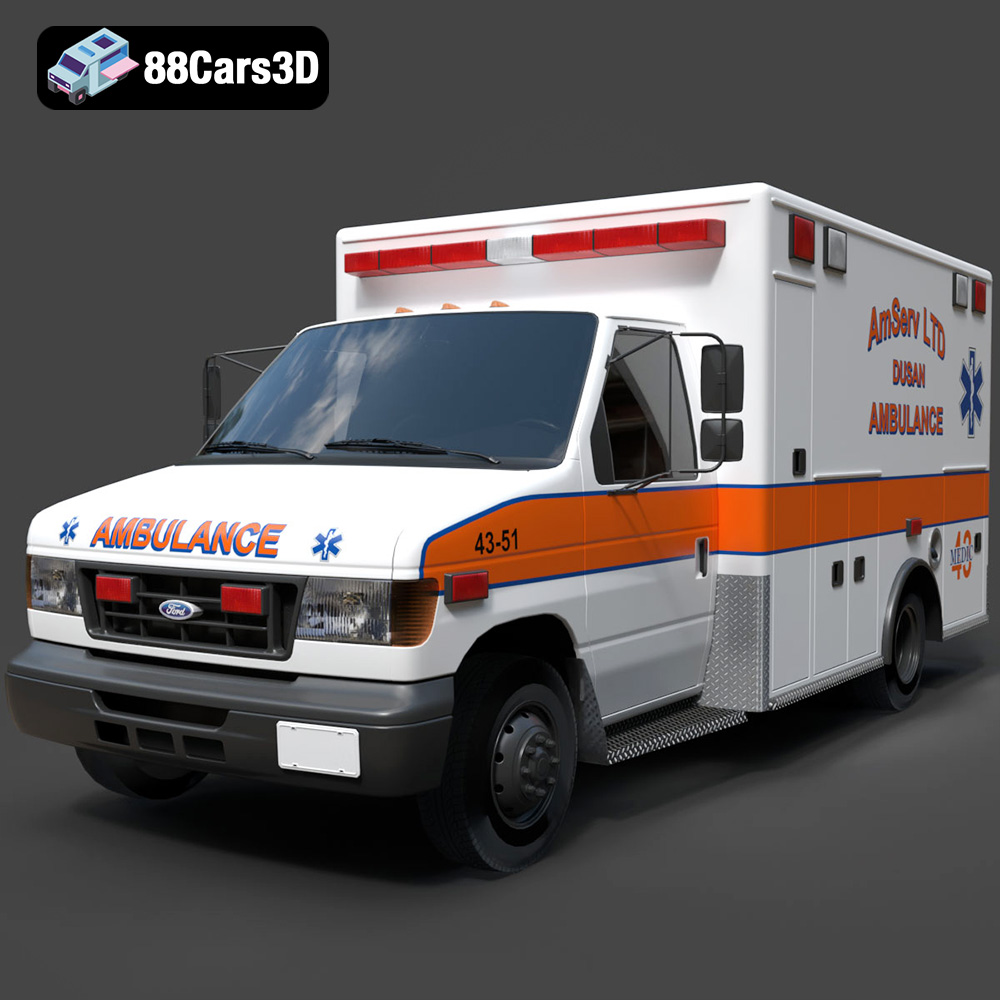
Ford Ambulance AmServ LTD Dusan-002 3D Model
Texture: Yes
Material: Yes
Download the Ford Ambulance AmServ LTD Dusan-002 3D Model featuring a high-detail exterior and interior, realistic textures, and emergency lighting. Includes .blend, .fbx, .obj, .glb, .stl, .ply, .unreal, and .max formats for rendering, simulation, and game development.
Price: $19.99
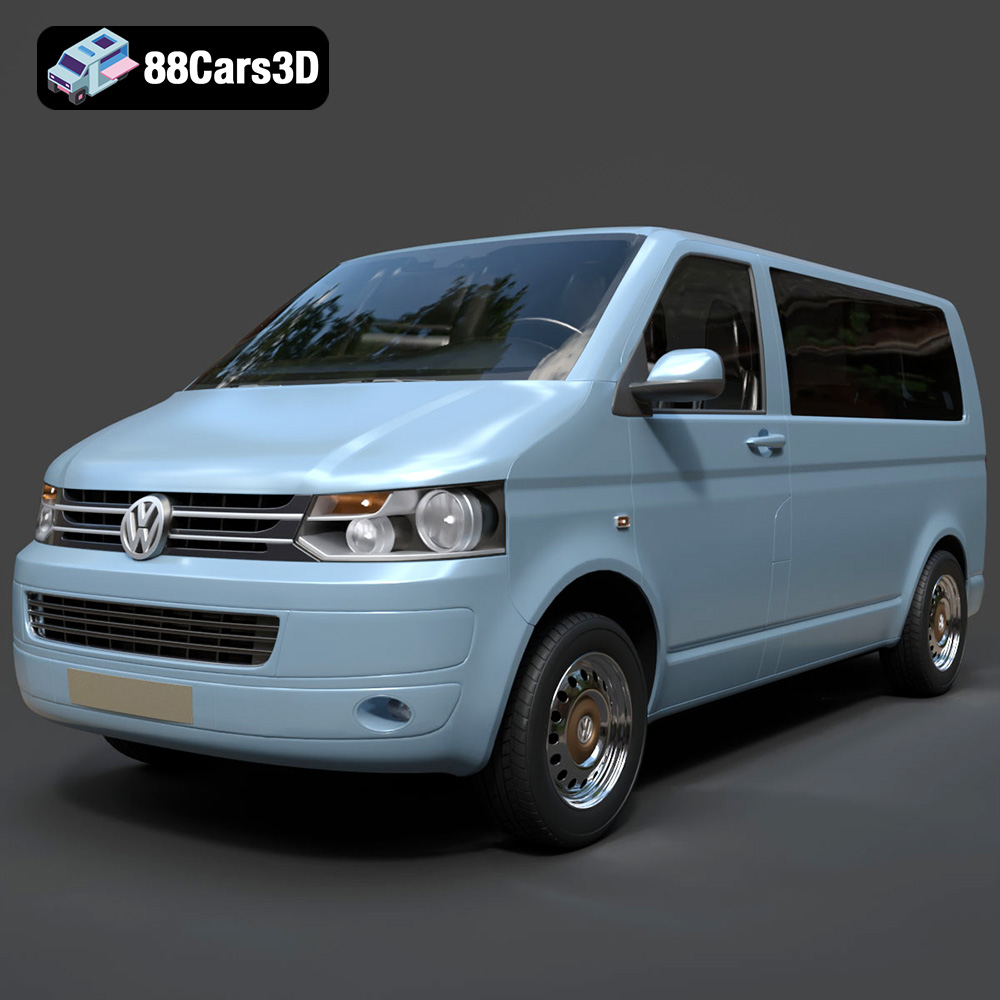
Volkswagen Transporter T5 FL 2010 3D Model
Texture: Yes
Material: Yes
Download the Volkswagen Transporter T5 FL 2010 3D Model featuring clean geometry, realistic detailing, and a fully modeled interior. Includes .blend, .fbx, .obj, .glb, .stl, .ply, .unreal, and .max formats for rendering, simulation, and game development.
Price: $22.99
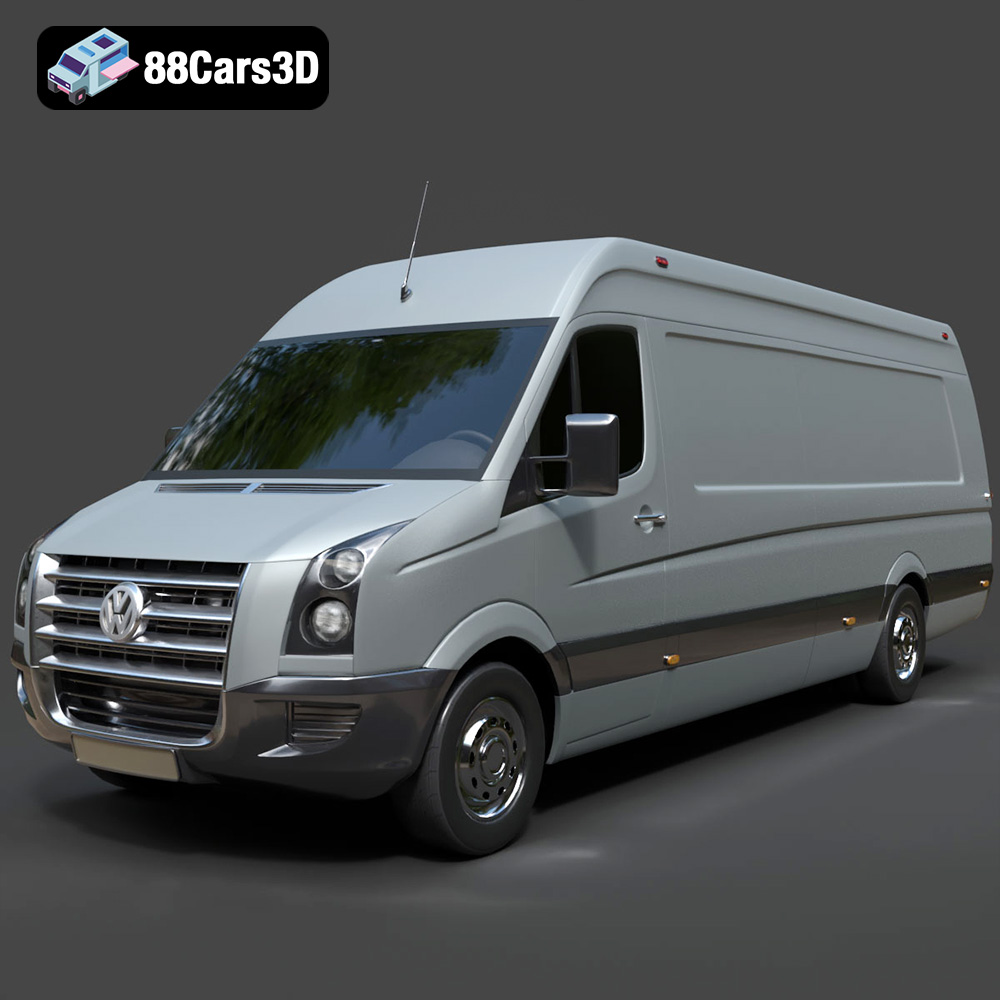
Volkswagen Crafter 2020 3D Model
Texture: Yes
Material: Yes
Download the Volkswagen Crafter 2020 3D Model featuring clean geometry, realistic detailing, and a fully modeled interior. Includes .blend, .fbx, .obj, .glb, .stl, .ply, .unreal, and .max formats for rendering, simulation, and game development.
Price: $22.99
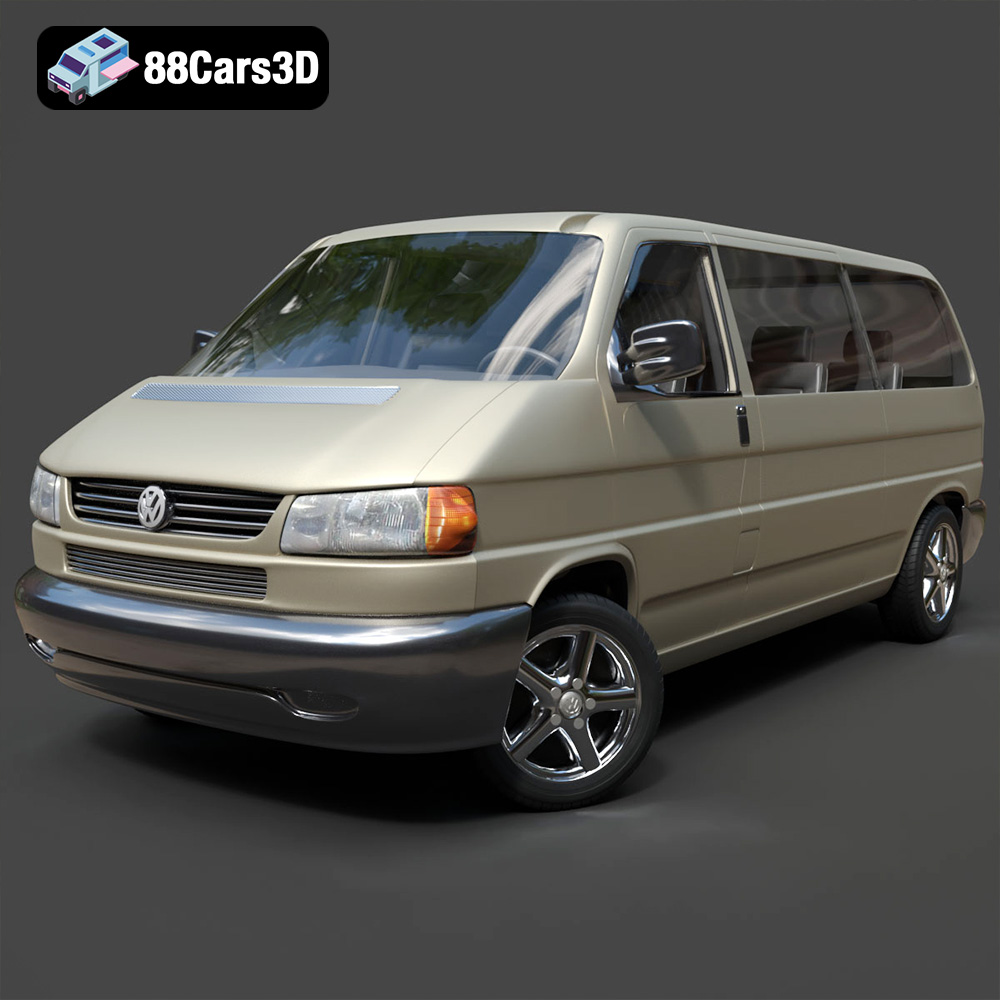
Volkswagen Caravelle 2020 3D Model
Texture: Yes
Material: Yes
Download the Volkswagen Caravelle 3D Model featuring a detailed exterior, functional interior, and optimized topology. Includes .blend, .fbx, .obj, .glb, .stl, .ply, .unreal, and .max formats for rendering, simulation, and game development.
Price: $23.99
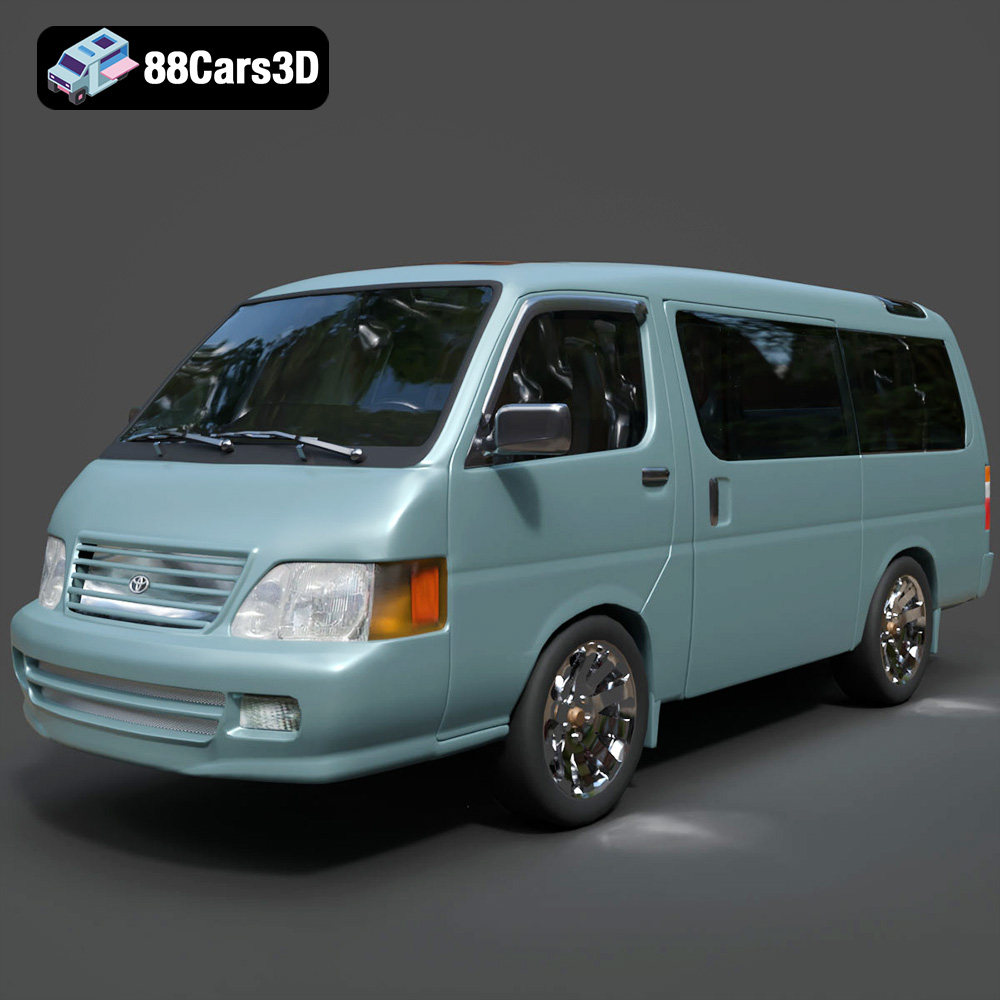
Toyota Hiace 3D Model
Texture: Yes
Material: Yes
Download the Toyota Hiace 3D Model featuring versatile design and detailed exterior. Includes .blend, .fbx, .obj, .glb, .stl, .ply, .unreal, and .max formats for rendering, simulation, and game development.
Price: $21.99
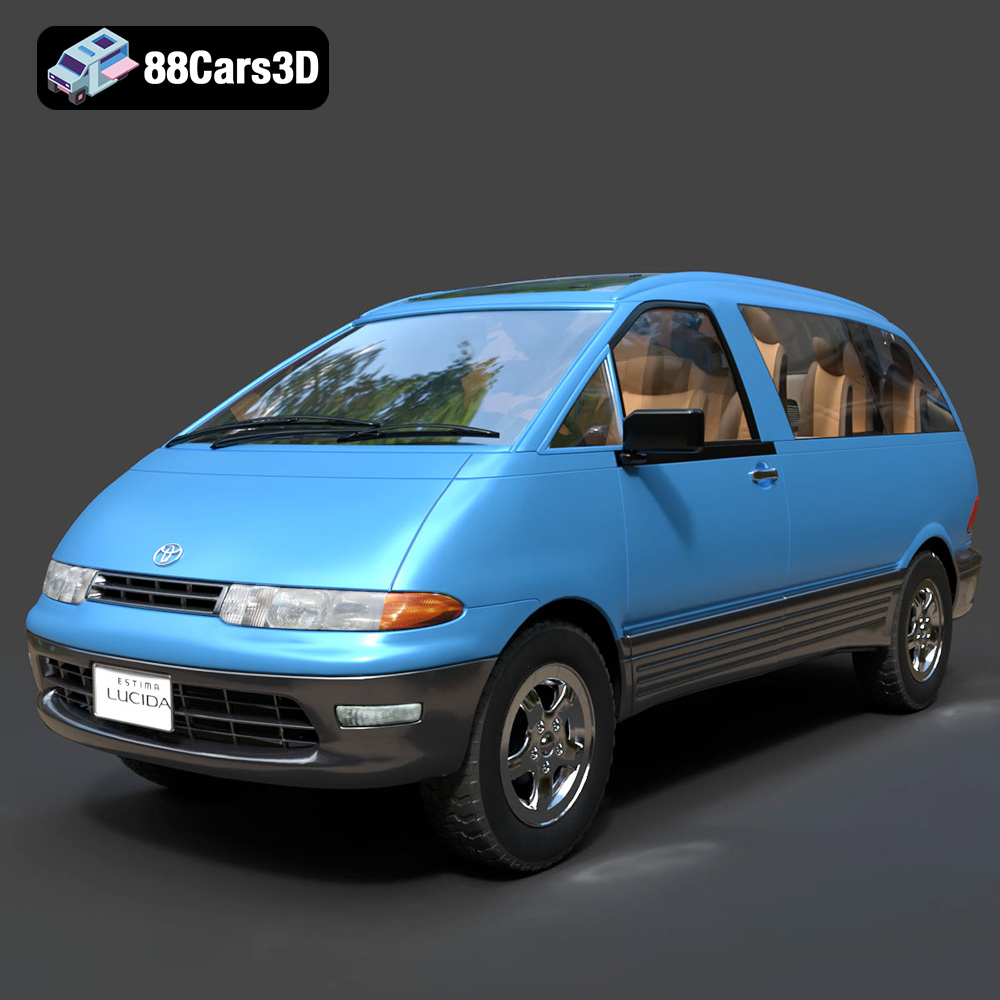
Toyota Estima Lucida 3D Model
Texture: Yes
Material: Yes
Download the Toyota Estima Lucida 3D Model featuring its iconic compact MPV design, versatile interior, and accurate exterior details. Includes .blend, .fbx, .obj, .glb, .stl, .ply, .unreal, and .max formats for rendering, simulation, and game development.
Price: $24.99

Toyota Alphard 3D Model
Texture: Yes
Material: Yes
Download the Toyota Alphard 3D Model featuring a detailed luxury minivan design with an accurate exterior and interior. Includes .blend, .fbx, .obj, .glb, .stl, .ply, .unreal, and .max formats for rendering, simulation, and game development.
Price: $21.99
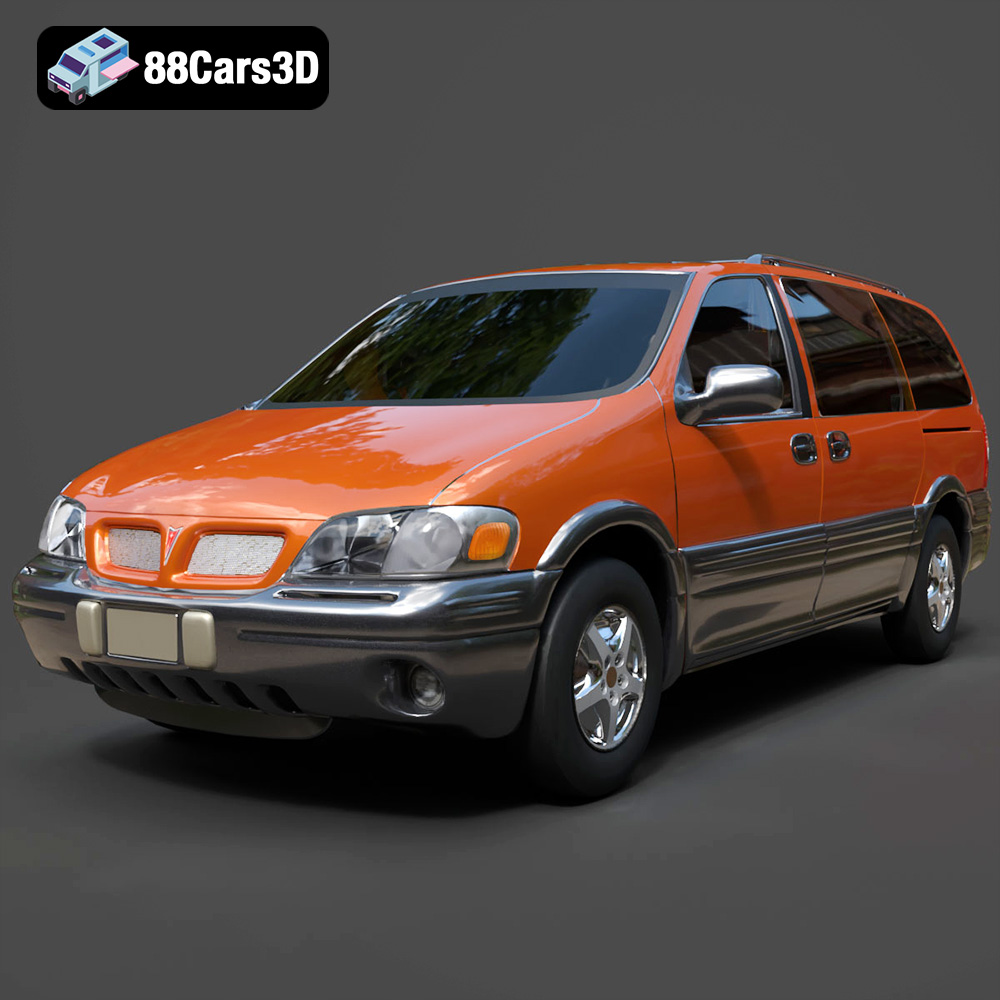
Pontiac Montana 1998 3D Model
Texture: Yes
Material: Yes
Download the Pontiac Montana 1998 3D Model featuring a detailed exterior, functional interior, and optimized mesh. Includes .blend, .fbx, .obj, .glb, .stl, .ply, .unreal, and .max formats for rendering, simulation, and game development.
Price: $21.99
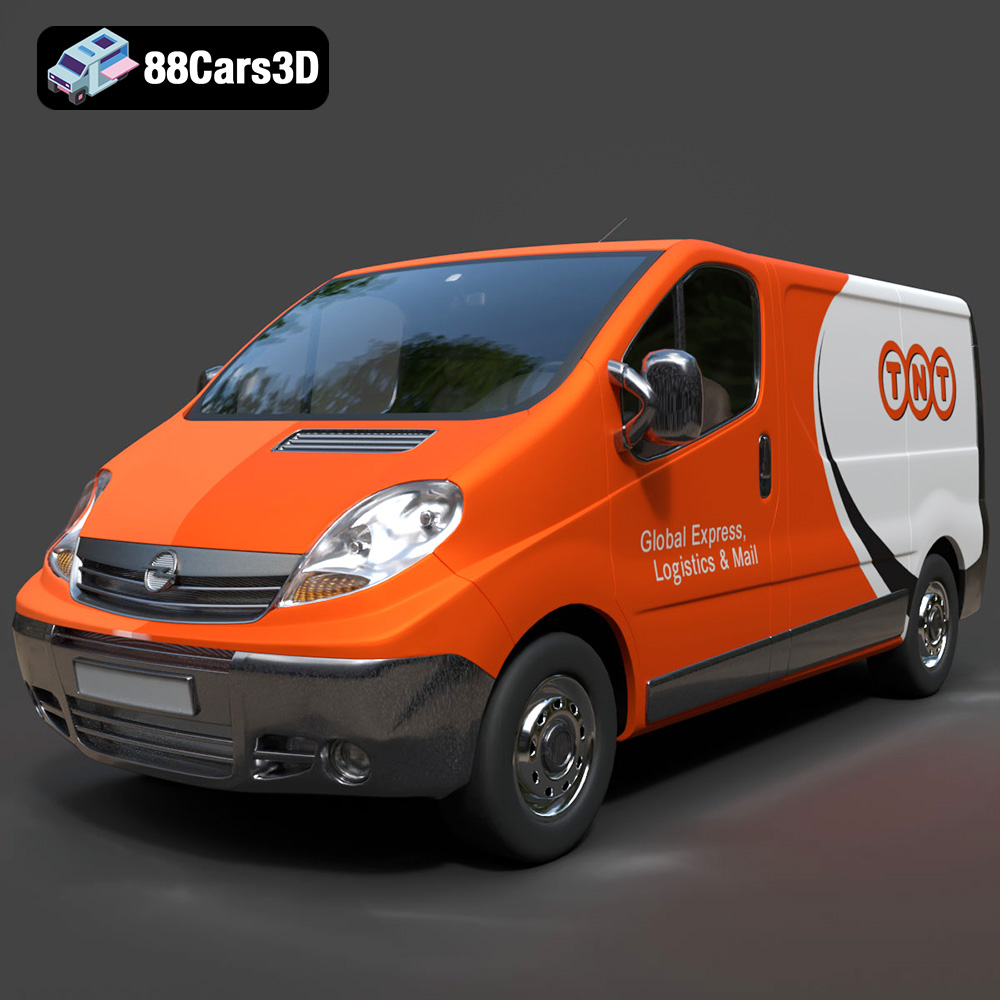
Opel Vivaro 3D Model
Texture: Yes
Material: Yes
Download the Opel Vivaro 3D Model featuring a versatile commercial van design with balanced detailing. Includes .blend, .fbx, .obj, .glb, .stl, .ply, .unreal, and .max formats for rendering, simulation, and game development.
Price: $21.99
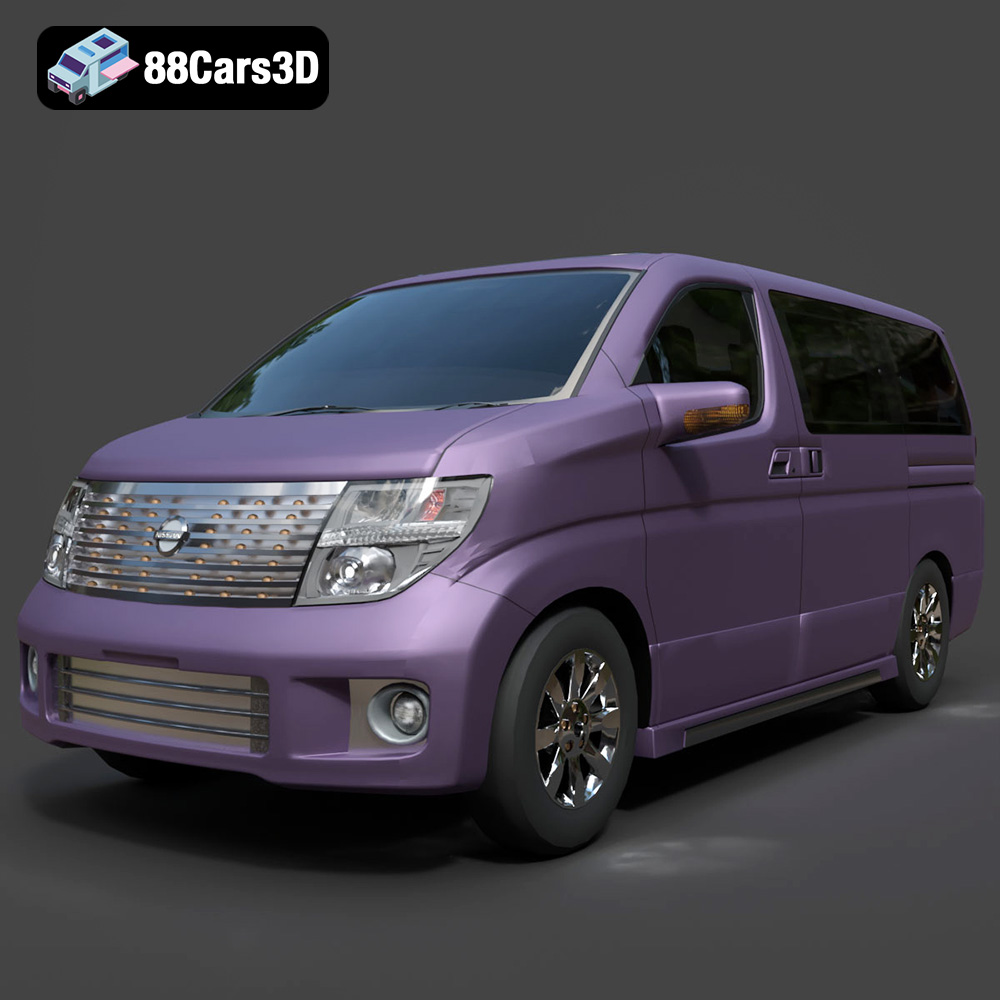
Nissan Elgrand 3D Model
Texture: Yes
Material: Yes
Download the Nissan Elgrand 3D Model featuring a versatile minivan design. Includes .blend, .fbx, .obj, .glb, .stl, .ply, .unreal, and .max formats for rendering, simulation, and game development.
Price: $21.99
