

Mastering Automotive Visualization: A Deep Dive into High-Fidelity 3D Models like the Yamaha FZ8 2011
In the fast-evolving landscape of 3D visualization, the demand for exceptionally detailed and technically robust 3D models is greater than ever. From cinematic renders that blur the line between virtual and reality, to immersive game environments and precise engineering simulations, the quality of your foundational assets dictates the success of your project. For professionals working in automotive design, game development, advertising, or AR/VR, having access to pre-engineered, high-fidelity models can be a game-changer, dramatically accelerating workflows and elevating visual standards.
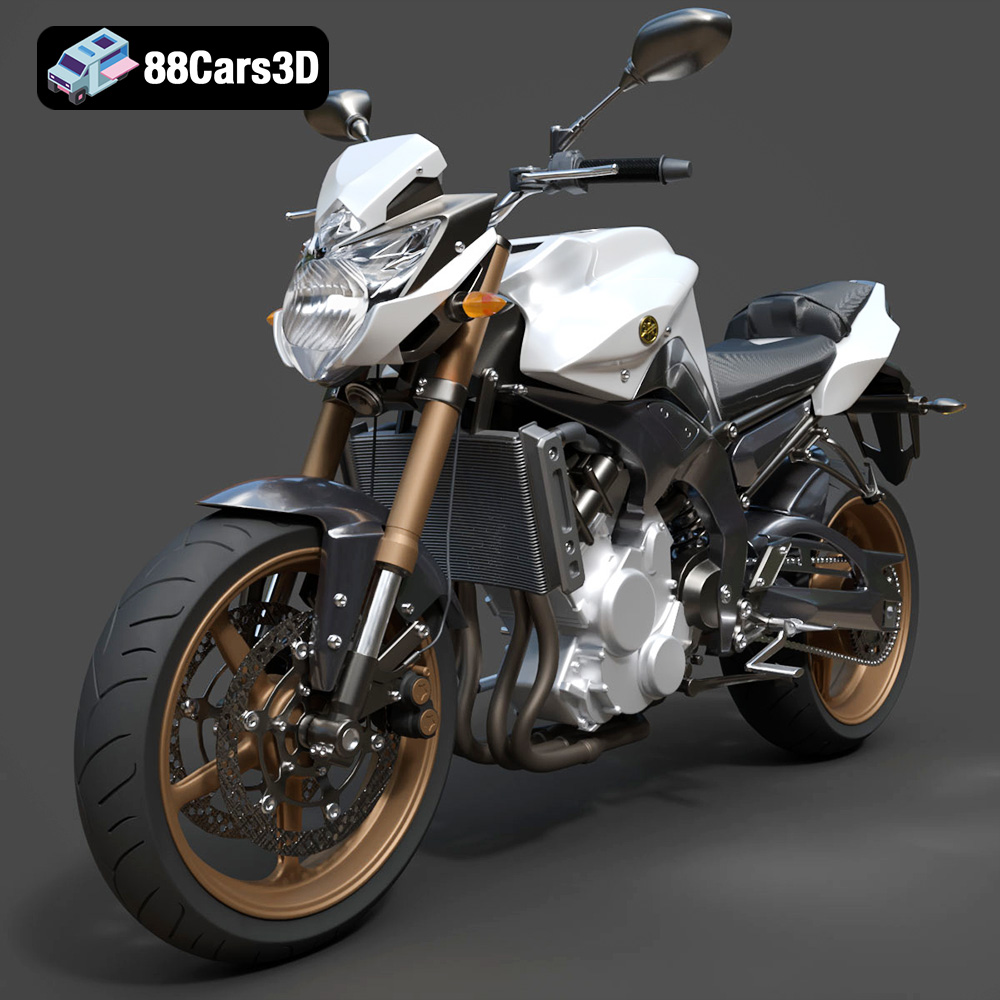
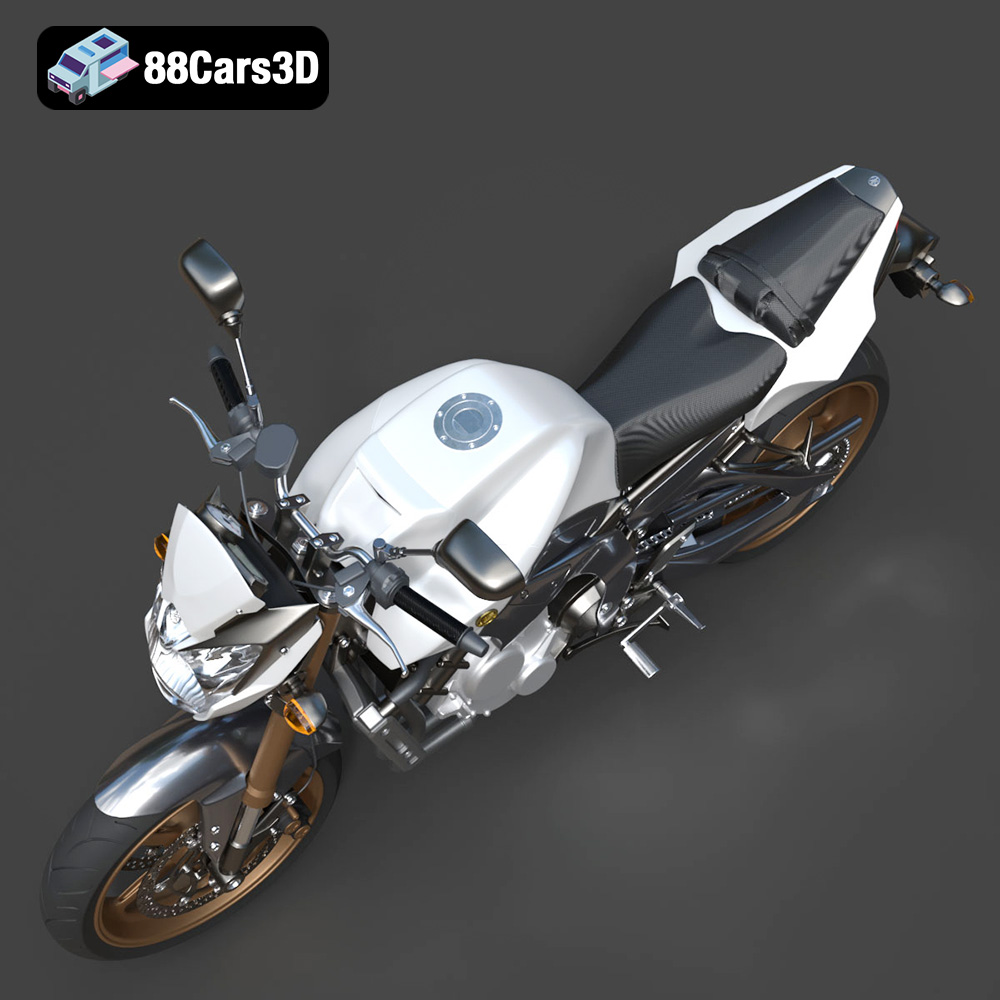
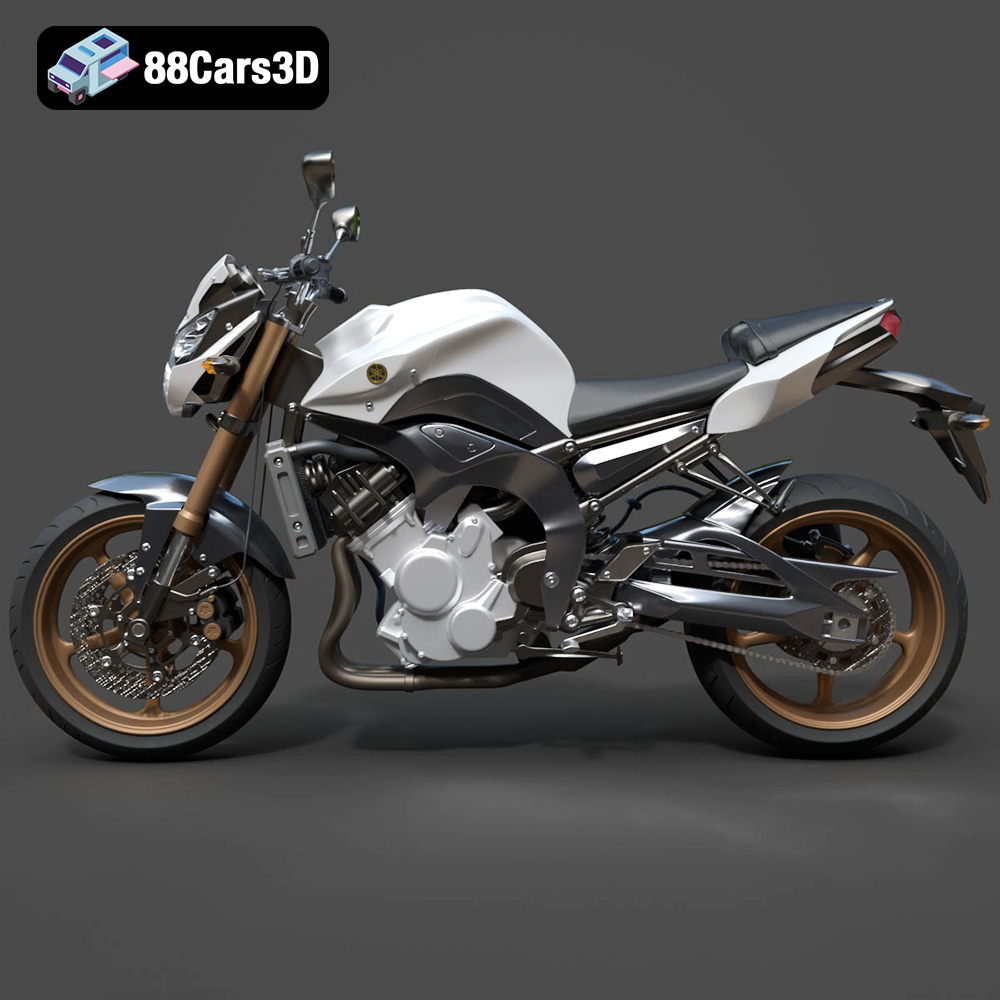
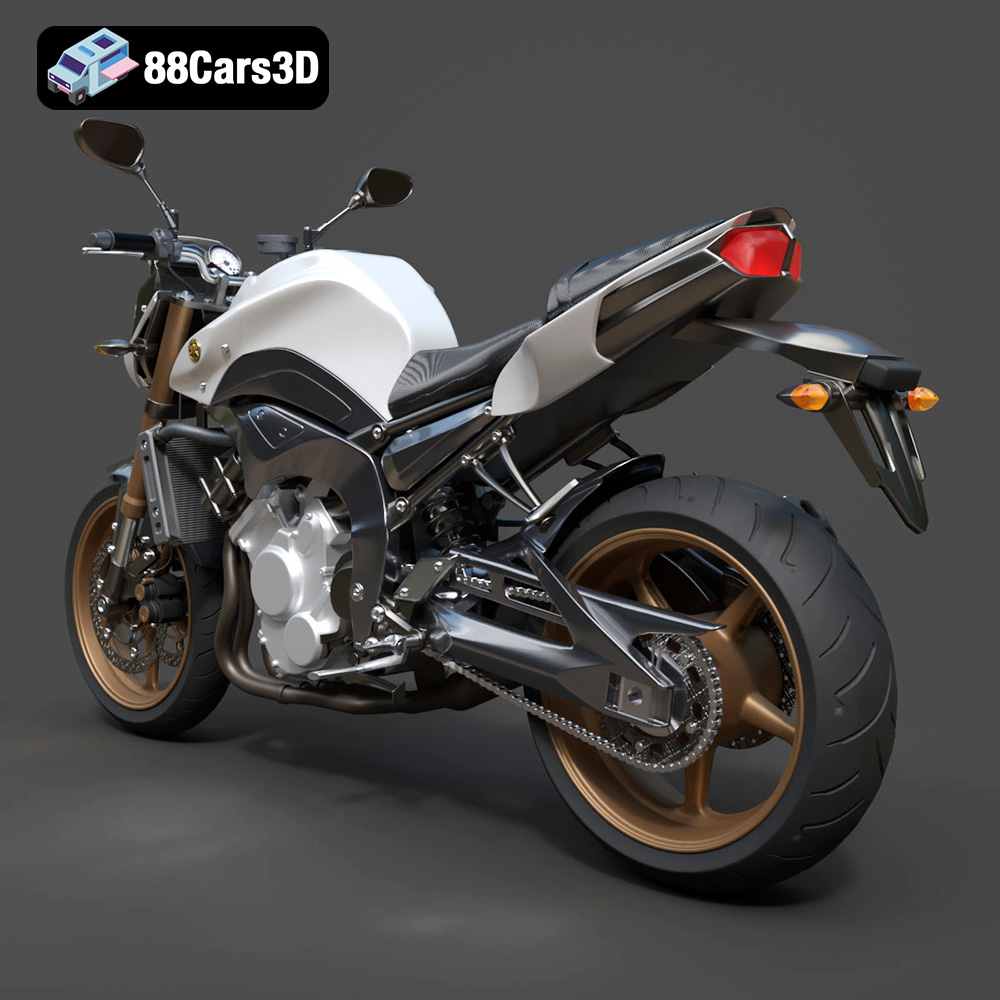
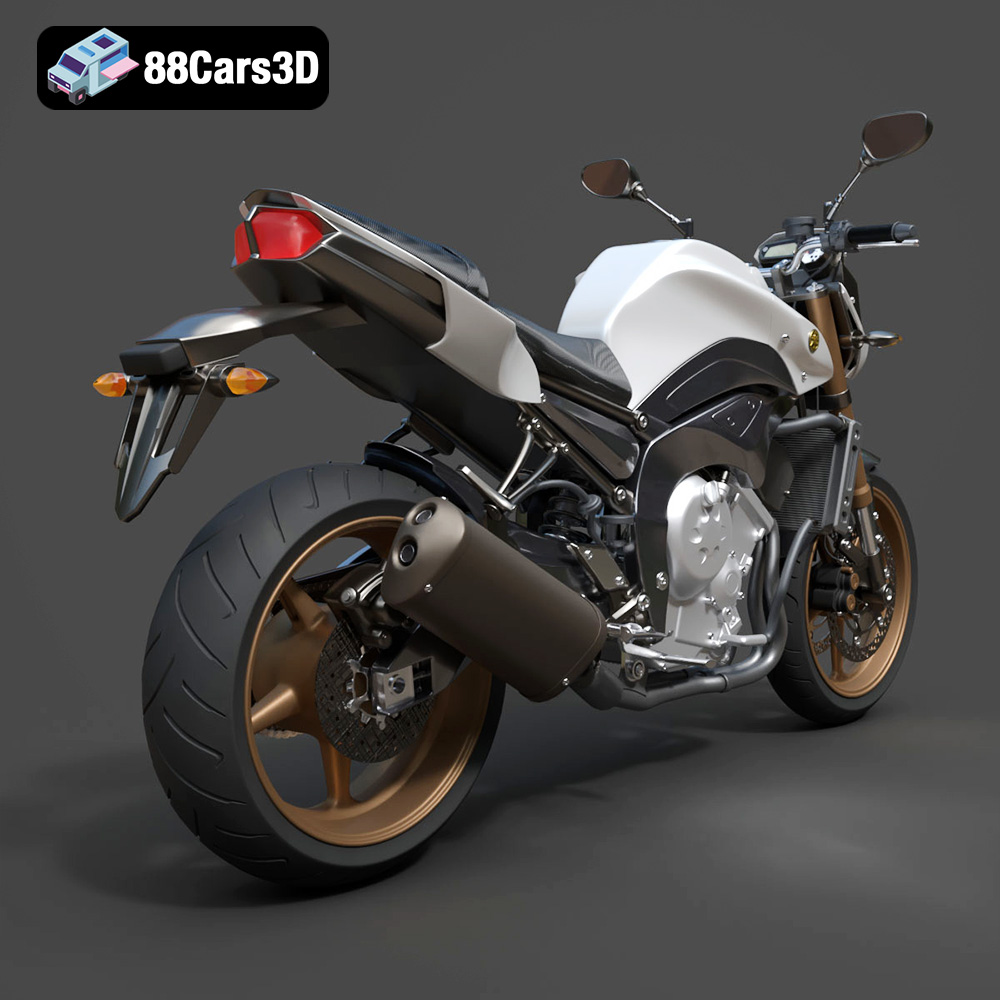
Today, we’re taking a closer look at what makes a premium 3D vehicle asset truly stand out, using the Yamaha FZ8 2011 3D Model as a prime example. This meticulously crafted digital representation of the iconic naked sports bike encapsulates the raw power and distinctive styling of its real-world counterpart. Developed with optimized, clean geometry, logical mesh subdivision, and realistic material setups, it’s a testament to the precision required for demanding visualization tasks. Whether your goal is to create stunning automotive rendering scenes, develop cutting-edge game assets, or build compelling interactive experiences, understanding the technical underpinnings of such models is paramount.
Understanding 3D Model File Formats: The Backbone of Digital Assets
The versatility of a 3D model often hinges on its compatibility across various software and platforms. When acquiring a premium asset like the Yamaha FZ8 2011 3D Model, understanding the included file formats is crucial for seamless integration into your specific workflow. Each format serves a distinct purpose, optimized for different stages of the 3D pipeline, from initial modeling and animation to real-time rendering and physical production.
.blend – The Native Blender Ecosystem
The .blend file format represents a fully editable Blender scene. It’s a comprehensive package that often includes the entire scene setup: the 3D model itself, along with materials, textures, lighting, camera settings, and even animations. For Blender users, this is the most flexible format, offering complete control over every aspect of the asset. The Yamaha FZ8 2011 .blend file, for instance, provides a ready-to-render setup, allowing artists to dive directly into customization or scene integration without losing any detail or setup fidelity.
.fbx – The Industry Standard for Interoperability
Autodesk’s .fbx (Filmbox) format is arguably the most widely adopted interchange format in the 3D industry. It excels at transferring 3D model data, including geometry, materials, textures, animations, and even rigging information, between different software applications like 3ds Max, Maya, Blender, and game engines like Unreal Engine and Unity. Its strength lies in its robust support for animation and its ability to maintain scene hierarchy, making it ideal for game asset pipelines and complex animated sequences. The .fbx version of the Yamaha FZ8 2011 3D Model is optimized for these real-time environments, ensuring efficient performance.
.obj – Universal Compatibility and Simplicity
The .obj (Wavefront Object) format is a universal standard, known for its widespread compatibility across virtually all 3D software. It primarily stores geometry (vertices, normals, texture coordinates, and faces) and can reference external .mtl (material) files for basic material properties. While it doesn’t support advanced features like animation or rigging, its simplicity and ubiquitous support make it an excellent choice for cross-software transfers when you only need the raw mesh data. For the Yamaha FZ8 2011, the .obj file provides a clean, reliable mesh for any application.
.glb – Optimized for AR, VR, and Web
.glb (GL Transmission Format Binary) is an increasingly important format, especially for AR, VR, and web-based 3D applications. It’s a binary container format that bundles geometry, materials, textures, and animations into a single, self-contained file. This makes it highly efficient for transmission and loading in browsers or mobile AR/VR viewers. The Yamaha FZ8 2011 .glb file is pre-optimized for lightweight display, crucial for interactive experiences where performance is paramount.
.stl – The Gateway to 3D Printing
The .stl (Stereolithography) format is the de facto standard for 3D printing. It represents a 3D model as a series of connected triangles, describing only the surface geometry without color, texture, or material information. While simple, its universal acceptance in additive manufacturing makes it essential for physical prototyping. The Yamaha FZ8 2011 .stl file enables users to accurately 3D print the model, whether for scale prototypes or intricate display pieces.
.ply – Precision Mesh for CAD and Analysis
.ply (Polygon File Format) is another format for storing 3D data, often used for scanned data or precise mesh representations. It can store not only geometry but also properties like color, transparency, normals, and texture coordinates for each vertex or face. It’s particularly useful in scientific visualization, CAD, and applications requiring high precision mesh data for analysis. The .ply version of the Yamaha FZ8 2011 offers a detailed polygon mesh suitable for advanced visualization or reverse engineering tasks.
.unreal – Engine-Ready for Unreal Engine
The .unreal format, or more accurately, assets that are “Unreal Engine-ready,” refers to models specifically prepared for direct import and optimal performance within Unreal Engine. This typically means the model has been exported from a DCC application (like 3ds Max or Blender) as an .fbx, but with specific naming conventions, scale, pivot points, and material setups pre-configured to align with Unreal Engine’s PBR workflow and asset pipeline. The inclusion of an .unreal variant for the Yamaha FZ8 2011 signifies a streamlined process for game developers, saving significant time on asset preparation and material setup.
.max – The Professional’s 3ds Max Project File
The .max file is the native project file format for Autodesk 3ds Max, a leading software for 3D modeling, animation, and rendering. It contains all scene data, including geometry, materials, textures, lighting, cameras, animations, and modifiers. For professionals working in architectural visualization, automotive design, or high-end product rendering, the .max file of the Yamaha FZ8 2011 offers the most comprehensive and editable starting point, allowing for complex animation, advanced rendering setups with V-Ray or Corona, and full customization of every component.
The comprehensive range of formats included with the Yamaha FZ8 2011 3D Model highlights its adaptability, ensuring that whether you’re working in game development, film production, or 3D printing, you have the right tools for the job.
The Art and Science of High-Fidelity 3D Vehicle Models
Creating a 3D model like the Yamaha FZ8 2011 isn’t merely about replicating its form; it’s about capturing its essence with technical precision. High-fidelity 3D models are the cornerstone of impactful visualizations, demanding a blend of artistic skill and engineering accuracy. Such models must stand up to intense scrutiny, whether viewed in a static render or animated in a real-time simulation.
Precision in Design and Geometry
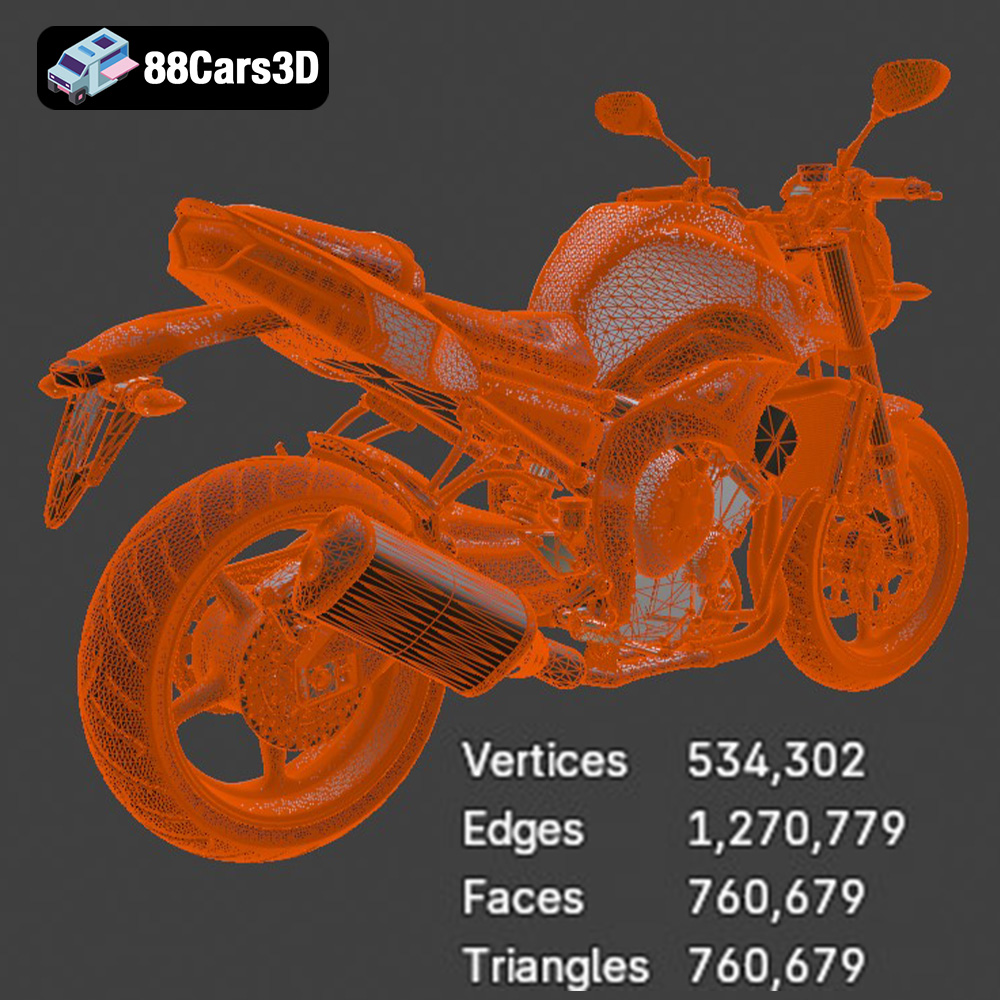
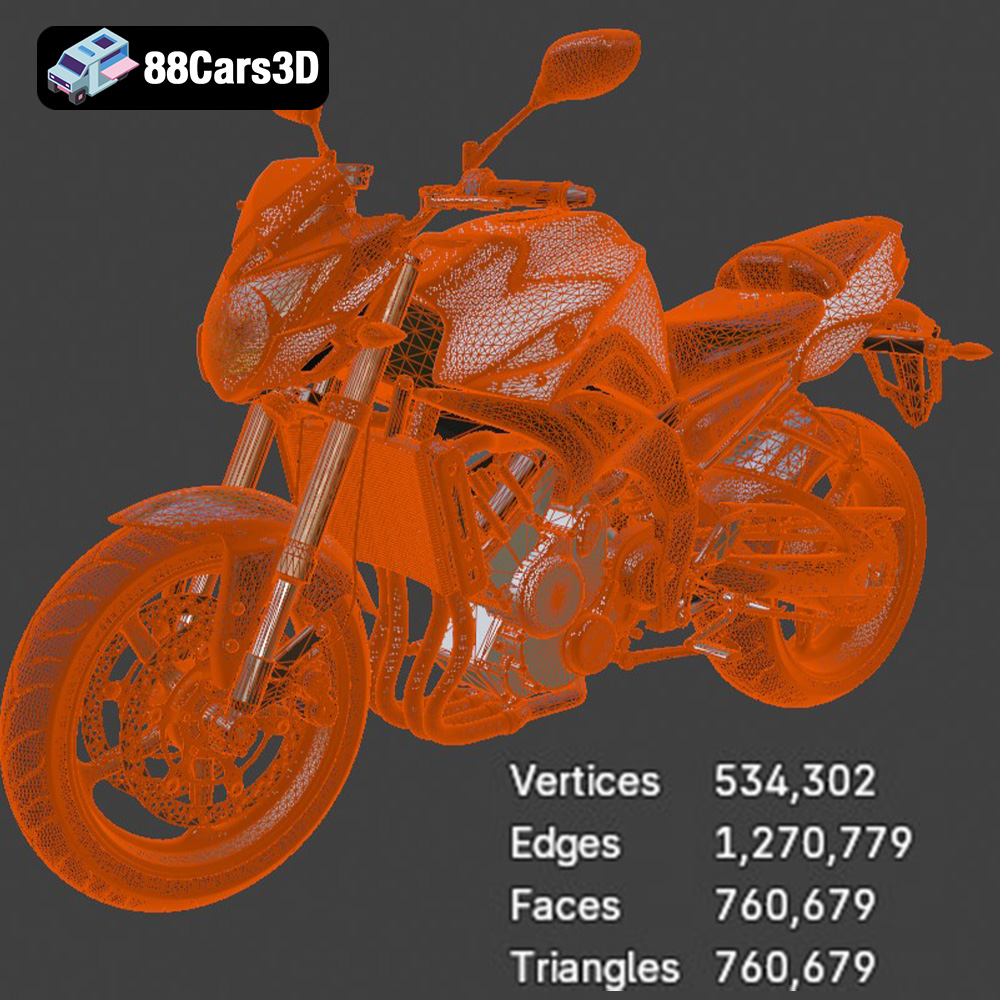
At the heart of any excellent 3D model is its geometry. The Yamaha FZ8 2011 boasts optimized, clean geometry with logical mesh subdivision. This means the polygon count is balanced – high enough to capture intricate details like the engine block, chassis, and subtle curves of the bodywork, yet efficient enough to ensure smooth performance. Clean topology, primarily quad-based (four-sided polygons), ensures that the mesh deforms predictably during animation and allows for easy edge loop selection for precise modeling adjustments. This meticulous approach prevents visual artifacts and ensures the model scales well for various levels of detail (LODs).
Furthermore, accurate scaling and real-world dimensions are critical. The model reflects the exact specifications of the iconic naked sports bike, ensuring that it fits naturally into any scene or simulation alongside other real-world assets. This attention to detail eliminates the need for manual scaling and adjustment, saving valuable production time and maintaining visual integrity.
Material Realism and Texturing
Beyond geometry, materials and textures are what breathe life into a 3D model. The Yamaha FZ8 2011 includes fully textured components and realistic material setups, adhering to Physically Based Rendering (PBR) principles. PBR materials accurately simulate how light interacts with different surfaces in the real world, resulting in more believable renders. This involves a suite of texture maps:
- Albedo (Base Color) Map: Defines the base color of the surface.
- Normal Map: Adds high-frequency surface details (like subtle scratches or casting imperfections) without increasing polygon count.
- Roughness Map: Controls the micro-surface detail, influencing how scattered or sharp reflections appear.
- Metalness Map: Differentiates between metallic and non-metallic surfaces, crucial for materials like chrome, painted metal, and rubber.
- Ambient Occlusion (AO) Map: Simulates soft shadows where light is occluded, enhancing depth and realism.
Each component of the motorcycle, from the glossy paint of the tank to the textured rubber of the tires and the metallic sheen of the exhaust, is treated with appropriate PBR materials. The UV mapping – the process of flattening the 3D surface into 2D space for texturing – is also clean and efficient, preventing stretching or distortion of textures and ensuring optimal texture resolution across the entire model. This comprehensive approach to materials is what allows for “exceptional visual fidelity suitable for demanding visualization projects.”
Unleashing the Yamaha FZ8 2011 in Professional Workflows
The true value of a high-quality 3D asset lies in its utility across a spectrum of professional applications. The Yamaha FZ8 2011 3D Model is engineered not just for beauty, but for seamless integration into diverse production pipelines, from blockbuster game development to high-stakes automotive advertising campaigns.
Cinematic Rendering and Advertising
For cinematic renderings and automotive advertising, visual impact is everything. The Yamaha FZ8 2011, with its high visual fidelity and realistic material setups, is perfectly suited for these demanding environments. In software like 3ds Max or Blender (with included .max and .blend files), artists can leverage advanced rendering engines like V-Ray, Corona Renderer, or Cycles to produce photorealistic images and animations. Imagine the FZ8 cruising through a stylized urban environment, its metallic paint reflecting the streetlights, or showcased with dramatic studio lighting for a print advertisement.
Workflow Example: An advertising agency might use the .max file in 3ds Max, setting up a complex lighting rig, HDR environment maps for reflections, and animating camera paths to highlight the bike’s design features. The clean geometry allows for smooth subdivision for close-up shots, while the PBR materials ensure authentic reflections and refractions. The ability to quickly integrate such a detailed model accelerates production timelines, a critical factor in fast-paced advertising cycles.
Game Development with Unreal Engine and Unity
The gaming industry demands both visual quality and optimal performance. The Yamaha FZ8 2011 is described as “ideal for… large-scale game development (Unreal Engine/Unity),” and its inclusion of .fbx and “Unreal Engine-ready” assets underscores this. Game assets require careful optimization, including considerations for polygon counts, draw calls, and efficient material setups. A clean base mesh (like the FZ8’s) is crucial for generating multiple Levels of Detail (LODs), allowing the engine to swap out simpler versions of the model when viewed from a distance, thereby saving precious rendering resources.
Workflow Example: A game studio developing an open-world racing title could import the .fbx or .unreal version of the Yamaha FZ8 2011 directly into Unreal Engine. They would then set up collision meshes, integrate it into a vehicle blueprint, and apply engine-specific optimizations. The pre-configured materials would drastically reduce setup time, allowing developers to focus on gameplay mechanics and environmental integration. The clean UVs also facilitate custom paint jobs or damage states within the game engine.
Immersive AR/VR Experiences
Augmented Reality (AR) and Virtual Reality (VR) environments present unique challenges, primarily related to real-time performance and immersion. The Yamaha FZ8 2011’s inclusion of a .glb file format is a direct nod to these applications. .glb files are highly optimized for web and mobile platforms, bundling all necessary data into a single, efficient package. For VR, maintaining a high frame rate is crucial to prevent motion sickness, and optimized models are non-negotiable.
Workflow Example: An AR application showcasing motorcycles could use the .glb version of the Yamaha FZ8 2011. Users could place the virtual bike in their real-world environment via their smartphone, inspect it from all angles, and even customize its color. For a VR training simulation, the model could be integrated into a virtual garage, allowing users to interact with detailed components of the FZ8, understanding its mechanics in an immersive, risk-free environment. Performance-oriented geometry and textures ensure these experiences are smooth and compelling.
Technical Deep Dive: Optimizing for Performance and Visuals
The creation of a professional-grade 3D model involves more than just aesthetics; it’s about robust technical execution. The Yamaha FZ8 2011 demonstrates a commitment to these technical standards, ensuring its usability across demanding projects found on platforms like 88cars3d.com.
Topology and Mesh Efficiency
When we refer to “optimized, clean geometry and logical mesh subdivision,” we’re touching upon the bedrock of a good 3D model. Optimal topology primarily uses quad polygons, which are easier to work with, subdivide smoothly, and deform cleanly during animation. Non-manifold geometry (edges or vertices shared by more than two faces) is scrupulously avoided in professional models, as it can lead to rendering errors, issues with UV mapping, and problems during export or 3D printing. The Yamaha FZ8 2011 model’s construction implies a careful balance of poly count – detailed enough for extreme close-ups without being overly dense for real-time applications. This foresight in modeling ensures the asset is versatile, capable of being simplified for distant shots or further subdivided for cinematic fidelity.
Mesh efficiency also extends to the logical grouping of components. The FZ8 model’s separate parts, like wheels, handlebars, and engine components, are likely distinct objects or clearly defined mesh groups. This allows for easier manipulation, material assignment, and animation of individual parts, which is crucial for dynamic scenes or interactive applications.
PBR Texturing and Shading
The “realistic material setups” included with the Yamaha FZ8 2011 are achieved through a Physically Based Rendering (PBR) workflow. PBR shaders use a set of texture maps to define how light interacts with a surface in a physically accurate manner. The success of PBR lies in its ability to produce consistent and realistic results across different lighting environments and rendering engines. For the FZ8, this means:
- High-Resolution Texture Maps: Ensuring that textures for the body, engine, and tires are sufficiently detailed to avoid pixelation, even on close inspection.
- Consistent UV Unwrapping: Clean, non-overlapping UVs are vital for preventing texture distortion and ensuring efficient use of texture space. This is particularly important for models with complex shapes like a motorcycle, where different components might have unique UV layouts.
- Material Instance Creation: In game engines like Unreal, the PBR materials are often set up as master materials with instances for individual components. This allows artists to easily tweak parameters (like color variations for different parts of the FZ8) without recompiling shaders, enhancing workflow efficiency.
The careful application of these PBR principles is what gives the Yamaha FZ8 2011 3D Model its “exceptional visual fidelity,” making it appear incredibly lifelike in any rendered environment.
Scalability and Level of Detail (LODs)
While the product description doesn’t explicitly state the inclusion of LODs, a truly professional asset is built with scalability in mind. The clean base geometry of the Yamaha FZ8 2011 model facilitates the generation of multiple LODs. LODs are simplified versions of a model that are displayed when the object is further from the camera, significantly reducing polygon count and improving real-time performance, particularly in large-scale game environments or complex simulations. A well-constructed high-poly model serves as an excellent foundation for automated LOD generation tools or manual decimation, ensuring that the model retains its key visual characteristics even at lower polygon counts.
Beyond Visualization: The Yamaha FZ8 2011 for 3D Printing and Prototyping
The utility of high-quality 3D models extends beyond digital screens. The inclusion of .stl and .ply formats for the Yamaha FZ8 2011 opens doors to physical production and engineering applications, demonstrating the comprehensive nature of assets available on 88cars3d.com.
Preparing for Physical Output
3D printing requires specific characteristics from a 3D model. A “manifold” mesh is essential – meaning the model must be a completely watertight solid without any holes, inverted normals, or self-intersecting geometry. The .stl format, being a triangulated mesh, is the standard for almost all 3D printers. The Yamaha FZ8 2011’s clean geometry ensures it’s well-suited for this purpose. Designers can use this model to:
- Create Scale Prototypes: Produce physical miniature versions for design review or display.
- Fabricate Functional Parts (if applicable): While a full motorcycle is complex, specific components might be printed for form and fit testing.
- Craft Custom Display Models: For enthusiasts or marketing purposes, a detailed 3D print can be a compelling physical representation.
Before printing, considerations such as scale, wall thickness (ensuring parts are thick enough to be printed without breaking), and support structures would be managed within the 3D printing software, but the robust foundation of the FZ8 model makes this process straightforward.
Precision Measurement and Analysis
The .ply format, known for its ability to store detailed polygon mesh data, is valuable for tasks requiring precision. In engineering or reverse engineering contexts, a .ply file derived from a high-quality 3D model can be used for:
- Dimensional Analysis: Measuring distances, clearances, and angles on the virtual model with high accuracy.
- Simulation and Stress Testing: Exporting the mesh to CAD or simulation software for finite element analysis (FEA) to predict how the motorcycle’s components would behave under stress (though this would require additional engineering data).
- Quality Control: Comparing scanned data of a physical object against the pristine 3D model to identify deviations.
The detailed construction of the Yamaha FZ8 2011 ensures that its geometrical data is reliable for such analytical purposes, extending its utility far beyond purely visual applications.
Conclusion
The world of 3D modeling thrives on precision, versatility, and efficiency. The Yamaha FZ8 2011 3D Model exemplifies a premium asset designed to meet the rigorous demands of modern visualization and development pipelines. From its meticulously optimized geometry and realistic PBR materials, to its comprehensive suite of industry-standard file formats (.blend, .fbx, .obj, .glb, .stl, .ply, .unreal, .max), this model offers unparalleled flexibility for cinematic rendering, immersive game development, AR/VR experiences, and even 3D printing applications.
Whether you’re an automotive renderer aiming for photorealistic advertisements, a game developer crafting immersive open worlds, or an engineer prototyping physical designs, integrating such a high-quality 3D vehicle asset into your workflow can dramatically enhance visual fidelity, accelerate production, and ensure consistent, professional results. For those seeking top-tier 3D car models and vehicle assets, 88cars3d.com provides a curated marketplace where quality and technical excellence are paramount, offering assets like the Yamaha FZ8 2011 that are ready to elevate your next project.
Featured 3D Model
Yamaha FZ8 2011 3D Model
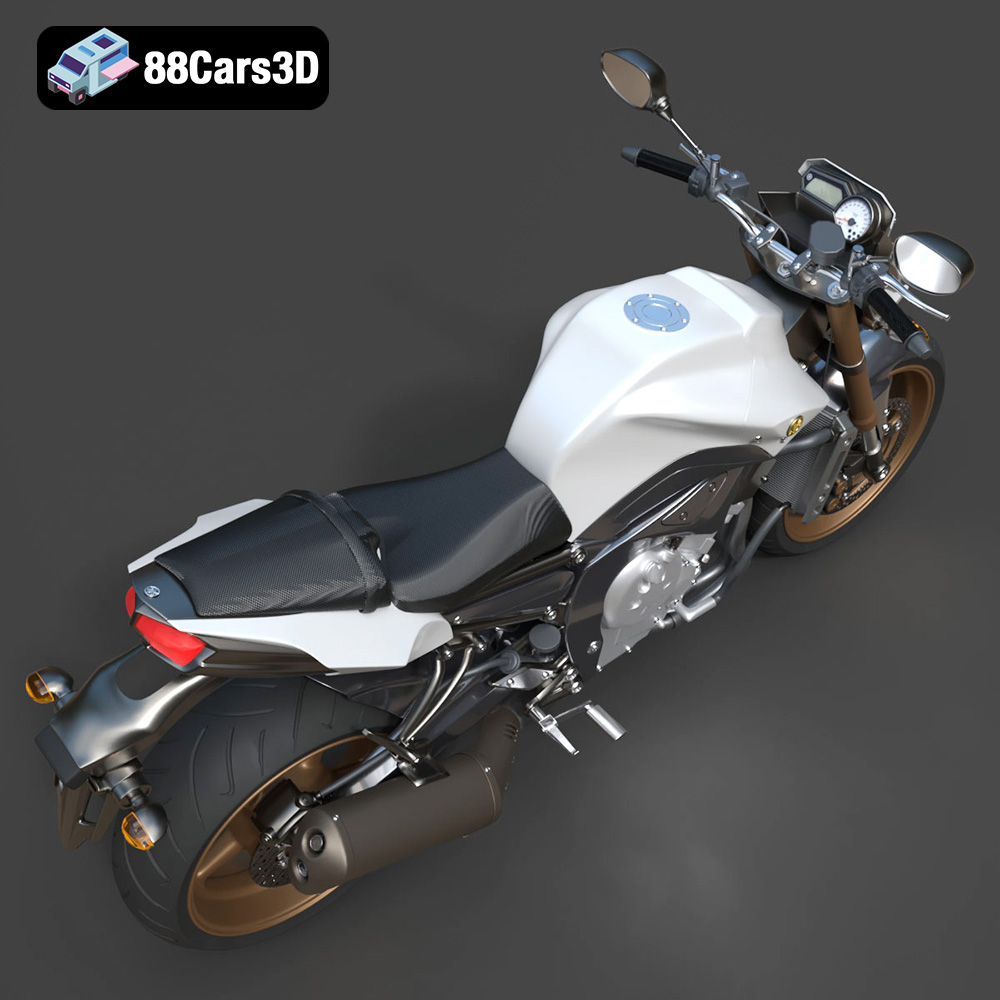
Capture the raw power and distinctive styling of the Yamaha FZ8 2011 with this meticulously engineered 3D model. Developed to reflect the exact specifications of the iconic naked sports bike, this asset provides exceptional visual fidelity suitable for demanding visualization projects.
This 3D vehicle asset is built with optimized, clean geometry and logical mesh subdivision, ensuring smooth performance across various 3D applications. The model includes fully textured components, realistic material setups, and accurately scaled dimensions, ready for immediate integration into your scene or project.
Ideal for diverse professional applications, including cinematic rendering, automotive advertising, immersive training simulations, virtual reality (VR) environments, and large-scale game development (Unreal Engine/Unity). The detailed construction ensures reliable performance whether viewed up close or integrated into a complex environment.
Included File Formats:
- .blend – Editable Blender file with materials and lighting setup
- .fbx – Game-engine ready format for Unreal Engine and Unity
- .obj – Standard 3D model format compatible with all major software
- .glb – Optimized for AR/VR and web-based visualization
- .stl – Suitable for 3D printing and prototyping
- .ply – Detailed polygon mesh for analysis and visualization
- .unreal – Pre-configured for Unreal Engine use
- .max – Editable 3ds Max file for rendering and animation
Tags: .yamaha, .fz8, .fzx, .motorcycle, .nakedbike, .sportbike, .car3dmodel, .rendering, .simulation, .gameasset, .arvr, .blend, .fbx, .obj, .glb, .stl, .ply, .unreal, .max
Tags:
.yamaha, .fz8, .fzx, .motorcycle, .nakedbike, .sportbike, .car3dmodel, .rendering, .simulation, .gameasset, .arvr, .blend, .fbx, .obj, .glb, .stl, .ply, .unreal, .maxMercedes Benz CLS 500 3D Model
$19.99
Product Image Gallery
Related Tags
.arvr
.blend
.car3dmodel
.fbx
.fz8
.fzx
.gameasset
.glb
.max
.motorcycle
.nakedbike
.obj
.ply
.rendering
.simulation
.sportbike
.stl
.unreal
.yamaha
