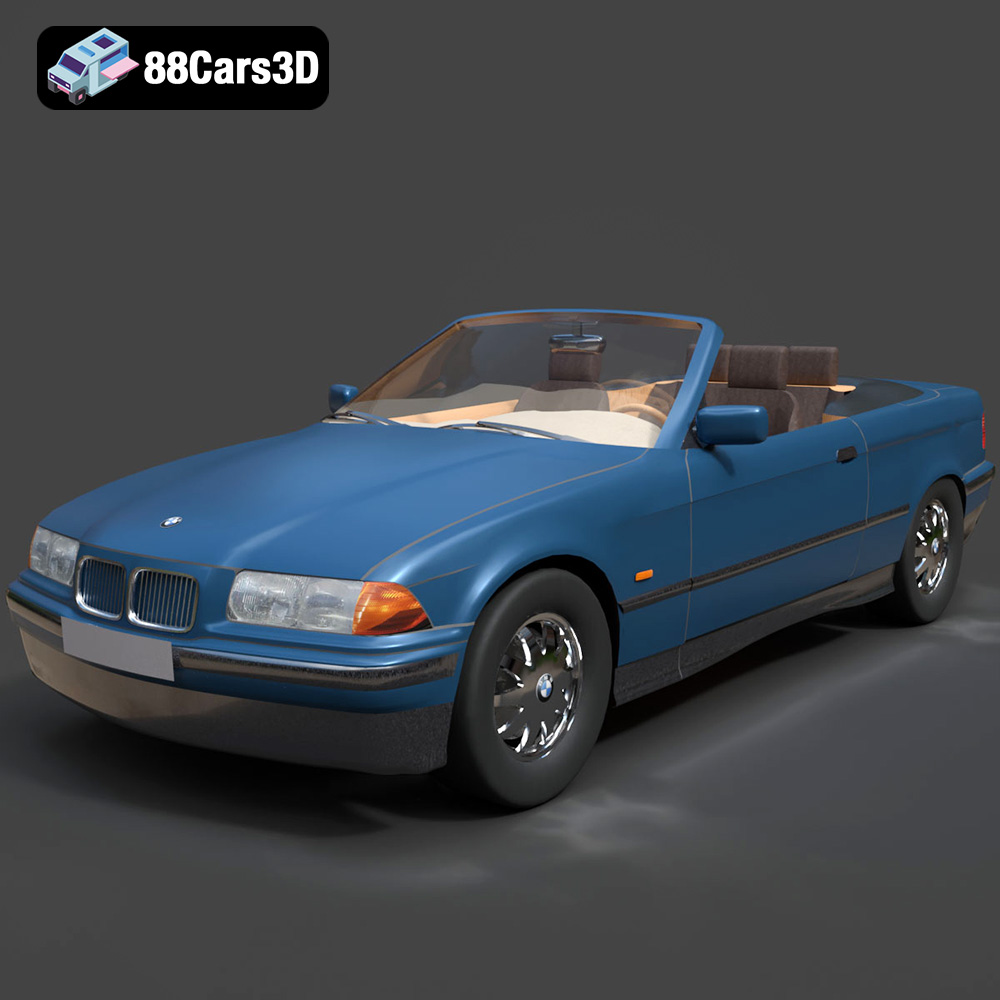
Why GLB is Becoming the Essential Standard for Web3D and Configurators
The digital landscape is rapidly evolving, with immersive experiences and interactive content becoming the norm rather than the exception. From sophisticated e-commerce product configurators to burgeoning metaverse environments, 3D on the web (Web3D) is no longer a niche technology – it’s a fundamental expectation. At the heart of this transformation lies the crucial challenge of efficiently delivering high-quality 3D assets. Enter GLB, a powerful, versatile, and increasingly ubiquitous 3D file format that is rapidly establishing itself as the de facto standard for web-based 3D applications.
This comprehensive guide will explore the compelling reasons behind GLB’s ascent, delving into its technical advantages, practical applications, and why any developer, designer, or business looking to leverage interactive 3D online needs to embrace this format.
The Rise of Web3D and its Demands
The demand for interactive 3D content has exploded across various sectors, driven by advancements in web technologies and user expectations for richer digital experiences.
E-commerce, Configurators, and the Metaverse
- E-commerce Product Visualization: Retailers are moving beyond static images, offering 3D views, AR previews, and interactive models that allow customers to examine products from every angle, boosting confidence and reducing returns.
- Product Configurators: Industries from automotive to furniture rely on configurators to let customers customize products in real-time, visualizing their choices instantly before purchase. This requires dynamic loading and rendering of various 3D components.
- Metaverse and Digital Twins: The promise of persistent virtual worlds and digital representations of real-world objects demands a highly efficient, interoperable, and standardized way to share 3D assets.
- Training and Education: Interactive 3D models provide engaging and effective tools for learning complex subjects, from anatomical structures to engineering diagrams.
Challenges of Traditional 3D Formats on the Web
Historically, deploying 3D models on the web was cumbersome. Formats like OBJ, FBX, or Collada (DAE) were designed primarily for offline 3D modeling software and game engines, not for efficient web streaming. They often came with a multitude of associated files (textures, materials, animations) that needed to be individually loaded, managed, and parsed. This led to:
- Slow loading times due to multiple HTTP requests.
- Complex asset management and potential broken links if files weren’t organized perfectly.
- Lack of a universally supported PBR (Physically Based Rendering) material standard, leading to inconsistent visual fidelity across different viewers.
- Bloated file sizes for web delivery, particularly with embedded binary data.
Understanding GLB: What Makes it Special?
GLB (GL Transmission Format Binary) is not just another 3D file format; it’s a binary container for glTF (GL Transmission Format), which is itself an open-standard, royalty-free specification for the efficient transmission and loading of 3D scenes and models by engines and applications.
GLB vs. glTF: The Key Difference (Binary vs. JSON)
To fully grasp GLB, it’s essential to understand its relationship with glTF:
- glTF (.gltf): Often referred to as the “JPEG of 3D,” glTF is an API-neutral runtime asset delivery format. It uses JSON to describe the scene structure (nodes, cameras, lights, meshes, materials, animations) and references external binary files for mesh data, textures, and other assets. While excellent for development, the need for multiple files (e.g., .gltf, .bin, .jpg/.png) makes web deployment slightly more complex.
- GLB (.glb): This is the binary version of glTF. It packages all the glTF assets – the JSON scene description, binary buffer data (mesh geometry, animation data), and images (textures) – into a single, self-contained binary file. This single-file delivery mechanism is the cornerstone of its efficiency for web applications.
The glTF Ecosystem: A Foundation for Success
GLB’s power comes directly from its glTF foundation. glTF was specifically designed by the Khronos Group (the creators of OpenGL, Vulkan, and WebGL) to be an efficient, interoperable runtime format for 3D assets. This means it’s built from the ground up for performance and compatibility across a wide range of platforms and APIs, making it ideal for the web, AR/VR, and emerging metaverse applications.
Core Advantages of GLB for Web3D and Configurators
The benefits of using GLB for interactive web-based 3D are numerous and directly address the challenges posed by traditional formats.
Single-File Simplicity: Streamlined Delivery
The most immediate and impactful advantage of GLB is its single-file nature. Instead of managing a .gltf JSON file, separate .bin files for geometry, and multiple image files for textures, everything is neatly bundled into one .glb file. This simplifies:
- Asset Management: One file to upload, one file to reference.
- Reduced HTTP Requests: A single request dramatically speeds up loading times, especially over high-latency mobile networks. This is crucial for web configurators where every millisecond counts.
- Caching: Browsers can cache a single file more effectively than multiple disparate assets.
Optimized for Performance: Faster Loading, Smoother Interactions
GLB inherits glTF’s design principles for runtime efficiency:
- GPU-Optimized Data: glTF data structures are designed to be consumed directly by modern graphics APIs like WebGL, minimizing the parsing and processing overhead required by the browser.
- Efficient Compression: GLB files can be highly optimized and compressed, leading to smaller file sizes that download faster. While GLB itself doesn’t define a specific compression algorithm beyond what’s inherent in its binary packing, tools often apply Draco compression (a glTF extension) to geometry, further reducing size by up to 10x without significant quality loss.
- Progressive Loading Potential: While GLB is a single file, the underlying glTF structure supports concepts that can be leveraged for progressive loading, though true streaming often benefits from external glTF files. For single-asset delivery, GLB is king.
Rich Feature Set: PBR Materials, Animations, and More
GLB, by encapsulating glTF, supports a wide array of advanced 3D features crucial for realistic and dynamic experiences:
- Physically Based Rendering (PBR) Materials: GLB consistently defines PBR materials (metallic-roughness workflow by default), ensuring that 3D models look correct and consistent across different viewers and rendering engines. This is paramount for product configurators that need accurate material representation.
- Animations: Skeletal animations, morph targets (blend shapes), and node transformations are fully supported, enabling dynamic characters, object movements, and interactive transitions.
- Scene Hierarchy: Complex scenes with multiple objects, transformations, and parent-child relationships are accurately represented.
- Cameras and Lights: Definition of camera perspectives and various light types allows for complete scene setup within the file.
Wide Software and Platform Support
The glTF ecosystem, and by extension GLB, boasts extensive support across the 3D industry:
- 3D Software: Most major 3D content creation tools like Blender, Maya, 3ds Max, Substance Painter, and ZBrush offer robust glTF/GLB export capabilities.
- Game Engines: Unity and Unreal Engine have strong glTF/GLB import/export plugins.
- Web Frameworks: Popular Web3D libraries like Three.js, Babylon.js, and A-Frame natively support GLB, making integration straightforward for developers.
- Platforms: Google’s ARCore, Apple’s ARKit (though USDZ is their native format, GLB can often be converted), and major social media platforms are increasingly supporting GLB for AR filters and interactive content.
Future-Proofing with Extensibility
glTF, and thus GLB, is designed with extensibility in mind. The Khronos Group actively maintains a registry of extensions (e.g., KHR_draco_mesh_compression, KHR_materials_variants, KHR_texture_transform) that add new capabilities without breaking existing implementations. This ensures the format can adapt to future innovations in 3D graphics, a critical factor for long-term standards.
GLB in Action: Use Cases and Practical Examples
The versatility and efficiency of GLB make it an ideal choice for a multitude of real-world Web3D applications.
Product Configurators: Real-time Customization
Imagine configuring a car online, changing colors, rims, interiors, and accessories in real-time. GLB files containing individual parts or material variations are dynamically loaded and swapped within a web viewer. The compact nature and PBR material consistency of GLB ensure a smooth, visually accurate experience, allowing users to build their desired product virtually.
E-commerce Product Visualization: Enhance Shopping Experiences
Online stores use GLB to display 3D models of products ranging from furniture to electronics. Customers can rotate, zoom, and often interact with the model directly in their browser. Many platforms, including Shopify and Magento, support GLB for their 3D product uploads, enabling augmented reality (AR) previews directly from product pages on mobile devices.
AR/VR Experiences on the Web
With WebXR APIs, GLB models can be loaded directly into web-based AR and VR experiences. A user can point their phone’s camera at their living room and see a virtual couch (a GLB model) placed within their physical space, allowing them to assess its size and fit before purchase.
Metaverse and Digital Twins
As virtual worlds develop, a universal, efficient 3D asset format is paramount for interoperability. GLB’s ease of sharing and consistent rendering makes it a strong candidate for representing avatars, virtual objects, and digital twin assets across different metaverse platforms.
Overcoming Challenges and Best Practices for GLB Implementation
While GLB offers significant advantages, optimal implementation requires careful consideration.
Optimization for Web: Compression and Asset Management
- Polycount and Texture Resolution: Keep geometry polycounts reasonable and texture resolutions appropriate for web viewing. Overly detailed models will still lead to large file sizes, even with GLB.
- Draco Compression: Utilize glTF extensions like KHR_draco_mesh_compression during the GLB export process to drastically reduce mesh geometry size.
- Texture Optimization: Compress textures (e.g., using WebP for transparency, or highly optimized JPG/PNG) and consider texture atlases to reduce draw calls.
- Lazy Loading: For complex configurators, implement lazy loading of optional components or high-resolution textures only when they are selected by the user.
Content Creation Workflow: From DCC Tools to GLB
The process generally involves:
- Modeling and Texturing: Create your 3D assets in software like Blender, Maya, or 3ds Max, applying PBR materials.
- Rigging and Animation (if applicable): Set up skeletons and create animations.
- Optimization: Reduce polycount, optimize UVs, and consolidate materials where possible.
- Export to GLB: Use native exporters or plugins in your DCC tool. Ensure all textures are embedded and PBR settings are correctly translated. Many tools offer options for Draco compression during export.
- Validation: Use glTF validators (e.g., the Khronos glTF Validator) to ensure your GLB file is spec-compliant and free of errors.
Security and Performance Considerations
While GLB files are generally safe, always source 3D assets from trusted origins. On the performance front, client-side rendering can be demanding. Ensure your web application is optimized to handle the GLB files efficiently, particularly on mobile devices, by managing resources, implementing level-of-detail (LOD) systems, and efficient rendering pipelines.
Comparison: GLB vs. Other Web3D Formats
To further illustrate GLB’s dominance, let’s compare it to other commonly encountered 3D formats in the web and mobile space.
| Feature | GLB (glTF) | USDZ | OBJ | FBX |
|---|---|---|---|---|
| Primary Use Case | Web3D, Configurators, Real-time AR/VR, Metaverse | Apple AR/VR, iOS Native AR | Static 3D Models, Exchange (basic) | Game Engines, DCC Tool Exchange (proprietary) |
| File Structure | Single binary file (JSON, bin, textures embedded) | Single archive file (USD, textures, animations) | Multiple files (.obj, .mtl, .jpg/.png) | Single binary/ASCII file (references textures) |
| Web-Optimized | Yes (Designed for it) | Partial (good for iOS Safari AR) | No (multiple requests, inefficient) | No (proprietary, heavy, complex parsing) |
| PBR Material Support | Excellent (Standardized) | Excellent | Basic (non-standard) | Good (depends on exporter/importer) |
| Animations | Yes | Yes | No | Yes |
| Compression | Good (with Draco) | Good | Poor | Variable |
| Open Standard | Yes (Khronos Group) | Yes (Pixar, open-source) | Yes | No (Autodesk proprietary) |
| Browser Support | Excellent (via Three.js, Babylon.js etc.) | Excellent on iOS Safari | Requires parser, heavy | Requires parser, heavy |
As the table illustrates, GLB stands out for its web-first design, single-file simplicity, and robust feature set, making it the most suitable choice for broad Web3D deployment. While USDZ has its place in the Apple ecosystem, GLB offers wider cross-platform compatibility and an open standard advantage.
The Future is GLB: A Standard in the Making
The trajectory is clear: GLB, backed by the glTF specification, is not just a passing trend but a foundational technology for the next generation of web experiences. Its unmatched efficiency, open standard nature, and comprehensive feature set align perfectly with the demands of an increasingly immersive digital world. For anyone serious about delivering high-performance, visually rich, and interactive 3D content on the web, embracing GLB is not merely an option—it’s a strategic imperative.
Ready to Embrace the Power of GLB for Your Web3D Project?
The shift towards GLB as the standard for Web3D and configurators is undeniable. Whether you’re building an e-commerce platform with interactive product views, developing advanced AR/VR web experiences, or venturing into the metaverse, understanding and utilizing GLB will be key to your success.
Don’t get left behind. Start optimizing your 3D assets for the web today.
Get Expert Guidance on Your Web3D Implementation
Recommended undefined Models