

In the dynamic world of 3D visualization, automotive design, and game development, the quest for highly accurate and aesthetically stunning 3D car models is ceaseless. Whether you’re crafting a hyper-realistic scene for an architectural visualization or optimizing assets for a cutting-edge racing game, the foundational quality of your 3D models dictates the final output. When it comes to reproducing complex automotive components, two primary methodologies stand at the forefront: traditional manual 3D modeling and advanced 3D scanning. Both offer distinct advantages and present unique challenges, making the choice between them a critical decision that impacts workflow efficiency, model accuracy, and project costs. Understanding the intricacies of each approach is paramount for 3D artists, game developers, automotive designers, and visualization professionals striving for excellence.
This comprehensive guide delves deep into the technical nuances of 3D scanning versus manual modeling for car parts. We will explore the specific workflows, technical specifications, software-specific techniques, and industry best practices associated with each method. By the end of this article, you will have a clearer understanding of when to leverage the precision of scanning, when to embrace the artistic control of manual modeling, and how to effectively combine both for optimal results in your next automotive project. Prepare to enhance your skills and elevate the quality of your 3D car models, whether you’re sourcing from platforms like 88cars3d.com or creating them from scratch.
The Art of Manual Automotive Modeling: Crafting Precision from Scratch
Manual 3D modeling, often referred to as hard-surface modeling, is the traditional cornerstone of creating virtual car parts. This method gives artists unparalleled control over every vertex, edge, and face, allowing for the meticulous construction of geometry that perfectly reflects design intent. It’s a process deeply rooted in technical skill and an understanding of form, requiring a keen eye for detail and a mastery of 3D software. The primary advantage of manual modeling lies in its ability to produce clean, optimized, and artistically controlled meshes, which are crucial for high-fidelity renders, animation, and game engine performance. This method is particularly favored when creating conceptual designs, idealized versions of parts, or when existing physical references are insufficient or require significant modifications.
Artists typically begin with blueprints, reference images, or existing CAD data, using them as guides to sculpt the digital form. Software like 3ds Max, Blender, and Maya provide robust toolsets for polygonal modeling, spline modeling, and NURBS surfacing, enabling the creation of intricate curves and precise panel gaps characteristic of automotive design. The iterative nature of manual modeling also allows for constant refinement, making it ideal for design exploration and achieving a specific aesthetic vision that might not be captured by real-world imperfections. While demanding in terms of time and expertise, the result is a 3D model that is often pristine, perfectly smooth, and ready for a wide range of applications from stunning visualizations to optimized game assets.
Topology and Edge Flow: The Backbone of a Clean Model
At the heart of superior manual automotive modeling is impeccable topology and edge flow. Topology refers to the arrangement of polygons (ideally quads) that define the surface of the model, while edge flow dictates how these edges run across the surface, influencing deformation, shading, and the ability to add detail. For car parts, maintaining clean quad topology is paramount. This ensures smooth, subdividable surfaces, prevents pinching, and allows for consistent UV mapping. Edges should follow the natural contours and creases of the vehicle, defining panel lines, body curves, and sharp transitions. For example, a sharp edge on a fender will require multiple closely spaced edge loops (known as control loops or holding edges) to maintain its crispness after subdivision.
A typical workflow involves blocking out the primary forms with basic primitives, then refining them using tools like ‘extrude’, ‘bevel’, ‘loop cut’, and ‘slide edge’. Attention to detail in this phase pays dividends later, ensuring that reflections behave correctly and that the model deforms predictably if animated. Understanding how light interacts with surfaces is also critical; a poorly optimized mesh with uneven polygon distribution can lead to visible artifacts or “lumpy” surfaces, especially on highly reflective automotive paint. Professionals often aim for an even distribution of polygons, avoiding long, thin triangles or N-gons that can cause rendering issues.
Precision and Design Intent: Crafting the Vision
Manual modeling excels in capturing and refining design intent. Unlike scanning, which reproduces an existing physical object with all its minute imperfections, manual modeling allows the artist to realize an idealized version. This is particularly valuable in the automotive industry where prototypes and conceptual designs often precede physical creation. Artists can work directly from engineering drawings, CAD data, or even concept sketches, translating a vision into a perfect 3D form. Features like perfect symmetry, precise measurements, and exact radii can be achieved with mathematical accuracy, which is often difficult to extract cleanly from scanned data.
Furthermore, manual modeling provides the flexibility to make design modifications easily. A designer might want to slightly alter a body line, adjust a panel gap, or integrate a new feature. With a clean, well-structured mesh, these changes can be implemented efficiently without the need for extensive data reconstruction or retopology, which would be necessary with a raw scan. This iterative design capability makes manual modeling indispensable for research and development, custom car modifications, and creating unique visual narratives.
Software and Workflow: Tools of the Trade
The choice of 3D software significantly impacts the manual modeling workflow. Autodesk 3ds Max and Maya are industry standards, offering comprehensive toolsets for hard-surface modeling. Blender, a powerful open-source alternative, has seen tremendous growth in its capabilities, particularly with recent updates. For detailed information on Blender’s modeling tools and workflows, artists can refer to the official Blender 4.4 documentation, which provides in-depth guides on everything from basic mesh editing to advanced modifiers and sculpting techniques. Tools like ‘Bevel’ and ‘Boolean’ operations, when used carefully, are crucial for creating sharp edges and complex cut-outs often found in car parts.
A common workflow involves starting with a low-polygon base mesh, then using subdivision surface modifiers (e.g., Turbosmooth in 3ds Max, Subdivision Surface in Blender) to achieve high levels of detail and smoothness. This non-destructive approach allows for flexibility throughout the modeling process. For intricate details or organic shapes that might be part of a car interior or specific aerodynamic elements, sculpting tools (e.g., ZBrush, Blender’s sculpting mode) can be integrated into the workflow, followed by retopology to convert high-poly sculpts into production-ready quad meshes. For highly complex or curved surfaces that require absolute precision, NURBS (Non-Uniform Rational B-Splines) modeling, available in software like Rhino or specific modules in Maya, is sometimes employed, though it generally requires conversion to polygons for rendering and game engine use.
The Precision of 3D Scanning for Car Parts: Capturing Reality
3D scanning represents a paradigm shift in capturing existing physical objects, offering a fast and highly accurate method to convert real-world car parts into digital 3D models. This technology is invaluable for reverse engineering, historical preservation, quality inspection, and creating digital twins of actual vehicles. Unlike manual modeling, where geometry is constructed from scratch, 3D scanning captures the precise surface data of an object, including all its subtle nuances, imperfections, and complex geometries that would be exceedingly difficult or time-consuming to model by hand. The output is typically a dense point cloud or a raw triangular mesh, which then undergoes processing to become a usable 3D asset.
The allure of 3D scanning lies in its ability to faithfully reproduce intricate details, organic forms, and complex curvatures with remarkable fidelity. This makes it an ideal choice for replicating engine components, interior dashboards, classic car body panels, or unique aftermarket parts where absolute dimensional accuracy and surface characteristics are paramount. While the initial data might require significant cleanup and optimization, the core benefit is an objective, measurable representation of the physical world, free from artistic interpretation biases. This makes 3D scanning a powerful tool for professionals who need to work with existing physical objects rather than conceptual designs.
Scanning Technologies: Methods for Digital Capture
Various 3D scanning technologies are available, each with its strengths and weaknesses when applied to car parts.
Laser Scanning: Handheld or tripod-mounted laser scanners project a laser line or point onto the object and measure the deformation to calculate depth. They offer high accuracy and speed for large objects, capable of capturing intricate details on complex surfaces. However, highly reflective or dark surfaces can pose challenges, sometimes requiring the application of a matte spray.
Structured Light Scanning: These scanners project a pattern of light (e.g., stripes) onto the object and analyze how the pattern deforms across its surface. They are generally fast, highly accurate, and non-contact, making them suitable for capturing fine details on components like engine blocks or interior panels. Like laser scanners, reflective surfaces can be problematic.
Photogrammetry: This method uses multiple photographs taken from various angles to reconstruct a 3D model. It’s cost-effective and can capture large environments or entire vehicles. While it excels at capturing texture and overall form, achieving the geometric accuracy and clean surfaces required for precise engineering or high-end rendering often necessitates a significant amount of post-processing and retopology, especially for smooth, reflective car body panels.
For high-fidelity car parts, structured light and laser scanners are often preferred due to their superior geometric accuracy. For smaller, highly detailed components, industrial CT scanning can provide internal geometry and unparalleled accuracy, though at a significantly higher cost and complexity. The choice of technology depends heavily on the required accuracy, budget, and the specific characteristics of the car part being scanned.
Data Processing and Retopology: From Raw Scan to Usable Mesh
Raw 3D scan data, whether a dense point cloud or a messy triangular mesh, is rarely production-ready. It often contains noise, holes, overlapping geometry, and an excessively high polygon count. The initial step is data cleanup, which involves filtering noise, aligning multiple scans (registration), and merging them into a single coherent mesh. Software like Geomagic Wrap, MeshLab, and even Blender (with its sculpting and mesh editing tools) are used for this. Holes caused by occlusions or difficult-to-scan areas must be manually or automatically filled.
The most critical step after cleanup is retopology. Raw scan meshes are typically composed of millions of tiny, uneven triangles, making them unsuitable for subdivision, UV mapping, or animation. Retopology involves creating a new, optimized mesh (usually with clean quad topology) that sits on top of the high-polygon scan data. This can be done manually, using tools like Blender’s ‘Shrinkwrap’ modifier, snapping options, and dedicated add-ons like Retopoflow, or semi-automatically with tools in ZBrush (ZRemesher), TopoGun, or Geomagic Wrap. Manual retopology, while time-consuming, offers the highest control over edge flow and polygon distribution, crucial for achieving professional-grade car models. The goal is to reduce the polygon count significantly while preserving the intricate details of the scanned object, making it suitable for rendering, game engines, or AR/VR applications.
Accuracy and Limitations: The Realities of Scanning
While 3D scanning offers exceptional accuracy, it comes with its own set of challenges. Reflective surfaces (like polished chrome or glossy paint) and very dark materials tend to absorb or scatter laser/light, making accurate data capture difficult. Often, a temporary matte spray or powder needs to be applied, which then must be carefully cleaned off the physical object. Deep undercuts, complex interiors, or very thin features can also cause occlusions, leading to incomplete data or holes in the mesh that require manual reconstruction. The size and accessibility of the car part also influence the scanning process; a full car body scan requires a different setup than scanning a small engine component.
Another limitation is the inherent “noise” in scan data. Even with high-end scanners, minor surface irregularities, dust, or environmental factors can introduce inaccuracies. While software can filter much of this, perfectly smooth, mathematically precise surfaces—like those produced by CAD programs or manual modeling—are rarely achieved directly from a raw scan. Therefore, scanned models often require additional surfacing work, using techniques like surface fitting or spline modeling over the retopologized mesh, to achieve the pristine quality often demanded in high-end automotive visualization. This hybrid approach often yields the best results, leveraging the accuracy of the scan with the precision of manual reconstruction.
Texturing and Materials: A Unified Approach to Realism
Whether a car part is manually modeled or derived from a 3D scan, the creation of realistic textures and PBR (Physically Based Rendering) materials is fundamental to achieving photorealistic results. The quality of your materials can make or break the visual appeal of a 3D car model, bringing dull geometry to life with authentic reflections, refractions, and surface imperfections. This stage involves meticulous UV mapping, crafting PBR texture sets (Albedo/Base Color, Metallic, Roughness, Normal, Height, Ambient Occlusion), and building sophisticated shader networks within your chosen rendering engine. The goal is to simulate how light interacts with various surfaces—from glossy paint to matte plastic, chrome, and rubber—in a physically accurate manner.
PBR workflows have become the industry standard, ensuring that materials look consistent across different lighting conditions and rendering environments. This involves creating textures that represent real-world material properties rather than simply how they appear under specific lighting. A deep understanding of these principles is crucial for any artist looking to produce professional-grade automotive renders, regardless of the modeling source. Platforms like 88cars3d.com often provide models with expertly crafted PBR materials, ready for integration into your projects.
UV Mapping Strategies for Complex Car Surfaces
UV mapping is the process of unwrapping the 3D surface of a model into a 2D space, allowing 2D textures to be applied accurately. For complex car parts, efficient and clean UVs are essential. This means minimizing stretching, overlapping, and maximizing texture space utilization. For manually modeled car parts, artists have the advantage of clean topology, which makes UV unwrapping more straightforward. Typically, hard-surface objects benefit from a combination of planar, cylindrical, and spherical projections, carefully stitched and relaxed to create distortion-free islands.
For scanned and retopologized models, UV mapping can be more challenging due to potentially less uniform topology, even after careful retopology. Automated UV tools in software like RizomUV, UVLayout, and even Blender (Smart UV Project, Follow Active Quads) can provide a good starting point, but often require manual refinement. Key strategies include:
- Creating seams strategically: Placing seams along natural breaks, hard edges, and areas less visible in the final render.
- Consistent texel density: Ensuring that all UV islands have a similar texture resolution to avoid blurry or pixelated areas.
- Packing efficiency: Arranging UV islands tightly within the 0-1 UV space to maximize texture resolution and minimize wasted space.
Proper UV mapping not only ensures correct texture application but also plays a vital role in texture baking (e.g., normal maps from high-poly sculpts) and optimizing game assets through texture atlasing.
PBR Material Creation and Shader Networks
PBR material creation is an art and a science. It involves generating a suite of texture maps that describe the material’s surface properties. Tools like Substance Painter and Quixel Mixer are indispensable for this, allowing artists to paint directly on the 3D model and generate all necessary PBR maps simultaneously. A typical set of PBR maps for car parts includes:
- Base Color (or Albedo): The raw color of the surface, free from lighting information.
- Metallic: A grayscale map (0 for dielectric, 1 for metallic) indicating which parts are metal.
- Roughness (or Glossiness): A grayscale map defining the microsurface imperfections that scatter light, influencing how sharp or blurry reflections appear.
- Normal Map: Stores surface detail (bumps, scratches, panel lines) without adding geometry, often baked from a high-poly model onto a low-poly one.
- Ambient Occlusion (AO): A grayscale map simulating soft shadows in crevices and corners, enhancing depth.
- Height/Displacement Map: Provides actual geometric displacement for fine surface detail, used in more advanced rendering setups.
These maps are then assembled into a shader network within your rendering software. Modern renderers like V-Ray, Corona Renderer, Cycles (Blender), and Arnold utilize node-based material editors, allowing artists to combine textures, procedural noises, and various material layers to create complex and realistic automotive shaders. For instance, car paint might involve multiple layers: a base metallic coat, a clear coat with reflections and slight imperfections, and possibly flake effects for pearlescent finishes. Understanding the physical properties of real-world car materials and translating them into accurate PBR values is key to achieving believable renders.
Optimization for Performance: Game Engines, AR/VR, and Beyond
While visual fidelity is crucial, performance optimization is equally important, especially for interactive applications like video games, real-time configurators, and AR/VR experiences. High-polygon models, detailed textures, and complex shaders can quickly bog down frame rates if not managed efficiently. The optimization process involves strategically reducing polygon counts, streamlining texture usage, and minimizing draw calls without significantly compromising visual quality. This is where the distinction between high-poly hero assets and optimized game assets becomes critical. Regardless of whether a model originated from manual modeling or 3D scanning, it must undergo a rigorous optimization pipeline to be suitable for real-time environments.
LODs and Decimation: Scaling Detail for Performance
Levels of Detail (LODs) are different versions of the same 3D model, each with a progressively lower polygon count. The game engine dynamically switches between these LODs based on the object’s distance from the camera. A car far away might use an LOD with only a few thousand polygons, while a close-up view uses a high-poly version. This technique drastically improves performance by reducing the computational load on the GPU. Creating effective LODs involves:
- Manual Retopology: For the lowest LODs, artists often manually rebuild the mesh to ensure clean topology and minimal polygon count.
- Decimation: Algorithms can automatically reduce polygon count by merging vertices and triangles while trying to preserve surface detail. Tools like Blender’s ‘Decimate’ modifier, ZBrush’s ‘ZRemesher’, and dedicated decimation tools in game engines (Unity, Unreal Engine) are commonly used. However, decimation can sometimes lead to messy topology and requires careful tweaking.
- Baking: Normal maps and other detail maps are baked from the high-poly model onto the lower-poly LODs to retain surface fidelity without additional geometry.
A typical setup might include 3-5 LODs, ranging from hundreds of thousands of polygons for the closest view down to a few hundred or even tens of polygons for distant objects. The specific polygon budget for a car model in a game engine can vary wildly, from 50,000-150,000 polygons for a hero car (LOD0) to less than 1,000 for a distant vehicle in a racing game.
Draw Calls and Texture Atlasing: Reducing Rendering Overhead
Draw calls are instructions from the CPU to the GPU to render a batch of triangles. Each material, object, and light source can increase the number of draw calls, which can quickly become a performance bottleneck. Reducing draw calls is crucial for optimization. One effective strategy is to combine multiple mesh components into a single mesh and to use fewer materials. If a car’s wheel consists of a rim, tire, brake caliper, and disc, and each has a separate material, that’s four draw calls just for one wheel. Combining them (where appropriate) and using a single material with a texture atlas can significantly reduce this.
Texture atlasing involves consolidating multiple smaller textures into one larger texture sheet. Instead of having separate texture files for a headlight, taillight, emblem, and grille, all these textures can be laid out on a single UV map and packed into one large texture atlas. This reduces the number of texture lookups and material switches the GPU has to perform, leading to better performance. While creating texture atlases requires careful UV mapping and texture consolidation, the performance benefits in real-time applications are substantial.
Specific Game Engine and AR/VR Considerations
Unity and Unreal Engine both offer extensive tools and workflows for optimizing 3D car models. They feature built-in LOD systems, occlusion culling (which prevents rendering objects not visible to the camera), and static/dynamic batching to combine draw calls. Understanding the specific performance profiling tools within each engine is essential for identifying bottlenecks. Material complexity also impacts performance; simplifying shader graphs and reducing the number of texture samples can yield significant gains. For example, using a single PBR material with consolidated textures is almost always more efficient than multiple complex materials.
AR/VR optimization presents even stricter polygon and draw call budgets due to the need for high frame rates (typically 90 FPS or higher) to prevent motion sickness. Models for AR/VR experiences often require more aggressive decimation, fewer texture maps, and simplified shaders. Furthermore, AR/VR platforms often use specific file formats like GLB (for web AR/VR) or USDZ (for Apple AR), which are optimized for efficient asset delivery and rendering. When preparing models for AR/VR, prioritize clean, optimized meshes with baked normal maps and streamlined PBR materials. Ensuring models are correctly scaled and oriented is also critical for seamless integration into the real world.
Rendering and Visualization: Bringing Car Parts to Life
Once a car part is modeled, textured, and optimized, the next crucial step is rendering: the process of generating a photorealistic image or animation from your 3D scene. This stage brings together lighting, camera angles, material properties, and environmental effects to create a compelling visual narrative. Achieving photorealism in automotive rendering requires a deep understanding of light physics, camera optics, and the nuances of various rendering engines. Whether for marketing, product visualization, or high-end portfolio pieces, a well-rendered image can elevate the perceived quality of your 3D model significantly.
Modern rendering engines are capable of simulating complex light interactions, from subtle reflections on polished chrome to the intricate refractions through glass and the diffuse scattering of light on matte plastic. The goal is to create an image that is indistinguishable from a photograph, conveying texture, depth, and mood effectively. This process often involves iterative adjustments to lighting, materials, and camera settings, guided by an artistic eye and technical proficiency.
Lighting and Environment Setup: The Foundation of Realism
Effective lighting is the single most critical factor in achieving realistic renders of car parts. It defines form, highlights surface details, and sets the mood.
- HDRI (High Dynamic Range Image) Lighting: HDRIs are images that capture the full range of light intensities from real-world environments. They are the go-to solution for automotive rendering, providing realistic global illumination, reflections, and subtle color casts that perfectly simulate a studio, outdoor, or industrial setting. Using a high-quality HDRI (e.g., from Poly Haven, HDRI Haven) as an environment map can instantly create a believable lighting scenario.
- Studio Lighting: For controlled product shots, virtual studio lighting setups are common. This involves using virtual area lights, spotlights, and reflectors to mimic physical studio equipment. A typical setup might include a key light for the main illumination, a fill light to soften shadows, and rim lights to highlight edges and define the silhouette.
- Physically Accurate Setups: Regardless of the setup, adherence to real-world lighting principles is essential. Understanding concepts like inverse square law, light temperature, and color bounces contributes to a more convincing render. Experimenting with different light temperatures (cooler lights for a modern feel, warmer for a classic look) and intensities can dramatically alter the visual impact.
The environment surrounding the car part also plays a significant role, not just in lighting but also in reflections. Even if the environment is not directly visible, its presence as a reflection source on glossy surfaces adds a layer of realism.
Renderer-Specific Workflows: Tools for Photorealism
Different rendering engines offer varying feature sets and workflow philosophies.
- V-Ray and Corona Renderer (for 3ds Max/Cinema 4D): These are industry standards for architectural and product visualization, known for their powerful physically based rendering capabilities and ease of use. V-Ray offers extensive control over global illumination, caustics, and volumetric effects, while Corona is celebrated for its intuitive workflow and fast interactive rendering. Both excel at handling complex material shaders and high-polygon meshes typical of detailed automotive models.
- Cycles (Blender): Blender’s integrated Cycles renderer is a powerful, unbiased ray-tracing engine. It provides excellent physically based rendering, detailed node-based material creation, and supports GPU rendering for faster results. The official Blender 4.4 documentation for Cycles offers in-depth information on its settings, sampling techniques, and optimization strategies for achieving high-quality renders, including details on light path expressions and denoisers.
- Arnold (for Maya/3ds Max): Arnold is another highly regarded physically based renderer, particularly strong in its handling of complex scenes, volumetrics, and robust materials. It’s widely used in film and animation for its reliability and quality.
Understanding each renderer’s sampling methods, global illumination algorithms (e.g., brute force, irradiance map, light cache), and denoising options is crucial for balancing render quality and time. Often, a combination of these settings, along with careful material tweaking, is required to achieve the desired level of realism for specific car components.
Post-Processing and Compositing: The Finishing Touches
Raw renders, no matter how good, almost always benefit from post-processing and compositing. This final stage is where subtle enhancements are made, colors are balanced, and the image is given its final polish. Software like Adobe Photoshop, After Effects, or Blackmagic Fusion are commonly used for this. Key post-processing techniques include:
- Color Correction and Grading: Adjusting hue, saturation, and luminance to enhance mood and consistency.
- Exposure and Contrast Adjustment: Fine-tuning the brightness and dynamic range of the image.
- Depth of Field (DoF): Adding a realistic blur to foreground or background elements to simulate camera lens effects and draw attention to the main subject.
- Vignetting and Chromatic Aberration: Subtle photographic imperfections that add realism.
- Bloom and Glare: Enhancing bright areas and light sources, giving a sense of intensity.
- Sharpening: Bringing out fine details in textures.
- Adding Effects: Lens flares, dust particles, or atmospheric haze can further immerse the viewer.
Compositing also involves blending different render passes (e.g., beauty pass, alpha, depth, reflection, refraction, ambient occlusion) generated by the renderer. This non-destructive workflow allows for maximum flexibility in adjusting individual elements of the image without re-rendering the entire scene. A professional automotive render often spends as much time in post-production as it does in rendering, ensuring every detail contributes to a visually stunning final image.
Real-World Applications and Choosing the Right Method
The decision between 3D scanning and manual modeling for car parts is rarely absolute; it often depends on the specific project requirements, budget, timeline, and the ultimate application of the 3D model. Both methods are powerful tools in a 3D artist’s arsenal, and understanding their ideal use cases allows for more efficient and effective production workflows. In many professional scenarios, a hybrid approach, combining the strengths of both techniques, yields the most robust and versatile results.
Whether you’re working on a high-fidelity visualization, creating game assets, or preparing models for AR/VR, the choice impacts the initial data acquisition, the modeling pipeline, and the final quality. Organizations like 88cars3d.com bridge this gap by offering a curated selection of pre-made, high-quality 3D car models that have already undergone rigorous modeling, scanning, and optimization processes, saving artists significant time and resources.
When to Manually Model: Control and Idealization
Manual modeling is the preferred choice in several key scenarios:
- Conceptual Design and Prototyping: When creating new car parts that don’t yet exist physically, manual modeling provides the freedom to experiment with forms, refine aesthetics, and iterate on designs. It’s the go-to for designers bringing new visions to life.
- High-Fidelity Hero Assets: For hero cars or components that will be viewed up close in marketing renders, animations, or cinematic sequences, manual modeling ensures pristine topology, perfectly smooth surfaces, and absolute control over every detail. This allows for mathematically perfect reflections and impeccable surfacing.
- Optimized Game Geometry: While scanned data can be retopologized, manually building game-ready low-poly meshes often results in cleaner topology, better edge flow for deformation, and more efficient UV layouts, crucial for performance in real-time engines.
- Simplification and Stylization: When a real-world object needs to be simplified, idealized, or stylized (e.g., for a cartoon-style game or an exploded view diagram), manual modeling offers the necessary artistic control.
- Modification and Customization: If an existing car part needs significant modification or custom features added, starting with a clean manual model (or a heavily re-worked scan) provides the best foundation for iterative design changes.
Manual modeling is about control, precision to design intent, and creating idealized forms.
When to 3D Scan: Accuracy and Reverse Engineering
3D scanning shines brightest when the objective is to capture existing physical objects with high accuracy:
- Reverse Engineering: To accurately reproduce a physical car part for manufacturing, modification, or analysis, 3D scanning provides precise dimensional data that can be converted into CAD-friendly formats.
- Historical Preservation and Documentation: For classic cars, rare prototypes, or irreplaceable components, scanning creates a digital archive that preserves their exact physical state, including wear and tear.
- Accurate Reproductions of Existing Parts: When an exact replica of an existing, perhaps imperfect, part is needed (e.g., for virtual reality training, digital twins for maintenance, or authentic game assets), scanning offers unparalleled fidelity to the original.
- Complex Organic Shapes: For intricate engine components, ergonomic interior parts, or highly textured surfaces that would be prohibitively difficult and time-consuming to model by hand, scanning is significantly faster and more accurate.
- Quality Inspection: Scanned data can be compared against original CAD models or other scans to identify deviations, wear, or manufacturing defects, crucial in automotive quality control.
3D scanning is about capturing reality, precision to physical form, and efficiency for complex existing objects.
Hybrid Workflows: The Best of Both Worlds
In many advanced production pipelines, the most effective approach combines both 3D scanning and manual modeling. This hybrid workflow leverages the strengths of each method to mitigate their individual weaknesses. For instance, a complex engine bay might be 3D scanned to capture all its intricate components quickly and accurately. The raw scan data is then processed, and critical parts undergo manual retopology to create clean, optimized meshes with ideal topology for animation and rendering. Meanwhile, smooth body panels or new conceptual elements might be manually modeled from scratch to ensure perfect surfacing and design intent.
In this workflow, the scan acts as a highly accurate reference, providing precise proportions and details, while manual modeling ensures that the final digital asset is clean, manageable, and perfectly suited for its intended application. Normal maps and other detail maps can be baked from the high-resolution scanned data onto the clean, low-polygon, manually retopologized mesh, preserving the fine details without the geometric complexity. This integrated approach is often the most robust solution for creating professional-grade 3D car models that meet both visual fidelity and performance requirements across various industries.
The choice between 3D scanning and manual modeling for car parts is not about identifying a single “superior” method, but rather about understanding the unique advantages and challenges each presents. Manual modeling offers unparalleled artistic control, precision to design intent, and the ability to create perfectly optimized geometry from scratch. It’s the artisan’s path, demanding skill and meticulous attention to topology and edge flow. 3D scanning, conversely, excels at capturing the raw, intricate reality of existing physical objects with remarkable speed and accuracy, making it indispensable for reverse engineering and digital preservation. However, it often necessitates extensive post-processing and retopology to yield production-ready assets.
Ultimately, the most effective approach often involves a strategic blend of both techniques, leveraging the high-fidelity capture of scanning and the meticulous control of manual modeling. This hybrid workflow empowers 3D artists and developers to create models that are both physically accurate and digitally optimized, ready for stunning renders, immersive game experiences, and innovative AR/VR applications. As you embark on your next automotive 3D project, carefully consider your objectives, resources, and the nature of the car parts involved to make an informed decision. And remember, for those seeking ready-to-use, expertly crafted 3D car models, platforms like 88cars3d.com offer a diverse range of assets developed with these very principles in mind, ensuring you have access to the highest quality resources for your creative endeavors.
Featured 3D Car Models

Porsche Cayenne 3D Model
Meta Description:
Texture: Yes
Material: Yes
Download the Porsche Cayenne 3D Model featuring realistic exterior styling and detailed interior design. Includes .blend, .fbx, .obj, .glb, .stl, .ply, .unreal, and .max formats for rendering, simulation, AR VR, and game development.
Price: $19.9
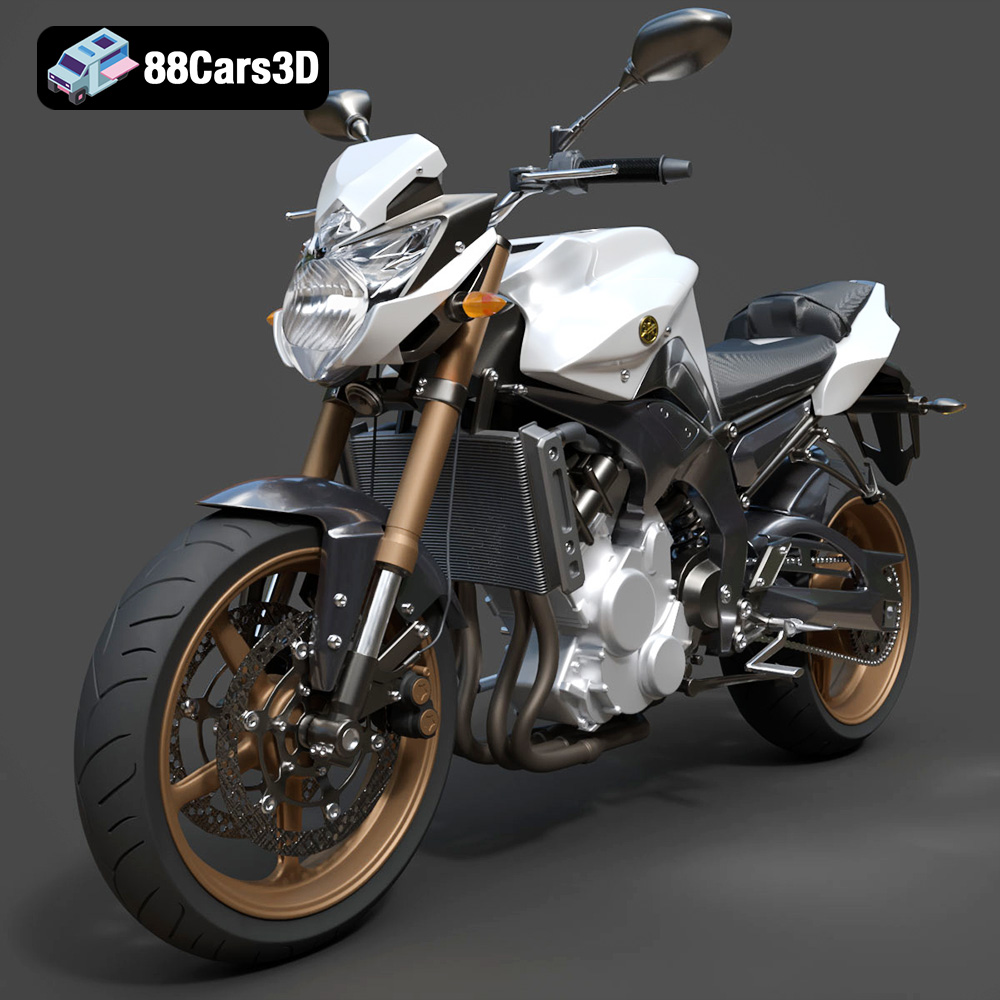
Yamaha FZ8 2011 3D Model
Texture: Yes
Material: Yes
Download the Yamaha FZ8 2011 3D Model featuring clean geometry, realistic detailing, and a fully modeled interior. Includes .blend, .fbx, .obj, .glb, .stl, .ply, .unreal, and .max formats for rendering, simulation, and game development.
Price: $19.99
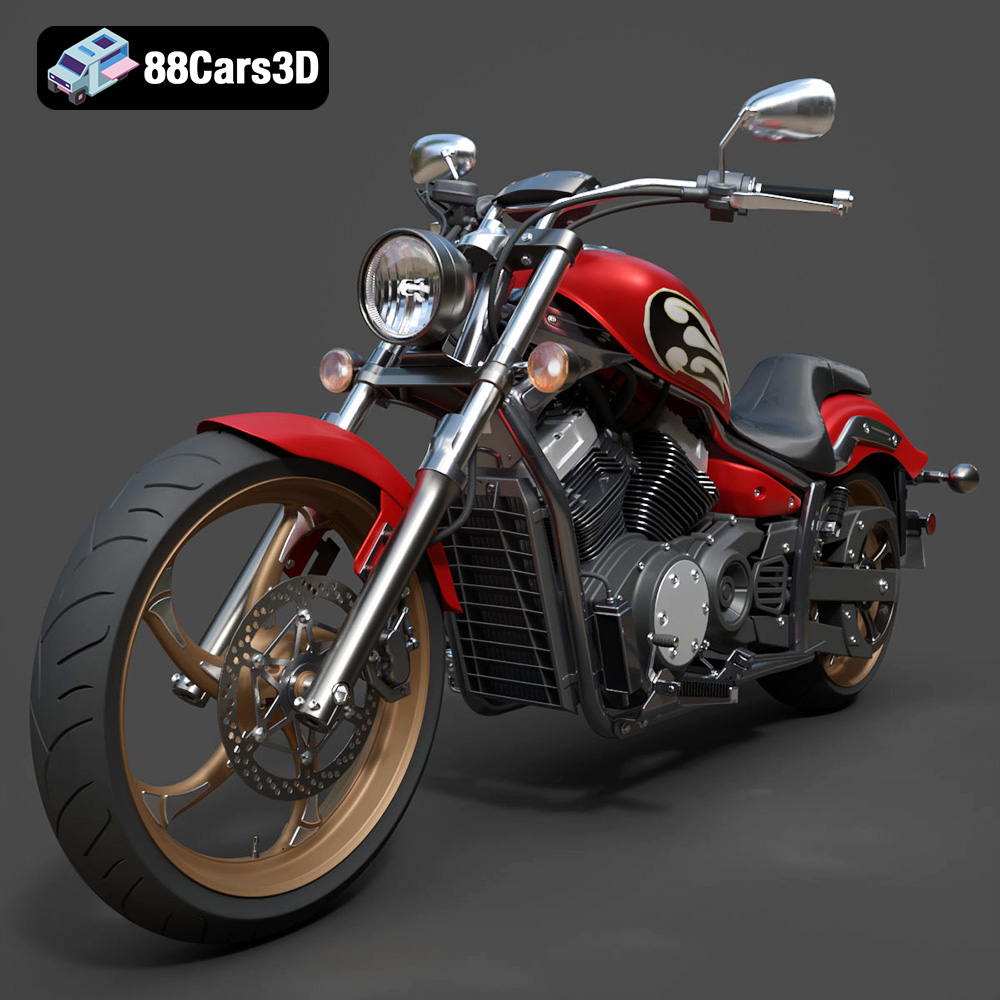
Yamaha Stryker 2012 3D Model
Texture: Yes
Material: Yes
Download the Yamaha Stryker 2012 3D Model featuring clean geometry, realistic detailing, and a fully modeled interior. Includes .blend, .fbx, .obj, .glb, .stl, .ply, .unreal, and .max formats for rendering, simulation, and game development.
Price: $19.99
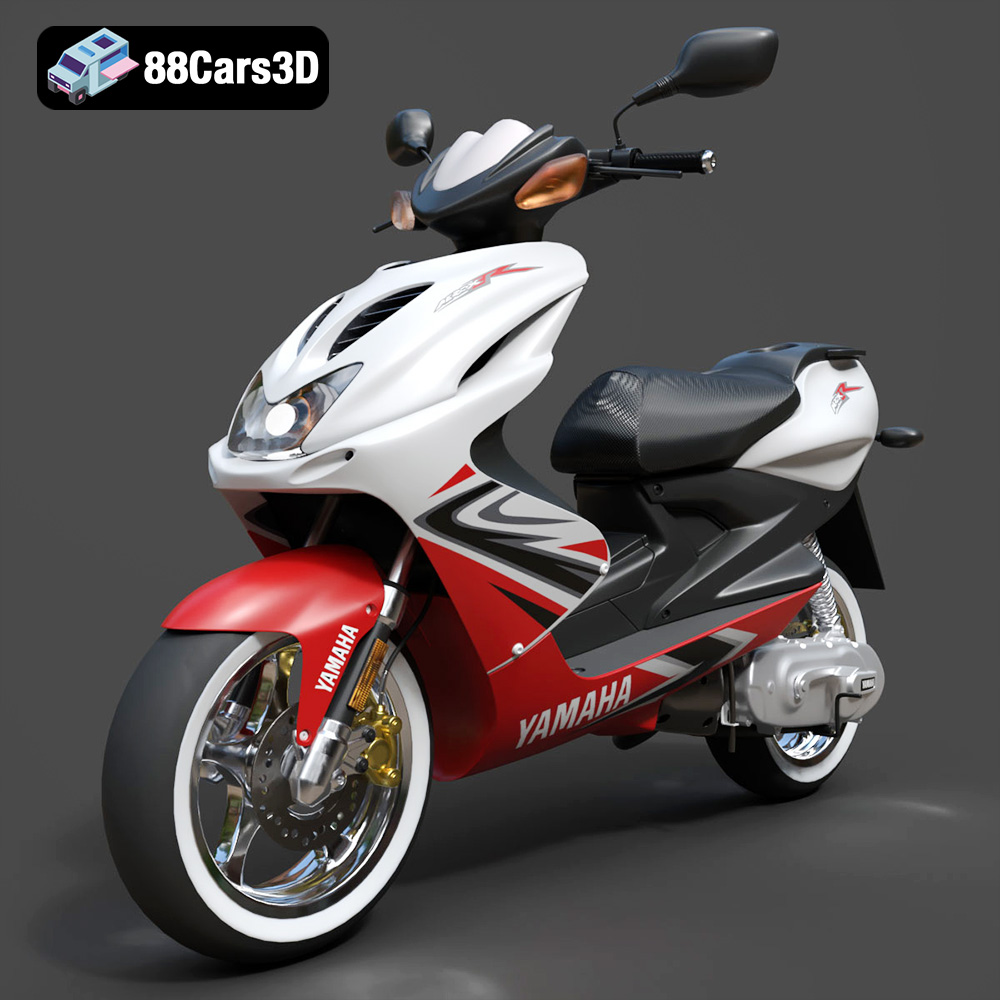
Yamaha Aerox R-002 2024 3D Model
Texture: Yes
Material: Yes
Download the Yamaha Aerox R-002 2024 3D Model featuring clean geometry, realistic detailing, and a fully modeled interior. Includes .blend, .fbx, .obj, .glb, .stl, .ply, .unreal, and .max formats for rendering, simulation, and game development.
Price: $19.99
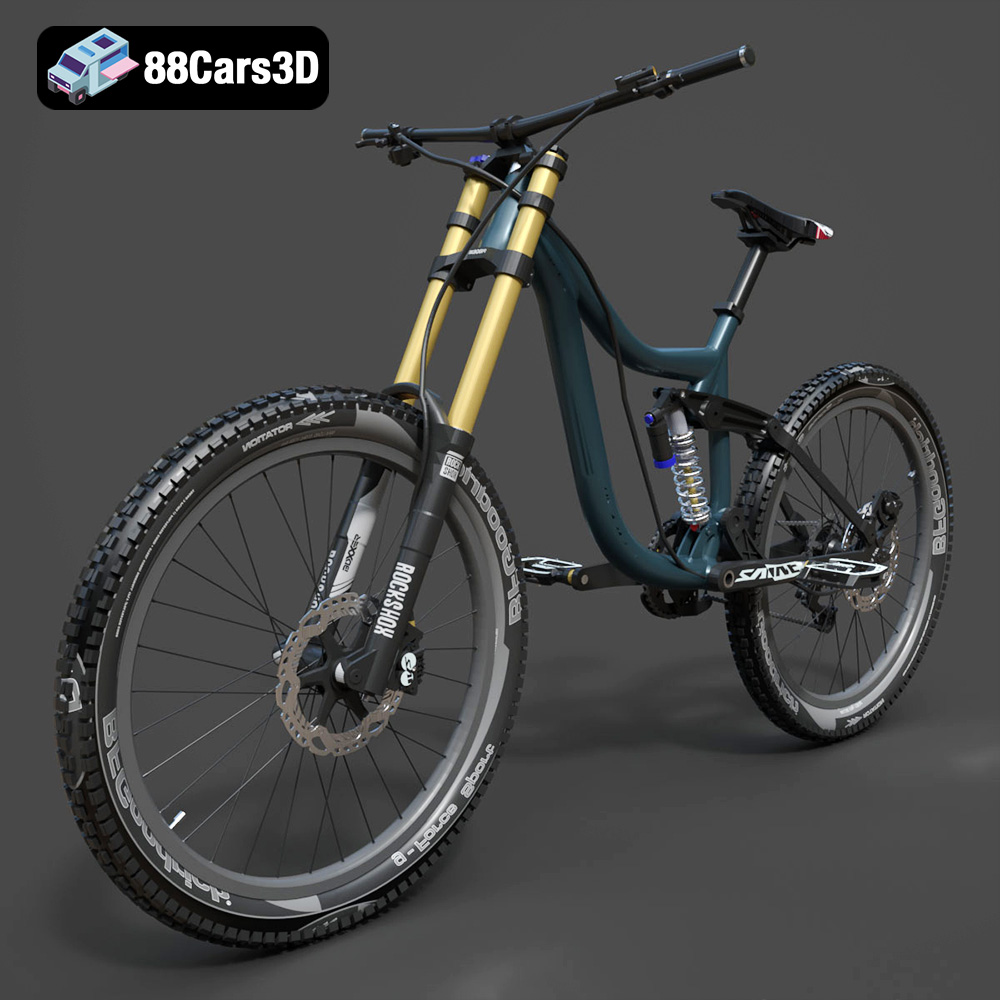
Mototsikly Downhill Bike-002 3D Model
Texture: Yes
Material: Yes
Download the Mototsikly Downhill Bike-002 3D Model featuring clean geometry, realistic detailing, and precise mechanical components. Includes .blend, .fbx, .obj, .glb, .stl, .ply, .unreal, and .max formats for rendering, simulation, and game development.
Price: $19.99
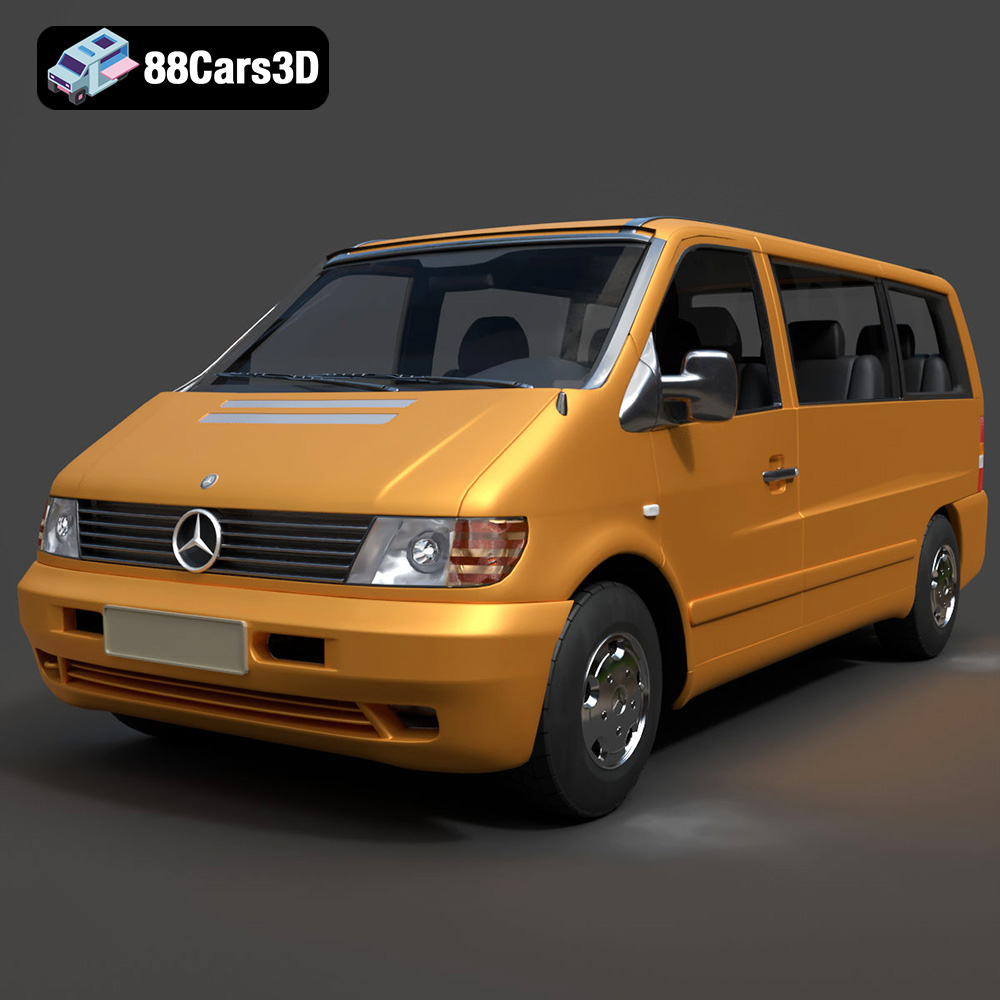
Mercedes-Benz Vito Passenger Van 3D Model
Texture: Yes
Material: Yes
Download the Mercedes-Benz Vito Passenger Van 3D Model featuring clean geometry, realistic detailing, and a fully modeled interior. Includes .blend, .fbx, .obj, .glb, .stl, .ply, .unreal, and .max formats for rendering, simulation, and game development.
Price: $19.99
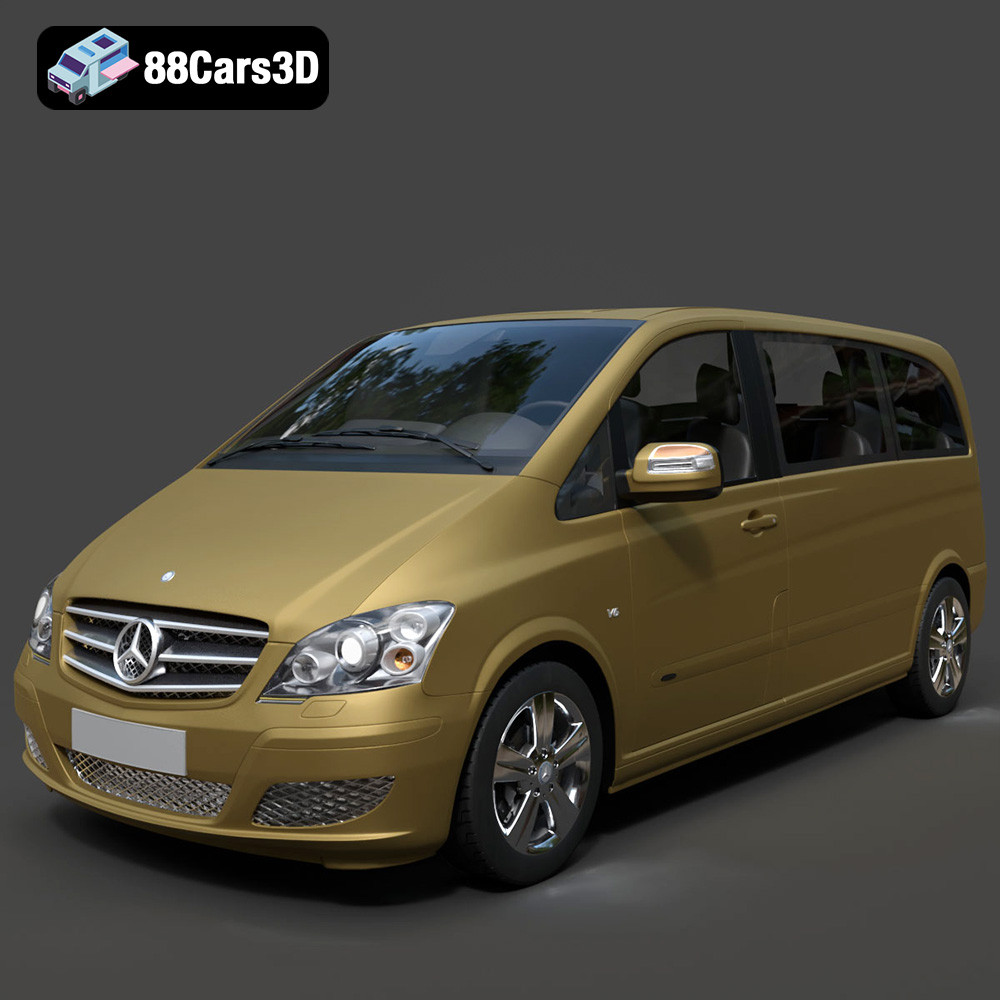
Mercedes-Benz Viano 2010 3D Model
Texture: Yes
Material: Yes
Download the Mercedes-Benz Viano 2010 3D Model featuring clean geometry, realistic detailing, and a fully modeled interior. Includes .blend, .fbx, .obj, .glb, .stl, .ply, .unreal, and .max formats for rendering, simulation, and game development.
Price: $19.99

Emt Avtobus 007 3D Model
Texture: Yes
Material: Yes
Download the Emt Avtobus 007 3D Model featuring clean geometry, realistic detailing, and a fully modeled interior. Includes .blend, .fbx, .obj, .glb, .stl, .ply, .unreal, and .max formats for rendering, simulation, and game development.
Price: $19.99
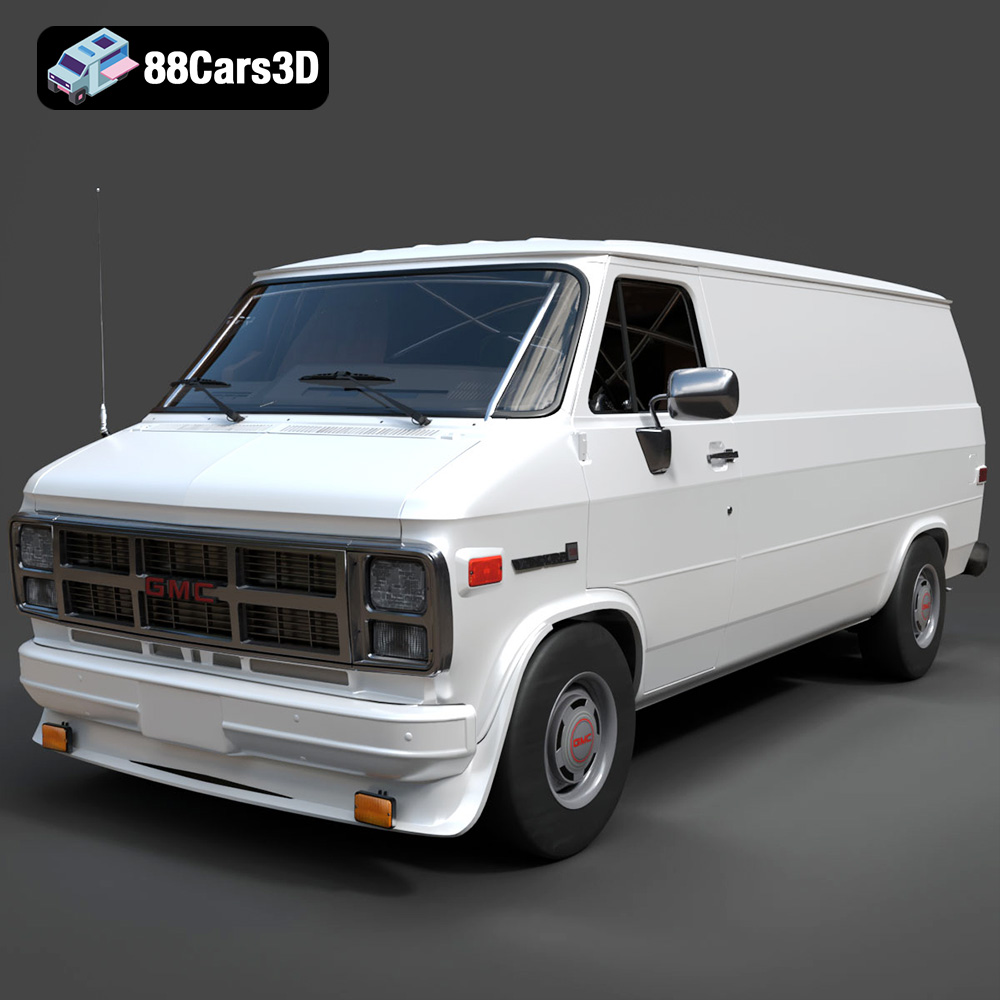
GMC Vandura G-1500 1983 3D Model
Texture: Yes
Material: Yes
Download the GMC Vandura G-1500 1983 3D Model featuring clean geometry, realistic detailing, and a fully modeled interior. Includes .blend, .fbx, .obj, .glb, .stl, .ply, .unreal, and .max formats for rendering, simulation, and game development.
Price: $19.99
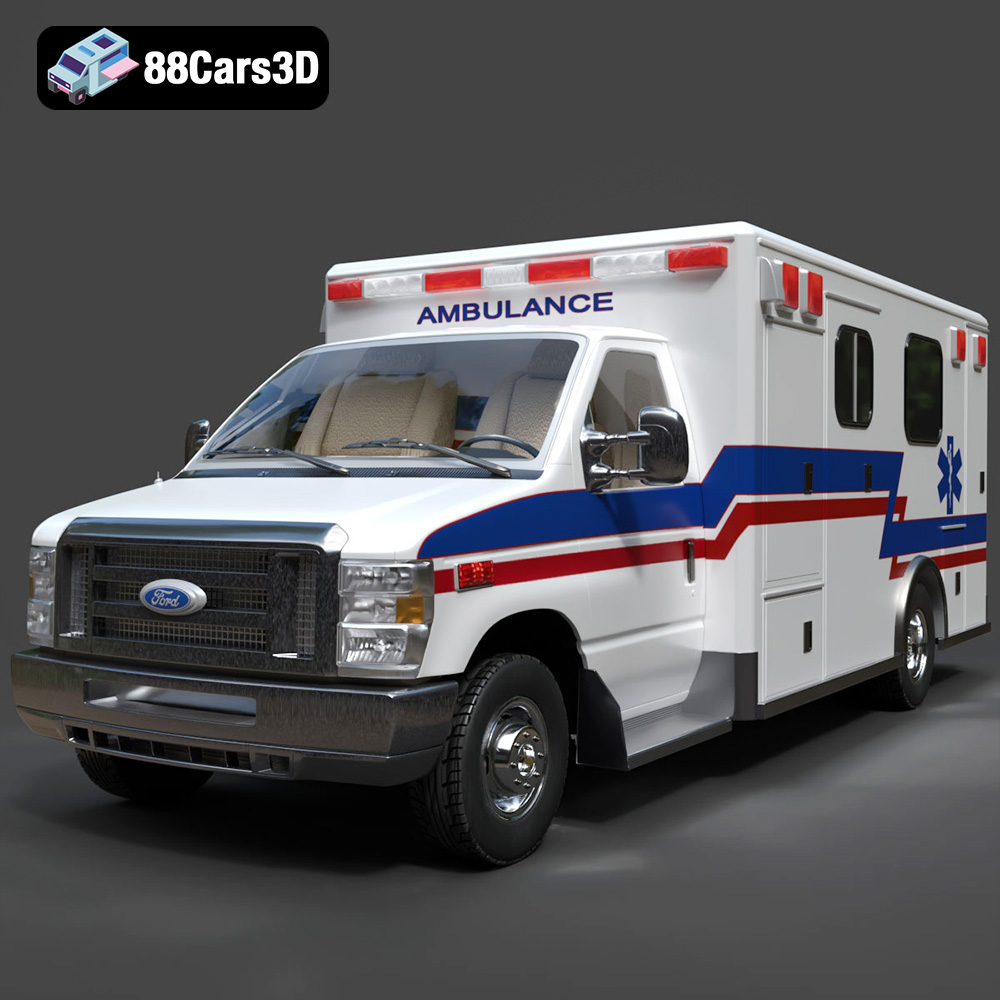
Ford E-450 Ambulance 3D Model
Texture: Yes
Material: Yes
Download the Ford E-450 Ambulance 3D Model featuring clean geometry, realistic detailing, and a fully modeled interior. Includes .blend, .fbx, .obj, .glb, .stl, .ply, .unreal, and .max formats for rendering, simulation, and game development.
Price: $19.99
