

Mastering Digital Realism: The Power of Production-Ready 3D Assets for Any Project
In the vibrant and ever-evolving world of digital content creation, the demand for high-quality, meticulously crafted 3D assets continues to surge. From cinematic visualizations to immersive game environments and interactive AR/VR experiences, the foundational element for success lies in the quality of your 3D models. As artists and developers push the boundaries of realism and performance, the need for assets that are not only visually stunning but also technically robust becomes paramount.
Today, we delve into the intricacies of integrating such professional-grade assets into diverse workflows, focusing on how a well-engineered model can elevate your projects. We’ll explore the technical advantages, practical applications, and the sheer versatility that defines truly exceptional 3D content. Our discussion centers around a prime example of such an asset: a meticulously crafted Bicycle 3D Model, a testament to the detail and optimization available for your next creative endeavor. This model, like many other **3D car models** and vehicle assets found on 88cars3d.com, is designed to seamlessly integrate into your pipeline, regardless of your target platform or rendering engine.
The Evolving Landscape of Digital Asset Creation
The digital landscape is a dynamic arena, continually shaped by advancements in software, hardware, and rendering techniques. What was once considered cutting-edge high fidelity is now the expected baseline. This evolution places immense pressure on content creators to deliver increasingly realistic and performant visuals. For instance, creating believable environments for **automotive rendering** or populating a vast open-world game requires assets that not only look good but also adhere to strict technical specifications to maintain frame rates and efficient resource utilization.
Why Detail and Optimization Matter
The difference between a passable 3D model and a truly outstanding one often lies in the balance between intricate detail and meticulous optimization. A high-quality asset, such as the Bicycle 3D Model, is characterized by clean geometry, efficient UV mapping, logical hierarchies, and production-ready materials. This attention to detail ensures that the model performs optimally across various applications, from real-time game engines to high-fidelity offline renderers. It means less time spent on cleaning up geometry or rebuilding materials and more time focusing on creative direction and final polish.
Understanding 3D Model File Formats
Choosing the correct file format for your 3D models is a critical decision that impacts workflow efficiency, software compatibility, and the ultimate performance of your project. Each format is designed with specific use cases and technical considerations in mind. Understanding these nuances is key to a smooth production pipeline, especially when working with versatile assets like the Bicycle 3D Model, which comes equipped with a comprehensive suite of formats.
.blend – The Blender Powerhouse
The .blend file is Blender’s native format, preserving an entire scene, including meshes, materials, textures, animations, cameras, lighting, and even the software’s interface layout. Its primary advantage is retaining full editability within Blender, making it ideal for users deeply integrated into the Blender ecosystem. When you acquire an asset like our Bicycle 3D Model in .blend format, you gain access to the original project file, allowing for unparalleled customization and understanding of its construction, from modifier stacks to node-based materials. It ensures all components and scene setups are preserved exactly as intended by the artist, offering a rich starting point for further development or learning.
.fbx – The Industry Standard for Interoperability
Autodesk’s .fbx format has become a de facto industry standard for exchanging 3D data between different software applications. It’s incredibly versatile, supporting geometry, materials, textures, animations, cameras, and lights. For real-time applications, .fbx is the go-to format for importing **game assets** into engines like Unreal Engine and Unity due to its robust support for skeletal animations and efficient scene graph representation. The Bicycle 3D Model’s .fbx version is meticulously prepared to ensure smooth import and correct scaling, pivot points, and material assignments, crucial for developers building interactive experiences or cinematic sequences.
.obj – Universal Compatibility for Broad Reach
The Wavefront .obj format is one of the oldest and most universally supported 3D file formats. While it primarily stores geometric data (vertices, normals, UVs, faces) and references external material (.mtl) and texture files, it lacks support for animation or advanced scene data. Its strength lies in its widespread compatibility, making it an excellent choice for basic mesh exchange across virtually any 3D software. When maximum compatibility is required, especially for static renders or general model sharing, the .obj version of the Bicycle 3D Model ensures broad accessibility.
.glb – Lightweight for Web and Immersive Experiences
.glb (GL Transmission Format Binary) is a modern, compact, and efficient format specifically optimized for web-based 3D, AR (Augmented Reality), and VR (Virtual Reality) applications. It bundles all necessary data—geometry, materials, textures, and even animations—into a single binary file, simplifying distribution and loading. Its smaller file size and native support in many modern browsers and AR/VR platforms make it ideal for delivering interactive 3D content. For integrating the Bicycle 3D Model into web configurators, social media filters, or mobile AR apps, the .glb format is the most performant choice.
.stl – Bridging Digital to Physical Fabrication
The .stl (STereoLithography) format is the standard for 3D printing. It represents a 3D model as a collection of unconnected triangular facets, defining only the surface geometry without color, texture, or material information. While lacking visual richness, its simplicity makes it universally compatible with 3D printing software (slicers). The Bicycle 3D Model’s availability in .stl format means it can be readily prepared for physical production, whether for prototyping, miniature models, or educational aids, directly translating its digital form into a tangible object.
.ply – Precision for Technical Applications
The Polygon File Format (.ply) is designed to store 3D data from 3D scanners, CAD applications, and other precision modeling tools. It can store various properties beyond just geometry, including color, transparency, normals, texture coordinates, and even properties per face or vertex. This makes it particularly useful for scientific, engineering, and digital preservation contexts where data integrity and detailed attribute storage are crucial. For advanced analysis or integration into CAD workflows, the .ply version of the Bicycle 3D Model offers robust and precise data representation.
.unreal – Native Integration for Game Development
The .unreal format, often referring to an Unreal Engine project setup or a packaged asset, provides native compatibility within the Unreal Engine ecosystem. This means the Bicycle 3D Model comes pre-configured with Unreal-specific materials, collision meshes, LODs (Levels of Detail), and potentially even blueprints or animation setups, ready for direct drag-and-drop integration into your Unreal projects. This significantly reduces setup time and ensures optimal performance and visual fidelity within the engine, critical for efficient game development and real-time visualization.
.max – Deep Customization within 3ds Max
The .max file is the native format for Autodesk 3ds Max, a powerful 3D modeling, animation, and rendering software widely used in architectural visualization, film, and game development. Similar to .blend, it saves the entire scene, preserving all aspects of the 3ds Max project, including complex material setups, intricate rigging, animation timelines, lighting, and camera configurations. The .max version of the Bicycle 3D Model offers complete editability for artists working within 3ds Max, allowing for advanced customization, detailed **automotive rendering** setups, or seamless integration into existing 3ds Max projects without data loss.
Crafting Realism: The Anatomy of a High-Quality Bicycle 3D Model
A truly professional 3D model is more than just an assembly of polygons; it’s a carefully engineered digital asset designed for performance, flexibility, and visual authenticity. The Bicycle 3D Model from 88cars3d.com exemplifies this philosophy, offering a robust foundation for a myriad of projects.
Geometry and Topology: The Foundation of Smoothness
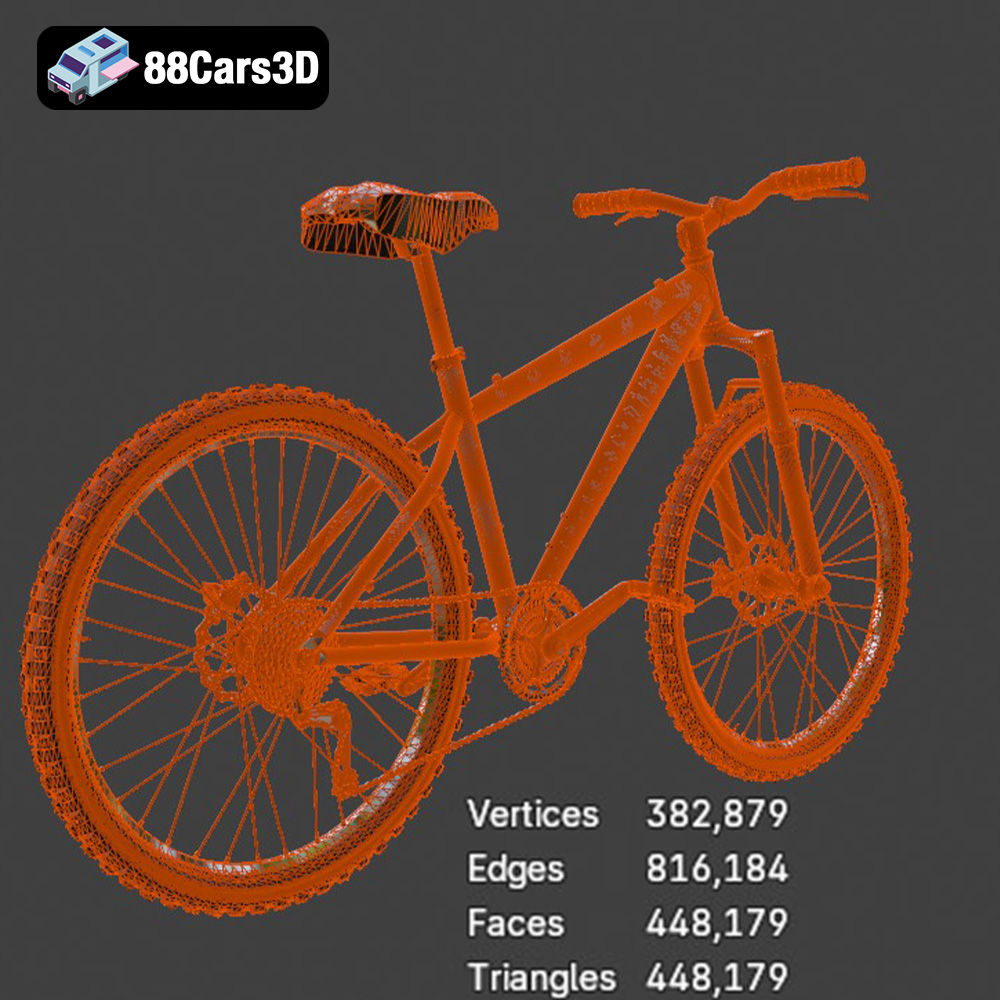
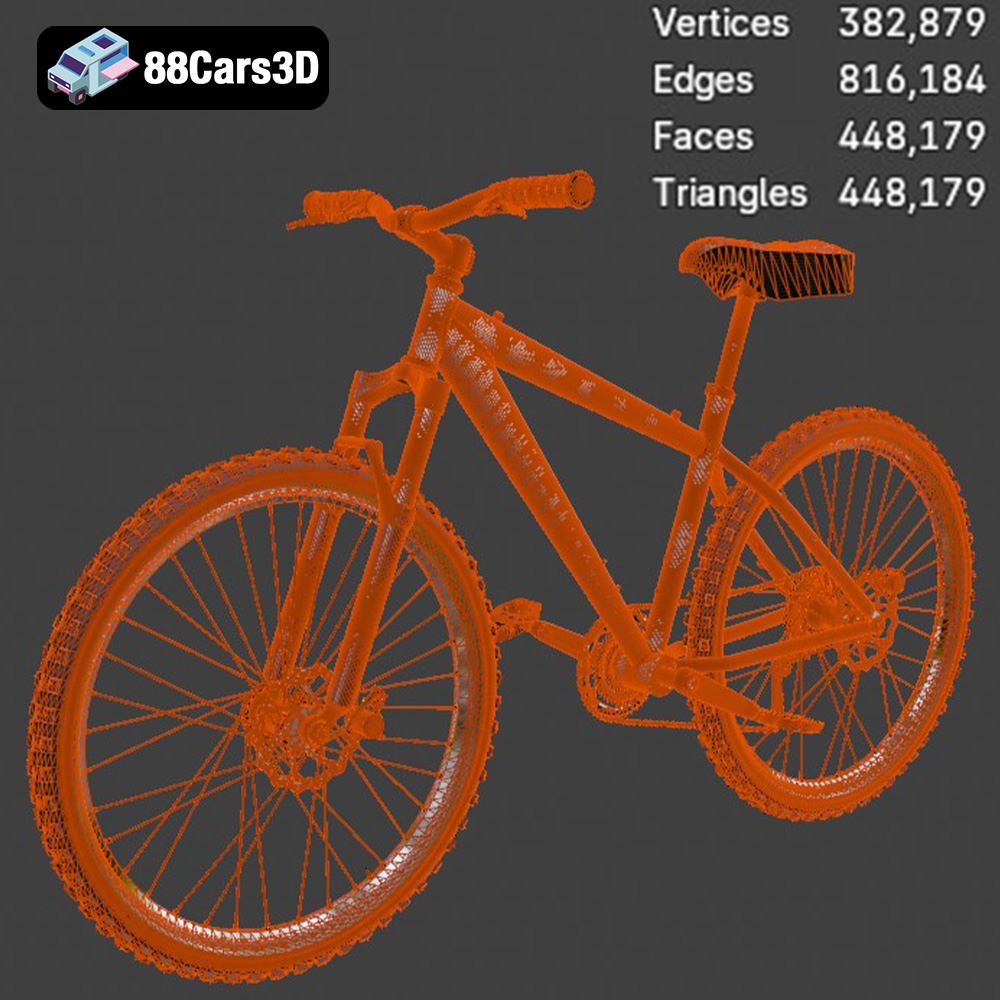
The core of any great 3D model is its geometry. The Bicycle 3D Model boasts clean, quad-dominant topology, which is crucial for several reasons. Quads (four-sided polygons) deform more predictably than triangles when animated or subdivided, leading to smoother results. This clean mesh ensures that the model can be easily sculpted, modified, or have subdivision surface modifiers applied without introducing artifacts or pinching. Furthermore, a balanced level of detail means that while intricate features like the chain, sprockets, and brake calipers are present, the overall poly count remains optimized for efficient rendering across various platforms, preventing unnecessary computational overhead.
Material Fidelity and Texturing
Visual realism hinges on convincing materials and textures. This bicycle model features high-quality materials simulating metal, rubber, and plastic finishes with accuracy. These physically based rendering (PBR) materials react realistically to different lighting conditions, providing authentic reflections, refractions, and diffuse properties. The thoughtful texturing includes subtle surface imperfections and wear where appropriate, enhancing realism. Crucially, the model offers customization options, allowing artists to easily modify frame colors, tire sidewall colors, and handlebar grips. This flexibility extends to adjusting material properties for different finishes, such as matte, gloss, or metallic, making it adaptable to any scene’s aesthetic requirements.
Animation Readiness: Pivots and Hierarchy
For any dynamic visualization or interactive experience, a model’s animation readiness is paramount. The Bicycle 3D Model is built with a well-organized hierarchy and proper pivot points. Components like the wheels, handlebars, and pedals are separated, each with its pivot point correctly placed. This meticulous setup allows for seamless animation and rigging, enabling realistic wheel rotation, handlebar steering, and pedal movement without complex re-rigging. This attention to detail significantly streamlines the animation pipeline, saving valuable production time and allowing animators to focus on motion rather than technical setup.
Integrating the Bicycle 3D Model into Professional Workflows
The versatility of a well-designed 3D asset is best demonstrated by its seamless integration into diverse professional pipelines. The Bicycle 3D Model is engineered to be a workhorse, fitting perfectly into multiple creative and technical domains.
Architectural Visualization and Studio Rendering
In architectural visualization, context is everything. Adding realistic elements like a bicycle can bring a static scene to life, implying human presence and activity. For studio renders and cinematic scenes, the Bicycle 3D Model’s high fidelity and customizable materials make it perfect for close-up shots. Whether rendering in V-Ray, Corona, Cycles, or Arnold, its clean topology and PBR materials ensure that it will look exceptional under any lighting condition. Designers can easily integrate it into exterior architectural scenes, urban environments, or even interior spaces to add a touch of lifestyle and realism, complementing other **3D car models** or environmental elements.
Game Development and Real-time Environments
Optimized for use as a high-quality **game asset**, the Bicycle 3D Model is a boon for game developers. Its balanced poly count and efficient UVs are tailored for real-time engines like Unreal Engine and Unity. The inclusion of .fbx and .unreal formats ensures quick and accurate import, often with pre-configured materials and collision meshes. This allows for smooth integration into racing games, open-world environments, or interactive simulations where performance is critical. The model’s separate, pivot-ready components mean it can be easily rigged for player characters, NPCs, or dynamic physics simulations without extensive re-work.
Augmented and Virtual Reality Experiences
AR and VR demand models that are both visually rich and incredibly performant. The .glb format, included with the Bicycle 3D Model, is specifically optimized for these immersive applications, bundling all assets into a single, compact file for quick loading and minimal latency. This makes it an ideal asset for enhancing interactive experiences in augmented and virtual reality, whether for product showcases, virtual tours, or educational applications. Its accurate real-world scale further ensures seamless integration into existing AR/VR scenes, maintaining a sense of presence and authenticity.
Beyond Visualization: Practical Applications of the Bicycle 3D Model
While rendering and game development are common uses, the technical precision and flexibility of this Bicycle 3D Model extend its utility far beyond traditional visual content creation.
Simulation and Training Modules
For educational platforms and technical training modules, accurate representations of real-world objects are indispensable. The detailed mechanical features of the Bicycle 3D Model, including the chain, sprockets, derailleur system, and brake calipers, make it an excellent candidate for simulation and training. Engineers can use it to visualize mechanical processes, simulate forces, or create interactive guides for assembly and maintenance. Its clean topology and accurate scale allow for precise kinematic simulations, providing valuable insights in a digital environment.
3D Printing and Prototyping
The bridge between the digital and physical world is increasingly important. With the inclusion of the .stl format, the Bicycle 3D Model is ready for 3D printing. This means designers can take the digital asset and transform it into a physical prototype, a scale model, or even a functional part for specific applications. The clean mesh ensures a smooth transition to slicing software, enabling reliable physical model production and rapid prototyping for design evaluation or functional testing. This is a powerful tool for product designers, engineers, and hobbyists alike.
Marketing and Product Presentation
For marketing and product presentation, high-quality visuals are crucial for capturing attention and conveying value. The Bicycle 3D Model offers extensive customization options, allowing brands to integrate custom branding or graphics onto the frame, match specific color palettes, and adapt lighting setups to achieve various moods. This flexibility makes it an invaluable asset for creating compelling product shots, animated advertisements, or interactive online configurators, ensuring a consistent brand image and engaging customer experience. For companies selling bicycles, this asset becomes an incredibly powerful marketing tool.
Technical Deep Dive: Optimizing for Performance and Scalability
The true mark of a professional 3D asset lies in its underlying technical excellence. The Bicycle 3D Model is not just about aesthetics; it’s built with performance and scalability in mind, a philosophy shared across all premium assets on 88cars3d.com, including top-tier **3D car models**.
Poly Count Management and Level of Detail (LODs)
Effective poly count management is crucial for performance, especially in real-time applications. While a high-quality model like this bicycle has sufficient detail for close-up renders, a professional asset often includes or is designed for the implementation of Levels of Detail (LODs). This involves creating multiple versions of the model, each with a progressively lower polygon count, to be swapped out based on the camera’s distance. For instance, the bicycle might have a high-poly version for hero shots, a medium-poly for general gameplay, and a low-poly for distant background elements. This strategy ensures that computational resources are always optimally allocated, maintaining smooth frame rates without sacrificing visual quality where it matters most.
Efficient UV Mapping and Texture Atlasing
UV mapping is the process of flattening a 3D model’s surface into a 2D space to apply textures. The Bicycle 3D Model features efficient, clean UV mapping, meaning there’s minimal distortion, overlap, or wasted space on the UV layout. This optimizes texture resolution and clarity. Furthermore, for performance-critical scenarios like game development, textures are often consolidated into “atlases” – a single, larger texture containing multiple smaller textures. This reduces the number of draw calls, significantly boosting rendering performance. The model’s well-organized UVs make it ideal for either individual material application or for texture atlasing, offering flexibility depending on the project’s specific optimization needs.
Rigging Considerations for Dynamic Animation
While the Bicycle 3D Model comes with separated components and proper pivot points for animation, advanced projects often require a full rigging setup. A professional rig allows for complex, physically accurate animations, such as suspension compression, chain articulation, and more nuanced rider interactions. The model’s clean, quad-dominant topology is a perfect foundation for rigging, as it deforms smoothly under the influence of bones and skin weights. This readiness for advanced rigging ensures that animators can create dynamic, believable motion sequences without encountering common topology-induced deformation issues, whether for a cinematic chase scene or a realistic riding simulation.
Conclusion
The digital realm thrives on innovation and visual excellence, driven by the quality of the assets at our disposal. A meticulously crafted asset like the Bicycle 3D Model is not merely a collection of polygons; it’s a versatile tool engineered for professional-grade results across diverse applications. From the foundational integrity of its quad-dominant topology to its animation-ready hierarchy and comprehensive file format support, this model empowers artists and developers to achieve stunning realism and optimal performance.
Whether you’re building immersive game worlds, crafting photorealistic architectural visualizations, developing cutting-edge AR/VR experiences, or even exploring 3D printing and advanced simulations, the technical advantages of this model streamline your workflow and elevate your final output. It’s a testament to the value of investing in high-quality, production-ready assets that stand the test of rigorous professional pipelines.
To explore this exceptional bicycle model and discover a vast array of other premium **3D car models**, vehicle assets, and digital resources, visit 88cars3d.com. Equip your projects with the precision and realism they deserve.
Featured 3D Model
Bicycle 3D Model
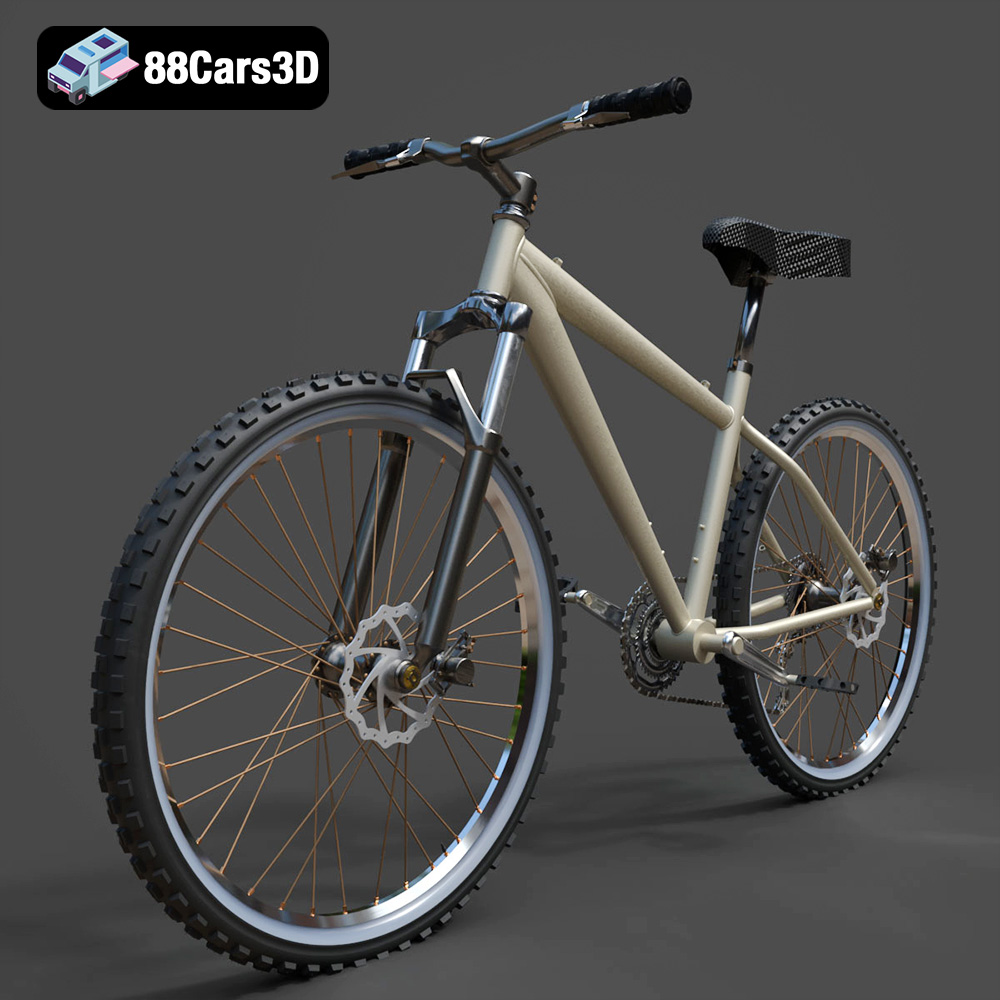
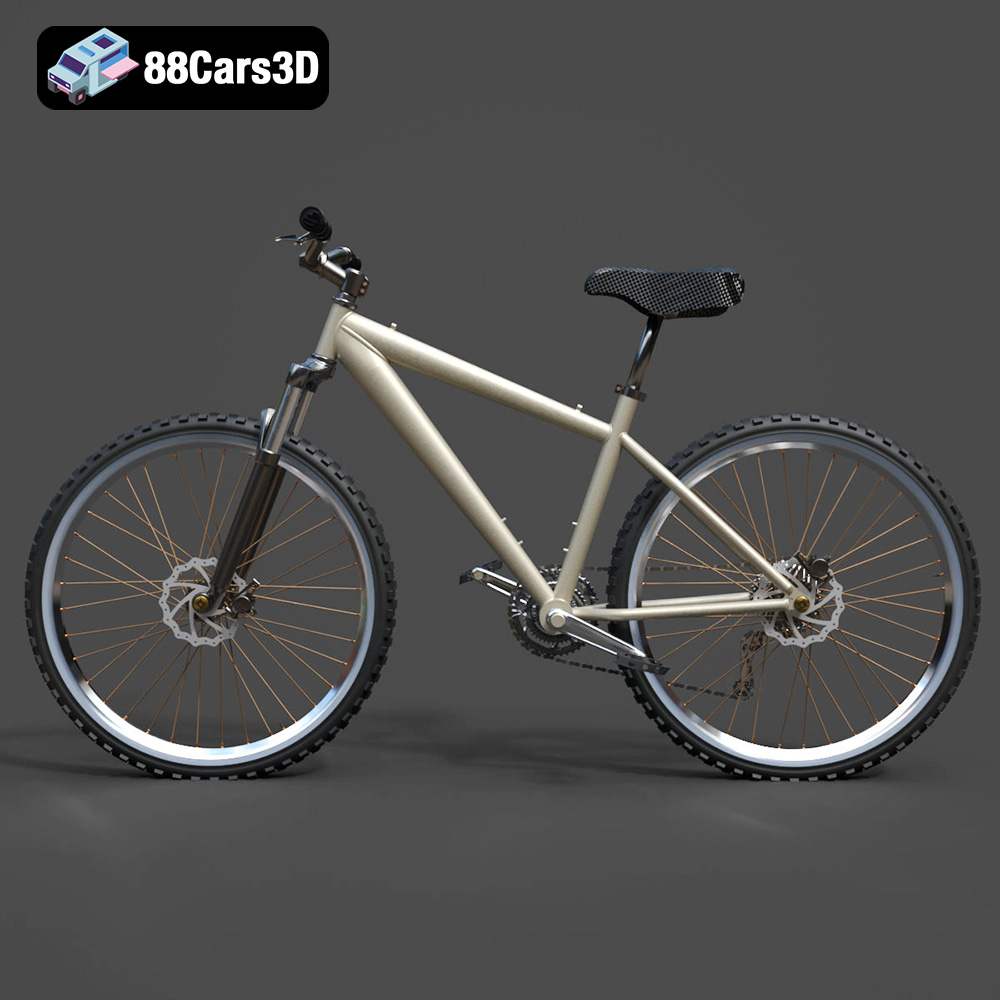
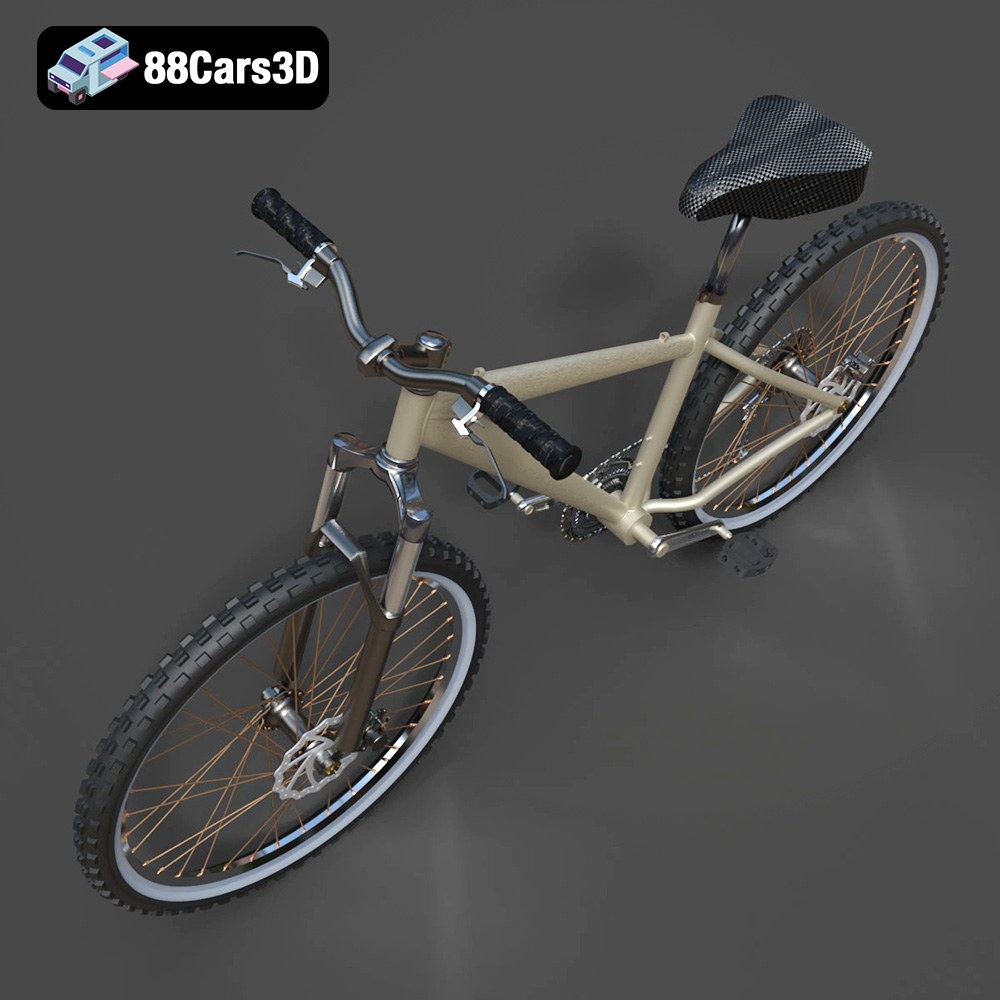
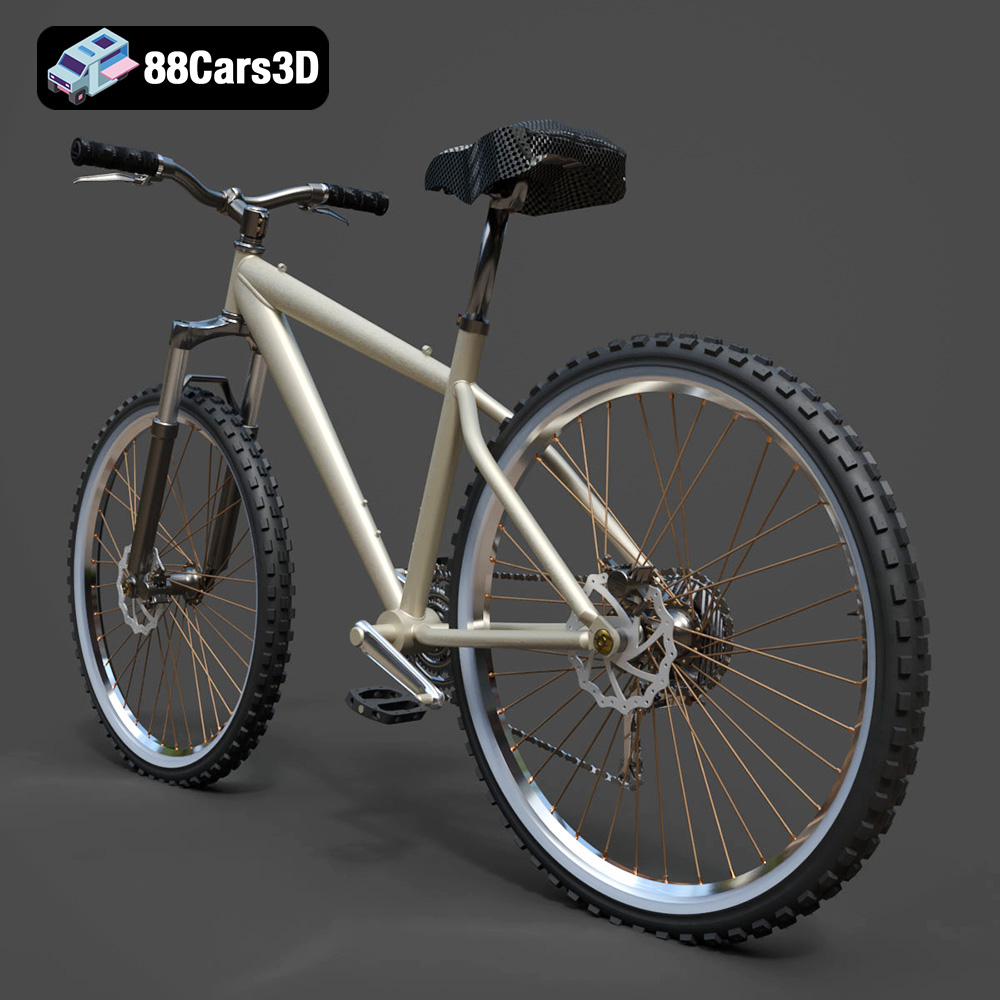
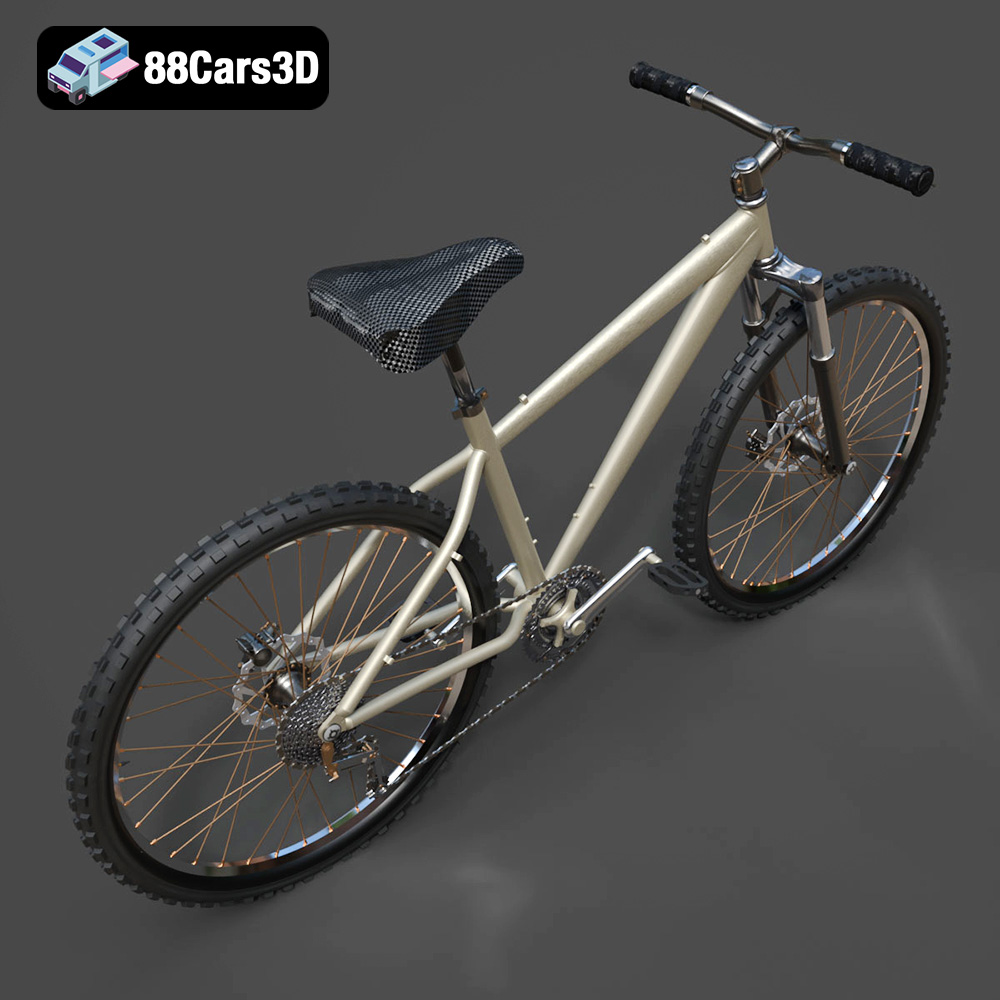
Presenting a meticulously crafted 3D model of a modern bicycle, designed for versatility and realism. This model captures the essential form and intricate details of a standard two-wheeler, making it perfect for a wide array of digital projects. Built with clean geometry and a balanced level of detail, it ensures optimal performance and visual fidelity. This asset is ideal for high-quality rendering, animations, detailed simulations, and seamless integration into game development environments.
Exterior Features:
- Authentic frame design with realistic tubing and connections
- Fully detailed wheels, spokes, tires, and hubs
- Functional handlebars, stem, and brake levers
- Pedals with defined tread patterns
- Realistic seat post and saddle
- Separated components for ease of animation (e.g., rotating wheels, steering handlebars)
- High-quality materials simulating metal, rubber, and plastic finishes
Interior / Mechanical Features:
- Detailed chain, sprockets, and derailleur system
- Visible brake calipers and cables
- Optimized mesh quality for efficient rendering and interaction
Technical Advantages:
- Clean, quad-dominant topology for smooth subdivisions and deformations
- Accurate real-world scale, ensuring seamless integration into existing scenes
- Well-organized hierarchy with proper pivot points for animation and rigging (e.g., wheels rotate on their axes)
Applications:
- Rendering & Visualization: Perfect for studio renders, architectural visualizations, and cinematic scenes needing realistic vehicle assets.
- Game Development: Optimized for use in racing games, open-world environments, and interactive simulations as a high-quality game asset.
- AR/VR: Enhances immersive experiences in augmented and virtual reality applications with a detailed and performant model.
- Simulation & Training: Suitable for educational platforms and technical training modules requiring accurate bicycle representations.
- 3D Printing: Can be easily converted to .stl format for physical model production and prototyping.
Customization Options:
- Easily modify frame colors, tire sidewall colors, and handlebar grips
- Adjust material properties for different finishes (e.g., matte, gloss, metallic)
- Integrate custom branding or graphics onto the frame
- Adapt lighting setups to achieve various visual moods and environments
This bicycle 3D model offers exceptional quality and flexibility, empowering artists and developers to create compelling visual content and interactive experiences. Its professional-grade construction ensures reliable performance across diverse digital platforms.
Included File Formats:
- .blend – Blender project with materials
- .fbx – Compatible with Unreal, Unity, and major 3D engines
- .obj – Universal format for nearly all 3D software
- .glb – Optimized for AR, VR, and web-based visualization
- .stl – Ready for 3D printing
- .ply – Mesh format for analysis and CAD workflows
- .unreal – Unreal Engine project setup
- .max – Editable 3ds Max scene for rendering and animation
Tags:
.bicycle,.bike,.transport,.rendering,.simulation,.gameasset,.arvr,.blend,.fbx,.obj,.glb,.stl,.ply,.unreal,.maxMercedes Benz CLS 500 3D Model
$19.99
Product Image Gallery
Related Tags
.arvr
.bicycle
.bike
.blend
.fbx
.gameasset
.glb
.max
.obj
.ply
.rendering
.simulation
.stl
.transport
.unreal
