Get 20% OFF All Premium 3D & STL Models!

In the rapidly evolving landscape of digital content creation, the demand for highly detailed and technically robust 3D assets has never been greater. From cinematic automotive advertisements and immersive game environments to intricate engineering visualizations and cutting-edge AR/VR experiences, the quality of a 3D model directly impacts the final output. Professionals across industries constantly seek assets that not only look stunning but are also built with precision, optimized for performance, and versatile enough to integrate seamlessly into diverse pipelines.
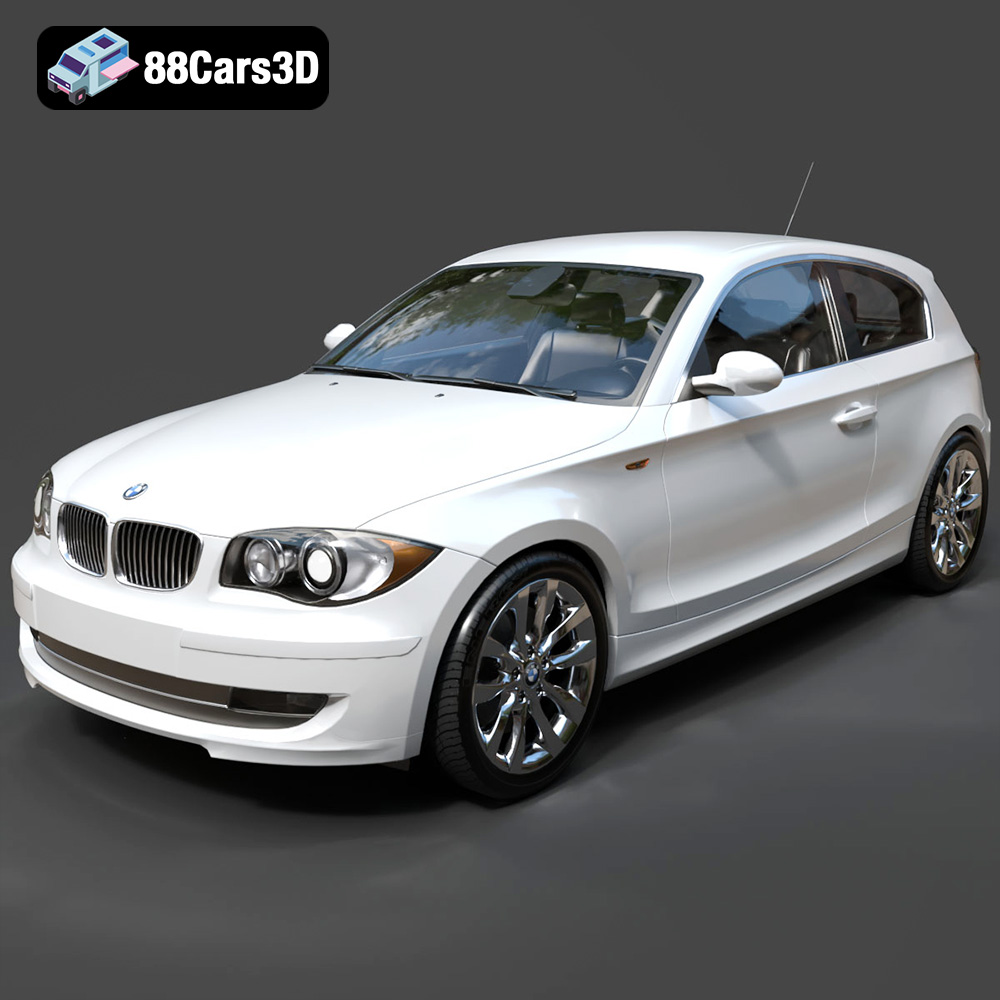
This pursuit of digital realism is perfectly embodied by exceptional 3D car models, which serve as foundational elements for countless projects. Today, we’ll delve into the intricacies of what makes a premium 3D vehicle asset truly valuable, exploring the technical specifications, workflow advantages, and widespread applications that define industry standards. As a prime example of such excellence, we’ll frequently reference the meticulously crafted BMW 1 Series 3-Door E81 3D Model, an asset that exemplifies the balance between aesthetic fidelity and technical integrity. You can find this and other high-quality 3D car models at 88cars3d.com, a leading marketplace for professionals seeking top-tier digital automotive assets.
At the core of any compelling digital visualization lies the quality of its constituent assets. For automotive projects, this means investing in 3D car models that are not merely superficial representations but rather precise digital twins. The journey from concept to final render, or from design to interactive experience, hinges on the meticulous attention to detail embedded within the 3D geometry and materials.
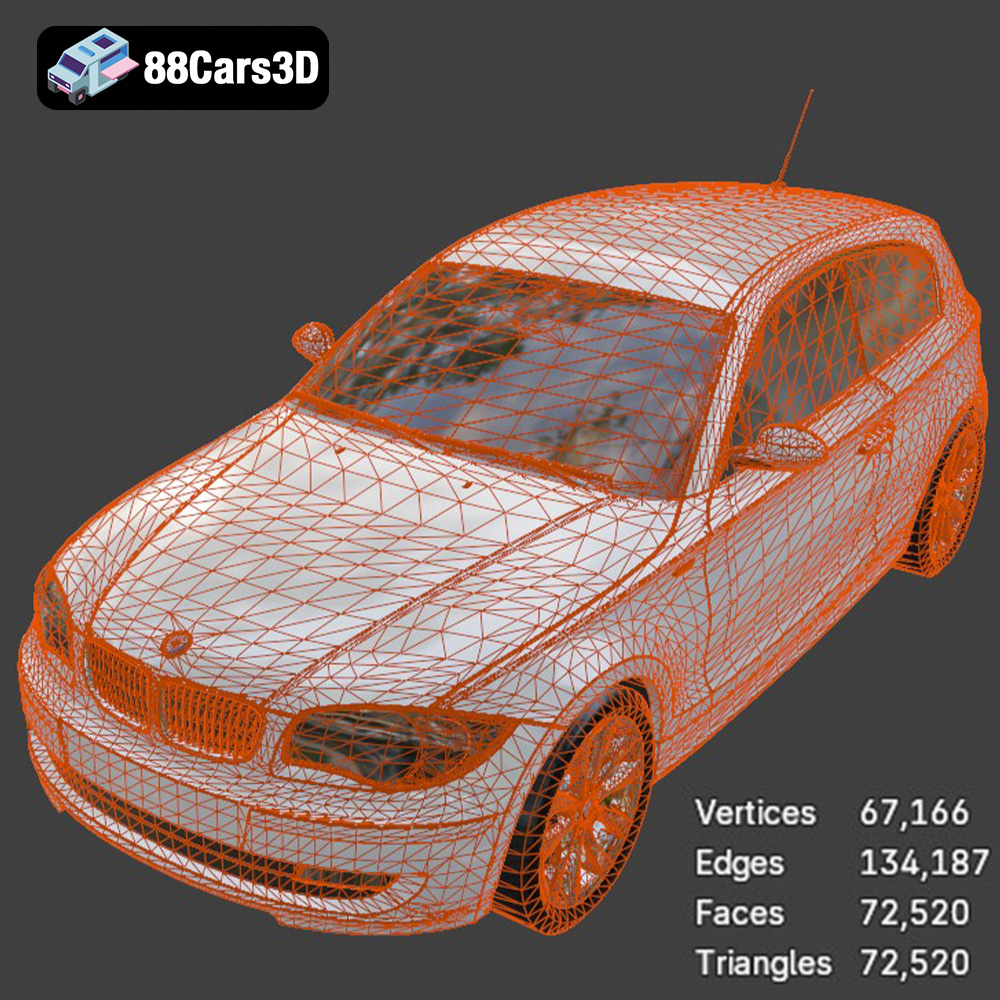
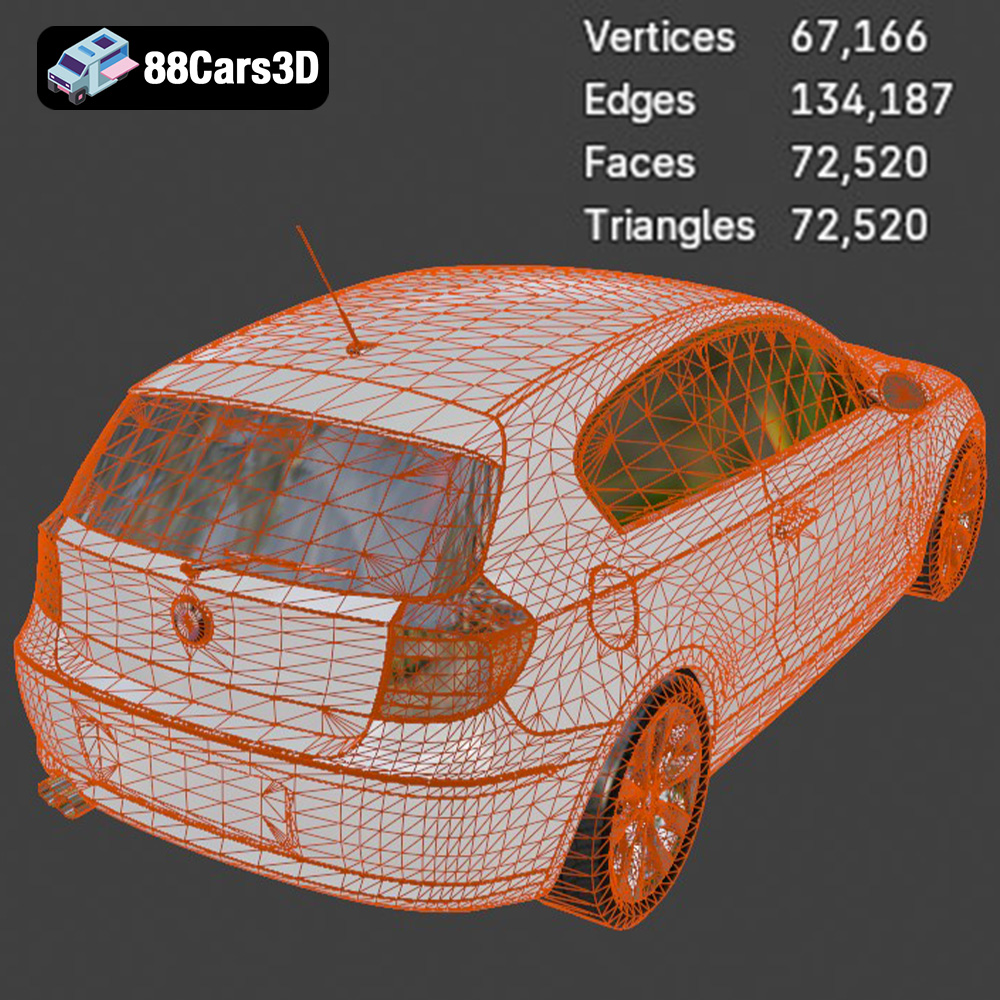
While visual appeal is paramount, the true value of a professional 3D car model extends far beyond surface beauty. Precision in geometry, real-world scale, and accurate topology are critical for a multitude of reasons. For instance, in architectural visualization, integrating a car model that isn’t built to exact real-world scale can throw off the entire sense of perspective and realism within a scene. Similarly, for automotive engineers or product designers, a precise model allows for accurate light interaction, material studies, and even rudimentary physical simulations. The BMW 1 Series 3-Door E81 3D Model, for example, is modeled to real-world scale, ensuring seamless integration into any project requiring authentic dimensions and proportions. Its clean quad-dominant topology is a testament to its professional construction, providing smooth subdivision surfaces necessary for flawless high-resolution renders and preventing unwanted artifacts.
A single, well-constructed 3D car model can serve as a versatile asset across a spectrum of industries. In advertising and film, these models are the stars of cinematic sequences, demanding photorealistic detail and animatable components. In the realm of game development, the same model might be optimized for real-time performance, with LODs (Levels of Detail) and efficient material setups. AR/VR applications leverage these models to create immersive, interactive experiences, requiring lightweight yet visually rich assets. The intrinsic value of models like the BMW 1 Series 3-Door E81 lies in their inherent flexibility, designed from the ground up to adapt to these varied and often demanding technical requirements. Its optimized mesh quality, coupled with an organized hierarchy and properly set pivot points, ensures it transitions effortlessly between rendering engines, game engines, and specialized simulation software.
Choosing the correct file format for your 3D car model is a critical decision that impacts compatibility, workflow efficiency, and the ultimate output quality of your project. Each format serves specific purposes, offering unique advantages depending on the software, pipeline, and desired application. Understanding these distinctions is fundamental for any professional working with 3D assets like the BMW 1 Series 3-Door E81 3D Model.
The BMW 1 Series 3-Door E81 3D Model comes packed with a comprehensive suite of file formats, ensuring maximum compatibility and utility. Let’s break down each one:
The availability of these diverse formats with the BMW E81 3D Model underscores its versatility and professional-grade readiness for virtually any creative pipeline.
The true measure of a high-quality 3D asset lies in its practical utility across varied professional workflows. The BMW 1 Series 3-Door E81 3D Model is engineered to excel whether you’re crafting a photorealistic advertisement or building an immersive game world, thanks to its robust technical foundation.
For artists focused on producing stunning visuals, the rendering capabilities of a 3D car model are paramount. The inclusion of native .max and .blend files for the E81 is a game-changer. In 3ds Max, artists can leverage industry-standard renderers like V-Ray or Corona to achieve hyper-realistic results. The model’s clean geometry and organized material slots allow for easy assignment of complex shaders – from multi-layered car paint with clear coat reflections to realistic glass, rubber, and chrome. Properly set up UVs (which are standard for professional models like this) ensure textures apply flawlessly, while correctly set pivot points on separated components like doors and wheels facilitate cinematic animations. Similarly, Blender users benefit from the native .blend file, enabling them to harness the power of Cycles for unbiased rendering or Eevee for real-time visualization. The model’s PBR (Physically Based Rendering) ready materials mean that regardless of the renderer, it will interact with light in a physically accurate manner, leading to believable reflections and refractions that define high-end automotive rendering.
Game development demands a different set of optimizations. Performance is key, and assets must be efficient without sacrificing visual fidelity. The BMW 1 Series 3-Door E81 3D Model addresses this with its optimized mesh quality. While specific poly counts aren’t listed, “optimized mesh quality for performance without sacrificing detail” suggests a balanced approach, likely with good polygon distribution, making it suitable for modern game engines. The .fbx format is the industry workhorse for game asset pipelines, allowing for seamless import into Unreal Engine and Unity, retaining mesh, UVs, and PBR materials. Crucially, the inclusion of a dedicated .unreal project setup provides a direct, engine-ready asset, saving developers significant time on initial setup. This means the model can be dropped directly into a racing game, an open-world environment, or an interactive training module with minimal fuss, ready for collision meshes, LOD generation, and integration into game mechanics.
The burgeoning fields of Augmented Reality (AR), Virtual Reality (VR), and professional simulation rely heavily on well-optimized and accurately scaled 3D models. The .glb format is particularly beneficial here, offering a compact, single-file solution optimized for web and mobile AR/VR applications. This allows the E81 to be easily displayed in virtual showrooms, interactive product configurators, or educational VR experiences without heavy data overhead. For simulation and training, the model’s real-world scale and detailed interior (including dashboard, steering wheel, and seating) make it an excellent candidate for driving simulators or technical demonstrations where accuracy in a cockpit view is essential. Its organized hierarchy and proper pivot points enable realistic physics interactions and component animation within these demanding, real-time environments.
The excellence of the BMW 1 Series 3-Door E81 3D Model is rooted in its meticulous construction and thoughtful design, addressing both visual fidelity and technical usability. Every aspect, from its exterior lines to its interior components, is crafted to meet professional standards.
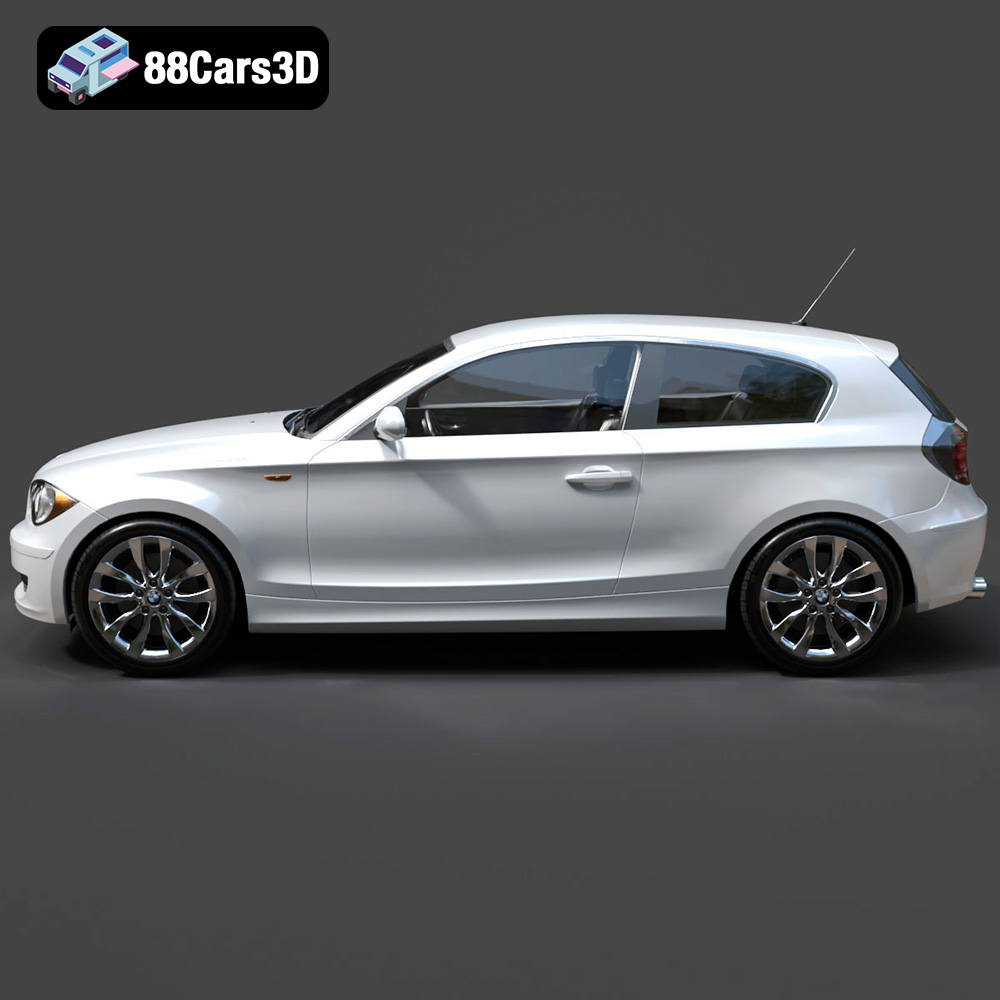
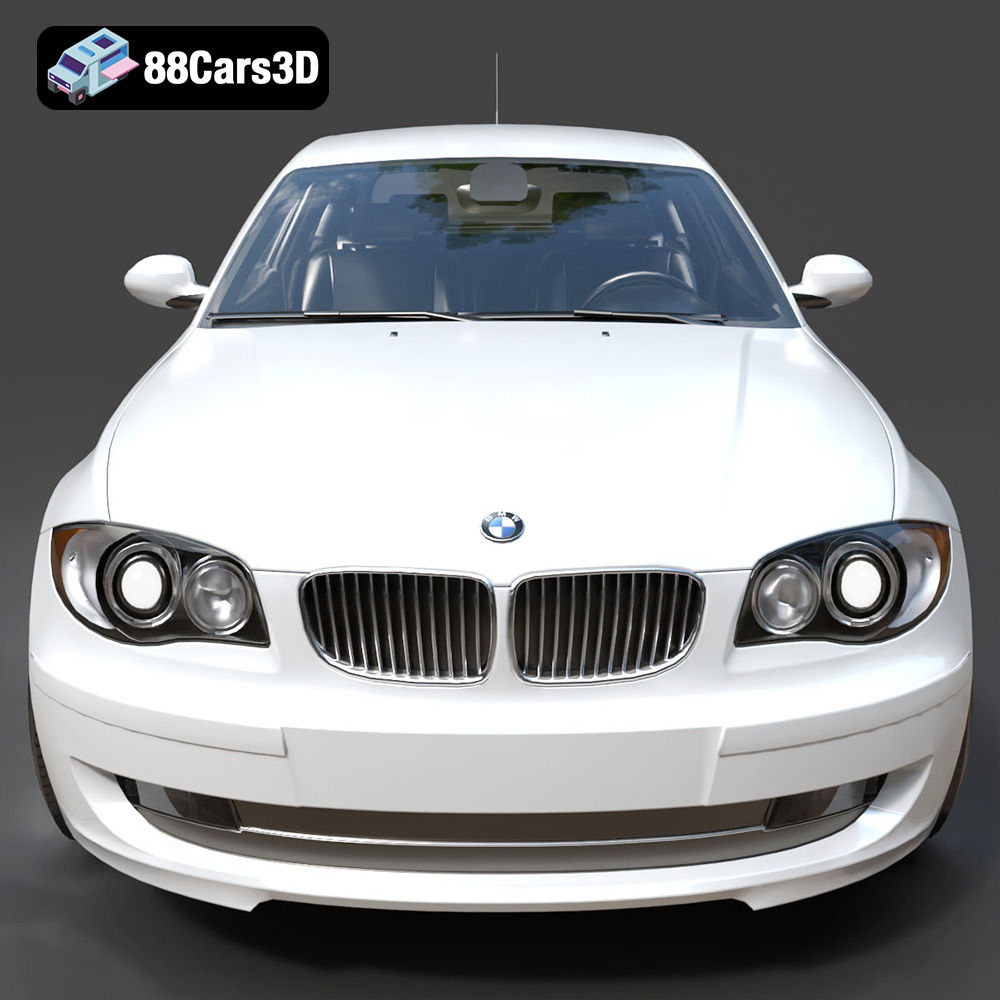
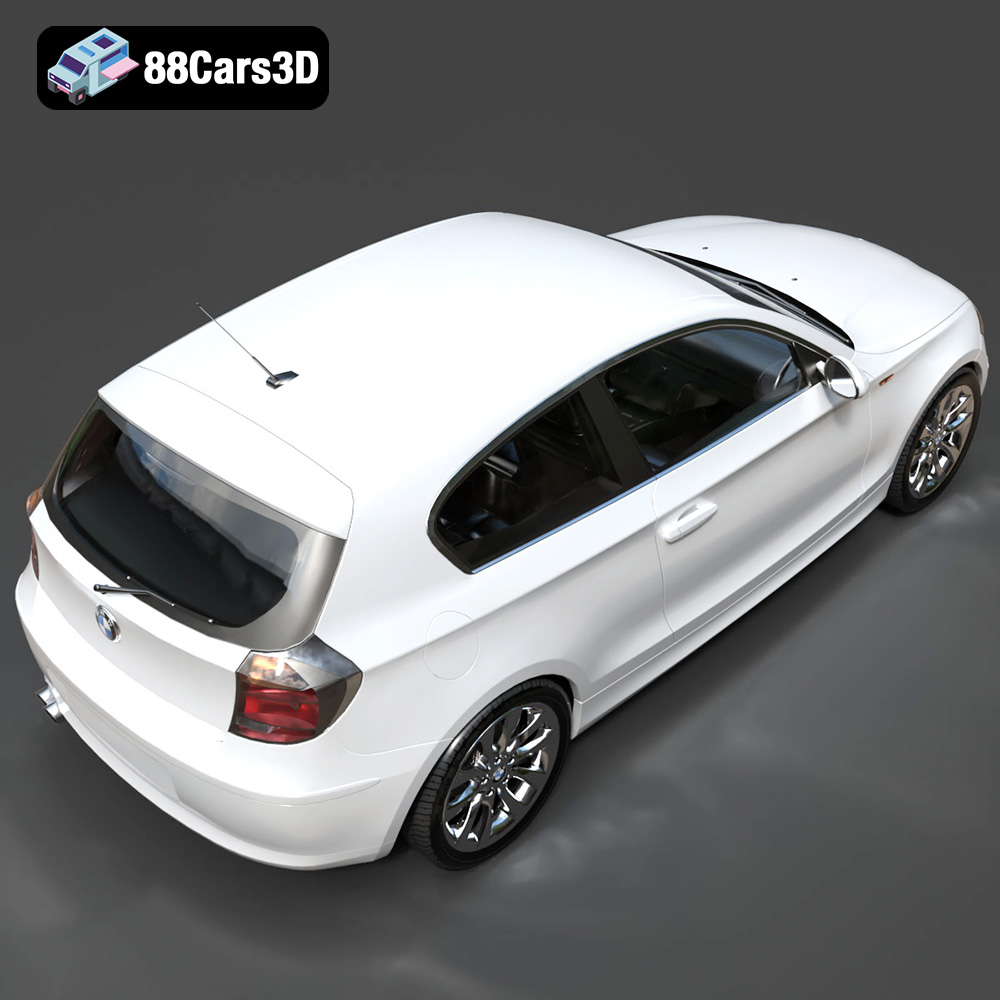
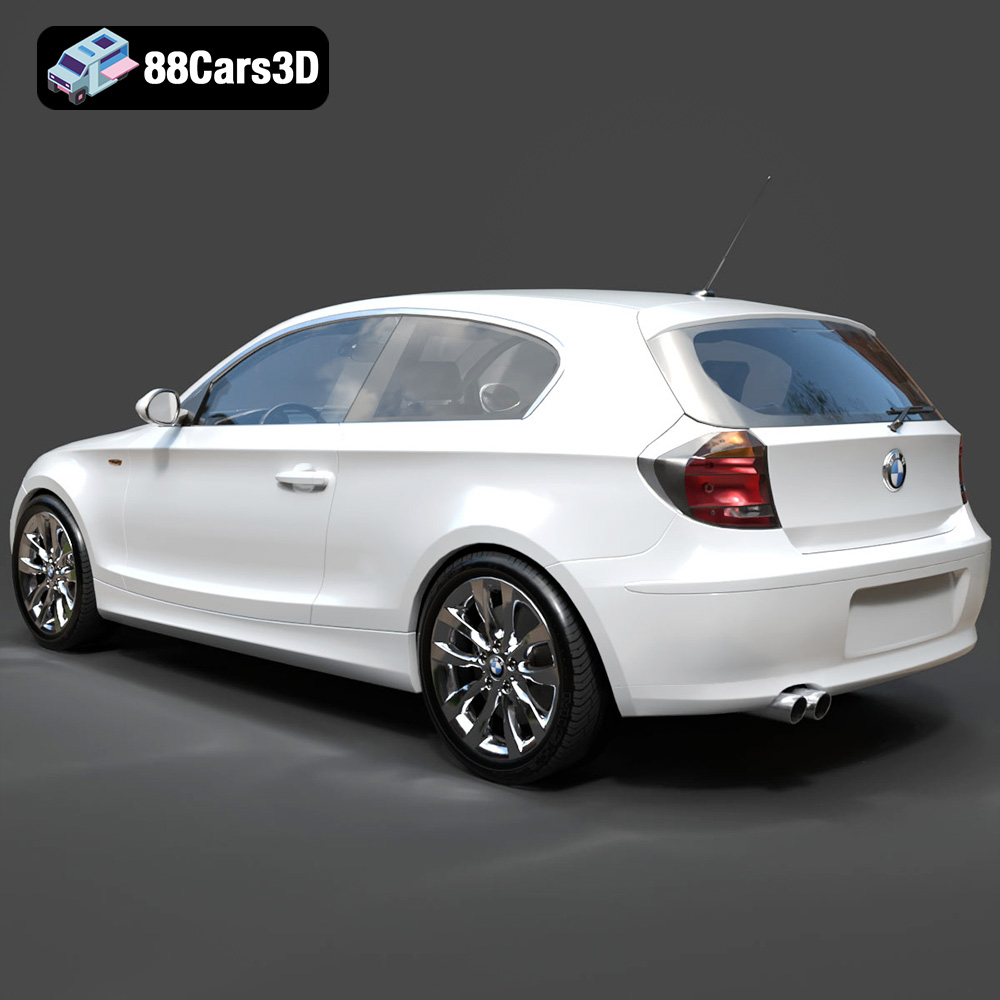
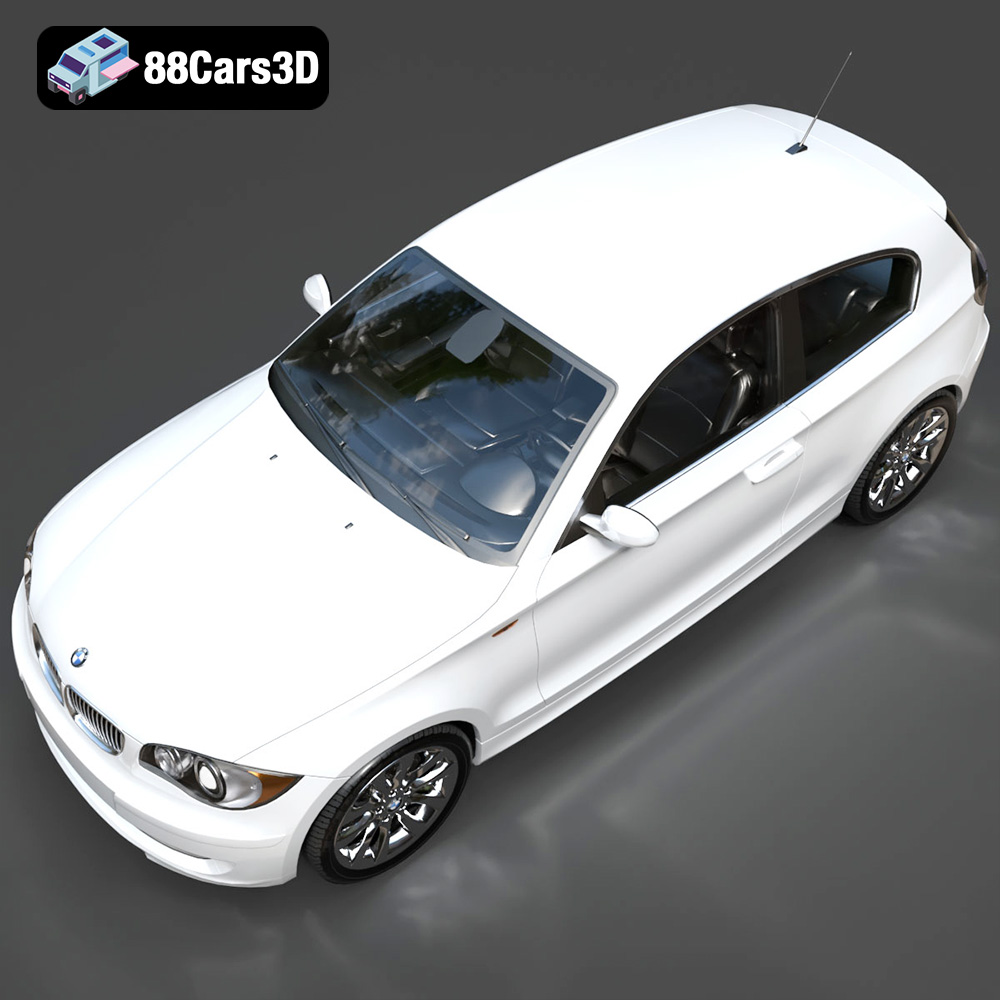
The exterior of the BMW E81 3D model is a masterclass in automotive detailing. The body panels are accurately modeled, capturing the sleek and dynamic lines characteristic of BMW’s design language. Key features like the detailed headlamps and taillights are not just textured but constructed with transparent materials to simulate realistic glass and light refraction, enhancing realism in renders. The authentic BMW grille and badging are faithfully recreated, lending credibility to the model. High-resolution wheels and tire treads add significant visual impact, crucial for close-up shots or realistic driving sequences. A particularly valuable feature for animation workflows is the separation of components like doors, hood, and trunk. This allows animators to easily open and close these parts without complex rigging, ideal for showcasing the car’s features or simulating real-world scenarios. The reflective paint finishes and chrome accents further elevate the model’s visual realism, catching light and reflections dynamically in any scene.
While the exterior often grabs immediate attention, the interior and underlying mechanical details are equally important for comprehensive projects. The BMW E81 model boasts a detailed dashboard, steering wheel, and control console, essential for immersive cockpit views in games or simulations. Comfortable seating with textured upholstery adds to the realism, ensuring that even interior shots maintain a high level of quality. Beyond the visible, the model’s “optimized mesh quality for performance without sacrificing detail” implies a careful balance in polygon distribution, making it suitable for various applications without being overly heavy. The inclusion of a basic undercarriage and visible suspension components further enhances its realism, particularly for scenarios where the vehicle’s underside might be exposed, such as in repair simulations or stylized camera angles. This attention to both external and internal detail, combined with clean quad-dominant topology, ensures smooth deformations and optimal rendering performance across all professional applications.
The versatility of the BMW 1 Series 3-Door E81 3D Model translates directly into a broad spectrum of practical applications and extensive customization potential, empowering creators to tailor the asset to their specific vision.
Imagine a global automotive manufacturer needing to showcase a new paint color or a set of wheels on their compact car lineup. Instead of costly physical prototypes, they can integrate the E81 model into a virtual studio, rendering stunning photorealistic images and animations within a fraction of the time and budget. For a game development studio crafting a high-octane racing title, the BMW 1 Series 3-Door E81 3D Model becomes a crucial game asset, ready for integration into exhilarating race tracks and open-world environments. Its optimized nature ensures smooth frame rates, while its detailed design maintains visual competitive edge. In architectural visualization, placing a highly realistic E81 outside a proposed building renders the scene more dynamic and believable, giving clients a better sense of scale and lifestyle. Educational institutions could utilize this model in driving simulators for driver training or in technical modules to explain automotive mechanics. Even in AR/VR, imagine a customer virtually placing the BMW E81 in their driveway via a smartphone app, seeing its true size and configuration before making a purchase decision. These real-world scenarios highlight the indispensable role of premium 3D assets.
Beyond its inherent quality, the BMW 1 Series 3-Door E81 3D Model offers significant customization options, providing creative freedom to professionals. Artists can easily modify paint finishes, experimenting with metallic, matte, or pearlescent effects to match specific brand guidelines or artistic visions. The ability to apply custom graphics or liveries means the model can be transformed into a race car, a police vehicle, or a uniquely branded promotional asset. Material properties for metal, glass, rubber, and plastics can be precisely adjusted to achieve specific atmospheric effects, making the car appear brand new, weathered, or stylized. Furthermore, the model’s organized hierarchy allows for seamless customization of lighting setups. By altering light sources, intensity, and color, creators can achieve desired reflections and atmospheric effects, from a sunny afternoon glow to a dramatic night-time street scene. This level of flexibility ensures that the BMW E81 is not just a static asset, but a dynamic canvas for endless creative possibilities, making it an invaluable addition to any professional’s library of 3D car models.
In the demanding world of 3D content creation, the difference between a good project and an outstanding one often comes down to the quality and versatility of its core assets. The BMW 1 Series 3-Door E81 3D Model stands as a testament to this principle, offering a meticulously crafted digital representation that meets the rigorous demands of professional workflows across automotive rendering, game development, AR/VR, and simulation. Its balanced level of detail, clean geometry, comprehensive file format support, and thoughtful design features make it an exceptionally powerful tool for artists, designers, and developers.
Whether you are aiming for photorealistic renders in 3ds Max, building a high-performance game asset for Unreal Engine, or creating an immersive AR experience, this model provides the technical foundation and creative flexibility needed to elevate your projects. Its dedication to real-world accuracy and optimized performance ensures that it is not just visually appealing but also a joy to work with within any professional pipeline. To explore this exceptional asset and discover other high-quality 3D car models that can transform your digital creations, visit 88cars3d.com.
Experience the precision and iconic design of the BMW 1 Series 3-Door E81 with this meticulously crafted 3D model. Representing the dynamic and compact nature of BMW’s popular hatchback, this model is built with clean geometry and a balanced level of detail, making it ideal for a wide range of professional applications. Whether for high-fidelity rendering, realistic animations, immersive simulations, or integrating into game development projects, this model provides a versatile and high-quality asset.
$14.79