Get 20% OFF All Premium 3D & STL Models!

In the rapidly evolving landscape of digital media, the demand for hyper-realistic and functionally robust 3D assets has never been higher. From blockbuster cinematic productions and immersive video games to cutting-edge architectural visualizations and advanced engineering simulations, precision-crafted 3D models form the backbone of compelling visual experiences. Automotive design, in particular, thrives on this digital fidelity, requiring models that not only look authentic but also perform flawlessly across diverse professional applications.
At the heart of this digital transformation lies the ability to procure and integrate assets that meet stringent industry standards. Whether you’re a seasoned 3D artist, a game developer, or a visualization specialist, the quality of your base models dictates the overall success and efficiency of your projects. This is precisely where models like the BMW 1 Series 3-Door E81 3D Model truly shine. Representing the dynamic and compact nature of BMW’s popular hatchback, this meticulously crafted asset provides a versatile and high-quality solution, built with clean geometry and a balanced level of detail for a wide array of professional uses.
The choice of file format for a 3D model is not merely a technicality; it’s a critical decision that dictates compatibility, functionality, and optimization across various software and platforms. Each format is designed with specific use cases in mind, offering unique advantages for different stages of a professional workflow. Understanding these nuances is paramount for anyone working with 3D car models, ensuring seamless integration and optimal performance, whether for rendering, game development, or specialized applications.
The .blend format is the native file type for Blender, the popular open-source 3D creation suite. A .blend file typically encapsulates an entire Blender scene, including mesh data, materials (with all their nodes and textures), lights, cameras, animations, rigging, and even modifiers. It offers full editability, allowing artists to dive deep into the model’s construction, adjust topology, modify materials, or extend animations directly within Blender. For the BMW 1 Series 3-Door E81 3D Model, having a .blend file means users get a fully prepared Blender project, ready for immediate rendering with Cycles or Eevee, or further customization.
.fbx (Filmbox) is a proprietary file format developed by Autodesk, renowned for its robust support for 3D model exchange between different software applications. It’s particularly favored in game development and animation pipelines because it efficiently stores not just geometry and materials, but also animations, character rigs, cameras, and lights. For assets like the BMW E81, an .fbx file is ideal for importing into game engines like Unreal Engine and Unity, or other 3D software like 3ds Max or Maya, ensuring that complex data such as separated components (doors, hood, trunk) and pivot points are preserved, making it animation-ready for real-time environments.
The .obj (Wavefront OBJ) format is one of the most widely supported and universal 3D file formats. It’s a simple, text-based format that primarily stores geometric data – vertices, normals, texture coordinates, and faces. While it can reference external material files (.mtl), it doesn’t typically store advanced material properties, rigging, or animations directly within the file itself. Its strength lies in its widespread compatibility, making it an excellent fallback or starting point for cross-software projects. If you need to import the BMW 1 Series 3-Door E81 into less common 3D software, .obj is often the most reliable choice, though material setup may require manual reconstruction.
.glb (GL Transmission Format Binary) is the binary version of glTF, an open-standard, royalty-free specification for 3D scenes and models. It’s designed for efficient transmission and loading of 3D assets in web-based applications, augmented reality (AR), and virtual reality (VR) environments. A .glb file packages all necessary data (geometry, materials, textures, animations) into a single, compact binary file, minimizing load times and simplifying distribution. For showcasing the BMW E81 in an interactive web viewer or an AR app, .glb is the definitive choice, offering optimized performance and ease of use.
.stl (Stereolithography) is the de facto standard file format for 3D printing. It represents a 3D model as a series of connected triangles (a triangulated surface mesh) without any color, texture, or material information. Its simplicity makes it universally compatible with 3D printing software (slicers) and machines. While the BMW 1 Series 3-Door E81 model is built for rendering and real-time use, its inclusion in .stl format means it can be readily converted for physical output, though additional preparation (manifold mesh, wall thickness, support structures) may be required depending on the printing method.
The .ply (Polygon File Format or Stanford Triangle Format) is a versatile format often used for storing 3D data from 3D scanners or for CAD and scientific analysis. It can store a wide range of properties for each vertex and face, including color, transparency, and normals, making it more flexible than .stl for certain data representations. For precision mesh analysis or specific CAD workflows involving the BMW E81 model, .ply offers a robust option for retaining detailed geometric information.
The .unreal format, or more accurately, the inclusion of an Unreal Engine project setup, signifies an asset specifically prepared and optimized for direct use within the Unreal Engine. This typically involves not just the raw .fbx file, but also pre-configured materials, textures, blueprints, collision meshes, and potentially LODs (Levels of Detail). For the BMW 1 Series 3-Door E81, an Unreal Engine project setup ensures that the model is truly plug-and-play for game developers or virtual production artists, minimizing setup time and maximizing performance within one of the leading real-time engines.
Finally, the .max format is the native scene file type for Autodesk 3ds Max. Similar to .blend, it contains the complete 3ds Max scene, including geometry, materials, textures, lights, cameras, animations, and render settings. For professionals working within the 3ds Max ecosystem, the .max file for the BMW E81 means full editability, access to V-Ray or Corona materials (if included), and the ability to leverage 3ds Max’s powerful modeling, rigging, and animation tools without any translation issues. This makes it ideal for high-end rendering and complex animation sequences.
By offering this comprehensive suite of file formats, a premium 3D model like the BMW 1 Series 3-Door E81 from 88cars3d.com ensures maximum compatibility and flexibility, catering to virtually any professional workflow requirement.
Creating compelling digital automotive content begins with a foundation of superior 3D models. The difference between an average model and an exceptional one often lies in the meticulous attention to technical detail and optimization. For professionals, time is money, and using pre-built, high-quality 3D car models like the BMW 1 Series 3-Door E81 can significantly accelerate production cycles without compromising on visual fidelity.
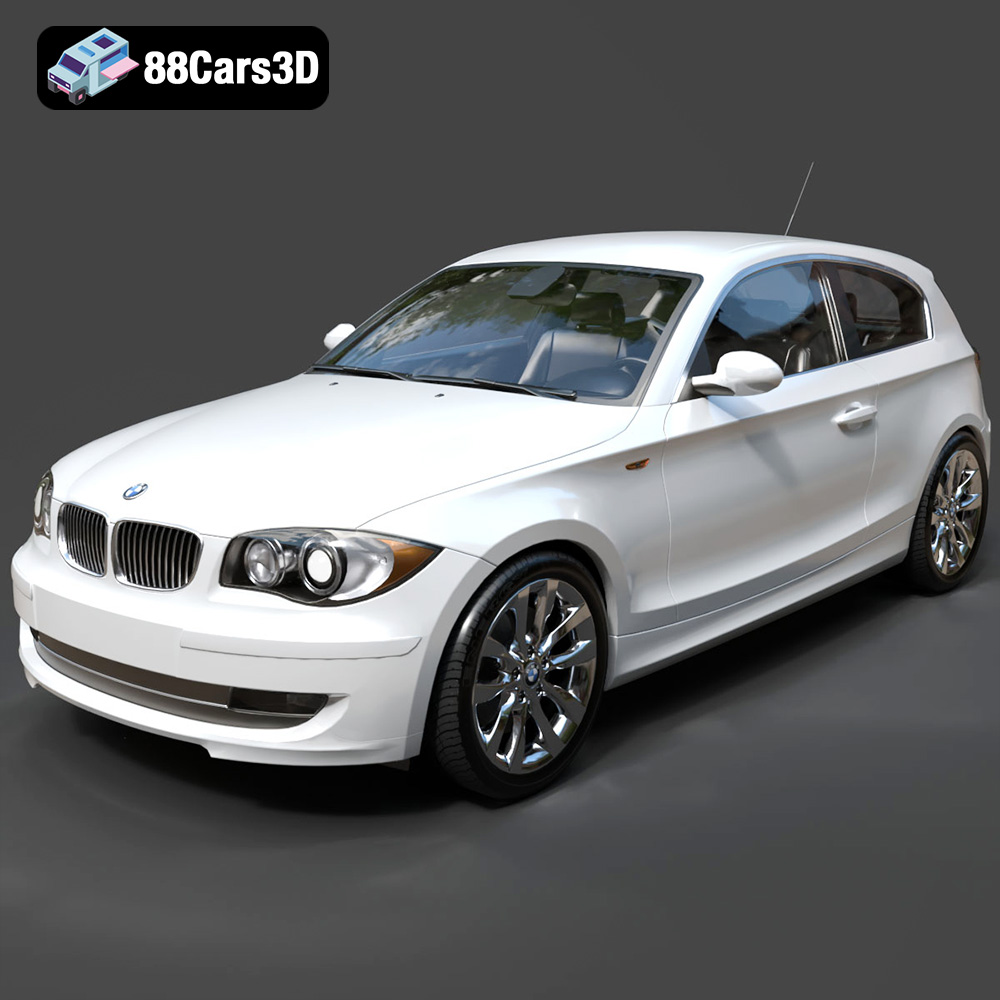
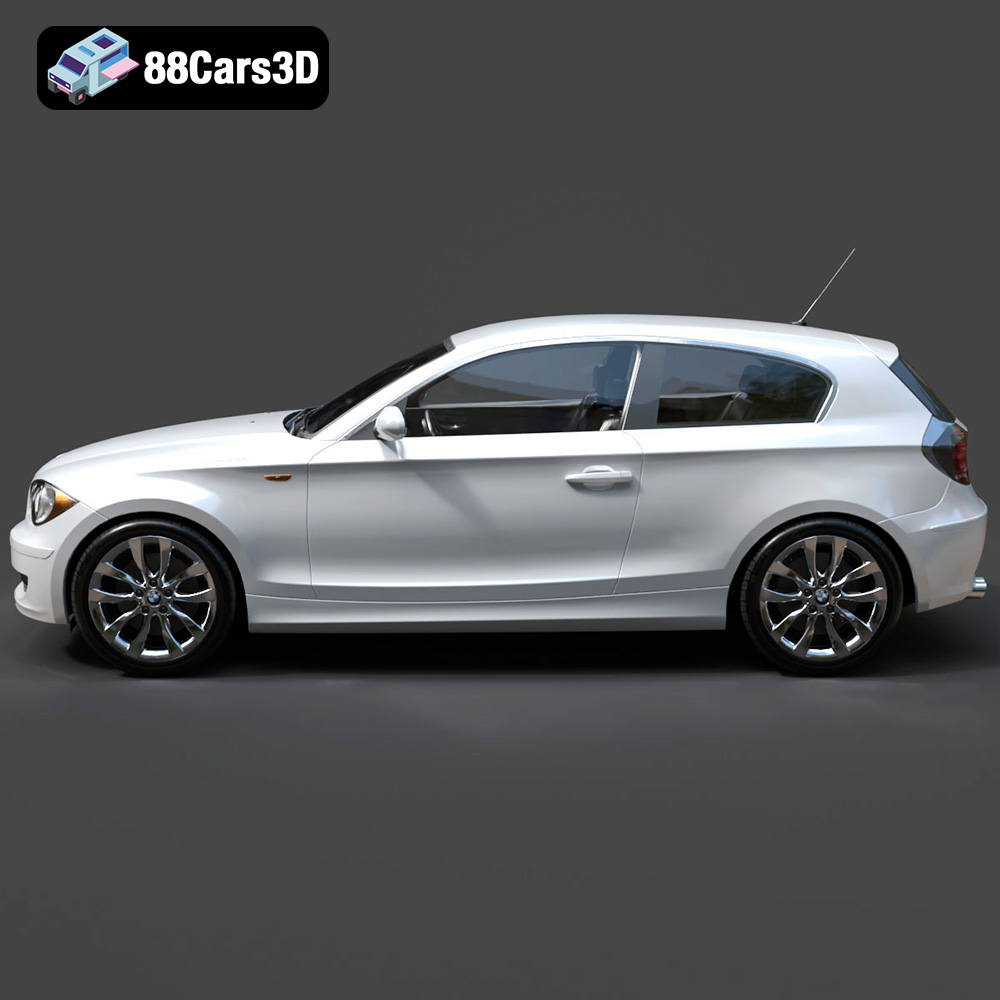
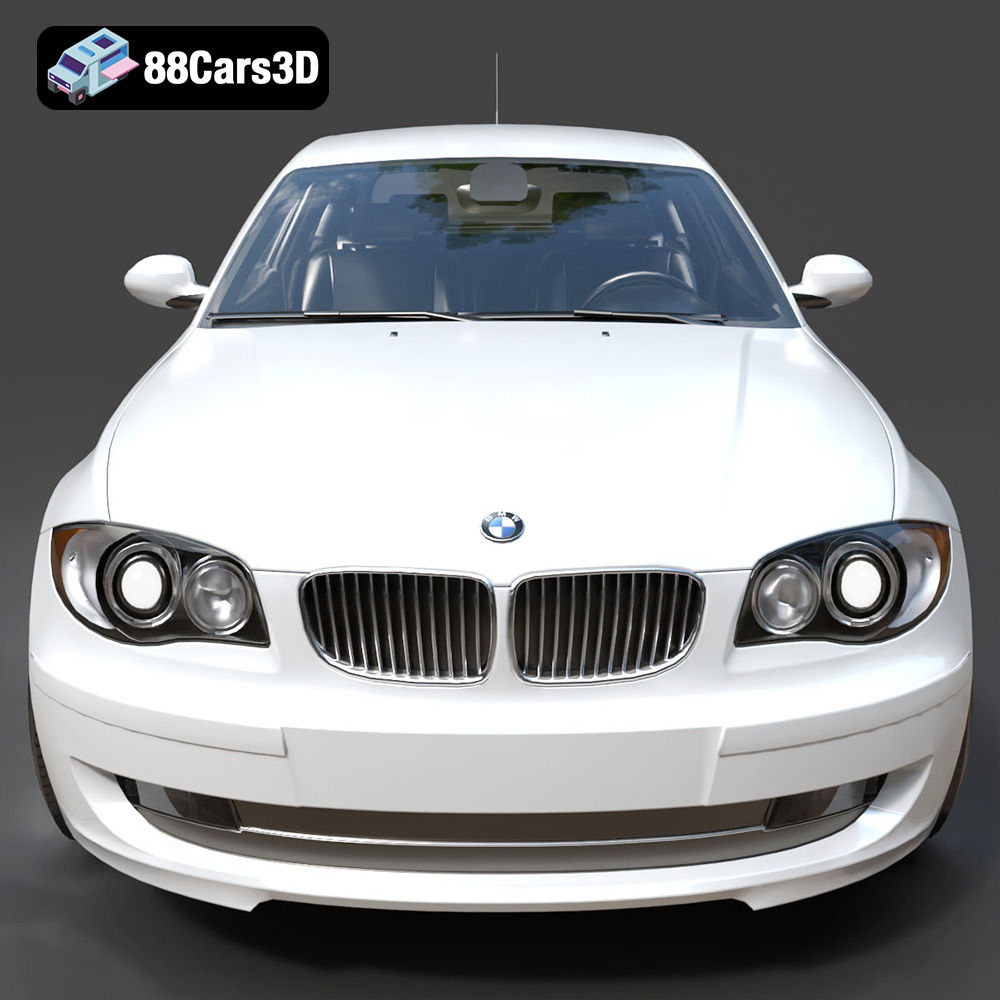
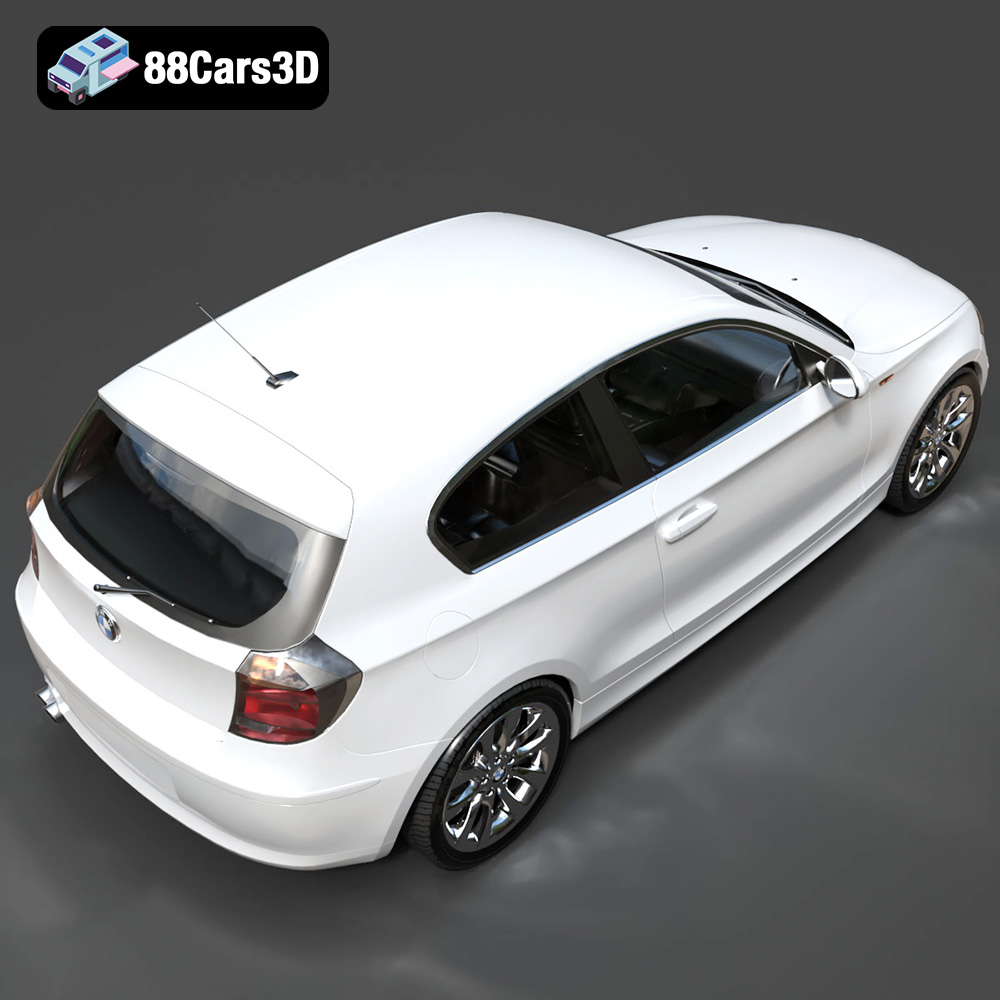
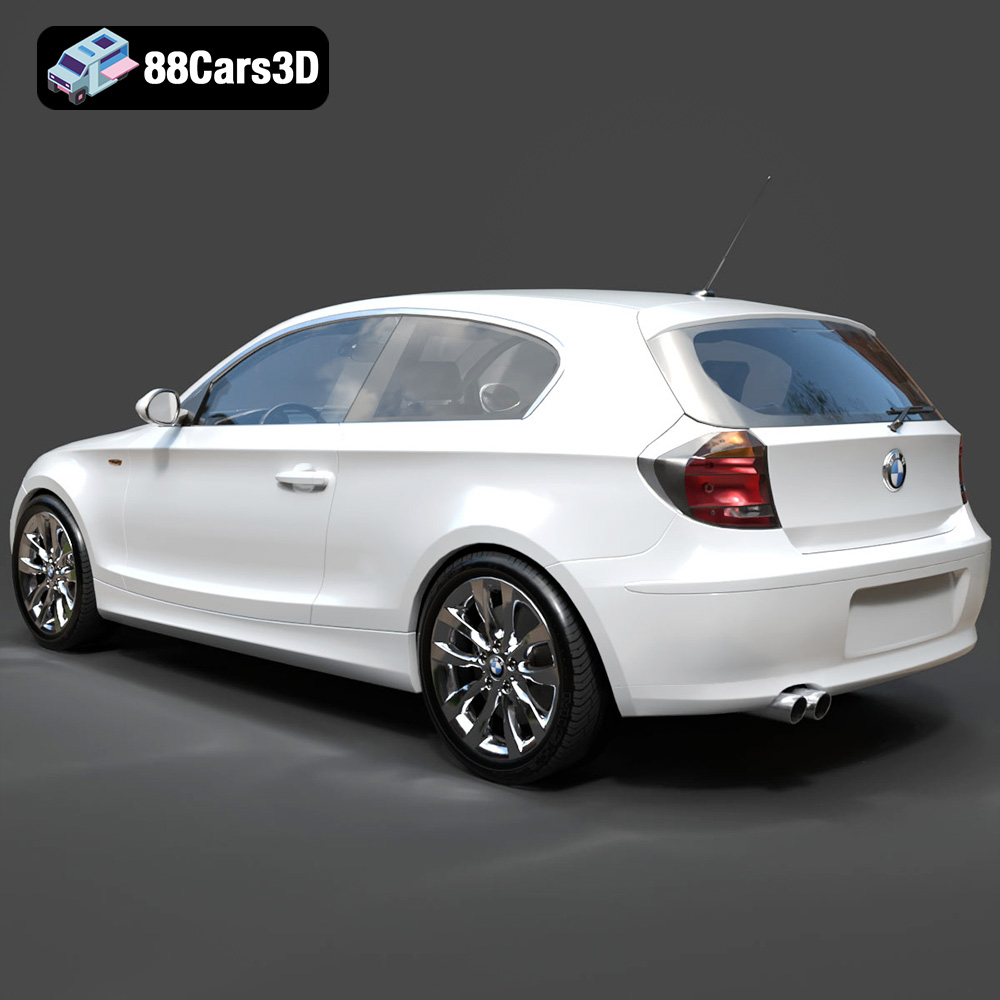
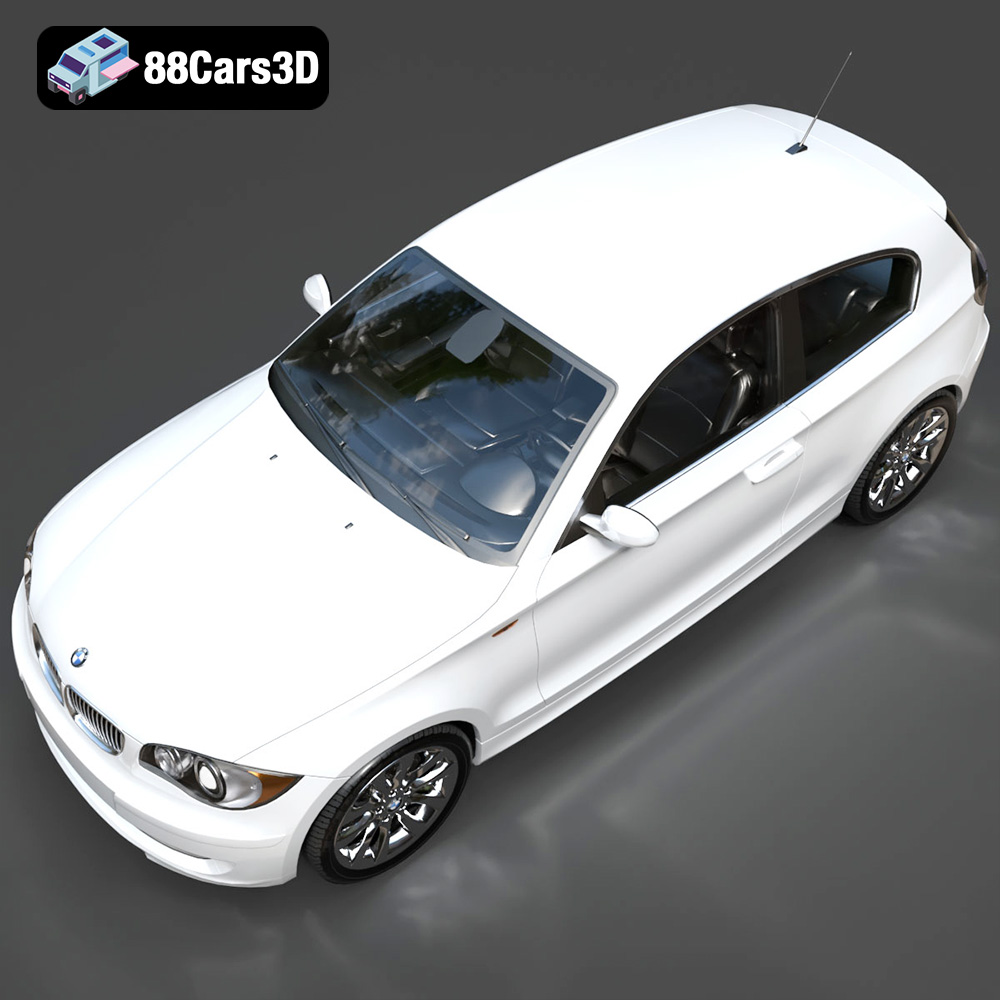
An accurate 3D model must be more than just visually appealing; it needs to be engineered with precision. The BMW 1 Series 3-Door E81 3D model exemplifies this with its accurately modeled body panels and sleek automotive lines, mirroring the real-world vehicle. The attention to detail extends to specific exterior features such as detailed headlamps and taillights with transparent materials, authentic BMW grille and badging, and high-resolution wheels and tire treads. These elements are not merely sculpted but are structurally sound in their digital representation, ensuring that reflections behave correctly and light interacts realistically. Furthermore, its adherence to real-world scale is critical for seamless integration into larger scenes, whether for architectural visualization or product placement within a simulated environment.
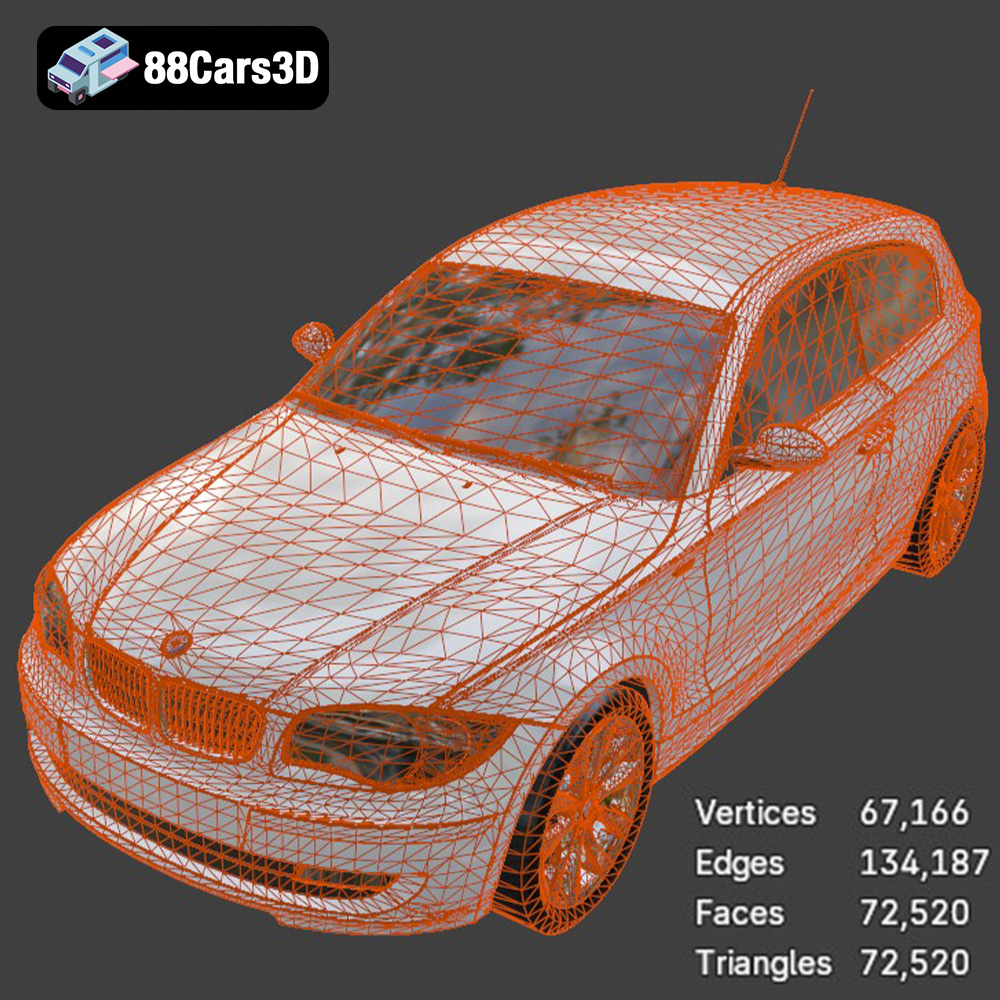
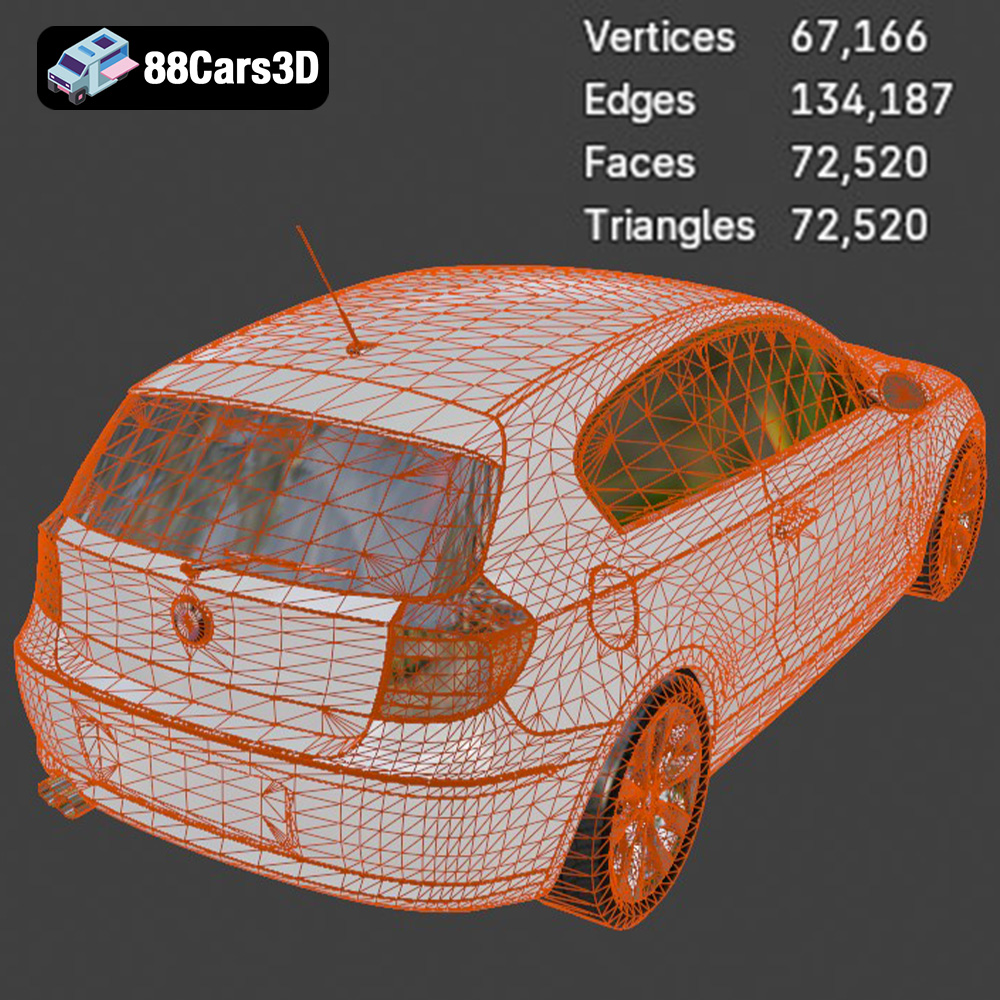
Beyond visual accuracy, the underlying mesh topology is paramount for performance and flexibility. The BMW E81 model boasts clean quad-dominant topology, which is the gold standard for 3D modeling. This ensures smooth subdivision when applying turbosmooth or similar modifiers, leading to flawless curves and surfaces without unsightly pinching or artifacts. For animation, this clean geometry facilitates smooth deformation. Optimized mesh quality is also key for efficient rendering and real-time applications, striking a balance between detail and polygon count to prevent bogging down hardware. An organized hierarchy with properly set pivot points for separated components like doors, hood, and trunk further streamlines animation workflows, allowing artists to quickly rig and animate without extensive rework.
High-quality 3D car models are versatile assets that find their place across a multitude of professional pipelines. Their inherent detail and optimized structure make them invaluable for tasks ranging from creating photorealistic marketing materials to engineering complex animated sequences.
For rendering artists and architectural visualization studios, the primary goal is often photorealism. The BMW 1 Series 3-Door E81 3D model, with its reflective paint finishes, chrome accents, and detailed transparent materials for lights, is perfectly suited for this. When integrated into render engines like V-Ray, Corona Renderer, Arnold, or Blender’s Cycles, these material properties can be pushed to achieve breathtaking levels of realism. Imagine creating a stunning studio render highlighting the car’s dynamic form, or placing it within an architectural visualization of a luxury home, adding an element of aspirational lifestyle. Its clean geometry ensures that light bounces and reflections are accurate, contributing to a believable final image. Customization options, such as easily modifying paint finishes or adjusting material properties for metal, glass, and rubber, provide artists with the flexibility to match specific brand aesthetics or scene requirements.
The cinematic quality of automotive animations relies heavily on well-prepared 3D assets. The BMW E81 model’s separated components – doors, hood, trunk – coupled with properly set pivot points, are tailor-made for animation workflows. This allows animators to quickly open doors, raise the hood, or articulate suspension components without the need for time-consuming preparation. From creating a compelling product launch video showcasing the car’s interior and exterior features, to integrating it into a virtual film scene for a chase sequence, the model’s structure facilitates complex motion. Its optimized mesh quality ensures that even with multiple animated elements, the scene remains manageable, allowing for smooth playback and efficient rendering of motion blur and other effects.
The game industry constantly pushes the boundaries of visual fidelity and interactive experiences. For racing games, open-world adventures, or even immersive simulation titles, highly detailed yet performance-optimized 3D car models are absolutely essential. The BMW 1 Series 3-Door E81 3D model is designed with these rigorous requirements in mind.
In game development, every polygon and texture map counts. The BMW E81’s optimized mesh quality, ensuring clean quad-dominant topology, allows for efficient performance without sacrificing detail. When imported into game engines like Unreal Engine or Unity via the .fbx or .unreal formats, the model’s design helps maintain high frame rates, which is crucial for a smooth gaming experience. Game developers can readily generate Levels of Detail (LODs) from this clean base mesh, reducing polygon count for distant objects and further optimizing performance. The organized hierarchy and correctly set pivot points translate directly into easier integration for scripting vehicle physics, setting up collision meshes, and creating interactive elements within the game world.
Beyond racing simulators, 3D car models are vital for populating and enriching open-world environments, cityscapes, and virtual narratives. A diverse library of high-quality vehicles, such as those available on 88cars3d.com, allows developers to build believable and immersive worlds. The BMW 1 Series 3-Door E81 can serve as a player-controlled vehicle, an AI-driven car, or simply a static prop that adds realism to a scene. Its detailed interior, including the dashboard, steering wheel, and textured upholstery, ensures that even first-person perspectives within the vehicle are convincing. The ability to easily modify paint finishes and apply custom graphics or liveries further allows developers to create unique variations, adding depth and authenticity to their game’s visual storytelling.
The utility of high-fidelity 3D car models extends far beyond rendering and game development, venturing into the cutting-edge realms of augmented reality, virtual reality, and advanced simulation. These technologies demand precision, efficiency, and a robust understanding of real-world physics and visual dynamics.
Augmented Reality (AR) and Virtual Reality (VR) applications are transforming industries from automotive sales to interactive training. The BMW 1 Series 3-Door E81 3D model, particularly in its .glb format, is perfectly optimized for these immersive platforms. Imagine a customer using an AR app on their phone to virtually place the BMW E81 in their driveway, examining its exterior from all angles, or a VR experience where users can sit inside the car, interact with its detailed dashboard, and explore its interior features. The optimized nature of the .glb format ensures quick loading times and smooth interaction within these demanding real-time environments, offering a tangible sense of presence and realism that flat images or videos cannot achieve. This capability is invaluable for virtual showrooms, interactive product configurators, and immersive marketing campaigns.
For professional driving simulators, engineering training, or educational modules, extreme accuracy and technical detail are non-negotiable. The BMW 1 Series 3-Door E81 3D model’s real-world scale, detailed undercarriage, and visible suspension components are crucial for these applications. In a driving simulator, the precise geometry and physical properties of the vehicle directly impact the realism of the driving physics and the visual feedback provided to the user. Engineers can utilize this model for virtual prototyping, testing aerodynamic properties, or simulating crash scenarios in a virtual environment. The organized hierarchy and clean topology also make it easier to integrate the model with complex physics engines and telemetry data, ensuring that the simulation is as true to life as possible for comprehensive training and analysis.
A truly versatile 3D model offers more than just inherent quality; it provides a canvas for boundless creative expression and adaptation. The BMW 1 Series 3-Door E81 3D model is built with customization at its core, allowing professionals to tailor it to specific project needs with ease.
The ability to easily modify paint finishes and apply custom graphics or liveries is a significant advantage. Whether for a unique brand advertisement, a custom racing livery, or simply matching a client’s specific color palette, artists can quickly adjust the car’s appearance. The model’s material properties for metal, glass, rubber, and plastics are designed to be readily adjustable. This means you can fine-tune the reflectivity of the paint, the opacity of the windows, or the roughness of the tires to achieve precise atmospheric effects and reflections, ensuring the car seamlessly blends into any scene or mood you wish to create. This level of control empowers artists to push creative boundaries without being constrained by fixed assets.
While primarily optimized for screen-based applications, the BMW 1 Series 3-Door E81 3D model’s inclusion of an .stl format opens up possibilities for physical manifestations. 3D printing allows designers to create tangible prototypes, architectural models, or collectible figurines. Although additional preparation, such as ensuring a manifold mesh (watertight geometry), adequate wall thickness, and potentially adding support structures, might be required depending on the printing method, the clean base geometry of the digital model provides an excellent starting point. This bridge from digital visualization to physical object adds another layer of versatility, catering to bespoke client requests or personal projects.
In the demanding world of 3D production, the quality, versatility, and technical integrity of your assets are paramount. Investing in meticulously crafted 3D car models not only streamlines your workflow but also elevates the final output to a professional standard that truly stands out. From the intricate details of a car’s exterior to the functionality of its separated components, every aspect contributes to the overall realism and usability.
The BMW 1 Series 3-Door E81 3D Model exemplifies this commitment to excellence. Its clean geometry, optimized topology, real-world scale, and extensive file format support make it an indispensable asset for a diverse range of applications – be it high-fidelity rendering, immersive game development, cutting-edge AR/VR experiences, or precision-driven simulations. It represents a robust foundation upon which professionals can build stunning visuals and interactive content.
For those seeking unparalleled quality and efficiency in their projects, exploring a curated selection of 3D car models from trusted sources like 88cars3d.com is a strategic move. Empower your visualizations and interactive experiences by choosing assets that are built for performance, realism, and creative freedom. The future of digital automotive design is here, and it’s driven by precision.
Experience the precision and iconic design of the BMW 1 Series 3-Door E81 with this meticulously crafted 3D model. Representing the dynamic and compact nature of BMW’s popular hatchback, this model is built with clean geometry and a balanced level of detail, making it ideal for a wide range of professional applications. Whether for high-fidelity rendering, realistic animations, immersive simulations, or integrating into game development projects, this model provides a versatile and high-quality asset.
$14.79