

Mastering the Digital Road: The Indispensable Role of High-Fidelity 3D Car Models
In the fast-evolving landscape of digital media, the demand for hyper-realistic and functionally versatile 3D assets is at an all-time high. From blockbuster game titles and cinematic sequences to sophisticated architectural visualizations and cutting-edge AR/VR experiences, the quality of your 3D models directly impacts the final output. Few asset types are as scrutinized or as complex to create as high-fidelity 3D car models. These aren’t just static objects; they are intricate assemblies of design, engineering, and digital artistry, requiring meticulous attention to detail to truly shine.
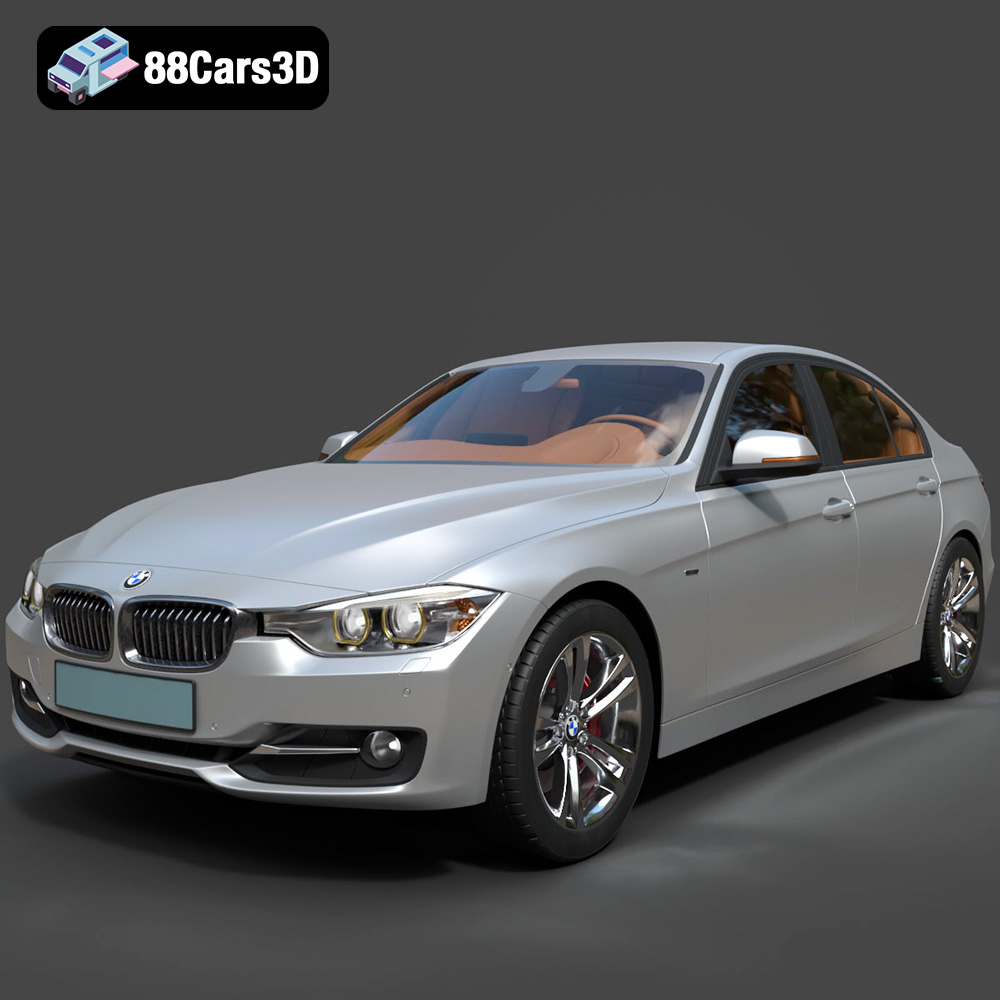
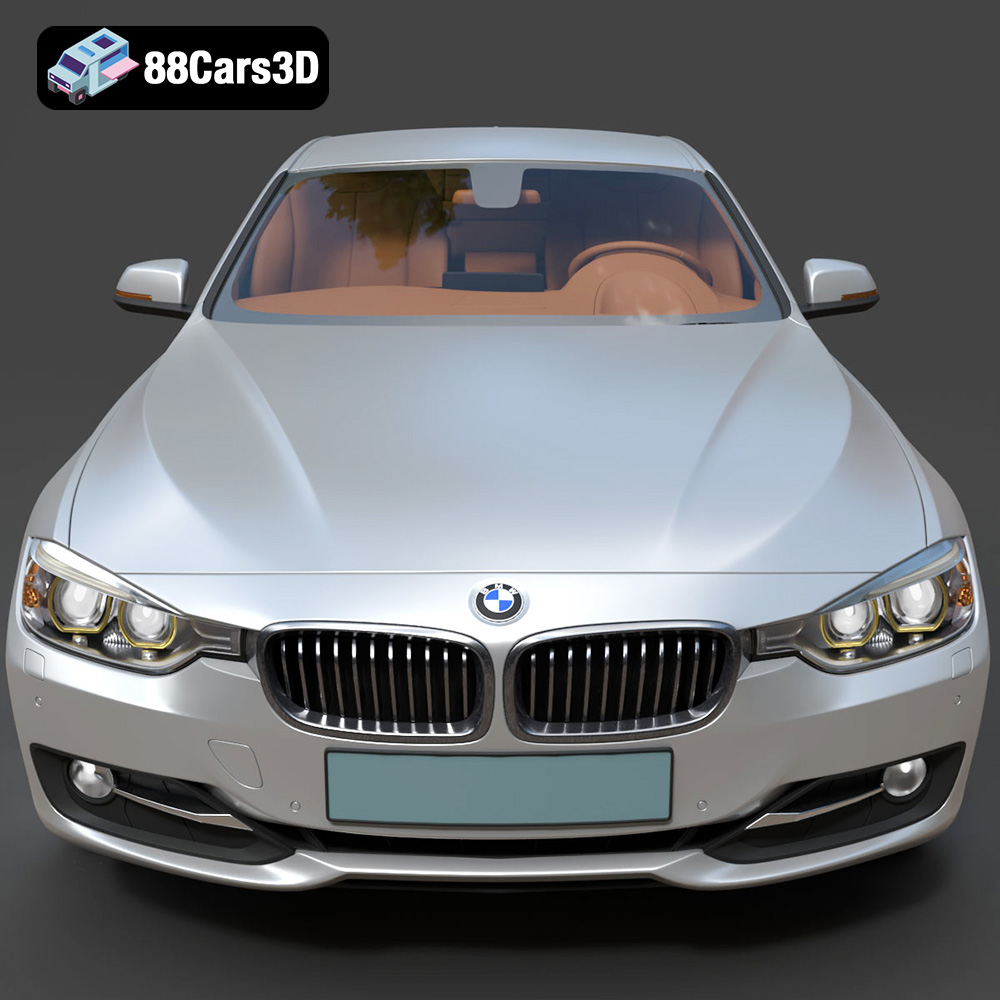
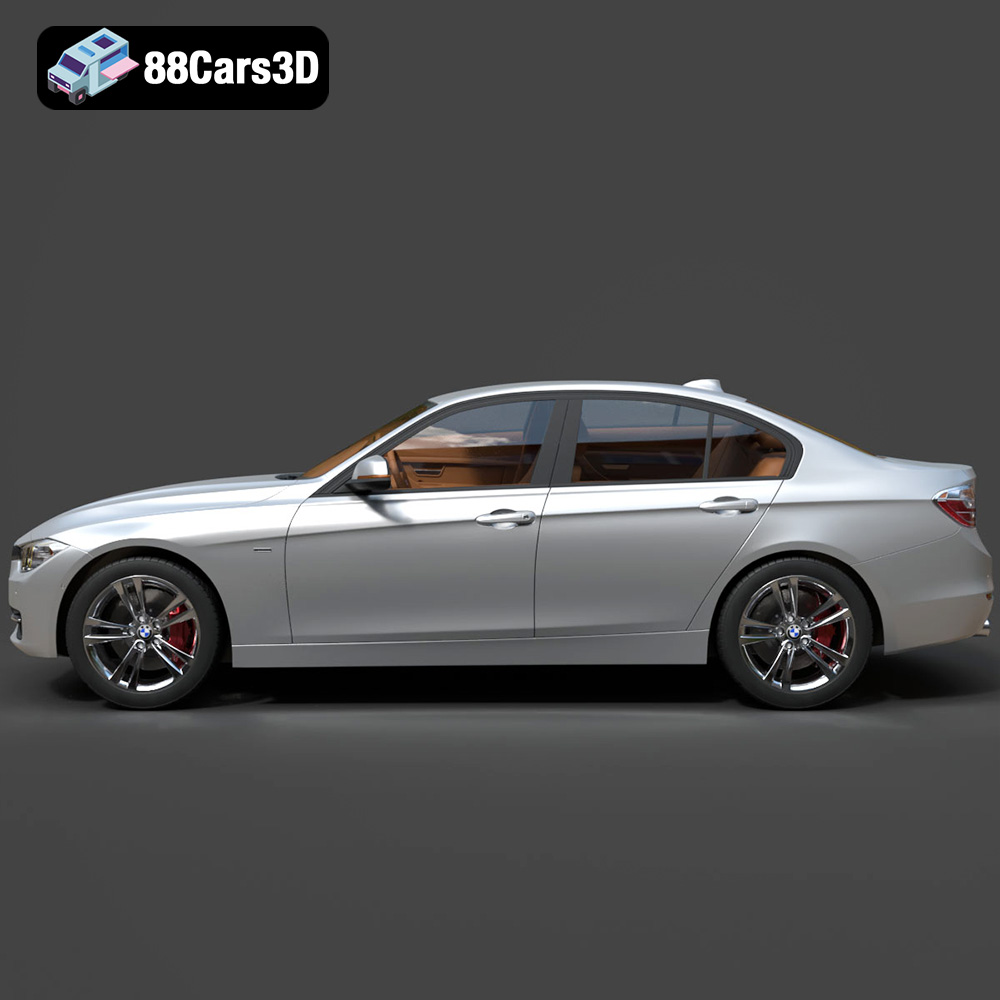
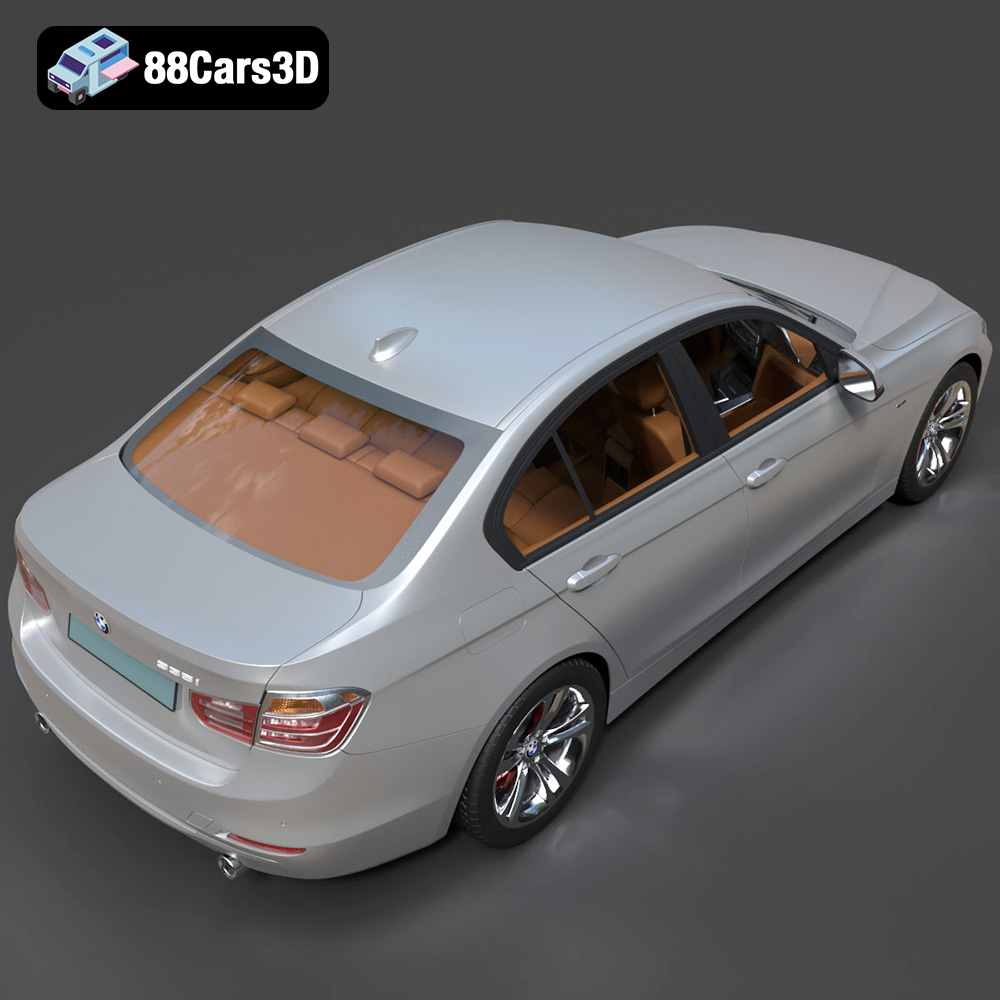
The journey of creating a truly professional 3D car model from scratch is a formidable undertaking, often spanning hundreds of hours for a single vehicle. This is precisely why platforms like 88cars3d.com have become invaluable resources for professionals seeking ready-to-use, top-tier assets that integrate seamlessly into their workflows. Take, for instance, the BMW 3 F30 3D Model featured on their marketplace. This isn’t merely a visual representation; it’s a testament to the blend of artistic precision and technical optimization that defines an industry-standard asset. It embodies the distinctive lines, elegant proportions, and dynamic character of the F30 generation 3 Series, making it an ideal candidate for any project demanding automotive realism and flexibility.
The Art and Science of High-Fidelity 3D Car Models
Developing a professional 3D car model goes far beyond simply tracing blueprints. It’s a nuanced process that marries artistic interpretation with stringent technical requirements, ensuring the model not only looks stunning but also performs efficiently across diverse platforms and applications.
Capturing Automotive Essence: Design and Proportion
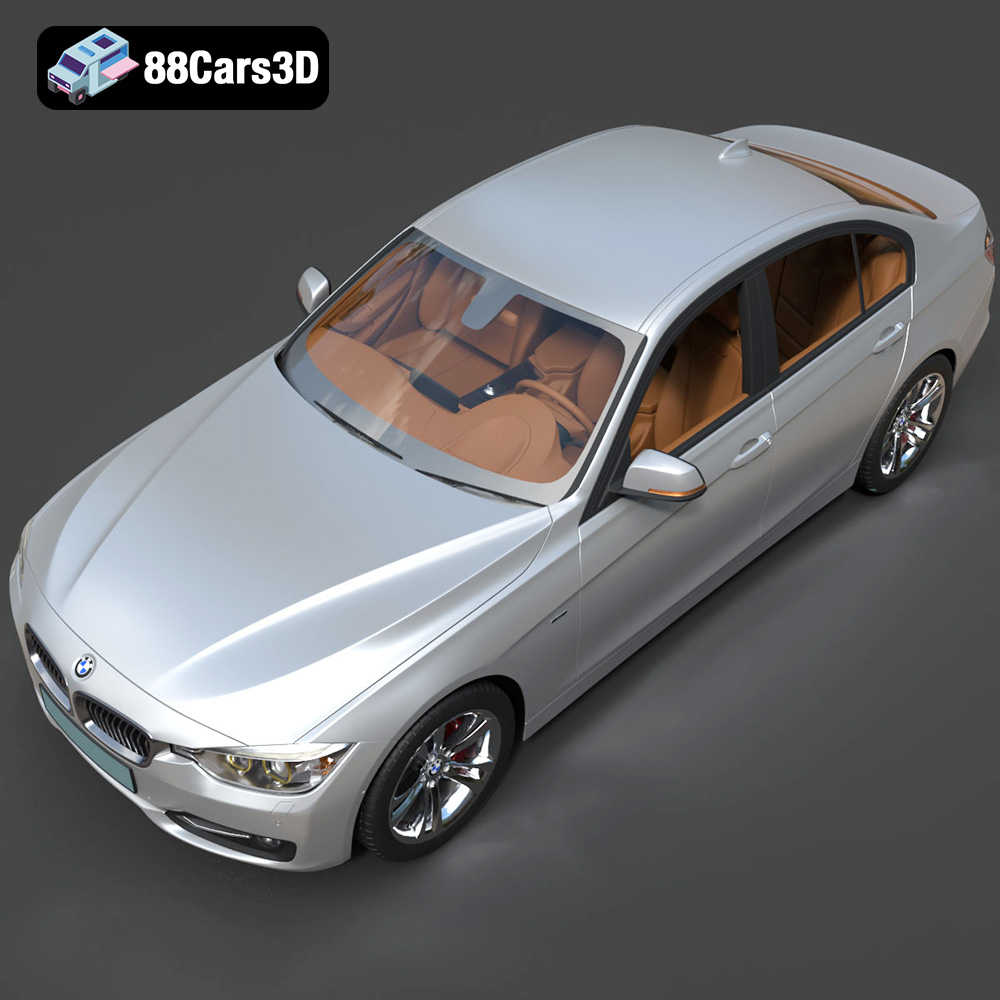
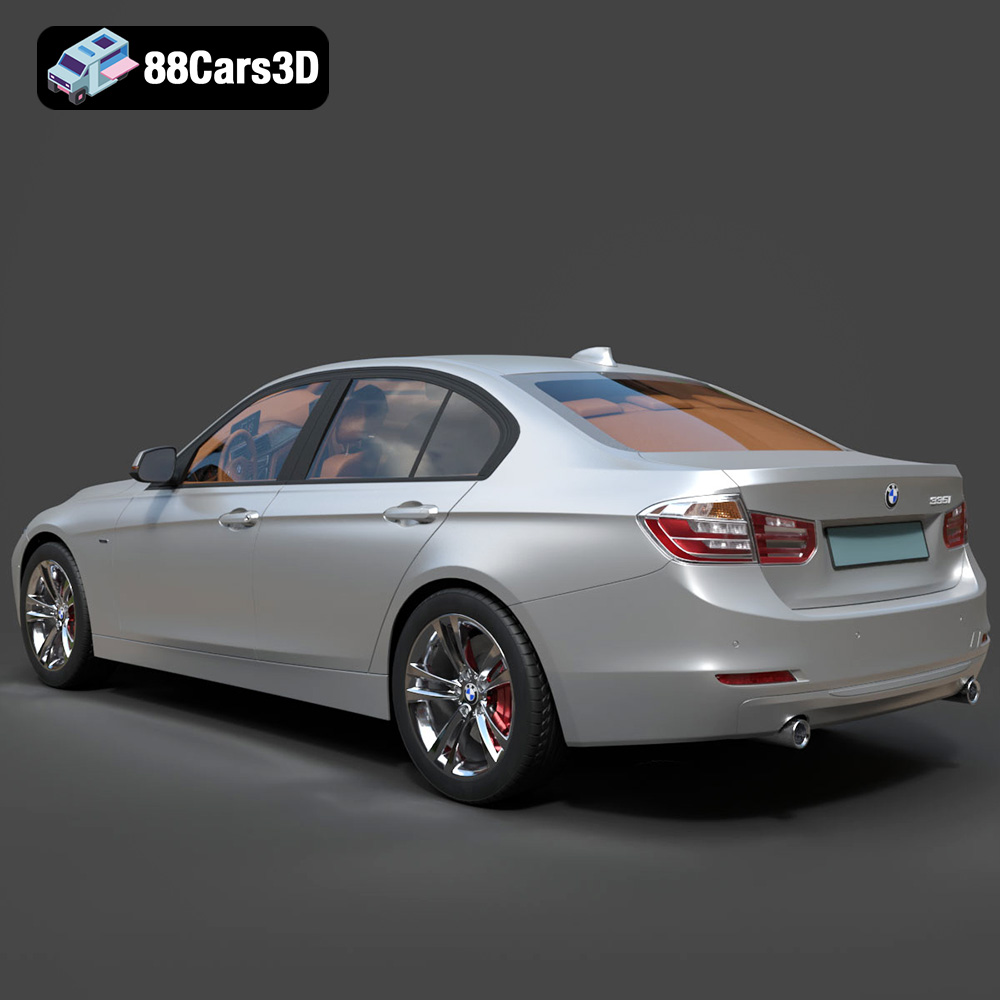
At the heart of any exceptional 3D car model is an unwavering commitment to accuracy. For a vehicle like the BMW 3 F30, this means meticulously recreating its distinctive design language. Every curve, panel gap, and aerodynamic contour must be faithfully translated into the digital realm. This involves extensive research, often referencing CAD data, photographs, and even real-world measurements to ensure true-to-life proportions. The subtle nuances of luxury automotive design—the precise angle of a headlight, the curvature of the roofline, the muscular flare of a wheel arch—are what distinguish a generic car model from a truly iconic one. The BMW 3 F30 3D Model exemplifies this, boasting accurate body panels and faithfully recreated chrome accents and trim elements.
The Importance of Clean Topology and UV Mapping
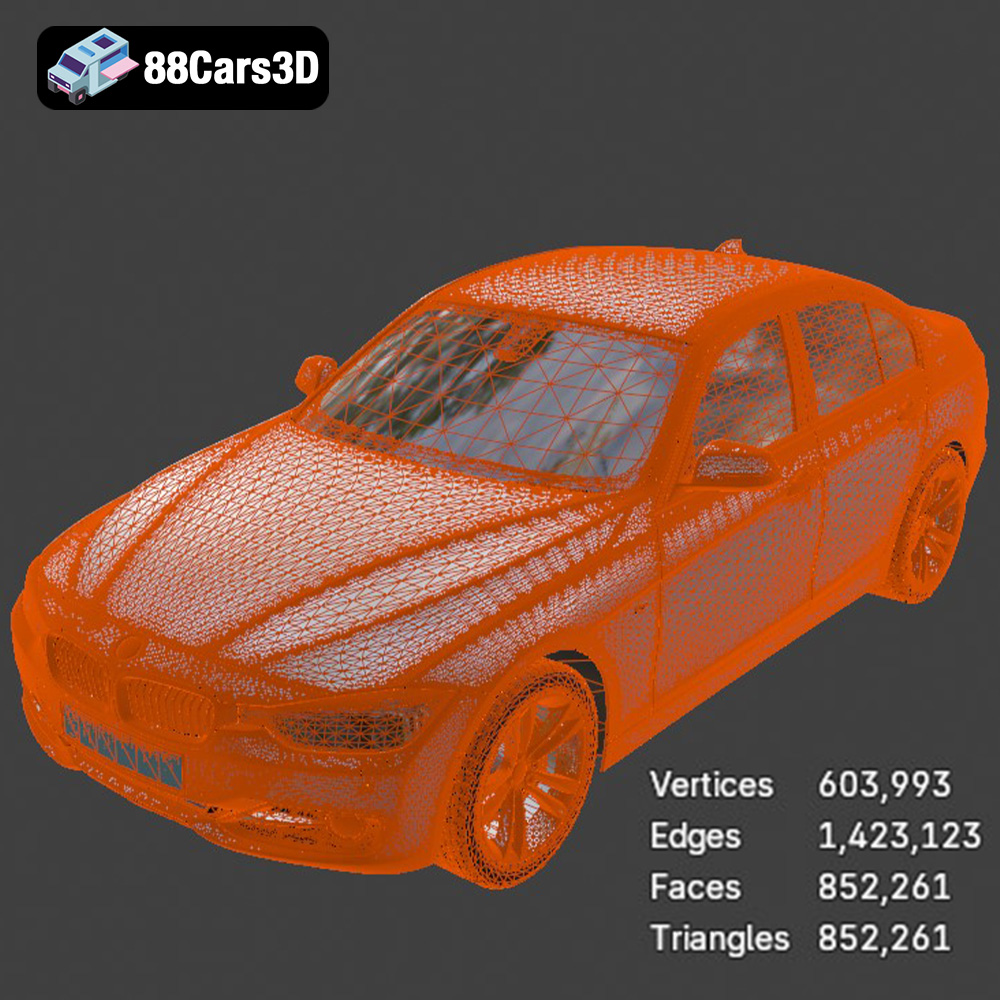
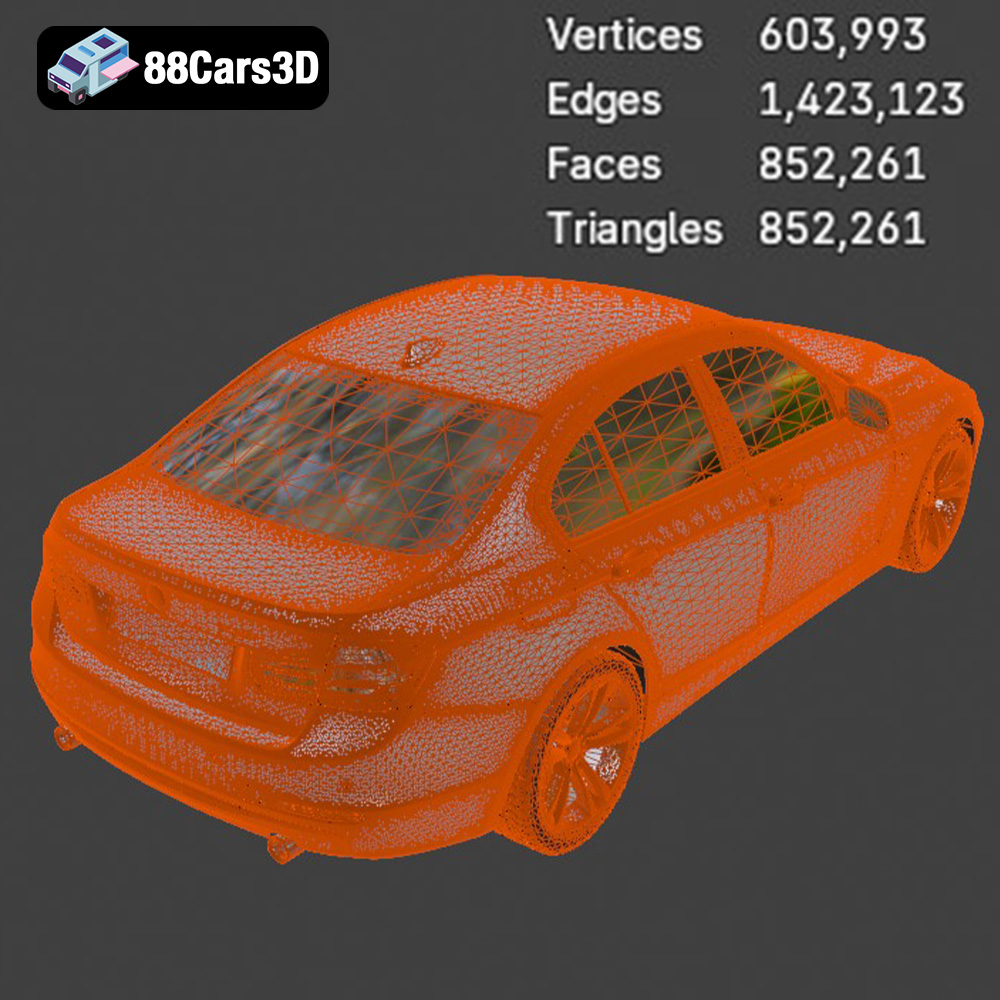
Beneath the polished surface lies the skeletal structure of the model: its topology. Clean, quad-dominant topology is paramount for several reasons. It allows for smooth subdivision without pinching artifacts, essential for close-up renders and animations where subtle surface variations are visible. It also facilitates easier deformation for animation (e.g., suspension compression, door opening) and provides a clean base for sculpting or further detailing. An optimized mesh, typically ranging from 150,000 to 250,000 polygons for a high-detail car model with a comprehensive interior, strikes a crucial balance between visual fidelity and performance efficiency. Equally critical is professional UV mapping. Non-overlapping, organized UVs ensure textures are applied without distortion and that texture atlases can be used efficiently, a key factor for real-time applications like game engines. The BMW 3 F30 3D Model boasts clean, quad-dominant topology, ensuring professional results.
Real-World Scale and Asset Organization
For seamless integration into any 3D scene, models must be built to real-world scale. This not only aids in realistic rendering but is also crucial for physics simulations and accurate environmental interactions within game engines. Furthermore, a well-organized scene hierarchy, with logical naming conventions and properly set pivot points for all movable parts (doors, wheels, hood, trunk), significantly streamlines the animation process and makes the model highly usable across different software packages and collaborative pipelines. These technical advantages are built into the BMW 3 F30 3D Model, ensuring it’s ready for demanding production environments.
Understanding 3D Model File Formats
The versatility of a 3D model often hinges on the range of file formats it supports. Each format serves specific purposes, offering unique advantages for different stages of the 3D pipeline, from initial modeling to final deployment in games, AR/VR, or 3D printing. Understanding these distinctions is crucial for selecting the right model and optimizing your workflow. The BMW 3 F30 3D Model from 88cars3d.com is provided in a comprehensive array of formats, ensuring maximum compatibility and utility.
Blender’s .blend and 3ds Max’s .max: The Native Powerhouses
.blend: This is Blender’s native file format, offering a complete scene package. A .blend file typically includes not just the mesh geometry but also materials, textures, lighting setups, cameras, animations, physics simulations, and even custom scripts. For artists working primarily in Blender, having a .blend file means immediate access to a fully editable project with all the original settings and nodes intact. This is ideal for deep customization, tweaking materials, or extending the model with additional details using Blender’s powerful toolset. It guarantees that the model will behave exactly as intended by the original artist within the Blender ecosystem.
.max: Similarly, .max is the native file format for Autodesk 3ds Max, a long-standing industry standard for architectural visualization, animation, and high-end rendering. A .max file contains the entire 3ds Max scene, including all geometric data, modifiers, animation curves, lights, cameras, and material definitions (often configured for renderers like V-Ray or Corona). For studios or individuals whose pipeline is centered around 3ds Max, the .max format provides the highest degree of editability and ensures that all scene components, including complex rigging or custom setups, are preserved. This is invaluable for intricate animation sequences or high-fidelity, production-quality rendering.
Universal Compatibility: .fbx, .obj, and .ply
.fbx: Developed by Autodesk, FBX (Filmbox) has become one of the most widely adopted interchange formats in the 3D industry. It’s highly versatile, supporting not only mesh data but also animations, rigs, cameras, and even some material properties. Its strength lies in its ability to transfer complex scene data between different 3D applications like Maya, 3ds Max, Cinema 4D, Blender, and crucially, game engines such as Unreal Engine and Unity. When a model is supplied as .fbx, it signifies its readiness for integration into real-time pipelines, making it an excellent choice for game developers and animators seeking cross-software compatibility with critical data intact.
.obj: The Wavefront OBJ format is a universal, open standard that has been around for decades. It’s incredibly robust for transferring geometric data (vertices, normals, UVs) between virtually any 3D software. While it doesn’t support animation or complex material definitions directly (materials are typically referenced in an accompanying .mtl file), its simplicity and widespread support make it an excellent choice for pure mesh transfer. It’s a reliable fallback for cross-software compatibility when other formats might encounter issues, ensuring that the core geometry of the model can always be accessed and utilized.
.ply: The Polygon File Format (PLY) is primarily used for storing 3D data from 3D scanners, CAD applications, or for scientific and engineering visualization. It can store a wide range of properties for each vertex (such as color, normal, transparency) and face (like color), making it excellent for precision mesh data. While less common for general animation or game development, it’s a critical format for workflows involving 3D scanning, reverse engineering, or when precise geometric analysis is required, offering a highly accurate representation of the mesh structure.
Optimized for Modern Applications: .glb, .stl, and .unreal
.glb: GLB is the binary version of glTF (Graphics Library Transmission Format), an open standard for 3D scenes and models developed by the Khronos Group. GLB is designed for efficiency and runtime delivery, bundling all assets (geometry, textures, animations) into a single file. This makes it ideal for web-based 3D applications, AR/VR experiences, and any scenario where quick loading and optimized performance are paramount. It’s quickly becoming the “JPEG of 3D” due to its efficiency and widespread adoption across browsers and mobile platforms, making it perfect for interactive product viewers or social media filters.
.stl: The Stereolithography (STL) format is the de facto standard for 3D printing. It represents a 3D model as a series of connected triangles, defining only the surface geometry without color or texture information. While simple, its ubiquity in the 3D printing world means that any model intended for physical production, rapid prototyping, or creating physical scale models must be convertible to .stl. The cleaner the original mesh, the better the resulting .stl and the smoother the 3D print will be, a testament to the quality of the BMW 3 F30 3D Model.
.unreal: While not a single file format in the traditional sense, “unreal” often refers to an asset that is specifically packaged and configured for direct import or use within Unreal Engine. This typically means an .fbx file that has been optimized with Unreal’s specific material setups, LOD (Level of Detail) groups, collision meshes, and even blueprints or animation sequences. An “engine-ready asset” like this significantly reduces the setup time for game developers, allowing them to drag and drop the car model into their project with minimal post-import configuration, ensuring optimal performance and visual fidelity within the Unreal Engine environment.
Integrating the BMW 3 F30 into Professional Workflows
The true value of a versatile asset like the BMW 3 F30 3D Model from 88cars3d.com lies in its adaptability across various professional disciplines. Its robust construction and multi-format support ensure it can become a cornerstone of diverse creative pipelines.
Automotive Rendering in 3ds Max and V-Ray/Corona
For high-end automotive rendering, 3ds Max paired with V-Ray or Corona Renderer remains an industry gold standard. The .max format included with the BMW 3 F30 3D Model means artists can immediately access an editable scene. This allows for deep customization of materials—tweaking reflections on the paint, adjusting the translucency of the headlights, or refining the metallic flakes in the car’s finish. Photorealistic lighting setups, often involving HDRI maps for environmental reflections and targeted area lights to emphasize design features, can be easily implemented. The clean topology of the F30 model ensures smooth sub-division for close-up shots, eliminating faceted edges and providing stunning detail for studio renders, cinematic sequences, and marketing materials.
Game Development with Unreal Engine and Unity
Game developers demand optimized assets that perform well in real-time environments. The .fbx and .unreal formats of the BMW 3 F30 3D Model are specifically designed for this. With Unreal Engine, developers can leverage its PBR (Physically Based Rendering) pipeline, easily applying and tweaking materials to react realistically to dynamic lighting. The model’s optimized mesh quality, with a balanced polygon count (e.g., around 150,000-250,000 quads for a detailed version suitable for current-gen games, potentially with LODs for distant views), ensures high frame rates without sacrificing visual fidelity. Its organized hierarchy with correct pivot points makes it game-ready for racing simulations, open-world environments, or interactive experiences, allowing for easy integration of physics and animation systems.
AR/VR Experiences and Web-Based Visualization
The burgeoning fields of Augmented Reality (AR) and Virtual Reality (VR), along with web-based 3D experiences, require highly optimized and efficient models. The .glb format of the BMW 3 F30 3D Model is tailor-made for these applications. GLB files are compact and self-contained, perfect for quick loading in browsers or mobile AR/VR viewers. The model’s clean geometry and efficient UVs allow for crisp texture mapping, ensuring that the vehicle looks sharp even on less powerful devices. Whether for immersive automotive showcases, interactive product configurators on a website, or educational training modules, the F30 model provides a robust foundation for compelling AR/VR content.
Crafting Immersive Visuals: Advanced Rendering Techniques
Beyond simply importing a 3D model, achieving true photorealism and artistic impact requires a deep understanding of rendering techniques. The quality of a base asset like the BMW 3 F30 3D Model significantly simplifies these advanced steps, providing a solid foundation for stunning results.
Material Creation and PBR Texturing for Realism
The magic of photorealism often lies in the materials. Physically Based Rendering (PBR) workflows are standard, ensuring that materials react to light in a physically accurate way, regardless of the lighting environment. For the BMW 3 F30, this means crafting precise PBR textures for every surface: the clear coat and metallic flakes of the paint, the brushed aluminum of the trim, the subtle roughness of the tire rubber, the reflective clarity of the glass, and the detailed stitching on the leather interior. Using maps like Albedo (Base Color), Roughness, Metallic, Normal, and Ambient Occlusion, artists can imbue the model with an incredible sense of tactility and depth. The organized UVs of the F30 model ensure these textures wrap perfectly without stretching or seams, contributing directly to its convincing appearance.
Lighting Setups for Dramatic Automotive Scenes
Lighting is the sculptor of 3D scenes. For automotive rendering, skilled lighting can elevate a simple model into a work of art. Techniques range from studio-style setups with softboxes and reflectors, designed to highlight specific body lines and reflections, to environmental lighting using High Dynamic Range Images (HDRIs) that provide realistic skies and ambient reflections. Cinematic lighting often involves dramatic rim lights, volumetric fog, and precise shadow placement to create mood and emphasize form. The reflectivity and material properties of the BMW 3 F30 3D Model, particularly its detailed exterior and interior components, allow light to interact realistically, making it an ideal subject for exploring complex and artistic lighting scenarios.
Post-Production Enhancement and Cinematic Polish
Even the most meticulously rendered image benefits from post-production. This final stage involves color grading to set the mood, adding depth of field for cinematic focus, incorporating lens flares or optical effects, and subtle grain or noise for a filmic look. Motion blur is critical for animated sequences, imparting a sense of speed and dynamism to the moving car. Using render passes (e.g., diffuse, specular, reflection, Z-depth) allows artists granular control over each element in compositing software, enabling them to perfectly integrate the BMW 3 F30 into a live-action plate or enhance its standalone beauty. The clean render output from a high-quality model is essential for a smooth post-production workflow.
Beyond Visualization: Practical Applications and Customization
The utility of a premium 3D car model like the BMW 3 F30 extends far beyond static renders. Its robust design and versatile file formats open doors to a multitude of practical and creative applications.
The Role of 3D Models in Automotive Design Review and Simulation
In the automotive industry, 3D models are fundamental to the design and engineering process. Before a single physical prototype is built, models like the BMW 3 F30 are used for virtual design reviews, allowing designers and engineers to evaluate aesthetics, ergonomics, and even preliminary aerodynamics in a fully immersive digital environment. For simulations, these models can be integrated into driving simulators for testing new vehicle dynamics, driver assistance systems, or training modules. The real-world scale and accurate geometry of the F30 model make it an invaluable asset for such critical, high-stakes applications, where precision and fidelity are paramount.
Customization and Iteration: Adapting the F30 Model
One of the significant advantages of purchasing a professional 3D model from a reputable source like 88cars3d.com is the inherent ease of customization. The BMW 3 F30 3D Model is designed with this in mind. Artists can easily modify paint finishes, body graphics, and decal designs to match specific brand identities or creative visions. Adjusting material properties for metals, glass, rubber, and plastics allows for endless variations, from matte black custom builds to vibrant racing liveries. Its organized hierarchy, with separate components like doors, hood, trunk, and wheels, means it’s ready for animation workflows, allowing for dynamic camera shots or interactive experiences where parts open and close. This adaptability fosters rapid iteration and creative freedom, saving countless hours of modeling work.
3D Printing and Rapid Prototyping
The digital realm can seamlessly transition to the physical. With the inclusion of the .stl file format, the BMW 3 F30 3D Model is ready for 3D printing. This capability allows for the creation of physical scale models, rapid prototypes for design reviews, or even custom parts for hobbyists. The clean, optimized mesh ensures that the conversion to a triangulated STL is smooth and accurate, minimizing errors during the printing process. This blend of digital precision and tangible output makes the F30 model a powerful tool for both virtual and physical design exploration.
Conclusion
In the demanding world of 3D production, the foundation of any successful project is the quality of its assets. High-fidelity 3D car models are not just objects; they are complex technical achievements that serve as the backbone for breathtaking renders, immersive game worlds, and cutting-edge AR/VR experiences. The investment in a professionally crafted model significantly reduces production timelines, enhances visual quality, and ensures compatibility across a spectrum of software and platforms.
The BMW 3 F30 3D Model stands as an exemplary representation of such an asset. Its meticulous detailing, clean topology, real-world scale, and broad file format support—including .blend, .max, .fbx, .obj, .glb, .stl, .ply, and .unreal—make it an incredibly versatile tool. Whether you’re a professional automotive renderer, a game developer, an AR/VR content creator, or a designer in need of a precise visualization tool, this model offers the technical advantages and aesthetic fidelity required for the most demanding projects. Elevate your creative endeavors and streamline your workflow by leveraging the professional-grade 3D car models available at 88cars3d.com.
Featured 3D Model
BMW 3 F30 3D Model
Presenting the high-fidelity BMW 3 F30 3D Model, a meticulously crafted digital rendition of the iconic luxury sports sedan. This model captures the distinctive lines, elegant proportions, and dynamic character of the F30 generation 3 Series. Engineered with clean, optimized geometry and balanced detailing, it is perfectly suited for professional rendering, cinematic animation, realistic simulation, and robust game development projects.
$10.79
Product Image Gallery
Related Tags
.3series
.arvr
.blend
.bmw
.car
.f30
.fbx
.gameasset
.glb
.max
.obj
.ply
.rendering
.sedan
.simulation
.stl
.unreal
.vehicle
