Get 20% OFF All Premium 3D & STL Models!

The world of automotive design is a rich tapestry of engineering marvels and stylistic statements. From sleek modern supercars to rugged off-roaders, each vehicle tells a story. Among these, certain classics hold a special place, not just in history but in the hearts of enthusiasts and designers alike. Capturing the essence of these iconic machines in the digital realm presents a unique challenge and opportunity for artists, game developers, and visualization specialists.
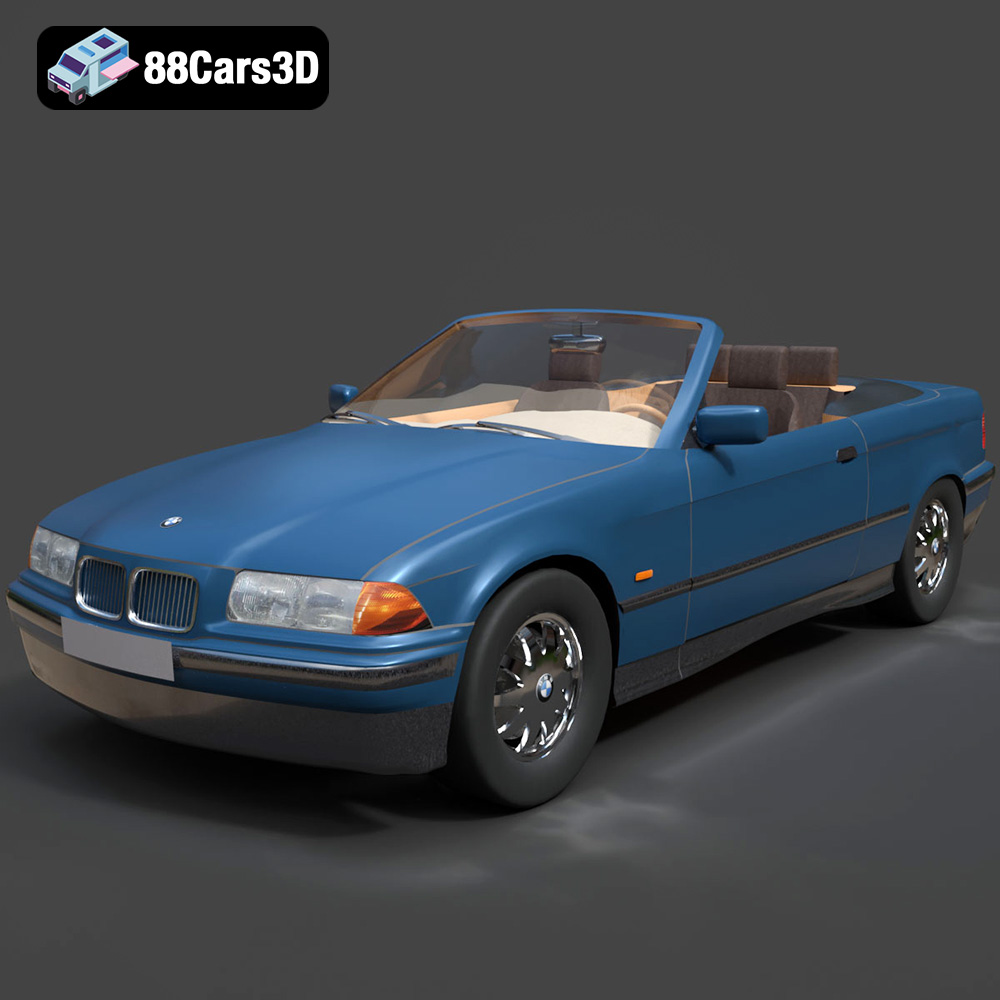
Today, we delve into the intricate process of bringing such automotive legends to life, focusing on a particular gem: the BMW 3 Series E36 Cabrio 325i from 1998. This model represents a pivotal era for BMW, blending sporty performance with an elegant convertible experience. A meticulously crafted 3D model of this vehicle is more than just a collection of polygons; it’s a versatile asset for a multitude of professional applications – from high-fidelity automotive rendering and immersive game environments to precise engineering simulations and even physical 3D prints. The BMW 3 Series E36 Cabrio 325i 1998 3D Model exemplifies how a well-executed digital asset can elevate projects across diverse industries.
In the expansive landscape of 3D modeling, the choice of file format is often as critical as the model itself. Each format serves specific purposes, optimized for different software, workflows, and output requirements. A comprehensive understanding ensures seamless integration and maximum utility for your 3D car models, especially when working with detailed assets like the BMW 3 Series E36 Cabrio 325i 1998 3D Model.
The .blend format is the native file type for Blender, the powerful open-source 3D creation suite. When you acquire a .blend file, you’re getting a complete Blender scene, including the model’s geometry, materials, textures, lighting, cameras, animations, and even modifiers. This format is ideal for users who primarily work within Blender, offering full editability and access to all parameters the artist used. It’s perfect for making extensive modifications, adjusting procedural textures, or leveraging Blender’s robust animation and simulation tools.
.fbx (Filmbox) is a proprietary file format developed by Autodesk, serving as a de facto standard for exchanging 3D data between different software applications. Its strength lies in its ability to encapsulate not just geometry, but also materials, textures, animations, skinning, and camera data. For game developers, .fbx is invaluable for importing assets into game engines like Unreal Engine and Unity, preserving animations and hierarchies. Its versatility makes it a go-to for complex scene transfers and collaborative workflows where multiple software packages are in use.
The .obj (Wavefront OBJ) format is one of the oldest and most universally supported 3D file formats. It primarily stores geometric data – vertices, normals, UV coordinates, and faces – and can reference external material files (.mtl). While it doesn’t handle animations or complex scene data, its simplicity ensures near-universal compatibility across virtually all 3D software. For static meshes or when you need a pure geometry export, .obj is a reliable choice, often used as a fallback for cross-software compatibility.
.glb (GL Transmission Format Binary) is the binary version of glTF, a royalty-free specification for the efficient transmission and loading of 3D scenes and models by applications. .glb packages all assets (geometry, materials, textures, animations) into a single, compact file, making it incredibly efficient for web-based 3D viewers, augmented reality (AR), and virtual reality (VR) applications. Its small file size and optimized structure ensure quick loading and smooth performance in real-time browser environments and mobile devices.
.stl (STereoLithography) is the most common file format for 3D printing. It represents a 3D model as a series of connected triangles, defining only the surface geometry of an object without color, texture, or other CAD attributes. While simple, its ubiquity in the additive manufacturing world makes it indispensable for creating physical replicas of digital models. When preparing a model like the E36 for 3D printing, converting it to .stl and ensuring a watertight mesh are crucial steps.
The .ply (Polygon File Format, or Stanford Triangle Format) is a versatile format often used for storing 3D data from 3D scanners or for CAD and analysis workflows. It can store a wider range of properties than .stl, including color, transparency, normals, and even confidence values. While less common for general asset exchange, .ply excels in applications requiring precise mesh data, point clouds, or when models are intended for scientific visualization, measurement, or reverse engineering tasks.
The .unreal format signifies an asset specifically prepared and optimized for direct integration into Unreal Engine projects. This isn’t a single file type but often refers to a bundled asset that comes with pre-configured materials, textures, collision meshes, LODs (Levels of Detail), and potentially even Blueprints or animation setups. It saves significant time and effort for game developers and real-time visualization artists, as the asset is already set up to leverage Unreal Engine’s powerful rendering capabilities and physically-based material system.
Finally, the .max format is the native scene file for Autodesk 3ds Max, a leading software for 3D modeling, animation, rendering, and compositing. Similar to .blend, a .max file contains the entire scene data, including geometry, materials, lighting, cameras, animations, and plugin-specific information. It provides full editability within 3ds Max, making it ideal for artists who use this software for high-end rendering, complex character rigging, or architectural visualization. The inclusion of a .max file for the BMW E36 Cabrio ensures maximum flexibility for professionals working in a 3ds Max pipeline.
The availability of these diverse formats for the BMW 3 Series E36 Cabrio 325i 1998 3D Model highlights its professional-grade versatility, catering to virtually any professional workflow.
Automotive rendering is a specialized field that demands an acute understanding of light, materials, and composition. For a classic like the BMW E36 Cabrio 325i, the goal is not merely to create a visually accurate image but to evoke the emotional response and aesthetic appeal of the original vehicle. The quality of the 3D model forms the absolute foundation for this process, allowing artists to push boundaries with photorealism.
Achieving photorealism starts with expert material definition and sophisticated lighting. Modern rendering pipelines extensively utilize Physically Based Rendering (PBR) workflows, where materials like metal, paint, glass, and rubber are defined by properties such as albedo (base color), roughness, metallicness, normal maps, and ambient occlusion. For the BMW E36 model, the “detailed headlights and taillights with realistic material definitions” and “transparent materials for windows and light covers” are crucial. This means the model comes with pre-calibrated PBR textures or material setups that accurately simulate how light interacts with different surfaces – from the glossy reflections on the “authentic body panels” to the subtle translucency of the windows and the intricate refractive qualities of the light covers. Artists can then experiment with high dynamic range imaging (HDRI) environments or virtual studio lighting setups to create stunning, lifelike renders, showcasing the car’s classic lines and sporty elegance.
Beyond static renders, the BMW E36 Cabrio 325i 3D Model is engineered for dynamic visual storytelling. Its “separated components for easy animation of doors, wheels, and suspension” are vital for cinematic sequences. This modularity, combined with an “organized hierarchy with proper pivot points for animation and rigging,” allows animators to simulate realistic driving, door opening sequences, or even the operation of the convertible soft top. Imagine a sweeping camera movement revealing the E36 cruising through a scenic landscape, the wheels turning realistically, and the suspension reacting to the road. Integrating the model into complex scenes requires precise scaling, which is ensured by its “accurate real-world scale.” This means it will fit seamlessly alongside other architectural elements, environmental props, or even digital characters without requiring tedious adjustments.
The transition from high-fidelity rendering to real-time game engines or interactive AR/VR experiences demands a different set of optimizations. While visual quality remains paramount, performance, especially frame rate, becomes a critical consideration. The BMW 3 Series E36 Cabrio 325i 1998 3D Model is specifically designed with these requirements in mind, making it an excellent game asset.
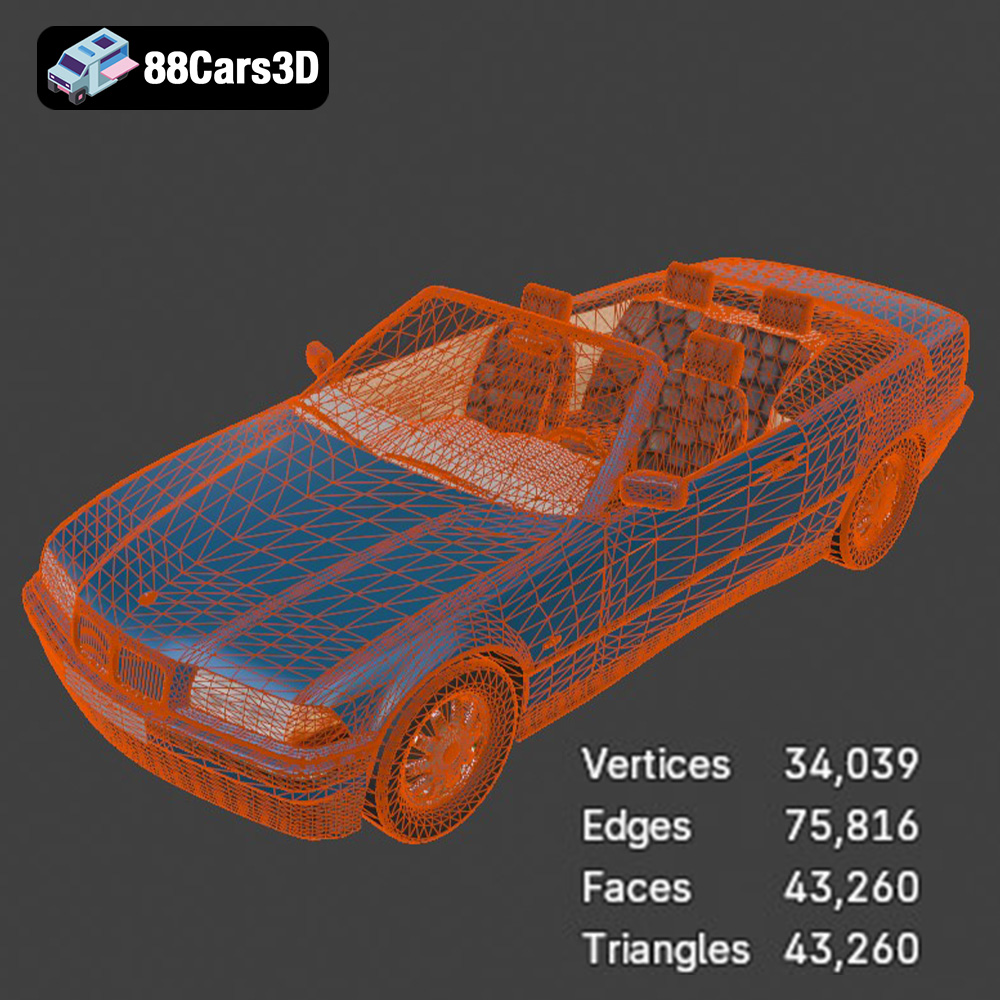
Game assets need to strike a delicate balance between visual fidelity and computational efficiency. The BMW E36 model’s “clean, quad-dominant topology” is a foundational advantage. While high-resolution models are excellent for rendering, real-time engines often require optimized mesh counts, potentially using Levels of Detail (LODs) to swap lower-polygon versions of the model at a distance. The clean topology facilitates easy generation of these LODs and ensures efficient deformation during physics simulations or crashes. Furthermore, efficient UV mapping is essential for texture atlases, which consolidate multiple textures into one for fewer draw calls and better performance. The model’s “optimized mesh quality suitable for close-up renders” means it holds up even when players get up close, providing a rich, immersive experience.
Game developers primarily rely on engines like Unreal Engine and Unity. The inclusion of .fbx and a dedicated .unreal project setup for the BMW E36 model simplifies the integration process significantly. The .fbx format ensures that the model’s geometry, UVs, and PBR materials transfer correctly, along with any pre-rigged components like wheels and doors. The .unreal asset takes this a step further, providing an engine-ready package with pre-configured materials, potential collision meshes, and even basic Blueprints for vehicle control. This drastically reduces development time, allowing designers to focus on gameplay and environment building rather than asset preparation. For Unity users, the .fbx file also serves as a robust import option, ready for setting up wheel colliders, suspension joints, and visual scripts.
Augmented Reality (AR) and Virtual Reality (VR) are burgeoning fields where interactive 3D content is key. The .glb format is specifically optimized for these applications, particularly for web-based AR/VR experiences. Its single-file, self-contained nature and efficient data structure mean that the BMW E36 model can be loaded quickly and rendered smoothly on mobile devices or within web browsers without performance bottlenecks. Imagine an interactive AR experience where a user can place the classic BMW E36 Cabrio in their driveway, inspect its “detailed dashboard with instruments and controls” up close, and even animate its doors and soft top, all powered by this optimized .glb model. This capability opens doors for automotive marketing, virtual showrooms, and interactive product presentations.
While stunning visuals are a primary application, high-quality 3D car models extend their utility into realms requiring absolute precision and data integrity. The BMW 3 Series E36 Cabrio 325i 1998 3D Model is designed to meet the rigorous demands of engineering, simulation, and even physical manufacturing.
For engineers and product designers, a 3D model can be more than just an aesthetic representation; it’s a tool for analysis and simulation. The “accurate real-world scale” of the E36 model is paramount here, ensuring that any measurements taken or simulations run on the digital asset directly correlate to its physical counterpart. The inclusion of the .ply format offers a pathway for more specialized engineering workflows. While not a full CAD format, .ply can store highly precise mesh data, which can be useful for certain forms of analysis, reverse engineering processes, or integration into simulation software that requires dense mesh information. This allows for applications in areas like aerodynamic studies, ergonomic analysis of the interior, or visualizing component interactions within a larger system, bridging the gap between artistic representation and technical utility.
The digital age now readily crosses into the physical realm through 3D printing. The BMW E36 Cabrio 325i 1998 3D Model is “convertible to .stl format for creating physical replicas,” making it suitable for additive manufacturing. The .stl format, as discussed, is the universal language for 3D printers. For a successful print, the underlying mesh of the model needs to be “watertight” (without holes or non-manifold geometry), which is generally a characteristic of professional-grade models like this one. Artists can scale the model to any desired size, from desktop miniatures to larger display pieces. This capability opens up opportunities for creating bespoke merchandise, collectible models, or even detailed prototypes, allowing enthusiasts to hold a piece of automotive history in their hands, directly derived from the digital asset available on 88cars3d.com.
The true measure of a professional 3D car model lies in its underlying technical quality. It’s not just about how it looks, but how it’s built. The BMW 3 Series E36 Cabrio 325i 1998 3D Model stands out due to its adherence to industry best practices, ensuring versatility and ease of use for demanding projects.
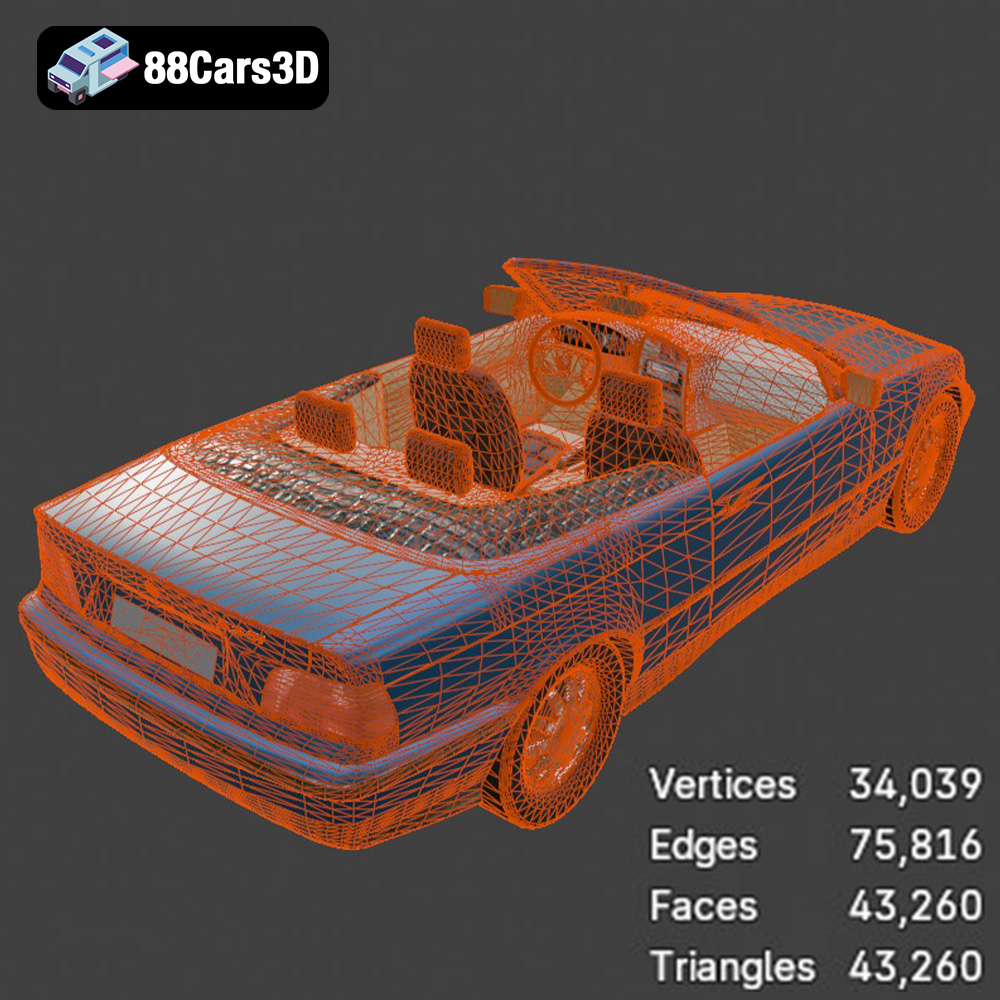
At the core of any high-quality 3D model is its geometry and topology. The description emphasizes “clean, quad-dominant topology for easy subdivision and deformation.” This is critical. Quads (four-sided polygons) are preferred over tris (triangles) for organic surfaces and anything that needs to deform smoothly or be subdivided. This clean structure allows artists to apply subdivision surface modifiers (like TurboSmooth in 3ds Max or Subdivision Surface in Blender) to increase mesh density and smooth out surfaces without introducing artifacts, making the model suitable for extreme close-ups or high-resolution cinematic renders. This attention to detail ensures that the E36’s “authentic body panels reflecting the E36’s classic lines” are perfectly preserved, regardless of the rendering fidelity.
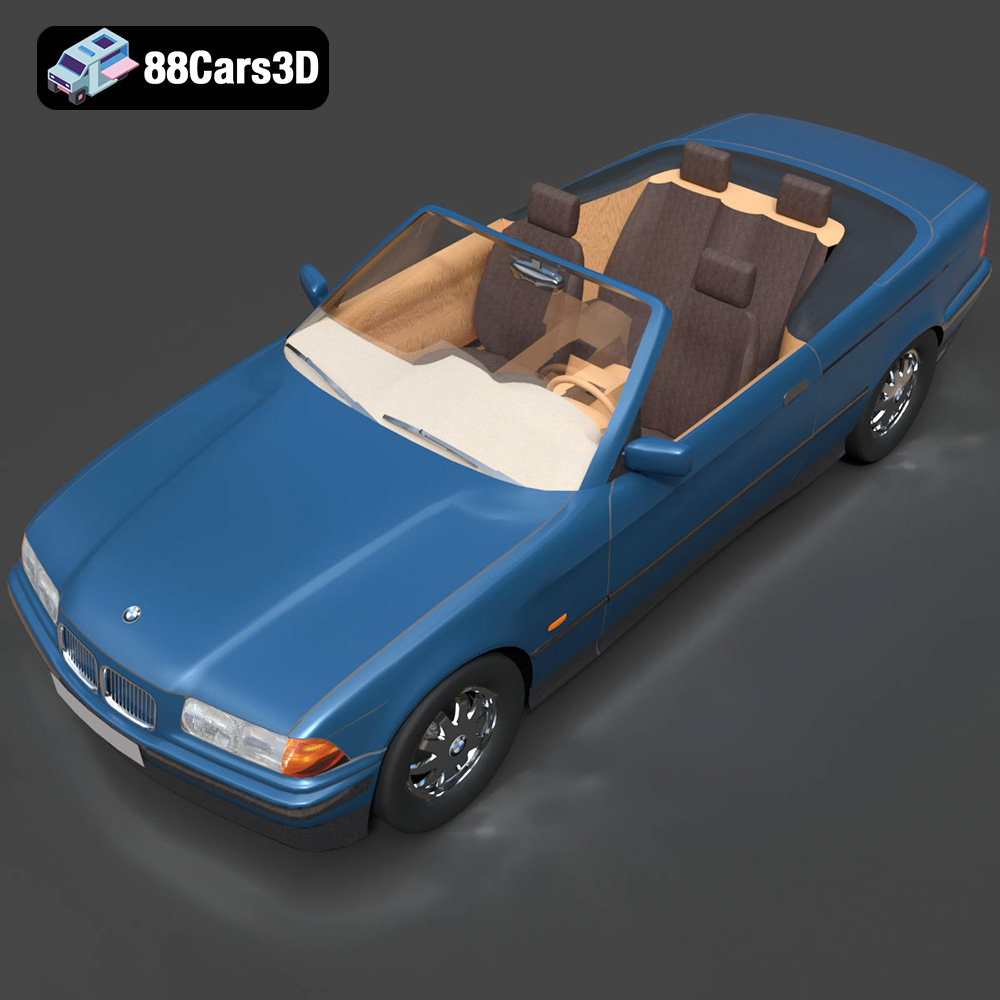
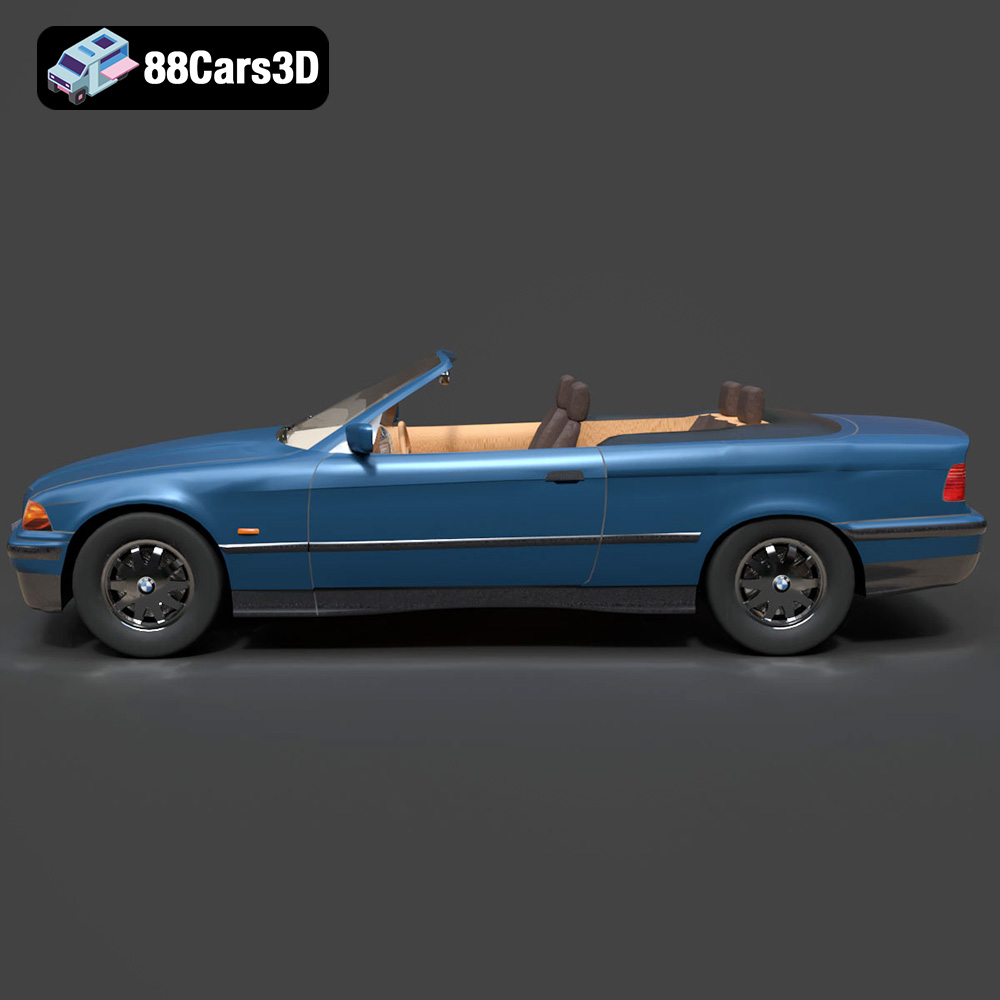
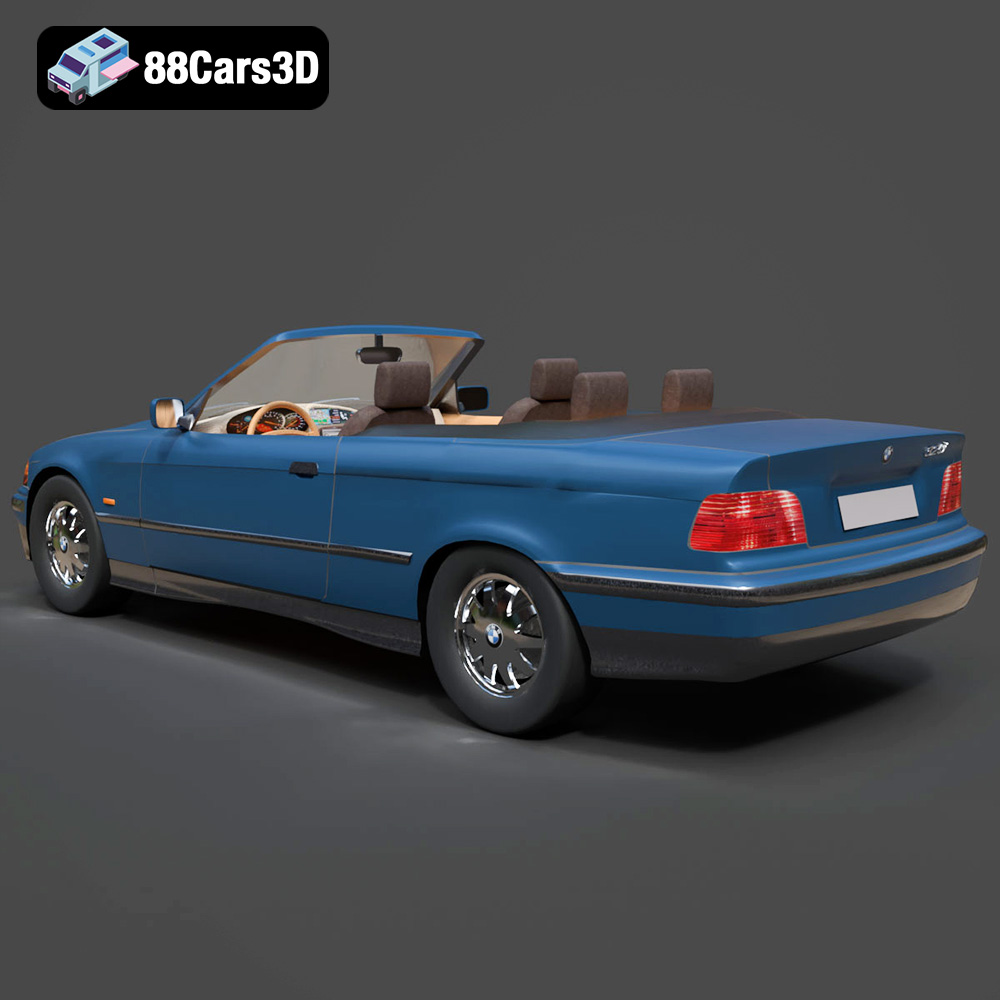
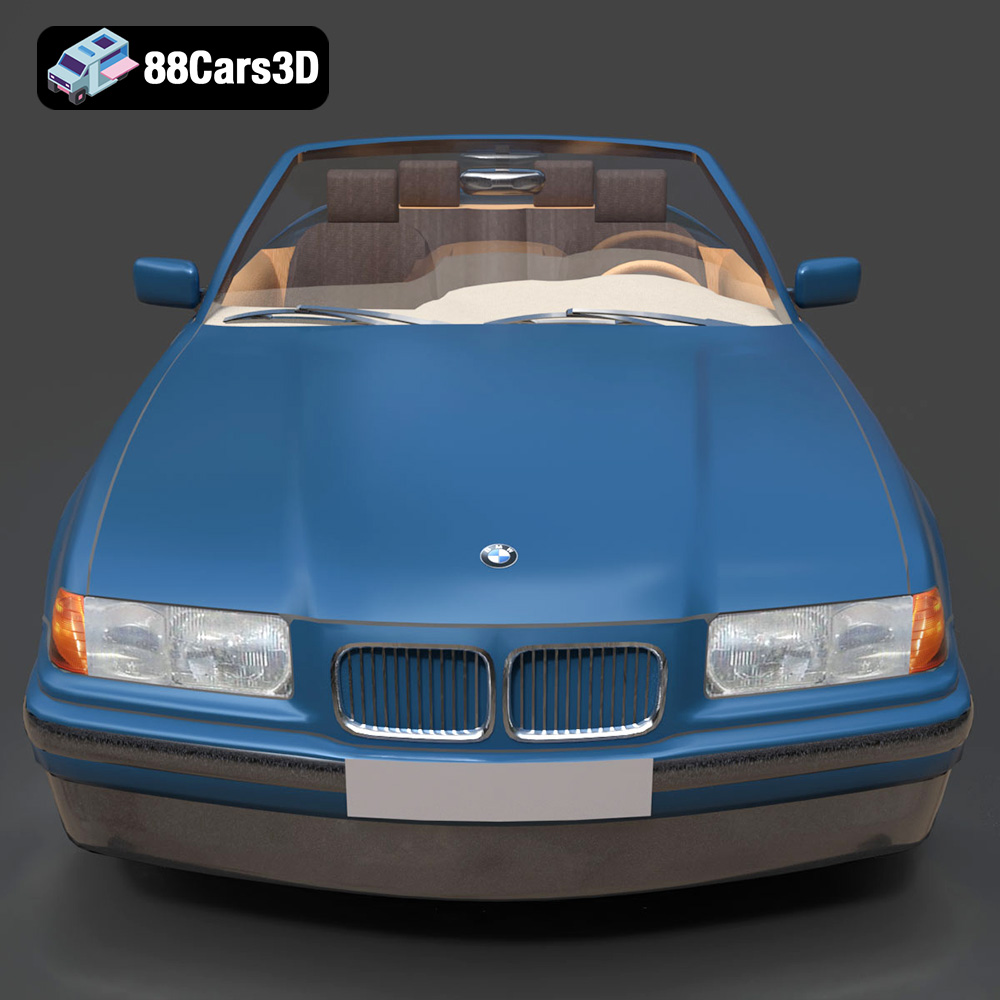
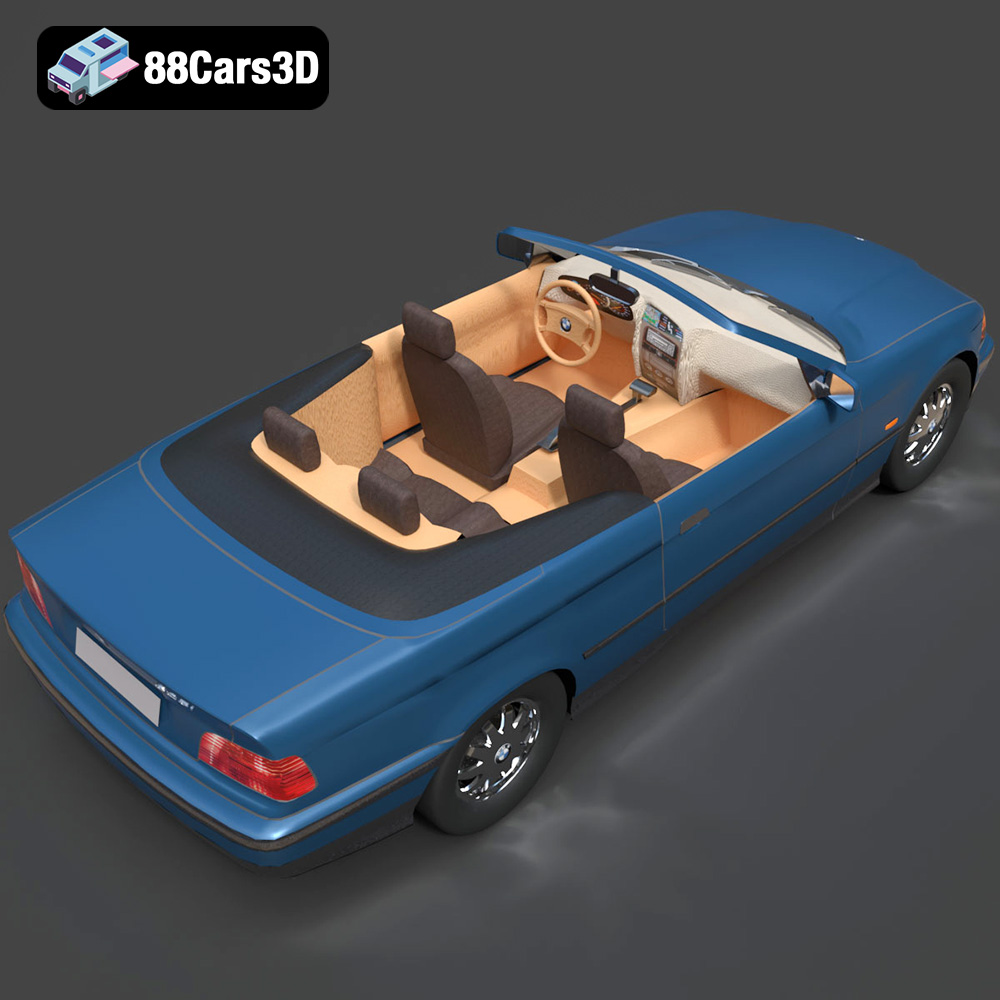
The devil is in the details, and this model does not disappoint. The “detailed headlights and taillights,” “sporty alloy wheels and high-profile tires,” and “faithful recreation of the convertible soft top” on the exterior speak to meticulous craftsmanship. These aren’t just simple textures; they are modeled components, often with intricate material setups to replicate glass, chrome, and rubber realistically. Inside, the “detailed dashboard with instruments and controls,” “comfortable seating upholstery and door panels,” and “steering wheel and gear shifter replicated with precision” demonstrate an equal commitment to accuracy. This level of internal detail makes the model perfect for “close-up renders,” interactive cockpit experiences in games, or virtual reality tours, where every dial and stitch contributes to immersion.
A truly professional asset is not static; it’s adaptable. The model’s “organized hierarchy with proper pivot points for animation and rigging” is a testament to this. Proper pivot points mean that components like doors, wheels, and the steering wheel can be rotated naturally without requiring manual adjustments, saving countless hours for animators and riggers. Furthermore, the “separated components for easy animation of doors, wheels, and suspension” streamline the rigging process significantly. The “customization options” mentioned, such as “easily adjust paint finishes, reflections, and decals” or “modify material properties for metal, chrome, plastic, and rubber components,” provide immense flexibility. Artists can quickly adapt the BMW E36 Cabrio to match specific liveries, conceptual designs, or different lighting conditions (daylight to night scenes), making it a truly versatile tool for any project.
In a competitive digital landscape, efficiency and quality are paramount. Sourcing pre-built, high-quality 3D assets is often the smartest strategy for professionals. This is where marketplaces like 88cars3d.com prove invaluable, offering solutions like the BMW 3 Series E36 Cabrio 325i 1998 3D Model.
Developing a complex 3D car model from scratch is an incredibly time-consuming and skill-intensive process. It involves extensive blueprint research, precise modeling, detailed UV unwrapping, material definition, and optimization. By investing in a professionally crafted model from 88cars3d.com, artists and studios can bypass hundreds of hours of development time. This allows teams to allocate resources to other critical aspects of their projects, such as scene building, animation, or interactive logic. The guarantee of “clean geometry and balanced detailing” and “optimized mesh quality” ensures that the asset will meet professional standards right out of the box, avoiding common pitfalls associated with lower-quality models that require extensive cleanup or rework.
The true strength of a premium 3D model lies in its adaptability. The BMW E36 Cabrio 325i 1998 3D Model, with its wide array of “included file formats” (.blend, .fbx, .obj, .glb, .stl, .ply, .unreal, .max), demonstrates this versatility perfectly. Whether your project demands ultra-realistic renders in 3ds Max, real-time performance in Unreal Engine, web-based AR experiences via .glb, or even a physical 3D print, this single asset provides a ready solution. This comprehensive file format support means that teams with diverse software pipelines can all integrate and utilize the same core asset, fostering consistency and reducing compatibility issues across different departments or stages of a project. From cinematic showcases to immersive game environments, the model is engineered to seamlessly fit into any professional workflow, making it a sound investment for any digital artist or developer.
The digital representation of iconic vehicles like the BMW 3 Series E36 Cabrio 325i from 1998 is more than an artistic endeavor; it’s a technical triumph. This meticulously crafted 3D model embodies the perfect blend of aesthetic accuracy and technical robustness, making it an indispensable asset for a wide spectrum of professional applications. From its clean, quad-dominant topology and accurate real-world scale to its detailed interior and exterior features, every aspect is designed to deliver superior performance and visual fidelity.
Whether you’re an automotive renderer aiming for breathtaking photorealism, a game developer building an immersive open world, an AR/VR creator seeking optimized interactive experiences, or an engineer requiring precise visualization for simulations, the BMW E36 Cabrio 325i 3D Model offers the versatility and quality you need. Its comprehensive file format support ensures seamless integration into your preferred software, providing a flexible foundation for your creative and technical pursuits. Explore this and many other high-quality 3D car models at 88cars3d.com, and elevate your projects with professional-grade assets that truly capture the essence of automotive excellence.
Experience the timeless appeal of the iconic BMW 3 Series E36 Cabrio 325i with this meticulously crafted 3D model. Representing a quintessential German convertible from the late 90s, this model captures the distinctive styling and sporty elegance that defined a generation. Built with clean geometry and balanced detailing, it ensures optimal performance for various applications. Ideal for high-quality rendering, immersive animation sequences, realistic simulations, and integration into game development projects.
Exterior Features:
Interior / Mechanical Features:
Technical Advantages:
Applications:
Customization Options:
Unlock the potential of this iconic BMW E36 Cabrio 325i 3D model to elevate your projects with its professional quality and versatile design, bringing a touch of classic automotive excellence to your digital world.
Included File Formats:
Tags:
.bmw,.3series,.e36,.cabrio,.325i,.1998,.car,.convertible,.sportscar,.classiccar,.rendering,.simulation,.gameasset,.arvr,.blend,.fbx,.obj,.glb,.stl,.ply,.unreal,.maxMercedes Benz CLS 500 3D Model
$10.79
.1998
.325i
.3series
.arvr
.blend
.bmw
.cabrio
.car
.classiccar
.convertible
.e36
.fbx
.gameasset
.glb
.max
.obj
.ply
.rendering
.simulation
.sportsCar
.stl
.unreal