Get 20% OFF All Premium 3D & STL Models!

In the expansive world of 3D design, the creation of photorealistic vehicles holds a special allure. From the sleek lines of a modern supercar to the nostalgic curves of a classic convertible, 3D car models are indispensable assets for a multitude of creative and technical endeavors. They are the backbone of cinematic renders, the stars of immersive game environments, and the subjects of detailed engineering simulations. Among the most cherished automotive designs is the BMW 3 Series E36, a vehicle that perfectly encapsulated German engineering and design prowess in the late 1990s.
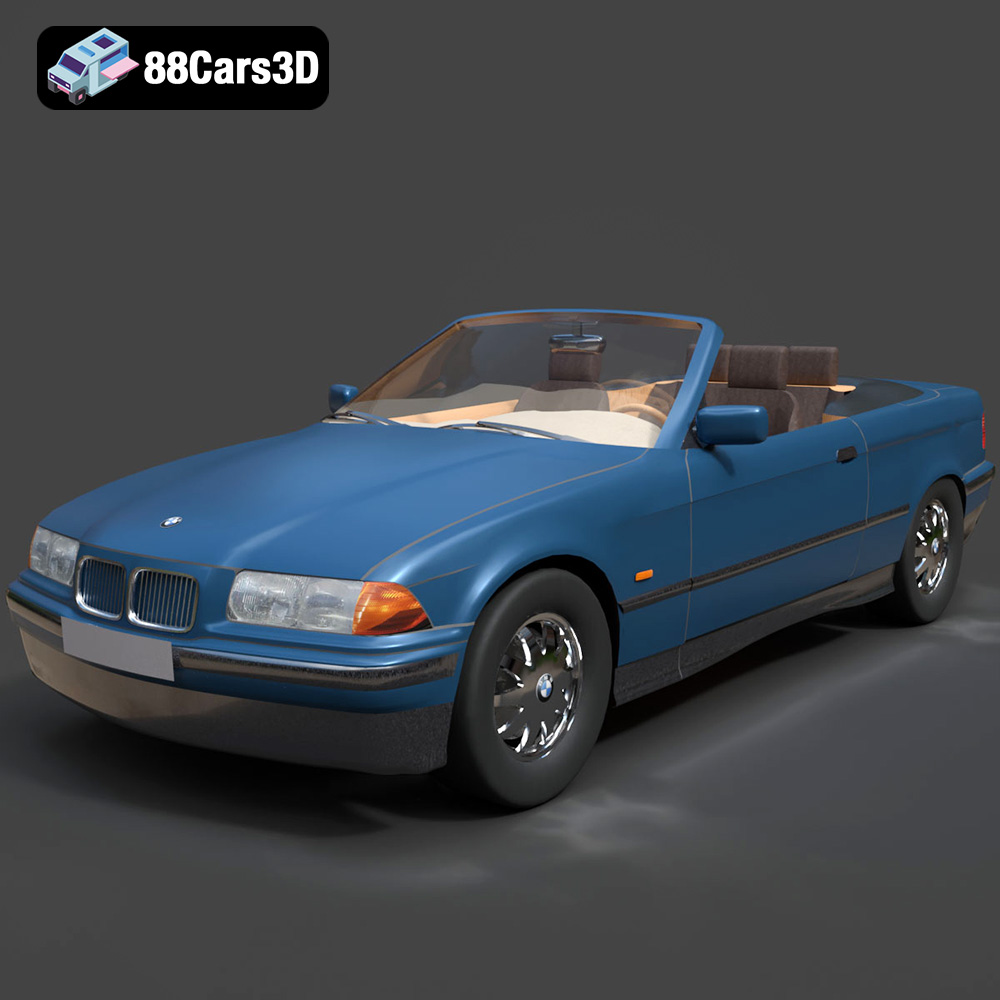
Today, we’re taking an in-depth look at a particular gem that embodies this legacy: the BMW 3 Series E36 Cabrio 325i 1998 3D Model. This meticulously crafted digital recreation offers artists, developers, and engineers an unparalleled opportunity to integrate a piece of automotive history into their projects. Available on 88cars3d.com, this model isn’t just a static representation; it’s a versatile, high-quality asset engineered for peak performance across rendering, game development, AR/VR, and simulation applications. Its clean geometry, balanced detailing, and comprehensive feature set make it a foundational asset for anyone seeking to elevate their digital automotive experiences.
When working with 3D car models, especially complex assets like the BMW 3 Series E36 Cabrio 325i, understanding the various file formats available is paramount. Each format serves a specific purpose, catering to different software environments, project requirements, and optimization needs. The BMW E36 Cabrio 3D model thoughtfully includes a range of formats, ensuring maximum compatibility and utility for professionals across various disciplines.
The .blend format represents a fully editable Blender scene. For users of Blender, this is the most powerful format as it retains all scene data, including object hierarchy, materials (Cycles/Eevee setups), textures, lighting, camera setups, modifiers, and animation data. It offers full artistic control, allowing artists to delve deep into the model’s construction, adjust subdivision levels, modify materials, or even re-rig components if necessary. For those who want to use the model as a starting point for heavy customization or integration into a larger Blender project, the .blend file is indispensable.
.fbx (Filmbox) is arguably the most widely adopted interchange format in the 3D industry. Developed by Autodesk, it’s ideal for transferring 3D data between various digital content creation (DCC) applications like Maya, 3ds Max, Blender, and game engines such as Unreal Engine and Unity. An .fbx file typically includes not just geometry but also animation, cameras, lights, and material properties. It excels in real-time pipelines due to its efficient data handling and robust support for skeletal animation and PBR (Physically Based Rendering) material workflows. For integrating the E36 Cabrio into game development or complex animation sequences in external software, .fbx is the go-to format.
The .obj (Wavefront Object) format is a simple, universal format for cross-software compatibility. It primarily stores geometric data – vertices, normals, UVs, and polygonal faces – and can reference external .mtl (material) files for basic material definitions. While it doesn’t support animation or complex scene data like .fbx or .blend, its widespread compatibility makes it an excellent choice for static meshes that need to be imported into virtually any 3D software. For simple renders or as a fallback for software that struggles with more complex formats, .obj is highly reliable.
.glb (GL Transmission Format Binary) is the binary version of glTF, a royalty-free specification for the efficient transmission and loading of 3D scenes and models by applications. It packages textures and other assets directly into a single file, making it highly optimized for augmented reality (AR), virtual reality (VR), and browser-based display. Its compact size and efficient runtime loading make it perfect for interactive web viewers, immersive AR/VR experiences, and metaverse applications where performance and rapid deployment are critical. The E36 Cabrio in .glb format is ready for the next generation of digital interaction.
The .stl (Stereolithography) format is the de facto standard for 3D printing. It represents a 3D model as a collection of unconnected triangles, describing only the surface geometry of a 3D object. While lacking color or texture information, its simplicity makes it universally compatible with 3D printers and slicing software. If the goal is to create a physical replica of the BMW E36 Cabrio 325i, whether for prototyping, collectible models, or educational purposes, the .stl file is essential. It provides the pure geometric data needed for additive manufacturing.
The .ply (Polygon File Format) is a versatile format often used for storing 3D data from 3D scanners, CAD systems, and scientific applications. It supports a wide range of properties, including color, transparency, surface normals, and various confidence levels for each vertex and face. It’s often favored for its precision and ability to store rich attribute data, making it suitable for engineering analysis, reverse engineering, and complex scientific visualizations. For high-fidelity analysis of the E36 Cabrio’s geometry, the .ply format offers a robust solution.
The mention of .unreal typically signifies an asset that has been specifically prepared or even packaged within an Unreal Engine project structure. This could be a .uasset file or a small project containing the model pre-configured with Unreal-native materials, collision meshes, and LODs (Levels of Detail). This format streamlines integration into Unreal Engine projects, saving considerable time and effort in asset preparation, material setup, and optimization for real-time performance. For game developers targeting Unreal Engine, this is an invaluable asset.
Finally, the .max format is the native file type for Autodesk 3ds Max. Similar to .blend for Blender users, it encapsulates the entire 3ds Max scene, including geometry, modifiers, materials (V-Ray, Corona, Standard), lighting, cameras, animation, and scene hierarchy. It provides the highest level of editable detail and is perfect for professional visualization studios that utilize 3ds Max as their primary DCC software. For comprehensive rendering projects or detailed automotive animations, the .max file offers complete flexibility.
The inclusion of such a diverse array of formats with the BMW 3 Series E36 Cabrio 325i 1998 3D Model underscores its versatility and value, ensuring that professionals can seamlessly integrate this iconic vehicle into virtually any digital pipeline.
Creating a 3D car model that truly stands out requires a delicate balance of artistic flair and technical precision. The BMW 3 Series E36 Cabrio 325i 1998 3D Model exemplifies this synthesis, offering a robust foundation for high-end visualization and interactive applications. Its construction reflects a deep understanding of automotive design principles and 3D modeling best practices.
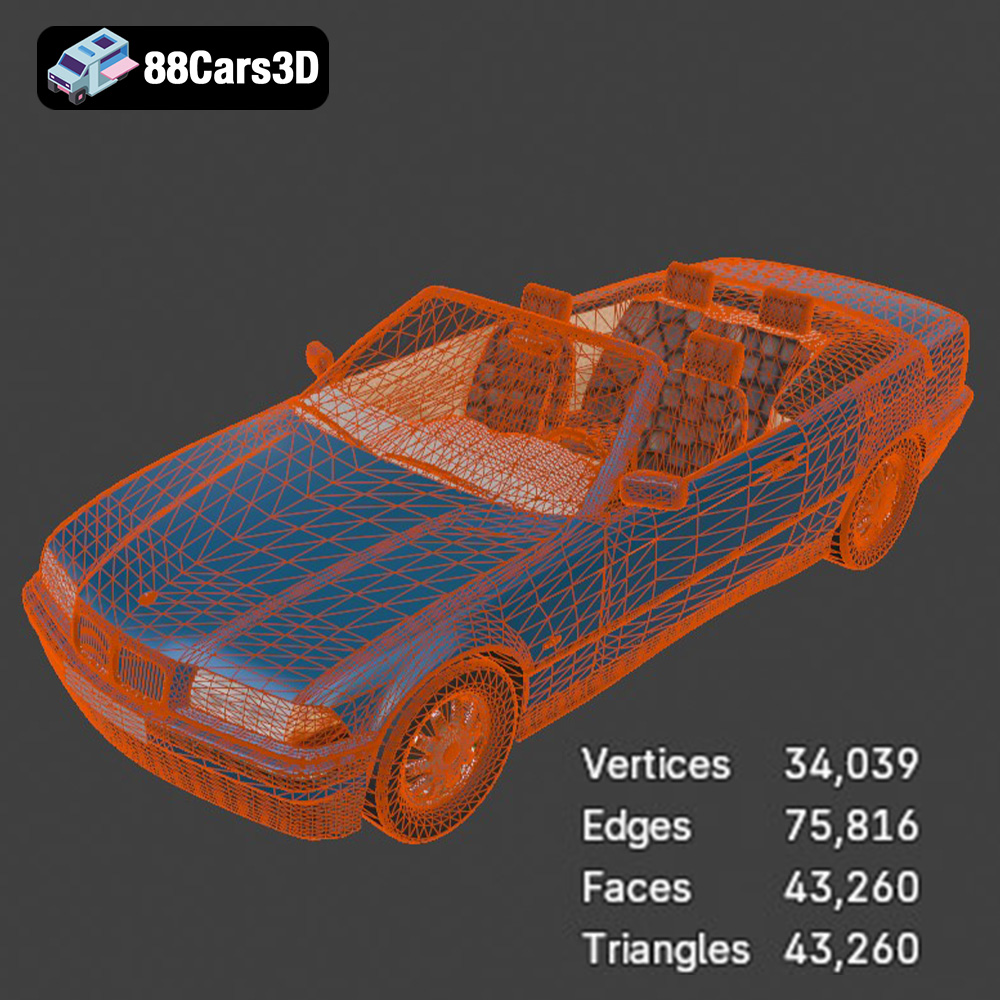
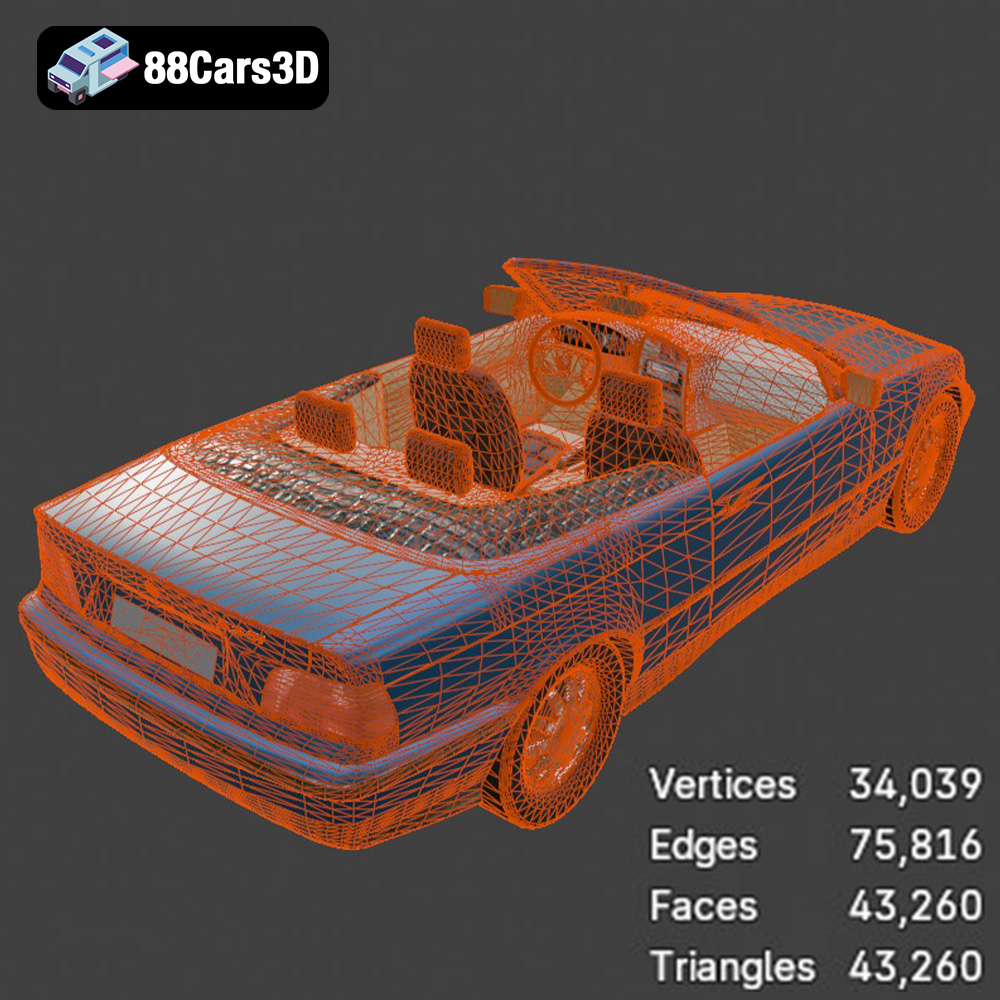
At the core of any high-quality 3D model is its geometry and topology. This E36 Cabrio model boasts clean, quad-dominant topology, a hallmark of professional 3D assets. Quad-dominant geometry ensures smooth subdivision, crucial for creating high-resolution renders without unsightly pinching or artifacts. This also makes the model easier to deform and animate, whether for opening doors or simulating suspension compression. Furthermore, its accurate real-world scale guarantees seamless integration into existing scenes and environments, eliminating scale inconsistencies that often plague less professional models. The optimized mesh quality is particularly suitable for close-up renders, meaning every curve, panel gap, and subtle surface detail holds up under intense scrutiny, from the iconic kidney grille to the subtle lines of the side mirrors.
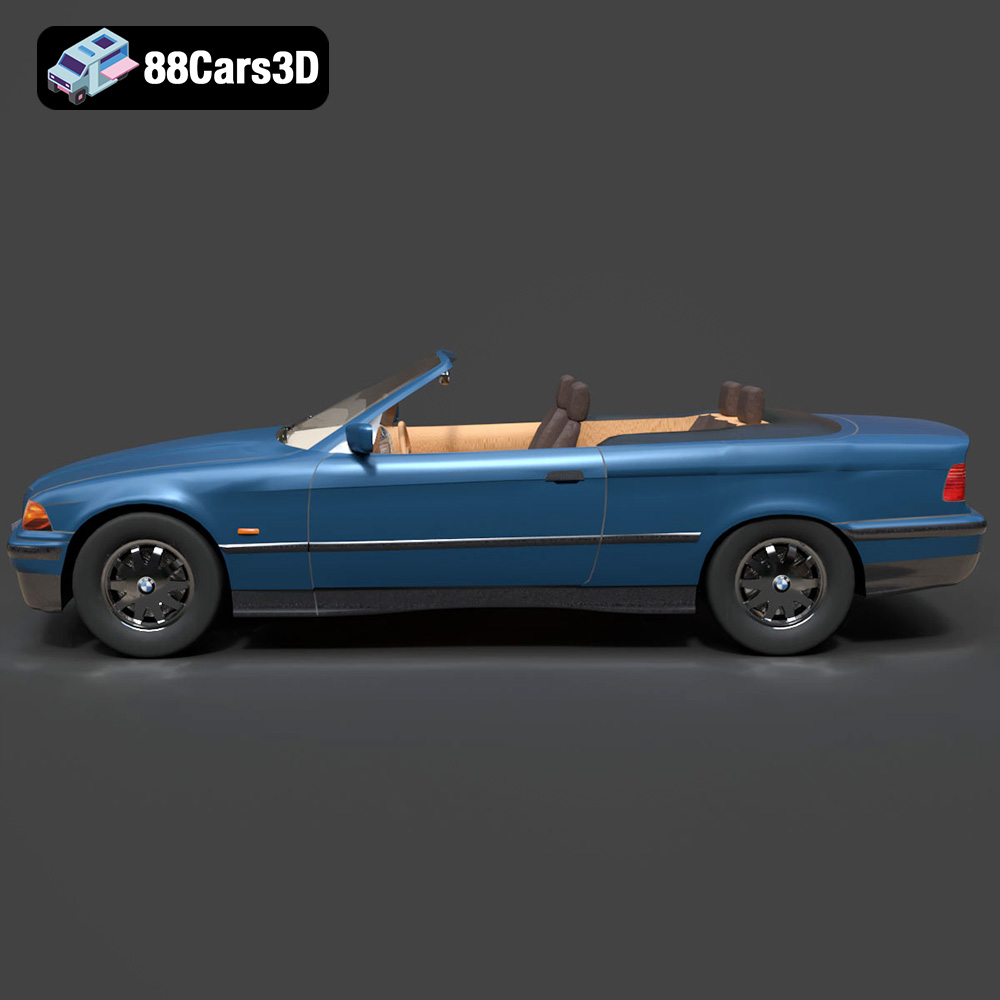
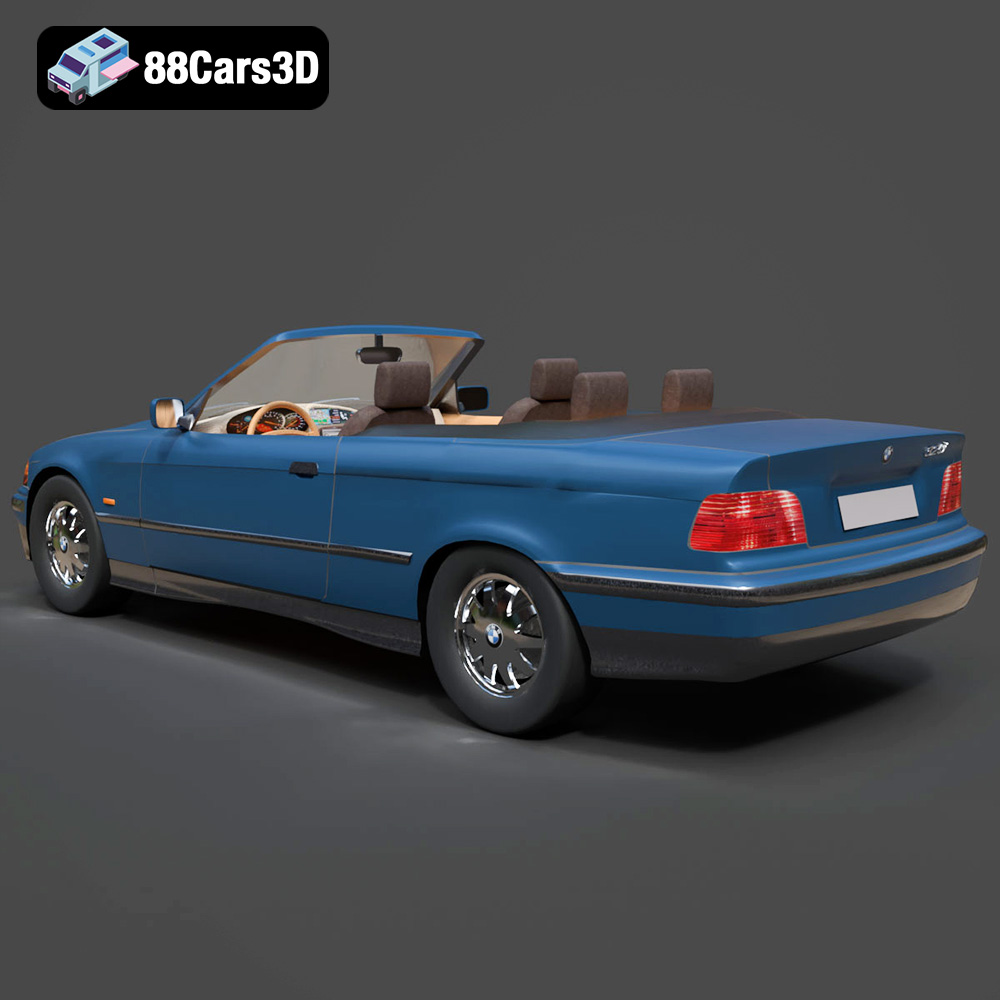
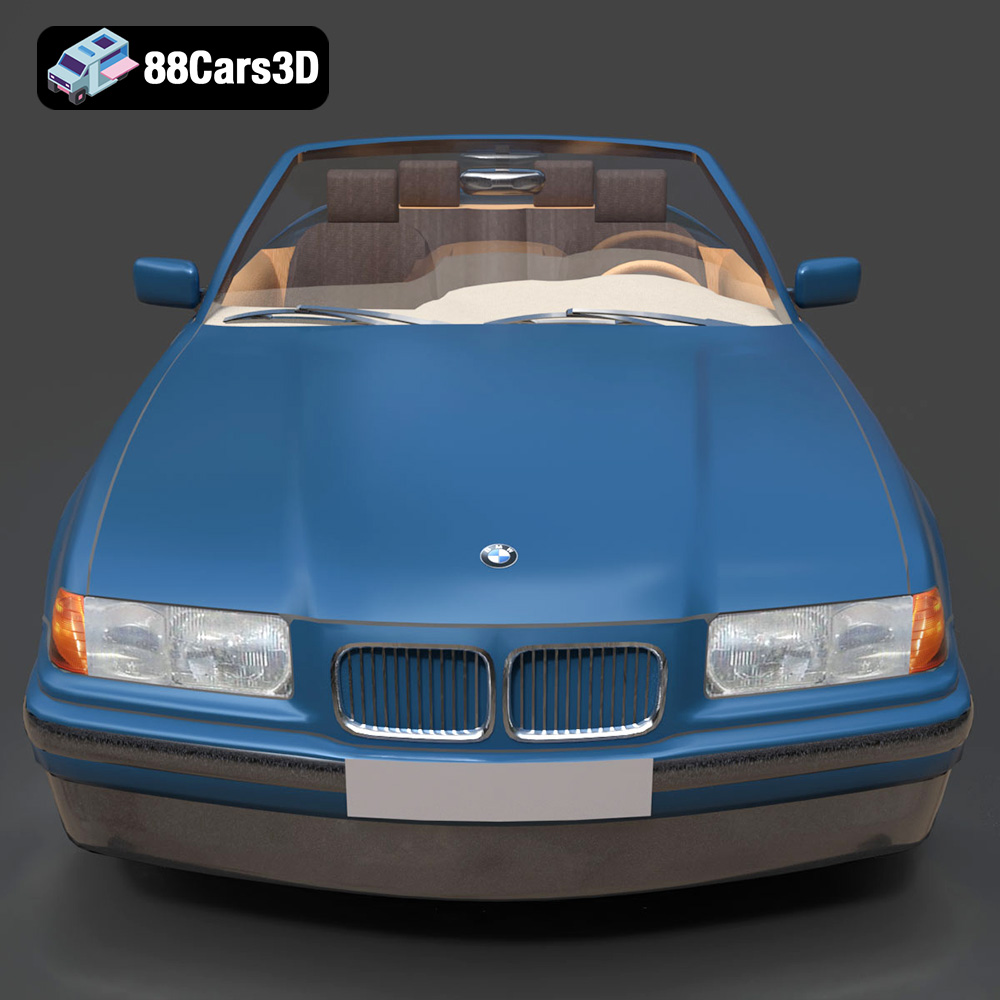
Beyond the underlying mesh, the model excels in its faithful reproduction of the E36 Cabrio’s distinctive features. The authentic body panels reflect the classic lines and sculpted surfaces that defined this generation of BMWs. Crucial elements like the detailed headlights and taillights are not just placeholders; they feature realistic material definitions that accurately simulate glass, reflectors, and light sources. The sporty alloy wheels and high-profile tires are meticulously modeled, down to the tire treads and brake calipers, adding significant realism. A standout feature is the faithful recreation of the convertible soft top, capturing its texture and form, allowing for dynamic scene setups. For animation and interactivity, separated components for doors, wheels, and suspension are provided, complete with proper pivot points, streamlining the rigging process. Even subtle touches like transparent materials for windows and light covers contribute to the overall realism.
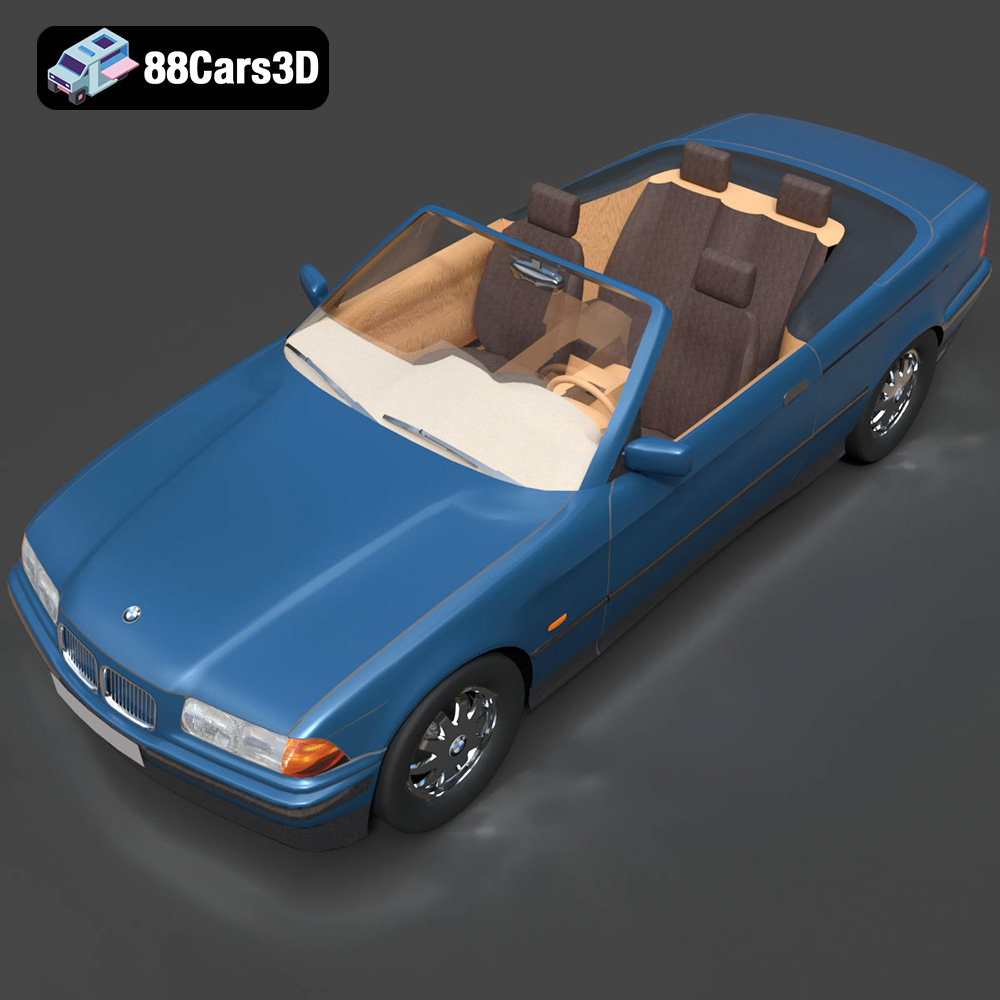
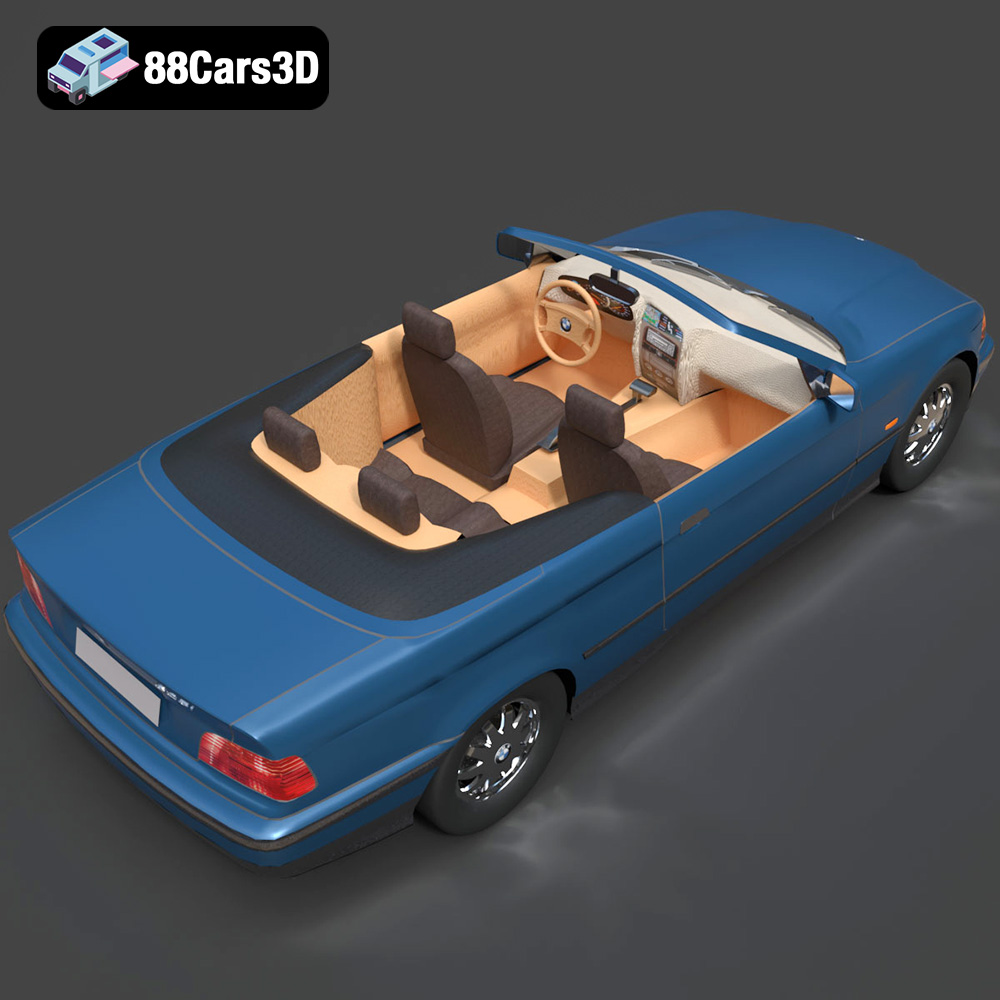
The attention to detail extends to the interior and essential mechanical components. A detailed dashboard with instruments and controls provides an immersive cabin experience, ideal for virtual driving simulations or interior renders. The comfortable seating upholstery and door panels are textured and modeled to reflect the period-correct aesthetic, while the steering wheel and gear shifter replicated with precision complete the cockpit. This level of internal fidelity makes the model suitable for a wider range of applications, from cinematic fly-throughs to interactive VR experiences where users can explore the car’s interior.
The versatility of the BMW 3 Series E36 Cabrio 325i 1998 3D Model lies in its adaptability to various professional workflows. Whether you’re a visualization artist, game developer, or AR/VR creator, this asset provides the tools to achieve stunning results.
For artists focused on achieving photorealistic imagery, the included .max and .blend files are invaluable. In 3ds Max, professionals can leverage advanced rendering engines like V-Ray or Corona to create breathtaking studio renders or dynamic cinematic scenes. The organized hierarchy and proper pivot points make it easy to set up complex lighting scenarios, environmental reflections, and camera animations. Similarly, Blender users can utilize Cycles or Eevee, taking advantage of the pre-configured materials within the .blend file to rapidly produce high-quality output. The quad-dominant topology ensures excellent subdivision, allowing for incredibly smooth surfaces, perfect for showcasing the car’s paint finishes and reflections, which are easily adjustable to match specific liveries or design preferences.
The realm of game development demands assets that are not only visually appealing but also highly optimized for real-time performance. The BMW E36 Cabrio 3D model delivers on this front, particularly with its .fbx and .unreal formats. The .fbx file is perfect for importing into Unreal Engine or Unity, allowing developers to set up PBR materials, add collision meshes, and implement Levels of Detail (LODs) to ensure optimal performance across different viewing distances. The .unreal setup further streamlines this process, potentially offering an already integrated and optimized asset ready for racing simulations, open-world environments, or interactive garage experiences. Its clean geometry and optimized mesh quality contribute directly to stable frame rates and a smooth user experience, critical for immersive game assets.
The emergent fields of Augmented Reality (AR) and Virtual Reality (VR) require highly efficient 3D models. The .glb format included with this model is specifically tailored for these applications. Its compact, self-contained nature ensures quick loading times and smooth performance in immersive AR apps, interactive VR environments, or even browser-based 3D viewers. Imagine placing the BMW E36 Cabrio 325i in your driveway via an AR application, or exploring its detailed interior in a VR showroom. The optimization inherent in the .glb format makes these experiences seamless and engaging, pushing the boundaries of interactive visualization.
The utility of a high-quality 3D car model extends far beyond aesthetic rendering and game development. The BMW E36 Cabrio 3D model is also a formidable tool for technical applications such as engineering simulation and physical prototyping.
For engineering visualization, academic research, or professional training simulators, accurate 3D models are essential. The .ply format, known for its precision in storing mesh data and attributes, makes this E36 Cabrio model suitable for detailed analyses. Its real-world scale and clean topology can be utilized in driving simulators to provide a realistic visual component, enhancing the immersive qualities for training drivers or testing virtual scenarios. Furthermore, its detailed mechanical features, even if not fully articulated for complex physics, provide a solid foundation for more specialized engineering studies or educational content focused on vehicle design and structure.
The advent of 3D printing has opened new avenues for bringing digital creations into the physical world. With the inclusion of the .stl format, the BMW 3 Series E36 Cabrio 325i 1998 3D Model is ready for manufacturing. Whether you’re looking to create a scale replica for a desktop display, a functional prototype for a component, or a unique collectible, the .stl file provides the necessary geometry. Professionals can utilize this to produce highly accurate physical models, allowing for tactile interaction with the design and a deeper appreciation of the classic E36 lines. This capability bridges the gap between digital design and tangible reality, offering a tangible output from your digital asset library.
A truly professional 3D asset provides a strong foundation while allowing for extensive customization. The BMW 3 Series E36 Cabrio 325i 1998 3D Model excels in offering creative freedom, empowering artists and designers to tailor the vehicle to their specific project needs.
One of the most impactful ways to customize a 3D model is through its materials and textures. With this E36 Cabrio model, users can easily adjust paint finishes, reflections, and decals. Imagine transforming the classic German convertible into a custom race livery, a subtle metallic sheen, or a weathered classic. The ability to modify material properties for metal, chrome, plastic, and rubber components allows for precise control over how light interacts with different surfaces, ensuring that the model integrates perfectly into any scene or aesthetic vision. This flexibility is crucial for designers who need to present multiple variations of a vehicle or adapt it to diverse brand requirements.
Lighting is the soul of any render, and the E36 Cabrio model responds beautifully to varied illumination. Artists can adapt lighting setups to achieve various moods and environments, from the harsh highlights of a bright daylight scene to the dramatic shadows of a night render. Whether showcasing the car in a sleek studio, on a winding scenic road, or under the atmospheric glow of city lights, the model’s clean materials and reflective surfaces ensure that it reacts realistically to its surroundings. This dynamic adaptability makes it an incredibly powerful tool for visual storytelling, enabling artists to evoke specific emotions and narratives around this iconic vehicle.
The BMW 3 Series E36 Cabrio 325i 1998 3D Model is more than just a digital asset; it’s a gateway to bringing a piece of automotive history to life in countless digital and even physical applications. From its meticulously crafted exterior and interior details to its clean, quad-dominant topology and real-world scale, every aspect of this model has been engineered for professional use.
Its comprehensive file format support, including .blend, .fbx, .obj, .glb, .stl, .ply, .unreal, and .max, ensures unparalleled compatibility across a spectrum of software and pipelines. Whether you are aiming for high-fidelity automotive rendering in 3ds Max or Blender, optimizing game assets for Unreal Engine, developing immersive AR/VR experiences, conducting engineering simulations, or even embarking on a 3D printing project, this model provides the robust foundation you need. The extensive customization options for materials, textures, and lighting further empower creators to achieve their unique artistic visions.
For professionals seeking a versatile, high-quality 3D car model that delivers both aesthetic excellence and technical precision, the BMW 3 Series E36 Cabrio 325i 1998 3D Model from 88cars3d.com stands out as an indispensable resource. Unlock the potential of this iconic vehicle and elevate your projects with a touch of classic automotive excellence in your digital world.
Experience the timeless appeal of the iconic BMW 3 Series E36 Cabrio 325i with this meticulously crafted 3D model. Representing a quintessential German convertible from the late 90s, this model captures the distinctive styling and sporty elegance that defined a generation. Built with clean geometry and balanced detailing, it ensures optimal performance for various applications. Ideal for high-quality rendering, immersive animation sequences, realistic simulations, and integration into game development projects.
Exterior Features:
Interior / Mechanical Features:
Technical Advantages:
Applications:
Customization Options:
Unlock the potential of this iconic BMW E36 Cabrio 325i 3D model to elevate your projects with its professional quality and versatile design, bringing a touch of classic automotive excellence to your digital world.
Included File Formats:
Tags:
.bmw,.3series,.e36,.cabrio,.325i,.1998,.car,.convertible,.sportscar,.classiccar,.rendering,.simulation,.gameasset,.arvr,.blend,.fbx,.obj,.glb,.stl,.ply,.unreal,.maxMercedes Benz CLS 500 3D Model
$10.79
.1998
.325i
.3series
.arvr
.blend
.bmw
.cabrio
.car
.classiccar
.convertible
.e36
.fbx
.gameasset
.glb
.max
.obj
.ply
.rendering
.simulation
.sportsCar
.stl
.unreal