Get 20% OFF All Premium 3D & STL Models!

In the vast landscape of digital creation, from blockbuster game development to cutting-edge architectural visualization, the demand for authentic and meticulously crafted 3D assets is paramount. Few assets capture the imagination quite like a beautifully rendered classic car. More than just static objects, these models become focal points, narrative devices, and benchmarks for visual fidelity in any project. They carry with them a history, a design ethos, and a tangible sense of nostalgia that resonates deeply with audiences.
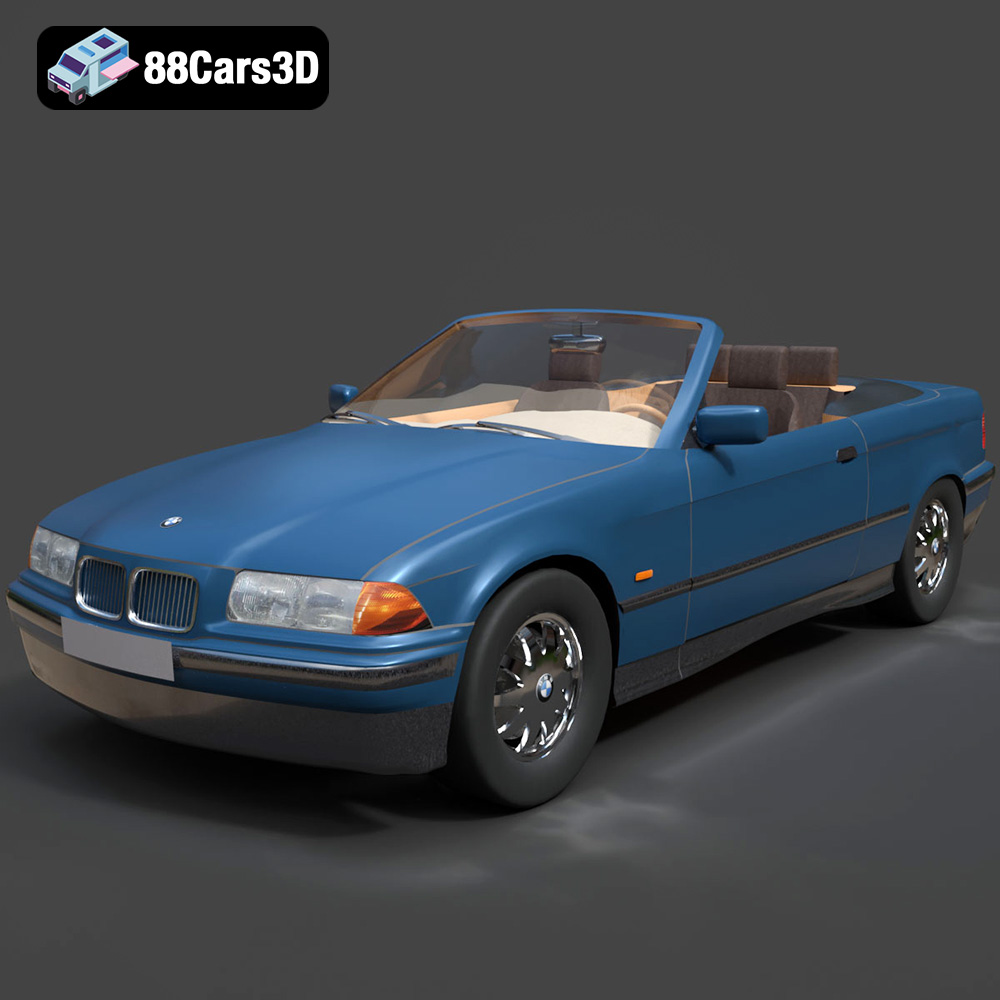
Today, we delve into the intricate world of high-quality 3D car models, exploring the technical prowess required to bring these digital vehicles to life and their indispensable role across various industries. We’ll examine what distinguishes an ordinary model from an exceptional one, dissect the essential file formats crucial for professional workflows, and showcase how a prime example, the BMW 3 Series E36 Cabrio 325i 1998 3D Model, exemplifies excellence in this domain. This iconic German convertible, meticulously crafted and available on 88cars3d.com, offers a perfect case study for understanding the power of detailed and versatile 3D automotive assets.
Creating a high-fidelity 3D car model is a sophisticated blend of artistic vision and technical precision. It goes far beyond simply mimicking real-world shapes; it involves understanding materials, physics, and the specific demands of diverse digital environments. A premium 3D car model is an investment, providing versatility and performance that generic assets simply cannot match.
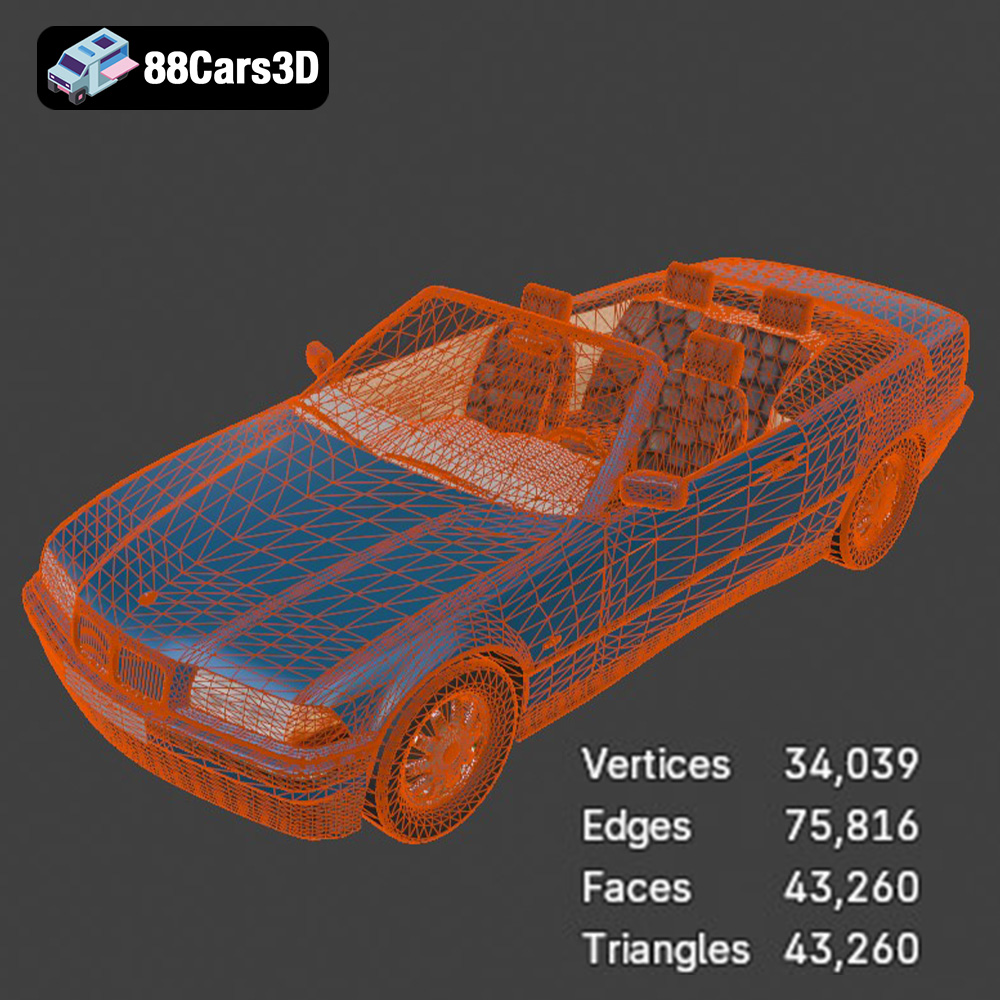
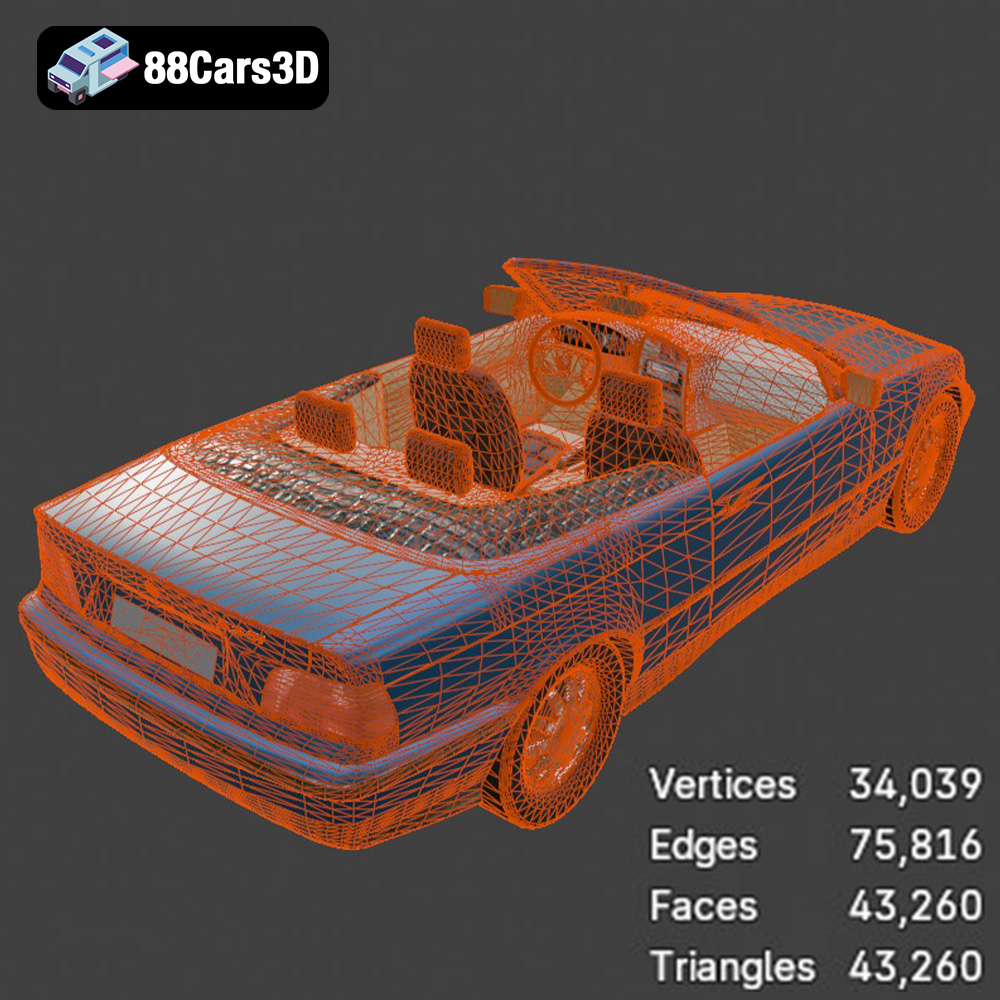
At the heart of any excellent 3D model lies its topology – the arrangement of vertices, edges, and faces that define its surface. For automotive models, clean, quad-dominant topology is not just preferred, it’s essential. Quadrilateral polygons (quads) offer superior flexibility for deformation, making them ideal for animation, rigging, and subdivision. This ensures that when the model is smoothed using subdivision surfaces (like OpenSubdiv), it maintains crisp lines and flowing curves without pinching or artifacting. A well-constructed mesh also optimizes performance, keeping poly counts manageable while still allowing for high levels of detail where necessary. The BMW 3 Series E36 Cabrio 325i 1998 3D Model, for instance, boasts clean, quad-dominant topology, guaranteeing smooth subdivision and flawless deformations for any animation or close-up render.
A perfect mesh is only half the story; surface realism comes from expertly defined materials and UV mapping. Physically Based Rendering (PBR) workflows are standard in modern 3D, requiring texture sets that define properties like albedo (base color), roughness, metallicness, normal maps, and ambient occlusion. Accurate UV mapping ensures these textures are applied correctly without stretching or distortion. For complex objects like cars, multiple UV sets might be used – one for primary body paint, others for intricate details like headlights, grilles, or interior upholstery. The ability to easily adjust paint finishes, reflections, and decals, as offered by the BMW E36 Cabrio model, is a testament to its well-structured materials, allowing for limitless customization from specific liveries to unique design preferences.
One of the often-overlooked but critical aspects of professional 3D car models is adherence to real-world scale and proportions. Whether integrating a vehicle into an architectural visualization scene, a game environment, or a simulation, accurate scaling is vital for believability. An incorrectly scaled car will immediately break immersion and can lead to issues with physics simulations or scene lighting. A high-quality asset ensures seamless integration by precisely matching the dimensions of its real-world counterpart, reducing setup time and potential headaches for artists and developers.
Navigating the diverse landscape of 3D software and engines necessitates a deep understanding of file formats. Each format serves specific purposes, offering unique advantages for particular stages of a workflow. Knowing when to use which format is key to efficient and error-free project execution, especially when working with complex 3D car models like those found on 88cars3d.com.
The true value of a high-quality 3D car model, such as the BMW 3 Series E36 Cabrio 325i 1998 3D Model, lies in its versatility across professional applications. From glossy marketing campaigns to interactive virtual experiences, this asset proves its worth.
For automotive designers, advertisers, and visualization artists, stunning renders are the currency of their craft. High-polygon models with meticulously crafted materials are essential for studio renders, cinematic sequences, and product showcases. Using software like 3ds Max with renderers such as V-Ray or Corona, or Blender with Cycles or Eevee, artists can place the BMW E36 Cabrio in virtual photostudios, urban environments, or scenic landscapes. The model’s detailed headlights, taillights, realistic material definitions, and separated components allow for dramatic close-ups and dynamic camera movements, perfectly simulating real-world photography and videography. The ability to easily adjust paint finishes and reflections makes it a dream for exploring different colorways or liveries for marketing campaigns.
In game development, the balance between visual fidelity and performance is critical. Game assets need to be optimized for real-time rendering while maintaining a high level of detail. The BMW E36 Cabrio 3D model, optimized as a game asset, is perfectly suited for racing simulations, open-world environments, and interactive experiences. Its clean geometry and organized hierarchy translate into efficient draw calls and smooth performance within engines like Unreal Engine and Unity. The included .fbx and .unreal formats ensure quick integration, allowing developers to focus on gameplay mechanics and environmental design rather than asset preparation. Proper pivot points for doors, wheels, and suspension facilitate easy rigging and animation, bringing the car to life in dynamic gameplay scenarios.
Augmented Reality (AR) and Virtual Reality (VR) applications demand highly optimized and realistic 3D models to create truly immersive experiences. The .glb format, specifically designed for web-based and real-time AR/VR display, makes the BMW E36 Cabrio model readily available for these platforms. Imagine a car configurator where users can explore the E36 Cabrio in their driveway via AR, or a VR driving simulator offering a historically accurate experience. Beyond entertainment, such models are invaluable for simulation and training, providing engineers with visualization tools, or offering driving schools realistic scenarios for educational content. The precise detailing and accurate real-world scale of the model ensure a credible and engaging user experience.
The BMW 3 Series E36 Cabrio 325i 1998 3D Model from 88cars3d.com is not merely a collection of polygons; it’s a testament to professional 3D craftsmanship, embodying features that streamline complex project workflows.
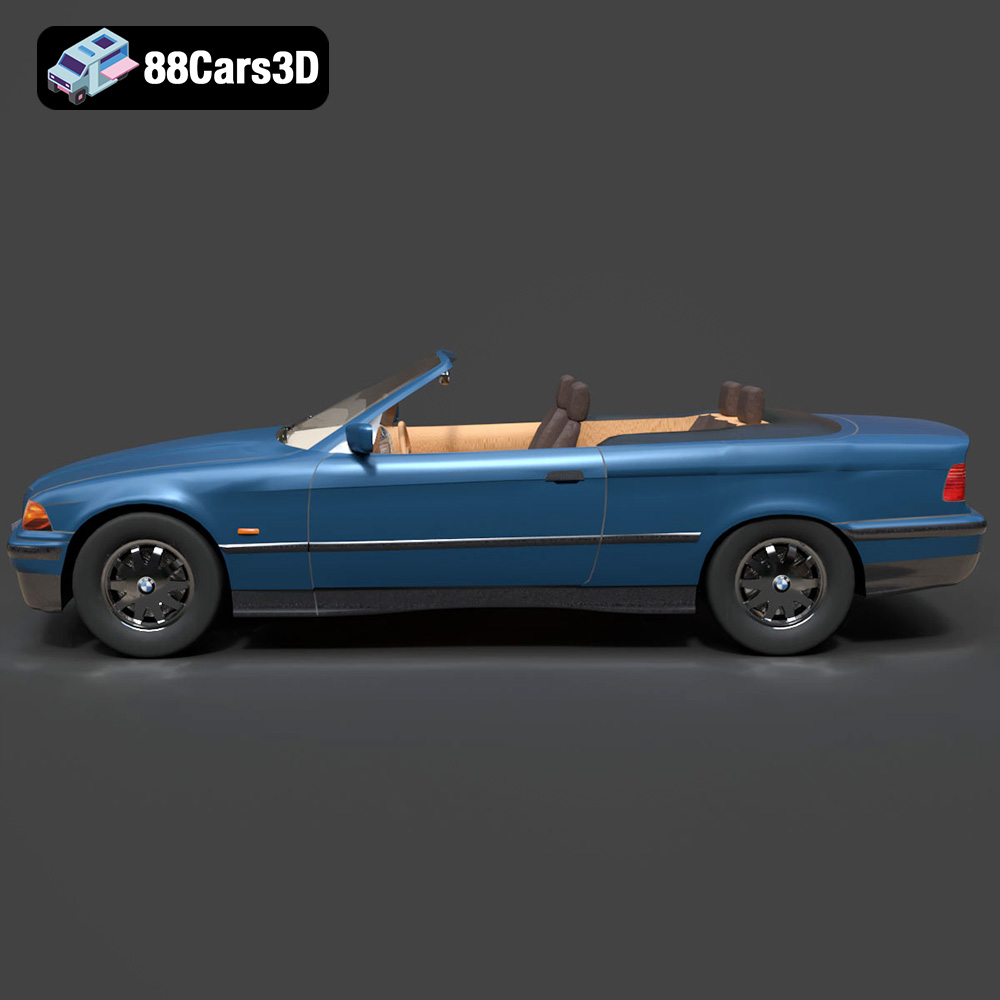
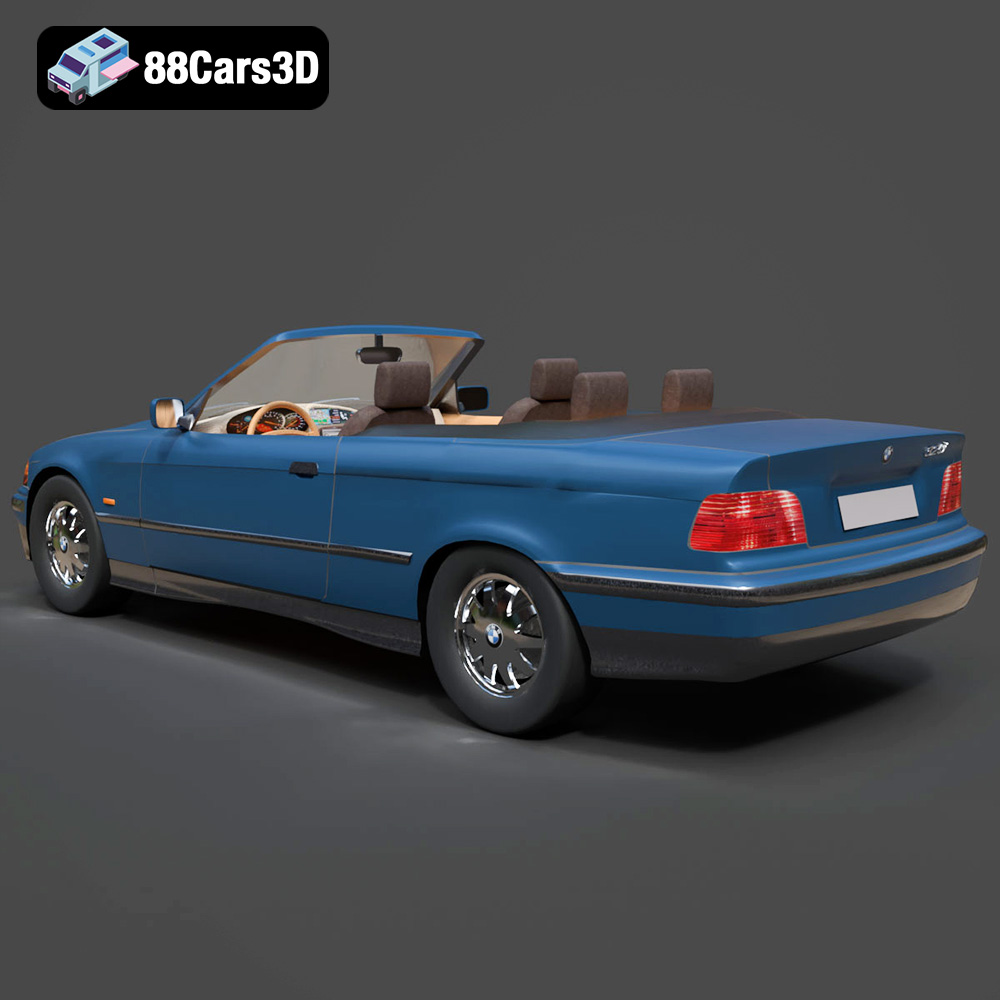
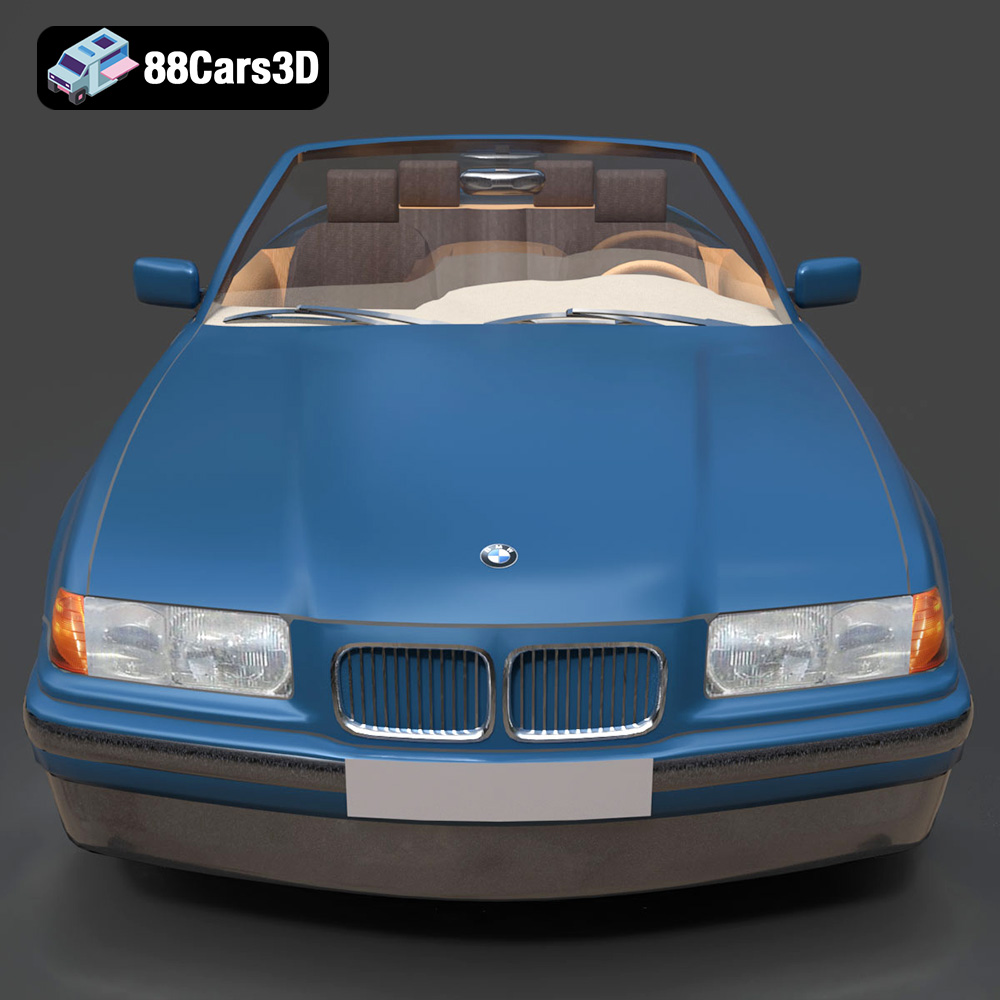
The exterior of this E36 Cabrio model is a masterclass in faithful reproduction. Authentic body panels meticulously reflect the classic lines and subtle curves that defined the E36 generation. But beyond visual accuracy, its structure is designed for dynamic use. Components like doors, wheels, and the convertible soft top are separated and equipped with proper pivot points. This thoughtful organization is critical for animators, allowing for seamless rigging and realistic movement. Imagine animating the doors opening and closing, the wheels turning, or the soft top retracting with perfect mechanical precision, all without the tedious task of manually setting up pivot origins. This attention to detail significantly accelerates animation workflows for cinematic sequences or interactive simulations.
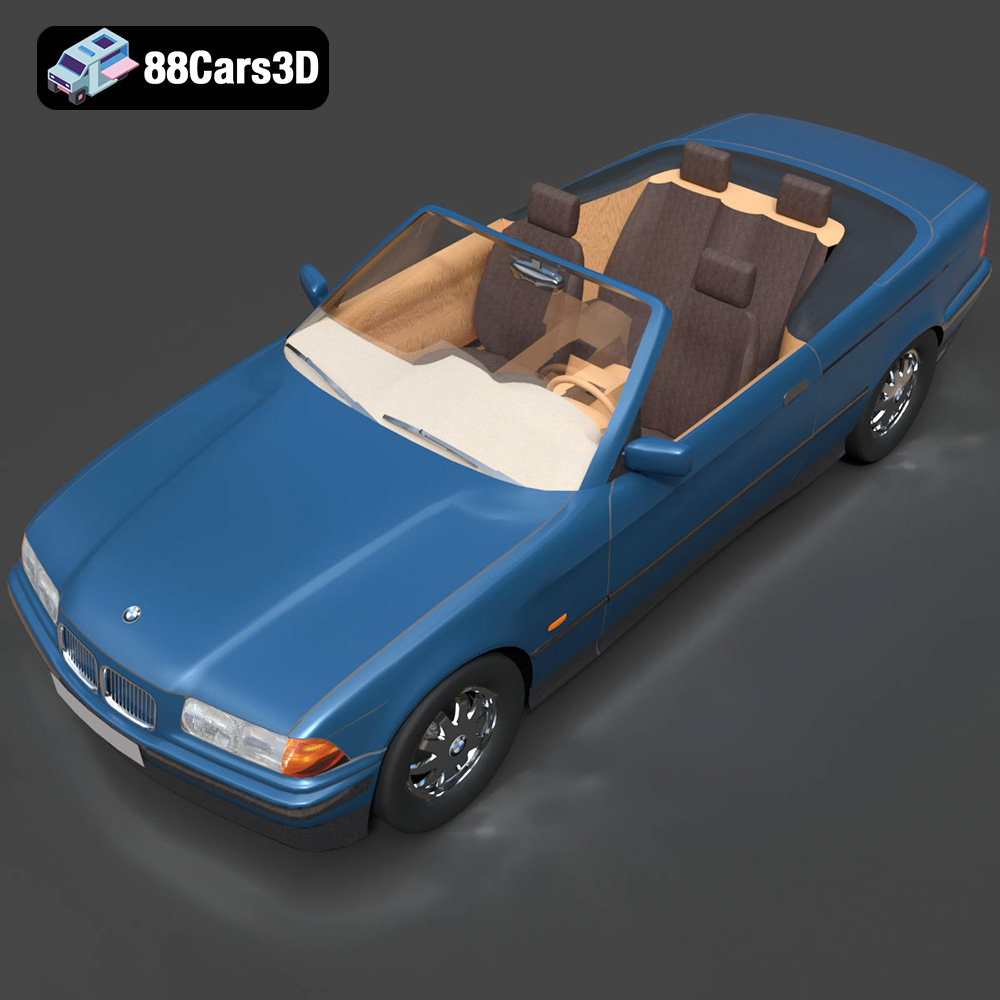
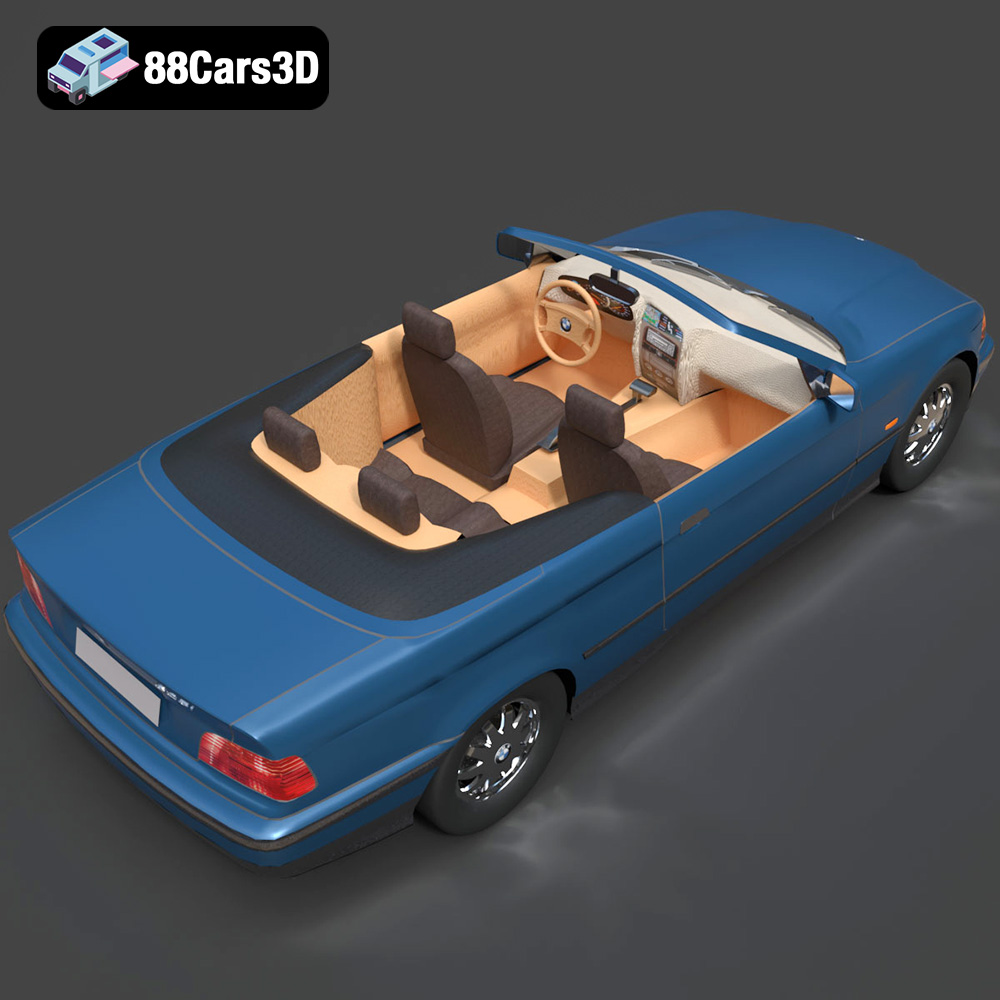
Often, 3D car models focus solely on the exterior, but the E36 Cabrio goes further. Its interior features a detailed dashboard with instruments and controls, comfortable seating upholstery, and door panels replicated with precision. The steering wheel and gear shifter also boast accurate geometry. While the model is optimized for performance, its mesh quality is perfectly suitable for close-up renders of the interior. This balance means that whether your camera is sweeping over the car’s exterior or zooming in on the intricate dashboard, the level of detail holds up, making it ideal for projects that require a comprehensive view of the vehicle, both inside and out.
A truly professional 3D asset offers room for creative interpretation. The E36 Cabrio model excels in this regard, providing robust customization options. Artists can easily adjust paint finishes, reflections, and decals to match specific liveries, branding, or design preferences. Imagine recreating a classic racing livery or designing a futuristic paint scheme – the model’s material setup supports it. Material properties for metal, chrome, plastic, and rubber components can be individually modified, allowing for subtle variations in wear, reflectivity, or color. Furthermore, the model’s clean structure facilitates adapting lighting setups to achieve various moods and environments, transforming a daytime studio render into a dramatic night scene with minimal effort. This adaptability is invaluable for artists needing to integrate the model into diverse visual narratives.
The versatility of a high-quality 3D car model like the BMW 3 Series E36 Cabrio 325i 1998 extends to a multitude of creative and commercial applications, showcasing its practical utility.
For automotive brands or companies leveraging car culture, photorealistic 3D car models are a game-changer for marketing. Instead of expensive photoshoots and film crews, agencies can render the E36 Cabrio in any imaginable environment, from pristine virtual showrooms to dynamic urban landscapes, all from the comfort of a studio. This allows for rapid iteration of visuals, testing different color palettes, wheel designs, or even subtle body kit modifications without physical prototypes. The model’s ability to be customized with specific decals and liveries makes it perfect for product launches, commemorative editions, or social media campaigns that require eye-catching, high-resolution visuals.
Architectural visualization (Arch-Viz) projects frequently rely on realistic contextual elements to bring proposed designs to life. Placing a meticulously detailed 3D car model, scaled accurately, within an architectural scene adds immediate realism, scale, and a sense of habitation. The BMW E36 Cabrio 3D model can be strategically positioned to evoke a particular lifestyle or era, enhancing the overall narrative of a building’s design. Whether it’s parked elegantly in front of a modern home or cruising down a tree-lined street in a city render, its presence breathes life and context into static architectural images and animations, making the visualizations more relatable and engaging for clients.
Beyond commercial applications, high-fidelity 3D car models play a crucial role in education and historical preservation. Museums can use models like the E36 Cabrio to create interactive exhibits, allowing visitors to explore the car from every angle, examine its interior, or even virtually “drive” it. Educational institutions can utilize these models for engineering studies, demonstrating automotive design principles, or exploring historical vehicle evolution. For car enthusiasts and historians, creating a precise 3D model of a classic like the E36 Cabrio helps in digitally preserving its form and function for future generations, ensuring that its iconic design lives on, even if physical examples become scarce.
The world of 3D modeling continues to push boundaries, and the demand for assets that meet the highest standards of realism and technical versatility is ever-growing. A prime example of such an asset is the BMW 3 Series E36 Cabrio 325i 1998 3D Model, a testament to meticulous craftsmanship and optimized design. Its clean topology, detailed features, and inclusion of a wide array of industry-standard file formats – from .blend and .max for complete editability to .fbx and .unreal for game development, and .glb for AR/VR – position it as an indispensable tool for a broad spectrum of creative and technical projects.
Whether you are an automotive renderer striving for photorealism, a game developer building an immersive virtual world, or an Arch-Viz artist adding contextual richness to your scenes, investing in high-quality 3D car models from trusted sources like 88cars3d.com is a decision that pays dividends. These assets not only save valuable production time but also elevate the visual fidelity and overall professionalism of your work. The BMW E36 Cabrio 3D model perfectly encapsulates this value, bringing a touch of classic automotive excellence and powerful technical capability to your digital endeavors.
Experience the timeless appeal of the iconic BMW 3 Series E36 Cabrio 325i with this meticulously crafted 3D model. Representing a quintessential German convertible from the late 90s, this model captures the distinctive styling and sporty elegance that defined a generation. Built with clean geometry and balanced detailing, it ensures optimal performance for various applications. Ideal for high-quality rendering, immersive animation sequences, realistic simulations, and integration into game development projects.
$10.79
.1998
.325i
.3series
.arvr
.blend
.bmw
.cabrio
.car
.classiccar
.convertible
.e36
.fbx
.gameasset
.glb
.max
.obj
.ply
.rendering
.simulation
.sportsCar
.stl
.unreal