

The world of 3D modeling is a fascinating intersection of art and engineering, particularly when it comes to capturing the intricate beauty and mechanical prowess of automobiles. From cinematic showcases to immersive game environments, high-quality 3D car models are the bedrock of countless digital experiences. Professionals across industries continually seek assets that not only look stunning but also perform flawlessly across diverse pipelines. This demand for excellence is precisely what drives the creation of models like the remarkable BMW 3 Series E36 Cabrio 325i 1998 3D Model, a quintessential German convertible meticulously crafted for precision and versatility.
This article delves deep into the technical aspects of leveraging premium 3D car models, exploring workflows, file formats, and best practices that elevate projects from concept to completion. We’ll examine how a well-constructed asset, like the iconic E36 Cabrio from 88cars3d.com, becomes an invaluable tool for automotive rendering, game asset development, AR/VR experiences, and beyond. Understanding the nuances of geometry, materials, and file compatibility is crucial for anyone serious about digital automotive visualization, and we’re here to provide that insight.
The Enduring Appeal of Classic Automotive 3D Models
There’s a unique charm in digitally preserving and reimagining classic vehicles. The BMW 3 Series E36 Cabrio 325i 1998 is more than just a car; it’s a cultural touchstone from the late 90s, embodying a blend of sporty elegance and accessible luxury. Capturing this essence in a 3D model requires not just technical skill but an artistic eye for historical accuracy and design fidelity.
Capturing Heritage and Detail
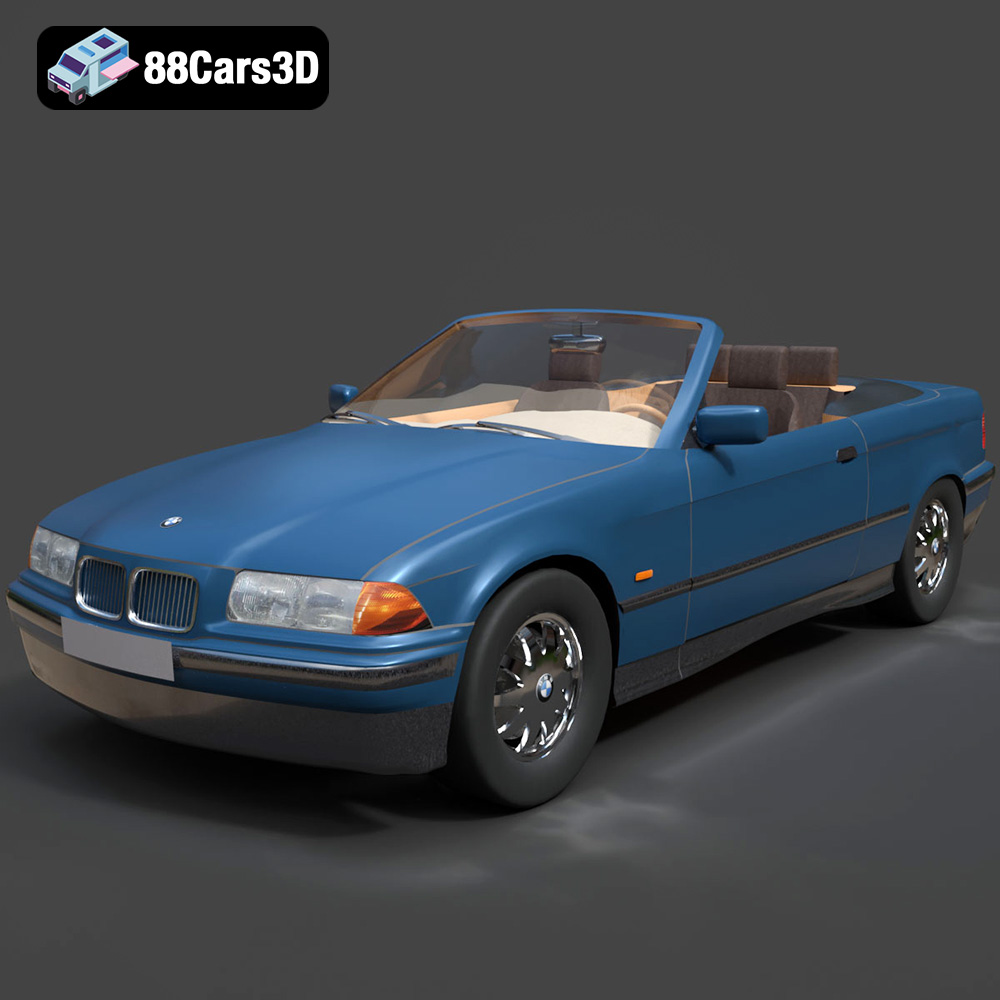
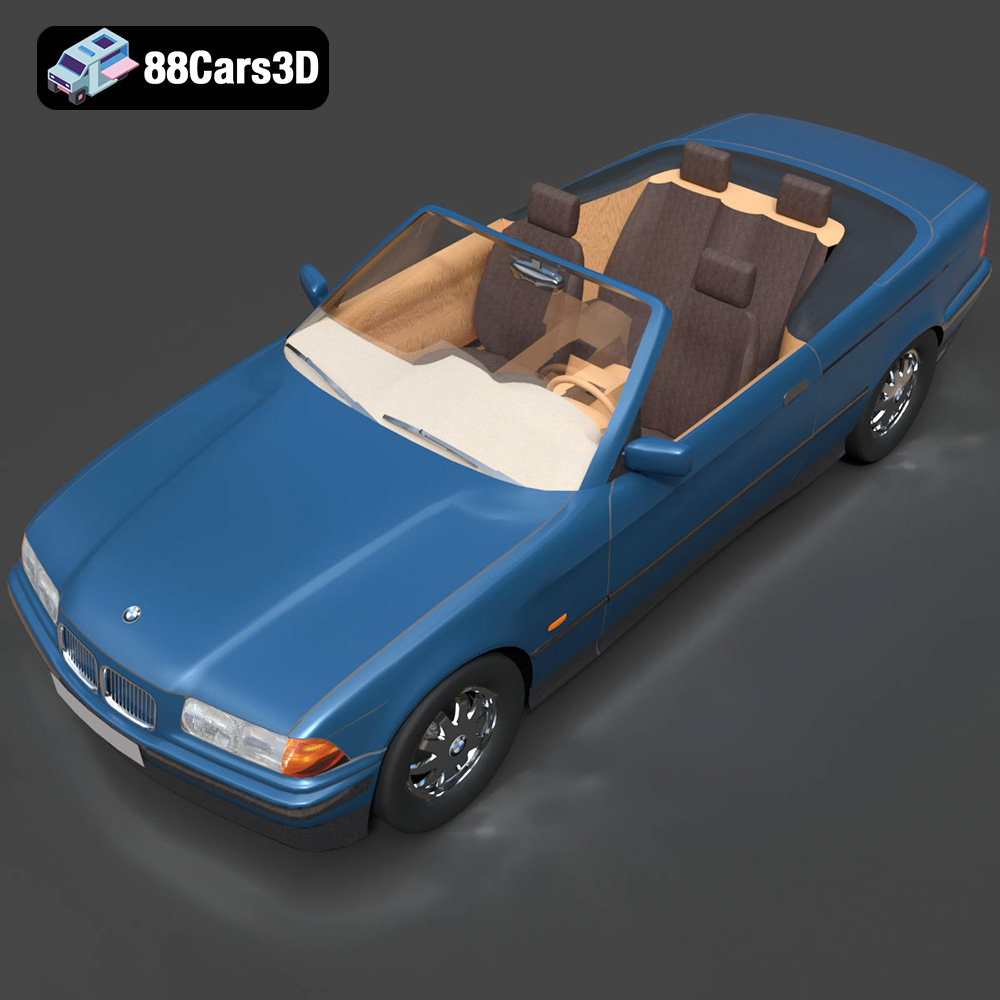
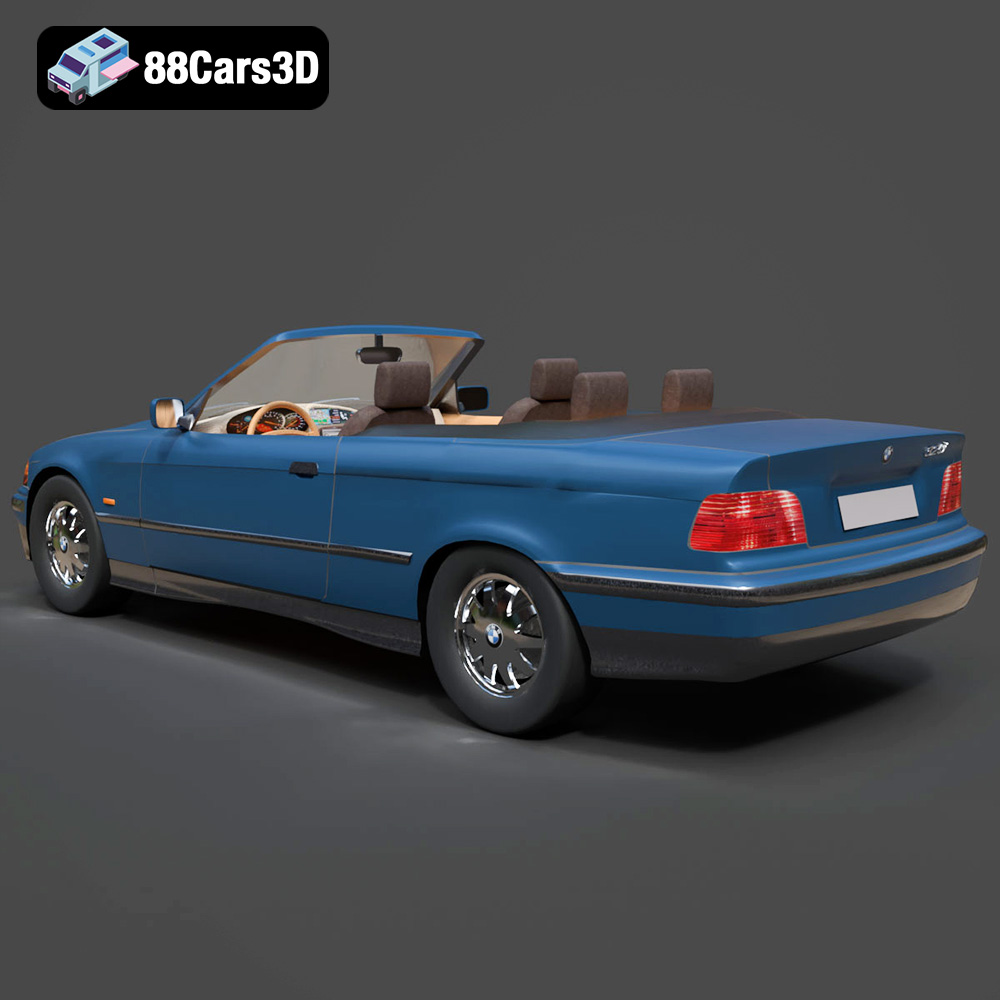
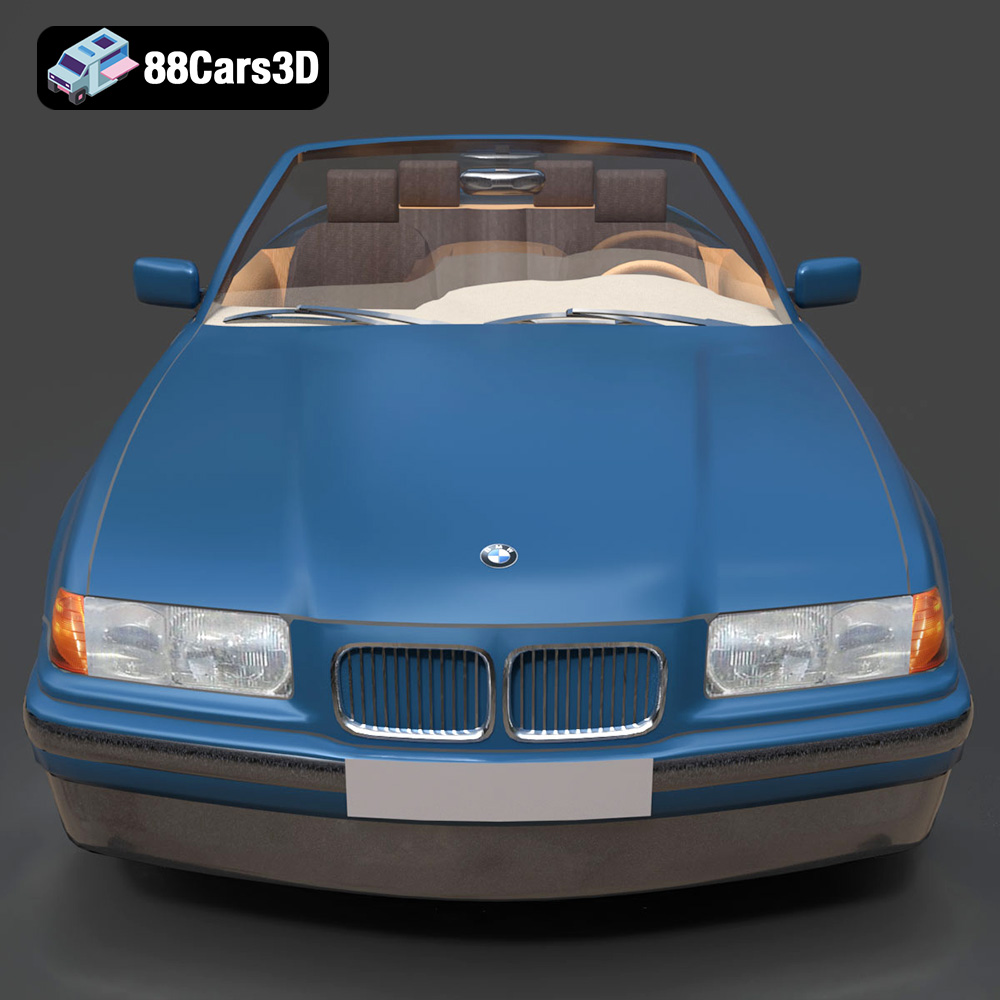
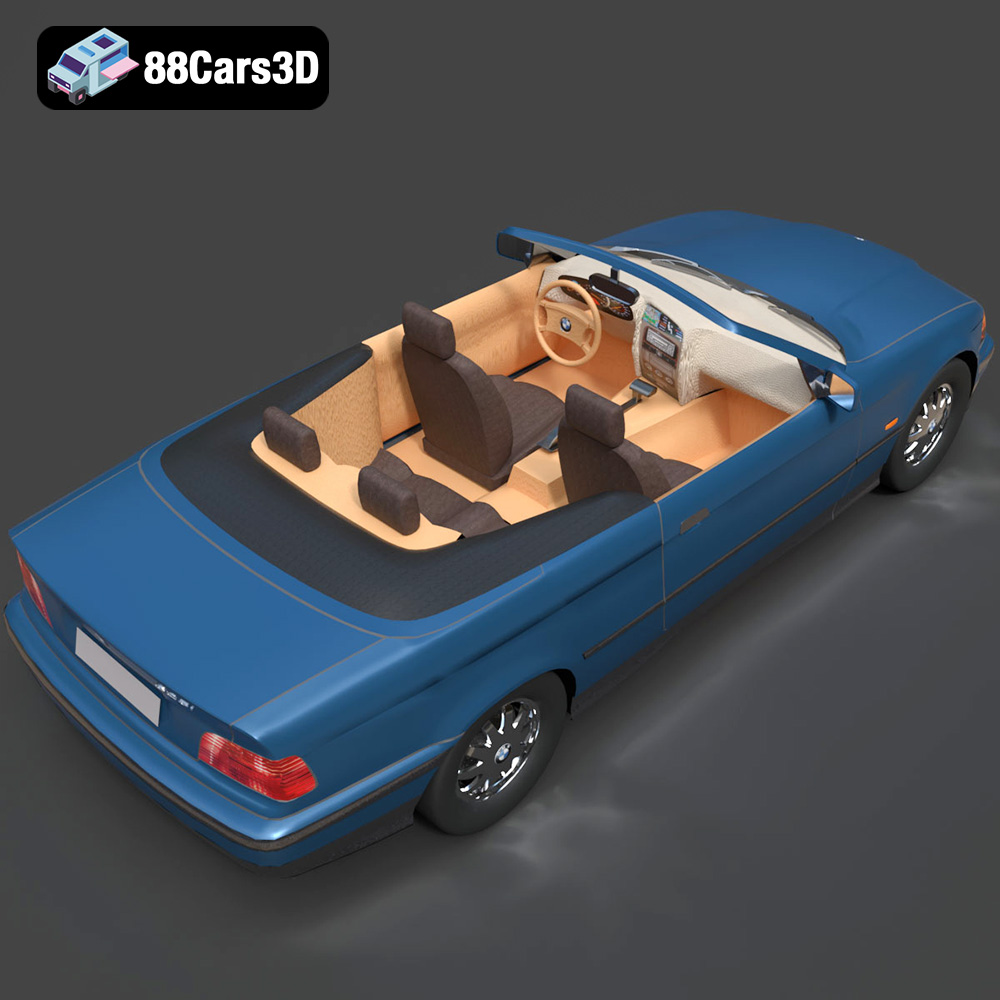
Recreating a classic car like the E36 Cabrio in 3D involves an obsessive attention to detail. This isn’t merely about replicating the general shape; it’s about faithfully reproducing the subtle curves of the body panels, the distinct design of the headlights and taillights, and even the texture of the convertible soft top. For the BMW 3 Series E36 Cabrio 325i 1998 3D Model, this means authentic body lines, detailed material definitions for glass and chrome, and precise replication of interior elements like the dashboard, instruments, and seating upholstery. These details are paramount for achieving a sense of realism that resonates with both automotive enthusiasts and discerning clients.
Beyond Nostalgia: Practical Applications
While the nostalgic appeal is strong, the practical applications of such a high-fidelity 3D car model are even more compelling. A well-crafted classic like the E36 Cabrio serves as an excellent benchmark for various digital projects. It can be used for historical recreations in films or documentaries, for driving experiences in period-specific racing games, or even for architectural visualization where a touch of classic automotive flair is desired. Its “clean geometry and balanced detailing” ensure it’s not just a beautiful static object, but a flexible asset ready for dynamic animation, intricate lighting setups, and real-time interaction, making it a powerful addition to any professional library of 3D car models.
Understanding 3D Model File Formats
The choice of file format for your 3D car models is a critical decision that impacts compatibility, performance, and workflow efficiency. Each format is designed with specific use cases in mind, and understanding their strengths and limitations is essential for any 3D artist or developer. The BMW 3 Series E36 Cabrio 325i 1998 3D Model, like all professional assets from 88cars3d.com, comes with a comprehensive suite of formats, ensuring maximum versatility across different software and platforms.
The Blender Ecosystem: .blend
The .blend file format is native to Blender, one of the most powerful and popular open-source 3D content creation suites. When you acquire a .blend file, you’re not just getting the mesh; you’re getting a fully editable Blender scene. This includes all materials, textures, lighting setups, cameras, animation rigs, and modifiers applied to the model. For the BMW E36 Cabrio model, this means access to its specific material nodes, UV maps, and the organizational hierarchy directly within Blender, allowing for deep customization and iteration. It’s ideal for artists who primarily work within Blender and need the most flexibility to modify the asset, optimize topology, or integrate it into complex scenes with other Blender-native assets.
Universal Interoperability: .fbx and .obj
When it comes to cross-software compatibility, .fbx and .obj are the undisputed workhorses.
The **.fbx (Filmbox)** format is owned by Autodesk and is widely considered the industry standard for exchanging 3D data between different software applications like 3ds Max, Maya, Cinema 4D, and game engines such as Unreal and Unity. It excels at preserving complex data beyond just geometry, including animation, rigging, cameras, lights, and PBR (Physically Based Rendering) materials. For the E36 Cabrio 3D model, the .fbx version is “ideal for Unreal, Unity, and real-time pipelines” because it efficiently packs all necessary data for game engines, often including embedded textures or links to external texture files. Its binary nature makes it faster to load and process compared to text-based formats. When exporting or importing .fbx, artists can choose what data to include (meshes, animations, cameras, etc.), offering precise control over the asset’s transfer. This makes it a go-to for development teams ensuring consistent asset deployment.
The **.obj (Wavefront OBJ)** format is another highly versatile option, albeit simpler than .fbx. It’s a universal format known for “cross-software compatibility” and has been around for decades. An .obj file primarily stores geometric data—vertices, UV coordinates, normals, and faces—alongside references to an accompanying .mtl (Material Template Library) file, which defines basic material properties like color, shininess, and texture maps. While .obj doesn’t support animation or advanced rigging, its simplicity and widespread adoption make it excellent for static mesh exchange. It’s often used as a fallback or for situations where only the clean geometry of the BMW E36 Cabrio is needed, without complex scene data. Its human-readable text format can also be advantageous for debugging or manual editing, though less common in professional workflows.
Next-Gen & Specialized Formats: .glb, .stl, .ply, .unreal, .max
Beyond the universally accepted formats, specialized options cater to specific modern and niche applications.
The **.glb (GL Transmission Format Binary)** is a relatively newer format “optimized for AR, VR, and browser-based display.” It’s a binary container format that bundles the 3D model, textures, animations, and PBR materials into a single, self-contained file. This self-contained nature and efficient delivery mechanism make it perfect for web applications, social media filters, and immersive experiences where quick loading and minimal HTTP requests are crucial. For presenting the BMW E36 Cabrio in an online configurator or an AR app, .glb provides a streamlined and performant solution, ensuring a consistent visual experience across various devices and browsers.
The **.stl (Stereolithography)** format is the industry standard for “3D printing output.” It represents the surface geometry of a 3D object using a collection of interconnected triangles, or facets. It does not carry color, texture, or material information, focusing solely on the object’s shape for additive manufacturing. When converting the E36 Cabrio 3D model to .stl, one must consider polygon count and manifold geometry to ensure a successful print without holes or non-watertight surfaces. This format allows enthusiasts to bring a physical replica of their favorite classic car to life.
The **.ply (Polygon File Format)** is a “precision mesh format for CAD or analysis.” Like .obj and .stl, it describes a 3D object as a collection of polygons, but it can also store additional properties for each vertex or face, such as color, transparency, texture coordinates, and even reliability information. This makes .ply particularly useful in scientific computing, 3D scanning, and CAD/CAM applications where data integrity and additional attribute storage are important. While not as common for general artistic exchange as .fbx, it offers a robust solution for specific engineering and analytical workflows.
The **.unreal** format refers to a prepared asset or project setup specifically for Unreal Engine. This isn’t a standard generic file format but rather an indication that the asset, such as the E36 Cabrio, has been specifically structured and configured within an Unreal Engine project. This might involve optimized material instances, collision meshes, LOD (Level of Detail) setups, and perhaps even basic blueprints for interactive elements. This “engine-ready asset” significantly reduces integration time for game developers, as much of the tedious setup work has already been done, allowing for immediate use within the Unreal Engine environment.
Finally, the **.max** format is native to Autodesk 3ds Max, a leading software for 3D modeling, animation, and rendering. Similar to .blend for Blender, a .max file contains the complete 3ds Max project, including geometry, modifiers, materials, lights, cameras, animations, and render settings. It provides the highest level of editability and control for users working in 3ds Max. For artists requiring extensive modifications, custom animation sequences, or specific rendering setups with engines like V-Ray or Corona, the .max version of the BMW 3 Series E36 Cabrio 325i 1998 3D Model offers unparalleled flexibility and is perfect for high-end “animation and rendering” projects.
Elevating Visuals: Automotive Rendering Workflows
High-quality automotive rendering transforms a 3D model into a photorealistic image or animation, crucial for advertising, design visualization, and cinematic production. The BMW 3 Series E36 Cabrio 325i 1998 3D Model provides an exceptional foundation for such endeavors, thanks to its “clean, quad-dominant topology” and “accurate real-world scale.”
Studio Lighting and Material Definition in 3ds Max
Within 3ds Max, artists leverage powerful rendering engines like V-Ray or Corona Renderer to achieve stunning realism. The process begins with establishing a compelling lighting setup. Often, this involves HDRI (High Dynamic Range Image) maps for realistic global illumination, combined with targeted area lights or photometric lights to accentuate the E36 Cabrio’s contours and highlights. Material definition is equally crucial. The model’s separated components allow for precise material application: high-gloss car paint with complex reflections, realistic glass for windows and lights, textured rubber for tires, and various metallic finishes for chrome accents and wheels. Utilizing PBR workflows, artists define parameters such as base color, metallic, roughness, and normal maps to simulate real-world surface interactions with light, ensuring every aspect of the BMW E36 Cabrio model reacts authentically.
Realistic Post-Processing for Cinematic Renders
The raw render output is just the beginning. Post-processing in tools like Adobe Photoshop or Blackmagic Fusion is essential for adding the final layer of cinematic polish. This stage involves color grading to set the mood, adding subtle depth of field for visual focus, incorporating lens flares, chromatic aberration, or vignetting for photographic realism, and enhancing reflections and highlights. Artists can also composite the rendered vehicle into photographic backplates or virtual environments, matching lighting and perspective to create seamless, believable scenes. The versatility of the BMW E36 Cabrio model, with its robust material definitions and clean render passes, streamlines this post-production workflow, allowing for stunning final visuals perfect for an automotive showcase.
Case Study: Recreating the E36 Cabrio’s Iconic Shine
Imagine a client requires a series of marketing images for a classic car event, featuring the 1998 BMW E36 Cabrio. Using the provided .max file, a 3D artist can quickly set up a virtual photo studio. An HDRI of a sun-drenched outdoor environment provides natural lighting, complemented by a few studio-style area lights to sculpt the bodywork. The artist focuses on the paint material, adjusting the clear coat’s roughness and IOR (Index of Refraction) to achieve that signature BMW metallic gleam. Reflection passes are rendered separately, allowing for precise control over specularity in post-production. By carefully defining the metallic sheen of the wheels and the subtle translucency of the headlights, the artist brings the E36 Cabrio to life, creating images that are indistinguishable from professional photography, all thanks to the model’s inherent quality and detailed material setup.
Driving Innovation: Integrating 3D Car Models into Game Engines
For game developers, 3D car models are central to creating immersive and engaging experiences, from open-world driving simulations to competitive racing titles. The BMW 3 Series E36 Cabrio 325i 1998 3D Model is “optimized as a game asset,” ready for seamless integration into leading game engines like Unreal Engine and Unity.
Optimization Strategies for Real-Time Performance
Game assets require careful optimization to ensure smooth frame rates and efficient resource usage. While the BMW E36 Cabrio model boasts “optimized mesh quality suitable for close-up renders,” it also provides a robust foundation for game-specific optimizations. This includes generating Level of Detail (LOD) meshes, where lower-polygon versions of the car are rendered at greater distances to save processing power. Collision meshes, simpler representations of the car’s physical bounds, are created for accurate physics simulations without taxing the engine with complex geometry. Material instances are also utilized to allow for easy color changes or decal applications without creating multiple unique materials, boosting efficiency. These technical considerations are baked into professional game asset development, ensuring the E36 Cabrio performs optimally in real-time environments.
Unreal Engine Implementation with the E36 Cabrio Model
The inclusion of a “.unreal” file format or pre-configured asset dramatically simplifies the integration process for developers. When importing the E36 Cabrio model into Unreal Engine, the .fbx format is typically used, bringing in meshes, materials, and basic skeletal data. Developers can then leverage Unreal’s powerful material editor to create PBR materials using textures provided or generated. Physics assets are set up for realistic suspension and collision behavior. Blueprint scripting allows for interactive elements—opening doors, lowering the soft top, functional headlights—all controlled through intuitive visual programming. The “organized hierarchy with proper pivot points for animation and rigging” of the E36 Cabrio model makes it especially easy to set up vehicle blueprints, attaching wheels, steering, and suspension components correctly, accelerating development for racing simulations or interactive automotive experiences.
Rigging and Animation for Interactive Experiences
For a car to be truly interactive in a game, it needs a robust rigging and animation setup. The BMW E36 Cabrio model, with its separated components for doors, wheels, and suspension, is perfectly suited for this. A skeletal rig is created, with bones assigned to each movable part. Wheel bones are set up for rotation and steering, while suspension bones handle realistic bounce and compression. Doors can be rigged to open and close, and the convertible soft top can be animated to raise and lower. These animations, often driven by player input or in-game events, bring the 3D car model to life, offering a truly dynamic and engaging user experience. The precision in the model’s construction ensures that these animations are smooth and visually convincing, meeting the demands of modern game development.
Beyond the Screen: AR/VR, Simulation, and 3D Printing
The utility of a versatile 3D car model extends far beyond traditional rendering and game development. Emerging technologies like Augmented Reality (AR), Virtual Reality (VR), professional simulations, and 3D printing all benefit immensely from high-quality assets. The BMW 3 Series E36 Cabrio 325i 1998 3D Model is specifically designed with these diverse applications in mind, offering specialized file formats to cater to each.
Immersive Experiences with .glb for WebAR
Augmented Reality (AR) and Virtual Reality (VR) are transforming how we interact with digital content. For these immersive platforms, optimized models are crucial for performance. The .glb file format, included with the E36 Cabrio model, is a game-changer for AR/VR and web-based applications. Its compact, self-contained nature ensures fast loading times and efficient rendering on mobile devices and VR headsets. Imagine placing a virtual BMW E36 Cabrio in your driveway via a smartphone AR app, or exploring its interior in a VR showroom. The .glb format facilitates this by bundling all textures and materials directly with the mesh, eliminating external dependencies and streamlining the deployment process for “immersive augmented and virtual reality applications.” This allows for immediate, seamless interaction with the 3D car model in real-world or virtual environments.
Engineering Visualization and Simulation
In fields like engineering and education, 3D models are invaluable for visualization and simulation. For instance, the BMW E36 Cabrio model can be integrated into driving simulators for training purposes, allowing users to experience the car’s dynamics in a controlled virtual environment. Its “accurate real-world scale” and detailed interior make it suitable for ergonomics studies or virtual walkthroughs of the vehicle’s cabin. The .ply file format, with its ability to store additional data beyond just geometry, can be particularly useful for engineering analysis, where properties like stress distribution or aerodynamic flow might be visualized on the mesh. These applications move beyond aesthetics, utilizing the 3D car model as a functional tool for design review, performance analysis, and educational content.
Physical Prototypes: The .stl Workflow
The digital world can also bridge into the physical. With the included .stl file format, the BMW 3 Series E36 Cabrio 325i 1998 3D Model is “convertible to .stl format for creating physical replicas.” This opens up possibilities for 3D printing, allowing designers, enthusiasts, or even model car collectors to produce tangible miniatures or prototypes of the iconic convertible. While preparing a model for 3D printing requires attention to manifold geometry (ensuring no holes or self-intersecting meshes) and scale, the clean base topology of the E36 Cabrio model simplifies this conversion. From creating custom desktop models to scale prototypes for display, the .stl format enables a unique extension of the digital asset into the real world.
The Craftsmanship Behind Premium 3D Car Models
The true value of a professional 3D car model, such as the BMW 3 Series E36 Cabrio 325i 1998 3D Model available on 88cars3d.com, lies in the meticulous craftsmanship behind its creation. It’s not just about visual appeal, but also about the underlying technical integrity that ensures usability and flexibility across a spectrum of projects.
Topology, Scale, and Organization: The Foundation of Quality
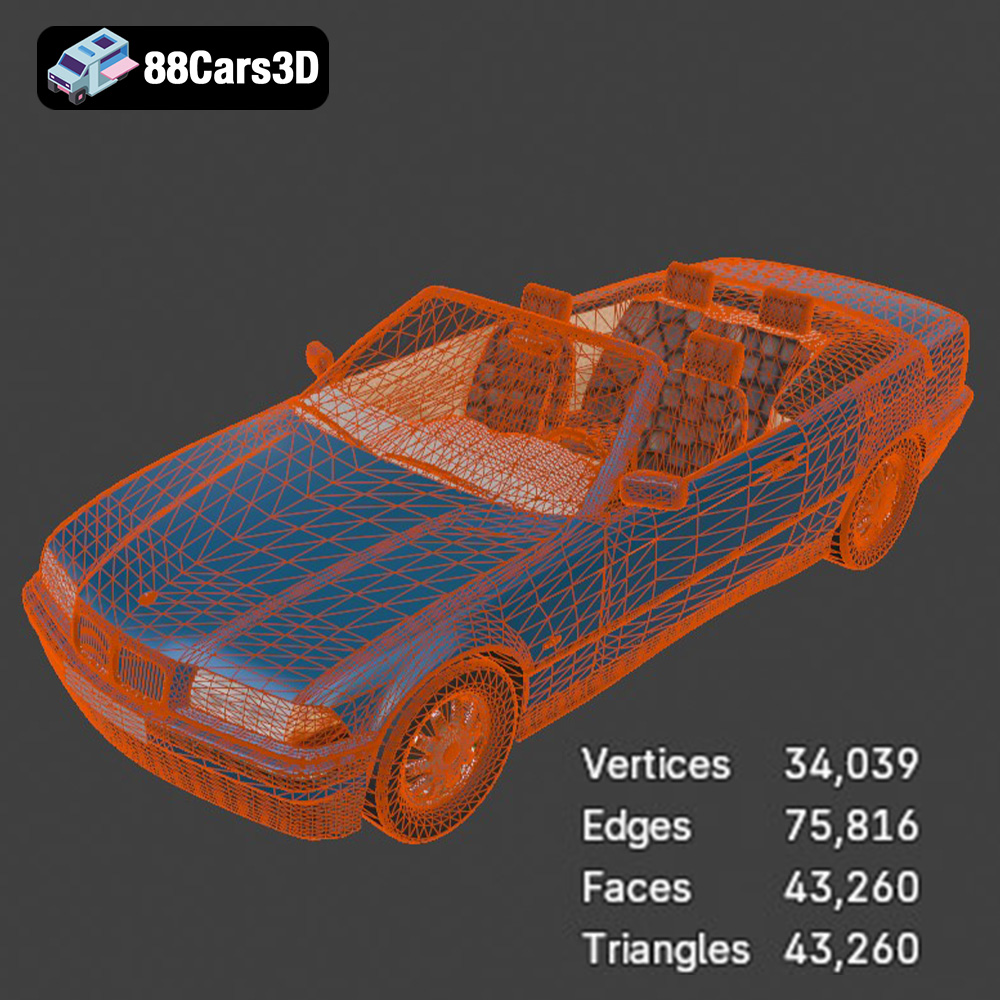
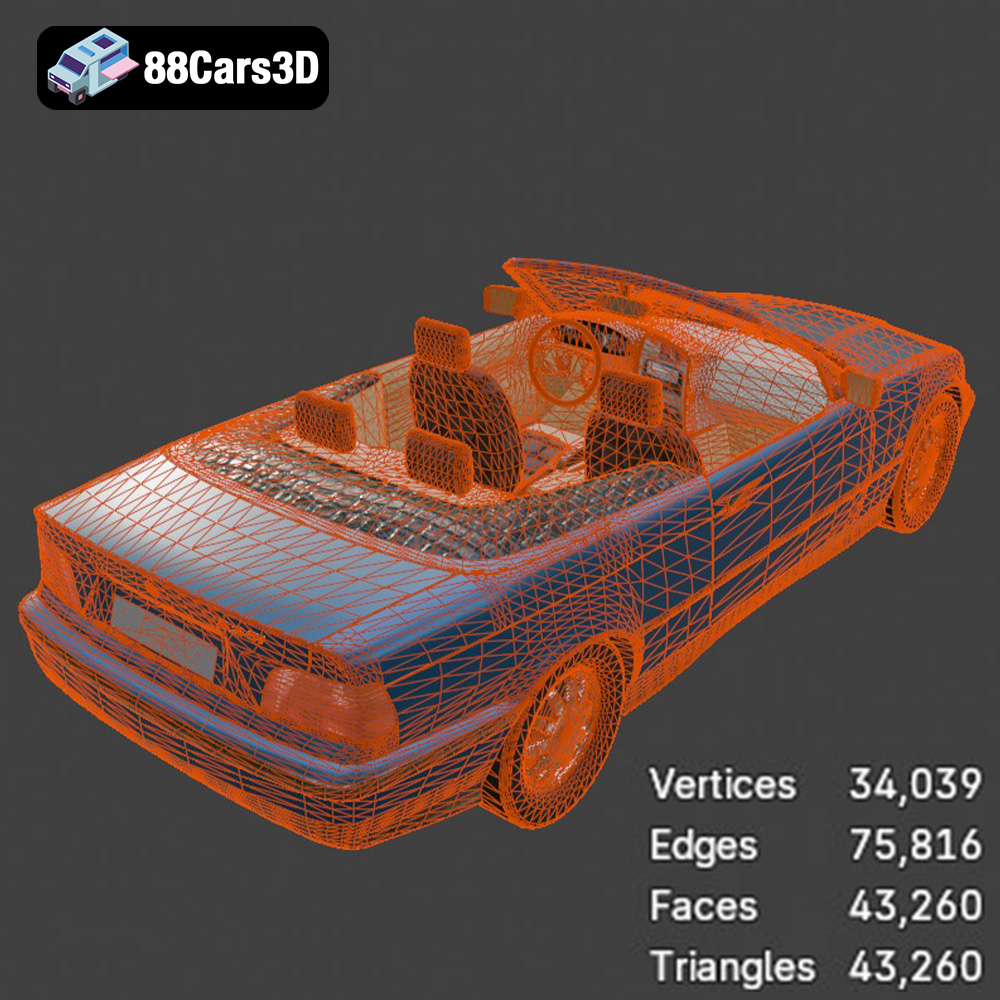
At the heart of any high-quality 3D model is its topology. The E36 Cabrio model features “clean, quad-dominant topology,” meaning its mesh is primarily composed of four-sided polygons. This is crucial for smooth subdivision, deformation during animation, and overall stability in rendering and game engines. Poor topology, often characterized by triangles and n-gons in critical areas, can lead to rendering artifacts and animation glitches. Furthermore, “accurate real-world scale” is non-negotiable. This ensures the model seamlessly integrates into scenes without requiring manual scaling, which can introduce errors in physics simulations or lighting calculations. Finally, an “organized hierarchy with proper pivot points for animation and rigging” is a hallmark of professional work. This means components like doors, wheels, and suspension are grouped logically and their pivot points are correctly placed, making animation and rigging intuitive and precise. This level of foundational quality is what distinguishes a usable asset from a problematic one.
Customization and Versatility for Diverse Projects
A premium 3D car model should offer extensive customization options, enabling artists to adapt it to specific project needs. The BMW E36 Cabrio 3D model allows users to “easily adjust paint finishes, reflections, and decals to match specific liveries or design preferences.” This means a single model can be transformed from a showroom-spec vehicle to a custom-tuned street car or even a period racing car with just a few material tweaks. Artists can “modify material properties for metal, chrome, plastic, and rubber components” to achieve desired levels of realism or stylized looks. This flexibility is vital for creative freedom and ensures the asset remains relevant across numerous applications, from advertising campaigns to personal art projects. It empowers artists to stamp their unique vision onto the base model, maximizing its utility.
Why Professional Assets Like the E36 Cabrio Model Save Time and Elevate Quality
Developing a high-fidelity 3D car model from scratch is an incredibly time-consuming and technically demanding process, often taking hundreds of hours for a single vehicle. Investing in professional 3D car models, such as the BMW 3 Series E36 Cabrio 325i 1998 3D Model from 88cars3d.com, provides an immediate competitive advantage. Artists and studios can bypass the initial modeling and texturing phases, dedicating their resources to lighting, animation, scene composition, and post-production—areas where creative input truly shines. This not only significantly accelerates project timelines but also guarantees a baseline of quality that is difficult to achieve without specialized expertise. The “technical advantages” embedded in this model, from clean topology to proper pivot points, translate directly into a smoother workflow, fewer troubleshooting headaches, and ultimately, a superior final product that impresses clients and audiences alike.
Conclusion
The digital realm of automotive design and visualization thrives on the quality and versatility of its 3D assets. As we’ve explored, a meticulously crafted 3D car model, such as the BMW 3 Series E36 Cabrio 325i 1998 3D Model, is more than just a visual representation; it’s a powerful tool that integrates seamlessly into a multitude of professional workflows. From high-fidelity automotive rendering in 3ds Max to optimized game assets for Unreal Engine, and from immersive AR/VR experiences to physical 3D prints, this iconic convertible stands ready to elevate any project. Understanding the nuances of file formats, the importance of clean topology, and the potential for customization ensures that professionals can unlock the full potential of such assets. Investing in premium 3D car models from trusted sources like 88cars3d.com is a strategic decision that saves time, enhances visual quality, and drives innovation across the diverse landscape of 3D production.
Featured 3D Model
BMW 3 Series E36 Cabrio 325i 1998 3D Model
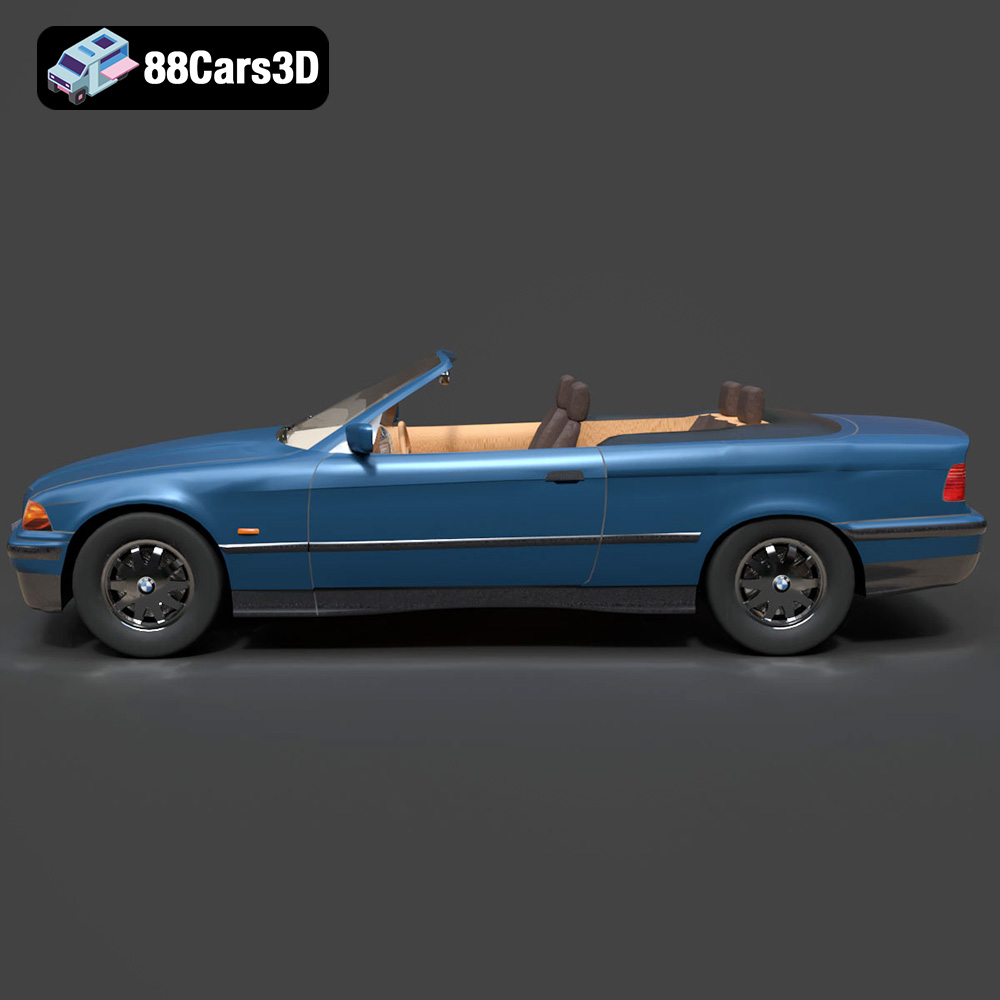
Experience the timeless appeal of the iconic BMW 3 Series E36 Cabrio 325i with this meticulously crafted 3D model. Representing a quintessential German convertible from the late 90s, this model captures the distinctive styling and sporty elegance that defined a generation. Built with clean geometry and balanced detailing, it ensures optimal performance for various applications. Ideal for high-quality rendering, immersive animation sequences, realistic simulations, and integration into game development projects.
$10.79
Product Image Gallery
Related Tags
.1998
.325i
.3series
.arvr
.blend
.bmw
.cabrio
.car
.classiccar
.convertible
.e36
.fbx
.gameasset
.glb
.max
.obj
.ply
.rendering
.simulation
.sportsCar
.stl
.unreal
